
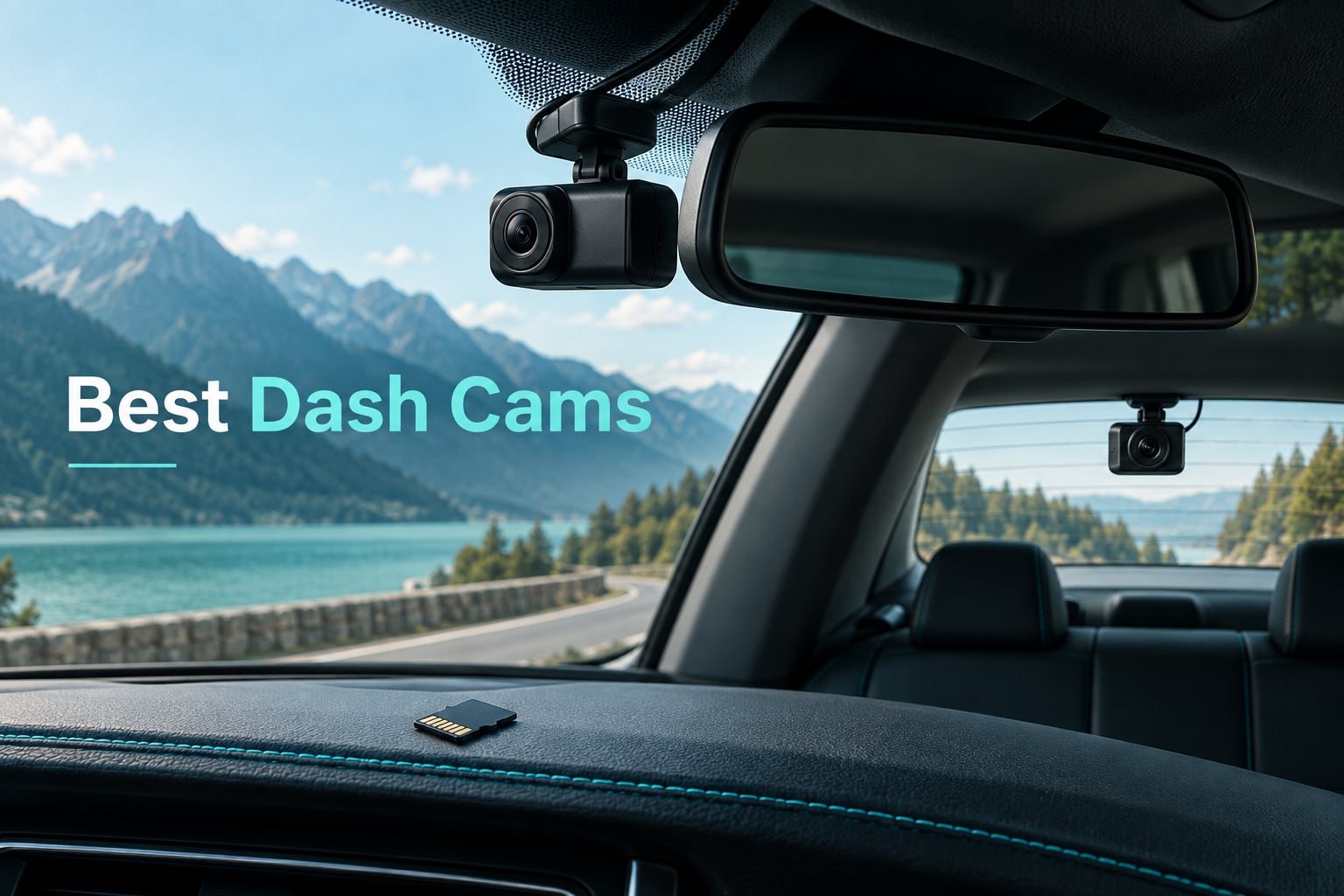
The reason most people finally buy a dash cam is an argument they did not win. A car backs into you in a parking lot and the other driver insists the dent was already there. Someone runs a red light and leaves without stopping. A rideshare passenger disputes what happened during the trip home. In each case, the only thing that settles the question is video that nobody else controls.
That is the standard I applied to the best dash cams in this guide: can this camera resolve a license plate two vehicles back at night, does it save the clip before the impact rather than after it, and will it still be recording in August when the cabin is at full sun for hours. I compared the ten models below on plate readability, night performance, channel coverage, G-sensor behaviour, parking mode, heat tolerance, card support and how much work the install actually takes.
Our pick for most people is the ROVE R2-4K Dual. It records a 4K front channel and a 1080P rear channel, runs a Sony STARVIS 2 IMX675 sensor, carries built-in GPS, includes a 128GB card in the box, and accepts cards up to 1TB. Two caveats matter: the front 4K is upscaled from a 2.5K native image, and parking mode needs a hardwire kit you buy separately.
This guide covers three groups of driver. Daily commuters want front and rear coverage with a card they can trust. Rideshare and delivery drivers need a cabin camera with infrared illumination. Anyone who parks on the street or in a shared lot needs parking mode, which means a hardwire and a card that survives heat.
Two things changed in the current model generation and are worth naming up front. First, 4K has become common at every price level, which means resolution on its own no longer separates a good cam from a weak one. Second, sensors matter more: a Sony STARVIS 2 part such as the IMX678 or IMX675 captures usable detail in low light where a small-sensor 4K cam produces a dark, smeared plate. Several picks here have 4K labels that are upscaled rather than native, and we say which.
If you take one piece of advice from the whole page, take this: buy a high-endurance microSD card from a reputable maker rather than trusting the one in the box, and format it in the camera every few months. The most common complaint we found in owner discussions was not image quality or parking mode. It was a failed card producing corrupted files and missing the exact incident someone bought the camera to capture.
Table of Contents
Top 3 Picks for the Best Dash Cams (October 2026)

ROVE R2-4K Dual
- 4K front and 1080P rear
- STARVIS 2 IMX675 sensor
- Built-in GPS with speed and compass
- 128GB card included

Thinkware U3000 PRO
- 4K front and 2K rear
- Dual radar parking mode
- Low-profile screenless design
- OBD-II cable and card included

Vantrue N4 Pro S
- 4K plus 2.5K plus 1080P channels
- Triple STARVIS 2 sensors with IMX678
- Rotating 2.5K rear camera
- Supports cards up to 1TB
What to look for in a short list: the image sensor first, then the number of channels you actually need, then the power method. Those three answers narrow the field faster than any other three specs.
All 10 Dash Cams Compared at a Glance
| Product | Specifications | Action |
|---|---|---|
| ROVE R2-4K Dual |
|
Check Latest Price |
| Thinkware U3000 PRO |
|
Check Latest Price |
| Vantrue N4 Pro S |
|
Check Latest Price |
 VIOFO A229 Pro 3CH VIOFO A229 Pro 3CH |
|
Check Latest Price |
 Vantrue N2X Vantrue N2X |
|
Check Latest Price |
 IIWEY N6 IIWEY N6 |
|
Check Latest Price |
 REDTIGER F17 3CH REDTIGER F17 3CH |
|
Check Latest Price |
 70mai T800E 70mai T800E |
|
Check Latest Price |
 REDTIGER F7NP REDTIGER F7NP |
|
Check Latest Price |
 70mai M310 Plus 70mai M310 Plus |
|
Check Latest Price |
1. ROVE R2-4K Dual – Best Overall
ROVE R2-4K Dual Dash Cam Front and Rear, STARVIS 2 Sensor, Free 128GB Card
4K front + 1080P rear
STARVIS 2 IMX675 with F1.5
Built-in GPS, 3-inch screen
128GB card included
Pros
- 4K front and 1080P rear record at the same time
- Sony STARVIS 2 sensor holds up at night
- 5.8GHz WiFi transfers up to 20 MB per second
- Built-in GPS stamps speed and compass on video
- Supercapacitor handles parked-car heat
- 128GB card included and 1TB supported
Cons
- Front 4K is upscaled from 2.5K rather than native
- Parking mode needs a separately sold hardwire kit
- Rear camera records at 1080P only
I picked this one because it does the unglamorous things right. The front camera runs 4K at 30fps and the rear runs 1080p, both recording simultaneously, and the Sony STARVIS 2 IMX675 with an F1.5 aperture is the part that matters after dark. Plates stay readable under street lighting rather than turning into a grey smear.
The 150-degree front and 140-degree rear lenses cover the shoulders of your lane and the car beside you at a junction, which is exactly where liability arguments start. Built-in GPS stamps live speed and compass data onto the footage, so a clip shows not just what happened but where and how fast you were going.
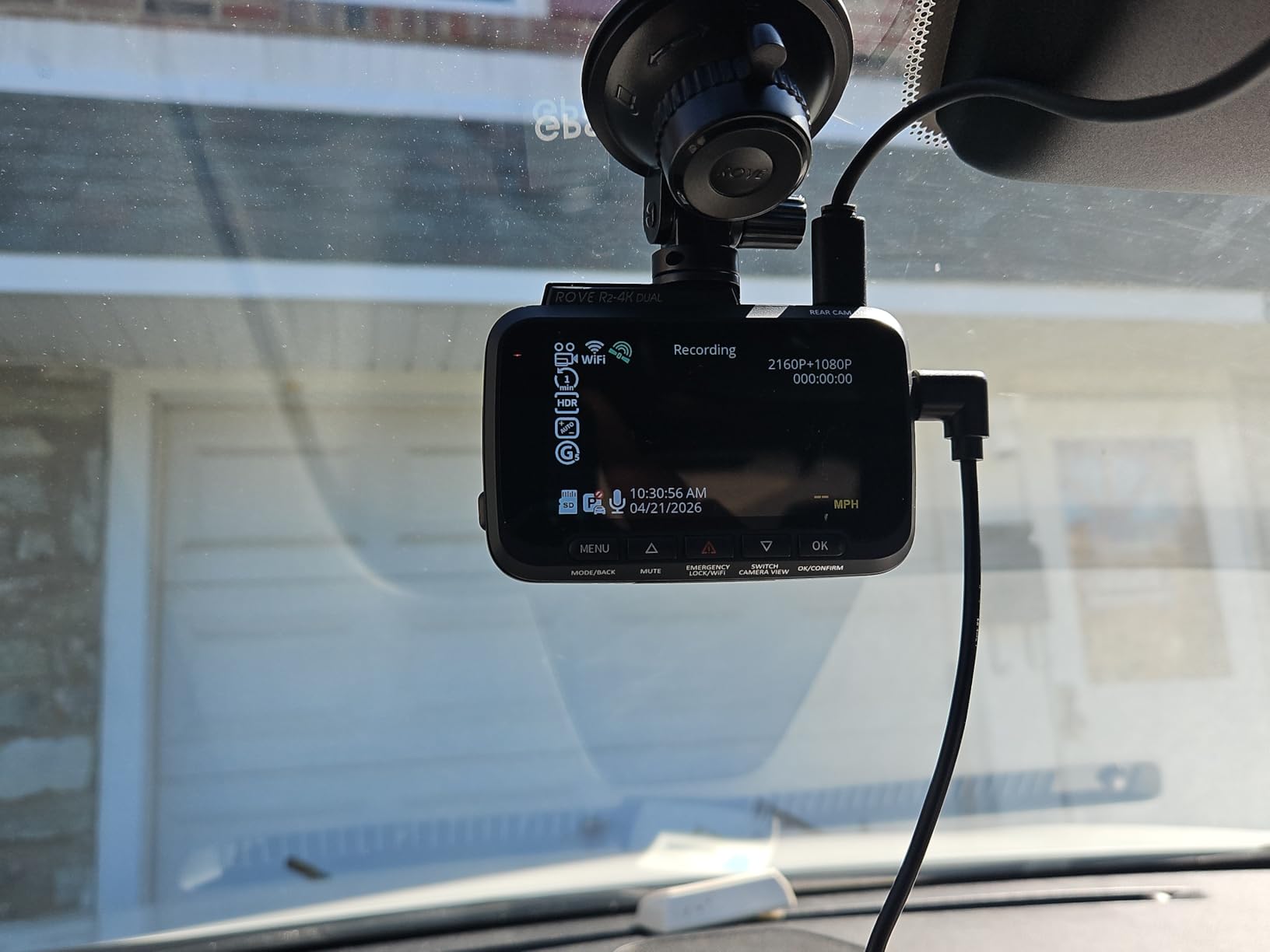
Transfer speed matters more than most buyers expect because pulling a 4K clip over 2.4GHz Wi-Fi is genuinely slow. This unit runs dual-band 5.8GHz plus 2.4GHz and owners report downloads up to 20 MB per second, so a ten-minute clip moves in well under a minute. The 3.0-inch IPS screen also shows live speed and compass, which is handy for confirming the mount is level.
Heat is where cheaper cams fail, and this one uses a built-in supercapacitor rather than a lithium-ion cell. In a parked car in summer that difference is the gap between a cam that is still recording in August and one that has died. The card situation is generous too: a 128GB card ships in the box and the camera accepts up to 1TB.
How it performs day and night
The rear channel at 1080p is enough to identify a vehicle and read a plate at a normal following distance, though it is not the channel you would rely on for fine detail at long range. Front footage is where the sensor earns its place, and the F1.5 aperture plus STARVIS 2 combination handles unlit roads better than most cameras at this level.
Daytime exposure holds up when driving toward low sun, with the HDR processing preserving detail in the sky rather than blowing it out. If your daily drive involves a lot of unlit suburban roads, this is the camera I would want watching the front.
Where it falls short
The 4K label needs qualifying. The front image is upscaled from a 2.5K native signal, so the file is 4K in size but not 4K in detail. You gain smooth files and headroom for cropping; you do not gain the crispness a true 4K sensor delivers.
Parking mode exists but is not free. You need a hardwire kit sold separately, and parking mode records in time-lapse, motion detection or collision detection modes. The unit weighs 4.48 ounces and measures 1.45 by 3.64 by 2.5 inches, so it is compact enough to sit low on the glass without blocking the driver’s view.
2. Thinkware U3000 PRO – Best for Parking Mode
THINKWARE U3000 PRO Dash Cam 4K Front and 2K Rear, Dual STARVIS 2
4K front + 2K rear
Dual STARVIS 2 sensors
Radar parking mode
OBD-II cable and card included
Pros
- 4K front footage reads plates two cars back
- 2K rear channel is more than adequate
- Dual radar wakes the cam only when something moves
- Screenless body hides behind the rearview mirror
- Supercapacitor suited to parked-car heat
- 64GB card and OBD-II cable included
Cons
- Two separate apps make older footage retrieval clunky
- Wi-Fi must reconnect each time to pull files
- LTE module and interior camera cannot run together
- Highest cost in this roundup
This is the camera to buy if your car lives on a street outside your house or in a car park where you do not trust anyone. Instead of recording a time-lapse all night and filling the card with footage of a stationary tree, the dual radar modules wake the camera when something enters their detection zone and record a 20-second clip. Your 12V battery barely notices.
The event files store 10 seconds before and 10 seconds after an incident, which is what turns a parking clip into usable evidence. The front channel records 4K and the rear records 2K, both on Sony STARVIS 2 sensors driven by an Ambarella processor, with WDR and smart auto-exposure handling the moment headlights sweep across the frame.
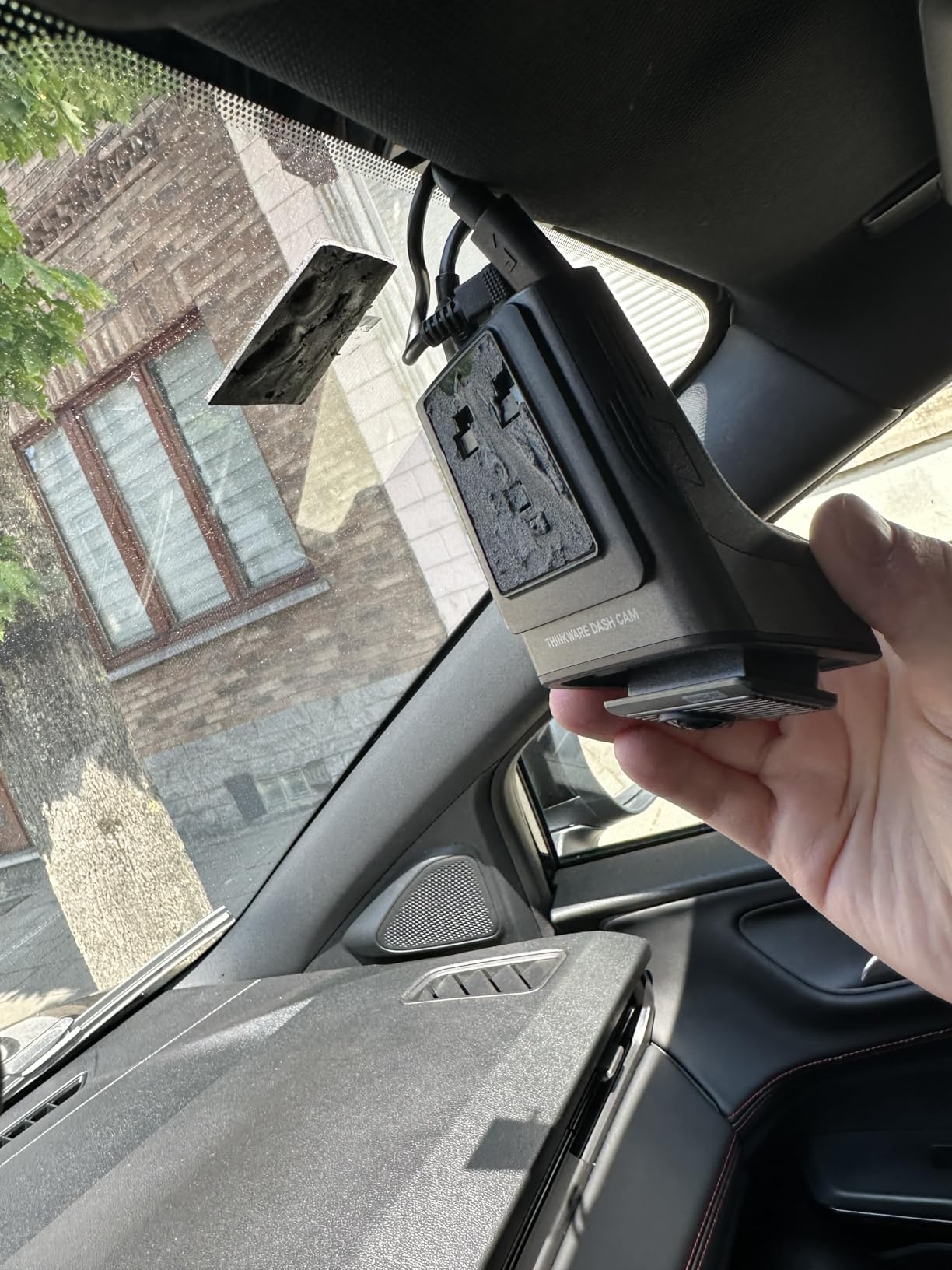
There is no screen at all, and that is a deliberate design choice rather than an omission. The body sits low and tucks behind the rearview mirror at 4.96 ounces and 5.5 by 3.86 by 7.48 inches, so nothing intrudes on your forward view. Owners who came from screen-equipped cameras generally describe the transition as a relief.
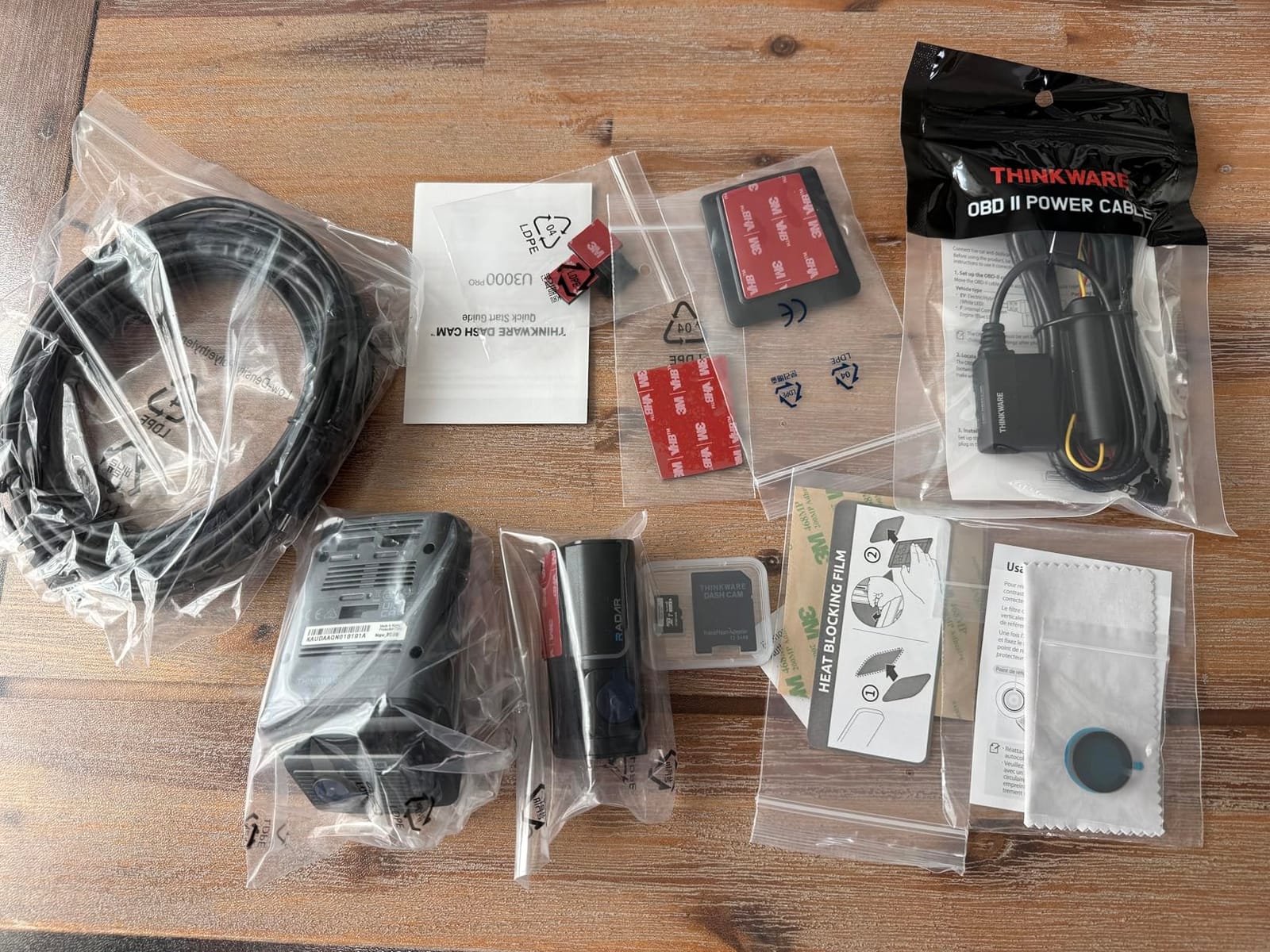
GPS tagging adds speed-camera notifications and driver assistance alerts for forward collision and lane departure. The unit is LTE compatible through an optional module for remote viewing, and the OBD-II power cable plus a 64GB card are included, so you can install it without a separate hardwire kit hunt.
What radar parking mode actually changes
Time-lapse parking mode compresses a full night into a short file, which is efficient but means a person walking past your car appears as a smear. Impact-only mode records nothing until something hits. Radar sits between the two: a low-power sensor stays awake, wakes the main camera on movement, and captures a short clip with pre-event buffer.
Super Night Vision 4.0 low-light processing keeps suburban footage bright enough to identify a shape rather than a silhouette. For a car parked on a residential street, that is the difference between knowing what happened and knowing roughly what time something happened.
Where it falls short
The software experience is the weak point. There are two apps, and getting older footage out means reconnecting over Wi-Fi every time. Users consistently describe reviewing past clips as the most frustrating part of ownership, and that friction is precisely when a claim matters most.
The LTE module and an interior camera are mutually exclusive, so you choose remote access or cabin coverage rather than both. Some electric vehicle owners also find they need a connector that the listing does not mention. Card capacity tops out at 512GB, and warranty cover is one year, the shortest here.
3. Vantrue N4 Pro S – Best Multi-Channel Image Quality
Vantrue N4 Pro S 4K 3 Channel Dash Cam, Triple STARVIS 2 HDR Car Camera
4K + 2.5K + 1080P channels
Triple STARVIS 2 with IMX678
Rotating 2.5K rear camera
Up to 1TB cards
Pros
- 4K front channel on an IMX678 STARVIS 2 sensor
- PlatePix tech with triple HDR for night plates
- Rotating rear camera adapts to traffic or trunk view
- Front plus rear mode cuts heat by 30 percent
- Buffered parking mode records before the event
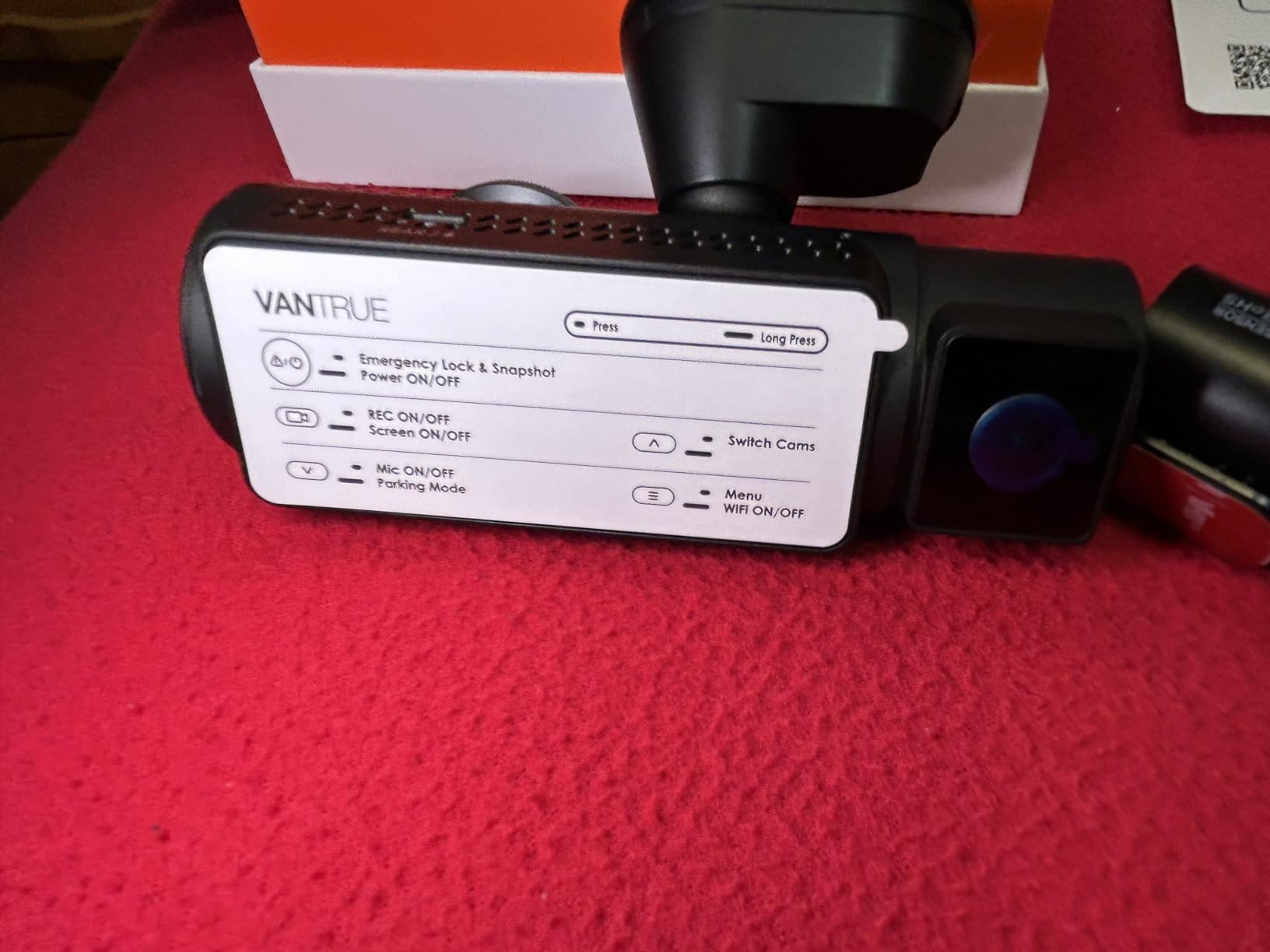
- 5GHz WiFi with GPS and voice control
Cons
- SD card not included
- Hardwire kit required for parking mode
- Higher cost than most three-channel rivals
- A 1TB card is the realistic choice for triple-channel use
Three cameras recording at once is a demanding job, and this is the one that does it without the picture falling apart. The front channel records true 4K on a Sony STARVIS 2 IMX678, the middle channel records 2.5K, and the third records 1080p, each on its own STARVIS 2 sensor. PlatePix processing plus triple HDR is aimed squarely at reading a plate from a dark street.
The rear camera rotates 360 degrees, which is a genuinely useful trick. Point it out the back window for the classic rear-ended scenario, then swing it inward to watch a child or a passenger, then back again. At 155, 160 and 165 degrees the three lenses together cover far more of the vehicle than a standard two-channel kit.
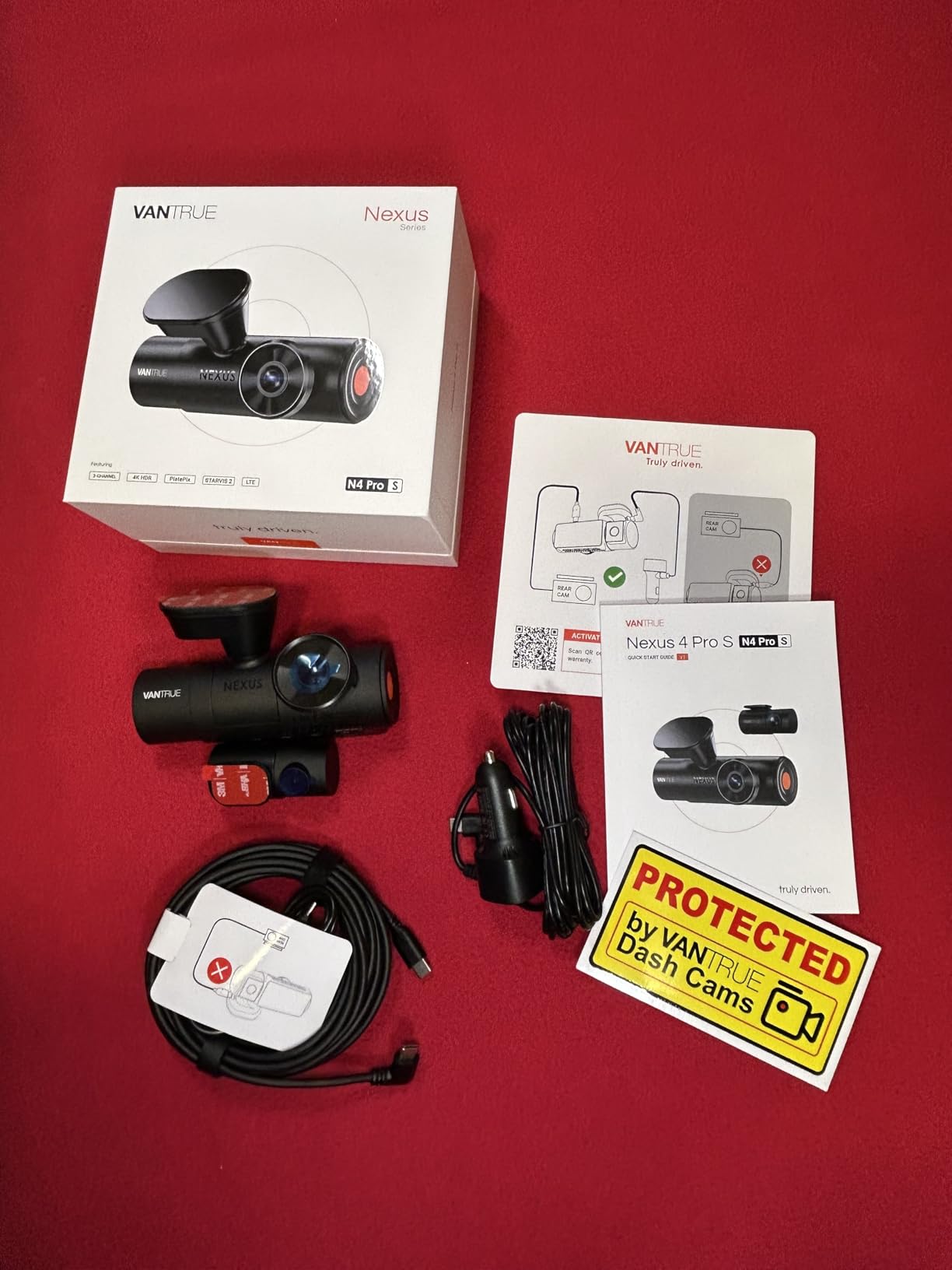
Heat is managed by choice rather than by hope. Running front and rear only instead of all three channels reduces heat generation by 30 percent, which matters because three simultaneous 4K streams on a windshield in July is a lot of work. Buffered parking mode captures 10 seconds before an event, so you see the approach rather than just the collision.
For storage, the manufacturer quotes 37 hours or more of continuous triple-channel 4K on a 1TB card, and the camera supports up to 1TB. A 20-foot rear camera cable reaches most sedans and crossovers. The unit weighs 240 grams and measures 5.63 by 7.28 by 3.82 inches, which is the largest footprint of any pick here.
When three channels are worth it
Three cameras pay off when the vehicle carries people. Rideshare drivers, delivery fleets, parents with new drivers and anyone sharing a car with a learner all get evidence from inside and outside simultaneously. A standard front-and-rear kit simply cannot answer what a passenger was doing.
Voice control, 5GHz Wi-Fi and high-precision GPS round out an otherwise enthusiast feature set. The 18-month warranty extends on registration, which is a small but real difference if something goes wrong at month fourteen.
Where it falls short
No microSD card is included, and the maths is unforgiving. Running three channels burns through a smaller card fast, so budget for a 1TB high-endurance card rather than the 128GB card most people would grab. A hardwire kit is also needed for parking mode, adding a second accessory purchase.
It costs more than the other three-channel options in this guide by a wide margin, and owners who only need front and rear coverage are paying for a camera they will point at their windscreen and never rotate. If you do not need in-cabin coverage, a dual-channel model is the honest buy.
4. VIOFO A229 Pro 3CH – Best for Enthusiasts
VIOFO A229 Pro 4K 3CH Dash Cam HDR for Front & Rear & Inside with STARVIS 2
4K front, 2K rear, 1080P cabin
IMX678 + IMX675 STARVIS 2
CPL filter pre-fitted
15-sec parking buffer
Pros
- 4K front and 2K rear channels on dual STARVIS 2
- HDR applied to all three channels
- CPL filter cuts windshield glare straight from the box
- Infrared cabin camera with four IR LEDs
- Quad-mode GPS for location speed and route
- Three parking modes with 15-second pre-recording
Cons
- SD card not included
- HK4 ACC hardwire kit sold separately
- Use the supplied power cable to avoid power-on faults
- Auto-shutdown in extreme heat can interrupt recording
VIOFO has been the most frequently recommended dash cam brand across unrelated owner communities for years, and the A229 Pro 3CH is the reason that reputation exists. It pairs an IMX678 front sensor with an IMX675 rear sensor, both STARVIS 2, recording 4K, 2K and 1080P cabin at 24 or 30fps with HDR applied to all three channels.
The detail that sets it apart at this level is the CPL anti-glare filter, pre-affixed to the front lens rather than sold as an extra. If you drive toward sunrise or sunset and every camera you own returns a washed-out clip full of windscreen reflections, this filter is the reason. Many buyers who had never used one report it alone changed how usable their daytime footage is.
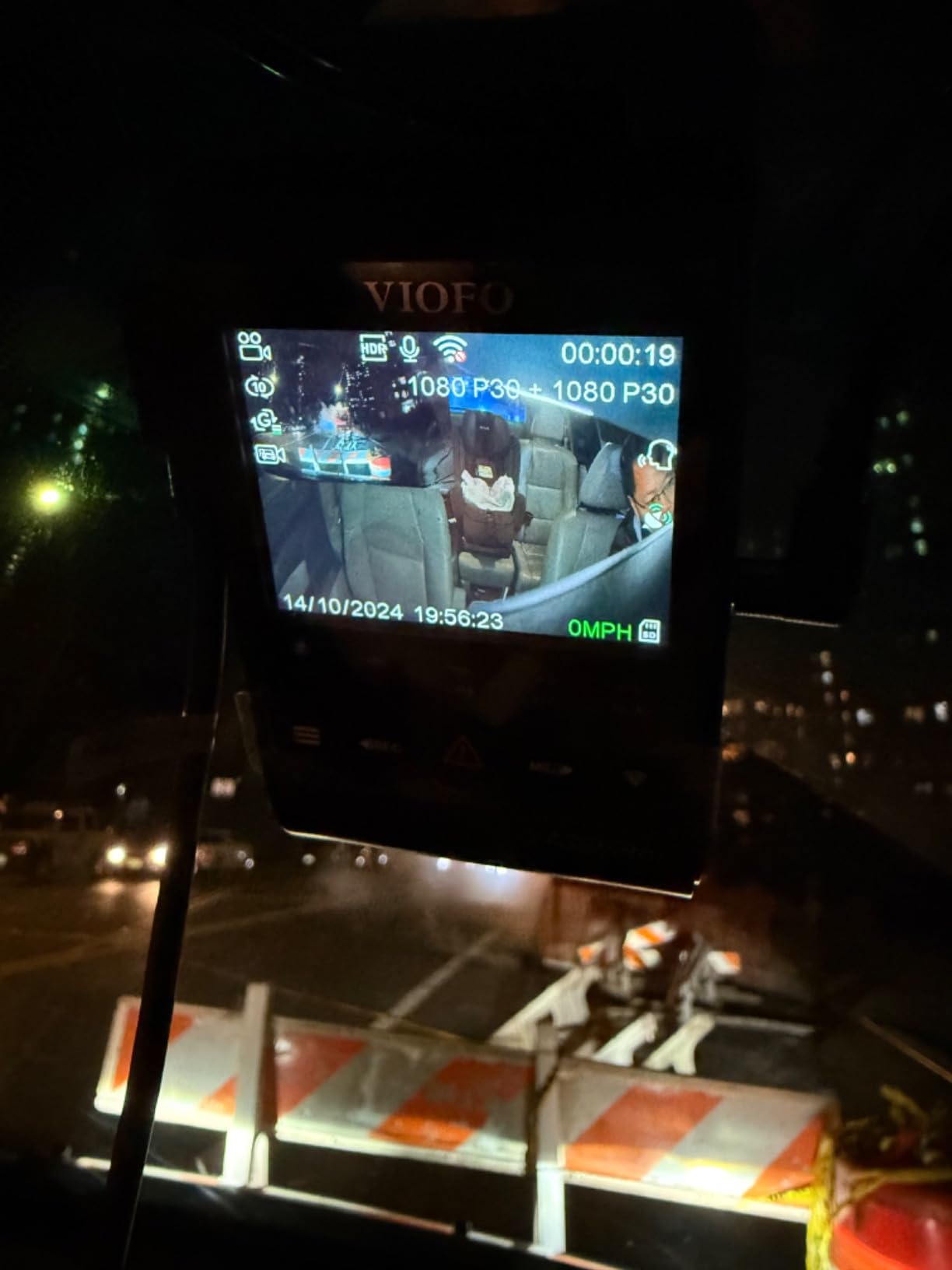
The cabin camera carries four infrared LEDs and an automatic light sensor, so it switches itself on in darkness. That matters for anyone recording inside the vehicle at night. Twelve voice commands handle snapshots, recording and emergency lock without you taking your eyes off the road.
Parking mode is the most configurable in this roundup: Auto Event Detection, Low Bitrate and Time Lapse, with buffered recording that stores 15 seconds before and 30 seconds after an event. Quad-mode GPS covers GPS, BEIDOU, GALILEO and GLONASS, which improves lock time in more regions than a single-system receiver.
Mounting and the CPL filter
It mounts on a static windshield sticker rather than a suction cup, which is the right call if you want it to stay put through a Texas summer. The 160-degree field of view is wide without the fisheye distortion that makes plates unreadable at the edges.
A built-in temperature sensor triggers automatic shutdown in extreme heat to protect the unit. On a car parked in full sun that means a gap in coverage rather than a dead camera, and the setting is worth knowing about rather than discovering later.
Where it falls short
Neither the SD card nor the hardwire kit is included, and both are required to get what you paid for. The HK4 ACC kit is the matching hardwire, and owners repeatedly recommend using the supplied power cable because cheaper third-party cables cause power-on failures that look like hardware faults.
The total cost lands above less capable rivals once storage and the hardwire kit are added. At 0.92 kilograms and 1.7 by 2.3 by 3.9 inches it is a substantial body, so the adhesive mount needs a clean section of glass to bond to. Warranty is 18 months with a further six months on registration.
5. Vantrue N2X – Best for Rideshare and Cabins
Vantrue N2X 2.7K Dash Cam Front and Inside, STARVIS 2 PlatePix Car Camera
1944p front + 1080p cabin
STARVIS 2, F1.8, dual HDR
4 IR LEDs on rotatable lens
Magnetic mount
Pros
- Front and cabin record together at 1944p plus 1080p
- Dual HDR reads plates through glare
- Infrared cabin camera works in total darkness
- Tool-free magnetic mount removes in seconds
- Built-in GPS logs time date location speed and mileage
- Supercapacitor rated from -4F to 158F
Cons
- No rear camera
- so blind spots stay blind
- SD card not included
- App downloads can disconnect mid-transfer
- Audio pickup carries noticeable static
- Runs hot and draws power in parking mode
Rideshare and taxi drivers need the cabin far more than they need the rear window. The N2X pairs a 1944p front channel with a 1080p interior channel, both on Sony STARVIS 2 sensors with dual HDR and an F1.8 aperture, so a passenger’s face is legible in daylight glare and the road ahead still resolves a plate.
Four infrared LEDs sit on a cabin lens that rotates 45 degrees. Point it at the passenger seat, the rear bench or the door, and footage stays visible in complete darkness. That is the single feature that separates a cabin camera worth owning from one that records a black rectangle at night.
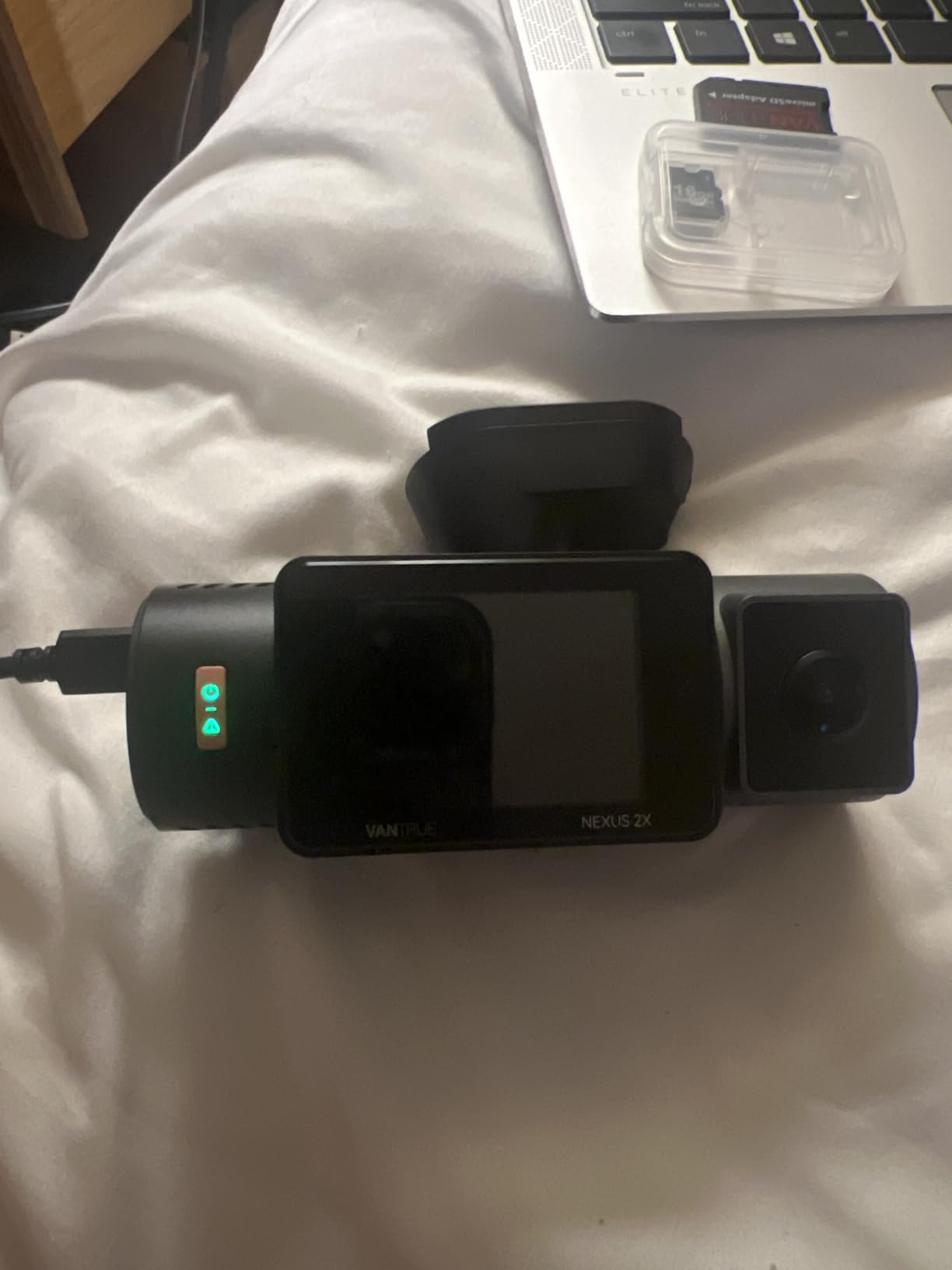
Installation is the easiest of any multi-channel cam here. The tool-free magnetic mount means you can pull the unit off to wipe the lens or move it between vehicles without re-taping anything, and the 158-degree front and 165-degree interior views are among the widest in the roundup. Voice control and 15-second pre-recording add useful hands-free operation.
Built-in GPS logs time, date, location, speed and mileage reports, which is useful if a driver needs to demonstrate a route or a fare dispute. The supercapacitor is rated from -4F to 158F, one of the wider temperature ranges listed here and a good sign for hot summers and cold winters.
Why 1944p instead of 4K
The front channel records at 1944p, and can also capture 1440p at 60fps for smoother motion on faster roads. 60fps matters when a vehicle crosses your path at speed because a 30fps frame has more chance of capturing a blurred car in the wrong position. It is a deliberate trade of resolution for motion accuracy.
Parking mode with 15-second pre-recording uses motion and collision detection, so the clip includes what happened before the bump. If you hardwire this in a commercial vehicle running long shifts, that buffer is often the only part of the footage that matters.
Where it falls short
There is no rear camera and no rear wiring, so a rear-ended claim is not covered. Owners who drove a taxi and later wanted full coverage report that this is the reason to look at a three-channel kit instead.
Audio pickup carries noticeable static and weak cabin voices, which limits its use for verbal disputes. Wi-Fi downloads can disconnect partway through a transfer, the SD card is not included, and the unit needs a 12V DC source rather than a plain USB port. It weighs 655 grams, so the magnetic mount wants a firm surface.
6. IIWEY N6 – Best 360-Degree Coverage
IIWEY N6 360° Dash Cam 4 Channel, Free 128GB Card, 8 IR Lights Night Vision
Four-channel 360 coverage
2K front + 3x 1080P channels
8 IR LEDs for night vision
Wired, no battery
Pros
- Four channels cover far more than front and rear kits
- 2K front channel plus 1080p rear and two side views
- Infrared LEDs light the cabin in total darkness
- 128GB card included so it works out of the box
- 5.8GHz Wi-Fi transfers up to 20 MB per second
- Handles parked-car heat without an internal battery
Cons
- SD card reportedly needs frequent reformatting
- Static adhesive sheets can fail under camera weight
- Side cameras are 1080p only
- Parking mode needs a separately purchased hardwire kit
- Large and heavy body at 6.9 by 5.4 by 3.4 inches
Most dash cams point somewhere. This one covers the whole car, recording four simultaneous channels with a 2K front view, a 1080p rear view and two 1080p side cameras on adjustable swivels. At 170 degrees front and rear and 150 degrees to the sides, there is very little around the vehicle left unfilmed.
Eight infrared LEDs handle the cabin, which is what makes a genuine 360 system useful rather than decorative. A standard two-channel kit can show you what hit the car from behind, but not what happened to a passenger in the back. This one can, and it does so in darkness.
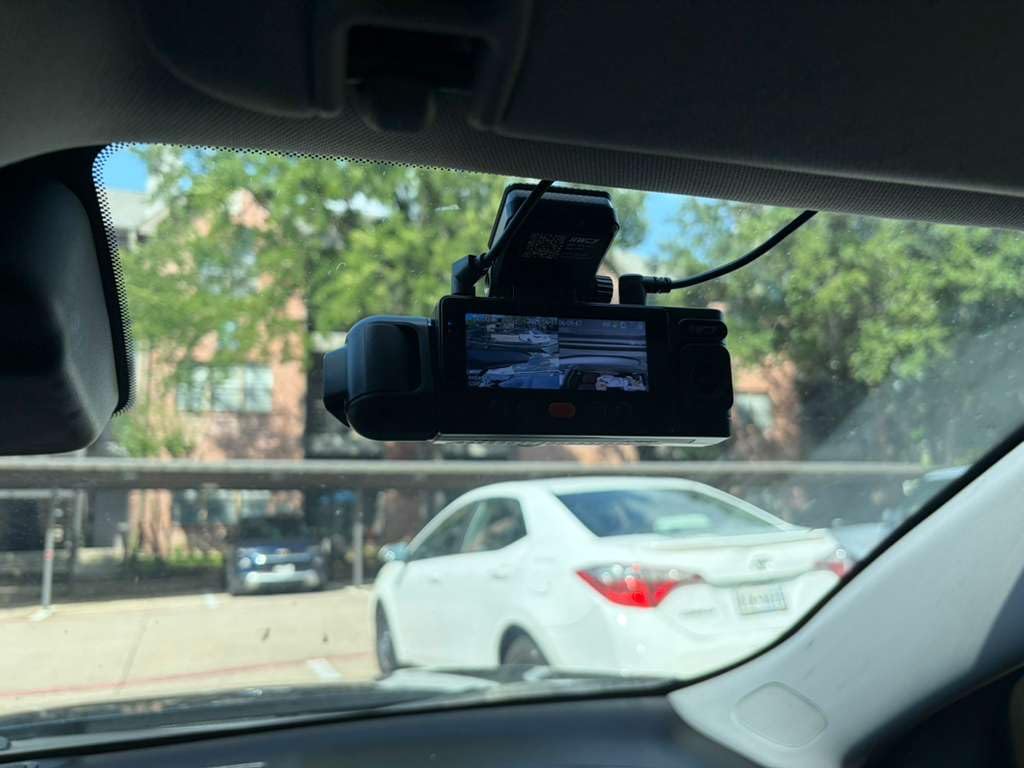
Vision Enhance processing targets exactly the moments people buy these for, improving plate and lane-line readability at junctions and in low light. Wi-Fi 6 on 5.8GHz and 2.4GHz delivers up to 20 MB per second, and the radio switches itself off after roughly five minutes so it is not draining the battery while you drive. GPS logs speed and route.
Parking surveillance runs time-lapse for 48 hours with impact detection, and because the unit is wired-only with a supercapacitor and no internal battery, it can stay in a hot car indefinitely without the swelling and shutdown problems that hit battery-powered models.
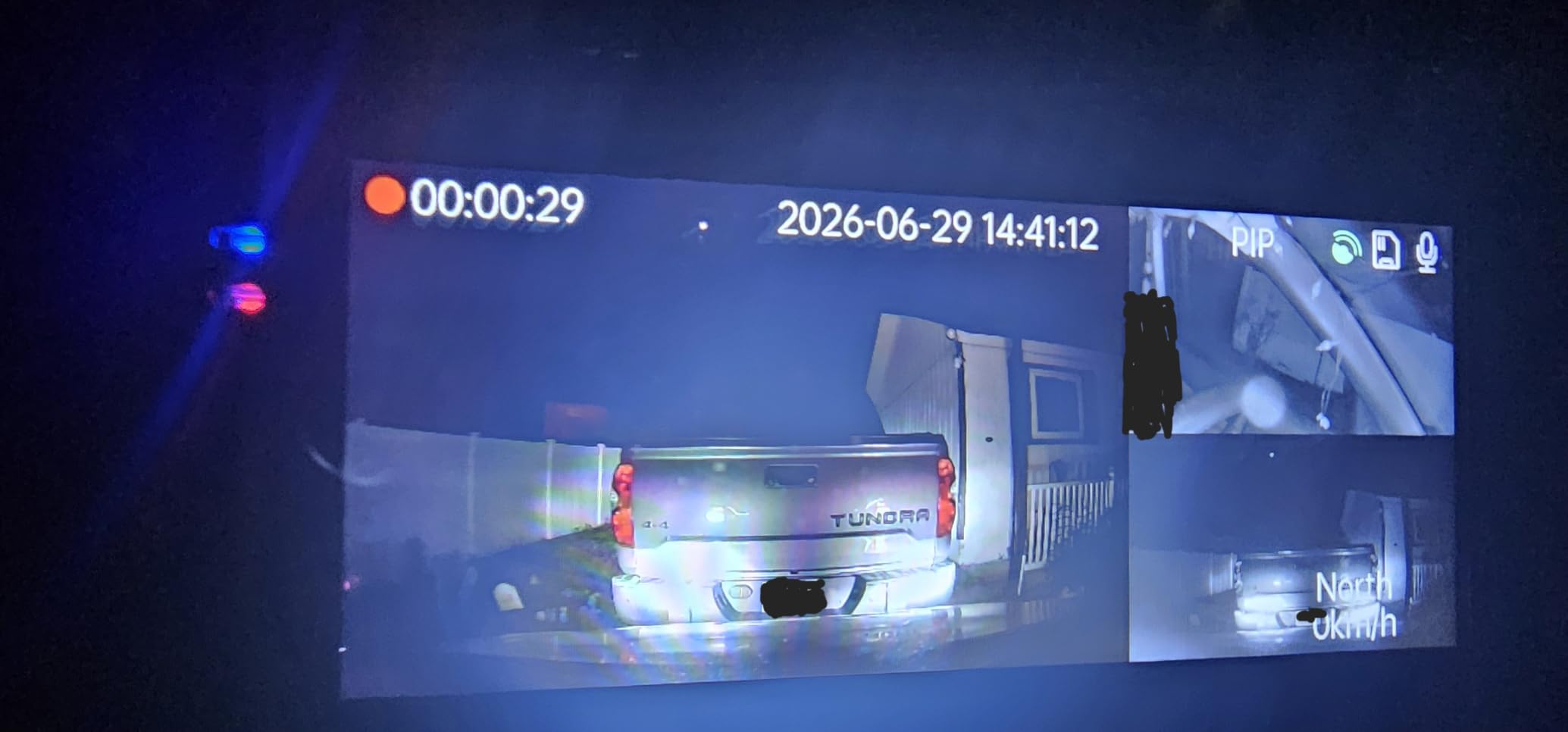
Where a 360 system beats front and rear
The argument for four channels is the parking-lot and car-park scenario. A break-in, a kerb scuff or a door opened into your flank is caught from the side or above, not just from the road ahead. The swivel side cameras can also be angled down toward a wheel or a kerb edge.
It is also the better answer for a van, truck or large SUV where the front camera cannot see past the body. If your vehicle has real blind spots, a 360 layout closes them in a way a longer lens never will.
Where it falls short
Card management is the recurring complaint. Owners report needing to reformat the SD card frequently, which is exactly the chore the highest-engagement owner discussions warn against getting wrong. Capacity tops out at 256GB, the lowest ceiling of the multi-channel models here, and four channels fill a card quickly.
The supplied static adhesive sheets can fail under the weight of the camera, so check the mount in a heatwave rather than assuming it holds. Some users dislike the infrared night-vision look and report headlight glare. A hardwire kit is needed for parking mode, and the 6.9 by 5.4 by 3.4 inch body is large behind a mirror.
7. REDTIGER F17 3CH – Best for Three-Channel Recording
REDTIGER F17 4K 3CH Dash Cam, STARVIS 2 Sensor HDR, 64GB Card, 5.8GHz WiFi
4K front + 1080p rear/cabin
STARVIS 2 IMX675 with HDR
Adjustable G-sensor
64GB card included
Pros
- All three channels record at once
- 4K front on a STARVIS 2 IMX675 sensor
- Four IR lights for cabin night recording
- G-sensor sensitivity is adjustable
- Screen saver reduces night distraction
- 64GB card and dual-band WiFi included
Cons
- Three channels fill a 64GB card quickly
- Wi-Fi defaults to off and must be enabled each power-up
- App pairing requires phone Bluetooth to be off
- Rear cable may be too short for large SUVs
- Parking mode needs a hardwire kit
- Adhesive pads are single-use
The F17 records three channels simultaneously at 4K front, 1080p rear and 1080p cabin, and it can be switched to a second mode with a 2.5K front channel alongside both 1080p channels. The front uses a STARVIS 2 IMX675 with WDR and HDR, which is why the front image holds up when the rear channels are simply adequate.
It has two recording layouts for a reason. The 4K front plus 1080p rear mode suits drivers who want the sharpest road footage, while the 2.5K plus 1080p inside plus 1080p rear mode exists for anyone who needs in-cabin evidence. At 150, 160 and 155 degrees the three lenses overlap enough to leave no obvious gap.
The adjustable G-sensor is worth calling out because it is close to a deal-breaker. Owners who have used fixed-sensitivity cameras complain that a door slam or a speed bump locks a clip and fills the card with footage of nothing. This one lets you tune the threshold down, and owners specifically report that it is not trigger-happy by default.
Four infrared lights cover the cabin channel, and a screen saver stops the display glowing in a dark car. Dual-band 5GHz and 2.4GHz Wi-Fi runs through the REDTIGER app, and GPS sits in the adhesive mount so speed and route are recorded automatically.
Choosing between the two recording modes
Think about which clip you would actually submit. If disputes are about a car in front cutting across you, the 4K front mode is the one. If you drive with passengers regularly and the dispute would be about behaviour in the cabin, the three-channel mode gives you the evidence that matters.
The frame rates are 24, 25 or 30fps on the front and 30fps on the interior and rear. Holding the front at 30fps is the sensible default; dropping to 24 or 25 exists for people whose playback software prefers matching frame rates across channels.
Where it falls short
A 64GB card is not enough for three channels. In practice you need a larger high-endurance card immediately, and owners flag the card filling up as the first thing to fix after setup. Max capacity is 512GB.
Wi-Fi defaults to off and must be enabled manually each time the unit powers up, and app pairing needs phone Bluetooth switched off first, which is a recurring source of frustration. The rear camera cable can be too short for larger SUVs, the adhesive pads cannot be reused, and parking mode needs a separate hardwire kit.
8. 70mai T800E – Best Budget 3-Channel Set
70mai 4K Dash Cam Front and Rear Inside, 3 Channel Car Dash Camera for Cars, Dashcam with GPS, Wi-Fi 6, Voice Control, Parking Monitor, Night Vision, Loop Recording, 64GB SD Card Included (T800E)
4K front + 1080p rear and cabin
F1.55 with HDR and night vision
Switchable cabin IR
Pros
- Three channels in one unit
- 4K front clarity rivals pricier cameras
- 64GB card and electrostatic stickers in the box
- Switchable infrared for cabin night footage
- Built-in 5-mode GPS tracks route and speed
- Voice control for hands-free capture
Cons
- 4K front is upscaled from a 2K native sensor
- Cabin camera runs at about 15 FPS
- No remote viewing or cloud backup
- App navigation and downloads feel cumbersome
- Rear image is a step below the front
70mai is the brand most often recommended online purely for having Sony sensors in the range, and the T800E is the clearest reason. It packs 4K front, 1080p rear and 1080p cabin into a single unit at a cost that sits well below every three-channel competitor above it, and the front image handles plate reading better than its position would suggest.
HDR imaging combines with 3D noise reduction and super night vision at an F1.55 aperture, which is the combination doing the work after dark. The interior camera has switchable infrared, so you can decide per recording whether the cabin footage should be lit or left natural.
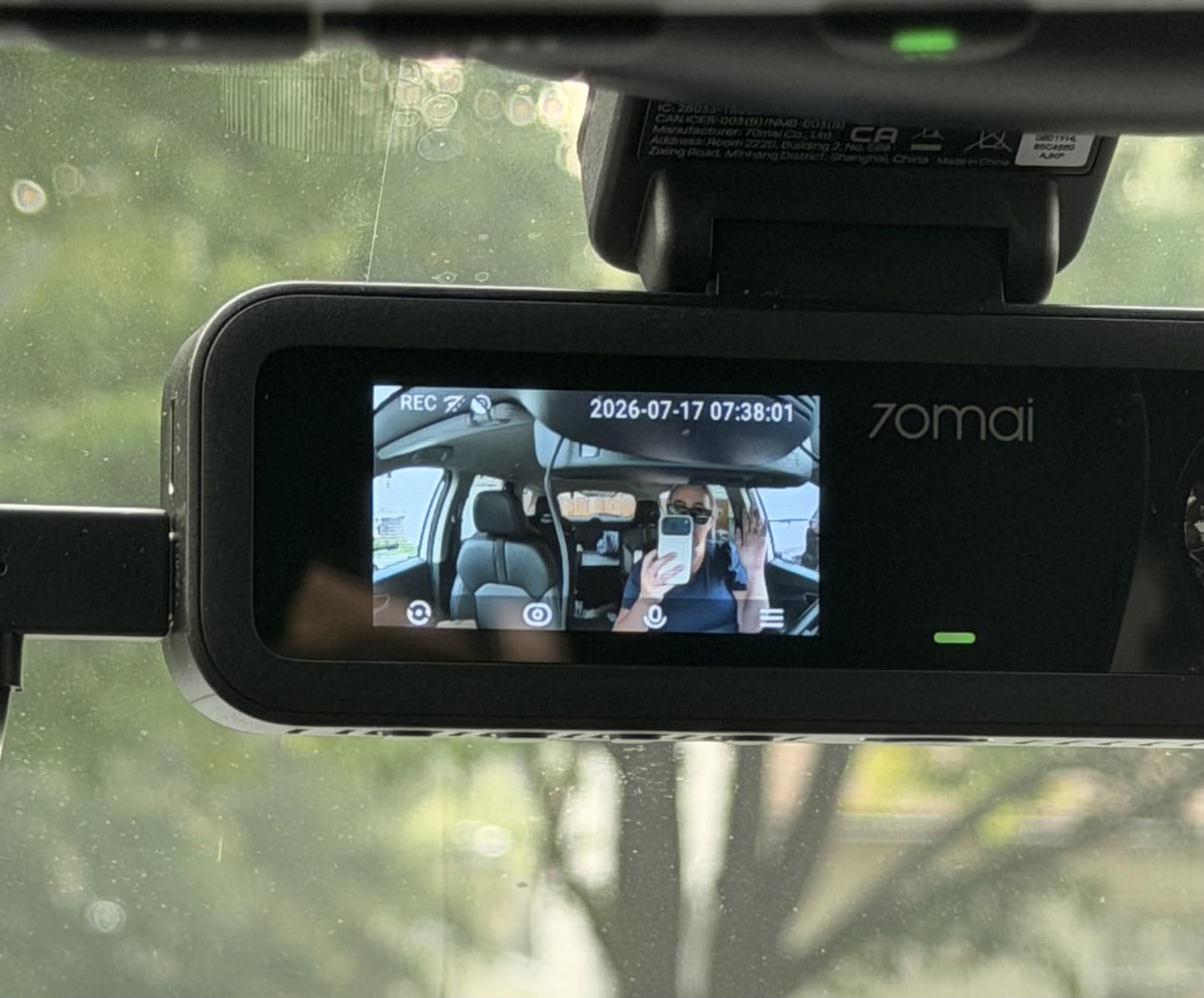
Built-in 5-mode GPS logs location, speed and route, and Wi-Fi 6 transfers up to 10 MB per second, which the manufacturer describes as five times faster than Wi-Fi 4. Voice control handles photos, recording and emergency lock. The supercapacitor is rated from 14F to 140F.
A 64GB card and electrostatic stickers are in the box, and customer support has been reported as responsive, including resolving a firmware bug quickly. At 16 ounces and 1.33 by 5.12 by 1.61 inches the body is slim and sits low on the glass.
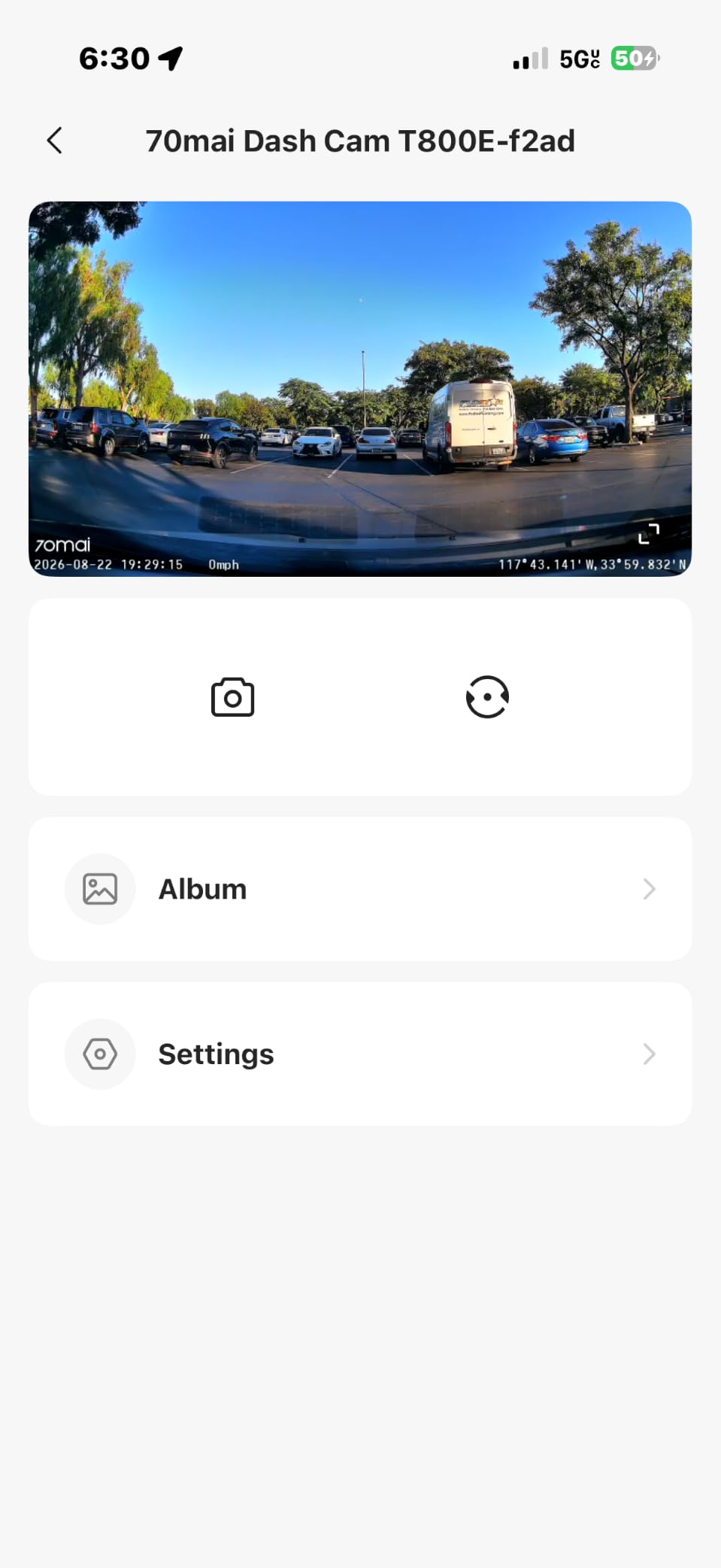
What a budget 3-channel setup covers
Three channels at this level suit a family car or a light delivery vehicle where one camera cannot see the whole story. The cabin channel catches a rear-facing child, a passenger dispute or a phone being held, and the rear channel covers the single most common claim there is: being rear-ended.
Parking monitoring uses a G-sensor lock and time-lapse and works with the optional hardwire kit. Note that 4G is not supported, so there is no remote live view from your phone while the car is parked.
Where it falls short
The 4K front channel is upscaled from a 2K native sensor. The file is 4K, the detail is not, and the honest comparison is against other 2.5K front channels rather than against true 4K hardware.
The cabin camera runs at roughly 15 FPS, which makes fast in-cabin movement look choppy on playback. The rear image is a step below the front. Owners also describe app navigation and downloads as the weakest part of the package, and there is no cloud backup or remote viewing at all.
9. REDTIGER F7NP – Most Versatile with the Widest View
REDTIGER F7NP 4K Dash Cam Front Rear, STARVIS 2 Sensor, Free Card Included
4K front + 1080p rear
STARVIS 2, F1.5, 6-layer lens
170-degree front view
GPS in the suction mount
Pros
- 4K front and 1080p rear record together
- Six-layer optical lens on a STARVIS 2 sensor
- 170 degree front field of view is the widest here
- GPS integrated into the suction cup mount
- 128GB card included
- Supercapacitor instead of a lithium battery
Cons
- Front 4K is upscaled rather than native
- Hardwire kit needed for parking mode
- A notable share of one and two star reviews cite reliability and app connection issues
- Rear camera limited to 1080P
The F7NP is the widest-view camera in this roundup, with a 170-degree front lens and a 140-degree rear, and it comes with a 128GB card already inside. It has been the volume seller in this category for a long time, which is why the review count runs into five figures and why replacement parts and firmware fixes are easy to find.
Image quality comes from a Sony STARVIS 2 sensor at F1.5 behind a six-layer optical lens, with WDR and HDR balancing exposure when you drive into low sun. The 5.8GHz Wi-Fi claims up to 20 MB per second through the REDTIGER Cam app, and G-sensor incident lock protects the clip around a collision from loop overwrite.
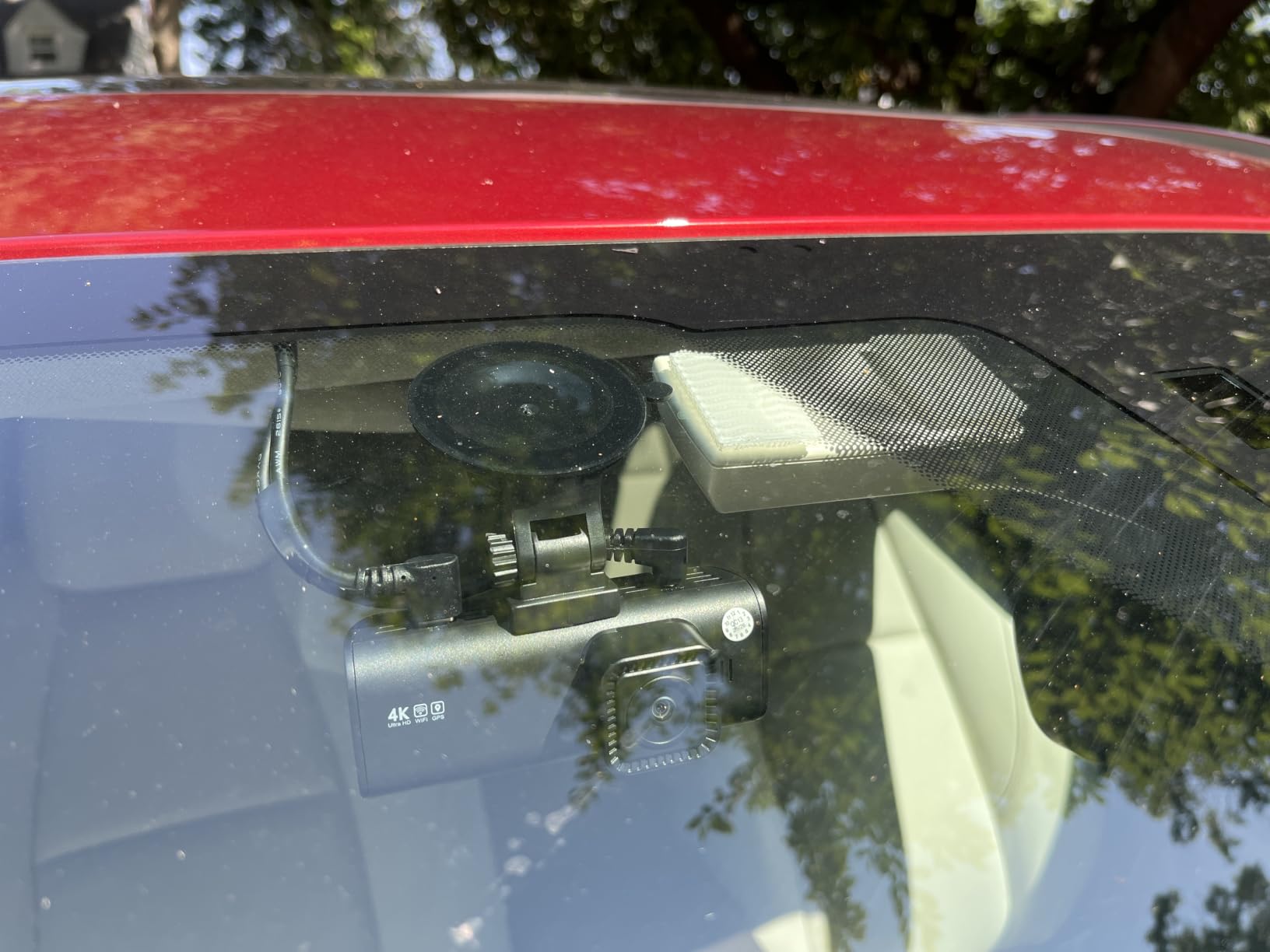
The built-in supercapacitor replacing a lithium battery is the right engineering decision for a car parked in summer heat. A capacitor does not swell, does not run down to an empty cell overnight, and does not degrade across a decade of hot summers.
Warranty is 18 months from the manufacturer, the longest coverage among the dual-channel models here. The body weighs 4 ounces and measures 0.79 by 3.82 by 1.26 inches, so it is one of the smaller units in the guide and easy to tuck behind a mirror.
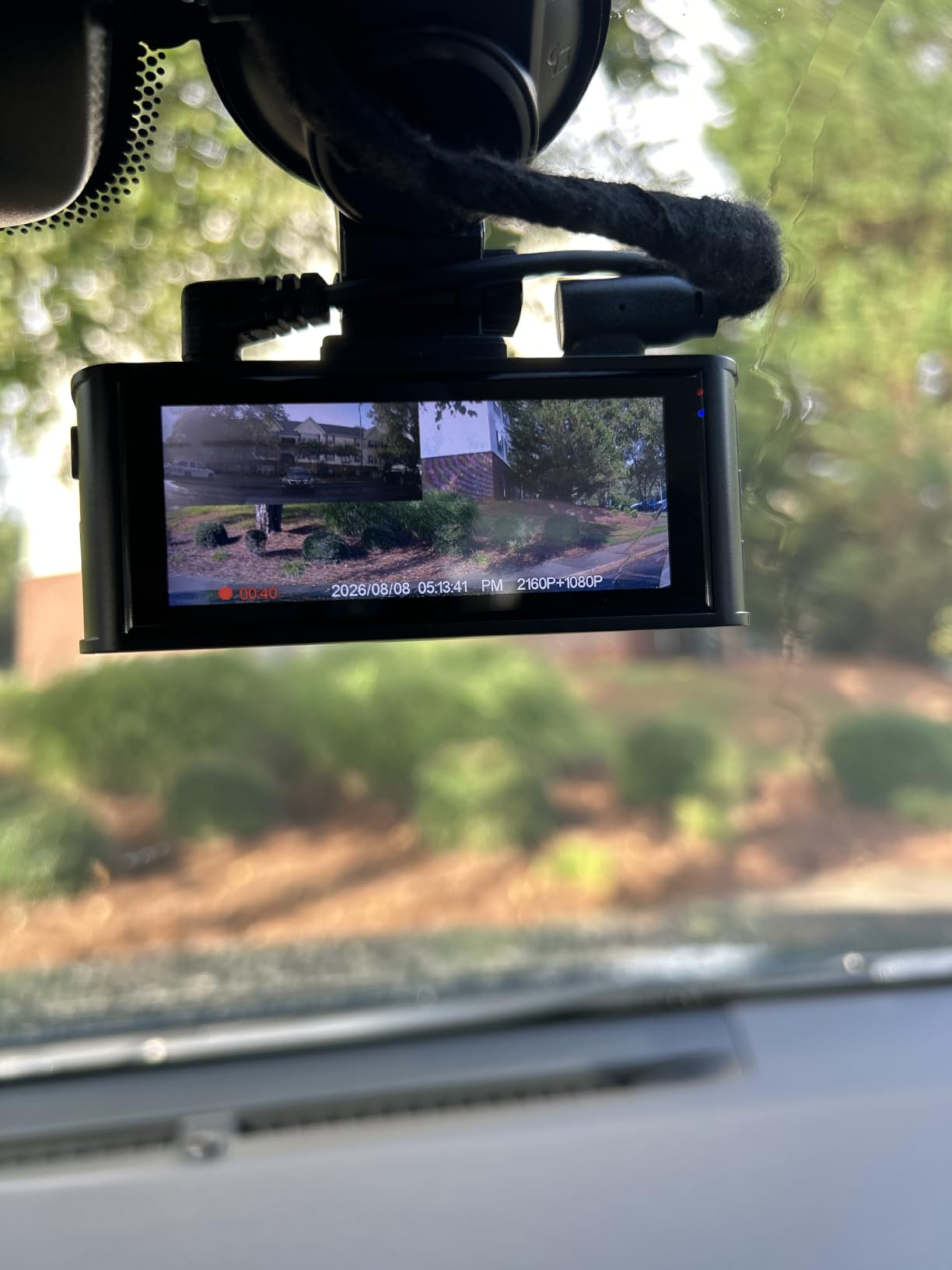
Why field of view beats resolution here
A 170-degree lens captures the vehicle beside you and the cyclist filtering through on the right, which a narrower lens crops out entirely. When liability is disputed, a wider view means the whole sequence is on record rather than just the centre of it. It is also the reason budget cams with 140-degree lenses can still capture a useful incident.
The wide view does bring more distortion at the edges, where objects stretch outward. Accept that trade for a front camera you can point anywhere; consider a narrower lens if you mainly care about reading plates far ahead.
Where it falls short
As with several picks here, the 4K front channel is upscaled rather than native 4K. The rear camera records 1080P, and parking mode requires a hardwire kit you buy separately. Card capacity reaches 512GB.
The consistent weak point is software and pairing. A notable share of one and two star reviews cite Wi-Fi and app connection issues and power connection reliability rather than image quality, so budget time for a re-pair if the first attempt fails. Treat that as a five-minute setup cost rather than a defect.
10. 70mai M310 Plus – Best Discreet Single Camera
70mai M310 Plus 4K Dash Cam Front with Night Vision, 140° Wide Angle Dash Camera for Cars, WiFi Dashcam with App, Parking Mode, G-Sensor, Loop Recording, Voice Control, Easy Install Car Camera
True 4K front channel
140 degree wide-angle lens
No built-in screen
F1.55 aperture with WDR
Pros
- True 4K front recording rather than upscaled
- Compact body hides completely behind the rearview mirror
- Adhesive mount holds up in high heat
- Five-minute install with included trim tool
- No subscription needed to view recordings
- Wi-Fi app control plus voice commands
Cons
- No built-in screen
- so playback needs the app or a card reader
- microSD card not included
- Longest continuous clip is three minutes
- Power cable is short
- App connection conflicts with CarPlay and OnStar on some vehicles
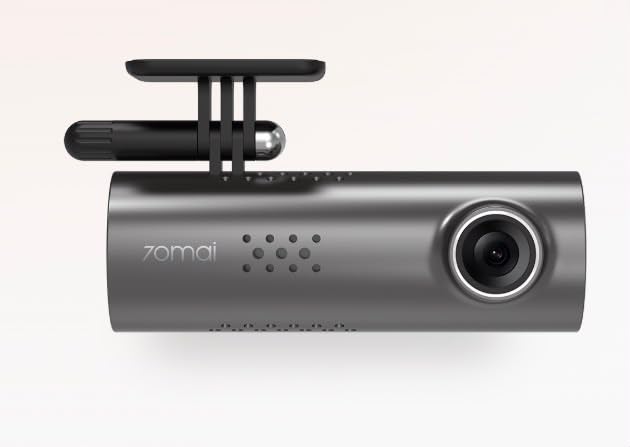
If you only need to know what happened in front of your car, a single front camera is the correct answer and this is the one to buy. It records genuine 4K UHD at 30fps through a 140-degree lens at F1.55, with WDR and 3D noise reduction handling night driving. This is real 4K, not an upscaled file.
The body has no screen at all and weighs 76.7 grams, measuring 1.7 by 3.6 by 1.8 inches. It disappears behind the rearview mirror, which removes the one complaint that shows up repeatedly in owner discussions about larger cams: a body big enough to obstruct the driver’s view or glow distractingly at night.
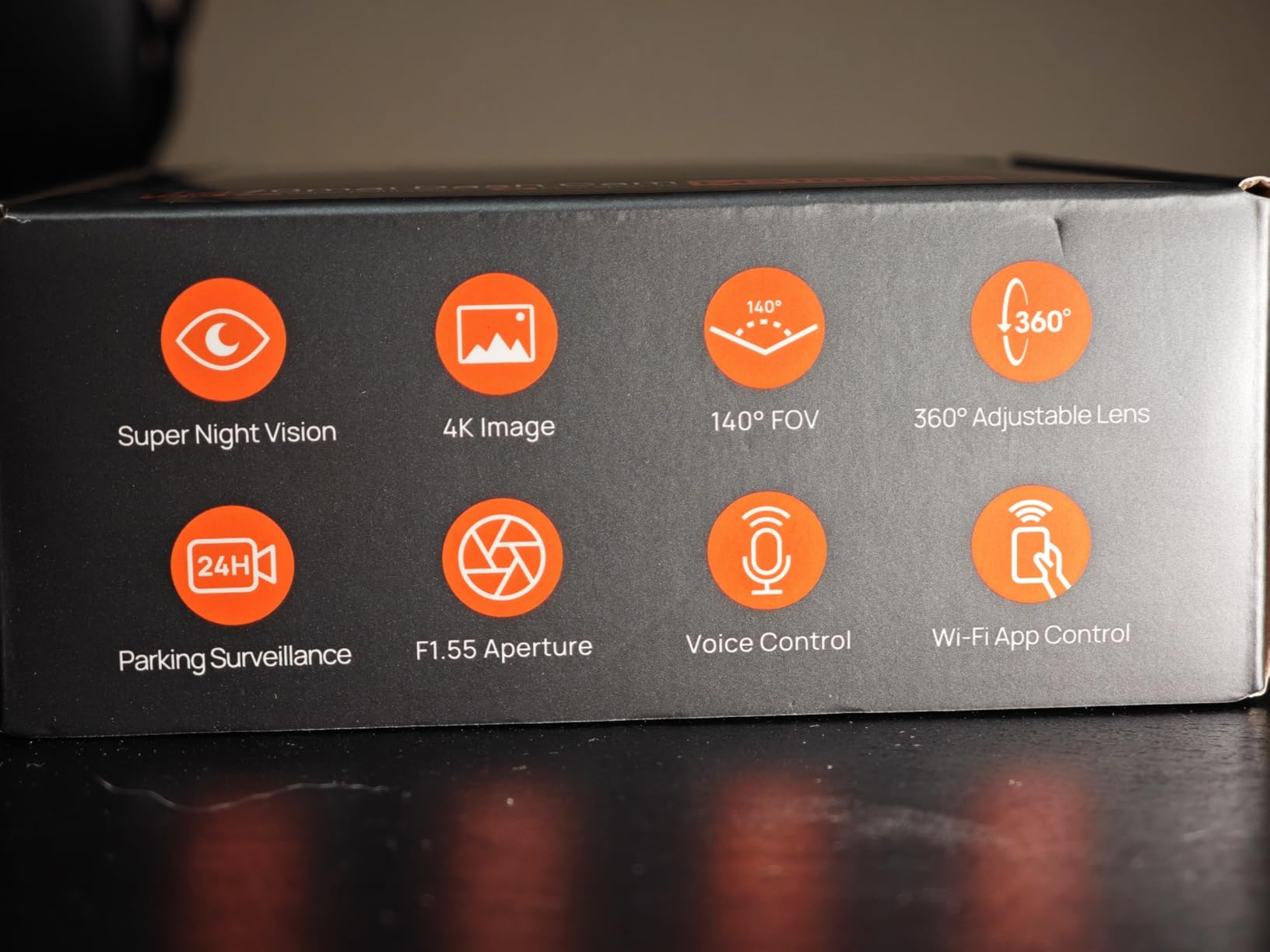
The G-sensor emergency lock keeps 1 to 3 minutes of pre-recording, so the footage starts before the impact rather than after it. Loop recording then overwrites the oldest unlocked clips while protecting anything the sensor flags. Parking mode supports time-lapse with an 11.8V low-voltage protection cutoff, which is the safety net that stops a hardwired cam flattening a weak battery.
Installation takes about five minutes with the included trim tool and static stickers, and the adhesive mount is reported to hold up in high heat better than a suction cup would. Voice control and Wi-Fi app control are both there, and viewing recordings requires no subscription.
When one camera is genuinely enough
Front-only coverage suits drivers on open roads with low traffic risk, and it is enough to answer the question that matters most: who was in front, who changed lane, who ran the light. It is also the setup that is least likely to be installed badly, because there is one camera and one cable.
Card capacity reaches 256GB, which is generous for a single channel. There is no GPS, so footage carries no speed or position data, and that weakens it as standalone evidence compared with the models that stamp it in.
Where it falls short
Playback is the main friction. With no screen you need the phone app or a card reader, and the app itself is the weakest part of the package. The longest continuous clip is three minutes, so an incident is split across files that need joining before you submit them.
The microSD card is not included, the power cable is short at 11.48 feet and may need an extension, and CarPlay or OnStar Wi-Fi conflicts make app connection fiddly on some vehicles. Some owners also report spurious emergency recordings triggered by bumps. Maximum card size is 256GB and warranty cover is one year.
How to Choose a Dash Cam in 2026
Once you have decided you want one, these are the decisions that actually change which camera you end up with. Everything else is preference.
Which brand is best for dash cams?
VIOFO leads on features per dollar and is the most widely recommended brand across owner communities, especially for wind and temperature reliability. Thinkware is the pick for parking mode and low-profile design. 70mai is the ecosystem and app choice, with strong support. Miofive and REDTIGER cover the value tier, and Garmin suits buyers who just want a reliable unit from a familiar name.
Is 2K or 4K better for a dash cam?
Sensor quality matters more than resolution, so 4K on a weak sensor loses to 2K on a Sony STARVIS 2 part. Pick 4K when you drive fast, at night, or want cropping headroom. Pick 2K when your budget is fixed and the sensor is good. Also check whether the 4K is native or upscaled, since several models here upscale from 2K or 2.5K.
Single, dual, or 3-channel: how many cameras do you need?
A single front channel records what is in front of the car and suits open-road and low-risk driving. Front and rear covers the most common claim of all, being rear-ended, and is the sensible default for most people. Front, rear and cabin adds interior evidence for rideshare, delivery and family driving, at the cost of heat, storage and a longer install.
Channel count also drives file size. Three channels on a single card fills it far faster than two, and a card that looks generous becomes inadequate within weeks. Size the card after you choose the channel count, not before.
The microSD card is not an accessory, it is the most important part
The most repeated owner complaint is not image quality. It is a failed card producing corrupted files and missing the incident the camera was bought to record. Buy a high-endurance card from a reputable manufacturer, at least Class 10 and preferably V30 or better, and match it to the camera’s maximum capacity.
Capacity maths is simple: 4K consumes roughly three times the storage of 1080p for the same clip length, and a three-channel system more than doubles a two-channel one. The cameras quoted here claim over 37 hours of continuous triple-channel 4K recording on a 1TB card, so if you run four channels, a 1TB card is the realistic minimum rather than a luxury.
Two more habits matter. Format the card in the camera itself rather than on a computer, because cameras use their own filesystem structure. And check that the card you were given is a real high-endurance part, because bundled cards are the ones most likely to fail within weeks.
Parking mode: time-lapse versus impact-only versus radar
Time-lapse compresses hours into minutes, so a car cover shifting looks like a storm. Impact-only records nothing until something hits, which is cheap but useless for a break-in. Radar parking mode uses a low-power radar module to wake the camera on movement and record a short clip, which is why it protects your battery better than continuous time-lapse.
All three require a hardwire to an ignition-switched accessory circuit, because a 12V socket loses power the moment you turn the key. The M310 Plus shows why a low-voltage cutoff matters: it stops recording at 11.8V so a parked cam cannot drain a battery over a long weekend.
Heat, supercapacitors and lithium batteries
A parked car in summer reaches temperatures that degrade or swell an internal lithium-ion battery, and cameras with one often shut down or restart unpredictably. A supercapacitor is the fix: it holds charge briefly, survives extreme temperature, and never swells. Six of the ten models here use one.
If you live somewhere with hot summers, treat a built-in lithium-ion battery as a reason to pick a different model rather than a minor specification note. The VIOFO A229 Pro also adds a temperature sensor that triggers automatic shutdown in extreme heat, which protects the hardware at the cost of a gap in coverage.
Installation: 12V socket, hardwire kit or OBD-II
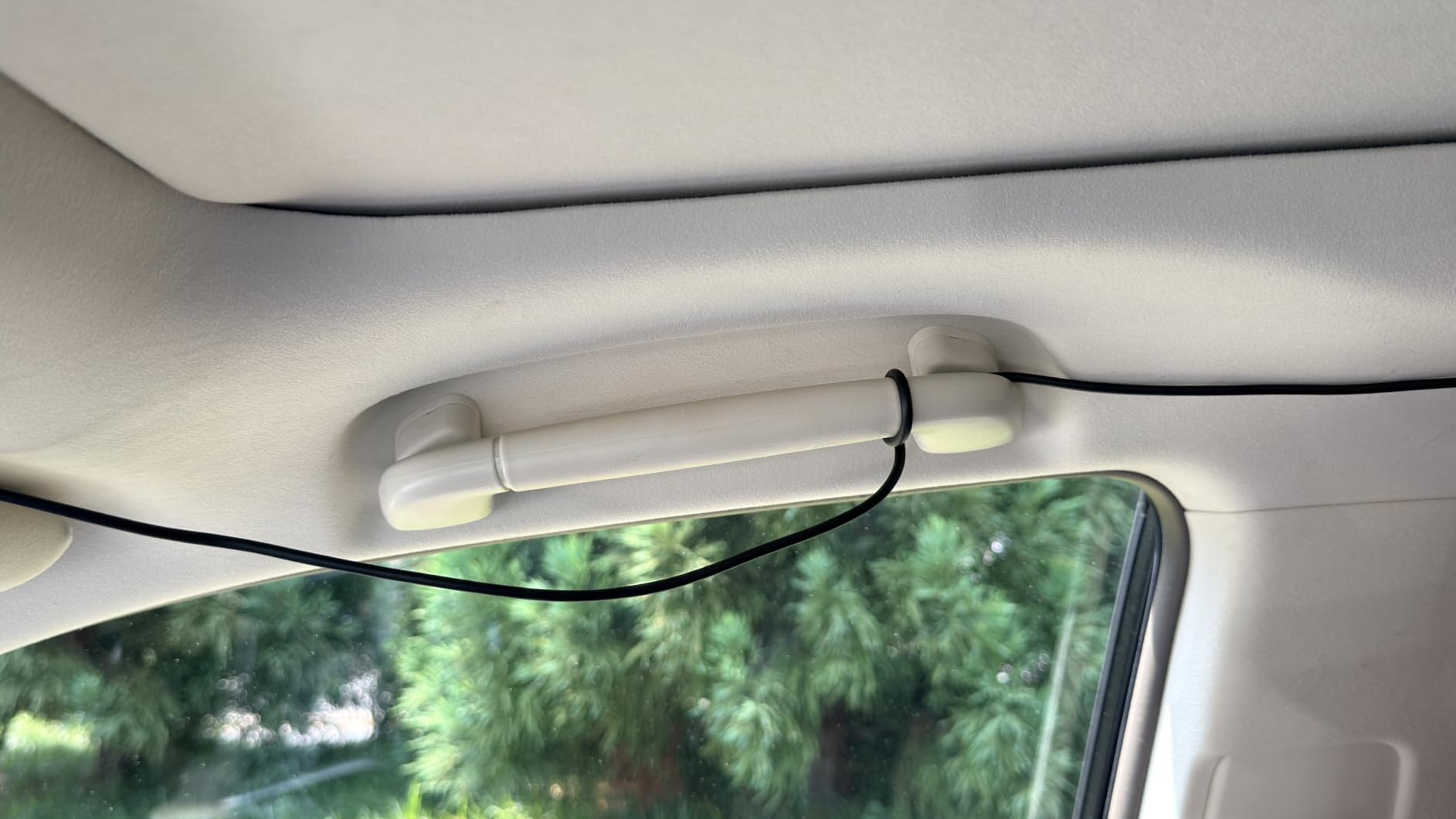
The 12V socket is the easiest option and the weakest. A car moves around, the plug works loose, and the camera loses power mid-recording, which is exactly the sort of fault that gets blamed on the camera. Owners report random power-offs traced back to loose 12V plugs, so push the plug in properly and check it after a week.
A hardwire kit routes power along the headliner into a fused accessory circuit, which is stable and keeps the cigarette lighter free. Confirm the circuit is ignition-switched by testing it before you commit. The Thinkware U3000 PRO includes an OBD-II cable instead, which plugs into the diagnostic port and draws power without a tape job, though not every vehicle exposes a suitable connector.
What about dash cams and your insurance?
Most insurers in the US do not advertise a blanket dash cam discount, so do not expect your premium to fall because you bought a camera. The real value is claim resolution: independent video settles liability far faster than testimony, which shortens disputes and is often what determines who pays. A small number of insurers and driving clubs do offer discounts, so ask yours directly rather than assuming.
Are dash cams legal, and what are the common mistakes?
Windshield mounting rules vary by state and several jurisdictions restrict objects mounted where they obstruct the driver’s view. Mount high on the glass or behind the rearview mirror. Audio recording without consent is unlawful in two-party consent states, so check before recording conversations in your car.
Mounting too low or too far to the side, so the camera blocks the view of the road or the driver’s mirrors.
Using the bundled memory card and losing the footage you needed weeks later to a failed card.
Leaving the G-sensor at maximum sensitivity, so door slams and speed bumps lock clips until the card is full of nothing.
Publishing footage of other people without blurring plates and faces, which creates liability rather than protection.
Hardwiring parking mode to a circuit that is not ignition-switched, or skipping the low-voltage cutoff, and returning to a flat battery.
Should you use an action camera or a 360 camera instead?
An action camera on a windscreen mount gives better stabilisation and a wider lens than many dash cams, but it lacks loop recording, a G-sensor, GPS stamping and parking mode unless you add a separate battery and wiring. For evidence, those automatic features matter more than image quality.
A 360 camera is the better substitute if you want interior coverage, and its dual-lens design captures the cabin and the road in one unit. Most owners using one as a dash cam still add a hardwire and a card reader, and none of them get automatic incident locking. The models in this roundup, including the four-channel IIWEY N6, give you that behaviour out of the box.
Frequently Asked Questions
What is the best dash cam overall?
The ROVE R2-4K Dual is the best overall dash cam, recording 4K front and 1080p rear simultaneously on a Sony STARVIS 2 IMX675 sensor, with built-in GPS, a 128GB card included and support for cards up to 1TB. Note that the front 4K is upscaled from 2.5K and that parking mode needs a separately sold hardwire kit.
What is the most highly rated dash cam?
Rating alone is not a useful filter, because the highest-rated units often have very few reviews behind them. What matters is whether the camera reads plates at night, saves footage before an impact, uses a supercapacitor for heat, and has adjustable G-sensor sensitivity. On those criteria the ROVE R2-4K Dual, at 4.5 stars across more than 14,000 reviews, is the strongest all-round pick.
What is the best dash cam to have in your car?
For a daily commuter, the ROVE R2-4K Dual covers front and rear with GPS and a card included. For a rideshare or taxi driver, the Vantrue N2X records the cabin with infrared lighting. For anyone who parks on the street overnight, the Thinkware U3000 PRO uses radar to wake on movement and protect the battery. For a van or truck with real blind spots, the IIWEY N6 gives four-channel coverage.
Do I need front and rear, or is front-only enough?
Front-only is enough for open-road driving where disputes are rare and usually about a car in front. Front and rear is the sensible default because being rear-ended is the most common claim, and a rear camera is what proves it was not your fault. Add a third cabin channel only if you carry passengers regularly or work as a rideshare or delivery driver.
Can a dash cam drain my car battery?
Yes, but only when it draws power with the ignition off. In parking mode a cam left on a 12V socket or a hardwired circuit that is not ignition-switched can flatten a battery over a long weekend. Set a low-voltage cutoff such as the 11.8V protection on the 70mai M310 Plus, use a fused accessory circuit, and choose radar parking mode over continuous time-lapse so the camera sleeps until something moves.
How do I stop my dash cam from deleting the footage I need?
Loop recording overwrites the oldest unlocked clips when the card fills, so protect the important one in two ways. The G-sensor automatically locks the clip around an impact, and you can lock any clip manually or by voice command. Then copy the locked files to your phone or computer before the card fills again, and raise the G-sensor sensitivity threshold if door slams are filling the card with empty clips.
What microSD card should I buy?
Buy a high-endurance card from a reputable manufacturer, at least Class 10 and ideally V30 or better, sized to the camera’s maximum capacity. A 4K channel uses roughly three times the space of 1080p, and a three-channel system needs several times more, so a 1TB card is realistic for a three-channel setup. The symptom of a failing card is corrupted files and missing incident footage.
Will my insurance go down with a dash cam?
Most insurers in the US do not advertise a blanket dash cam discount, so the value is claim evidence rather than a lower premium. Independent video settles liability far faster than testimony, which shortens disputes and often determines who pays. A few insurers and driving clubs do offer discounts, so ask yours directly instead of assuming either a discount or nothing.
Which Dash Cam Should You Buy?
If you want one recommendation, take the ROVE R2-4K Dual. It is the best balance of front and rear image quality, night performance, built-in GPS and included storage in this roundup, and its supercapacitor means it keeps working in a hot parked car.
Match the branch to your driving instead. Budget-limited and want front and rear on a card you do not have to buy separately: the REDTIGER F7NP. Balanced and want the sharpest front channel with the least accessory buying: the ROVE R2-4K Dual. Parking on the street every night: the Thinkware U3000 PRO, for radar-triggered parking and a screenless body. Carrying people for work: the Vantrue N2X for cabin coverage, or the Vantrue N4 Pro S if you want three channels recording at once.
Do the last thing properly. Buy a high-endurance microSD card rather than relying on the bundled one, size it to your channel count, and format it in the camera every few months. That single step prevents the failure that causes more lost footage than any camera fault in this guide.