
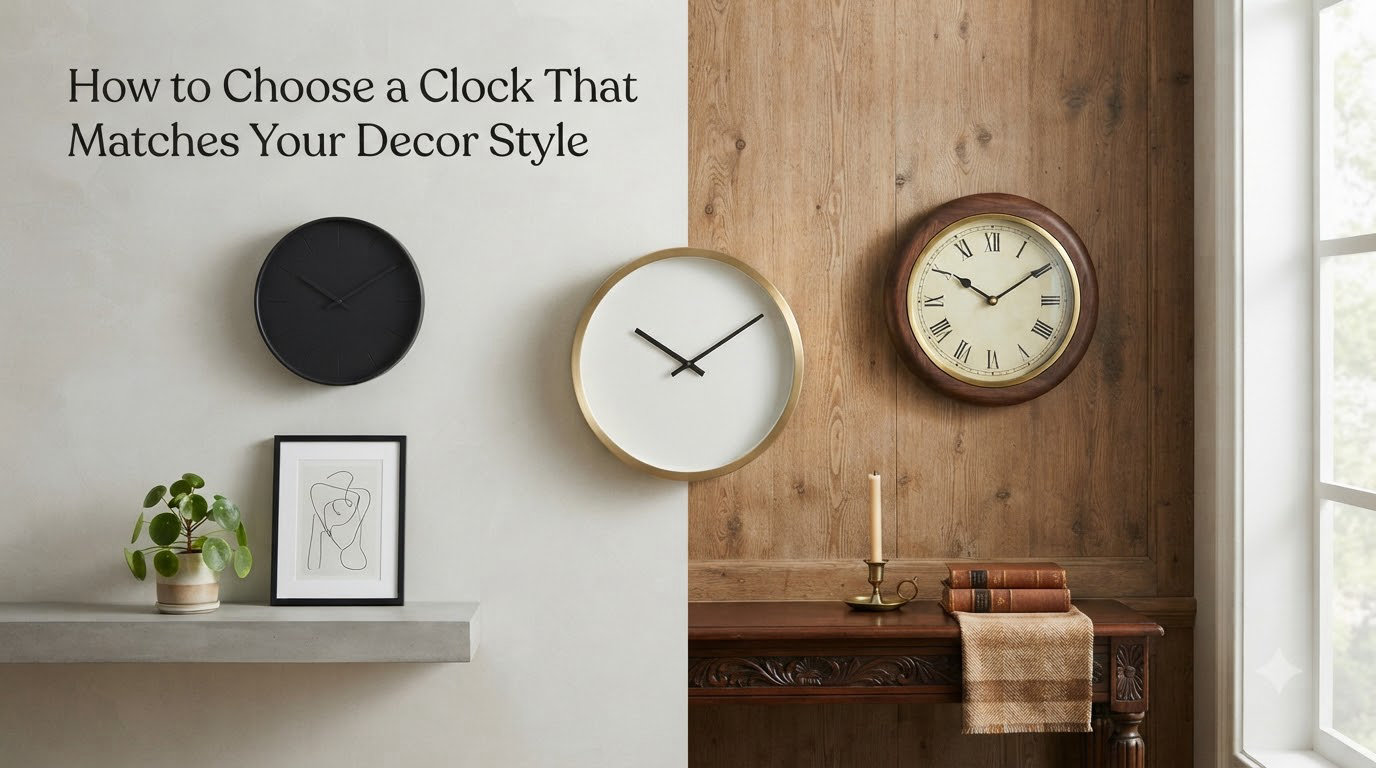
Choosing the right clock for your space is about more than telling time. A well-matched timepiece ties a room together, while a poorly chosen one can feel like an afterthought. Our team has spent years testing clocks across hundreds of homes, and we’ve seen how the right piece can transform a wall from empty to anchored.
If you’ve ever stood in front of a bare wall wondering what size, finish, or style to commit to, you’re not alone. This guide on how to choose a clock that matches your decor style walks you through the exact framework we use with interior designers. By the end, you’ll know exactly how to pick a clock that looks like it was always meant to be in your room.
Table of Contents
How to Choose a Clock That Matches Your Decor Style: A Practical Framework
The decision comes down to four steps: identify your decor style, match the clock aesthetic, get the size right, and nail placement. Skipping any one of these is where most people end up with a clock that feels off. I’ve watched friends buy gorgeous timepieces only to hang them too high in rooms that already had competing focal points.
Think of a clock as jewelry for your walls. It should complement the room rather than compete with everything else in it. A minimalist clock in a maximalist room looks lost, and a bold sunburst in a serene Scandinavian space can feel jarring. Balance is everything.
Identifying Your Decor Style First
Before browsing clocks, take ten minutes to walk through your home and define your actual style. Look at your furniture, your textiles, and your wall art. Are the lines clean or curved? Do you lean toward warm woods or cool metals? Does the room feel calm or energetic?
Here’s a quick reference for the most common decor styles and the clocks that fit them best:
| Decor Style | Key Characteristics | Ideal Clock Style |
|---|---|---|
| Modern Minimalist | Clean lines, neutral palette, uncluttered | Minimalist dial, thin frame, monochrome |
| Traditional | Rich woods, ornate details, classic shapes | Roman numerals, brass or wood frame |
| Industrial | Exposed materials, raw textures, dark tones | Large metal numerals, black or iron frame |
| Rustic Farmhouse | Reclaimed wood, vintage accents, soft warmth | Vintage dial, distressed wood, copper accents |
| Mid-Century Modern | Teak wood, tapered legs, retro shapes | Sunburst, starburst, geometric dial |
| Coastal | Light blues, whites, natural fibers | Whitewashed wood, rope detail, oversized |
| Bohemian | Mixed patterns, global textiles, layered pieces | Vintage flip clock, eclectic colors, wood |
| Scandinavian | Soft woods, functional design, white and beige | Minimalist wooden clock, light oak, slim markers |
Don’t worry if your style blends two or three categories. Most homes do. What matters is identifying the dominant personality so your clock can echo it.
Modern and Minimalist
Modern spaces thrive on negative space and intentional simplicity. Choose clocks with thin profiles, no numerals or simple line markers, and a frame that practically disappears. White, black, or brushed metal finishes work beautifully. Anything ornate or visually busy will fight the room’s calm.
Traditional and Classic
Traditional rooms welcome clocks with personality. Roman numerals, decorative bezels, and warm wood tones feel right at home. Pendulum wall clocks and antique-style designs are perfect for libraries, dining rooms, and formal living rooms.
Industrial and Urban
Industrial decor thrives on raw materials. Think exposed brick, black iron, and concrete. Clocks with large metal numerals, gear details, or factory-style designs add to the urban edge. Avoid anything too delicate or floral here.
Rustic and Farmhouse
Rustic spaces want warmth and a sense of history. Distressed wood frames, vintage-inspired dials, and patinated metal all work. A large clock with a weathered look can become the anchor piece in a farmhouse-style room.
Mid-Century Modern and Eclectic
Mid-century rooms love statement shapes. Sunburst and starburst clocks were practically invented for this style. Wood tones like teak and walnut pair perfectly with the era’s tapered furniture legs.
Matching Clock Styles to Your Decor
Now that you know your decor type, let’s match the clock aesthetic. Some clock styles have become design classics because they work so well in specific rooms.
Minimalist Clocks
Minimalist clocks have simple dials, no numbers, and clean hands. They are versatile and quiet. They work in modern, Scandinavian, and contemporary spaces without stealing the spotlight. Look for thin bezels and neutral faces.
Sunburst and Starburst Clocks
These statement pieces feature radiating spokes or rays. Mid-century modern and bohemian spaces love them. They work well above a sofa or console where they can act as the room’s anchor. Choose brass for warmth, wood for a softer look, or metal for an industrial feel.
Vintage and Retro Clocks
Vintage clocks evoke nostalgia. Flip clocks, schoolhouse clocks, and antique dials bring character to traditional and eclectic rooms. Look for aged finishes and patina that look like they’ve been in the family for decades.
Oversized Statement Clocks
Oversized clocks are dramatic and modern. They fill large walls and become instant focal points. Use them in rooms with high ceilings and minimal furniture so they have room to breathe.
Size Selection Guidelines
Size is where most people get it wrong. A clock that’s too small disappears, and one that’s too large overwhelms. Here’s a simple rule our team uses:
The 1/3 to 1/2 rule: A wall clock should be roughly one-third to one-half the width of the furniture or wall area beneath it. If your sofa is 84 inches wide, your clock should be 28 to 42 inches across. This creates visual balance without overpowering the space.
Follow these steps to nail the right size:
Step 1: Measure the wall or furniture piece beneath where the clock will hang.
Step 2: Cut a paper circle in your estimated clock size and tape it to the wall. Live with it for 24 hours.
Step 3: Adjust up or down based on how the paper feels in the space.
Step 4: Confirm the final measurement before buying.
This paper trick comes from a popular Reddit hack, and it genuinely works. We’ve used it ourselves when renovating our studio. It saves you from the frustration of returning a clock that’s too small or committing to one that’s too big.
For ceilings under 9 feet, a 12 to 24 inch clock usually fits well. For 9 to 12 foot ceilings, lean toward 24 to 36 inches. For great rooms or double-height spaces, oversized 36+ inch clocks create the drama you need.
Placement and Hanging Height
Where you hang the clock matters as much as the clock itself. Eye level is the universal starting point, typically 150 to 160 cm (about 60 to 63 inches) from the floor to the clock’s center.
For clocks above furniture, the rule is simpler. Leave 8 to 12 inches of space between the top of the furniture and the bottom of the clock. This prevents the clock from feeling cramped and creates intentional negative space.
Above a sofa, measure from the top of the sofa back, not the cushions, since backs are taller. Above a fireplace, the clock should sit 12 to 18 inches above the mantel. Hanging it flush with the mantel looks awkward and feels disconnected.
One common mistake I see is hanging clocks too high. People assume higher means more visible, but in practice, clocks above eye level force you to crane your neck. If it feels too high, trust your gut and lower it.
Color and Material Coordination
Color is where your clock either sings or clashes with the room. Look at the metal finishes already in your space: cabinet hardware, lamp bases, and picture frame accents. Your clock should echo at least one of these metals for visual harmony.
Black or charcoal clocks add definition to neutral palettes. Brass and gold tones bring warmth to modern spaces. Wood finishes soften minimal interiors. Mixed metals are trendy but require intention. Choose one dominant metal and a secondary accent at most.
For material, think about texture. A sleek metal clock in a rustic room creates tension that can either feel intentional or jarring. Match materials to your decor’s overall vibe: warm woods for farmhouse and Scandinavian, raw metal for industrial, polished metal for modern.
Consider the clock face color too. White faces are the most readable. Black faces feel dramatic and modern. Cream or aged faces suit vintage and traditional decor. Colorful dials work in eclectic or children’s rooms but can feel busy in calm adult spaces.
Room-by-Room Clock Selection
Different rooms have different needs. A clock that works in your living room might be wrong for your bedroom. Here’s how to choose by room.
Living Room
The living room is usually where clocks get the most attention. This is your chance for a statement piece. Above the sofa, console, or fireplace is the classic placement. Sunburst, oversized, or vintage clocks work well here. Keep readability in mind if this is your main time-checking spot.
Bedroom
Bedrooms need quiet. Choose a silent sweep or quartz movement with no ticking. Battery-operated minimalist clocks work beautifully above dressers. If you use your phone as an alarm, the bedroom clock is purely decorative and can lean small.
Kitchen
Kitchens need readability above all. Choose a clock with clear numerals and a face you can read from across the room. Vintage schoolhouse styles or oversized industrial clocks are popular kitchen choices. Position it where you can check it while cooking.
Home Office
A home office clock should help you stay on schedule without being distracting. Minimalist dials with silent movement work well. Avoid clocks with ticking if you take video calls; the sound can be picked up by microphones.
Dining Room
Dining rooms welcome elegance. Roman numeral clocks, brass frames, and pendulum designs fit formal dining rooms beautifully. Avoid oversized pieces that dominate a small dining space.
Common Mistakes to Avoid
Even experienced decorators make these errors. Watch out for them so your clock enhances rather than detracts.
Hanging too high: Eye level is the goal. Clocks above eye level feel disconnected and hard to read.
Choosing a ticking clock for the bedroom: The sound may seem subtle in the showroom but becomes noticeable at 3 AM.
Ignoring metal coordination: Mismatched metals look chaotic. Pick one or two and commit.
Buying a clock that’s too small: A clock that’s too small for the wall looks lost and timid.
Forgetting the paper test: Always test the size on your wall before buying. Visualizing on a screen is not enough.
Choosing trendy over timeless: Trends fade. If you want longevity, lean toward classic shapes and finishes.
Our team learned the hard way that buying a clock on impulse without considering these factors almost always leads to regret. Take a few extra minutes to think it through.
FAQs
How to choose the right aesthetic clock?
Start by identifying your room’s dominant decor style, then match the clock’s lines, materials, and colors to that style. The clock should complement at least one existing metal or wood finish in the room. Test the size on your wall with paper before buying to ensure proper proportions.
Which clock is used as a decorative item?
Wall clocks, mantel clocks, and decorative table clocks are commonly used as decor pieces. Wall clocks are most popular because they fill empty wall space and act as functional focal points. Vintage flip clocks, sunburst designs, and oversized statement pieces are especially popular for pure decoration.
Where should you avoid placing clocks?
Avoid placing clocks directly opposite windows where glare makes them unreadable. Do not hang them above bedroom headboards where you might want quiet, or in bathrooms where humidity damages mechanisms. Skip placement behind doors where they get bumped, and avoid Vastu-sensitive zones like directly facing the main entrance in traditional homes.
How to find your style in home decor?
Look at your furniture, wall art, and textiles and identify the most common shape, color, and material. Modern decor features clean lines and neutral palettes. Traditional uses ornate details and rich woods. Industrial embraces raw materials. Pick the dominant style and let your clock match that personality.
Final Thoughts on Choosing a Clock That Matches Your Decor Style
Knowing how to choose a clock that matches your decor style comes down to clarity about your space and intentionality about the choice. Identify your style, pick a clock that echoes it, get the size right, and hang it where it can do its job. A few extra minutes of planning will give you a clock that looks like it belongs and feels like home. Take the paper test before you buy, and trust your eye when something feels off. Your walls are waiting.