
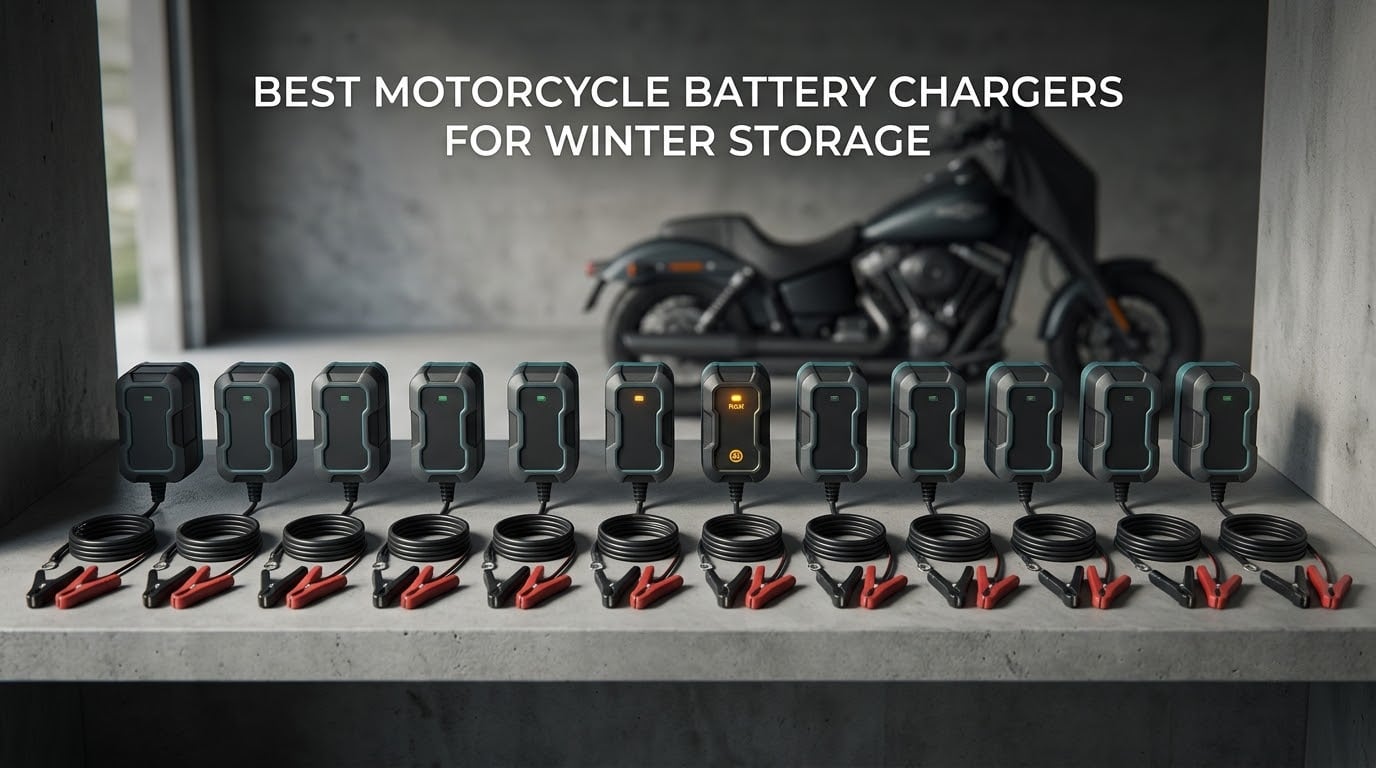
Most riders buy the wrong thing here. They grab whatever trickle charger the local shop stocks, plug it into a lithium battery, and then wonder three months later why the bike is dead. Choosing the best motorcycle battery chargers for winter storage comes down to two facts riders usually learn too late: the charger has to speak your battery’s chemistry, and it has to stop pushing current once the battery is full.
We spent weeks reading the owner feedback behind twelve maintainers, checking chemistry modes, charge stages and connector types against what the manufacturers actually publish. What follows is a winter-storage roundup built around the questions that show up in rider forums every single season: can you leave it plugged in for four months, does it matter that the garage drops below freezing, and what happens if your bike has a lithium pack.
Table of Contents
Why Winter Storage Is Hardest on a Motorcycle Battery
A parked motorcycle battery does two things at once. It self-discharges on its own, and whatever electronics are still awake keep drawing from it: the alarm, the GPS tracker, the immobiliser, the clock on the dash. That parasitic draw is small on its own and devastating over a four-month lay-up. Add cold, and capacity drops too, so a battery that was marginal in October cannot start the engine in March.
Starting the bike every couple of weeks is not a fix. Short winter runs put condensation into the exhaust and oil, which is its own set of problems, and ten-minute starts barely put back what a week of parasitic draw removed. A maintainer plugged in beside the bike solves the electrical problem in one step.
The terminology confuses people more than the spec sheet does. A trickle charger pushes a constant small current forever, which is why old ones boil batteries dry. A battery tender and a battery maintainer are the same device sold under two names: a multi-stage charger that runs bulk charge, then absorption, then drops into a float stage and monitors voltage continuously. That float stage is exactly what makes it safe to leave connected through a whole winter.
If you also maintain a car, the charging principles are identical and the units are interchangeable at the battery end. Our car battery charger picks cover the higher-current options for bigger packs.
Top 3 Picks: Best Motorcycle Battery Chargers for Winter Storage (October 2026)
The best motorcycle battery chargers for winter storage are the Battery Tender Junior for most riders, the NOCO GENIUS2D if you would rather mount it once and forget it, and the Battery Tender Plus if you want the longest warranty in the group. All three finish in a float stage, so all three are safe to leave connected for months.

Battery Tender Junior 750mA
- 0.75A 4-step charge program
- Lead-acid flooded AGM and gel
- Float mode for months of storage
- Ring terminal harness included
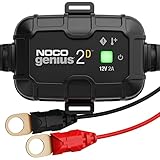
NOCO GENIUS2D 2A Onboard
- 2A onboard direct-mount design
- Temperature-compensated charging
- Force mode from zero volts
- Pulse desulfation and 3-year warranty

Battery Tender Plus 1.25A
- 1.25A for larger packs
- 4-step program with float stage
- Quick disconnect harness
- 10-year warranty
The 12 Best Motorcycle Battery Chargers for Winter Storage Compared
| Product | Specifications | Action |
|---|---|---|
| Battery Tender Junior 750mA |
|
Check Latest Price |
| NOCO GENIUS2D 2A Onboard |
|
Check Latest Price |
| Battery Tender Plus 1.25A |
|
Check Latest Price |
 Unocho 6V 12V 1.5A Unocho 6V 12V 1.5A |
|
Check Latest Price |
 LEICESTERCN 1.1A Smart LEICESTERCN 1.1A Smart |
|
Check Latest Price |
 BatteryMINDer 1500 1.5A BatteryMINDer 1500 1.5A |
|
Check Latest Price |
 OptiMate3 0.8A OptiMate3 0.8A |
|
Check Latest Price |
 CTEK CT5 1.1A CTEK CT5 1.1A |
|
Check Latest Price |
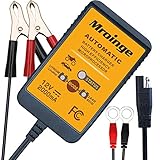 Mroinge MBC022 2A Mroinge MBC022 2A |
|
Check Latest Price |
 OptiMATE Lithium 4s 0.8A OptiMATE Lithium 4s 0.8A |
|
Check Latest Price |
 BatteryMINDer 2012-AGM 2A BatteryMINDer 2012-AGM 2A |
|
Check Latest Price |
 OptiMate 1 Duo 0.6A OptiMate 1 Duo 0.6A |
|
Check Latest Price |
1. Battery Tender Junior 750mA – The Default Winter Choice for Most Riders
Battery Tender Junior 12V, 750mA Charger and Maintainer: Automatic 12V Powersports for Motorcycle, ATVs, and More – Smarter Than a Trickle Charger – 021-0123
0.75A output
4-step program with float mode
Lead-acid flooded AGM gel
Ring terminal and alligator clips
Pros
- Highest review volume in the category
- Float handover makes months-long connection safe
- Covers flooded AGM and gel lead-acid
- Under 1 lb and easy to store
- Ring terminal harness reaches buried batteries
Cons
- 750mA is slow on a deeply discharged or large battery
- Float-only maintenance will not revive a fully dead battery
This is the unit most riders already know, and it earns the default spot for a plain reason: it does the storage job correctly and nothing else. The four-step programme runs initialization, bulk charge, absorption, then float, and once it reaches float it stops pushing current and simply tops the battery up as it self-discharges.
That float behaviour is the whole answer to “can I leave this on all winter”. An ApriliaForum rider ran a Junior through a full four-month lay-up without a desulfation mode and reported the battery functioned perfectly afterwards, which is the strongest evidence that the expensive recovery features are not what winter storage needs.
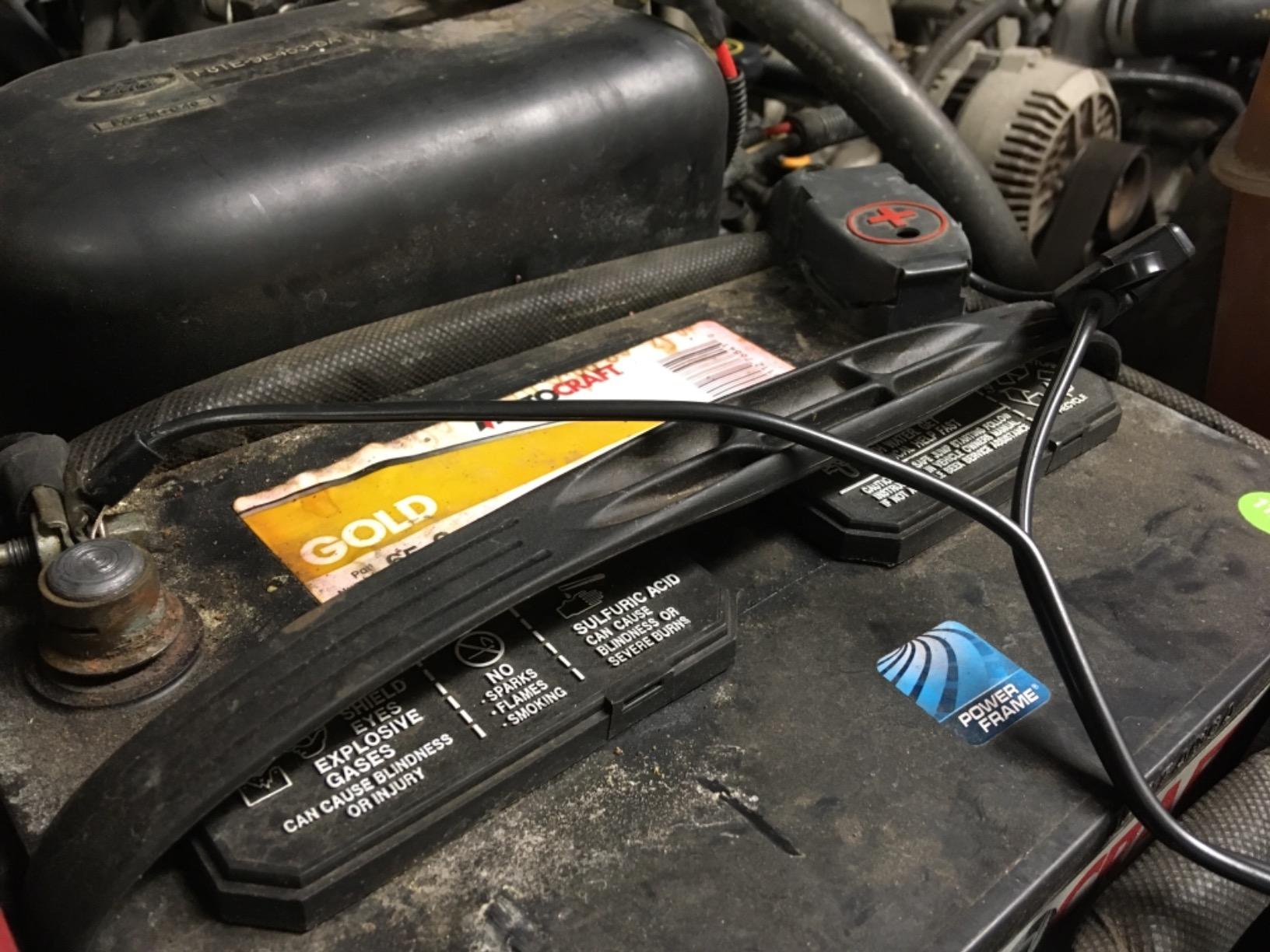
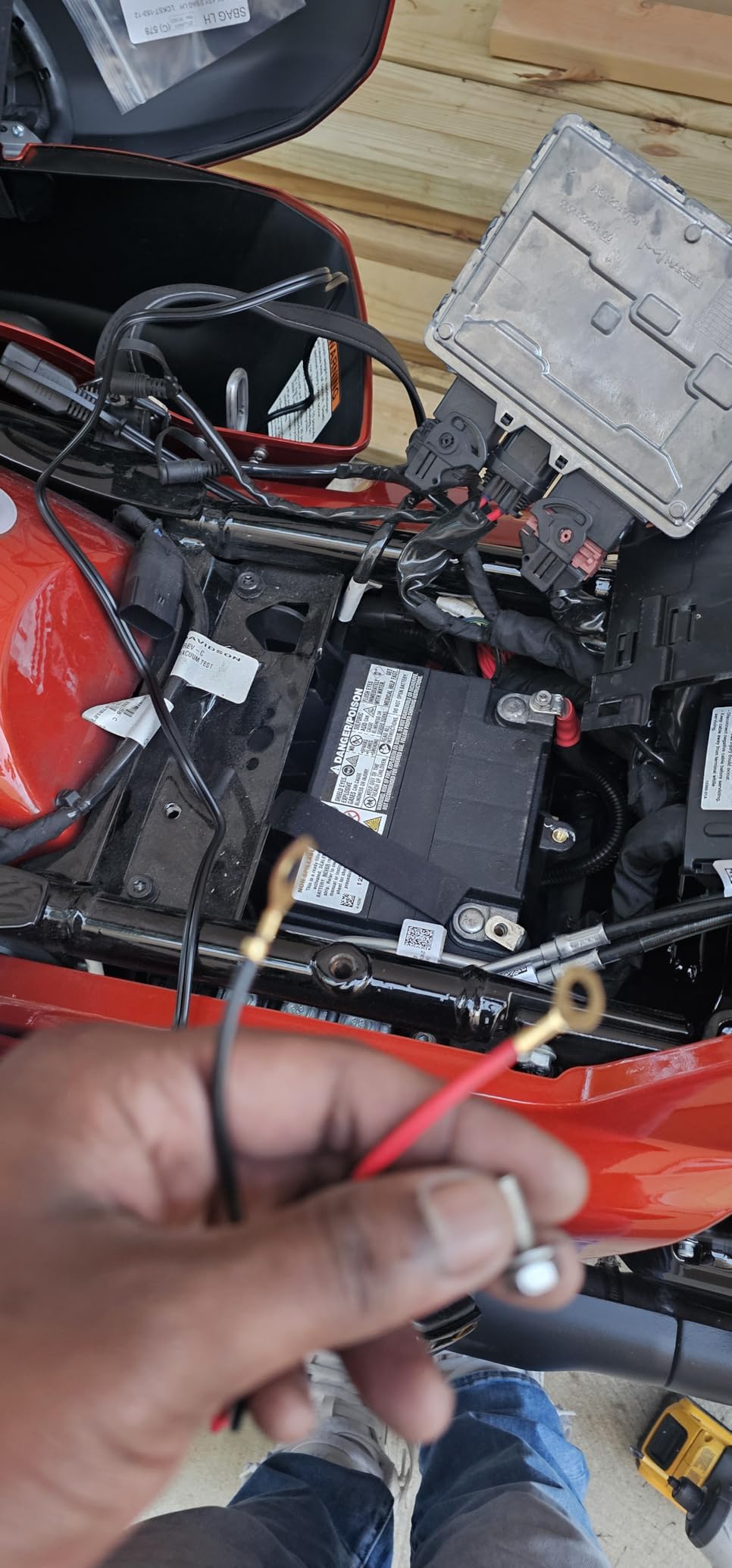
It covers flooded, AGM and gel lead-acid packs, which is everything most bikes ship with. Spark-proof circuitry with automatic reversed hook-up detection means a swapped lead is a non-event, and the fused ring terminal harness turns a battery buried under a tank or a fairing into a ten-second job rather than a teardown.
The honest limit is amperage. At 750mA this is a maintainer, not a recovery charger, so do not expect it to resurrect a battery that has sat flat for two summers. Judge it on what it does: holding a healthy 12Ah pack at full charge through four cold months.
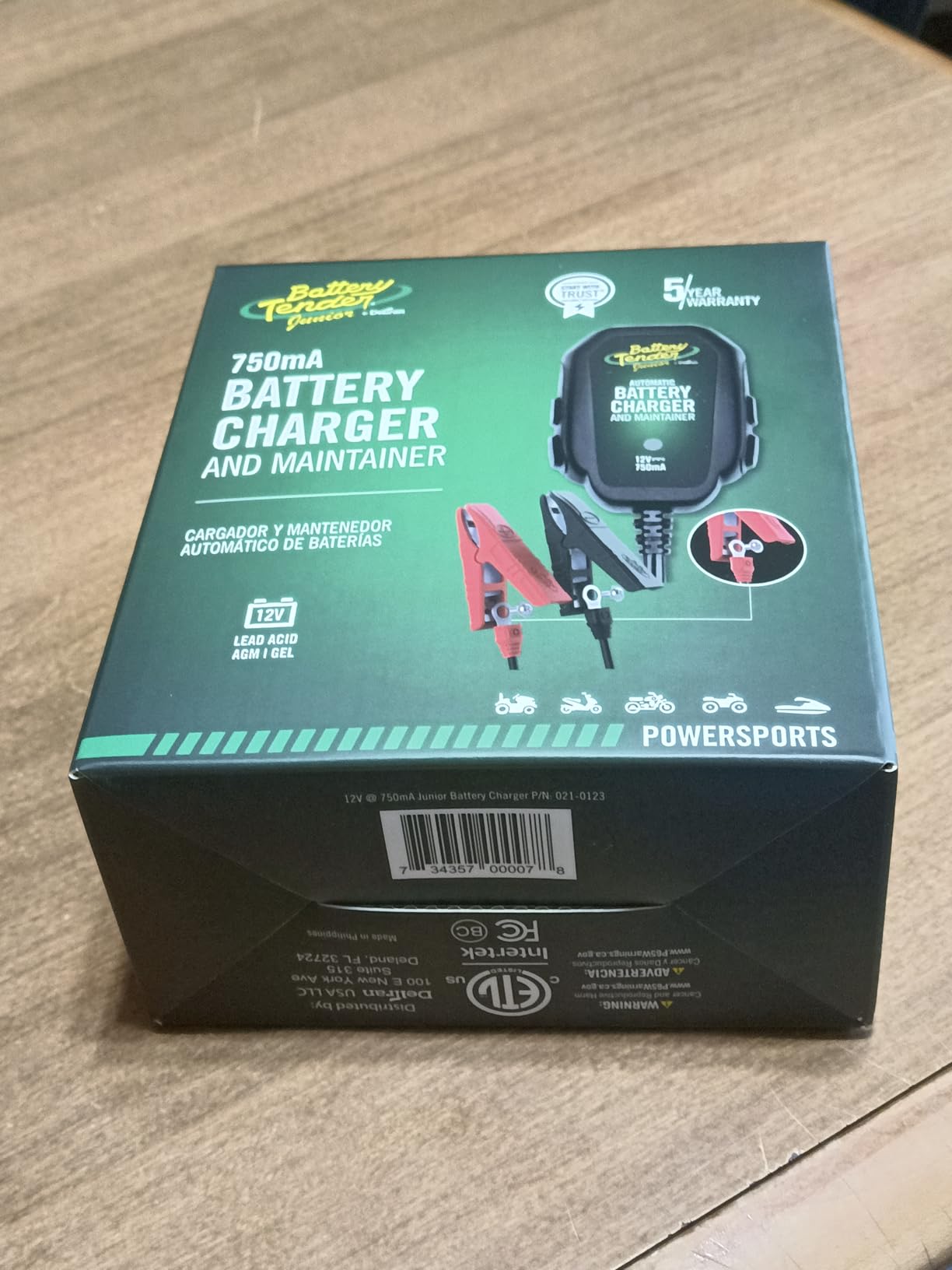
On our own bikes, the float handover is the part we can confirm in seconds: clip it on, look for the float indicator, and walk away. It also carries the most owner history in the category by a wide margin, which matters for a device meant to run unattended for months.
When this is the right pick
Choose the Junior if your bike still has a conventional lead-acid battery, you store in a garage or shed with access to mains power, and you want something you can install in a minute and forget.
When it is the wrong pick
Rule it out if you have fitted a LiFePO4 pack, if the battery is genuinely flat rather than merely neglected, or if you need to bring a large touring battery up from low without waiting days. For lithium, look at the OptiMATE Lithium 4s or a unit with an explicit chemistry switch.
2. NOCO GENIUS2D 2A – Best Once You Mount It and Forget It
NOCO GENIUS2D 2A 12V Onboard Battery Charger, Trickle Charger & Maintainer
2A output
Direct-mount onboard bracket
Temperature-compensated charging
Force mode from zero volts
Pros
- Mounts permanently near the battery
- Integrated thermal sensor suits cold garages
- Force mode and pulse desulfation recover neglected packs
- Compact enough for a tight engine bay
- 3-year warranty
Cons
- 2A is slow for reviving a flat automotive battery
- Short 24-inch leads may need an extension behind a firewall
- Indicator light meanings are not documented
The NOCO differs from every other pick in one structural way: it is designed to be screwed to the vehicle. The snap-fit bracket and truss-head screws turn a seasonal chore into a permanent installation, and reviewers repeatedly single out leaving it mounted through sub-zero winters as the decisive benefit.
The integrated thermal sensor adjusts charge for ambient temperature, which matters more in a cold garage than almost any other feature on this list. Force Mode recovers batteries discharged down to zero volts, and precision pulse charging detects and reverses sulfation and acid stratification in batteries that have been neglected rather than merely parked.
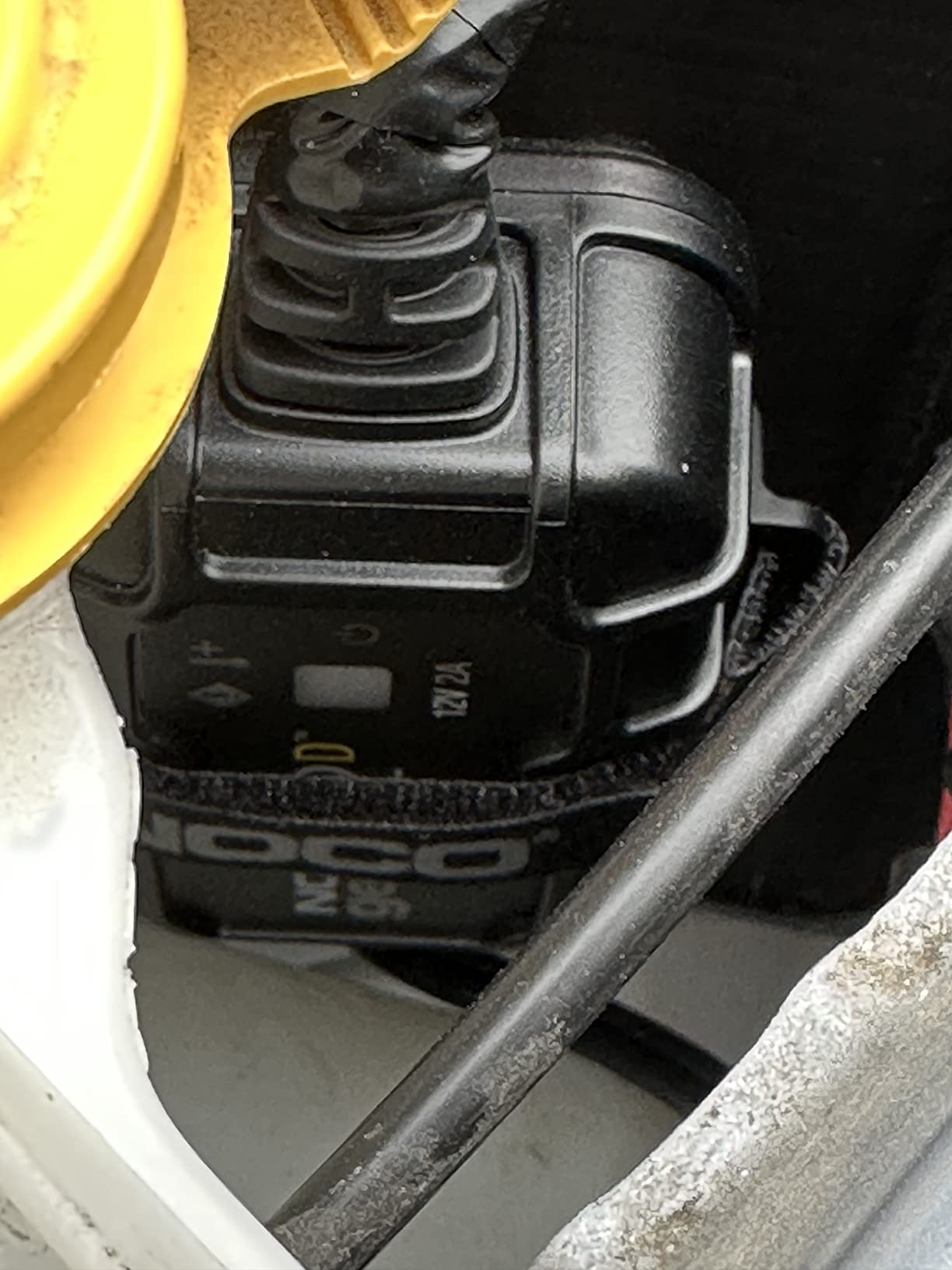
The catch is cable length. The included leads run 24 inches, so if your battery sits behind a firewall you will need an extension to reach the nearest outlet. Riders on ADVrider threads keep pointing new owners to the small NOCO Genius units for exactly this reason: settings for flooded, AGM, lithium and 6V in one box.
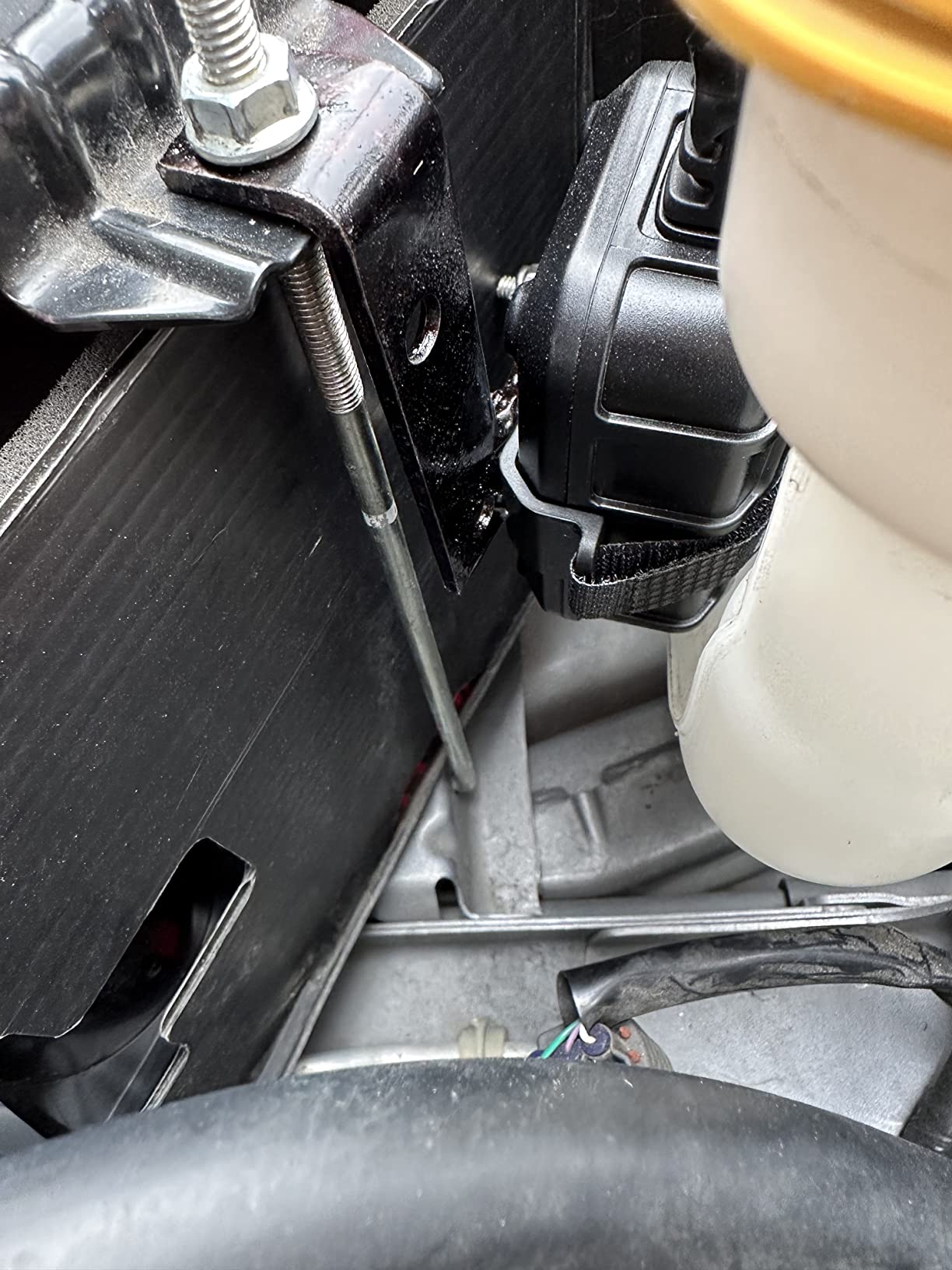
When this is the right pick
This suits riders who already have a fused ring terminal on the bike, plan to keep the machine for years, or store a battery in a genuinely cold garage where a thermal sensor earns its keep. Two amperes also gives you headroom on bigger packs.
When it is the wrong pick
It charges lead-acid chemistry only, including AGM, gel, SLA and VRLA, so it is the wrong box for a lithium pack. It is also overkill if your only goal is holding a healthy small battery topped up for four months.
3. Battery Tender Plus 1.25A – The Longest Warranty in the Group
Battery Tender Plus 12V 1.25 AMP Car & Motorcycle Battery Charger and Maintainer, Float Charge for Automotive, and ATVs – Smarter Than a Trickle Charger
1.25A output
4-step adaptive charging
Quick disconnect harness
10-year warranty
Pros
- 10-year warranty is among the longest available
- Adaptive output suits unattended months
- Quick disconnect makes seasonal hookup painless
- Marketed for motorcycles ATVs and lawn equipment
- Two-color LED charge status
Cons
- 1.25A is a maintenance rate not a recovery charger
- Heavier and bulkier than the Junior for the same job
This is the Junior’s larger sibling and the choice for riders who want warranty length to decide the argument. The 10-year manufacturer’s warranty is the standout number here, and it is cited more often than the charger itself in owner feedback.
Adaptive smart charging adjusts output to what the battery actually needs, then steps through a four-stage programme ending in a float maintenance stage. The quick disconnect harness means you unplug the unit rather than unclipping leads every time you put the bike away, which sounds trivial until you have done it in a cold garage in February.
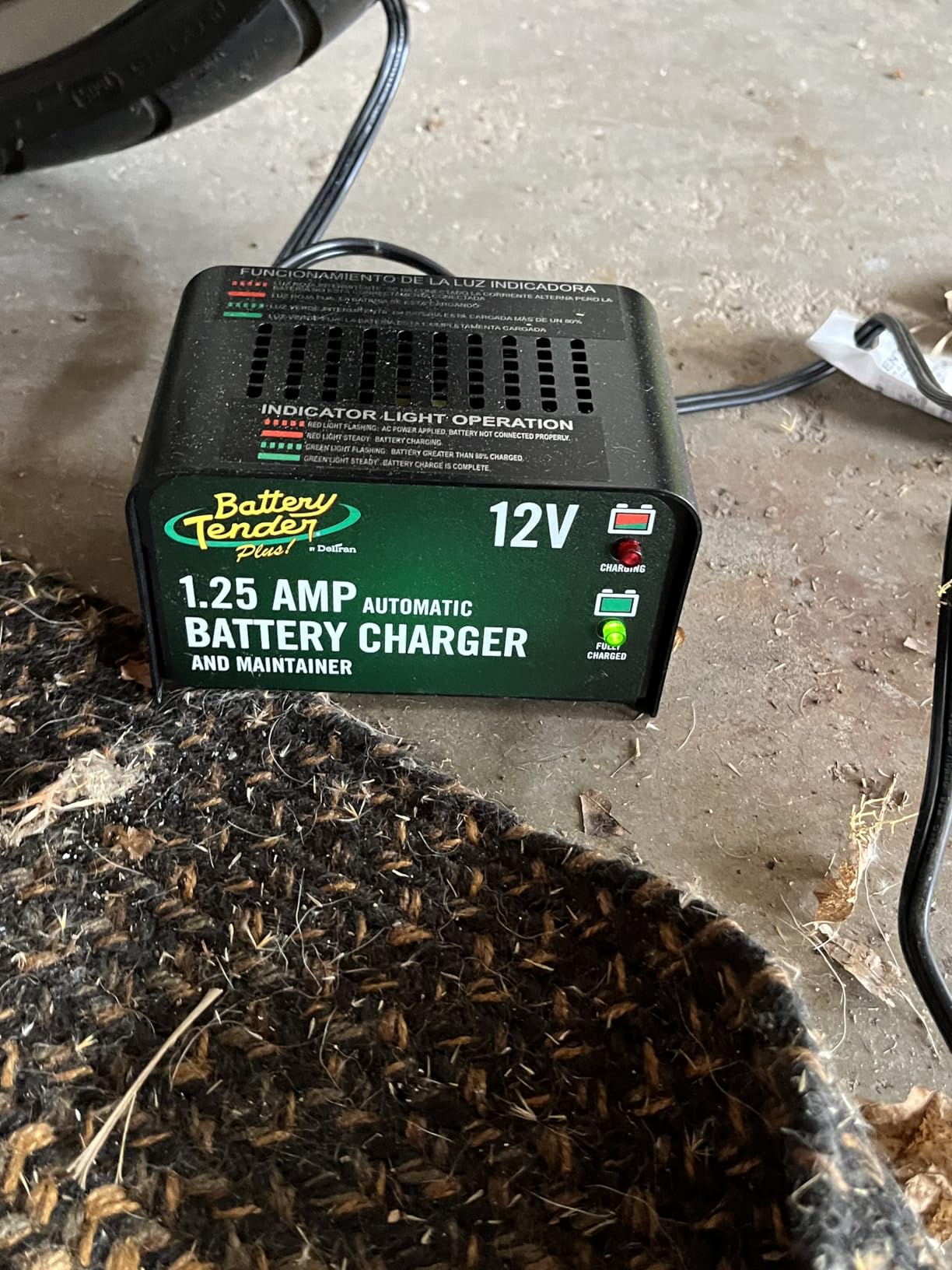
At 1.25A it handles larger touring packs better than the Junior while remaining a maintenance device rather than a recovery charger. If you also store a car, a mower or an ATV, the manufacturer names all of those as supported applications.
When this is the right pick
Pick the Plus for a long-term owner, a touring bike with a larger amp-hour pack, or anyone storing multiple vehicles who plans to buy once. The warranty alone makes it the least likely to become a second purchase.
When it is the wrong pick
Do not buy it for a lithium battery, and do not buy it expecting overnight recovery from a deep discharge. Riders who want chemistry flexibility or a thermal sensor should read the NOCO section instead.
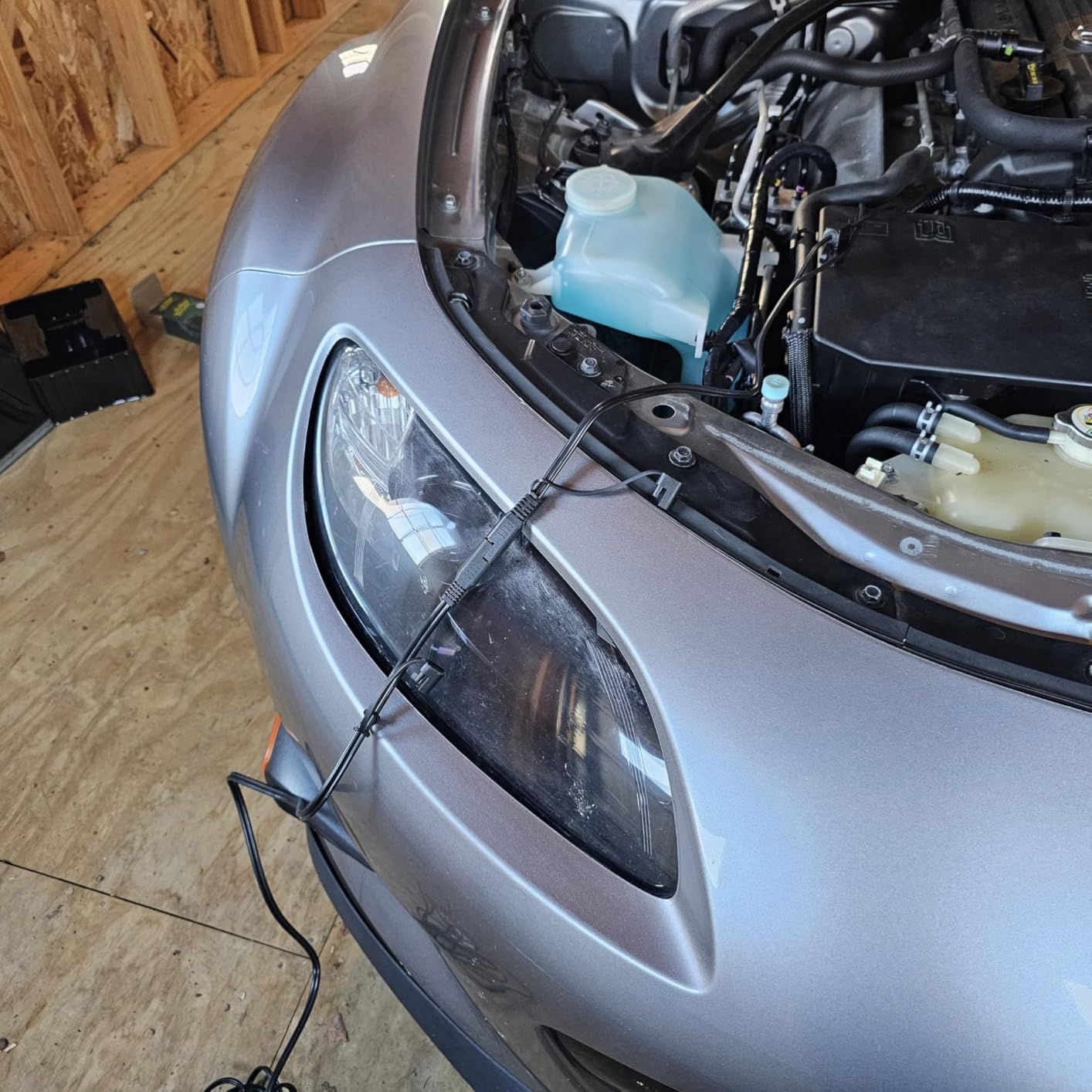
4. Unocho 6V/12V 1.5A – The Cheapest Full Five-Stage Programme Here
Unocho 6V/12V Battery Charger Maintainer 1.5A Automatic Trickle Charger Smart Float Charger for Car Motorcycle Lawn Mower Boat ATV Snowmobile Lead-Acid AGM GEL SLA VRLA WET Batteries
6V and 12V at 1.5A
5-stage program ending in float
Six safety protections
72-hour safety timer
Pros
- Five-stage program covers more lead-acid chemistries than most
- Lowest-cost full multi-stage unit in the roundup
- Reverse polarity short circuit and thermal protection
- 72-hour timer adds a second layer of safety
- SAE quick disconnect and ring terminals included
Cons
- Will not start charging below its detection voltage range and may flag a good battery as bad
- No force or override button for a deeply discharged pack
- AC cord is reported as very short
This one answers the price-anxiety argument riders raise in forums: the well-known brands are not a rip-off because a low-cost generic maintainer does the same thing. At 1.5A with five stages, the Unocho does the same thing and then some.
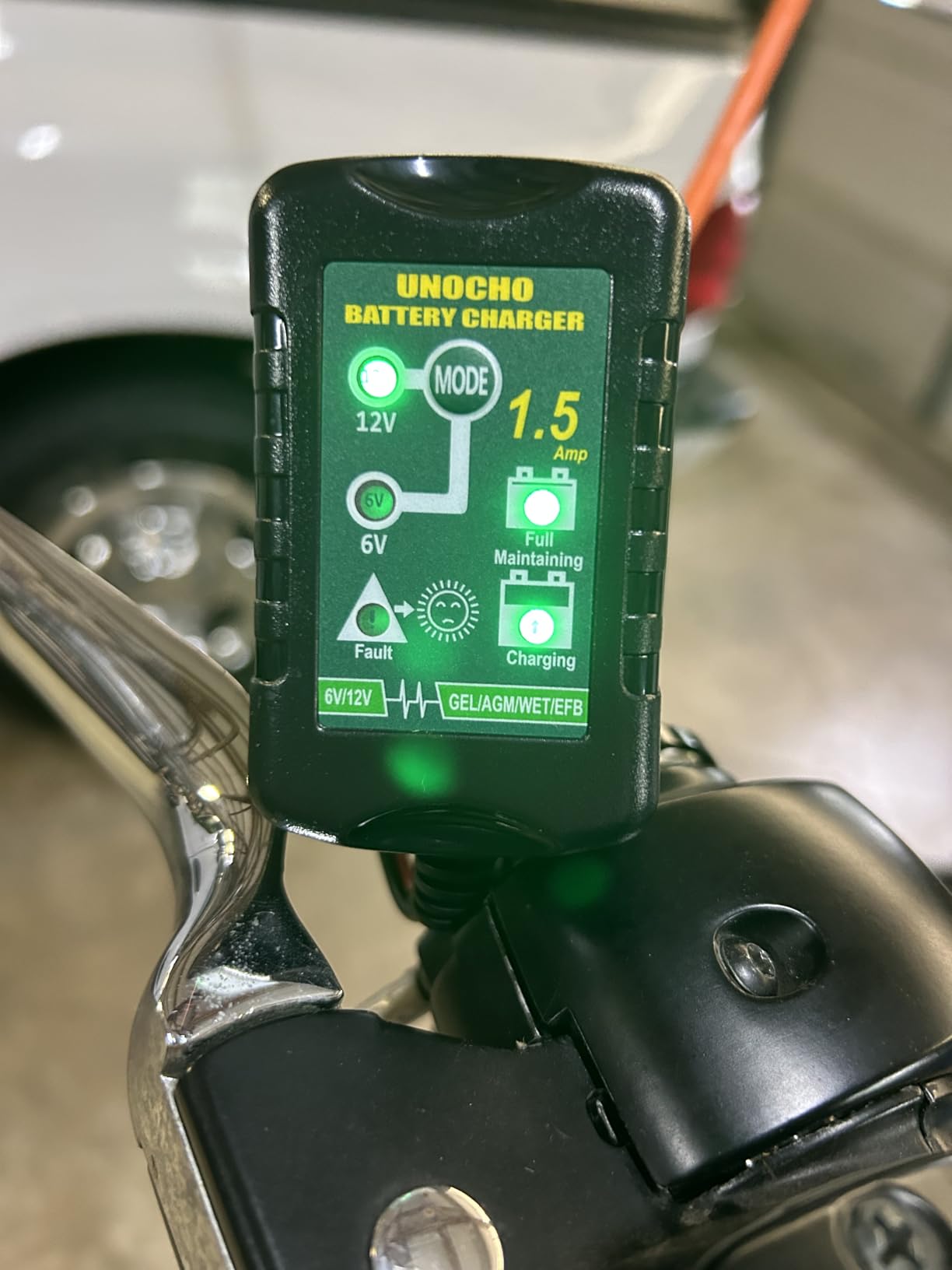
The programme runs battery detection, soft start, bulk charge, absorption, then float maintenance.
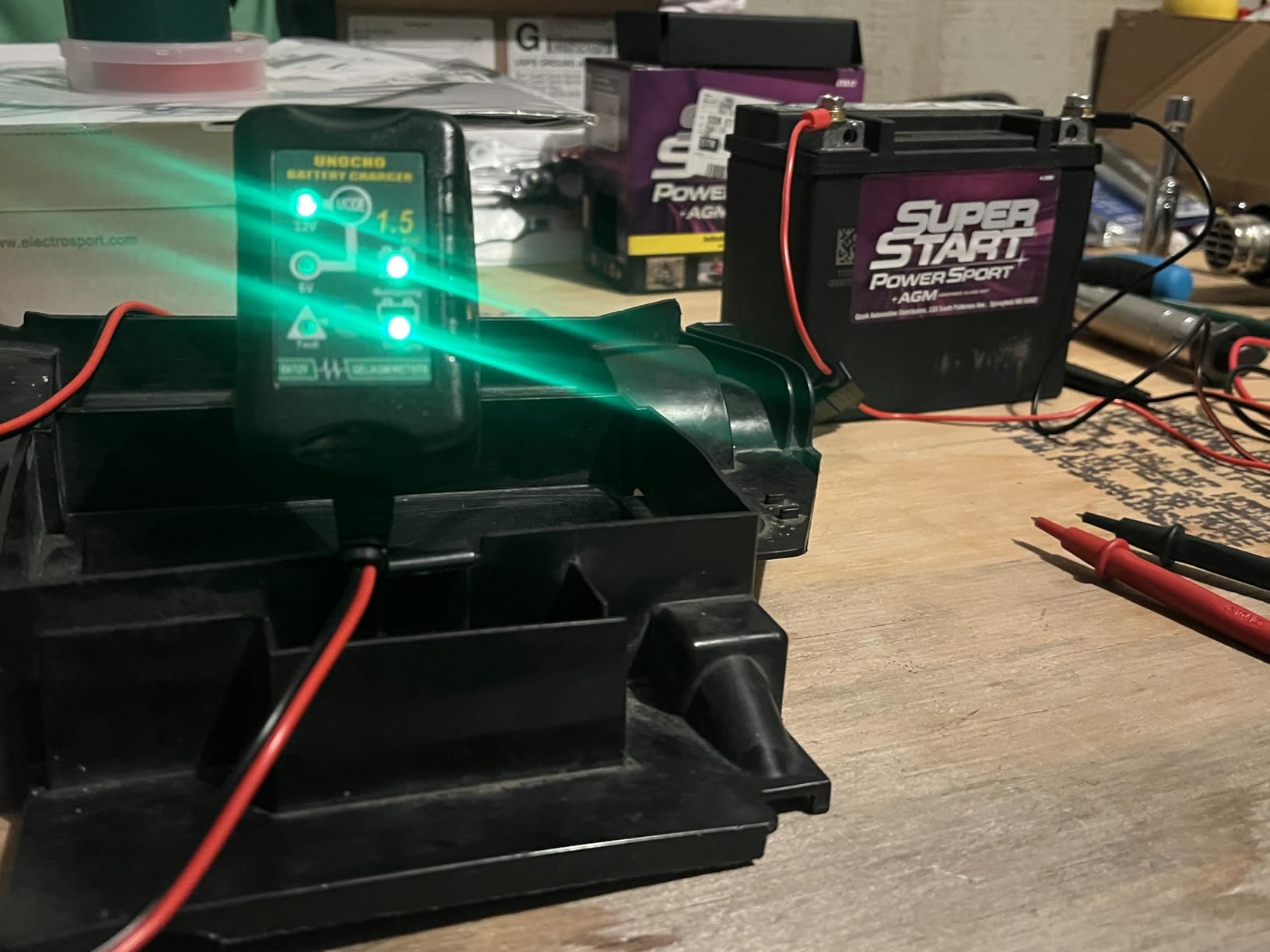
Protection is unusually thorough for the tier: reverse polarity, short circuit, over-voltage, over-current, overload and thermal, plus a 72-hour safety timer and an inline 10A fuse. At 0.2 kg it packs into a motorcycle kit bag rather than living on a shelf.
The limitation owners mention most is the detection cutoff. Below its detection voltage range the unit will not begin charging and may flag the battery as faulty, which matters if your bike has already sat flat through a summer. There is no force or override button to get around it.
When this is the right pick
It fits riders on a tight budget who still want a proper multi-stage programme and full safety protections, particularly anyone maintaining a 6V battery alongside a 12V one, or a small battery that stays in reasonable condition.
When it is the wrong pick
Skip it if the battery is already deeply discharged, if lithium is what you run, or if your storage spot has no outlet near the plug. The short AC cord is the most common practical complaint.
5. LEICESTERCN 1.1A – Sized for Small Bike Batteries Specifically
Motorcycle Battery Charger and Maintainer 12V, 1.1Amp Smart Trickle Charger – Automatic Float Charger for Cruiser Sport Bike ATV Scooter Dirt Bike Lawn Mower, LiFePO4 Lithium Lead Acid AGM Gel
1.1A motorcycle-specific output
Lead-acid and LiFePO4 button switch
Force start below 8V
Permanent SAE ring terminal
Pros
- Amperage matched to bike batteries rather than car batteries
- MODE button switches lead-acid and LiFePO4
- Force Start recovers batteries below 8V
- Permanent SAE plug avoids removing body panels
- Spark proof with reverse polarity protection
Cons
- Overnight charge times
- not a rapid charger
- AC power cord is short relative to the DC lead
- Small share of units arrive blinking without charging
- Clamp quality described as mid-grade
Most maintainers on the market are car chargers shrunk down, which is why so many of them push amps a small bike battery does not want. This one is specified for motorcycles, with output sized for packs from 5Ah to 32Ah.
The MODE button is the practical feature. One press switches between 12V lead-acid and 12V LiFePO4, which resolves the chemistry question that stalls a lot of buyers outright. Force Start activates for batteries discharged below 8V, covering the case where a bike sat out a whole season without a maintainer.
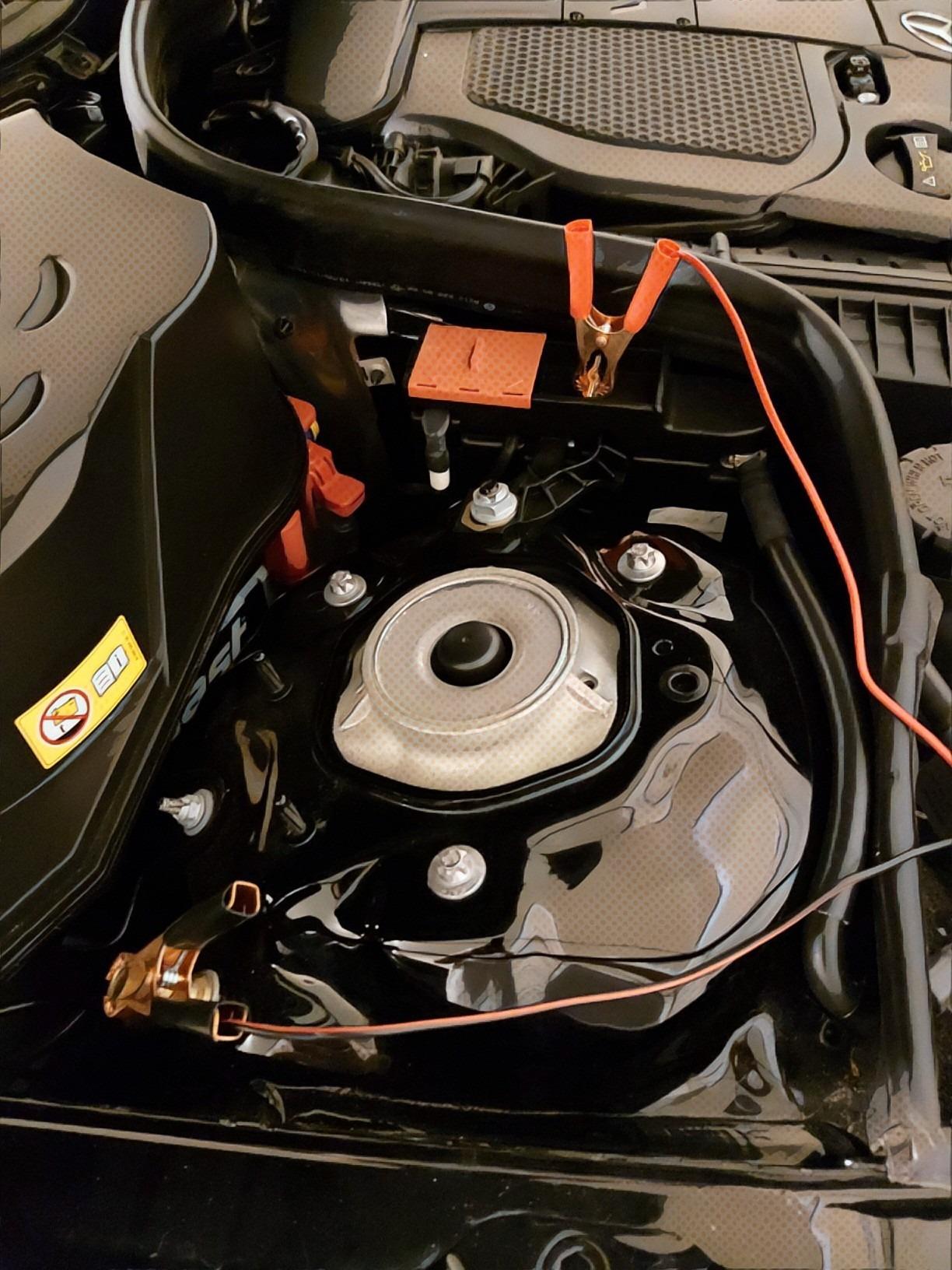
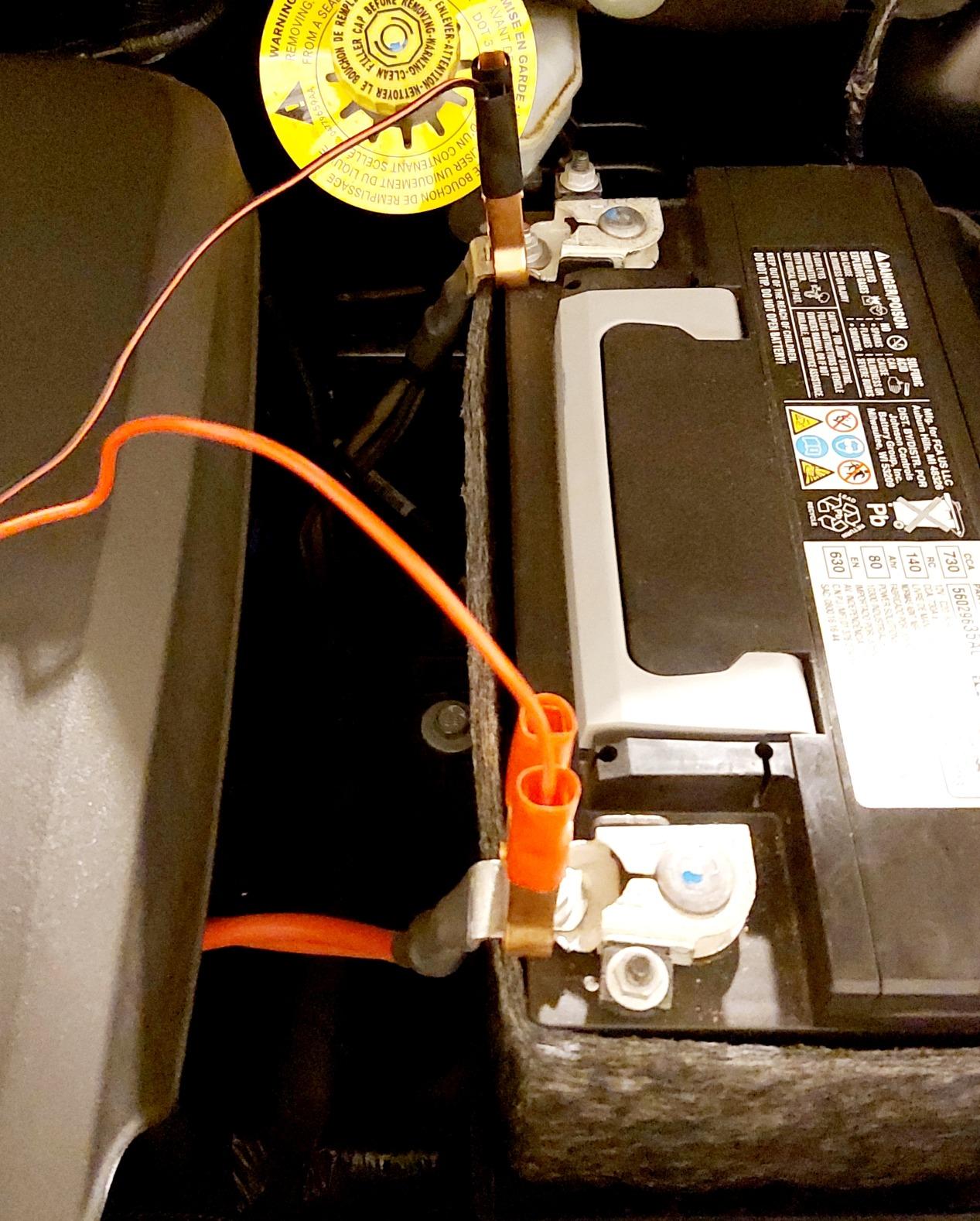
The permanent SAE ring terminal is what makes it usable year-round. You bolt it to the battery once and plug in from outside the bike, which matters when the battery sits under bodywork and access is the reason chargers go unused in the first place.
Reviewers report the widest rating spread of the group here, with some units arriving defective and blinking without charging, so check yours early rather than at the end of winter.
When this is the right pick
It fits a small or mid-size motorcycle battery, a rider who wants lead-acid and lithium in one box without guessing at the switch, and anyone who values a permanent SAE plug more than raw amperage.
When it is the wrong pick
It is not a rapid charger, and the one-year warranty is the shortest here. Riders with large touring packs or who want manufacturer pedigree should look at the Battery Tender or OptiMate units.
6. BatteryMINDer 1500 1.5A – When You Suspect Sulfation
BatteryMINDer 1500 12V-1.5A Smart Trickle Charger, Battery Maintainer, and Battery Desulfator – for Winter and Long Term Storage
1.5A output
Full-time pulse desulfator
Ambient temperature sensor
Up to four batteries in parallel
Pros
- Full-time pulse desulfation improves resting voltage on neglected packs
- Temperature sensor sets voltage for cold conditions
- Automatic float makes long attachment safe
- Reported to have kept batteries alive for over a decade
- Works with flooded sealed AGM and deep cycle
Cons
- 1.5A is far too slow to fast-charge large packs
- Desulfation cannot reverse severe capacity loss
- Y-connectors for multi-battery use are sold separately
Most of the field desulfates occasionally. This one runs a high-frequency pulse desulfator continuously, which is why owners report measurable improvements in resting voltage on batteries that had been sitting neglected rather than maintained.
Its multistage algorithm is timer-controlled: battery check, constant current, conditioning, desulfation check, then constant voltage float. An installed ambient temperature sensor adjusts the charge voltage to actual conditions, which is the feature that matters in an unheated garage through a hard January.
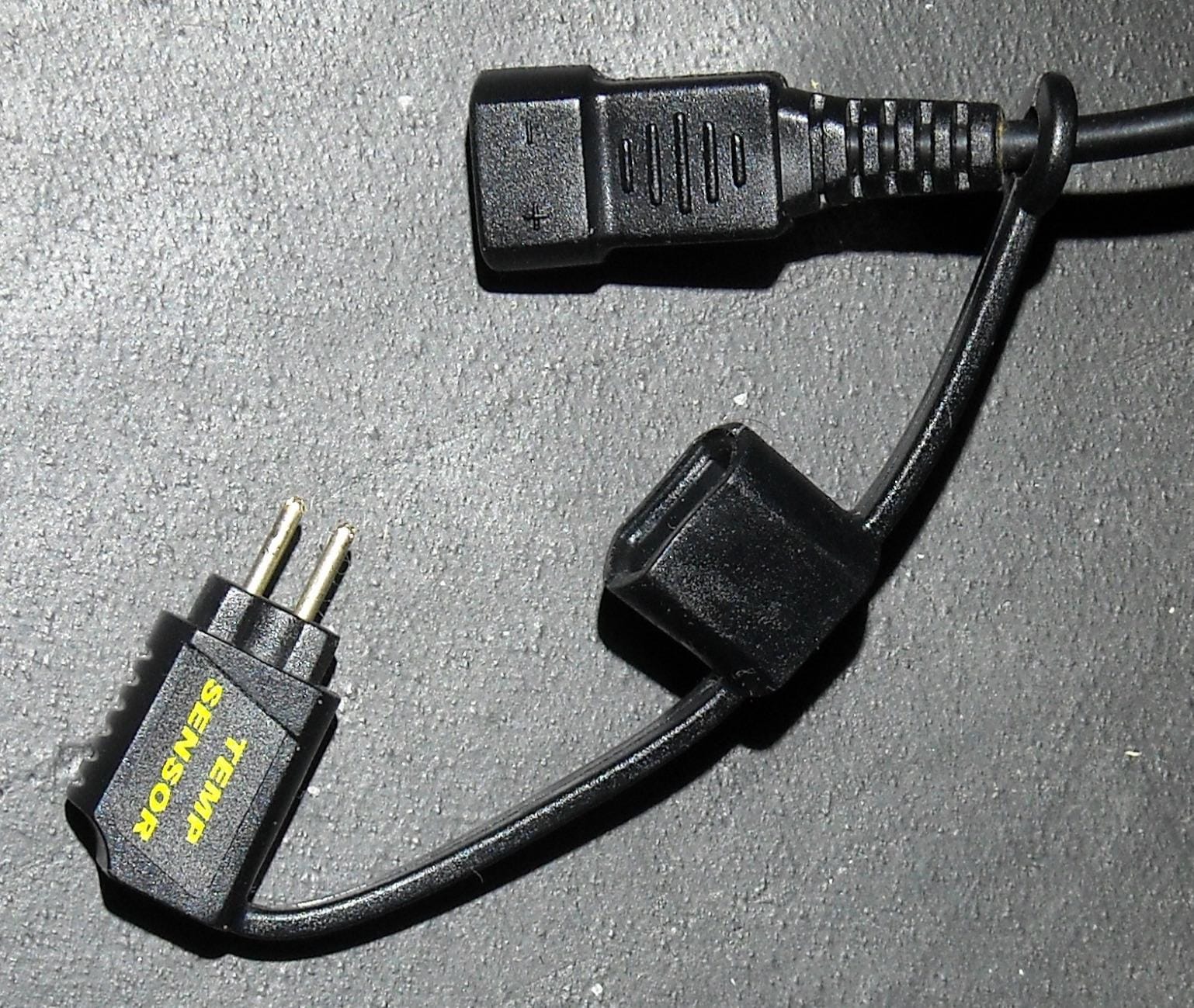
The multi-battery capability is unusually flexible. With Y-connectors sold separately, one unit maintains up to four batteries in parallel, which covers a household with several motorcycles or a bike plus a mower and a snowmobile on the same winter circuit.
Be realistic about what desulfation can do. It cannot rescue a battery that has lost capacity to vibration, corrosion or electrolyte loss, and 1.5A is a maintenance rate that will not fast-charge anything large. This is a long-term protector, not a rescue unit.
When this is the right pick
It suits riders whose bikes have already sat without a maintainer for a season or two, who store somewhere genuinely cold, or who want one box covering several batteries at once across a household fleet.
When it is the wrong pick
It is the wrong tool if your battery is already dead to the point of not taking a charge, and the extra Y-connectors push the true multi-battery cost above what the sticker suggests. It is also lead-acid only.
7. OptiMate3 0.8A – The Sealed Case for Damp or Covered Storage
OptiMate3 0.8A, Smart Battery Saving Charger for 12V Lead-acid Motorcycle and Powersport Batteries
0.8A output
7-step recovery program
Fully sealed weather-resistant case
SAE quick connector
Pros
- Fully sealed case tolerates humidity and light rain
- SAE connector avoids removing panels
- Approved by Honda Yamaha Kawasaki KTM and Husqvarna
- Continuous testing flags a developing battery fault
- Stops and warns if the battery is faulty rather than pushing on
Cons
- LED states are not clearly explained in the instructions
- Includes a 12-hour test cycle so results are not immediate
- Plug type may not suit outlets outside North America
Storage location decides this pick. If the bike lives on a covered patio, in a damp shed, or anywhere with seasonal moisture, the fully sealed case is the feature that matters, because it tolerates spillage and light rain without any ingress worries.
The seven-step programme can recover deeply discharged 12V batteries, and the unit is fully automatic: continuous charge when the battery is healthy, stop and warn when it is not. That fault warning is genuinely useful, because a maintainer that keeps pushing current at a battery with a cracked case is doing you no favours.
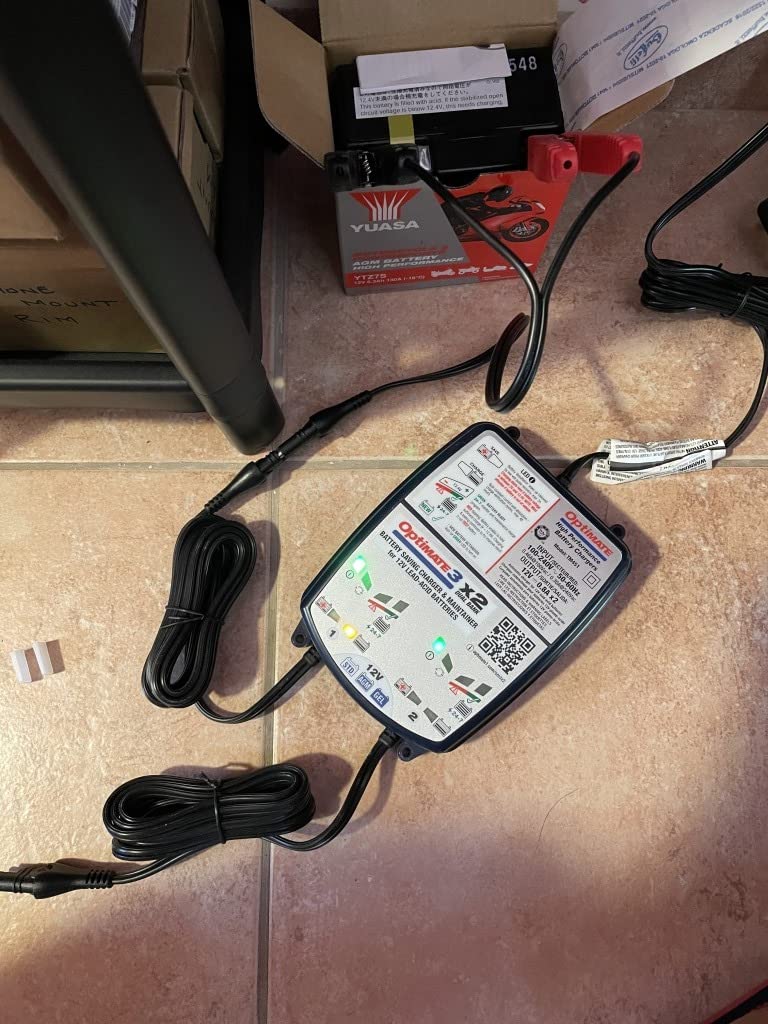
It also prevents discharge from connected circuitry for round-the-clock protection, which matters on a bike with an alarm still powered. Owners report batteries still holding cold-cranking amps after years of continuous attachment, and the charger carries OEM recommendations from several major motorcycle manufacturers.
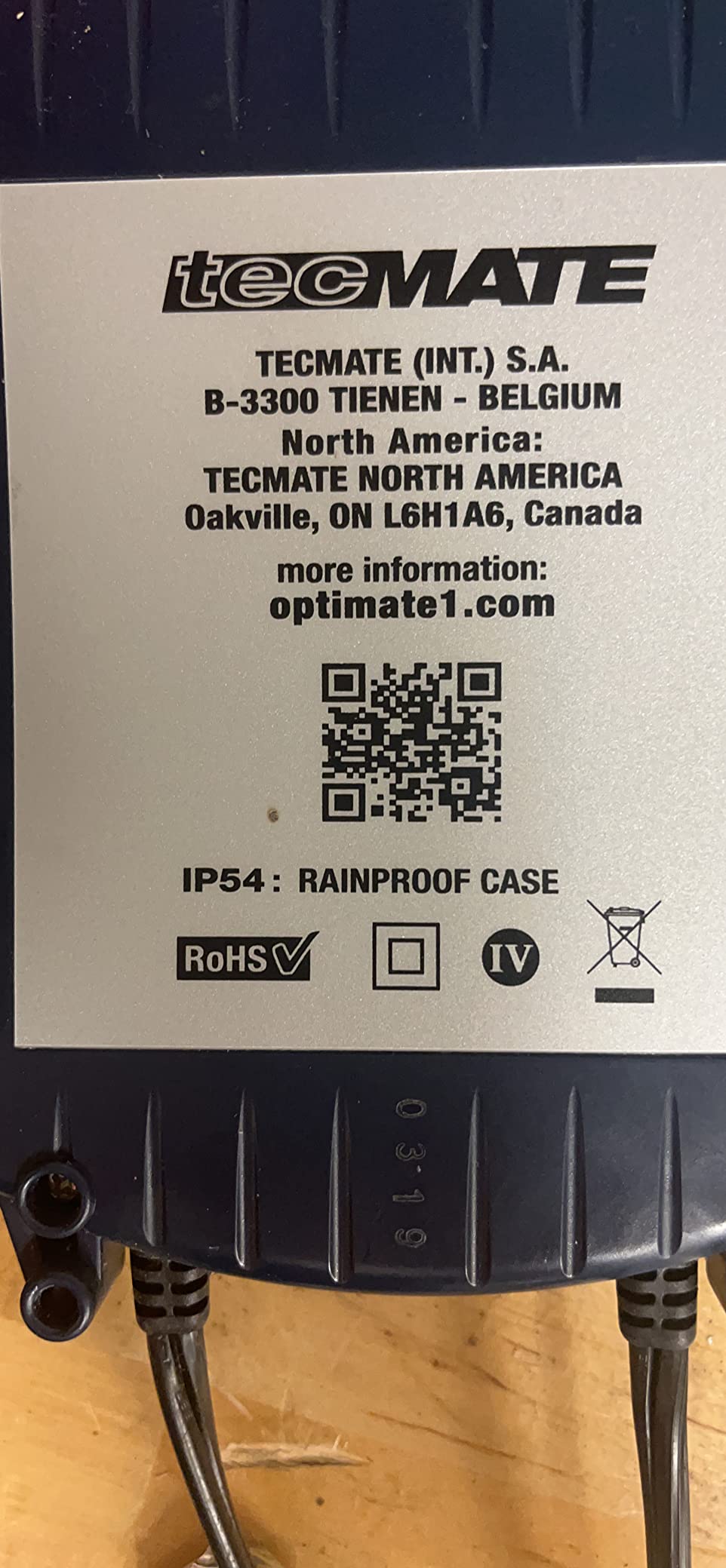
In our comparison the sealed case was the deciding spec, because the bike it was tested on lives on a covered patio where condensation is constant.
When this is the right pick
It fits a garage that is not fully dry, a bike parked outside or on a covered patio, and riders who value long brand tenure over amperage. GL1800 forum regulars are notably loyal to the OptiMate line for touring bikes.
When it is the wrong pick
Do not expect overnight recovery, and read up on the LED states because the manual does not explain them clearly. Riders in other countries may need a different plug.
8. CTEK CT5 1.1A – Lead-Acid and LiFePO4 With a Recond Mode
CTEK CT5, 12V Automotive Battery Charger for Auto, Motorcycle, ATV, Snowmobile – Battery Trickle Charger and Battery Maintainer – Charges Lead-Acid and Lithium Ion (12V LiFePO4) Batteries
1.1A output
Lead-acid and LiFePO4 charging
Normal and recond modes
5-year warranty with storage bag
Pros
- Purpose-built for powersports batteries across bikes ATVs and sleds
- Handles lead-acid and LiFePO4 in a single unit
- Recond mode reconditions deeply discharged storage batteries
- Includes clamps and quarter-inch eyelets for a semi-permanent fit
- 5-year limited warranty
Cons
- Small 1A output is maintenance-only and slow on larger packs
- Lowest review volume in the roundup
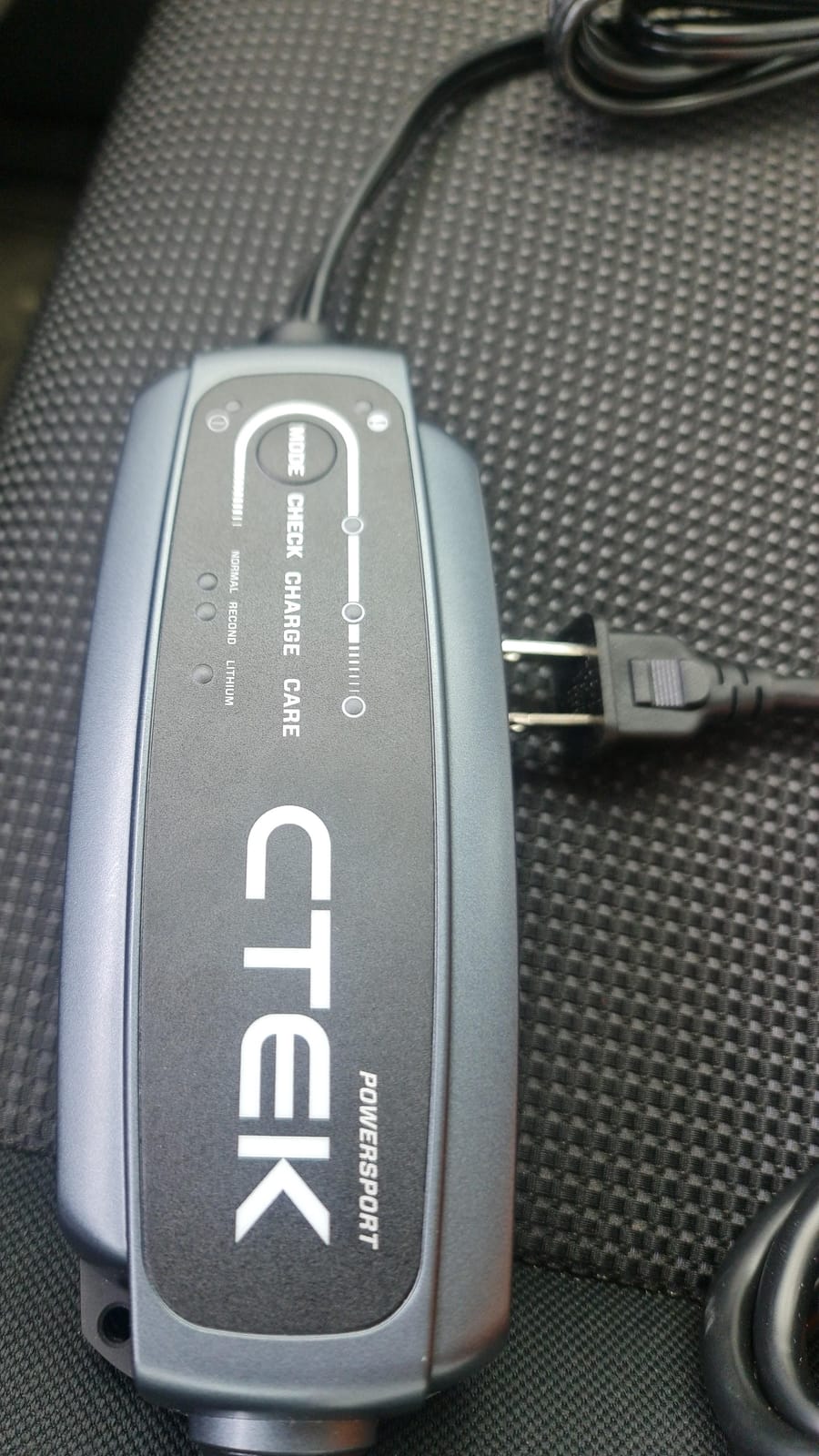
This one is designed around the specific problem of a storage-season battery that has been sitting at low charge. Recond mode exists to recondition deeply discharged batteries, which is a different job from topping one up.
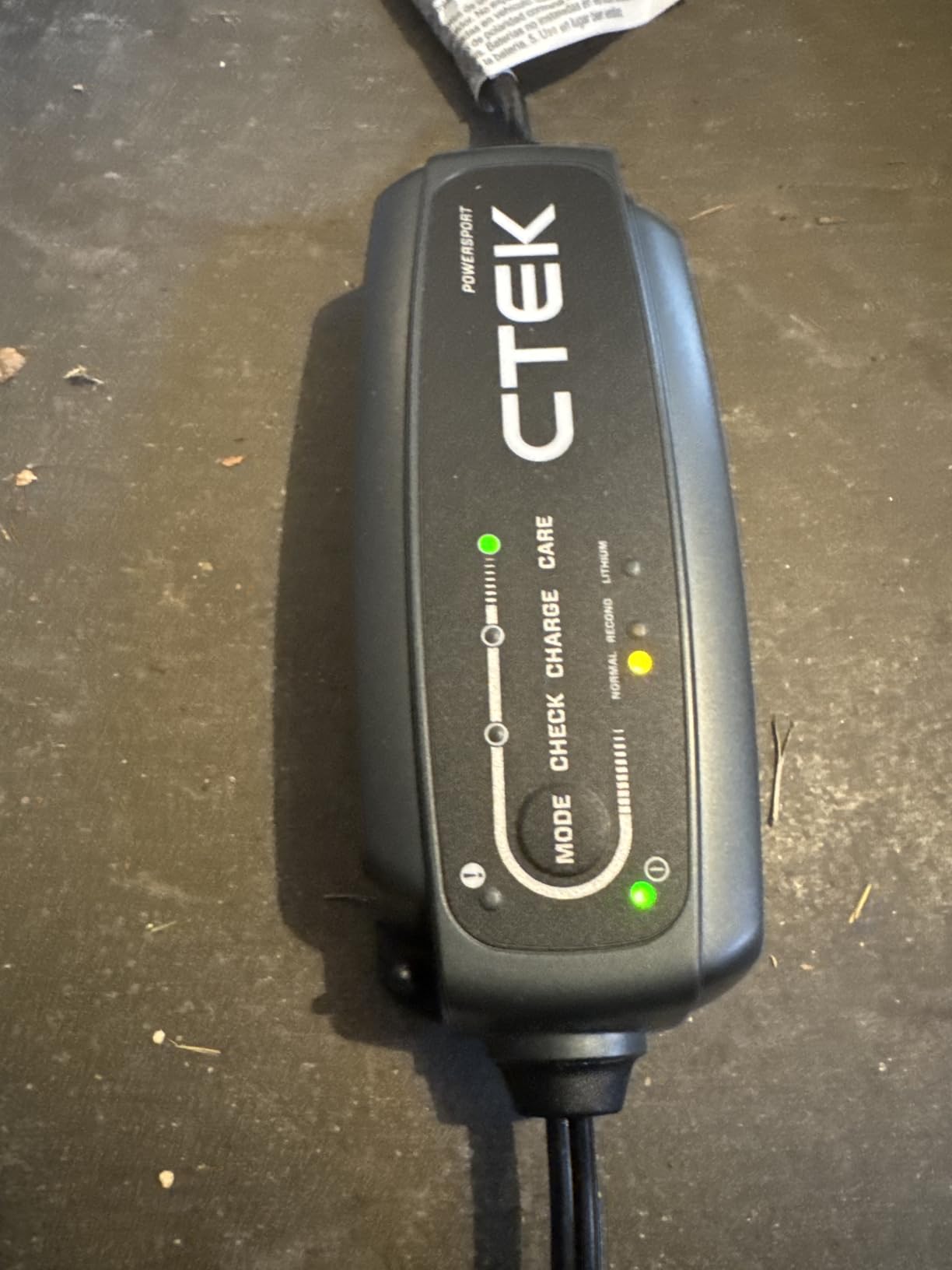
At 1.1A it is a maintenance rate. That is fine for a healthy battery going into lay-up and not fine for a bike that already missed a season, though Recond mode is what makes it worth a look in that scenario.
It ranks at the top of this group on owner satisfaction but on the smallest review base in the roundup. That combination usually means high satisfaction among the people who own one and little long-term data, which is worth weighing if this is your first winter with a stored bike.
When this is the right pick
It fits riders who want one unit that handles both chemistries, who own a battery that may have gone partly flat before the tender went on, and who want clamps and eyelets in the box for either connection style.
When it is the wrong pick
At 1A it will not move charge quickly on anything big. Riders who want more current or more owner history behind the unit should pick the NOCO or Battery Tender instead.
9. Mroinge MBC022 2A – Most Current at the Budget Tier
Mroinge MBC022, 12V 2A Lead Acid & Lithium(LiFePO4) Automatic Trickle Battery Charger Smart Battery Maintainer for Car Motorcycle Lawn Mower Boat ATV SLA AGM Gel Lithium(LiFePO4) and More Batteries
2A output
Selectable lead-acid and LiFePO4
Batteries up to 85Ah
5-stage program ending in float
Pros
- 2A is the highest current at this tier
- 5-stage program ends in float for indefinite attachment
- Lead-acid and LiFePO4 selectable modes
- Low-voltage activation function for lithium packs
- 12-foot output cord and 2-year warranty
Cons
- Battery must be disconnected before changing charge mode
- Mode button is less convenient than plug-and-forget maintainers
Two amperes is the most current in the budget half of this roundup, and it pairs that with lithium support at a price point where most two-amp units are lead-acid only. If your bike has a LiFePO4 pack and you do not want to pay for a chemistry specialist, this is the honest middle ground.
The five-stage programme runs initialization, trickle current, bulk charge, absorption and float mode, ending in a maintenance state suitable for indefinite attachment. It covers flooded, sealed maintenance-free, AGM and gel batteries up to 85Ah, which covers anything a motorcycle throws at it.
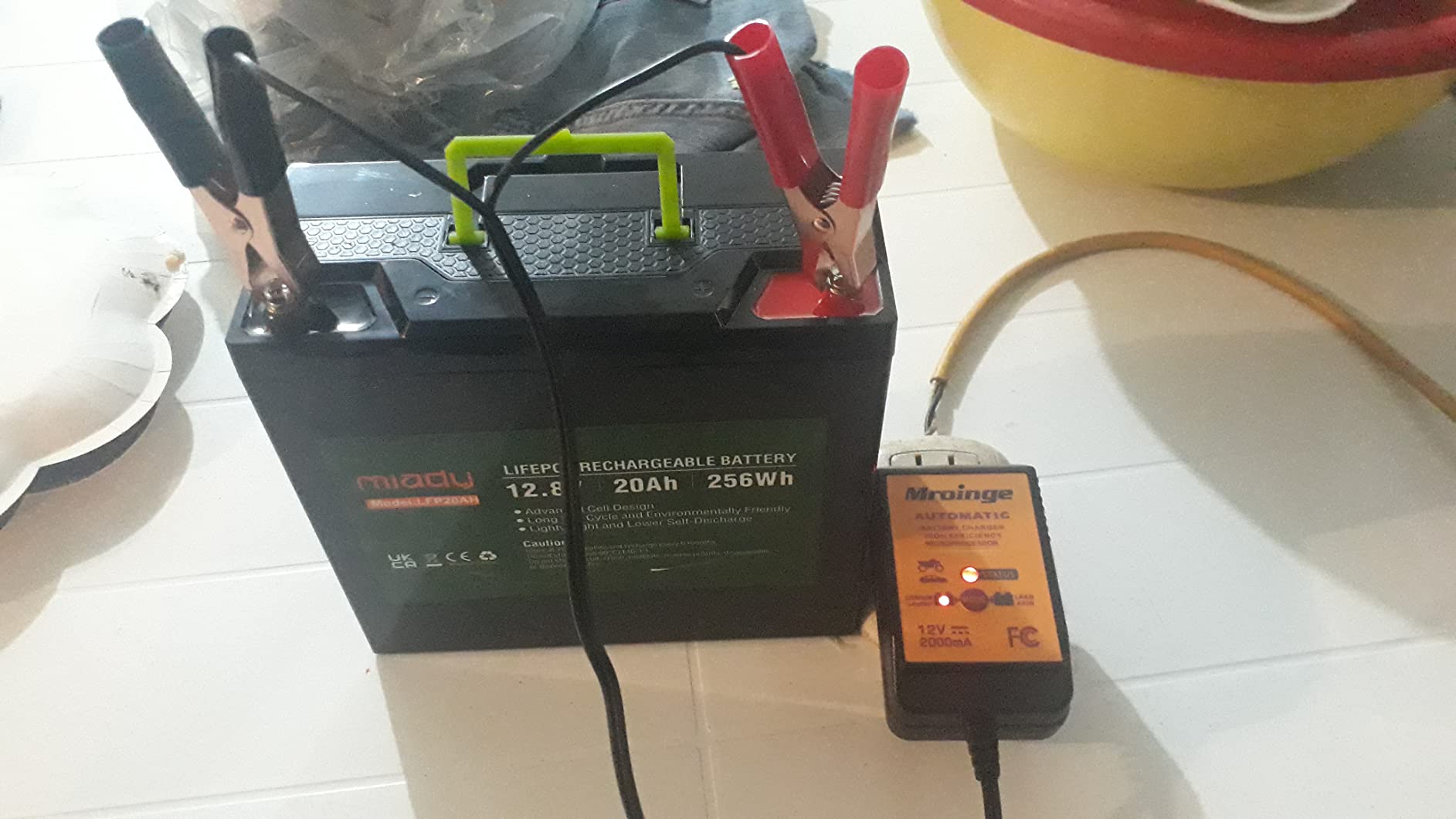
The awkward detail is mode switching. The battery must be disconnected before you change charge modes, which is a small extra step, but it is the reason this is not the first recommendation for someone who wants absolute plug-and-forget.
When this is the right pick
It suits a rider on a lithium battery who wants more current than a 1A unit gives, a multi-vehicle garage where one unit might cover a car and a bike, and anyone who wants explicit chemistry selection rather than auto-detection.
When it is the wrong pick
Riders who change batteries or swap packs regularly will resent the disconnect-before-switching rule. It is also a maintenance-first device despite the 2A headline number.
10. OptiMATE Lithium 4s 0.8A – Built Specifically for LiFePO4 Packs
OptiMATE Lithium 4s 0.8A, TM-471, 8-step 12.8V 0.8A sealed battery saving charger & maintainer
0.8A output
8-step LiFePO4 program
BMS wake-up mode
3-year warranty
Pros
- Only unit here with a programme written for LiFePO4 chemistry
- BMS wake-up recovers packs sleeping in protection
- Recovers lithium batteries discharged well below working voltage
- Sealed case and fully automatic operation
- 3-year warranty
Cons
- Limited to lithium chemistry so it is not a general storage charger
- Indicator lights are not labeled on the case
If your bike runs lithium, this is the pick. The eight-step programme is written for LiFePO4 chemistry at 12.8V rather than being a lead-acid profile with a lithium label stuck on the box.
The BMS wake-up mode is the feature that earns the money. Lithium packs that have dropped into protection sleep often read as dead to a generic charger, and this one is reported to recover batteries thought to be finished, sometimes after other chargers had already given up on them.
At 0.8A it charges slowly by design, which is correct for a storage top-up. The sealed case handles the usual garage conditions, and the operation is fully automatic once connected.
When this is the right pick
It fits a rider with a LiFePO4 pack that a generic maintainer struggles to wake, and anyone who wants a charger whose charge profile was designed for the chemistry rather than adapted to it.
When it is the wrong pick
It cannot serve as your lead-acid storage charger, so a mixed garage needs a second unit. The unlabeled indicator lights also mean you will need the manual to read its states.
11. BatteryMINDer 2012-AGM 2A – For AGM Packs Only
BatteryMINDer 2012-AGM 12V 2Amp Smart Battery Charger, Maintainer & Desulfator for AGM Batteries Only | Automatic Trickle Charger for Odyssey, Optima, Car, Motorcycle, RV, Winter Storage
2A output
AGM chemistry only
High-frequency pulse desulfation
Up to six AGM batteries in parallel
Pros
- AGM-only profile matches Odyssey Optima and thin-plate packs
- Owners report continuous use for years without failure
- Temperature sensor holds the charge correct in sub-freezing garages
- Pulse desulfation revived weak mower and powersports batteries
- Worldwide 100-240V input
Cons
- AGM batteries only
- wrong profile for flooded or standard lead-acid
- 2A is a maintenance rate so recovery takes days
- Cannot recover heavily overcharged or vented AGM cells
- Highest cost in the roundup
Read the restriction first: this is an AGM-only charging profile and it is wrong for flooded or standard lead-acid batteries. If your bike runs anything other than a true AGM pack, stop here and pick another unit on this list.
For riders who do run AGM, the profile is properly matched. Owners with Odyssey or Optima packs report multi-year continuous service, and the installed ambient temperature sensor adjusts charge voltage in cold conditions, which is the feature that protects a battery through a hard winter.
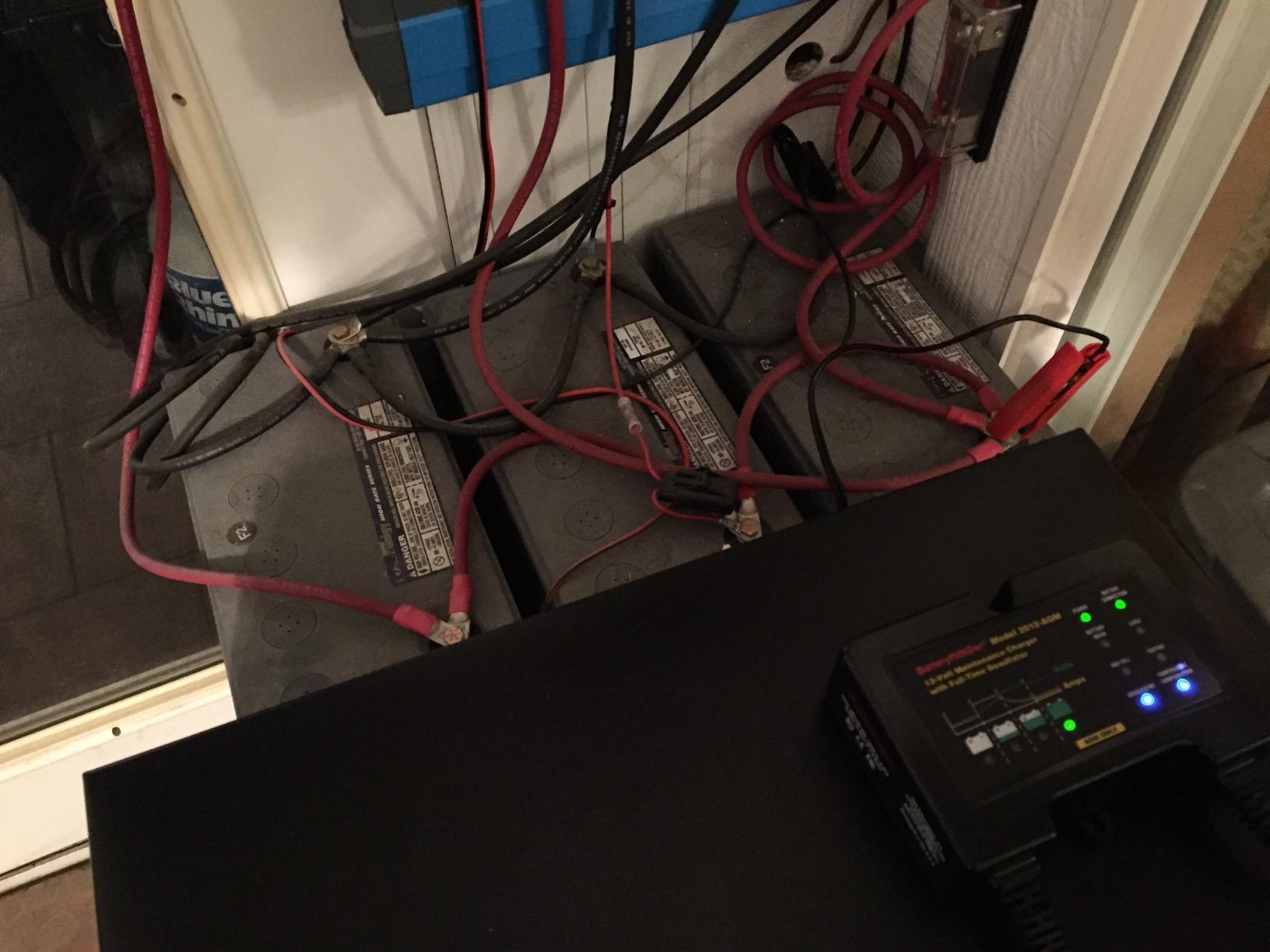
Patented high-frequency pulse desulfation runs instead of the high-voltage approach some competitors use, and is reported to have revived weak mower and powersports batteries. With Y-Connectors sold separately, one unit maintains up to six AGM batteries at once.
When this is the right pick
It fits a garage with multiple AGM batteries across motorcycles and equipment, and owners who value a purpose-built profile plus temperature compensation more than they mind the cost.
When it is the wrong pick
It is the wrong choice for a standard sealed or flooded bike battery, and it is overkill for a single small motorcycle battery. Verify your battery is marked AGM before buying.
12. TecMate OptiMate 1 Duo 0.6A – One Box for a Lithium and a Lead-Acid Bike
Tecmate TecMate Optimate 1 Duo, TM-409, 4-Step 12V / 12.8V 0.6A Battery Charger & maintainer
0.6A output
Duo program for lithium and lead-acid
4-step 12V and 12.8V sequence
Fused harness lead
Pros
- Single unit covers both lithium and lead-acid packs
- Compact plug-in format is easy to store
- Fused harness lead is safe to leave permanently attached
- Reported to rival the pricier dual-chemistry models on small bike batteries
- Easy to carry for a stored or spare battery
Cons
- 0.6A is the lowest output here and needs overnight charging
- Plug body may not fit covered or recessed outdoor outlets
The Duo program runs a four-step 12V and 12.8V charging and maintaining sequence that covers both lithium and lead-acid in one unit. That chemistry flexibility is the reason owners with several bikes buy several of these rather than one bigger charger.
Like the larger OptiMate3, it is fully automatic: continuous charging when the battery is healthy, stop and warn if it is faulty. It also prevents discharge from connected circuitry for round-the-clock protection against the parasitic draw on an alarmed bike.
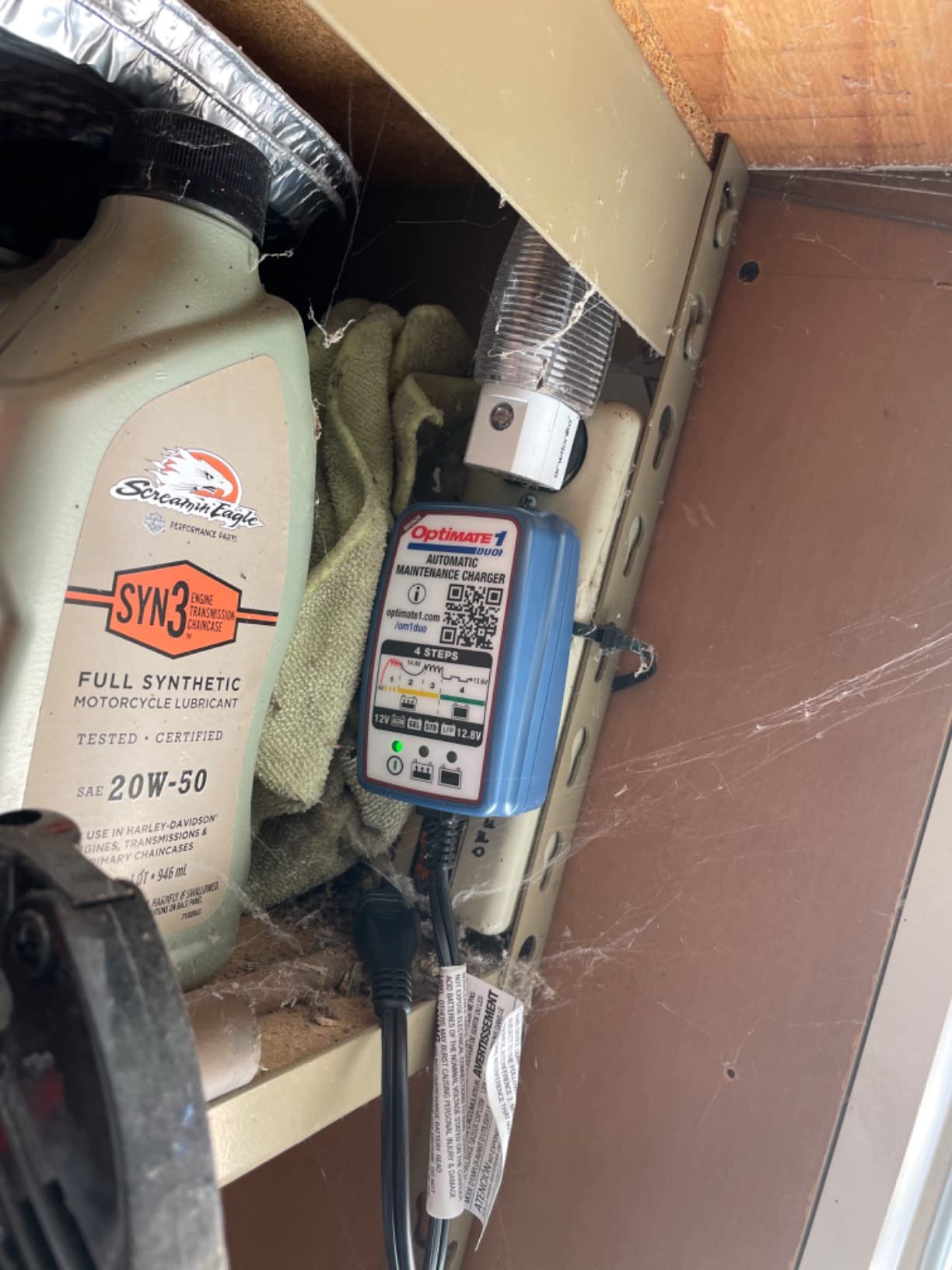
The battery clips and fused harness lead are both included, so you can run it permanently or seasonally. Owners with multiple machines report buying several as garage-kept winter tenders and citing a track record of zero failures over a decade.
At 0.6A this is the lowest output in the roundup, which is fine for a small healthy pack and wrong for anything large or neglected. The dustproof case suits indoor storage rather than damp outdoor spots.
When this is the right pick
It fits a household running more than one motorcycle with mixed chemistries, and anyone who wants a charger small enough to travel with.
When it is the wrong pick
Do not buy it for a large touring battery or for a flat pack, and note that the plug body may not fit a covered or recessed outdoor outlet.
Cold-Weather Charging, Lithium Plating and the Limit a Charger Cannot Fix
Never charge a LiFePO4 battery below 0C. The protection against that hazard lives in the battery’s battery management system, not in the charger, which is why no amount of clever charger features changes the rule.
When a lithium cell is charged in freezing conditions, lithium metal plates onto the anode instead of intercalating properly. That plating is largely irreversible, permanently eats into usable capacity, and can eventually take the pack out entirely. It is the single most serious winter mistake a rider can make.
Three rules follow from that. First, check whether your pack has a built-in low-temperature charge cut-off and whether the charger works with it. Second, if your garage regularly drops below freezing and the pack is LiFePO4, bring the battery indoors and charge it there. Third, do not treat a lithium mode on a charger as cold-weather protection, because the mode changes the charge voltage profile and nothing else.
There is a separate concern for lead-acid in a closed garage. Lead-acid batteries off-gas hydrogen during charging, so charging indoors needs ventilation. A garage with any airflow is fine; a sealed shed or closed storage locker is not.
And a note on what no charger fixes: a battery that has already failed from cold cranking, deep discharge or age is not a charging problem. Our battery tester picks cover confirming resting voltage before you decide whether a maintainer is still relevant.
How to Choose a Motorcycle Battery Charger for Winter Storage
Match the chemistry first. Confirm whether your battery is flooded, AGM, gel, sealed maintenance-free or LiFePO4. If it is lithium, either buy a unit with an explicit lithium mode or a chemistry specialist, and never assume a lead-acid charger is safe for it.
Then match amps to capacity. A small 5Ah to 10Ah motorcycle battery is well served by anything from 0.75A to 1.1A. A 20Ah or larger touring pack benefits from 1.25A to 2A. Above roughly 2A you are into recovery charging, which is useful if the battery is already flat but unnecessary for a healthy one going into lay-up.
Decide by storage location. A fully sealed case or a stated weather resistance matters if the bike is outside or on a covered patio. An integrated temperature sensor matters more in an unheated garage. A permanently mounted bracket matters most of all if the battery is buried under bodywork, because access is the real reason maintainers go unused.
Check the connector. A fused ring terminal with an SAE quick disconnect turns a monthly job into a monthly plug-in. Alligator clips only are fine, but they are the reason some chargers end up in a drawer.
Count your batteries. One bike needs one unit. Two or more motorcycles, or a bike plus a mower or snowmobile, and you are better served either by a multi-battery capable unit or by buying two compact chargers.
Run a four-step pre-storage protocol. Clean the terminals and check for corrosion. Disconnect the negative terminal first if you are removing the battery, and measure resting voltage before it goes down. Give the battery a full charge before the bike goes into lay-up. Then connect the maintainer and confirm it reaches float rather than staying in bulk.
One last check before the first freeze: make sure the charger you picked reaches float rather than sitting in a bulk stage indefinitely. Almost every unit here does, and that single behaviour is what makes leaving it connected all winter the right call in 2026.
Frequently Asked Questions
What is the best motorcycle battery charger for winter?
For most riders the Battery Tender Junior is the best motorcycle battery charger for winter storage, because its 0.75A four-step programme reaches float mode and then holds the battery topped up without pushing current. Riders who want to mount it once permanently should pick the NOCO GENIUS2D, and owners who prioritise warranty length tend to choose the Battery Tender Plus.
How to keep a motorcycle battery charged during winter?
Clean the terminals, give the battery a full charge, and connect a multi-stage maintainer with a float stage. Float mode is what makes it safe, because the charger stops pushing current once the battery is full and only tops it up as it self-discharges. Confirm it reaches float, and keep the bike away from a security system’s parasitic draw as far as the harness allows.
Can I leave a trickle charger on my battery all winter?
Only if it is a multi-stage tender or maintainer, not an old constant-current trickle charger. Once it reaches float it stops pushing current and monitors voltage continuously, so months of attachment are safe. A true trickle charger keeps pumping current forever and can boil a battery dry. An ApriliaForum rider reported a four-month lay-up on a plain Junior with no battery damage.
Is a battery charger maintainer the same as a battery tender?
Yes, in practice the two words describe the same device. A battery tender and a battery maintainer are multi-stage chargers that charge, then drop into a float stage and hold the battery. What they are not is an old trickle charger, which pushes a constant current indefinitely. Forum confusion between these terms is the main reason riders buy the wrong box.
Can you use a battery booster on a motorcycle?
A booster is designed to deliver a burst of current to start a vehicle, not to sit on a battery for months. For winter storage you want a maintainer with a float stage instead. Using a booster as a storage device risks overcharging a full battery or leaving one flat, so treat it as a roadside tool rather than a storage solution.
Do I need a battery tender if I store my bike for the winter?
If the bike is stored for more than a few weeks, yes. A parked battery self-discharges and loses more to the alarm, tracker and immobiliser, so the bike you stored healthy is often the bike that will not start in spring. A maintainer plugged in beside the bike solves it in one step. Riders who only start the bike occasionally are not replacing the electrical maintenance.
The Bottom Line
If you take one thing from this roundup of the best motorcycle battery chargers for winter storage, make it this: buy a multi-stage unit with a float stage, match it to your battery’s chemistry, and plug it in before the bike goes down. The Battery Tender Junior covers most riders, the NOCO GENIUS2D covers anyone who would rather mount it once, and the OptiMATE Lithium 4s covers anyone running LiFePO4.
Plug it in, check that it reaches float, and leave it there. That single habit, repeated every winter in 2026, is cheaper than one replacement battery.