
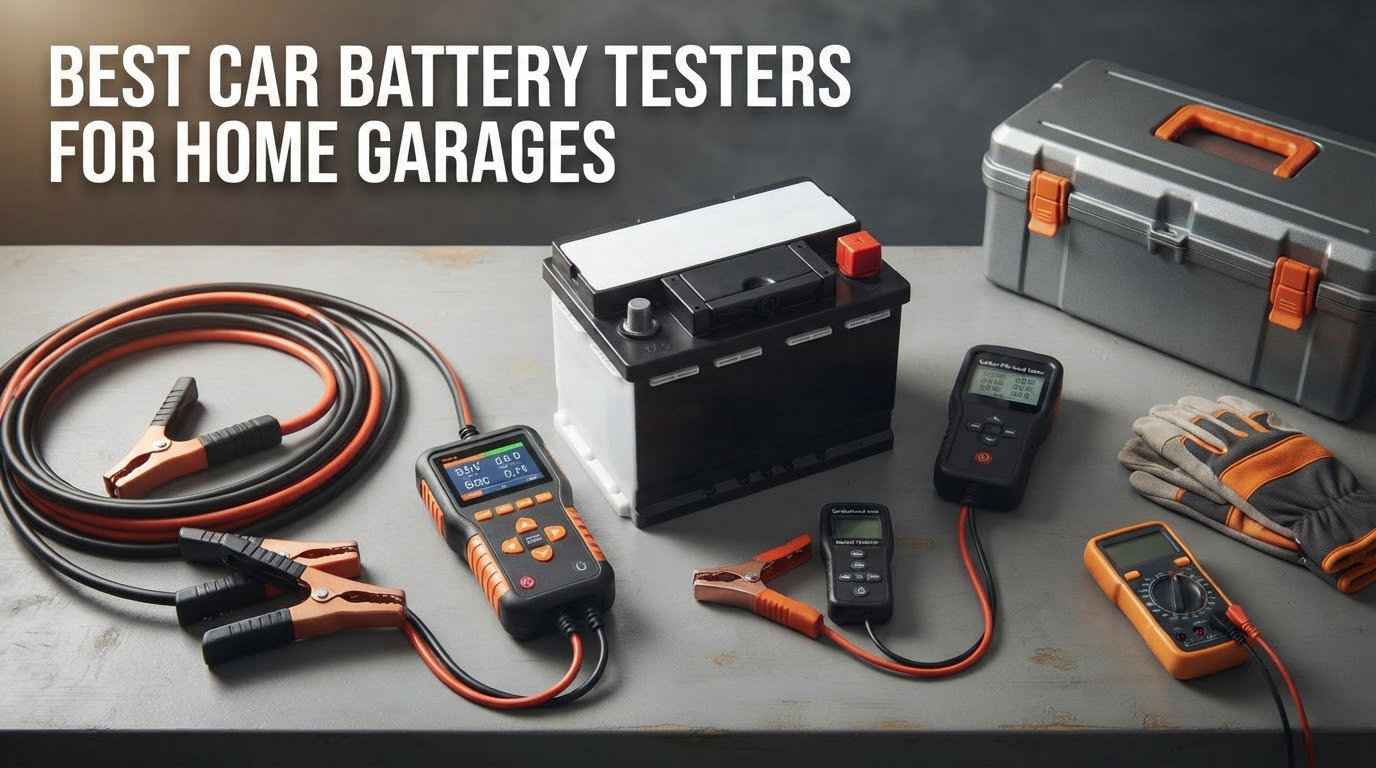
The best car battery testers for a home garage are the digital conductance models that report a state-of-health percentage, a measured cold cranking amp figure, and a cranking and charging result from the same clamp-on session. Yes, car battery testers really work, and here is the mechanism: most modern units push a small measured signal through the battery, time the current response, and convert that into an internal resistance figure, which maps to a health percentage and a CCA estimate. That is enough to tell you whether a battery is worth keeping, whether the starter is pulling hard, and whether the alternator is charging properly, all in under a minute and without a trip to the parts counter.
A weak battery is the single most common reason a car will not start, and it rarely warns you first. The failure usually shows up as a slow crank on the morning after a cold night, which is exactly when a home garage is the least convenient place to be standing. Testing twice a year, and always before winter, catches a degraded battery months before it strands you. I have run these testers on a decade of daily drivers, weekend project cars and a couple of old diesel trucks, and the pattern is consistent: the batteries that fail without warning were the ones nobody measured.
That is where the free in-store test falls short. A parts counter test gives you a yes or no at a single moment, using a reading that a battery holding surface charge can fake. An owned tester with SOH, SOC and internal resistance data lets you compare a reading against the same battery a month later and watch the trend, which is the only reliable way to catch slow decline. If you are still deciding what to buy, our tool chest picks for home garages and workbench roundup cover where the tester physically lives once you own one.
The ten units below were selected for what a DIY owner can actually do with them: 12V lead-acid coverage, a genuine cranking and charging test, a readout that means something, and clamp quality that survives a garage. Nine standards and display types are covered, from a plain analog load tester to a combined OBD2 scanner. Every rating and review count quoted here comes straight from the retail listing, and every specification comes from the manufacturer data for that model. This roundup is current as of 2026, and we update it whenever the lineup shifts.
Table of Contents
Top 3 Picks for the Best Car Battery Testers (October 2026)

KONNWEI KW208
- 100-2000 CCA
- 12V battery
- cranking and charging tests
- SOH and internal resistance

All 10 Best Car Battery Testers at a Glance in 2026
The table below is the fast answer. Battery chemistry support and test mode coverage matter more than any other feature when you are diagnosing a no-start in your own driveway, and those are the two columns most roundups leave out. Scan the battery types column first: if you own a lithium dual-battery setup, a classic 6V car, or a 24V diesel bank, that single row decides your purchase.
| Product | Specifications | Action |
|---|---|---|
| KONNWEI KW208 |
|
Check Latest Price |
 TOPDON BT100 TOPDON BT100 |
|
Check Latest Price |
| MOTOPOWER MP0514A |
|
Check Latest Price |
 ANCEL BA101 ANCEL BA101 |
|
Check Latest Price |
 MOTOPOWER MP0515A MOTOPOWER MP0515A |
|
Check Latest Price |
 ANCEL AD410 PRO ANCEL AD410 PRO |
|
Check Latest Price |
 FOXWELL BT705 FOXWELL BT705 |
|
Check Latest Price |
 TOPDON BT200 TOPDON BT200 |
|
Check Latest Price |
 OEMTOOLS 24338 OEMTOOLS 24338 |
|
Check Latest Price |
 Clore Automotive SOLAR BA9 Clore Automotive SOLAR BA9 |
|
Check Latest Price |
1. KONNWEI KW208 – Best All-Round Tester for a Home Garage
KONNWEI KW208 12V Car Battery Tester, Battery Load Tester Automotive 12V Alternator Starter Tester Digital Auto Battery Analyzer Charging Cranking System Tester for Car Truck Marine Motorcycle Boat
100-2000 CCA 12V
Flooded, AGM, gel
Reports SOH, internal resistance, Ah
Battery, cranking and charging tests
Pros
- Largest review base in the roundup
- SOH
- internal resistance
- CCA and Ah capacity in one pass
- Powered from the battery so no separate cells to charge
- Fits a glove box at 230 g
Cons
- Thin manual with small translated wording
- Accuracy depends on entering the right CCA and battery type
- No true high-current load test
- Some clip hinges crack after about a year
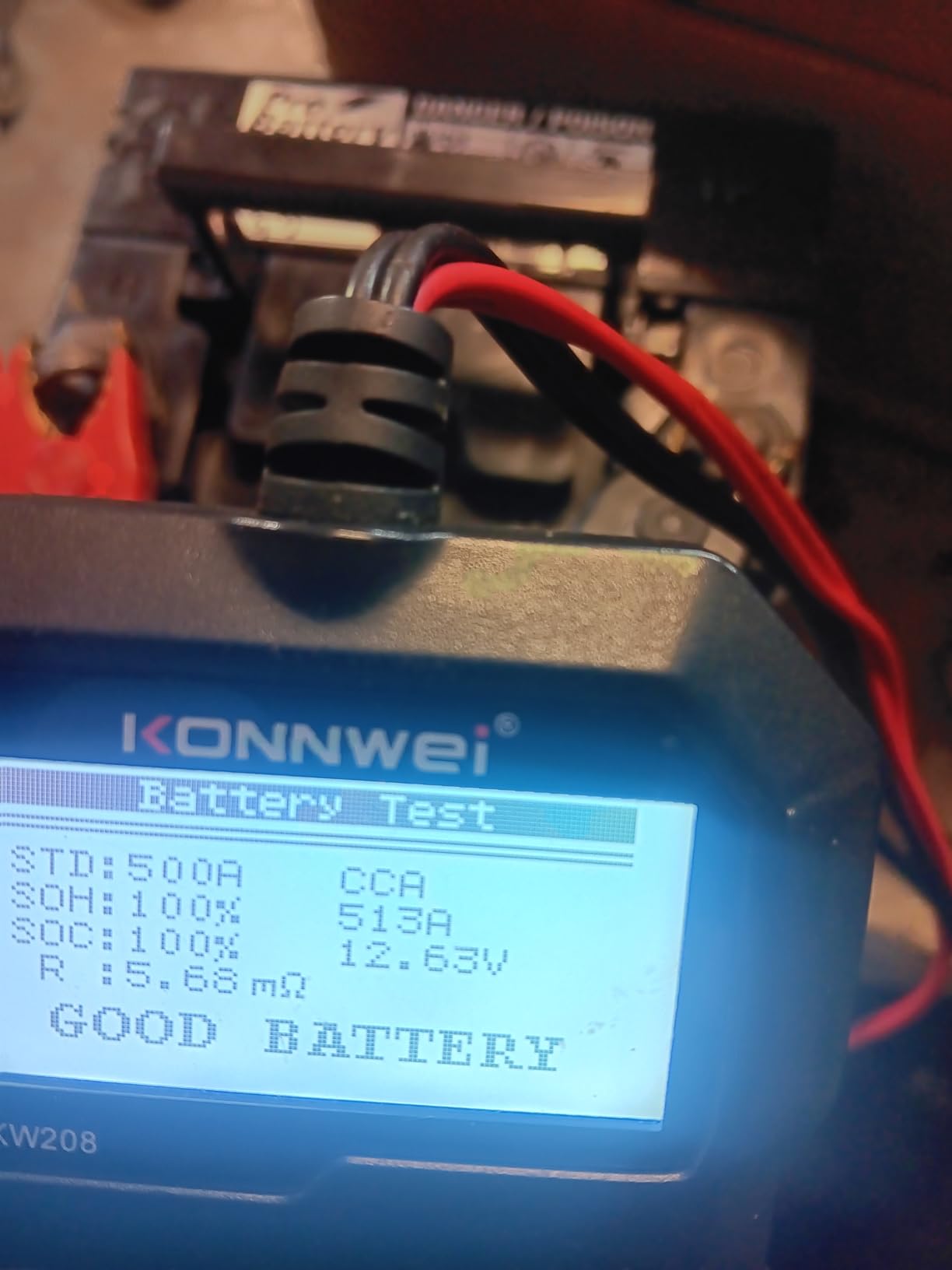
The KW208 is the tester I keep recommending first, and the one that ends up in my own glove box. It weighs 230 g and measures 0.79 by 3.07 by 5 inches, which is small enough that leaving it in the car costs you nothing. On a test session it reports voltage, internal resistance, cold cranking amps, Ah capacity, health and charge status, then runs a cranking test and a charging system test without you changing a thing.
It covers every 12V chemistry you are likely to meet in a driveway: flooded, AGM flat plate, AGM spiral and gel, from 100 to 2000 CCA. The switchable interface covers up to 8 languages, and the clips are updated galvanised alloy, which was the sensible hardware revision after earlier versions drew complaints about contact quality. Nothing needs plugging in, because the unit draws its power from the battery it is testing.
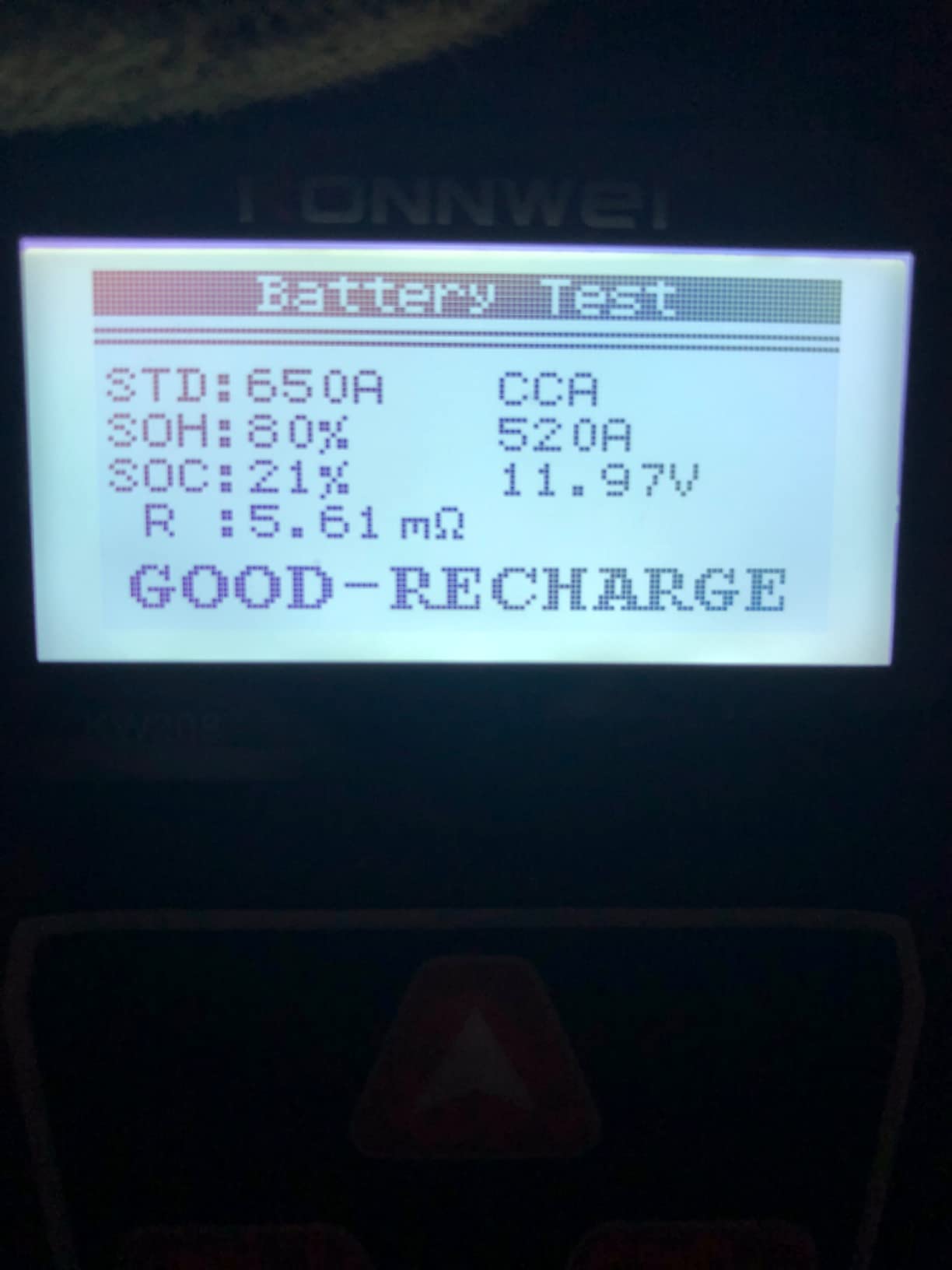
What I like most is how fast a full three-mode pass takes. Clamp, pick the chemistry, enter the CCA from the battery label, read the health percentage, then crank and read again. The whole thing takes about a minute, which means you will actually do it twice a year instead of once when something has already gone wrong.
The honest limitation is input quality. If you enter the wrong CCA rating or the wrong battery type, the reported cranking amp figure and the health percentage both shift, and the manual is thin with small type, so plan to spend five minutes with it the first time. This is not a true load tester, meaning it cannot apply a real 100 amp draw and watch the voltage sag, and it cannot tell you how the battery performs at low temperature. Owners also report a few plastic clip hinges breaking after around a year, so treat the clamps as the part to watch.
Is it good for a daily driver with a standard flooded battery?
Yes, and this is the exact use case it was designed around. The 100-2000 CCA window covers virtually every passenger car and light truck battery sold in the last two decades, and a flooded battery sitting in a vehicle that starts normally reports a healthy state of health on the first attempt. For someone who just wants a clear answer before winter, that combination is enough.
The unit is also fine for a car that is parked outside in real cold, because the measurement is a conductance reading and not a temperature simulation. It will not tell you the battery will start at minus 20F, but it will tell you whether the battery has quietly lost capacity over a summer.
Where does it fall short?
Lithium is the gap that catches people out. A LiFePO4 battery behaves differently enough that a conductance model trained on lead-acid produces a reading that is not meaningful, and the KW208 has no lithium profile. Anyone running a 12V lithium house bank in an overlander or a camper should look elsewhere on this list.
It is also 12V only, so a 24V diesel truck bank or a dual-battery RV arrangement is out of scope. And because state of health is calculated from cranking performance rather than true remaining capacity, a battery can read acceptable here and still disappoint on a cold morning. That is a limitation shared by nearly every modern tester, not a flaw unique to this one.
2. TOPDON BT100 – Best Small Tester You Can Keep in the Car
TOPDON BT100 12V Car Battery Tester, Automotive Battery Load Tester
100-2000 CCA 12V
Flooded, AGM flat and spiral, EFB, gel
SOH, SOC, voltage, current, rating
Three-function tester
Pros
- Glove-box friendly at 9 ounces
- Three tests in a single pass
- Works across cars
- motorcycles
- trucks
- RVs
- ATVs
- boats and mowers
- Spark-proof copper clamps with reverse-polarity prevention
- 30-day return and 12-month customer service
Cons
- Menu-driven interface has a learning curve
- 12V systems only so 24V truck and commercial batteries are out of scope
The BT100 is my pick when the question is where the tester will actually live. At 9 ounces and 5.3 by 3 by 1 inches it disappears into a centre console, and it currently sits around second place in its retail category, so the volume of real use behind it is large. The output covers state of health, state of charge, voltage, current and rating data on one screen.
Everything on my own vehicles that runs a 12V lead-acid battery is covered: cars, trucks, motorcycles, boats, ATVs, SUVs and golf carts. That range matters more than it sounds, because the same test session on a motorcycle battery and on a boat bank is the reason a home owner ends up owning a tester at all.
The three-colour LED indicator system is the part I actually use day to day. Instead of parsing a screen while your hands are full on a cold drive, you get a colour verdict, and the screen is there when you want the detail. The copper clamps include polarity reverse prevention and a spark-proof design, which matters because hydrogen gas collects around a battery that has been sitting in a closed garage.
Two things to know. First, the interface is menu-driven, so give it ten minutes on the bench before you need it in a hurry. Second, this is strictly a 12V device, so if your garage includes a 24V diesel truck or a commercial van, the BT100 will not touch it. The warranty position is 30-day return with 12 months of customer service, which is thinner than the multi-year terms some heavier units carry.
Will it fit where I can reach it in a car park?
Yes, and that is the deciding factor for most buyers. A tester that lives in a garage is a tester you walk to the driveway to fetch, and a tester that lives in the car is one you use while the problem is still happening. The cranking test in particular is far more useful when you can reach the clamps from the driver’s seat.
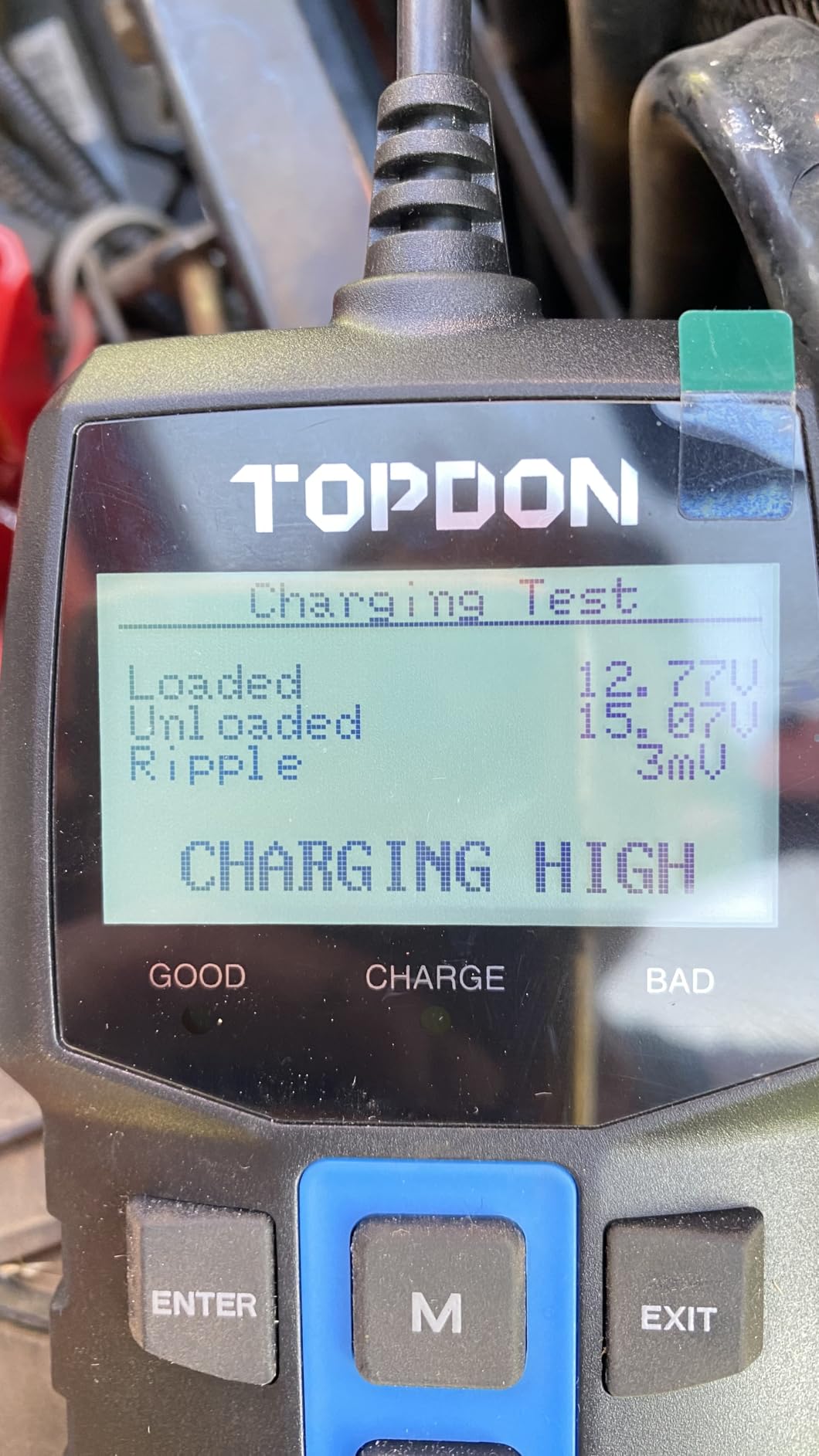
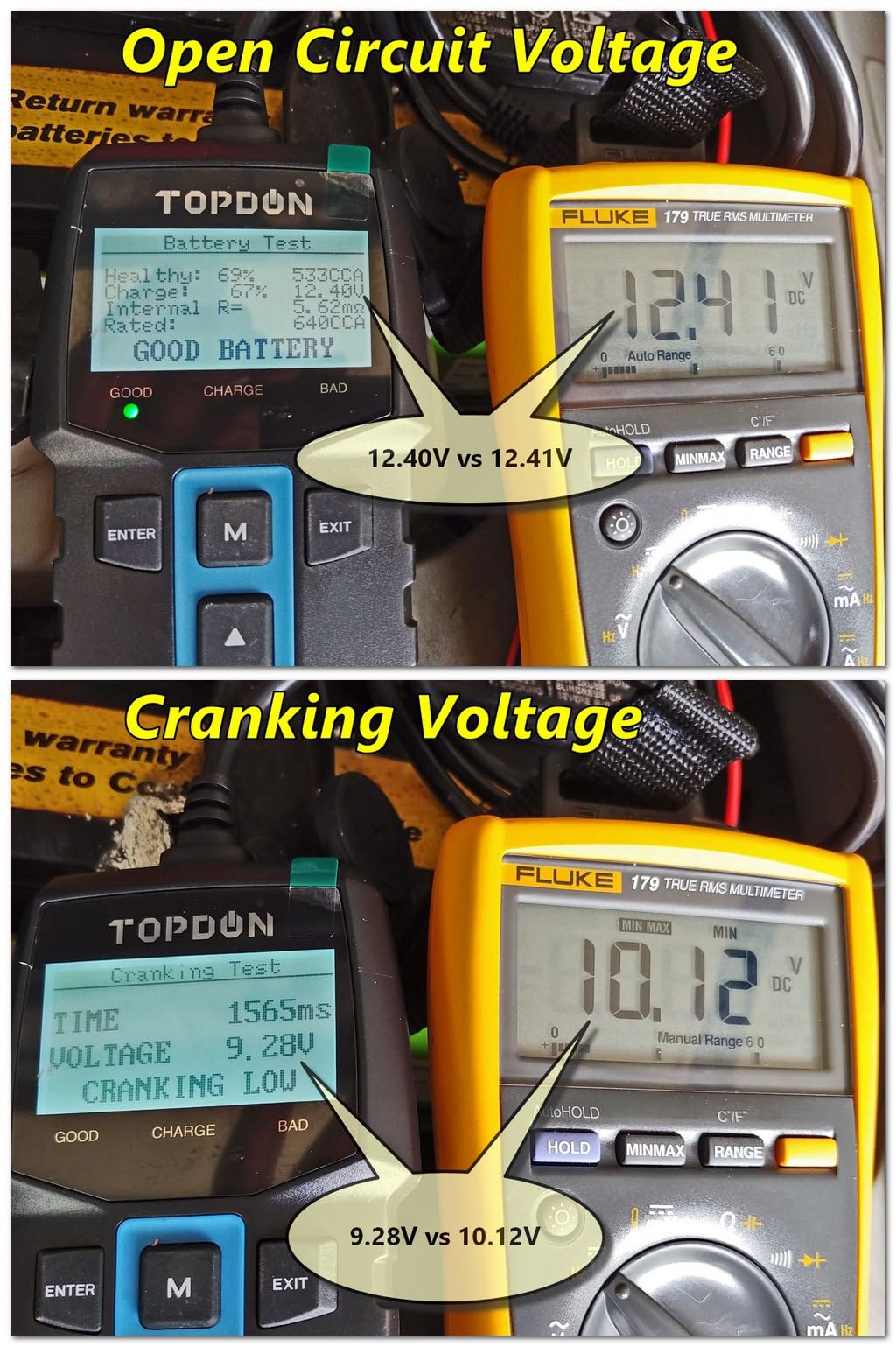
It also handles a full diagnostic sequence properly: battery health first with the engine off, then cranking with the starter turning, then charging with the engine running. Run in that order and the three results separate a dead battery from a weak starter from a failing alternator, which is the whole point of owning the tool.
When should you buy something else instead?
Buy something else if you run 24V. Commercial fleets, diesel pickups with dual systems and large RVs all fall outside what the BT100 can measure, and no amount of care will change that. A bigger, heavier unit with a 24V switch and a long cable serves those owners better.
Also consider a different tool if you want printed service records. This unit has no printer and no test history, so if you plan to hand customers a report when you sell a used car, you need a different category of device entirely.
3. MOTOPOWER MP0514A – Best for Quick Voltage and Alternator Checks
MOTOPOWER MP0514A 12V Digital Car Battery Tester Voltmeter and Charging System Analyzer with LCD Display and LED Indication – Black Rubber Paint
4-20V DC range, 0.01V accuracy
4-digit LCD plus 8 coloured LEDs
50cm leads with 30A clips
Reverse and over-voltage protection
Pros
- Lowest-cost dependable battery and alternator check
- No setup beyond clamping on
- Dual LCD and LED readout is easy to read at a glance
- Reverse-polarity and over-voltage protection
- 150 g body and 50 cm leads fit a toolbox
- One year manufacturer warranty
Cons
- Voltage-only analysis with no CCA
- SOH or internal resistance
- No printed results or stored history to compare over time
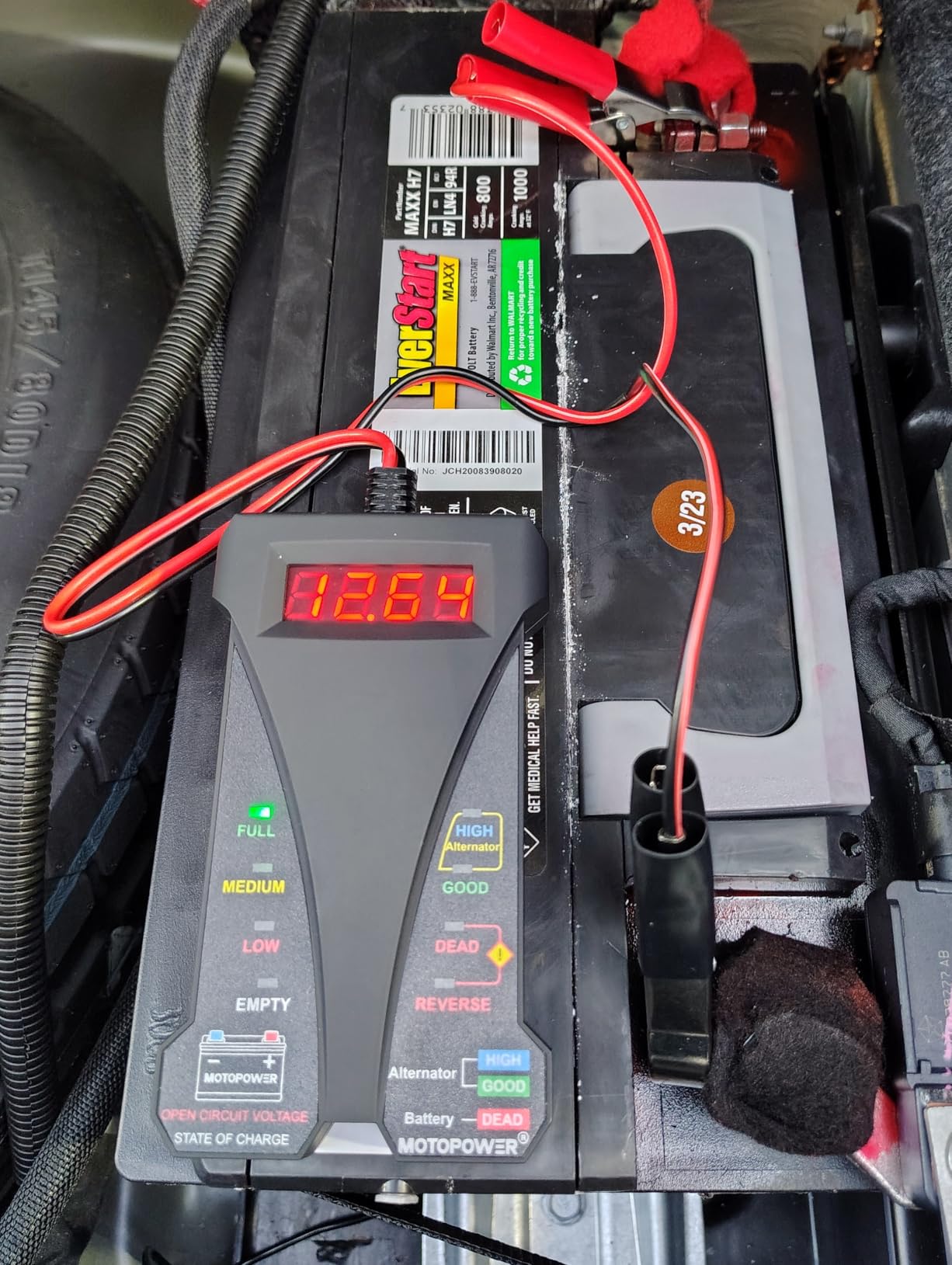
I want to be straight about what the MP0514A is, because buyers sometimes expect more than it delivers. It is a digital voltmeter with a battery verdict, not a capacity tester. It will not give you a cold cranking amp figure, a state-of-health percentage or an internal resistance number, and pretending otherwise would be doing you a disservice.
What it does give you is a 4-20V DC range with 0.01V accuracy on a 4-digit LCD, plus 8 coloured status LEDs that turn the reading into an instant pass or fail style indication. The 50 cm extension leads with 30A alligator clips reach any battery in a normal engine bay, and reverse connection plus over-voltage protection cover the two mistakes beginners actually make.
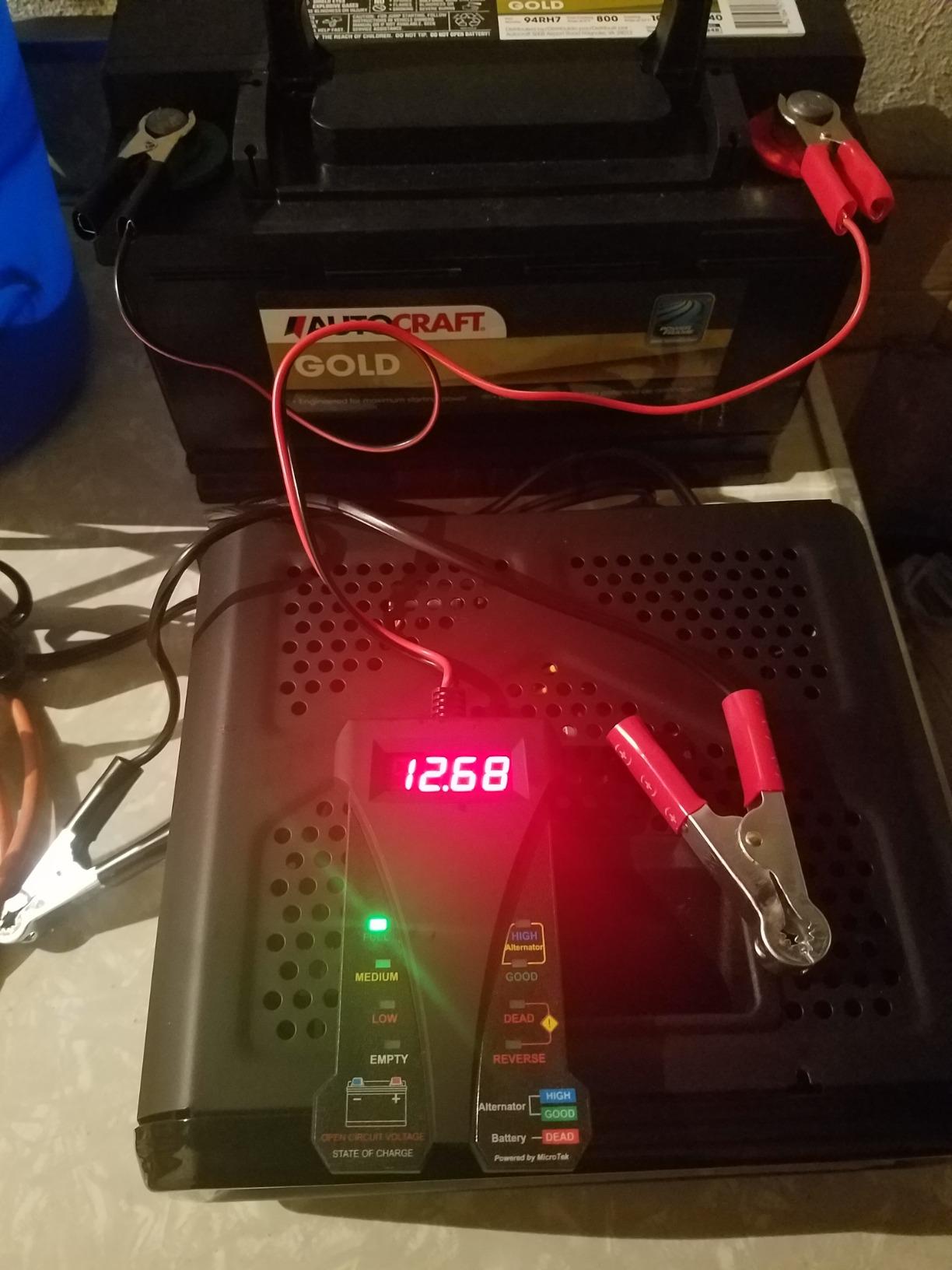
For most home situations, that is enough. A fully charged 12V battery rests around 12.6V, a healthy running system sits between 13.7V and 14.7V, and a reading that climbs while you rev with the headlights on confirms the alternator is doing its job. You can run that check in a driveway in your work clothes in under a minute.
The black rubber-painted housing is pleasant to hold, the whole thing weighs 150 g, and the minimum operating voltage of 4V DC means it will still read a deeply discharged battery where many digital testers simply refuse. The catch is that there is no stored history, so tracking decline month to month means writing the number on a notepad yourself.
Who gets the most out of this tester?
Someone who owns an older vehicle, keeps a battery on a trickle charger, or just wants a cheap second opinion before driving to the shop. It is the tool I hand to a neighbour who wants to know whether their alternator is charging and does not want to spend real money to find out.
It also handles small engines where a heavy 100 amp load coil would be wrong for the battery, such as a lawn mower or a small motorcycle pack, where the voltage comparison is more useful than a fixed load.
What are you giving up by choosing it?
Capacity data, mostly. Without CCA, SOH or internal resistance you cannot tell the difference between a battery at 80 percent health and one at 55 percent, and that difference is exactly what tells you whether a battery has a year left or a week. You are also getting no history function at all.
So this is a first tool rather than a final one. If you want to make a replacement decision with confidence, step up to a conductance model in this list that reports state of health.
4. ANCEL BA101 – Best for Global Rating Standards
ANCEL BA101 Car Battery Tester, 12V Digital Automotive Alternator Meter Diagnostic Tool,100-2000 CCA Load Capacity, Charging & Cranking Analyzer for Truck, Boat, RV, Marine Vehicle, and More
100-2000 CCA, 12V
SOH, SOC, voltage, current, CCA, internal resistance
Supports batteries over 30Ah
Nine rating standards
Pros
- Number one seller in the Battery Testers category
- Reports SOH
- SOC
- voltage
- current
- CCA and internal resistance
- Cranking and charging analysis in the same session
- Nine global rating standards
- 4-in-1 protection and 3x reinforced ABS housing
- Backlit high-contrast display readable in sunlight
Cons
- Poorly written instructions that leave you to find the CCA spec yourself
- A quick test alone can mislead so run every mode
- Not a true load tester
- 12V only and no lithium
- 6V or 24V support
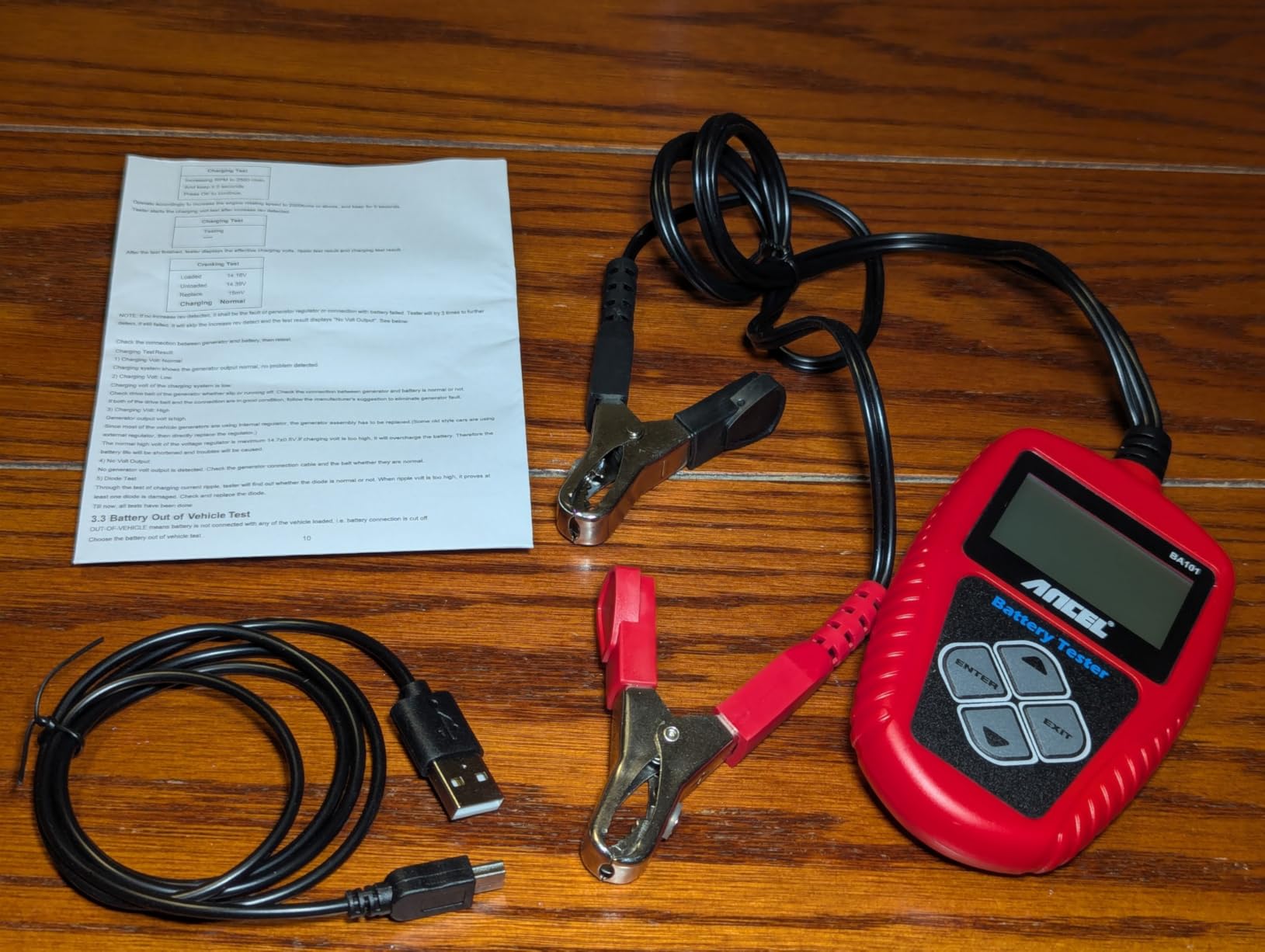
The BA101 currently tops the Battery Testers category, and having used several of its competitors, the reason is breadth. It reports state of health, state of charge, voltage, current, measured CCA and internal resistance, then runs the cranking and charging tests in the same session. The data depth here is the best of the budget-tier units.
The 100-2000 CCA range covers standard car batteries through large diesel-rated packs, with flooded, AGM, gel and EFB supported over 30Ah. Where it separates itself is rating standards: JIS, EN, DIN, SAE, BCI, GB, CA, MCA and IEC are all accepted, which matters if you have ever compared a Japanese battery label with a European one and got two different cranking amp numbers for the same box.
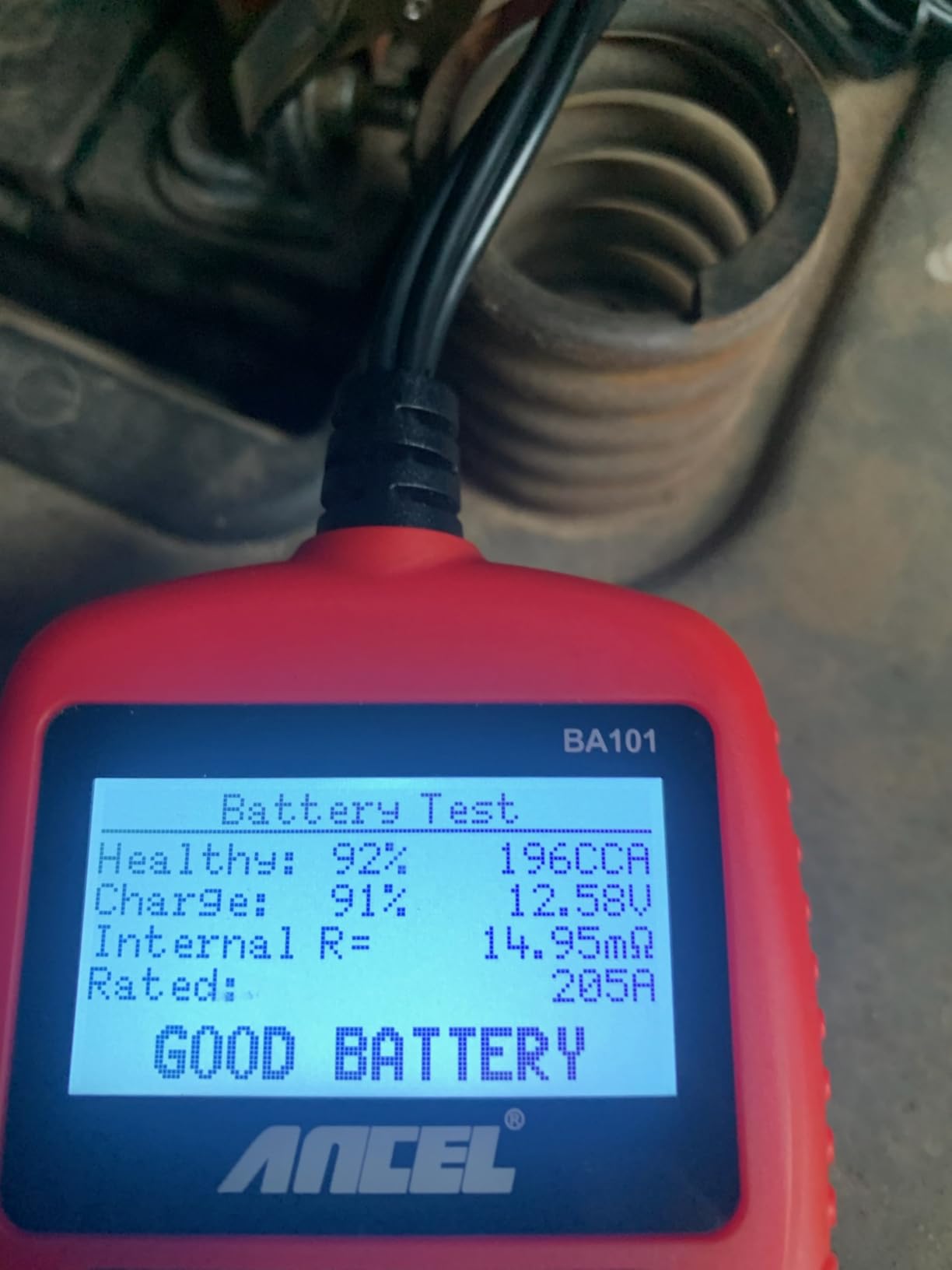
Build quality is better than the price bracket suggests. The housing is 3x reinforced ABS, the clips are copper crocodile, and the backlit high-contrast display is readable in direct sun, which is not a given on units this size. Protection is 4-in-1, covering reverse polarity, short circuit, overcurrent and overvoltage. The brand also carries a 12-month warranty.
Two practical warnings from users. The instructions are poorly written, so look up your battery’s CCA and Ah specification before you start. And a quick test on its own can mislead, because a battery that holds surface charge will look healthier than it is, so complete all three test modes before you condemn anything.
Why do the rating standards matter for a home garage?
Because CCA is defined differently depending on where the battery was made. SAE, BCI and CA use one convention, DIN and EN use another, JIS is its own again, and the numbers on two batteries of identical capacity can differ substantially. When you enter the wrong standard, the tester compares your battery against a threshold it was never designed for.
Supporting all nine means you can enter the standard printed on the label and get a reading that means something, whether the battery came off a shelf in Ohio or out of an imported classic. That is the quiet reason this unit is the category leader.
Which batteries should you keep away from it?
Lithium, 6V, 8V and 24V batteries are all outside its scope, as are motorcycle packs under 30Ah. If your garage includes a small bike battery or a 6V classic, this tester will either refuse or report something you should not act on.
Also remember it is a conductance device, not a load tester. A parts store that applies a real load remains the final word before you buy a battery, and the internal resistance figure is a strong indicator rather than a laboratory measurement.
5. MOTOPOWER MP0515A – Best Budget Step Up From a Voltmeter
MOTOPOWER MP0515A 12V Car Battery Tester Automotive 100-2000 CCA Battery Load Tester Auto Cranking and Charging System Tester
100-2000 CCA 12V load testing
Cranking and charging system tests
Compact stick form, 11.99 oz
Pros
- Adds real 100-2000 CCA load testing above the brand's voltage-only model
- Cranking and charging checks rather than a bare voltage reading
- Ranks in the top three of its retail category
- Compact stick form is easy to store
Cons
- 12V systems only
- Entry menu requires the correct CCA and battery type for an accurate result
The MP0515A is the natural upgrade path from the MP0514A on the previous entry, and it is where I would start if you own exactly one tester. Where the cheaper model reads voltage and gives you an LED, this one loads the battery across 100-2000 CCA and returns a real capacity judgement along with cranking and charging system results.
At 11.99 ounces and 5.91 by 0.91 by 3.35 inches, it is a stick-shaped handheld that lives comfortably in a garage drawer. It draws its own power from the battery, so there is no charging ritual and nothing to forget in a drawer over winter.
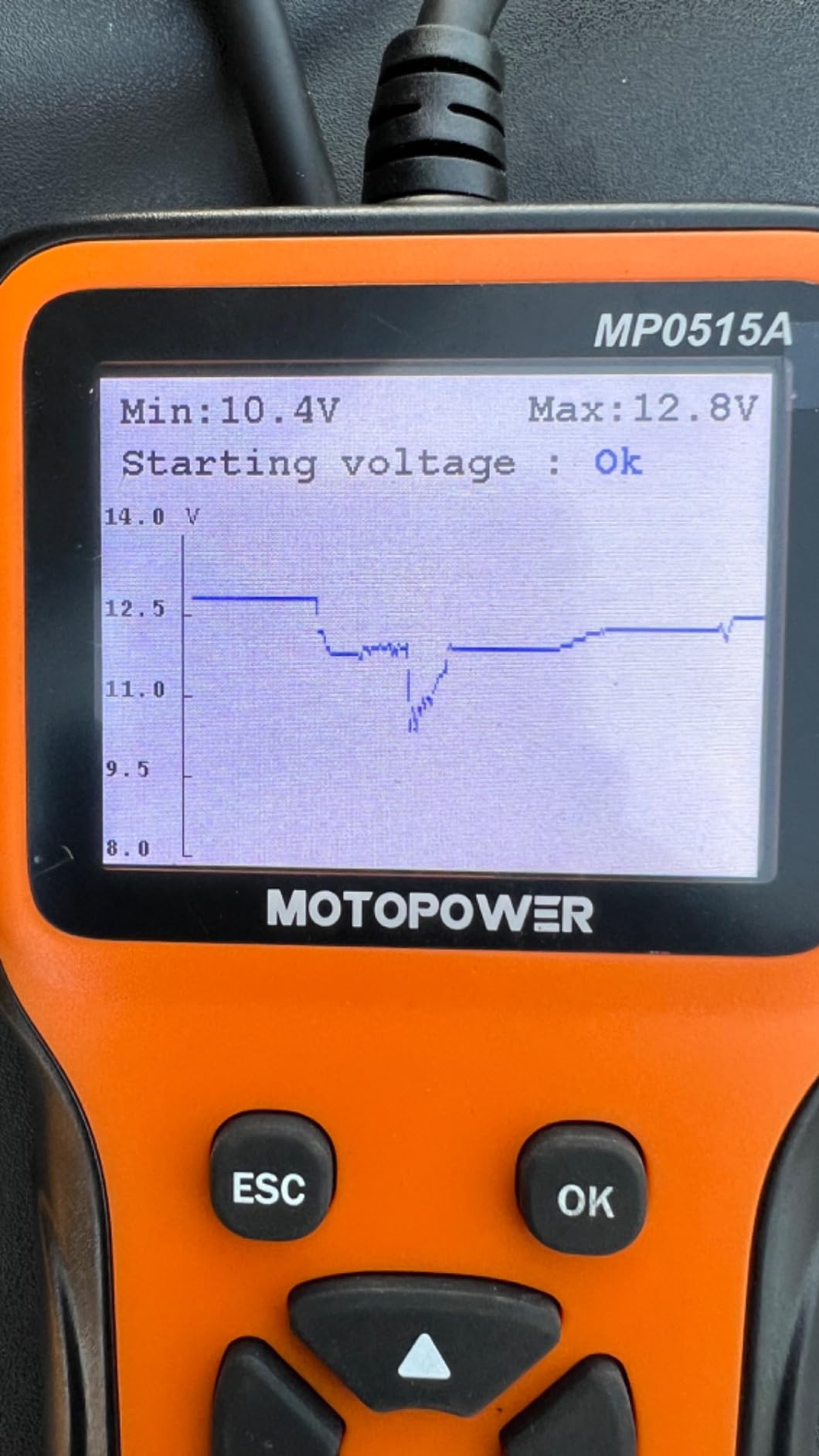
The practical difference shows up in a no-start diagnosis. With a voltage-only meter you can confirm the alternator is charging or rule it out. With this one you get a health percentage, a measured cranking amp figure, and a pass or fail on the starter, which is the difference between replacing a battery and replacing an alternator on a guess.
Owners consistently rate it as a genuine step up rather than a rebrand, and it currently sits in the top three of its category. The two complaints are consistent across the listing: it is 12V only, and you have to enter the right CCA and battery type on the entry menu or the numbers drift.
Is it worth paying more than a voltmeter-style tester?
If you own more than one vehicle, or you are the person other people call when their car will not start, then yes. The cranking and charging modes turn a single data point into a three-part diagnosis, and that is what turns a guess into a decision. For a single-car owner who just wants a quick seasonal check, the voltage-only model is still defensible.
The measurement is conductance-based, so the health percentage is an inference from the response of the battery rather than a direct capacity measurement. It moves with state of charge, which is why you compare readings taken the same way rather than absolute numbers from different days.
When should you step past this tester?
Step up when you have a 24V system, a printed report requirement, or a lithium battery. None of those are supported here, and buying a tester that cannot read your battery is the most common expensive mistake in this category.
A longer cable is also worth upgrading for. Short leads mean cranking a starter with one hand while the other holds the meter, which is uncomfortable on a cold morning and awkward on a large V8.
6. ANCEL AD410 PRO – Best 2-in-1 Tester and OBD2 Scanner
ANCEL AD410 PRO OBD2 Scanner and Battery Tester, 2-in-1 Car Diagnostic Tool, Check Engine Light, EVAP Test, Live Data, 12V Battery Analyzer with Cranking & Charging System Test for Car Motorcycle
OBD2 scanner plus 12V battery analyzer
42,000+ SAE DTCs decoded
50+ live data parameters
2.4 inch colour screen
Pros
- Two tools replaced by one unit
- Decodes over 42000 fault codes in plain language
- I/M readiness mode avoids failed emissions re-tests
- 50+ live data readings with freeze frame and graphs
- Plug-and-play with a 2.4 inch screen and 10 languages
- One year warranty with lifetime updates
Cons
- No ABS
- SRS or transmission module coverage
- Battery testing needs the separate clamp cable
- Not compatible with electric vehicles
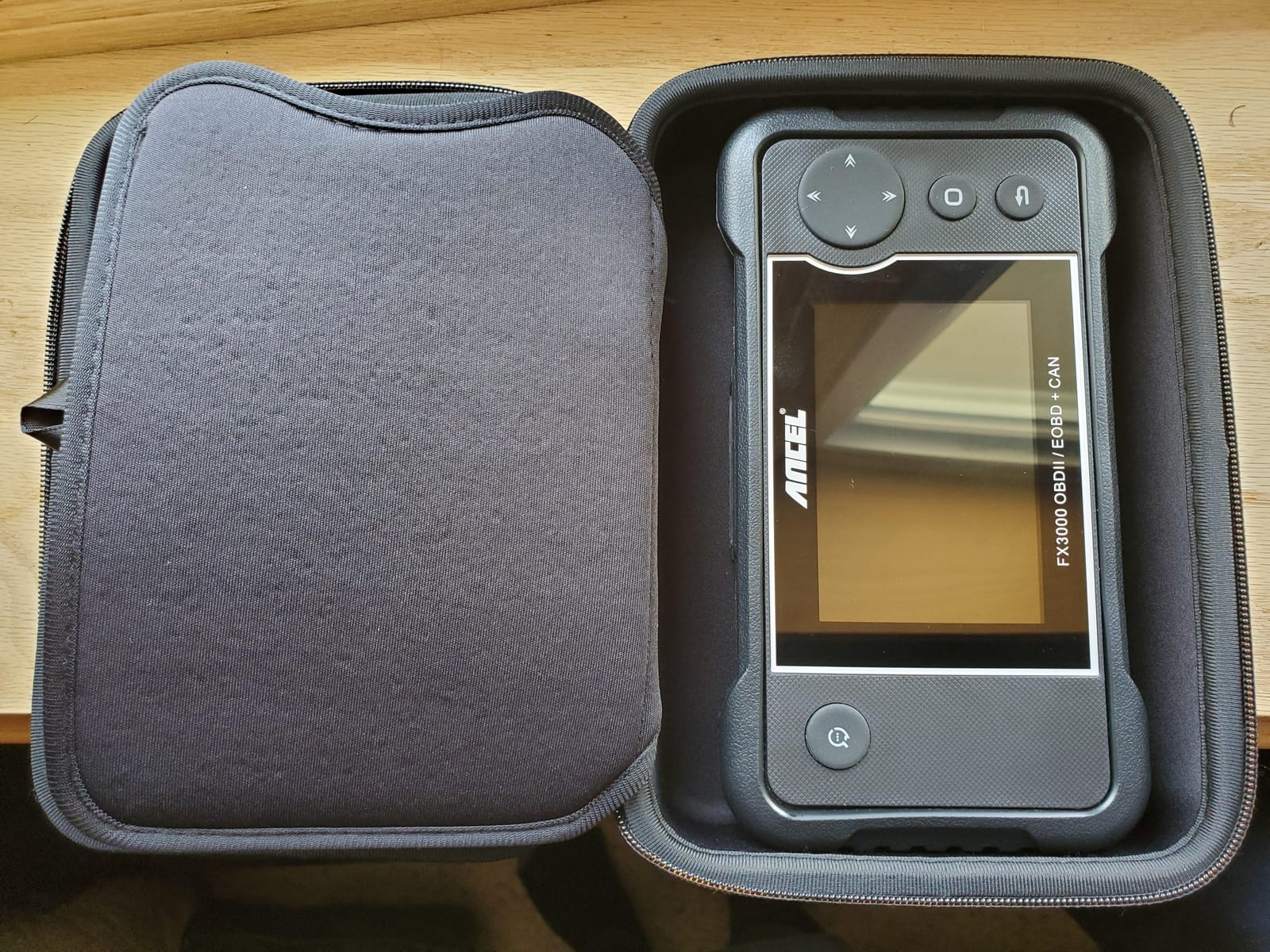
This is the pick for anyone whose garage work starts with a check engine light rather than a dead battery. The AD410 PRO does two jobs: it reads engine fault codes through the OBD2 port, and it analyses the battery, cranking and charging systems through a clamp cable. Carrying one device instead of two is the entire argument.
On the diagnostic side it decodes over 42,000 SAE trouble codes in plain language, handles I/M readiness status so you do not wipe readiness monitors before an emissions test, runs EVAP tests, and gives you 50-plus live data parameters with freeze frame replay and waveform graphs. That is well beyond a simple code reader.
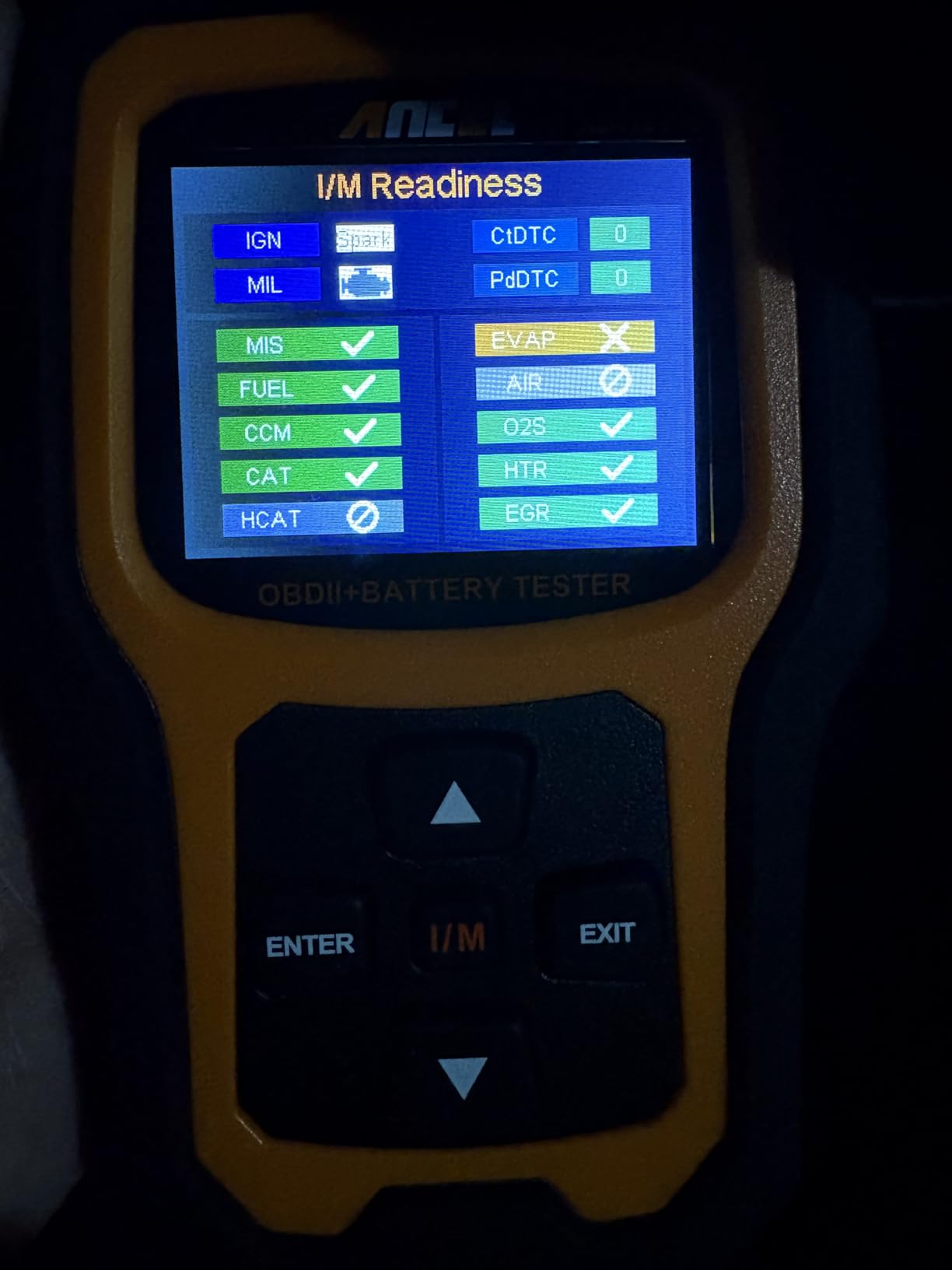
The battery half of the tool covers 12V systems with health, cranking and charging tests through the included clamp cable. Power comes from the 12V battery or the OBDII port, and the 2.4 inch TFT colour screen is readable in daylight across 10 languages. Coverage runs from 1996 model year US vehicles, 2001 and up in Europe, and 2005 and up in Asia, gas and diesel.
The limitations are specific and worth reading before you buy. It does not touch ABS, SRS or transmission modules, so it is powertrain only. Battery testing requires the separate clamp cable rather than working through the OBD port alone, which is easy to miss in the box. And it is not for electric vehicles, since those have no 12V starter circuit in the conventional sense.
Who should buy this instead of a dedicated battery tester?
Anyone who already needs a code reader. If you own a 1996 or newer petrol or diesel car and ever intend to read a check engine light yourself, this device handles that job and the battery job without you buying two tools. The one-year warranty with lifetime software updates is a reasonable long-term position.
It is also a good second battery tester to keep in the car, because it is small, powers itself from the vehicle and needs no separate battery.
Where does a battery specialist win?
A dedicated tester with a 100-2000 CCA conductance model reports measured cranking amps and internal resistance, which this unit does not. If your question is whether to replace a battery, the AA-type products in this list answer it more directly.
Coverage boundaries matter too. If you work on vehicles with complex chassis electronics or need airbag diagnostics, this is the wrong tool, and if you service electric vehicles it simply does not apply.
7. FOXWELL BT705 – Best for 24V Trucks, RVs and Fleets
FOXWELL BT705 Car Battery Tester 24V 12V, Alternator and Load Tester
12V and 24V, 100-2000 CCA
CCA, voltage, internal resistance, SOH
32F cold testing
5.9 ft cable
Pros
- Covers 12V and 24V for trucks
- RVs and commercial vehicles
- 5.9 ft cable allows a one-person cranking test
- Guided prompts with GOOD
- RECHARGE or REPLACE verdicts
- Hard carrying case and protective housing included
- Start-stop applications and 32F testing supported
- 24 month warranty
Cons
- Costs more than entry-level testers
- Guided prompts make each test slower than a simple voltage check
The BT705 is the tester I recommend when the phrase home garage covers a diesel truck or a camper. It works across 12V and 24V systems at 100-2000 CCA, which opens it up to pickups, RVs, boats, motorcycles and fleet vehicles that most testers in this roundup cannot read at all.
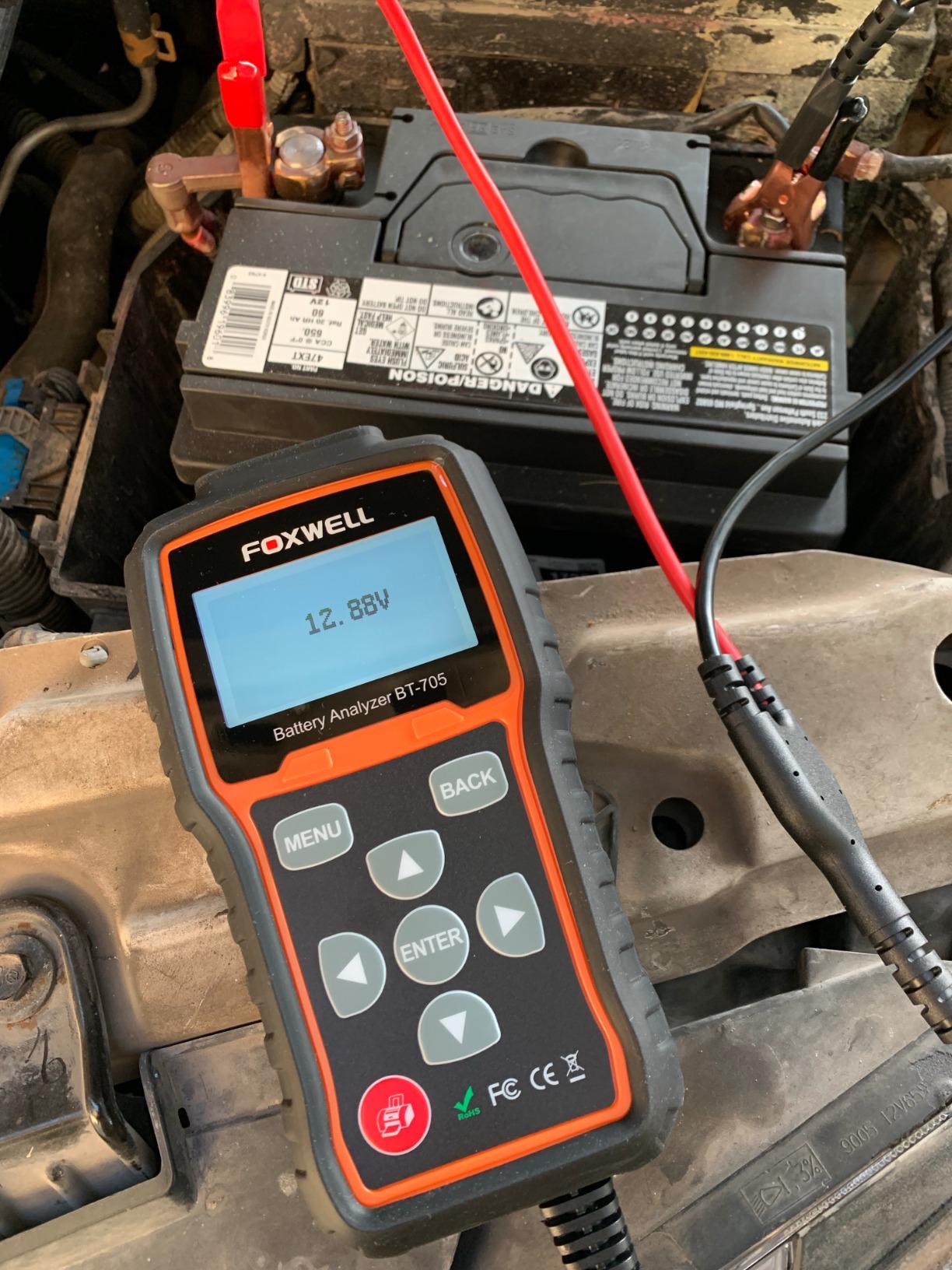
It checks CCA, voltage, internal resistance and state of health, including testing at 32F, and the results resolve into three plain verdicts: GOOD, RECHARGE or REPLACE. That framing is genuinely useful, because the middle answer is the one most people do not know how to interpret on their own.
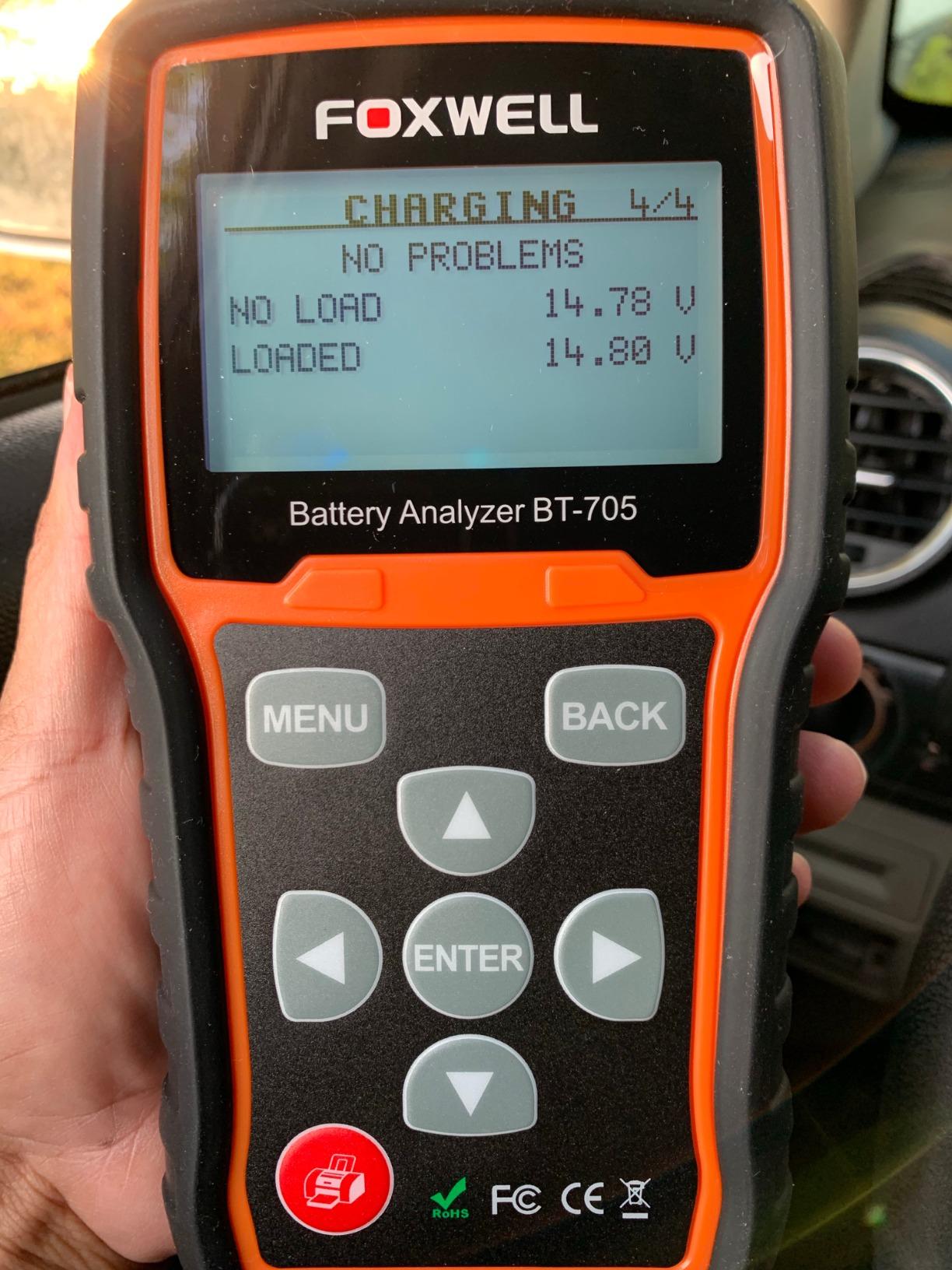
The 5.9 ft test cable is the feature that changes daily use. It is long enough that you can clamp it, sit in the driver’s seat, turn the key and watch the cranking result without a second person holding the leads. On a starter that draws a large current, that single length of cable removes the most awkward part of the job.
A 2.8 inch display with step-by-step prompts keeps the process obvious for a first-timer, and the unit comes with a hard carrying case and protective housing, plus a 24-month warranty. Battery chemistry support covers flooded, AGM, gel and EFB, including start-stop applications, so newer vehicles are handled properly.
Do you actually need 24V capability?
Only if you own a 24V system, and a lot of people do not know whether they do. Diesel trucks with dual battery systems, large RVs, buses, boats with dual banks and commercial vans are the usual cases. If your garage contains one of those, every 12V-only tester on this list is a wasted purchase.
The cold testing at 32F is a related bonus, because a battery that reads healthy at room temperature in August can still be marginal in January, and this unit gives you a reading closer to the condition you actually care about.
When is this more than you need?
If you own a single 12V family car, this tester asks you to pay for capability you will never use, and the guided prompts mean each test takes longer than a quick clamp-and-read on a smaller unit. The 325 g body and the case also add bulk for a person who wants a tester in the glove box rather than on a shelf.
It is also worth knowing that step-by-step prompting is a deliberate trade. It is friendlier and slower, and if you are testing eight batteries before a trip, that difference adds up.
8. TOPDON BT200 – Best for Cold Climates
TOPDON BT200 Car Battery Tester, 12V/24V, 100-2000 CCA Load Tester
12V and 24V, 100-2000 CCA
Flooded, AGM, gel, deep-cycle
Operating range minus 4F to 140F
2.4 inch colour LCD
Pros
- Three-in-one battery
- cranking and charging diagnosis
- Reliable on flooded
- AGM and deep-cycle batteries including boats
- Colour display readable in direct sunlight from the driver's seat
- Works from minus 4F to 140F with no separate batteries needed
- Test memory recalls the last reading
- Sturdy housing and secure copper clamps
Cons
- Health percentage is an estimate that shifts with charge state
- Cannot perform a true high-current load test
- Will not test LiFePO4 lithium batteries
- No charging test for trailers and campers without an engine
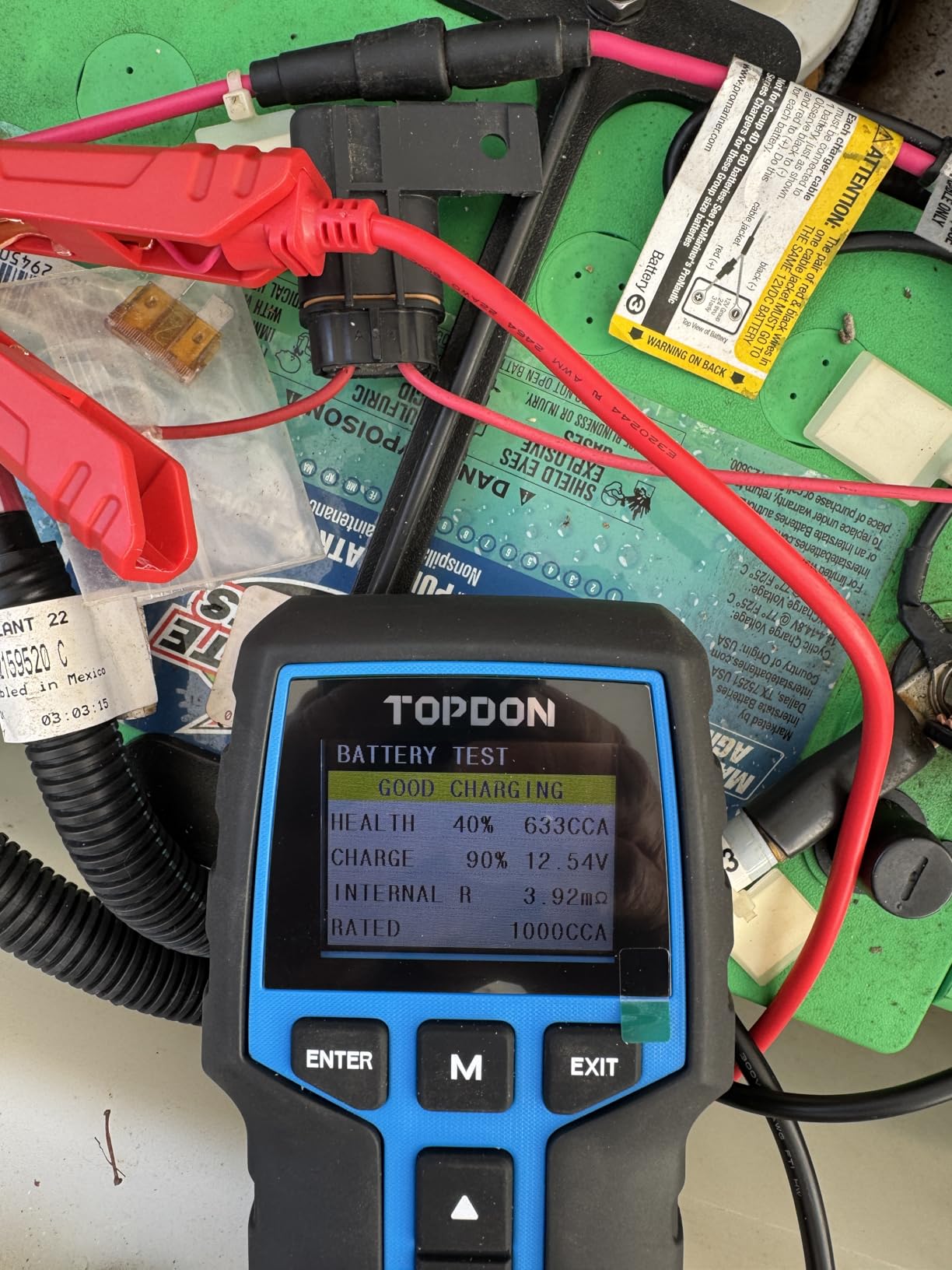
The BT200 is the step up from the BT100 in the same range, and the additions are meaningful. It moves from 12V to 12V and 24V at 100-2000 CCA, adds deep-cycle support for boat and leisure banks, and gains a 2.4 inch colour LCD that stays readable in direct sunlight with the engine running.
That operating range is the headline for anyone north of the 45th parallel. It is rated from minus 4F to 140F, so you can leave it in a vehicle through a northern winter and it will still work in the morning. Conductance-based testing is claimed at 99.9 percent accuracy for 100-2000 CCA batteries, though treat that figure as a manufacturer claim rather than something we verified.
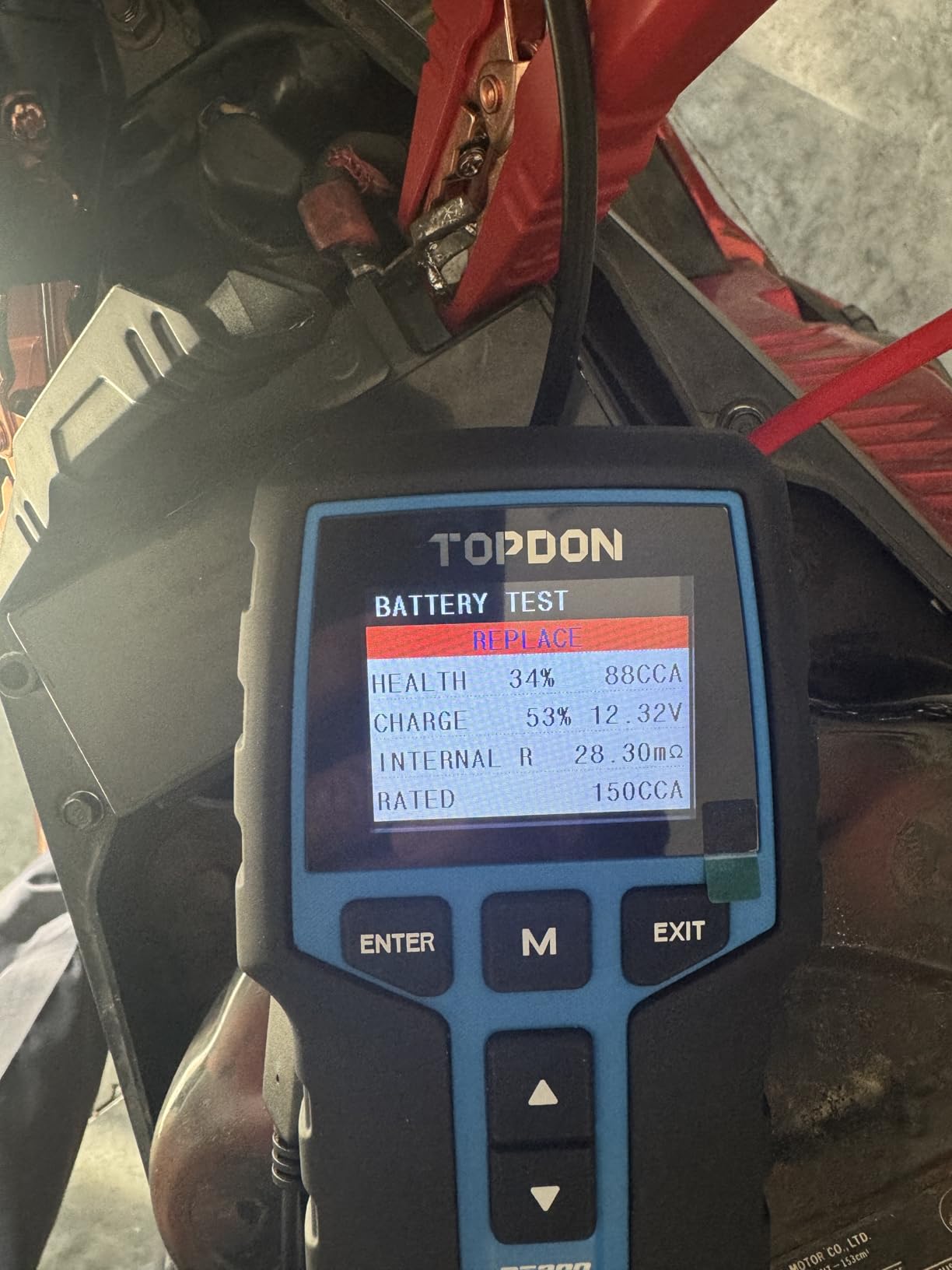
There is a memory function that recalls the last test, which solves a problem most home owners hit: forgetting what the number was three months ago. Combined with a pen in the garage, it gives you a rough decline trend without any app or cable. The housing is sturdy, the copper clamps are secure, and there is no replaceable internal battery to go flat.
The cons are honest ones. The health percentage is an inference that shifts with charge state and time since charging, so a 90 percent reading shortly after a charge is not comparable to the same figure in a cold month. It cannot perform a true high-current load test, it will not read LiFePO4 lithium packs, and the charging system test is unavailable on trailers and campers with no engine to run.
Is the colour screen worth the step up?
For a tester used outside, yes. A monochrome LCD in direct sun at the roadside is genuinely hard to read, and the difference between squinting at a screen and reading a verdict quickly matters when you are also holding a torch. The Good and Replace prompts are large and unambiguous.
It is also the only unit here that combines 24V support, deep-cycle chemistry and a wide temperature rating in one box, so a boat owner in a cold region gets all three from a single device.
Where will it disappoint you?
Lithium, as with most lead-acid testers. If you have converted to a LiFePO4 house bank, a dual battery lithium setup or a lithium start battery, the reading will be meaningless and the chemistry profile does not exist to correct it.
For campervan and trailer owners, note that you cannot run the charging system test on a vehicle without an engine, so on a towed trailer you are limited to the battery test itself.
9. OEMTOOLS 24338 – Best True Analog Load Tester
OEMTOOLS 24338 Battery Load Tester, Battery Tester 12V Automotive, Easy-to-Read Car Battery Tester, Heavy Duty Clamps, Shock Resistant Meter, Housed in Sturdy Steel Case
100A analog load test, 10 seconds
6V and 12V up to 1,000 CCA
State of charge, cranking volts, charging output
Copper-plated heavy duty clamps
Pros
- No menu
- no internal battery
- works straight from the box
- Analog scale is easy to read and spots weak batteries fast
- Steel case with carry handle for mobile use
- Separates a failing alternator from a bad battery in one test
- Handles automotive
- deep cycle and marine batteries
Cons
- Load coil gets hot and needs cooling time between tests
- Less accurate on small low-CCA batteries such as lawnmower packs
- Weaker performance on 6V deep-cycle batteries including golf cart packs
Everything else in this roundup estimates health from a conductance response. The 24338 does the real thing: a fixed resistive load coil drawing roughly 100 amps for ten seconds while you watch the needle. For a mechanic who wants the traditional answer, that difference is not academic.
It is also the only unit here that handles 6V batteries properly, which makes it the choice for classic cars, old tractors and vintage trucks that predate 12V. The scale is calibrated for both 6V and 12V use, and coverage runs to 1,000 CCA across automotive, deep cycle and marine batteries.
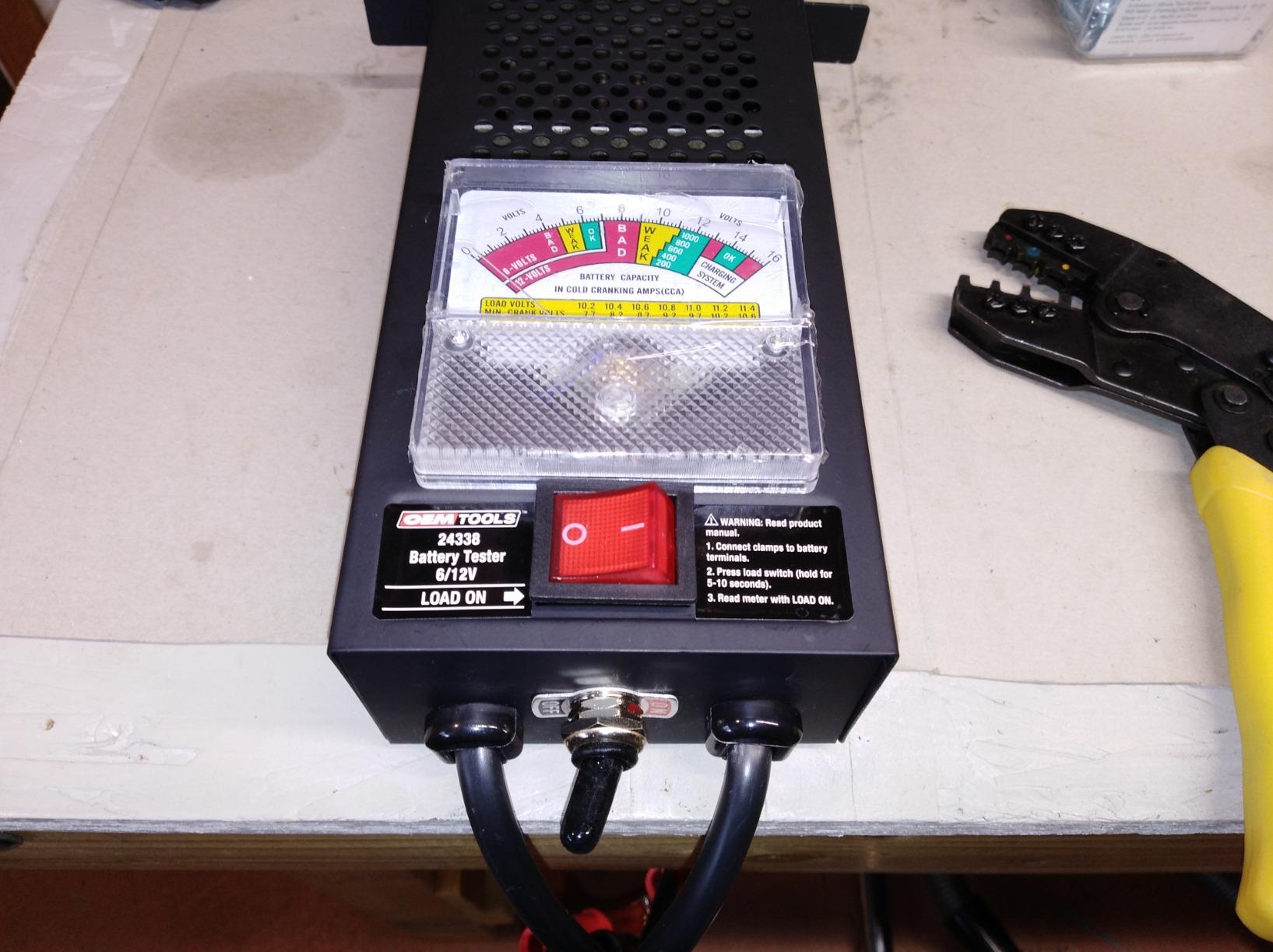
The simplicity is the selling point. There is no menu to navigate, no internal battery to charge, and nothing to configure beyond clamping on. A 12.3 by 7.1 by 3.6 inch steel case with a carry handle makes it portable enough for a mobile mechanic working out of a van, and copper-plated heavy duty clamps handle the current without complaint.
It reports state of charge, cranking volts and charging system performance from the same needle, and users consistently note that it separates a failing alternator from a bad battery in a single test. The thermal load is also an early warning system: if the coil is too hot to keep touching, the battery is not holding up under load.
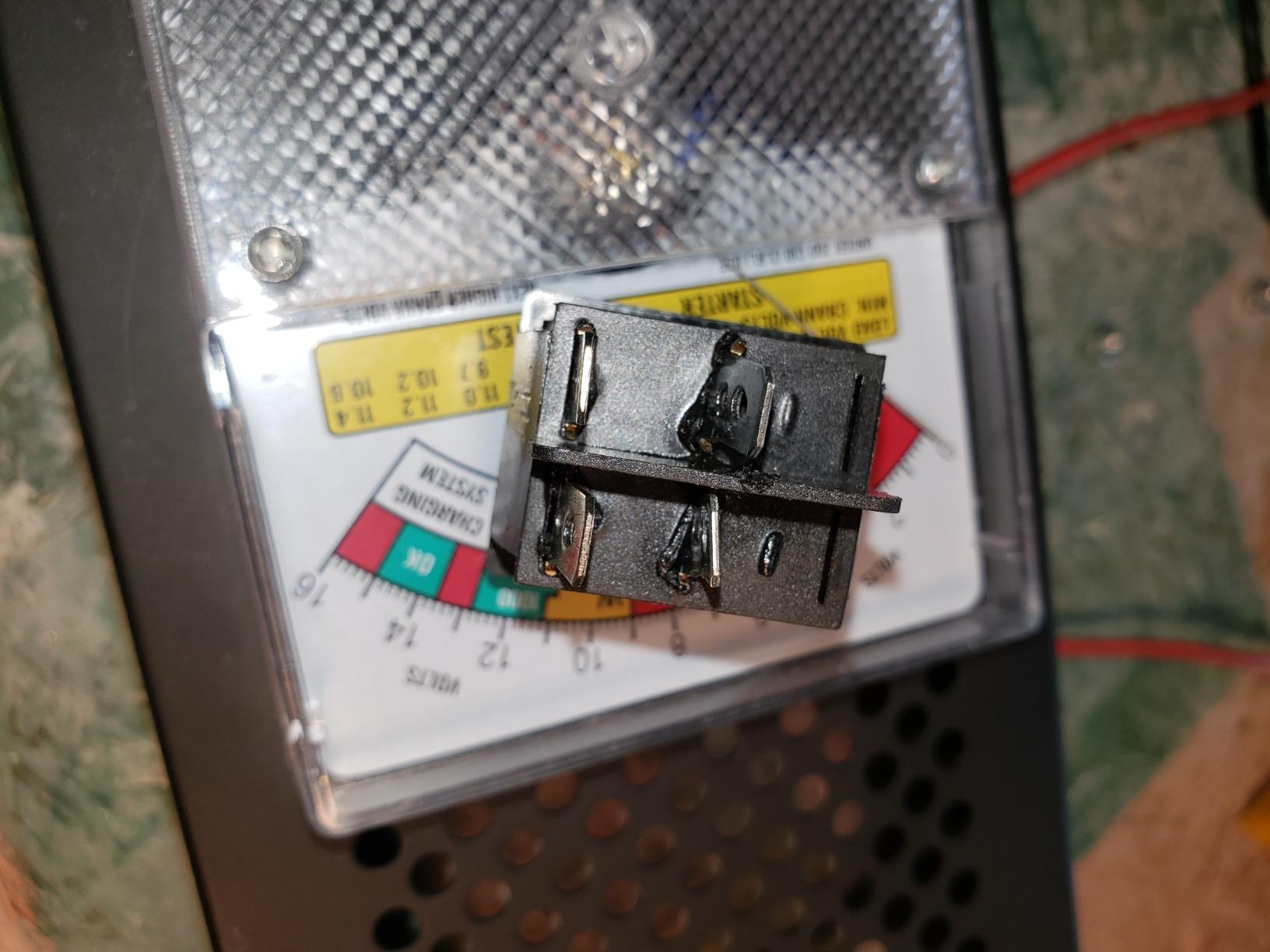
Why would you choose analog over a digital screen?
Two reasons. First, a real load is a real load, and if you want a number that is not derived from an algorithm, this is the simplest way to get one. Second, the needle shows you the shape of the discharge curve as it happens, which tells you more about a weak battery than a single digital verdict.
It also has no failure modes. No firmware, no internal battery, no menu tree and no software update. It will still work in twenty years, which matters if you intend to hand it down with a house.
What are the real drawbacks?
The load coil gets very hot during a test and needs cooling time before you can run another, so testing several batteries in a row means waiting between them. It is also less accurate on small low-CCA batteries such as lawnmower packs, where the fixed load is disproportionate, and reviewers report weaker performance on 6V deep-cycle batteries including golf cart packs.
At 1.7 pounds in a steel case, it is also the bulkiest option here, and the needle needs decent light to read accurately. For most modern cars the digital conductance models are faster and easier to interpret, so this one is a specialist choice with a specific job.
10. Clore Automotive SOLAR BA9 – Best Compact Tester With a High Rating
Clore Automotive SOLAR Digital 12V Battery and System Tester
12V battery and system testing
40-1200 CCA
7-15V operating range
Flooded, AGM, spiral, gel cell
Pros
- Highest average rating of any unit in the roundup at 4.8 stars
- Battery and system testing in a compact handheld body
- 40-1200 CCA range covers cars
- trucks
- marine and deep-cycle packs
- Works with flooded
- AGM
- spiral and gel cell chemistries
- Readable LCD in any lighting
- One year warranty against defects
Cons
- 12V systems only
- Lower review volume than the top-ranked testers
The Clore Automotive SOLAR BA9 has the highest average rating of anything we analysed, at 4.8 stars, with owners reporting 84 percent five-star reviews. That number sits on a smaller review base than the category leaders, and we weigh it with that in mind, but the consistency of the feedback is notable.
Functionally it covers 12V battery and system testing across a 40-1200 CCA range, which is wide enough for cars, trucks, marine and deep-cycle packs. Chemistry support covers flooded, AGM, spiral and gel cell, and the 7-15V operating range handles the usual spread of resting voltages.
The LCD reads in any lighting condition, which matters if you are working in a garage rather than at the roadside. At 9.6 ounces this is a genuinely pocketable unit, and it carries a one-year warranty against defects in material and workmanship along with CE, FCC, REACH and UL certification.
Two limits. It is 12V only, so a 24V diesel or RV bank is out. And the 801-review base is the smallest here, so while the rating is excellent, there is less long-term field history behind it than behind the units with five-figure counts.
Why does the rating matter more than the review count here?
Because a 4.8 average with a few hundred owners is a different statistical proposition from a 4.5 average with several thousand. It suggests a product that has not been broken by anybody yet. That does not make it a safer purchase, but it does mean there is no obvious complaint pattern to weigh against the specification sheet.
The chemistry list is also broader than some competitors in the same size class, since spiral-wound AGM is treated as a distinct profile rather than folded into the general AGM setting.
When should you choose a different unit?
Choose a different one if you need 24V coverage, a measured CCA figure with cranking amp reporting, or a temperature-rated cold test. This unit gives you a clear answer on a 12V battery and a system reading, which is exactly the scope it was built for.
If your garage includes large diesel-rated packs above 1200 CCA, or lithium chemistry of any kind, move up or across the list. The same applies if you want stored test history to track decline over a year.
How to Choose a Car Battery Tester for Your Garage
Start by matching the tester to the batteries you actually own
Everything else is secondary. Write down what is in your garage: 12V car batteries, a 24V diesel bank, a 6V classic, a marine pack, a lithium house bank. If a single row in the table above does not cover that chemistry and voltage, drop it from consideration regardless of how good the display looks.
Eight of the ten units here are 12V lead-acid only. The two that read 24V are the FOXWELL BT705 and the TOPDON BT200. The one that reads 6V properly is the OEMTOOLS 24338. No unit in this roundup supports lithium, and that is a real limitation worth planning around if you have converted to a LiFePO4 setup.
Conductance testing versus a true load test
A true load tester applies a real current draw, typically about half the battery’s rated CCA, for around ten seconds, and watches whether the voltage holds. A 500 CCA battery is loaded at roughly 250 amps, and a healthy 12V battery should stay above about 9.6V through the test. Voltage dropping under load means capacity is gone.
A conductance tester does something faster and safer. It sends a small measured signal through the battery, times the response, calculates internal resistance, and maps that to a state-of-health percentage and a measured CCA figure. No heat, no moving parts, no ten-second wait, and the result is available in seconds.
Which is better depends on what you are doing. For a home garage and a car you drive, conductance is more than sufficient, and the professionals who use modern conductance testers daily treat them as reliable. For a decision before you buy a battery, or a battery you suspect, a real load test is the more direct evidence. The OEMTOOLS 24338 is the only true load tester in this roundup.
Why the CCA entry matters more than the brand
Almost every conductance tester asks you to enter the battery’s rated cold cranking amps before it will give a health percentage. Get that number wrong and the reported cranking amp figure and the health percentage both move, which means the tool is comparing your battery against a threshold it was never meant to use.
Cold cranking amps is the current a battery can deliver for 30 seconds at 0F while holding at least 7.2V. The rating is printed on the label of the battery itself, and the same battery often shows two different figures depending on the standard used: SAE, BCI and CA follow one convention, DIN and EN another, JIS its own again.
This is why testers that accept many rating standards, such as the ANCEL BA101 with nine of them, are easier to trust across a mixed vehicle fleet. It is also why reading the same battery with two testers configured differently can produce two different health numbers, and why you should compare readings only when the setup matches.
Confirm it runs cranking and charging tests, not just a battery test
A battery test on its own answers one question: is the battery worth keeping. It cannot tell you why the car did not start. The full three-part sequence is battery, then cranking, then charging, and it is what lets you separate a dead battery from a weak starter from a weak alternator.
Battery test with the engine off gives state of health and state of charge. Cranking test shows the voltage while the starter turns, and a reading that sags too far points at the starter or the connections rather than the battery. Charging test with the engine running shows alternator output, and a healthy 12V system sits between 13.7V and 14.7V with the engine at idle.
Also look for reverse polarity protection. Clamps on backwards are the single most common beginner error, and protection circuits turn a dead tester into a non-event. The BA101, MP0514A and BT100 all include some form of it.
Judging the readout: what SOH, SOC and voltage actually mean
State of health is remaining capacity expressed as a percentage. State of charge is how full the battery is right now. They are not the same thing, and a battery at full charge can still be badly worn out, which is why a health percentage matters more than a voltage reading.
Rough thresholds for a 12V lead-acid battery: at 12.6V or higher it is fully charged, around 12.4V is about 75 percent charged, 12.2V is about 50 percent, and below 12.0V it is effectively flat. Running voltage should read 13.7V to 14.7V at idle. Cranking voltage should not fall below about 9.6V during the crank.
For state of health, above roughly 80 percent is a battery with life left, 70 to 80 percent is worth monitoring, and below about 60 to 70 percent means start planning a replacement. Below 50 percent and it is effectively end of life, regardless of how new the battery looks.
One important caveat that technicians raise constantly: state of health is calculated from cranking performance rather than true remaining capacity, so a battery can read acceptable and still let you down. Treat a good result as one input alongside your symptoms, not a final verdict.
Surface charge: the mistake that produces false readings
A battery that has just been driven sits on a layer of surface charge that makes it read several tenths of a volt high. Test it immediately and you will conclude a marginal battery is fine. The fix is to let the vehicle sit for at least 30 minutes, or turn on the headlights for a few minutes to draw the surface charge off, before you clamp on.
This is the same reason a free in-store test can mislead. The reading is a snapshot at a single moment, taken on a battery that may have just driven in.
Running the test correctly, step by step
First, switch the ignition off and let the vehicle rest for 30 minutes so surface charge dissipates. Second, connect the red clamp to the positive terminal and the black clamp to the negative, with the vehicle off. Third, select the battery chemistry: flooded, AGM, gel or spiral, matching the label. Fourth, enter the rated CCA from the battery label, using the matching rating standard. Fifth, run the battery test and read the state of health and internal resistance figures. Sixth, run the cranking test while you start the engine, then the charging test with the engine running. Seventh, disconnect the clamps, starting with the negative.
If you do nothing else from this list, do the 30-minute wait. It is the difference between a useful reading and a flattering one.
One safety note: batteries vent hydrogen, particularly when weak or when the engine is running, so work in a ventilated space and do not create a spark near the terminals. Spark-proof clamps and reverse polarity protection both reduce risk, and neither replaces basic ventilation.
Cable length is a comfort decision, not a specification
Short leads of around 50 cm are fine for a bench test of a battery on a work surface. For a cranking test they are a nuisance, because you need both hands on the vehicle. The FOXWELL BT705 ships with a 5.9 ft cable specifically so one person can clamp, sit in the driver’s seat and crank.
For most home users, a lead length somewhere in between is the sweet spot, long enough to reach terminals on a large engine bay and short enough to coil up in a drawer. Where you store the tester matters as much: many people keep one in the centre console rather than the garage so it is there when the car will not start. If your garage setup is still in progress, our storage cabinet roundup covers keeping small tools organised and reachable.
Are free parts store testers accurate?
They are accurate for the single question they answer. A counter test applies a load and watches the voltage, which is a legitimate check, and it is genuinely useful as a quick yes or no before you buy a battery.
What it cannot do is give you a trend, a health percentage over time, or a cranking and charging result for your starter and alternator. It is a snapshot on a battery that may have just driven in with surface charge on it. On the question of trusting it: trust the pass or fail, and use your own tester to understand why.
That distinction is the honest answer to whether an owned tester is worth it. If you test once a year and mostly want a green or red light, the free test covers you. If you want to catch decline before a failure, diagnose a no-start without guessing, or check a battery before buying a used car, you need your own.
Test twice a year, and always before winter
Lead-acid batteries dislike two things: heat in summer and cold in winter. A battery that survives a hot summer is often already degraded by the first frost, so the useful schedule is one test in late spring and one in early autumn, with the second one close enough to winter to be predictive.
Keep the state of charge above roughly 80 percent for any battery that will sit unused for weeks. That 20 to 80 rule matters more than the brand of tester you own, because a battery stored below 80 percent will sulfate and lose capacity that never comes back, and a monthly top-up charge in a garage is cheap insurance.
Write the reading down each time. A number on its own is just a snapshot, but the same number measured the same way three months apart tells you whether you are looking at a healthy battery or a slow decline.
What these testers cannot tell you
Parasitic draw is the big one. If a battery keeps going flat after a full charge and a long rest, the cause is usually a circuit drawing current while parked, and none of the units in this roundup can measure amps of draw. That needs a multimeter in current mode or a clamp meter, and it is the question most often raised in owner forums about overnight battery drain.
None of them verify battery age, detect a cracked case internally, or guarantee cold-cranking performance at minus 20F. And a good conductance result on a battery with corroded terminals measures the battery, not the connection, so clean the clamps and the posts before you interpret anything.
If your household also runs equipment that is not a car battery, note that a separate class of tester exists for those. Our UPS battery backup picks for home offices cover the other end of that range, where runtime matters more than cranking amps.
Frequently Asked Questions
Do car battery testers really work?
Yes. Most modern digital testers use conductance technology: they push a small measured signal through the battery, time the response, and convert it into an internal resistance figure, which maps to a state-of-health percentage and a measured cold cranking amp number. Run the same test on a known-good battery and a known-bad one and the difference is obvious. Accuracy depends on entering the correct battery type and rated CCA, and on letting surface charge dissipate first.
What is a good load tester for a car battery?
A good load tester applies a real current draw, usually about half the battery’s rated CCA, for around ten seconds and checks whether voltage holds. For a 500 CCA battery that is roughly 250 amps, and a healthy 12V battery should stay above about 9.6V. An analog tester like the OEMTOOLS 24338 does this with a fixed 100A load coil. Conductance testers give an estimate instead, which is faster and usually sufficient for a home garage.
Are AutoZone battery testers accurate?
The reading itself is accurate, but the answer is narrow. A counter tester applies a load and gives you a yes or no at one moment on a battery that may have just driven in with surface charge on it. It cannot show a trend over time, report a health percentage, or test your starter and alternator. Trust the pass or fail result, then use your own tester to understand what is actually failing.
Is it worth buying a car battery tester?
It is worth it if you own more than one vehicle, want to catch battery decline before a failure, need to diagnose a no-start without guessing, or check a battery before buying a used car. It is less valuable if you test once a year and only want a green or red light, since a parts store does that for free. The genuine saving comes from not replacing the alternator, starter or battery that was not the problem.
What is a good voltage for a car battery?
At rest, a fully charged 12V lead-acid battery reads 12.6V or higher. Around 12.4V is roughly 75 percent charged, 12.2V about 50 percent, and below 12.0V the battery is effectively flat. With the engine running a healthy charging system reads between 13.7V and 14.7V at idle. During cranking, voltage should not fall below about 9.6V.
How often should I test my car battery?
Twice a year, and always once before winter. Lead-acid batteries are stressed by summer heat and tested hardest by winter cold, so a battery that survives August may already be degraded by the first frost. Keep state of charge above roughly 80 percent for any battery that sits unused for weeks, since a battery stored below that will sulfate and lose capacity permanently. Write each reading down so you can compare the same measurement over time.
Final Verdict: Who Should Buy Which Car Battery Tester
The KONNWEI KW208 is the best car battery tester for most home garages in 2026. It has the largest review base of anything we analysed, reports state of health, internal resistance, measured cold cranking amps and Ah capacity, runs cranking and charging tests, and at 230 g is small enough to leave in the car. For a single 12V vehicle and a driveway, nothing else in this list gives you that much for the money.
Match the tool to the job rather than to the badge, though. Pick the MOTOPOWER MP0514A if you only want a cheap voltage and alternator check. Pick the ANCEL BA101 if battery chemistry and international rating standards matter to you, since it accepts nine of them. Pick the ANCEL AD410 PRO if you also need to read engine fault codes. Pick the FOXWELL BT705 or TOPDON BT200 for 24V diesel, RV or fleet work, and the FOXWELL specifically if you will run cranking tests alone. Pick the OEMTOOLS 24338 if you want a real load test or own a 6V classic.
Then use it properly: thirty minutes off the charge, the right chemistry, the right CCA, all three test modes, and a written record each time. That habit is worth more than the difference between any two testers on this list, and it will save you from ever buying a battery you did not need in 2026.