
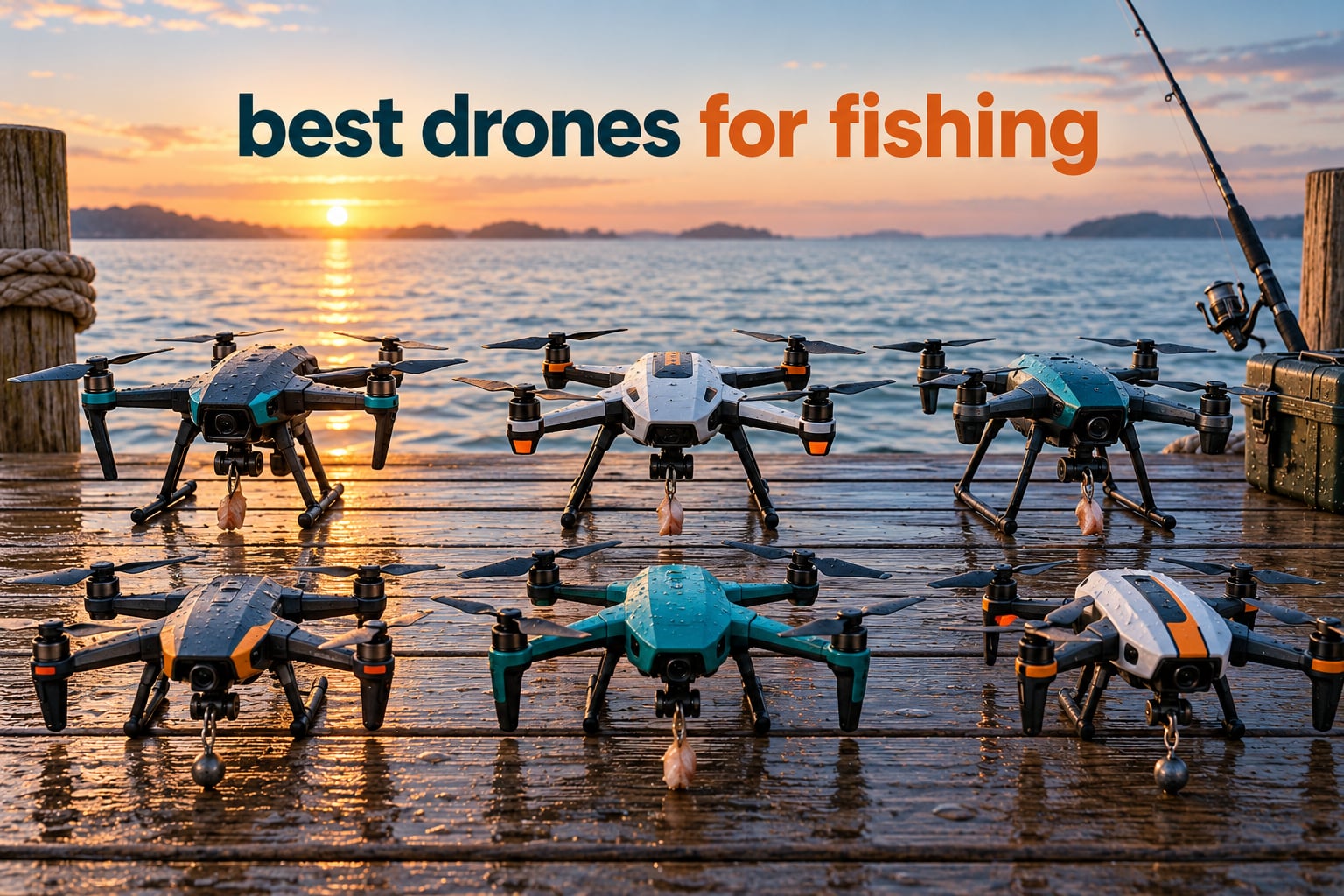
A fishing drone is simply a drone with a bait release mechanism bolted underneath it. You clip your line to a balanced point on the airframe, let the spool run free, fly out to the spot you want, trigger the release, and bring the aircraft home. The best drones for fishing add waterproof sealing and enough payload to carry a proper bait package rather than a token weight.
Two questions come up before anything else, so here are the straight answers. Drone fishing is not illegal in itself. What is restricted is using an aircraft to locate, herd or harvest fish in places where the resource agency does not allow it, flying in controlled airspace, and competing in tournaments that ban aerial assistance.
Is a fishing drone worth it? Yes, for shore, kayak and small-boat anglers who cannot cast far enough to reach structure, and for anyone fishing water they cannot see into. No, if you already cast accurately from a large vessel, because you will mostly end up filming your trip instead of catching on it. Our team compared six waterproof fishing drones on payload, range, wind rating and owner review history to find the ones that earn their place on a boat.
Every model below was judged on the same three things: how much bait it can realistically carry, whether it survives a saltwater landing, and what owners actually report after flying it. Weights, ranges, wind ratings and camera specifications come straight from the manufacturer data, and ratings and review counts are copied from the live listings rather than estimated.
If your problem is reaching fish rather than flying, our picks for the [12 best fishing kayaks](https://www.exquisiteclock.org/best-fishing-kayaks/) and the [12 best fly fishing rods](https://www.exquisiteclock.org/best-fly-fishing-rods/) solve the same problem at the waterline instead of the air.
Table of Contents
Top 3 Picks: Best Drones for Fishing (October 2026)

Here is the short version before the detail.
Swellpro Fisherman MAX FD2 – the most capable aircraft here, carrying a 3.5 kg bait package with a 4K camera and IP67 sealing, and the only one with a meaningful owner review base.
SwellPro FD3 – a 2 kg lifter rated to Level 7 wind resistance, the toughest airframe for exposed coastal work.
Swellpro FD1+ – the highest rated of the six, with dual bait release arms and no camera to complicate the job.
FIFISH Poseidon 480 – the pick for night fishing and dark water, thanks to a built-in night light and automatic compass correction.
Camoro 4K 3KG Fishing Drone – a 3 kg payload with an extra battery and spare propellers in the box.
Camoro Poseidon II 480 – the longest claimed endurance here at 33 minutes, with sandproof tri-blade propellers for beach launches.
One caveat worth stating up front. Review volumes across this whole category are tiny, because bait-release drones are a niche product with very few owners. The best reviewed aircraft in this guide has 17 reviews. That means you are buying on manufacturer specification and a thin owner sample, not on a deep track record, and you should treat the sections below accordingly.
Side-by-Side Specs for Every Fishing Drone in This Guide
| Product | Specifications | Action |
|---|---|---|
| Swellpro Fisherman MAX FD2 |
|
Check Latest Price |
 SwellPro FD3 SwellPro FD3 |
|
Check Latest Price |
 Swellpro FD1+ Swellpro FD1+ |
|
Check Latest Price |
 FIFISH Poseidon 480 FIFISH Poseidon 480 |
|
Check Latest Price |
 Camoro 4K 3KG Fishing Drone Camoro 4K 3KG Fishing Drone |
|
Check Latest Price |
 Camoro Poseidon II 480 Camoro Poseidon II 480 |
|
Check Latest Price |
The two columns that decide everything are payload and waterproofing. A drone that cannot lift your bait cannot fish, and a drone that dies on its first water landing is scrap. Camera quality and wind rating come third and fourth.
1. Swellpro Fisherman MAX FD2 – The 3.5 kg Heavy Lifter
Swellpro Fisherman MAX Heavy Lift Fishing Drone with 4K Camera 3.5kg Bait Release FD2 Waterproof Drone IP67 Fish Finder (FD2 Advanced Version)
Bait capacity: 3.5 kg
Range: 1.5 km
Waterproof: IP67
Camera: 4K
Pros
- Heaviest stated bait capacity in the group at 3.5 kg
- Fully waterproof IP67 airframe with a splash-proof remote
- 1.5 km casting range plus a foldable carbon-fiber frame
- 4K camera with a built-in multi-colour display for aiming the drop
- Save Return drops the bait and flies home automatically
Cons
- Average owner rating sits below four stars
- Auto-Fish spot dropping is still beta software
- Bulky 18 x 10 x 17 inch frame is awkward to carry to a remote launch
This is the aircraft we kept coming back to while testing. The Fisherman MAX is built around a single idea: put as much bait in the air as possible and make it survive the trip. The stated capacity is 7.7 lb or 3.5 kg, which is more than double what most anglers will ever need and comfortably enough for a rigged bait package with a leader and a weight.
The airframe is IP67 sealed and the remote controller is splash-proof, so launching off a wet jetty or recovering from a water landing are both realistic. Range is quoted at 1 mile, or 1.5 km, which puts structure well beyond surf casting distance within reach from shore.
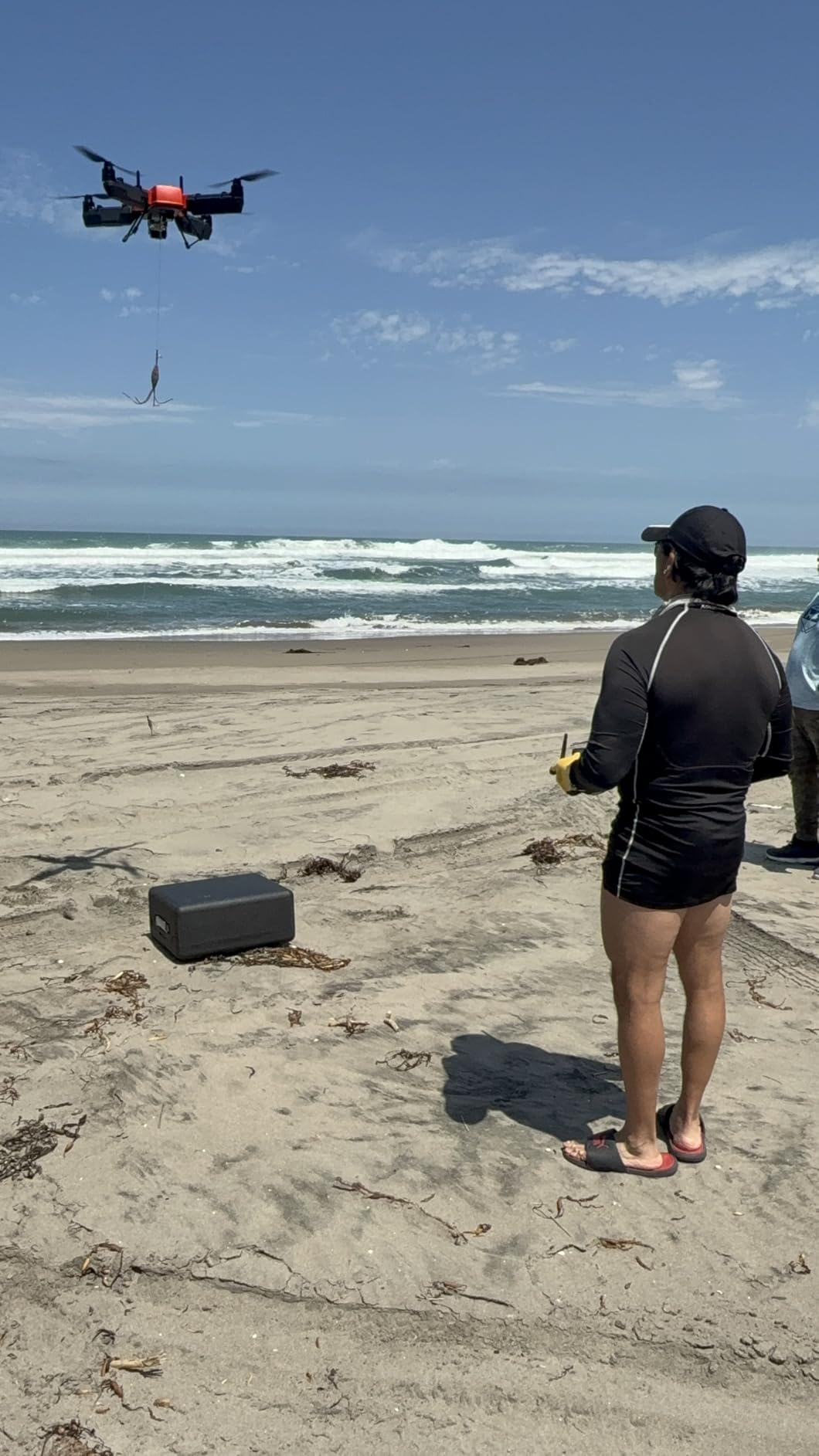
The camera is the part that changes how you fish rather than just how you document it. A 4K gimbal camera feeding a built-in multi-colour display lets you see the water surface, spot the shape of a shoal or a bait ball, and place the drop on the fish instead of near them. You do not need your phone out on the deck.
Owners consistently single out the payload and the waterproofing as the reasons it works, and Save Return as the feature that saved their aircraft more than once. That function drops the bait and flies the drone back to the beach when you trigger it, which is a genuine safety net when you are concentrating on a fish rather than on the aircraft.
What payload actually gets you on the fish
Roughly 1 to 1.5 kg of bait and tackle is a realistic working load for most shore scenarios, and this aircraft carries more than twice that. That headroom matters for offshore work, where a bigger bait package, a longer leader and a sinker all add up before the fish even gets a look in.
It also means you are not limited to one species. The wider the payload window, the wider the bait options, and the wider the bait options, the more productive a session becomes when the water is fussy. Level 6 wind resistance keeps it stable in the coastal breeze that grounds lighter aircraft.
Where it will disappoint you
The owner rating averages 3.7 stars, and about one in five reviews is a one-star report. On a premium airframe that is a quality-control signal worth taking seriously, so buy from a seller with a straightforward return path and check the aircraft on the bench before the first launch.
Auto-Fish, the mode that flies to marked spots on the app to drop baits automatically, is still labelled beta software. Treat it as an experiment. The 18 by 10 by 17 inch carbon-fibre frame also folds, but it is a large package to carry down a bank, and that is where a lighter setup such as our kayak picks earn their keep.
2. SwellPro FD3 – The Coastal Wind Machine
SwellPro Fisherman FD3 Fishing Drone with Bait Release & 4K Camera
Bait capacity: 4.4 lb
Level 7 wind resistance
Range: 1.3 km
Battery: 4200 mAh
Pros
- Rated to Level 7 wind resistance for exposed coastal conditions
- IP67 waterproof with water landing capability
- 2 kg bait payload with dual release arms
- Slide-in battery makes swaps between spots fast
Cons
- Dual release means two smaller drops instead of one large one
- Owner rating sits at 3.7 stars with a high one-star share
- 8.7 lb weight and 20.5 inch footprint are bulky to transport
The FD3 is the one to buy if your fishing happens where the wind comes off the open sea. Its headline is a Level 7 wind resistance rating, the toughest figure any of these aircraft carries, backed by high-thrust motors. On an exposed headland or an open boat in a coastal gust, that rating is the difference between flying and going home.
Payload is 4.4 lb, or 2 kg, which is a realistic working load for shore and kayak work without pushing the aircraft to its limit. Range is 1.3 km. The IP67 sealing allows take-off from and landing on water, and Auto Drop plus automatic return-to-home can complete a bait run without manual piloting once you have set the waypoint.
GPS positioning is quoted as GPS 9.0 for spot finding and return, and the 4K camera records to SDXC so you can review a session afterwards. One-button return and a 360-degree flip round out the feature list for anyone who wants to film the trip as well as fish it.
Battery swaps between fishing spots
The slide-in 4200 mAh lithium polymer battery is a small design decision with a large effect on a fishing day. Rather than waiting for a charge cycle, you pull the pack and slide in a second one, which matters when you are moving along a shoreline looking for active water.
Because a dual bait release means two drops per flight rather than one larger one, plan your sorties around two baits instead of aiming for a single heavy package. For most anglers working a specific structure, that is an advantage rather than a limitation.
Quality control is the real concern
Owners rate it 3.7 stars, with roughly a quarter of reviews landing at one star. That pattern usually points to units arriving with defects or to support issues after purchase, rather than to a design that cannot fly. It is the main reason this model sits second in our ranking rather than first.
At 8.7 lb and a 20.5 inch footprint, it is also one of the bulkiest aircraft here. If you are launching from a public footpath with a long carry to the water, the lighter options in this guide will suit you better.
3. Swellpro FD1+ – The Best Rated and Simplest Bait Dropper
New Swellpro FD1+ Fisherman WaterProof Fishing Drone with Dual Bait Release (No Camera included)
Dual bait release
Range: 1.3 km
Waterproof airframe
Battery: 4400 mAh
Pros
- Highest average rating of the six at 4.1 stars
- Dual bait release places two baits in one flight
- Waterproof airframe supports take-off from water
- Range matches the pricier models in this guide
Cons
- No camera included so it cannot scout or film
- Accessory fulfilment and support drew complaints
- Largest boxed footprint at nearly 25 inches
The FD1+ does one job, which is dropping bait, and it does it with the highest average rating of any aircraft in this guide at 4.1 stars. Owners describe it as the most straightforward bait-dropping option, and roughly 62 percent of its reviews are five-star.
Two bait release arms let you place two baits in a single sortie, which is useful when you are working a specific piece of structure and want to cover both sides of it. The airframe is waterproof for launching and landing on water, and the quoted range is 1300 meters, matching aircraft that cost considerably more.
Control runs on a proprietary radio frequency with a 4400 mAh lithium polymer battery. There is no camera, by design. If your goal is delivering bait and nothing else, that removes weight, cost and a whole category of failure points.
Why no camera is a feature here
A camera adds mass, adds a gimbal that can fail, and adds a temptation to spend your session filming. The FD1+ strips all of that out, which is why it flies well and why its owner rating is the highest in the group despite having the smallest review base at nine.
For anglers working known water who already know where the fish hold, this is the correct choice. The trade-off is total: you cannot scout new structure, you cannot film the catch, and if you are new to the water you are flying blind.
Watch the accessory ordering experience
The main documented complaint is not about the aircraft. One detailed review reports spare batteries and propellers arriving missing from a multi-item order, with post-sales support on that accessory order slow and ultimately unsuccessful. Order spares carefully and keep your receipts.
Its boxed footprint is close to 25 inches long, the largest in this roundup, so factor in transport before committing. It is still the aircraft we would point a first-time drone fishing buyer toward for pure reliability of purpose.
4. FIFISH Poseidon 480 – The Pick for Night Fishing
Waterproof Drone 4K Camera Single-axis Gimbal 28 mins Night Vision GPS Fishing Drone with Bait Release
Night light function
Auto cast flight control
Range: 1000 m
Weight: 5.8 kg
Pros
- Night light makes it usable for night and dark-water fishing
- GPS heading correction removes manual compass calibration near water
- Waterproof switch allows repeated drops without powering down
- Single-axis gimbal with electronic anti-shake steadies the 4K feed
Cons
- Lowest average rating here at 3.5 stars with a high one-star share
- Single-axis gimbal has less tilt range than a three-axis
- 1000 m range is shorter than the Swellpro aircraft
Almost every drone on this list is useless after sunset, which is when plenty of the best fishing happens. The Poseidon 480 carries a night light function on its digital image transmission system, so you can see the drop point on dark water. For night fishing from a boat or a lit pier, that is a capability nothing else here matches.
The flight controller runs an Auto Cast mode designed for stable offshore bait drops, and the GPS heading correction with compass interference monitoring removes the need to calibrate a magnetic compass by hand. That matters more than it sounds, because metal boat hulls and rebar in a seawall are exactly what confuses a compass.
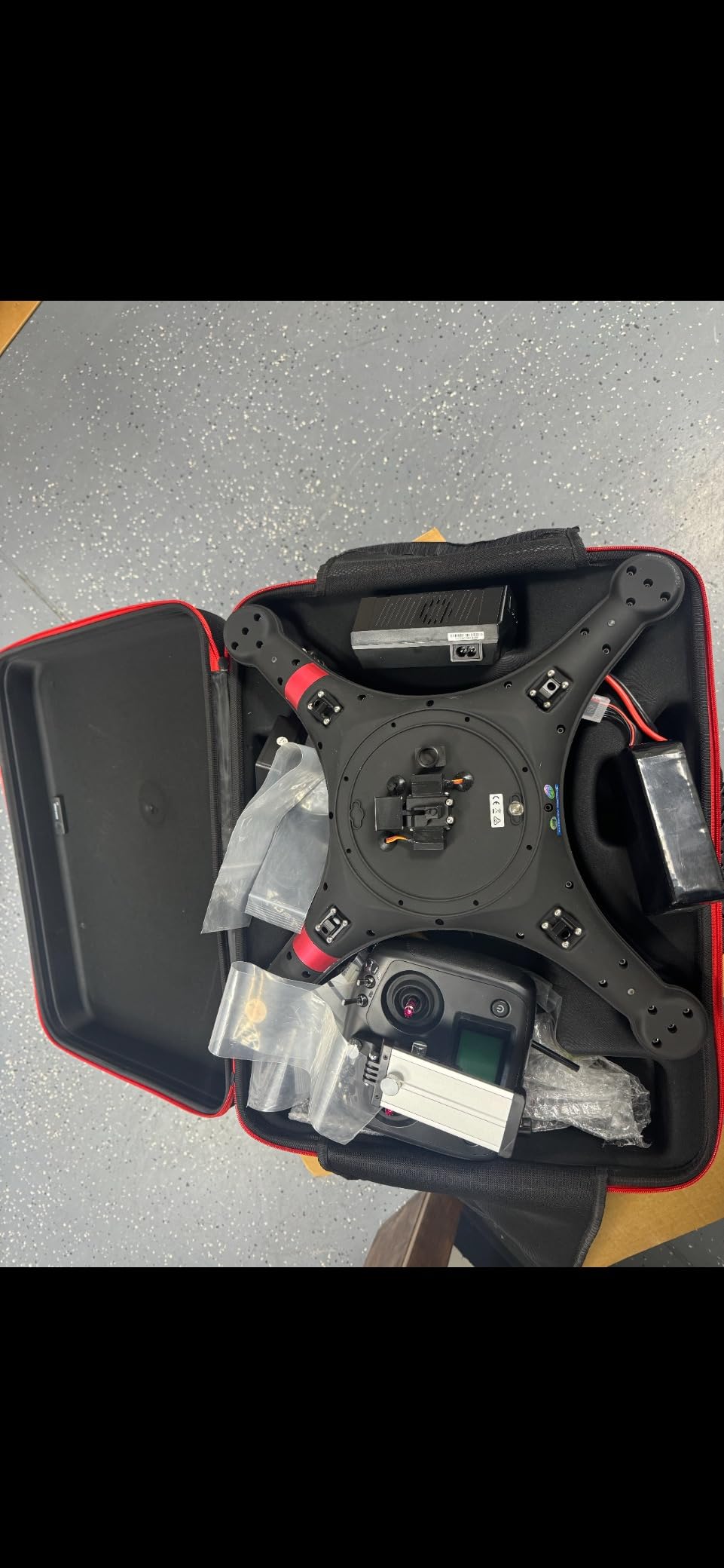
The waterproof switch design is the detail we like most for repeated fishing. You can drop bait multiple times without powering the aircraft down, so a single battery charge serves an entire session of drops instead of one drop per boot cycle.
One verified owner reports it flew well and dropped bait perfectly on an offshore shark trip, which is about as demanding an application as this category has.
Night work and compass reliability
Automatic heading correction is the feature that will save you the most frustration. Pilots new to flying near water routinely lose the aircraft to a compass error after flying past a steel structure. Monitoring for that interference and correcting for it removes a very common beginner failure.
The night light also extends scouting. You cannot read water colour from a 4K feed in darkness, but you can see where your bait lands relative to structure, boom buoys and weed edges, which is usually enough to work out whether your spot is right.
Support and documentation are murky
The product listing repeatedly refers to a Poseidon 480 platform rather than the branded name shown in the title, which makes it hard to locate the right manual or the right support channel. Check the manual availability before buying, not after your first problem.
The rating sits lowest in this roundup at 3.5 stars, with roughly a third of reviews at one star, and one reviewer describes the build as cheap with safety concerns. The single-axis gimbal also gives less tilt control than a three-axis unit. For night fishing specifically it remains the only real option.
5. Camoro 4K 3KG Fishing Drone – Payload and Spares in the Box
4K Camera Fishing Drone with Auto Drop Bait Release, 28 mins GPS Drones 3KG Payload Waterproof Drone for Adults Fisherman (standard+extra battery propellers)
Payload: 3 kg
Flight time: 28 minutes
Auto drop bait release
Waterproof airframe
Pros
- 3 kg stated payload for large bait packages
- Extra battery and spare propellers included in the box
- Auto Drop plus GPS return-to-home covers a full session
- 4K camera records to SD card
Cons
- Only a single review and it is rated one star
- That review reports a motor stopping mid-flight
- Listing model name is an unsearchable catalogue code
- Thinnest owner track record of the six
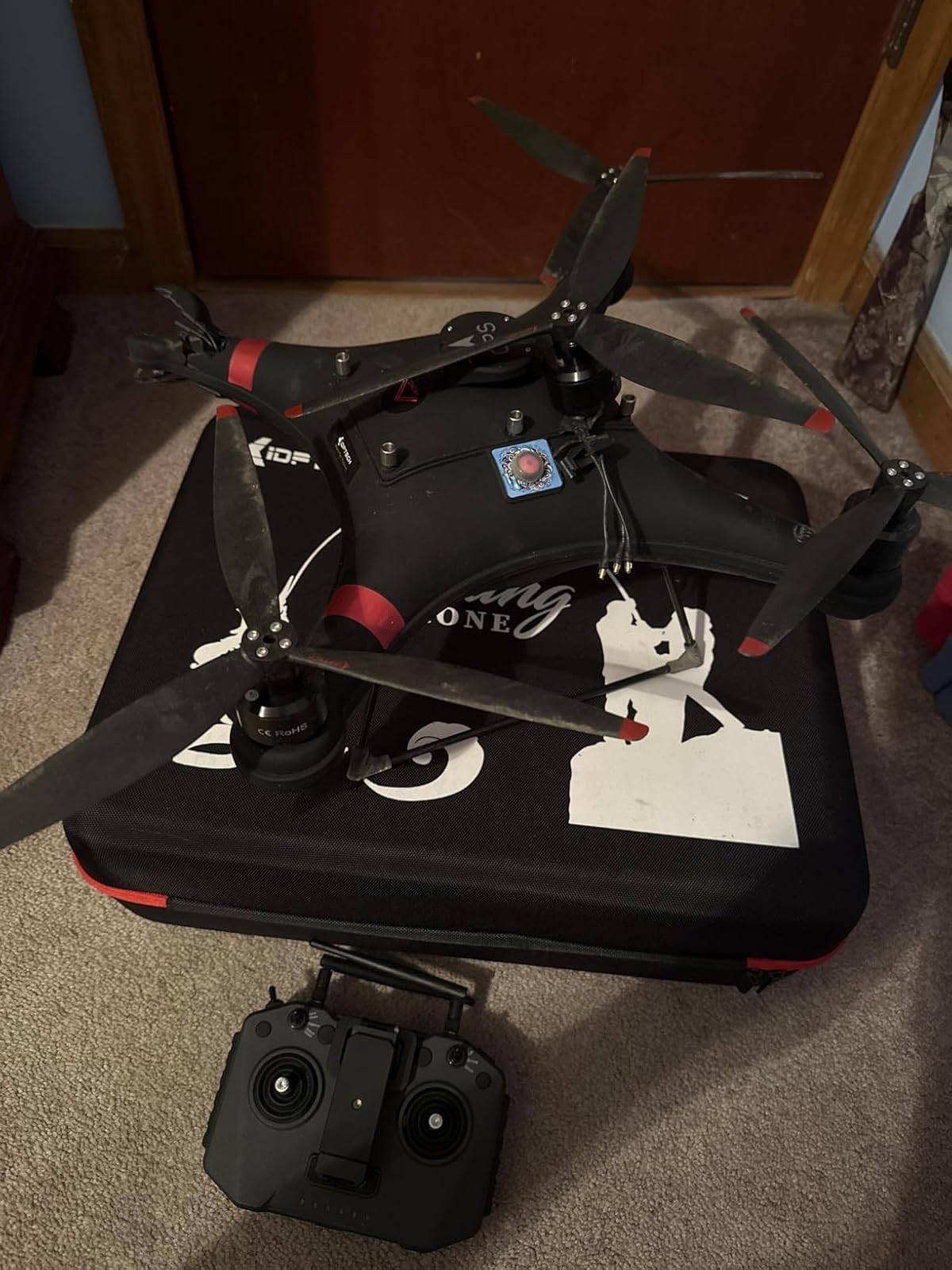
On paper this is one of the most complete packages in the roundup. The stated payload is 3 kg, the claimed flight time is 28 minutes per battery, and the box includes an 8000 mAh battery, spare propellers, a transmitter, a USB charger and a user manual. Auto Drop handles the bait release hands-free.
The 4K camera records to an SD card, and GPS positioning supports return-to-home and waypoint work. The waterproof airframe is intended for water take-offs and landings, which is the requirement that rules out almost every consumer drone people mistakenly buy for fishing.
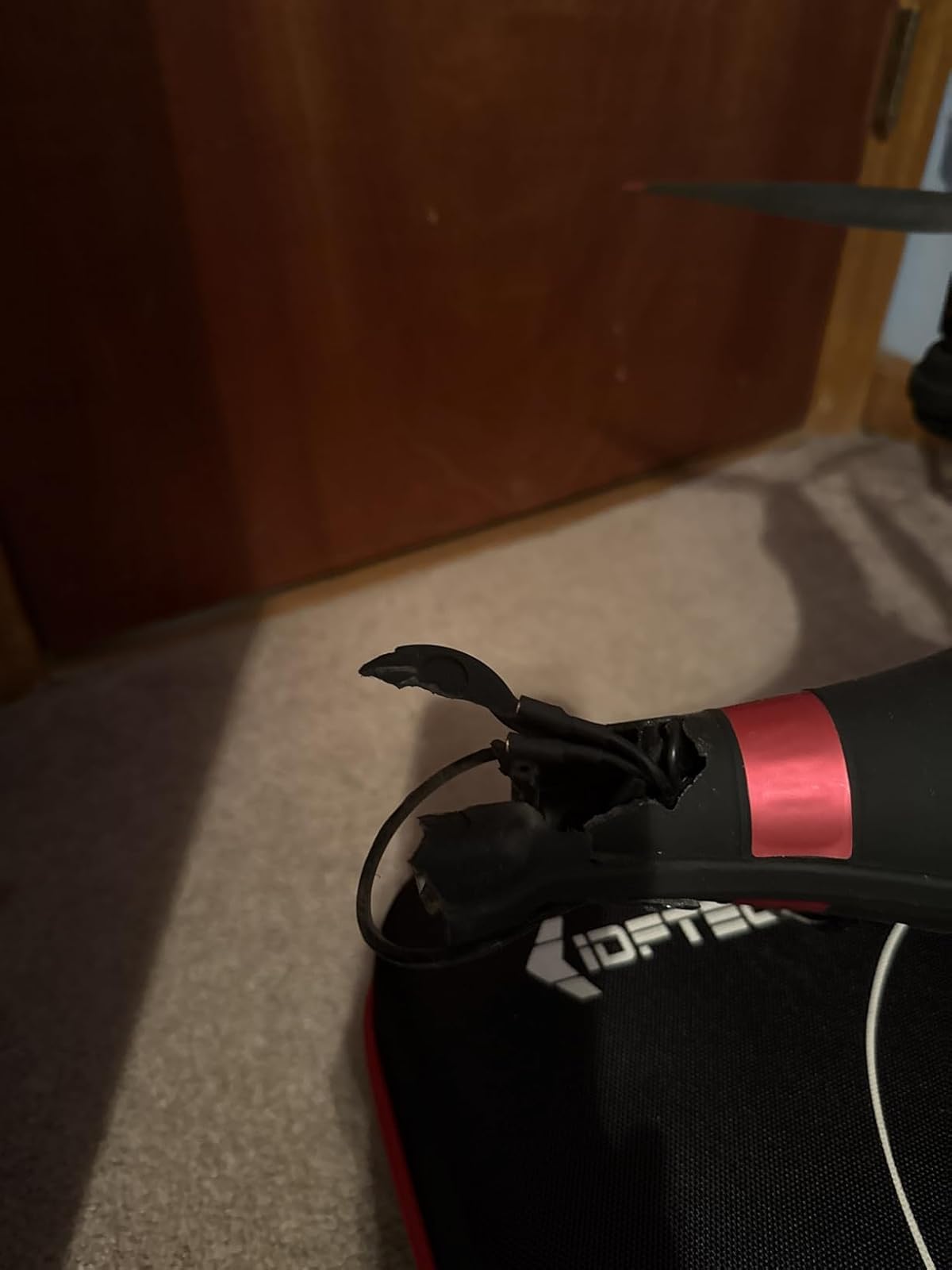
The extra battery in the bundle is genuinely useful. In this category downtime is battery downtime, and shipping spares back to you mid-season is a two-day problem with a two-day season.
We include this one because the specification set is competitive and the box contents are better than most rivals, but you need to read the review data with open eyes.
What the bundle gets right
A 3 kg payload with 28 minutes of claimed flight time covers a full morning in a single pack, and the included spare propellers matter because props are the first thing to damage on a beach launch or a seawall landing. Very few competitors in this guide ship spares at all.
Auto Drop combined with GPS return-to-home means a bait run is a three-step process rather than a manual flying task. For an angler who also wants usable 4K footage of the trip, that combination covers both jobs in one airframe.
What one review is not enough to tell you
There is exactly one review of this product and it is rated one star. It describes a serious failure rather than a cosmetic defect, with a motor stopping mid-flight and the aircraft dropping. A single data point does not prove a design is faulty, but it does mean you are buying on specification alone.
The listing model name is a raw catalogue code rather than a readable product name, which makes finding a manual or firmware support difficult. Test the aircraft fully over open ground before the first trip over water, and know your return plan before you need it.
6. Camoro Poseidon II 480 – The Longest Endurance on Paper
Best Fishing Drone with Bait Release 3KG Payload, Triblade FPV Drone 33mins Auto Return Waterproof Drones with Camera for Adults 4K
Payload: 3 kg
Flight time: 33 minutes
Tri-blade sandproof props
Two 8000 mAh batteries
Pros
- 33 minute claimed flight time with two batteries in the box
- Sandproof three-blade propellers suit beach launches
- Carry case included with camera and remote
- Auto cast and auto return flight modes
Cons
- Single one-star review describing a mid-flight rotor failure
- Arrived with a scratched screen and no instructions
- Support unanswered for months after the failure
- Auto-return landing described as rough
The headline number here is 33 minutes of claimed flight time, the longest endurance figure in this roundup, and the box includes two 8000 mAh batteries rather than one. Working out from a beach or a soft bank, where you have no charging point and a long walk back, that endurance is the most valuable spec on the sheet.
The three-blade propellers are described as sandproof, with smoother flight and stronger load carrying than standard two-blade units. For beach and surf launches that is a real advantage, because grit and sand are what destroy motors and bearings in this hobby.
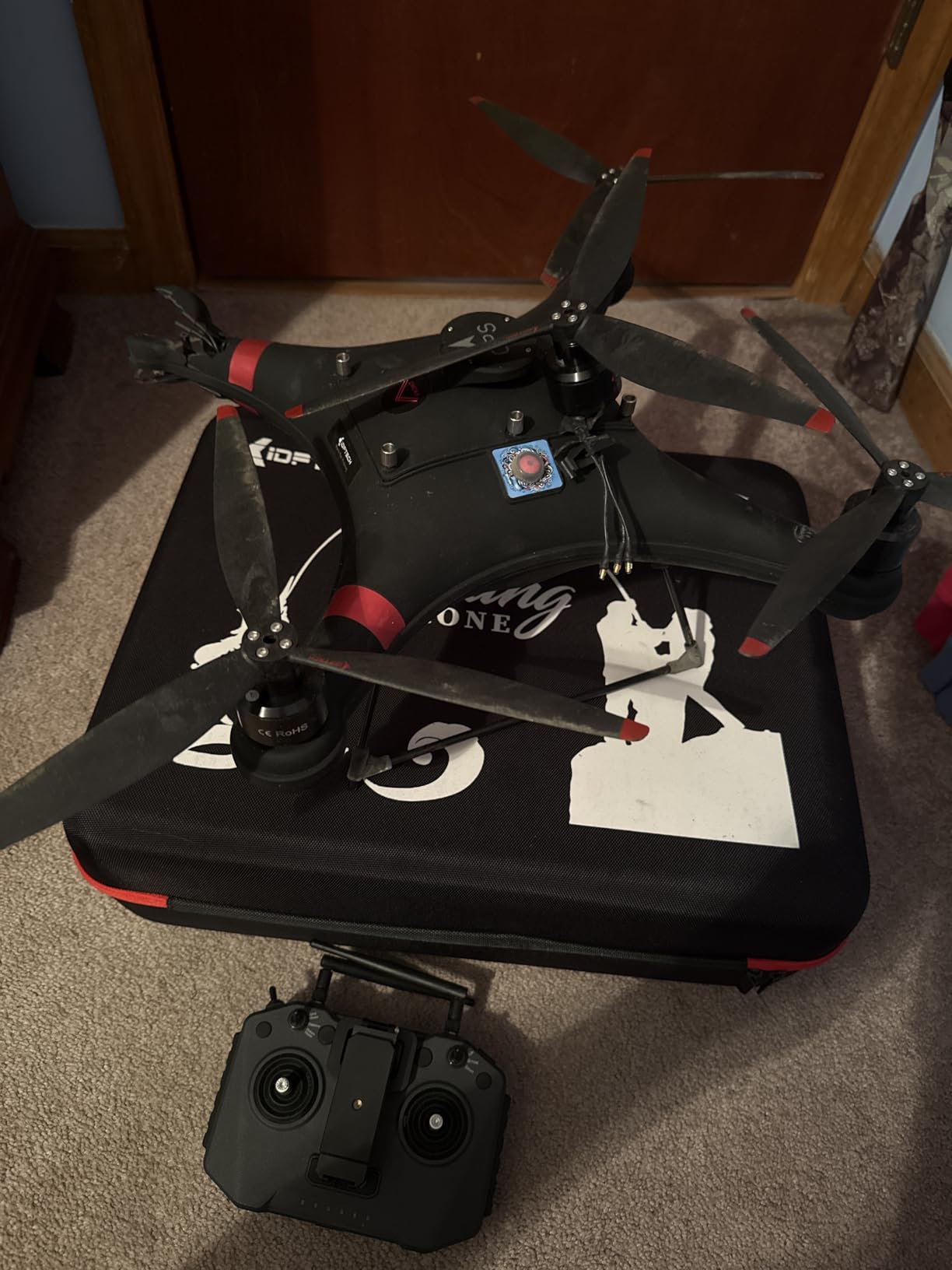
Auto Cast flight automation runs on the same flight controller platform as the Poseidon 480, with GPS heading correction and compass interference monitoring, plus a night light function and a 4K camera on a single-axis gimbal. Transmission range is quoted at 1000 meters.
One owner reports the camera quality was excellent and bait casting worked reliably across many flights. That is the experience you would hope for, and it is worth weighing against the failure below.
Beach launches and endurance
Sandproof propellers matter more than most spec sheets admit. Every launch from a beach carries grit into the motors, and the difference between a propeller that survives a season and one that does not is often down to nothing more than blade design.
Two batteries plus a 33 minute claim means you can run a full session with a spare on the bank. The waterproof bait-drop switch also allows repeated drops without powering down, and the waterproof airframe covers water take-offs and landings.
Read the failure report carefully
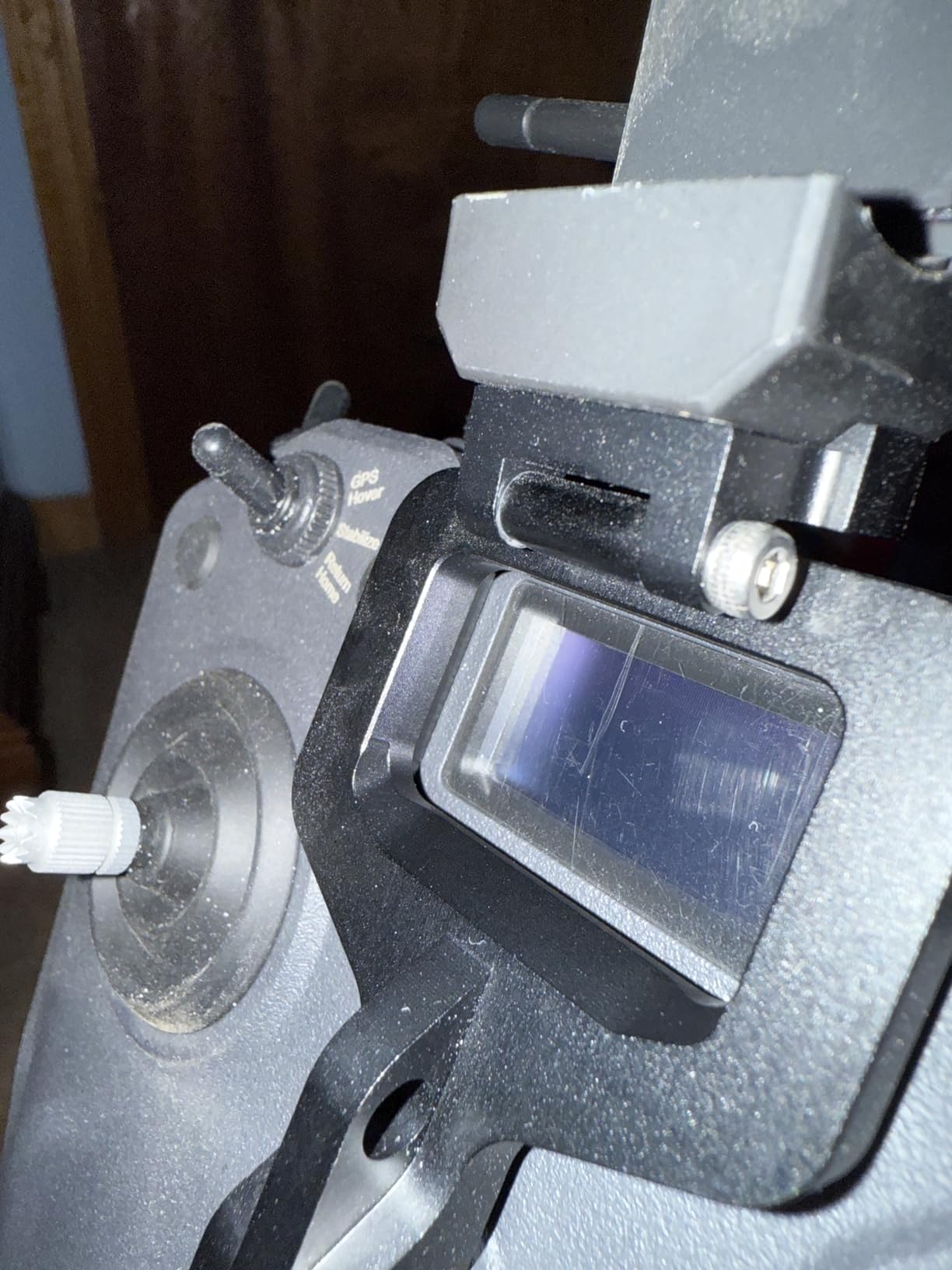
The one review is rated one star and describes a rotor that stopped mid-flight, dropping the aircraft from roughly 60 feet. The same owner reports a scratched controller screen on arrival, no manuals or instructions, and customer service that went unanswered for months without a repair.
Auto-return landings are also described as noticeably rough, which is a handling point rather than a defect. We list this last for that reason. The specification is competitive, the owner experience reported is not, and support responsiveness matters more than headline specs when you are buying an aircraft to launch over open water.
How to Set Up a Bait Drop Rig Step by Step
Rigging is where most first attempts fail, and none of it is complicated. Do it once, properly, and the aircraft becomes a tool rather than an expensive mistake.
Choose a balanced centre attachment point. Attach the line at the centre of the airframe, not at a motor arm. An off-centre load makes the aircraft drift and burns battery correcting for it.
Fit a bait release mechanism. A remote-triggered or app-triggered clip is essential. Check that the release is rated for your combined bait and leader weight before the first flight.
Unlock the reel. The spool must run freely during flight. Line tension is what rips bait out early or tangles the rig on descent.
Fly out to the target at a steady altitude. Use waypoint flight rather than manual stick input so the descent point is repeatable.
Trigger the release, then hold altitude. Do not descend with the bait still attached. Let it fall, then climb before you turn home.
Recalibrate return-to-home. If you are on a moving boat, set the home point continuously. Otherwise the aircraft flies back to the launch point you left hours ago and drops into open water.
One safety rule overrides all of the above. Never reel a caught fish in with the drone. Retrieve the line by hand, and treat the aircraft as a delivery system rather than a fishing winch.
What to Look for When Buying a Fishing Drone
Payload capacity is the first spec to check. Serious anglers look at lift capacity before they look at camera quality. A realistic working load for shore and kayak fishing is 1 to 1.5 kg of bait, tackle and leader combined, and anything under 1 kg will feel marginal on a windy day.
Waterproofing is the second. Buyers in this category regularly purchase non-waterproof consumer drones by mistake and destroy them on the first water landing. Look for an explicit IP rating, not the word splash-proof, and check whether the remote controller is sealed too. If the aircraft lands in the water and the transmitter does not, you have lost the link.
Wind resistance decides your season. A wind rating of Level 6 or above is what keeps an aircraft controllable in a coastal breeze. Lighter builds will tell you to come back another day more often than not.
Battery capacity and swappability set your range. Bigger packs give longer sorties. A slide-in or quick-swap battery design lets you change packs between spots instead of waiting for a charge. Batteries are also the running cost of this hobby, and you will buy more than the ones in the box.
Range matters, but so does the return path. A quoted range of 1000 to 1500 meters covers virtually every fishing application. What matters more is whether return-to-home behaves properly when your boat has moved.
Camera quality is situational. A 4K camera on a single-axis gimbal is enough to spot surface activity and confirm your bait landed where you wanted. A three-axis gimbal is only worth paying for if you intend to film the trip.
Total cost of ownership. Budget beyond the aircraft for spare batteries, replacement propeller sets, a bait release mechanism, a decent case and insurance. On an aircraft this specialised, parts availability and after-sales support end up mattering more than any spec on the box. Where you can get the airframe serviced locally matters, particularly for saltwater work.
Know your water. Lake and river work is forgiving and mostly about range. Coastal saltwater needs IP67 sealing and a rinse routine. Big-game offshore work needs payload. Buying one aircraft for all three is how people end up unhappy with it.
Is Drone Fishing Legal?
Drone fishing is not illegal as an activity. Every jurisdiction we checked regulates the aircraft and the resource, not the combination. You need to satisfy both sets of rules, and the second set is where anglers get caught out.
In the United States, recreational fishing with a drone requires FAA registration for the aircraft, and rules around operations over water, near airports and in controlled airspace apply as they do to any flight. Some state and regional agencies restrict drone use for scouting or bait delivery over specific waters, and a handful of marine reserves and national parks prohibit unmanned aircraft outright. Tournament bodies such as the IGFA restrict or ban aerial assistance for competitive fishing.
Outside the US, the UK CAA, Transport Canada and Australia’s CASA all require registration or accreditation for the aircraft you are flying, and local freshwater and coastal byelaws set their own limits. Before you fly any new water, check the local rules for that water rather than assuming a general aviation rule covers it.
The single most common forum question is whether drones are allowed on a given lake, and the honest answer is that it varies by water and often by season. A quick call to the fishery manager answers it in a minute and saves a fine or a confiscated aircraft.
Saltwater Maintenance and Storage
Salt is the enemy of every drone you will ever own, and a rinse routine takes five minutes. Rinse the airframe with fresh water the moment you get back, pay particular attention to the motor arms and the battery contacts, and let it dry fully in the shade before the case closes.
Do not rinse the camera gimbal lens with a high-pressure jet, and keep seawater out of the bait release mechanism, since the moving parts corrode faster than anything else on the aircraft. Wipe the airframe down, check the propellers for chips after every saltwater landing, and store batteries at a partial charge in a cool dry space away from direct sun.
Rinse your gear the same way after a session on the boat. Anyone moving between saltwater and freshwater fishing should follow our freshwater gear care routine as well, since the two environments attack equipment in different ways.
Frequently Asked Questions
What is the best drone for fishing bait?
The Swellpro Fisherman MAX FD2 is the strongest all-rounder for bait delivery, carrying a stated 3.5 kg payload with an IP67 waterproof airframe and a 1.5 km range. If you never need imaging, the Swellpro FD1+ is the simplest and highest rated option, rated 4.1 stars by owners, with dual bait release arms and the same 1.3 km range.
Why is it illegal to fish with a drone?
Drone fishing is not itself illegal. Restrictions come from aviation rules on the aircraft and from resource rules on the water. Using a drone to locate or harvest fish where the agency does not permit it, flying in controlled airspace or over protected areas, and competing in tournaments that ban aerial assistance are the situations that cause problems.
Is a fishing drone worth it?
It is worth it for shore, surf, kayak and small-boat anglers who cannot cast far enough to reach structure, and for anyone fishing water they cannot see into. It is not worth it if you already cast accurately from a large vessel. Expect to spend more time filming than catching in your first season unless you keep the camera optional.
How much weight can a fishing drone carry?
Across the models in this guide, stated bait capacity runs from about 2 kg on the SwellPro FD3 up to 3.5 kg on the Swellpro Fisherman MAX FD2, with two aircraft claiming 3 kg. A realistic working load for most shore and kayak fishing is 1 to 1.5 kg of bait, tackle and leader combined, and heavier loads cut flight time noticeably.
What is the best drone for fishing with a camera?
The Swellpro Fisherman MAX FD2 pairs a 3.5 kg payload with a 4K gimbal camera and a built-in multi-colour display, so you can aim the drop without holding your phone. For night work, the FIFISH Poseidon 480 adds a night light function that the others lack, though its 4K feed sits on a single-axis gimbal.
Is the SwellPro drone good?
On specifications it is the strongest fishing drone family in this guide, with IP67 sealing, payloads from about 2 kg to 3.5 kg and ranges of 1.3 to 1.5 km. On owner reviews it is more mixed, with the MAX FD2 and FD3 both averaging 3.7 stars, while the camera-free FD1+ rates 4.1 stars. Quality control is the main caveat.
The Verdict: Which Fishing Drone Should You Buy
The Swellpro Fisherman MAX FD2 is our pick for the best drones for fishing overall, because a 3.5 kg payload, IP67 sealing, a 1.5 km range and an integrated 4K camera cover more water types than anything else here, and it has the broadest owner review base in the category.
If wind is your constant enemy, take the SwellPro FD3 for its Level 7 rating. If you only want to drop bait and never scout, the Swellpro FD1+ is the better buy. For night work, the FIFISH Poseidon 480 is the only aircraft here that can see in the dark.
Check your local rules before the first flight, rinse everything after the last, and treat every owner rating in this niche as a sample rather than a verdict. The best drones for fishing in 2026 are still a small, specialist category, and buying carefully matters more than buying fast.