
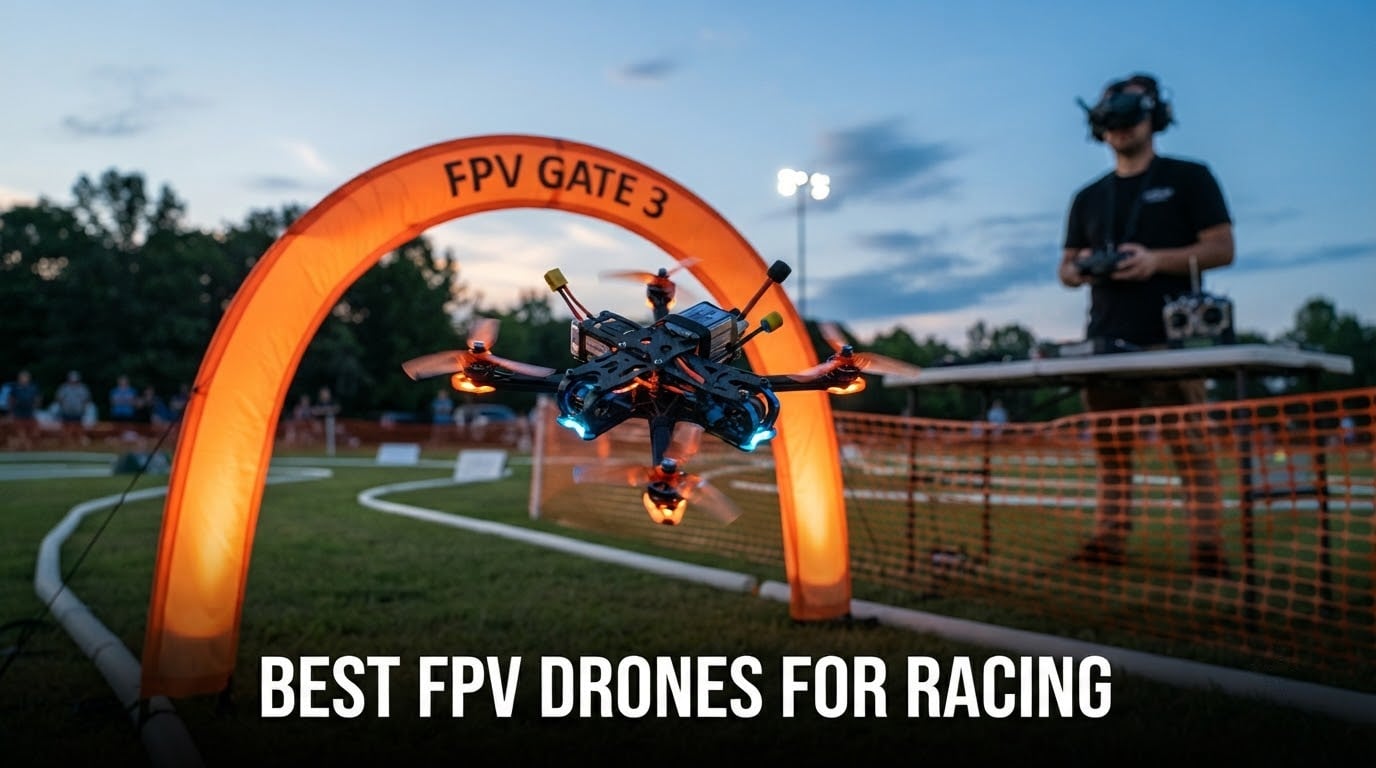
Choosing the best FPV drones for racing is less about finding a single fastest quad and more about matching an airframe to your skill level and your venue. A 5-inch carbon fiber racer will humble a pilot who has never flown acro mode, and a 65mm whoop will feel slow the moment you outgrow a hallway.
We spent 2026 season putting eleven FPV racing drones through indoor laps, backyard gates and repair-bench checks. This roundup covers the full ladder: ready-to-fly micro kits for a first session, brushless 65mm and 75mm whoops for indoor racing, one HD digital whoop, and a 5-inch GEPRC race build for pilots who already know what acro means.
Forum consensus in r/fpv and r/fpvracing is consistent on one point: start small, spend simulator hours first, and move up a size class only when the smaller quad feels boring. Every pick below lists what you still have to buy, who it suits, and who should skip it.
Table of Contents
Top 3 Picks: Best FPV Drones for Racing in 2026
Our three headline picks cover the three ways people actually enter the sport: a complete kit you can fly out of the box, a pure RTF micro racer, and the fastest indoor whoop on this list.
BETAFPV Cetus Pro FPV Kit
- Brushless whoop
- 1200TVL analog camera
- Radio and goggles included
Best complete beginner kit: BETAFPV Cetus Pro FPV Kit – brushless whoop, 1200TVL analog camera and a simulator-capable radio in one box, with three flight modes that map directly onto a learning ladder.
Best pure RTF micro racer: EMAX Tiny Hawk RTF – a genuine analog FPV feed with roughly 200 feet of range, which separates it from Wi-Fi toy drones that only stream to a phone.
Best indoor whoop for real racing: BETAFPV Meteor75 Pro – a 75mm brushless build with an ELRS link, an adjustable VTX from 25mW to 400mW and two batteries in the box.
Best HD video in a tiny frame: CADDXFPV Curve Micro 16 – 1080p at 120fps with 30ms latency in a 32g whoop, at the cost of locking you into one goggle ecosystem.
Best lightweight race build: Happymodel Mobula6 – 17.7g all-up weight with a SuperX ELRS 5-in-1 AIO stack and a 25mW to 400mW OpenVTX.
Best all-in-one ELRS training package: STARTFPV R8 – radio, four batteries and a six-way charger included, with a 1:4 thrust-to-weight ratio that punches out of tight corners.
Best 5-inch race build: GEPRC Vapor-X5 HD O4 Pro – a carbon fiber 5-inch with the DJI O4 Air Unit Pro, ELRS 2.4GHz and GPS rescue, built for pilots who can already solder and tune.
The single most common question on FPV forums is whether a beginner should buy a 5-inch first. The answer there is almost always no, and none of the picks below require you to skip that advice.
All 11 FPV Drones for Racing Compared Side by Side
The table below puts every pick in one place so you can compare size class, video system, control link and what arrives in the box.
| Product | Specifications | Action |
|---|---|---|
| BETAFPV Cetus Pro FPV Kit |
|
Check Latest Price |
 EMAX Tiny Hawk RTF EMAX Tiny Hawk RTF |
|
Check Latest Price |
 BETAFPV Meteor75 Pro BETAFPV Meteor75 Pro |
|
Check Latest Price |
 CADDXFPV Curve Micro 16 CADDXFPV Curve Micro 16 |
|
Check Latest Price |
 Happymodel Mobula6 1S Happymodel Mobula6 1S |
|
Check Latest Price |
 Mobula7 1S 75mm Whoop Mobula7 1S 75mm Whoop |
|
Check Latest Price |
 STARTFPV R8 RTF Combo STARTFPV R8 RTF Combo |
|
Check Latest Price |
 Tiny Hawk Nanoscout BNF Tiny Hawk Nanoscout BNF |
|
Check Latest Price |
 Tinyhawk 3 BNF Frsky D8 Tinyhawk 3 BNF Frsky D8 |
|
Check Latest Price |
 BETAFPV Cetus Lite FPV Kit BETAFPV Cetus Lite FPV Kit |
|
Check Latest Price |
 GEPRC Vapor-X5 HD O4 Pro GEPRC Vapor-X5 HD O4 Pro |
|
Check Latest Price |
Four of these eleven are ready-to-fly or all-in-one packages. The rest are BNF builds that need a radio, goggles and batteries before they leave the bench.
1. BETAFPV Cetus Pro FPV Kit: The Most Complete Way Into the Hobby
BETAFPV Cetus Pro FPV Kit, LiteRadio 2 SE Transmitter, VR02 FPV Goggles
1200TVL analog camera
80 m range
LiteRadio 2 SE radio
450mAh LiPo
3 flight modes
Pros
- Survives hard crashes and even water
- Three flight modes give a clear progression path
- Radio works with Liftoff and other PC simulators
- Prop guards and turtle mode simplify recovery
- Compact kit with a storage bag
Cons
- 450mAh packs give only 3-5 minutes each
- VR02 goggles have a fixed focal distance
- Radio lacks trim and the quad creeps backward
I put this kit on a laminate floor and ran it into a wall at full stick more times than I care to admit, and it kept flying. The ducted whoop frame shrugs off the kind of abuse that cracks an open-frame racer, and the turtle mode flips it upright after a nose-in instead of forcing you to pick it up mid-lap.
The LiteRadio 2 SE radio is the part most beginners underrate. It runs on the Frsky D8 protocol and connects to a PC, so the same stick inputs you use on the couch work in Liftoff, Uncrashed and DRL. That makes a simulator session genuinely useful rather than a novelty.
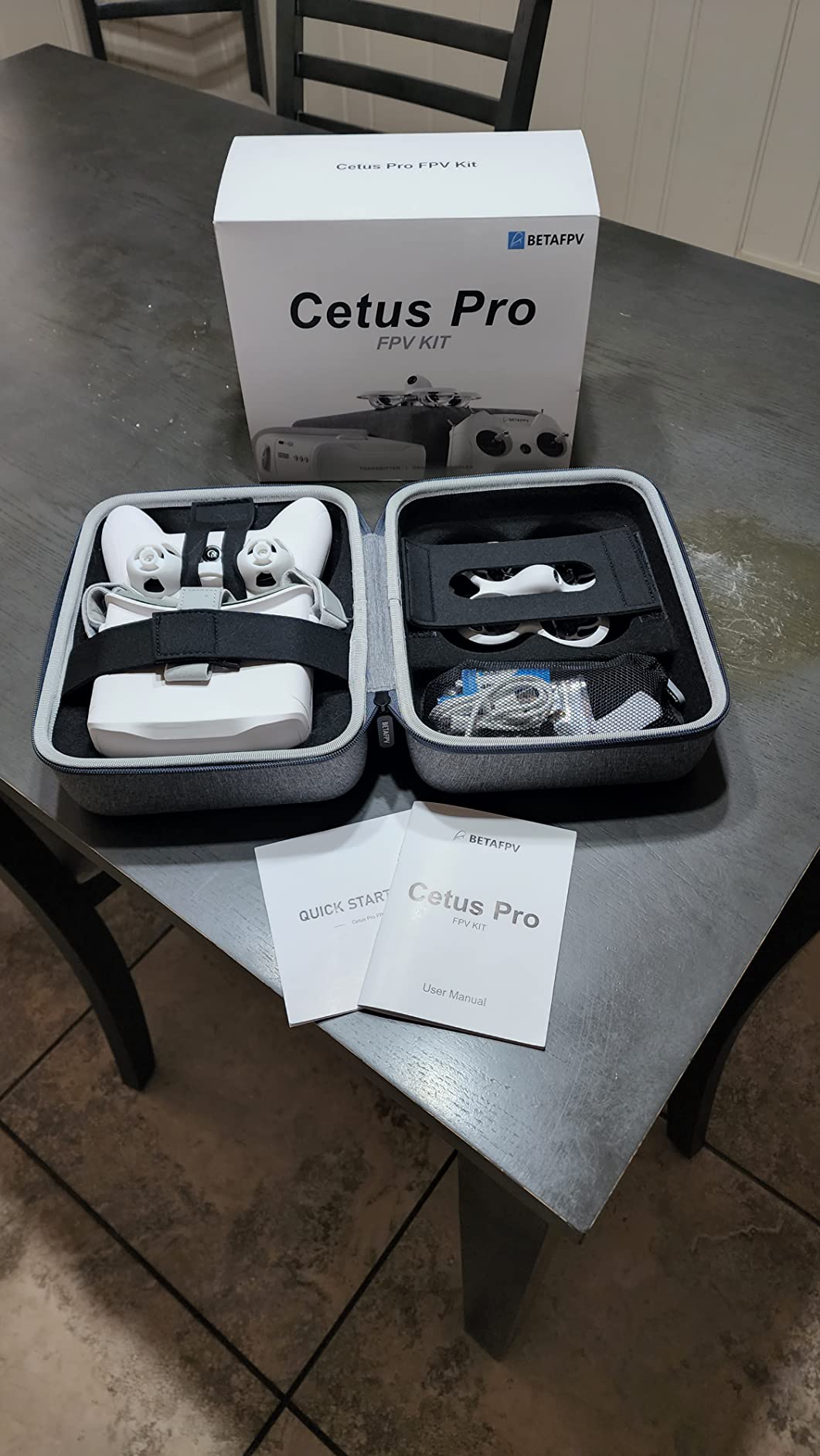
Three flight modes with three speed settings each give you a ladder inside one aircraft. Normal mode uses the barometer for altitude hold, Sport mode trims the assists back, and Manual mode is unassisted. Owners describe the progression as a genuine learning curve rather than a gimmick.
The weak point is power. A 450mAh BT2.0 pack gives roughly three to five minutes, and only two packs are in the box, so a multi-charger and a spare battery pile are the first things you will add. The VR02 goggles also have a fixed focal distance, which matters if you wear glasses.
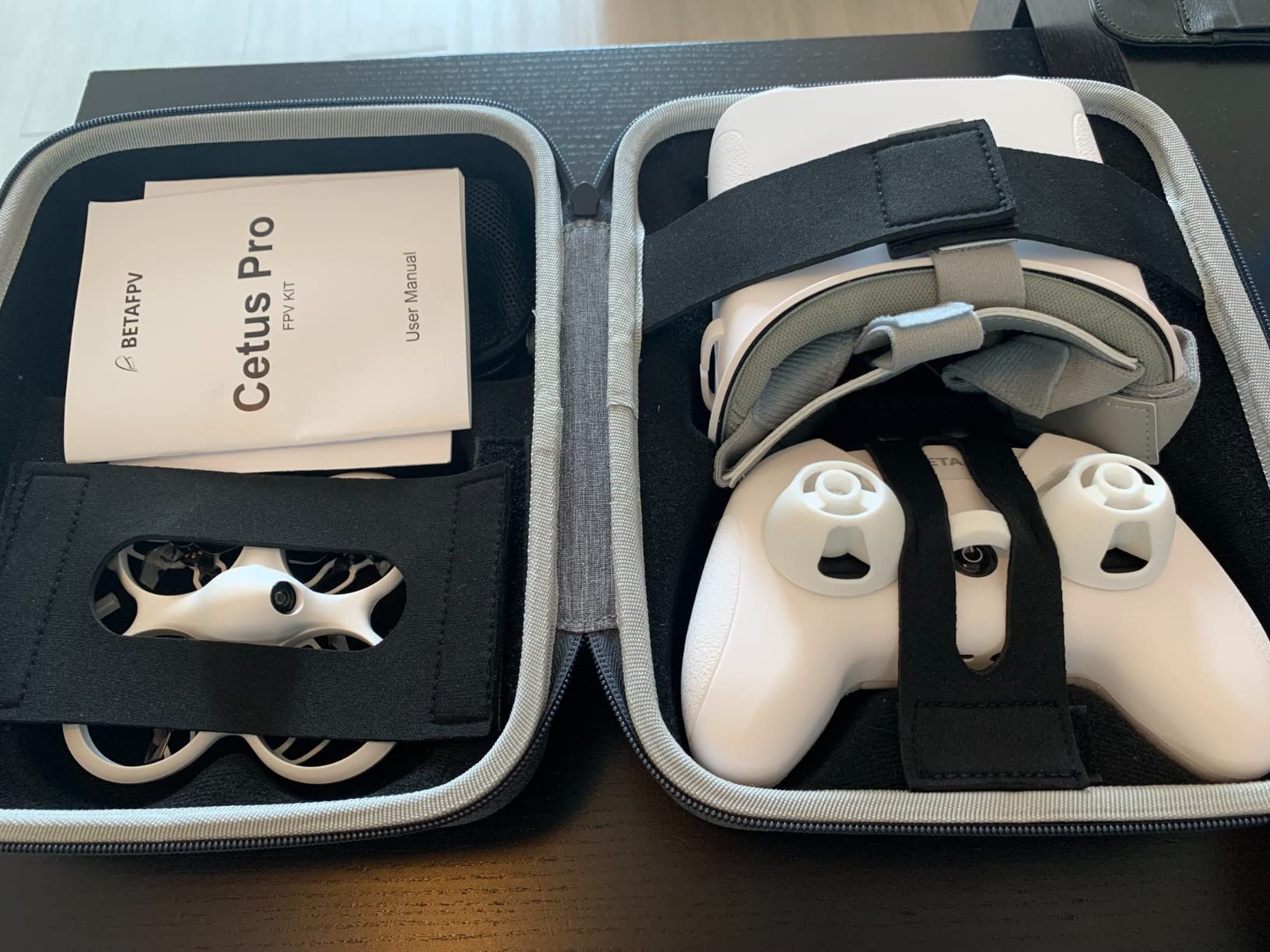
Who the Cetus Pro suits
It suits a total beginner who wants to understand what FPV flying feels like before spending money on a build, and it suits anyone who wants a durable practice drone for indoor lines. Simulator compatibility means the hours you log before buying a race quad are not wasted.
It also works as a spare or trainer for a pilot who already owns a faster aircraft, because you can fly it indoors where a 5-inch is simply too dangerous.
Who should skip the Cetus Pro
Skip it if you already fly acro confidently and want lap pace. The assisted modes and the 450mAh runtime mean you will progress past this kit within a few sessions and want a BNF whoop with ELRS and an adjustable VTX.
Also skip it if you plan to race outdoors immediately. The 80 m range and the fixed camera angle make it a trainer rather than a track aircraft.
2. EMAX Tiny Hawk RTF: The Smallest Fuss Between Box and First Gate
Tiny Hawk RTF Micro Indoor Racing Drone with FPV Goggles and Controller for Beginners
Analog FPV feed
Goggles and controller included
Up to 200 ft range
Up to 35 mph
Pros
- True analog FPV rather than Wi-Fi app streaming
- Completely self-contained package
- Light and durable for indoor micro racing
- Fast enough to feel like a real racer
- Carry case included
Cons
- 720p camera and basic analog pipeline
- Beginner-grade radio with no ELRS upgrade path
- Short flight sessions from small packs
The distinction that matters here is the video feed. This is a genuine analog FPV link with roughly 200 feet of control and video distance, not a Wi-Fi stream to a phone screen, and that difference is what makes goggles feel like FPV at all.
Everything else is supplied. Drone, goggles, controller and a carry case come in one box, so your first flight can happen twenty minutes after opening it. Owners describe it as the most direct way to find out whether FPV is for you before committing to a build.
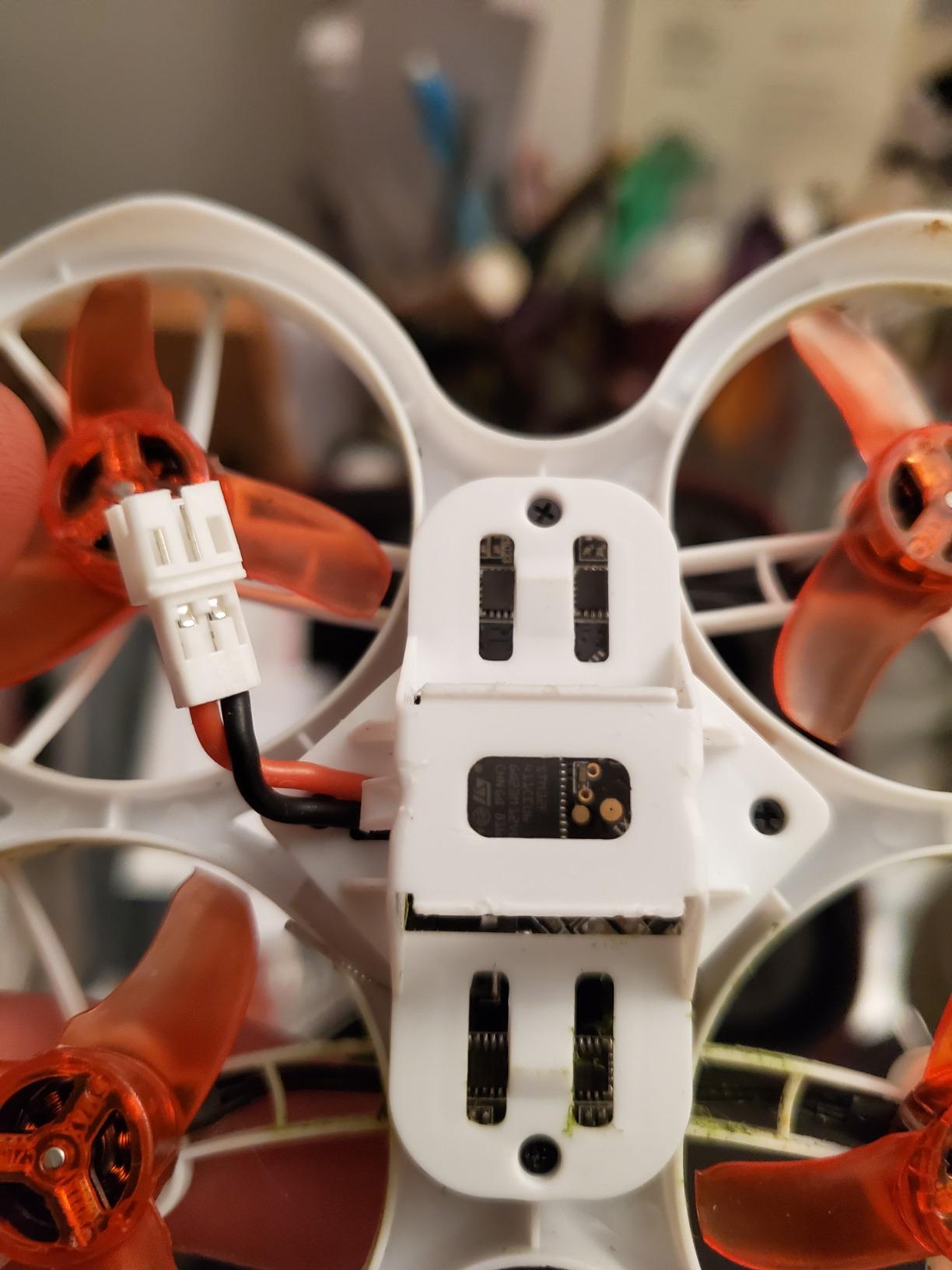
The controller is the limit. It is a basic 2.4GHz unit with no ELRS, no simulator dongle options worth relying on long term and no rate profiles to speak of. Once you outgrow it, you replace the whole system rather than upgrading one part.
Reviewers also note the 720p CMOS camera and modest analog pipeline produce a softer picture than any of the modern whoops in this list. For finding gates on a living room wall that is fine; for spotting your own line at speed it is not.
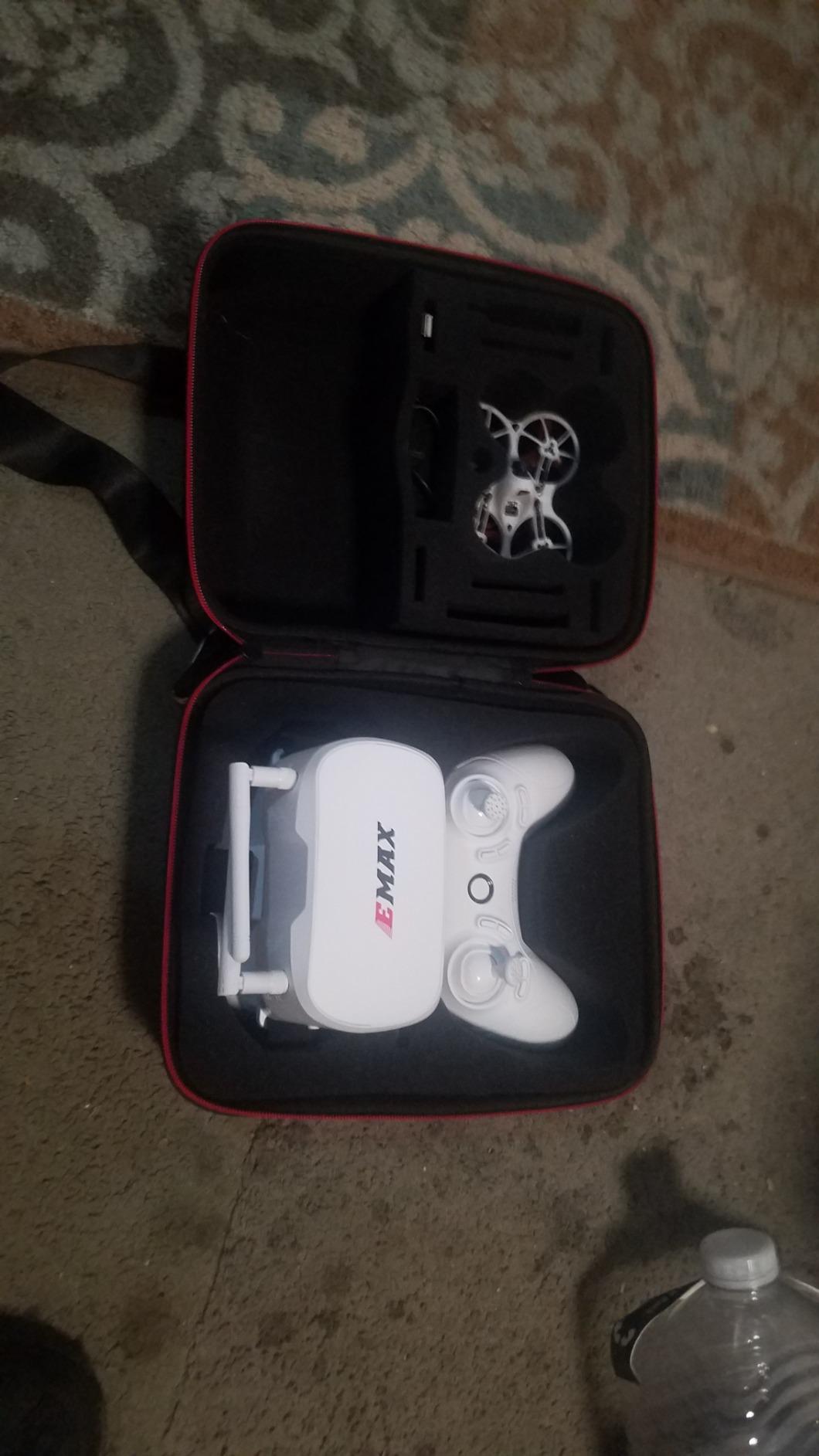
Who the Tiny Hawk RTF suits
It suits a first-timer who wants zero assembly, zero binding and zero protocol research. It is also a decent travel or indoor-practice drone because the whole package fits in the case and weighs little.
For a child or a complete beginner learning what FPV video looks like before committing to a hobby, it does the job cleanly.
Who should skip the Tiny Hawk RTF
Skip it if you already own an ELRS radio and goggles, because the bundled controller will be dead weight and you would be running two systems. Reviews advise moving to a 1S whoop once the basics are down.
Skip it for outdoor track work too. No prop guards, no altitude hold and a basic camera make it a living room aircraft rather than a field aircraft.
3. BETAFPV Meteor75 Pro: The Whoop Pilots Actually Race With
BETAFPV Meteor75 Pro Matrix 1S Brushless Whoop Quadcopter for FPV Racing
75mm 1S brushless whoop
Matrix 1S 5-in-1 FC
G473 processor
25-400mW VTX
ELRS 2.4GHz
Pros
- Responsive handling that experienced pilots rate highly
- Frame and ducts absorb repeated hard impacts
- Two 580mAh LAVA II packs included
- ELRS binds to modern low-latency radios
- VTX adjustable for indoor or outdoor
Cons
- Heavier and more demanding than a 65mm whoop
- Factory camera angle is steep for tight rooms
- Twitchy in wind above roughly 10 mph
BETAFPV describes the Meteor75 Pro as the largest 1S whoop on the market, and that size is exactly why it feels fast indoors. A 75mm wheelbase clears gaps that stop a 65mm dead, and the 1102 20000KV motors on a 1.5mm shaft give it a genuine punch-out rather than a mushy surge.
Two LAVA II 580mAh batteries are in the box, and pilots report roughly four to six minutes each. On a 1S pack that is a meaningful runtime, and it removes the usual first-week battery purchase.
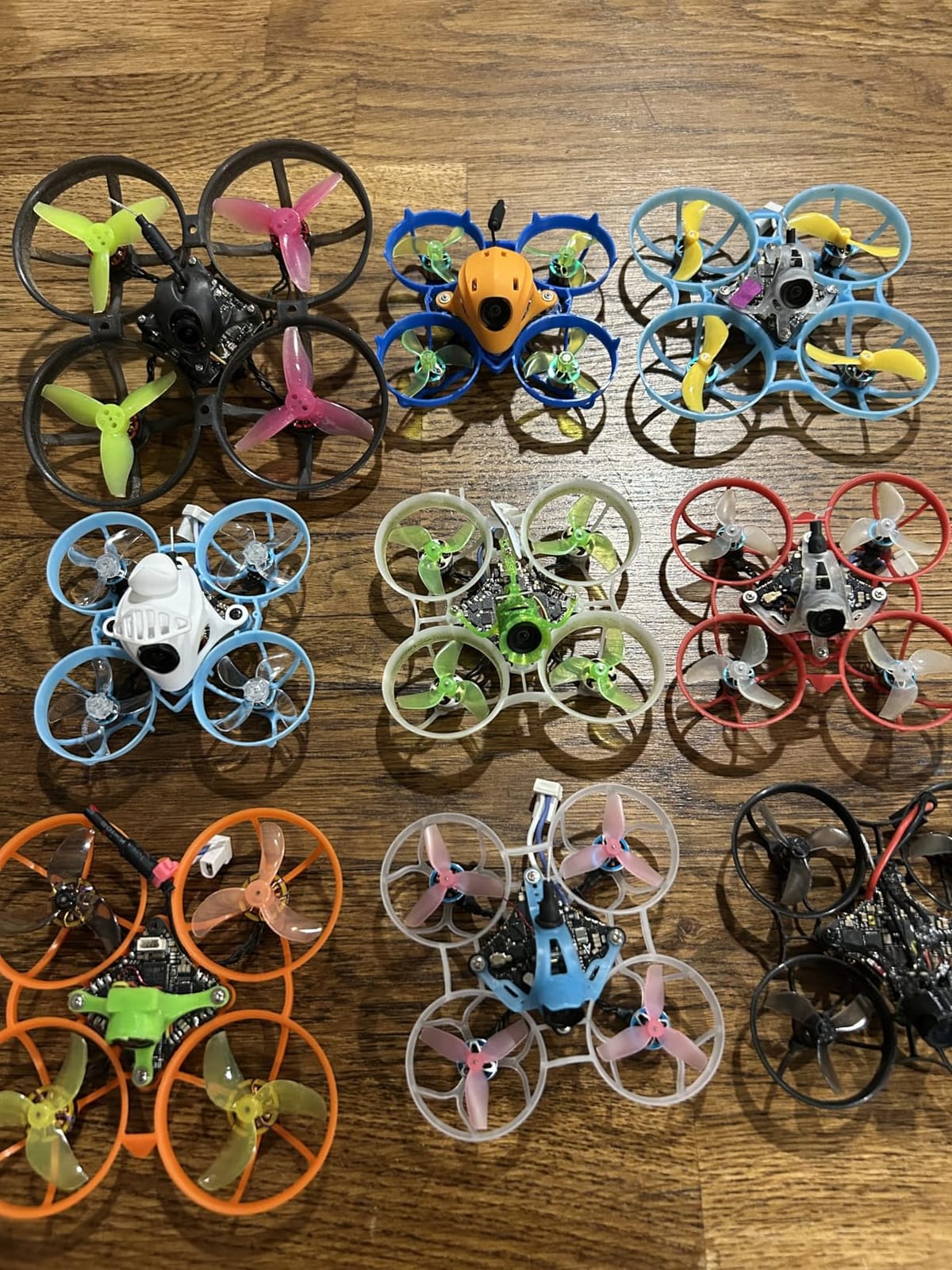
The Matrix 1S 5-in-1 flight controller runs a G473 processor and the board is 1mm thick, which sounds like trivia until you remember this class is mostly camera shake. The VTX adjusts from 25mW for a small indoor track to 400mW for a backyard, so you can change the radio footprint between venues.
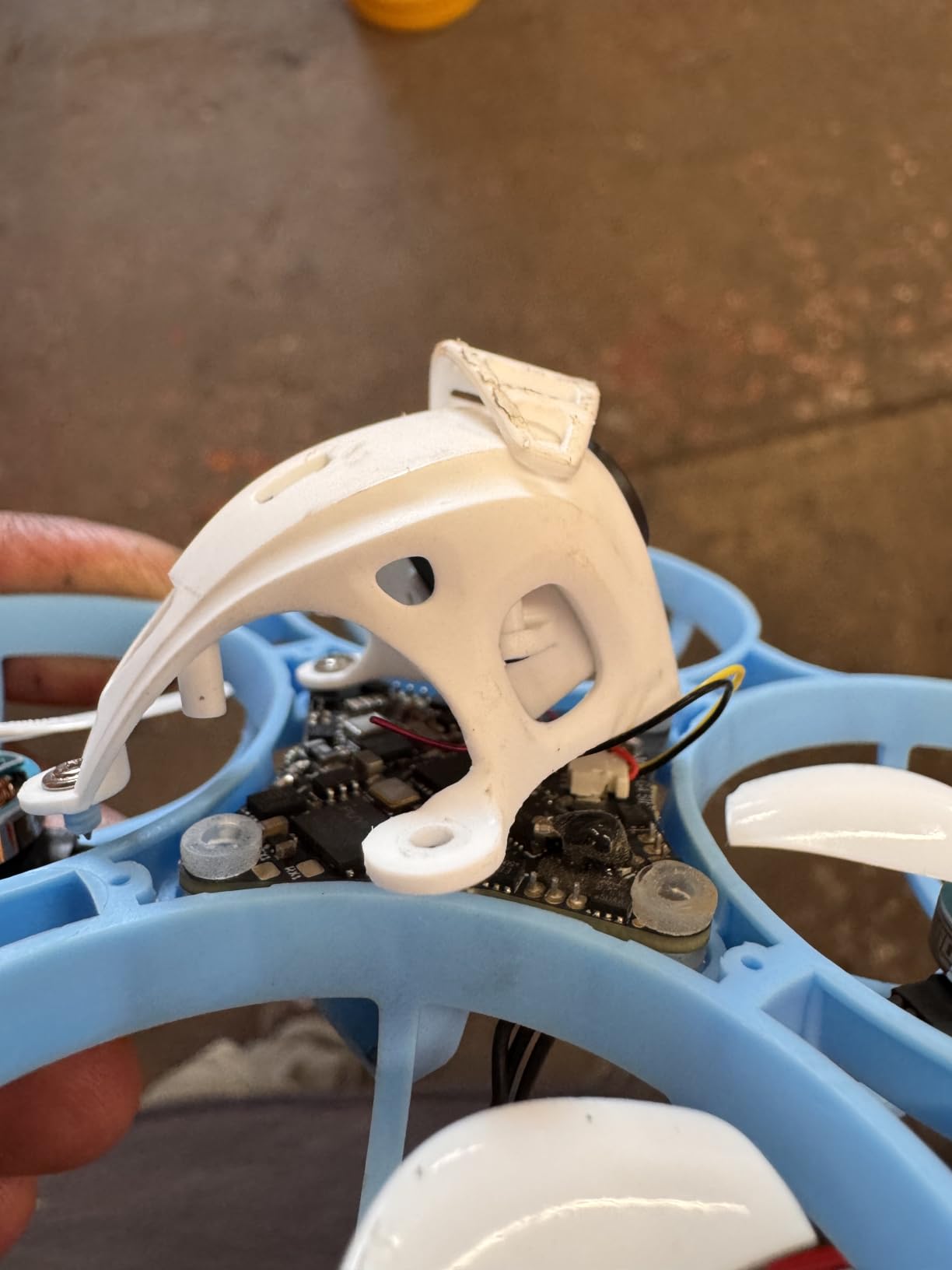
Solder-free motor plugs are a genuine repairability win. When a motor fails you unplug it rather than desolder, which matters on a frame where crashes are the normal way to end a session.
Who the Meteor75 Pro suits
The race-ready one is the Meteor75 Pro. An experienced whoop pilot rates it as the best flying 1S whoop currently on the market, with strong reviews on speed, durability and runtime.
It also suits anyone who wants ELRS on a small quad without building one, since the radio, battery and charger path is straightforward and mainstream.
Who should skip the Meteor75 Pro
Skip it if you are still learning acro indoors. It is heavier and more demanding than a 65mm whoop, and reviewers describe a steeper learning curve plus twitchiness in wind above roughly 10 mph, so it is a poor first indoor aircraft.
Skip it if you need easily sourced spares. Replacement frames, canopy and AIO boards are harder to find than the standard 65mm parts, and one reviewer reported an ESC failure unrelated to any crash.
4. CADDXFPV Curve Micro 16: HD Racing Video in a 32g Frame
CADDXFPV Curve Micro 16 1S White FPV Whoop Drone, ELRS, 1080p 120fps, 500mW
1080p at 120fps
30ms latency
147 degree FOV
Up to 500mW VTX
32g all-up weight
Pros
- Cleanest HD feed at 120fps in a racing whoop
- Very light at 32g for tight indoor lines
- One-piece frame handles wall taps
- ELRS binds to mainstream radios
- Six-channel charger keeps batteries cycling
Cons
- Needs CADDXFPV Ascent goggles and an ELRS radio
- Thin long-term reliability record
- Digital system draws more power than analog
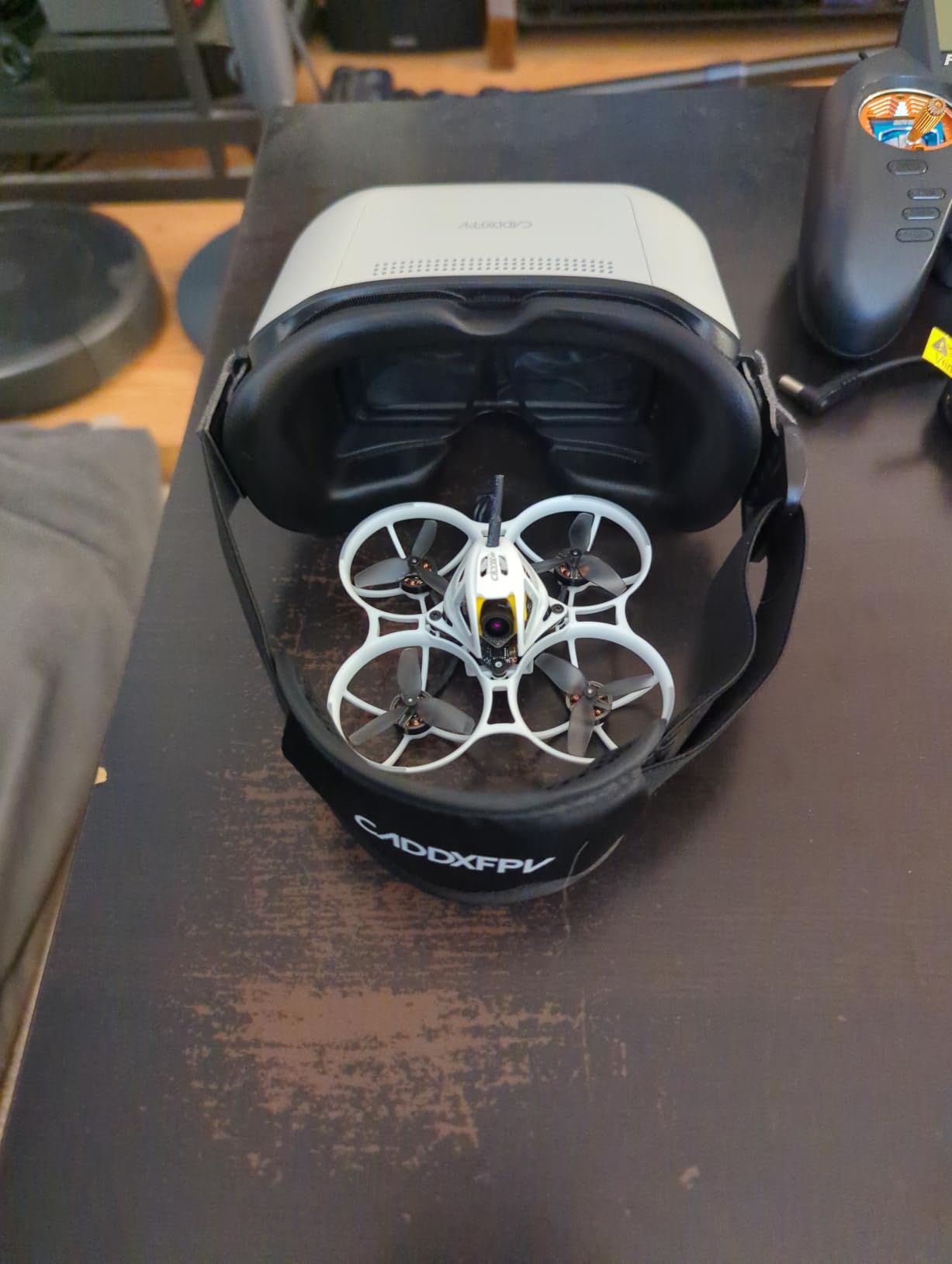
Everything in this roundup shoots analog video except this one, so the difference is obvious the moment you put the goggles on. The Ascent Lite+ system pushes 1080p at 120fps with 30ms latency across a 147 degree field of view, and gates that would disappear into analog static stay readable.
At 32g it is one of the lighter whoops here, with 1102 22000KV motors on a 12A ESC. Light weight plus a wide field of view makes it feel fast through an indoor course even though the airframe is small.
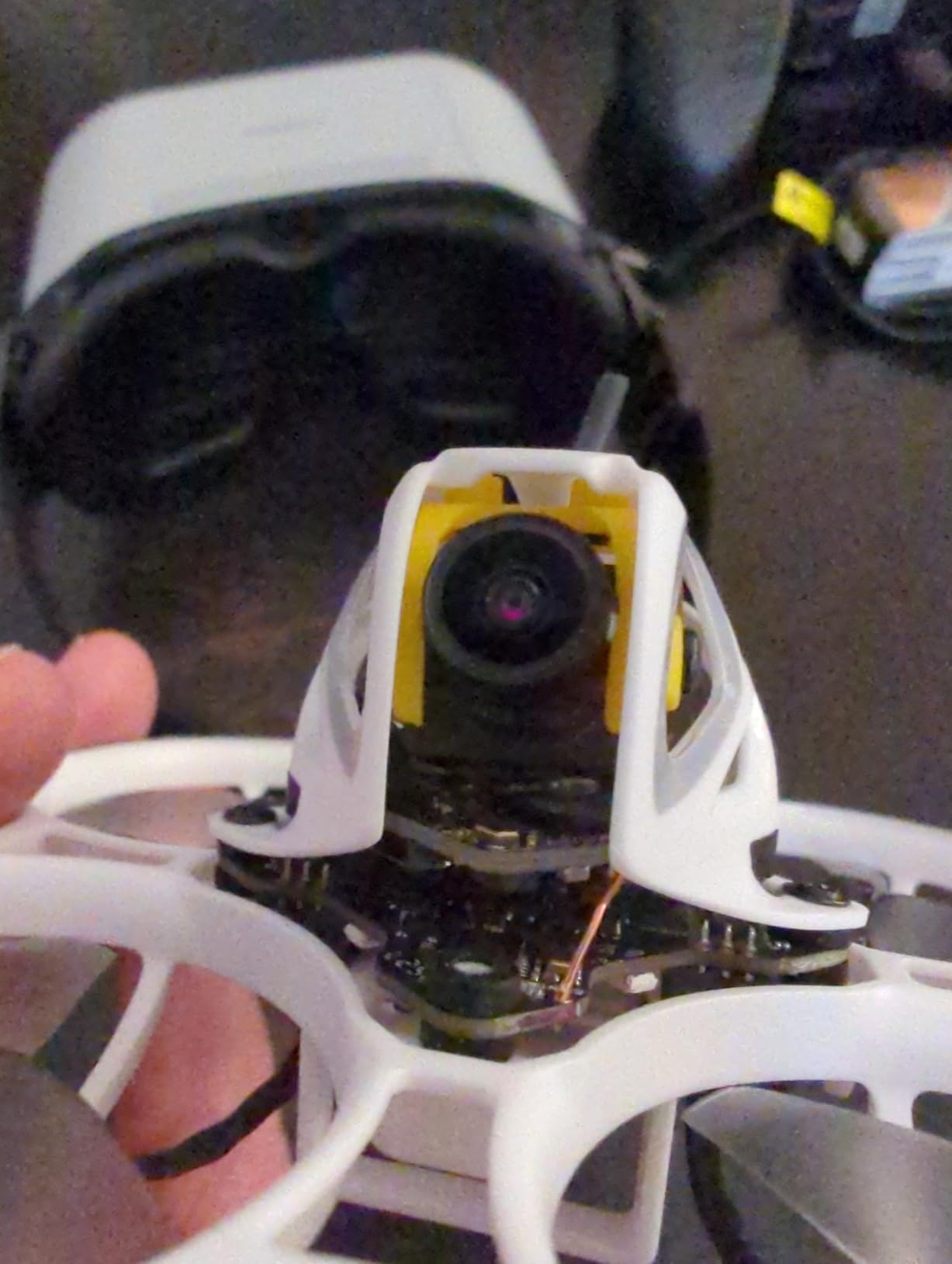
The one-piece injection-moulded frame gives full prop protection and shrugs off the wall taps that end most indoor sessions. The A30 connector supports 1S 580mAh and 680mAh packs, and the included Type-C six-channel charger means you can cycle six batteries at once instead of waiting.
Radio output goes up to 500mW on the 5.730 to 5.815GHz band, which covers a larger indoor space than a typical 200mW whoop. Reviewers treat the video quality and low weight as the two standout strengths.
Who the Curve Micro 16 suits
It suits a pilot who already has ELRS gear and wants HD gates for indoor racing or for recording their own lines. The DVR-grade clarity also makes it useful for anyone who wants to review laps after a session.
If your club runs indoor whoop classes and HD is allowed, this is the video system that gives you the cleanest picture at 120fps.
Who should skip the Curve Micro 16
Skip it if you have no goggles yet. It requires CADDXFPV Ascent-series hardware such as VRX, VRX Pro or Ascent Goggles, plus an ELRS radio, and none of that is included. That ecosystem lock is the caveat buyers raise most often.
Skip it if you need a long reliability record. Only a handful of customer reviews exist, so long-term failure data is thin, and the digital system draws more power than analog with 1S packs still capping flight time near six minutes.
5. Happymodel Mobula6 1S: The Lightest Race Build on the List
Happymodel Mobula6 2024 1S 65mm Ultra-Light Micro FPV Whoop Drone BNF with SuperX ELRS 5-IN-1 AIO (400mW VTX, SE0702 28000KV) – 17.7g Tiny Racing Drone for Indoor/Outdoor – No Battery, No GPS
17.7g all-up weight
SuperX ELRS 5-in-1 AIO
25-400mW OpenVTX
SE0702 28000KV motors
Pros
- Exceptionally light at 17.7g
- Integrated AIO board means no soldering
- 400mW VTX beats a standard 200mW whoop on penetration
- SE0702 motors give punchy thrust for tight tracks
- ELRS keeps control latency low
Cons
- No battery included
- 800TVL analog camera is dated
- Only two customer reviews
Weight is the whole argument here. At 17.7g all-up the Mobula6 accelerates and changes direction faster than anything else in this roundup, and in a tight indoor course that translates directly into lap pace.
The SuperX ELRS 5-in-1 board stacks the F4 flight controller, 5A ESC, SPI receiver, VTX and a current sensor into one board, so there is no soldering and very little to break. Owners describe the internal build as unusually clean for the size.
The frame is a 65mm whoop with SE0702 28000KV motors optimised for 1S LiHV, and the OpenVTX adjusts from 25mW up to 400mW through SmartAudio. It comes pre-set to 25mW, which is worth knowing if you plan to fly outdoors.
The video is the compromise. The FX17-B 800TVL one-third-inch CMOS camera has good wide dynamic range, but it is a dated analog picture next to the 1080p system in the previous section, and 800TVL is the lowest video resolution here.
There is no GPS and no return-to-home, so this is strictly a line-of-sight racing whoop. Budget for a pack of 1S 300 to 450mAh LiHV batteries with either PH2.0 or BT2.0 connectors, because none are included.
Who the Mobula6 suits
It suits an experienced pilot who wants the lightest possible race build for indoor tracks, or who wants a second aircraft that can be flown through gates a 75mm cannot enter. The two verified owners both report strong, responsive handling.
It also suits anyone who wants a fully solder-free build with ELRS and a high-power VTX, since everything is pre-wired and configurable in Betaflight.
Who should skip the Mobula6
Skip it as a first FPV drone. There is no battery, no radio and no goggles, and the frame offers no assisted modes to catch a beginner mistake. The product data describes it as aimed at experienced FPV pilots.
Skip it if you fly outdoors in a large open area. The 800TVL camera and the modest 5A ESC on 28000KV motors both strain when you push hard punch-outs at speed, and there is no GPS rescue.
6. Happymodel Mobula7 1S 75mm: Race Mode Built Into the Board
Happymodel Mobula7 1S 75mm Micro FPV Whoop Drone – 5-in-1 AIO Flight Controller with ExpressLRS 3.0, RS0802 20000KV Motors, 1S Whoop Quad for Indoor & Outdoor Freestyle, Mini FPV Drone (Drone)
5-in-1 AIO stack
ELRS 3.0 receiver
OpenVTX up to 400mW
12A ESC
24g takeoff weight
Pros
- AIO board removes any soldering
- 400mW OpenVTX with race mode and pit mode
- 24g 75mm frame stays quick and agile
- Verified owner reports snappy response and low voltage sag
- AIO board can be reconfigured for 2S
Cons
- Only one customer review so reliability is unproven
- No batteries included
- Needs an ELRS radio and FPV goggles
What makes this one interesting for racing is the software, not the hardware. The OpenVTX supports race control and pit mode, so it can follow event frequency procedures, and the 0 to 400mW adjustment covers both a tiny indoor hall and a small backyard.
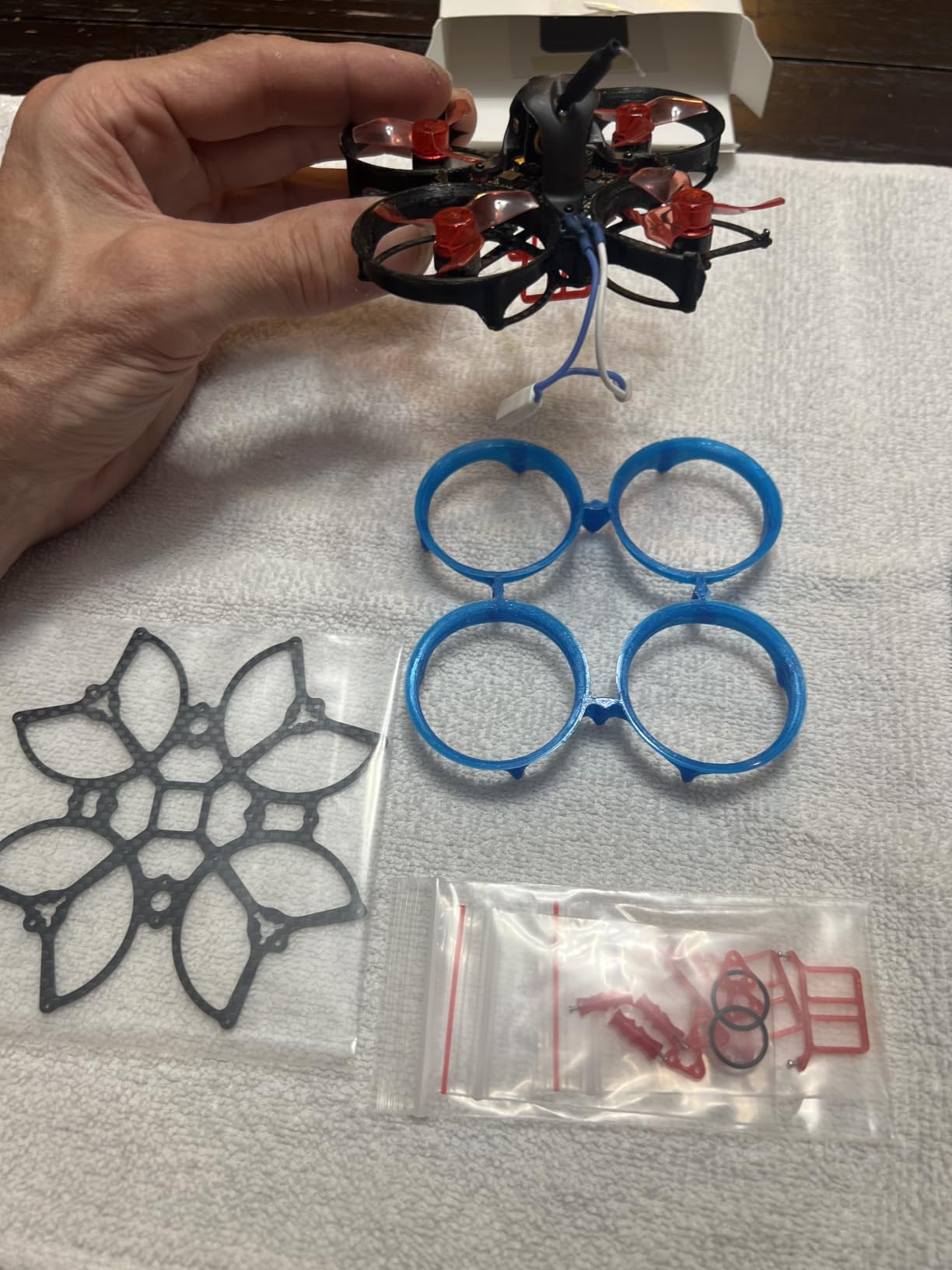
The stack combines an ELRS 3.0 receiver, OpenVTX, a 12A BLHeli_S ESC and a Betaflight OSD on one board. That is the entire electronics package of a race quad compressed into a 24g 75mm whoop.
The Caddx ANT one-third-inch CMOS 1200TVL camera replaces the discontinued RunCam Nano 3, which solves a real sourcing problem for anyone building small quads. Gemfan 1610 bi-blade props and a parallel charging board are included.
The honest caveat is evidence. There is a single verified customer review, so long-term reliability is largely unproven, and it is rated on the strength of a specification sheet plus one experienced pilot’s report of snappy handling, low sag and good flight times on HV 1S packs.
Who the Mobula7 suits
It suits a pilot who already has ELRS gear and analog goggles and wants a race-capable 75mm whoop with no soldering. The single verified owner used the board as a 2S-capable spare board and reported no voltage sag.
It also suits anyone planning to enter indoor events that use pit mode, since that support is built into the VTX rather than added later.
Who should skip the Mobula7
Skip it as a first aircraft, because you need an ELRS radio and FPV goggles before it can fly at all, and batteries are not included. The complete cost of entry is well beyond the sticker figure.
Skip it if you want proven long-term reliability from a thin review base of one. Running it on 2S also requires Betaflight configuration changes, including lowering the PID loop rate to 4 kHz.
7. STARTFPV R8 RTF Combo: The Fastest Way From Box to ELRS Racing
R8 ELRS FPV Whoop Drone RTF with Radiomaster Pocket Controller,4 Batteries,6In1 Charger,FOV160°,Matrix G4 5IN1 FC,0802 20000KV Brushless Motor-Ideal for FPV Freestyle Racing Training Indoor Outdoor
80mm duct-guarded frame
38g all-up weight
Matrix G4 5-in-1 FC
Four 450mAh batteries
Pros
- Radio and four batteries in one box
- 1:4 thrust-to-weight ratio gives real punch-out power
- Low aerodynamic centre holds stability in sharp turns
- Betaflight pre-tuned and ready after binding
- Duct guards and landing skids protect the quad and packs
Cons
- Goggles are not included
- Transmitter battery is not included
- Only one customer review
This is the package I would hand a pilot who already understands FPV but does not own gear. It ships with a RadioMaster Pocket ELRS controller, four 3.8V 450mAh batteries, a six-in-1 charger, spare props and a tool kit.
The power figure is what separates it from other whoops here. The 0802 20000KV motors give a stated 1:4 thrust-to-weight ratio, about 33g of thrust per motor on a 26g frame, which is enough to climb vertically out of a wall-stall and roll consecutively without the quad sagging.
Below that sits a Matrix G4 5-in-1 flight controller on a G473 MCU with an ICM-42688P gyro, running Betaflight pre-tuned. You bind and fly, which is the point for a training package.
The duct guards and top-mounted batteries protect both the airframe and the packs during indoor sessions, and the landing skids give ground clearance on a rug. Reviewers note the drone is 38g all-up in a package weighing 100g.
Who the R8 suits
It suits a pilot moving up from a toy whoop who wants ELRS, brushless motors and real thrust without buying a radio separately. The included four-pack battery set removes the most common first-week expense.
It also suits anyone practising acro indoors between larger flights, because 0802 motors and an 80mm duct-guarded frame can take the hits a 5-inch cannot.
Who should skip the R8
Skip it if you have no FPV goggles, because they are not included, and skip it if you are starting from zero on the control side too, since the transmitter battery is also missing.
Skip it for outdoor track racing. At 80mm with 0802 motors it is a trainer, and the single customer review means reliability at scale is unproven.
8. Tiny Hawk Nanoscout 65mm BNF: A Legitimate Entry Into ELRS Racing
Tiny Hawk Nanoscout FPV Drone BNF ELRS 1s 25mw-400mw 65mm Quadcopter With Runcam Nano 3
65mm 1S micro racer
Runcam Nano 3 camera
25-400mW adjustable VTX
ELRS 2.4GHz
23g
Pros
- Posts good lap times in the RaceGOW5 spec class
- Factory tune needs little beyond rates and binding
- Adjustable camera angle suits different tracks
- ELRS works with current radios rather than legacy gear
- Spares and a charger included in the BNF pack
Cons
- Inconsistent quality control between units
- Uncommon battery connector blocks pack sharing
- RunCam Nano 3 camera and low factory angle
What stands out is the feedback from actual racers. Reviewers report that it handles predictably and posts competitive lap times in the RaceGOW5 spec class, and that the factory tune needs little more than setting rates and binding before it is race-ready.
At 23g with brushless motors and an ELRS link, it connects to a current radio rather than a legacy protocol. The VTX adjusts from 25mW to 400mW, and the camera angle moves in the canopy so you can set it for a specific track.
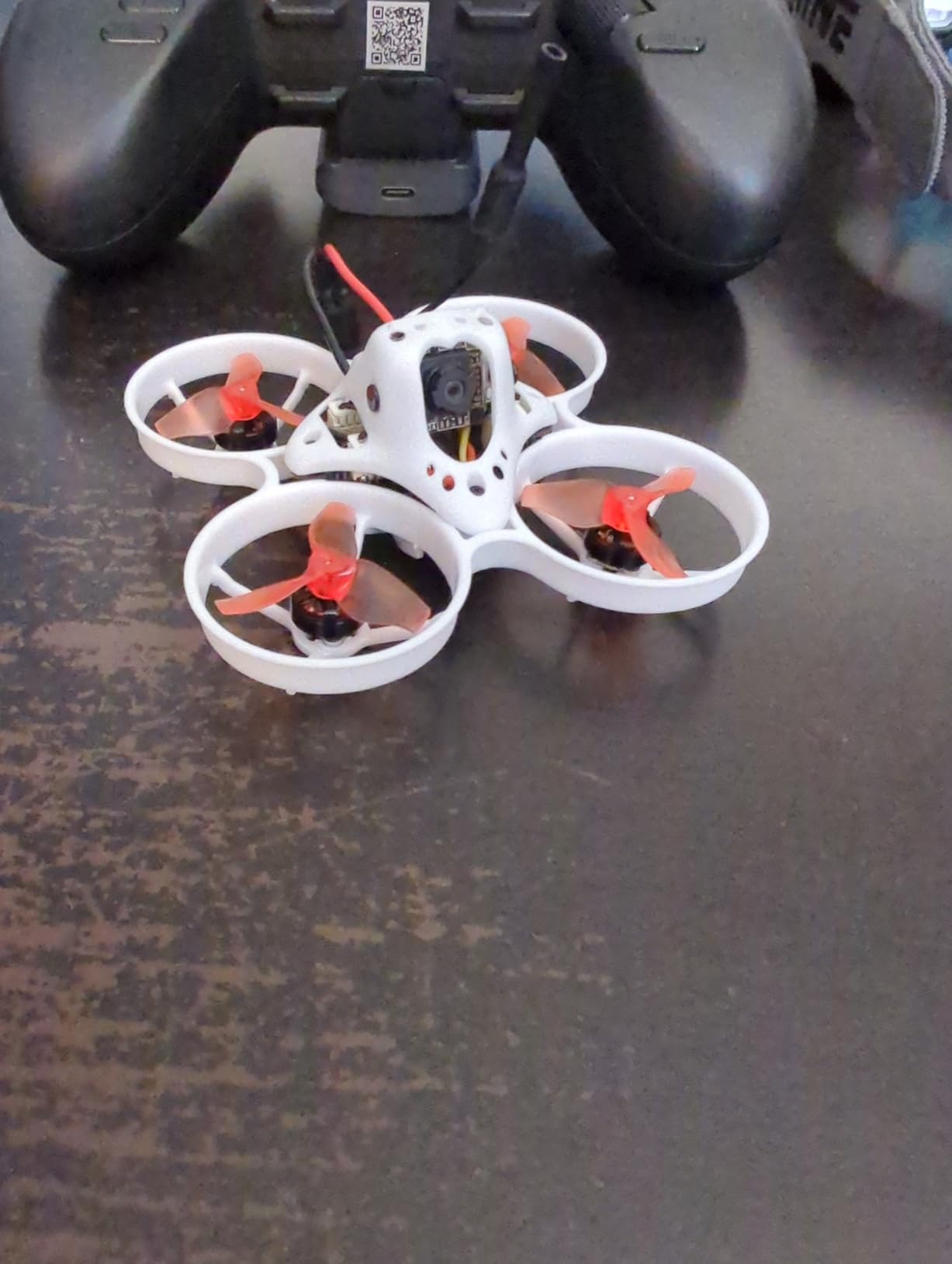
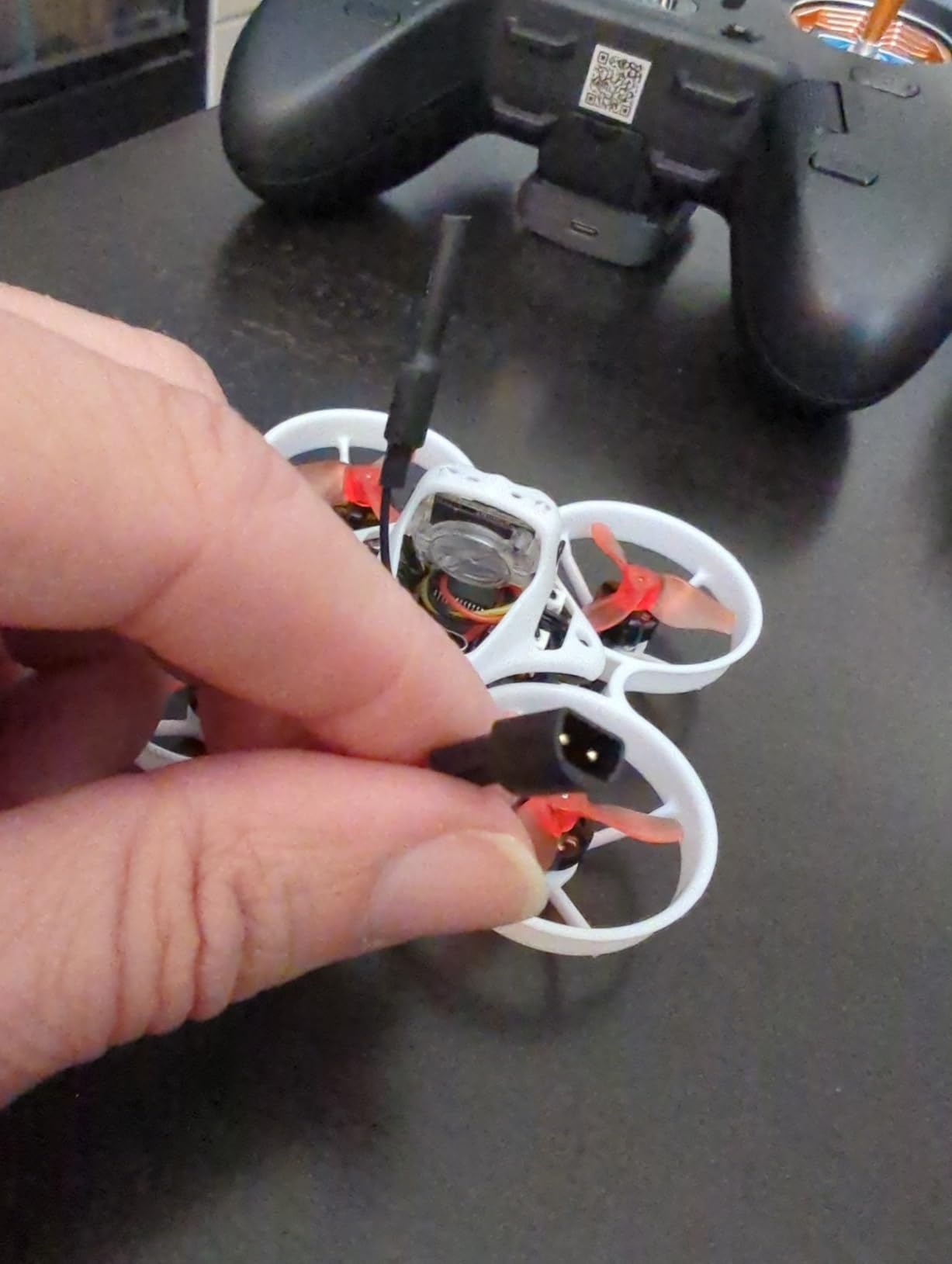
The BNF pack is unusually complete for the class. You get the quad, a battery, spare props, a small spares pack and a USB charger, so nothing except radio and goggles is missing.
Quality control is the real problem, and the review split is stark. Positive reviews come from racers who received a good unit; negative reviews are almost entirely about manufacturing, including a unit that would not connect to Betaflight and another with only three working motors.
Who the Nanoscout suits
It suits a pilot with an ELRS radio who wants to enter a 65mm spec class cheaply and is comfortable doing a bind in Betaflight. Racers who get a good unit describe the value as excellent.
It also suits anyone who wants a spare 65mm that can share a track with another racer of similar weight class.
Who should skip the Nanoscout
Skip it if you need consistent quality, because the review base documents units arriving with faults. Anyone who cannot troubleshoot a Betaflight connection should choose a product with a steadier record.
Skip it if you already run PH2.0 or BT2.0 packs elsewhere. The battery connector here is uncommon, so extra packs will not be interchangeable with your existing collection.
9. Tinyhawk 3 BNF Frsky D8: Best If You Already Own Frsky Gear
Tinyhawk 3 BNF FRSKY D8 1s Micro FPV Outdoor Racing Drone for Beginners 200mw FPV Quadcopter
65mm 1S micro quad
Runcam Nano 2 camera
200mW switchable VTX
Frsky D8 protocol
1-2S power system
Pros
- Forgiving entry into 1S FPV racing
- Brushless motors give more headroom than cheap kits
- Adjustable camera angle canopy helps track setup
- BNF format reuses an existing Frsky D8 radio and analog goggles
Cons
- Frsky D8 will not bind to modern ELRS radios without an external receiver
- RunCam Nano 2 is dated and limited to 200mW
- Radio goggles and batteries are all separate
The sensible way to read this product is as a compatibility option. If you already own a Frsky D8 radio and analog goggles, this BNF package drops straight into that setup with nothing else to buy on the control and video side.
Mechanically it is a 65mm class 1S quad with brushless motors, an adjustable camera angle canopy and a power system described as 1 to 2S compatible. The switchable VTX goes up to 200mW.
Where it falls behind is generational. Frsky D8 is a legacy protocol, so binding to a current ELRS radio requires an external receiver. The RunCam Nano 2 also tops out at 200mW, which is half the power of the Meteor75 Pro at maximum.
Review scores sit near the bottom of this roundup, which hints at build or tuning inconsistencies rather than one isolated fault. The small review base is mixed rather than negative.
Who the Tinyhawk 3 BNF suits
It suits a pilot already invested in Frsky D8 gear who wants a simple 1S racer without changing protocols. Reviewers describe it as a workable first BNF whoop at a mid-range cost.
It also suits anyone keeping older analog gear in service rather than replacing a working system.
Who should skip the Tinyhawk 3 BNF
Skip it if you are buying new radio gear in 2026, because you would be starting on a protocol that is on the way out rather than ELRS, and adding an external receiver later costs more than choosing an ELRS quad.
Skip it for outdoor or larger-track flying. A 200mW VTX and a Nano 2 camera do not give you the penetration or picture that modern analog builds do.
10. BETAFPV Cetus Lite FPV Kit: A Low-Risk Test of the Hobby
BETAFPV Cetus Lite FPV Drone Kit with LiteRadio 1 VR02 Goggles-Mode 2
Drone radio and goggles included
720p camera with VTX and OSD
300mAh battery
Altitude hold
Pros
- Everything needed in one box
- PA12 nylon frame and prop guards survive beginner crashes
- Altitude hold and 6-axis self-protection are forgiving
- Transmitter supports several protocols
- Simulator support for practice
Cons
- Brushed motors are noticeably weaker than the brushless Cetus Pro
- 300mAh packs give only a couple of minutes
- 720p analog video with some static and a small image
The question this kit answers is simple: do you want this hobby at all? Buyers treat it as a low-risk way to find out, and the protective PA12 nylon frame with full prop guards makes it safe to fly indoors around furniture and people.
Everything is included, including the LiteRadio 1 radio with dual centering gimbals, VR02 goggles and a 720p CMOS camera with an integrated VTX and OSD. The radio supports Frsky D8, S-FHSS and LBT D16 protocols and connects to simulators such as DRL, DCL, Uncrashed and Liftoff.
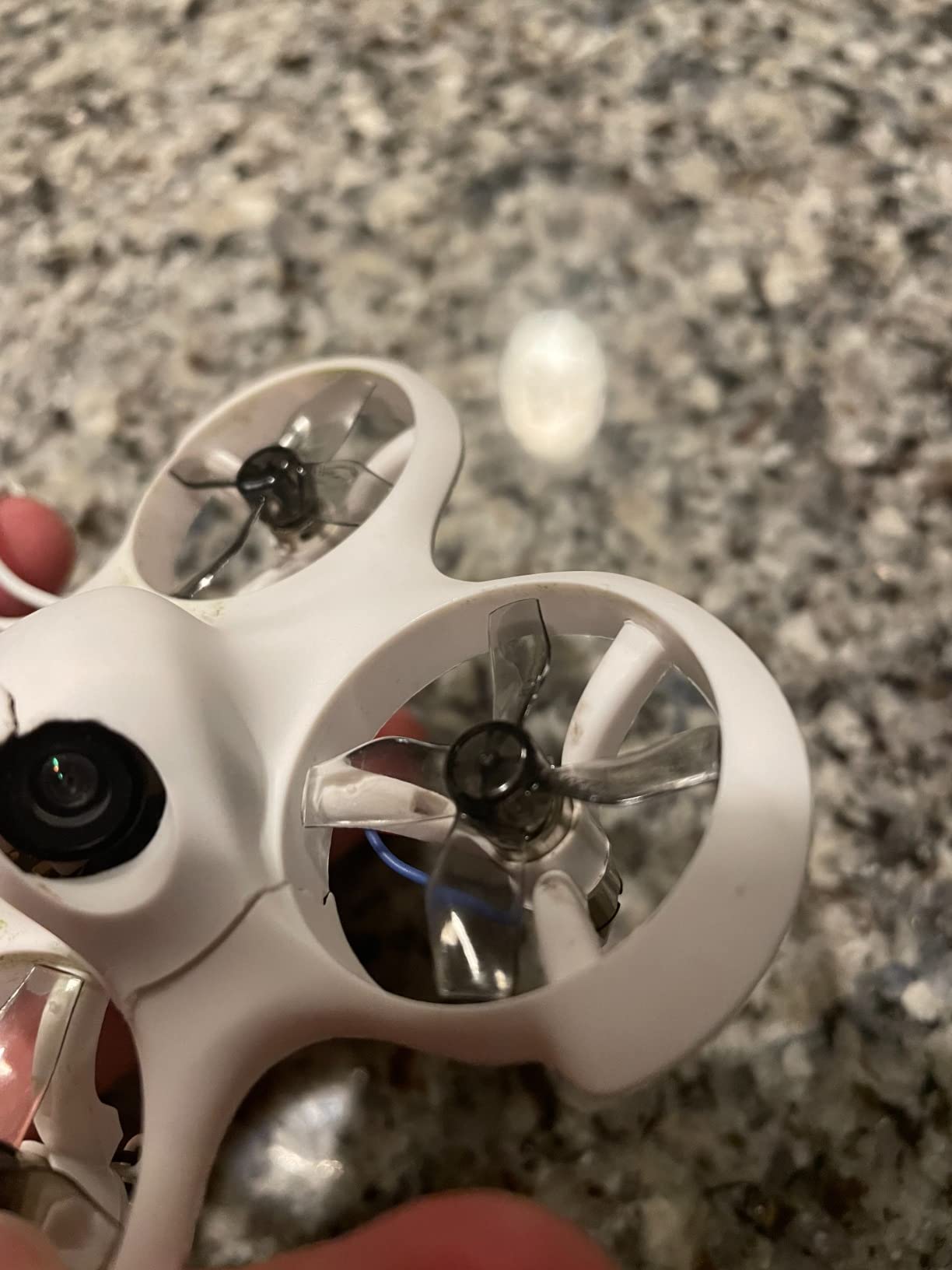
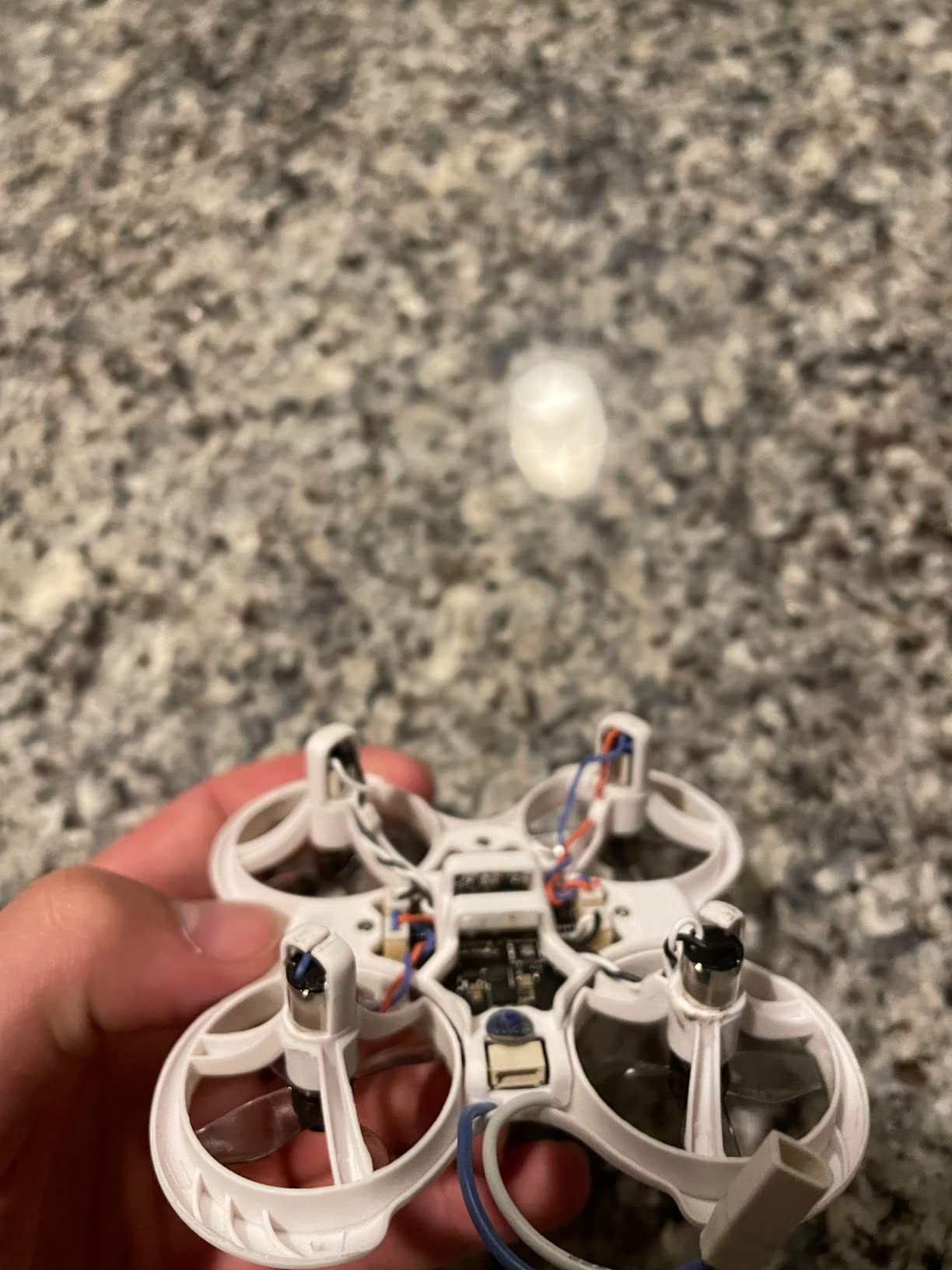
Altitude hold plus a 6-axis IMU with collision auto-disarm make it forgiving in a way brushless quads are not. A beginner can hover a metre above a carpet without losing the aircraft.
Performance is the trade. The brushed motors give noticeably less thrust than the Cetus Pro, the 300mAh packs last only a couple of minutes each, and the 720p analog video shows static with a small on-screen image. The assisted modes can also feel imprecise next to any acro-capable quad.
Who the Cetus Lite suits
It suits a beginner on a tight budget, a parent buying a safe first aircraft for a child, and anyone who wants prop guards in a small indoor space. Simulator support means even this entry-level package can be practised before it is flown.
It also works as a supervised second aircraft for indoor practice while a bigger quad is being repaired.
Who should skip the Cetus Lite
Skip it if you want racing pace. Brushed motors, a couple of minutes per pack and a small analog image make this a decision-making tool rather than a training tool for real gate racing.
Skip it if you already own a BETAFPV system. The LiteRadio 1 radio is a lower-spec path than the LiteRadio 2 SE, and moving up later means replacing the radio rather than upgrading it.
11. GEPRC Vapor-X5 HD O4 Pro: A Real 5-Inch Race Build
GEPRC Vapor-X5 HD O4 Pro FPV Drone (ELRS 2.4G with GPS)
5-inch carbon fiber frame
DJI O4 Air Unit Pro
SPEEDX2 E-series motors
ELRS 2.4GHz with GPS rescue
Pros
- Digital O4 video quality is repeatedly called the best in class
- Fast and precise enough to hit gaps around 70 mph once tuned
- Build quality and frame toughness survive hard crashes
- About 6.5 minutes per 1300mAh 6S pack
- ELRS link has very few connection issues in open areas
Cons
- Requires soldering Betaflight setup and repair skills
- Aluminum motor shafts snap rather than bend
- Antennas and prop nuts tear off frequently
This is the only true 5-inch racer in the roundup, and it behaves like one. The wider 5mm carbon fiber arms, the CNC aluminium lens housing with a front lip and the GEPRC SPEEDX2 E-series motors are the parts you would expect on a build meant to be flown hard into gates.
The DJI O4 Air Unit Pro uses a larger CMOS sensor, and reviewers repeatedly describe the image as the best in this class with no action camera needed. That removes the weight and the tilt-correction maths of an analogue action camera setup.
Speed is where manufacturer claims need care. One reviewer reports hitting gaps at around 70 mph once tuned, which is a measured observation from a pilot rather than a laboratory figure. Elsewhere in this hobby a published claim has run well ahead of measured results, so treat any headline speed as a claim until you see it verified.
Runtime is about 6.5 minutes on a 1300mAh 6S pack. The ELRS 2.4GHz variant adds GPS rescue for failsafe returns, which is a genuine advantage at a sanctioned event where a flyaway ends your heat.
Who the Vapor-X5 HD O4 Pro suits
It suits an experienced pilot who already owns an ELRS radio, DJI O4 goggles and a soldering iron. Experienced pilots flying 5-inch HD freestyle and race quads rate it highly for speed, image quality and toughness.
It also suits anyone who wants to record their racing from the quad without carrying a separate action camera and mount.
Who should skip the Vapor-X5 HD O4 Pro
Skip it as a first drone. Every reviewer stresses that this is a repair-capable, tune-dependent build rather than a turnkey racer, and it is a BNF package, so radio, goggles and LiPos are all bought separately.
Skip it if you fly with bare hands and no bench skills. Aluminum motor shafts snap instead of bending, antennas and prop nuts tear off frequently, and one reviewer reported repeated receiver signal loss leading to crashes. The O4 air unit and these motors can also be difficult to source when a replacement is needed.
Which Size Class? Matching FPV Drones for Racing to Your Venue
Size class decides what you can fly and how fast you will progress. A 65mm whoop fits a hallway and a garage, a 75mm whoop handles larger indoor tracks and light outdoor runs, and a 5-inch carbon fiber racer needs open air and real flying hours behind it.
Most pilots move up the same way: simulator first, then a micro whoop for indoor lines, then a 75mm whoop or a 3-inch toothpick class build, then a 5-inch. Forum advice is blunt about skipping steps. The most repeated warning in r/fpv is that a 5-inch is not a first aircraft and that pilots who buy one anyway tend to damage it within hours.
Beginners over-buy more than any other mistake in this hobby. Replacement arms, frames, motors, props and camera mounts are the dominant hidden cost, and they scale with the size of the aircraft you crashed.
Analog vs Digital for Racing: The Latency and Race-Class Decision
Analog wins on latency, weight and repair cost; digital wins on image clarity and recording. For racing specifically, analog is still the default at most sanctioned classes, and digital systems carry their own weight penalty on a 5-inch build.
Analog video is the lower-latency option and the lighter one, and analog goggles are cheap enough that a spare pair is a sensible purchase. When an analog quad breaks, the camera is a low-cost part rather than an ecosystem lock-in.
Digital systems such as the DJI O4 Air Unit Pro and the CADDXFPV Ascent Lite+ give you 1080p at 120fps or similar, which makes gates readable and lets you review your lines without a separate camera. The trade is weight, power draw and a closed ecosystem where the goggles must match the air unit generation.
One thing to check before you register for an event: some sanctioned tracks restrict digital video systems in race classes because of frequency congestion and interference. Race rules vary, so confirm with the track rather than assuming.
RTF vs BNF vs PNP: What You Still Have to Buy
The package label tells you how much of the system arrives in the box. RTF is the only label that gets you flying with goggles and a controller, and it is the most common source of the forum complaint that a so-called complete kit arrives unusable.
RTF means the quad, a controller and usually goggles are included. The Cetus Pro, Cetus Lite, Tiny Hawk RTF and STARTFPV R8 sit here, though goggles are missing from the R8 and the controller battery is not included with it.
BNF means the quad is bound and flying but you supply the radio, goggles and batteries. That covers the Meteor75 Pro, Curve Micro 16, Mobula6, Mobula7, Nanoscout and Tinyhawk 3, and it is where most compatibility mistakes happen.
PNP means the quad needs a receiver soldered or installed before it will bind. None of the picks in this roundup are PNP.
Two compatibility traps cause most of the frustration. Buying an ELRS aircraft without an ELRS radio wastes the aircraft entirely, and battery cell count, connector and discharge rate mismatches will not resolve themselves on the bench.
Gear a Racing Quad Actually Requires
A drone is the smallest part of the budget. Goggles, a radio link, LiPos, a charger and spares decide whether you can actually train, and the community consistently points this out.
Goggles have to match your video system. Analog goggles are inexpensive and universal. Digital goggles are system-specific, so buying a DJI O4 Air Unit Pro drone commits you to DJI O4 goggles, and buying an Ascent Lite+ whoop commits you to CADDXFPV Ascent hardware. Check the generation, because DJI generations do not cross over.
The radio decides latency and reliability. ExpressLRS dominates current builds and is what most picks here use, while Crossfire and Frsky D8 remain in service on older systems. Most whoop picks on this list are ELRS, so an ELRS radio is the path of least resistance.
Batteries and chargers are the recurring expense. 1S packs between 300 and 680mAh serve the whoops, and 6S 1300mAh packs serve the 5-inch. Buy a multi-channel charger early, because cycling six batteries one at a time is where training time goes to die.
A simulator session is the cheapest gear in this list. Liftoff, Uncrashed, Velocidrone and DRL all run on a PC, and several radios in this roundup connect directly. Pilots who log real simulator hours reach acro mode faster and crash real hardware less.
FAA Rules Before Your First FPV Flight in the USA
FPV flying is legal in the United States with a recreational certificate, registration where applicable, and a visual observer when you fly through goggles. The part most pilots miss is the observer requirement.
You need to pass the TRUST recreational safety test before your first flight. Any drone above 250g must be registered, and every drone must carry Remote ID compliance for most operations. Controlled airspace needs authorisation through LAANC or the DroneZone before you fly into it.
Visual line of sight is the rule that catches newcomers. Goggles do not satisfy it. You remain responsible for keeping the aircraft in sight, and a visual observer positioned with you who can see the aircraft is required when you fly FPV.
MultiGP is the main amateur race organiser, with the Drone Racing League covering the professional circuit. Both require you to arrive with the rules of the venue in mind, including video system restrictions and spotter arrangements.
Frequently Asked Questions
What is the fastest FPV drone?
The fastest FPV racing drones are 5-inch 6S carbon fiber quads, which manufacturers claim reach roughly 190 km/h. Treat that as a controlled-condition claim rather than an independent measurement: in this hobby a published 150 mph figure has been measured at 92 mph in a hands-on test. Pilot-reported figures for 5-inch HD builds once tuned sit nearer 70 mph through race gates.
Are FPV drones illegal in the USA?
No, FPV drones are legal to fly recreationally in the USA with a few conditions. You must pass the TRUST test before your first flight, register any drone over 250g, and meet Remote ID requirements. Goggles do not satisfy visual line of sight, so a visual observer standing with you who can see the aircraft is required. Controlled airspace needs LAANC or DroneZone authorisation.
How much does an FPV racing drone cost?
Ready-to-fly micro kits sit at the low end, BNF whoops sit in the middle, and 5-inch builds with a digital O4 air unit sit at the top. The aircraft is rarely the biggest cost. Goggles, an ELRS radio, a multi-channel charger, several battery packs and a spares kit often add more than the quad itself over a first season.
Is analog or digital better for FPV?
Analog has lower latency, weighs less and costs less to repair, which is why it remains the default for competitive racing classes. Digital systems such as the DJI O4 Air Unit Pro give a much clearer 1080p image and let you review laps without a separate camera, at the cost of weight, power draw and a locked-in goggle ecosystem. Check your track’s rules because some sanctioned classes restrict digital systems.
What size FPV drone should I start with?
Start with a ready-to-fly kit or a 65mm whoop, not a 5-inch. Most pilots who begin with a 5-inch damage it within hours because crash repairs scale with airframe size. Move up to a 75mm whoop once indoor lines feel comfortable, and only reach for a 5-inch carbon fiber racer after real simulator hours and consistent whoop flying.
The Verdict: Best FPV Drones for Racing by Tier
The BETAFPV Cetus Pro FPV Kit is the best FPV drone for racing overall in 2026, because it is the only pick that gives a complete beginner a drone, a controller, goggles and simulator-capable radio in one box while still surviving the crashes that come with learning.
Best ready-to-fly starter kit: the EMAX Tiny Hawk RTF, if you want a genuine analog FPV feed with no assembly at all. Best indoor racer: the BETAFPV Meteor75 Pro, with an ELRS link, an adjustable VTX and two batteries in the box. Best HD video: the CADDXFPV Curve Micro 16. Lightest race build: the Happymodel Mobula6. Fastest path to ELRS: the STARTFPV R8. Best true 5-inch: the GEPRC Vapor-X5 HD O4 Pro, once you own a soldering iron and O4 goggles.
Log simulator hours, start on a whoop, and move up a size class only when the smaller quad feels slow. Every FPV drones for racing buyer who does that ends up flying longer and crashing less than the pilot who starts at the top of the list.