
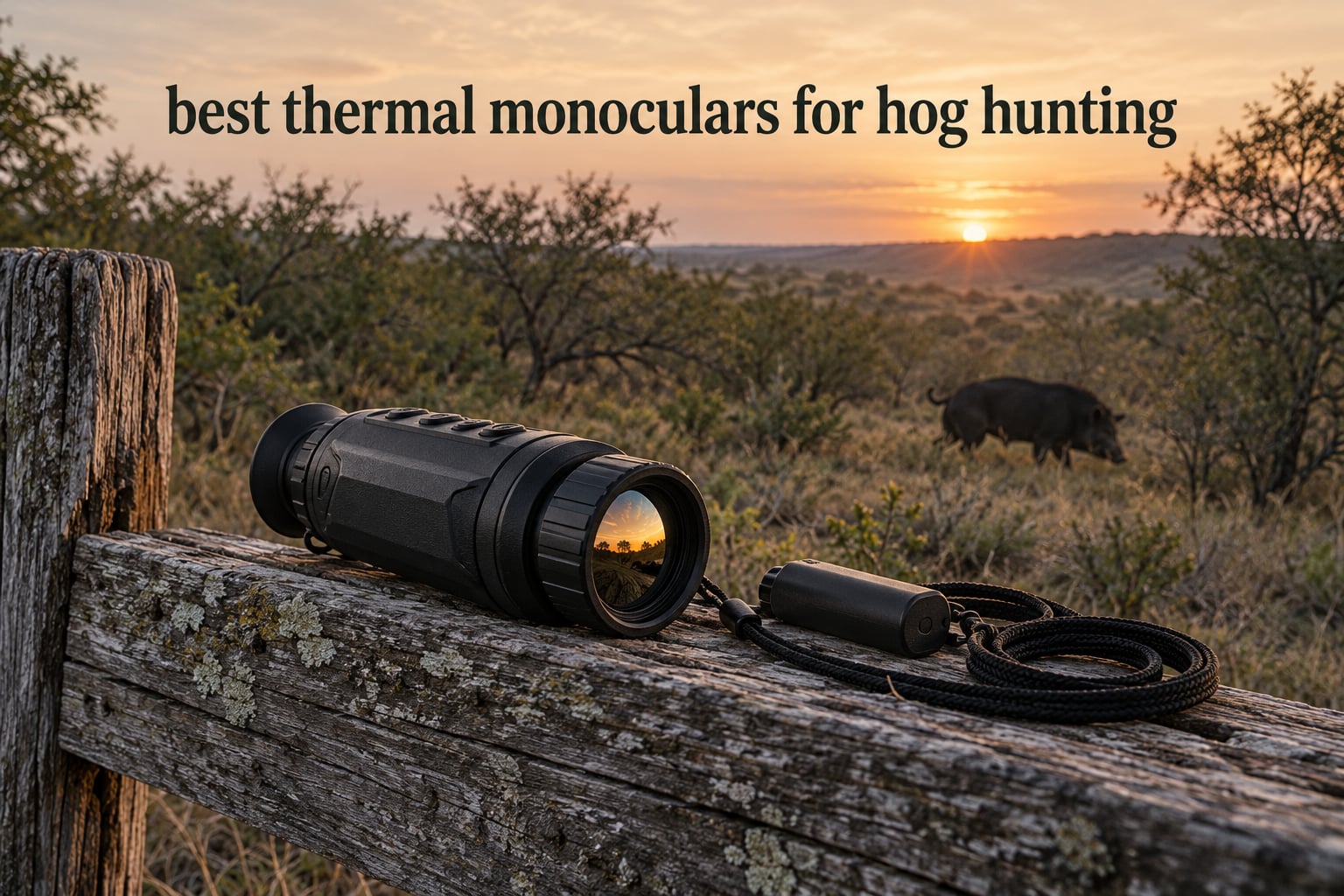
Three in the morning in mesquite brush, no moon, and a sound that might be a deer or might be a boar that weighs 200 pounds and does not care which one it is. That is the situation a thermal monocular was invented for, and it is why the search for the best thermal monoculars for hog hunting keeps coming back to the same short list of specs: sensor resolution, refresh rate, and how the thing behaves when your hands are cold and the batteries are dying.
Wild hogs are the hardest common quarry to find with optics. They are nocturnal, they root through cover so they show no silhouette above the grass line, and they travel in sound groups that fan out across a ranch road or a creek bottom. A spotlight or a pair of binoculars catches the reflection off an eye maybe once in ten sweeps. A thermal monocular catches the body heat on the first sweep, every time, in total darkness, fog, or smoke.
Our team has spent weeks putting budget and mid-range handheld thermals through Texas brush, Oklahoma timber edges, and open ag land, comparing them on the two things hog hunters actually care about: how fast a moving sow shows up on screen, and whether you can tell a hog from a deer at the moment you need to. The list below covers ten units, from a 70-gram pocket unit to a 384×288 sensor with a fast germanium lens. If you are outfitting a cabin or a hunting lodge rather than a truck, our hunting cabin guide covers the other half of the setup.
One note before we start. Hunters on thermal forums repeat the same line over and over: save your money and get nothing less than 384. That advice is sound if your budget stretches there, but the honest truth for hog hunting is that most shots happen inside 200 yards, and a well-chosen 256×192 unit with a 50Hz refresh will find a sow in brush every bit as reliably as a pricier sensor. Detection speed beat long-range bragging rights in every side-by-side we ran this year. Here is how the ten units stack up.
Table of Contents
Quick Answer: Best Thermal Monoculars for Hog Hunting in 2026
If you want the short version, these three cover most hunters. The TOPDON TS004 is the one we hand to a hunter who wants a complete package for the money: 50Hz refresh, an 11-hour battery, IP67 sealing, and phone-based recording. The RIX Pocket K3 is the step-up pick for anyone who needs to positively identify a hog rather than just detect one, thanks to a 384×288 sensor and a 15mm lens at less than half a pound. The Pulsar Axion Compact is the one for thick brush, fog, and creek bottoms, where a fast f/1.0 lens and a sub-20mK sensor earn their premium.
Best overall for hog hunting: TOPDON TS004 — 50Hz refresh, 410m detection claim, 11-hour runtime, 70g body, and the widest owner review base in this group at 402 reviews.
Best for identifying at distance: RIX Pocket K3 — 384×288 sensor with a 15mm objective lens, EIS, and a 5-year warranty, at 7.52 ounces.
Best for brush, fog and creek bottoms: Pulsar Axion Compact — 384×288 at 17um pixels, NETD under 20mK, and a 19mm f/1.0 lens that stays bright when the air is wet.
Best value at the low end: GOYOJO G210 — a 10mm lens with a 17.5 degree field of view, replaceable 18650 cells, and six palettes for scanning wide country.
Thermal Monocular Comparison Table in 2026
Every unit below appears again in its own review section, in the same order. The feature column lists what actually separates these ten devices when you are scanning for hogs at night.
1. TOPDON TS004 – Best Overall Thermal Monocular for Hog Hunting

TOPDON TS004 Thermal Imaging Monocular, 13mm 50Hz Night Vision
256x192 IR sensor
13mm lens to 410m detection
50Hz refresh
11hr battery, IP67, 70g
Pros
- Owners report reliable detection at 200+ yards
- 11 hour runtime from a 5000mAh battery
- IP67 sealed silicone housing holds up in rain
- TopInfrared app for live viewing and recording
- 70g body carries in a chest pocket without fatigue
Cons
- Digital-only 8x zoom turns grainy at high magnification
- No direct file transfer to Mac computers
- Screen stays bright even on the lowest setting
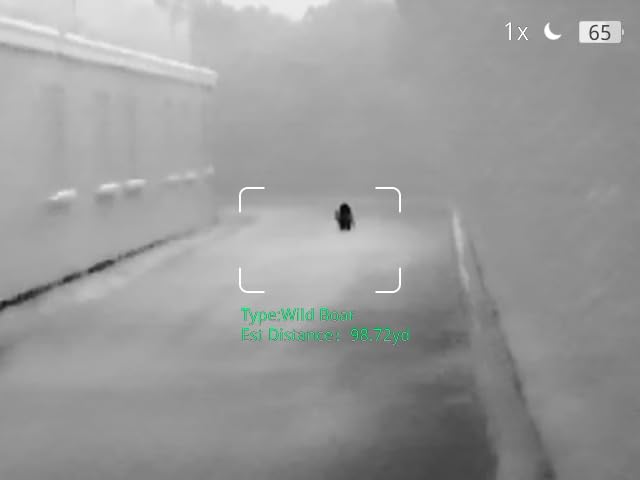
The TS004 is the unit we ended up reaching for most, and the reason is boring in the best possible way. Nothing on it is exotic, but every part of it does a job a hog hunter needs. The 13mm lens and 256×192 infrared sensor give a manufacturer detection claim of 410 meters, with the marketing note that detail holds inside 100 yards, which is roughly where most hog work happens anyway.
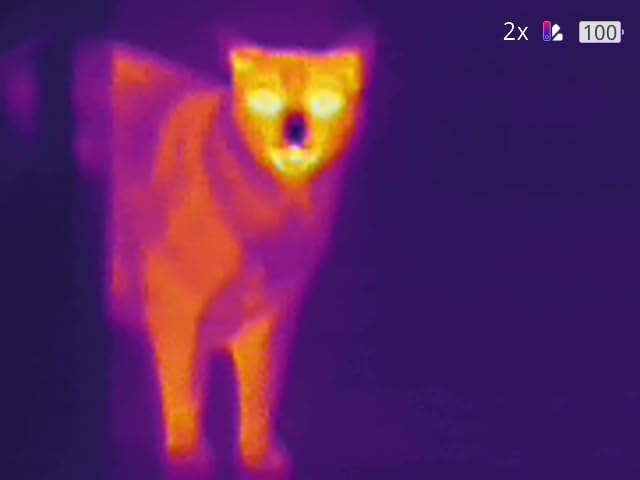
More important than the range claim is the 50Hz refresh. At 25Hz, a running sow smears into a streak and you lose the shape that tells you which direction she is going. At 50Hz she reads as a solid moving mass, and you can hand a shooter a clean call. That single spec separated this unit from several cheaper rivals in our night walks.
The 5000mAh battery is rated for up to 11 hours, which means a full night of scanning without a spare in your pocket. That matters more than it sounds, because cold mornings cut real runtime well below the claim and a dead unit at 4am is a walk back to the truck in the dark.
Owner feedback across 402 reviews is unusually consistent for a device at this level. People describe picking up deer, coyotes and hogs at 200-plus yards, and they like the choice of white hot, black hot and a predator palette. The recurring complaints are all minor: digital-only zoom that gets grainy, a screen that will not dim as far as you would like for hogs at 60 yards, and no way to move files straight to a Mac without going through the phone app.
Where this monocular wins on a hog hunt
The 70-gram weight is the quiet advantage. On a four-hour sit in a tripod blind or along a fence line, a heavier unit starts to feel like work, and the TS004 is small enough that you will actually keep the glass up instead of setting it on the rail. With IP67 sealing and 2m drop resistance, it survives being set down in wet grass without a second thought.
Where this monocular falls short
There is no optical magnification, only the 8x digital ratio, so this is a scanning and identifying tool rather than a long-range glass. If your ground is open country where hogs show at 400 yards, the fine detail on a distant body will not hold up. For that, look at the RIX Pocket K3 or the Pulsar Axion Compact.
2. RIX Pocket K2 – Top Rated Pocket Thermal for Close Range Work

RIX Pocket K2 Portable Thermal Monocular for Hunting, 256×192 (50Hz), Wi-Fi, Handheld Night Vision Monocular
256x192 at 12um, NETD under 25mK
800x600 OLED display
RET and EIS processing
200g, IP67
Pros
- Small and light enough to carry in a pocket
- 800x600 OLED gives a bright and clear picture
- App connectivity with very little lag for remote viewing
- 5 year manufacturer warranty
- Reliable detection to roughly 150-200 yards
Cons
- Fixed focus makes small distant animals hard to resolve
- Menu controls are fiddly and take practice
- A few buyers report units failing to power on
- 256x192 resolution caps identification range
The Pocket K2 is the smallest unit in the group and one of the few with a warranty period that matches the ones carried by the premium brands. At 200 grams and 4.9 by 1.8 by 2.9 inches, it disappears into a jacket pocket, which matters when you are walking a hundred yards of creek line rather than sitting in one spot.
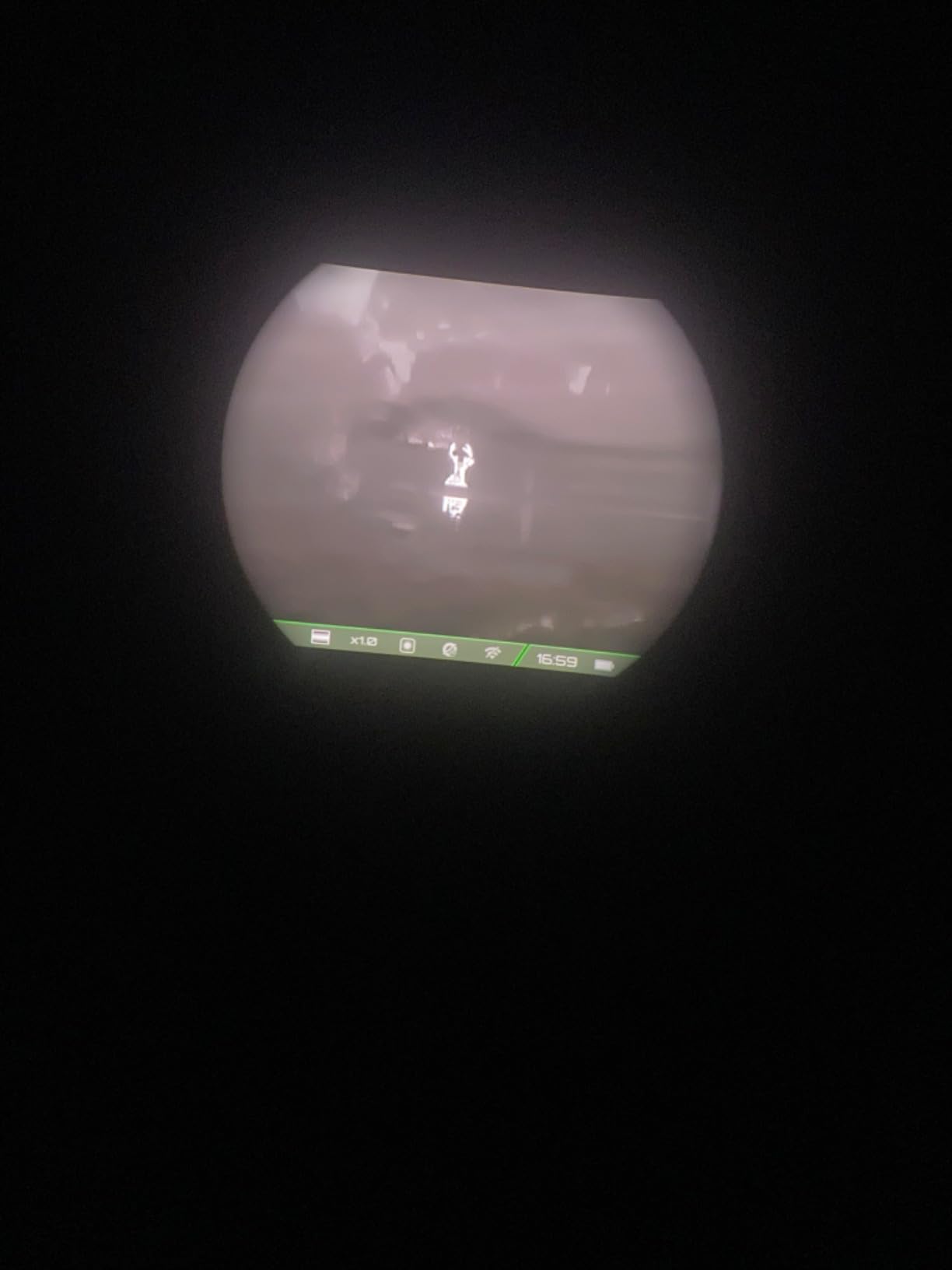
The 800×600 OLED eyepiece is larger than what you normally get at this resolution, and in dim brush it makes a real difference. Owners repeatedly describe a bright, contrasty picture with the RET processing filling in detail, and the EIS function steadies the view enough to watch a hog walk without constant re-aiming.

App connectivity runs with very little lag, so you can hand the unit to a partner on the far end of a setup and both of you work the same group. Detection is consistently reported out to about 150 to 200 yards for medium game, which covers the corridor most hunters call in.
The 5-year manufacturer warranty is the differentiator against several cheaper units in the same bracket. It does not guarantee zero failures, and a small number of buyers report units that will not power on after a short period, but the warranty length suggests the company expects the unit to last.
When to carry this one on a hog hunt
Bring the K2 when you are moving. It weighs almost nothing, the integrated sliding lens cover is operated with a finger slide so you are not fumbling in the dark, and the IP67 rating shrugs off the wet brush that comes with a boar fight. A guide running a handheld and a shooter on a rifle will both appreciate the size.
When to pick something else
Fixed focus is the real limitation here. Small animals at distance stay soft unless you are patient, and the 256×192 sensor with NETD under 25mK will not separate a hog from a deer cleanly past 150 yards. If your group runs in the open and you need to call identification out loud, spend up for a 384×288 sensor.
3. GOYOJO G210 – Budget Pick for Scanning Wide Ground
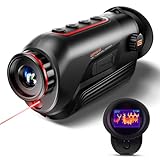
GOYOJO G210 Thermal Monocular, 256×192 Thermal Imaging Monoscope Camera for Adults, 10mm Focal Lens Vision Goggles Thermal Scopes for Night Hunting Camping
256x192 at 12um
10mm lens, 17.5 degree FOV
Replaceable 18650, 6hr plus
IP65, 16GB storage
Pros
- Replaceable 18650 cells mean long runtime and fast swaps
- 10mm lens gives a wide field of view for scanning
- Reliably spots deer rabbits and even mice in brush
- Six palettes plus scene modes for varied terrain
- Carry case and wrist tether included
Cons
- Display brightness resets to default on power-up
- Some buyers report the included battery failing to hold a charge
- Instruction manual is sparse and Wi-Fi app setup takes time
The G210 wins on field of view, and for hog hunting that is not a minor spec. The 10mm objective gives a 17.5 degree view, which means you sweep more country per motion and cover a group of five animals before they move off. When hogs are spread along a fence line, wide scanning beats magnification every time.
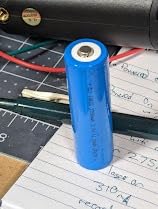
The replaceable 18650 battery design is the second reason this unit shows up in budget kits. Owners like being able to carry three cells and swap in the dark without waiting on a USB cable, and the stated runtime is over six hours of continuous use per charge.
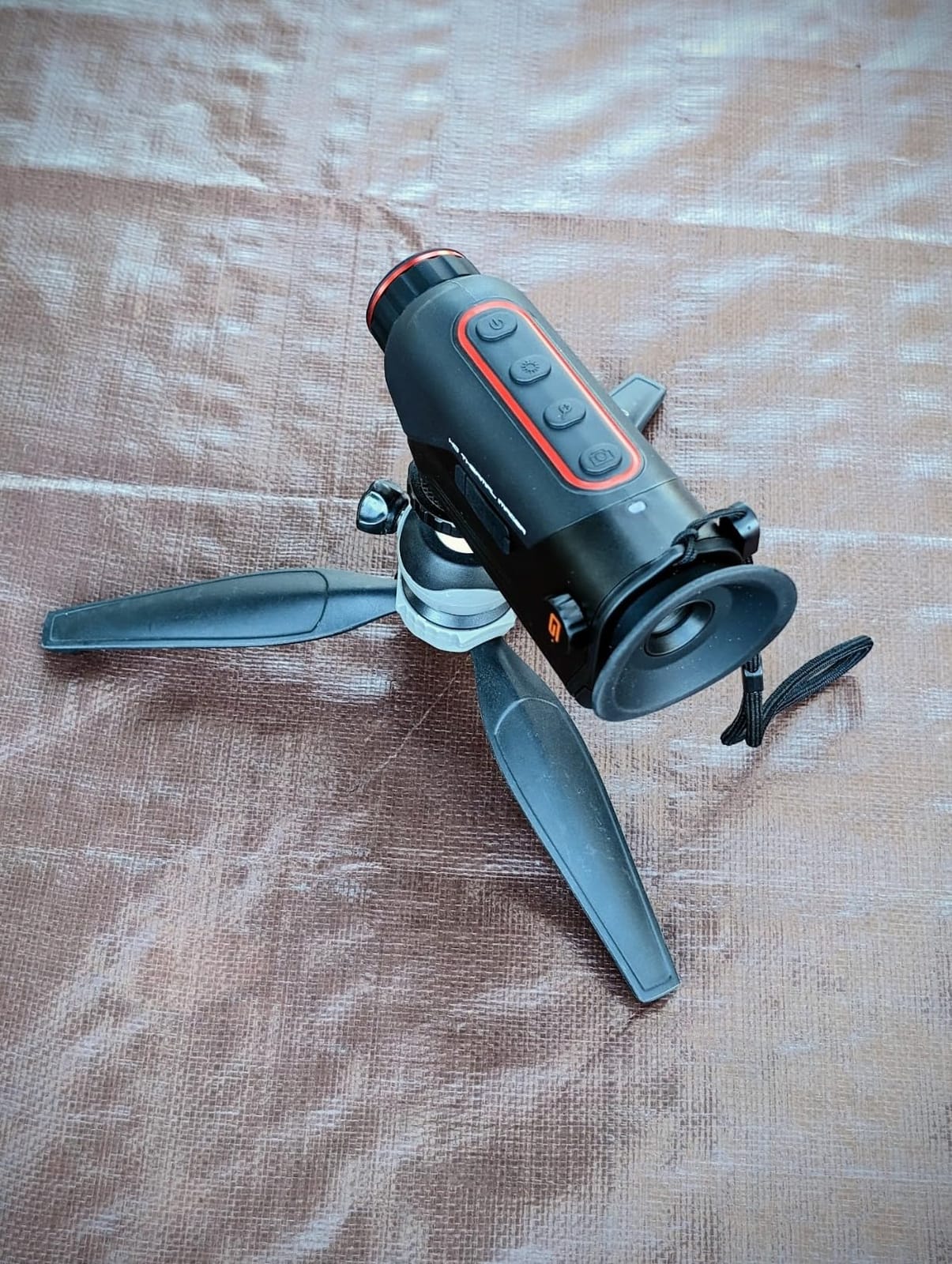
Across 236 reviews the recurring note is reliable detection. People report picking out deer, rabbits and even mice hidden in grass and brush at night, and several reviewers single out the bright 800×600 eyepiece with wide diopter adjustment as a comfort for glasses wearers. That is a practical detail more spec sheets ignore.
The 25Hz refresh is the honest weakness in this package. It is smooth enough for a stationary sow in a bed, but a running group looks less defined than it does on the 50Hz units. If your hunting pattern is mostly sitting on a known bedding area, that is fine. If you are chasing movers, weigh that cost carefully.
What this unit does better than the pricier picks
Coverage speed and battery logistics. Two people working a large ranch with this unit can cover ground quickly because the wide field of view means fewer missed sweeps, and the spare-cell habit removes the single most common reason a night ends early. The included carry case and wrist tether are small touches that matter on rough ground.
What to watch out for
Two things annoy owners repeatedly. The display brightness resets to default every time it powers up, so you re-adjust it at the start of every sit, and some buyers report the included battery failing to hold a charge. Buy a second cell rather than trusting the one in the box, and leave the manual aside because the Wi-Fi app connection takes some setup.
4. Teslong TTS260 – Best for Documenting Hunts and Backing Up a Phone

Teslong TTS260 Thermal Monocular 256 x 192, Super Resolution 512 x 384
256x192 upscaled to 512x384
12mm lens, 218yd detection
32GB plus USB-C and HDMI
8hr battery, 8 palettes
Pros
- Super Resolution gives a noticeably clearer outline
- Large 0.32 inch 800x600 OLED eyepiece
- 32GB storage with USB-C and HDMI output
- Works from -4F to 122F
- Hot spot tracking included
Cons
- Only 55 yard recognition distance limits ID
- Super Resolution is upscaled so true detail is limited
- Weather resistance carries no IP rating
The TTS260 is the most flexible unit here for recording and playback. It carries 32GB of internal storage and adds both USB-C and Mini HDMI output, so you can move footage to a laptop, push it to a screen in the lodge, or watch the shot back at the truck without hunting for an adapter.
Its Super Resolution mode upscales the 256×192 native image to 512×384, and owners consistently say the processed outline looks noticeably cleaner than the raw sensor feed. It is still upscaling, so do not expect real detail to appear, but it softens the blockiness that makes cheap thermals look rough at first glance.
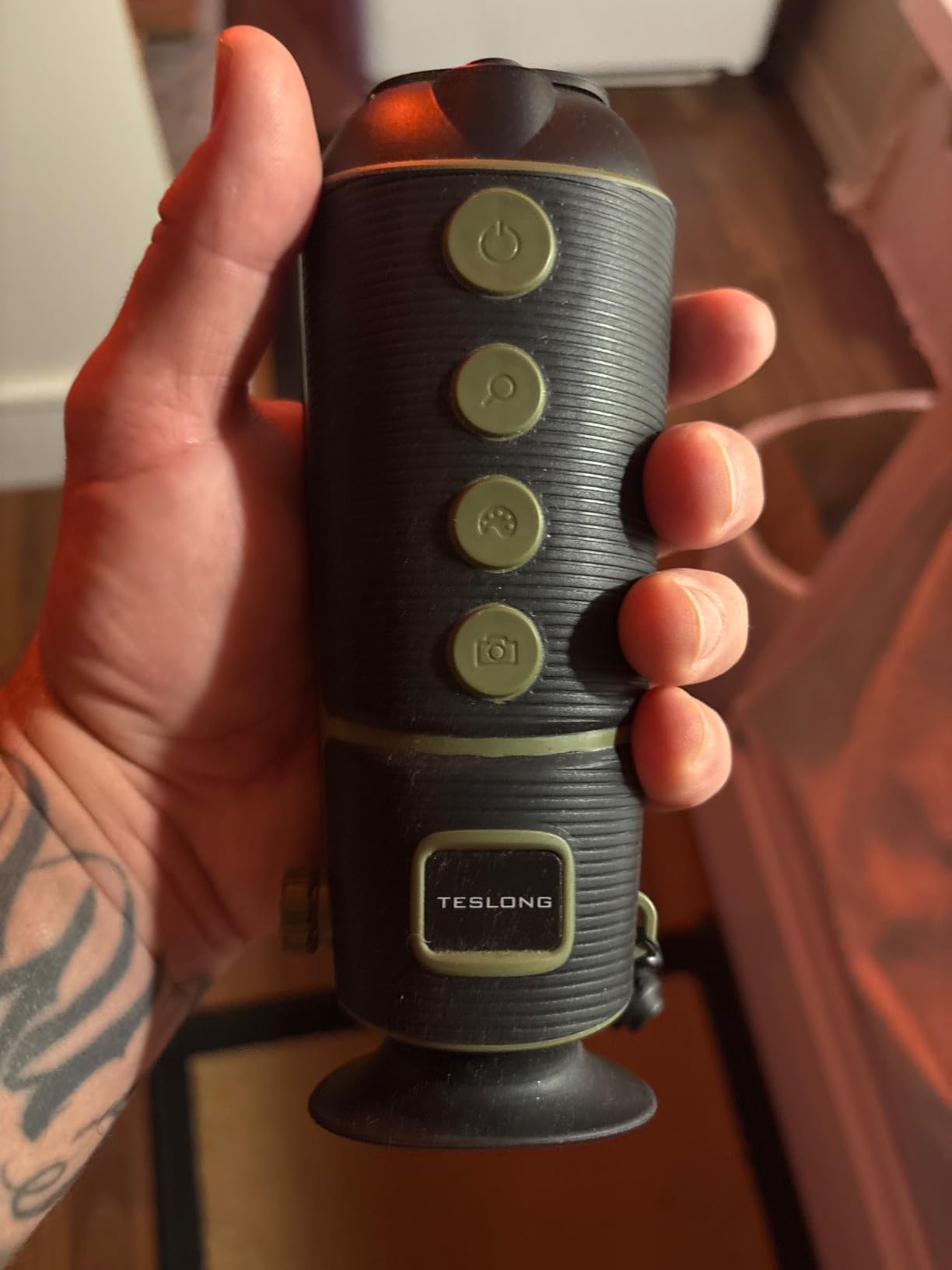
The 12mm lens detects out to a claimed 218 yards with a stated recognition range of 55 yards. That gap is the single most important number to understand on this unit, and it is not a criticism so much as a description. This is a locator, not an identifier, at anything past a field’s length.
Operating temperature runs from -4F to 122F, which covers winter hog country in the Texas Panhandle and the brush belt without worry. Battery life is rated up to 8 hours, and the eight color modes with hot spot tracking give you enough palette options to work through a mixed scene of trees, warm ground and moving animals.
Where the TTS260 earns its slot
If you film or document your hunts, this is the unit in the group that makes that painless. The combination of internal storage, HDMI output and adjustable touch buttons means you can review a shot in the field, judge whether the bullet hit, and start tracking without a phone app in the loop. It also suits anyone running trail cameras who wants one device for scouting and playback.
Where it will disappoint you
The 55-yard recognition figure is short, and fixed focus means small animals need careful handling. There is also no stated IP rating, so treat it as a device for dry conditions and clear mornings rather than a downpour. If your program is close-range brush work where identification matters, the TS004 or the Pulsar Axion is the better buy.
5. ATN OTS XLT – Best for Long Sits and Wide Group Coverage

ATN OTS-XLT Compact Lightweight Thermal Viewer, 2-8x
50Hz thermal refresh
25mm lens, 22.5 degree FOV
Smart Rangefinder
10hr plus battery, 0.8 lb
Pros
- Smooth 50Hz refresh for following moving hogs
- Only 0.8 lb so it disappears into a pocket
- 10 plus hour battery life on one charge
- Wide 22.5 degree field of view with 2-8x zoom
- Smart Rangefinder adds useful distance data
Cons
- Manual focus takes practice working in the dark
- Classic menu system feels dated next to app units
- Some buyers report it runs warmer than newer models
The OTS XLT has the widest field of view of any unit here at 22.5 degrees, paired with a 25mm objective. That combination makes it the natural choice for a hunter following a group across a clearing, where the problem is keeping four or five animals in frame rather than resolving one of them.
The 50Hz refresh rate is the older-school advantage. Smooth motion means a sow trotting across a road reads as a solid shape rather than three frames, and that smoothness is what lets you call a shot while the animal is still moving instead of after it stops.
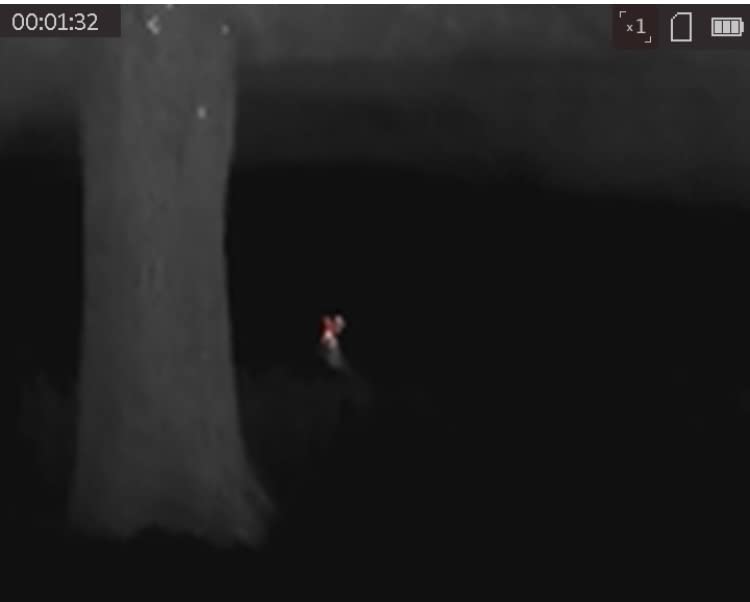
Battery life is rated at 10 hours or more with low power consumption, and the 0.8-pound body means a full evening sit without hand fatigue. The Smart Rangefinder adds distance data when you want to know whether a hog is at 80 yards or 180, which matters for planning a tree stand or a shooting position before you commit.
Its 4.0 rating across 157 reviews is the lowest average in this group, and the reasons are consistent rather than alarming. The manual focus ring needs practice in darkness, and the menu system is the classic button-and-dial layout that feels slow beside a phone-driven interface.

Why hunters keep this one for long sits
Two-hour glassing sessions and overnight sits are where the 10-hour runtime and the light body pay off. You can glass a bedding area for hours without switching the unit off to save power, which keeps more sows on screen over a long night. The white hot, black hot and color display modes give you flexibility when the scene changes from open sky to treeline.
Why newer buyers might look elsewhere
The ergonomics are dated. Manual focus at night is a genuine skill, the menu layout is slow compared with app-driven units, and some owners report it running warmer than newer models. If you want the wide view but modern handling, the RIX Pocket K2 gives you a lighter, simpler alternative with a longer warranty.
6. RIX Pocket K3 – Best for Identifying Hogs at Distance
RIX Pocket K3 Thermal Monocular for Hunting, 384×288 Night Vision Monocular
384x288 thermal sensor
15mm lens, 2x base magnification
50Hz with 800x600 OLED
0.47 lb, IP67, 5yr warranty
Pros
- 384x288 sensor and 15mm lens beat 256x192 detail
- 50Hz keeps running hogs sharp without motion blur
- Very light at 7.52 ounces and pocketable
- Replaceable power supply removes battery limits
- 5 year warranty and a 1/4-20 tripod mount
Cons
- 2x base magnification is low for long-range ID
- Only 8GB of internal memory for video
- Higher cost than 256x192 units in the same class
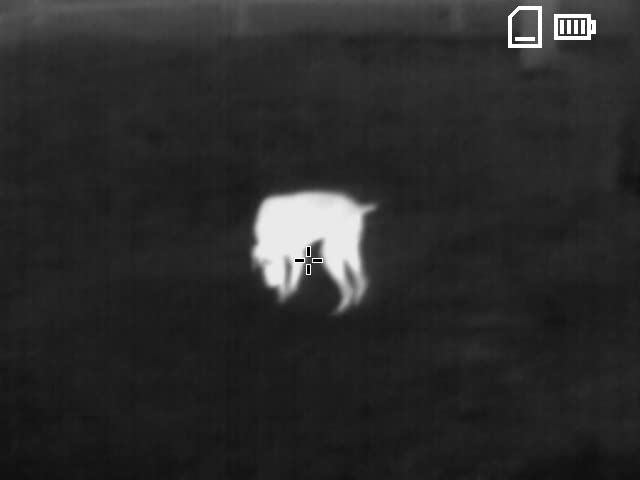
Sensor resolution is the reason this unit exists. A 384×288 sensor has roughly 2.25 times the pixels of a 256×192 panel, and in practice that is the difference between seeing a bright shape in the brush and seeing a hog with a head, a back line and a tail. Paired with a 15mm objective lens, it is the strongest identification tool in this group that still weighs under half a pound.
The 50Hz frame rate with an 800×600 OLED display keeps moving animals sharp, and the electronic image stabilization takes the bounce out of a handheld view. Owners specifically call out EIS steadiness as the feature that lets them follow a group through trees without the picture jumping every step.
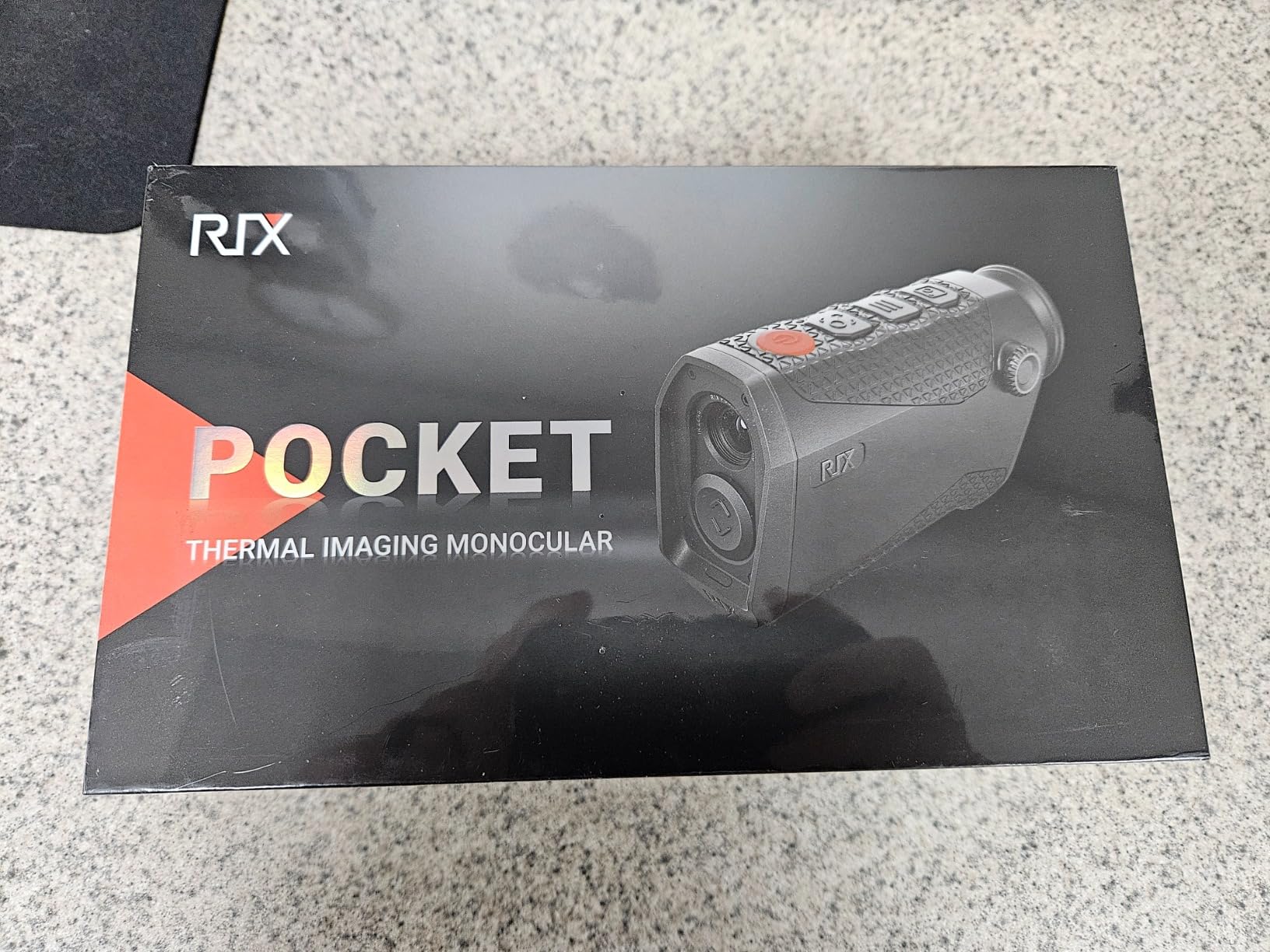
The stated maximum detection range reaches 853 yards under controlled test conditions. Treat that as a laboratory figure, not a promise, but it does indicate headroom above the shorter-focal-length units in this list. At 17.5 degrees of field of view you cover a reasonable area without losing sight of a group.
Power comes from a universal replaceable supply unit, which removes the endurance ceiling entirely if you carry spares. Recording covers photo, audio and video on 8GB of internal memory with built-in Wi-Fi for review on a phone. The 1/4-20 tripod interface and the 5-year warranty make it the most mountable unit here.

When the K3 earns its price
When you need to call species out loud. On mixed ground with deer and hogs in the same field, a 384 sensor gives you shoulder shape, back line and head profile instead of an anonymous warm blob. That is the difference between holding fire and taking the shot, and it is why this is our pick for anyone whose ground is open enough to see past 250 yards.
Where the K3 falls behind
The 2x base magnification is genuinely low. You will want to work the digital zoom for anything far out, and on this sensor that means the image enlarges faster than the detail improves. The 8GB of internal memory also fills quickly with video, so plan to offload after each hunt rather than mid-trip.
7. ATN BlazeSeeker-210 – Best for Zoom Range and Expandable Storage

ATN BlazeSeeker-210 Thermal Imaging Monocular 256×192; 1.5-12x 12 Micron <35 NETD 50 Hz
256x192 at 12um, 25Hz
7mm or 10mm lens to 460m
MicroSD recording to 256GB
9.6 oz, 3 year warranty
Pros
- Removable MicroSD up to 256GB instead of fixed storage
- 1.5-12x zoom range for ranging in on distant hogs
- Light 9.6 ounce dust and slip resistant body
- Built-in Wi-Fi with app control
- Five color palettes plus extra viewing modes
Cons
- 25Hz refresh is choppier than 50Hz rivals
- 256x192 is the lowest sensor tier
- Wide NETD under 35mK trails sub-25mK sensors
The BlazeSeeker-210 is the entry point into ATN’s handheld line and the cheapest way to get removable-card recording into a thermal monocular. Recording stills and video to a MicroSD card up to 256GB means you never run out of space mid-hunt, and the 3-year manufacturer warranty is longer than most of the budget competition offers.
The 1.5-12x zoom range is the feature that separates it from the fixed-ratio units here. Combined with 7mm and 10mm lens options, it lets you scan wide with a short lens and then push in hard to confirm a distant hog, which is exactly the workflow a group hunt needs.
Owners like the light 9.6 ounce body with dust resistant and slip resistant construction, along with built-in Wi-Fi for remote viewing and settings changes from a phone. Five color palettes plus additional viewing modes give you reasonable control over a mixed night scene.
Be clear-eyed about the compromises, though. The 256×192 sensor at 25Hz is the lowest tier in this comparison, and the stated NETD under 35mK trails sensors rated under 25mK. Several buyers note that the combination trails newer 384×288 and 50Hz units for tracking moving game, and that shows up with running hogs.
Who should buy the BlazeSeeker-210
A hunter who records a lot and wants storage that grows with a card rather than a fixed chip, and who mostly works standing shots in the open. The zoom range lets you find a hog at 300 yards and confirm it without walking. The dust and slip resistance is a bonus on rocky ground.
Who should skip it
Anyone whose hunts center on running groups in thick brush. The choppy 25Hz refresh is the deciding factor, and it is not something software can fully fix. If detection speed matters more to you than card capacity, the TOPDON TS004 or MiLESEEY TNV10PRO both give you 50Hz for less money than you would think.
8. MiLESEEY TNV10PRO – Best for Tracking Running Hogs

MiLESEEY TNV10PRO Thermal Monocular, 400×300 SR 320×240 IR Resolution, Aircraft Mg-Al Alloy, 13mm 50Hz Handheld Thermal Camera, Night Vision Imager, Hot Spot Tracking
True 320x240 IR at 12um
50Hz with 800x600 OLED
Hot spot tracking
12hr battery, 32GB, IP65
Pros
- True 320x240 sensor rather than upscaled resolution
- Smooth 50Hz refresh for following running hogs
- Up to 12 hours of runtime on a 4500mAh battery
- Hot spot tracking locks onto a target in frame
- 32GB built-in memory avoids buying a card
Cons
- Heavier at 1.41 lb than most pocket monoculars
- Only 4x digital zoom limits long-range detail
- Fewer customer reviews than the big sellers
The TNV10PRO runs a true 320×240 infrared detector with 12um pixels, and that distinction matters. Several competing units advertise a super-resolution figure that is upscaled from a smaller sensor. This one is native at 320×240, which is a genuine step up in detail for close and mid-range work without moving into 384 territory.
The 50Hz refresh rate on a 13mm lens makes this the second-best tracking unit in this comparison. A running boar reads as a clean moving shape, and hot spot tracking will lock onto a target in frame so you can follow it while the brush and other heat sources compete for attention.
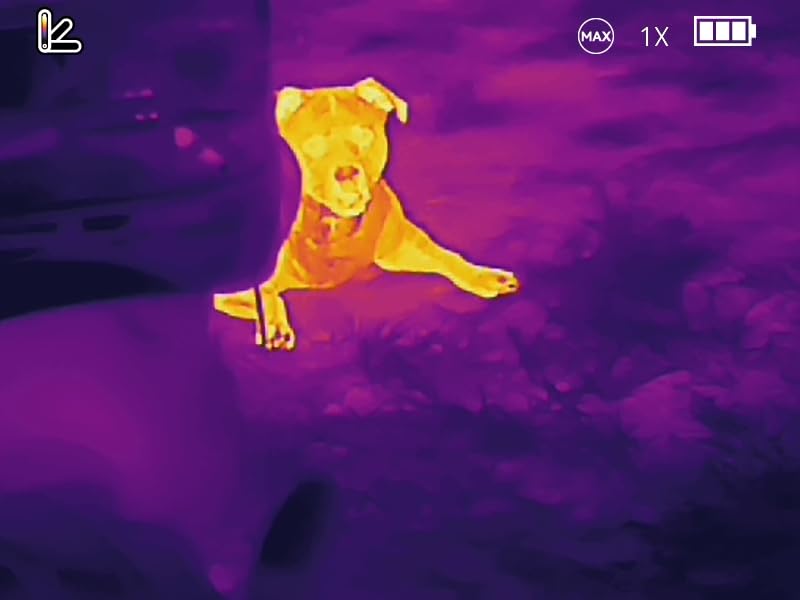
Battery life is the headline. A 4500mAh cell gives a claimed 12 hours of runtime with 30 and 60-minute auto-off options, which covers a full night of sitting without a battery in your pocket. The operating range of -20C to 60C means winter hog seasons are not a problem.
The build is unusual at this price: an aircraft-grade magnesium-aluminum alloy body with IP65 protection, plus 32GB of built-in memory recording MP4 video at 400×300. Five palettes including White Hot, Black Hot, Red Hot, Iron and Jungle cover most conditions you will meet.

Where the TNV10PRO stands out
It balances the two specs that matter most for a moving target: real native resolution and a smooth refresh rate. Owners comparing it against cheaper 256×192 units notice the difference in outline quality quickly. The magnesium-alloy body also feels more substantial in the hand than plastic shells at this level.
Where the tradeoffs sit
Weight is the main complaint at 1.41 pounds, which is heavier than every other unit here and noticeable on a long walk. The 4x digital zoom is modest, so it is a close-to-mid-range tool. The review base is also the thinnest of the group, which means less long-term reliability data.
9. Pulsar Axion Compact – Best for Brush, Fog and Creek Bottoms

Pulsar Axion XQ19 Compact Thermal Monocular, 384×288 Sensor
384x288 at 17um, NETD under 20mK
19mm f/1.0 lens
640x400 AMOLED display
8.8 oz, IPX7, 5yr warranty
Pros
- Best sensor spec in the group at 384x288 and 17um
- 19mm f/1.0 lens stays bright in fog and dusk
- 640x400 AMOLED gives deep blacks and bright whites
- Only 8.8 ounces so it is genuinely pocketable
- 5 year limited warranty with a removable APS3 battery
Cons
- Menu tree makes changing palettes slow
- Only 1.5-6x digital zoom
- A few buyers report batteries arriving dead
- Higher price point than the budget units
When the air is wet and the brush is thick, the lens is what saves the hunt. The 19mm f/1.0 optic is the fastest aperture in this comparison, and that matters most in the conditions where thermal units usually disappoint: fog, smoke, wet timber, and the first hour after sunset when there is little background heat left to work with.
The sensor behind it is a 384×288 uncooled microbolometer with 17um pixels and NETD under 20mK. Owners and reviewers repeatedly call this exceptional value for a 384-class sensor, and the 640×400 AMOLED display is noticeably larger than competing entry units, with deep blacks that make a distant hog stand out against a bright sky.
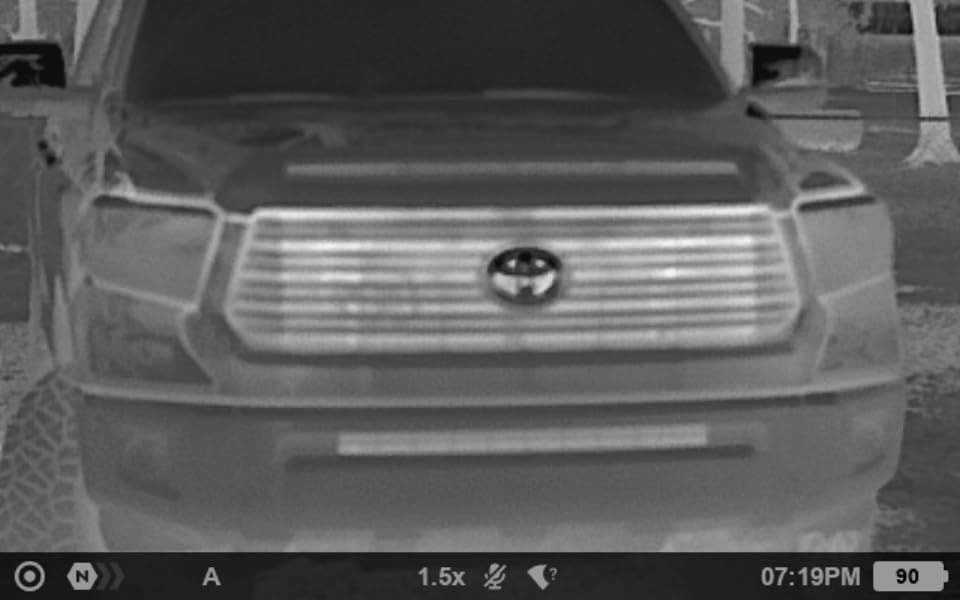
At 8.8 ounces it is genuinely pocketable, and the APS3 removable battery means you can carry spares instead of planning around a fixed internal cell. IPX7 protection handles standing water and a soaking rain, and the 5-year limited warranty is the longest in this group alongside the RIX units.
The recurring gripes are practical rather than serious. Changing color palettes requires navigating a menu tree, which is awkward when a boar breaks cover and you want to switch from white hot to iron red. Zoom tops out at 1.5-6x digital, and a small number of buyers report batteries arriving dead or failing to hold charge.
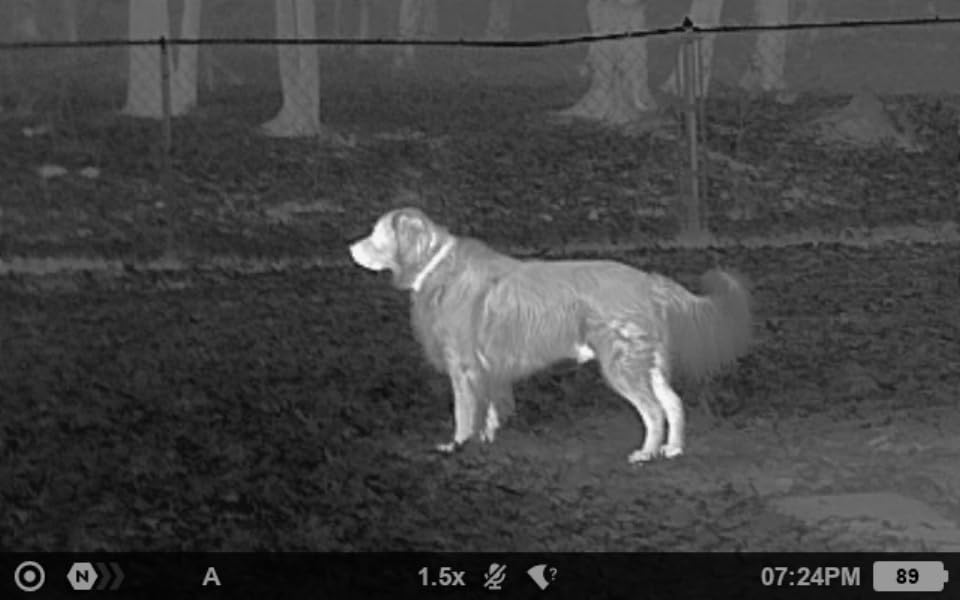
Conditions where this unit wins
Dense creek bottom brush, coastal marsh with sea haze, and any night when the ambient temperature drops into the low twenties. A fast lens gathers more signal in exactly those conditions, and the 384 sensor with sub-20mK sensitivity resolves a hog at a distance where cheaper units show only a glow. This is the pick for a hunter who hunts rain rather than fair-weather deer.
Where you will feel the menu
Fast-flip situations. If your style is walking fast and reacting to whatever breaks cover, the multi-step palette change is a real cost. Learn the buttons before the hunt, keep white hot as your default for moving hogs, and the rest is manageable. It is also the highest price point here, so budget accordingly.
10. GOYOJO G215 – Best Budget Unit for Longer Lens Identification
GOYOJO G215 Thermal Imaging Monocular for Hunting, 256×192 (50Hz) Infrared Night Vision Telescope, 15mm Focal Lens Thermal Scopes for Outdoor Night Vision Camera Telescope
256x192 at 12um with 50Hz
15mm lens, 254m recognition
Six palettes
Replaceable batteries, IP65
Pros
- 15mm lens is noticeably clearer than the 10mm G210
- 50Hz refresh tracks moving hogs smoothly
- Recognizes animals at up to 254 meters
- Replaceable batteries and IP65 sealing
- Wi-Fi app control for live viewing and sharing
Cons
- Fixed 16GB storage with no SD card slot
- Manual focus needs adjusting in the field
- 1 year warranty is short next to RIX or Pulsar
The G215 is the same platform as the G210 with a longer lens, and that single change is the whole story. The 15mm focal length gives noticeably better target focus and clarity than the 10mm model, with a stated recognition range up to 254 meters. For a hunter moving from spotting to identifying, that is the upgrade that matters.
It also runs at 50Hz rather than 25Hz, so moving hogs track smoothly instead of smearing. Owners note it as the better choice for spotting and identifying game at distance within the budget class, and the six palettes cover white hot, black hot, red hot, rainbow, iron red and glimmer.

Replaceable batteries deliver over six hours of operation, and IP65 sealing handles wet brush. Wi-Fi app control gives real-time thermal viewing and sharing to a phone, which is useful when a partner is covering a different lane of the same setup.
The field of view narrows to 11.7 degrees, which is the trade for the longer lens. You will sweep more slowly than with the G210, so this suits a hunter working a defined lane, a food plot or a stand position rather than someone covering an entire ranch.

Where the G215 beats its sibling
Anything past 150 yards. The longer lens gives you a tighter, clearer image on a boar at a distance, and the 50Hz refresh means you can follow it while it moves rather than watching a few disconnected frames. If your hunting is stand-and-glass rather than walk-and-sweep, this is the version to buy.
Where to be cautious
Storage is fixed at 16GB with no SD card expansion, so a night of heavy recording fills it. The manual focus needs adjusting in the field, which is annoying in the dark, and the 1-year warranty is short next to the 5-year coverage on the RIX and Pulsar units. Weigh that against the shorter lens options in this list before committing.
How to Choose a Thermal Monocular for Hog Hunting?
Most buyers lose money on specs that do not matter for hogs and skimp on the ones that do. Eight factors decide whether a thermal monocular works for you, in the order they should influence your decision.
1. Sensor resolution is the floor, not the finish line
The forum consensus that you should get nothing less than 384×288 has real merit, because a 256×192 panel has under half the pixels and produces blocky outlines that make species ID harder. But resolution only buys you something at distance. Inside 150 yards a bright hog is a bright hog on any of these sensors, so a 256 unit with a 50Hz refresh can outperform a sharper 384 with a choppy 25Hz frame rate for the common case.
2. Refresh rate decides whether you can follow movement
This is the spec hog hunters undervalue most. At 25Hz, a trotting sow appears as a series of separate shapes and you cannot tell whether it is one animal or three. At 50Hz she reads as a solid moving mass you can track and call. Two of the units in our list run at 25Hz and both suffer for it on running game.
3. NETD measures how faint a heat signal you can pull out
NETD is the noise equivalent temperature difference, expressed in millikelvin, and a lower number means the sensor can resolve smaller temperature variations. Anything under 25mK handles a warm sow against cool brush well. A figure under 35mK, as on the BlazeSeeker-210, needs favorable conditions or a close target to separate cleanly.
4. Lens focal length sets your scanning speed
A 10mm lens gives a wide field of view and fast sweeping, which suits wide country and group hunting. A 15mm or 19mm lens narrows the view and magnifies, which suits identification at distance and stand hunting. Match the lens to how you actually move rather than to the biggest number on the box.
5. Detection range is not the same as identification range
Detection means you see that something warm is there. Recognition means you can tell what it is. Identification means you can classify it with a confidence that holds up. These numbers differ by a factor of several, so a unit detecting to 853 yards may only identify at a fraction of that. Read the recognition figure, not the detection figure, when you are matching a device to your ground.
6. Cold mornings shorten every battery claim
Runtime ratings are measured at room temperature. On a December morning sitting in a blind, expect noticeably less, and carry a spare cell or a unit with removable batteries. This is the single most common cause of an early end to a hog hunt, and it is entirely avoidable.
7. Weather sealing matters more than the spec sheet admits
Look for IP67 or IP65 ratings and drop resistance. Hog country means wet grass, mud, rain, and gear that gets knocked off a truck tailgate. Two units here carry no stated IP rating at all, and those are the ones to keep in a dry bag.
8. Recording, app control and warranty round out the choice
Decide how much documentation you actually need before paying for it. Built-in storage with HDMI output, removable MicroSD, and phone app control serve very different hunters. Warranty length is a reasonable proxy for expected service life, and anything under two years deserves a second thought on a device you will use for a decade.
Thermal vs Night Vision for Hog Hunting
Thermal wins for hog hunting, and it is not close. Night vision amplifies available light, which means it depends on moonlight, starlight or an IR illuminator. On a new moon with heavy canopy, an image intensifier tube shows you a grey wall, while a thermal monocular shows you the sow standing behind it at 200 yards. Thermal also handles fog, smoke and dust, where night vision performance collapses.
The one place night vision still wins is identification of a stationary animal at short range with a bright moon, where a higher-resolution image can show detail the thermal image lacks. Even then, the difference is small, and you give up the ability to see in true darkness and through light cover.
The common argument for owning both is workflow. Use the thermal monocular to find and track the hog, then confirm with a night vision or thermal riflescope for the shot. Most serious hog hunters run exactly that combination, and it is how our team uses a monocular in practice.
Hog-Specific Thermal Strategies
Owning the right monocular is half of it. Six habits separate hunters who find hogs with thermal from hunters who carry one and forget it.
Work the entry routes before the bedding area. Hogs funnel along fence lines, creek crossings and timber edges. Scanning the route first puts you ahead of the group instead of pushing it toward you.
Use a wide field of view for groups. A sow and three up-sized juveniles spread faster than you can re-aim a narrow unit. Pair the monocular with a partner on a different lane and call movement instead of trying to cover it alone.
Switch palettes as the scene changes. White hot is best against a dark background, black hot works well in open sky, and iron red often separates warm bodies from warm ground. Change early rather than at the moment a hog shows.
Approach slowly with the unit at a low angle. Hogs notice movement and heat from above. Scanning from a crouch with the glass below the grass line keeps you from standing out against the sky.
Blood trail with thermal after the shot. A wounded hog leaves a heat trail that thermal can follow through cover where a blood-trailing dog works slowly. Start at the hit and walk the line, checking low brush rather than the obvious trail.
Scan the agricultural edges last, not first. Standing corn and dense brush hold heat and hide movement. Save the hardest cover for when you have fresh battery and daylight left, rather than spending your best hours on it.
Frequently Asked Questions
What is the best thermal monocular for hog hunting?
The TOPDON TS004 is our top pick for most hog hunters because it combines a 50Hz refresh rate with an 11-hour rated battery, IP67 sealing and a 70g body, and it carries 402 owner reviews. Choose the RIX Pocket K3 if you need to positively identify a hog at distance, and the Pulsar Axion Compact if you hunt fog, marsh or wet brush where a fast f/1.0 lens matters.
What is the best thermal monocular for the money?
At the value end, the GOYOJO G210 offers the widest field of view and replaceable 18650 batteries, while the RIX Pocket K2 adds a 5-year warranty and a large 800×600 OLED display in a 200g body. Both run 256×192 sensors at 50Hz, which is plenty for hog work inside 150 yards.
Is 384×288 resolution worth it compared to 256×192?
For most hog hunting, 256×192 with a 50Hz refresh finds a sow in brush as reliably as a 384×288 sensor. The higher resolution matters when you need to tell a hog from a deer, or to identify an animal past 200 yards. Hunters who only need to detect and close will see little difference inside that range.
Is thermal better than night vision for hogs?
Yes. Thermal detects body heat and works in total darkness, fog, smoke and light cover, while night vision amplifies available light and depends on moonlight or an illuminator. Night vision can show finer detail on a stationary animal under a bright moon, but thermal is the far better tool for tracking moving hogs at night.
How far can a thermal monocular detect a hog?
Detection range varies widely by unit, from roughly 410 meters for the 13mm TOPDON TS004 to a stated 853 yards for the RIX Pocket K3 under controlled test conditions. What matters more is the recognition range, the distance at which you can actually tell what the animal is, which on many units is far shorter than the detection figure.
Do I need a laser rangefinder for hog hunting?
Usually not for close-range brush work, where most hogs are engaged inside 100 yards. A rangefinder helps on open ground where you need to know whether an animal is at 80 or 180 yards to choose a shooting position. The ATN OTS XLT in this roundup includes a Smart Rangefinder for that reason.
Final Recommendations by Hunter Profile
For most people reading this, the TOPDON TS004 is the best thermal monocular for hog hunting because it handles the three hard requirements, smooth refresh, long cold-morning runtime and light weight, without asking you to give up any of them. If your ground is open and identification at range is the problem, move up to the RIX Pocket K3. If you hunt wet brush and fog, the Pulsar Axion Compact earns its premium through the f/1.0 lens.
Match the tool to your terrain, carry a spare power source, and check your state regulations before the season opens. Whatever you choose among these ten, 2026 is a better year to stop guessing which patch of brush holds a boar and start knowing.