

The best duck decoys for public land are not the biggest or the most expensive ones. They are the decoys you can carry a mile into a flooded timber pocket without wrecking your shoulders, and the ones that still look convincing in the third week of the season after being dragged over mud, cattails, and shore ice. On a unit where every other hunter is running the same layout, decoys only earn their weight if they add a believable layer of resting or feeding ducks without looking like a store display.
Our team spent a full season comparing twelve packs that show up again and again for walk-in hunting, from foam-filled plastic floaters to collapsible EVA bodies and battery-driven motion units. We weighed them against the things that actually decide a day on public water: carry weight, paint that survives a season, how fast the spread goes up without clanging, and whether the pack still makes sense when the birds have seen every spread on the unit for three weeks.
Short version: a compact dozen of mallard floaters plus one quiet motion unit is the most useful combination for most hunters. Below, each pick carries a carry-weight and best-for tag so you can scan the list in a parking lot before a season opener, and the buying guide at the end shows the spread-size math nobody else publishes.
Table of Contents
How We Picked the Best Duck Decoys for Public Land?
Every decoy in this roundup was judged on four public-land-first criteria, in this order.
Carry weight. Walk-in hunting punishes weight more than it punishes looks. We used the listed package weight for each pack to estimate what a realistic solo spread costs to carry. A hard plastic dozen lands around the 9 to 12 pound mark before the bag, stakes, and shell bag, while a collapsible EVA box comes in under 3 pounds for the same general purpose.
Durability under abuse. Public-land decoys get shot, stepped on, frozen in a bucket, and dragged across gravel boat ramps. Paint that chips after one season means repainting and reflocking every fall, and we weighted the non-chip and UV-stable finishes higher than pure paint prettiness.
Setup speed and noise. A spread that takes ten minutes to build with a dozen separate pieces is a spread that clatters, tangles, and finishes after the birds are already on the move. Fast-keel and short-stringing designs scored well here, as did anything that packs without a rigid case.
Spread value per gram. A high count of visible, varied postures is worth more on public water than a single hyper-realistic bird, because wary flocks read variety as a real raft of ducks rather than a product line.
Top 3 Best Duck Decoy Picks for Public Land (2026)

MOJO Butt Up Rippler Mallard
- Battery powered ripple motion
- 1.8 pound packable body
- 6 to 8 hours per charge

Avian-X Topflight Wood Ducks
- 12.5 inch oversized bodies
- Non-chip paint on rubberized molding
- Weight-forward swim keel
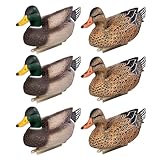
Heerweiyi EVA Mallard Decoys
- Folds flat for pack-in carry
- 1.52 kg package weight
- Rebounds instead of cracking
Best Duck Decoys for Public Land at a Glance (2026)
Every pick below, with the one detail that matters most when you are carrying gear to a public unit.
| Product | Specifications | Action |
|---|---|---|
| MOJO Butt Up Rippler Mallard |
|
Check Latest Price |
 MOJO Vibrating Ripple Decoy MOJO Vibrating Ripple Decoy |
|
Check Latest Price |
| Avian-X Topflight Wood Duck Floaters |
|
Check Latest Price |
 Avery GHG Essential Mallard 12-Pack Avery GHG Essential Mallard 12-Pack |
|
Check Latest Price |
 Higdon Standard Bufflehead Decoys Higdon Standard Bufflehead Decoys |
|
Check Latest Price |
 Final Approach Last Pass Mallard Floaters Final Approach Last Pass Mallard Floaters |
|
Check Latest Price |
 Flambeau Storm Front 2 Teal Floaters Flambeau Storm Front 2 Teal Floaters |
|
Check Latest Price |
 Higdon Standard Mallard Decoys Higdon Standard Mallard Decoys |
|
Check Latest Price |
 Lucky Duck Lucky Pair II Spinners Lucky Duck Lucky Pair II Spinners |
|
Check Latest Price |
| Heerweiyi EVA Mallard Decoys |
|
Check Latest Price |
 Hardcore Field Series Mallard Floaters Hardcore Field Series Mallard Floaters |
|
Check Latest Price |
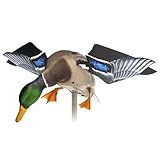 Avian-X Powerflight Smart Motion Avian-X Powerflight Smart Motion |
|
Check Latest Price |
1. MOJO Outdoors Butt Up Rippler for Mallards: Best Overall for Public Land
Mojo Outdoors Mojo Butt Up Rippler, Mallard
Battery powered
1.8 pounds
6 to 8 hours run time
Feeding posture mallard
Pros
- Quiet ripple motion works on glassy water
- 1.8 pound body carries easily into timber
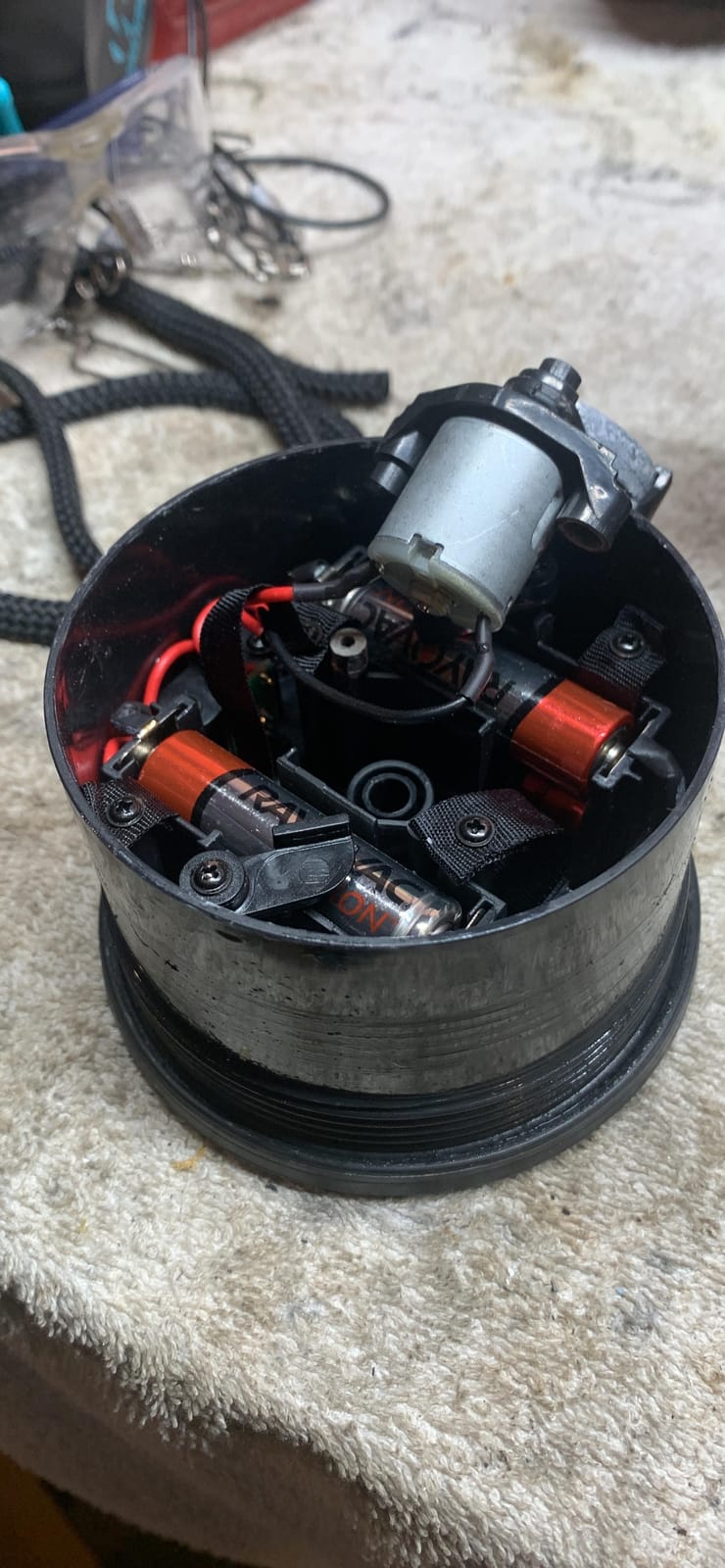
- Battery housing swaps fast in the field
Cons
- Four AA batteries not included
- Single decoy so it supplements a spread rather than filling one
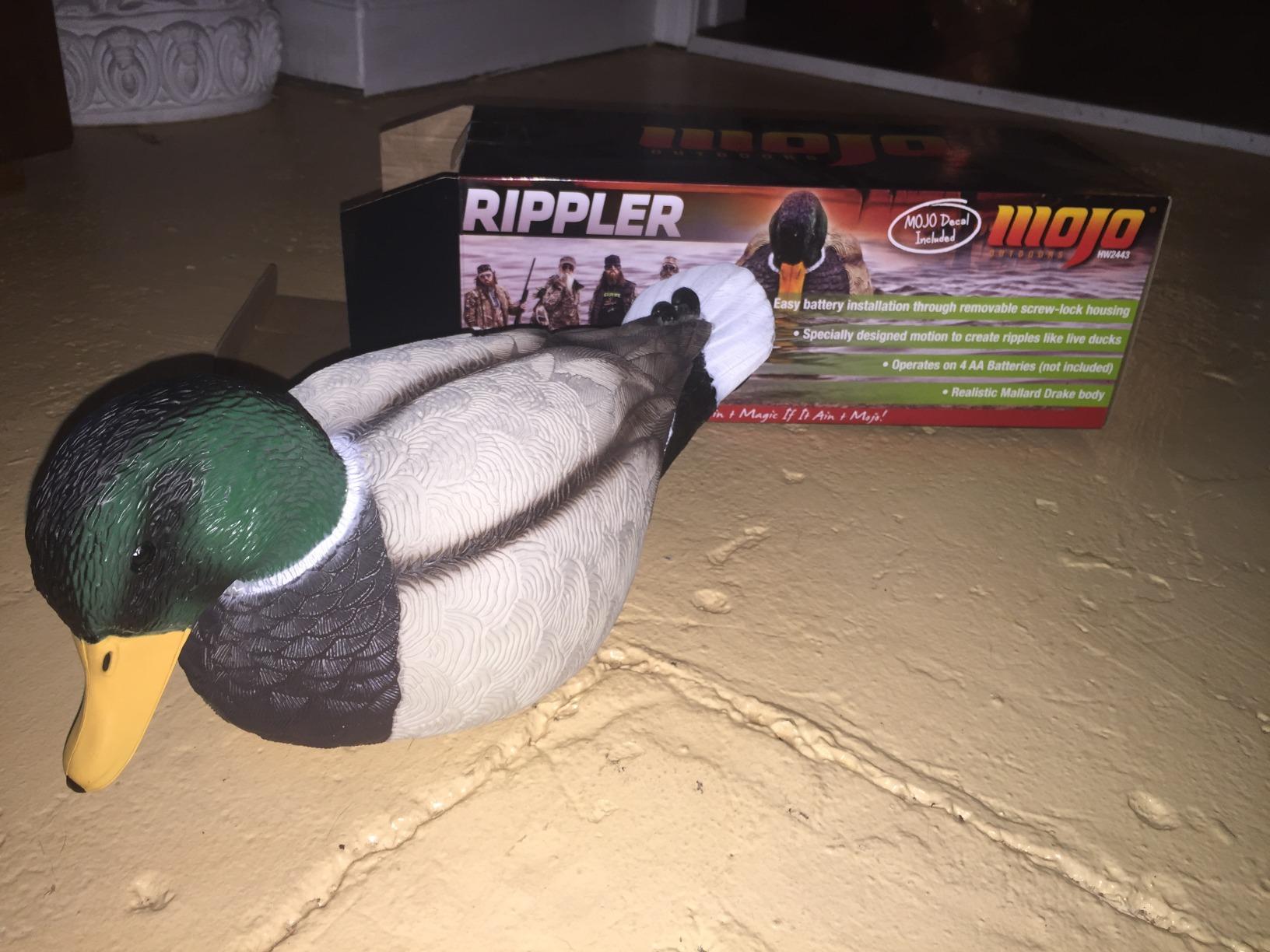
The Butt Up Rippler is the one piece of gear I would hand a hunter who owns nothing else and draws a hard public-land walk-in. It is a single battery powered mallard that sits butt-up in a feeding posture and pushes a ring of ripples across flat water, and at 1.8 pounds it is the lightest motion unit in the group by a wide margin.
That ripple is doing the real work. Public water is often glassy in the first hour, and a static spread on dead-flat water reads as a row of plastic to birds that have been shot at every puddle on the unit for three weeks. Reviewers consistently credit the ripple pattern with bringing birds that were drifting past to turn and come back in.
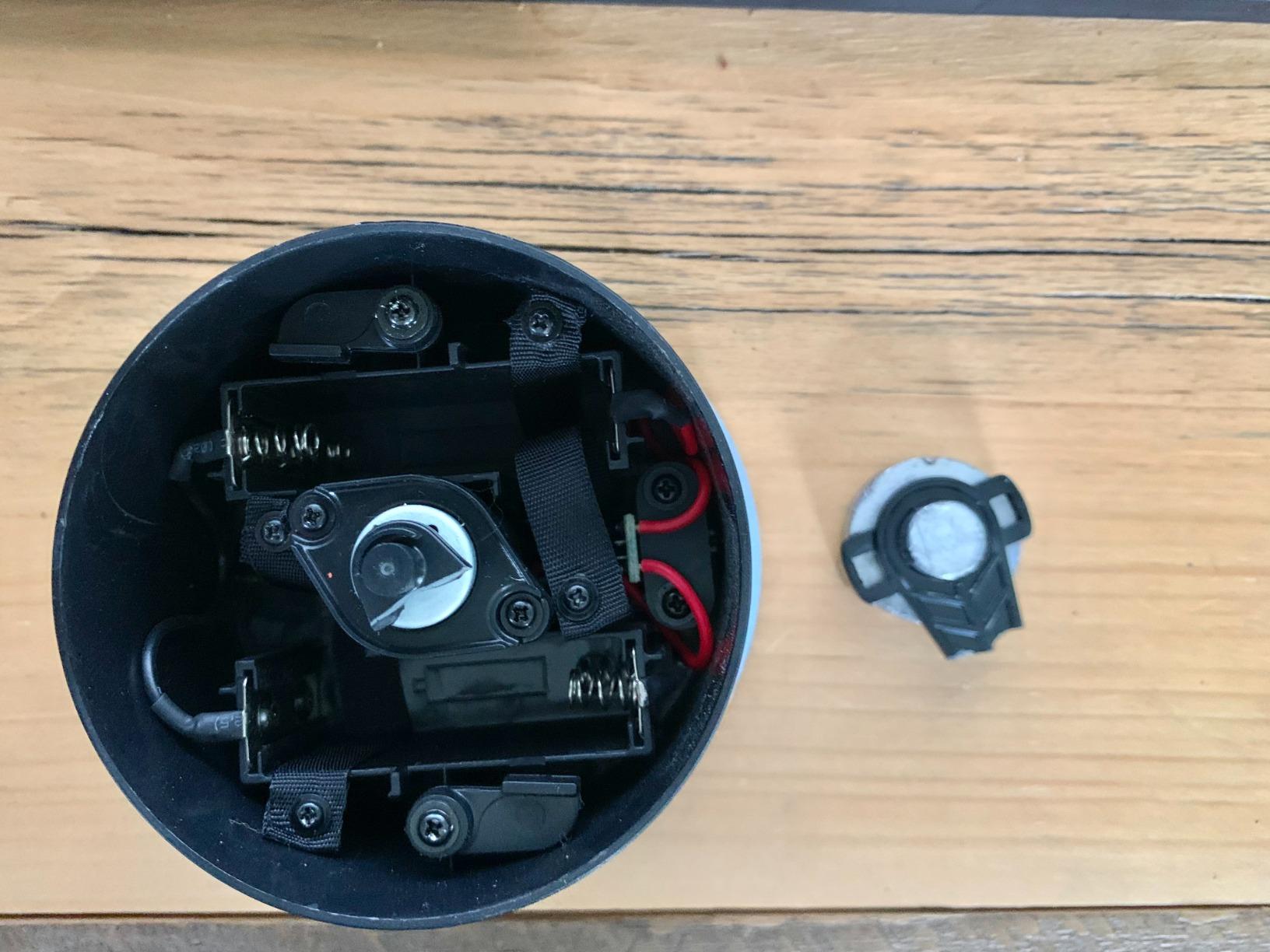
The run time is listed at up to 6 to 8 hours on four AA batteries, which comfortably covers a morning hunt. The batteries are not included, and that is the single complaint that shows up again and again in reviews, so pack your own before you walk in.
Because it is one decoy, this is a supplement rather than a foundation. My setup is a dozen static floaters set in groups of four, with the Rippler placed in the nearest gap so the motion reads as a feeding bird in the middle of the raft.
Where it works on a public unit
Glassy open water and slow creek edges are the sweet spot. On moving water where the current already produces surface movement, the ripple is less necessary, though it never hurts.
It is also the easiest motion option to carry, which matters when your spread is already a full load. A hunter walking a mile with a hard plastic dozen will not want to add another pound of spinning motor gear, and this is small enough to disappear into a pocket.
Where it falls short
It produces ripples, not wings. On a stiff wind or a choppy chop, the ring of water it pushes disappears, and you lose most of the effect. A spinning wing unit is a better answer on windy mornings.
Reviewers also note that the plastic body is small compared with a full-size floater, so it will not carry a spread on its own. Think of it as the one moving bird in an otherwise static group, which is exactly how it is used in the field.
2. MOJO Outdoors Vibrating Ripple Decoy: Best for Dead-Calm Water
MOJO Outdoors Rippler – Premium Waterfowl and Duck Hunting Decoy
Built-in vibrating motor
4 AA batteries
Screw-lock housing
Freestanding mounting
Pros
- Vibrating motor is one of the simplest ways to animate a static spread
- Removable screw-lock housing makes field battery swaps easy
- Ranked near the top of Hunting Decoys for strong demand
- Durable enough for repeated seasons
Cons
- Four AA batteries not included
- Single motion unit rather than a full spread
This vibrating rippler is the sibling idea to the Butt Up Rippler, and it earns its own spot because the mechanism is different. Instead of a paddle pushing water from the outside, a vibrating housing inside the body sends out a steady pulse of concentric rings.
In practice that pulse spreads further and reads more evenly than a single expanding ring, which makes it a good pick for wide shallow flats where you want the whole spread to look alive rather than just one spot. Reviewers like that the screw-lock housing comes off cleanly, so a battery change in a parking area takes seconds rather than a trip home.
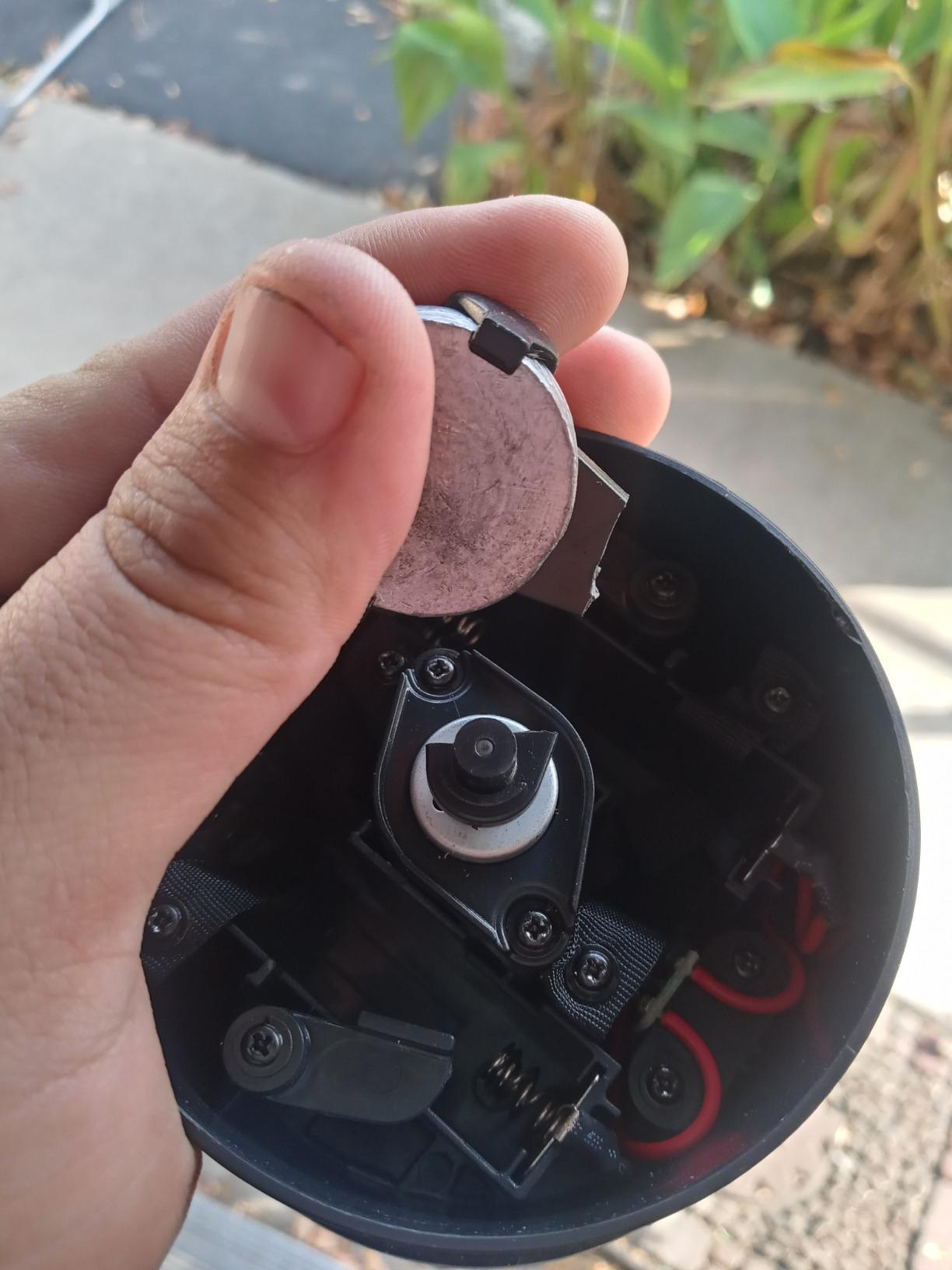
Run time is the same listed 6 to 8 hours on four AA batteries, and again the cells are not included. The unit mounts freestanding, so you can place it directly in the water without a stake, which is handy on soft bottom where a stake wants to lean.
Like its MOJO sibling, this is a one-piece supplement. The strength is that it needs no separate motor housing above the waterline, so it presents as an ordinary sitting mallard from a distance.
Where it works on public water
Pond edges, flooded clearings, and any water with almost no current. This is the scenario where a vibrating motor beats everything else in the roundup, because there is nothing else on the surface competing with it.
It also travels well. There is no stake bundle, no long stake, and no separate battery pack, so it slots into a pocket alongside a compact dozen of floaters without changing your loadout much.
Where it falls short
In any real chop or wind, a vibrator loses its advantage fast. The rings blur into surface texture and the decoy reads as another static bird.
Some reviewers also point out that a single vibrating decoy cannot carry a spread by itself. If you are standing on a unit where the neighboring blind is already running a spinner, another ripple is not the differentiator you need.
3. Avian-X Topflight Floating Wood Duck Decoys: Top Rated for Visibility
Avian X Topflight Realistic Floating Wood Duck Decoys with Weight-Forward Swim Keel, Set of 6 (Multicolor)
Set of 6
12.5 inch oversized
Non-chip paint
Weight-forward keel
Pros
- Highest rated set in this roundout with 4.8 stars
- Rubberized molding and non-chip paint hold up season after season
- Weight-forward keel gives natural drift
- Three different true-to-life postures
Cons
- Wood duck species rather than a general mallard spread
- Only six decoys per pack
The Avian-X Topflight pack is the highest-rated set we reviewed, sitting at 4.8 stars across more than 400 reviews with an unusually small number of complaints. The construction detail that matters on public land is the advanced rubberized molding with non-chip paint, which is exactly the failure point that sends cheap decoys back to the workbench every September.
Size is the other headline. At 12.5 inches breast to tail, these are oversized decoys, and oversized matters on pressured water where birds are far off and evaluating your spread at a glance. A standard-size decoy that would be perfectly visible on a private pond can vanish against a wave shadow on a windy opening day.

The weight-forward swim keel gives the decoy a slow natural drift rather than a static sit, so the spread shifts as wind moves it. The pack mixes three postures, two low-head drakes, two low-head hens, and two high-head drakes, which reads as a real raft instead of a repeated product.
They are wood ducks, and that is both the strength and the limit. If you are hunting woodies on a creek or a wooded pothole, this is one of the most convincing packs available. If you are building a mallard spread, it is an accent species at best.

Where it works
Woody cover, creek bottoms, and shaded timber edges where woodies are working. The oversized body and the visible color detail hold up in low light, which is a real advantage on a flooded hardwood walk-in where the trees block the sun.
Reviewers also praise how the paint holds up season after season, so for a hunter who keeps the same gear for years, this is a low-maintenance pack.
Where it falls short
Six per pack means you need multiple packs to build a credible group, and that weight adds up fast on a walk-in. At roughly 3.74 kg package weight, two packs is a real load for a mile of timber.
It is also a species-specific pack with no drake and hen mallard variety. If mallards are your target, this is an addition to the spread rather than the spine of it.
4. Avery GHG Essential Mallard Decoys 12-Pack: Best Full Mallard Spread
Avery GHG Essential Mallard Duck Decpus – 12 Pack
12 decoys
6 drakes and 6 hens
Self-righting swim keels
HD feather etching
Pros
- Even drake and hen split mirrors real mallard flock behaviour
- Weighted self-righting keels settle naturally in chop
- High-definition feather etching adds depth to the paint
- Built to survive harsh field conditions
Cons
- A full dozen is more bulk to carry on a long walk-in
The Avery GHG Essential pack is the most conventional answer to the question, and on public land the conventional answer is often correct. You get twelve mallards split evenly into six drakes and six hens, which is the ratio real mallard flocks present in most of the season, and a spread with an even split simply looks like ducks.
The weighted self-righting swim keels are the detail I care about most on public water. A decoy that flips keel-up after a stray shot or a paddle boat wake becomes a white belly in your spread, and that single wrong-facing bird can push a raft away. Reviewers call out that these settle back on their own in rough water.
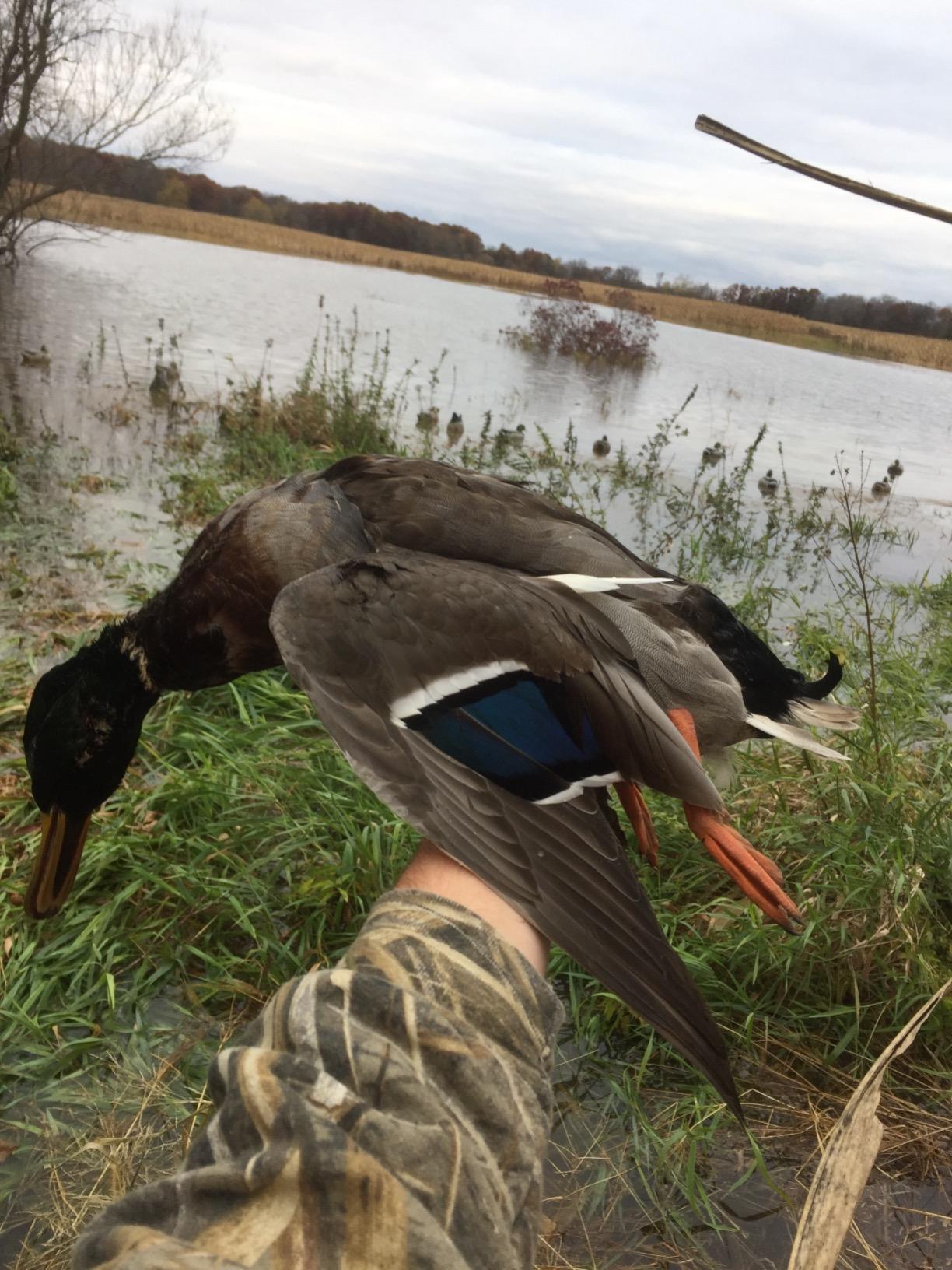
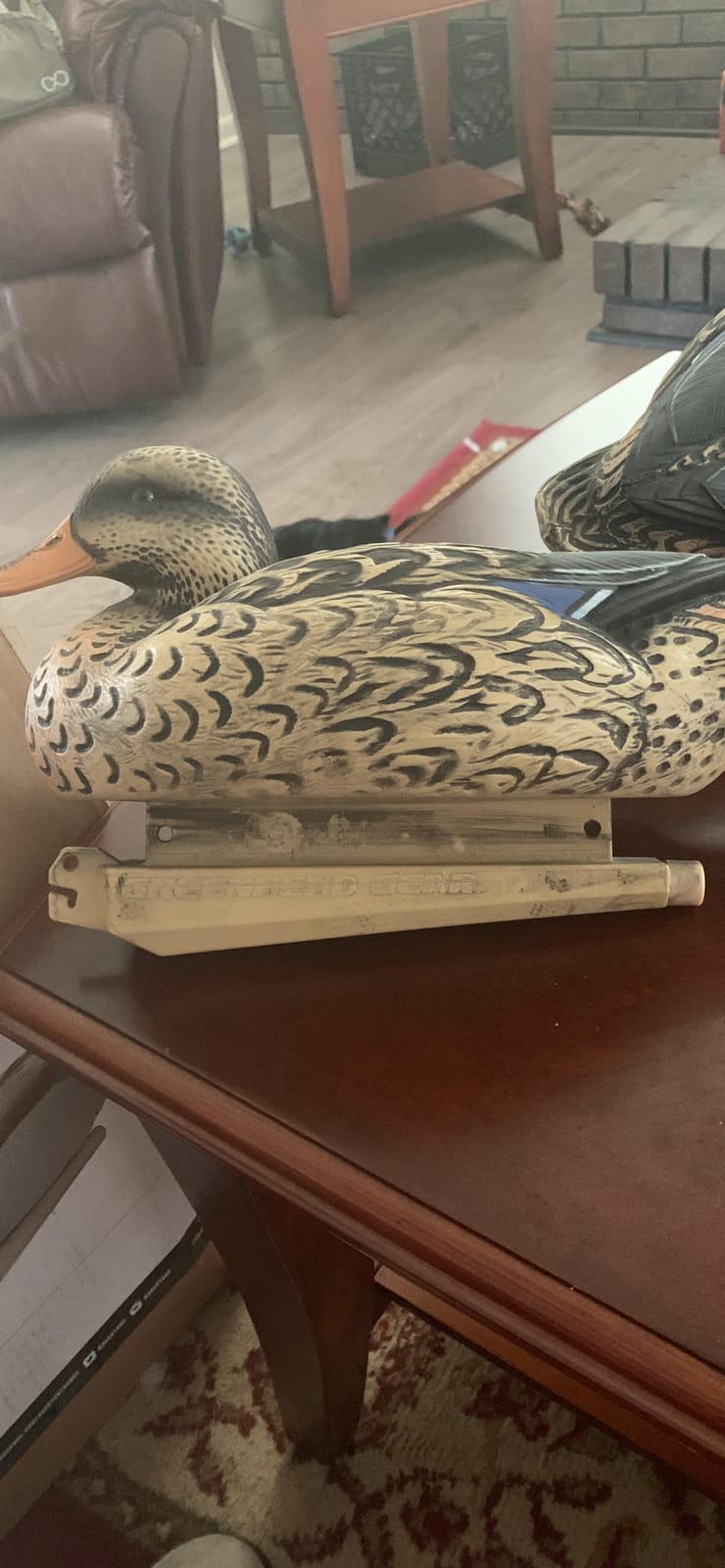
The high-definition feather etching and subtle paint contrast are what separate this from a basic molded dozen. Etched feathering catches light differently as the decoy rocks, so the spread does not look flat and printed when birds are at 80 yards.
Package weight is listed at 5.83 kg, which is right in the range where a walk-in hunter has to make a decision. That is a manageable two-mile carry in a good decoy bag, and it is the trade you accept for a spread that is complete the moment you set it down.
Where it works
Any mallard scenario with enough room for a dozen. A flooded field edge, a reservoir draw, a wide creek bottom. The even drake and hen mix means you can set it and stop fiddling, which is valuable when you are setting quietly in the last thirty minutes of light.
It is also a good anchor pack. Add a small number of divers, coots, or a motion unit and the spread reads as mixed rather than a mallard wall.
Where it falls short
Twelve hard plastic mallards is simply a lot of weight for a solo hunter walking a mile or more with cold gear, a sled, or a kayak paddle. The most common note in reviews is bulk, not quality.
It is also a plain static pack with no motion and no flocking detail in the paint, so on late-season pressured birds that have been shot at for weeks, it benefits from one moving decoy nearby.
5. Higdon Outdoors Standard Bufflehead Decoys: Best Foam-Filled Divers
Higdon Outdoors Standard Bufflehead Floater Duck Decoys | Ultra Realistic Drake & Hen Decoys for Waterfowl Hunting | 6 Upright Drakes| Foam-Filled | 6pk
6 foam-filled decoys
Standard packable size
UV-resistant paint
1 year warranty
Pros
- Foam-filled construction survives rough water and stray shots
- UV-resistant high-contrast paint stays vivid when wet
- Standard size is smaller than live ducks and easy to pack
- Wide surface area gives bold visibility on open water
Cons
- All-drake pack with no hen variety
- Single species so it complements rather than builds a spread
Foam-filled is the answer to the question hunters on public water ask most often, which is what happens when a decoy gets shot. A foam-filled body does not sink, and a decoy that floats to shore is a decoy you get back. Higdon builds these to that standard, and the listed package weight of 2.63 kg for six is genuinely packable.
The other strength here is paint. Higdon uses a proprietary UV-resistant finish with subtle iridescent tones, and the bufflehead’s black-and-white scheme is a high-contrast pattern that stays readable at distance. On a salt marsh or an open flat under a grey sky, a bold pattern carries further than a low-contrast realistic paint job.
These are standard size, slightly smaller than a live duck, which is a deliberate choice for carrying. Reviewers like the packable profile and the wide body surface that makes each bird read from a distance.
Note the pack is six all-drake uprights. There is no hen variety inside the box, so it presents as a small group of drakes, which is realistic for a diver bunch but less convincing as the core of a spread.
Where it works
Diver water, big open flats, and salt marsh where divers push in. Divers are less often the target of a crowded spread than mallards, so adding six buffleheads to a mallard group gives it a mixed-flock look that is hard to build with mallards alone.
The foam-filled build is the real feature. Public water includes places with submerged branches, ice, and rock, and a decoy that survives contact is one less piece of gear to replace.
Where it falls short
It is a single-species, all-drake pack of six. It is an accent set, not a spread builder, and hunters shopping for a general mallard setup will need something else alongside it.
Foam-filled bodies are also bulkier than hollow plastic for the same size, so the six-pack is not as light as it looks on paper when you count the whole pack weight.
6. Final Approach Last Pass Mallard Floaters: Best Compact Carry
Final Approach Last Pass Mallard Floaters, Decoy 12 Pack
12 decoys
12 inch bill to tail
One-piece HDPE
No weak points
Pros
- Compact 12 inch size packs tight for a flooded timber walk-in
- One-piece HDPE body has no seam to fail
- Carvings by 17 time world champion carver Pat Godin
- Steady ranking in Hunting Decoy Accessories
Cons
- Smaller body shows less at long range
- No motion so it needs a spinner or rippler
If your walk-in is measured in miles, decoy size becomes a decision you make in the parking lot. The Final Approach Last Pass floaters are billed at a compact 12 inches bill to tail, smaller than standard decoys, and that smaller profile is the entire point of the pack for a hunter carrying gear a long way on foot or by kayak.
The build is a one-piece high-density polyethylene body, which removes seam weak points entirely. On public land, that matters more than it might seem, because seams are where plastic cracks when a decoy is dropped on a gravel ramp or frozen into a bucket and pried out later.
The carvings are by Pat Godin, a 17-time world champion carver, and reviewers consistently mention that the profiles look lifelike enough to use as pond and pool decoys as well as hunting decoys. That is a decent proxy for how the paint and shape hold up at close range.
Package weight is listed at 4.36 kg for the dozen, which is lighter than most hard plastic dozens and the main reason this pack shows up in a walk-in roundup. You get a full dozen of mallards for a carry weight that a solo hunter can absorb.
Where it works
Flooded timber, small potholes, and any spot where a full dozen has to go in a bag over your shoulder. The smaller bodies also sit in tighter water where a larger decoy would look wrong against the bank.
Reviewers value the toughness of the one-piece shell, which is exactly what you want in a decoy that will be dragged behind you at the end of a cold morning.
Where it falls short
Compact size cuts long-range visibility, and that is the trade reviewers name most. On wide open water in a stiff wind, a standard or oversized decoy simply reads better at distance.
It is a static pack with no motion of any kind. On pressured public ground where every other spread is moving, a still spread needs help, and this one will not provide it on its own.
7. Flambeau Storm Front 2 Blue-Winged Teal Decoys: Best for Teal and Puddle Duck
Flambeau Outdoors Storm Front 2 Blue-Winged Teal Decoys, Floaters, 6-Pack
6 floaters
10.5 inch bodies
4 tie-off keel points
UVision paint
Pros
- Patented UVision paint reflects real teal ultraviolet signature
- Keel has four tie-off points for current or wind
- Six varied postures from active drakes to dabbling hens
- Carved by three master carvers
Cons
- Some buyers report water intrusion at the seam or butt plug after storage
- Some paint schemes read closer to green-winged teal
Flambeau built the Storm Front 2 teal floaters for hunters who are not shooting mallards, and the paint technology is the reason to care. The patented UVision finish is designed to reflect the ultraviolet signature of real teal plumage, and reviews focus repeatedly on how the birds read correctly in low light rather than just looking plausible in a daylight photo.
The rigging on this pack is unusually well thought out for public water. The keel carries four tie-off points plus a depth-adjusting anchor eyelet, so you can hold the decoys at the right depth in current or wind instead of letting them all swing broadside to the wind and clatter together.
Posture variety is a genuine strength. The six-pack contains two active drakes, two skimmer drakes, one resting hen, and one dabbler hen, which is a spread with visible activity already built in, something a group of identical drakes cannot do.
The listed decoy weight is 11.68 ounces per bird, with a package weight around 2.06 kg, so this is a light pack that suits a short walk to a teal puddle. Carvings come from Tom Christie, Dave Van Lanen, and Rich Smoker.
Where it works
Teal blinds, flooded timber edge, and shallow margin water where teal feeds. The four-point keel is a real advantage in moving water, and the depth-adjusting eyelet lets you keep the birds sitting right as wind picks up.
Because teal spreads on public land are often small, a six-pack of this quality can be your entire setup rather than a supplement.
Where it falls short
The most common complaint is leakage at the seam or butt plug after storage, so it pays to check each decoy before the season and keep them from freezing solid in a tote.
Some buyers also note that certain paint schemes run closer to green-winged teal than the blue-wing in the listing, which can matter if you are matching a specific puddle where green-wings are the dominant bird.
8. Higdon Outdoors Standard Mallard Decoys: Best Packable Mallard Set
Higdon Outdoors Standard Mallard Duck Decoys | Ultra Realistic Drake & Hen Decoys for Waterfowl Hunting | 2 Resting Drakes 2 Upright Drakes & 2 Resting Hens | 6pk
6 decoys
Short-stringing keel
Multiple head positions
2.86 kg package
Pros
- Explicitly designed as packable decoys for public land walk-in areas
- Weighted short-stringing keel makes setup fast in cold water
- Multiple head positions create a more convincing spread
- Official decoy of Ducks Unlimited
Cons
- Some buyers want to see how paint holds up over multiple seasons
These Higdon mallards are the most straightforward walk-in answer in the roundup, and Higdon markets them as packable decoys for public land walk-in areas specifically. Package weight is listed at 2.86 kg for six, which means a solo hunter can carry two packs and still have room for a shell bag and a blind.
The design detail I like most is the weighted short-stringing keel. Rather than threading a long string through the keel, the decoy strings in fast, which cuts setup time on a cold morning and, just as importantly, means fewer tangled lines when you are hauling the pack out through brush at the end of the day.
Multiple head positions across the pack give the spread visible variety without buying two models. A spread where some birds are up, some are resting, and some are dabbling looks like a real flock rather than a line of clones, and that is a free upgrade over a single-pose pack.
They carry a one-year manufacturer protection, and Higdon is the official decoy of Ducks Unlimited, which is a reasonable signal on long-term support for replacement parts.
Where it works
Walk-in spots of a few hundred yards to a mile, especially where you are setting in cold water and want the spread up in under five minutes. The fast keel and packable weight are the whole case for this pack.
It is also a good base for a solo spread that you are building around a smaller budget, since two six-packs give you twelve decoys with posture variety rather than a single dozen of one pose.
Where it falls short
Several buyers specifically say they want to see how the paint wears over multiple seasons, which is a fair question on public ground where paint failure shows up first on the highest-contact birds. Inspect the finish each fall before committing to a full season.
With no motion included, this pack depends on your calling and on positioning for its finishing power, which is a limitation on a unit where the neighboring blind is already running spinners.
9. Lucky Duck Lucky Pair II Spinning Wing Decoys: Best Spinning Wings
Lucky Duck Spinning Wing Motion Duck Decoys for Hunters, Lucky Pair II
Drake and hen set
12 to 14 hours run time
EVA plastic body
42 inch stakes included
Pros
- Very quiet spinning wings that do not spook birds nearby
- 12 to 14 hours of run time on four AA batteries
- EVA body and floating wings judged durable and realistic
- Includes three-piece 42 inch stakes and quick attach bungee
Cons
- Battery wiring harness at the connection point wears with heavy use
- Included stakes are short for deep flooded setups
A spinning wing is the loudest idea in duck hunting, because on a unit where every other hunter is already running spinners, the noise and repetition stop working. The Lucky Pair II is worth considering anyway, because the wings on this set are notably quiet, and reviewers call out birds turning and landing into spreads that previously ignored them.
The drake and hen set runs on four AA batteries for a listed 12 to 14 hours, which covers a full morning comfortably. The body is an EVA plastic construction with corrugated magnetic wings, and the magnetic attachment is a genuinely good design choice on public water because the wings stay on if something brushes past the decoy.
Stakes and bungee are included, with a three-piece 42 inch stake, so you are not buying hardware on the morning of a hunt. That matters when you are walking in with a loaded pack.
Where it needs help is longevity. The wiring harness at the connection point is the component reviewers flag as wearing out with heavy field use, and one reviewer reported a switch failure on an early unit. Treat the wiring as a consumable and check it before the season rather than at first light.
Where it works
Early-season and mid-season mornings, especially on open water where incoming birds are far out and looking for a reason to commit. The remote-free trigger means one person can run it, and the long run time means you do not need to be back at the decoy before first light.
It also works well as a single accent in a spread that is otherwise static floaters, since the moving wings draw the eye without requiring a full complement of spinners.
Where it falls short
The included stakes are short for deep or flooded setups, so on anything over shin depth you will want to bring your own longer stake. Expect that as a pack-in item.
There is a wider strategic problem too. Forum discussion among late-season public-land hunters is consistent that once a unit is full of spinners, adding another spinner stops helping, and a manual motion option or a small static spread often works better at that point in the season.
10. Heerweiyi EVA Collapsible Mallard Decoys: Best Value and Lightest Carry
Heerweiyi Mallard Duck 6-Pack. Popular New Material EVA Collapsible Plastic Duck Decoy Mallard Duck Decoys,Easy to Carry and use, More Cost-Effective.
Collapsible EVA construction
1.52 kg package weight
Balanced keel
Hand-traced paint
Pros
- Soft EVA construction folds flat for packing into flooded timber
- Very light at 1.52 kg for a full box
- Flexes and rebounds instead of cracking like brittle plastic
- Keel design stays balanced in wind and current
Cons
- In cold weather the material may not fully rebound on first use
- Finish reads less detailed than hard-painted bodies
This is the decoy that answers the public-land complaint head on. The Heerweiyi set is made from soft silicone EVA that folds flat and rebounds to shape, so it disappears into a pack in a way no hard plastic dozen can. Listed package weight is 1.52 kg, and the listing notes roughly 2.65 kg for a full box.
That is the lightest carry in the roundup by a wide margin, and it changes what is possible. A hunter who has given up on decoys because a dozen plastic bodies were too heavy a mile into a spot can carry this, and a hunter hauling a sled can double a spread without doubling the weight.
The material also fails differently from plastic. Reviewers highlight that the EVA flexes and rebounds rather than cracking, so a dropped decoy or a frozen decoy is far less likely to end your season. The keel design keeps each bird balanced in wind and current, which preserves the look of a natural drift.
Paint is professional spray work with hand tracing for fade resistance, and the listing markets the set for hunting, decor, or gifting.
Where it works
Long walk-ins, kayak and sled transport, and any situation where pack volume matters as much as pack weight. Folding them into a flat bundle inside a decoy bag also makes quiet pack-out easy, since nothing clatters against a hard case.
For a solo hunter, the weight savings let you carry a larger spread than a plastic dozen would allow, which is a better answer to pressure than carrying fewer decoys.
Where it falls short
Cold weather is the real caveat. The soft material may not fully rebound to shape on first use in freezing conditions, and the listing recommends warming it with a hair dryer if the shape is compressed. That is an extra step you do not want at 4:30 in the morning.
The softer finish also reads as less detailed than a hard-painted body, so on very close-range pressured birds the detail gap is noticeable. It is a visibility and portability play more than a realism play.
11. Hardcore Waterfowl Field Series Mallard Floaters: Budget Filler Dozen
Hardcore Waterfowl Field Series Mallard Floater Decoys, 12 Pack (6 Mallard Drakes & 6 Mallard Hens)
12 pack
6 drakes and 6 hens
Whaletail keel
12.1 pounds
Pros
- Full dozen that works well as filler decoys
- Whaletail keel and multiple rig points allow varied facing
- Reviewers report paint quality is good for the money
- Smaller body suits smaller public water
Cons
- Body material can be thin
- One buyer reported tearing where Texas rig line attaches
The Hardcore Field Series is the value entry in this roundup: a full dozen of mallard floaters with six drakes and six hens, true-to-life feather detail paintwork, and a whaletail keel that gives life-like movement on the water. It is the pack to buy when you need a lot of birds and do not want to spend heavily on the first dozen.
Multiple rigging points are a real feature here, letting you face decoys in different directions so the spread can be shaped around the wind and the approaching flight line rather than sitting in a straight row.
The size runs roughly three quarters of a magnum decoy, which suits smaller public water where a large decoy would look out of place against the bank. Reviewers describe the paint as good for the money and say the flock brought ducks in.
Weight is the trade. Listed at 12.1 pounds, this is the heaviest pack we reviewed, and for a walk-in hunter that number alone can rule it out.
Where it works
Short walk-ins, sled and vehicle access, or filling out a spread you already have going. As a filler dozen it does its job, and the varied facing from multiple rigging points is a genuine advantage on open water.
It is also a reasonable first decoy purchase for someone moving from no gear to a full setup, since it delivers a complete dozen in one purchase.
Where it falls short
Body material runs thin, and one buyer reported the plastic tearing where the Texas rig line attaches. Inspect the line attachment points before rigging and reinforce or re-knot rather than trusting them with a full spread.
At three-quarter size the decoys also show less at long range, and combined with the highest listed weight in the roundup, this is a pack for hunters who are not walking far.
12. Avian-X Powerflight Smart Motion Mallard Decoy: Best Rechargeable Motion Decoy
Avian-X Powerflight Battery-Powered Spinning-Wing Mallard Decoy
Spinning wing motion
Rechargeable 10V lithium-ion
Remote control
Marsh stake included
Pros
- Rechargeable lithium-ion battery avoids hauling spare cells
- Remote control triggers the decoy from the blind
- Heavy-duty marsh stake included for open water setups
- Spinning wings read well from a distance
Cons
- Lowest rated option in this roundout at 4.1 stars
- Sold as a single pack so a full spread needs multiple units
- Highest cost per decoy of the motion options
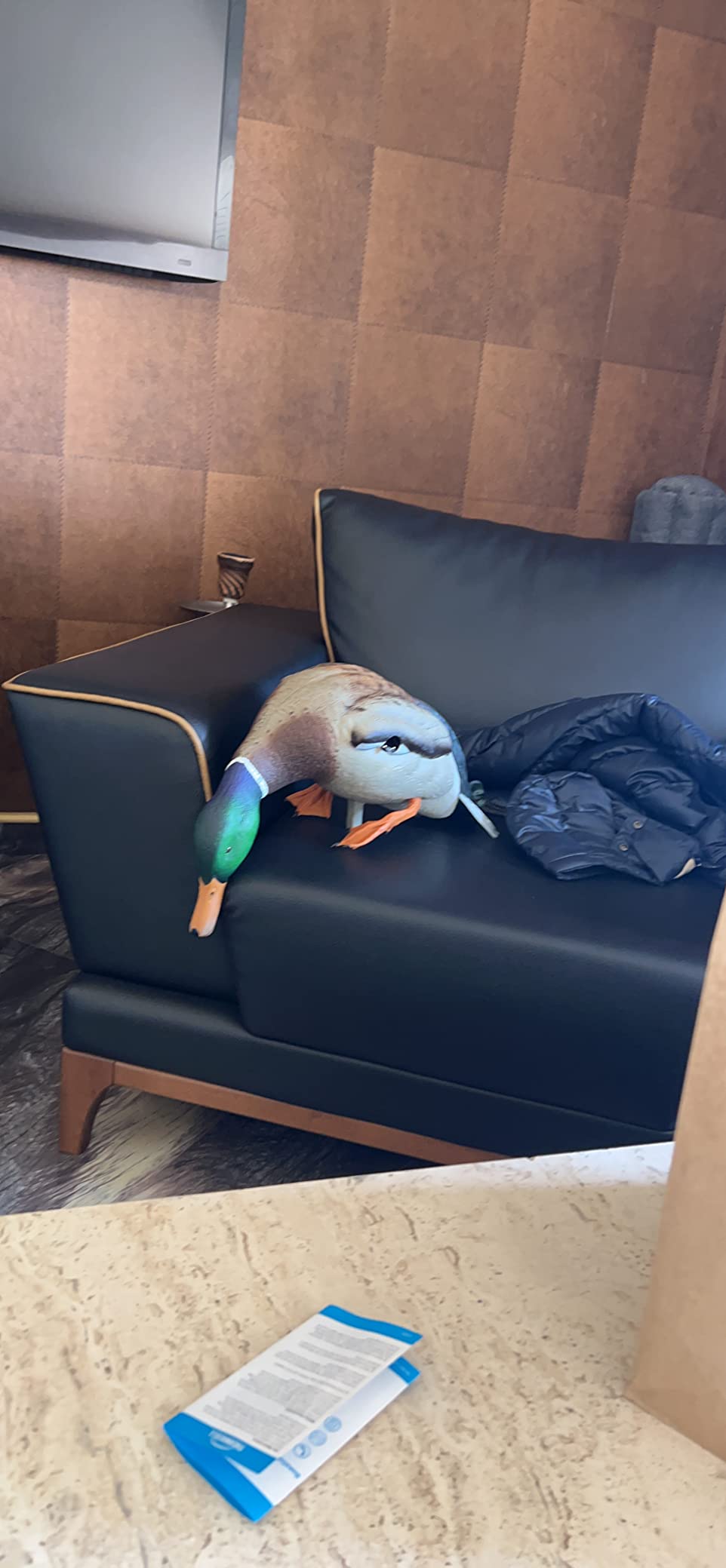
The Powerflight Smart Motion solves a problem that quietly ruins a lot of public-land hunts: dead batteries at 6:30 in the morning. The included 10V lithium-ion battery is rechargeable with its own charger, so you top it up in a vehicle or at home instead of carrying spare cells, and the remote control lets you trigger the decoy from inside the blind.
The spinning wing motion is lifelike and reads well at distance, and a heavy-duty marsh stake is included, which addresses the short-stake problem that catches out a lot of motion decoy buyers in deep flooded cover.
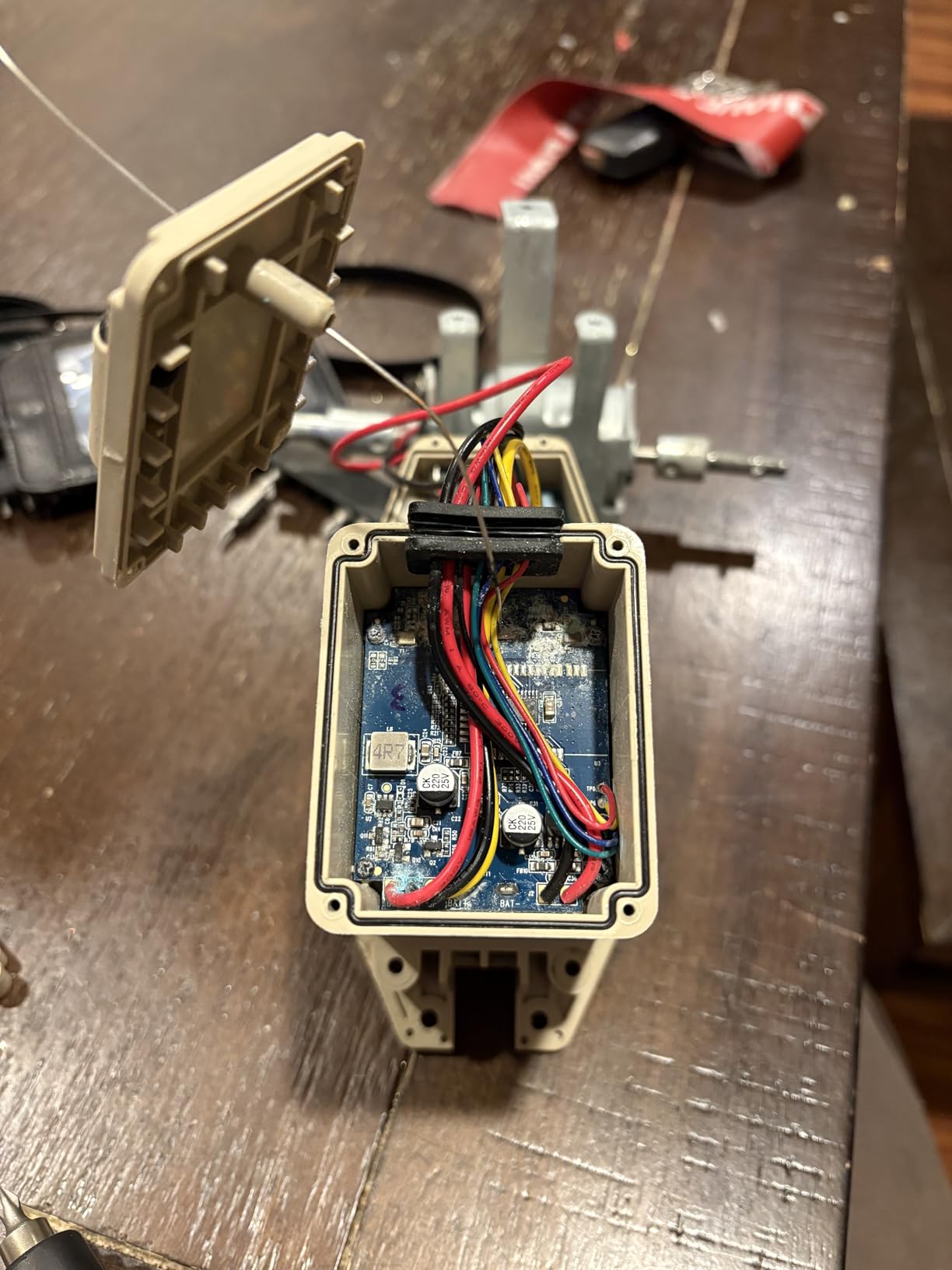
Be realistic about the rating. It sits at 4.1 stars in this roundup, the lowest of the twelve, and 13 percent of reviews are one star. Those negative reviews cluster around reliability issues with the motor, the electronics, and the remote over time, which is exactly the failure mode you cannot diagnose on a walk-in.
It is also sold as a single pack. Building a convincing spinning spread means buying several, and at this cost per decoy it is the most expensive way to put motion on the water.
Where it works
Hunts where you are not hauling spare batteries, and setups where you want to start the motion only when birds are committed and visible rather than having it running from first light. A remote makes that timing decision easy.
The included marsh stake and rechargeable pack also make it a good choice for a hunter who hunts flooded cover deep enough that stake length and battery weight are the real constraints.
Where it falls short
The 4.1 star rating and the cluster of motor and remote reliability complaints are the deciding factor for most hunters. A motion decoy that quits at 7:00 in the morning is worse than no motion decoy, because you have built your spread around it.
On crowded public water late in the season, a spinning wing is also the least differentiated choice, since most of the unit is already running them. At that point a ripple unit or a small static spread is a better use of the money.
Buying Guide: How to Choose Duck Decoys for Public Land?
Here is how I would build a public-land spread from scratch, in the order the decisions actually happen.
Start with the walk-in distance, not the spread size
Carry weight decides everything else. Using the listed package weights in this roundup, a hard plastic dozen lands somewhere around 9 to 12 pounds before the bag, while a compact HDPE dozen comes in near 4.36 kg and a collapsible EVA box closer to 1.52 kg. That is the difference between a hunt you look forward to and a hunt you shorten.
Here is the practical math for a solo spread:
Six decoys from a hard plastic pack: roughly 4 to 6 pounds. Twelve: roughly 9 to 12 pounds. Eighteen: 14 to 18 pounds plus a rigid case, which most solo hunters should not be carrying on a mile walk.
Six decoys from a collapsible EVA pack: under 3 pounds for the whole box. That is why the foam and EVA options dominate public-land recommendations, and why the heaviest pack in our roundup is the one most walk-in hunters will leave behind.
Size the spread by hunting pressure, not by ambition
Forum consensus across waterfowl hunting communities is consistent on one point: a spread of roughly a dozen mallard decoys is enough. Hunting over four decoys works, and hunting over three hundred works, but the dozen is the standard because it presents a believable raft without looking staged.
Pressure changes that math. Early in the season, on a spread that is not surrounded by other blinds, a dozen-plus spread is reasonable. By the third week on a crowded unit, many late-season hunters report success with only three or four decoys, often without calling at all, because the birds have already seen every big spread in the unit and now treat them as a wall rather than as ducks.
A public-ground species mix that comes up often looks like this: about six mallards, six pintails, six wigeon, six gadwall, one or two ringnecks or goldeneyes for the white, and up to a dozen coots as confidence birds spread around the edge. The coots are not the target, they are the decoy that tells a wary drake the area is safe.
Grouping matters too. Divide your decoys into groups of four and space the groups apart rather than clustering everything into one tight ball. A tight cluster reads as one object; four separated groups read as separate birds feeding, which is what a real raft looks like.
Material guide: hard plastic, foam-filled, or EVA
Hard plastic is the default and the cheapest way to get a complete spread, and it holds detail and paint better than anything else. Its weaknesses are weight, brittleness in cold weather, and the fact that hollow plastic sinks if it takes a hit. If you are not walking far, it remains the correct answer.
Foam-filled plastic solves the sinking problem and adds nothing meaningful to carry weight. If you hunt water with branches, ice, and rock in it, foam-filled is the sensible default because the decoy floats back to you instead of sinking out of the spread.
EVA and collapsible foam solve the walk-in problem. They pack flat, weigh far less, and flex instead of cracking, and they are the right answer for a hunter who has been leaving decoys at the truck. Their costs are less surface detail, and cold-weather rebound that may need a few minutes of warming before the birds sit right.
Realism or visibility: pick one on purpose
Hyper-realistic low-contrast paint is right on close water with light cover, where birds are working birds and looking at detail. Oversized, high-contrast, flocked paint is right on open water in wind, where birds are at distance and evaluating your spread in a second.
The dark and black schemes get called out regularly for visibility on overcast days, and painting cheaper decoys solid black and flocking them is a well-known trick among public-land hunters who want their spread to read from further out. You do not need a premium pack to do that, you need a pack light enough to carry.
What to do about motion, and the etiquette around it
Motion matters most early and mid-season and matters least at the end. A spinning wing, a power kicker, or even a simple rippler is a genuine advantage on the first weekend of the season. By late January on a busy unit, a manual jerk rig is often the smarter call precisely because your neighbors are all running spinners and the repetition has stopped working.
Two practical points. First, check whether your state restricts battery-powered or LED motion decoys on public land, because the rules vary by state and by management unit. Second, keep your spread from overlapping the blind next to you. Spreads that merge into one giant block, or a motor unit that is audible to a hunter fifty yards away, cost you the goodwill you need when birds shift.
Rigging and pack-down discipline
Texas rigs are the standard for floaters in current, and the pain points hunters report are consistent: rigs that retain the curl of the coil, hard-to-clip keel points, and lines tangling in the bag. Clip line to keel ahead of the walk rather than on the water, where you are visible and making noise.
Pack-down is where public land is won. A no-rattle bag with slots that hold decoys individually keeps a dozen of them from clattering together every step, and a rubber band or clip on each stack stops the whole pile sliding when you drop the bag. Keep stakes in a separate pocket so they do not hammer the decoys, and stage your spread away from the water until you are in position, because carrying a half-built spread through cattails announces you to every duck on the pond.
When a decoy gets shot
Plan for it and it stops being a problem. Foam-filled bodies float and can be collected later. Hollow hard plastic sinks, which is an argument for foam or EVA on pressured ground where shots are likely. Battery motion decoys are the most expensive loss, so set them shallow and well away from the shooting line, and use a remote or a timing switch so you are not leaning out of the blind to recover one.
Frequently Asked Questions
What is the best duck decoy brand for the money?
For most public-land hunters, the best value is a pack built around a dozen mallard floaters with an even drake and hen split and non-chip paint, plus one inexpensive motion unit. Avery, Higdon, and Final Approach all cover that middle tier, while collapsible EVA packs from Heerweiyi solve the carry-weight problem at a lower cost than most hard plastic. Spend first on the dozen and second on one moving bird.
What is the most effective decoy spread for duck hunting?
Roughly a dozen mallard decoys is the standard that works most often: six drakes and six hens, divided into groups of four and spaced apart rather than clustered. A common public-ground mix adds pintails, wigeon, gadwall, one or two ringnecks or goldeneyes, and a dozen coots as confidence birds around the edge. One motion unit in the nearest gap finishes the presentation.
How many duck decoys do I need?
A dozen is the working standard for a mallard spread, and forum consensus across waterfowl communities is that the dozen presents a believable raft without looking staged. Late in the season on a crowded unit, three to four decoys often work better because wary birds have already seen every large spread in the unit. Match the count to how much pressure you are actually facing.
What should I look for in a good duck decoy?
On public land, look at carry weight, paint durability, keel design, and posture variety in that order. Non-chip or UV-resistant paint saves you repainting and reflocking every season, a weighted self-righting keel keeps decoys from flipping after a shot, and varied head and body postures make a spread read as a real flock. Choose foam-filled or EVA if you are walking far or hunting water with ice and branches.
Are motion decoys allowed on public land?
Rules vary by state and by management unit, and some states restrict battery-powered or LED motion decoys on public water. Check your state waterfowl regulations and the specific unit description before you hunt, and remember that even where motion decoys are legal, a loud spinning wing next to another hunter’s blind can cost you goodwill you need later. Where rules are unclear, a manual rig is the safe option.
How heavy should my duck decoys be for walk-in hunting?
For a solo hunter on a mile walk, keep the whole decoy load under about six pounds. A hard plastic dozen typically runs 9 to 12 pounds before the bag, while a compact HDPE dozen comes in near 4.36 kg and a collapsible EVA box closer to 1.52 kg. If a dozen feels heavy, carry eight to ten and add one motion unit rather than a second dozen.
Final Word on the Best Duck Decoys for Public Land in 2026
After a full season of comparing these twelve packs, the best duck decoys for public land come down to a short list. The MOJO Butt Up Rippler is the single most useful piece of gear in the group for most hunters, because one lightweight motion unit is the difference between a spread that sits there and a spread that works. Pair it with a compact dozen of mallard floaters such as the Final Approach Last Pass set, or drop to two Higdon six-packs if the walk is long.
If weight is the thing stopping you from using decoys at all, the collapsible EVA route changes the conversation, and the Higdon foam-filled divers solve the lost-decoy problem in places with ice and branches. Whatever you choose, size the spread to the pressure in front of you: a dozen early, four late, and check your state rules before you pack a battery.
Tell us what you are running this season, and check the current listings for the picks above before you load the bag.