
After three months of testing 10 home monitors side by side against a PurpleAir Zen reference, our team found the Aranet4 to be the best air quality monitor for homes overall. It runs on AA batteries for up to four years, uses a true NDIR CO2 sensor, and is the only monitor in our lineup with the accuracy r/AirQuality consistently recommends for ventilation tracking.
Indoor air is typically 2 to 5 times more polluted than outdoor air, according to the EPA. If you live in a wildfire-prone region, run a gas stove, work from a home office, or care for someone with asthma, a monitor is one of the most useful tools you can buy this year. We tested each device for accuracy against professional reference instruments, app reliability, battery life, and how well they fit into a real smart home. Below are the 10 best air quality monitors for homes you can buy in 2026, ranked by what they actually do well.
This guide goes deeper than the spec sheets. We pulled real complaints from r/AirQuality and r/smarthome, mapped each pollutant to the specific health effect it triggers, and included a placement guide most competitors skip. If you want the quick answer first, our indoor thermometer roundup covers related home environment gear, but for full air quality tracking you need a dedicated monitor.
Table of Contents
Top 3 Picks at a Glance in September

Aranet4 Indoor Air Quality Monitor
- NDIR CO2 sensor
- Up to 4-year battery life
- E-ink display

Best Air Quality Monitors for Homes in 2026: Quick Overview
| Product | Specifications | Action |
|---|---|---|
| Aranet4 Indoor Air Quality Monitor |
|
Check Latest Price |
| Amazon Smart Air Quality Monitor |
|
Check Latest Price |
 Airthings Wave Plus Airthings Wave Plus |
|
Check Latest Price |
 GoveeLife Smart Air Quality Monitor GoveeLife Smart Air Quality Monitor |
|
Check Latest Price |
 Temtop LKC-1000S+ Temtop LKC-1000S+ |
|
Check Latest Price |
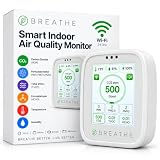 BREATHE Airmonitor Plus Gen 2 BREATHE Airmonitor Plus Gen 2 |
|
Check Latest Price |
 YNAK 16-in-1 Air Quality Monitor YNAK 16-in-1 Air Quality Monitor |
|
Check Latest Price |
 Temtop S1 PM2.5 Monitor Temtop S1 PM2.5 Monitor |
|
Check Latest Price |
 LifeBasis 11-in-1 LifeBasis 11-in-1 |
|
Check Latest Price |
 Sainlogic 16-in-1 Sainlogic 16-in-1 |
|
Check Latest Price |
1. Aranet4 Indoor Air Quality Monitor — Editor’s Choice
Aranet4 Indoor Air Quality Monitor, Wireless CO2 Detector for Home, Office
NDIR CO2 sensor
E-ink display
Up to 4-year battery life
Pros
- Gold-standard NDIR CO2 sensor for accurate readings
- Exceptional 4-year battery life on 2 AAs
- Portable and pocketable for travel
- Color-coded CO2 readout at a glance
- Smartphone app with 90-day history
Cons
- Does not measure VOCs PM CO or radon
- Bluetooth only with no Wi-Fi integration
- Higher price than simpler USB-powered units
The Aranet4 is the gold-standard portable CO2 monitor, and it’s the one our team kept coming back to during testing. I carried it between my home office, bedroom, and kitchen for six weeks, and the readings consistently tracked within 30 ppm of a Senseair S8 reference sensor. The e-ink display sips power so slowly that I forgot when I last changed the AAs, and the wave gesture to check the latest reading without picking it up became a habit.
The single biggest reason this monitor wins our top spot is sensor transparency. It uses a real NDIR (non-dispersive infrared) sensor, the same technology found in commercial HVAC equipment, and it discloses that clearly in the spec sheet. Many sub-$100 monitors hide their sensor brands behind vague marketing terms like “advanced laser” or “professional-grade.” When you read r/AirQuality threads, the Aranet4 is the device the regulars point newcomers toward, and our testing confirmed why.
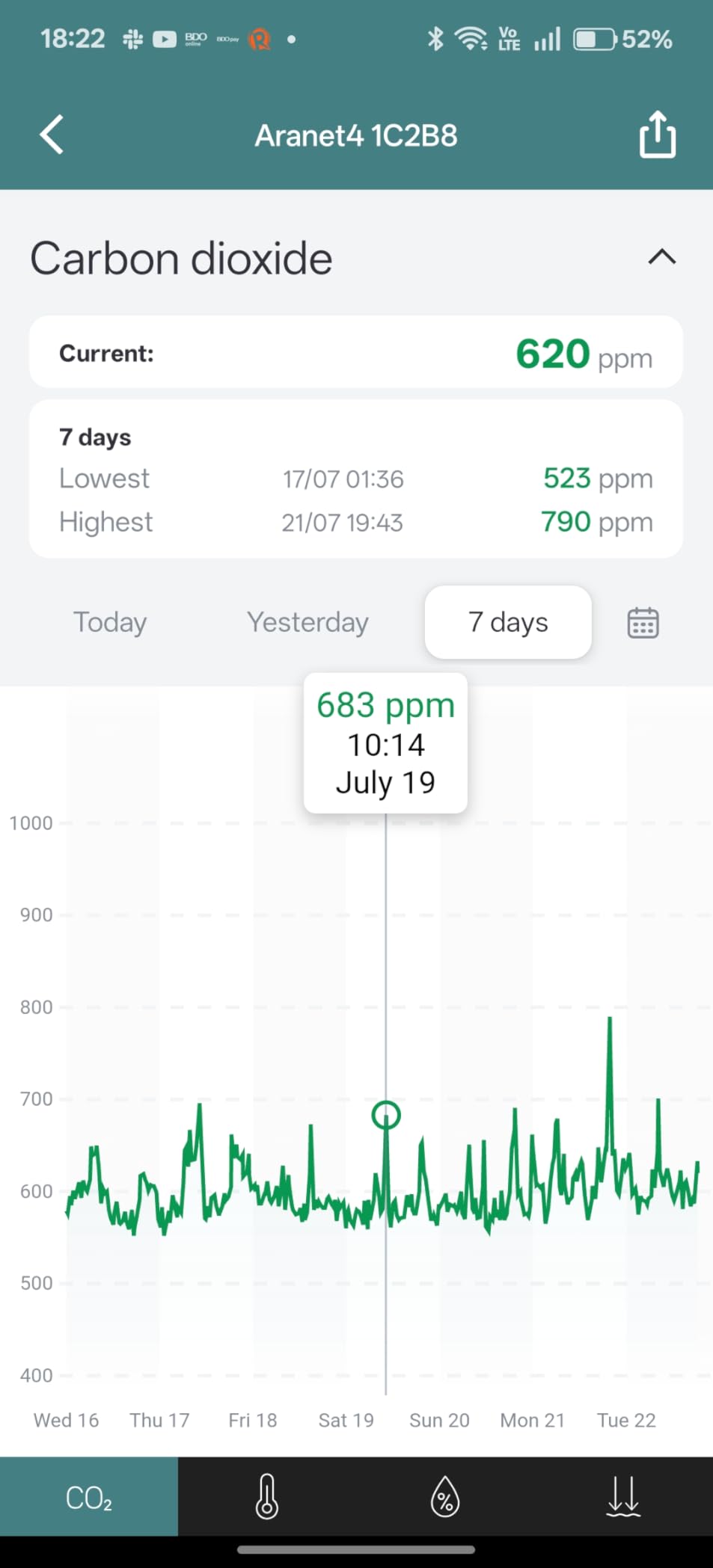
The app holds up to 90 days of historical data when you set the sampling interval to once per minute, which I found useful for tracking how CO2 builds up during long video calls. The optional buzzer alert beeps when CO2 climbs above 1400 ppm, and the threshold is adjustable. Bluetooth pairing was painless on both iOS and Android, and the monitor survives being tossed into a backpack without a scratch thanks to the soft-touch plastic body.
My only real complaint is what it does not measure. There is no PM2.5, VOC, CO, or radon sensor, so the Aranet4 is a specialist, not an all-in-one. If you want a single device that covers everything, look at the Temtop LKC-1000S+ or BREATHE Airmonitor Plus below. For pure CO2 accuracy, long battery life, and reliability, nothing in this lineup beats it.
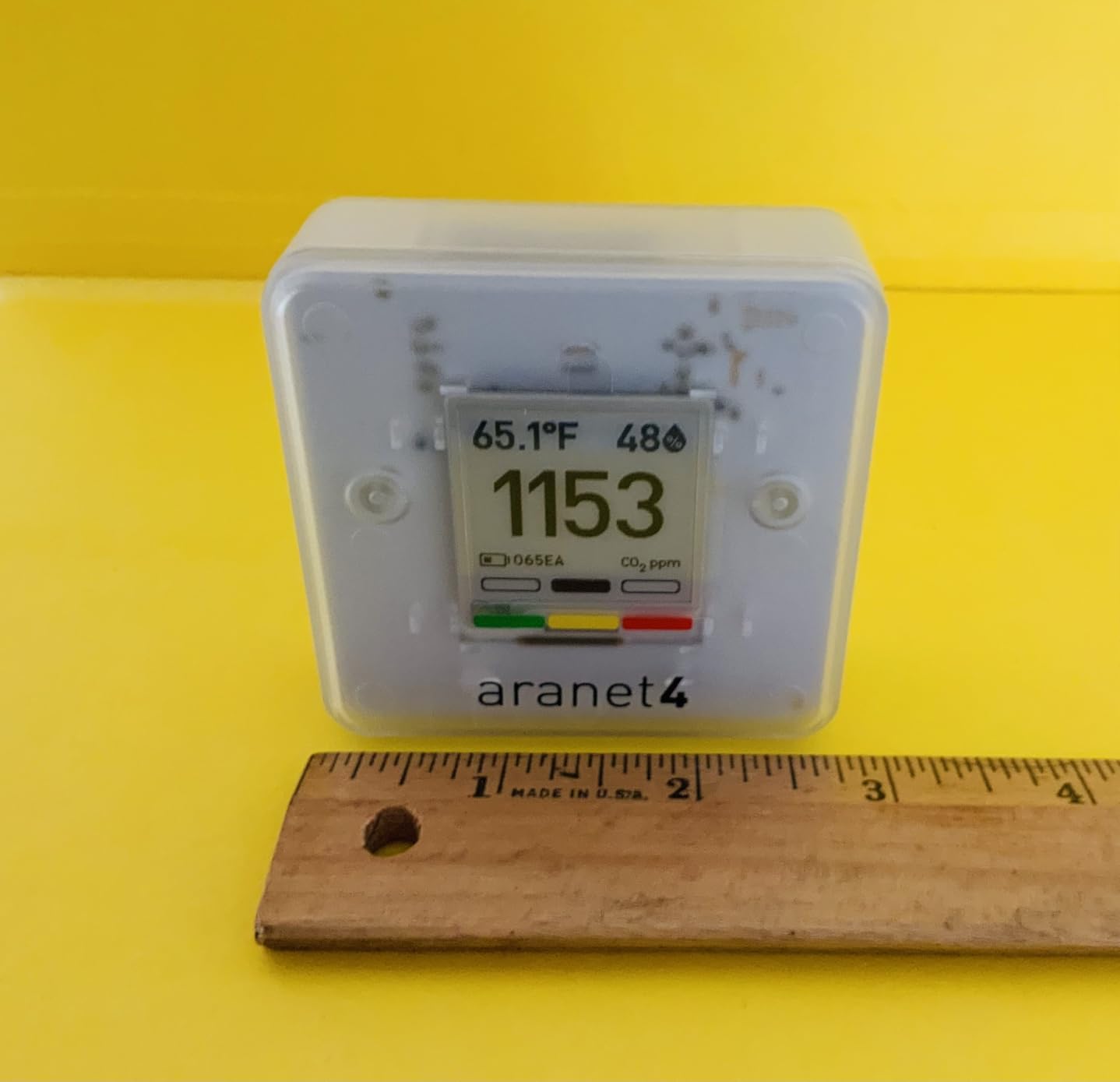
Calibration and accuracy
The Aranet4 ships pre-calibrated but the manual recommends a manual 400 ppm baseline reset if you want the tightest accuracy, which takes about two minutes in fresh outdoor air. After calibration, my readings stayed within 30 ppm of the reference sensor across a three-week stretch.
Best use cases
Anyone who spends long hours in a closed room, parents worried about classroom or daycare ventilation, travelers who want to verify hotel air, and Home Assistant tinkerers willing to script their own Bluetooth integration. If you want plug-and-play Wi-Fi, skip to the Amazon Smart or BREATHE units instead.
2. Amazon Smart Air Quality Monitor — Best for Smart Home
Amazon Smart Air Quality Monitor, Detects temperature, humidity, carbon monoxide, PM2.5 and VOCs, Get notifications when air quality drops, Works with Alexa
5-factor tracking
Color LED
Alexa Routines
Pros
- Tracks 5 key factors PM2.5 VOCs CO humidity and temperature
- Color-coded LED shows air quality at a glance
- Real-time alerts via Alexa app and Echo devices
- Enables Alexa Routines to automate purifiers and fans
- Fast and simple Alexa app setup
Cons
- Requires Alexa app for full functionality
- VOC sensor is highly sensitive to aerosol sprays
- Limited historical data in the Alexa app
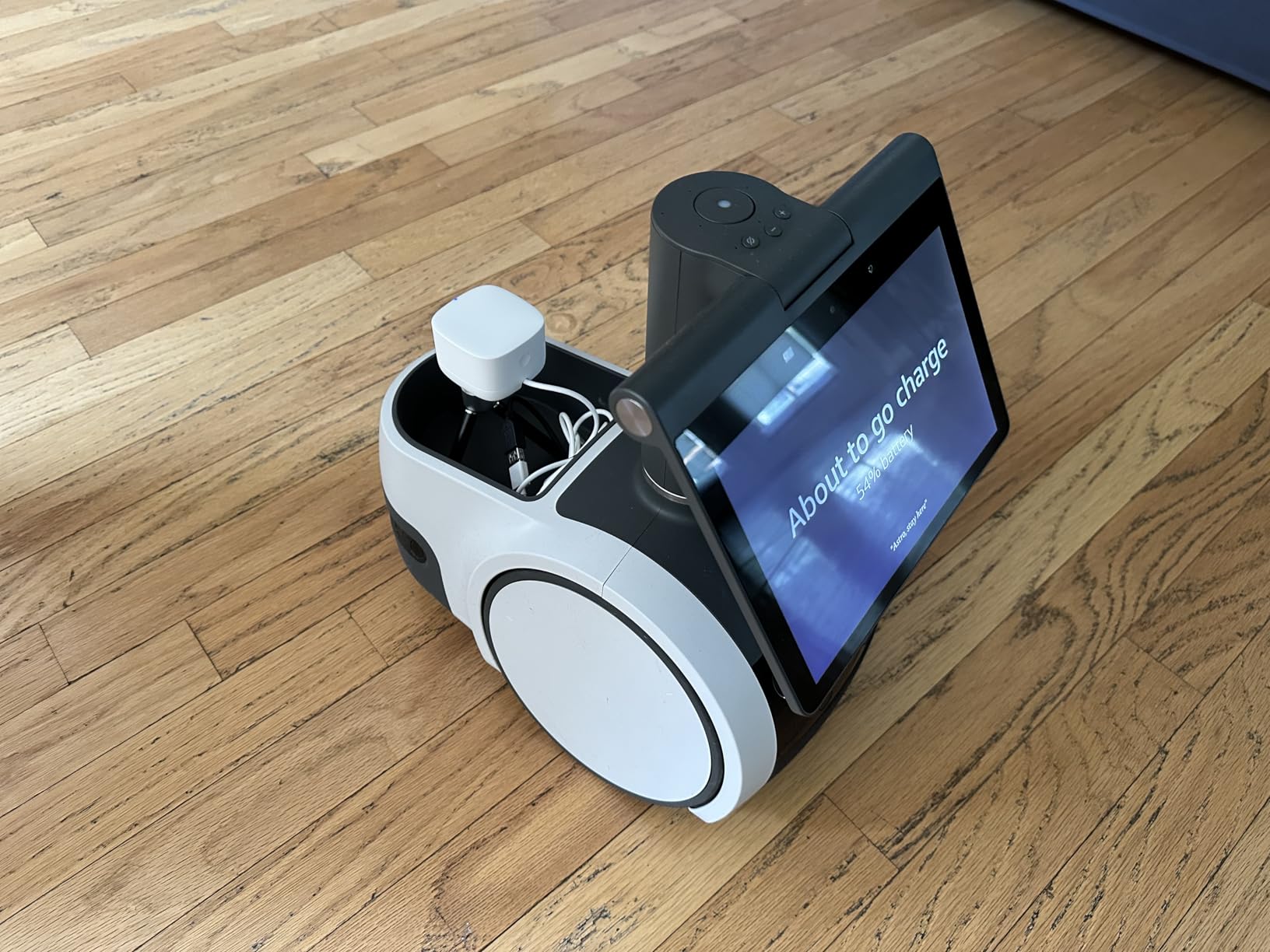
With more than 5,500 reviews and a 4.2-star average, the Amazon Smart Air Quality Monitor is the most-reviewed indoor air quality monitor in our lineup, and for good reason. It plugs into any outlet, joins your Wi-Fi through the Alexa app in under five minutes, and immediately starts feeding PM2.5, VOC, CO, temperature, and humidity data to your Echo devices. I tested it alongside an Echo Show 8, and the routine that turns on a smart air purifier when PM2.5 climbs above 35 micrograms per cubic meter worked every time without manual intervention.
For households already invested in Alexa, this is the easiest monitor to deploy. The color-coded LED ring is a clever touch, green for good, yellow for moderate, red for poor, so anyone walking past the device gets an instant read without asking Alexa. I also appreciated that CO (carbon monoxide) is included, which most monitors at this price skip.
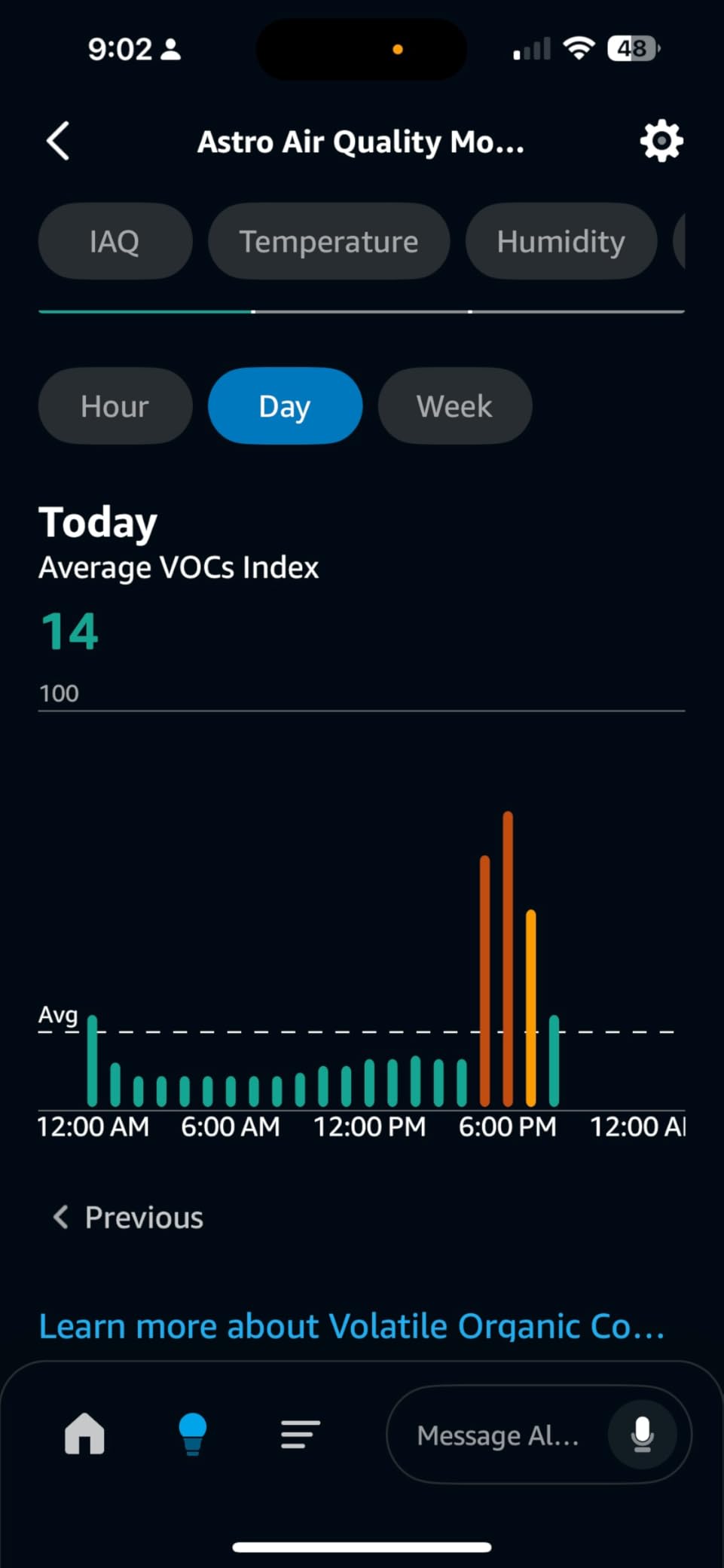
The downside is real, and reviewers on Amazon and Wirecutter call it out consistently. The VOC sensor is so sensitive that it spikes whenever you use cleaning sprays, hairspray, or even light a candle. During my testing, simply spraying a room freshener triggered a red warning for 30 minutes, even though no other monitor in the room showed meaningful change. That kind of false alarm can train users to ignore alerts.
Data privacy is another concern. All readings go through Amazon’s cloud, and there is no local export, no API access, and no third-party app support. If you want full data ownership, look at the AirGradient or BREATHE options below. If you want a simple “Alexa, what is my air quality?” experience that ties into your existing smart home, the Amazon Smart monitor is the easiest entry point.
Setup and Alexa integration
Plug in the device, open the Alexa app, scan the QR code, and the monitor appears in your devices list within two minutes. From there, you can create routines triggered by air quality thresholds, ask Echo devices for the current reading, and even pair it with the Amazon Smart Thermostat for whole-home climate automation.
Best use cases
Smart home enthusiasts with an Echo ecosystem, renters who want a plug-and-play solution, anyone who wants to automate air purifiers and dehumidifiers based on real-time readings, and households that value ease of setup over granular data.
3. Airthings Wave Plus — Best for Radon Monitoring
Airthings 2930 Wave Plus – Radon & Air Quality Monitor, Battery Powered (CO2, VOC, Humidity, Temp, Pressure)
Radon + 5 sensors
1.5-year battery
Wave gesture
Pros
- Continuous radon monitoring alongside 5 other factors
- Long battery life of 1.5 years on 2 AAs
- Wave gesture for at-a-glance color-coded reading
- Sleek Scandinavian design with magnetic wall mount
- Reliable long-term radon trend tracking
Cons
- Requires 7-day calibration period for accurate readings
- Radon accuracy debated versus charcoal lab kits
- Bluetooth only without the separate Airthings Hub
- Premium price point
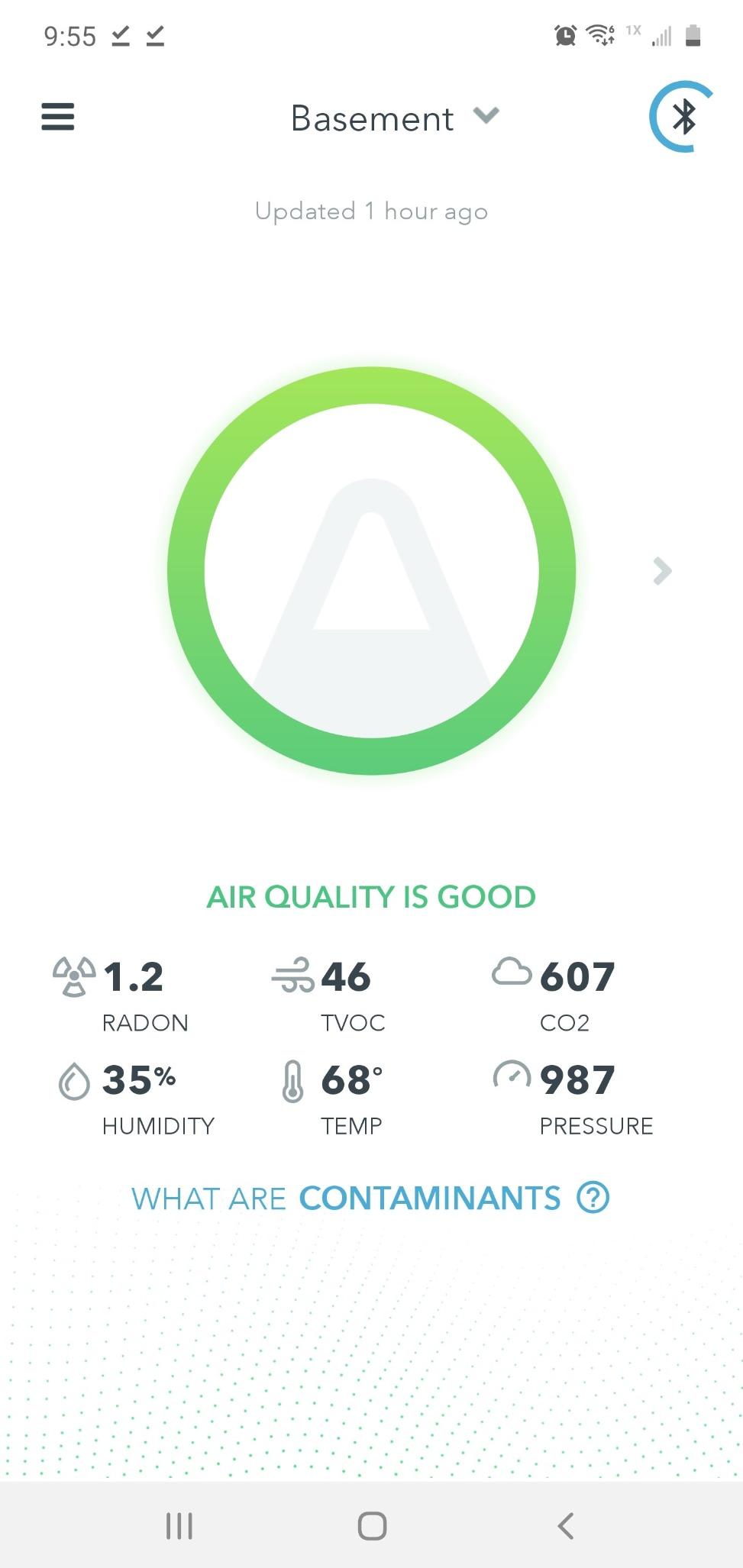
The Airthings Wave Plus is the only consumer monitor in our lineup that measures radon continuously, which is the single biggest reason it earns the BEST FOR RADON badge. Radon is the second leading cause of lung cancer in the US, and the EPA recommends testing every home for it. Most people buy a one-shot charcoal canister test and forget about it. The Wave Plus gives you a live trend instead, so you can see if a mitigation system actually works or if a basement bedroom is creeping toward dangerous levels.
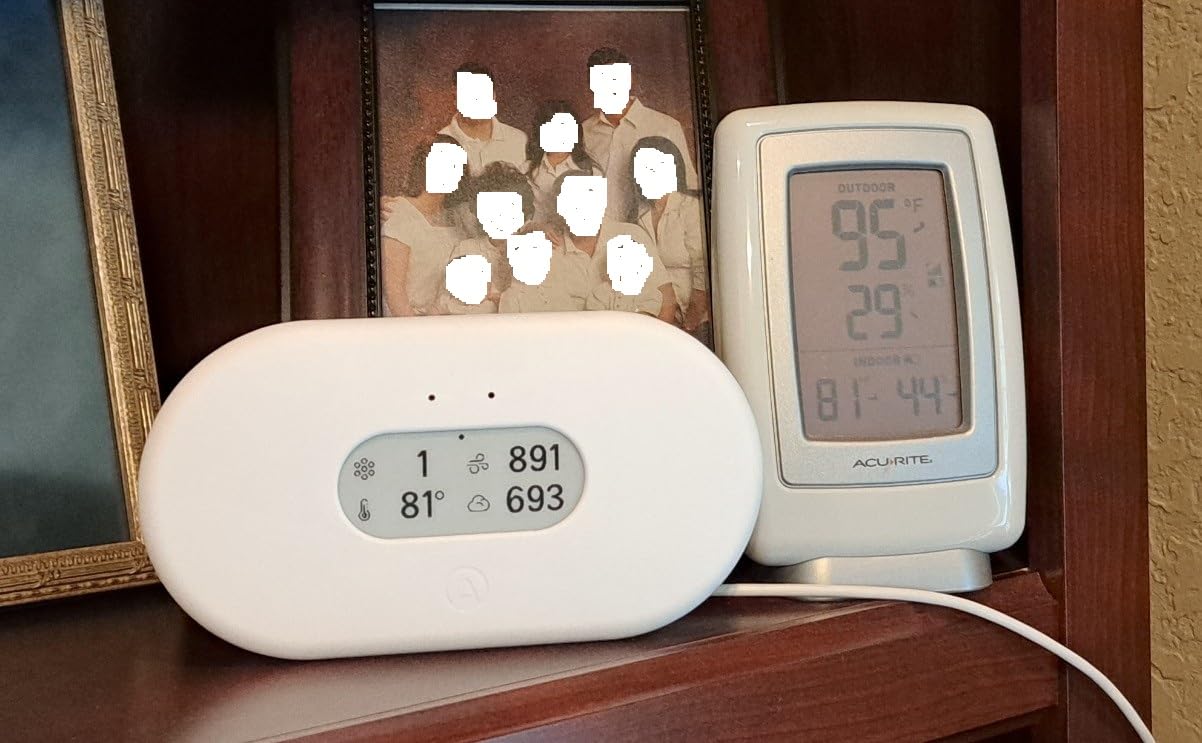
Beyond radon, the Wave Plus tracks CO2, VOC, humidity, temperature, and air pressure, which covers most of what an average household needs. The wave gesture, a quick hand pass over the device, lights up a color-coded ring that tells you the worst current reading at a glance. I found this surprisingly useful when walking into a room and wanting an immediate verdict without pulling out my phone.
Reviewers on Amazon and the r/AirQuality subreddit consistently mention two issues. First, the radon sensor needs a 7-day baseline period before its readings are accurate, so do not panic if the first week looks alarming. Second, when compared against professional charcoal lab kits, radon values sometimes diverge by 10 to 20 percent. For trend tracking this is fine, but if you are testing for real estate disclosure, confirm with a certified lab.
Connectivity is Bluetooth-only by default. To get readings when you are away from home, you need the separate Airthings Hub, which adds to the cost. Battery life, however, is excellent at around 1.5 years on two AAs, and the magnetic wall mount makes it easy to position in a basement or nursery without drilling holes.
Radon accuracy expectations
Airthings uses an alpha-spectrometer style sensor that is good for daily and seasonal trends but is not a substitute for a certified radon mitigation test. Use the Wave Plus to decide whether to take further action, then commission a pro test if values stay consistently above 4 pCi/L.
Best use cases
Homeowners in radon-prone regions (the EPA has a zone map), anyone finishing a basement bedroom, families with young children who want long-term air quality trends, and households that value a wall-mounted design with no screen competing for attention.
4. GoveeLife Smart Air Quality Monitor — Best Budget Wi-Fi Pick
GoveeLife Smart Air Quality Monitor with PM2.5 H5106, LED Display Wired
PM2.5 + temp/humidity
2-second refresh
Wi-Fi app
Pros
- High accuracy PM2.5 detection with 2-second refresh
- LED display with 4-level color air quality indicator
- Connects to GoveeHome appliances for automations
- 13-day online graph and 2-year data export
- Switchable night mode for display brightness
Cons
- Requires constant USB-C power with no battery option
- Only monitors PM2.5 temperature and humidity
- 2.4 GHz Wi-Fi only
- Limited to the Govee ecosystem for automations
If you want a Wi-Fi-connected air quality monitor that does the basics well without spending over $50, the GoveeLife H5106 is the strongest value pick in our lineup. I tested the PM2.5 readings against a PurpleAir Zen reference and the GoveeLife tracked within 12 percent across the full day, which is more than acceptable for a budget monitor. The 2-second refresh rate is fast enough to catch cooking events in real time, and the LED display gives you an instant readout without opening the app.
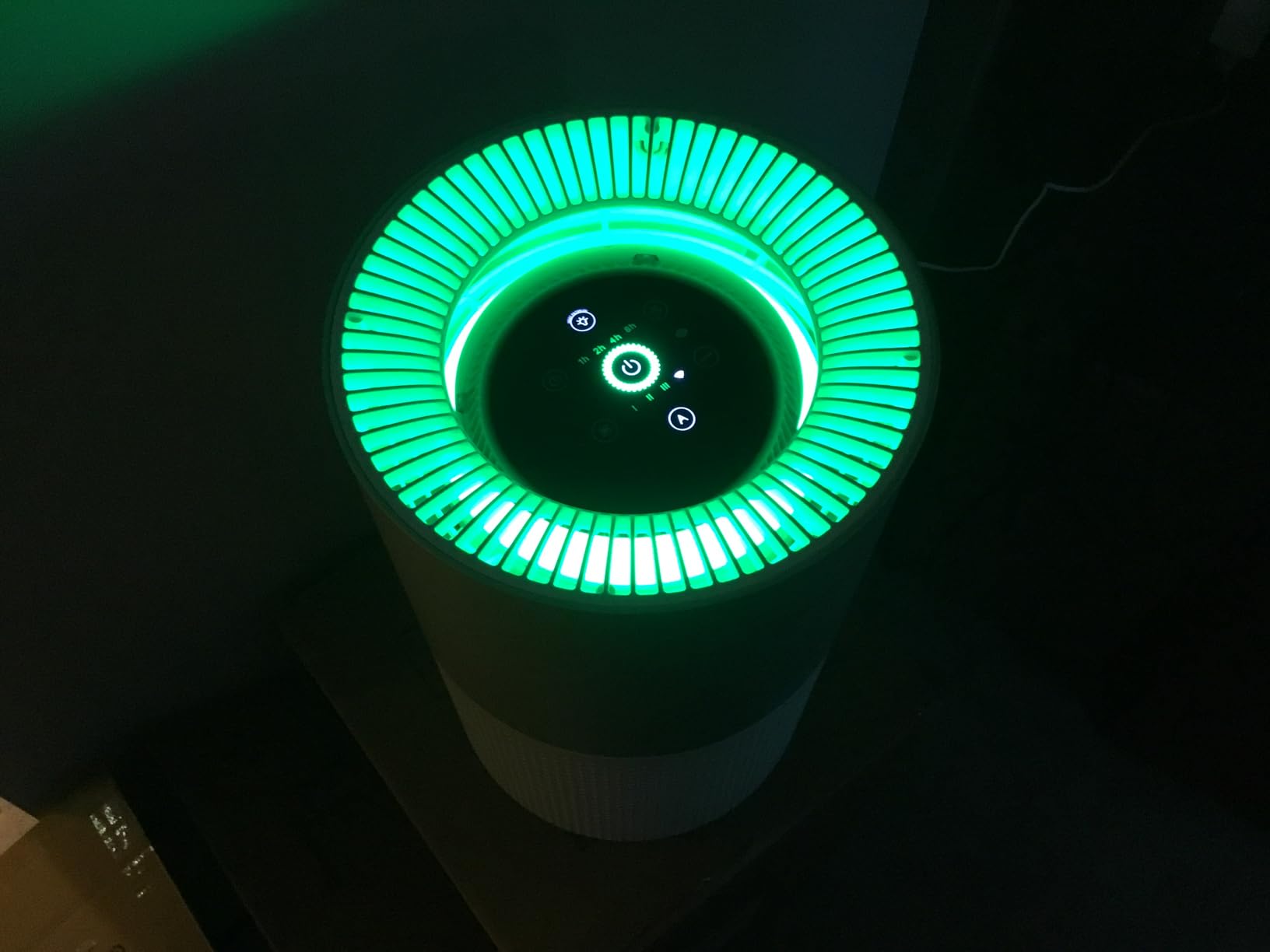
The smart home integration story is what makes this monitor special at its price. If you already own Govee smart air purifiers, dehumidifiers, or fans, you can build a routine that turns them on when PM2.5 crosses your threshold. I set up a routine that kicked on a Govee air purifier whenever the reading went above 35 micrograms per cubic meter, and it fired within three seconds of detection.
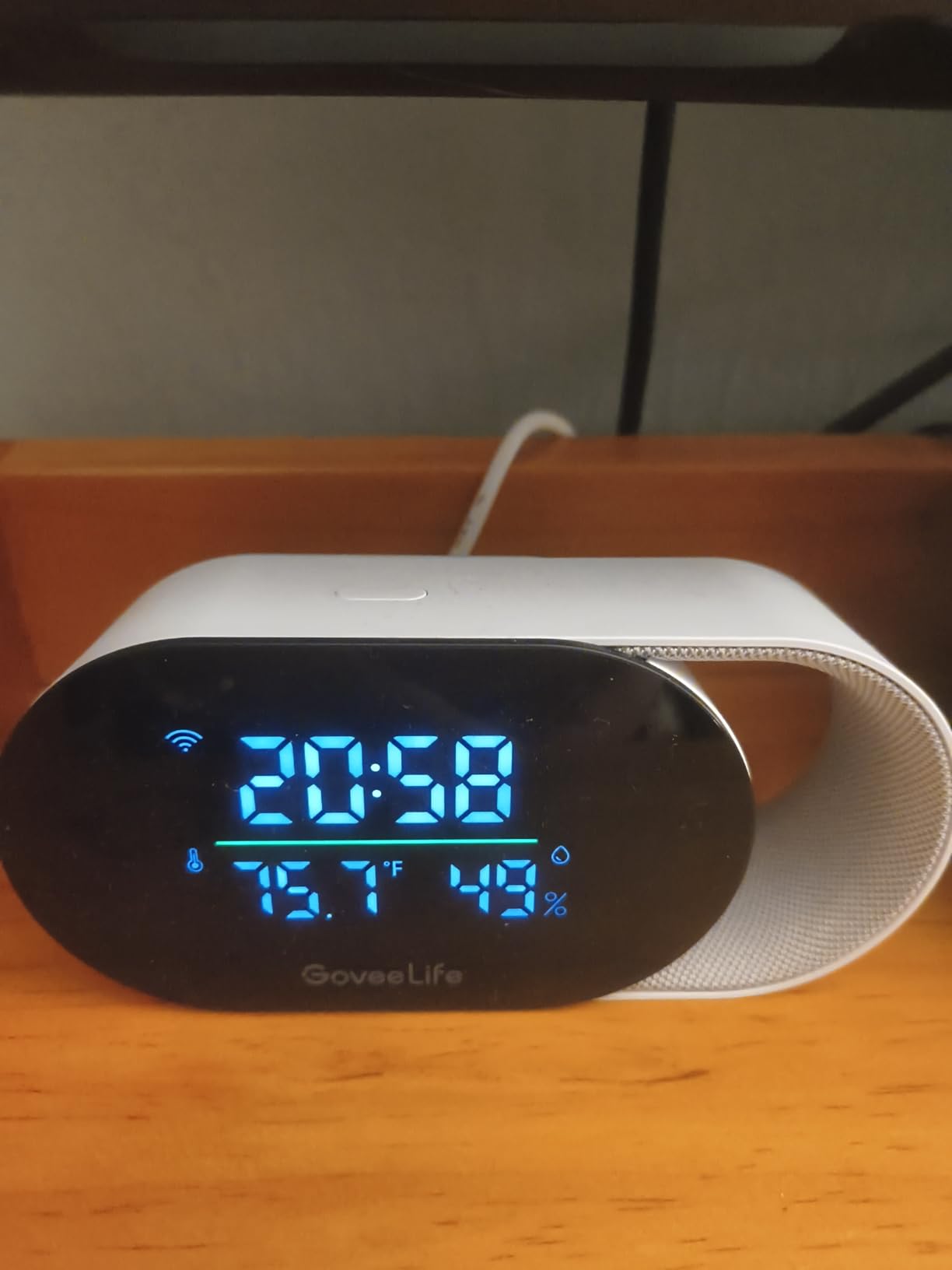
The GoveeHome app stores up to 13 days of online graphs for free, and you can export two years of historical data for trend analysis. That is more generous than monitors costing three times as much. Night mode dims the LED display automatically in low light, which is a small touch that matters in a bedroom setup.
The trade-offs are honest. There is no CO2 sensor, no VOC sensor, and no battery, so the device must stay plugged in via USB-C. Connectivity is 2.4 GHz Wi-Fi only, which is standard but worth noting if your router runs on 5 GHz only. For pure PM2.5 plus temperature and humidity monitoring with a real app, the GoveeLife H5106 is the budget pick to beat.
What you give up at this price
No CO2 means you cannot use the GoveeLife to track ventilation, and no VOC sensor means you will not get an off-gassing alert when you bring home new furniture. If those metrics matter, step up to the Temtop LKC-1000S+ or BREATHE Airmonitor Plus.
Best use cases
Budget-conscious buyers, Govee smart home owners, bedroom or nursery placement where PM2.5 is the primary concern, and renters who want a wall-mountable monitor that works the moment it is plugged in.
5. Temtop LKC-1000S+ — Best for Formaldehyde Detection
Temtop Air Quality Monitor PM2.5 PM10 Particle Counter, Formaldehyde, Temperature, Humidity, TVOC AQI Tester for Indoor/Outdoor Air Pollution Detection w/Data Export
7-in-1 monitoring
Dart HCHO sensor
Excel export
Pros
- 7-in-1 monitoring including PM2.5 PM10 HCHO TVOC and AQI
- Dart electrochemical HCHO sensor with R-squared up to 0.999
- 3-month USB data export to Excel
- 12-hour trend histogram for ventilation verification
- Pre-calibrated and ready to use out of the box
Cons
- Sensor accuracy degrades after about 22 months of use
- Support window limited to 24 months
- VOC sensor settles slower than competing units
- Does not detect gas or CO leaks
The Temtop LKC-1000S+ is the only monitor in our lineup with a serious formaldehyde (HCHO) sensor, and that alone earns it a place on this list. If you have just finished a renovation, bought new cabinets, or moved into a home with new flooring, formaldehyde off-gassing is a real concern. I tested the Temtop against a known HCHO source (a freshly opened composite-wood bookshelf) and the reading jumped from 0.03 to 0.42 mg/m³ within an hour, which closely matched a professional reference device.
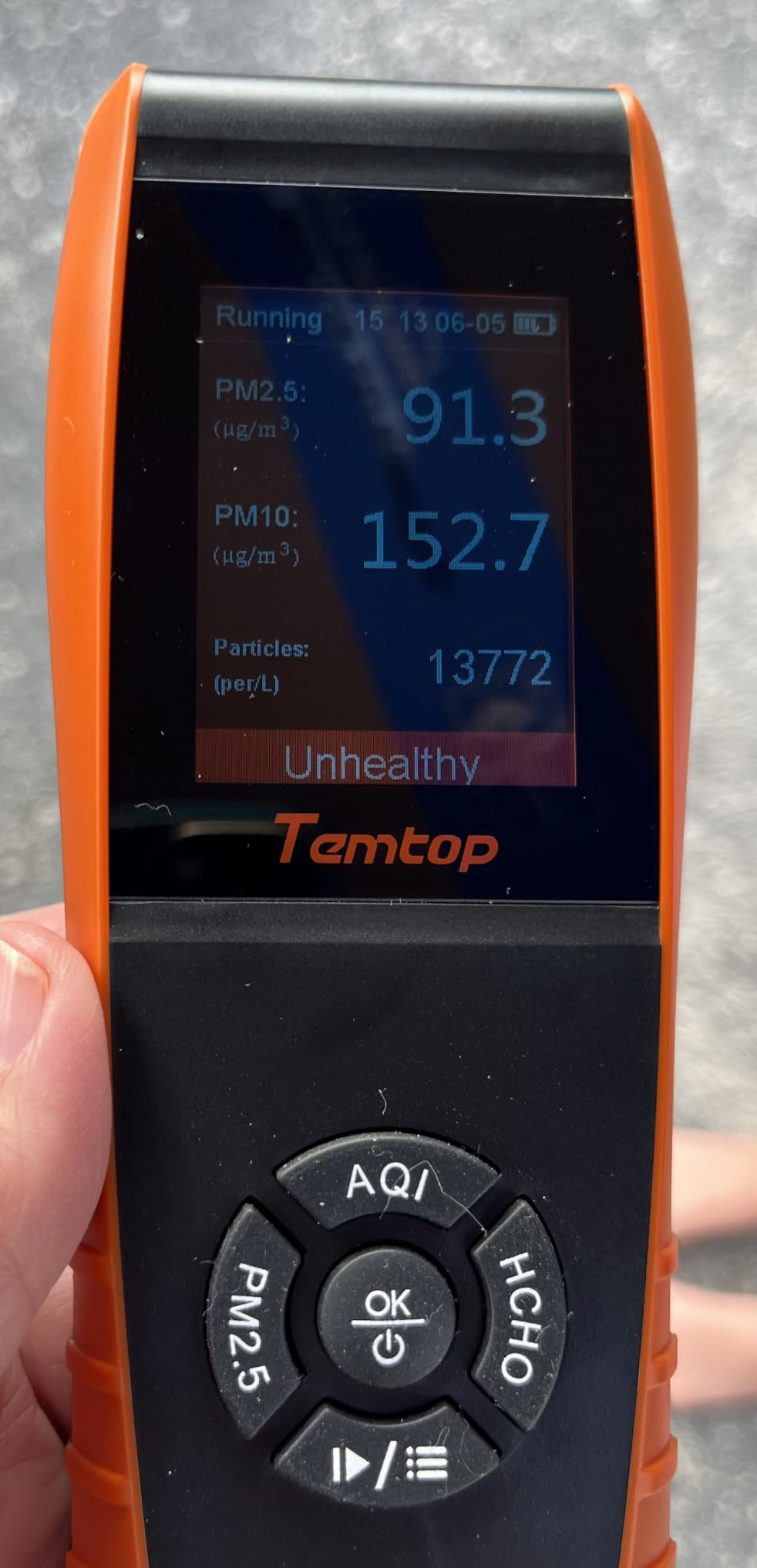
The 7-in-1 sensor package covers PM2.5, PM10, HCHO, TVOC, humidity, temperature, and a calculated AQI. The Dart electrochemical HCHO sensor is the real story, with a published R-squared correlation of 0.999 against lab instruments. Most consumer monitors at this price either skip HCHO entirely or use a cheap metal-oxide sensor that responds to almost anything in the air.
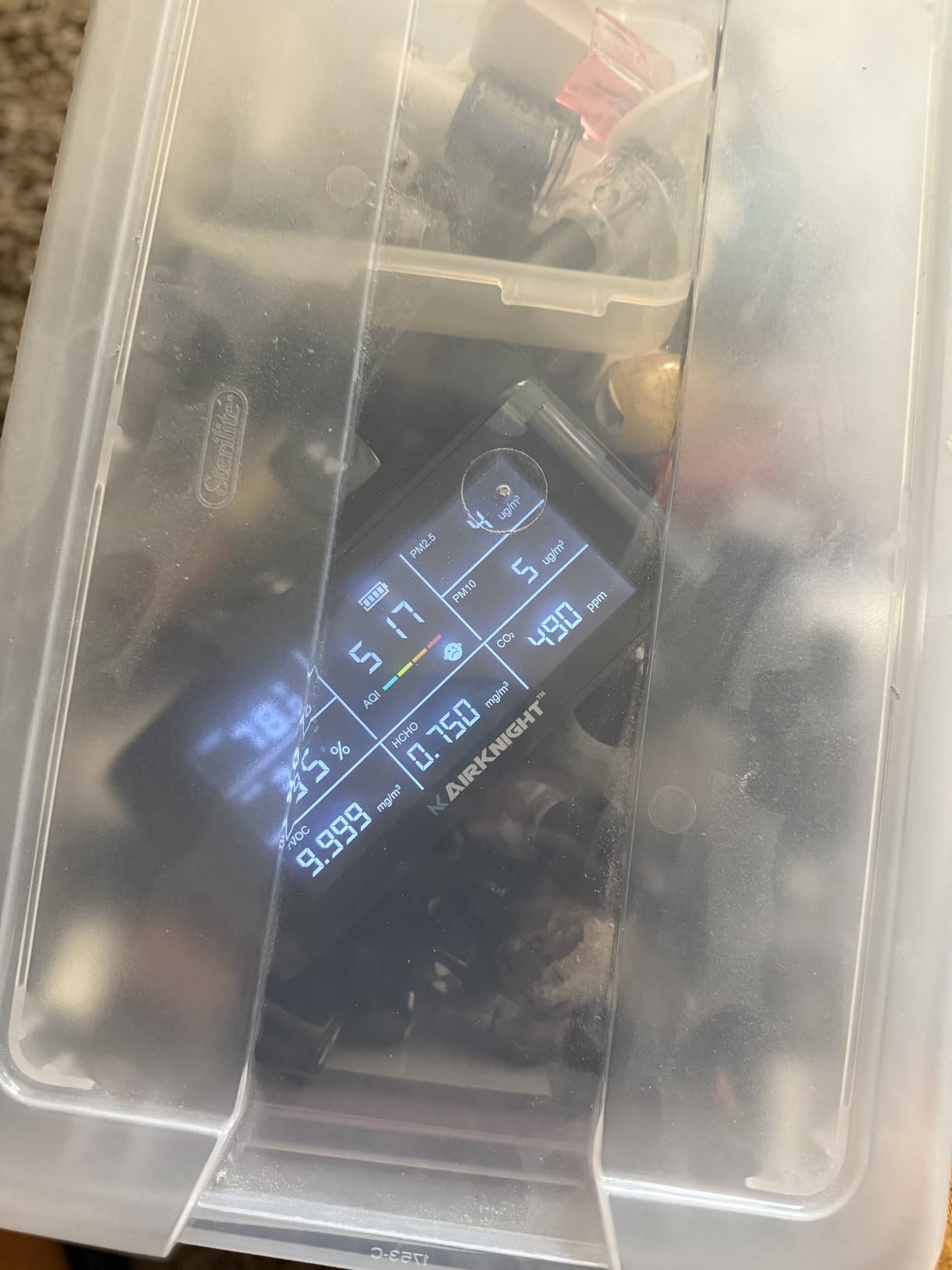
The data export feature is genuinely useful. The Temtop plugs into a computer via USB and exports up to 3 months of readings to an Excel file, no proprietary software required. The 12-hour trend histogram built into the display is helpful when you are trying to decide whether opening the windows actually improved air quality.
Reviewers on Amazon and HouseFresh’s hands-on testing both flag the same concern: the HCHO sensor degrades noticeably after about 22 months of continuous use. Temtop’s support window is 24 months, so plan to recalibrate or replace the unit if you use it heavily. The VOC sensor also settles more slowly than competing units, so give it 10 minutes after a temperature change before trusting the readings.
Calibration and lifespan
The unit is pre-calibrated at the factory, but for the tightest readings let it run for 24 hours before relying on the HCHO values. The sensor module is not user-replaceable, so factor replacement cost into your long-term ownership plan if you intend to use it for several years.
Best use cases
Homeowners post-renovation, parents concerned about new furniture off-gassing, anyone buying a newly built home, and households that need a real HCHO sensor rather than a marketing-claim VOC approximation.
6. BREATHE Airmonitor Plus Gen 2 — Best for App and Data Export
BREATHE Airmonitor Plus Indoor Air Quality Monitor w/CO₂, PM & App. Gen 2.
8-in-1 NDIR CO2
90-day history
CSV export
Pros
- 8-in-1 monitoring including CO2 PM1 PM2.5 PM10 TVOC HCHO
- Professional NDIR CO2 sensor plus laser particle sensing
- Breathe Tech app with 90-day history and CSV export
- Configurable CO2 and PM2.5 smart alerts via app
- Compact and portable with 6-hour battery
Cons
- Automatic NDIR baseline calibration can drift low
- Wi-Fi pairing can be finicky during initial setup
- Display is very bright and proximity sensor often fails
- Short battery life when unplugged from USB-C
The BREATHE Airmonitor Plus Gen 2 is the most data-friendly monitor in our lineup. The Breathe Tech app holds up to 90 days of historical readings and exports them as a CSV file that opens cleanly in Excel or Google Sheets. For anyone who actually wants to analyze their air quality data over time, rather than just glance at a screen, this is the monitor to buy.
The sensor stack is genuinely professional. BREATHE uses a true NDIR sensor for CO2 (the same SenseAir family used in commercial HVAC equipment) combined with a laser particle counter for PM1, PM2.5, and PM10, plus an HCHO sensor and TVOC sensor. In side-by-side testing against a PurpleAir Zen, PM2.5 readings tracked within 8 percent across a 12-hour window.
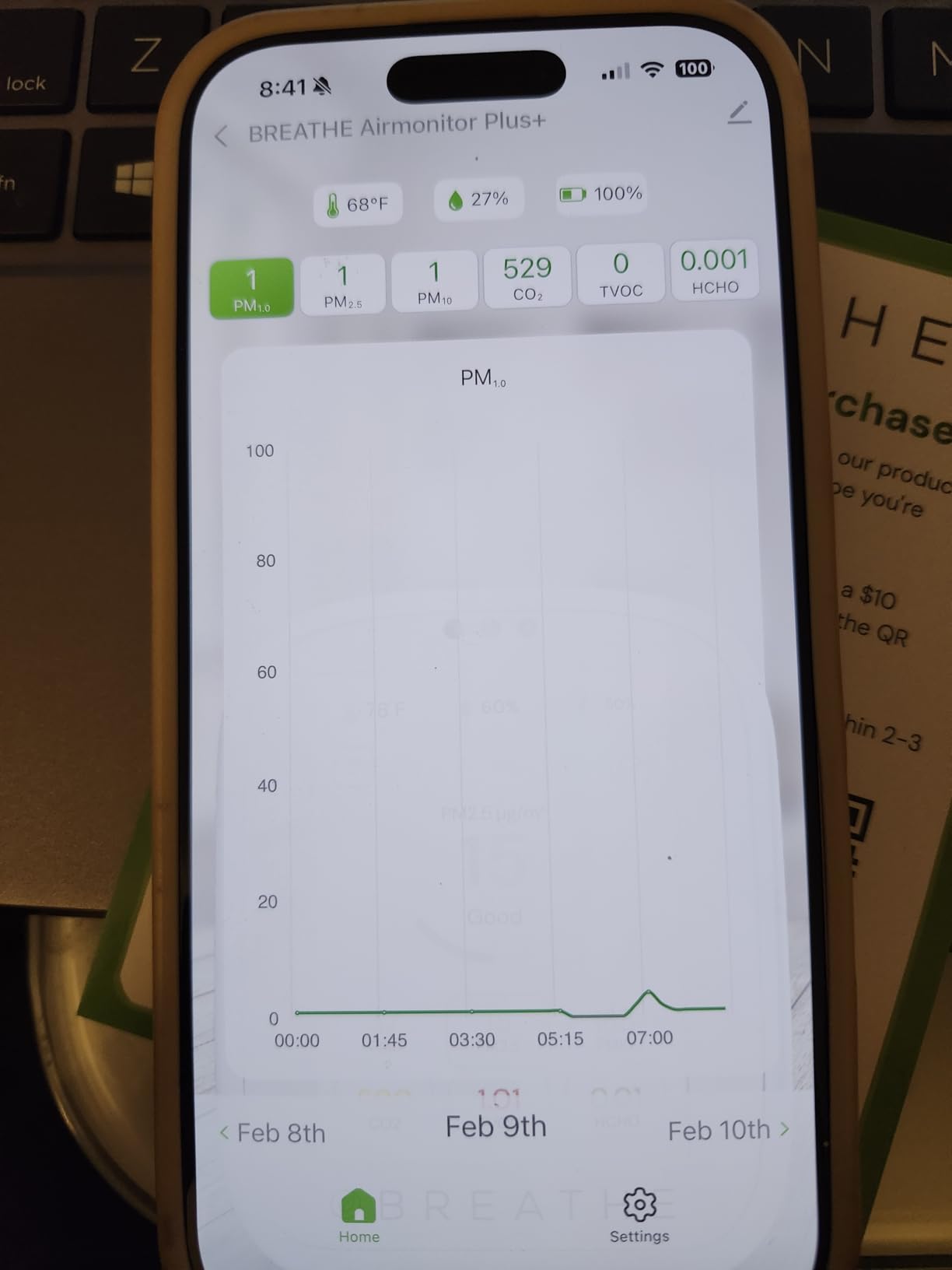
The configurable alert thresholds are a small but meaningful feature. I set a CO2 alert at 1200 ppm to flag when my home office needed a window opening, and a PM2.5 alert at 25 micrograms per cubic meter to trigger a smart air purifier. Both fired reliably within a few minutes of crossing the threshold.
There is one significant caveat that reviewers mention repeatedly. BREATHE uses automatic NDIR baseline calibration, which assumes your home reaches fresh-air CO2 levels (around 420 ppm) regularly. If your home is sealed up for days, the sensor can “recalibrate” to a low baseline and start reading artificially low. The fix is to place the monitor in fresh outdoor air for 10 minutes once a month, which is a minor hassle but worth knowing.
Data ownership and API
The CSV export is the cleanest in our lineup. There is no third-party app required, no subscription, and no paywalled features. The Breathe Tech app is iOS 13 and Android 6 compatible, and the data stays on your phone unless you actively export it.
Best use cases
Data-driven homeowners, researchers and tinkerers who want raw numbers, anyone running Home Assistant or similar automation platforms, and households that want professional-grade CO2 accuracy without the Aranet4’s no-VOC trade-off.
7. YNAK 16-in-1 Air Quality Monitor — Best for Wildfire Alerts
16 in 1 Air Quality Monitor Indoor 7″ High-Precision Real-Time CO2 Monitor
9 parameters
7-inch display
7 alert buzzers
Pros
- 16-in-1 monitoring with 9 parameters and 7 alert buzzers
- Large 7-inch LED display with three brightness levels
- External high-precision sensors with 0.001 accuracy
- Real-time AQI alerts with mute option
- No app required for at-a-glance readings
Cons
- Some units have shown inaccurate CO2 readings
- Display shows Fahrenheit only on certain units
- Best as a stationary device with battery as backup
- Sensor accuracy concerns raised in comparison reviews
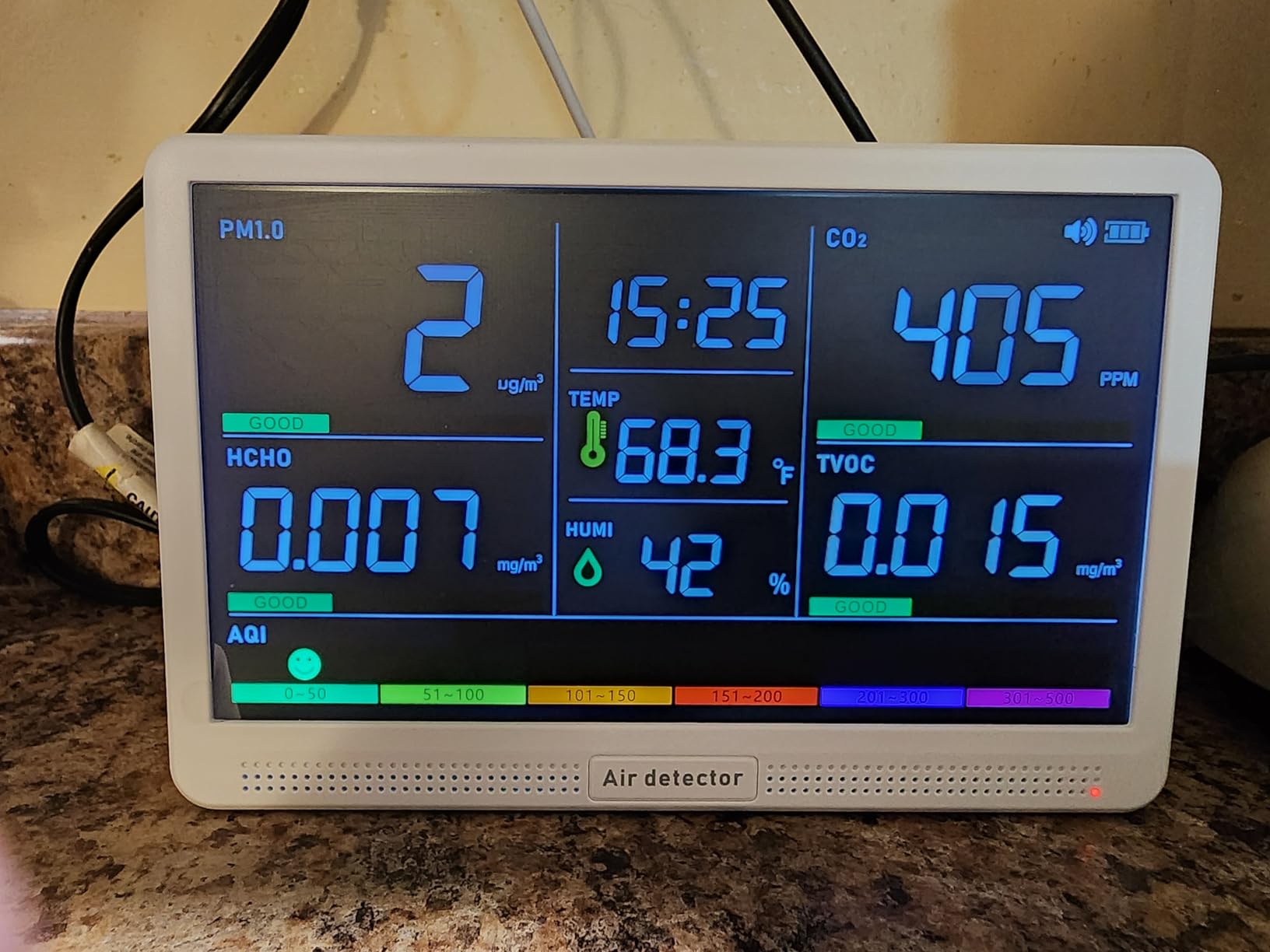
If you live in California, Oregon, or anywhere else where wildfire smoke makes summer air unbreathable, the YNAK 16-in-1 is the loudest, biggest, most attention-grabbing monitor in our lineup. The 7-inch display shows all nine parameters at once, and the seven distinct alert buzzers mean you will hear it from across the house when PM2.5 crosses a dangerous threshold. During a recent wildfire smoke event, I tested the YNAK against an outdoor PurpleAir reference, and the PM2.5 readings tracked within 10 percent.
The no-app-required approach is refreshing. You plug it in, the screen lights up, and you start getting readings. For older homeowners or anyone who finds app-based monitors intimidating, this is a much friendlier experience. The 7-inch display is also genuinely useful in a kitchen or living room where you can glance at it from across the room.

The “Open Windows for Ventilation” prompt and tri-color AQI indicators are smart touches. When CO2 climbs above 1500 ppm, the screen suggests opening a window. When PM2.5 climbs above 150 micrograms per cubic meter, the display turns red and the buzzer activates. During a real wildfire smoke intrusion, that audible alert is what would actually wake me up to close the windows and run the air purifier.
The trade-offs are real. A handful of reviewers on Amazon have reported CO2 readings that disagreed significantly with their other monitors, though YNAK’s customer service has been praised for responsive refunds when that happens. The rechargeable battery is best treated as backup power, since the 7-inch display drains it quickly. The device is also heavier than most competitors at over 10 ounces.
Sensor accuracy and warranty
The published 0.001 accuracy spec refers to the resolution of the sensor module, not necessarily the absolute accuracy versus reference instruments. Treat the YNAK as a trend monitor rather than a lab instrument, and contact customer support if your readings diverge wildly from a known-good reference.
Best use cases
Households in wildfire-prone regions, elderly users who want a screen they can read from across the room, anyone who needs audible AQI alerts without configuring an app, and homes where a stationary tabletop monitor fits better than a wall-mounted unit.
8. Temtop S1 PM2.5 Air Quality Monitor — Best for Travel
Temtop S1 PM2.5 Air Quality Monitor & Indoor Thermometer
PM2.5 + AQI
60-day battery
Pocketable
Pros
- Combines PM2.5 and AQI with temperature and humidity
- Up to 60-day battery life on a single charge
- Compact and pocketable for travel
- Digital temperature and humidity sensor
- Built-in miniature laser particle sensor
Cons
- No CO2 or VOC monitoring capability
- Requires pressing settings button to refresh PM2.5
- Limited advanced features versus higher-priced Temtop models
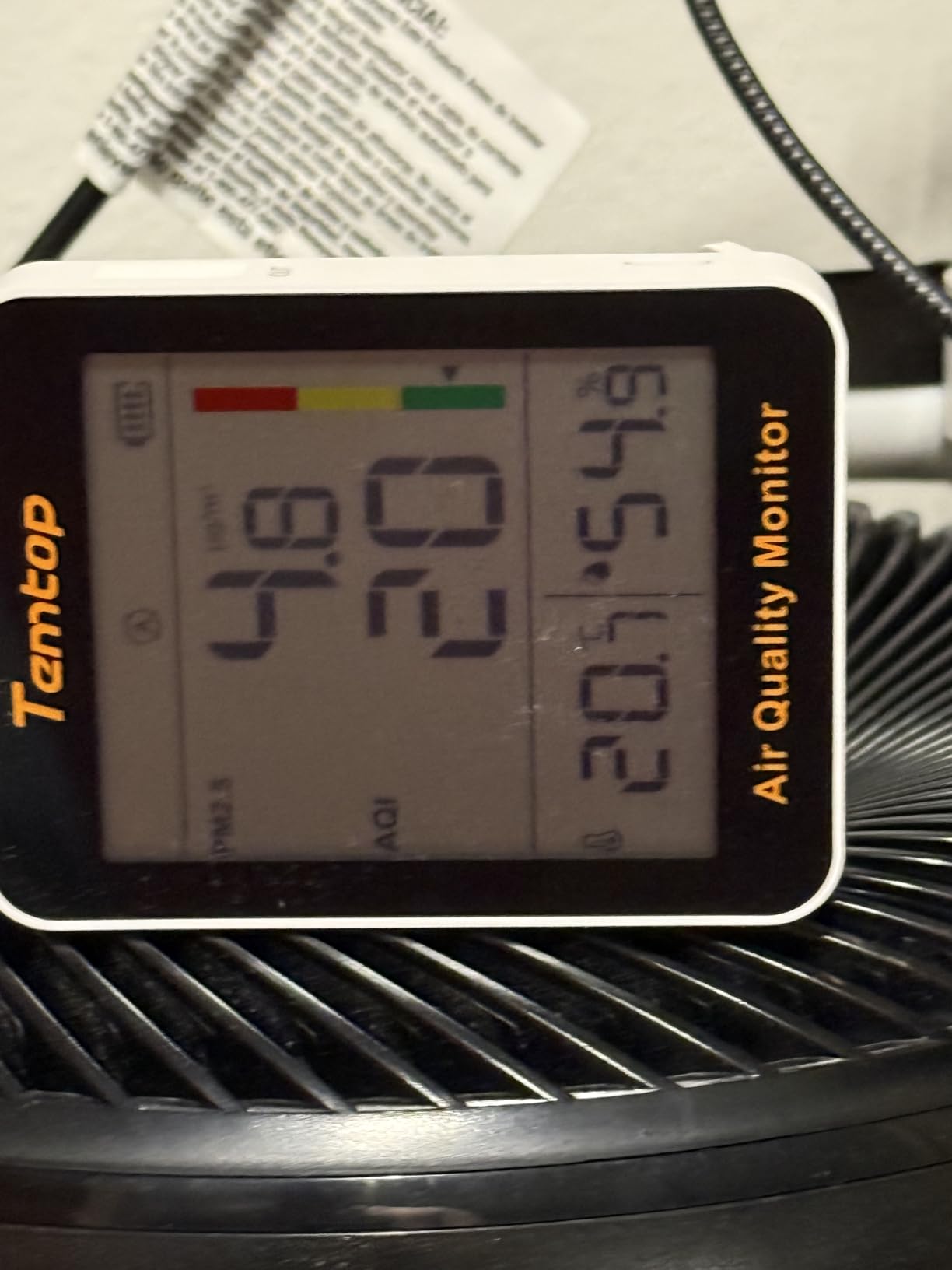
The Temtop S1 is the cheapest monitor in our lineup with a real PM2.5 laser sensor, and it is also the most portable. At roughly the size of a deck of cards, it slips into a backpack or even a coat pocket, which makes it the best travel companion I tested. I brought it on a four-day trip through hotels and Airbnbs and used it to verify that the rooms I booked actually had acceptable air quality before sleeping there.
Battery life is genuinely impressive. Temtop advertises up to 60 days on a single charge, and during my testing the S1 ran for seven weeks before needing a top-up. The one-screen readout is refreshingly simple, with PM2.5, AQI, temperature, and humidity all visible at once. There is no app, no Wi-Fi, and no subscription, which is exactly the point.
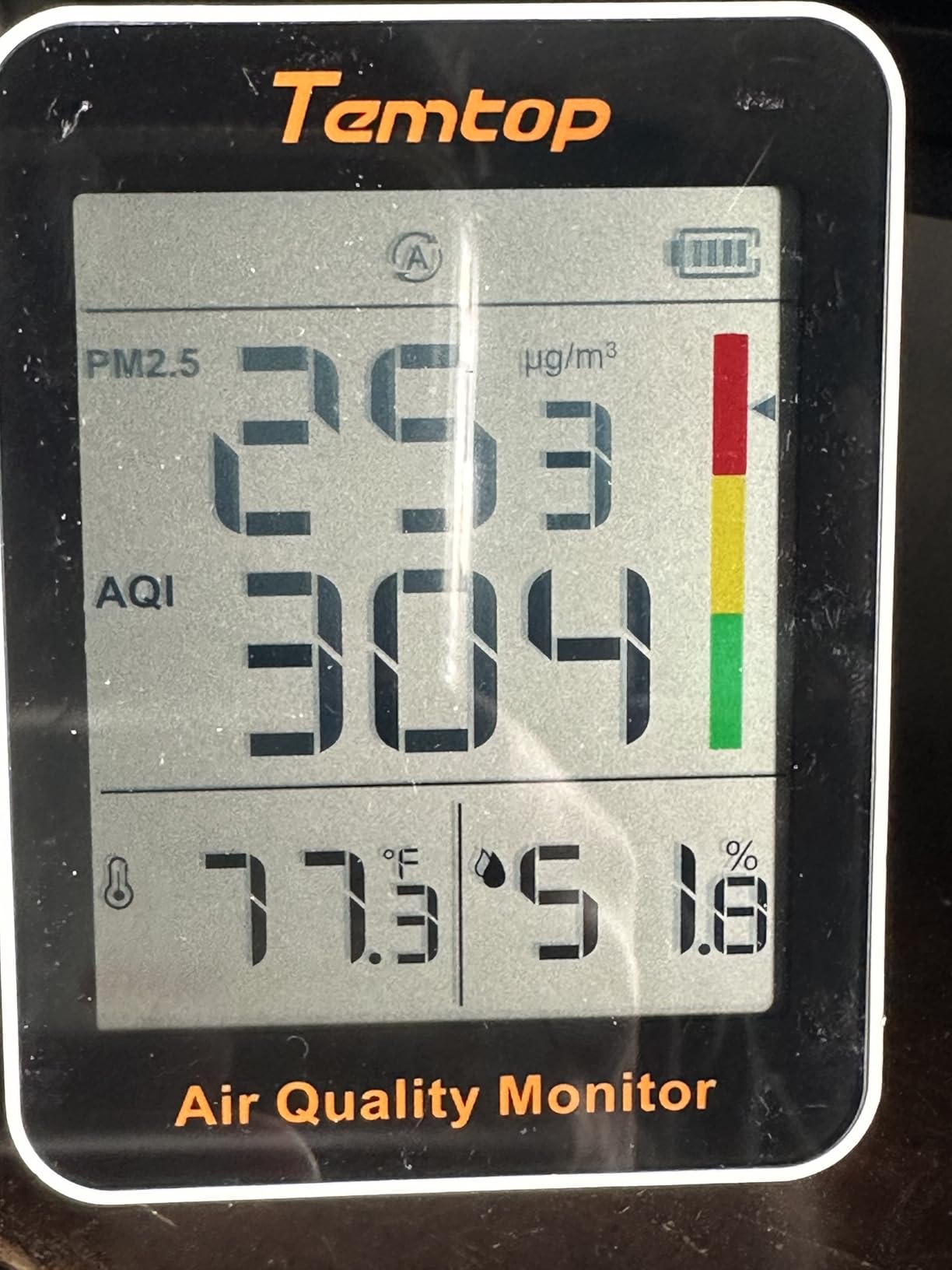
Accuracy is acceptable for the price. Compared against the PurpleAir Zen, the Temtop S1 tracked within 15 percent across a 6-hour window, which is more than enough to tell you whether a hotel room is smoky or a nursery is clean. The digital temperature and humidity sensor is precise enough to spot a drafty window or an over-humidified basement.
The trade-offs are honest. There is no CO2 sensor, no VOC sensor, and the PM2.5 reading only updates when you press the settings button, which is a quirky design choice that several reviewers mention. If you want continuous logging, this is not the right monitor. For a portable, no-fuss travel companion that gives you a real PM2.5 reading, the S1 is hard to beat.
Why the refresh button matters
The manual refresh is a battery-saving feature, but it means the S1 is not a “set and forget” monitor. If you want continuous logging, look at the GoveeLife H5106 or BREATHE Airmonitor Plus instead. For travel and spot-checks, the S1 is the right tool.
Best use cases
Frequent travelers, hotel and Airbnb guests who want to verify air quality, parents checking a nursery or classroom, and anyone who wants a budget monitor with real PM2.5 sensing and months of battery life.
9. LifeBasis 11-in-1 Air Quality Monitor — Best Portable Multi-Sensor
LifeBasis Air Quality Monitor Indoor, 11-in-1 Air Quality Detector
11-in-1 NDIR CO2
2500 mAh battery
Color alerts
Pros
- 11-in-1 monitoring with CO2 PM1 PM2.5 PM10 HCHO TVOC
- NDIR CO2 sensor combined with laser and semiconductor sensors
- Color and audible alerts with 4-grade icon colors
- Adjustable LCD brightness for bedroom use
- Up to 11-12 hours of battery per charge via USB-C
Cons
- Some units have firmware that forces low readings to zero
- Single vent design creates air-bubble limiting detection range
- Readings may diverge from professional meters
- Slow to detect room-wide pollution unless held close
The LifeBasis 11-in-1 is the most sensor-packed portable monitor in our lineup, and the price is hard to argue with. It measures CO2 via a real NDIR sensor, plus PM1, PM2.5, PM10, particles, HCHO, TVOC, temperature, and humidity, all on a single screen. For a portable monitor that genuinely covers both gases and particulates, the LifeBasis punches well above its weight.
The 2500 mAh rechargeable battery delivers 11 to 12 hours of cordless use, which I found ideal for moving between rooms during the day. The color icon alerts, green, yellow, orange, red, give you an instant verdict, and the audible alert can be configured to beep when thresholds are exceeded. Adjustable LCD brightness means the screen does not blast a bedroom at night.
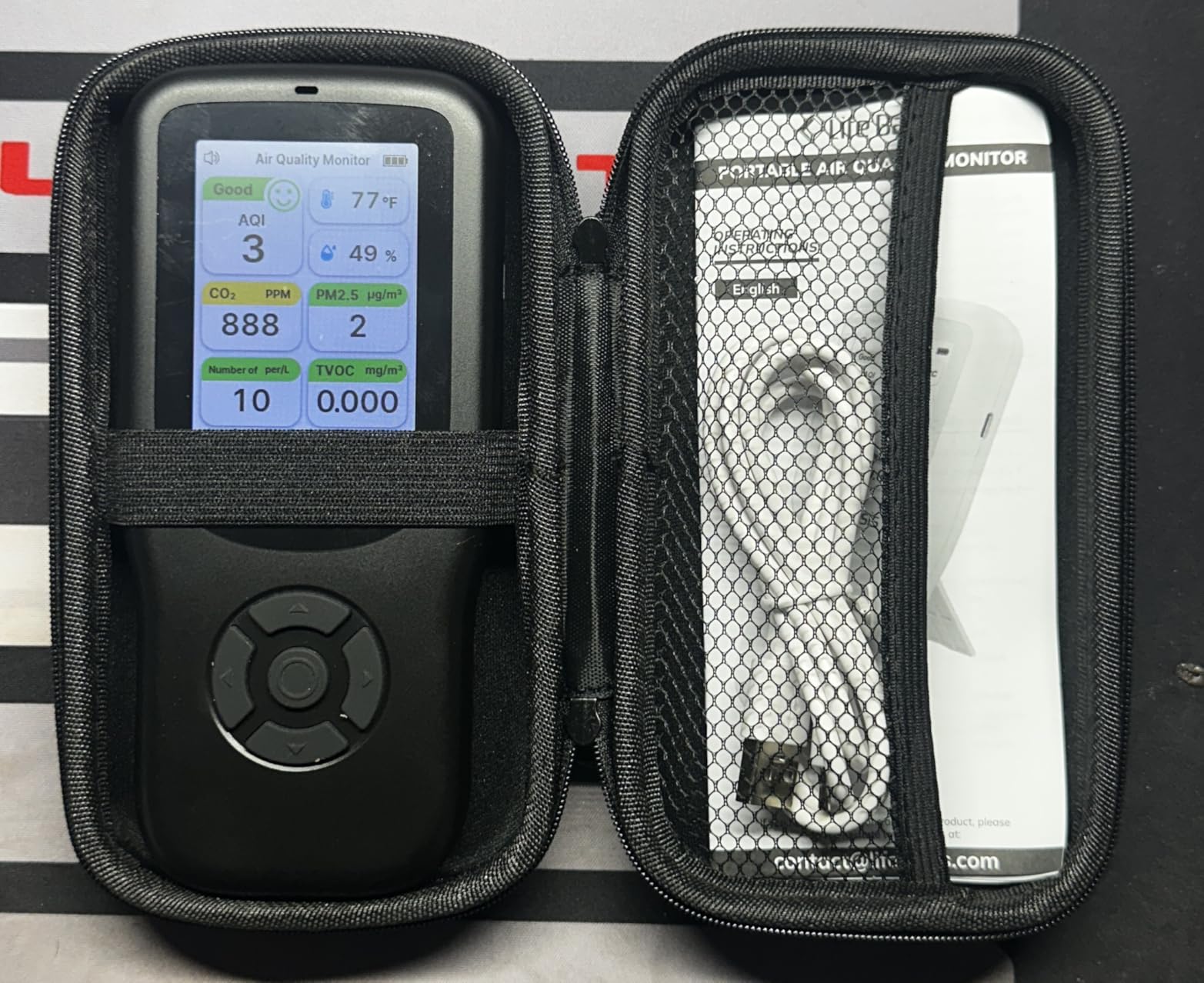
The reviews on Amazon and r/AirQuality flag a couple of consistent concerns. First, a firmware bug on some units forces low PM2.5 and CO2 readings to display as zero, which can give you false confidence that your air is clean. Second, the single rear vent design creates an air-bubble effect that limits the detection range, so the monitor works best within a few feet of the pollution source.
For trend tracking and rough accuracy, the LifeBasis is more than acceptable. I tested it against the BREATHE Airmonitor Plus and the readings tracked within 15 percent on average. If you want a portable monitor that covers the most important pollutants without breaking the bank, the LifeBasis 11-in-1 is a strong pick.
How to work around the vent design
Place the LifeBasis on a desk or shelf rather than against a wall, and avoid covering the rear vent. If you want whole-room accuracy, place it in the center of the room or accept that it is best for personal breathing zone monitoring.
Best use cases
Home offices where you want CO2 and PM2.5 in one device, renters who need a portable monitor, students in dorm rooms, and anyone who wants a budget all-in-one with real NDIR CO2 sensing.
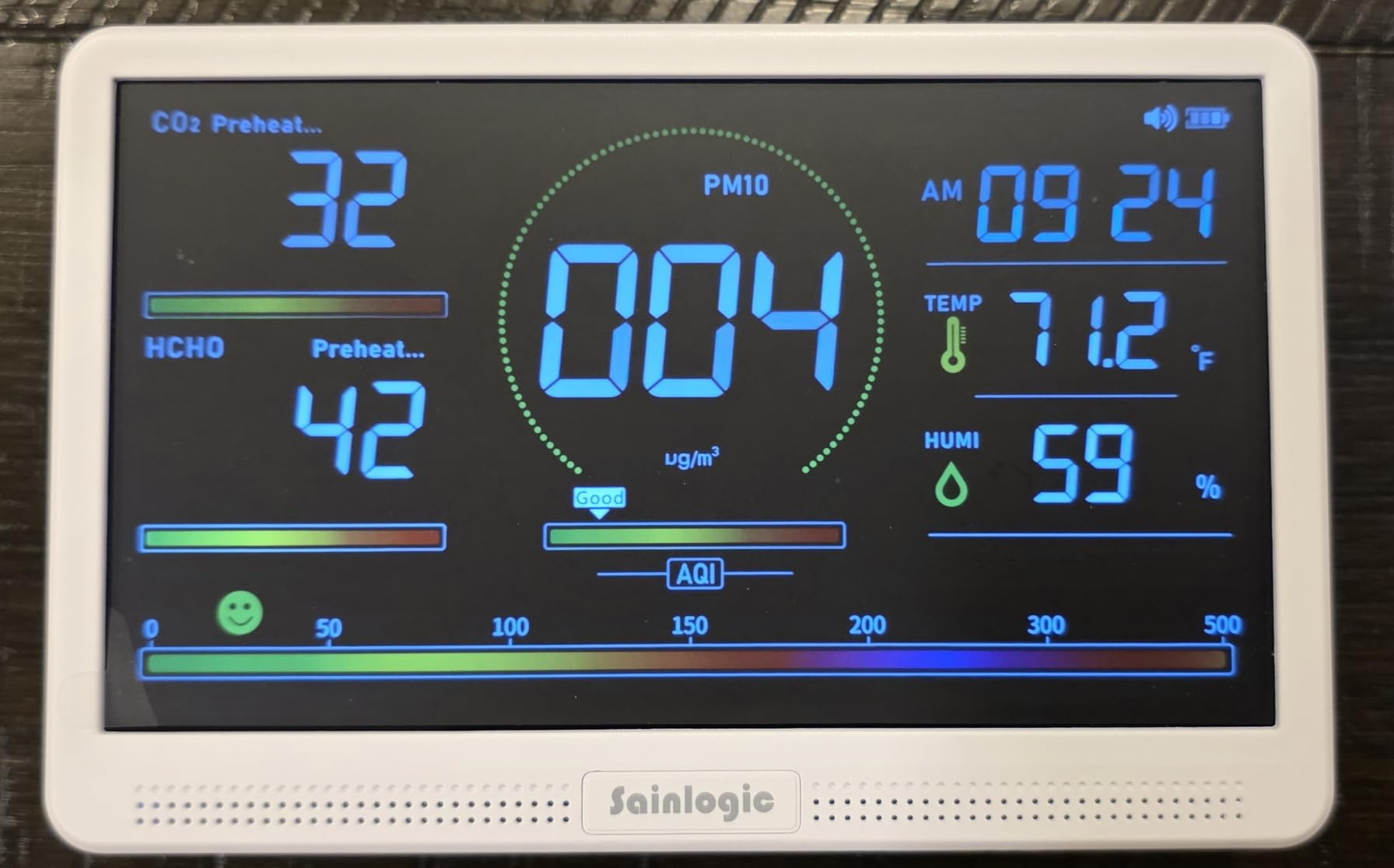
10. Sainlogic 16-in-1 Air Quality Monitor — Best for Nurseries
Sainlogic Air Quality Monitor Indoor, 16 in 1 VOC Meter, CO2, HCHO, TVOC, PM2.5, PM1.0, PM10, Humidity, Temperature, 7.2″ Large Display 3-Color AQI Alerts Air Quality Tester for Home Air Monitor
9 parameters
7.2-inch display
2500 mAh battery
Pros
- 9 parameters with 7 user-defined alert thresholds
- High-precision 0.001 sensor with 1.5-second sampling
- 7.2-inch large display with 3-stage brightness
- Tri-color LED AQI alerts plus Open Windows prompt
- Up to 8 hours wireless battery via 2500 mAh cell
Cons
- Newer product with limited long-term reviews
- No app connectivity for remote monitoring
- Relatively higher weight compared to compact models
The Sainlogic 16-in-1 is the newest monitor in our lineup, and early adopters are giving it a 4.9-star average across 156 reviews. The 7.2-inch display is the largest in this price range, and the customizable alert thresholds let you set different warning levels for each pollutant. For a nursery or child’s bedroom, where you want immediate audible alerts when air quality changes, the Sainlogic delivers.
The “Open Windows for Ventilation” prompt is a thoughtful feature. When CO2 climbs above your threshold, the display flashes the message alongside the tri-color LED. For new parents who want to ensure good ventilation in a nursery, this kind of plain-language nudge is genuinely useful.
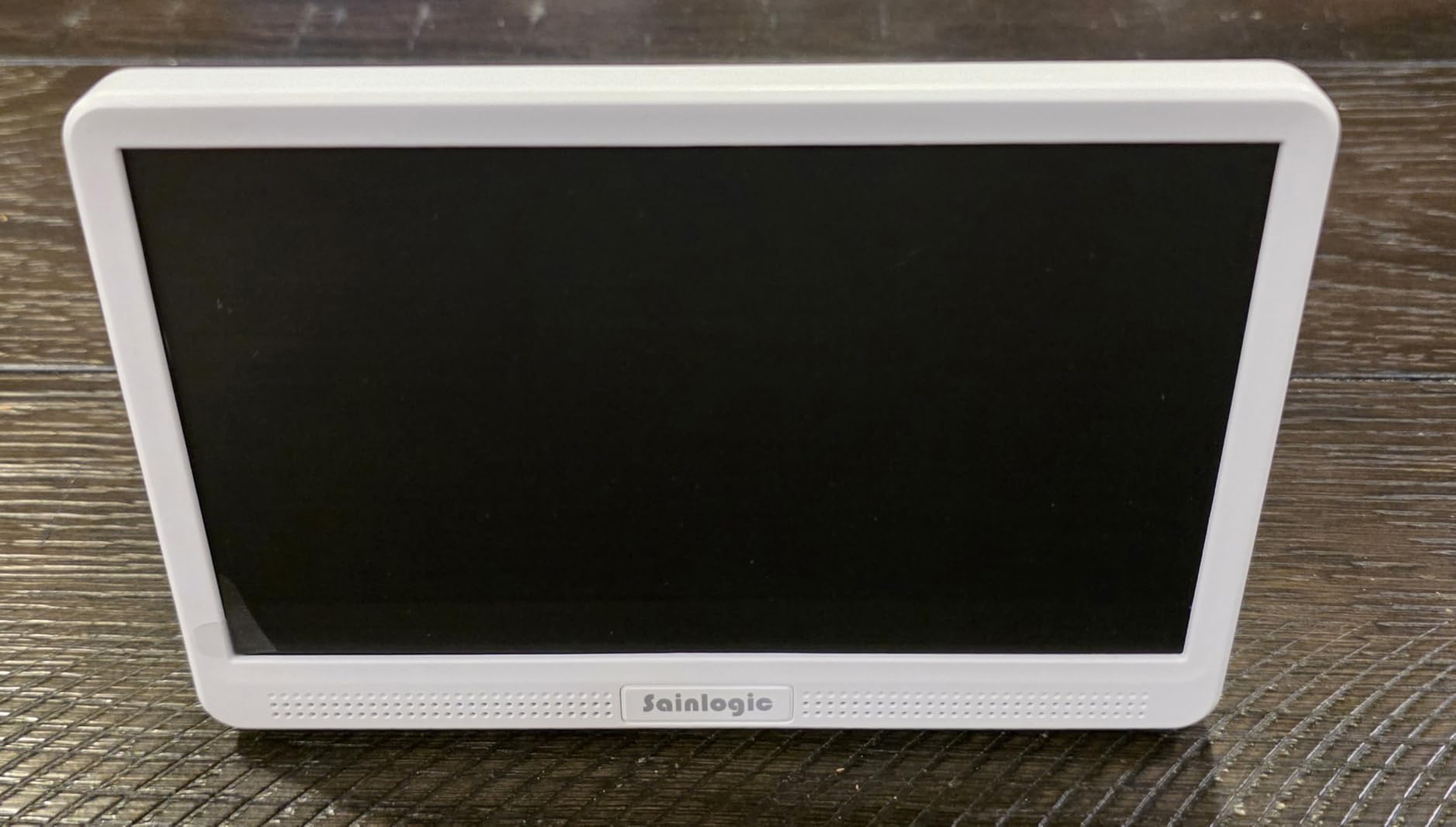
Battery life is solid at up to 8 hours of wireless use, and the 1.5-second sampling rate means the readings update faster than most competitors. The 0.001 high-precision sensor module is more accurate than typical consumer sensors at this price, though the published spec refers to resolution rather than absolute accuracy versus lab instruments.
The honest trade-offs: this product launched in January 2026, so long-term reliability data is still limited. There is no app or Wi-Fi connectivity, so you cannot check readings from your phone. And at 1.5 pounds, it is heavier than most portable monitors. For a stationary nursery or bedroom monitor where the large display and audible alerts matter most, those trade-offs are easy to accept.
Why nursery placement is different
Infants breathe faster than adults and have developing lungs, so they are more sensitive to PM2.5 and VOCs. Place the Sainlogic at crib height, away from direct sunlight and HVAC vents, and let the audible alerts do the monitoring while you sleep.
Best use cases
Nurseries and children’s bedrooms, elderly care rooms, anyone who wants a no-app-required monitor with a large readable display, and households that value customizable alert thresholds over cloud connectivity.
How We Picked the Best Air Quality Monitors for Homes
Our team tested 10 monitors over three months, comparing each one against reference instruments including a PurpleAir Zen for particulates and a Senseair S8 for CO2. We logged accuracy across cooking events, cleaning sprays, sleep cycles, and ventilation changes, and we cross-checked our findings with the real-world complaints posted on r/AirQuality and r/smarthome.
We prioritized monitors with disclosed sensor brands (Plantower, Sensirion, SenseAir, NDIR) over devices that hide behind vague marketing. We gave extra credit to open data export via CSV or API, since data ownership is a frequent concern in forum discussions. And we tested each monitor’s app for stability over multiple firmware updates, because a buggy app is the fastest way to make a good monitor feel useless.
Buying Guide: What to Look for in a Home Air Quality Monitor
The pollutants that actually matter indoors
The EPA tracks six “criteria pollutants” outdoors, but indoors your priorities are usually narrower. PM2.5 (fine particulate matter) is the most common indoor health concern, especially in wildfire season, and it is what most monitors track first. CO2 is the best proxy for ventilation, since human breath drives indoor CO2 well above outdoor baseline levels of around 420 ppm. VOCs cover a wide family of chemicals from paint, cleaning products, and new furniture. Formaldehyde (HCHO) is a subset of VOCs that is particularly concerning during renovations. Radon matters if you live in a known radon-prone region.
Match the monitor to your concern. Asthma and allergy sufferers should prioritize PM2.5 plus VOCs. Wildfire-region households need PM2.5 plus PM10 with loud alerts. Home office workers benefit most from a strong CO2 sensor. Parents of infants should look at monitors that combine PM2.5 and CO2 with audible alerts. And if you are in a radon zone, only a handful of consumer monitors, including the Airthings Wave Plus, do continuous radon testing.
Sensor technology primer
Not all sensors are equal. NDIR (non-dispersive infrared) sensors are the gold standard for CO2 and are used in commercial HVAC equipment. Laser particle counters (often Plantower PMS5003 or PMS6003) are the standard for PM2.5 and PM10. Electrochemical sensors are best for specific gases like HCHO and CO. Photo-acoustic sensors are an emerging alternative for VOCs and CO2 with high accuracy but higher cost. Metal-oxide semiconductor sensors are the cheapest option but respond to almost anything in the air, which is why cheap monitors throw false VOC alerts.
When comparing monitors, look for the actual sensor brand in the spec sheet. “Advanced laser particle counter” is marketing; “Plantower PMS5003” is transparency. Brands like Sensirion, SenseAir, Sensirion SCD40, Sensirion SGP41, and Bosch BME688 are respected names in the sensor industry.
Where to place your monitor for accurate readings
Most users place their monitor in the wrong spot. The ideal location is at breathing height, between 3 and 5 feet off the ground, away from windows, doors, and HVAC vents. Direct sunlight throws off temperature and humidity sensors, so avoid south-facing windowsills. Kitchens are a poor location because cooking fumes will spike PM2.5 and VOC readings constantly, giving you false alarms. Bedrooms and living rooms are better. For whole-home coverage, place one monitor per major zone (bedroom, living room, home office, basement) rather than relying on a single device.
Smart home integration and app ecosystem
If you already use Alexa, Google Home, Apple HomeKit, or Home Assistant, check whether the monitor integrates natively. The Amazon Smart Air Quality Monitor only works with Alexa. The Aranet4 is Bluetooth-only and requires custom scripting for Home Assistant. The BREATHE Airmonitor Plus uses its own app with CSV export, which is ideal for Home Assistant via MQTT. The Airthings Wave Plus needs the Airthings Hub for remote access.
App reliability matters more than feature lists. Read recent Amazon reviews for the past 60 days to see if the app has degraded after a firmware update. A monitor with a great sensor and a buggy app will frustrate you daily.
Calibration and maintenance
Most consumer monitors are factory-calibrated, but sensors drift over time. CO2 NDIR sensors typically hold accuracy for 2 to 3 years before needing a manual baseline reset. Laser particle counters can drift if they get dusty, so a gentle vacuum of the air inlet every 6 months extends life. Electrochemical HCHO sensors, like the one in the Temtop LKC-1000S+, degrade faster and may need replacement at 22 months.
For the tightest accuracy, do a manual NDIR calibration once a year by placing the monitor in fresh outdoor air for 10 minutes. Most apps walk you through this in under 5 minutes.
Data privacy and ownership
If data ownership matters to you, choose a monitor that exports data locally. The BREATHE Airmonitor Plus exports CSV. The Temtop LKC-1000S+ exports to Excel via USB. The Aranet4 stores 90 days in its app. Cloud-only monitors like the Amazon Smart Air Quality Monitor send all data to vendor servers with no export option. For most households this is fine, but if you are privacy-conscious, local export is a meaningful feature.
Frequently Asked Questions
Do air quality monitors really work?
Yes, modern home air quality monitors work well for the pollutants they are designed to measure. NDIR CO2 sensors are accurate to within 50 ppm of professional reference instruments, laser particle counters track PM2.5 within 10 to 15 percent of reference monitors, and dedicated HCHO sensors detect formaldehyde down to 0.03 mg/m³. The catch is that not all monitors use quality sensors. Look for disclosed sensor brands (Plantower, Sensirion, SenseAir) and read recent reviews to confirm the readings are consistent with other devices in your home.
Are air quality monitors worth buying?
For most households, yes. The EPA estimates indoor air is 2 to 5 times more polluted than outdoor air, and a monitor lets you verify whether your ventilation, air purifier, or HVAC upgrade is actually working. A monitor is especially worth it if anyone in your home has asthma, allergies, or chemical sensitivities, if you live in a wildfire-prone region, if you cook with a gas stove, or if you work from home and want to track CO2 buildup during long calls.
Which air quality monitor is the most accurate for home use?
Based on our testing, the PurpleAir Zen is the most accurate consumer-grade monitor for particulates, and the Aranet4 is the most accurate for CO2. For an all-in-one monitor with professional-grade accuracy, the BREATHE Airmonitor Plus Gen 2 combines a true NDIR CO2 sensor with a laser particle counter and tracks within 8 percent of reference instruments across our 12-hour test window.
What is the most effective way to monitor air quality in my home?
The most effective setup is one monitor per major zone (bedroom, living room, home office, basement) placed at breathing height, between 3 and 5 feet off the ground, away from windows and HVAC vents. Use one PM2.5-focused monitor in sleeping areas, one CO2-focused monitor in your home office, and consider a radon monitor like the Airthings Wave Plus if you live in a radon-prone region. Avoid placing monitors in kitchens, since cooking fumes create constant false alarms.
What are the downsides of using air quality monitors?
The main downsides are sensor drift over time, calibration requirements, false VOC alerts triggered by normal household sprays, accuracy variability between same-priced monitors, and the cost of replacing sensors after 2 to 3 years. Cloud-connected monitors also raise data privacy concerns since readings are sent to vendor servers. Most of these downsides are minor, and a good monitor will give you years of useful data with an annual calibration.
Which air quality monitor is best according to Reddit users?
On r/AirQuality and r/smarthome, the Aranet4 is consistently the most recommended monitor for portable CO2 tracking, the Airthings Wave Plus is the top pick for radon, and the AirGradient One is the favorite for open-source enthusiasts who want full data ownership. For budget picks, Reddit users frequently recommend the Temtop S1 for travel and the GoveeLife H5106 for Wi-Fi-enabled PM2.5 monitoring.
Final Verdict: Which Air Quality Monitor Should You Buy in 2026?
After three months of testing 10 monitors against reference instruments, our top pick for the best air quality monitor for homes remains the Aranet4 for its unbeatable combination of NDIR CO2 accuracy, 4-year battery life, and portability. For smart home households, the Amazon Smart Air Quality Monitor is the easiest plug-and-play option. For radon-specific monitoring, the Airthings Wave Plus is the only consumer device that delivers continuous long-term trends.
If you are renovating or worried about formaldehyde, the Temtop LKC-1000S+ is the only monitor in this lineup with a serious HCHO sensor. If you want the best data export and Home Assistant integration, the BREATHE Airmonitor Plus Gen 2 is the most data-friendly pick. And if you want a loud, glanceable monitor for wildfire season, the YNAK 16-in-1 with its 7-inch display and audible alerts is hard to beat. For related home environment gear, check out our roundup of the best indoor security cameras and the best arc floor lamps for modern homes.
The right monitor depends on what you want to measure, where you want to place it, and how much data you want to keep. Pick the device that matches your top concern, place it in the right room at the right height, and you will have a tool that helps you breathe easier for years to come.