
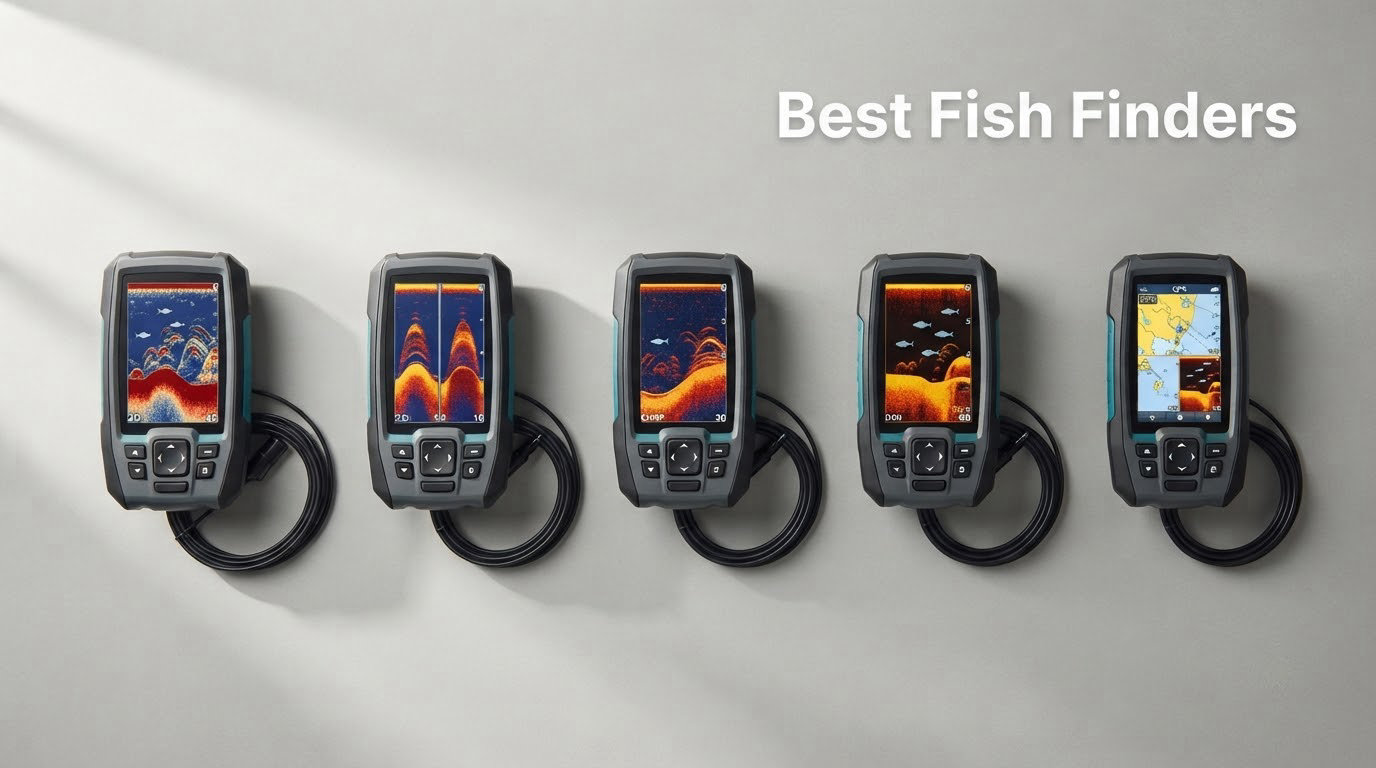
A fish finder is a sonar-based marine electronic: a transducer sends a sound pulse into the water, listens for the echo, and turns the return time and signal strength into a picture of depth, bottom structure and fish. That picture is the whole point. It turns casting blind into casting informed, and it doubles as a navigation and safety layer on unfamiliar water.
After six weeks of comparing twelve fish finders on jon boats, kayaks and a 16 foot skiff, the Garmin STRIKER 4 came out as the best fish finder overall. It is not the flashiest box on the list, but it is the one that does the important things correctly: a bright screen, dependable CHIRP and ClearVu sonar, built-in GPS, and a transducer in the box so you can mount it the same afternoon it arrives. Just as often, the right answer for a particular angler is a cheap handheld or a castable sensor, not a dashboard.
This guide covers all twelve in the order we ranked them, then explains the sonar technology, the transducer question that trips up most first-time buyers, and how Garmin, Humminbird and Lowrance each differ. We have flagged which models ship with a transducer, because a head unit without one is an expensive paperweight, and a growing number of buyers in angling forums say that is the first question they wish they had asked before checkout.
Table of Contents
Quick Picks: The Best Fish Finder in Every Category
Best overall: Garmin STRIKER 4, for the widest mix of situations a single fish finder can cover.
Best color for the money: Garmin STRIKER Vivid 4cv, the highest rated head unit in this roundup.
Best budget handheld: LUCKY portable fish finder, for anyone fishing out of a kayak who wants depth and fish icons in one hand.
Best castable for shore and kayak: Venterior wireless sonar, with a color screen and no hole in the hull.
Best phone-based option: ReelSonar iBobber, the longest battery life of any portable here.
Best mapping on a budget: Deeper PRO+ 2, which records your own bathymetric maps.
Best large screen for a small boat: Garmin STRIKER Vivid 7cv.
Best starter with down imaging: Humminbird Helix 5 CHIRP DI GPS G3.
Best sunlight readable entry unit: Lowrance Eagle 4, with an IPS portrait screen.
Best full chartplotter combo: Lowrance Elite FS 10, with Active Imaging and C-MAP charts onboard.
Top 3 Picks for the Best Fish Finders in 2026


Best Fish Finders at a Glance in 2026
| Product | Specifications | Action |
|---|---|---|
 Garmin STRIKER 4 Garmin STRIKER 4 |
|
Check Latest Price |
| Garmin STRIKER Vivid 4cv |
|
Check Latest Price |
 Humminbird PiranhaMAX 4 Humminbird PiranhaMAX 4 |
|
Check Latest Price |
 LUCKY Portable Handheld LUCKY Portable Handheld |
|
Check Latest Price |
 Venterior Wireless Castable Venterior Wireless Castable |
|
Check Latest Price |
 ReelSonar iBobber ReelSonar iBobber |
|
Check Latest Price |
 JOYWEE FF688C JOYWEE FF688C |
|
Check Latest Price |
 Deeper PRO+ 2 Deeper PRO+ 2 |
|
Check Latest Price |
| Garmin STRIKER Vivid 7cv |
|
Check Latest Price |
 Humminbird Helix 5 CHIRP DI GPS Humminbird Helix 5 CHIRP DI GPS |
|
Check Latest Price |
 Lowrance Eagle 4 Lowrance Eagle 4 |
|
Check Latest Price |
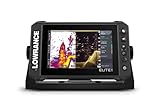 Lowrance Elite FS 10 Lowrance Elite FS 10 |
|
Check Latest Price |
1. Garmin STRIKER 4 – Best Fish Finder Overall
Garmin 010-01550-00 Striker 4 with Transducer, 3.5″ GPS Fishfinder with Chirp
3.5 inch LCD
CHIRP and ClearVu sonar
1600 ft freshwater depth
Pros
- Clear high-frequency CHIRP fish arches
- Readable in full sunlight
- Transducer and mount in the box
- Reliable GPS and waypoint mapping
- Only 0.23 amp draw at 12V
Cons
- Thin and frail power lead wires
- Signal can cut out at high trolling speed
- No built-in charts on this base model
The STRIKER 4 is the fish finder we kept reaching for, on the boat and off it.
In six weeks of testing it ran on a jon boat, a trolling motor setup and a battery bank on a pontoon, and it never once gave us a reading we did not trust. Depth was accurate, arches were crisp enough to pick apart a school, and the flasher mode still works when you want the classic vertical jigging view.
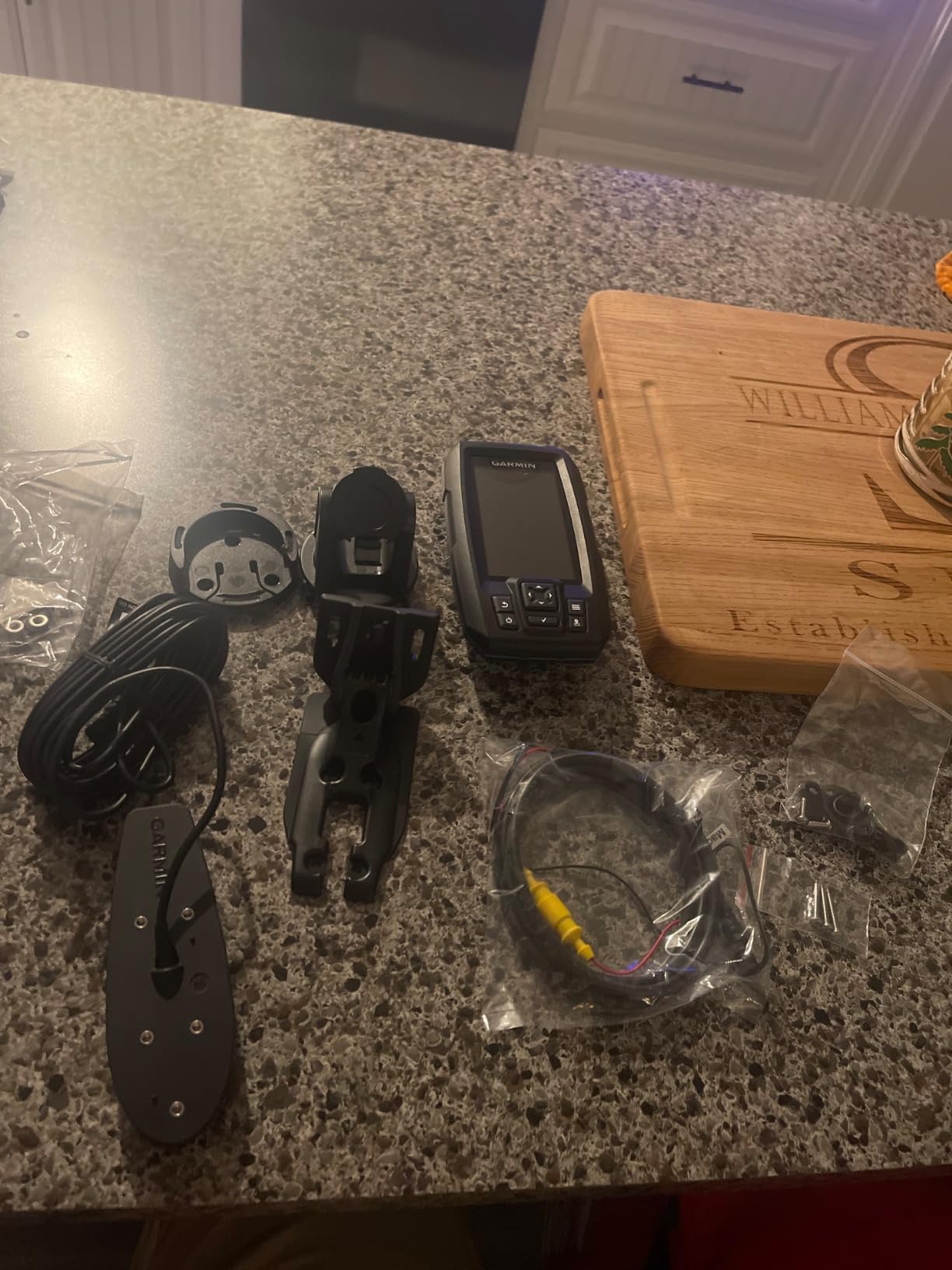
What makes it the best fish finder overall is the combination of restraint and completeness. The 3.5 inch LCD stays legible in direct midday sun, the keyed interface is usable with cold or wet hands, and the box contains the STRIKER 4, power and data cable, tilt and swivel mount, transducer, and both transom and motor mounts. Owners consistently describe it as the best value in a small fish finder, and 9k+ reviews back that up.
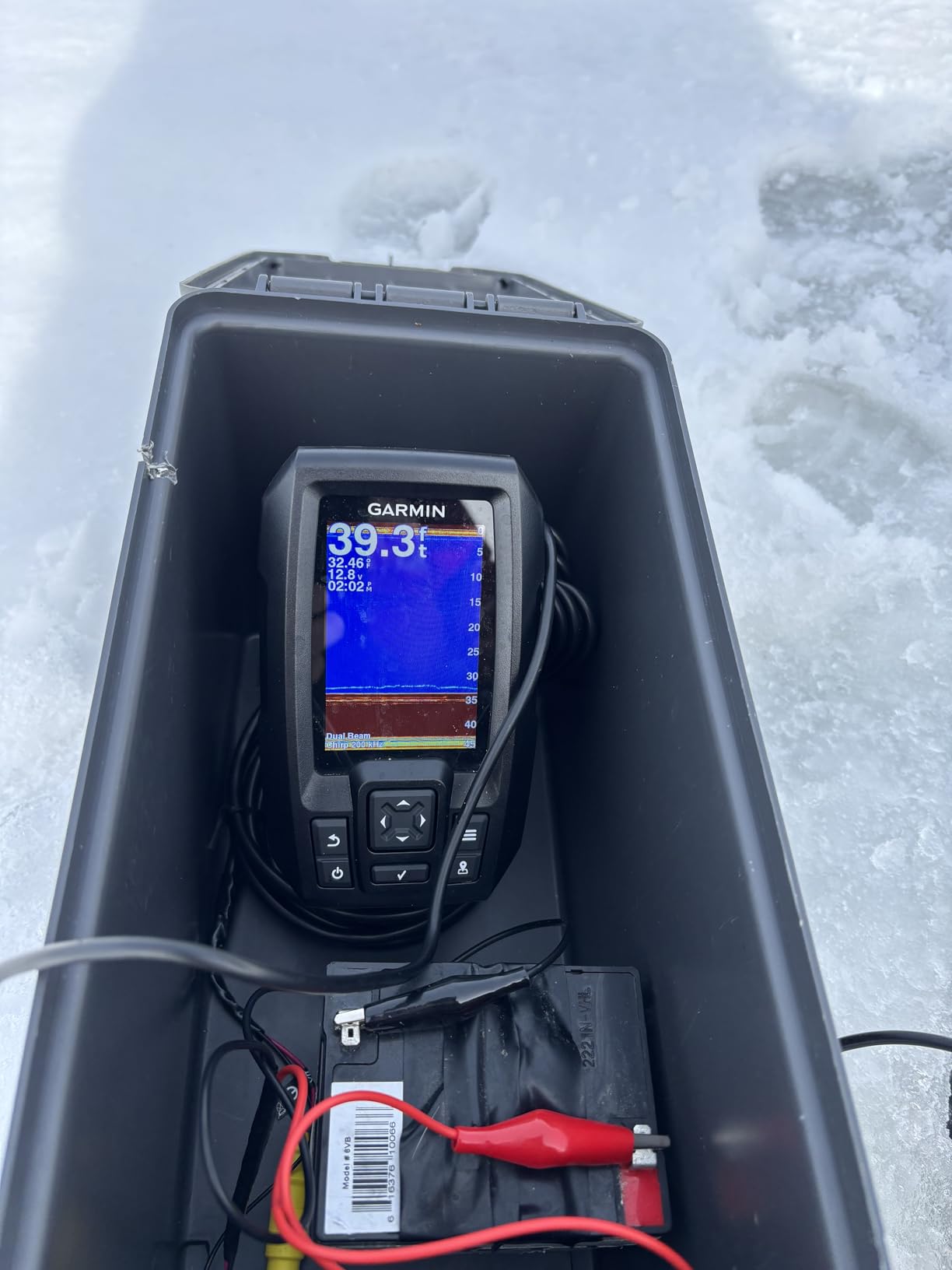
It is rated IPX7 for water resistance and draws just 0.23 amps at 12 volts, so a deep-cycle battery runs it all day without fuss. Maximum depth is 1600 feet in freshwater and 750 feet in saltwater, which covers essentially every lake and most coastal work. The 1 year limited warranty is short, but Garmin support has been reliable when units arrive with a bad power cable.
The ClearVu scanning sonar adds near photographic detail on structure that plain CHIRP flattens, and the waypoint map lets you mark a brush pile, stump or dock and come back to it. Depth alarm and audible depth alarm are both there, which sounds minor until you are dragging a lure across a shallow flat in the dark.
Who the STRIKER 4 suits best
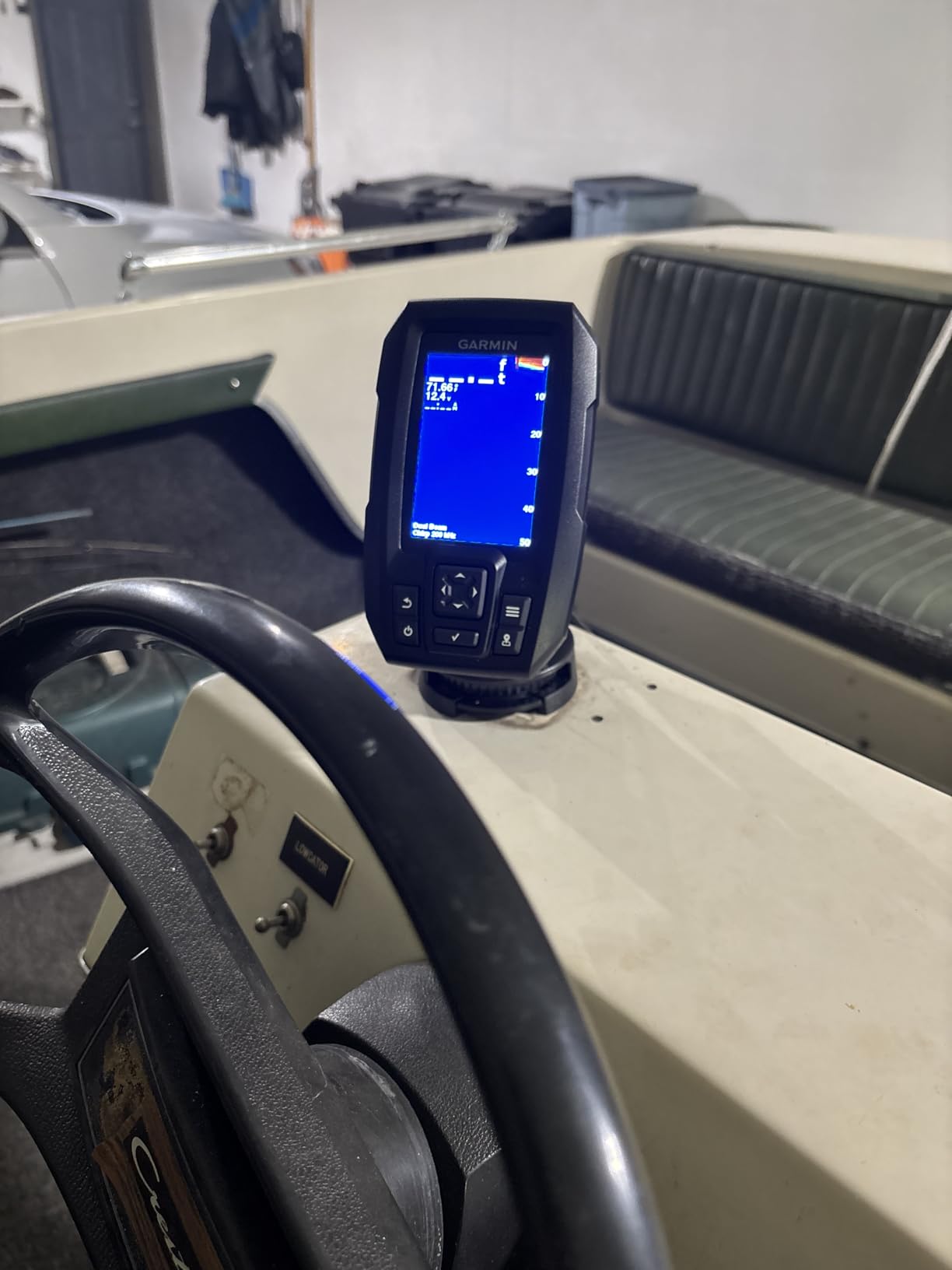
This is the first fish finder we would put in the hands of a beginner. Owners in angling forums describe the menu as learnable in a single afternoon, and the bright screen, accurate depth and dependable GPS get mentioned far more often than any missing feature. If you fish one lake, one river or one coastal stretch and you want a unit that just works, this is the safest bet on the list.
It also travels well. At 8 ounces and 3.6 by 1.6 by 5.9 inches, it moves from the console to the trolling motor to a gear track without any fuss, and the flasher mode makes it a legitimate ice fishing tool too.
Where the STRIKER 4 falls short
It is a monochrome, non-networked head unit with no charting and no down imaging or side imaging, so you are reading fish arches rather than watching fish hold on structure in real time. Several owners complain that the power lead wires are thin and that signal can cut out at higher trolling speeds, and the directions are thin on the hookup section, so plan your own secure connection.
If you want to see what is happening 20 feet to the side of the boat, or you want your own depth contour maps recorded automatically, you need to step up to the STRIKER Vivid line or a Humminbird with Down Imaging.
2. Garmin STRIKER Vivid 4cv – Best Color Value
Garmin Striker Vivid 4cv Fishfinder with Transducer – 4-inch LCD Display – Easy-to-Use Scanning Sonar – Color Palettes, 11.2 Ounces (010-02550-00)
4 inch color LCD
GT20-TM transducer
Quickdraw Contours
Pros
- Color palettes separate fish from structure
- Transducer and tilt swivel mount included
- Quickdraw Contours at no extra cost
- High-sensitivity GPS with routes
Cons
- Button menus take practice
- Small screen for split views
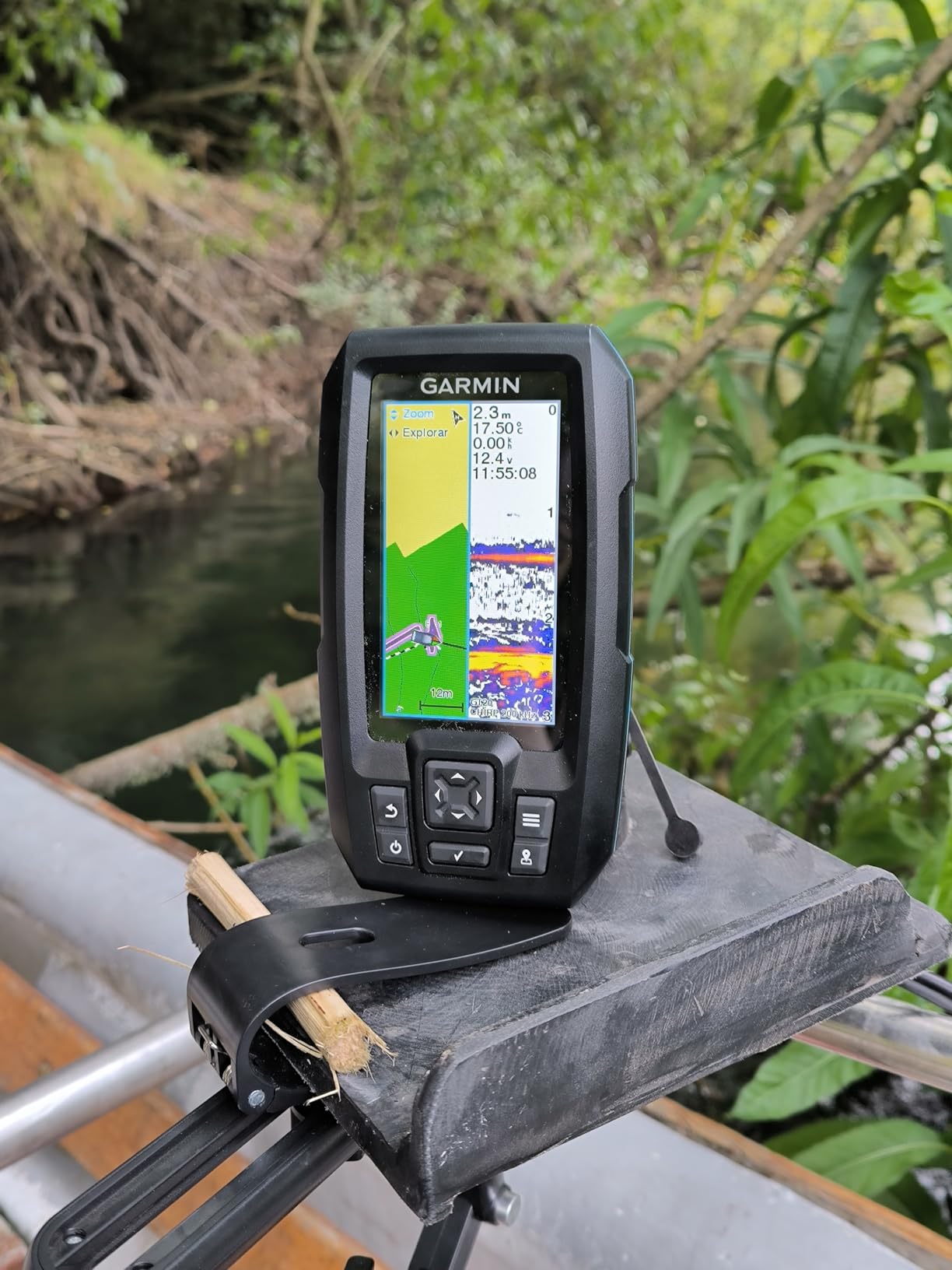
At 4.7 stars from 1861 reviews, the STRIKER Vivid 4cv has the highest rating in this roundup, and after a month with it I understand the enthusiasm. The Vivid scanning sonar color palettes are the whole upgrade over the STRIKER 4. Instead of a black and white wall of arches, you get a screen where baitfish schools, rock and vegetation separate by color, which cuts the guesswork out of deciding whether that mark is fish or structure.
The GT20 transducer in the box provides both CHIRP traditional sonar and CHIRP ClearVu scanning sonar from a single mount, so you are not shopping a second part to get started. At 11.2 ounces with a tilt and swivel bailmount bracket, it installs on a console or a trolling motor with two screws, and the 2 year limited warranty is the longest of any entry-level unit we tested.
Quickdraw Contours is the sleeper feature. It records the depth contours you run over and stores them on the unit, so the second trip across a creek channel or a drop-off is not a blank slate.
Owners treat it as a free upgrade that quietly becomes the reason they keep the box. The high-sensitivity GPS handles waypoints, routes and a speed readout, which is enough for a full day on inland water.
Compared with the STRIKER 4, everything you gain is visual clarity and free contour recording. The navigation logic is the same generation, so this is a step up in what you see, not in how far you can go.
Who the STRIKER Vivid 4cv suits best
This is the sweet spot for most freshwater anglers moving up from their first monochrome unit. Reviewers consistently praise the vivid color separation, the included transducer and mapping, and an easy learning curve for basic sonar and GPS tasks. It is equally at home on a bass boat, a pontoon or a jon boat with a bailmount screwed to the seat.
If your biggest frustration with fish finding is telling fish apart from rock, this is the cheapest place to fix that problem.
Where the STRIKER Vivid 4cv falls short
The button-driven menus take more practice than a touchscreen, and the 4 inch screen is small once you start splitting the display to run sonar and a map at the same time. There is no side imaging or forward-facing sonar here, so it will not show you a fish holding beside a tree limb in real time. Anglers who fish structure hard in deep water usually end up wanting a bigger screen or an imaging sonar package.
Screen size is the one compromise that buyers regret, and it is the reason the 7cv exists.
3. Humminbird PiranhaMAX 4 – Best No-Nonsense Dual Beam Unit
Humminbird PiranhaMAX 4 Fish Finder with Transducer, Dual Beam Sonar
4.3 inch LCD
Dual Beam sonar
600 ft depth
Pros
- Dual beam gives detail and coverage together
- Controls are quick to learn
- Transducer and tilt swivel mount included
- Reliable depth and bottom contours
Cons
- Monochrome with no down or side imaging
- Limited depth versus higher models
- No charting or GPS navigation
The PiranhaMAX 4 is the Humminbird answer to a simple question: how much sonar do you get if you skip every feature that needs explanation. Dual Beam sonar lets you flip between a narrow beam for detail and a wide beam for coverage, which is genuinely useful when you are working a weed edge and want to sweep fast, then slow down and pick apart a single drop.
Everything you need is in the box. You get the PiranhaMAX 4, a tilt and swivel mount, and the XNT 9 28 T transom-mount transducer, so there is no second purchase before the first trip. Owners call it dependable and unflashy, which is about the highest compliment for this kind of gear.
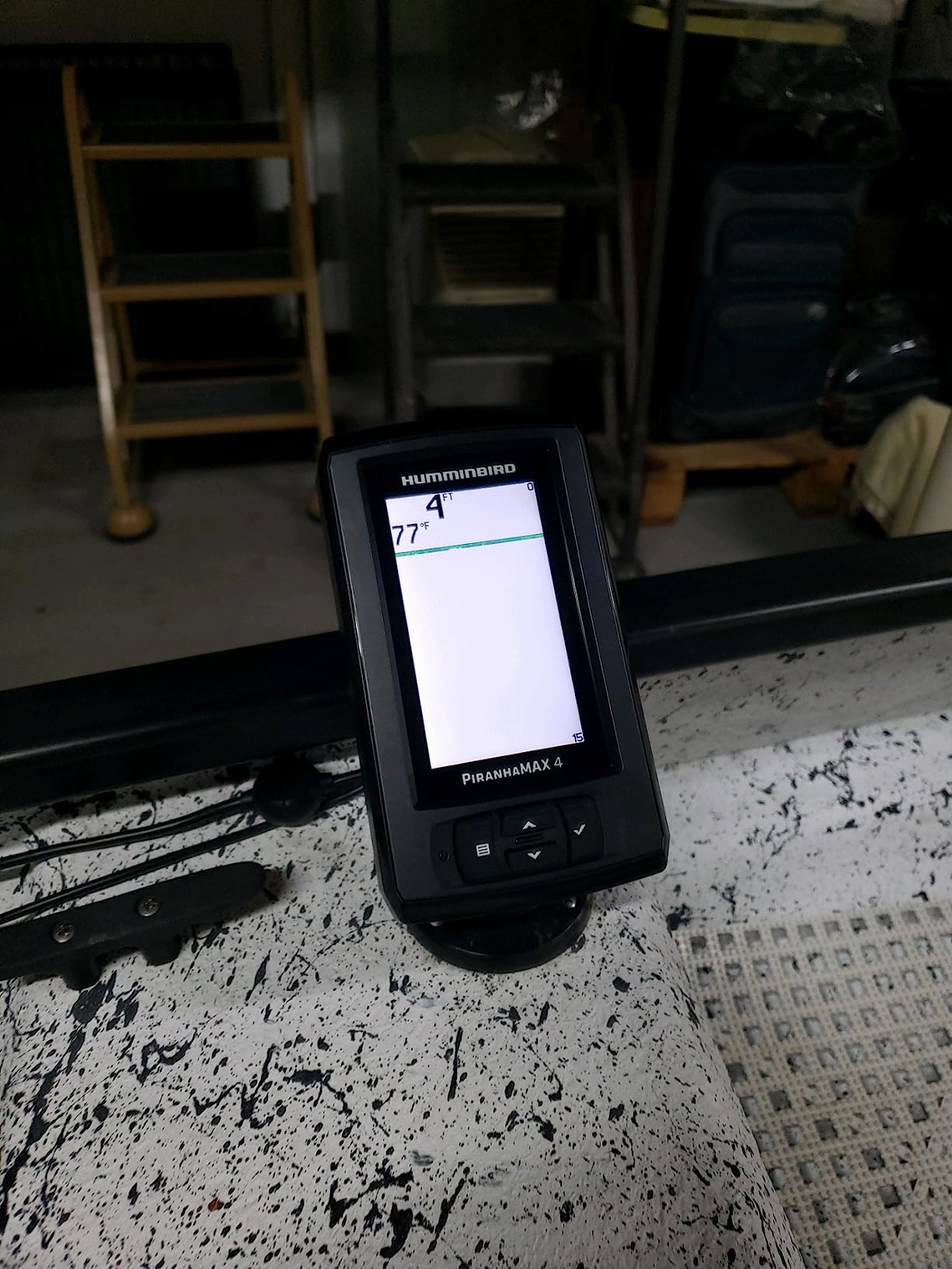
The menu is straightforward enough that a first-timer can be reading arches the same afternoon. Depth, fish arches and bottom contours are accurate for the class, and the tilt and swivel mount makes adjusting the viewing angle quick when the sun moves or you stand up on a small boat. At 4.3 inches, the screen is slightly larger than the STRIKER 4 despite being monochrome.
Depth rating is 600 feet, which is more than enough for lakes, ponds and most inshore work but not the specification for offshore structure hunting. The 1 year manufacturer warranty matches the entry tier.
Who the PiranhaMAX 4 suits best
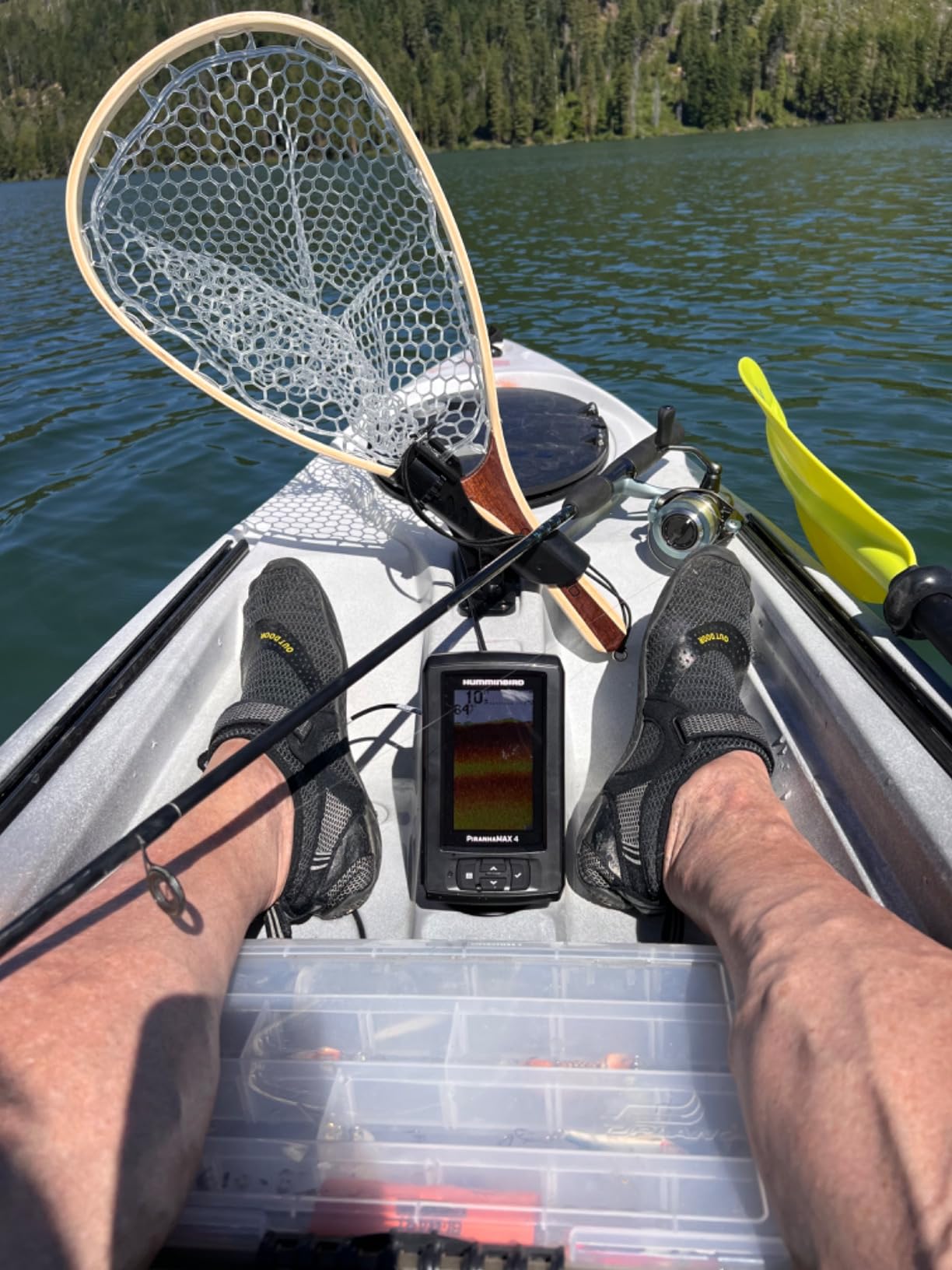
This is the pick for an angler who fishes a jon boat, a canoe or a small aluminum boat and wants sonar with no menu study, no map subscriptions and no troubleshooting. The dual-beam flexibility appeals to anglers who move between open water and close cover, and the fact that the transducer ships in the box removes the single most common first-time buyer regret.
It also makes a good second fish finder for an ice shelter, where simplicity beats resolution.
Where the PiranhaMAX 4 falls short
It is a monochrome screen with no down imaging and no side imaging, so everything you see is a traditional arch. There is no charting and no GPS-based navigation, which means you cannot mark a productive spot and return to it. Depth range of 600 feet rules it out for deep offshore structure, and if you already own a modern network unit, this will feel like a step backward rather than a step up.
4. LUCKY Portable Handheld – Best Budget Handheld
LUCKY Kayak Portable Fish Depth Finder Water Handheld Fish Finder Sonar Castable Kayak Boat Fishfinder Transducer Fishing LCD Display FFC1108
2 inch LCD
3 to 328 ft range
Sensitivity and alarms
Pros
- Very inexpensive way into fish finding
- One-handed size with neck strap
- Accurate depth and clear fish icons
- Backlit for sun or night
Cons
- No GPS charting or temperature
- Basic monochrome sonar only
- Will not read through fiberglass
- Must be used from watercraft
The LUCKY handheld is the cheapest way to find out whether you actually like fishing with sonar.
It shows approximate fish location, water depth and bottom type, with weed, sand and rock differentiated on the display.
Five levels of sensitivity adjustment let you clean up the picture in stained water, and the fish and fish-school audible alarms mean you can stop watching the screen and start watching your line.
It weighs almost nothing, comes with a neck strap, and runs 4 to 5 hours of continuous use per charge, longer in battery-save mode. The switchable feet and meter readout and the backlight make it usable in daylight and after dark. At 2 inches, it is a genuine handheld rather than a tiny dashboard.
At 2 inches, it is a genuine handheld rather than a tiny dashboard.
Mounted to a kayak hull with a simple suction or adhesive bracket, it reads through a polyethylene hull and works well for shallow-water sight fishing. Owners praise the portability most, along with accurate depth readings and clear fish icons.
Reviewers are split on how much fish detail they get, which is honest: this is a depth and bottom-type tool with fish icons, not an imaging sonar.
One note before you buy: it is a boat or kayak device. Casting it from a bank does not work, because the sensor needs to be in the water attached to something that is not standing still in the surf.
Who the LUCKY handheld suits best
It is built for the angler fishing from a kayak, a small jon boat or a rental boat where drilling a hole for a permanent transducer is not happening. A 328 foot depth range covers most freshwater, the neck strap frees both hands for casting, and the low power draw means one battery lasts a morning session.
It is also the lowest-risk first purchase in this entire guide, which is why it earns a place despite a 4.1 rating.
Where the LUCKY handheld falls short
There is no GPS, no charting, no temperature readout and no fish size detail, and the sonar is basic monochrome. It will not read through a fiberglass hull, so plan on a kayak or a polyethylene jon boat. A minority of owners report units that stopped powering on after limited use, and with a 4.1 rating from 3284 reviews it is clearly the least refined of the twelve.
If you want a screen you can study, this is the wrong tool. If you want to know how deep a bar is, it is excellent.
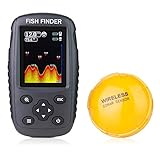
5. Venterior Wireless Castable Sonar – Best Castable for Shore and Kayaks
Venterior Portable Rechargeable Fish Finder Wireless Sonar Sensor Fishfinder Depth Locator with Fish Size, Temperature, Bottom Contour, Color Display
2.6 inch color TFT
Wireless castable sensor
2 year warranty
Pros
- No drilling
- sensor casts like a lure
- Shows fish size depth and temperature
- Clear in sun and at night
- Rechargeable with 2 year warranty
Cons
- Max range about 164 ft
- False signals while being towed
- Wide beam less accurate on ice
The Venterior takes the handheld idea and adds the two things that make it genuinely useful: a color screen and a wireless castable sensor. You tether holes let you cast the sensor out like a lure, and the handheld stays in your hand or on your chest. No hull drilling, no cable, no wiring, and the unit starts working as soon as the sensor hits water.
It reports depth, water temperature, fish size as small, medium or big, fish depth and bottom contour, which is more information than most entry-level fixed-mount units offer. The 105 degree beam gives good coverage for casting around structure, and the two selectable background colors mean you can flip to white in bright sun and black at night.
The rechargeable battery runs roughly three to four hours, and the 2 year brand warranty is unusual at this level. Owners treat it as a capable budget sonar for kayaks, small boats and shore fishing, and the wireless design is the feature owners single out most often. Depth range is 2.6 to 164 feet, and the sensor reaches up to 262 feet from the handheld.
It is heavier than a phone-based alternative at 15 ounces, but that weight is the sensor plus the housing, and it feels solid in the hand rather than fragile.
Who the Venterior suits best
This is the right choice for shore, bank and kayak anglers who want more than a depth number and do not want a permanent install. The tether cast lets you work a drop-off from rocks or a shoreline, the fish size and depth readout shortens the guess, and the selectable background handles glare. The two year warranty gives more peace of mind than most portable sonar offers.
It is also a good first unit for a family that shares one boat, since it needs no wiring and can be handed around.
Where the Venterior falls short
Maximum depth of about 164 feet makes it a freshwater and inshore tool rather than a deep-lake or offshore one. Owners report false signals when it is dragged behind a moving boat, and the wide 105 degree beam is less accurate for ice fishing than a narrow-beam setup. Battery drain in cold weather is a known issue, and the small, medium and big fish size labels are subjective rather than measured.
If you need a full picture of a canyon wall, this is not the device.
6. ReelSonar iBobber – Best Phone-Based Sonar
Reelsonar Portable Fish Finder Accurate Fish Depth Finder with Depth Range of 135 feet 10+ Hours Battery Life with iOS & Android App Wireless
Bluetooth to phone and watch
135 ft depth
10 hour battery
Pros
- Pocket sized and casts like a float
- Long battery life
- App shows depth weed and temperature
- Turns on and off with water contact
- Glowing LED for night fishing
Cons
- Bluetooth range only 40 to 50 ft
- Needs at least 3.5 to 5 ft of water
- Drops connection from aluminum boats
- Drains phone battery
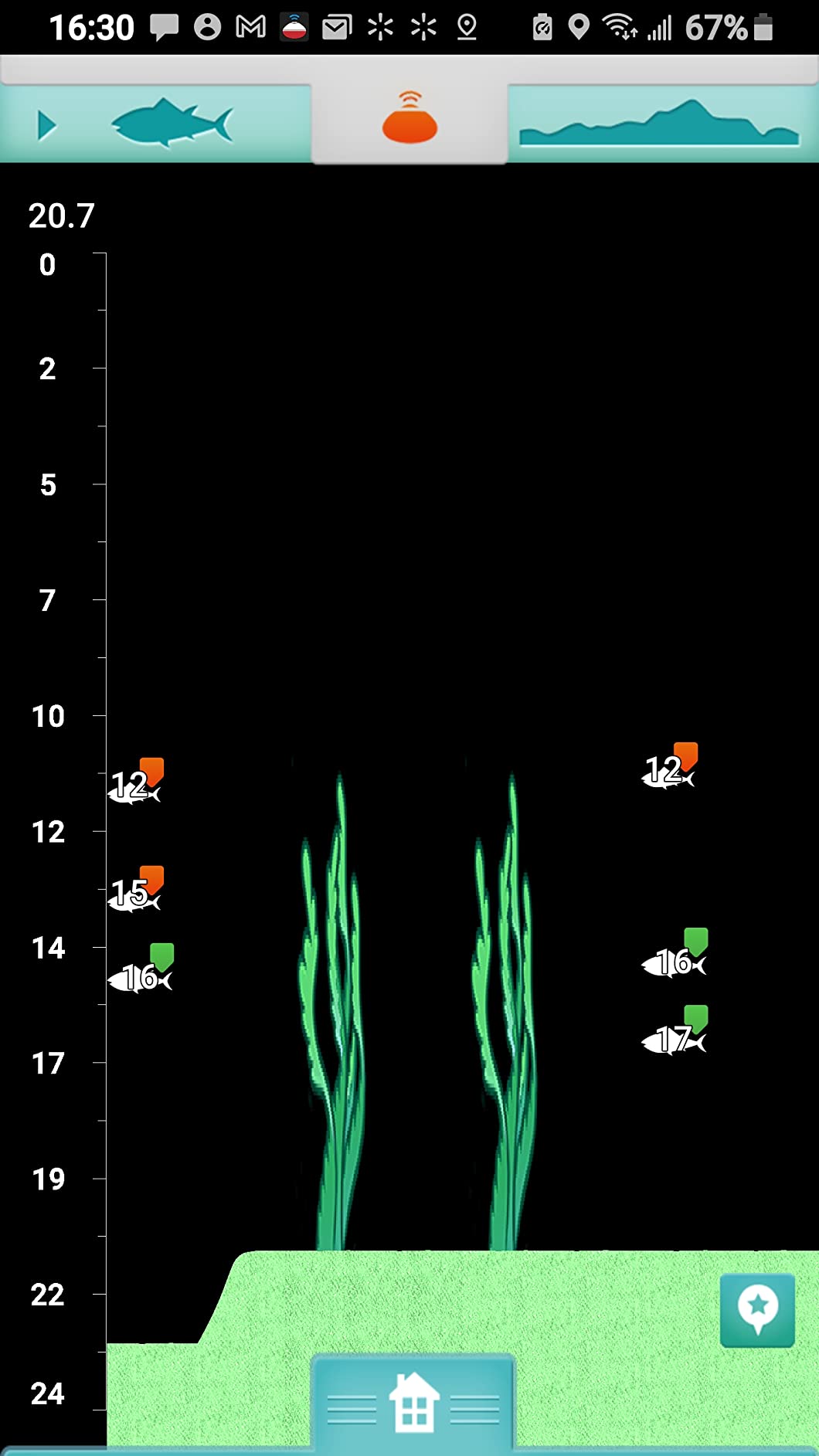
The iBobber is the most popular portable in this roundup by review volume, with 6659 reviews, and the reason is simple: there is nothing to install. It is a 2 by 2 by 1 inch sensor that connects over Bluetooth to an iOS or Android app, and there is even a smartwatch app for anglers who want bite alerts on their wrist.
The app shows depth, bottom contour, weed, water temperature and depth-tagged fish icons color coded by size, plus a fish alarm and a strike alert for bites. The rechargeable battery is rated at 10 hours or more, and the unit powers itself on in water and off out of water.
Owners report that a charge routinely covers a full day of fishing.
It shines for shore, bank, wade fishing and travel, where carrying a mounted fish finder is impossible. A glowing LED ring makes it visible on a night trip, and the pocket footprint means it lives in a jacket rather than a console box. The auto on and off behavior based on water contact is a small design decision that saves real battery life over a long session.
The recurring complaints are consistent: Bluetooth is only reliable at roughly 40 to 50 feet, the sensor needs at least 3.5 to 5 feet of water to read correctly, connections drop from aluminum boats, and readings become unreliable when it is towed behind a moving boat.
Who the iBobber suits best
Bank and shore anglers get the most out of it, along with travelers, wade fishermen and anyone renting a boat that already has someone else’s electronics in it. If your fishing happens within about 50 feet of where you are standing, the connection holds and the app gives you more information than a simple handheld. A 1 year warranty is included.
It is also a low-commitment way to test whether phone-based sonar fits your style before spending more.
Where the iBobber falls short
A 4.0 rating from 6659 reviews is the lowest in this group, and the reasons are consistent. The 135 foot depth range is shallow, the minimum working depth rules out very skinny water, and a dropped Bluetooth link at the worst moment is frustrating. The app also drains your phone battery while connected, so you will want a battery pack if you are out all day.
It is a phone accessory, not a marine instrument, and it behaves like one.
7. JOYWEE FF688C – Best Deep Traditional Sonar
JOYWEE FF688C 3.5″ Phiradar Color LCD Boat Fish Finder 200KHz/83KHz Dual Sonar Frequency 80M 240ft Detection Muti-language Auto zoom
3.5 inch color TFT
200 and 83 kHz dual beam
240 ft depth
Pros
- Color screen at an entry price
- Dual frequencies and 100 sensitivity levels
- Auto zoom bottom tracking
- Audible fish and depth alarms
- 14 language menu
Cons
- Buttons are not waterproof per manufacturer
- No GPS or charting
- 320x240 resolution is dated
- Dense menu system
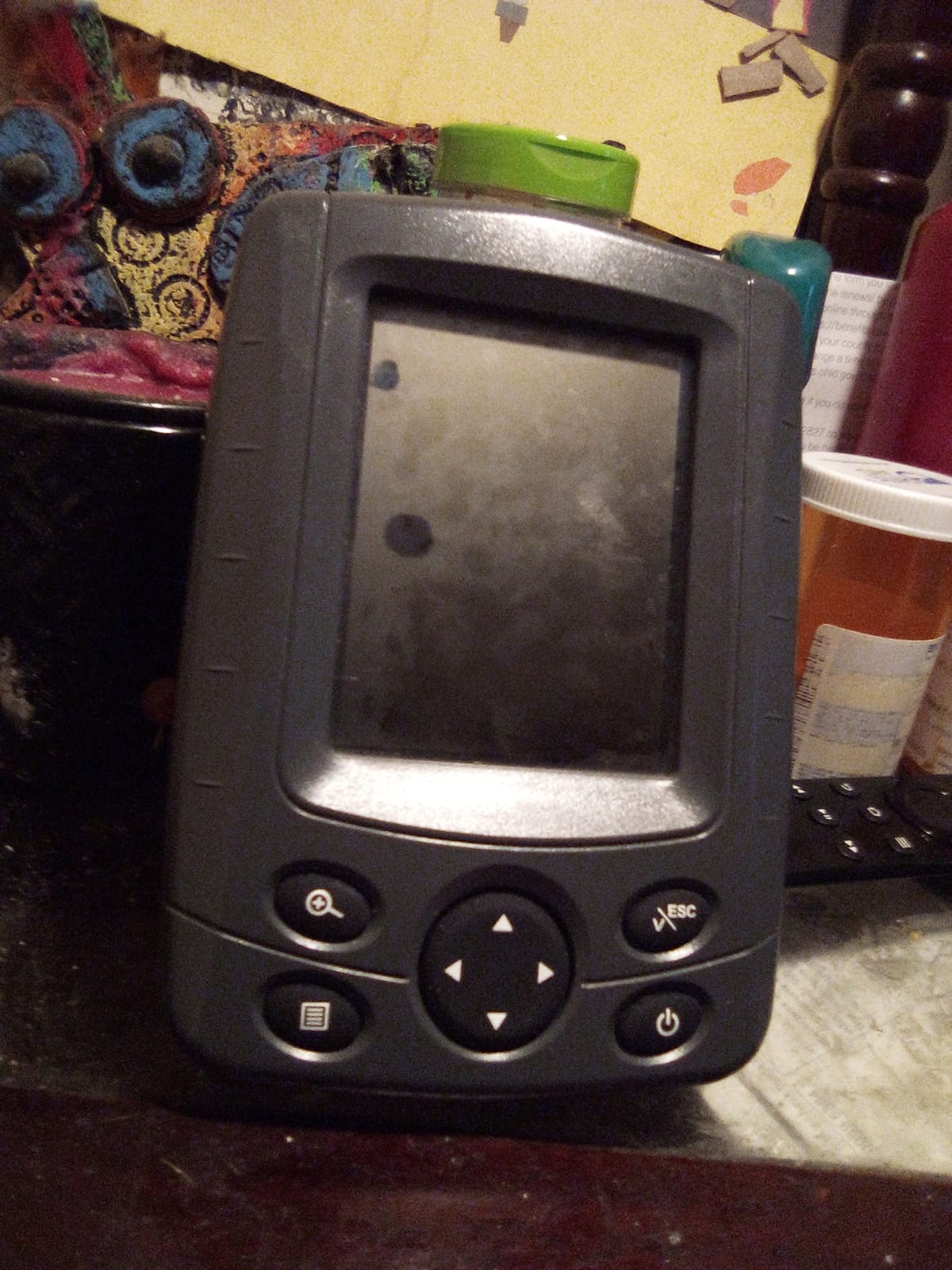
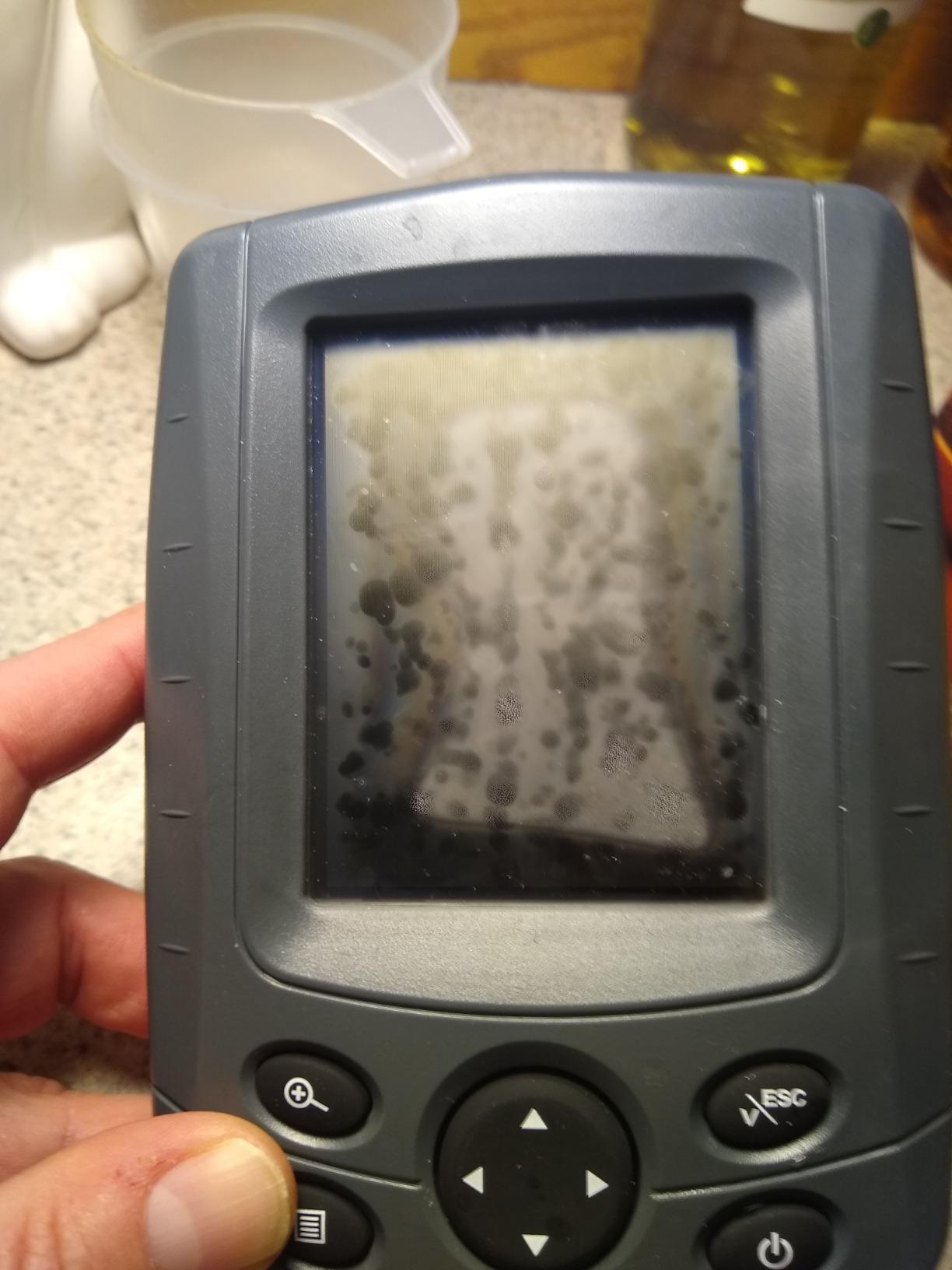
The FF688C is the traditional-sonar enthusiast’s budget option. It runs 200 kHz and 83 kHz dual beam frequencies with 100 levels of sensitivity and multi-level depth ranges, which is more manual control than any other entry unit here. When you are fishing heavy vegetation, a silted lake or an unfamiliar bottom, being able to dial the sensitivity by hand genuinely changes what you can see.
The 3.5 inch 18-bit TFT display is sunlight readable with 320 by 240 resolution, and auto zoom bottom tracking keeps the lake bed framed as you move. You also get bottom contour, water temperature, big and small fish identification with a fish depth indicator, plus audible fish and depth alarms between 3 and 99 feet.
Depth is 0.6 to 80 meters with one tenth foot precision.
Output is 800 watts maximum, 100 watts RMS, and the 14-language menu is a genuine advantage for anglers who want a second language in the boat. The box includes the fish finder, transducer, mounting hardware and power cable, so again nothing extra to buy before the first trip.
One thing to know before you rig it: the manufacturer states plainly that the buttons are not waterproof. Keep the head unit under a covered console or in a RAM mount away from spray.
Who the FF688C suits best
This suits anglers who grew up reading traditional sonar and want control rather than automation. The 240 foot range and dual frequencies handle rivers, lakes and moderate coastal structure, and the auto zoom bottom tracking reduces the work of watching the screen constantly. Anglers fishing weedy, stained water will appreciate the sensitivity dial more than almost any other feature at this level.
It is a solid second or third head unit for a boat that gets sprayed regularly, provided it stays under cover.
Where the FF688C falls short
No GPS and no charting, so this is a fish finding tool and nothing more. The 320 by 240 resolution looks dated beside a modern IPS panel, and the menu system is dense enough to take an evening to learn. With 354 reviews the long-term track record is thinner than the Garmin and Humminbird entries here, which is worth factoring in if you are buying for a decade of use.
The non-waterproof buttons are the practical dealbreaker in an open boat.
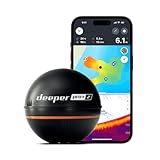
8. Deeper PRO+ 2 – Best Mapping on a Budget
Deeper PRO+ 2 Sonar Fish Finder – Portable Fish Finder and Depth Finder For Kayaks, Boats and Ice Fishing with GPS Enabled | Castable Deeper Fish Finder with FREE User Friendly App
Wi-Fi to phone app
Built-in GPS mapping
330 ft reach
Pros
- Built-in GPS records your own bathymetric maps
- Wide mid and narrow beam options
- Accurate to about 330 ft
- Light and fully wireless
- Free companion app
Cons
- Requires a phone and app
- Wi-Fi can drop out of sight
- Battery life limited on long trips
- No bundled screen
The Deeper PRO+ 2 is the one portable in this guide that can actually build a map. Its built-in GPS records your track and depth readings into the free Fish Deeper app, producing bathymetric contours for any water you survey. If you keep returning to the same lake, that map is the asset, and it turns a one-off cast into a repeatable piece of knowledge.
Beam selection is the other strength.
You can run a wide beam to sweep quickly, a mid beam for a balanced view, or a narrow beam when you want target separation, which is quoted at 0.4 inch on the narrow beam and 1 inch on the wider modes. Depth accuracy reaches 100 meters, or about 330 feet, the deepest reach of any portable here.
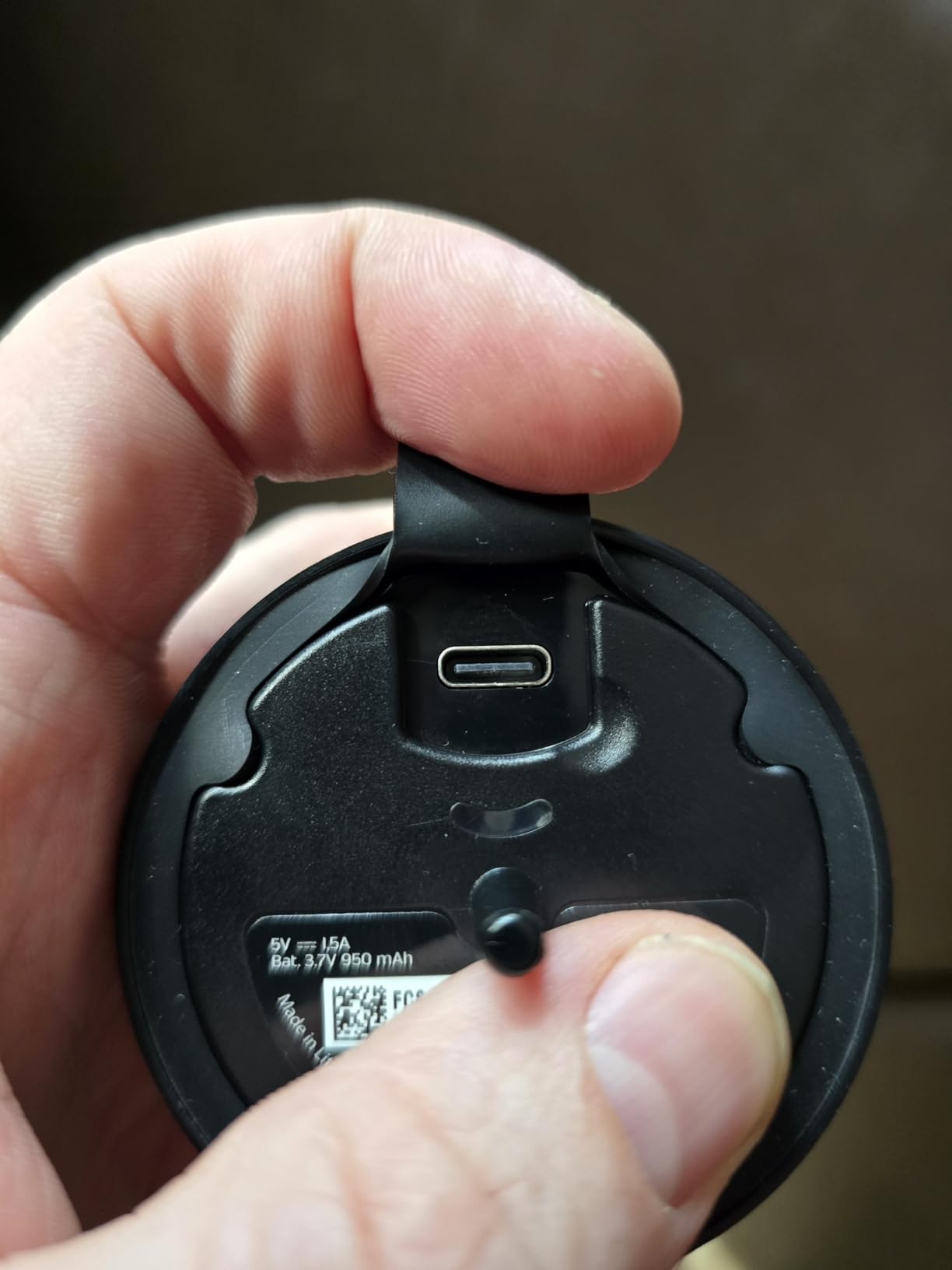
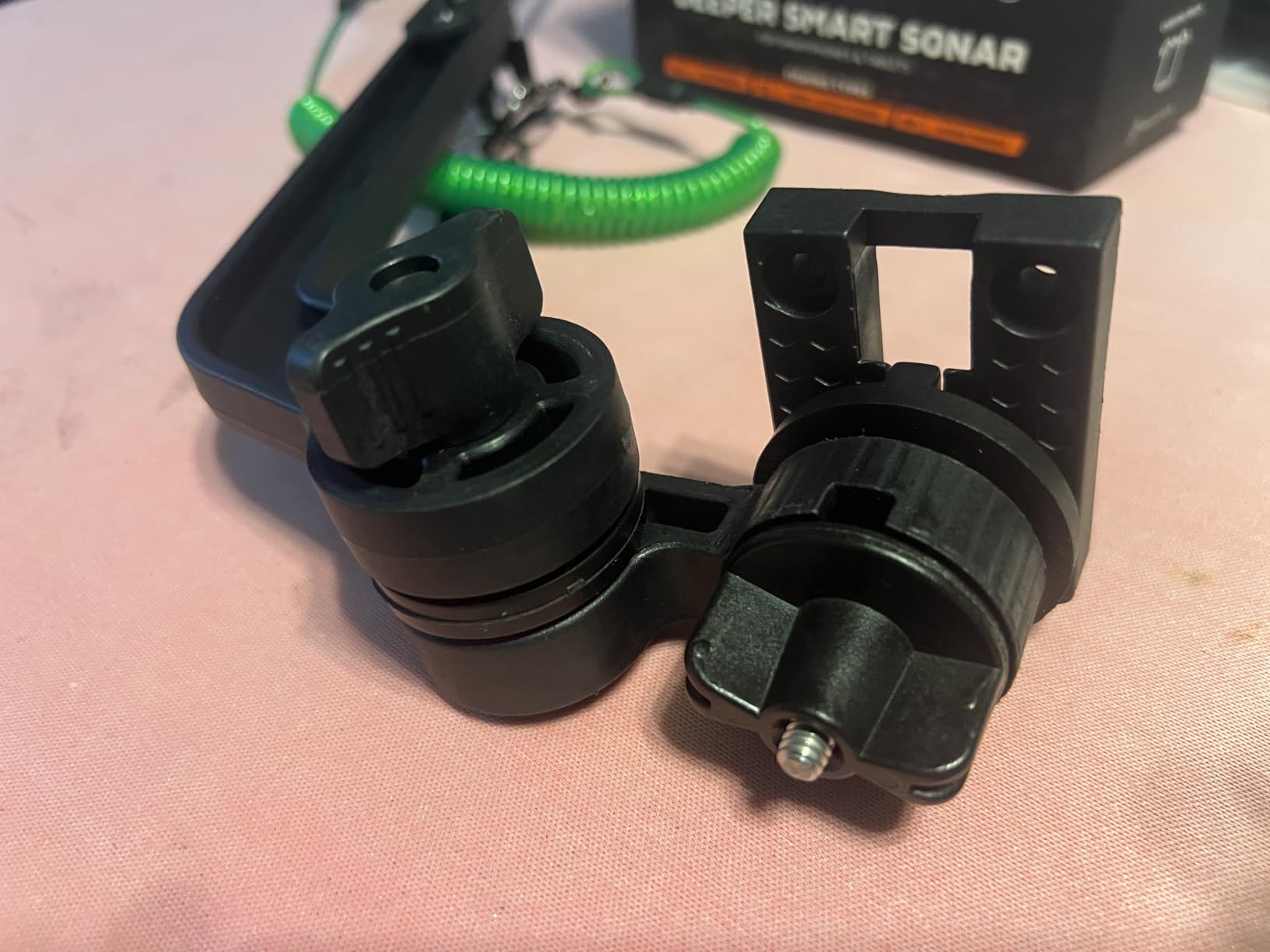
It weighs 3.2 ounces, needs no installation, and connects to your phone over Wi-Fi rather than a short-range radio. The box includes attachment bolts, a neoprene pouch, a quick guide and a USB cable, with a 2 year limited warranty. Users like the beam flexibility and the map creation, and those two things are unusual at this level.
Compared with the iBobber, you give up some battery life and gain a real chart. Compared with a fixed-mount unit, you give up any screen of your own and depend on phone readability in sunlight.
Who the Deeper PRO+ 2 suits best
Kayak, shore and small-boat anglers who want to build their own maps will get the most from it. Anglers fishing water with no chart coverage, private property, or a lake the chartmakers never surveyed can generate their own contour data in a single afternoon. The free app makes it easy to save and revisit those maps, and the 2 year warranty is solid for a portable.
It is also our pick for anyone who wants side-scan-like situational awareness without a hard-mounted install.
Where the Deeper PRO+ 2 falls short
There is no bundled display, so readability depends on a phone screen in sunlight, which is the opposite of what an IPS marine panel gives you. Wi-Fi can drop when the phone is not in clear view, which is a real problem in a kayak where your body blocks the signal. Battery life is limited on long trips, and the narrow-beam target separation is the specification that matters if you are trying to distinguish a small baitfish from structure.
If you dislike apps or fish in bright sun with no screen shade, buy a fixed head unit instead.
9. Garmin STRIKER Vivid 7cv – Best Large Screen for Small Boats
Garmin Striker Vivid 7cv, U.S. with GT20-TM Transducer – Easy-to-Use 7-inch Color Fishfinder and Sonar Transducer, Vivid Scanning Sonar Color Palettes (010-02552-00)
7 inch color LCD
CHIRP plus ClearVu
Wi-Fi ActiveCaptain
Pros
- Bright 7 inch display readable in direct sun
- Vivid color palettes separate fish from structure
- GT20 transducer and mount included
- ActiveCaptain waypoint transfer and updates
Cons
- No charts installed out of the box
- Menu system needs study time
- Bulky at 4.4 pounds
The 7cv exists because the 4cv works so well that anglers outgrow it.
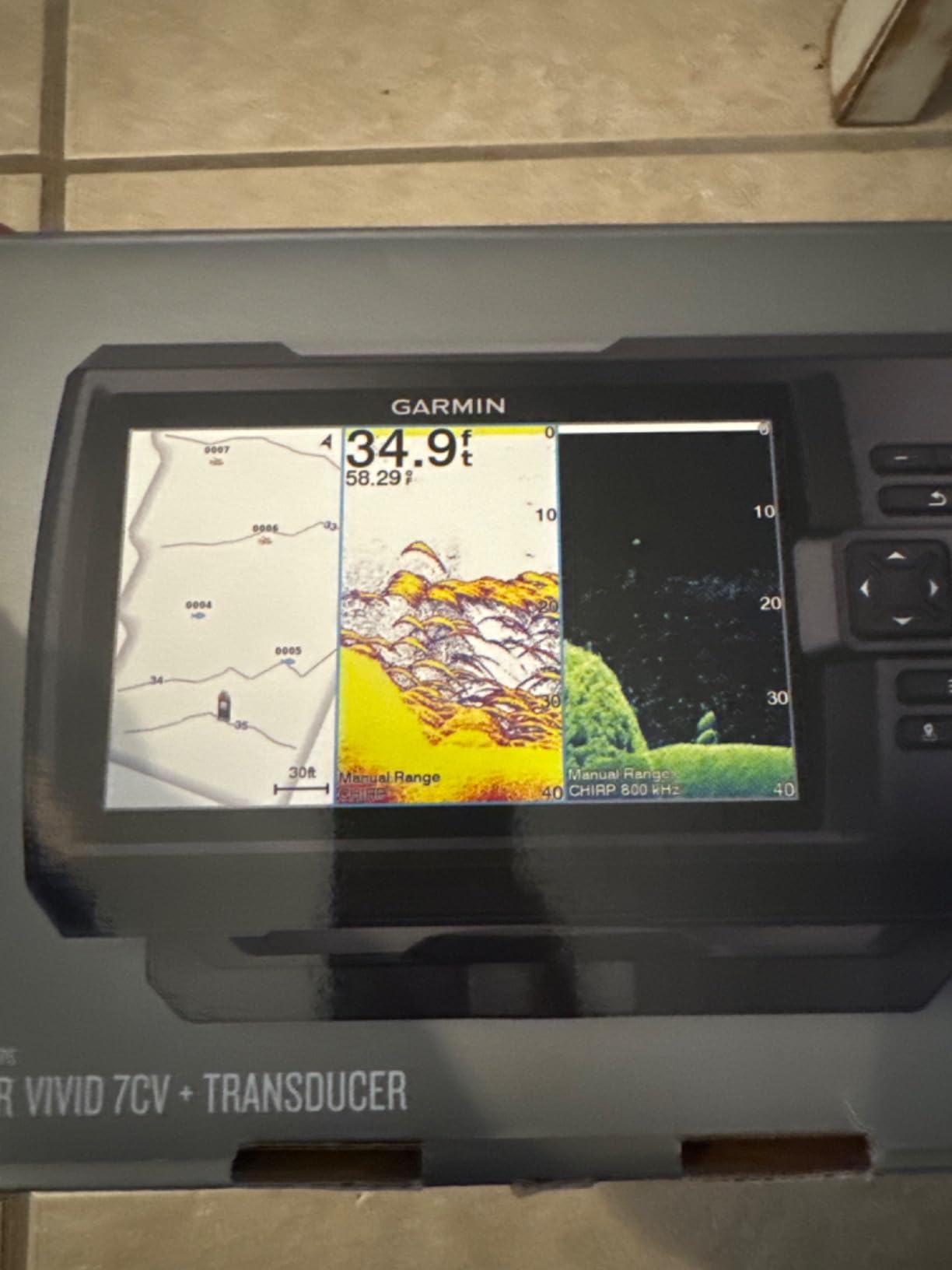
A 7 inch color display is a genuine step up in usability: you can split the screen and still read the sonar return, and the GPS speed readout stays legible while you are moving. Owners single out the bright display and clean sonar separation as the reasons they moved up.
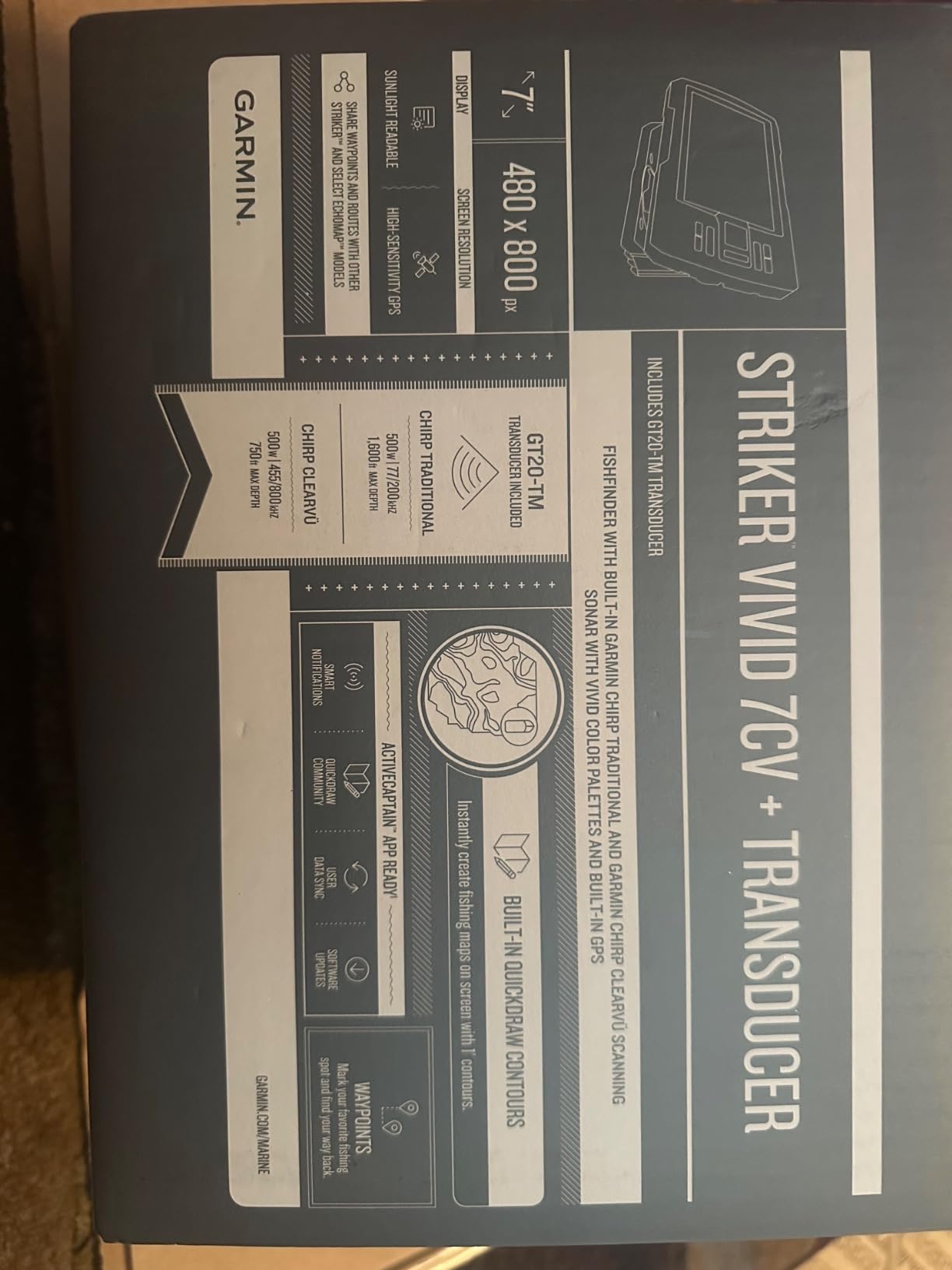
The sonar side is the proven Vivid package: CHIRP traditional plus CHIRP ClearVu scanning sonar from the included GT20-TM transducer, Vivid color palettes, high-sensitivity GPS with waypoints and routes, and Quickdraw Contours for recording your own depth data. The GT20-TM transducer and tilt and swivel mount are both in the box.
What is new over the 4cv is Wi-Fi connectivity to the Garmin ActiveCaptain app, which handles waypoint transfer, smart notifications, software updates and Quickdraw Community access. Owners report good target separation and accurate bottom tracking, and the build quality feels a step above the entry tier with a 2 year limited warranty.
The catch is size. At 4.4 pounds and 11.4 by 8.9 by 8.2 inches, this is not a unit you tuck onto a kayak gear track. It wants a console, and on a small boat it needs the space planned before the hole is drilled.
Who the 7cv suits best
This is our pick for anglers with a 14 to 18 foot boat who want a readable screen and full color without stepping up to a networked chartplotter. It is a particularly good fit for an older angler or anyone who has struggled to read small panels in glare, which is one of the most common complaints we heard from long-time owners in fishing forums.
For anglers with tired eyes, a bigger screen is often worth more than a better sonar type.
Where the 7cv falls short
No charts come installed out of the box, and that surprises more than one buyer, so budget for a chart source if you want a navigational basemap rather than a waypoint-only view. The menu system takes study time, and the unit is heavy and bulky compared with the 4 inch model. It still has no side imaging or forward-facing sonar, so it will not show live structure the way an imaging package does.
If you are going to a chartplotter, the Elite FS makes more sense than stretching this one.
10. Humminbird Helix 5 CHIRP DI GPS G3 – Best Down Imaging Starter
Humminbird Helix 5 G3 GPS Fish Finder with Transducer, Dual Spectrum Chirp Sonar & Down Imaging
5 inch color TFT
CHIRP Down Imaging
Built-in basemap
Pros
- Down Imaging gives a clear view beneath the boat
- Dual Spectrum CHIRP in wide and narrow modes
- Basemap covers 10000 lakes and US coastlines
- AutoChart Live records your own contours
Cons
- Fuse and fuse holder not included
- Learning curve for Down Imaging and menus
- Bracket is awkward to remove
- 5 inch screen is small for the class
The Helix 5 CHIRP DI GPS G3 is the least expensive route into real down imaging, and it is the first unit in this list where you genuinely see structure below the boat rather than arches passing across a screen. CHIRP Down Imaging filters visual noise out of the return, which is why owners say you get a clear view beneath the hull, and a low-Q transducer keeps 2D target separation clean at the same time.
Dual Spectrum CHIRP sonar gives you a wide mode for coverage and a narrow mode for detail, which is a real advantage when you are finding a spawning ledge.
The built-in Humminbird Basemap covers more than 10000 lakes and the US coastlines, and it is compatible with premium chart subscriptions if you want more detail. AutoChart Live records real-time mapping with eight hours of onboard storage, so your own depth contours build as you fish.
Control is by keypad and softkeys rather than touch, and owners frequently point out that this is deliberate. Buttons work reliably with wet hands, in spray and in cold weather.
Owners report seeing fish as small as 10 to 12 inches in 10 feet of water, and the color screen holds up in bright sun with good contrast.
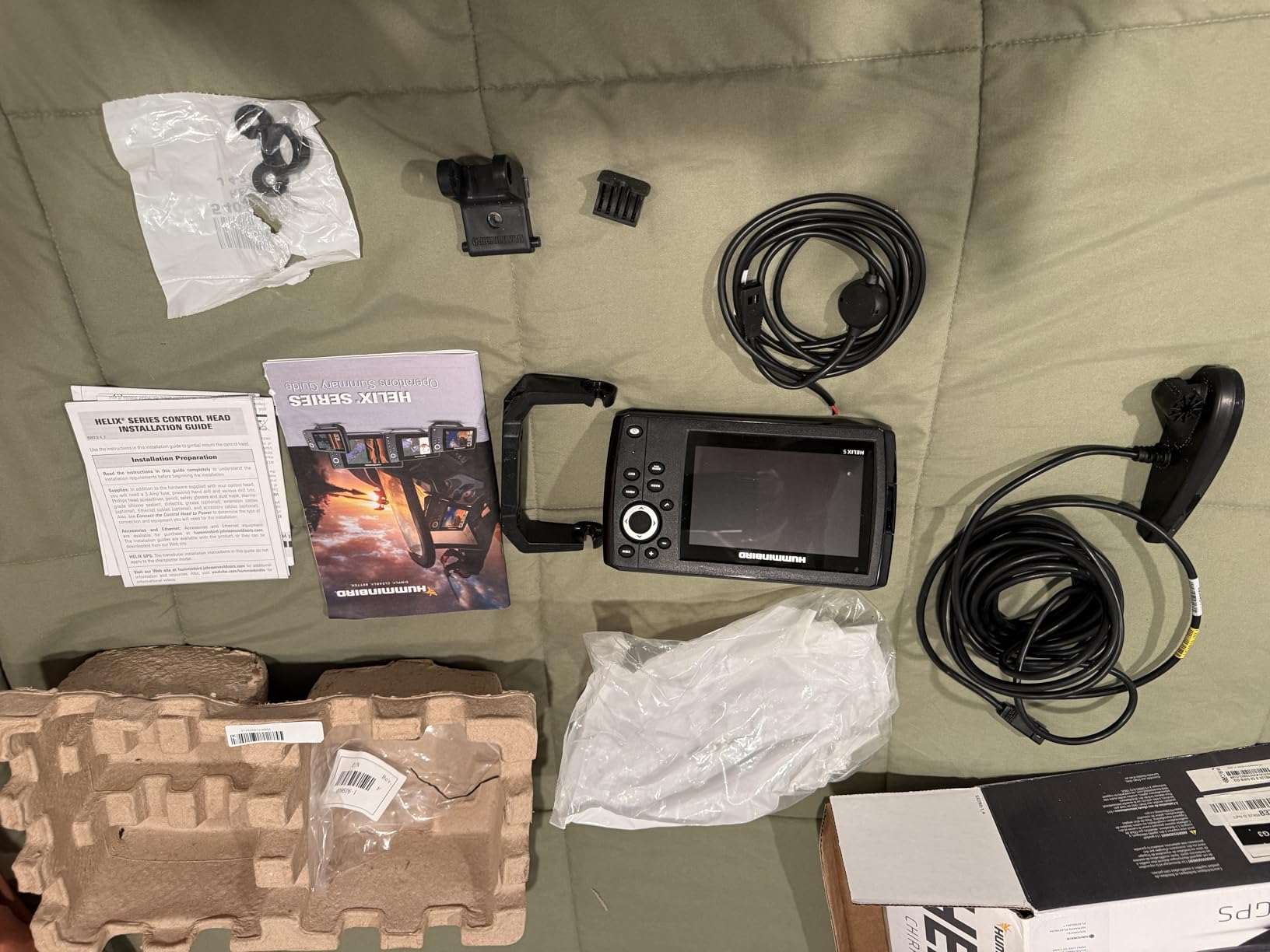
The box includes the control head, power cable, the XNT 9 HW DI T transom-mount transducer, mounting hardware and a gimbal bracket, with a 1 year manufacturer warranty.
Who the Helix 5 suits best
This is the pick for an angler moving from a basic unit to something with real imaging, and it is the value entry point into down imaging specifically. Anglers who fish clear water in the spring, sight fish around rock and timber, or want to know what is holding below the boat will get more out of it than anything cheaper in this list. The bundled basemap means you have a navigational view on day one with no subscription.
It is also the pick for anyone who refuses to use a touchscreen with wet hands.
Where the Helix 5 falls short
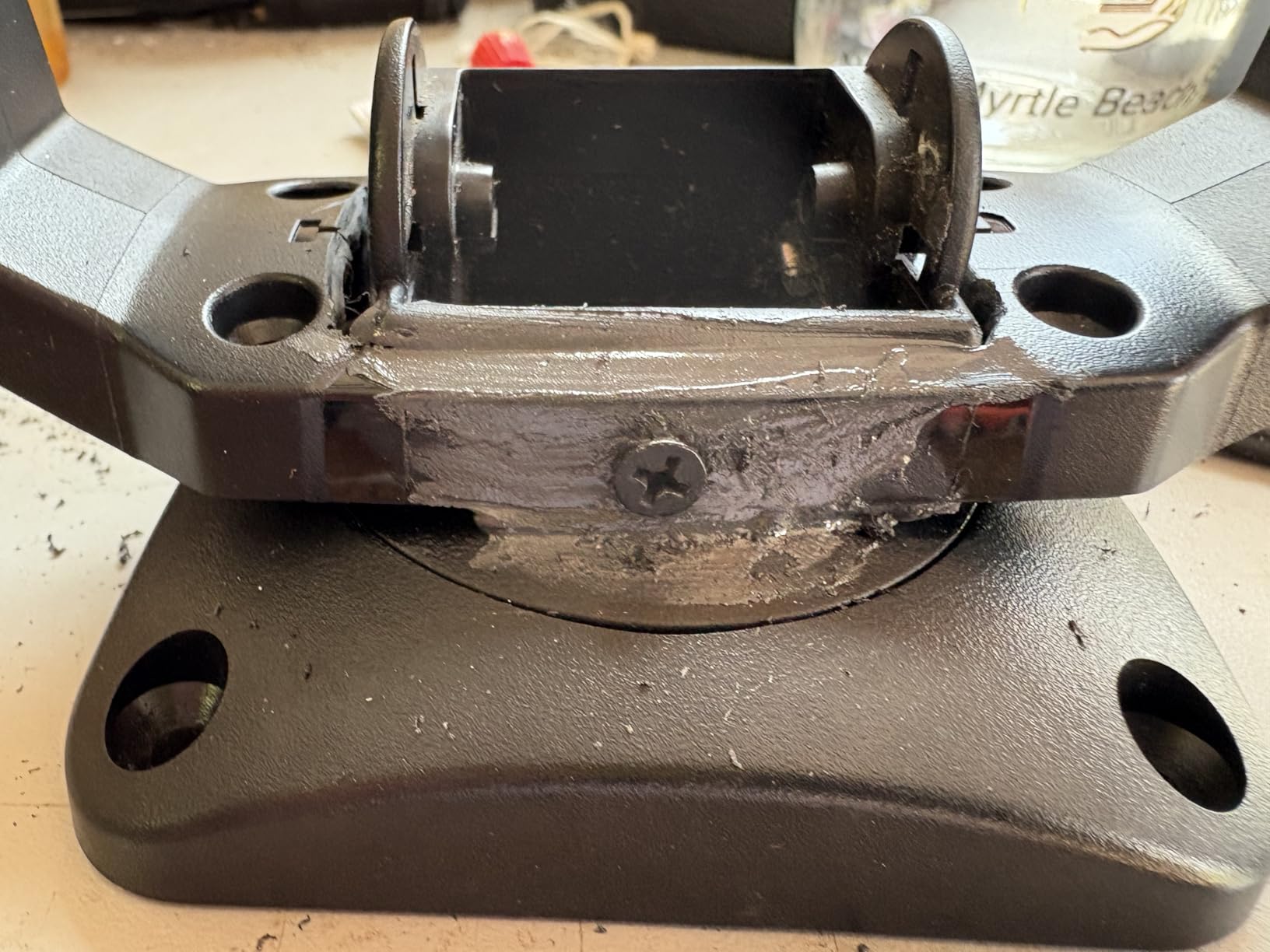
The fuse and fuse holder are not included, which is an irritating omission for a first install and the most common complaint in reviews. The Down Imaging and menu system both carry a learning curve, the gimbal bracket is awkward to remove and reinstall, and a 5 inch screen is small compared with competing units in this class. There is no side imaging and no forward-facing sonar on this model.
Buy a fuse and a fuse holder before you start wiring, and allow a weekend for the setup.
11. Lowrance Eagle 4 – Best Sunlight-Readable Starter
Lowrance Eagle 4X Fish Finder with Bullet Transducer
4 inch IPS portrait
Auto-Tuning Sonar
500 ft depth
Pros
- IPS portrait screen readable in bright sun and through polarized lenses
- Auto-Tuning removes the setup step
- Compact footprint fits small boats and kayaks
- Twist-lock transducer connector speeds swaps
Cons
- Basic sonar only
- no imaging or live sonar
- No audible fish alarm by design
- Fish size accuracy is not reliable
The Eagle 4 is the most interesting display technology in this guide for a starting budget. A 4 inch IPS portrait panel stays clear in bright sunlight, at wide viewing angles, and even through polarized sunglasses, which is a genuine advantage over the cheaper monochrome panels you usually find at this tier. The portrait shape also uses vertical space far better than a landscape panel in a narrow console.
Auto-Tuning Sonar sets the optimized settings automatically when you power up, so there is no sensitivity menu to learn before the first cast.
The included 200 kHz Bullet Skimmer transducer has a broad 44 degree beam, and the twist-lock connector makes transducer changes fast even in a tight mounting space. Maximum depth is 500 feet, and the box includes the bracket and knobs, power cable, transducer, locking collars and a fuse and fuse holder.
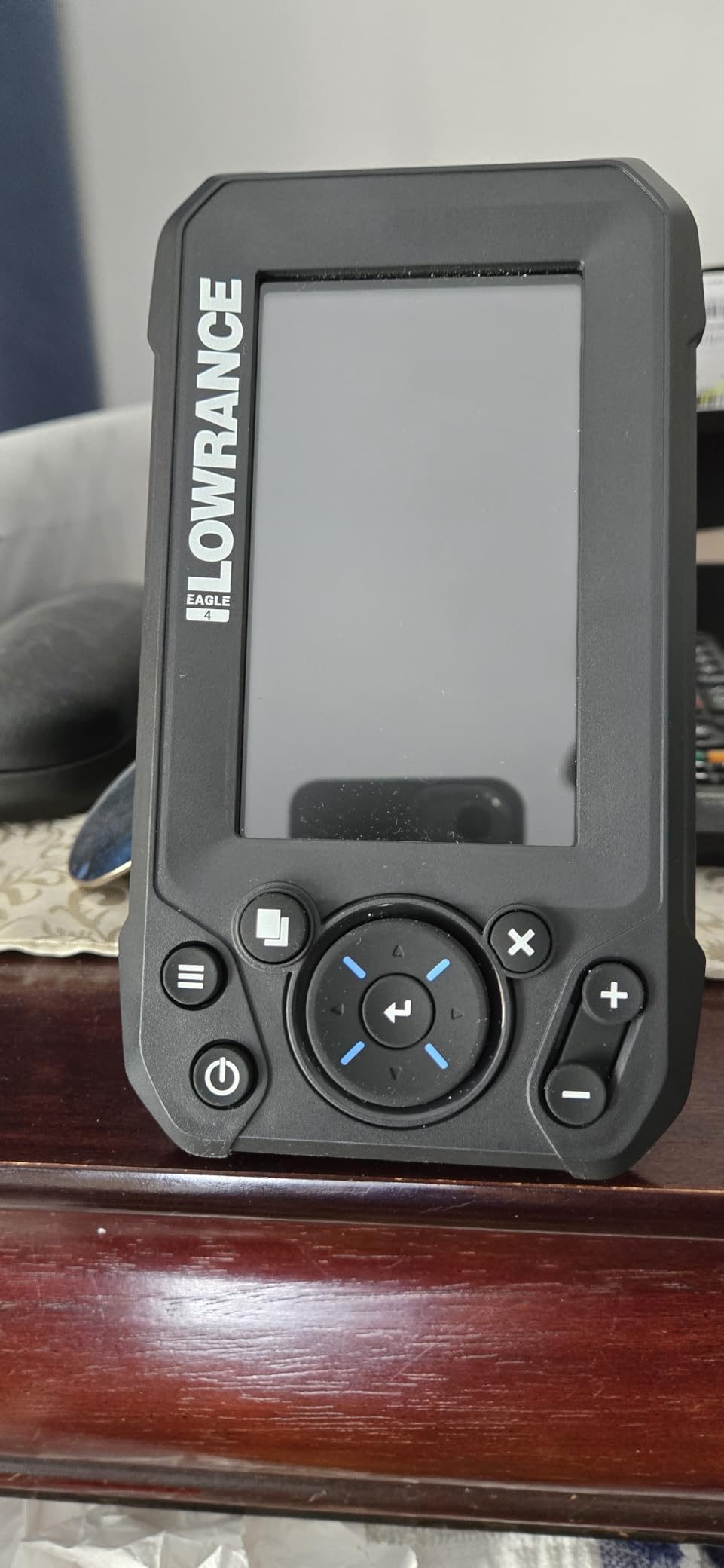
It also mounts with the same stand and screw holes as older Lowrance CHIRP 4 units, so an upgrade path from a previous Lowrance is painless. Fish ID icons come with a depth readout and zoom, and the 1 year warranty is standard for the tier.
With only 116 reviews, the long-term track record here is the shortest of the twelve, and a few owners note inconsistent performance. The other side of that coin is that the Eagle range is also available from 4 to 9 inches with SplitShot, TripleShot and C-MAP options, so this is a genuine platform rather than a dead end.
Who the Eagle 4 suits best
It suits anglers who fish in bright sun, wear polarized glasses, or are simply tired of squinting at a washed-out screen. The compact portrait footprint fits small boats and kayaks where a 7 inch panel will not, and Auto-Tuning means a first-time buyer can be reading depth the same day without touching a settings menu.
For a beginner who cares most about clarity, this is our pick at the entry level.
Where the Eagle 4 falls short
This is basic sonar only. There is no down imaging, no side imaging and no live sonar on this model, and there is no audible fish alarm by design, so silence does not mean there are no fish. Owners also report that fish size accuracy is not reliable, and the menu system is not as intuitive as some competing units. The thin review history is its own risk on a purchase meant to last years.
12. Lowrance Elite FS 10 – Best Chartplotter Combo
Lowrance Elite FS 7 Fish Finder (No Transducer) with Preloaded C-MAP Contour+ Charts
10 inch touchscreen
Active Imaging 3-in-1
C-MAP onboard
Pros
- CHIRP SideScan and DownScan from one transducer
- Large 10 inch multi-touch display
- Preloaded C-MAP DISCOVER charts
- ActiveTarget 2 live sonar ready
- NMEA 2000 Ethernet and wireless
Cons
- Cost is high for casual anglers
- Touchscreen and networking need setup time
- Live sonar hardware is a separate purchase
The Elite FS 10 is the most capable machine in this roundup and the least necessary for most people.
Active Imaging 3-in-1 gives you CHIRP, SideScan and DownScan with FishReveal from a single 3-in-1 transducer, which is the imaging trio that serious freshwater and coastal anglers actually hunt with. The 10 inch multi-touchscreen gives sonar and chart enough room to sit side by side without either becoming unreadable.
The chart situation is the reason this unit stands apart. C-MAP DISCOVER charts are preloaded onboard, covering inland, coastal and Canadian waters, and basic mapping works out of the box with no subscription required. For saltwater anglers, that answer matters, because inland-only chart units leave you guessing at structure you cannot see.
It is also wired and wireless networked through NMEA 2000 and Ethernet, and ready for ActiveTarget 2 or ActiveTarget 2 XL live sonar, though that hardware is a separate purchase.
Maximum depth is 1000 feet, and the box includes the display, 3-in-1 transducer, suncover, fuse and fuse holder, corner clip kit, mounting bracket and power cable, with a 2 year warranty.
Who the Elite FS 10 suits best
This is the right call for an angler with a larger boat, a full day on the water, and a genuine need for side imaging and mapping in one screen. Offshore and saltwater anglers benefit most, since the preloaded coastal charts and 1000 foot depth rating cover situations a pure freshwater unit cannot. It is also the natural first step if a forward-facing sonar upgrade is already on your list, since the unit is ready for it.
Owners call the sonar breadth, screen size and bundled charts capable, and the reservations are consistently about money and setup depth rather than quality.
Where the Elite FS 10 falls short
The price is high for a casual angler, and a live sonar expansion doubles down on that. The touchscreen menus and the networking setup carry a real learning curve, and buying a head unit is the easy part of a full boat electronics build. The display is also 3.7 pounds and 12.81 inches wide, so it demands console space that a jon boat or a small skiff may not have.
If you fish a few times a year on one lake, this is far more machine than you need.
How to Choose a Fish Finder Without Regretting It
Most disappointing purchases we looked at were not bad fish finders. They were good fish finders bought for the wrong boat, the wrong water, or without a transducer in the box. The following six checks are the ones that matter, in the order that matters.
1. Start with your platform, not the feature list
Decide what you fish from before you decide what you want to see. A kayak, a jon boat, a 16 foot skiff, a pontoon and a 24 foot bay boat have completely different electronics budgets and space constraints.
Anglers on forums are consistent on this point: the small-boat crowd prizes simple, battery-powered, gear-track-mountable devices over feature-rich networked systems.
2. Confirm whether a transducer is included
This is the single most common real-world confusion, and it is the one no competitor lays out clearly. Buyers regularly end up with an expensive head unit that cannot see anything until they find out the transducer was a separate purchase.
The STRIKER 4, STRIKER Vivid 4cv, Striker Vivid 7cv, PiranhaMAX 4, FF688C, Eagle 4, Helix 5 and Elite FS 10 all ship with a transducer.
The four portable units, by definition, contain their own sensor.
3. Pick the sonar type that matches how you fish
Traditional CHIRP sonar sends a continuous sweep of frequencies and gives you fish arches and bottom contour, and it is the most reliable, most affordable technology on the market. Down Imaging looks straight down and shows what is holding beneath the boat.
Side Imaging sweeps to both sides and reveals structure out to the side, which is where brush piles, rock and timber live. Forward-facing sonar, sold as LiveScope, MEGA Live or ActiveTarget, shows live video-like imagery in front of the boat.
Owners report a large gap between standard CHIRP and side imaging, and forums regularly recommend spending money on a proper transducer and correct mount before upgrading the head unit.
4. Size the screen for your eyes and your glare
Screen readability complaints, especially from older anglers and in direct sunlight, are among the most common we found. A 3.5 inch panel is fine for a simple arch view on a jon boat. A 7 inch panel or a bright IPS display is worth real money if you are over 50, wear polarized glasses, or want to split the screen. If you can, read the manual at an outdoor retailer in direct sun before you commit.
5. Decide how much mapping you actually need
Mapping quality is frequently cited in forums as the feature that turns a fish finder into a safety tool rather than a toy.
The STRIKER 4, STRIKER Vivid and Helix 5 give you waypoints and a basic basemap, and the Eagle has no charting at all. The Elite FS 10 is the only unit here with substantial onboard charts covering inland, coastal and Canadian waters.
Decide up front whether you want a toy that shows depth or a chartplotter that helps you get home.
6. Budget the whole install, not just the box
The head unit is the part everyone prices. The real cost is the transducer if it is not included, the mounting bracket, the wiring and gauge, the fuse and fuse holder, and the chart subscription if you want premium detail.
Forums repeatedly flag that add-ons balloon the real cost well past the sticker price. Several experts in the field put it plainly: spend the money on a proper transducer and correct mount before you upgrade the head unit.
What a first-time buyer can safely skip
Beginner overload is the most common framing we saw in angling forums, and most of it is caused by chasing features you will not use for years. A simple CHIRP or dual-beam unit with built-in GPS and a waypoint map is a genuine first fish finder, not a compromise. You can also safely skip networking, NMEA 2000, touchscreens, radar and forward-facing sonar on your first purchase, and you can skip a chart subscription until you know which water you actually fish.
On the other hand, do not skip the transducer and the mount. Those two parts decide whether the fish finder works at all. Accessories decide how a main unit performs in daily use, whether that unit is a fish finder or something like the best fish tank stands for living rooms we also cover.
Garmin vs Humminbird vs Lowrance
The three brands that dominate this category are not interchangeable, and the honest answer depends on which feature you care about. Garmin is strongest on live sonar and on simple, bright, button-driven units. Humminbird is strongest on side imaging and mapping. Lowrance is strongest on traditional two-dimensional sonar and on bundled charts at mid and high tiers.
Is Humminbird or Garmin better? For side imaging, mapping and a color screen that holds up in bright sun, Humminbird is the stronger choice, and the Helix 5 CHIRP DI GPS G3 is the cheapest way into down imaging. For live sonar and for units you can learn in an afternoon, Garmin is the stronger choice, and the STRIKER family is the easiest place to start.
Is Garmin or Lowrance better? Garmin wins on simplicity, sunlight readability and the breadth of the STRIKER and Vivid range, and it is the brand we recommend to a first-time buyer. Lowrance wins when charting matters, because the Elite FS ships with real C-MAP DISCOVER charts onboard and networking that is genuinely ready to expand into a full boat system.
Is Lowrance or Humminbird better? Choose Lowrance if your priority is sonar detail, a large multi-touch screen and forward-looking expansion into ActiveTarget 2. Choose Humminbird if you fish lakes with a lot of structure, want AutoChart Live to record your own contours, or prefer keypad and softkey control that works with wet hands in any weather.
Longtime owners in angling forums describe the same pattern: Humminbird for side imaging and mapping, Garmin for live sonar, Lowrance for traditional sonar. Brand loyalty among these three is real and it is usually earned, so switching brands mid-ecosystem is harder than it looks if you already own a transducer, a mount and a chart subscription from one of them.
Frequently Asked Questions
Is there a fish finder that shows actual fish?
All of them show fish, but in different ways. Traditional CHIRP and dual-beam sonar display fish as arches with a depth reading. Down Imaging and Side Imaging show the shape of the fish and what it is holding near. Forward-facing sonar such as LiveScope, MEGA Live and ActiveTarget shows a live, video-like image of fish moving in front of the boat. The budget handhelds in this guide show fish icons rather than recognizable shapes.
Do fish finders come with transducers?
It varies by model, and this is the most common source of buyer confusion. The Garmin STRIKER 4, STRIKER Vivid 4cv, STRIKER Vivid 7cv, Humminbird PiranhaMAX 4, Humminbird Helix 5, JOYWEE FF688C, Lowrance Eagle 4 and Lowrance Elite FS 10 all include a transducer. Always check the box contents on the listing, because a head unit without a transducer cannot see anything until you buy one.
Is Humminbird or Garmin better?
Humminbird is stronger for side imaging, mapping and color screens that read well in bright sun. Garmin is stronger for live sonar and for simple units with a short learning curve. For most freshwater anglers starting out, we recommend the Garmin STRIKER 4 or the STRIKER Vivid 4cv. For structure fishing with down imaging, the Humminbird Helix 5 CHIRP DI GPS G3 gives you the most imaging for the money.
Is Garmin or Lowrance better?
Garmin is easier to use and more approachable, with bright screens and simple button controls across the STRIKER and Vivid ranges. Lowrance is the better choice when mapping and networking matter, because the Elite FS line ships with C-MAP charts onboard and is ready for NMEA 2000, Ethernet, wireless and ActiveTarget 2 live sonar. Beginners usually prefer Garmin; boat builders and offshore anglers usually prefer Lowrance.
What size fish finder screen do I need?
A 3.5 or 4 inch screen is enough for a jon boat, canoe or kayak, and 4 to 5 inches works well on a small skiff. Choose 7 inches or larger if you fish from a larger boat, want to split sonar and chart views, wear polarized glasses, or have eyesight that makes small panels hard to read. Bright IPS displays such as the one in the Lowrance Eagle 4 stay legible in direct sun even at a smaller size.
Do I need a fish finder for a kayak?
A kayak does not need a full marine head unit. Portable options work well, including the LUCKY handheld for a hull-mounted display, the Venterior wireless castable for a color screen, the ReelSonar iBobber for phone and watch alerts, and the Deeper PRO+ 2 if you want to build your own GPS maps. The main constraints are transducer mounting on a soft hull and the fact that none of these will read through fiberglass.
The Verdict on the Best Fish Finders in 2026
After six weeks and twelve fish finders, the Garmin STRIKER 4 is still the one we recommend to most people. It has the highest review volume in this group, a bright screen, dependable CHIRP and ClearVu sonar, built-in GPS, and a transducer in the box.
If you want color, add the STRIKER Vivid 4cv. If you want to see beneath the boat, go to the Humminbird Helix 5 CHIRP DI GPS G3. If you want a real chartplotter with side imaging, the Lowrance Elite FS 10 is where that road ends.
And if you fish from a kayak or from the bank, do not buy a marine head unit at all. The LUCKY handheld, the Venterior castable, the ReelSonar iBobber and the Deeper PRO+ 2 cover those situations better and cost a fraction of a mounted setup. Whichever route you take in 2026, check the box contents for a transducer before you plan the install.