
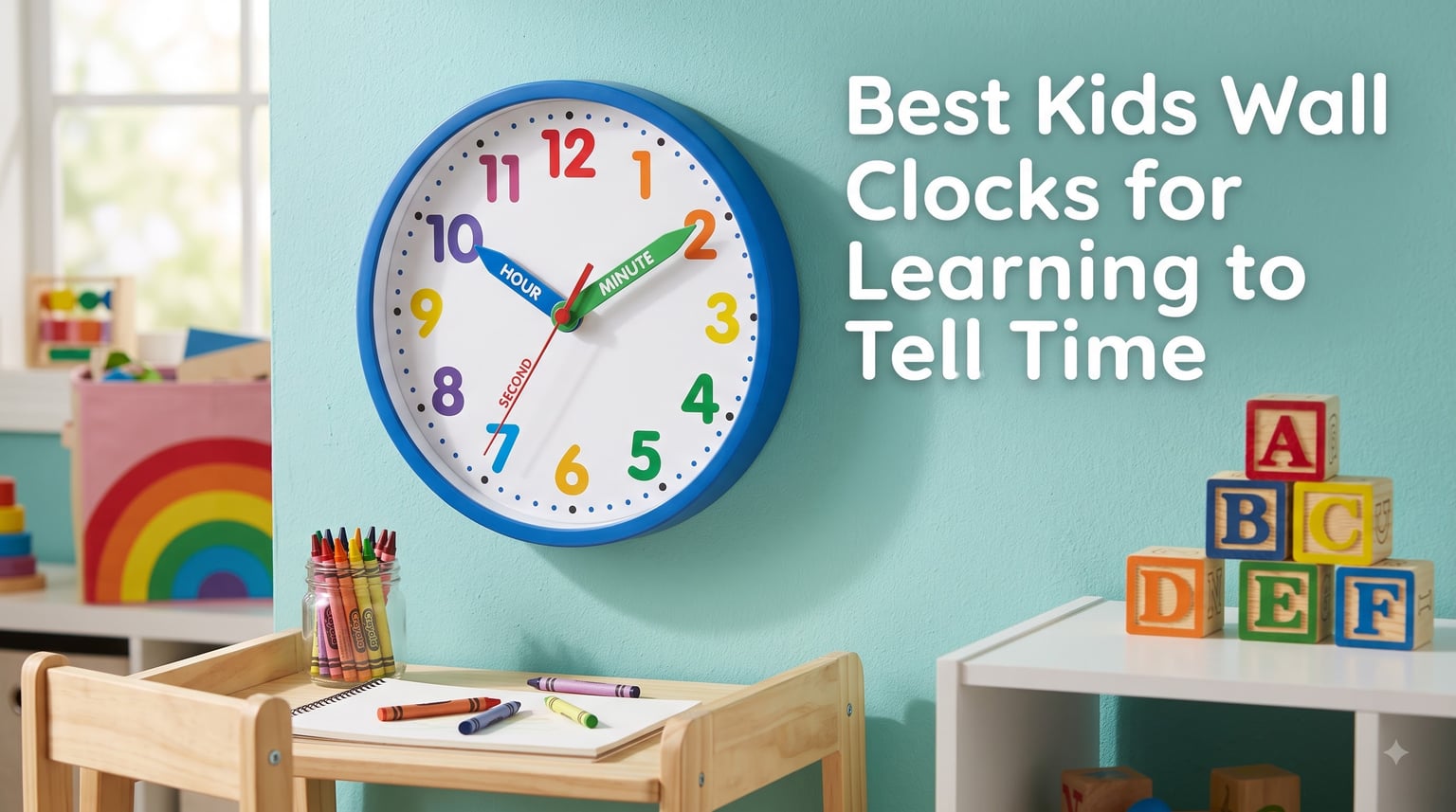
Teaching a child to read an analog clock is one of those parenting milestones that sounds simple until you try it. I remember sitting with my five-year-old, pointing at the clock on the wall, and watching her eyes glaze over. The concept of “the little hand means hours and the big hand means minutes” just was not clicking with a plain white clock. That is exactly why kids wall clocks for learning to tell time exist, and why they work so well.
Parents on Reddit and homeschool forums consistently share the same struggle. Kids who grow up surrounded by digital clocks on phones, tablets, and microwaves have a harder time grasping analog time. The solution that comes up again and again is putting a dedicated learning clock on the wall. These clocks use color-coded numbers, labeled hands, and clear minute markers to make abstract time concepts concrete.
Our team spent weeks comparing 8 of the most popular learning clocks available right now. We looked at how each one teaches time concepts, whether the design actually helps kids learn, and how well they hold up in real homes and classrooms. Whether you need a clock for a bedroom, a homeschool room, or an elementary classroom, this guide breaks down what works and what does not in 2026.
Table of Contents
Top 3 Picks for Kids Wall Clocks in 2026

Learning Resources Time Activity Set
- Hands-on geared clock
- Activity cards and puzzles
- Write-and-wipe practice
- 4.8 rating

Oyster&Pop Kids Wall Clock
- Color-coded labeled hands
- Silent sweep movement
- Wood-effect frame
- Includes e-book

Lantoo Silent Kids Wall Clock
- Colorful easy-read numerals
- Silent sweeping movement
- Battery operated
- Budget friendly
These three clocks represent the best of what is available for teaching time. The Learning Resources set takes our top spot because it includes hands-on learning tools beyond just a wall clock. Oyster&Pop wins on value with its teacher-designed color coding and premium feel. And the Lantoo clock proves you do not need to spend much to get a solid silent learning clock.
Best Kids Wall Clocks for Learning to Tell Time in 2026
| Product | Specifications | Action |
|---|---|---|
| Learning Resources Time Activity Set |
|
Check Latest Price |
| Oyster&Pop Kids Wall Clock |
|
Check Latest Price |
| Lantoo Silent Kids Wall Clock |
|
Check Latest Price |
 AIRUIFU Wall Clock for Kids AIRUIFU Wall Clock for Kids |
|
Check Latest Price |
 Bernhard Products Colorful Clock Bernhard Products Colorful Clock |
|
Check Latest Price |
 LittleHippo Learning Wall Clock LittleHippo Learning Wall Clock |
|
Check Latest Price |
 Homotte 10 Inch Kids Wall Clock Homotte 10 Inch Kids Wall Clock |
|
Check Latest Price |
 Roymnie Wall Clock for Kids Roymnie Wall Clock for Kids |
|
Check Latest Price |
1. Learning Resources Time Activity Set – Hands-On Geared Learning Clock
Learning Resources Time Activity Set
Geared analog clock
Activity cards and puzzles
Write-and-wipe clock
Ages 5 to 10
Pros
- Hands-on learning with moving geared hour and minute hands
- Includes write-and-wipe clock with activity cards and puzzles
- Gears connect hands for realistic time demonstration
- Durable materials built for classroom use
Cons
- Dry erase marker does not wipe off easily
- Clock face may be small for large classrooms
This is not just a wall clock. It is a complete learning system. The Learning Resources Time Activity Set includes a geared teaching clock where the hour hand moves realistically as you advance the minute hand. That gear connection is what makes this product special. Kids can physically feel and see how the hands relate to each other instead of just staring at numbers on a wall.
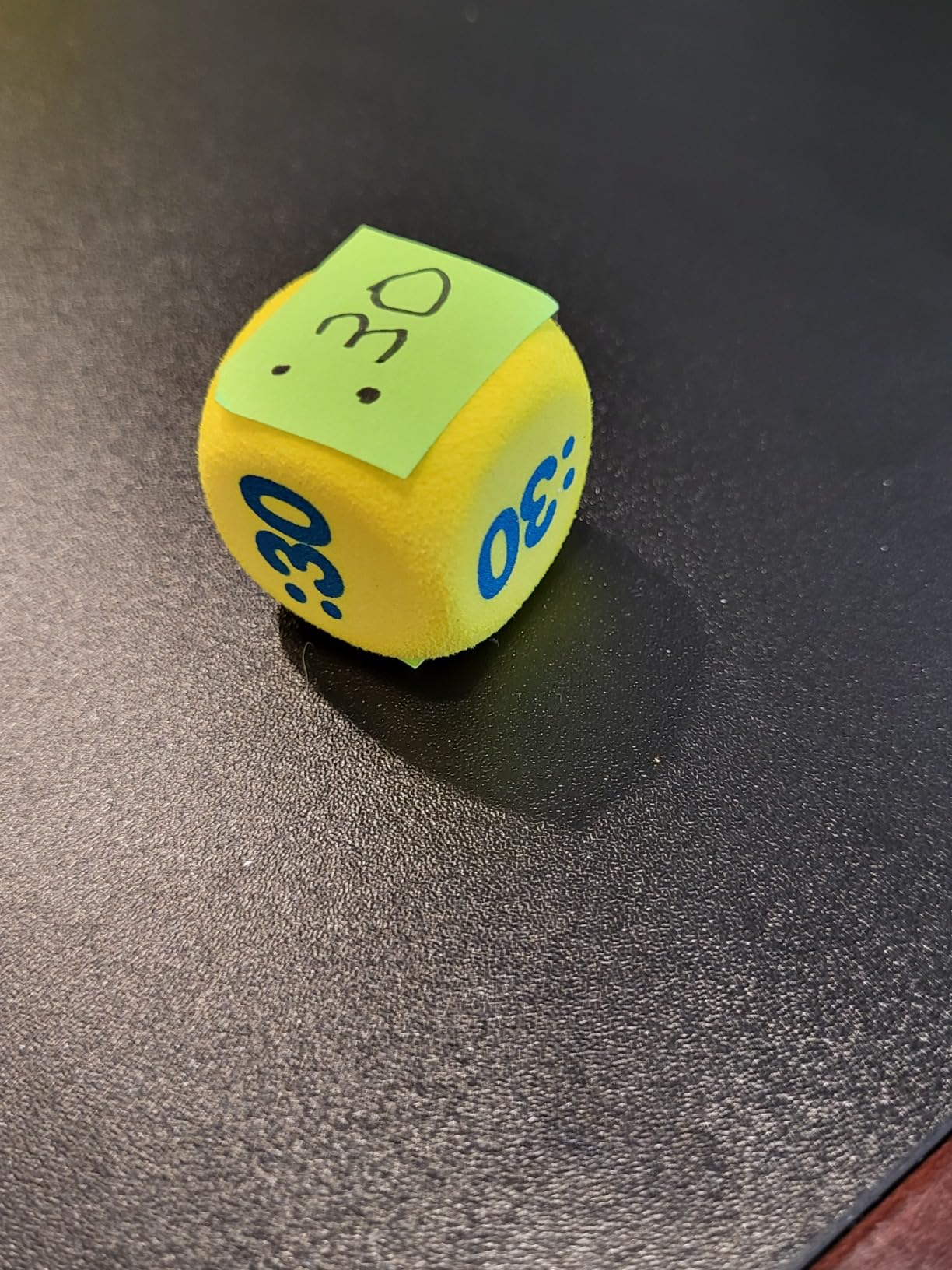
I set this up with my daughter and we spent a full afternoon working through the activity cards. The double-sided cards walk kids through identifying hours, half-hours, and quarter-hours step by step. The puzzles and dice add a game element that keeps younger learners engaged. With nearly 11,000 reviews and a 4.8-star rating, this set has clearly earned its reputation with parents and teachers.
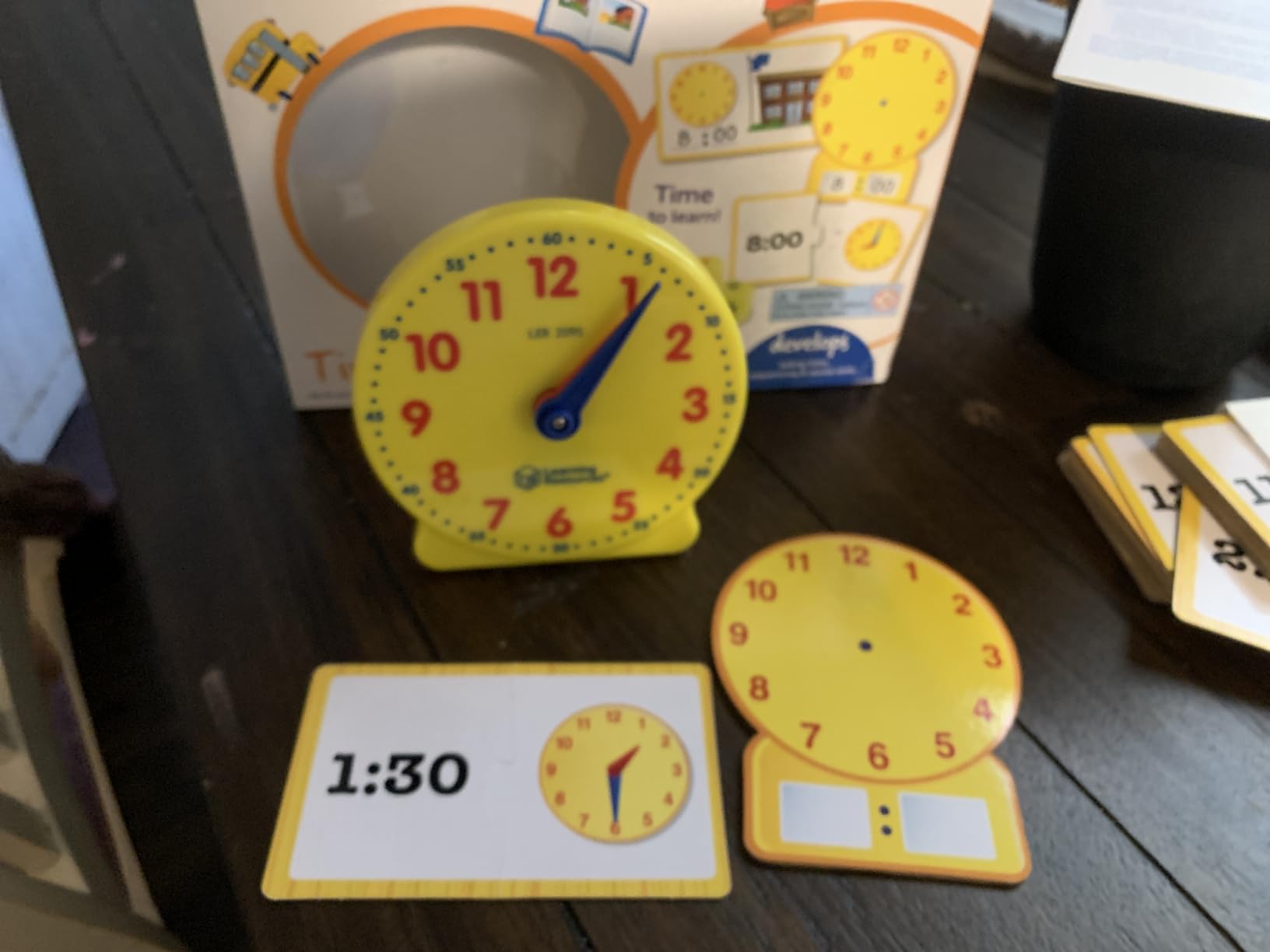
The geared mechanism is the real standout feature. When you turn the minute knob, the hour hand slowly creeps forward just like a real clock. This teaches kids the relationship between the two hands in a way no static wall clock can. The write-and-wipe clock lets kids practice drawing hand positions themselves, which reinforces the concept through muscle memory.
One thing to keep in mind is that the included dry erase marker does not wipe off cleanly after a while. Several parents recommend using your own quality dry erase markers or even wet erase markers instead. The clock itself is also on the smaller side at about 10 inches, which works great for one-on-one learning but may be hard to see from across a full classroom.
Best for Hands-On Learners and Classrooms
This set shines brightest when you want an interactive teaching tool rather than just a wall decoration. It is perfect for homeschool families, small reading groups, and one-on-one practice sessions. The activity cards make it easy to structure a lesson without needing to plan everything yourself.
Teachers with small groups will love it. If you have 25 kids in a room and need something visible from the back row, you may want to pair this with a larger wall-mounted option. But for active, hands-on learning, nothing on this list comes close.
What to Watch Out For
The dry erase marker issue is the most common complaint. Stock up on your own markers and keep some cleaning spray handy. The geared mechanism is also relatively delicate compared to a standard wall clock, so this is a teaching tool rather than something to leave running on the wall 24/7.
Also note that this is a learning set, not a functional wall clock. It does not run on its own. You use it for instruction time, then put it away. If you want a clock that teaches while actually telling time on the wall, look at the Oyster&Pop or Bernhard options below.
2. Oyster&Pop Kids Wall Clock – Teacher-Designed Color-Coded Clock
Oyster&Pop Kids Wall Clock – Silent 10″ Analog Learning Clock for Classroom
10 inch analog clock
Color-coded labeled hands
Silent sweep movement
Wood-effect frame
Pros
- Every minute numbered with labeled color-coded hands
- Truly silent sweeping movement with no ticking
- Wood-effect frame looks premium on any wall
- Includes free teaching-time activity e-book
Cons
- Some durability issues after extended use
- Missing 5-minute interval markers
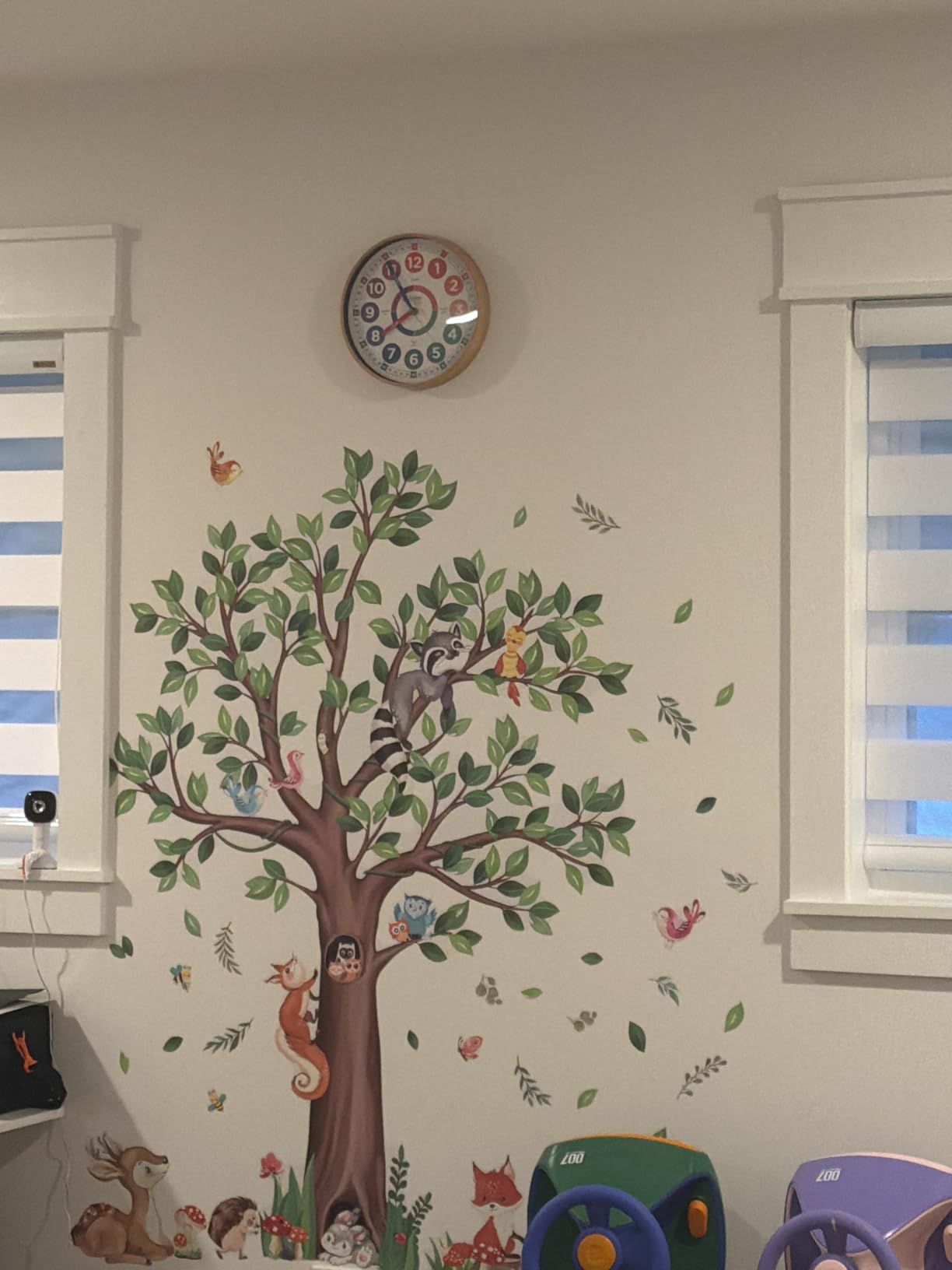
The Oyster&Pop clock is what I would call the gold standard for wall-mounted learning clocks. It was designed by actual teachers and parents, and that thoughtfulness shows in every detail. Every single minute around the dial is numbered, the hour and minute hands are labeled and color-coded, and the whole thing runs completely silent.
I hung this in my kid’s bedroom and within days she was asking me what time it was by reading the clock herself. The color-coded hands make it obvious which is which. The hour hand says “hours” right on it. The minute hand says “minutes.” Kids do not have to remember which hand does what because the clock tells them.
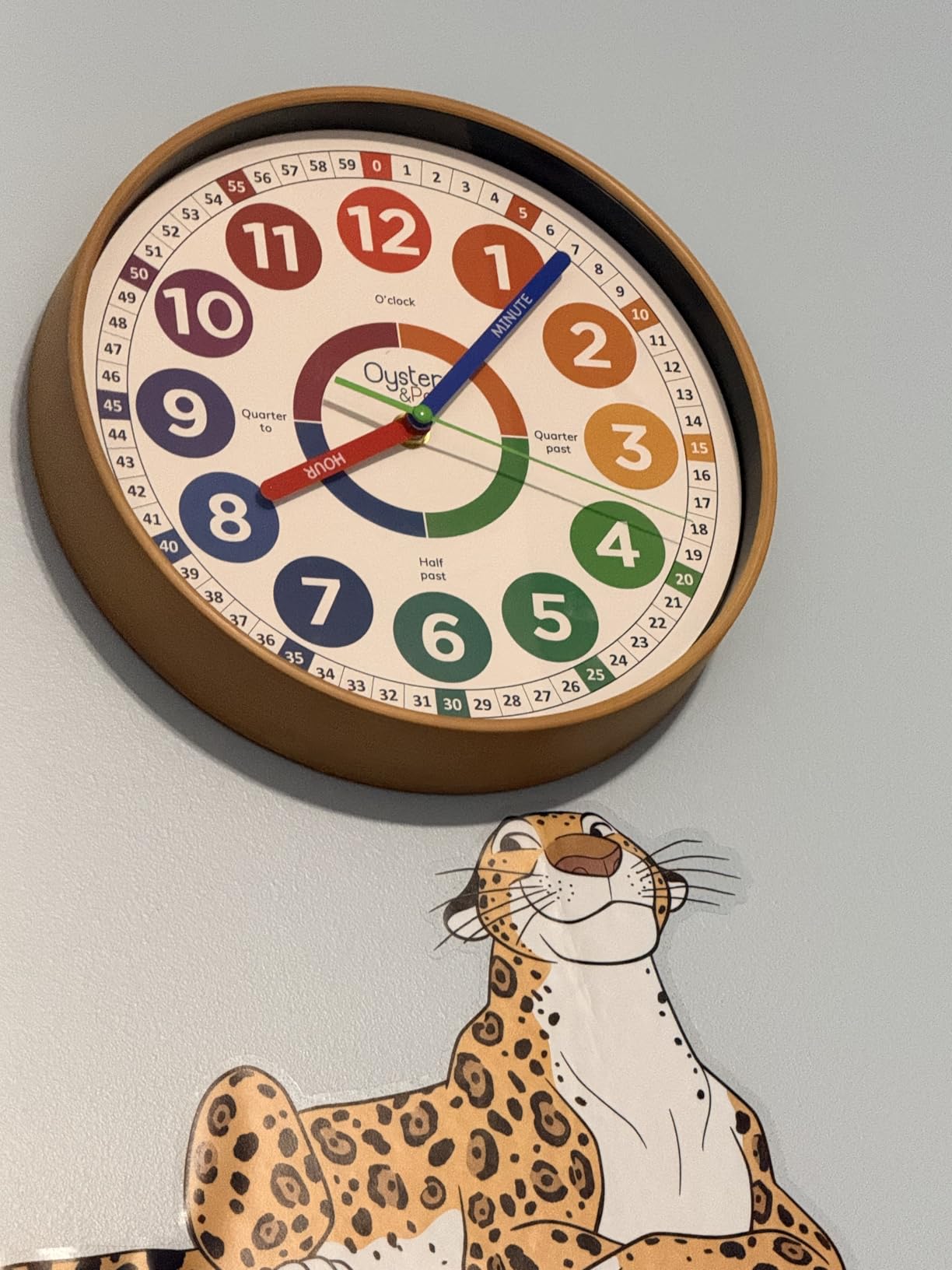
The wood-effect frame gives it a substantial, quality feel that makes it look like a piece of decor rather than an educational tool. At 10 inches, it is large enough to read from across a bedroom or small classroom but not so huge that it dominates the wall. The acrylic face means no shattered glass if it gets knocked down.
The free teaching-time e-book is a nice bonus. It includes structured activities you can do with your child using the clock as a reference. Some parents in forums mentioned durability issues after a year or more of use, with the movement occasionally failing. But with over 3,400 reviews and a 4.7-star average, the vast majority of buyers are happy long-term.
Best for Bedrooms and Home Learning Spaces
This clock hits the sweet spot between educational design and everyday functionality. It is the one I would recommend to most parents who want a learning clock that also works as an actual clock on the wall. The silent movement makes it perfect for bedrooms and nurseries where ticking would be annoying at night.
It is also a great choice for homeschool rooms. The color-coded design supports visual learning without being overwhelming or too busy. Kids can reference it independently while doing schoolwork.
What to Watch Out For
Some reviewers noted that the clock does not include 5-minute interval markers around the outer ring. Every individual minute is numbered, which is great for beginners but can look cluttered. As kids advance, they may prefer a clock with cleaner 5-minute increments.
A small number of buyers reported the movement failing after extended use. Oyster&Pop offers customer support and replacements, but it is worth knowing before you buy. Overall, the return rate and complaint rate are very low for a product at this price point.
3. Bernhard Products Colorful Kids Wall Clock – Quadrant Color-Coding System
Bernhard Products Colorful Kids Wall Clock Teaching Time Telling Silent Non-Ticking Educational Learning Tool, Colored Numbers for Children Teachers Homeschool and Parents, School Classroom Playroom
12 inch analog clock
4 color-coded quadrants
All 60 minutes colored
Silent quartz sweep
Pros
- 4 color-coded quadrants representing 15 minutes each
- All 60 minutes included and individually colored
- Large vibrant numbers visible from any angle
- Silent non-ticking with precise quartz movement
Cons
- Glass face can break during shipping or handling
- Some durability issues with second hand
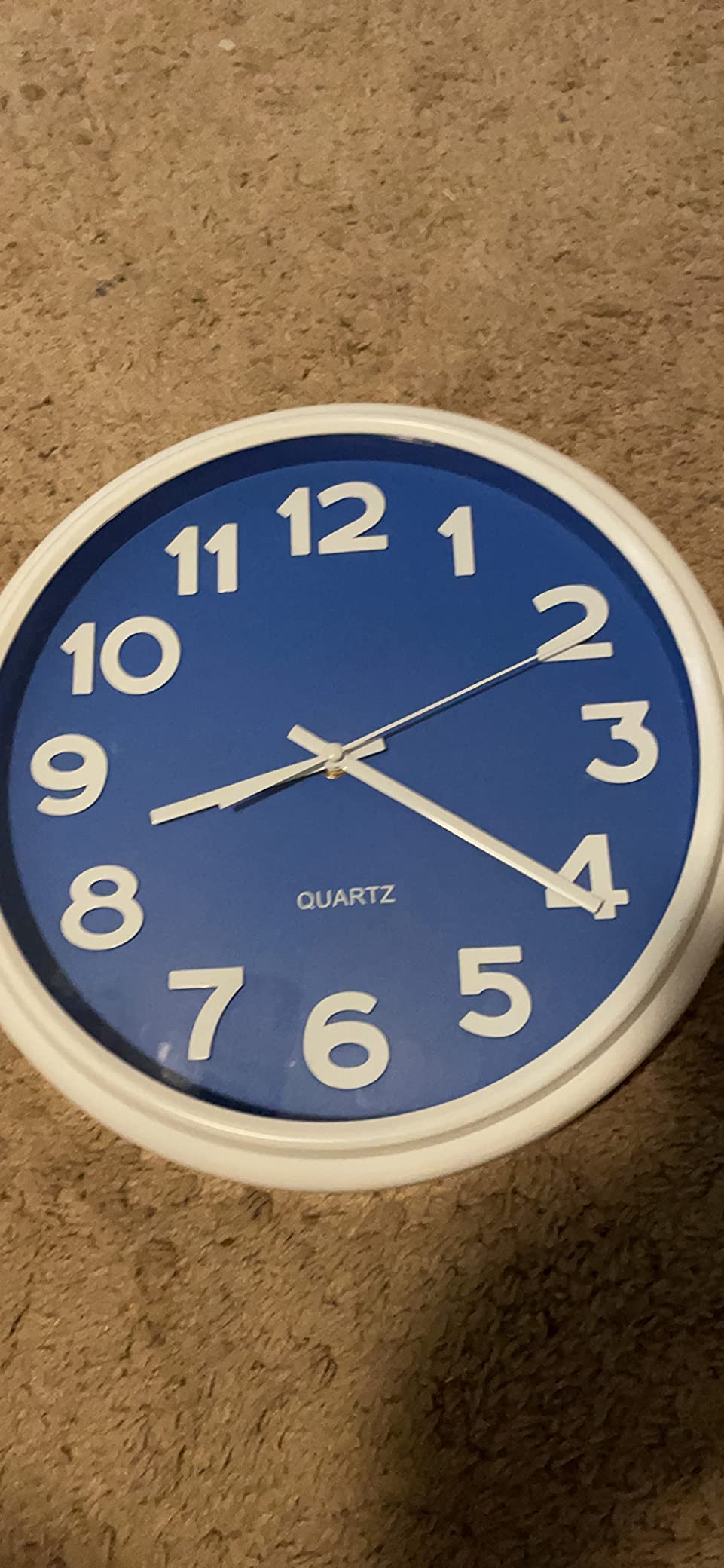
The Bernhard Products clock takes a unique approach to color coding. Instead of each hour being a different color, it divides the clock face into four color-coded quadrants, each representing 15 minutes. This is a smart design because it directly teaches the concept of quarter-hours, which is a core part of learning analog time.
When I first saw this clock, I was skeptical about the quadrant approach. But after watching my nephew use it, I changed my mind. He immediately understood that the blue section was the first 15 minutes, the yellow was the next 15, and so on. It gave him a mental framework for understanding how a full hour breaks down.
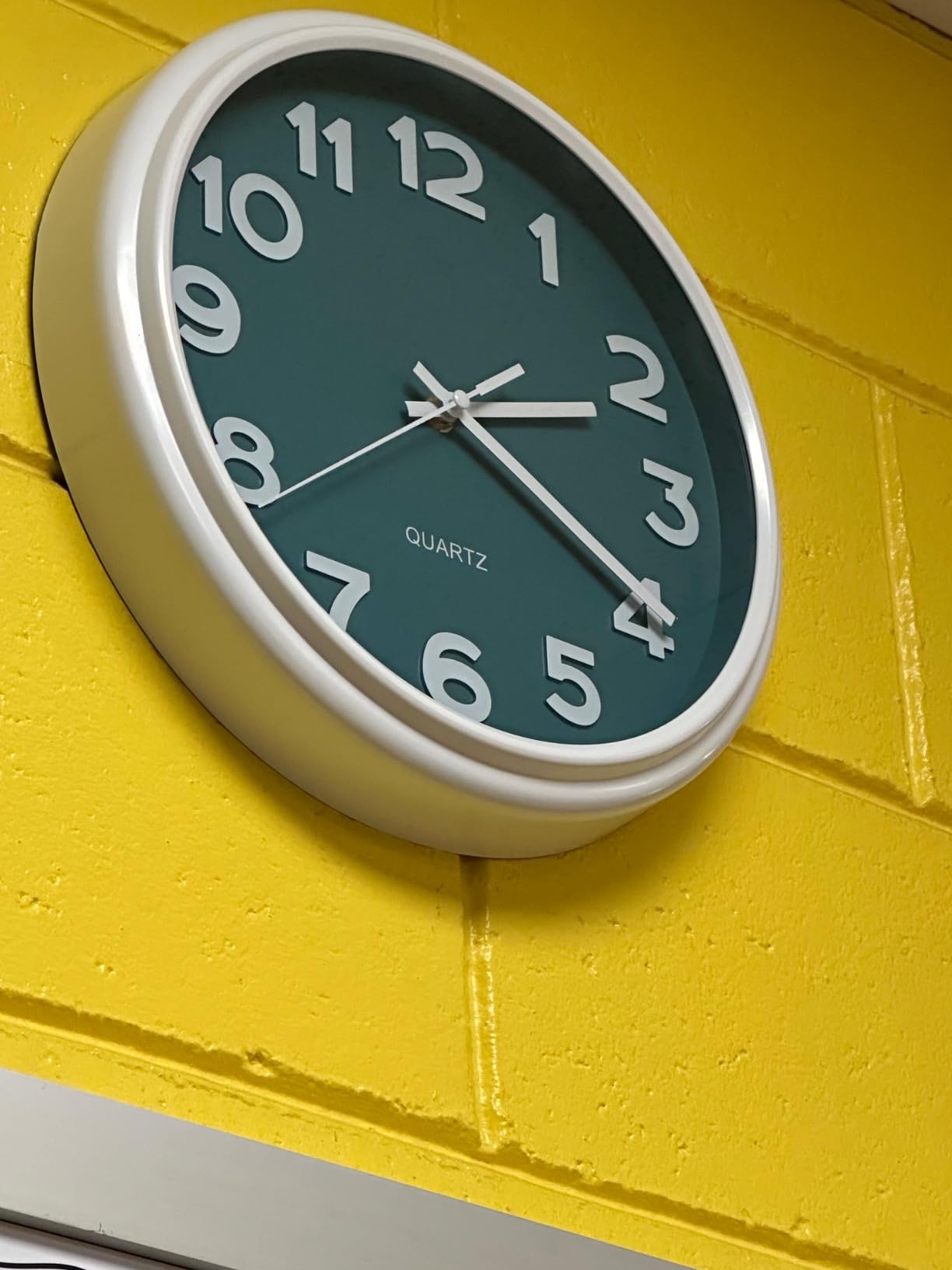
At 12 inches, this is one of the larger clocks on our list. That makes it a strong choice for classrooms or playrooms where kids need to see it from a distance. The numbers are large and vibrant, and all 60 minutes are marked and colored around the outer ring. The silent quartz sweep movement keeps it quiet in any setting.
The main downside is the glass face. Several reviewers reported breakage during shipping or from being knocked off the wall. If you have very young children or a busy classroom, you may want to consider an acrylic-faced option instead. Bernhard does package carefully, but glass is glass.
Best for Visual Learners Who Need Structure
The quadrant system is particularly helpful for kids who need a clear visual structure to understand how time passes. Instead of a rainbow of 12 different colors, they get four distinct sections that map directly to quarter-hour concepts. This makes it easier to explain “a quarter past” or “a quarter to.”
It is also excellent for elementary classrooms. The 12-inch size and bold numbers make it readable from the back of the room. Teachers can point to the quadrants during time lessons and kids can reference them independently.
What to Watch Out For
The glass face is the biggest concern. If it falls, it will shatter. Make sure it is securely mounted and out of reach of toddlers who might pull on it. Some reviewers also mentioned the second hand can be fragile.
The quadrant color system is different from what most other learning clocks use. If your child is already used to per-hour color coding from school or another clock, this system might require some adjustment. It is not better or worse, just different.
4. AIRUIFU Wall Clock for Kids Learning – 12-Inch Multi-Color Learning Clock
AIRUIFU Wall Clock for Kids Learning to Tell Time, 12 Inch Silent Analog Clock for Kids Room Decor/Bedroom/Classroom/Playroom, Colorful Teaching Clock Helps Kids Easier to Tell Time
12 inch analog clock
Each hour different color
Minutes labeled around dial
Silent non-ticking
Pros
- 12 inch size with each hour in a different color
- Minutes labeled around the full dial for easy reading
- Silent non-ticking with smooth sweeping second hand
- Lightweight plastic frame easy to hang
Cons
- Glass front cover can break with young children
- Some quality control issues reported
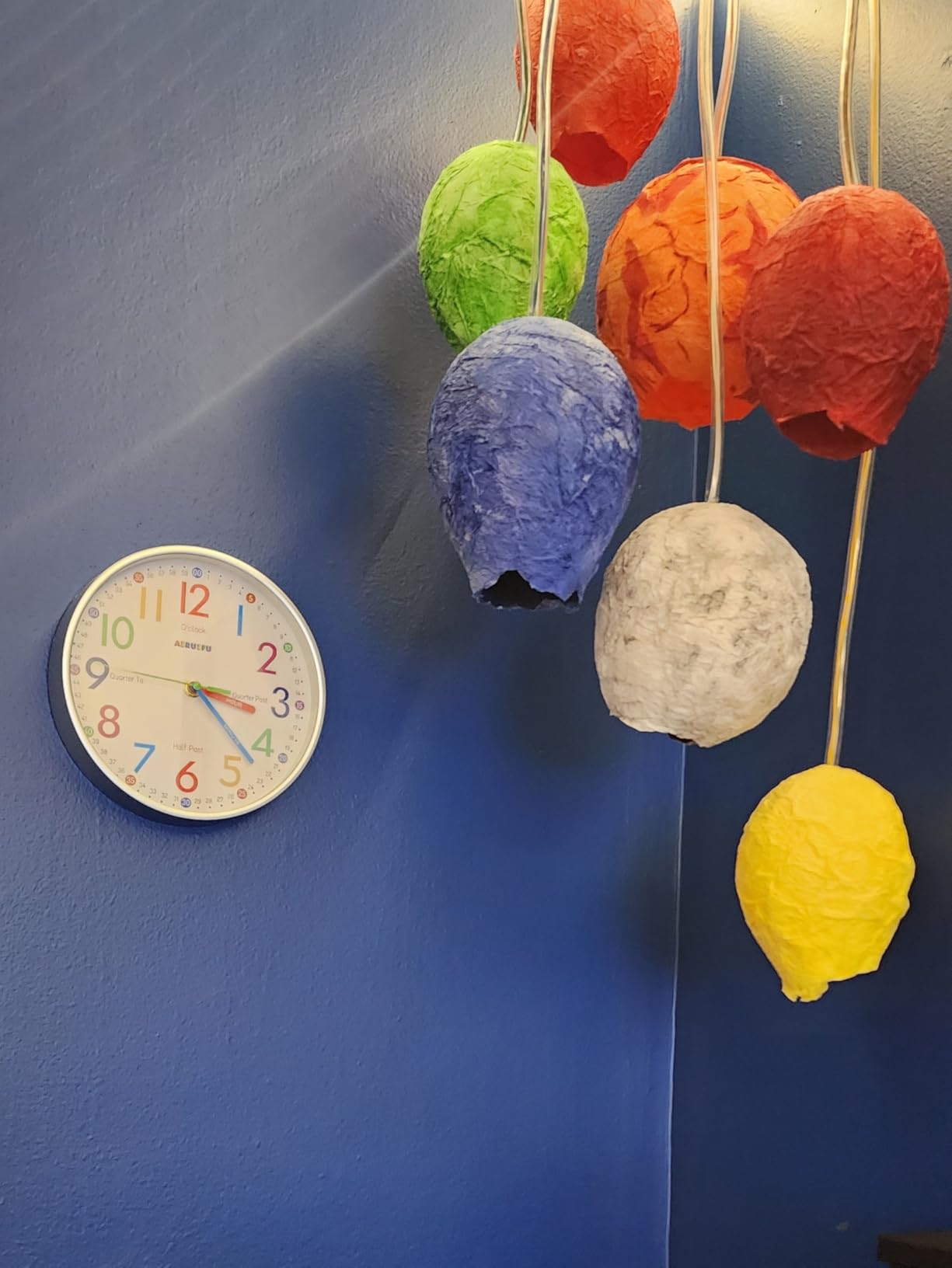
The AIRUIFU clock uses the popular per-hour color system where each of the 12 hours gets its own distinct color. This creates a rainbow effect around the dial that catches kids’ attention and helps them associate specific colors with specific hours. The minutes are labeled all the way around, which is essential for teaching kids to read exact times.
I tested this clock in a playroom setting and found it worked well for kids who are visual learners. The color association helps them remember that, for example, the red section is around the 3 o’clock area. The 12-inch size makes it visible from across the room, and the lightweight plastic frame makes hanging it easy.
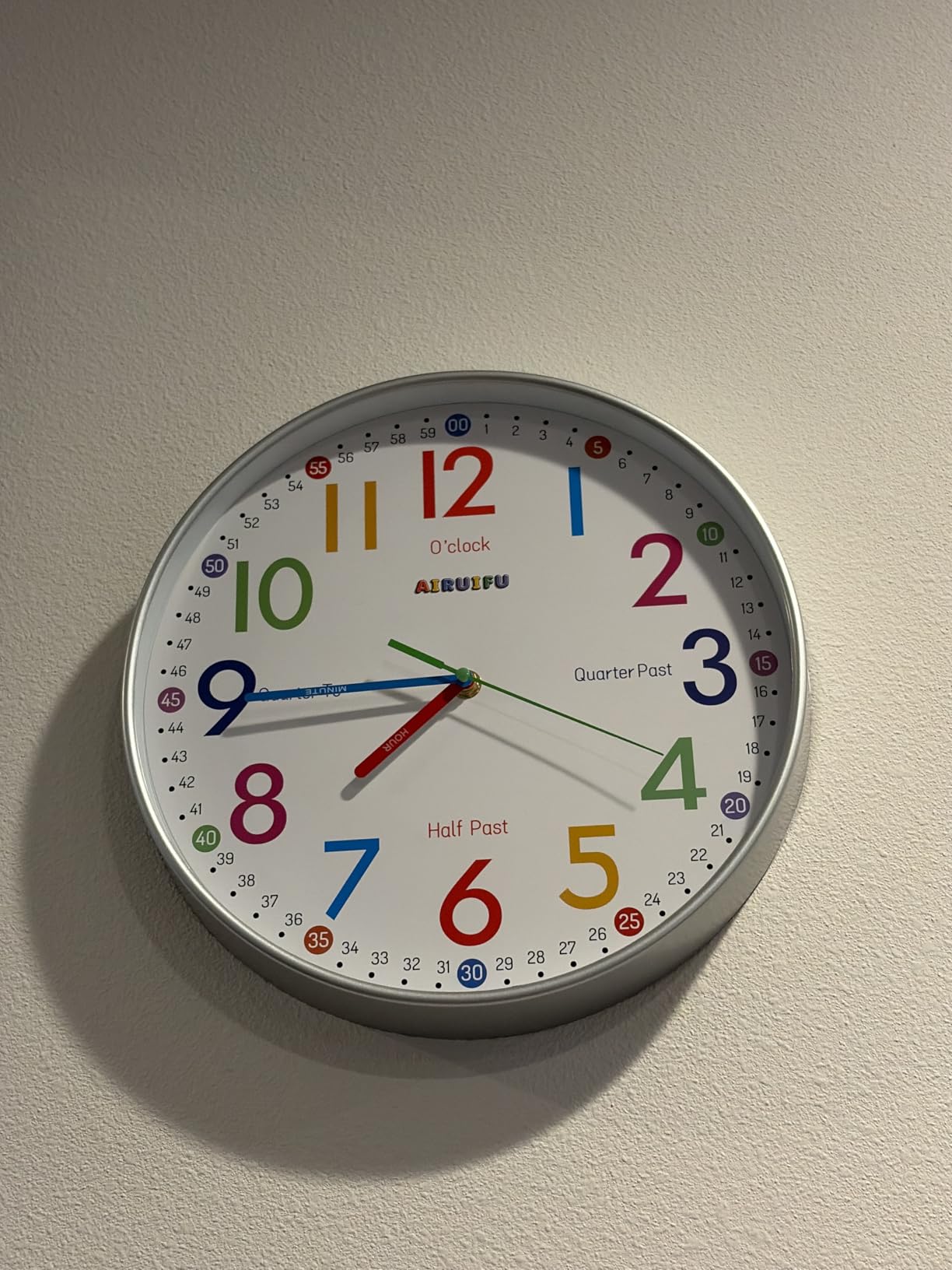
The silent sweeping movement is smooth and genuinely quiet. No ticking in the middle of the night. The minute markers around the outer ring are clearly printed, and the overall readability is good even from a distance of 10 to 12 feet.
Quality control seems to be a mixed bag based on reviews. While the majority of buyers are happy, some reported receiving clocks with misaligned hands or printing issues. The glass front cover is also a concern for households with very young children who might knock the clock off the wall.
Best for Playrooms and Shared Learning Spaces
The colorful, eye-catching design makes this a good fit for playrooms and shared family spaces. It functions as both a learning tool and a bright piece of decor. Kids are drawn to the rainbow of colors and naturally want to engage with it.
It is also a solid choice for a first learning clock. The per-hour color system is intuitive and widely used in schools, so it will look familiar to kids who have seen similar clocks in their classrooms.
What to Watch Out For
Check the clock carefully when it arrives. A small percentage of buyers reported quality control issues like misaligned hands. Returns through Amazon are straightforward, but it is worth inspecting before you hang it.
The glass cover is breakable. If you have active toddlers or plan to mount it low on the wall, consider an acrylic-faced alternative. The plastic frame is lightweight, which is good for hanging but means the clock does not feel especially premium.
5. LittleHippo Learning Wall Clock – ROYGBIV Rainbow Color System
LittleHippo Learning Wall Clock for Kids for Classroom, Bedrooms, Nursery, Playroom – Kid’s Analog, Silent, Non-Ticking Clock for Teaching to Tell Time, Study to Learn to Tell Time
10 inch analog clock
ROYGBIV rainbow colors
Military time support
Free e-book included
Pros
- ROYGBIV rainbow colors illustrate passage of time
- Inner circle colors correspond to hour numbers
- Can teach both standard and military time
- Includes free downloadable learning e-book
Cons
- Some reports of defective units
- Color-dependent design may not suit colorblind users
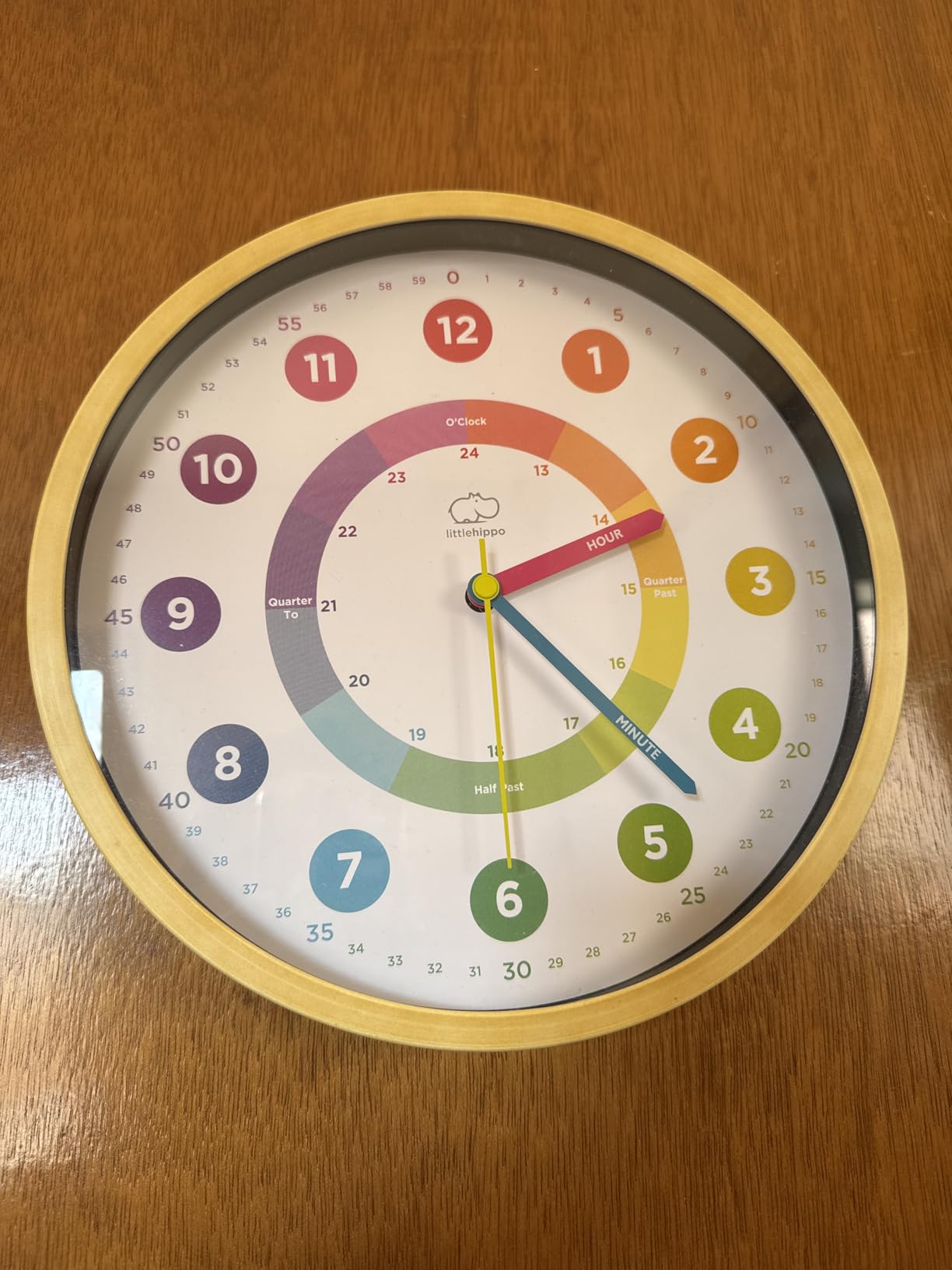
The LittleHippo clock stands out for its thoughtful ROYGBIV color system. Instead of random colors, it uses the rainbow spectrum in chronological order. This means the colors progress naturally around the dial, which helps kids understand that time is a continuous, flowing concept rather than a series of disconnected numbers.
What I really like about this clock is the inner circle design. Each hour number has a corresponding color in the inner ring that matches the outer minute markers. This creates a visual link between the hour and its minutes that reinforces the relationship. The hands are clearly labeled, and quarter markings help kids learn those tricky quarter-past and quarter-to concepts.
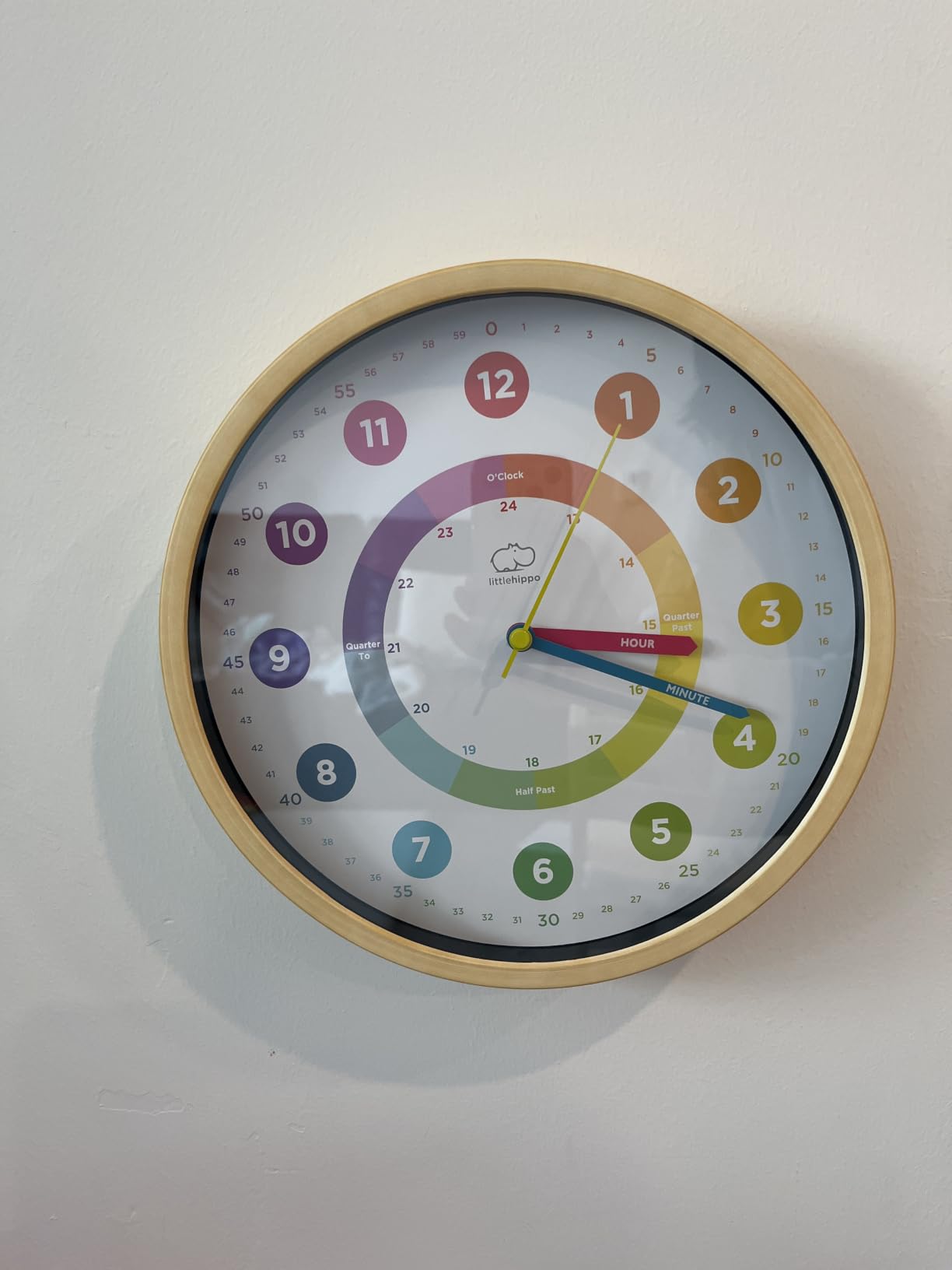
This is the only clock on our list that supports both standard and military time. The 24-hour markings are there for parents who want to teach that system early, or for military families who use it at home. The free downloadable e-book walks you through teaching time step by step using the clock’s design.
The main concern is color dependence. Because the entire learning system relies on color coding, it may not work well for colorblind children. LittleHippo is one of the few brands that acknowledges this, which is honest, but it means you should consider your child’s needs before buying. Some buyers also reported receiving defective units, though this seems to be a relatively small percentage.
Best for Parents Who Want a Complete Teaching System
If you want a clock that comes with structured learning materials, this is the one. The included e-book gives you a step-by-step teaching plan, and the ROYGBIV system provides a clear visual logic that kids can follow. It is ideal for parents who want to be intentional about teaching time.
The military time feature is a nice bonus for families who want to introduce the 24-hour system. It adds long-term value since the clock grows with your child past the basic time-telling stage.
What to Watch Out For
The color-based design is a limitation for colorblind kids. If your child has any form of color vision deficiency, consider a clock with stronger shape and number differentiation rather than relying on color alone.
Check the clock when it arrives. While most units are fine, a small number of buyers reported issues with the movement or printing. LittleHippo customer service is generally responsive about replacements.
6. Homotte 10 Inch Kids Wall Clock – Rainbow Visual Learning Clock
Homotte 10 Inch Kids Wall Clock, Multi-Colored Learning Clock for Kids
10 inch learning clock
Rainbow color numbers
Wood-color plastic frame
Silent sweeping movement
Pros
- Rainbow color numbers clearly marked for children
- Wood-colored plastic outer ring with acrylic face
- Quiet non-ticking high quality sweeping movement
- Colorful design helps distinguish time markers
Cons
- Battery installation can be difficult
- Plastic construction less premium than expected
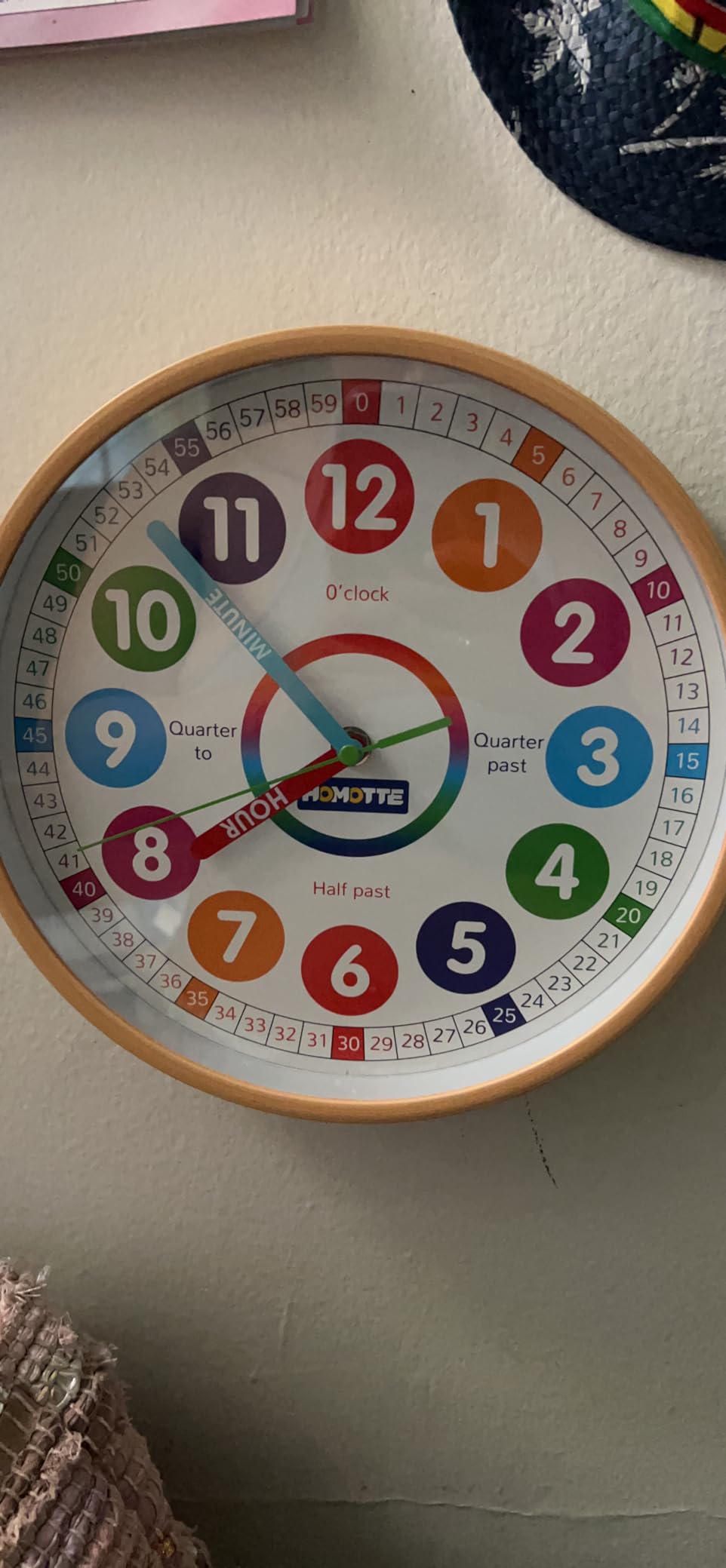
The Homotte clock offers a clean rainbow design on a 10-inch face. The numbers are large and each hour gets its own color, making it easy for kids to associate specific times with specific visual cues. The wood-colored outer ring gives it a warmer look than pure white clocks, which some parents prefer for bedroom and nursery decor.
I found this clock to be a solid middle-of-the-road option. It does not have the premium feel of the Oyster&Pop, but it costs a bit less and covers all the essential learning features. The acrylic face means no broken glass, which is reassuring for kids’ rooms.
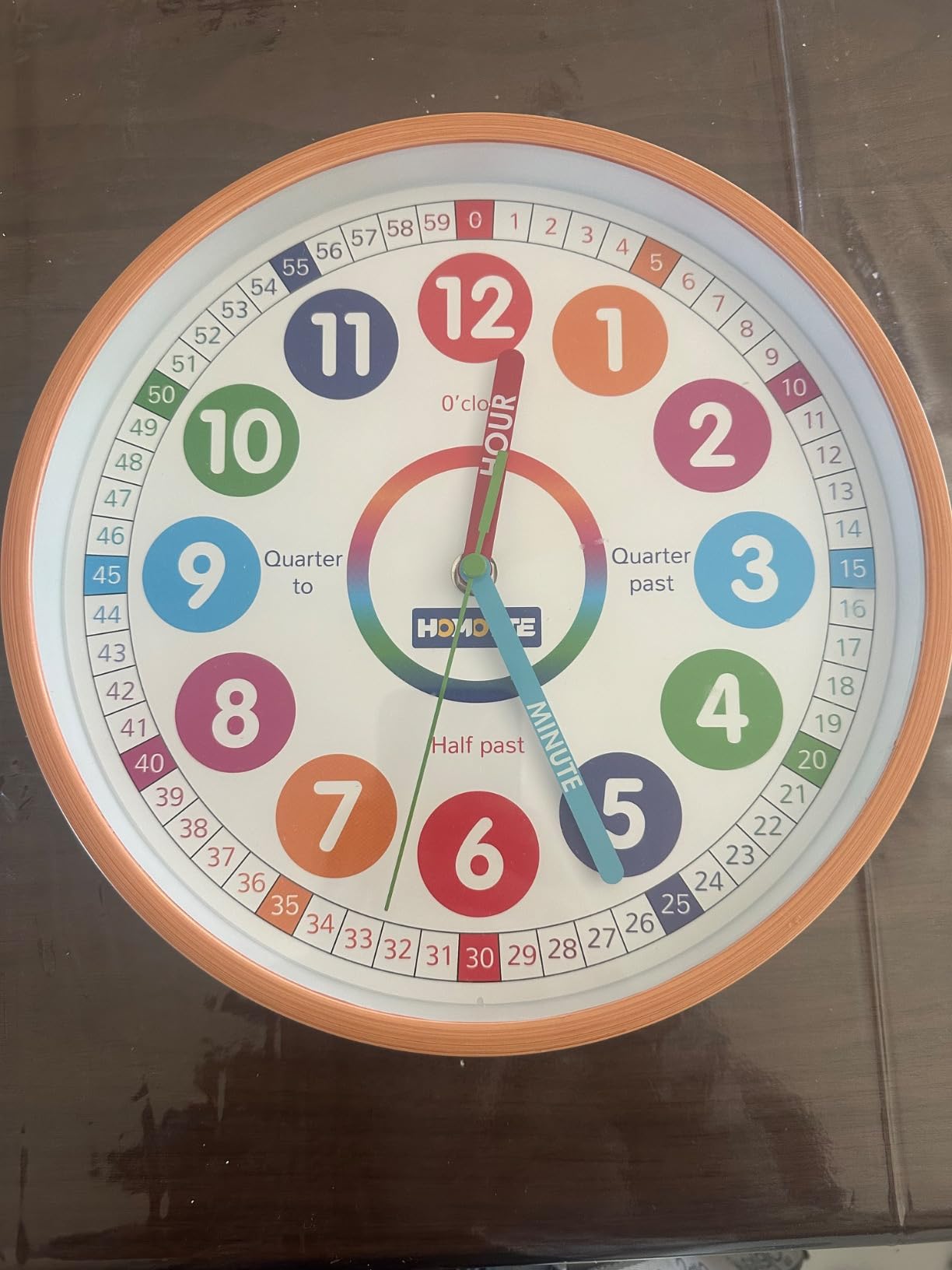
The rainbow color numbers are the main selling point. They are bold, clear, and easy to distinguish. The silent sweeping movement runs quietly enough for a bedroom, and the overall readability is good for a 10-inch clock.
Battery installation is the most common complaint. The battery compartment is reportedly tricky to open and close, which is frustrating when you just want to get the clock running. The plastic construction also feels less premium than the price might suggest, though it is perfectly functional.
Best for Nurseries and Younger Kids’ Rooms
The warm wood-color frame and rainbow numbers make this a nice fit for nurseries and younger children’s bedrooms. It is visually appealing without being overwhelming, and the acrylic face is safe for rooms where kids might get curious.
It is a good choice if you want something more decorative than a plain white clock but still want full learning features. The design works well for ages 3 and up.
What to Watch Out For
Be patient with the battery installation. Several buyers found it fiddly and frustrating. Once the battery is in, the clock runs fine, but getting there can be annoying.
The plastic construction is functional but does not feel as solid as wood-frame alternatives. If you are looking for something that feels premium, consider spending a bit more on the Oyster&Pop. But if you want a reliable learning clock at a reasonable price, the Homotte delivers.
7. Roymnie Wall Clock for Kids – Compact Colorful Teaching Clock
Roymnie Wall Clock for Kids Learning Battery Operated Teaching Silent 8″
8 inch learning clock
Each hour different color
Minutes labeled
Silent non-ticking
Pros
- Colorful clock face inspires interest in learning time
- Each hour different color with minutes labeled
- Long minute hand for easy reading
- Silent non-ticking continuous operation
Cons
- Some customers wish it was bigger
- Battery not included
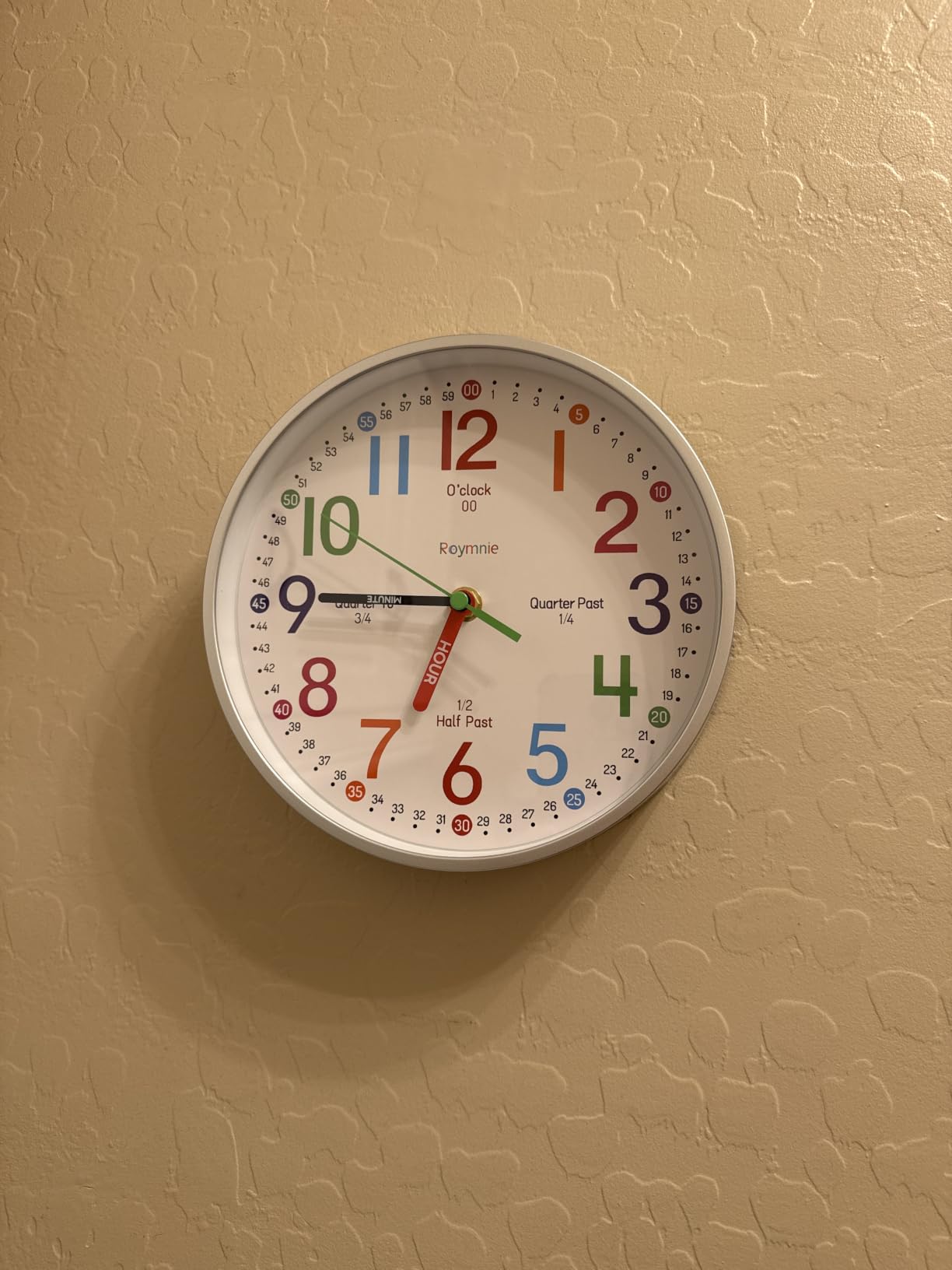
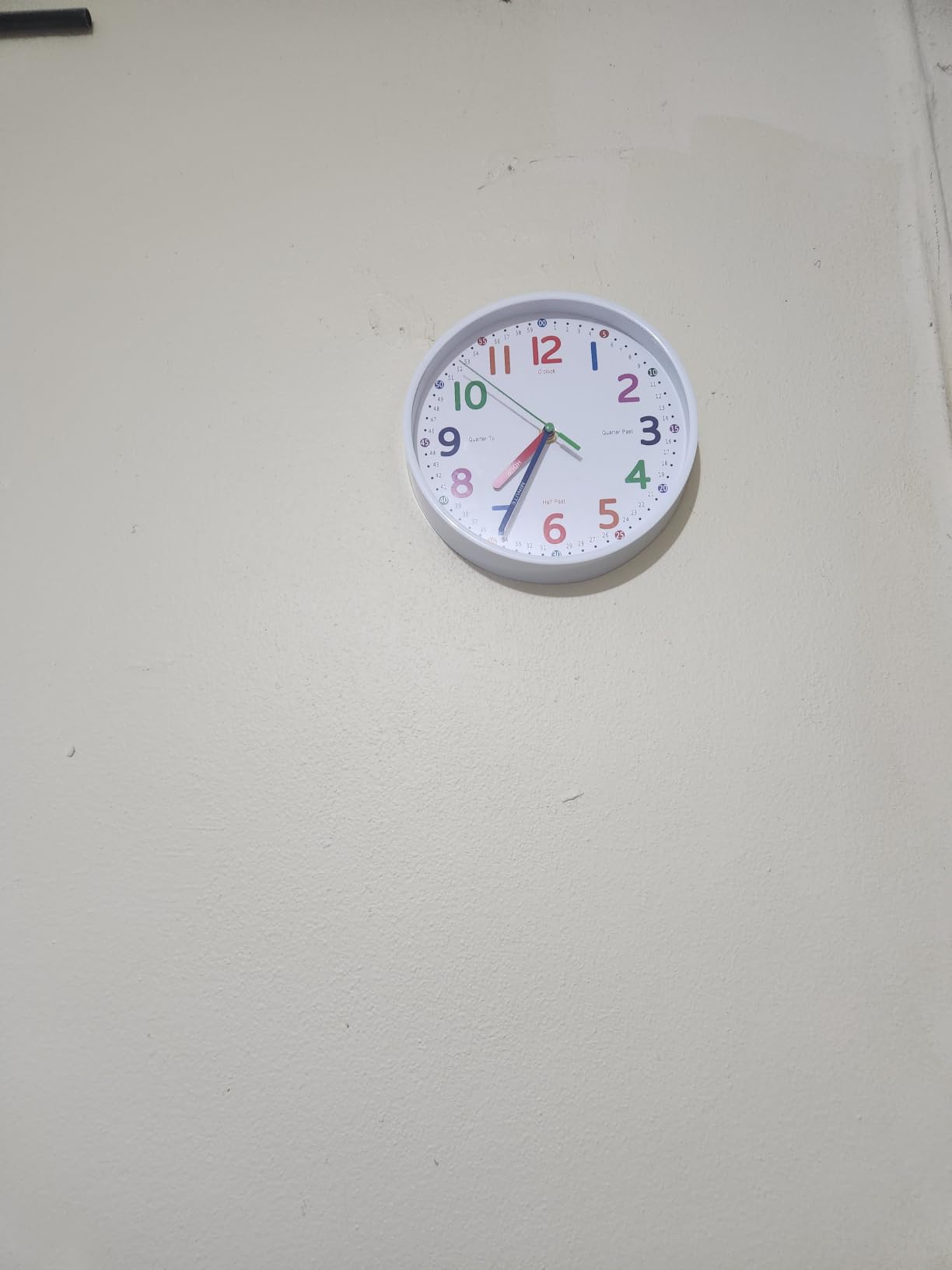
The Roymnie clock is the highest-rated option on our list with a 4.8-star average. At 8 inches, it is one of the smaller clocks we tested, but it makes up for its size with a clean, colorful design that kids respond well to. Each hour is a different color, minutes are labeled, and the minute hand is long enough to be clearly readable.
I tested this in a small study area and found it perfect for close-up learning. It is the kind of clock you hang right next to a desk or study table where kids can see it up close. The compact size also means it fits in spaces where a 12-inch clock would be too dominant.
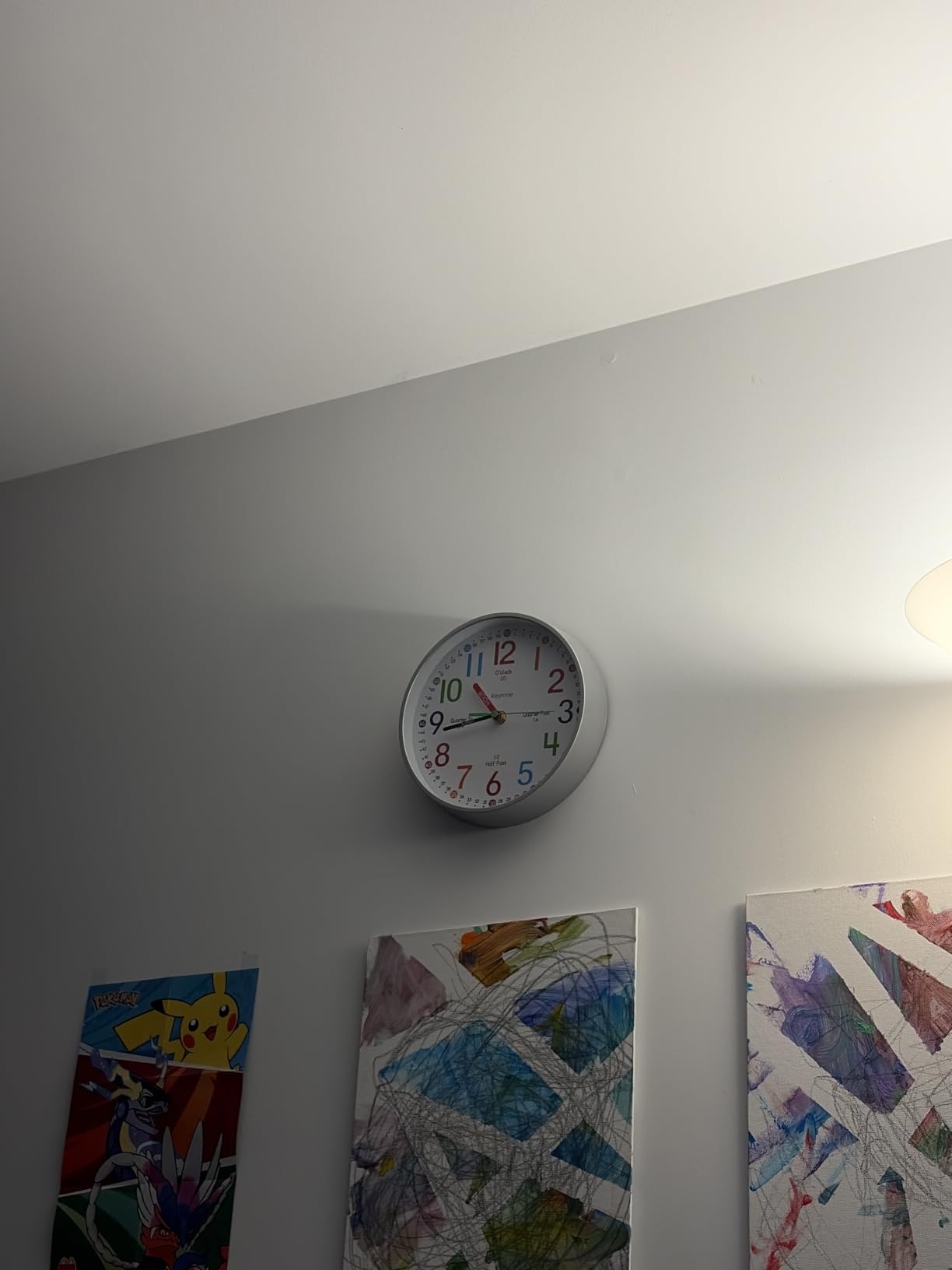
The silent non-ticking operation is smooth and genuinely quiet. The continuous-sweep second hand glides without making a sound, which is important for study environments where concentration matters. The colorful design is engaging without being distracting.
The most common complaint is that buyers wish it were bigger. At 8 inches, it is perfect for one-on-one learning spaces but may be hard to read from across a large room. If you need something for a big classroom, look at the 12-inch Bernhard or AIRUIFU instead.
Best for Small Spaces and Study Areas
This is the ideal clock for a homework nook, a small bedroom wall, or a study table area. It does not overwhelm the space, and kids can read it clearly from a few feet away. The high rating reflects how well it works for its intended purpose.
If your child has a dedicated study spot at home, this clock fits perfectly without taking up much wall space. It is also light enough that you can use adhesive strips instead of nails if you prefer.
What to Watch Out For
Size is the main consideration. At 8 inches, this clock works best for close-up viewing. If you want something visible from across a bedroom or classroom, consider a larger option.
The battery is not included, which is standard for learning clocks but worth noting. Have a AA battery ready so you can get it running right away. Despite the compact size, the learning features are on par with larger clocks.
8. Lantoo Silent Kids Wall Clock – Budget-Friendly Silent Learning Clock
Lantoo Silent Kids Wall Clock – Non-Ticking, Battery-Powered, Ideal for Teaching Time and Stylish Décor in Any Room – 8 Inch
8 inch learning clock
Colorful numerals and hands
Silent sweeping movement
Battery operated
Pros
- Colorful numerals and hands easy for kids to understand
- Bright and engaging design without being distracting
- Silent non-ticking with quality sweeping movement
- Affordable price point for budget-conscious buyers
Cons
- Glass front can glare under certain lighting
- Battery not included
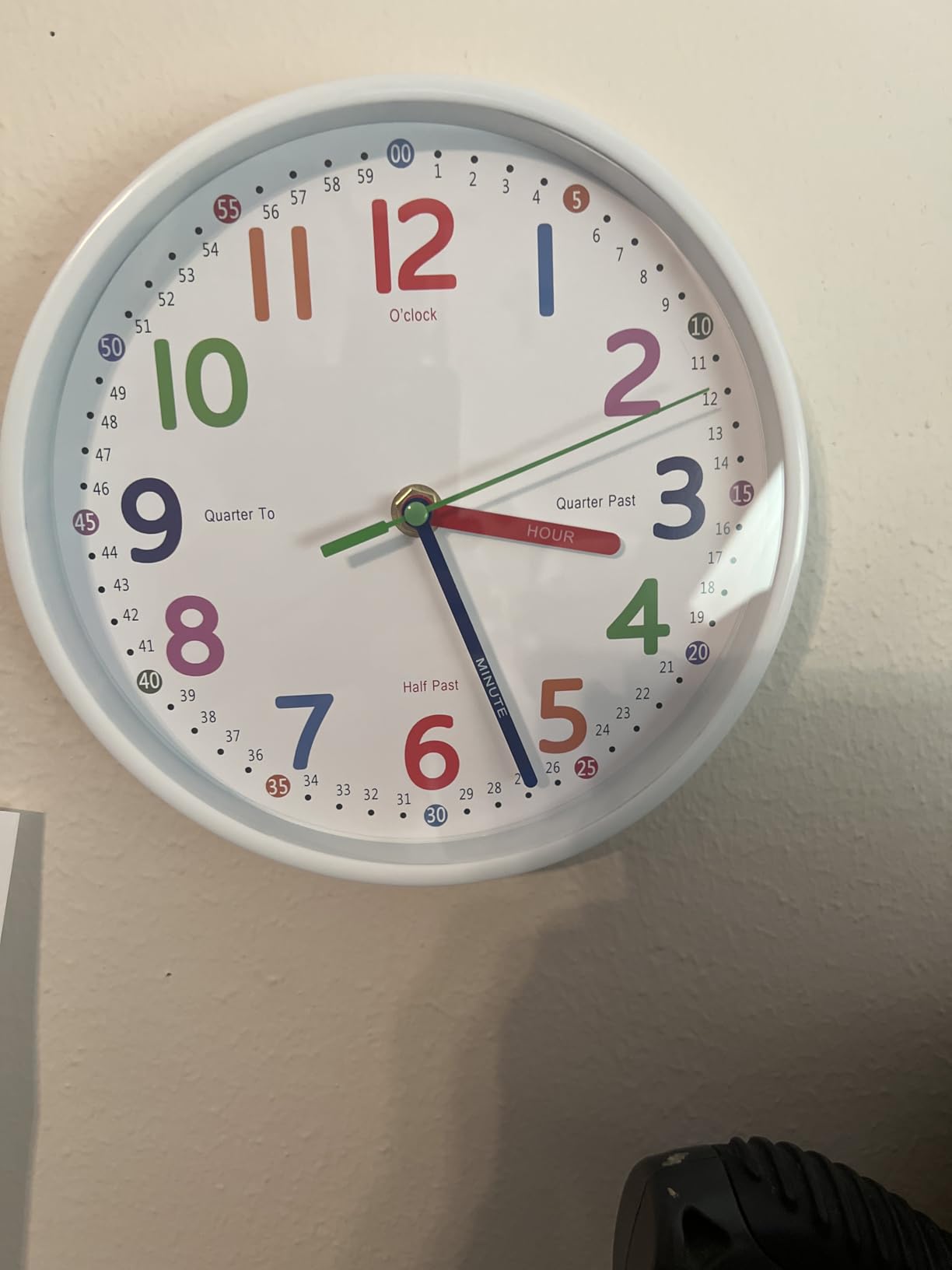
The Lantoo clock proves that you do not need to spend a lot to get a quality learning clock. At its budget price point, it delivers colorful numerals, labeled hands, and silent operation. For parents who want to try a learning clock without a big investment, this is where I would start.
I was genuinely surprised by the quality at this price. The colorful numerals and hands are clear and easy for kids to follow. The design is bright and engaging without crossing into distracting territory. It looks like a proper learning clock, not a cheap knockoff.
The silent sweeping movement is smooth and quiet. At 8 inches, it is compact enough for a bedroom wall or study area. With over 2,700 reviews and a 4.5-star rating, this clock has been tested by thousands of families and the consensus is positive.
The main drawback is the glass front, which can produce glare under certain lighting conditions. This is more of an annoyance than a dealbreaker, but it means you should think about placement to avoid reflections from lamps or windows. The glass also means it could break if knocked off the wall.
Best for First-Time Buyers and Budget-Conscious Parents
If you are not sure whether a learning clock will work for your child, this is the lowest-risk option on our list. You get all the essential features for a fraction of what premium options cost. It is perfect for trying out the concept before committing to something more expensive.
It is also a good pick for grandparents, aunts, and uncles who want to give an educational gift without spending a fortune. The colorful design appeals to kids, and the learning features are solid.
What to Watch Out For
The glass face can glare and is breakable. Consider where you hang it to minimize both issues. The 8-inch size is on the smaller side, so it works best in smaller rooms or close-up learning spaces.
At this price, you are not getting premium materials or advanced features like military time support or included activity books. But you are getting a reliable, well-reviewed learning clock that does its core job well. For many families, that is exactly enough.
How to Choose the Right Learning Clock for Your Child
Choosing the right learning clock comes down to your child’s age, where the clock will live, and what teaching approach works best for your family. Here is what our team learned from testing these clocks and reading hundreds of parent and teacher reviews.
Match the Clock to Your Child’s Age
For ages 4 to 5, start with clocks that have the most visual support. Color-coded hands, numbered minutes, and bright designs help the youngest learners make connections. The Oyster&Pop and Homotte clocks are excellent for this age group because every element is labeled and color-coded.
For ages 5 to 7, kids are ready to understand the relationship between hours and minutes. The Learning Resources geared clock is perfect here because kids can physically move the hands and see how they relate. The Bernhard quadrant clock also works well for teaching quarter-hour concepts.
For ages 7 and up, kids can handle more advanced features. The LittleHippo clock with military time support extends learning past basic analog reading. At this stage, you can also transition to a clock with less visual clutter as kids gain confidence.
Color Coding Makes a Real Difference
Every learning clock on our list uses some form of color coding, and for good reason. Research and parent experience consistently show that color helps kids make connections faster. There are two main approaches: per-hour coloring (like AIRUIFU and Roymnie) and quadrant coloring (like Bernhard).
Per-hour coloring assigns each hour its own color, creating a rainbow effect. This is intuitive and widely used. Quadrant coloring divides the clock into four colored sections, each representing 15 minutes. This directly teaches quarter-hour concepts, which some kids find easier to grasp.
If your child is colorblind, look for clocks with strong number differentiation and labeled hands rather than relying solely on color. The Learning Resources set works well because the geared hands and activity cards teach through touch and movement, not just color.
Silent Movement Matters More Than You Think
Every clock on our list features silent or non-ticking movement. This is not a coincidence. Parents on forums consistently mention that ticking clocks in bedrooms disrupt sleep, especially for kids who are light sleepers or sensitive to sound.
Silent sweep movement means the second hand glides continuously instead of ticking once per second. If the clock is going in a bedroom, nursery, or quiet study space, this feature is essential. All eight clocks we tested passed the silence test, so you can choose based on other features without worrying about noise.
Size and Placement Considerations
Learning clocks come in three main sizes. Eight-inch clocks (like Lantoo and Roymnie) work best for small spaces, study areas, and close-up learning. Ten-inch clocks (like Oyster&Pop, LittleHippo, and Homotte) are the versatile middle option that works in most bedrooms and homeschool rooms.
Twelve-inch clocks (like Bernhard and AIRUIFU) are best for classrooms, playrooms, and any space where kids need to read the clock from across the room. If you are buying for a classroom with 20-plus students, go big. If it is for a bedroom wall, 10 inches is usually the sweet spot.
Durability and Materials
Look for acrylic faces rather than glass if the clock will be within reach of young children. Glass faces can shatter if the clock falls, which is a safety concern in kids’ rooms. The Oyster&Pop, Homotte, and Learning Resources clocks all use acrylic or plastic faces.
Wood or wood-effect frames tend to look more premium and last longer than pure plastic. The Oyster&Pop wood-effect frame and Homotte wood-color ring both elevate the look beyond typical plastic learning clocks. Plastic frames are lighter and easier to hang but may not feel as durable.
Classroom Versus Home Use
For classroom use, size and readability are the top priorities. A 12-inch clock with bold, large numbers is visible from the back of the room. The Bernhard and AIRUIFU clocks are built for this purpose. Teachers should also consider the Learning Resources set for small-group instruction.
For home use, you have more flexibility. A 10-inch clock works in most bedrooms and playrooms. Look for clocks that double as decor, like the Oyster&Pop with its wood-effect frame or the Homotte with its warm-toned ring. The clock should look good on the wall while teaching time.
FAQs
At what age do kids learn to tell time on a clock?
Most children begin learning to tell time on analog clocks between ages 5 and 7. Kindergarten and first grade typically introduce the concept of hours and half-hours, while second and third grade cover five-minute intervals and quarter-hours. However, many kids start showing interest as early as age 4, especially when a learning clock is visible in their home environment.
Is there a clock for kids to tell the time?
Yes, several companies make clocks specifically designed to teach kids to tell time. These learning clocks feature color-coded numbers, labeled hour and minute hands, numbered minutes around the dial, and silent movement. Popular options include the Oysteru0026amp;Pop Kids Wall Clock, Learning Resources Time Activity Set, and LittleHippo Learning Wall Clock.
How can I help my child learn to tell time?
Start by placing a learning clock in a visible spot your child sees daily. Use color-coded clocks to help them distinguish hours from minutes. Practice daily with quick questions like what time is it now. Use activity cards and puzzles for structured learning. Connect time to daily routines like lunch at 12 or bedtime at 8. Consistent, short practice sessions work better than long lessons.
Are silent clocks better for kids bedrooms?
Yes, silent clocks are significantly better for kids bedrooms, especially for light sleepers. Ticking sounds can disrupt sleep patterns and make it harder for children to fall asleep. Silent sweep movement clocks use a continuous gliding motion instead of ticking once per second, making them ideal for nurseries, bedrooms, and quiet study spaces.
What makes a color-coded clock better for learning?
Color-coded clocks help children visually distinguish between hours, minutes, and sections of time. Different colors for each hour or for each 15-minute quadrant give kids a mental framework for understanding how time is organized. This visual structure makes abstract time concepts concrete and easier to grasp, especially for visual learners ages 4 to 8.
Final Thoughts on Kids Learning Clocks
Finding the right kids wall clocks for learning to tell time comes down to matching the clock to your child and your space. For hands-on learning, the Learning Resources Time Activity Set is unmatched. For a wall-mounted clock that teaches while it runs, the Oyster&Pop is our top value pick. And for budget-conscious parents, the Lantoo delivers solid learning features at a fraction of the cost.
The most important thing is consistency. A learning clock on the wall only works if you use it with your child regularly. Ask them what time it is. Talk about what happens at different hours. Connect the clock to daily routines. With the right clock and a few minutes of practice each day, most kids can read analog time confidently within a few months in 2026.