
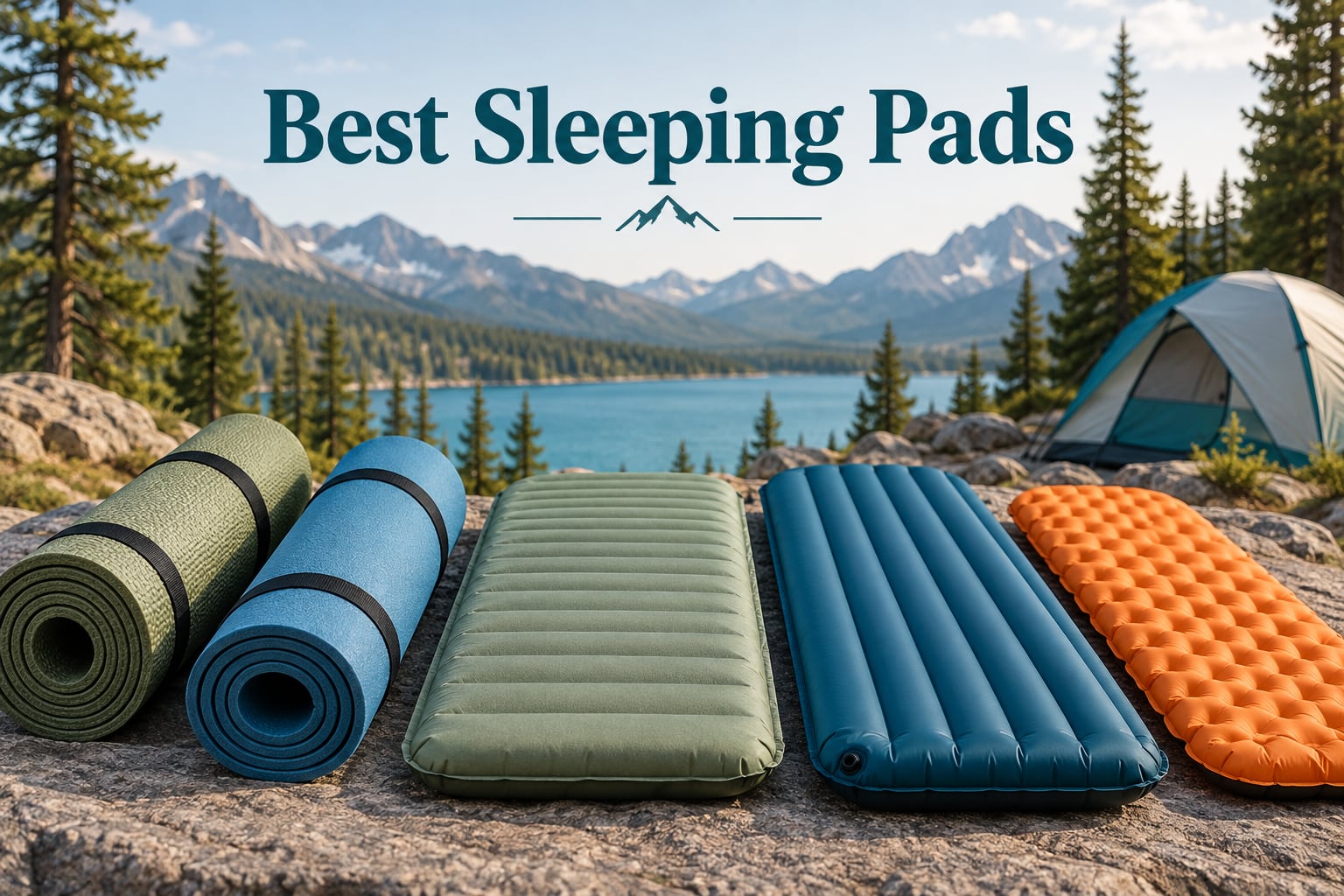
A bad pad can ruin a good night. A good one disappears under you, blocks the cold coming up through the ground, and lets you wake up on the correct side of your sleeping bag. That is the bar for this roundup of the best sleeping pads: pads that hold their air through a full night, that sit between you and a freezing forest floor, and that pack down small enough to actually carry.
We spent weeks comparing the twelve pads below on the specs that decide whether a night goes well: thickness, weight, packed size, R-value where the maker publishes one, and the complaints that show up again and again in buyer reviews. What surprised us most was how much of the R-value conversation is misleading. R-value is a lab measurement of thermal resistance, not a promise of warmth, and older pad numbers were measured under a different ASTM standard than current ones. A pad quoted at 4.4 in a pre-2016 review might be an ASTM F3340 value closer to 1.9 today.
The pads that follow are mostly air mats, because that is what most people actually carry, but the list also includes two closed-cell foam options and two self-inflating hybrids, since those solve very different problems. If you are still building out the rest of your sleep system, our picks for the best sleeping bags pair well with almost everything here.
Table of Contents
Top 3 Picks From the Best Sleeping Pads We Tested in 2026

Sleepingo Ultralight Sleeping Mat
- 396.89 g weight
- 2 inch thickness
- Waterproof TPU nylon
- 73.5 x 21.5 inch surface

HiiPeak 3 Inch Built-in Pump Pad
- 3 inch thickness
- Built-in foot pump
- Integrated pillow
- 0.93 kg

TREKOLOGY Ultralight Backpacking Pad
- 4 inch thickness
- 750 g weight
- Contoured side rails
- R-value 1.6-2
All 12 Best Sleeping Pads Compared Side by Side in 2026
1. Sleepingo Ultralight Sleeping Mat: the best all-round sleeping pad
Sleepingo Inflatable Mat – Ultralight Sleeping Pad for Campings and Backpackings – Compact Air Mattress – Mats with Tear-Resistant Ripstop Nylon – Lightweight, Portable – 73.5″ x 21.5″ – Blue
396.89 g
2 inch thick
73.5 x 21.5 inch
Waterproof TPU nylon
350 lb capacity
Pros
- Lightest listed weight in the group at 396.89 g
- Waterproof ripstop nylon with TPU coating
- Fast inflation and deflation
- Generous 73.5 inch sleep surface
- Highest review volume of any pad here
Cons
- Only 2 inch thick so side sleepers feel the ground
- Firm feel with no plushness option
We kept this one in rotation longest because nothing about it is a compromise you will feel at 3 a.m. At 396.89 g it is the lightest pad on this list, and the TPU-coated nylon shell shrugged off a wet grass site and a sudden drizzle without leaking once.
The catch is the 2 inch thickness. Back sleepers and stomach sleepers will not notice it. Side sleepers will, especially anyone with prominent hip bones, and the honest fix is a foam layer underneath rather than a more expensive inflatable.
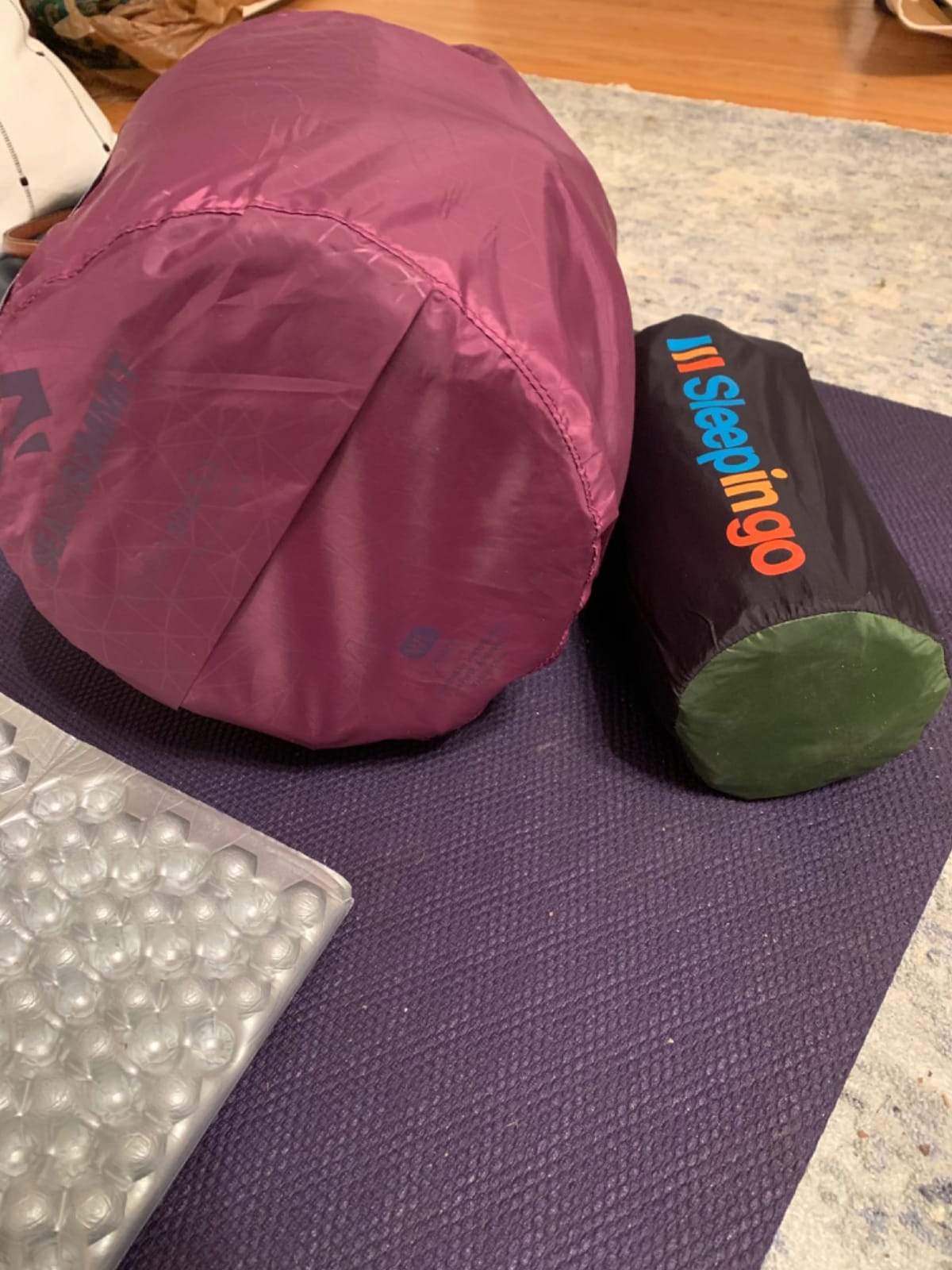
With close to 35,000 reviews at a 4.3 average, this is the pad buyers at the high end of the volume curve keep coming back to. The most common praise is for packability: it rolls down to almost nothing and never seems to slow a pack down.
The most common complaint is also the 2 inch profile, which some heavier users describe as letting them feel every rock. If you are over 250 lb and sleep on your side, look at the thicker options further down this list instead.
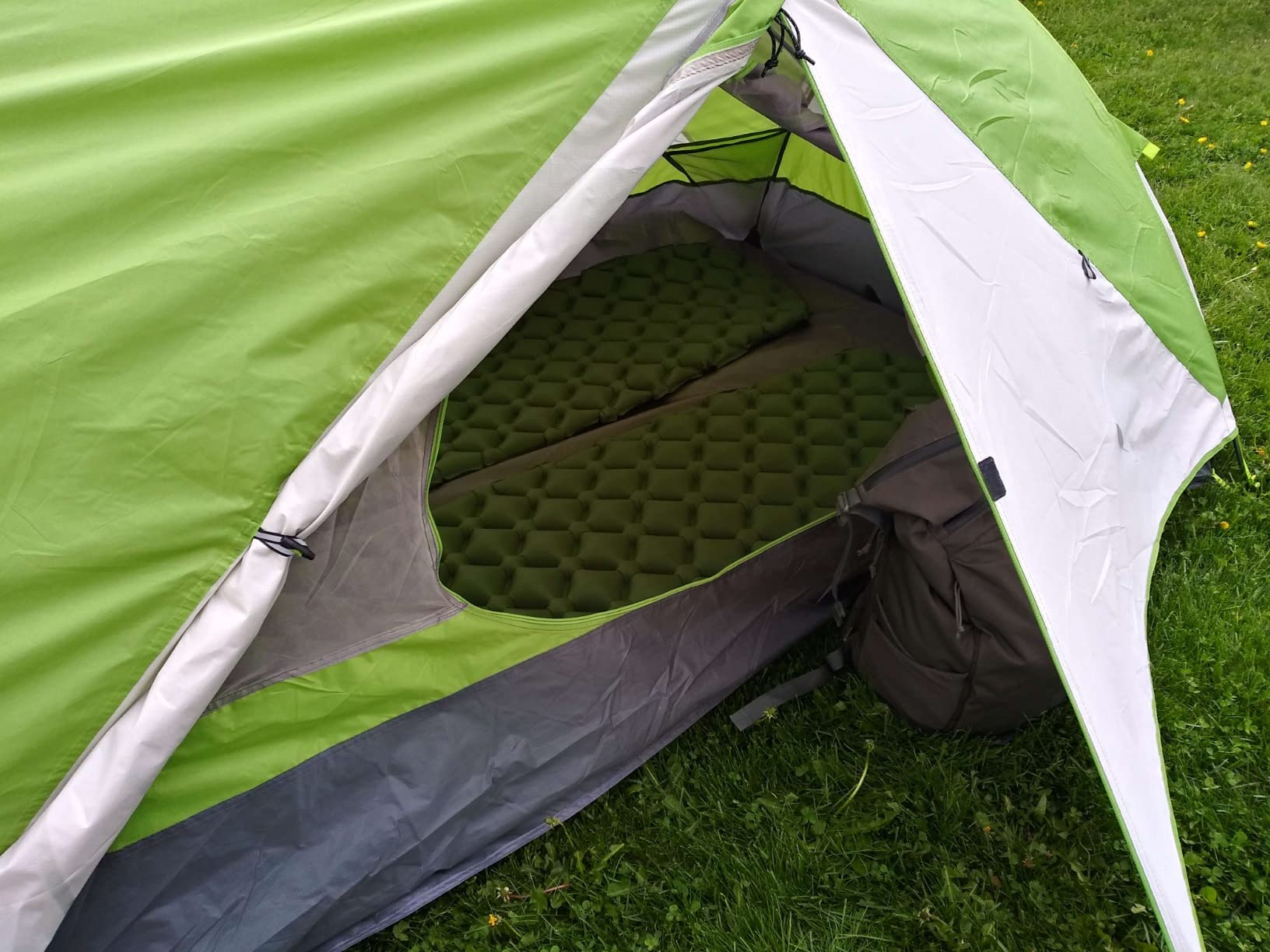
Who the Sleepingo pad suits best
Thru-hikers, festival campers, and anyone who wants the lightest thing that still holds air for a week straight. It also works as a guest or guest-room spare because it is waterproof and wipes clean.
Where it falls short
It is not a cold-weather pad. There is no published R-value, and the 2 inch air column is the only insulation between you and the ground.
2. HiiPeak Inflatable Pad with Built-in Foot Pump: best value in the lineup
HiiPeak Sleeping Pad for Camping- Ultralight Inflatable Sleeping Mat with Built-in Foot Pump & Pillow, Upgraded Compact Camping Air Mattress for Tent, Backpacking, Hiking
3 inch thick
0.93 kg
76.77 x 25.59 inch inflated
11.0 x 5.9 inch packed
Pros
- Built-in foot pump inflates in about 30 seconds
- 3 inch thickness with hexagon air cells
- Integrated ergonomic pillow
- Side buttons join two pads into a double bed
- Quiet and wipe-clean TPU shell
Cons
- No insulation so cold ground draws heat
- Some buyers report surface noise and a bumpy feel
- A minority report early air loss
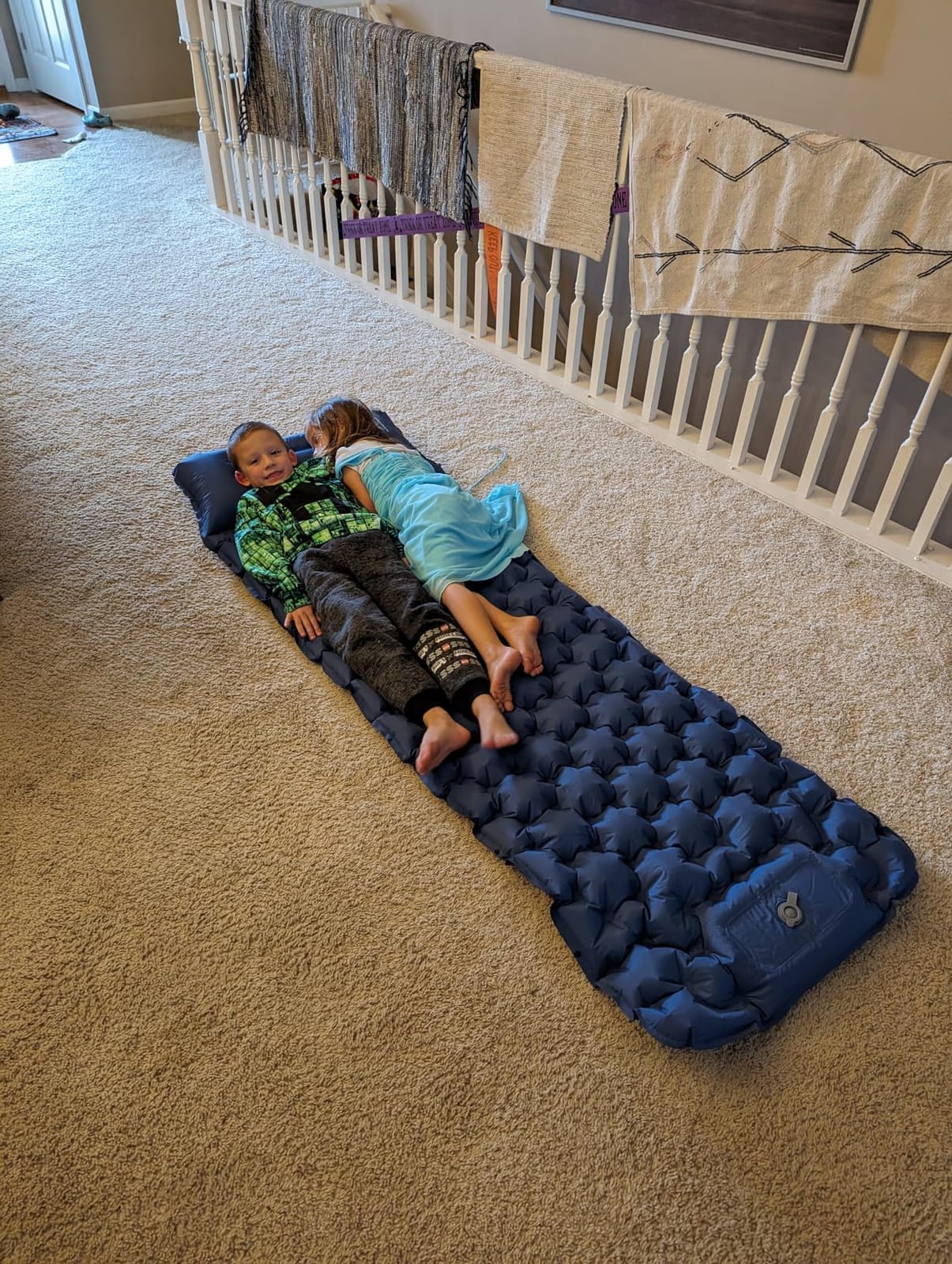
This is the pad that made us stop carrying a separate pump. Press the foot valve, wait about half a minute, and the thing is firm enough to sleep on. At 0.93 kg it packs to roughly 11 x 5.9 inches, which is easy to strap to the outside of any pack.
Three inches of thickness over hexagon air cells is a real step up from the 2 inch pads in this price band. Side sleepers get noticeably better hip support here, and the integrated pillow takes pressure off the neck and shoulders.
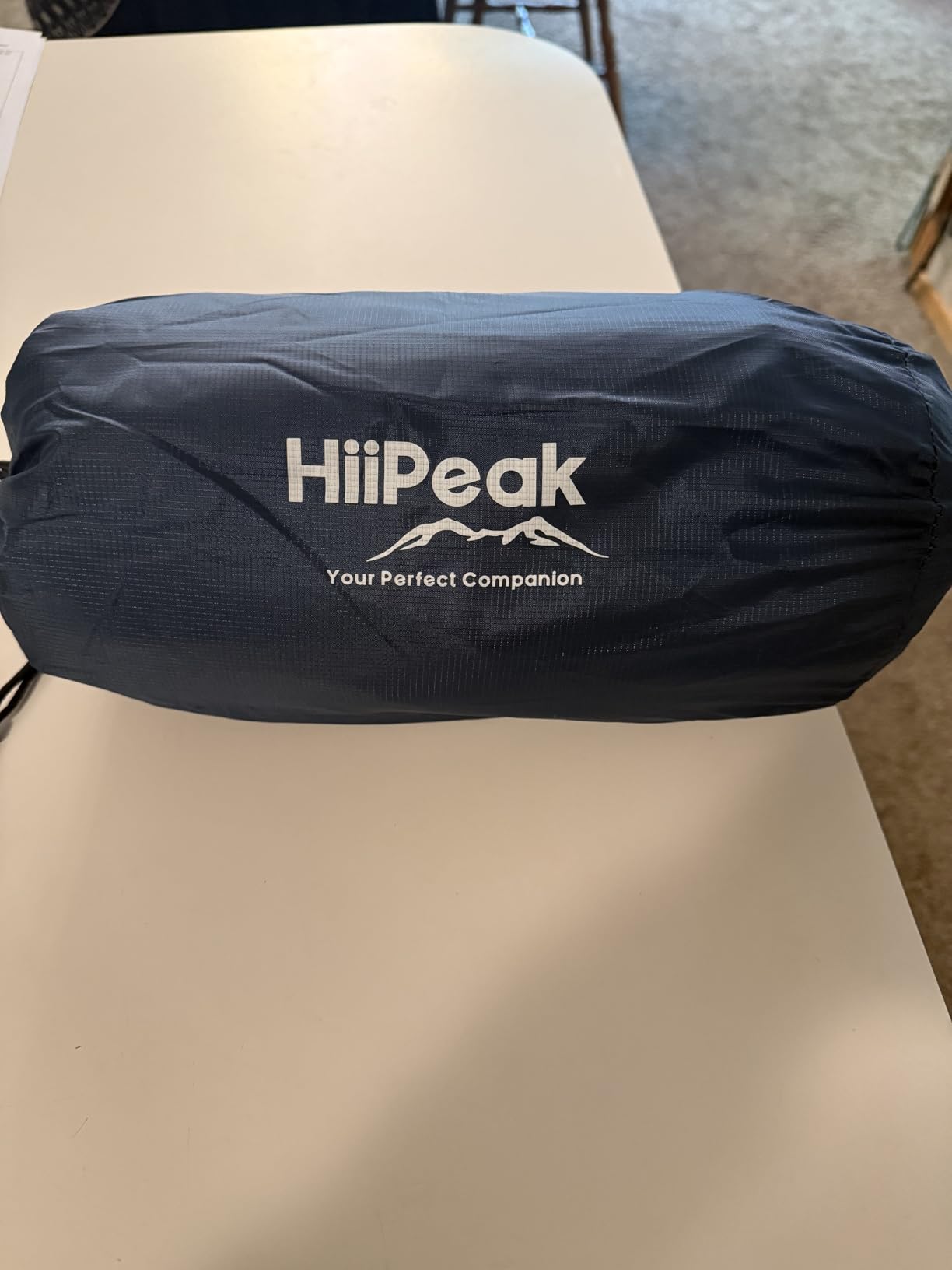
Reviewers repeatedly single out the double-chamber head valve, which is the part most cheap pads get wrong. The side connection buttons are the sleeper feature, letting two pads zip into a wide double bed for van life or family camping.
Around 6,600 reviews sit at a 4.2 average. The recurring negatives are the absence of ground insulation, some surface noise when you turn over, and a small number of reports of air loss after only a few nights.
Who the HiiPeak pad suits best
First-time campers and anyone who wants width and thickness without paying for a premium brand name. It is also a good couples pad when paired with a second one.
Where it falls short
It is a fair-weather pad. Without an R-value you should treat it as a warm-weather-only mat, and the double-chamber valve takes a few tries to open the first time.
3. TREKOLOGY Ultralight Backpacking Pad: most thickness for the weight
TREKOLOGY Ultralight Backpacking Sleeping Pad, Inflatable Camping Mat
4 inch thick
750 g
75.2 x 22.44 inch
7.3 x 4.7 inch packed
Pros
- 4 inch thick with raised contoured side rails
- Only 750 g on the scale
- S-curve channels cradle the body
- Mouth inflates in minutes with no pump
- Water-resistant 40D nylon
Cons
- R-value of 1.6-2 is three-season only
- 22.4 inch width feels cramped for side sleepers
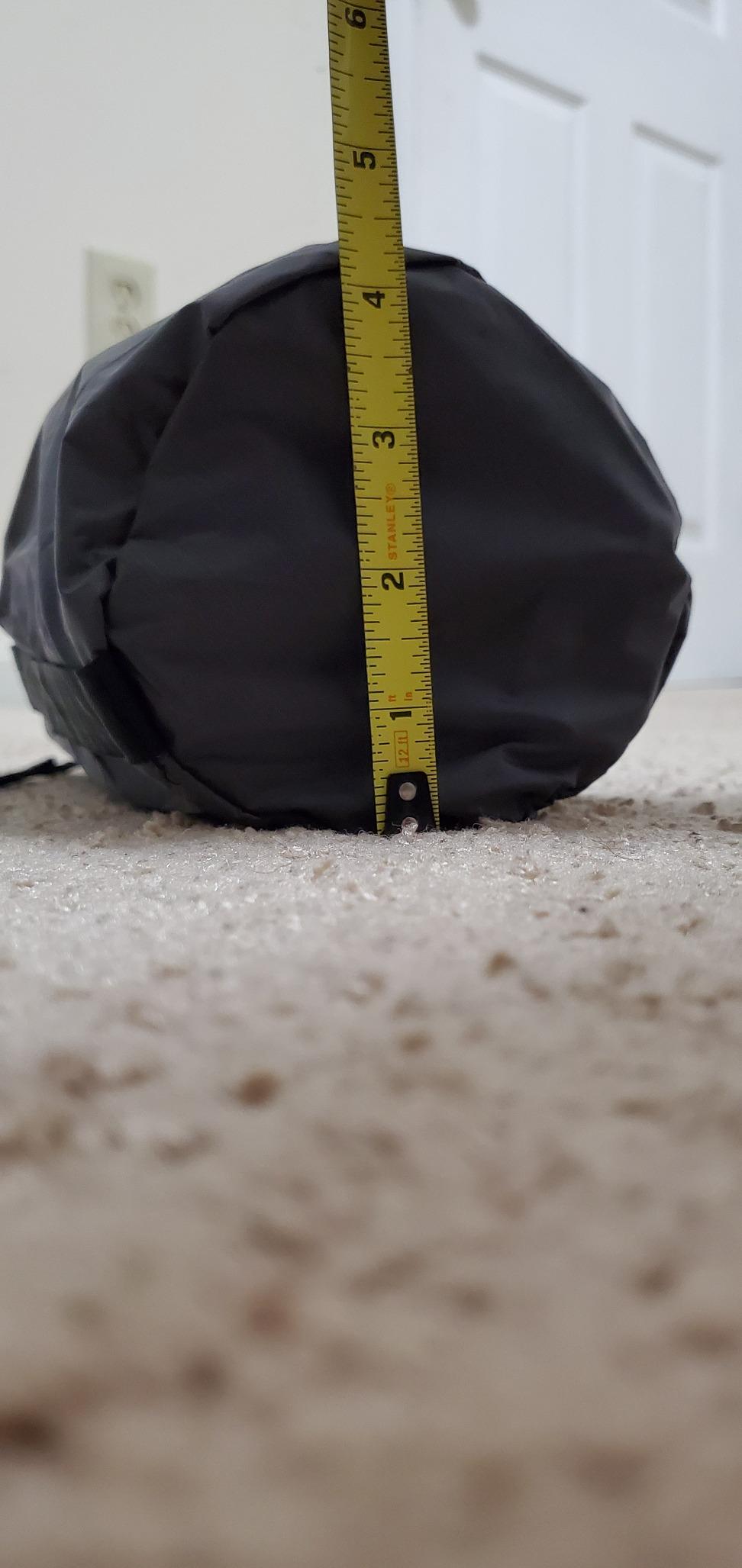
Four inches of thickness at 750 g is a combination you would normally expect from a much costlier pad. The contoured side rails and S-curve baffles keep you from sliding off, which matters more than most buyers expect before they own a narrow mat.
The enlarged circular valve means you can inflate this by mouth in a few minutes with no pump at all. Packed size of 7.3 x 4.7 inches keeps it out of the way on a long trip.
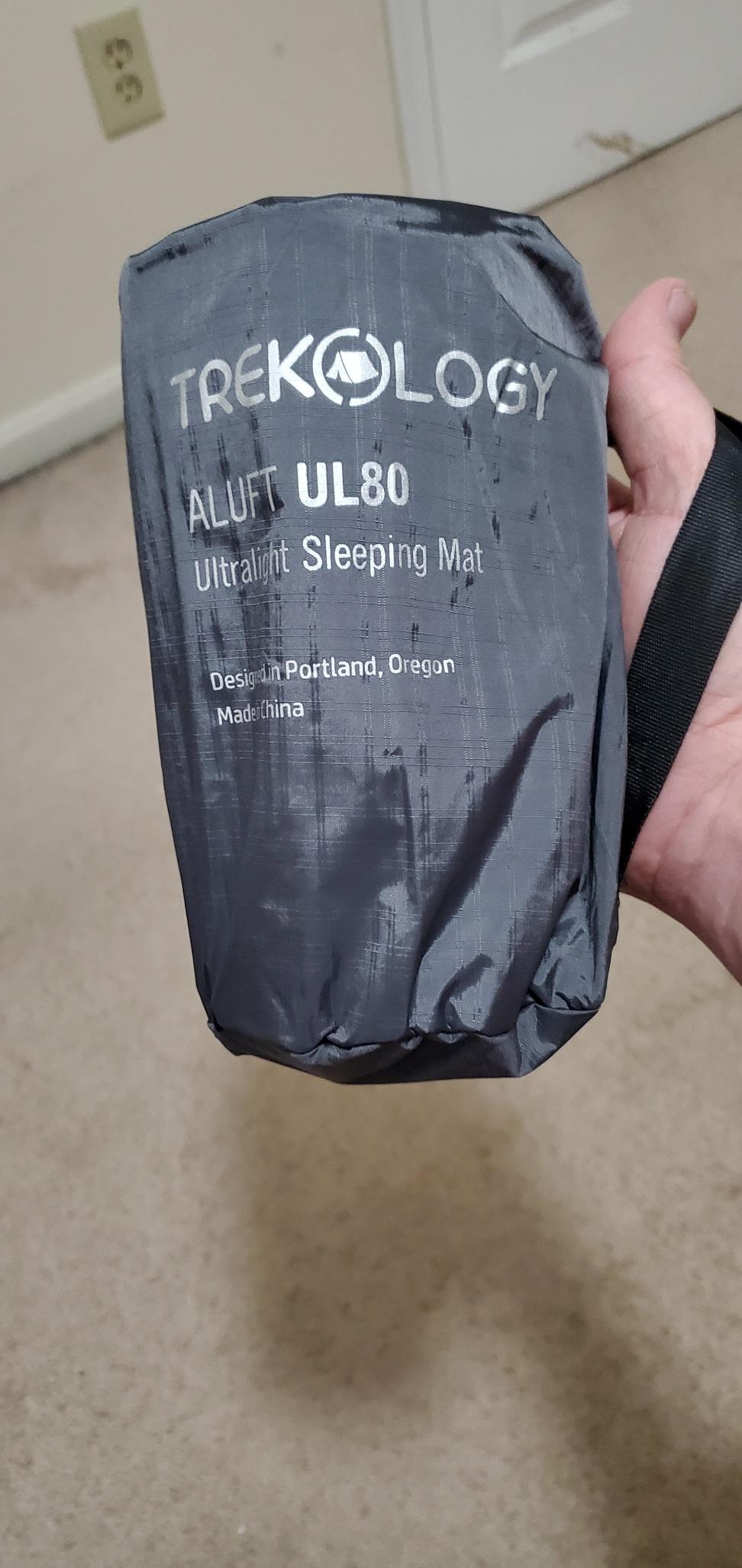
Roughly 6,550 reviews at a 4.4 average, and the top rating in this group after the foam pad below. Buyers consistently mention the thickness-to-weight ratio, the fast inflation, and how well the 40D nylon shell wears.
The listed R-value is estimated at 1.6 to 2, which puts this firmly in three-season territory. Ground temperatures below freezing are outside what this pad is designed to handle.
Who the TREKOLOGY pad suits best
Hikers who want a plush sleeping surface without paying ultralight premium prices. The 4 inch profile also makes it a comfortable guest-bed spare for guests who do not camp.
Where it falls short
The 22.4 inch width is the weak link. Broad-shouldered sleepers frequently report that their arms fall off the edge, and it does not suit freezing ground.
4. POWERLIX Ultralight Inflatable Camping Pad: the most forgiving starter
POWERLIX Ultralight Inflatable Camping Sleeping Pad – Camping Mattress for Backpacking, Hiking, Compact Lightweight Sleeping Mat for Camping, Inflation Bag/Repair Kit Included
74.8 x 22.83 inch
1.97 inch thick
Hexagon air cells
Includes 2 repair kits
Pros
- Hexagon air cells map pressure points well
- Includes carry bag
- inflation bag and 2 repair kits
- Dual-action non-leak valve
- Waterproof and insulated
Cons
- No built-in pump so an inflation bag is required
- About 2 inch thick which is thin for side sleepers
- 4.1 average reflects mixed long-term air retention
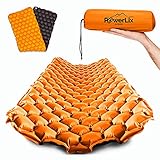
What sets the POWERLIX apart from its competitors in this range is what arrives in the box: a carry bag, an inflation bag, and two repair kits. For a new camper who does not yet own a patch kit, that is the difference between a nuisance leak and a ruined night.
The hexagon air cell design is listed as extra plush and does a reasonable job spreading pressure. Inflation takes about 8 to 10 pumps with the included bag, which is a workout but nothing more.
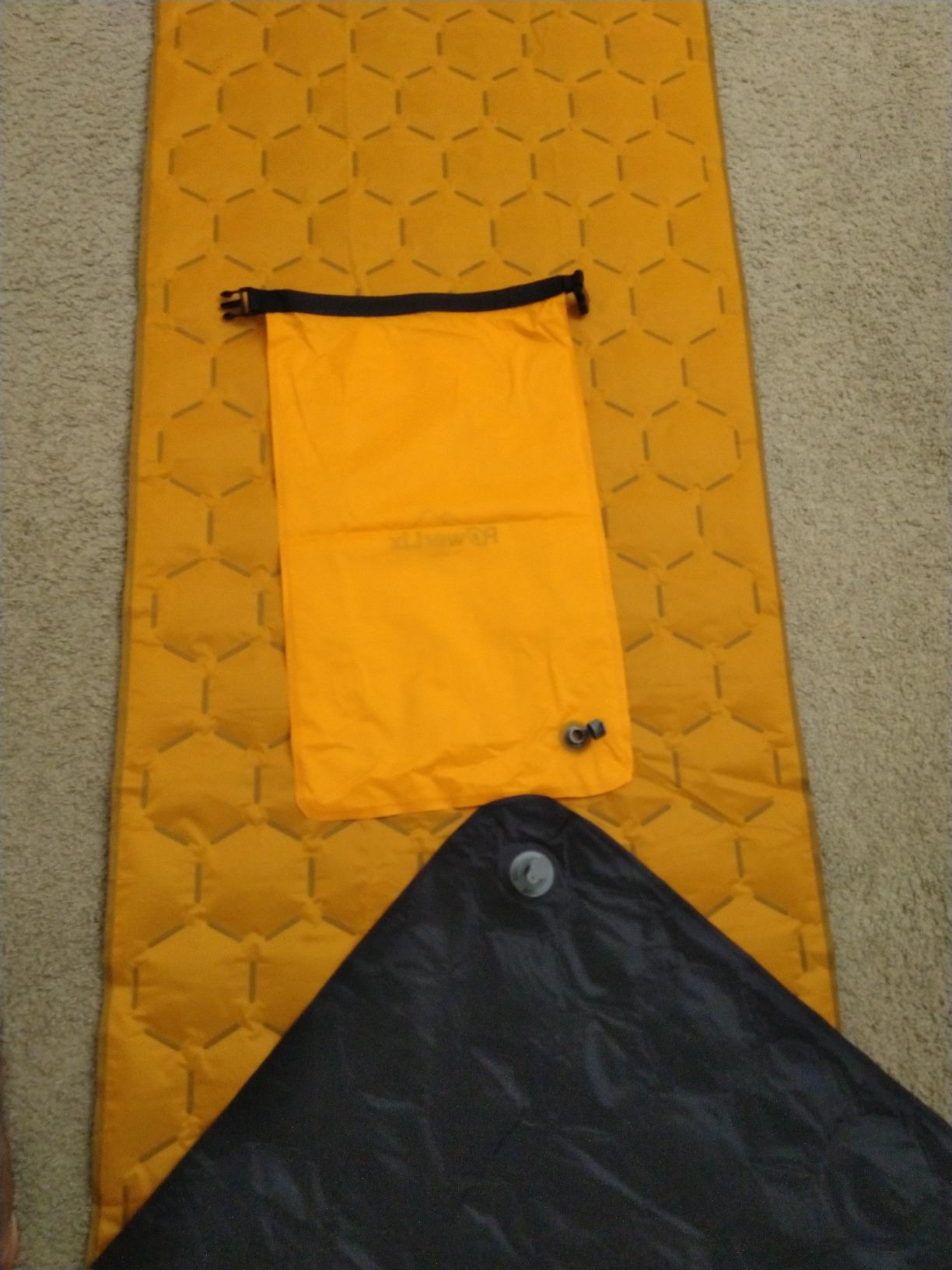
Nearly 17,700 reviews sit at a 4.1 average, the second-largest review base here. Praise concentrates on packability and the waterproof build.
The 4.1 average is worth understanding: the gap comes from mixed reports on long-term air retention, plus the two inch thickness. If side sleeping is your default position, choose a thicker pad.
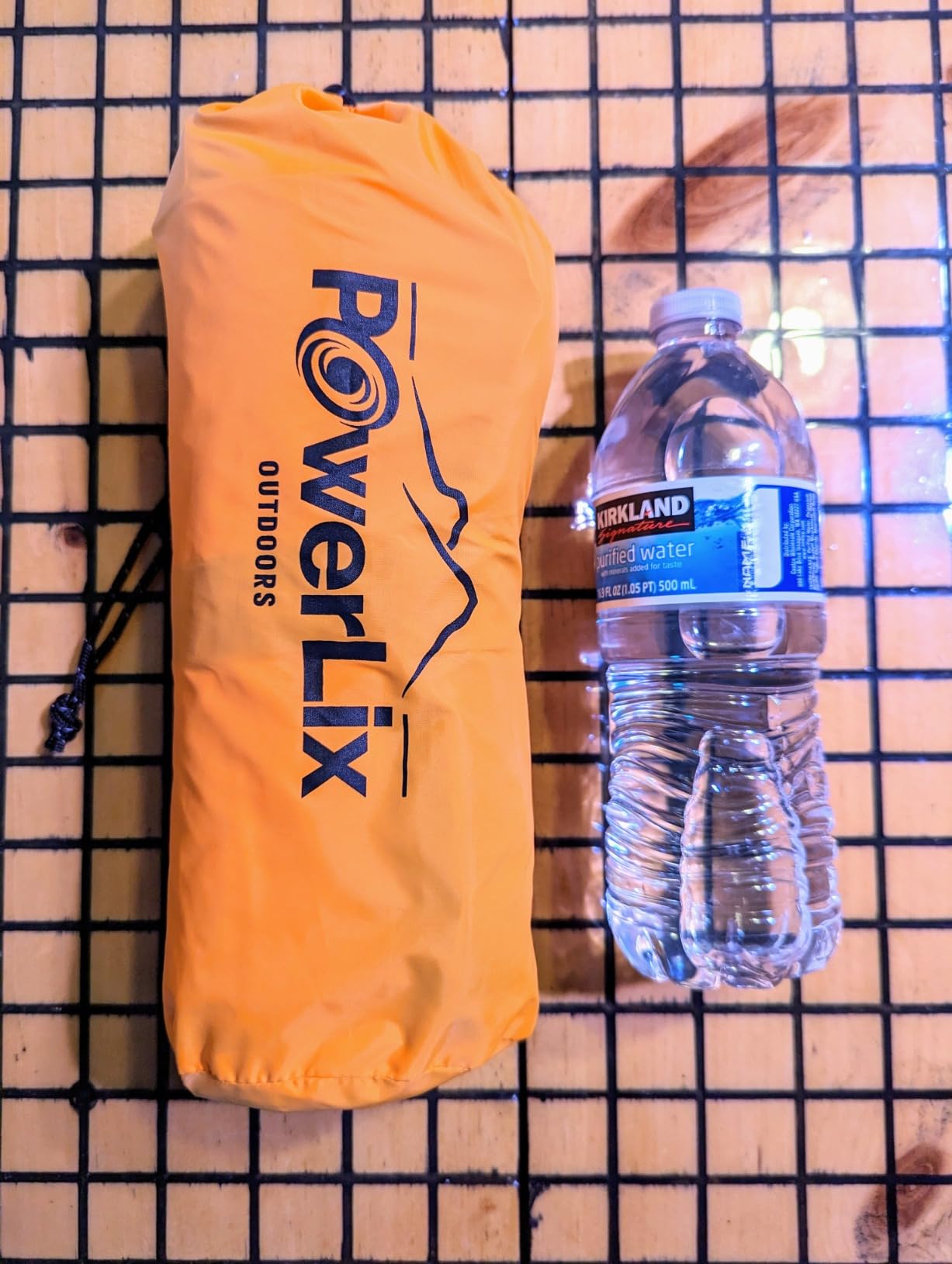
Who the POWERLIX pad suits best
New campers who want a complete kit on the first trip, plus anyone who wants repair patches in the pack as standard rather than as an afterthought.
Where it falls short
The missing built-in pump is the annoyance. In cold weather, breath inflation also pushes moisture into the pad, which is the one habit that most shortens inflatable lifespan.
5. FUN PAC Camping Pad with Built-in Foot Pump: the widest bed in the group

FUN PAC Camping Sleeping Pad, Ultralight Camping Mat with Pillow, Built-in Foot Pump Inflatable Sleeping Pads Compact for Camping Backpacking Hiking Traveling Tent,Single,Green
78 x 27 x 3 inch
1.5 lb
400 lb capacity
Egg-shaped air cells
Pros
- Very wide 27 inch surface with 3 inch thickness
- Built-in foot pump inflates in 30 to 60 seconds
- Integrated pillow
- 400 lb weight capacity
- Side buttons join two pads into a double bed
Cons
- Little ground insulation for cold trips
- Some buyers report the surface slipping or noisy
At 27 inches wide and 3 inches thick, this pad does something most of the list cannot: it stops restless sleepers from rolling off in the night. That makes it a strong pick for van life, glamping setups, and anyone sharing a tent with someone who moves around.
The two-layer upgraded valve is designed specifically to slow leaks, and at 1.5 lb the whole package is comparable to carrying a large water bottle. Side connection buttons let you pair two of them into one wide bed.
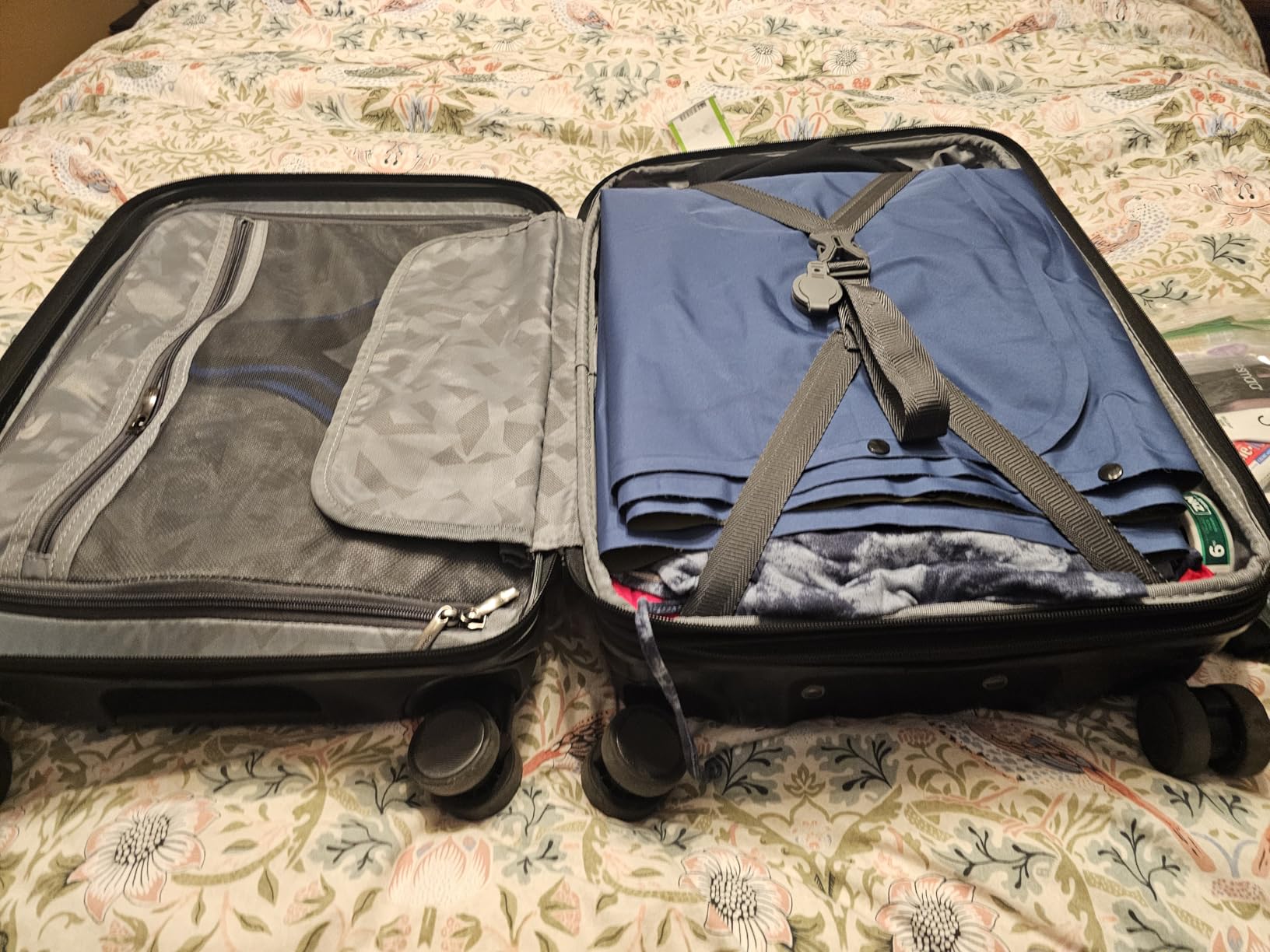
Just under 5,900 reviews at a 4.2 average, and it holds the top seller position in its category, which tells you how often it is the default recommendation. Buyers highlight the foot pump, the width, and the integrated pillow.
The recurring note is that the pad offers minimal ground insulation, so it is a summer and shoulder-season mat. Some owners also report the surface slipping or making noise during movement.
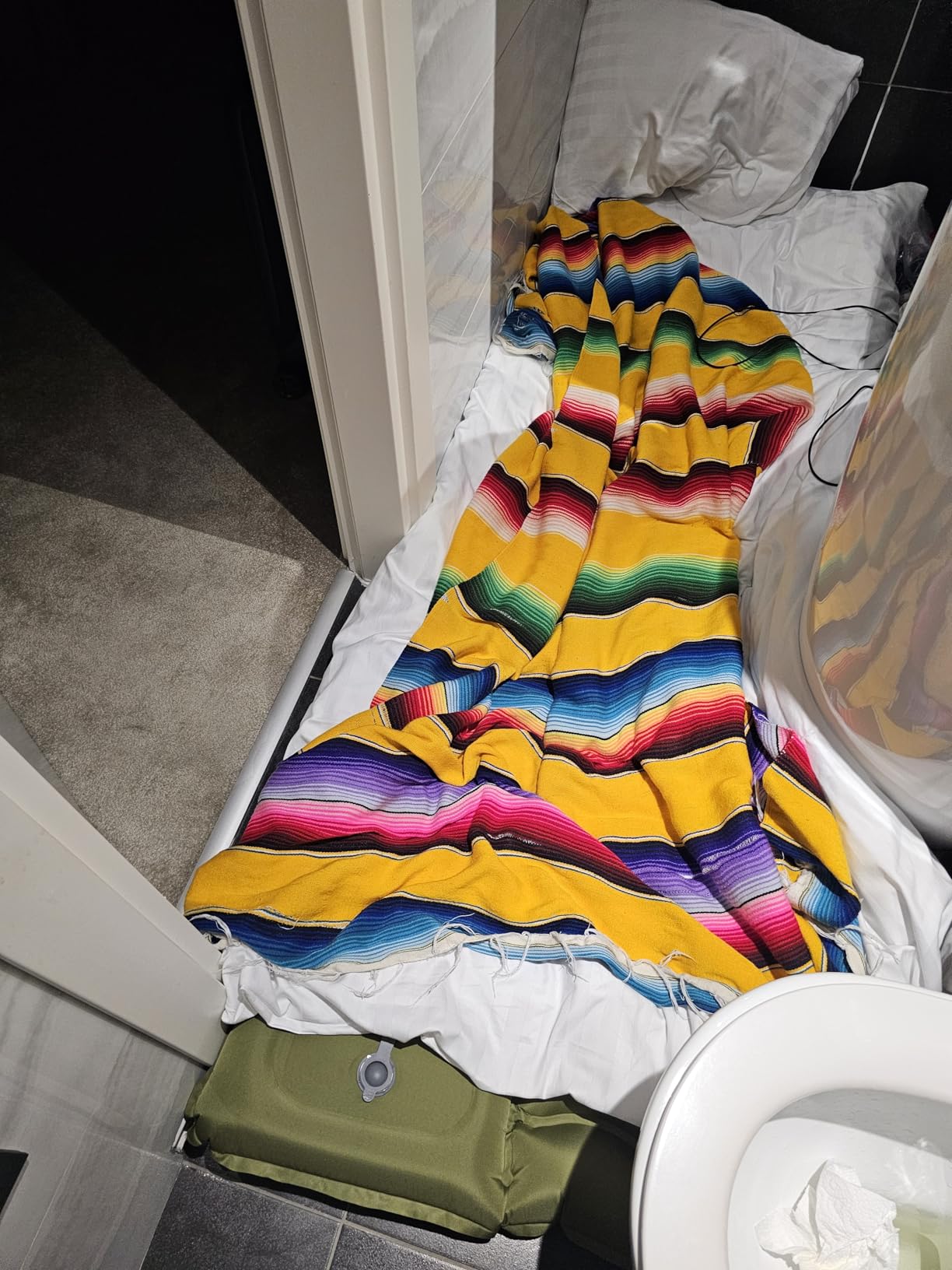
Who the FUN PAC pad suits best
Larger sleepers, restless sleepers, and anyone building a double bed out of two pads. The 400 lb capacity also gives it one of the higher limits in this roundup.
Where it falls short
It is not insulated. In shoulder seasons on cold ground you would want to layer a foam mat underneath, which is the cheapest fix available.
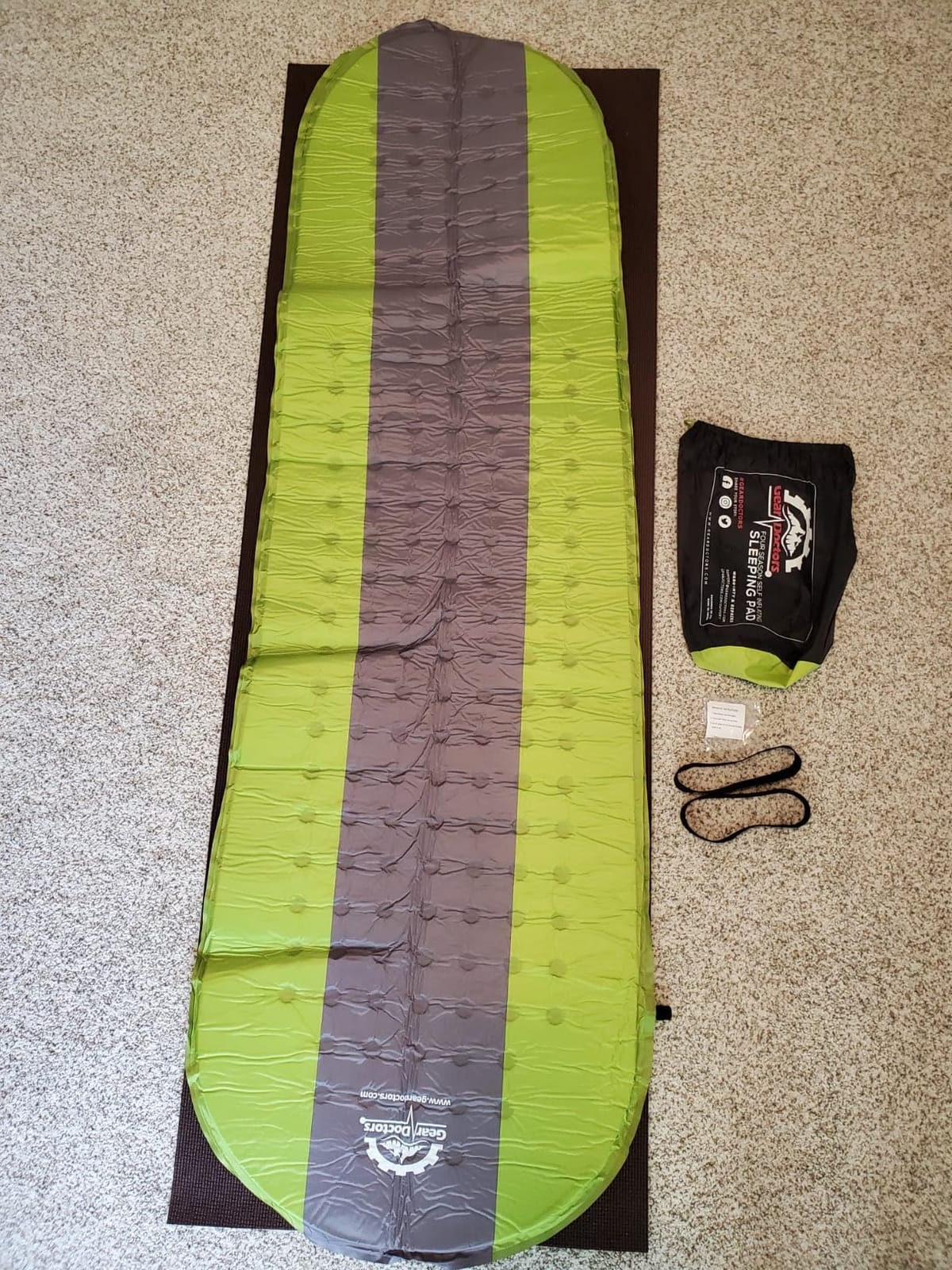
6. Gear Doctors Oxylus: the warmest pad per ounce of bulk
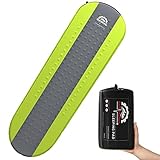
Gear Doctors® Oxylus 4.3 R-Value Insulated Foam Self Inflating Sleeping Pad Camping — Sleeping Pad Backpacking Air Mattress—Camping Mattress Self Inflating Camp Mat 4 Seasons Sleep Mat—Camp/Floor/Tent
4.3 R-value
72 x 22 x 1.5 inch
2.2 lb
8 x 12 inch packed
Pros
- 4.3 R-value from a hybrid foam and air core
- Self-inflates while you pitch the tent
- Quiet and does not bottom out
- 75D micro-coated polyester shell
- Lifetime warranty
Cons
- Heavier and bulkier than pure inflatables
- 72 x 22 inch runs short above about 6 ft
- Needs 5 to 10 minutes plus extra breaths to firm up
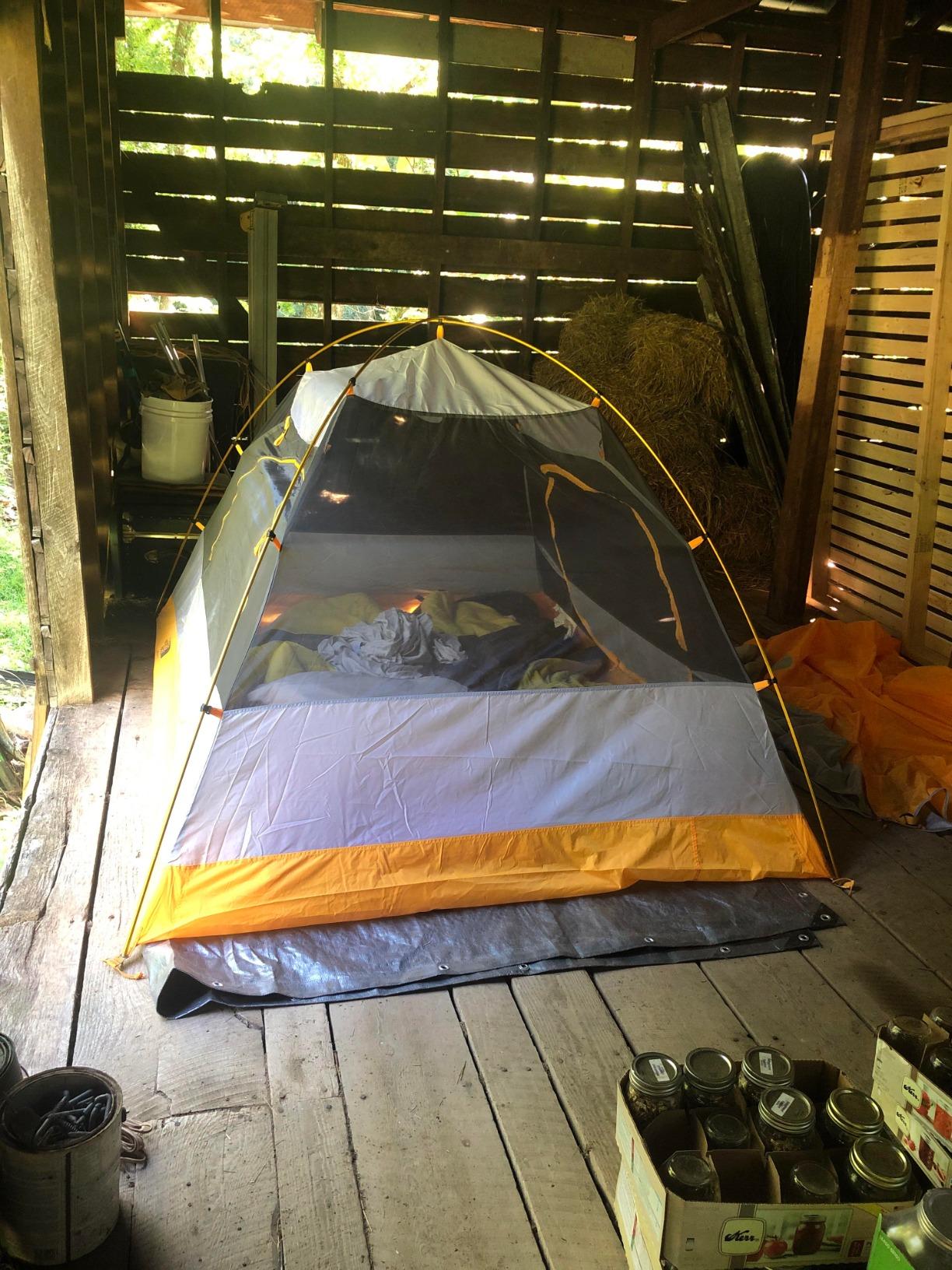
This is the pad to buy if you camp in cold shoulder seasons and do not want to carry two things. The 4.3 R-value comes from a hybrid open-cell foam core rather than a thick air column, so it holds warmth without stacking up the pack weight.
You open the valve, walk back to the tent, and it has largely inflated itself. Firmness is then dialled with a few breaths, which is the technique side sleepers should use rather than adding more air.
Roughly 4,700 reviews at a strong 4.5 average, and owners call out the lifetime warranty more than any other feature. The 75D micro-coated shell has a quiet surface that does not wake a tent partner.
The 250 lb weight capacity is the lowest here, and that is worth taking seriously if you are a heavier sleeper. Owners also warn to give it 5 to 10 minutes of pre-expansion before your first use.
Who the Gear Doctors pad suits best
Cold-weather and four-season campers, and anyone who wants real R-value without doubling their pack weight. It is also a solid car camping pick, and our self-inflating sleeping pad guide covers more options in this class.
Where it falls short
It does not fit larger campers. The 72 x 22 inch size and the 250 lb capacity limit it to smaller sleepers, and it is far too bulky for fast backpacking.
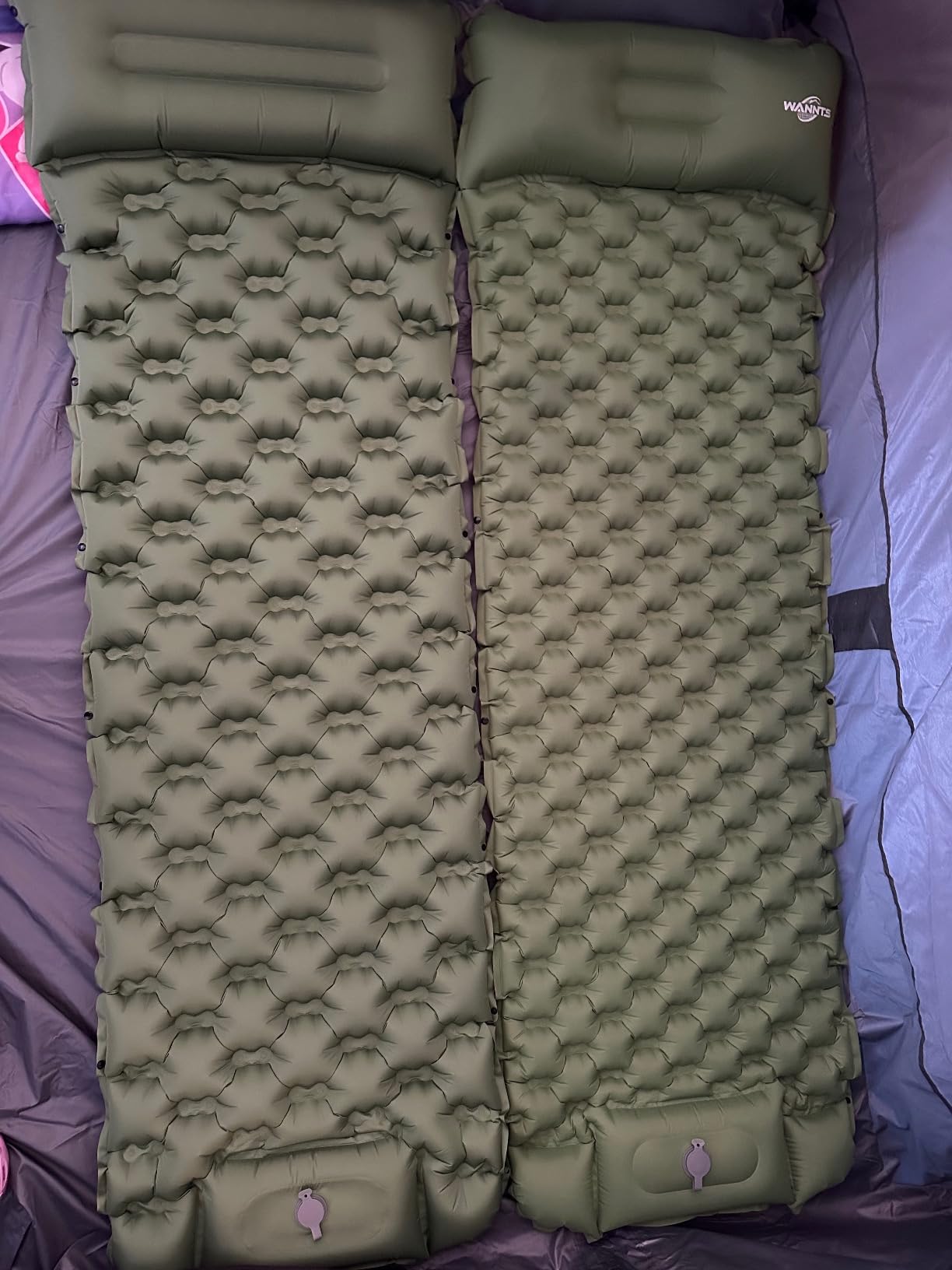
7. WANNTS Ultralight Inflatable Pad: the lightest full-size option

WANNTS Sleeping Pad, Ultralight Inflatable Sleeping Pad for Camping, Built-in Pump, Ultimate for Camping, Hiking – Airpad, Carry Bag, Repair Kit – Compact & Lightweight Camping Pad(Green)
30 oz
Inflates to 75 x 25 inch
680 lb capacity
Waterproof nylon
Pros
- Only 30 oz in the whole group
- Built-in foot pump
- Includes 6 repair patches and a carry bag
- Very small packed size
- High 680 lb weight capacity
Cons
- Thin surface gives side sleepers sore hips
- Built-in pillow needs replacing
- Essentially no ground insulation
- Slippery surface causes bags to slide
At 30 oz this is the lightest full-length pad we tested, and the built-in foot pump means there is no separate pump to lose. It fits in the carry bag with room to spare, which matters when you are counting grams.
The problem is straightforward. At a little over 2 inches of thickness, the surface gives almost no lateral support, and there is effectively no insulation against cold ground. Treat it as a warm-weather pad only.
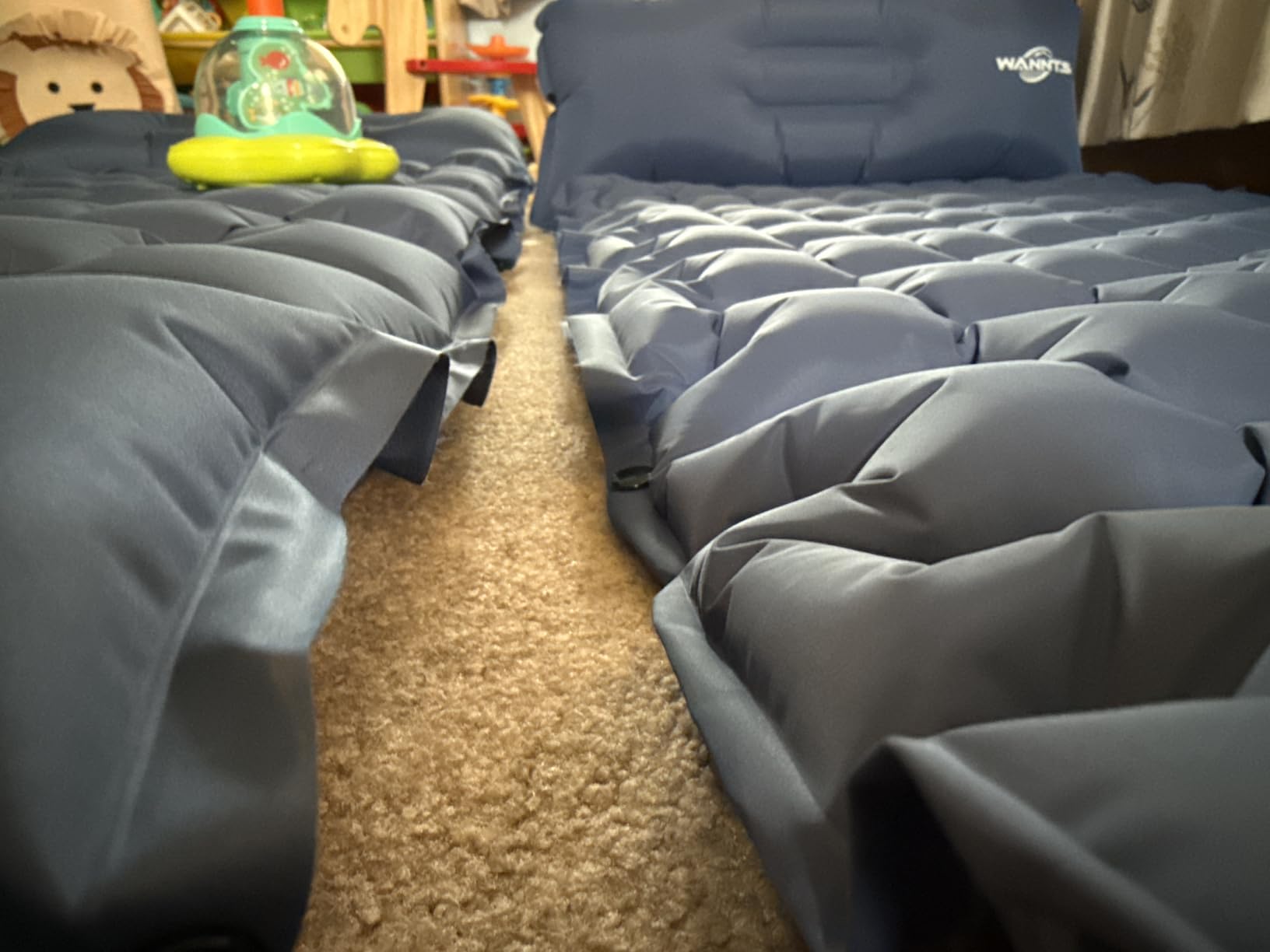
Around 4,650 reviews at a 4.1 average. Buyers like the built-in pump, the packability, and that the package includes six repair patches, a carry bag, and a manual.
Recurring complaints are the thin surface, the built-in pillow, and the slippery top that lets a sleeping bag slide. The claimed 20-second inflation also takes considerably longer for many owners.
Who the WANNTS pad suits best
Anyone building a first kit on a tight weight budget, especially for warm-weather trips where weight matters more than warmth. The 680 lb capacity is unusually high.
Where it falls short
Side sleepers and anyone camping near freezing. Pair it with a thin foam mat underneath if you need either insulation or hip support.
8. MOXILS Inflatable Sleeping Pad: firm support without the softness
MOXILS Sleeping Pad, Ultralight Inflatable Sleeping Pad for Camping, Built-in Pump, Ultimate for Camping, Hiking, Airpad, Carry Bag, Repair Kit, Compact & Lightweight Air Mattress(Blue)
78 x 25 x 3.5 inch
1.9 lb
Inflates to 75 x 25 inch
Nylon and TPU shell
Pros
- Firm supportive feel that hides rocks and twigs
- Built-in foot pump
- Very small rolled size
- Waterproof nylon and TPU shell
- Side buttons join two pads
Cons
- Valve seals can pop open and deflate the pad
- Thin profile means side sleepers reach the ground
- No ground insulation
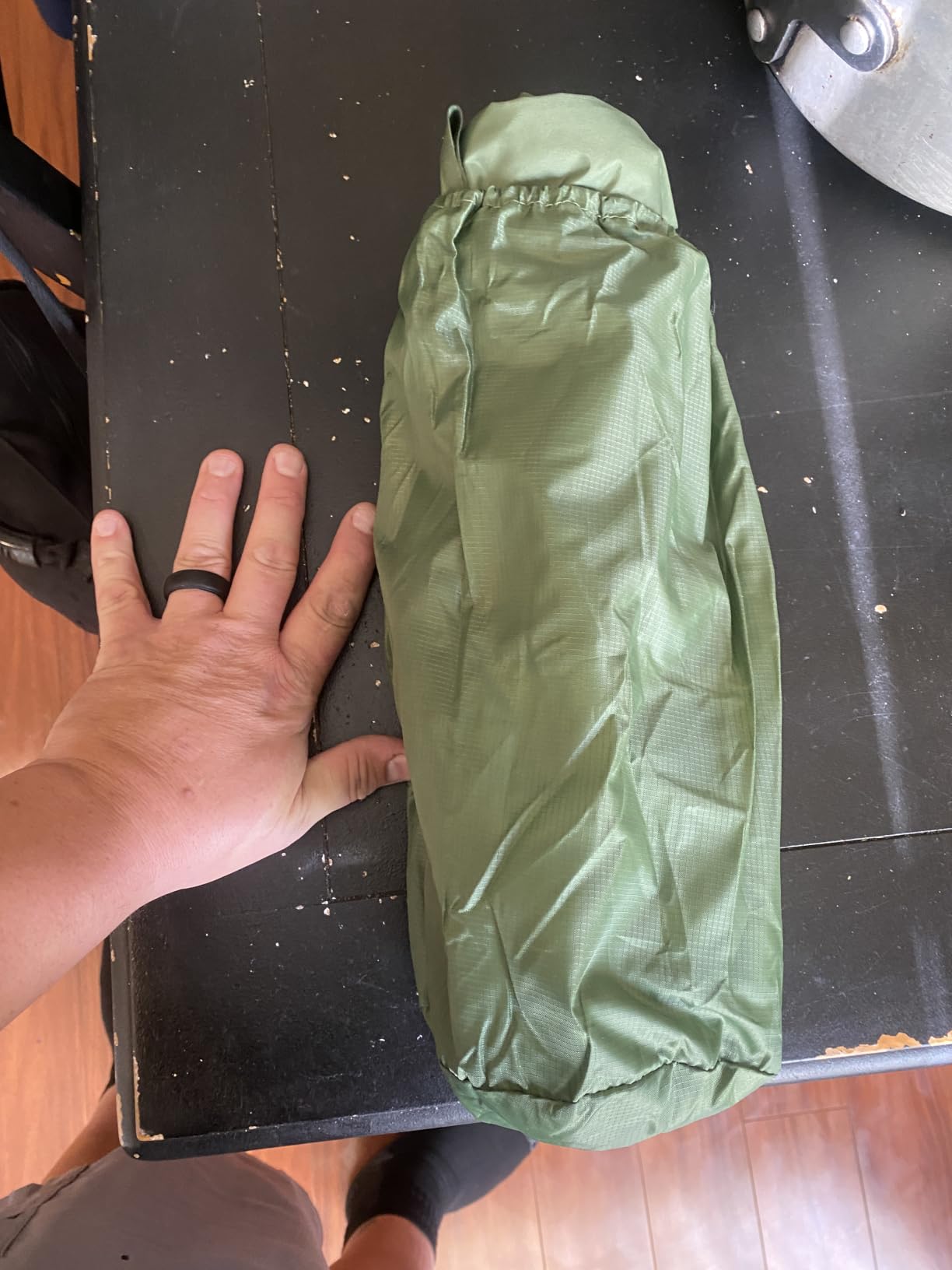
The MOXILS is the pad we recommend to people who dislike the sinking, floating feeling of a thick air mattress. Firm and supportive, it keeps sticks and sharp ground from reaching you while still packing down very small.
At 1.9 lb and 78 x 25 inches inflated, it is a middle ground between the ultralight pads and the plush wide beds. The foot-press pump removes one more item from your kit.
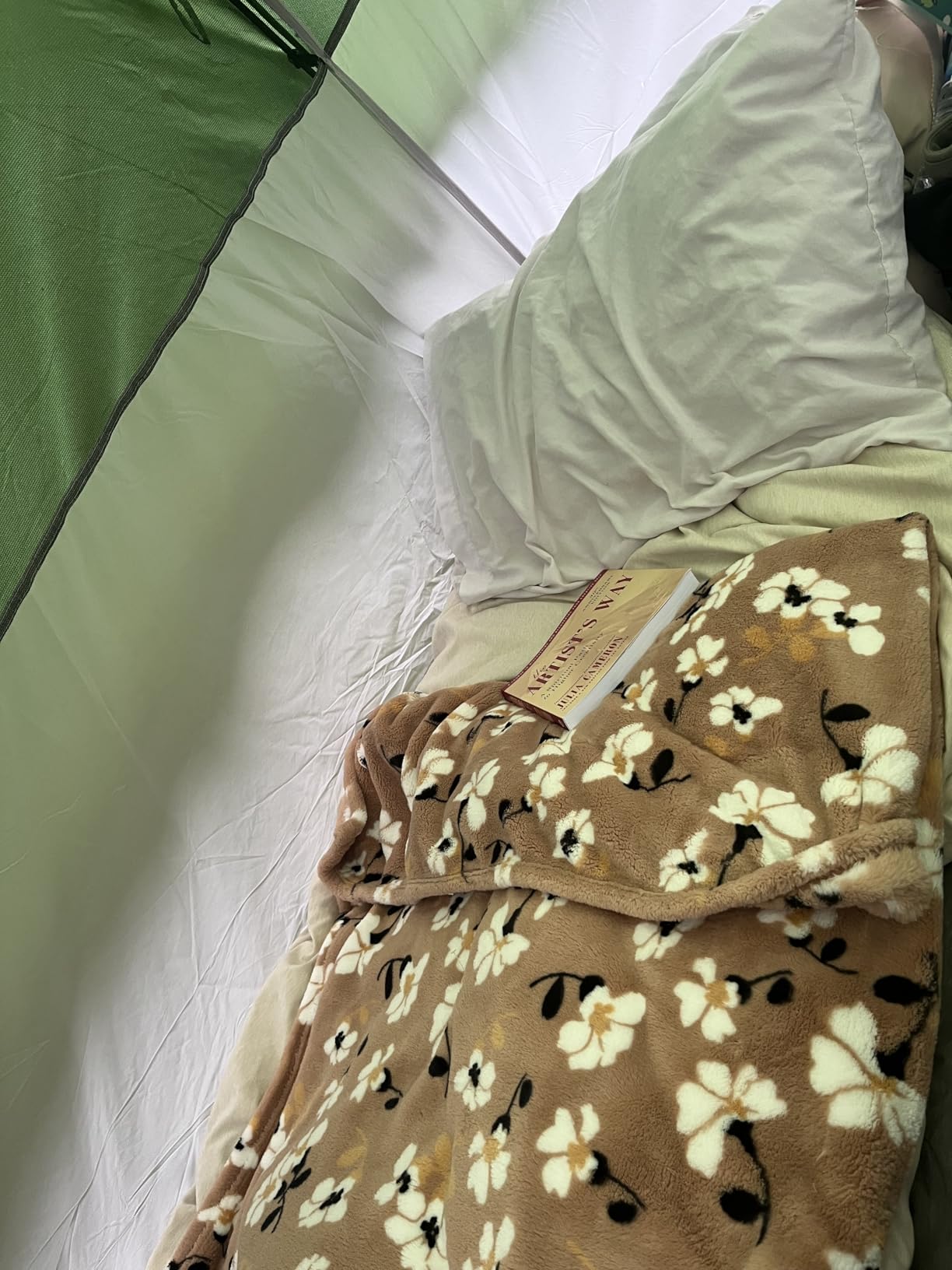
About 2,800 reviews at a 4.2 average. Owners frequently single out the supportive firmness, the width for larger sleepers, and the tight rolled size.
The most serious complaint is mechanical: valve seals that pop open or detach, which deflates the pad overnight. A minority also report slow air loss. If you buy this, carry a patch kit.
Who the MOXILS pad suits best
Stomach and back sleepers, and anyone sleeping on rough or rocky ground who would rather feel firm than float. It also works well for van setups because of the width.
Where it falls short
The valve issue is real and worth weighing, and there is no insulation to speak of. Side sleepers should look at a thicker pad.
9. Coleman Silver Springs Self-Inflating Pad: the highest R-value here

Coleman Silver Springs Self-Inflating Camping Sleep Pad
R-value 5 plus
72 x 20 x 3 inch
Under 4 lb
75D polyester with PVC coating
Pros
- R-value 5 plus is the highest here
- Insulated foam core for genuinely cold ground
- 3 inch medium-firm surface
- Intuitive valve inflates in seconds
- PVC coating resists abrasion
Cons
- Heaviest pad in the group at under 4 lb
- Only 20 inches wide
- Thinner than most self-inflating pads
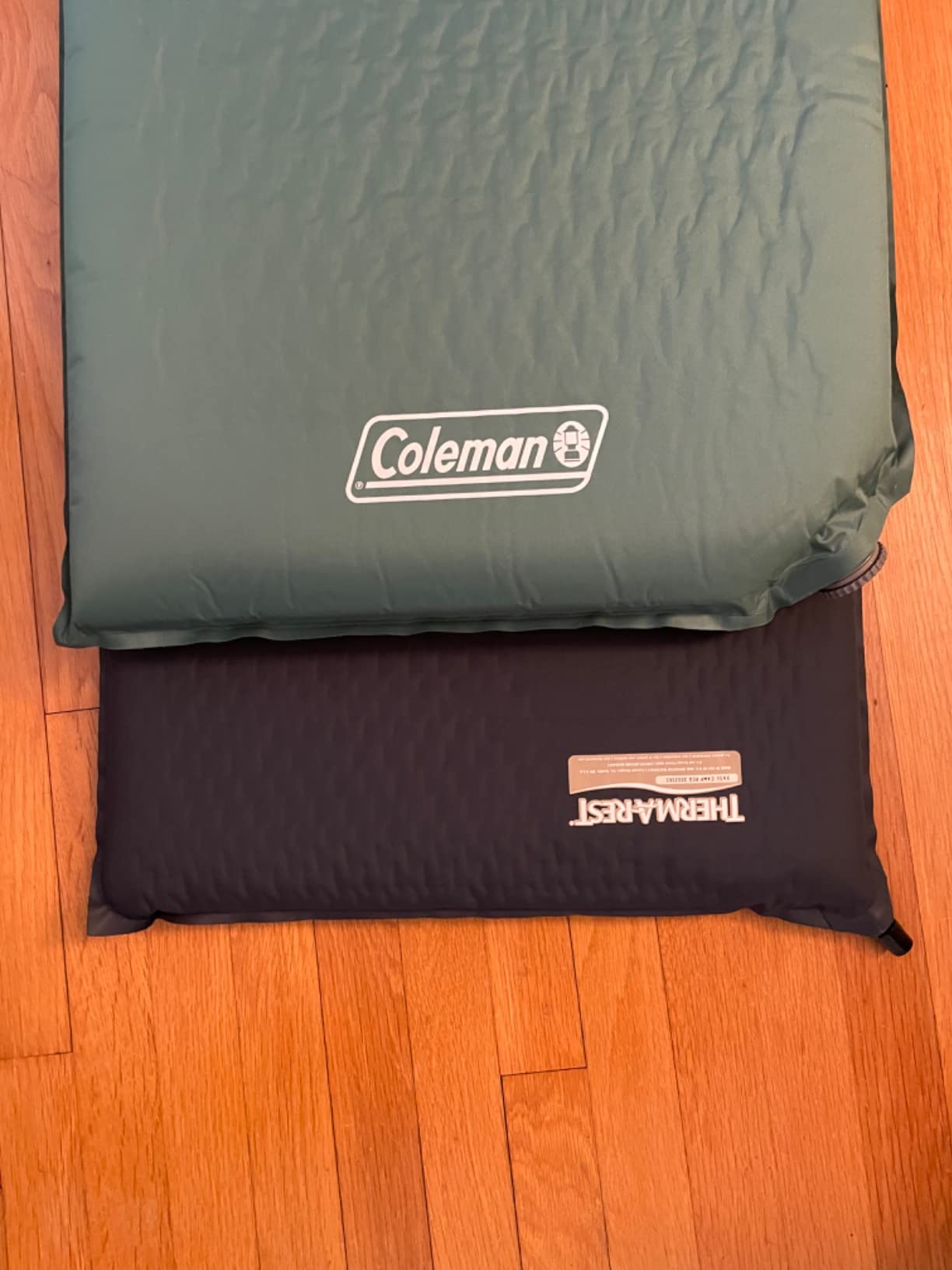
On pure cold-ground performance the Coleman is the leader here. Its R-value of 5 plus is the highest in this lineup, and the insulated foam core means it works in conditions where the air mats on this list would leave you shivering.
The valve design is genuinely simple: open it, and the pad inflates itself in seconds. At 3 inches thick it is a comfortable medium-firm surface for back sleeping, and the PVC coating handles abrasion well.
Just under 2,850 reviews at a 4.3 average. Buyers like the warmth of the foam, the quick valve, and the durable coated shell.
The trade-offs are bulk. At just under 4 lb it is the heaviest pad on the list, and at 20 inches wide it is also the narrowest. This is a car and base camp pad rather than a backpacking one.
Who the Coleman pad suits best
Winter and four-season campers, base camp setups, and anyone who is not carrying the pad on their back. The R-value is the reason to buy it.
Where it falls short
Weight and width. If you are walking to camp, this is the wrong shape of pad, and anyone over 6 ft will feel the 72 inch length.
10. TOBTOS 6 Inch Thick Inflatable Pad: the plushest side-sleeper option

TOBTOS Inflatable Camping Sleeping Pad with Pillow, Thick 6 Inch Ultralight Sleeping Pad with Built-in Pump, Lightweight Sleeping Mat for Camping, Backpacking, Hiking, Tent (Grey)
Up to 6 inch thick
75 x 28 inch
2.4 lb
10.6 x 4.7 inch packed
Pros
- Up to 6 inches thick when fully inflated
- 28 inch wide surface
- Built-in foot pump inflates in about a minute
- Raised sidewalls reduce rolling off
- Heat-sealed 40D nylon edges
Cons
- Heaviest and bulkiest pad here at 2.4 lb
- Thick profile eats pack space
- Some users report slow overnight air loss
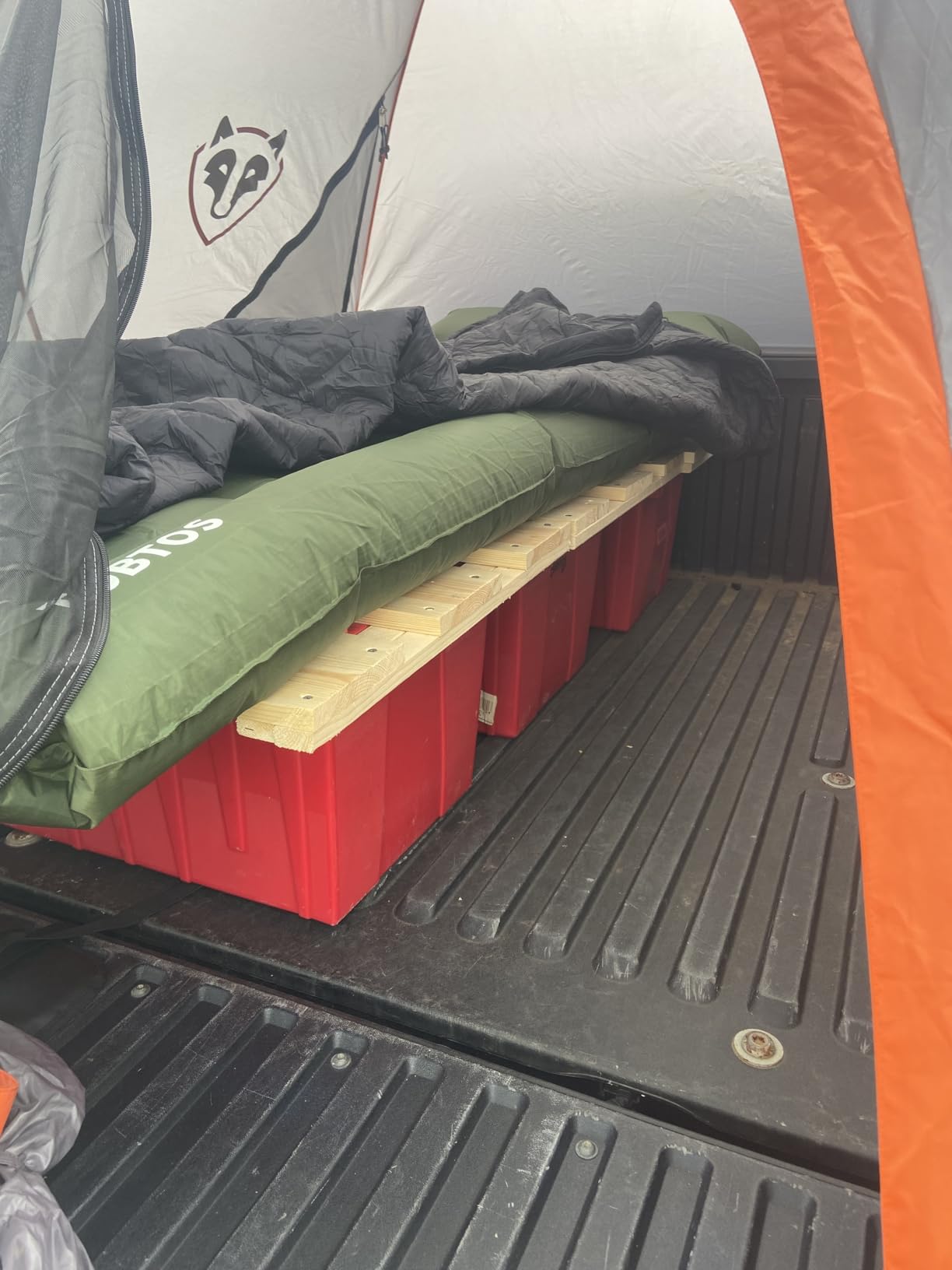
Nothing in this roundup isolates hips like the TOBTOS does. Inflated to 6 inches, the air column is deep enough that a side sleeper with bony hips does not reach the ground, which is the single most common complaint in the reviews we read across this category.
The 28 inch width adds more room than almost anything here, and the raised sidewalls genuinely keep you centred. The foot pump fills it in about a minute, and the heat-sealed 40D nylon edges resist the tears that usually start at a seam.
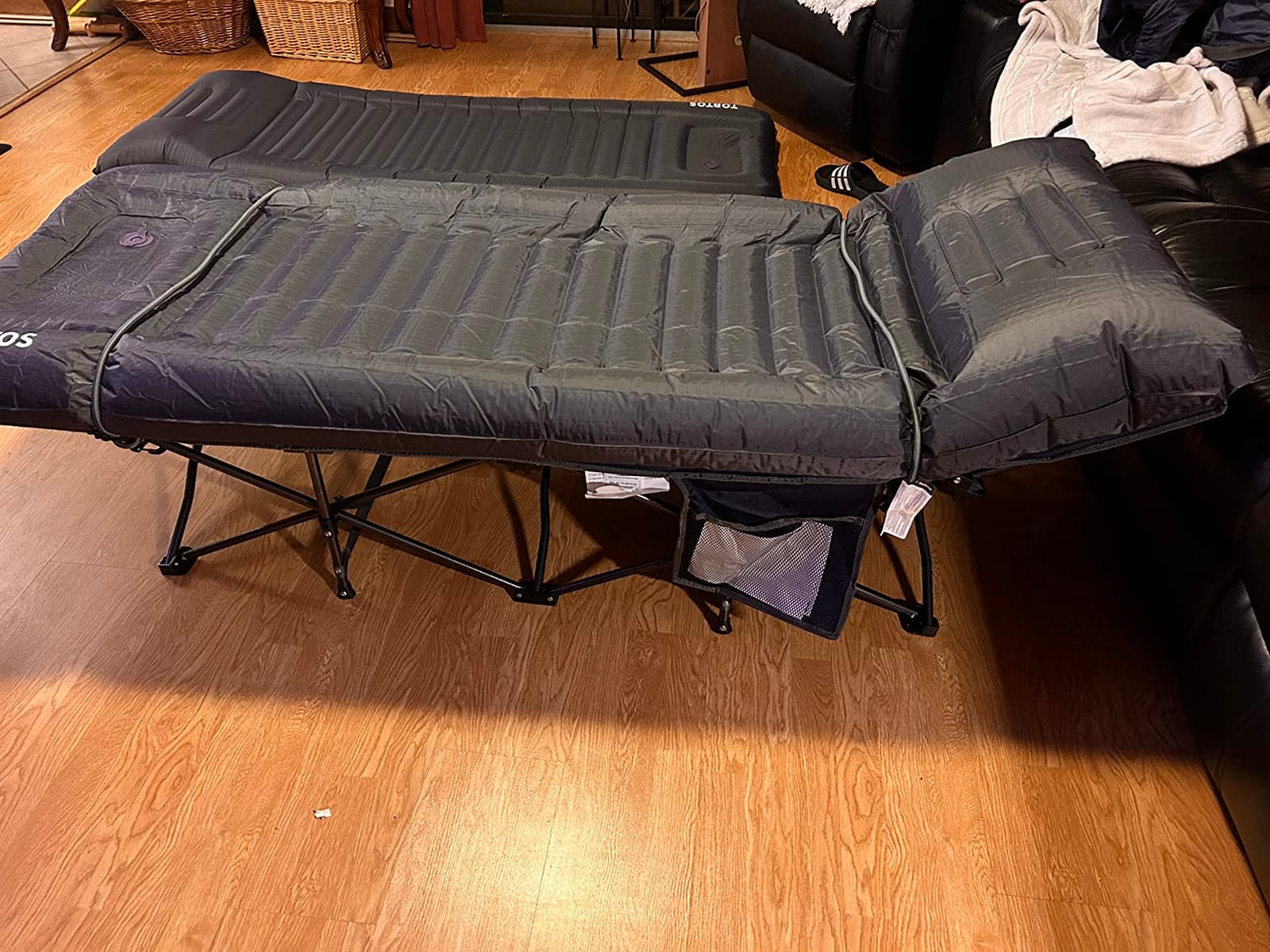
Around 2,600 reviews at a 4.2 average, and the six-inch thickness is what almost every positive review leads with. The one-piece ergonomic pillow shaped to the neck curve gets regular mention too.
Weight is the cost. At 2.4 lb and folding to 10.6 x 4.7 inches, it is the bulkiest pad in the group, and a few users report slow air loss over multi-night trips.
Who the TOBTOS pad suits best
Side sleepers, taller sleepers, and anyone who wants a car-camping level of comfort in a packable mat. It is our pick for sleepers who feel every point of contact through a 3 inch pad.
Where it falls short
Fast and light backpacking, where 2.4 lb matters. There is also no real ground insulation, so thickness here buys comfort rather than warmth.
11. Therm-a-Rest Z Lite Original: the foam pad that never fails
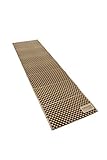
Therm-a-Rest Z Lite Original Camping and Backpacking Sleeping Pad
13.6 oz
72 x 20 x 0.75 inch
R-value 1.7
Folds to 20 x 5 x 5.5 inch
Pros
- Lightest pad here at 13.6 oz
- Highest rated at 4.7 from over 2200 reviews
- No air to leak and no moving parts
- Softer top layer over a denser base
- Limited lifetime warranty
Cons
- Only 0.75 inch thick so side sleepers feel everything
- R-value 1.7 is three-season only
- 20 inch width is narrow
The Z Lite is the highest rated pad in this roundup at 4.7, and it earns that on simplicity. Closed-cell foam has no valve, no seam, and nothing that can fail in the middle of the night.
At 13.6 oz and folding down to 20 x 5 x 5.5 inches, it also doubles as a sit pad on every rest stop. Owners on hiking forums describe it as a five-year-plus purchase, which is the durability proof that matters most in gear.
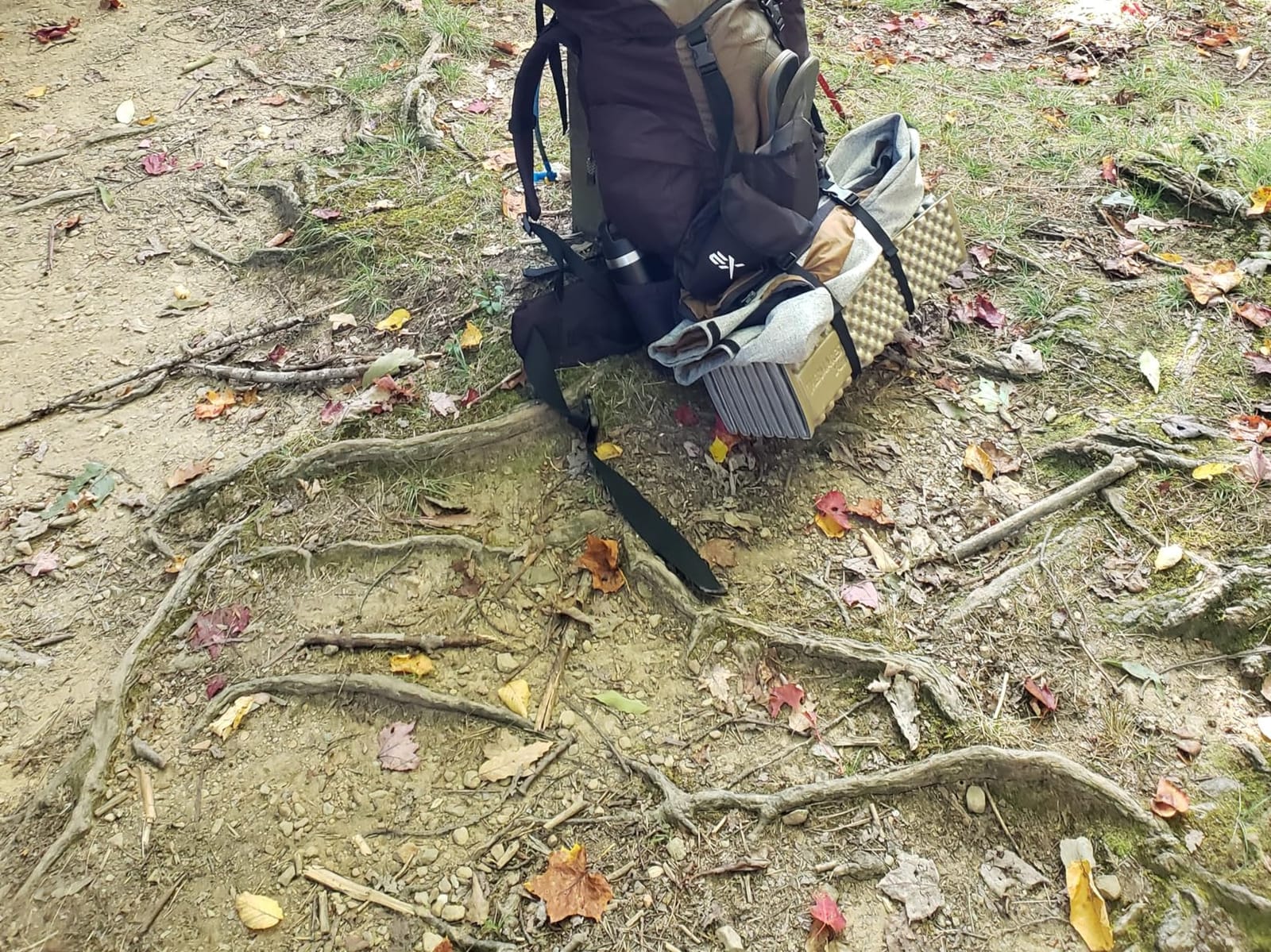
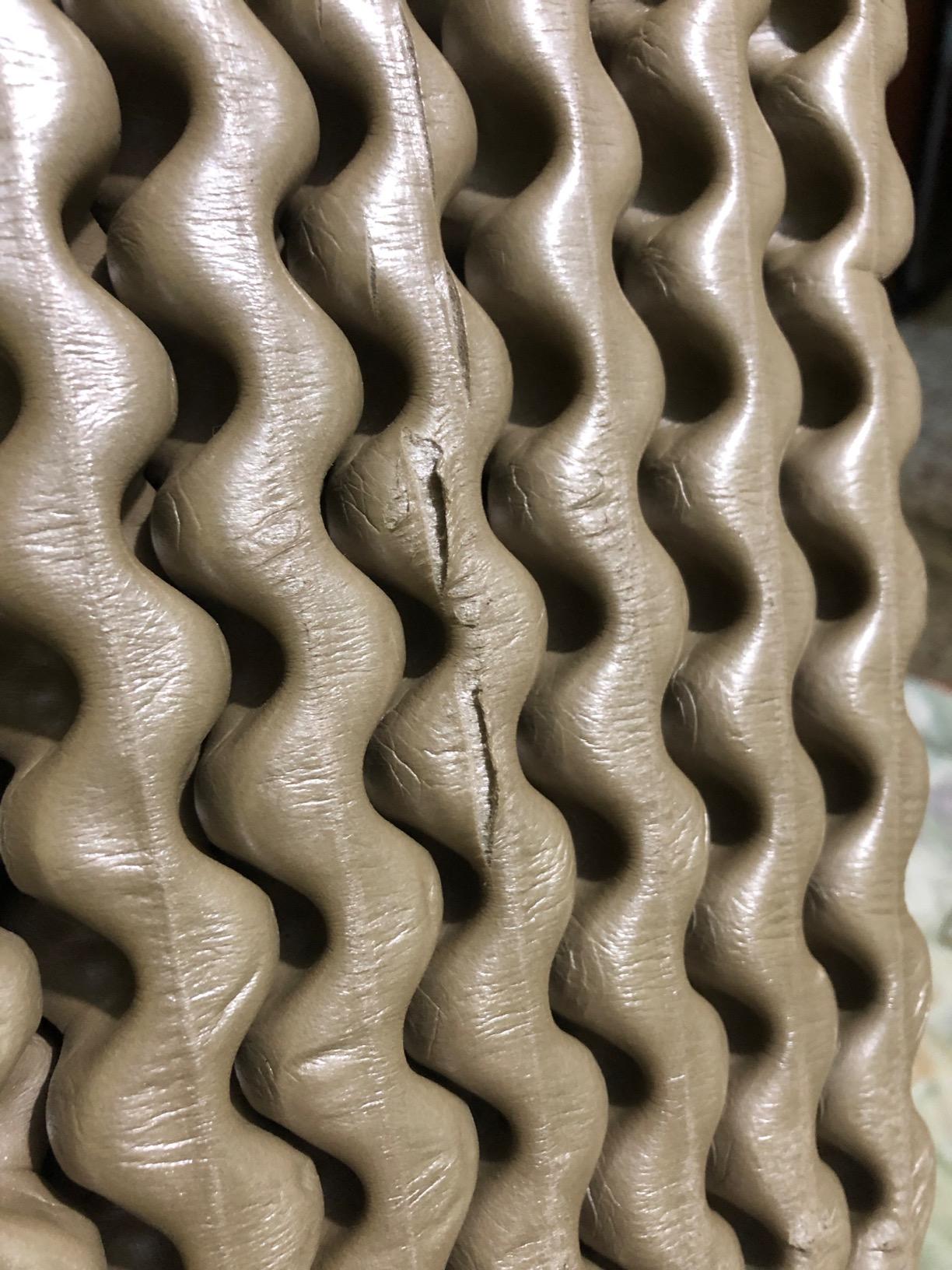
Over 2,200 reviews at a 4.7 average. The dimpled surface traps a layer of air against your body, and the construction puts a softer layer on top and a denser layer underneath for ground protection.
Two things to know before you buy. The 0.75 inch thickness is brutally thin for side sleeping, and the R-value of 1.7 limits it to three-season ground. It is also not water resistant.
Who the Therm-a-Rest pad suits best
Hikers who want one item that does two jobs, anyone who has been woken by a punctured pad before, and campers who put a foam pad under an inflatable in winter.
Where it falls short
Comfort. At three-quarters of an inch there is no cushioning, and it will not keep you warm on cold ground. It also carries a limited lifetime warranty rather than a full one.
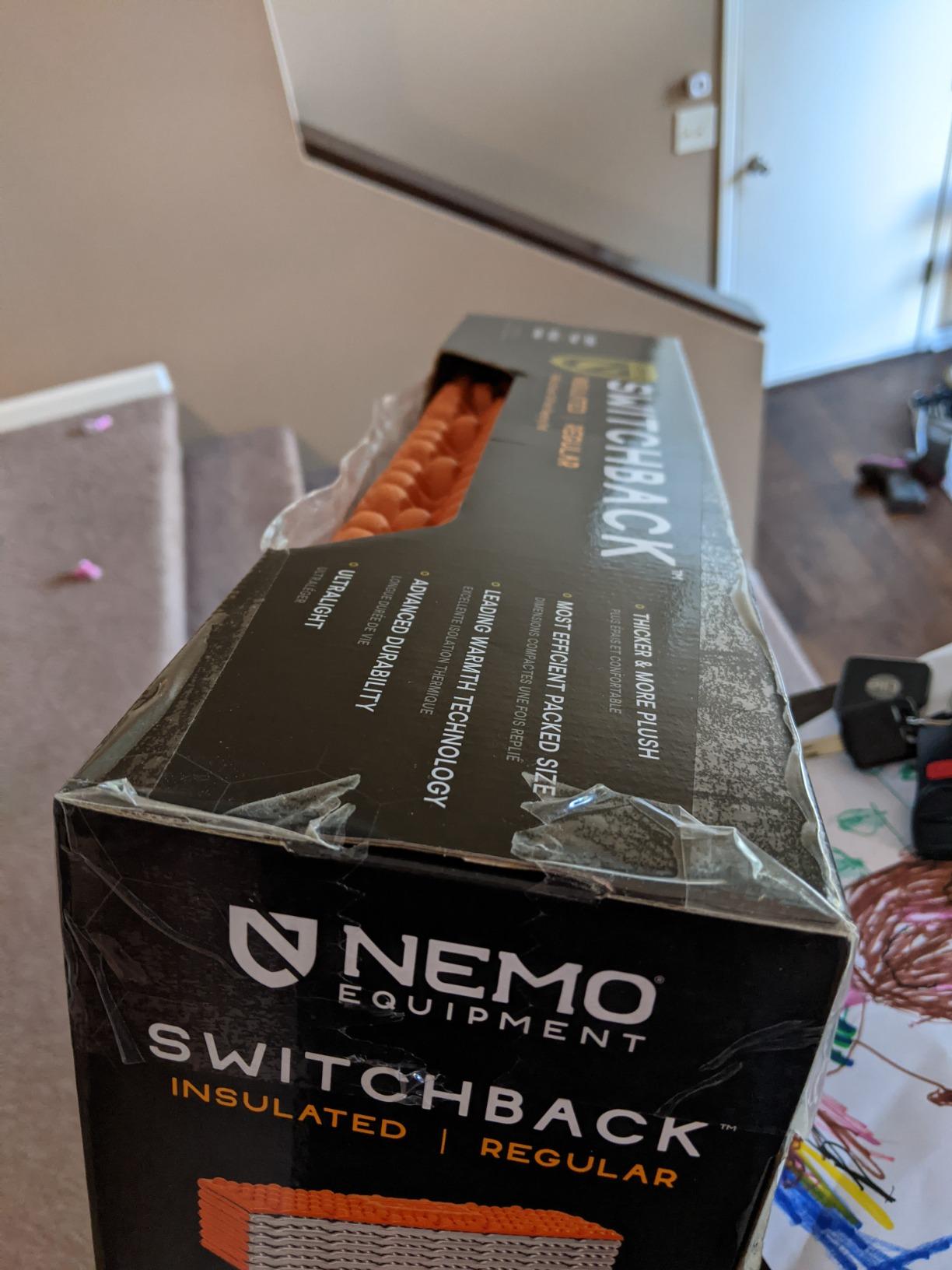
12. NEMO Equipment Switchback Foam Pad: the warmest foam option

NEMO Equipment Switchback Foam Sleeping Pad – Sunset Orange – Reg
R-value 2
0.42 kg
Folds to 20 x 5 x 5.5 inch
Dual-density Axiotomic foam
Pros
- Metallized thermal reflective film bounces heat back
- Hexagonal nesting pattern is more plush than other foam pads
- Folds tighter than comparable accordion foam
- Backed by a lifetime warranty
- Doubles as a sit pad
Cons
- Less cushioned than an air pad on hard ground
- R-value of 2 is mild-weather only
- 20 inch width is narrow with arms falling off
The Switchback is the best foam pad for anyone who finds closed-cell foam uncomfortably hard. Its dual-density Axiotomic foam puts a supple comfort layer over a resilient support layer, and the taller nodes give noticeably more give than a plain accordion pad.
It also runs warmer than its foam peers. The metallized thermal reflective film is protected by a scratch-resistant layer and bounces body heat back toward you, which is why the R-value sits at 2 rather than the 1.7 typical of a standard foam mat.
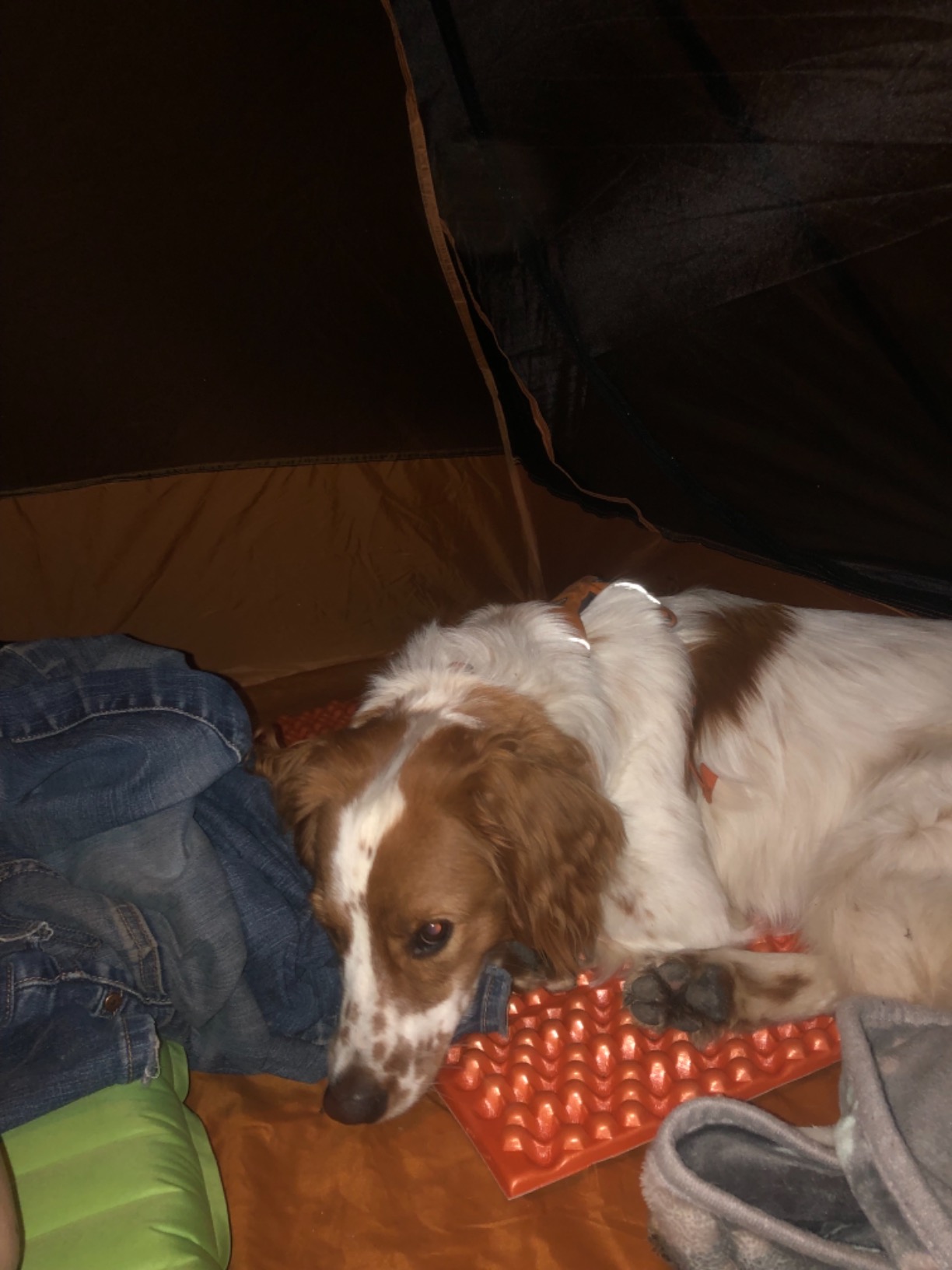
Roughly 560 reviews at a 4.6 average. Owners compare it favourably to the Therm-a-Rest and Exped equivalents on both comfort and packed size, and several use it as an insulating layer under an inflatable to extend a sleep system into colder temperatures.
The recurring limitations are the 20 inch width, where arms fall off the pad for average and larger sleepers lying on their back, and the fact that a foam pad alone is not comfortable on very hard ground.
Who the NEMO pad suits best
Side sleepers who prefer foam to air, and anyone building a winter system who wants a layer that cannot leak. It is also a useful sit pad for photography or breaks.
Where it falls short
Pack volume. A folded accordion pad is bulkier than any inflatable here, and the R-value of 2 means it needs something insulating beneath it in real cold.
How to Choose the Best Sleeping Pad
Answer four questions and the choice narrows fast: how you will carry it, how cold the ground gets, how you sleep, and how wide you need to be. The rest is preference.
Choose your R-value from the coldest ground you expect
Pick the R-value from the coldest night you will actually face, not the average. A pad rated around 1.7 to 2 handles warm summer ground, roughly 3 to 3.5 covers three-season trips in temperate climates, 4 to 4.5 is shoulder-season territory, and 5 or above is what you want once the ground drops below freezing.
Stacking adds. Put a foam mat with an R-value of 1.7 under an inflatable rated 3.5 and you have the equivalent of a 5.2 pad, which is how most winter sleepers keep pack weight down. R-value measures thermal resistance under laboratory test conditions, so treat it as a reliable guide to insulation and not a promise of a specific temperature.
Thickness matters more than any other comfort spec
Yes, sleeping pads are actually comfortable, and thickness is the reason. Below 2 inches, a side sleeper reaches the ground through the pad no matter how good the baffle design is. Three inches is the practical floor for side sleeping, and anything past that is pure bonus.
Our advice for anyone who sleeps on their side is to fix the pad rather than the sleeping bag. A 6 inch inflatable will do more for your sleep than any change to your quilt, and if you already own a thin pad, a foam layer underneath is the cheapest improvement available.
Width: a 20 inch regular pad against a 25 inch wide pad
A 20 inch regular pad suits backpackers who want the lowest weight. A 25 inch regular wide pad costs a few more ounces and gives you room to roll over without an arm leaving the surface, which is the single biggest comfort complaint we read.
Be aware that wide variants are often noticeably heavier than the weight the brand quotes for the regular size, and check that the listed weight matches the size variant you are buying.
Air, foam or self-inflating: which pad type fits your trip
Air pads win on warmth-to-weight and comfort, and they are the right default for backpacking. Their only real weakness is that a puncture ends the night, which is why carrying a patch kit matters.
Closed-cell foam wins on reliability, doubles as a sit pad, and costs very little. Self-inflating hybrids sit between the two, offering genuine R-value with more bulk than an air pad. For car camping, where weight is irrelevant, the plushest air pad you can carry is the correct answer.
How to read R-value numbers when old and new tests disagree
ASTM F3340 standardised how pad insulation is tested, and it produced much lower, more honest numbers than the older methods. This is why a pad quoted at 4.4 in older reviews can appear as 1.9 today. It is the same pad, measured properly.
So compare numbers from the same era and the same standard, and when a listing gives no R-value at all, assume it is a warm-weather pad. The Gear Doctors Oxylus and the Coleman Silver Springs are the two here that publish a figure, so they are the two worth comparing directly.
How to Make Any Sleeping Pad Last Longer
Most pad failures are avoidable and none of them involve sharp rocks, which is what people fear. Inflatable pads usually die from slow air loss, which means a leak you did not notice until the middle of the night.
- Carry a patch kit from day one. The POWERLIX and WANNTS pads here both ship with repair patches, and a small leak becomes a non-event if you can fix it before sleeping.
- Never inflate a pad by breath in cold weather. The moisture condenses inside the baffles, and repeated cycles of that shorten insulation life faster than almost anything else you do.
- Let self-inflating pads expand for 5 to 10 minutes before your first use and before each trip. Foam needs to fully open out, and a half-expanded pad will not support you.
- Store foam pads flat and fully compressed, and store self-inflating pads rolled with the valve open so trapped moisture can escape.
- Let a pad air out for a day after a wet trip before rolling it away, and check the valve and seams for grit before you seal it up.
Firmness tuning is worth learning as a separate skill. Side sleepers who let a little air out of a thick pad find it dramatically more comfortable at the hips, because the shoulders drop into the surface while the hips stay supported. Start firm, then bleed air in small increments until your shoulder and hip sit at the same level.
Finally, check the weight capacity before you commit. Several pads here cap out at 250 lb, and one of the warmest options on this list is one of the smallest. Heavier sleepers should aim at the wide models with higher listed limits.
Frequently Asked Questions
What is the most comfortable sleeping pad?
Among the pads we compared, comfort tracks thickness more than anything else. The TOBTOS at up to 6 inches and the HiiPeak at 3 inches gave side sleepers the best hip support, while the TREKOLOGY at 4 inches and 750 g is the best balance of comfort and weight. For car camping, thickness costs nothing, so take the deepest pad you can.
What is a good R-value for a sleeping pad?
Around 2.0 handles warm summer ground, 3.0 to 3.5 covers three-season trips in temperate climates, 4.0 to 4.5 reaches shoulder seasons, and 5.0 or higher is for sub-freezing ground. Choose from the coldest night you expect rather than the average. R-value measures thermal resistance in a lab, so it guides insulation without guaranteeing a specific temperature.
What sleeping pad is best for side sleepers?
Side sleepers need 3 inches of thickness or more to keep hip points off the ground. The TOBTOS at up to 6 inches and 28 inches wide is the plushest option here, the HiiPeak at 3 inches and 25 inches wide is the best value, and the NEMO Switchback is the foam pick for people who dislike air pads. Letting a little air out of a firm pad also improves hip comfort.
Are foam or inflatable sleeping pads better?
Foam pads are more reliable, cost less, double as sit pads, and cannot deflate overnight. Inflatable pads are warmer per gram, far more comfortable above 3 inches of thickness, and pack much smaller. Most hikers use both: an air pad for sleeping and a foam pad for sitting. In cold weather, stacking a foam mat under an air pad adds the R-values together.
Which sleeping mat has the highest R-value?
The Coleman Silver Springs self-inflating pad is rated at R-value 5 plus, the highest figure among these twelve, with an insulated foam core rather than an air column. The Gear Doctors Oxylus follows at 4.3, also a foam and air hybrid. The remaining pads in this list publish no R-value and should be treated as warm-weather mats.
What temperature is an R4 sleeping pad good for?
An R-value of 4 keeps you comfortable in typical shoulder-season conditions, roughly down to the low 30s Fahrenheit on the ground, which covers most spring and late autumn nights. Below that, stack a foam mat underneath or move to a pad rated 5 or higher. Remember that R-value is a laboratory measure of resistance, not a temperature guarantee.
Which Sleeping Pad Is Right for You
For most hikers the answer is the Sleepingo Ultralight Sleeping Mat, the lightest option here with the biggest review base and a waterproof shell that survives wet camps. Buy the HiiPeak instead if you want a foot pump, 3 inches of thickness, and enough width to stop rolling around, and buy the TREKOLOGY if comfort per ounce matters more than insulation.
Go colder and the choice narrows fast: the Coleman Silver Springs is the warmest pad here at R-value 5 plus, the Gear Doctors Oxylus at 4.3 is lighter and carries a lifetime warranty, and either can be combined with a Therm-a-Rest Z Lite underneath to push a three-season system into winter. Whatever you choose, carry a patch kit, skip breath inflation in the cold, and match the pad to the coldest ground you will actually sleep on.
Finish the system with the rest of the sleep kit. Our picks for the best sleeping bags cover the temperature range above the pad, and our tested guide to the best blankets for sleeping is the easiest upgrade for anyone camped somewhere warm.