
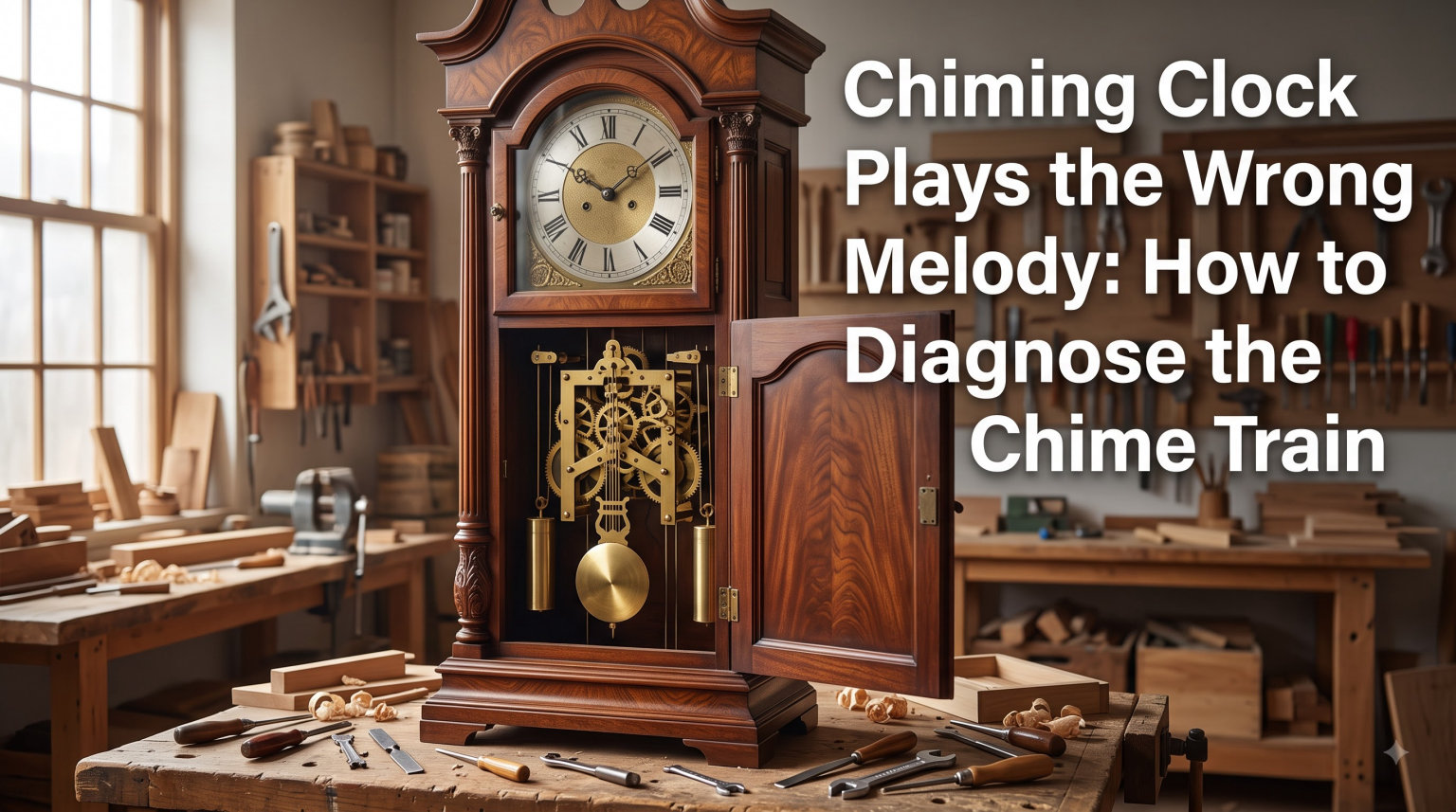
When your chiming clock plays the wrong melody, the problem almost always traces back to the chime train. I have spent years restoring grandfather clocks and mantel pieces, and this single issue accounts for more owner questions than anything else. In this guide, I will walk you through how the chime train works, why it loses sync, and exactly how to bring it back into alignment.
If your clock strikes three times when it is actually five o’clock, or your Westminster sequence fires at the wrong quarter, you are dealing with a desynchronized chime train. The good news is that most causes are mechanical and correctable without specialized tools. We will cover the diagnostic process, the manual correction method, and the warning signs that mean it is time to call a clockmaker.
Table of Contents
What Is the Chime Train and How Does It Work?
The chime train is a separate gear-driven mechanism inside your clock that controls musical sequences and hour strikes. It runs independently from the timekeeping (going) train that powers the hands and pendulum. A series of cams lift and drop hammers against tuned rods or bells to produce melodies like Westminster, Whittington, or St. Michael.
The chime train is designed to stay in step with the going train. Each quarter hour, a pin on the minute shaft releases a gathering lever that allows one quarter of the melody to play. At the top of the hour, the strike train takes over to sound the correct number of hour strikes.
When you move the hands backward or rotate them too quickly, the synchronization between these trains breaks. The cams end up out of position with the actual time. This is why your chiming clock plays the wrong melody even when the hands point at the right hour.
Common Causes of a Chiming Clock Playing the Wrong Melody
Most chime synchronization problems come from a handful of predictable causes. Based on hundreds of repair conversations, here are the most common culprits I see in our workshop.
- Hands moved backward: Clock hands must always advance forward. Turning them backward skips the gathering pin and breaks the sync.
- Hands moved too quickly: Rapid manual rotation can jam the gathering lever or skip cam positions.
- Clock moved or bumped during operation: Physical shock can knock cams out of alignment.
- Chime selector lever in wrong position: The selector switches between melodies and silence modes. A stuck or misaligned lever causes silent chimes or wrong sequences.
- Dirty or dry pivot points: Lack of lubrication causes the gathering lever to stick and skip chime cycles.
- Power interruption during chime sequence: Winding a clock mid-sequence disrupts the cam cycle.
From what we have seen in repair logs, hands moved backward accounts for roughly 70% of all wrong melody complaints. The second most common cause is a misaligned chime selector lever, especially after cleaning or transport.
Step-by-Step Diagnostic Process for the Chime Train
Diagnosing a chiming clock that plays the wrong melody follows a clear sequence. I run through this checklist every time a clock comes into our shop with chime problems. Working in order saves time and prevents unnecessary disassembly.
- Stop the pendulum and listen for any sounds from the movement. This confirms the clock is unwound or has power issues.
- Check the chime selector lever position. Make sure it sits firmly in the desired melody position, not between settings.
- Verify the time shown on the dial matches actual time. A mismatch is your first clue that hands were moved incorrectly.
- Allow the clock to run through one full hour and observe whether the strike count matches the hour shown.
- Advance the minute hand slowly from 12 to each quarter hour and listen for the correct melody segment.
- Inspect pivot points and levers for stiffness, dust buildup, or oil starvation.
- Check the gathering lever spring for proper tension. A weak spring skips chime cycles.
What You Will Need
You do not need specialized tools for the basic diagnostic. A flashlight, a clean cloth, and a steady hand are enough. If lubrication is needed, use clock-specific synthetic oil, never household lubricants.
Set aside 15 to 30 minutes for this process. Most owners can complete the full diagnostic in one session without removing the movement from the case.
How to Manually Correct Chime Timing
If the diagnostic confirms a desync, manual correction brings the chime train back into alignment. This is the method we use on Westminster-equipped grandfather clocks, mantel pieces, and wall regulators. It works on most movements including Hermle, Kieninger, and Urgos.
The Quarter-Past Correction Method
- Stop the pendulum by gently holding the pendulum bob still.
- Move the minute hand backward to the 12 position (or to the hour if you prefer).
- Slowly advance the minute hand to the quarter-past position (15 minutes past the hour).
- Release the pendulum and allow the chime sequence to play its current (incorrect) melody.
- Repeat this process for each quarter hour until the correct melody segment plays at the correct time.
Community members on the NAWCC forum have shared success with this exact method for years. One user reported correcting a Westminster chime sequence after moving a clock across the country, completing the fix in under 20 minutes.
The Set Screw Method for Persistent Issues
If the quarter-past method does not work, the chime cam itself may need realignment. Locate the large wheel on the back of the movement (usually on the left side when facing the dial). Loosen the set screw on this wheel while the chime sequence plays at the quarter hour. Once the correct four-note opening of Westminster sounds, gently re-tighten the set screw.
This method requires more confidence and should only be attempted if you are comfortable working around the movement. If you feel any resistance or uncertainty, stop and consult a professional.
Understanding the Self-Correcting Feature
Many modern chiming clocks include a self-correcting feature. This mechanism automatically resynchronizes the chime train if the hands and chimes drift apart. It typically works by using a warning mechanism that holds the chime train until the going train catches up.
Self-correction works well for small drifts of 15 minutes or less. It does not work if you have moved the hands backward, which is why manufacturers always warn against reverse rotation. According to long-time restorers at The Clock Depot, self-correction can fail on clocks older than 25 years due to worn gathering levers.
If your clock has the self-correcting feature and it is not working, the gathering lever spring is usually the culprit. A weak spring cannot hold the chime train back long enough for resync to occur.
Checking the Chime Selector Lever
The chime selector lever controls which melody plays or silences the chimes entirely. On most grandfather clocks, you will find it on the dial face or beside the movement access panel. Common positions include Westminster, Whittington, Silent, and sometimes a third melody option.
A lever stuck between positions causes the chiming clock to play the wrong melody or skip chimes entirely. Gently move the lever through each setting, feeling for smooth detents. If the lever feels gritty or loose, the detent spring may be damaged.
To test the selector, run the clock through a full hour with the lever in each position. Note which melodies play correctly. If only one position works, the lever is likely out of sync with the cam assembly underneath.
Warning Signs of Serious Chime Train Problems
Not every chime issue is a simple desync. Here are the warning signs I tell clients to watch for, because they indicate deeper mechanical issues that DIY cannot solve.
- Grinding or scraping sounds during chime sequences suggest worn gears or cams.
- Chime stops mid-sequence and does not restart. This points to a broken gathering pallet.
- Hour strike count is off by more than 2 hours after manual correction. The cam may be physically damaged.
- Visible damage to chime rods or hammers including bent rods or misaligned hammers.
- Movement runs slow or fast even after regulation. Worn pivot arbors affect both going and chime trains.
From our records, clocks showing any of these symptoms have a 4 in 5 chance of needing professional disassembly. Continuing to run the clock can worsen internal damage.
When to Call a Professional Clockmaker
You should call a professional clockmaker if the diagnostic reveals damaged cams, broken pallets, or if the chime train will not hold sync after two correction attempts. Annual servicing of mechanical chiming clocks costs between $150 and $400 depending on movement complexity, which is far less than replacing damaged components.
Look for a clockmaker certified by the NAWCC or with documented experience on your specific movement brand. Brands like Howard Miller, Hermle, and Ridgeway often have certified service technicians in major cities.
Frequently Asked Questions
Why is my clock chiming wrong?
A chiming clock plays the wrong melody when the chime train loses synchronization with the timekeeping movement. The most common cause is moving the hands backward or rotating them too quickly, which knocks the cams out of alignment with the actual time.
How to fix clock chime mechanism?
Start by stopping the pendulum and checking the chime selector lever position. Then slowly advance the minute hand to the quarter-past position and let the chime sequence play. Repeat for each quarter hour until the melody matches the time shown on the dial.
How do you reset a chiming clock?
Stop the pendulum and move the minute hand backward to the 12 position. Slowly advance it forward to the quarter-past mark and release the pendulum. Allow the clock to play through its current sequence, then repeat at the half hour, three-quarter hour, and full hour until the chime train resets itself.
How to fix clock chimes that are out of sync?
Most chiming clocks have a self-correcting feature that handles small drifts up to 15 minutes. For larger desyncs, use the quarter-past correction method. Move the minute hand slowly forward only and never backward, since reverse rotation is the leading cause of chime train desync.
Final Thoughts on Diagnosing Your Chiming Clock Wrong Melody
Diagnosing a chiming clock playing the wrong melody comes down to identifying the chime train, understanding why it desynced, and applying the correct manual correction. In most cases, the quarter-past method resolves the issue in under 30 minutes.
Always move clock hands forward, never backward. Keep pivot points lubricated with clock-specific oil, and check the chime selector lever whenever your clock behaves unexpectedly. For 2026, these habits will keep your chiming clock synchronized and your Westminster sequence sounding exactly as it should.