
The single most common complaint I read from kayak anglers is not about tackle, bait, or fish size. It is about their arms. Fishers describe shoulders and forearms that are cooked well before the bite shuts off, and when you trace the cause back, it almost always lands on the same two things: a paddle that is too short for a wide fishing hull, or a shaft that is heavier than the day requires.
That is the whole reason this roundup exists. Whether you are looking for the best fishing kayak paddles for anglers right now or just want to know why your shoulders hurt, the decision narrows to four things: total length measured to your kayak’s beam width, shaft material matched to hours on the water, blade angle, and whether the paddle has angler features that actually earn their place. This guide covers ten paddles across the full range, from a two-piece aluminum paddle under 40 dollars to a carbon-shaft model built for long days.
If you have not settled on the boat yet, start with our 12 best fishing kayaks expert picks first, then come back here. Hull width drives paddle length, and a paddle picked for the wrong beam width will disappoint no matter how good the shaft is.
We compared all ten paddles on shaft material, stated weight, blade construction, length range, feathering range, angler features, and warranty. We prioritized manufacturer-stated weights and blade specs over marketing adjectives, and we leaned on what buyers report after a season or two rather than first impressions. Last updated for October 2026. We earn a commission on qualifying purchases at no additional cost to you.
Table of Contents
Top 3 Picks for the Best Fishing Kayak Paddles (October 2026)
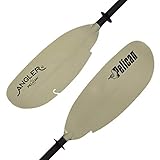
Pelican Poseidon Angler Paddle
- 250 cm two-piece aluminum
- Hook notch plus shaft measuring tape
- 0/65 degree feathered angle
- 2.1 lb
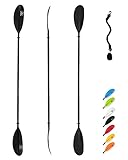
OCEANBROAD Kayak Paddle
- Alloy shaft with PE grip cover
- Three length options
- Drip rings and leash included
- 2.5 lb

Best Marine Carbon Fiber Paddle
- Full carbon shaft at 30-32 oz
- 18 x 6.75 inch blades
- 60 degree feather increments
- 220/234/250 cm
A note on why the top pick is not the highest-rated paddle here: we weight review volume alongside star rating, because a 4.7 from a few hundred buyers tells you less than a 4.6 from a few thousand. If you read the rest of this guide and decide a different one fits your boat better, that is a good outcome.
Quick Comparison Table of the Best Fishing Kayak Paddles (October 2026)
| Product | Specifications | Action |
|---|---|---|
| Pelican Poseidon Angler Paddle |
|
Check Latest Price |
 Pelican The Catch Pelican The Catch |
|
Check Latest Price |
 Backwater Assassin Paddle Backwater Assassin Paddle |
|
Check Latest Price |
 WONITAGO Angler Kayak Paddle WONITAGO Angler Kayak Paddle |
|
Check Latest Price |
 Leader Accessories Adjustable Paddle Leader Accessories Adjustable Paddle |
|
Check Latest Price |
 Bending Branches Angler Ace Bending Branches Angler Ace |
|
Check Latest Price |
| Best Marine Carbon Fiber Paddle |
|
Check Latest Price |
 Pelican Symbiosa Pelican Symbiosa |
|
Check Latest Price |
| OCEANBROAD Kayak Paddle |
|
Check Latest Price |
 Karltion Kayak Paddle Karltion Kayak Paddle |
|
Check Latest Price |
Weights in that table are manufacturer-stated, and they are the numbers to plan around. The spread between the heaviest and lightest paddles here is roughly 12 ounces, which on a loaded wide-beam hull is the difference between a comfortable paddle back and a hand-aching one.
1. Pelican Poseidon Angler Paddle – Built-In Hook Notch and Shaft Measuring Tape
Pelican Poseidon Angler Fishing Lightweight Kayak Paddle – Built-in Retrieval Hooks – Fiberglass Reinforced (Sand, 98.5 in)
Aluminum two-piece shaft
Fiberglass reinforced polypropylene blades
250 cm length
2.1 lb
Pros
- Integrated hook retrieval system in the blade
- High visibility measurement tape printed along the shaft
- Two internal flotation blocks so it floats if dropped
- 0/65 degree feathered angle set by push button
Cons
- Aluminum shaft feels heavy after a full day
- Fixed length rather than telescoping adjustment
- Shaft sticker can be stubborn to remove
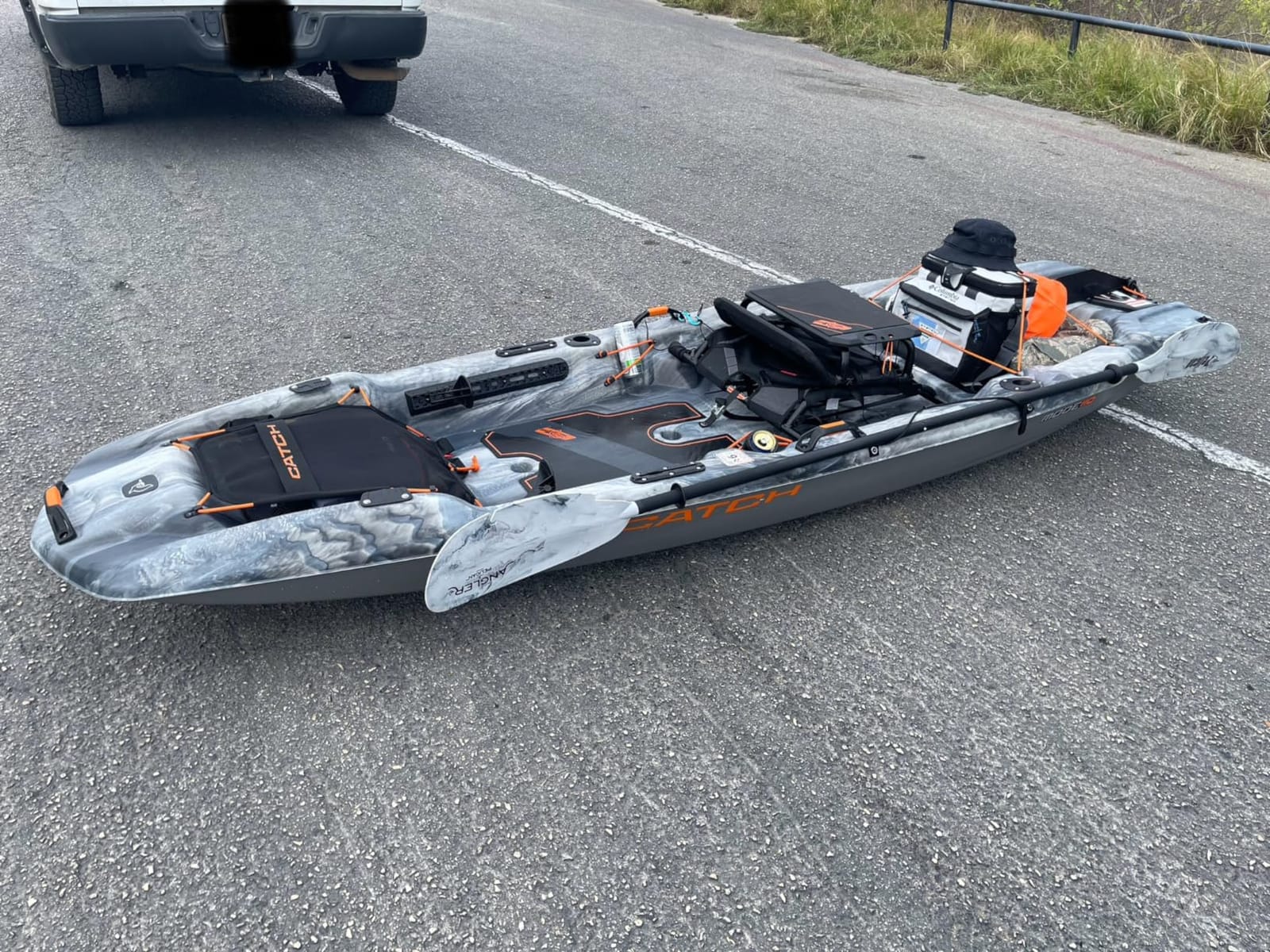
This is the paddle I recommend to most anglers, and the reason is simple: it has the angler features most people actually use, and the review base is deep enough that the weaknesses are well documented. Angling in the wild for more than a few hours per trip, the Poseidon does two things nothing else at this tier does. The blade carries an integrated hook retrieval system, and the shaft is printed with a high-visibility measurement tape. If you have ever measured a fish with a multitool while holding a rod in one hand, you know why that second detail matters.
Construction is a two-piece anti-slip grip aluminum shaft with fiberglass reinforced polypropylene blades, built to 98.5 inches (250 cm) and sized for paddlers taller than 5 foot 5 inches. The blade angle is feathered at 0 and 65 degrees through a push-button ferrule, which keeps the out-of-water blade slicing edge-first on the recovery stroke instead of scooping air in a headwind. Two internal flotation blocks mean a dropped paddle surfaces instead of sinking, which matters more than it sounds when you are alone on a lake at dawn.
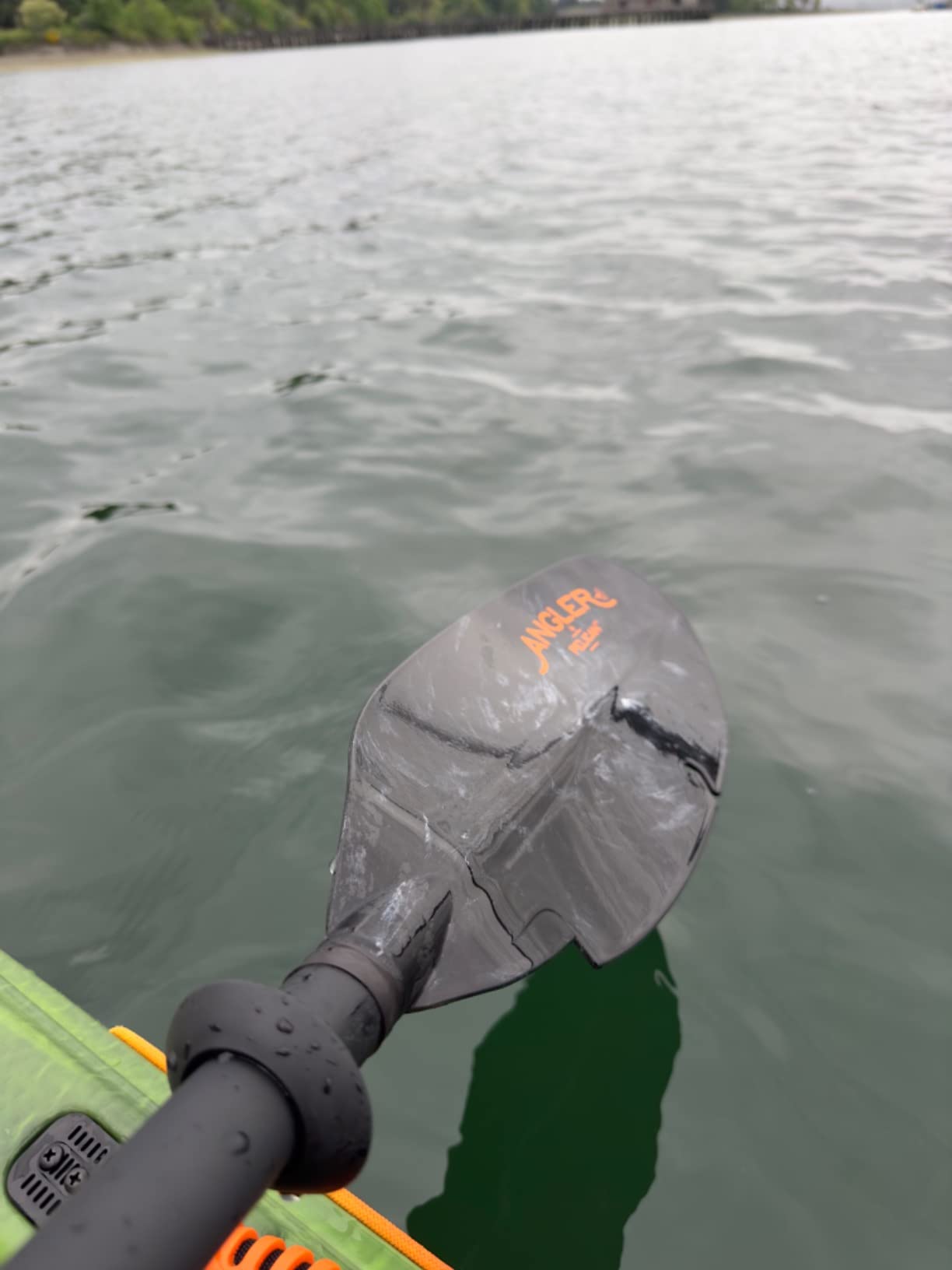
What you give up is weight. At 2.1 pounds this is not a featherweight, and the aluminum shaft is the part reviewers single out most often. The ovalized right-hand indexing shaft is comfortable and helps you feel blade alignment without looking, but it is molded for right-handers. Coverage is a one-year limited warranty, which is the shortest in this group, so treat it as the dependable daily paddle rather than a heirloom. For anyone running a wide sit-on-top at 32 to 34 inches, the 250 cm length is a well-matched default.
My honest take: if you fish two or three times a month and mostly paddle flat water, the Poseidon does the job for years and the measuring tape earns its place the first week. If you are out in wind for six hours at a time every weekend, keep reading and move up to a carbon shaft.
How the Poseidon holds up in wind and chop
The 65 degree feather setting is what makes this paddle usable on the paddle back to the launch, which is the part of the trip most anglers underestimate. With a high feather angle the recovery-side blade cuts through the air instead of braking against it, and that is the difference between making headwind progress in a few long strokes and just pointing at the ramp and wishing.
Blade area is not published as a square-inch figure for this model, so judge it on feel rather than spec. The polypropylene blades are stiff enough to move a loaded hull and cheap enough that a knock against a rock boat is not a season-ending event.
Who should look past the Poseidon
If your sessions run long and windy, the aluminum shaft becomes the limiting factor, and a carbon paddle at a fraction over 2 pounds will feel like a different tool entirely. Left-handed paddlers should note the ovalized shaft is right-hand indexed. Anglers who share a kayak with someone a foot taller will find 250 cm is a compromise rather than a fit for both of you.
2. Pelican The Catch – Fiberglass Shaft for Anglers Over 6 Feet
Pelican The Catch Kayak Paddle – Adjustable Fiberglass Shaft with Nylon Blades – Lightweight and Adjustable Perfect for Kayak Fishing – 102.4 in – Olive Camo
Adjustable fiberglass shaft
Glass reinforced nylon blades
Built-in hook and ruler
2.1 lb
Pros
- Built-in hook retrieval groove and shaft ruler
- Adjustable length and 0-65 degree blade angle
- Strong blades with no flex
- Light for a fiberglass shaft
Cons
- Smooth shaft finish can slip or blister bare hands
- Some units arrived with a dented shaft
- Not the lightest paddle in its class
The Catch exists for a specific paddler: someone over six feet tall in a kayak wider than 34 inches, who wants a fiberglass shaft without moving up to carbon. That is a narrower and more sensible brief than it sounds, and for anyone in that description this is the best fishing kayak paddle on our list because the fit is designed in rather than fudged.
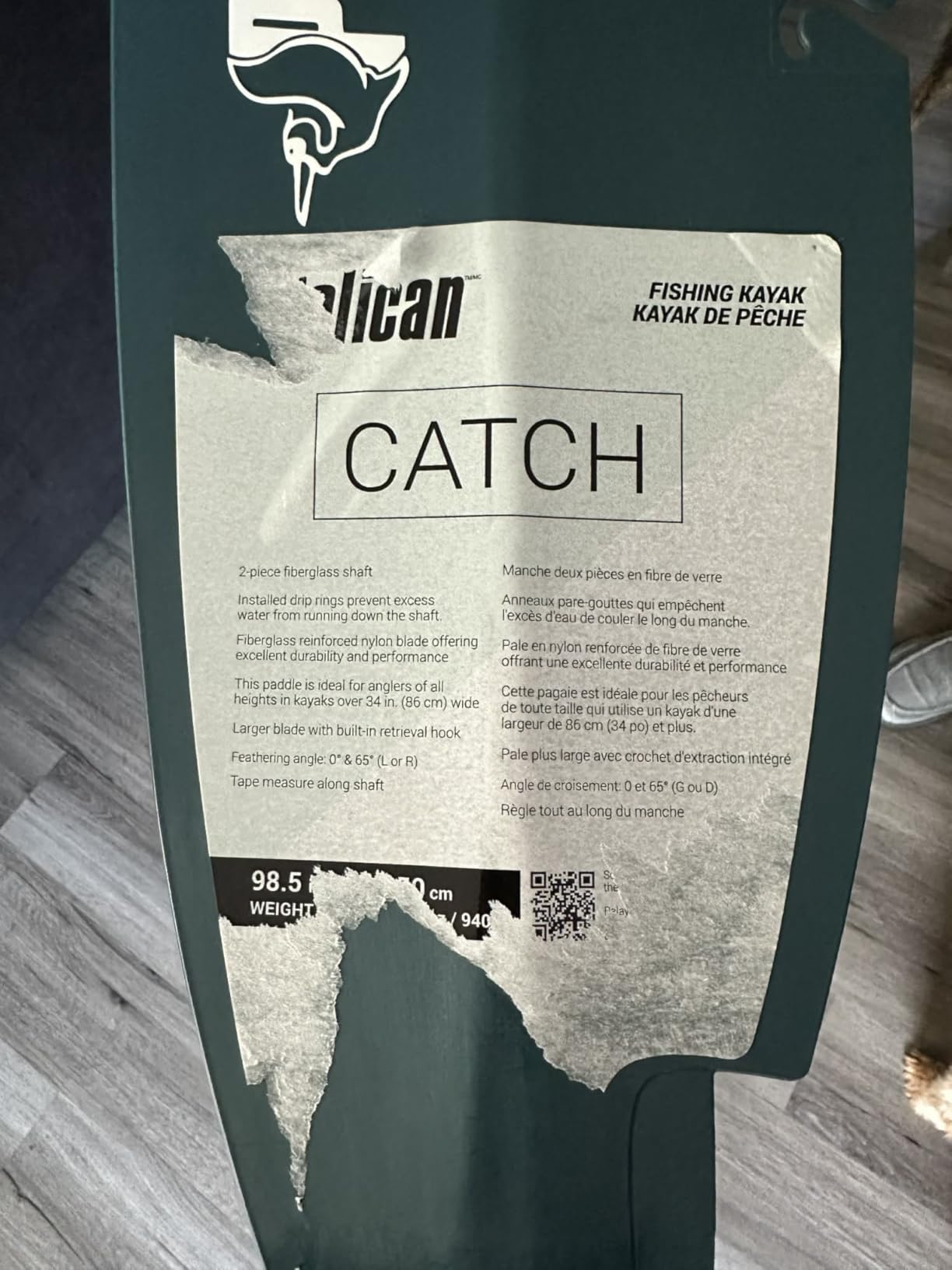
It runs 98.5 inches (250 cm) as assembled, with an adjustable fiberglass shaft and impact-resistant fiberglass reinforced nylon blades. The package includes the two-piece shaft, blades, a built-in retrieval hook, drip rings, and a measuring tape along the shaft. Blade angle adjusts from 0 to 65 degrees, and the shaft is ovalized and right-hand indexed, matching the pattern across Pelican’s angler line. Drip rings are adjustable, which is a small thing that pays off on a long day when the sun is up and the water is not cold.
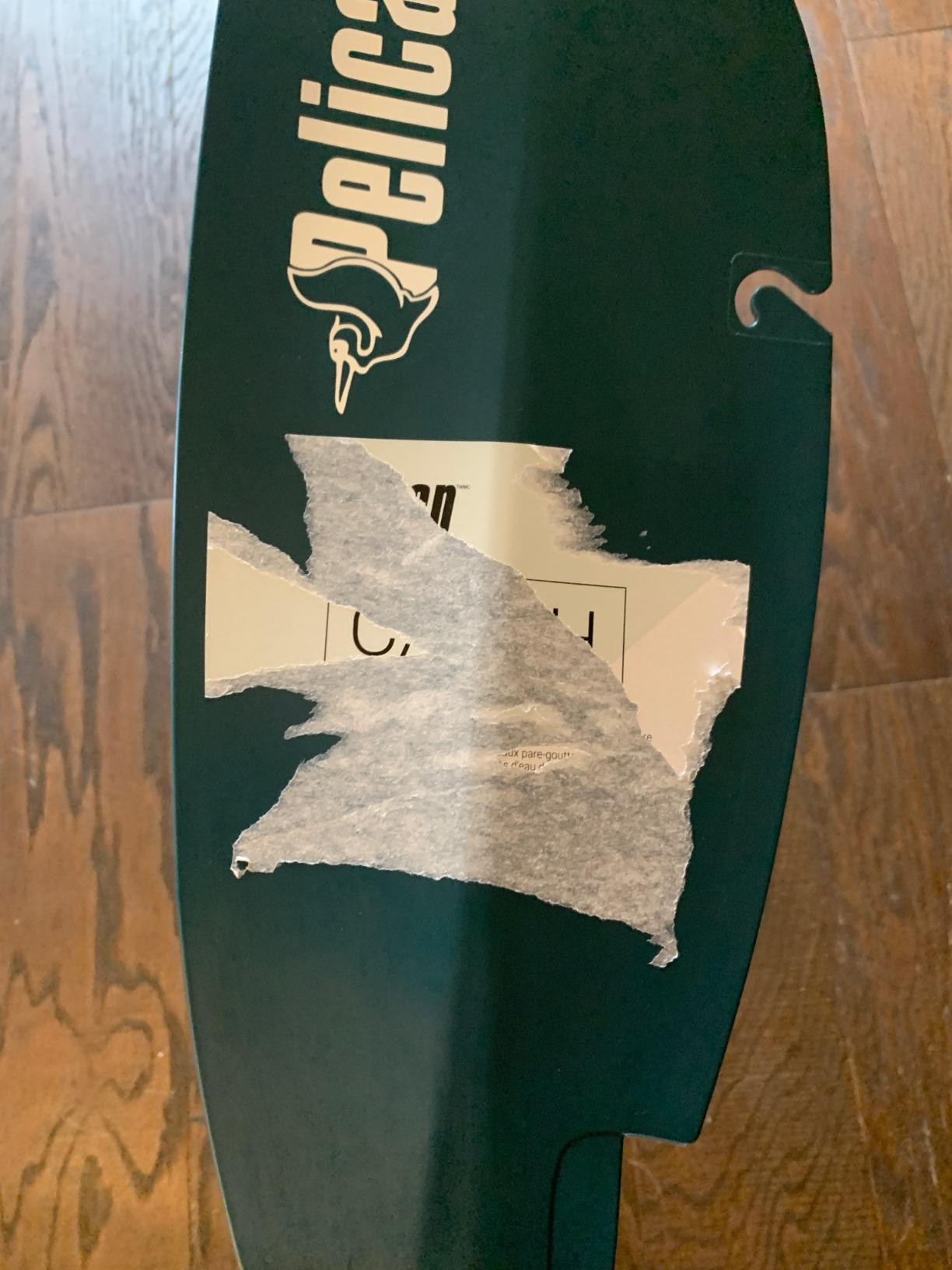
Owners consistently report buying this as a deliberate step down from carbon money rather than as a compromise they regret. At the same 2.1 pounds as the Poseidon, it trades aluminum for fiberglass and trades a fixed length for an adjustable one, and it does so without adding weight. The most common comfort complaint is the shaft finish itself: it is smooth enough that bare hands can slip or blister over a long day, and a wrap of grip tape fixes it in a minute.
The recurring quality note is that a few units arrived with a dented shaft in the package, so inspect on opening. It is also not the absolute lightest option in this roundup despite the fiberglass shaft, which is worth knowing if you are comparing it directly against a carbon model.
Why the ruler and hook features are worth more than they look
A measuring tape printed along the shaft and a hook cut into the blade are the two details that separate a fishing paddle from a general-purpose one. The tape lets you measure a catch without dropping a rod or digging through a tackle bag, and the hook gives you something to snag a line, a decoy, or a branch when you are poling through timber. Neither is glamorous. Both get used constantly.
Adjustable drip rings matter for the same reason. Water running down the shaft into your lap turns a warm afternoon into a cold one, and rings you can slide to match your paddle length are the difference.
Who should look past The Catch
If you are under six feet or in a kayak narrower than 34 inches, this is not your paddle even though it is a good one, because it is dimensioned for larger paddlers in larger boats. If cold hands are your issue, note that a fiberglass shaft is still a cold-feeling shaft compared to a carbon one, and the pack does not include a paddle leash, so plan on adding one.
3. Backwater Assassin Paddle – Carbon Hybrid Shaft With a Hooked Blade
Backwater Assassin Paddle 06-0017 Full-Size Carbon-Fiber Hybrid Kayak Paddle – 98.5′ to 102.5′ Length
ABS injected nylon blade
Carbon hybrid construction
98.5-102.5 in adjustable
3 year warranty
Pros
- Blade hook grabs line
- decoy
- dock or branch
- Serrated teeth edge for pushing off rocks and docks
- Carbon hybrid shaft balances strength and weight
- Three year warranty is the longest here
Cons
- Heaviest paddle in the roundup at 2.7 lb
- Not the lightest option for long days
- Only one size option within the adjustable range
The Assassin is built for anglers who work shallow, rocky, timbered water, and every design decision traces back to that. The blade is ABS injected nylon with a hook feature that grabs a line, a waterfowl decoy, a dock edge, or a tree limb, plus a serrated teeth edge along the spine. If you launch from a gravel ramp, brace off rocks, or polling through branches, those two edges are not decorative. They are the reason to own this paddle over a smoother-bladed one.
The shaft is carbon hybrid, and the whole assembly adjusts from 98.5 to 102.5 inches, which puts it firmly in the wide-kayak, tall-paddler bracket. Drip rings are included. A three year warranty backs it, the longest in this roundup and a genuine differentiator for a paddle that will be used to abuse gear.
Here is the honest trade. At 2.7 pounds this is the heaviest paddle we tested, and heavy matters when you are already fatigued. It is the right call for a rugged day on a lake with structure, and the wrong call for a full day of drifting open water. Buyers tend to describe it as feature-rich and tough, and the warranty is the number that gives most of them peace of mind about the serrated edge eventually finding a rock.
One more detail: the adjustable range is listed as a single model covering 98.5 to 102.5 inches rather than several separate lengths, so confirm the adjustment behaves before you rely on it in a hurry.
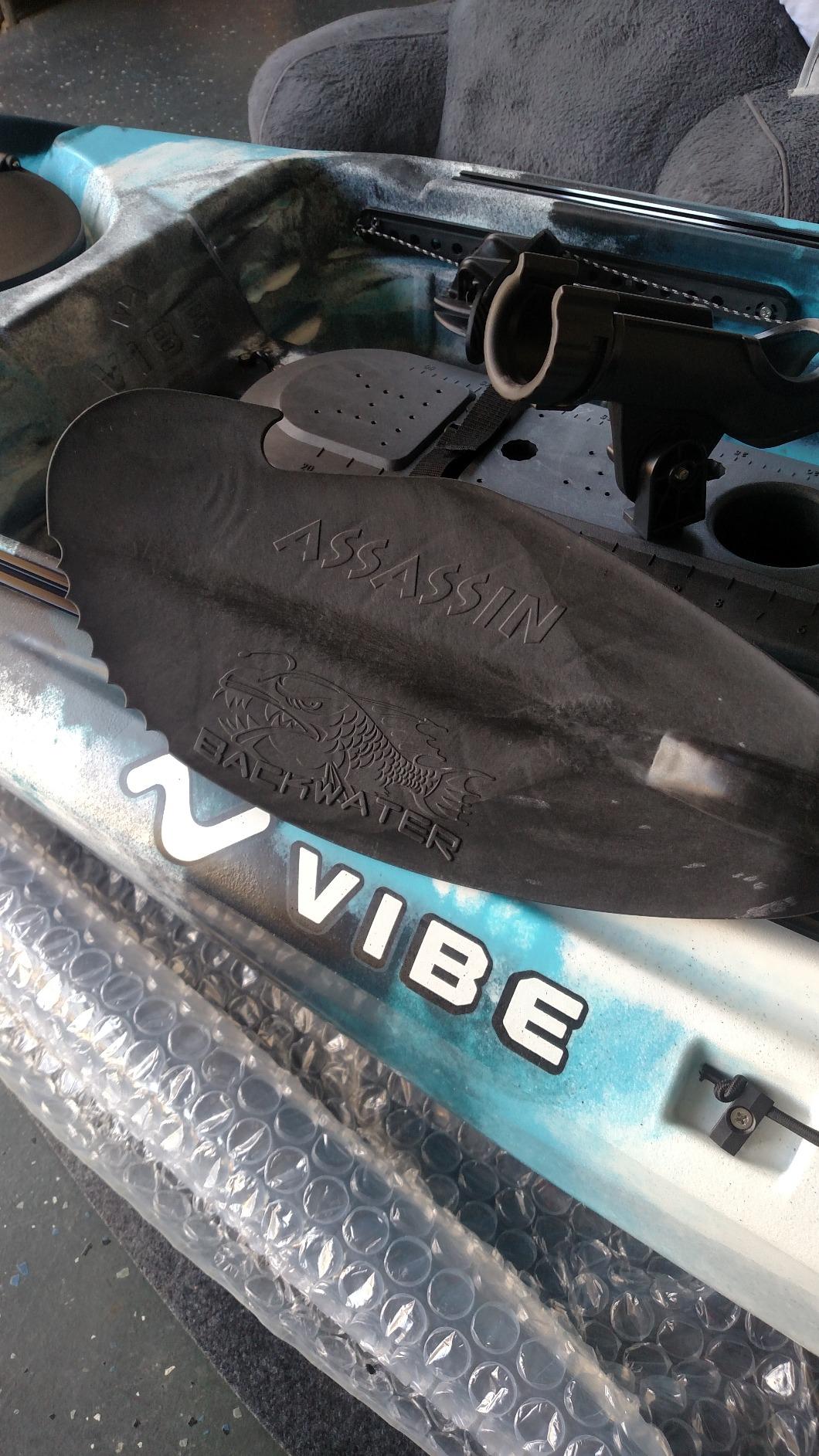
Where the serrated edge and blade hook earn their keep
Most fishing kayak paddles have a small hook notch. This one has a pronounced hook and a serrated spine, which changes how you can use the paddle as a tool. Pushing off a submerged rock with the spine instead of the flat face, holding a dock while you unload a cooler, and pulling a set line out of a tree limb are all things a smooth blade makes awkward.
For shallow-water anglers working flooded timber or rock shelves, this is the feature set that decides the purchase. On open water, none of it gets used and the weight is pure penalty.
Who should look past the Assassin
Anyone whose trips are long and slow on a big lake will feel the 2.7 pounds. The three year warranty and carbon hybrid shaft are real strengths, but if your deciding factor is shoulder comfort at hour six, a lighter paddle wins even if you never touch a rock. Anglers on wide hulls under 34 inches will also find the length range longer than they need.
4. WONITAGO Angler Kayak Paddle – Widest Adjustment Range With a Leash
WONITAGO Angler Kayak Paddle Adjustable Fishing Kayak Oar with Paddle Leash
Aluminum shaft with plastic blades
230-250 cm three-piece
Engraved 40 inch scale
Leash included
Pros
- Twenty centimeter adjustment range fits most kayaks and paddlers
- Three-piece breakdown packs down for travel
- Engraved 40 inch fish scale and blade hook
- Blade floats in salt and fresh water
- Leash included in the box
Cons
- Aluminum shaft is heavier than carbon alternatives
- Plastic blades less durable than fiberglass-reinforced blades
- No drip rings listed among included parts
Three pieces, a 20 centimeter adjustment range, and a leash in the box is an unusual combination, and it is why this paddle shows up on multi-angler and travel setups. The shaft adjusts from 90 to 98 inches (230 to 250 cm) through a quick pin button lock, with blade angle adjustable plus or minus 60 degrees. When one paddle has to serve two paddlers, two hull widths, and a car boot, that range is the whole value proposition.
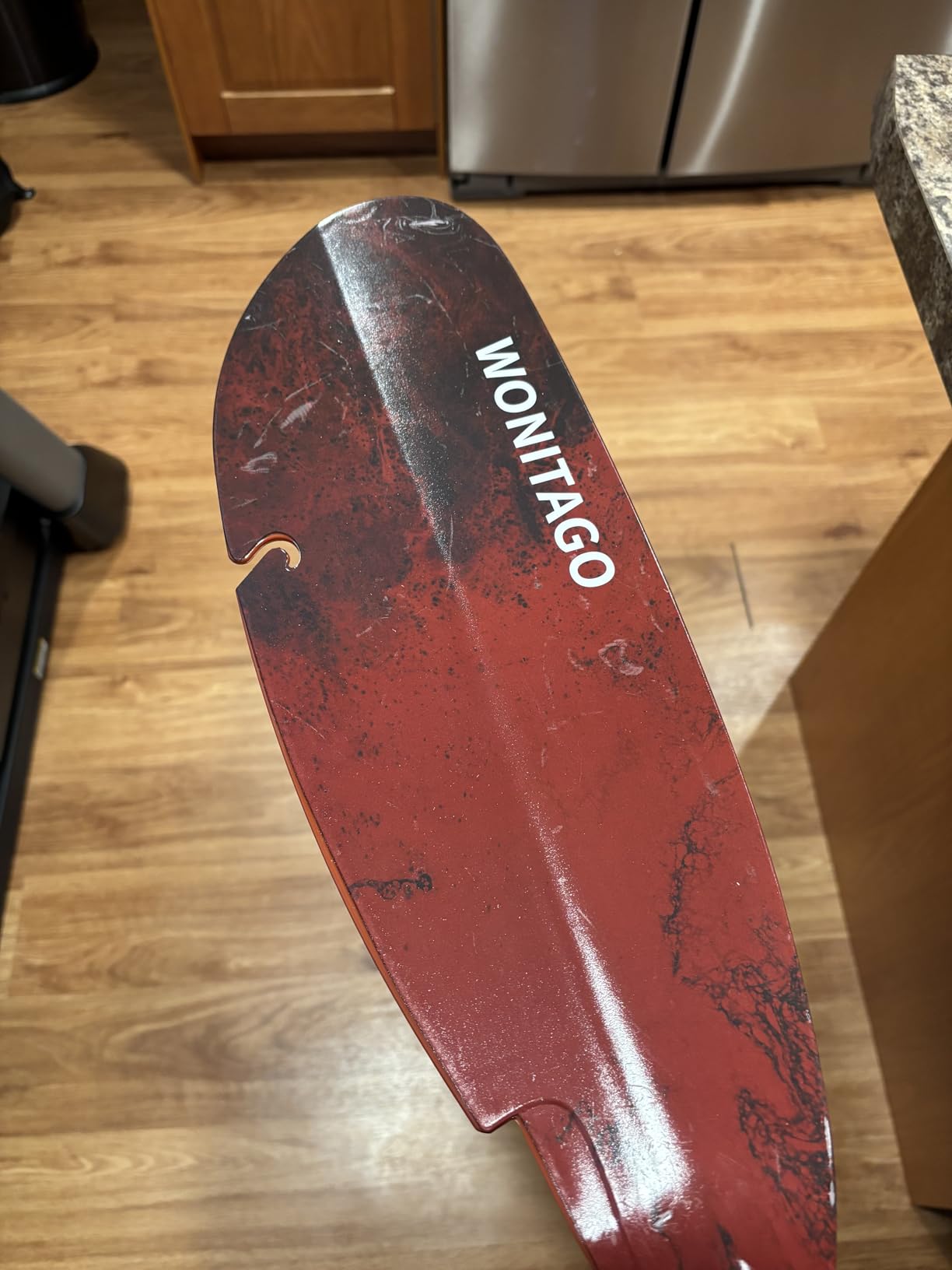
The angler features are the standard modern set: a hook on one side of the blade and a 40 inch measurement scale engraved into the shaft. The blades are plastic with corrosion resistance and buoyancy in both salt and fresh water, which is a real advantage if you move between an inland lake and a coastal flat. Total weight is 2.64 pounds, and the longest section in the breakdown is manageable enough to carry one-handed down a launch ramp.
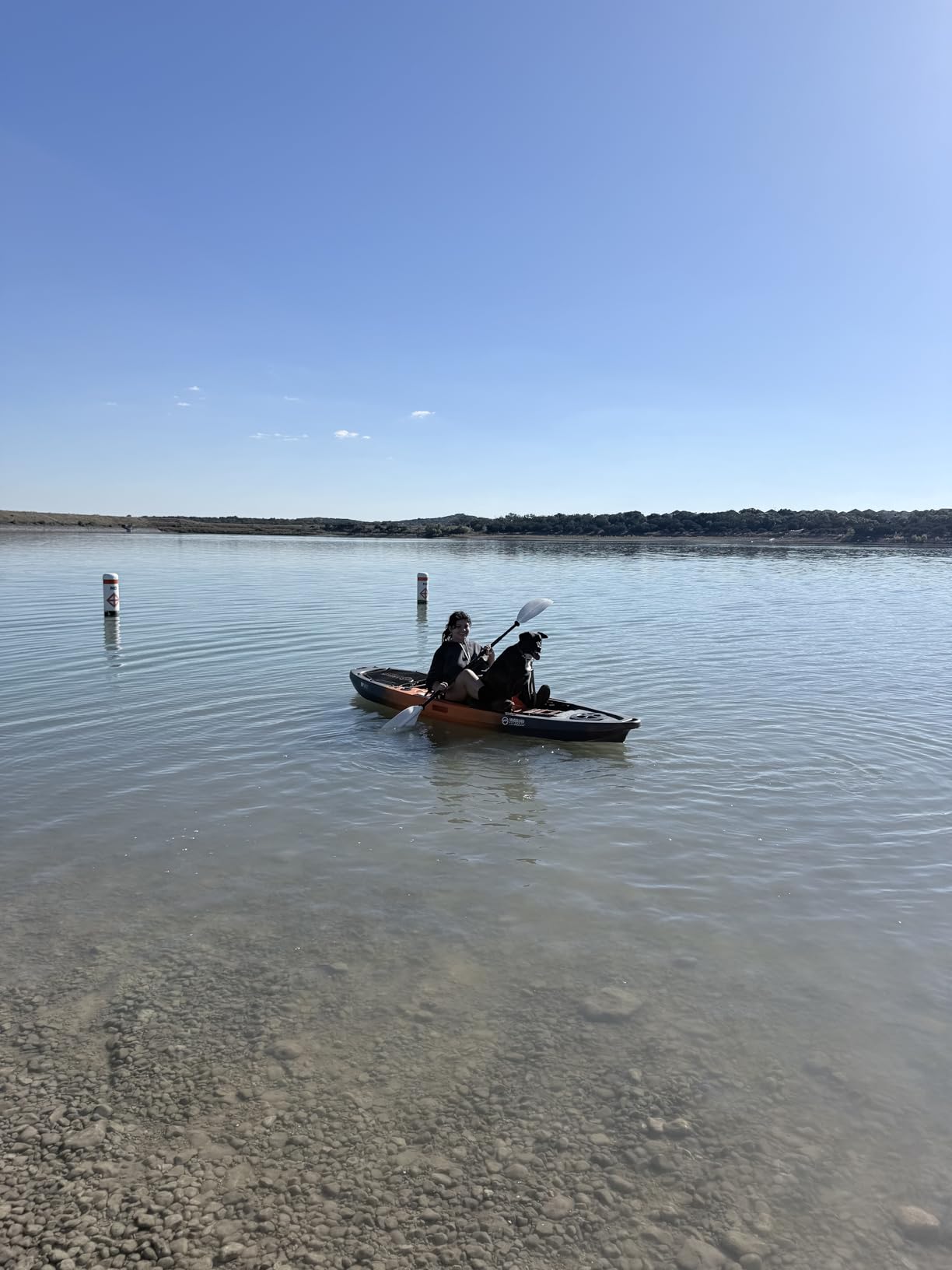
The shaft has enough flex to absorb impacts without breaking, which buyers consistently call out as reassuring. Two real drawbacks: no drip rings are listed among the included components, so water will run down the shaft into your lap on a long day until you add your own, and the plastic blades are the entry-level construction that will mark up sooner than fiberglass-reinforced or carbon-reinforced blades.
Because it is a three-piece design, more joints means more places for play to develop over time, so check the pins before launching rather than at the halfway point of a paddle back.
When a leash and a wide adjustment range actually matter
A paddle leash is not optional in most fishing situations. A dropped paddle in moving water or a strong current is a swim, a lost rod, and sometimes a lost angler, and the leash included here removes one excuse. The same logic applies to a 20 centimeter adjustment range: if you share a kayak with a taller partner, or fish a wide hull in the morning and a narrow one in the afternoon, one paddle covers both.
For cold-water and early-season fishing, the absence of drip rings is the detail I would fix first. Add a pair and the shaft stops shedding water into your lap.
Who should look past the WONITAGO
If you fish alone, on one hull, and mostly flat water, you are paying for adjustment and portability you will not use, and you are accepting plastic blades and no drip rings for it. Anglers who care most about blade longevity against rock and timber will prefer fiberglass-reinforced blades. Anyone paddling into strong current will want more shaft authority than plastic blades provide.
5. Leader Accessories Adjustable Kayak Paddle – Stepped Lengths and Drip Rings
Leader Accessories Adjustable Kayak Paddle 90-98in for Fishing Adults Blue
Aluminum alloy shaft
Glass reinforced PP blades
Five length settings
Drip rings both ends
Pros
- Five length settings in 5 cm increments
- Includes an elastic paddle leash
- High visibility 0-40 inch shaft markings
- Buoyant three-piece design is easy to assemble
Cons
- Heavier than expected for the class
- Shaft has no dedicated hand grips
- Only offered in blue and black
What sets this one apart from the other budget adjustable paddles is that it does the two small things most of them skip. It ships with drip rings on both ends, and it includes an elastic paddle leash. That is a genuinely more complete box for the money, and on a long fishing day those two accessories are the difference between a dry lap and a wet one, and between keeping your paddle and swimming after it.
Length adjustment runs through five locking settings in 5 cm increments: 230, 235, 240, 245, and 250 cm. The shaft is aluminum alloy with 1.1 mm shell thickness, and the blades are double-sided fiberglass-reinforced polypropylene, which is a step up from unreinforced plastic. The blade carries a built-in hook retrieval groove, the shaft is marked 0 to 40 inches for measuring fish, and three locking positions allow plus or minus 60 degrees of blade angle. Total weight is 2.6 pounds.
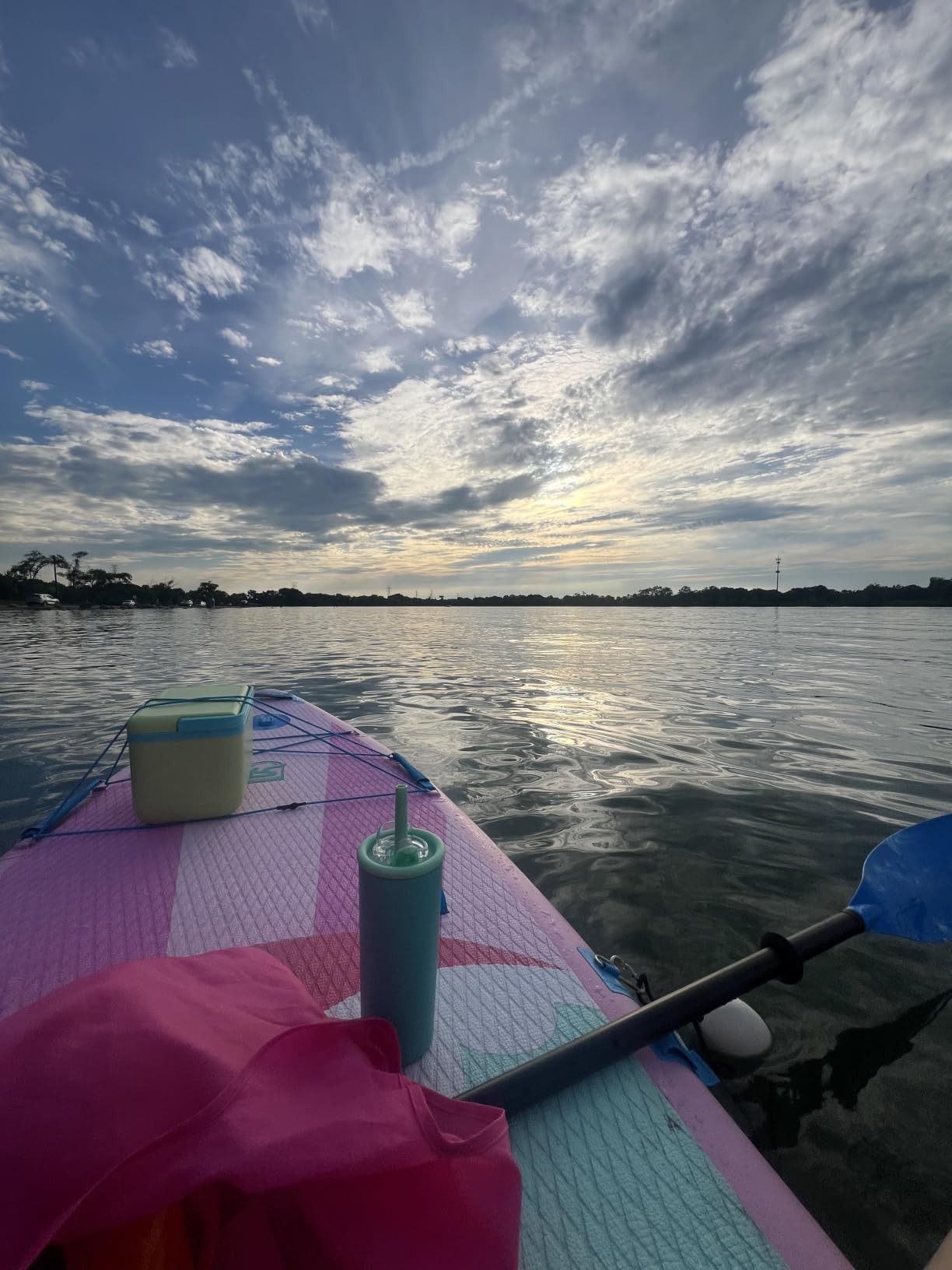
Buyers rate the build quality well for the tier: the three-piece design is sturdy with no wobble between sections, assembly and disassembly are quick, and the paddle floats. The two recurring complaints are weight, which some owners find heavier than expected, and the absence of dedicated hand grips on the shaft, which matters most on a long day. Adding a few inches of grip tape near the lower grip is the fix most owners arrive at.
Color options are limited to blue and black, so if you are matching a specific kayak finish, check before committing. Beyond that, the fit is wide enough that this doubles as a solid youth or younger angler paddle within the 90 to 98 inch range.
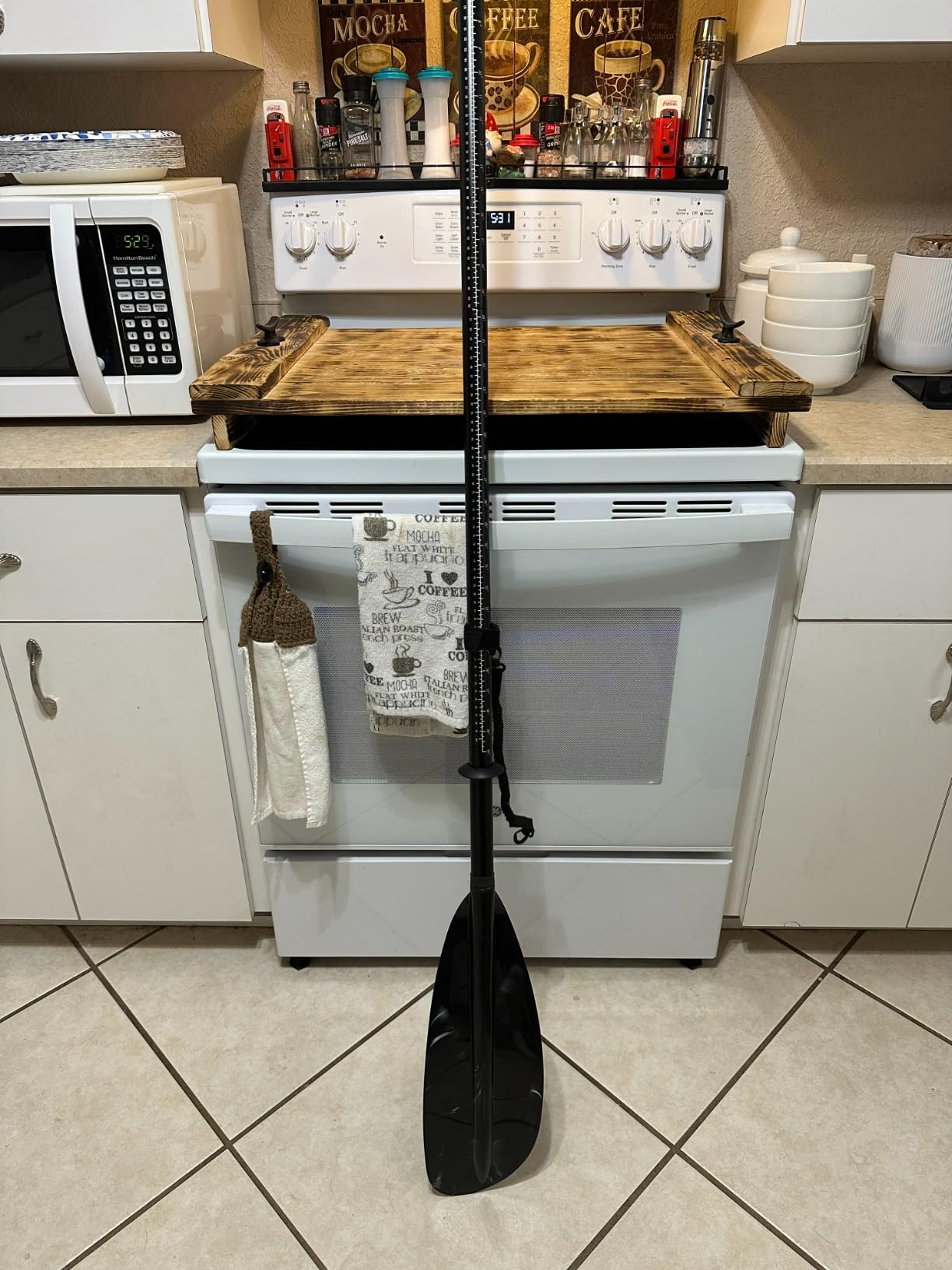
What the stepped length settings do for you
Most adjustable paddles give you a continuous range; this one gives you five clean stops in 5 cm increments. In practice that is better than it sounds, because you set it once for your hull and your height and it stays there. A fishing kayak changes shape with what is on deck, and 250 cm on an empty boat versus the same boat loaded with an anchored motor and a cooler can feel different, and a stepped ferrule makes that change a two-minute fix.
The 0 to 40 inch shaft markings and the hook groove mean this paddle covers the fishing feature set without a separate tool, which is the same reason the leash matters: fewer things to forget at the truck.
Who should look past this paddle
Anyone who plans to be on the water for many hours will feel the 2.6 pounds most, and the bare shaft will want grip tape. If your priority is a blade that survives rock strikes without scuffing, a fiberglass-reinforced or carbon-reinforced blade is the better investment. It is also a general-purpose paddle with angler features, not a paddle designed around fishing from the ground up.
6. Bending Branches Angler Ace – Lightweight Carbon Snap-Button Paddle
BENDING BRANCHES Angler Ace Snap-Button Kayak Fishing Paddle – Lightweight Carbon Shaft, Carbon-Reinforced Nylon Blades, 2-Piece Design, Durable Performance for Fishing & Touring Kayaks
Lightweight carbon shaft
Carbon reinforced nylon blades
Snap-button ferrule
2 lb in 260 cm
Pros
- Genuinely light carbon shaft that reduces arm fatigue
- Carbon reinforced blades handle rock
- oyster beds and limbs
- Tight snap-button join with no wobble or play
- Ruler markings printed on the shaft
Cons
- Fixed length per variant so size must be right up front
- Shorter variants may lack clearance in very wide kayaks
- Minimal protective packaging for some buyers
To answer the question anglers actually ask about this brand: yes, Bending Branches paddles are worth the premium, and the premium buys you weight, blade strength, and a joint that does not develop play. Owners moving from fiberglass to this carbon shaft describe the fatigue difference as obvious, most noticeably on a paddle back to the launch in wind, which is exactly the moment a heavy shaft shows itself. The Bending Branches line has also collected an angler-voted Angler Paddle of the Year award, which is a different kind of credibility than an editor’s pick.
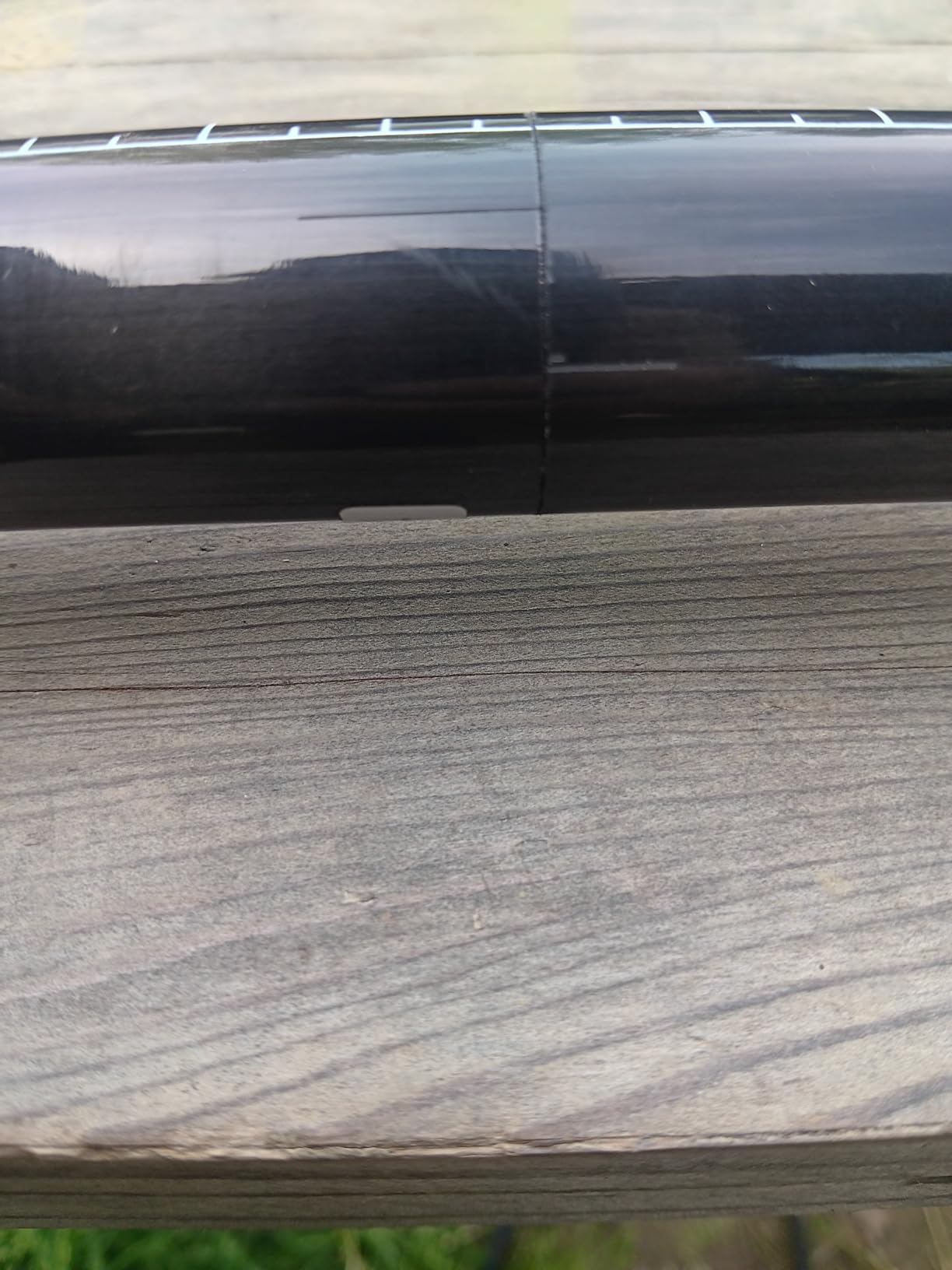
The Angler Ace is a two-piece with a snap-button ferrule, an ovalized ergonomic grip, a lightweight carbon shaft, and carbon-reinforced nylon blades designed for bite and efficient power transfer. Ruler markings run along the shaft. Lengths are fixed per variant and the family spans 240, 250, 260, 270, and 280 cm, so this is where a fishing-specific paddle shows a real advantage on a wide hull: the 260 and 280 cm options are longer than most general-purpose paddles offer.
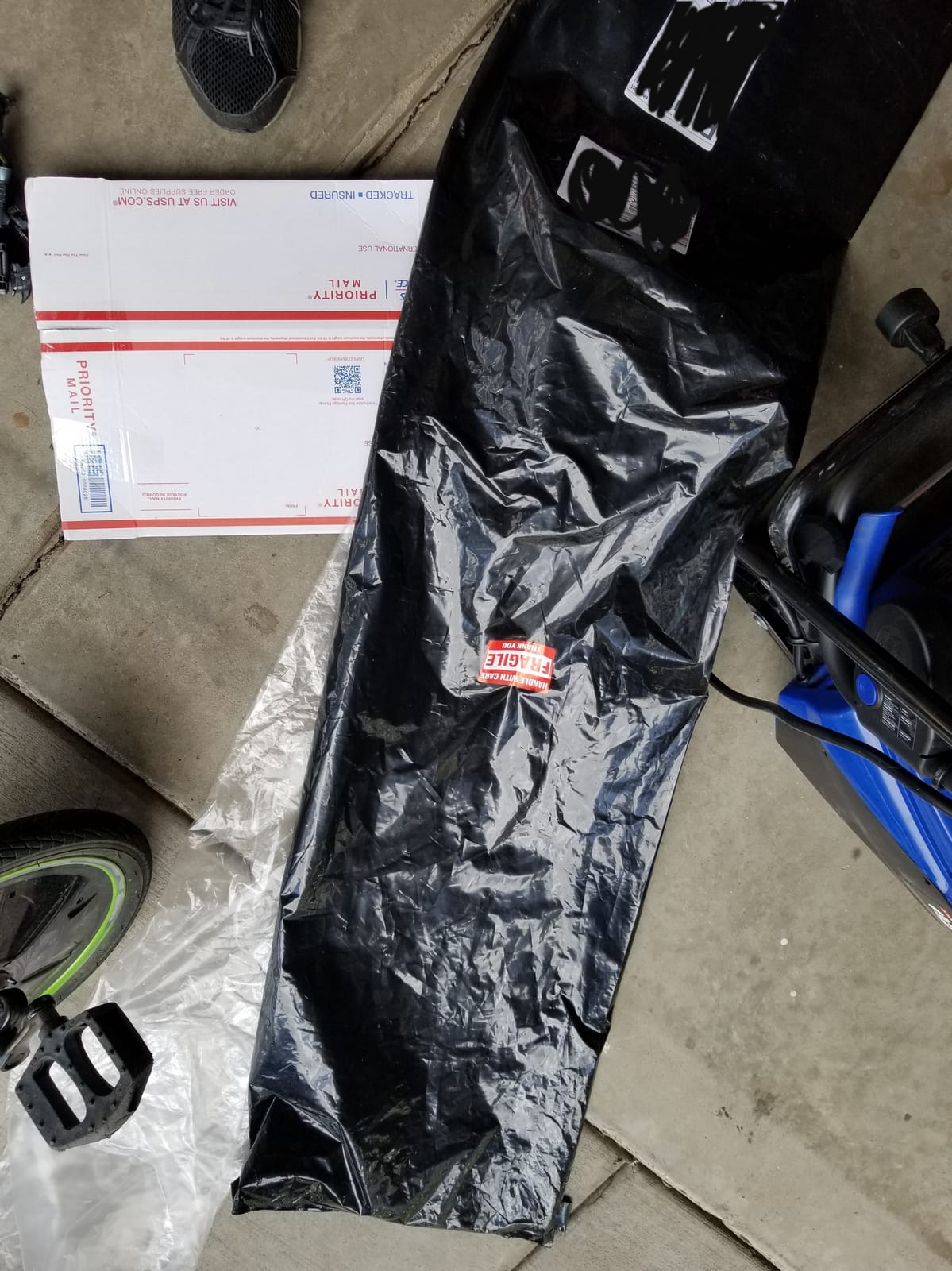
At 2 pounds in the 260 cm variant, this is the lightest paddle here and the reason we recommend it for long sessions. Owners highlight the join specifically: no wobble, no play, and enough strength to brace on when entering and exiting. The carbon-reinforced nylon blades take contact with rocks, oyster beds, and tree limbs without the anxiety that polypropylene blades inspire.
The catch is that length is fixed per variant, and reviewers note shorter variants may not give enough clearance in a very wide kayak. Get the sizing right before you buy rather than after, since there is no in-water adjustment to fall back on. A few buyers also received minimal protective packaging, so inspect the shaft and blades on arrival.
Why the length options matter on a wide fishing hull
A wide-beam fishing kayak is a different paddling problem than a narrow touring boat. You move a heavier hull, the hull generates more resistance, and a short paddle forces you into more strokes with more shoulder travel per stroke. A 260 or 280 cm paddle gives you a longer, lower, more efficient stroke and fewer of them, and on a long day that is where the carbon shaft’s low weight pays out twice.
The ovalized grip also gives you blade feedback without looking down, which is genuinely useful when you are watching water, not your own equipment.
Who should look past the Angler Ace
If you need to fine-tune length, a snap-button fixed-length design is not the tool; a telescoping or stepped-adjustment fiberglass paddle gives you range instead of performance. If your sessions are short and your budget is modest, the weight advantage will not be felt enough to matter. It is also worth noting the listed warranty here is described only as a manufacturer warranty, so check the term with the seller.
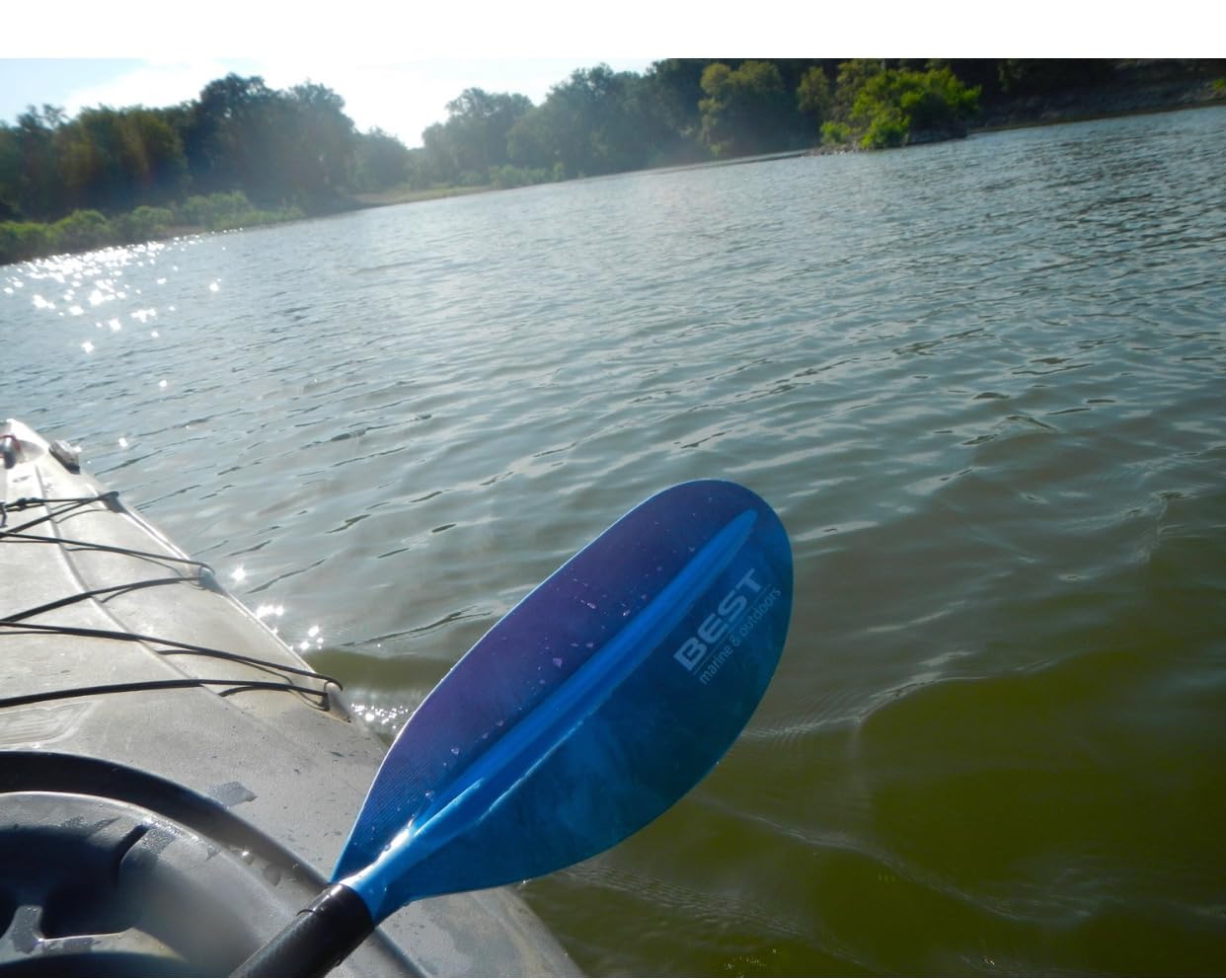
7. Best Marine Carbon Fiber Kayak Paddle – Affordable Full Carbon
Best Marine and Outdoors Kayak Paddle, Carbon Fiber Shaft & Fiberglass Reinforced Polypropylene Blades, 220cm, 234cm, 250cm, Lightweight Kayak Paddles for Adults (Black, 234)
Carbon fiber two-piece shaft
30-32 oz total weight
18 x 6.75 in blades
220, 234 and 250 cm
Pros
- Full carbon shaft at 30-32 ounces
- Joint locks tight with no wobble
- Lower-priced entry into carbon paddles
- Blades clocked for different attack angles and handedness
Cons
- Published length chart may not suit some paddlers
- Occasional reports of a blade not fully secured on arrival
- Some find it only modestly lighter than aluminum
This is the value pick, and the value argument is straightforward: you get a genuine two-piece carbon shaft at 30 to 32 ounces, which lands in carbon territory, without paying a premium-tier figure. For an angler who wants the low weight that removes shoulder fatigue but does not need angler graphics or a wide length range, it is the most rational purchase in the roundup. It is also the most-reviewed carbon paddle we looked at, with more than 1300 ratings behind it.
Blades measure 18 by 6.75 inches on a 1.125 inch shaft, and the blade angles are matched or feathered in 60 degree increments, which gives you a workable spread of power strokes. Colorways run in 220, 234, and 250 cm, and the paddle doubles as a canoe paddle, which is a quietly useful backup if you ever rent a canoe. A 30 day money back guarantee backs it.
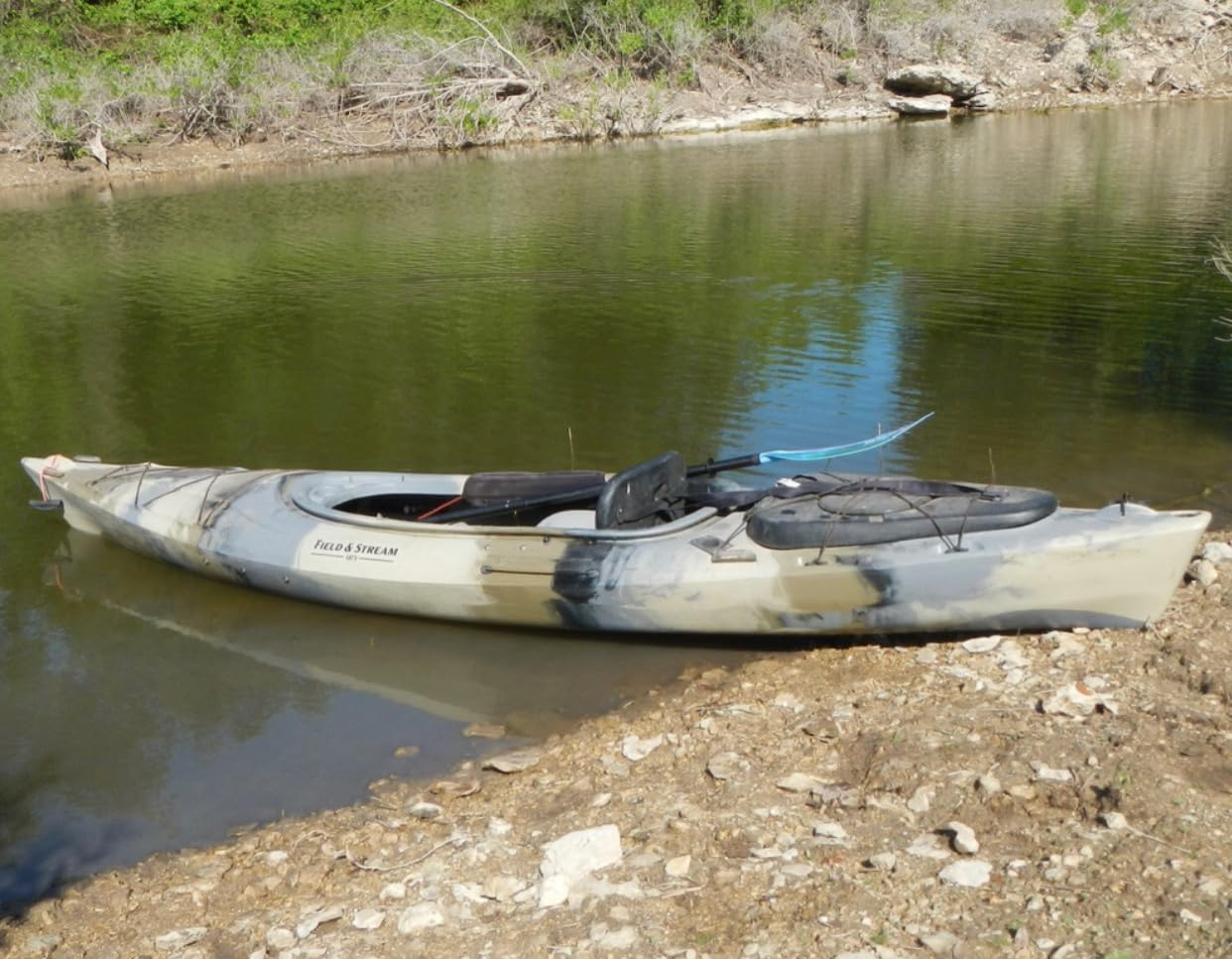
Two caveats are worth weighing. First, the published length chart does not match every paddler’s needs, so measure your beam width and height before choosing between the three lengths rather than assuming the listed numbers cover you. Second, a small number of reviewers report a blade not fully secured to the shaft on arrival, so check the joint and blade fit before your first launch. Several also find it only modestly lighter than an aluminum paddle in practice, which is fair, since the shaft is carbon but the blades are not carbon-reinforced.
Doubling as a canoe paddle is a genuine bonus, and the 30 day return window is a real risk reducer on a purchase you will live with for years.
When a full carbon shaft is worth paying for
The forum consensus among kayak anglers is nearly unanimous that shaft material matters more than blade shape or feather angle, and this paddle is the cheapest way into that tier. The gain is a lighter paddle over many hours, which is the whole point when the complaint you are trying to solve is fatigue. The 250 cm variant is the right one for most wide-beam fishing hulls.
If you also paddle open water or a canoe, the dual-use design quietly extends its value beyond fishing, which no other paddle here offers.
Who should look past this paddle
Anglers who want fishing-specific features will not find hook notches or shaft ruler markings here; this is a performance paddle with angler appeal, not an angler paddle. If you need to tune length across hulls, the fixed variant options are limiting. And if you are after maximum durability against rock and timber, carbon-reinforced nylon blades on a purpose-built angler paddle are the better long-term bet.
8. Pelican Symbiosa – Telescoping Fiberglass Shaft With 360-Degree Adjustment
Pelican Symbiosa Kayak Paddle | Adjustable Fiberglass Shaft with Nylon Blades | Lightweight, | Perfect for Kayaking (Dark Indigo, From 94.5 in – 240 cm to 98.5 in – 250 cm)
Telescoping fiberglass shaft
94.5-98.5 inch adjustment
360 degree blade angle
Nylon blades, 2.1 lb
Pros
- Telescoping ferrule handles multiple kayak sizes
- Easy one-handed adjustment versus push-button paddles
- Stiff blades with little flex
- Light for a fiberglass paddle
Cons
- Ovalized right-hand shaft suits right-handers only
- Moderate blade flex versus premium paddles
- Some units arrive with loose ferrule screws
- Inconsistent oval shaft shaping between units
The Symbiosa is the pick for anyone who wants the lightest sensible paddle in a fiberglass shaft and wants length and blade angle on the fly. The telescoping ferrule adjusts from 94.5 to 98.5 inches, and blade angle adjusts through 360 degrees, which is more freedom than most anglers will use but genuinely helpful when the same paddle moves between hulls or paddlers. Unlike a push-button ferrule, telescoping adjustment is one-handed, which you notice immediately on a windy paddle back.
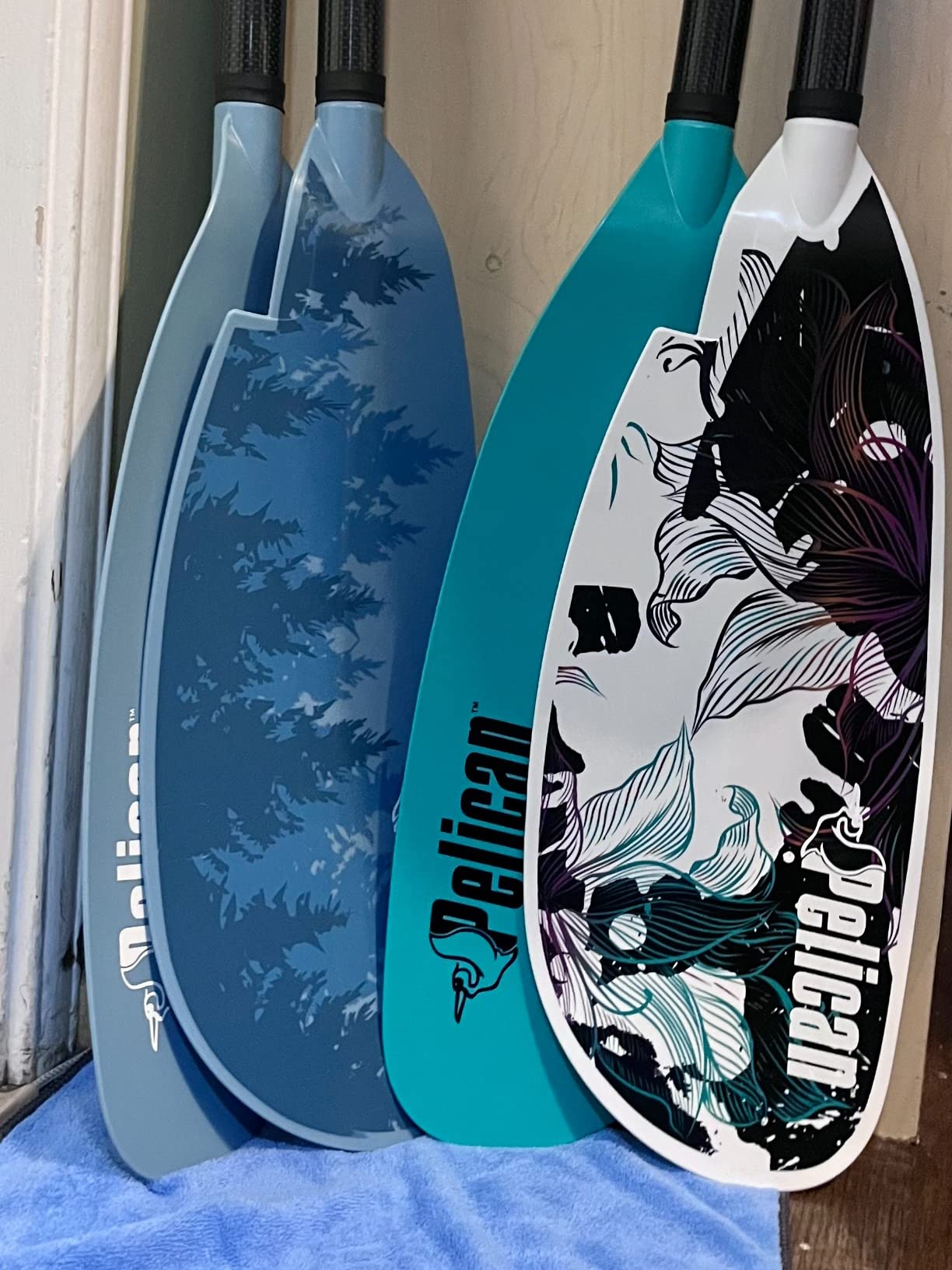
The shaft is fiberglass with nylon blades, ovalized and right-hand indexed, and it breaks down into two pieces for transport. Adjustable drip rings are included, which continues Pelican’s habit of shipping them on angler models. At 2.1 pounds it is one of the lighter paddles here. It is dimensioned for paddlers over 5 foot 5 inches in kayaks over 30 inches wide, so check your boat against that before buying.
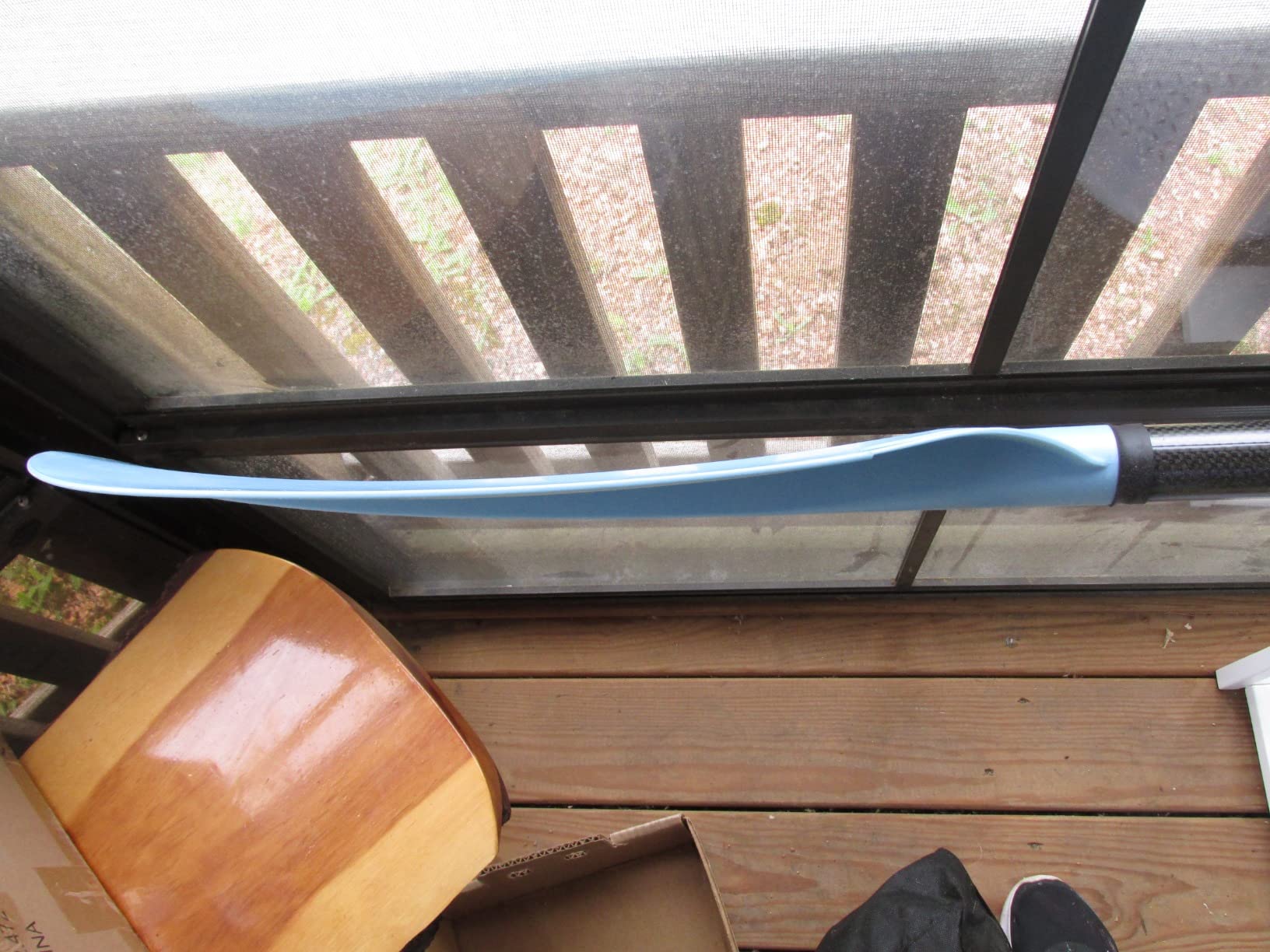
Owners describe it as the best lightweight adjustable fiberglass value, and the specific praise is for the telescoping ferrule. The criticisms are narrow and honest: the ovalized right-hand shaft is designed for right-handers only, blades carry more flex than premium touring paddles, and oval shaping can be inconsistent between units. A few units also arrive with loose ferrule screws that need tightening, so give the joint a check before the water.
This is not a paddle for aggressive whitewater, and the blade flex is the first thing you will notice in a strong headwind, where a stiffer blade would push harder. For flat and moderate water on a wide fishing hull, it is more than enough.
What telescoping and 360-degree angle change in practice
Telescoping solves the problem most anglers hit first: a paddle that fits you on the boat you own but not the one you borrow, trade, or end up in next year. Set it once for your hull and your height, and the fine adjustment is there for a loaded boat or a different paddler. One-handed adjustment is the part you will notice most, since a push-button ferrule takes two hands and a moment of attention.
Full 360 degree blade angle means you can run matched, feathered, or one-sided power strokes, which matters when you want to back a loaded hull out of a tight launch or hold a position against wind.
Who should look past the Symbiosa
Left-handed paddlers are excluded by the right-hand indexed oval shaft. If you need maximum stiffness in a headwind, a carbon shaft with a firmer blade is the better tool, and this fiberglass model will flex more under a loaded rig. It is also not a heavy-duty paddle for rock and timber work.
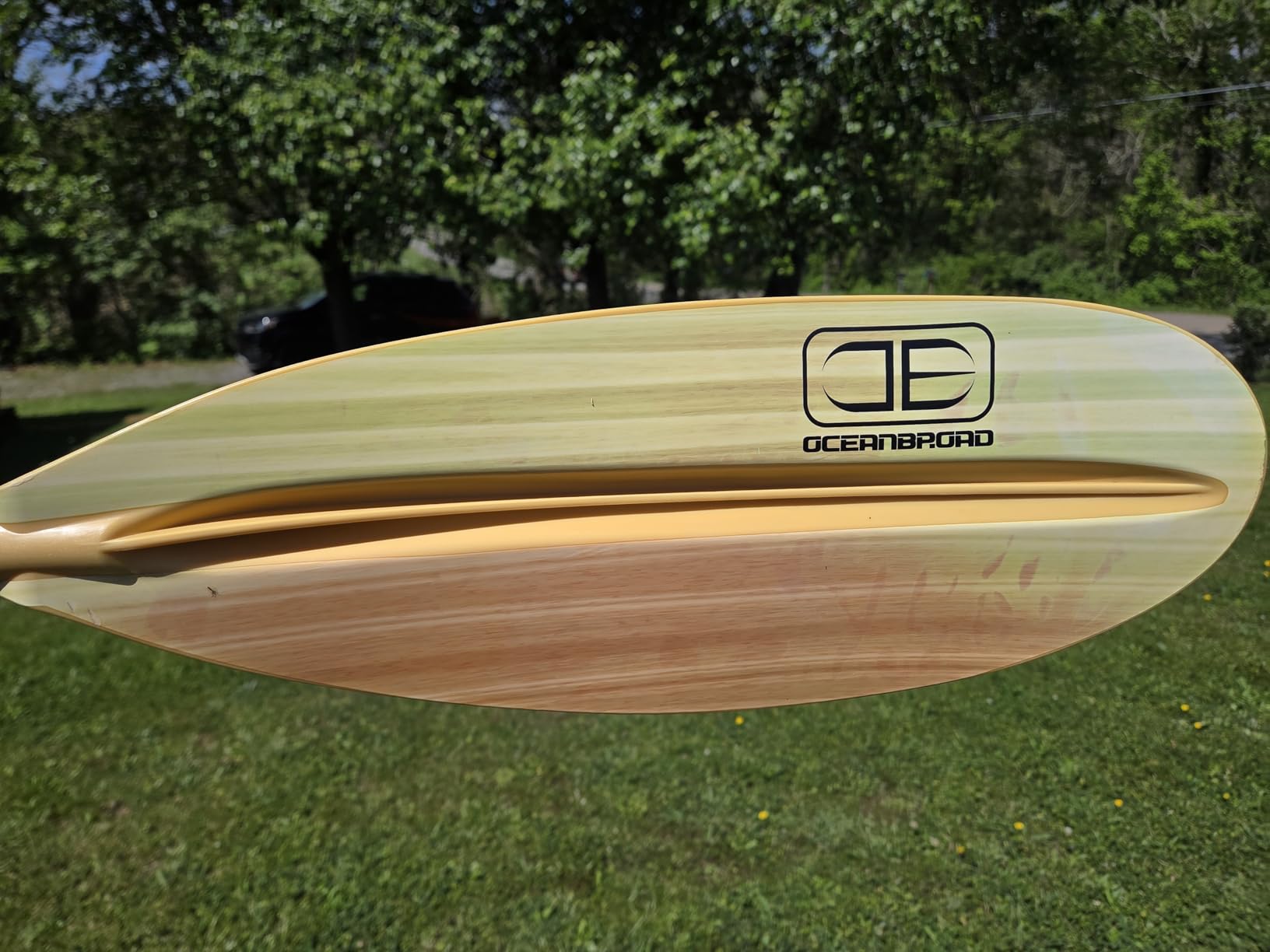
9. OCEANBROAD Kayak Paddle – Warm PE Tube Grip and Leash Included
OCEANBROAD Kayak Paddle 90.5in/230cm Alloy Shaft Kayaking Boating Canoeing Oar with Paddle Leash 1 Paddle, Black
Aluminum alloy shaft
PE tube grip cover
Fiberglass reinforced PP blades
218, 230 and 241 cm
Pros
- PE tube shaft cover improves grip and warm hands in winter
- Highest review count of any paddle here at over 7800 ratings
- Two-piece breakdown with leash makes stowing easy
- Three length options and many colorways
Cons
- Aluminum shaft is noticeably heavy for long days
- Polypropylene blades are basic construction
- Best on flat water rather than performance touring
By volume of owner feedback, this is the most proven paddle in the roundup, with more than 7800 ratings and a 4.7 average. That is not a technical endorsement, it is a durability endorsement. When a paddle accumulates feedback at that scale it is almost always because people keep using it, hand it to a friend, or buy a second one, and the shared thread in the reviews is that it works reliably rather than that it is exceptional.
The shaft is aluminum alloy with 1.1 mm shell thickness, covered by a shrinking PE tube that serves two purposes: it improves grip and it keeps cold metal off your hands, which matters in winter fishing. The blades are fiberglass reinforced polypropylene. Three locking blade angle positions, drip rings at both ends, and a bungee paddle leash are included, and it breaks down into two pieces for transport. Weight is 2.5 pounds. Length options run 218, 230, and 241 cm.
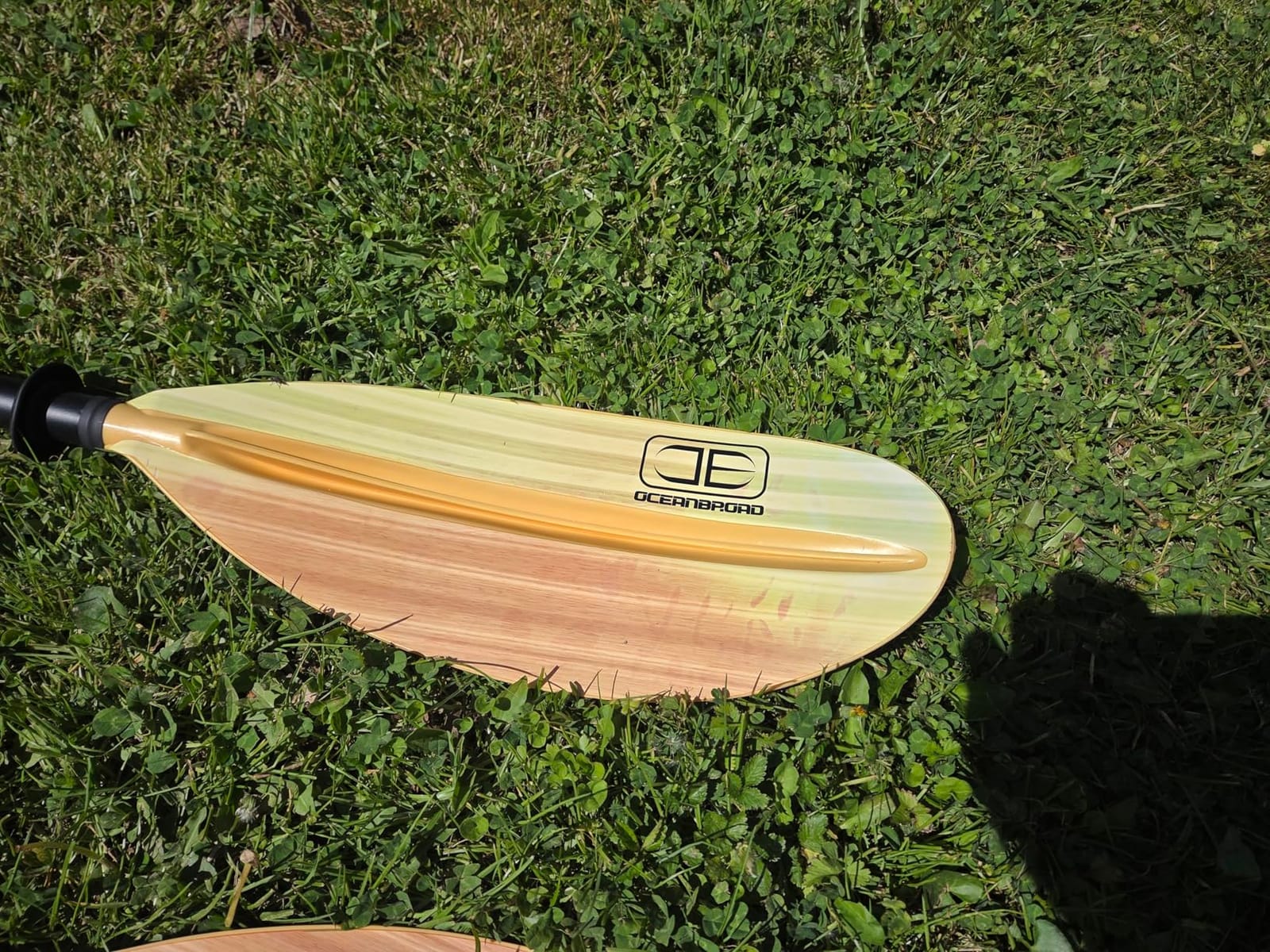
Buyers consistently treat it as a dependable first paddle or a spare, and that is an honest way to use it. The PE tube grip cover is the detail that gets singled out most in cold conditions, and the leash and drip rings mean the box is complete for fishing without extra purchases. Stiff, durable construction for the tier is the common refrain.
Two limits are clear. The aluminum shaft is noticeably heavier than fiberglass or carbon, so it is the wrong choice for an angler whose main problem is fatigue. And the blades are polypropylene rather than a higher-end composite, which is fine on flat water and less reassuring when you are working rock and timber.
Why a paddle leash and drip rings are not accessories
Every trip has a moment where the paddle leaves your hands: launching, bracing, reaching for a fish, or catching a gust. A leash is the difference between a lost paddle and a two-minute annoyance, and on a fishing kayak where your hands are busy more often than on a touring boat, that moment comes around. Drip rings solve a quieter problem: water running down the shaft and into your lap for a full session, which is unpleasant long before it is dangerous.
Both are included here, and both matter more in fishing than in most paddling.
Who should look past the OCEANBROAD
If shoulder fatigue is already your issue, a 2.5 pound aluminum shaft is the wrong place to solve it, and it is heavier than most of the paddles in this roundup. The 241 cm top length is also the limiting factor: on a 34 inch wide fishing hull with a tall paddler, you may want more reach than this gives you, which is why we steered heavy-loaded wide-hull anglers toward the adjustable 250 cm paddles earlier in this guide.
It is a strong first paddle or deck spare, just not a long-day paddle for a loaded boat.
10. Karltion Kayak Paddle – 31 Ounce Buoyant Two-Piece
Karltion Kayak Paddle – Adjustable 2 Pieces Aluminum Alloy Shaft
Aluminum alloy shaft
Glass fiber blade
31 oz total weight
220 cm or 82-90.5 in
Pros
- Very light at 31 oz for an aluminum shaft paddle
- Buoyant so it will not sink if dropped
- Two-piece build packs down easily for travel
- Symmetrical blades with serrated edges
Cons
- Fiberglass reinforced PP blades are entry-level
- Aluminum shaft keeps weight above an all-carbon paddle
- 86 inch fixed length suits shorter paddlers
The Karltion is the lightest paddle in the roundup by a wide margin at 31 ounces, and it achieves that with an aluminum shaft rather than a carbon one. That combination is unusual and it is the reason to consider it: you get a light paddle without a carbon price, plus a buoyant design that will not sink if you drop it, which is a genuine safety argument rather than a convenience one on a fishing trip.
Blades are fiberglass-reinforced polypropylene, symmetrical at 6.8 by 19.3 inches, feather-shaped with two serrated teeth edges for pushing off. Three lockable positions give blade angle adjustment from 0 to 90 degrees, the widest range here. The two-piece build detaches for packing, and the fixed version runs 86.6 inches (220 cm) with an adjustable variant spanning 82 to 90.5 inches.
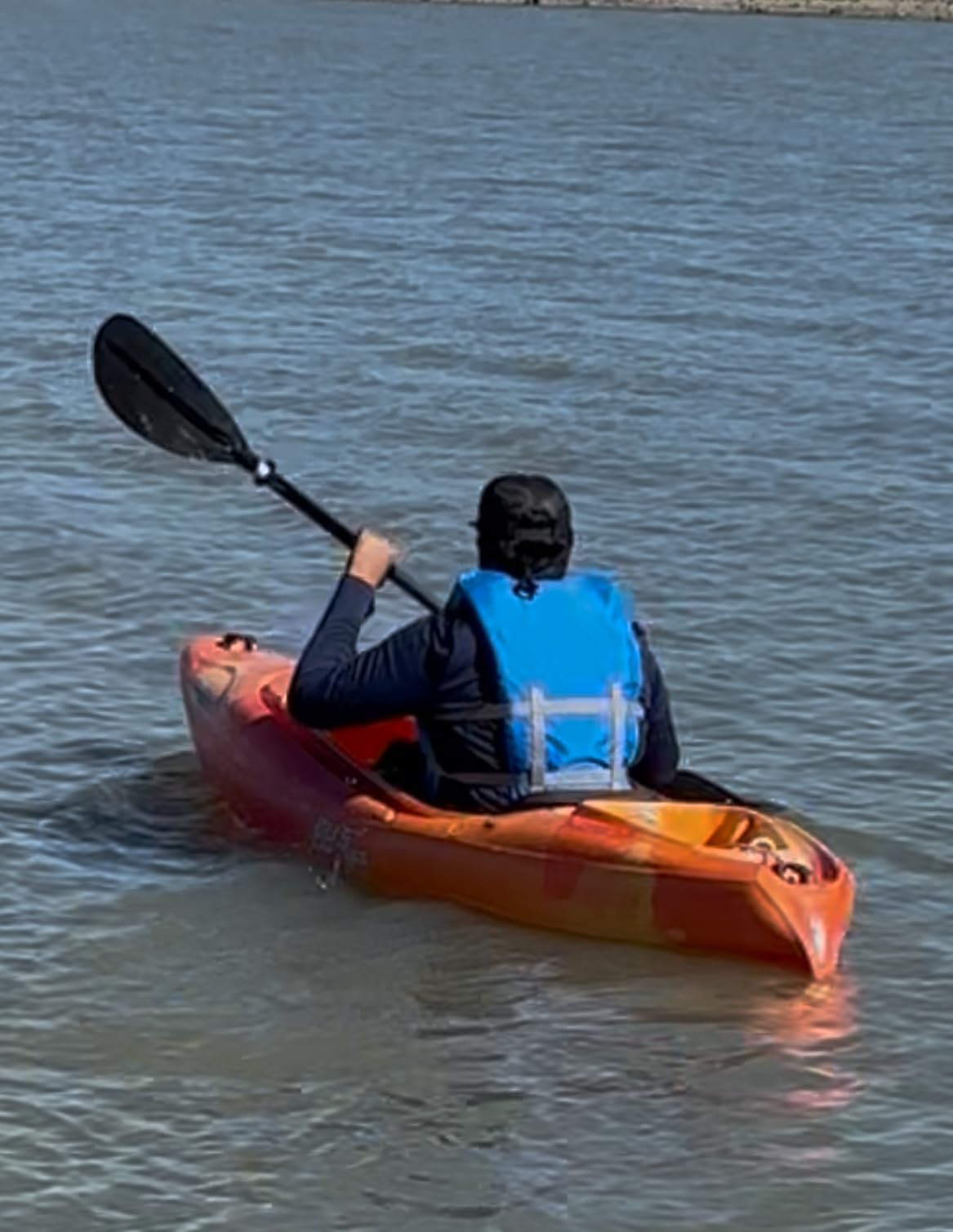
Owners describe the symmetrical blade shape as flutter-free and easy to control, and the light weight and packability as the main draws. At 31 ounces, it is roughly a third lighter than most of the aluminum paddles in this guide, and on a long day that is a difference your hands will register.
The honest limitation is the blade. Fiberglass-reinforced polypropylene is entry-level construction, and if you are working rock, oyster beds, or submerged timber regularly, the longer-warranty angler paddles earlier in this list are built for that. The 86 inch fixed length also suits shorter paddlers and narrower boats more than it suits a 34 inch wide fishing kayak with a tall angler, so choose the adjustable variant if you are in that situation.
What buoyant design does for a solo angler
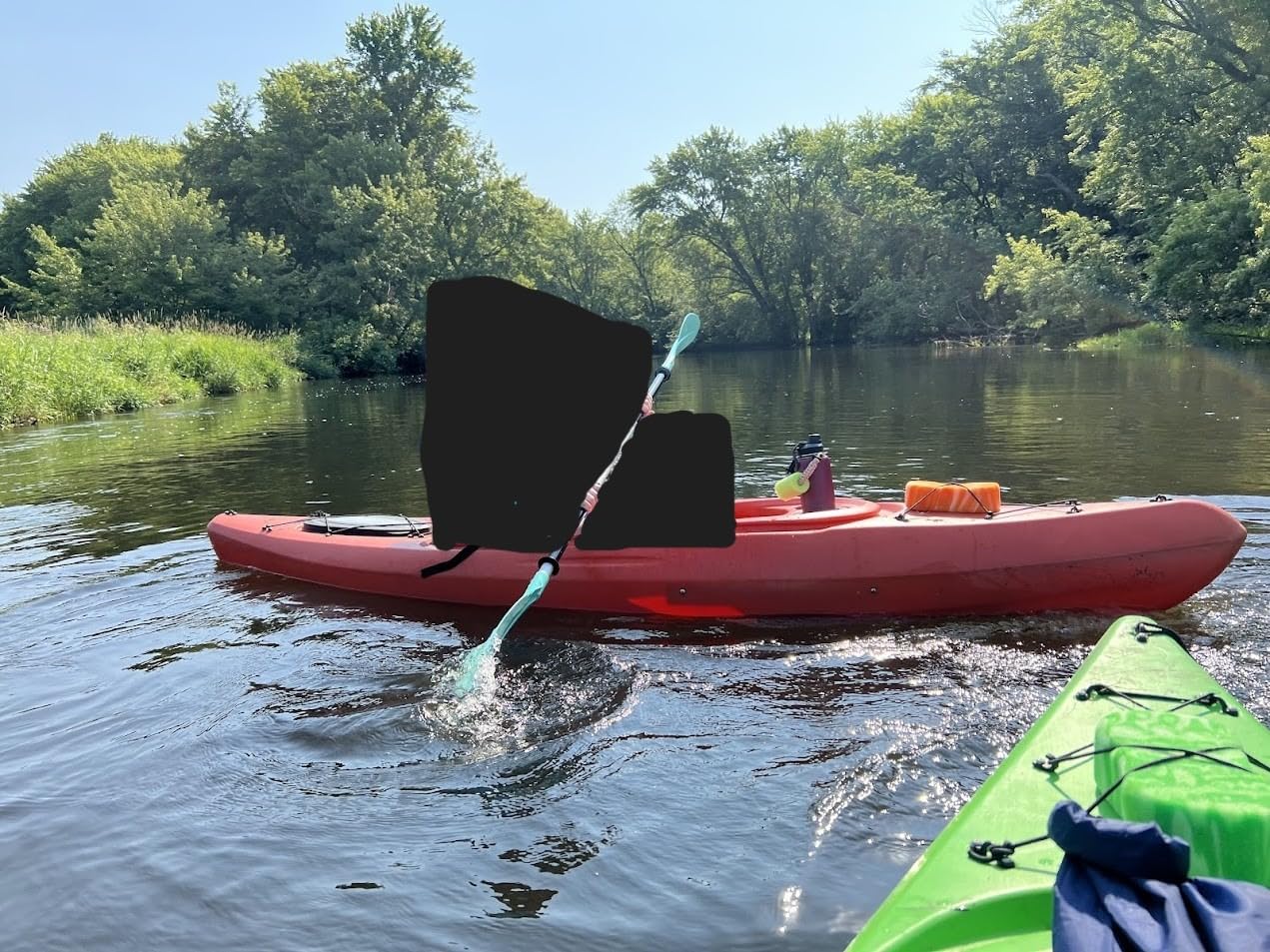
A paddle that floats is worth more than it sounds to anyone fishing alone. If your paddle goes overboard in a wind, the difference between watching it bob on the surface and watching it disappear is the difference between a minute of embarrassment and a swim, or a lost primary piece of safety equipment. Several paddles here include internal flotation for exactly this reason.
The 31 ounce weight also compounds with buoyancy: a light paddle is easier to control when you are poling in shallow water or working a tight shoreline, and less tiring to hold while you deal with a fish and gear at the same time.
Who should look past the Karltion
Anglers who regularly strike rock or timber will want a stiffer, more reinforced blade than polypropylene offers. Those on a 34 inch hull with a tall frame will want the longer adjustable range over the 82 to 90.5 inch variant. And if you are paddling a loaded boat in current, the flutter-free feel and light weight are less relevant than shaft stiffness.
How to Choose a Fishing Kayak Paddle: Length, Shaft Material and Ferrule Systems
What size paddle for a fishing kayak? Size it to your beam width first
Most anglers get paddle length wrong in one direction: they buy a general-purpose paddle sized for a narrow touring kayak, then run it on a 32 to 34 inch wide fishing hull and spend the day knocking their knuckles on the gunwale. That is the single most repeated mistake in the forums, and it is entirely avoidable. Size to your kayak’s beam width first, then use your own height as the secondary input.
The wide-beam fishing hull is the whole reason this category exists. A fishing kayak is wider, heavier, and carries more gear than a touring boat, so it needs a longer paddle and a larger blade than the same angler would use on a narrow hull. A paddler comfortable on a 95 inch paddle in a narrow touring kayak usually needs to step up two lengths for their fishing boat.
If you have lost the spec sheet, measure the widest point of the hull at its widest point, usually just aft of the cockpit, with a tape measure. That number plus your standing height gives you everything you need, and it takes about a minute at the trailer.
Shaft material: the lever that actually decides comfort
Community consensus among kayak anglers is close to unanimous on this: shaft material and paddle weight matter more than blade shape, feathering, or any other spec. Aluminum is heavy and cold, fiberglass sits in the middle, carbon is the lightest and most expensive. Here is the practical breakdown.
Aluminum is the durable, affordable choice. It is the heaviest and it feels cold in winter, which is why the OCEANBROAD’s PE tube cover is a genuinely useful feature. Fiberglass is the sweet spot for most anglers fishing a few times a month, at close to the same weight as an aluminum paddle but with better feel and no cold-shaft problem. Carbon is the right answer when you are on the water for full days in wind or current, and it is where the measurable reduction in arm and shoulder fatigue comes from. A budget aluminum shaft is only a mistake if you are trying to solve a fatigue problem with it.
No one publishes blade area in square inches for most paddles in this category, so judge blade size by how the paddle feels in a loaded hull rather than by a spec sheet that does not exist. The one place the spec does help is when comparing high-end angler paddles, where blade area is often listed in the 90 to 105 square inch range.
Blade angle: why fishing favors low-angle strokes
Low-angle means the shaft is near horizontal during the stroke, giving you a long, relaxed, efficient pull. High-angle means the shaft is near vertical, giving you a short, punchy, powerful stroke. For fishing on a wide beam, a low-angle stroke generally moves your loaded hull with less effort, which is what you want over a long day. Most paddles in this roundup feather to 0 or 60 to 65 degrees, and the WONITAGO and Karltion adjust through the wider 0 to 90 degree range.
Feathering offsets the two blades against each other, from 0 to 60 or 65 degrees, so the blade that is out of the water cuts through the air edge-first instead of braking against it. This is the feature that makes a paddle usable in a headwind, and the paddle back to the launch is usually the hardest part of the trip.
Ferrule systems: the joint in the middle of a two-piece paddle
The ferrule is the joint that lets a two-piece paddle set its length and feather angle. There are four systems you will meet. A snap-button ferrule uses buttons or levers to lock two fixed-length sections together, and it is simple and rigid but does not adjust. A pin-lock ferrule uses a pin and holes for stepped length settings, giving you clean set positions but a limited range. A telescoping ferrule slides one section inside the other for continuous length adjustment, usually one-handed. A multi-angle ferrule adds blade angle adjustment to any of these, typically through 60 or 360 degrees.
For most anglers, the practical rule is this: choose a fixed-length snap-button paddle if you have one hull and one paddler, a stepped pin-lock if you want a few clean set positions, a telescoping ferrule if you share a kayak or change boats, and a multi-angle system if you want power-stroke options in wind.
Drip rings, leash, and other small things that decide a session
A paddle leash is the most important small accessory, and a surprising number of paddles include one. If your paddle goes overboard, the leash keeps it attached instead of lost, and on a fishing kayak your hands are busy more often than on a touring boat. A coiled tether that you can release with one hand is the version to look for.
Drip rings keep water from running down the shaft into your lap, and adjustable rings are better because they fit the paddle length you set. Several paddles here include them, and one does not, which is an easy add-on purchase if you choose that model.
Other small things worth checking: a hook retrieval notch or hook on the blade, which lets you grab a line or a branch without putting your hands in the water, and a printed or engraved measuring scale on the shaft, which saves you digging a tool out of a tackle bag every time you land a fish. Both are included on most of the dedicated angler paddles in this roundup and neither is included on the pure performance models, which is the clearest dividing line between the two groups.
Pedal-drive and trolling-motor anglers: read this before you buy
If your fishing kayak has a pedal drive or a trolling motor, you are not in the same buying category as someone who paddles out to a spot and drifts. You will use your paddle for launching, for the last mile, and as an emergency backup if the motor or pedals fail, and a heavy loaded hull means that emergency paddle needs real power. In that case, a shorter, more powerful paddle with a stiff blade and a modest length is a better backup than a full-length lightweight performance paddle.
What you do not need in that situation is a premium angler paddle with ruler graphics. Save the money and buy one solid mid-range paddle that you can actually reach and control while wearing a PFD in a loaded boat. If you are choosing between paddles in this roundup for that role, the adjustable fiberglass options give you the range to suit whatever boat you end up in, and the buoyant designs are the ones you most want to have when you drop it.
Who should skip a fishing-specific paddle entirely
Some anglers should skip this entire category. If you fish from a narrow touring or sea kayak, a general-purpose paddle sized to that hull is lighter and better balanced than a wide-beam angler paddle. If you already have a suitable carbon paddle and only want a ruler and a hook, you can add a small blade leash and stop there. And if you only paddle a short distance on calm water, a durable budget aluminum paddle will outlast your interest in the sport.
Once you are past those cases, the fishing-specific features are worth having, because they exist for the specific friction points of angling, not for marketing.
Frequently Asked Questions
What size paddle for a fishing kayak?
Size your fishing kayak paddle to the hull’s beam width first, then your own height. A wide 32 to 34 inch fishing hull usually calls for a 240 to 260 cm paddle, while narrower touring hulls need less. Measure the widest point of the hull with a tape measure and match it against the manufacturer’s length chart before you buy.
What is the best material for a kayak paddle?
Aluminum is the most durable and affordable, fiberglass is the best all-round choice for most anglers, and carbon is the lightest and best for full days in wind or current. Community consensus treats shaft material and paddle weight as the biggest comfort lever, more than blade shape or feathering.
What is the best paddle for kayak fishing?
The best fishing kayak paddle is a two-piece paddle sized to your hull’s beam, with a 240 to 260 cm length, a feathered low-angle blade for efficient strokes, and angler features like a hook retrieval notch and a shaft measuring scale. The Pelican Poseidon is our top pick for most anglers.
Are Bending Branches paddles worth it?
Yes, for anglers who paddle long days. Bending Branches paddles use lightweight carbon shafts and reinforced blades, and owners report the fatigue difference is obvious on the paddle back to the launch. The premium is less justified if you fish a few short trips a year.
Do kayak paddles make a difference?
Yes, more than most gear. The paddle does roughly half the work of reaching your spot and all of the work of getting home, and an undersized or heavy paddle is the leading cause of sore arms and shoulders before the fishing is over. Length and weight matter more than blade shape.
Why are kayak paddle blades offset?
Offset blades are feathered so the blade out of the water slices through the air edge-first rather than braking against it, usually 0 to 60 or 65 degrees. On a fishing kayak this is what lets you make headwind progress on the paddle back to the launch instead of fighting the wind stroke by stroke.
Do I need a paddle leash for kayak fishing?
Yes. Fishing puts your hands busy more often than touring does, and a dropped paddle in current or wind means a lost piece of safety equipment or a swim. A coiled leash that releases with one hand is the best option, and several paddles in this roundup include one.
The Best Fishing Kayak Paddles for Anglers: Final Verdict
The best fishing kayak paddles for anglers come down to how you fish, not just how you paddle. The Pelican Poseidon is the pick for most people: it is 250 cm, it floats, it carries a hook notch and a shaft measuring tape, and thousands of owners have logged seasons on it. Anglers on long windy days should step up to the Bending Branches Angler Ace for a 2 pound carbon shaft, and anyone sharing a kayak or switching hulls should take the telescoping Pelican Symbiosa.
Measure your beam width, pick your shaft material by hours on the water, and add a leash. If you are still choosing the boat, our fishing kayak picks will get the hull right first. For the rod side of the setup, see our fly fishing rod roundup, and if you fish from a boat you can pedal or motor, our fishing drone guide covers spotting fish before you pick your spot.