
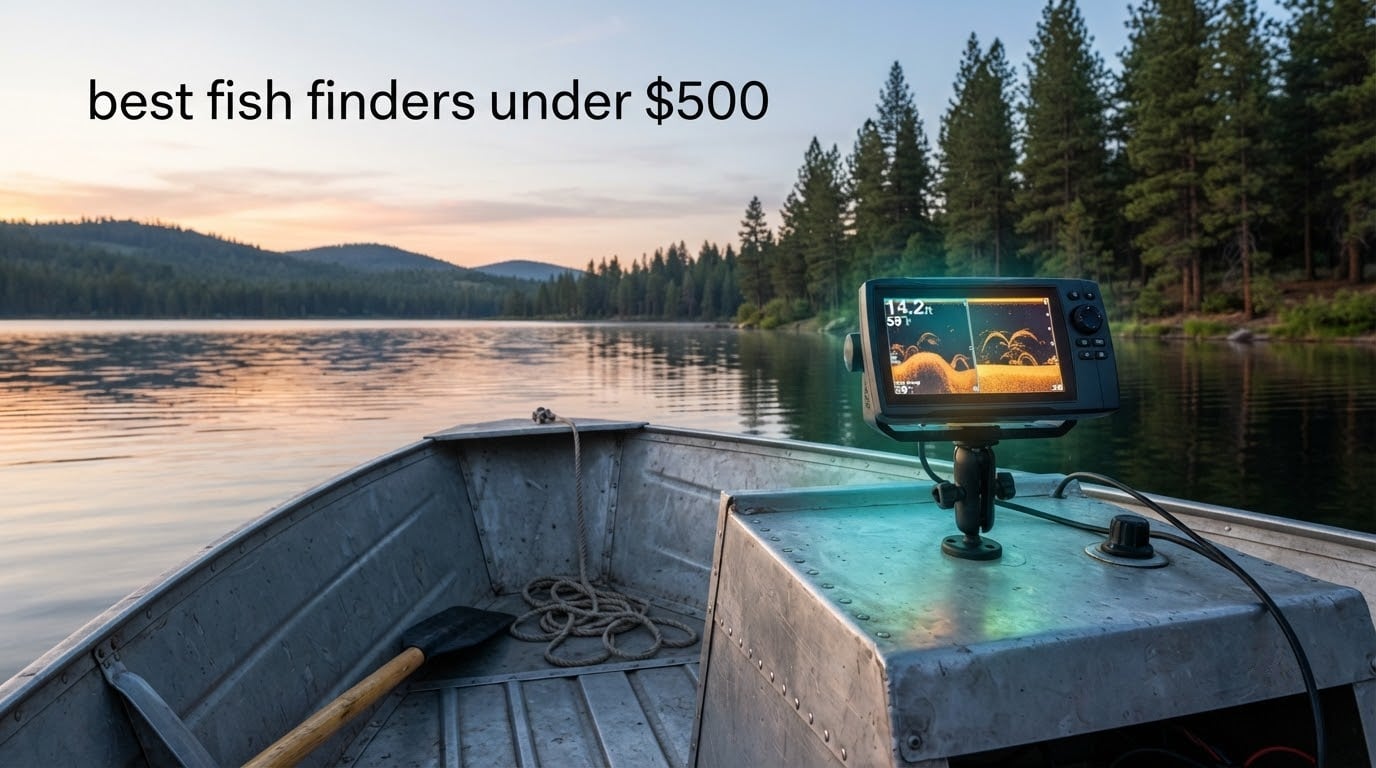
If you want one unit that works for a weekend angler on a jon boat, a kayak angler scanning a creek, and a pontoon owner marking a favorite ledge, the Garmin STRIKER 4 is the safest pick in the best fish finders under 500 category this year. It pairs CHIRP sonar with ClearVu scanning, a sunlight-readable 3.5-inch screen, GPS waypoints and an included transducer.
But the honest truth about this budget is that “fish finder” covers three very different machines: mounted chart units with color screens, handheld depth finders you toss in a tackle box, and wireless castable sonar with no screen of its own. Our picks below span all three, because most anglers under this ceiling need exactly one of them, not all three.
Here is the short version before the detail:
Best overall: Garmin STRIKER 4 for mounted freshwater use on a small boat.
Top rated: Garmin STRIKER Vivid 4cv if you want color sonar and automatic contour mapping.
Budget pick: LUCKY FFC1108 handheld if you fish from a kayak and change water often.
For mapping and charting: Humminbird HELIX 5 CHIRP GPS G3, the only pick here with a built-in basemap and premium chart support.
For no-drilling installs: Deeper PRO+ 2 Sonar, which logs bathymetric maps from your phone.
We compared all ten across screen size, sonar type, GPS and mapping status, transducer inclusion, and how awkward each one is to install. If you also want a broader look at units across every price tier, our full fish finder comparison covers the mid-range and premium market too.
Table of Contents
Top 3 Best Fish Finders Under $500 in 2026


Garmin STRIKER Vivid 4cv
- Color sonar palettes
- CHIRP ClearVu
- Quickdraw Contours
- GT20 transducer

LUCKY FFC1108 Handheld
- Portable castable sonar
- Backlit LCD
- 328 ft range
- Sensitivity control
Those three cover the most common setups. The STRIKER 4 is the default answer for a permanently mounted freshwater setup, the Vivid 4cv adds color and automatic contouring for the same family of hulls, and the LUCKY handheld covers anglers who move between water bodies and refuse to drill a hole in a kayak.
All 10 Fish Finders Compared Side by Side in 2026
| Product | Specifications | Action |
|---|---|---|
| Garmin STRIKER 4 |
|
Check Latest Price |
| LUCKY FFC1108 Handheld |
|
Check Latest Price |
 Garmin STRIKER Plus 4 Garmin STRIKER Plus 4 |
|
Check Latest Price |
| Garmin STRIKER Vivid 4cv |
|
Check Latest Price |
 Humminbird PiranhaMAX 4 Humminbird PiranhaMAX 4 |
|
Check Latest Price |
 Venterior Wireless Castable Sonar Venterior Wireless Castable Sonar |
|
Check Latest Price |
 Deeper PRO+ 2 Sonar Deeper PRO+ 2 Sonar |
|
Check Latest Price |
 Humminbird HELIX 5 CHIRP GPS G3 Humminbird HELIX 5 CHIRP GPS G3 |
|
Check Latest Price |
 Yoocylii Handheld Fish Finder Yoocylii Handheld Fish Finder |
|
Check Latest Price |
 Lowrance EAGLE 4 inch Sonar Lowrance EAGLE 4 inch Sonar |
|
Check Latest Price |
Read that table as three columns of buyers rather than one ranking. The first four rows are permanently mounted models, the middle rows are portable or castable, and only the Humminbird HELIX 5 CHIRP GPS G3 ships with a usable basemap at this budget.
1. Garmin STRIKER 4 – The Best Fish Finder Under 500 Overall
Garmin 010-01550-00 Striker 4 with Transducer, 3.5″ GPS Fishfinder with Chirp
3.5-inch LCD
CHIRP and ClearVu sonar
1600 ft freshwater depth
Transducer and mounts included
Pros
- Accurate depth and crisp fish arches
- Readable in full sunlight
- Easy install with tilt swivel and transom mounts
- GPS waypoints and speed readout
Cons
- Small 3.5-inch screen
- No charting or Quickdraw contours
- Thin included power wiring
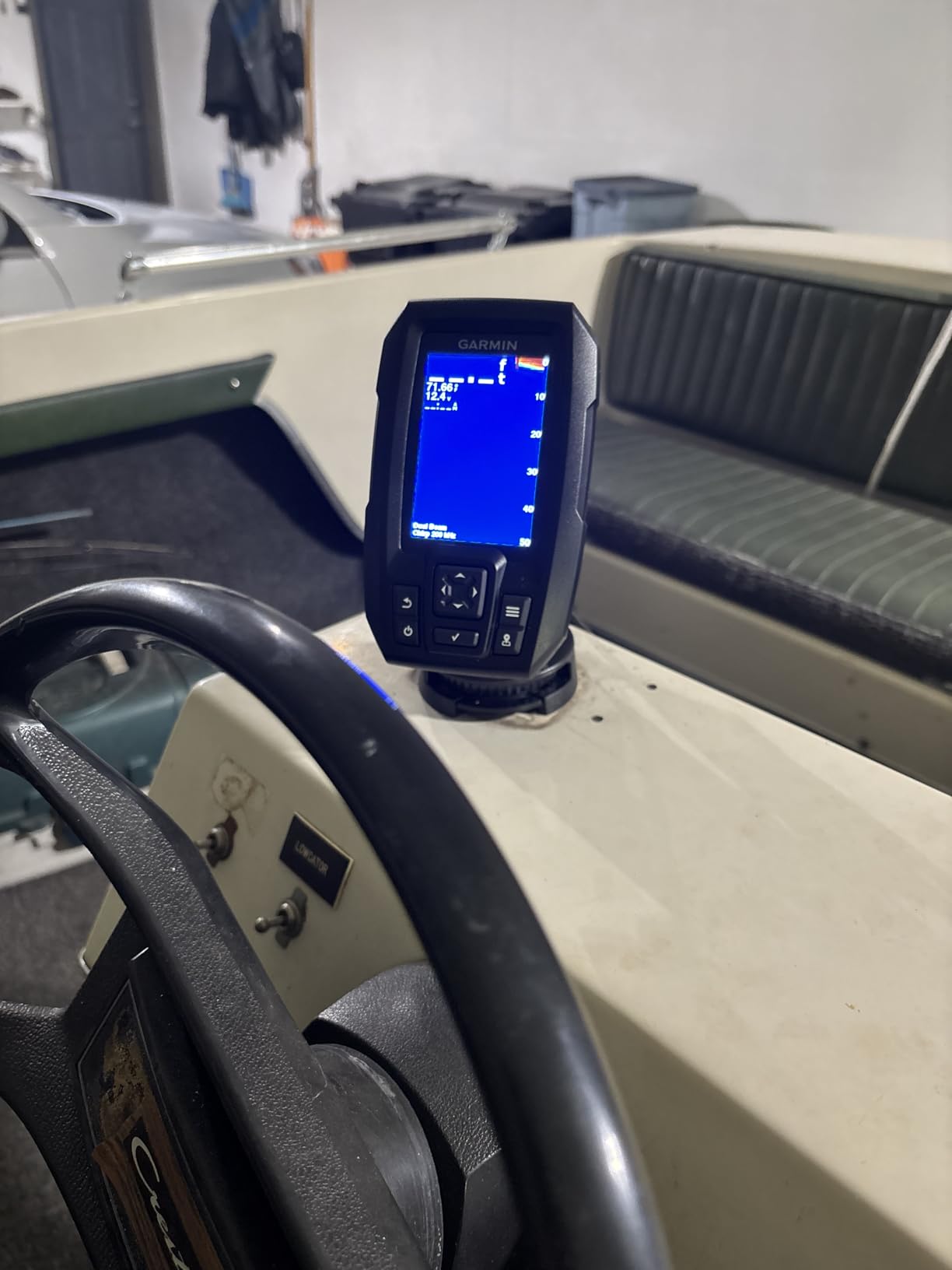
This is the unit we keep coming back to. In the box you get the STRIKER 4, a transducer, transom and trolling motor mounts, a tilt and swivel bracket, and the power and data cable, so the install is genuinely complete for a small aluminum or jon hull. It weighs 8 ounces and draws about 0.23 amps at 12V, which means a small SLA battery can carry it through a full day of drifting.
Owners consistently single out two things: the depth readings are accurate, and the screen stays readable in direct sun. The waypoint map is the sleeper feature, letting you mark a brush pile, stump or dock edge and return to it instead of hunting for it.
Sonar-wise, this is a traditional CHIRP unit with a scanning mode that paints near-photographic images of structure. Depth capability is rated at 1600 feet in freshwater and 750 feet in saltwater, which covers everything a weekend angler will ever reach.
Two limitations are worth planning around. There is no charting and no automatic contour mapping on this model, so you are relying on GPS breadcrumbs rather than a drawn map. And the included power lead is thin, so secure it properly with wire ties before you rely on it in a running boat.
Why it earns the top spot
The combination of rating, review volume and included hardware is what decides it. With thousands of owners reporting the same accurate, reliable behaviour, it is the safest pick in this guide for someone mounting a fish finder for the first time.
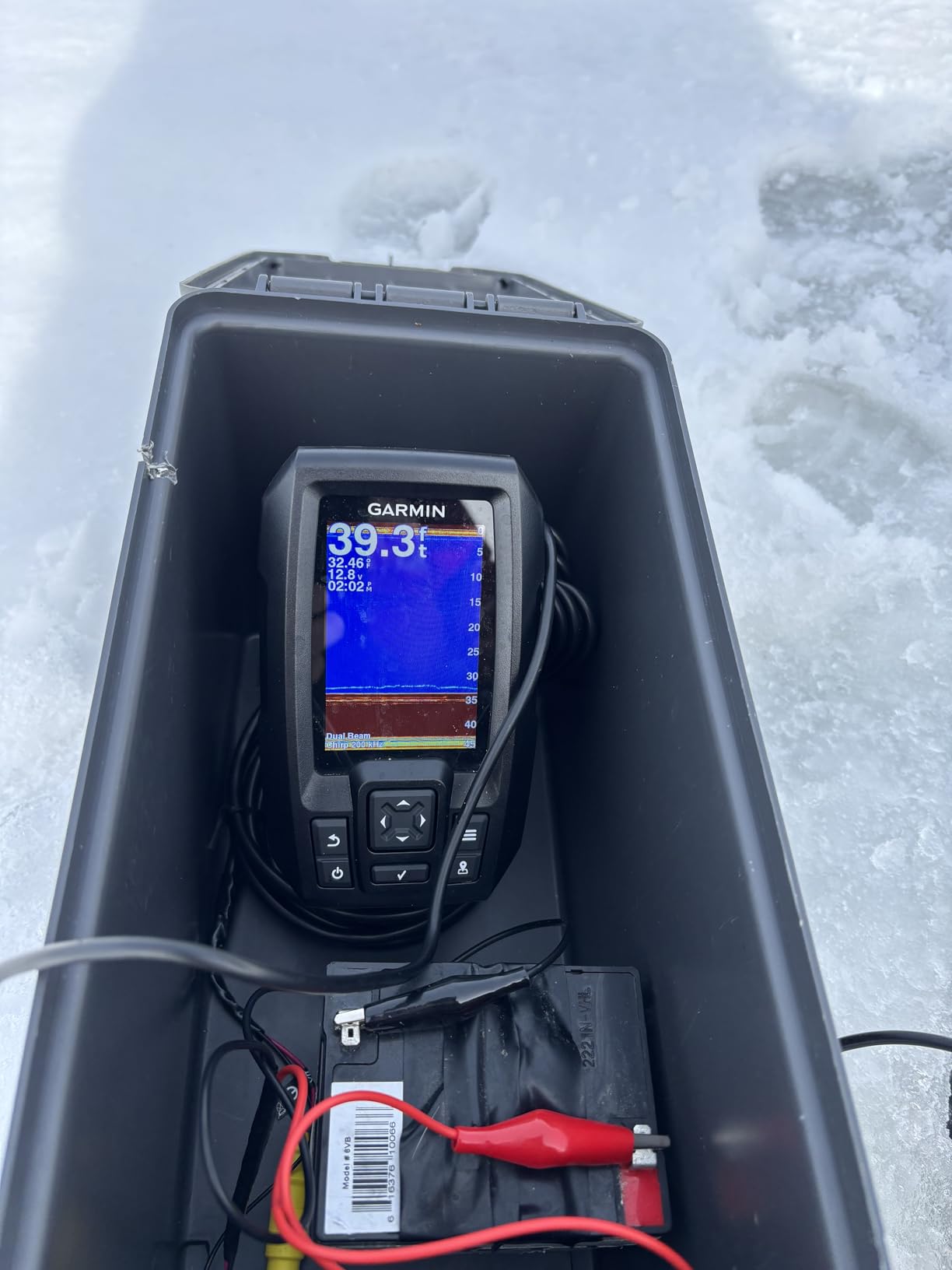
It also handles ice fishing unusually well for a budget model, because the built-in flasher works for vertical jigging and sonar signals stay readable at a standstill.
When to choose something else
If your boat has a cramped console and you plan to read structure at speed, step up to the STRIKER Vivid 4cv for a larger color screen. If you want charts, the Humminbird HELIX 5 CHIRP GPS G3 is the only pick here with a basemap and premium chart support.
If you fish from a kayak and never install anything permanently, a handheld or castable model will serve you better than any transom-mounted box.
2. LUCKY FFC1108 Handheld Fish Finder – Most Versatile for Kayaks
LUCKY Kayak Portable Fish Depth Finder Water Handheld Fish Finder Sonar Castable Kayak Boat Fishfinder Transducer Fishing LCD Display FFC1108
2-inch backlit LCD
Castable transducer
328 ft depth range
Five sensitivity levels
Pros
- Accurate depth and bottom structure
- Very portable
- Works through a kayak hull
- Backlit screen for night use
Cons
- Small 2-inch screen
- Reads through the bottom of a kayak only
- Will not read through fiberglass
- Occasional power-on failures
This is the simplest honest answer for a kayak angler who moves between water bodies every weekend. You hold it in one hand with the neck strap, drop the tethered transducer through a hull port, and get depth, weeds, sand and rock within seconds.
Range runs from 3 feet to 328 feet with the transducer fully immersed, and you can switch between feet and meters. Five sensitivity levels let you clean up the picture in clear water or dial it back in stained water after rain.
The backlit display reads in sunshine or darkness, and a fish and fish-school alarm gives an audible cue when something moves below. Battery life is roughly 4 to 5 hours on a fresh set, so a spare set matters on long days.
The catch is that this is a depth and structure tool, not a fish-finder in the imaging sense. Reviewers report that noisy readings often come from schools of minnows rather than the fish you want, and it will not penetrate a fiberglass hull at all.
What it does well
Portability is unbeatable at this budget. Nothing to mount, nothing to wire, and it fits in a jacket pocket, which makes it a genuine backup that lives in the tackle box all season.
For a beginner, the simple single-screen interface with no menus to learn is a real advantage over a mounted chart unit.
When to choose something else
If you want to distinguish a rock ledge from a weed bed in detail, or if you fish saltwater where structure matters more than raw depth, move up to a color mounted display.
On fiberglass kayaks and aluminum canoes with no hull port, this unit cannot read at all, so check your hull before buying.
3. Garmin STRIKER Plus 4 – Best for Automatic Contour Mapping
Garmin 010-01870-00 Striker Plus 4 with Dual-Beam transducer
4.3-inch QSVGA display
Quickdraw contour mapping
Traditional CHIRP 50/200 kHz
GPS and Bluetooth
Pros
- Quickdraw contours build maps as you cruise
- Bright screen readable in direct sun
- Works for ice fishing and open water
- Runs for days on a 7Ah SLA battery
Cons
- No battery or power fittings included
- Quickdraw maps cannot be uploaded or downloaded
- Screen resolution lower than older Garmin models
The step up from the base STRIKER 4 is Quickdraw. It records depth contours automatically as you cruise and stores them onboard, which means your favorite lake starts showing real structure instead of a blank blue field on the second trip.
Sonar is a dual-beam transducer running traditional Garmin CHIRP at 50, 77, 83 and 200 kHz with 200 watts RMS transmit power. The 4.3-inch QSVGA screen is bright and sunlight readable, and Bluetooth lets you connect a phone for notifications without giving up the mount.
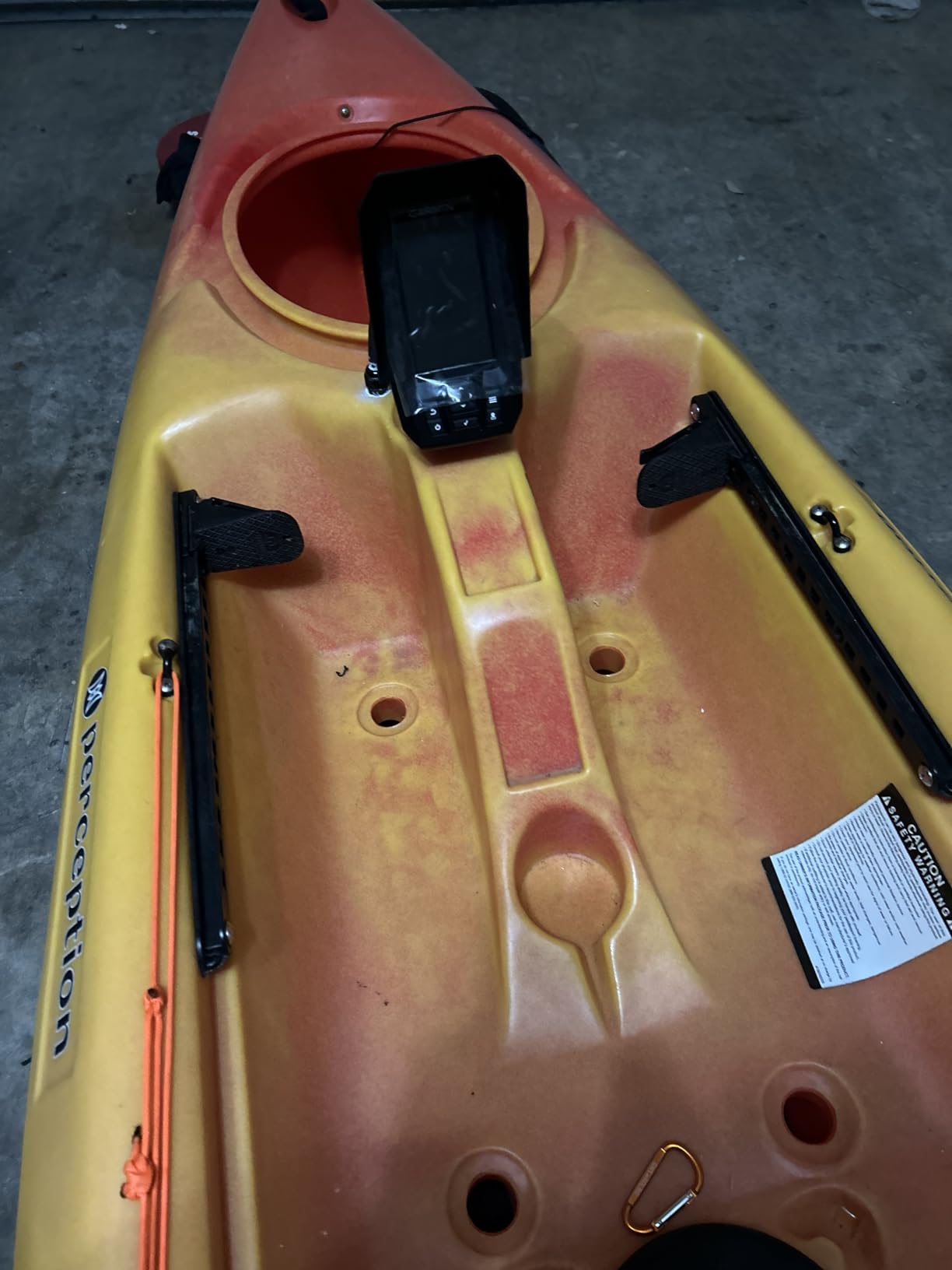
Owners like that this model does not interfere with other fish finders running nearby, which matters on a busy shared pier or a guide boat with multiple anglers aboard. It also works both as an ice flasher and as an open-water unit.
The 3.5-inch class of screen is a step back in detail compared to the color models, and owners who compared it directly with older Garmin screens noticed it. Just as important, no battery or power fittings are included, so budget for those separately.
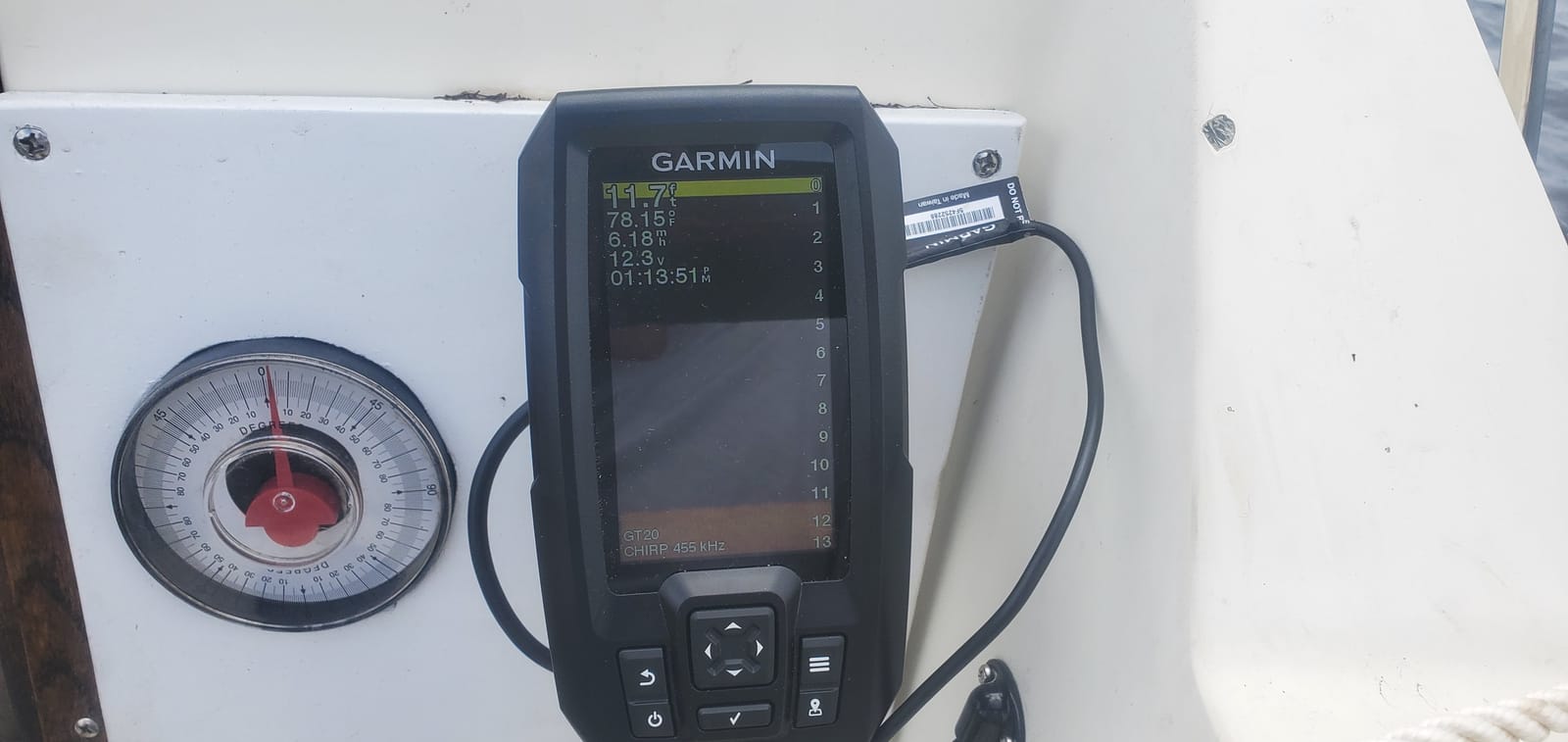
What it does well
Automatic contouring is the feature that changes fishing, because you stop guessing the drop-off and start recognizing it. Storage supports up to 2 million acres of 1-foot contours, so a single lake is never a limit.
It is also the most versatile pick here for anglers who use the same gear on ice in winter and open water in summer.
When to choose something else
Do not expect the ClearVu scanning imagery of the Vivid models, since this one uses traditional beams only. If you fish in saltwater regularly, the higher-frequency scanning on the Vivid or the HELIX 5 will separate targets better.
Map sharing is limited too, because Quickdraw maps stay on this display and cannot be uploaded or downloaded here.
4. Garmin STRIKER Vivid 4cv – Top Rated for Color Sonar
Garmin Striker Vivid 4cv Fishfinder with Transducer – 4-inch LCD Display – Easy-to-Use Scanning Sonar – Color Palettes, 11.2 Ounces (010-02550-00)
4-inch color LCD
Vivid color palettes
GT20 CHIRP ClearVu transducer
Quickdraw Contours built in
Pros
- Color palettes separate fish from structure
- CHIRP traditional plus ClearVu in one transducer
- GPS and Quickdraw Contours at this price
- Two-year warranty
Cons
- Smallest screen in the STRIKER Vivid family at 4 inches
This carries the highest average rating in the group, and the reason is straightforward: it is the cheapest way to get Garmin’s Vivid color palettes and a ClearVu scanning transducer in the same box, with automatic contour mapping already built in.
The GT20 transducer carries CHIRP traditional and CHIRP ClearVu scanning, and the color palettes make it far easier to tell a fish arch from a stump or a rock ledge at a glance. High-sensitivity GPS handles waypoints, routes and boat speed.
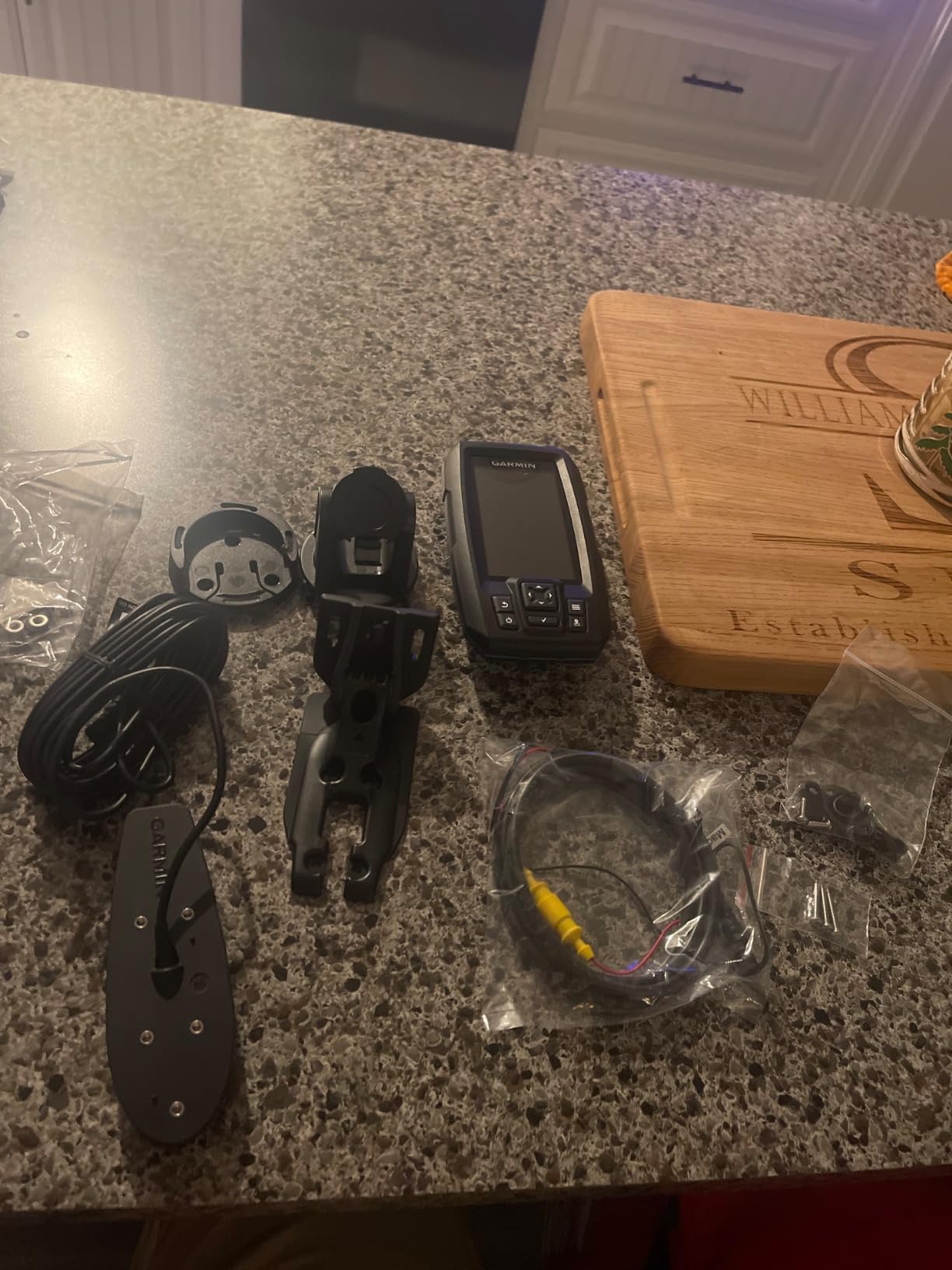
Mounting is handled by the included tilt and swivel bailmount bracket, which suits a console or a kayak track. Power draw is modest, so a portable battery setup stays simple, and the two-year warranty is longer than most rivals in this price band.
The obvious weakness is size. At 4 inches this is the smallest member of the STRIKER Vivid family, and the same product line also exists in larger sizes if your mounting space allows it. Owners with tight console space tend to be delighted; owners who wanted a full-size display should look elsewhere in this guide.
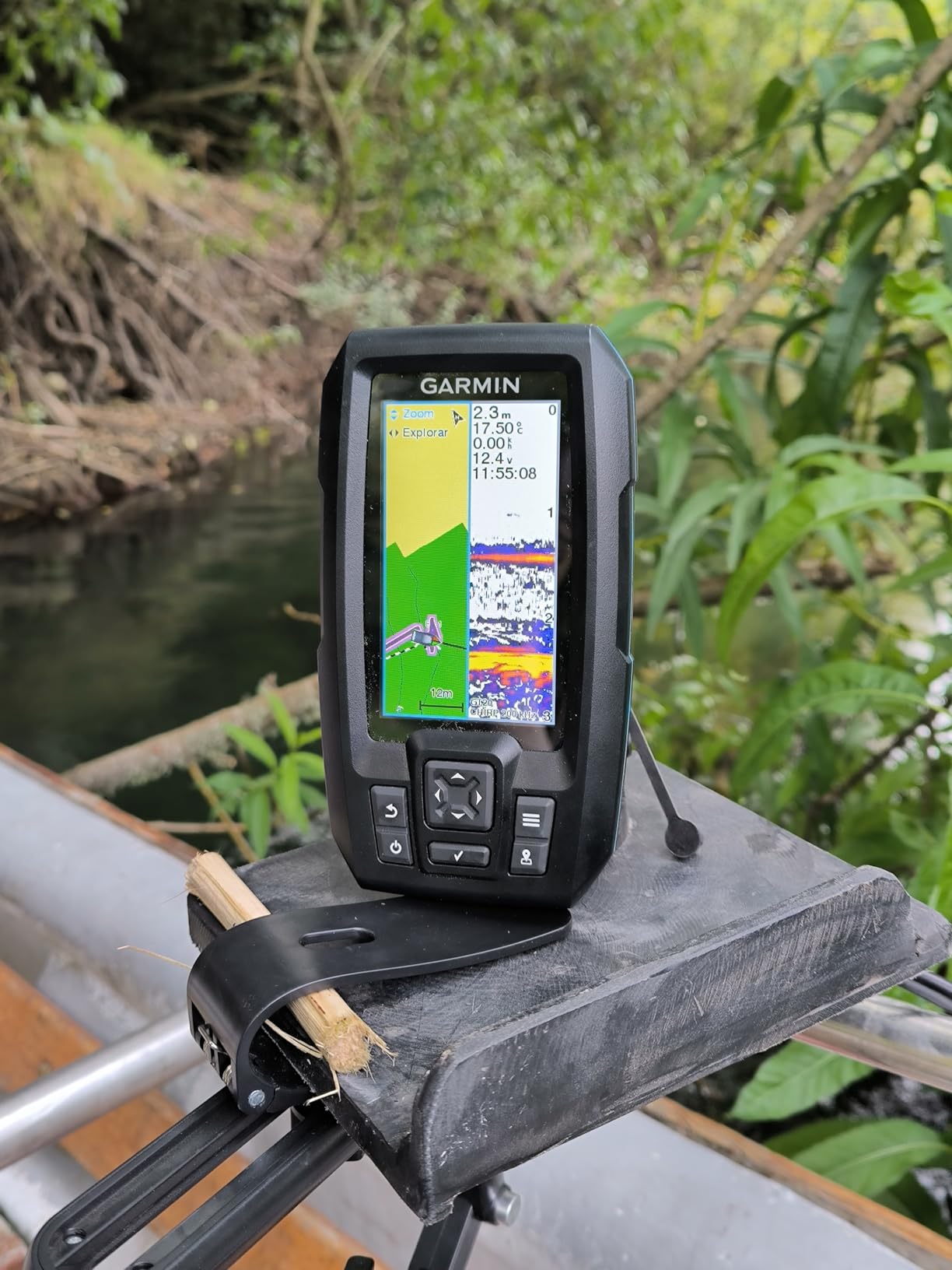
What it does well
Color is not cosmetic at this budget. On a clear spring day, having down-imaging style structure with distinct color separation makes finding a ledge dramatically faster than reading a monochrome 2D trace.
It is also the only mounted pick in this guide that combines color scanning, GPS and automatic contouring without moving you past the ceiling.
When to choose something else
If you need charts you can buy, or premium chart card support, this model does not offer it and you should look at the Humminbird HELIX 5 CHIRP GPS G3 instead.
Screen real estate matters if you fish in groups or run a split screen with live data, because 4 inches gets crowded fast.
5. Humminbird PiranhaMAX 4 – Best for Simple, No-Nonsense Sonar
Humminbird PiranhaMAX 4 Fish Finder with Transducer, Dual Beam Sonar
4.3-inch LCD
Dual Beam narrow and wide
600 ft depth
Tilt and swivel mount
Pros
- Dual Beam gives detail and wide coverage
- Large 4.3-inch screen for the class
- Transom transducer and tilt mount included
- Straightforward reliable operation
Cons
- Monochrome sonar with no CHIRP
- No GPS or charting at all
- Heavier build than comparable models
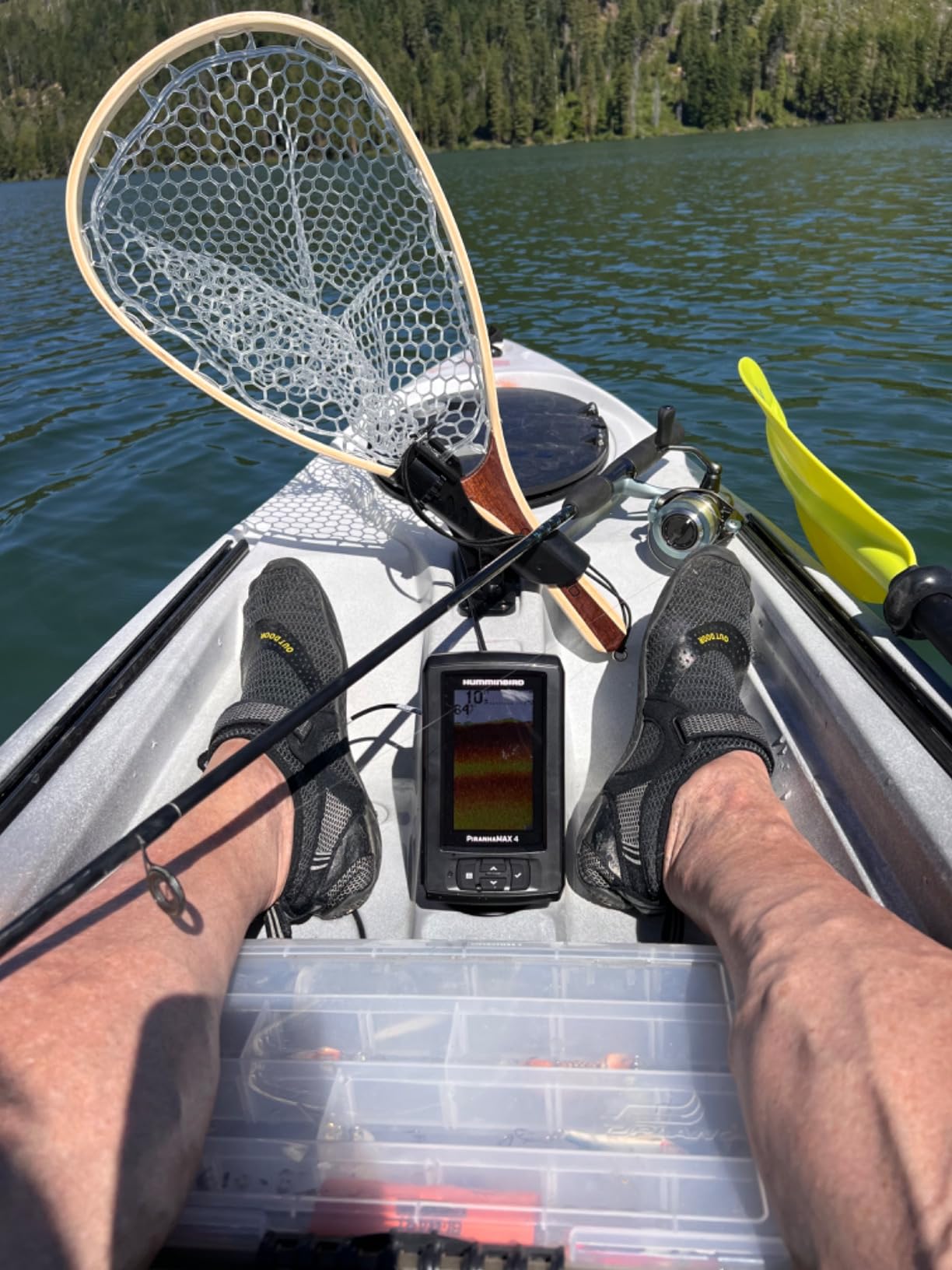
Sometimes the best fish finder under 500 is the one with nothing to configure. The PiranhaMAX 4 powers up, shows depth, and works, with no menus, no mapping screens and no network settings to think about.
Dual Beam sonar lets you toggle between a narrow beam for detail and a wide beam for coverage, and maximum depth capability is 600 feet. The tilt and swivel mount and an XNT 9 28 T transom transducer both come in the box.
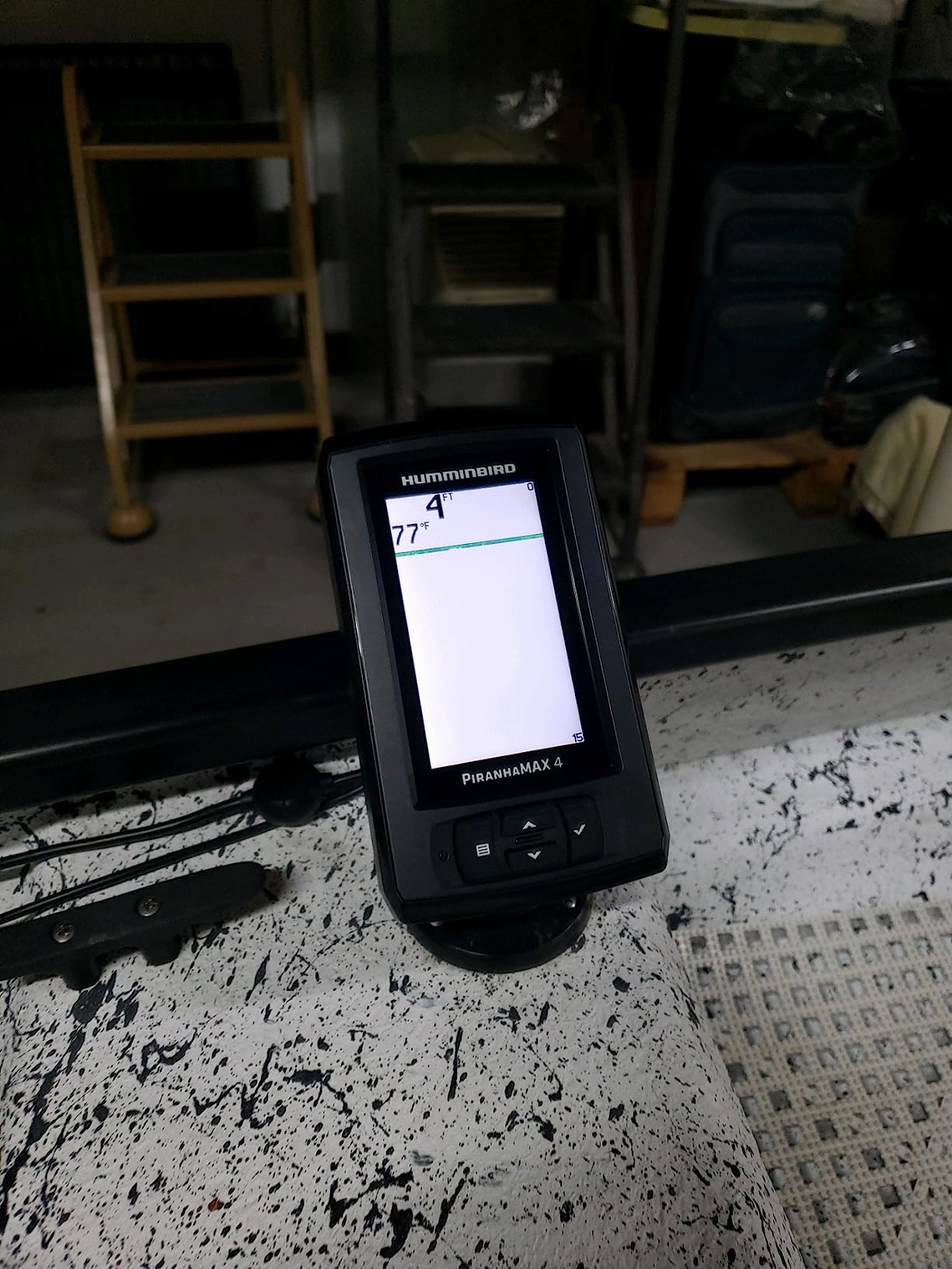
It is also the most forgiving unit here for a non-technical angler. Forum regulars repeatedly raise worry about confusing interfaces, particularly for older family members, and a simple depth-and-fish screen is the easiest thing you can hand someone.
What you give up is real. There is no CHIRP, so target separation is not as crisp as the Garmin models, and there is no GPS, so no waypoints, no routes and no speed readout. It also weighs 2 pounds, noticeably heavier than the Garmin units in this roundup.
What it does well
Reliability and simplicity. For an angler who only wants to know how deep the water is and whether something is holding below the boat, the PiranhaMAX 4 does that and nothing else.
The 4.3-inch monochrome screen is genuinely large for this class, which matters more than most spec sheets admit on a small boat.
When to choose something else
Skip it if you navigate unfamiliar water, since having no GPS means no way to return to a productive spot. It also lacks CHIRP, so it will struggle to separate a tight bait school from structure in deep, clear water.
6. Venterior Wireless Castable Sonar – Best for No-Drilling Installs
Venterior Portable Rechargeable Fish Finder Wireless Sonar Sensor Fishfinder Depth Locator with Fish Size, Temperature, Bottom Contour, Color Display
2.6-inch color TFT
Wireless sensor with 262 ft range
Shows fish size and bottom contour
Two selectable screen backgrounds
Pros
- No hull drilling required
- Works immediately out of the box
- Screen readable in bright sun
- Three to four hours of battery life
Cons
- Battery life drops in cold weather
- 105-degree beam is too wide for ice fishing
- Unreliable when dragged behind a moving boat
This solves a specific problem: you like the idea of sonar but you do not want to drill your boat. The sensor is castable and connects wirelessly to a handheld color display at up to 262 feet, so you can fish from shore, from a dock, or from a boat you do not own.
It reports depth, temperature, fish size category, fish depth and bottom contour, with a 105-degree beam and a range of 2.6 to 164 feet. Two screen backgrounds let you switch between black for daylight and white for low light.
The wireless approach is a genuine step up from corded portable units because there is no cable to snag on a paddle or a line. Reviewers frequently describe it as usable out of the box with no setup at all.
The wide beam is a double-edged sword. It helps you find fish quickly but reduces accuracy on ice, where a narrow beam matters more. Owners also report false signals when the sensor is dragged behind a moving boat, so treat it as a stationary or slow-paddling tool.
What it does well
Versatility across water types. Shore anglers, kayak anglers and small-boat owners all use the same device, and the fish size estimate is a helpful sanity check when you are not sure whether you are looking at a bluegill or a smallmouth.
The two-year warranty and rechargeable battery make it cheaper to own over several seasons than disposable-cell handhelds.
When to choose something else
Cold-weather anglers should skip it, because battery life drops noticeably in the cold. Winter anglers are better served by a flasher-style unit such as the STRIKER 4 or the STRIKER Plus 4.
It also tops out at roughly 164 feet of depth, which rules it out for most offshore and deep-structure fishing.
7. Deeper PRO+ 2 Sonar – Best for Mapping From a Phone
Deeper PRO+ 2 Sonar Fish Finder – Portable Fish Finder and Depth Finder For Kayaks, Boats and Ice Fishing with GPS Enabled | Castable Deeper Fish Finder with FREE User Friendly App
2.4-inch display
Castable with built-in GPS
Wide mid and narrow beams
330 ft accuracy
Pros
- Built-in GPS creates and saves bathymetric maps
- Three beam modes for scanning and drilling
- Light at 3.2 ounces and easy to cast
- Target separation down to 0.4 in on narrow beam
Cons
- Needs a phone or tablet for maps and data
- Wi-Fi connection can drop on longer trips
- Small 2.4-inch display
Among the picks in this guide, the Deeper PRO+ 2 is the only one that turns your fishing into a map. Cast it, let it log, and the free app builds bathymetric maps of the water you are standing on, with the route drawn behind you.
Three beam modes matter more than they sound. Wide beam covers a lot of water fast, mid beam balances detail and coverage, and narrow beam gives 0.4 inch target separation, which is how you pick out an individual fish rather than a clump of them.
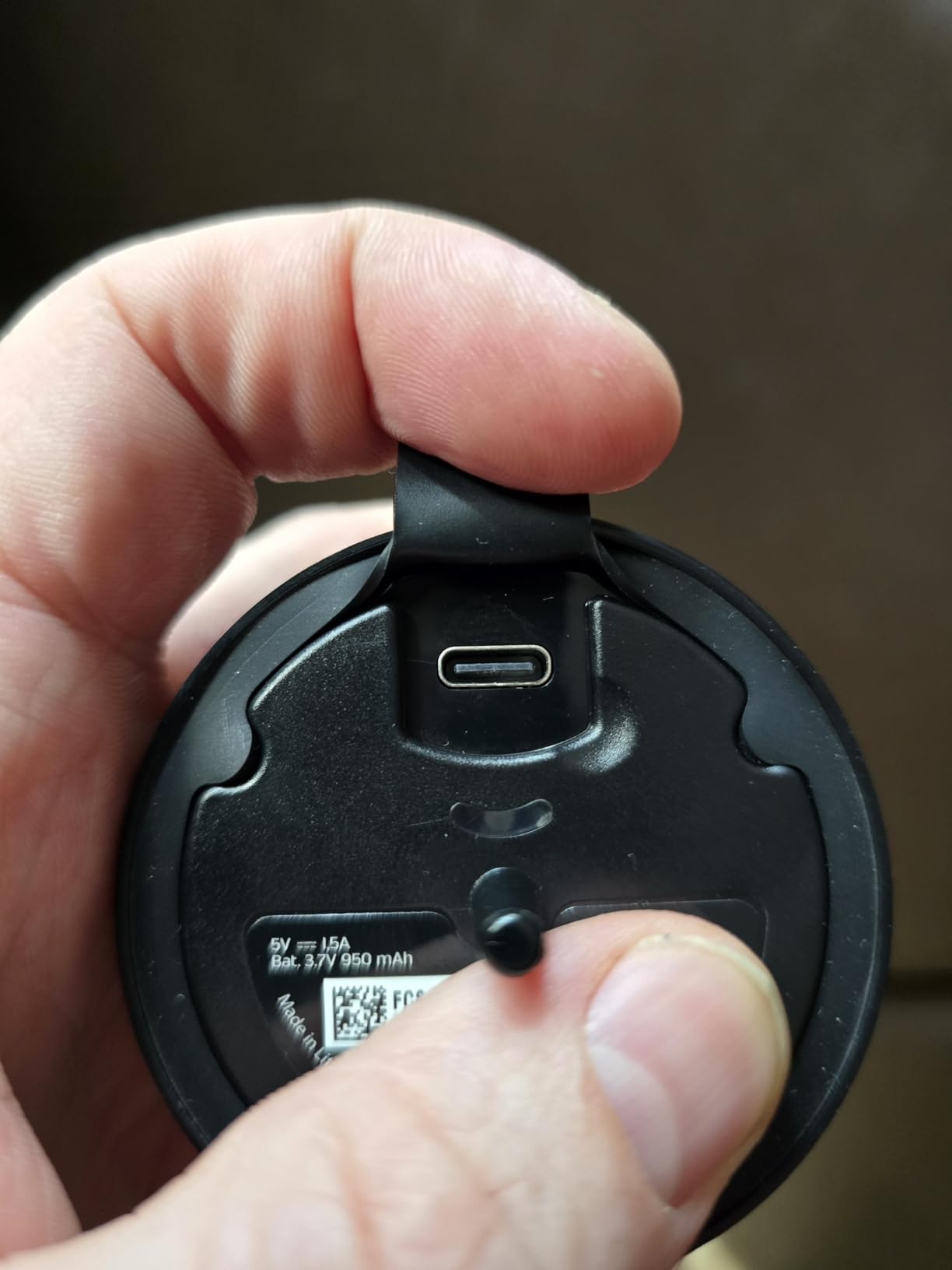
It weighs 3.2 ounces, so it never gets left behind, and owners mention that it tracks even a tiny lure while vertical jigging. Accuracy holds to 330 feet, and the box includes attachment bolts, a neoprene pouch and a USB cable.
The dependency on a phone is the catch. Pairing a tablet or a waterproof phone case is part of the real cost, and reviewers report Wi-Fi dropping out on longer trips, which means you lose the map mid-session. The 2.4-inch display is small, so treat it as a sensor first and a screen second.
What it does well
Data ownership. Instead of a basemap you did not draw, you build your own map and it saves permanently in the app, which is genuinely useful on water with no coverage.
It works for kayaks, boats and ice fishing, so one device covers most of a year for an angler who does not want a permanent install.
When to choose something else
Choose something else if you dislike app dependence or fish in areas with spotty phone signal, since a dropout mid-trip is frustrating. If you want a screen you can read at a glance while casting, the Venterior color display is a better fit.
8. Humminbird HELIX 5 CHIRP GPS G3 – Best Full-Size Display With Charts
Humminbird Helix 5 G3 GPS Fish Finder with Transducer & Dual Spectrum Chirp Sonar
5-inch color TFT
Dual Spectrum CHIRP
Humminbird Basemap with 10000+ lakes
AutoChart Live mapping
Pros
- Dual Spectrum CHIRP with wide and narrow modes
- 5-inch color TFT is the largest screen here
- Basemap plus premium chart support
- AutoChart Live maps bottom hardness as you boat
Cons
- Fixed transom install with cords
- Steep learning curve for charting options
- Only eight hours of built-in recording time
This is the most capable fish finder under 500 we found, and it is the only pick in the roundup that ships with a real basemap: more than 10,000 lakes plus continental US coastlines out of the box.
Sonar is Dual Spectrum CHIRP with wide and narrow modes powered by a Low-Q transducer for tight 2D target separation. AutoChart Live draws depth contours and bottom hardness maps as you boat, with eight hours of built-in recording before you need to move data off the display.
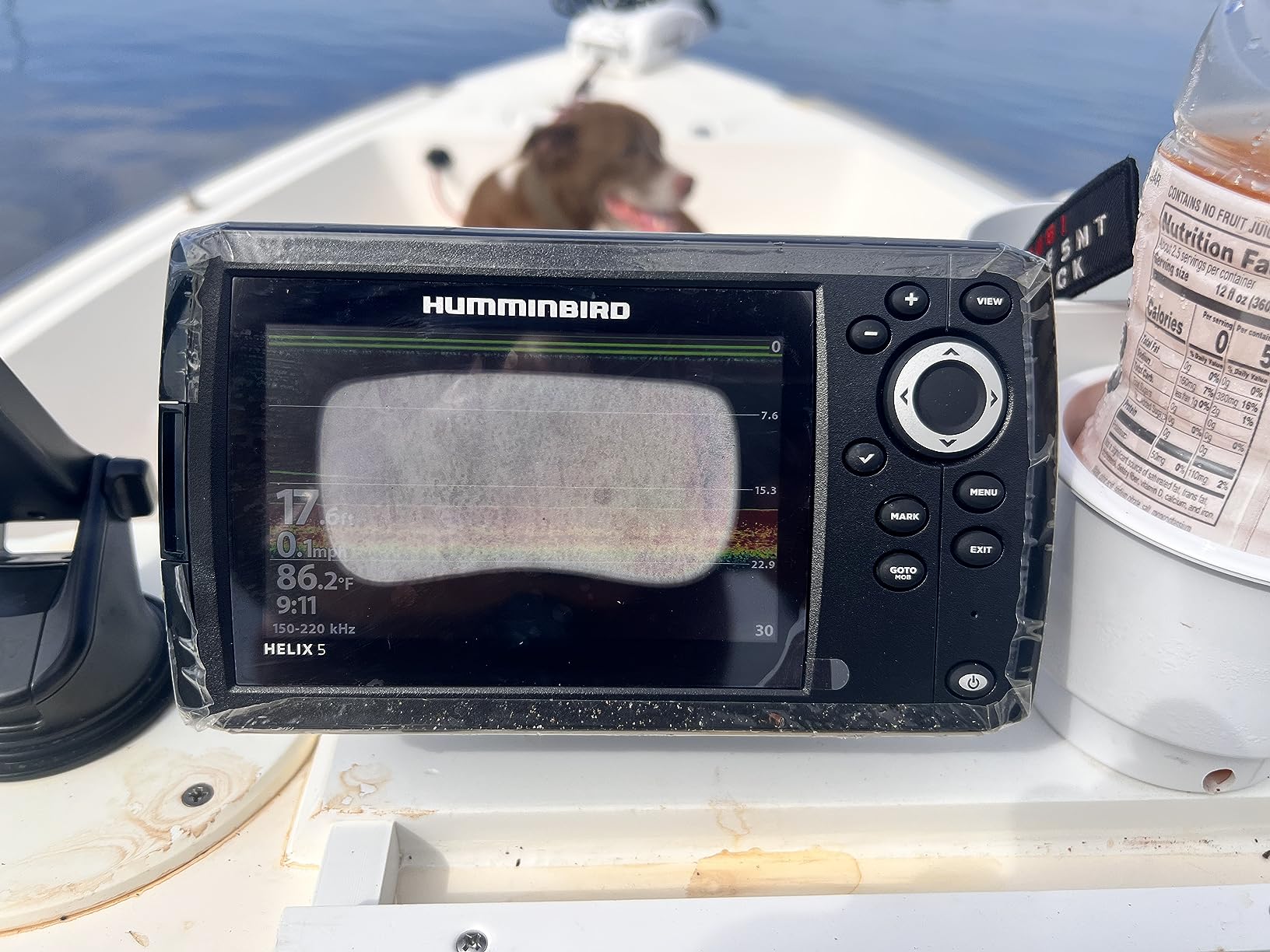
If you fish unfamiliar water or salt, the chart support is the reason to stretch here. It accepts LakeMaster, CoastMaster and Navionics charts plus AutoChart Zero Line SD cards, so your mapping is not locked out.
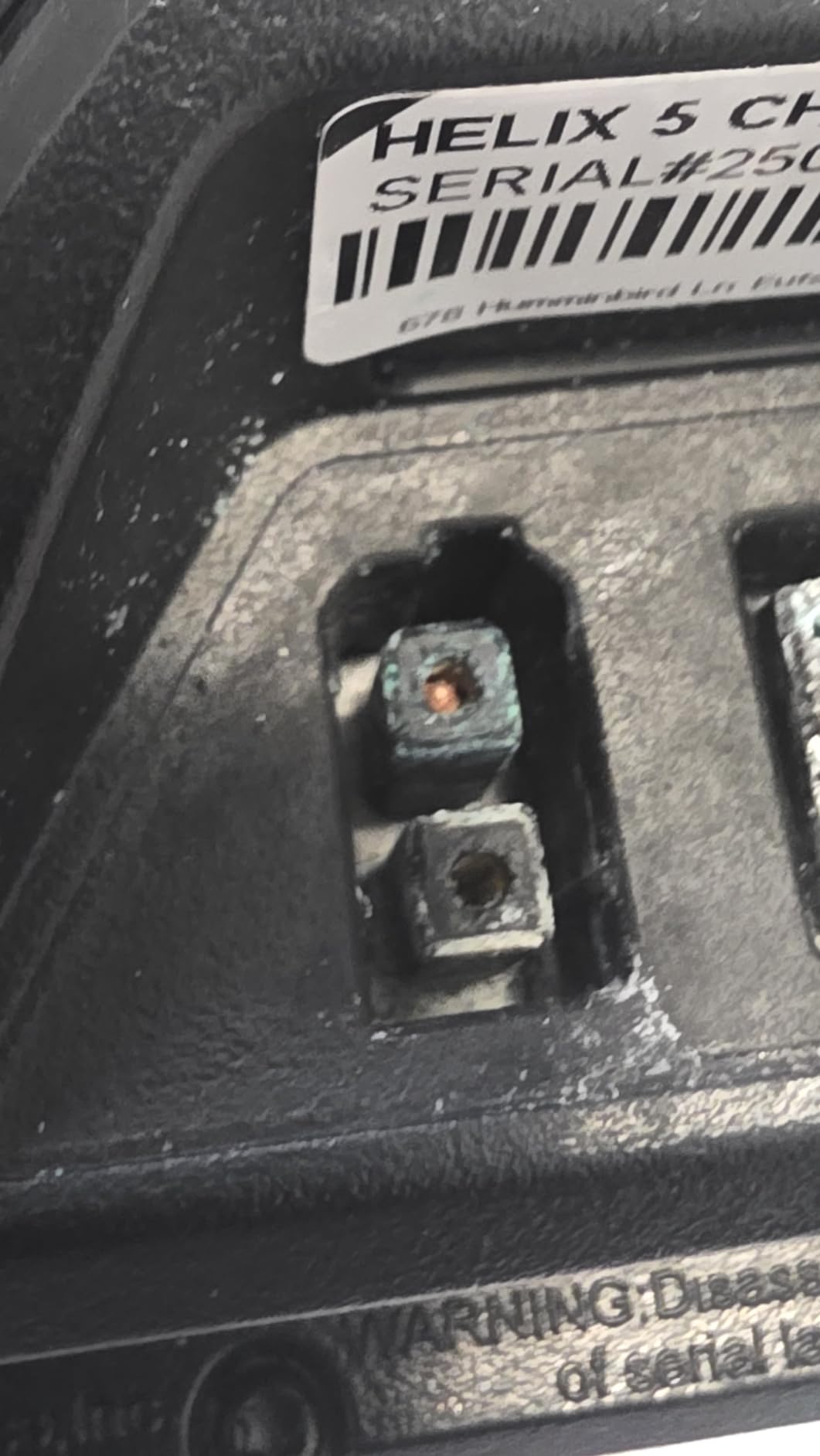
Control is through a physical keypad and softkeys, which stay responsive in spray and cold and are easier to use with wet hands than a touchscreen. The trade-off is a fixed transom install with cords trailing to the battery, and a mapping menu system that rewards patience but frustrates anyone in a hurry.
What it does well
Screen size and chart support together. If you are moving between lakes or running coastal water, a 5-inch color display with a basemap is the difference between knowing where you are and guessing.
Saltwater anglers should note that this unit handles coastal charting properly, which the cheaper entries in this guide simply do not.
When to choose something else
Skip it for a kayak or a small jon boat where you want to remove the gear between trips, because the transom mount and cables make that a chore. It is also the priciest pick here, leaving less room in the budget for a chart card.
9. Yoocylii Handheld Fish Finder – Best Budget Backup Depth Finder
Handheld Fish Finder Portable Kayak Fishfinder Sonar Depth LCD Display
Compact LCD display
200 kHz sonar with 45-degree beam
328 ft range
Five sensitivity levels
Pros
- Accurate depth weed and ledge detection
- Fits in a tackle box and works from a kayak
- No wiring to the boat
- Readable screen in bright daylight
Cons
- Weak at true fish finding versus depth reading
- Runs about 4 to 5 hours on four AAA batteries
- Small screen
- Some early power-on failures
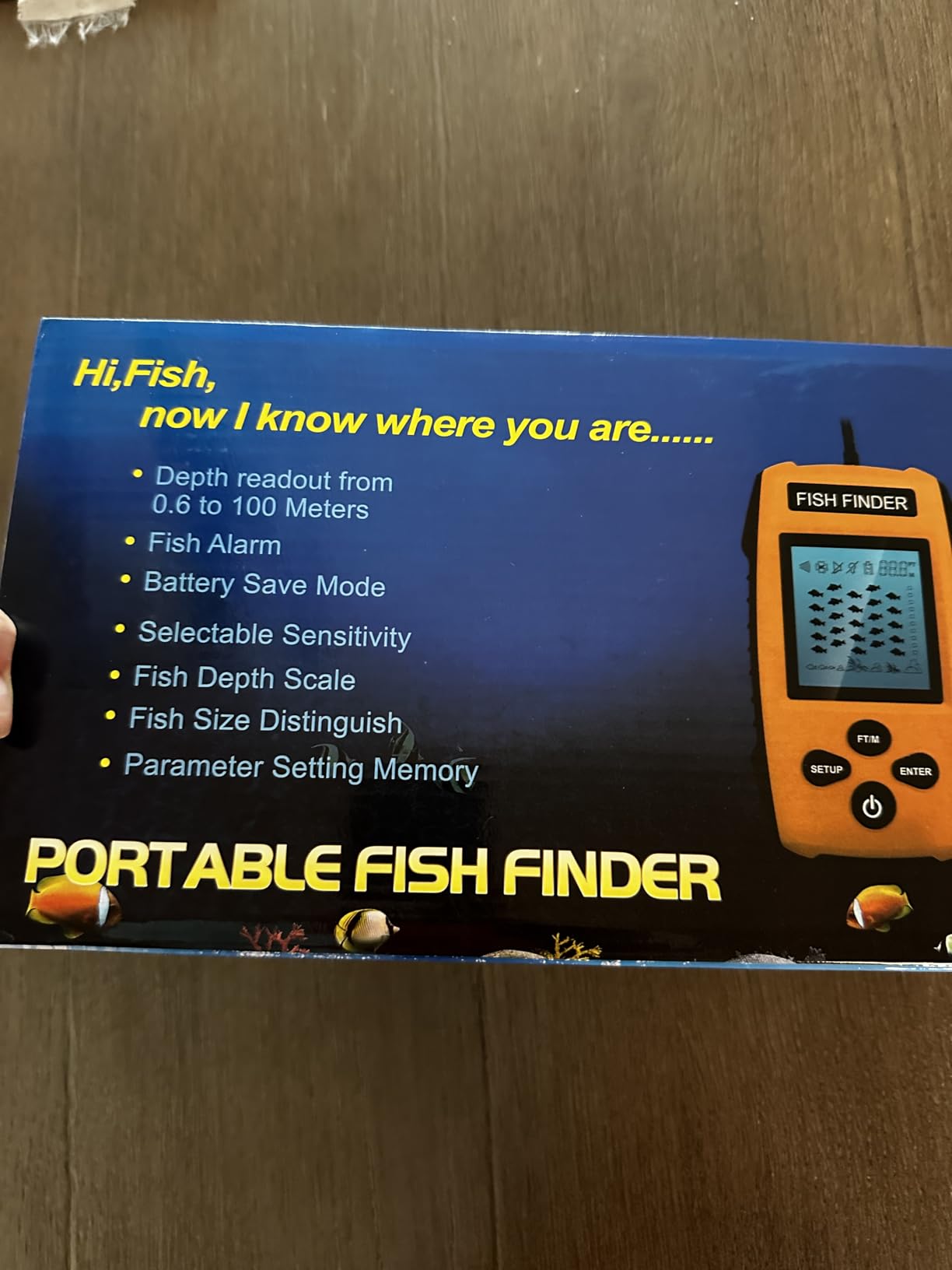
This is the budget handheld to buy if you want a spare rather than a primary tool. It shows water depth, approximate fish location, fish size, and short and tall weeds, sand and rock, on a compact screen with a neck strap.
Sonar runs at 200 kHz with a 45-degree beam and a 3-foot to 328-foot range, which covers lakes, rivers and salt water. Five sensitivity levels, a battery save mode, a backlight and a fish alarm are all there, and settings survive power-off.
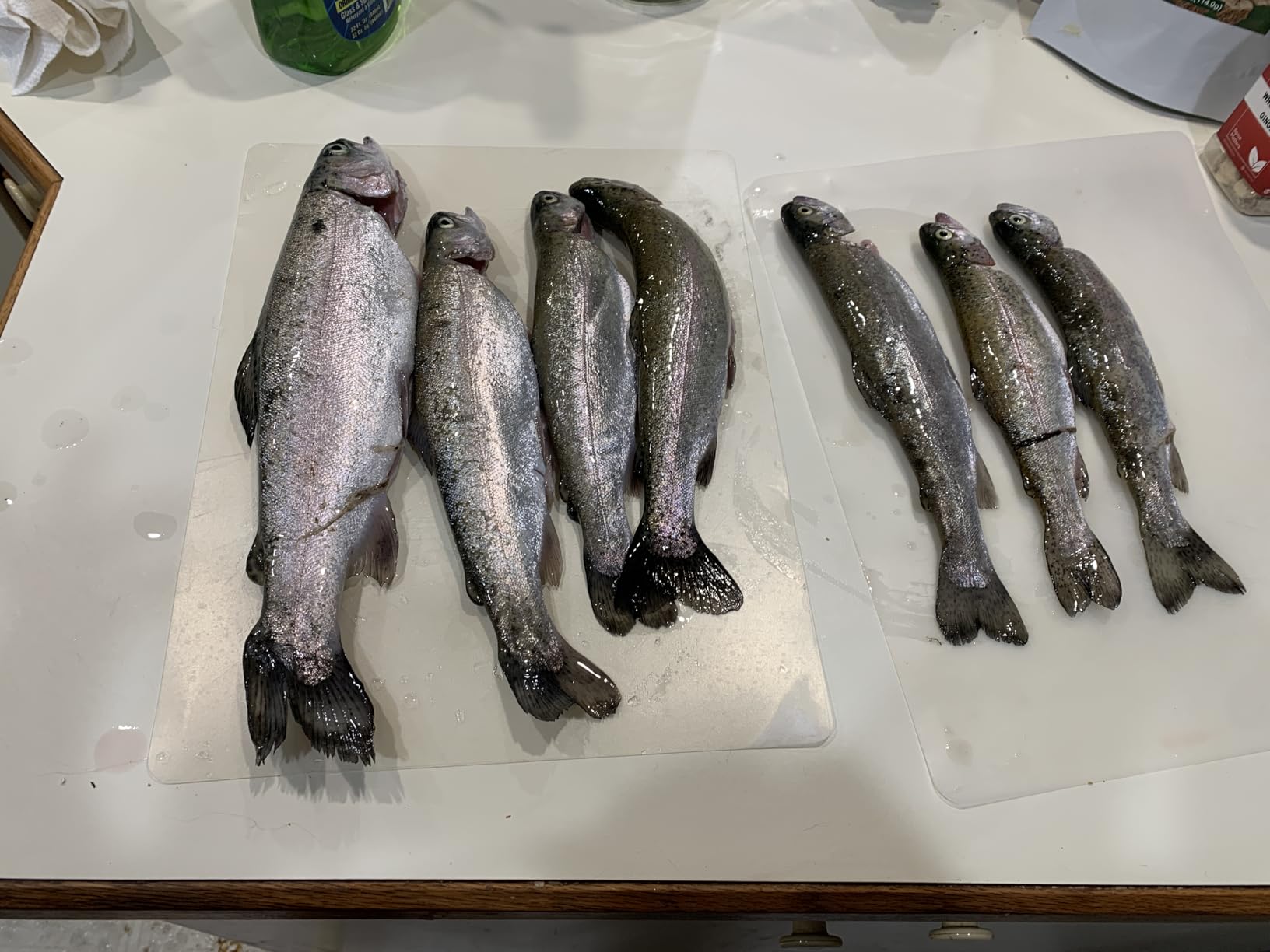
Reviewers describe it consistently as a depth and weed detection tool rather than a fish finder, and that framing is fair. Where the LUCKY handheld is a step ahead is beam definition, which gives slightly cleaner structure readings on ledges.
Battery life of roughly 4 to 5 hours on four AAA cells means you should carry a spare set for a long day. There are also a number of reports of units failing to power on after a few uses, so keep the return option in mind and test it the day it arrives.
What it does well
Zero commitment. No mounting, no wiring, no drilling, and it works in fresh and salt water, which makes it the easiest gift in this roundup for someone who is not sure they want electronics yet.
As a backup for a boat that already has a mounted display, it covers the case where the main unit fails or you borrow a boat for a day.
When to choose something else
Do not buy this expecting to identify individual fish, because the fish arch detail is limited. If that is your goal, the LUCKY handheld or a mounted color model is a better use of the money.
10. Lowrance EAGLE 4 Inch Sonar – Best Upgrade Path
Lowrance Eagle 4X Fish Finder with Bullet Transducer
4-inch IPS portrait screen
Auto-Tuning sonar
200 kHz Bullet Skimmer transducer
Twist-lock quick release
Pros
- IPS screen stays clear in sun and through polarized glasses
- Auto-Tuning removes manual setup
- Portrait shape fits tight console space
- Available in 4 5 7 and 9 inch sizes
Cons
- No charting in the base 4-inch sonar configuration
- No live scope or forward-looking sonar
- Smallest review base in this roundup
The EAGLE line is interesting because the base 4-inch Sonar version is the cheapest way in, and the same mounting footprint scales up to 5-inch, 7-inch and 9-inch versions with SplitShot, TripleShot and C-MAP Discover options later.
The 4-inch IPS portrait display is the standout feature. It stays legible in bright sunlight and through polarized sunglasses, which is a genuine problem with many budget screens, and the narrow portrait shape fits a console where a landscape unit will not.
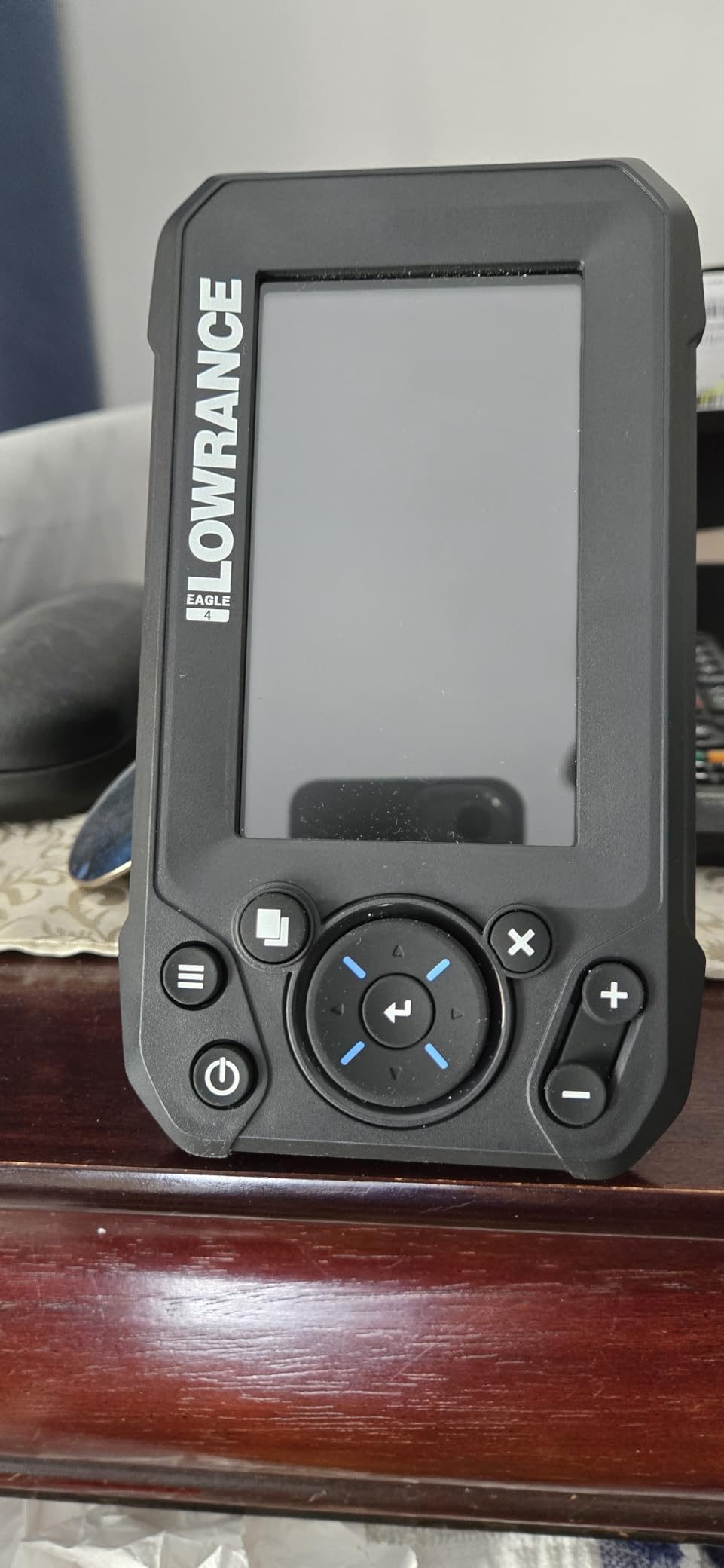
Auto-Tuning sonar sets itself on startup, so there is nothing to adjust, and the included 200 kHz Bullet Skimmer transducer has a 44-degree beam. A twist-lock connector means the transducer comes off without fuss, and the box includes a bracket, power cable, locking collars and a fuse holder.
The limits are real. There is no live scope or forward-looking sonar here, no audible fish alarm on this configuration, and no charting in the base version, so treat it as a sonar display with GPS-style navigation rather than a chartplotter. It also has the smallest review base in this roundup, so owner feedback is thinner than for the Garmin picks.
What it does well
Future-proofing. Lowrance owners report being able to reuse existing transducer mounts and screw holes when they upgrade, which makes a move to a larger EAGLE configuration a matter of a new head rather than a rewire.
For anglers upgrading from an older Lowrance, that continuity is worth more than another few dollars of specification elsewhere.
When to choose something else
Choose the HELIX 5 CHIRP GPS G3 instead if you want charts out of the box or premium chart support. Choose a Garmin model if you want automatic contour mapping built into the standard configuration.
Also avoid it if you need a fish alarm, because this configuration does not provide one.
How to Choose a Budget Fish Finder in 2026?
Most buyers in this bracket make one of six decisions badly. Here is how to avoid each one, based on what the ten picks above actually show about screen size, sonar type, mapping, install and hidden costs.
What sonar type actually buys you
Traditional 2D sonar is a depth line with fish arches on it. It is fast, cheap and reliable, and for panfish, walleye and open-water structure it is still enough. CHIRP is the upgrade within 2D, sweeping a range of frequencies instead of one, which produces cleaner arches and better target separation at the same power.
Down imaging looks straight beneath the boat and paints structure in high detail, which is how you find a rock ledge or a weed edge. Side imaging looks to either side and is the feature anglers chase most often, because it reveals fish holding off structure that down imaging misses. At this budget, side imaging is genuinely rare, so treat any marketing claim about it carefully.
SplitShot and TripleShot are Lowrance names for combined down and side imaging in one transducer, while Garmin uses ClearVu and Humminbird uses MEGA imaging for the same idea. Live or forward-looking sonar, sold as LiveScope, Active Target or MEGA Live, is a different category entirely and sits above this budget, so treat control-head-only deals as an upgrade path rather than a feature at this price.
Screen size math under a 500 ceiling
Is a 5-inch screen worth saving money for a 7-inch one? For a jon boat or small aluminum boat, a 5-inch screen is usually the better trade because it fits the available space and avoids drilling a larger hole. For a pontoon or bass boat console where two people fish at once, the larger screen wins because side-by-side data stops being cramped.
The honest comparison is this: the mounted models in this roundup cluster at 3.5, 4, 4.3 and 5 inches. The jump from 4 to 5 inches is the most useful one because it is the difference between a glance and a read.
The mapping trap nobody explains at this budget
GPS and charting are two different things, and this is the most common buyer complaint in fishing forums. A unit can plot your position and store waypoints without supporting a single chart card.
Among our ten picks, only the Humminbird HELIX 5 CHIRP GPS G3 ships with a built-in basemap covering more than 10,000 lakes plus US coastlines, and it accepts LakeMaster, CoastMaster and Navionics cards. The Garmin STRIKER Plus 4 and STRIKER Vivid 4cv do automatic contour mapping, which is a different and very useful thing, but they do not accept premium charts. Everything else is sonar plus waypoints.
Before you buy, check two lines on the product page: whether it has an SD card slot, and whether that slot accepts charts or only data. Confusing those two answers is what produces disappointed owners.
Matching the fish finder to your boat
Jon boat or small aluminum boat: prioritize a transom mount, a wide-beam option and a screen that fits a small console. The Garmin STRIKER 4 and the Humminbird PiranhaMAX 4 both suit this use, with the STRIKER 4 adding CHIRP and GPS.
Kayak and canoe: avoid anything that requires a permanent install unless you plan to route cables. The LUCKY and Yoocylii handhelds plus the Deeper PRO+ 2 and Venterior castable units all work with no drilling. If your kayak has a recessed transducer pocket, measure it before buying a permanently mounted model, since a wider scanning transducer may not sit flush.
Pontoon: screen size and readable daylight color matter most here because anglers share the view. A 5-inch color unit is the practical target, and the HELIX 5 CHIRP GPS G3 fits that description.
Bass boat console or bow mount: budget units are borderline here, but a trolling motor mount with a transom-mountable unit still works for basic structure reading. Anything beyond that belongs above this price bracket.
Saltwater and coastal: prioritize a basemap and dual frequency capability over screen size. The HELIX 5 CHIRP GPS G3 is the only pick here with coastal charting, and it is the one we would take to saltwater.
Install and power basics for small boats and kayaks
Most budget units draw well under one amp at 12V, so a small sealed lead-acid battery will run a full day of drifting and doubles as a weekend backup. A fused power line with properly secured routing is the only real install requirement on a small hull.
Two things cause most failures. Thin included power leads that chafe where they pass through a hull fitting, and a transducer cable that gets pinched during a trailer launch. Securing the cable along the transom with fresh ties at the start of every season prevents almost all of it.
Hidden costs beyond the sticker price
A fish finder priced under 500 often costs meaningfully more once the boat is ready. The most common additions are a battery and wiring harness for portable setups, a more capable transducer if you upgrade to a scanning model, a ram mount or console bracket if the included one does not fit, and premium chart cards if you want detail beyond the built-in basemap.
Accessory costs matter most for the Garmin STRIKER Plus 4, which includes no battery or power fittings, and for the HELIX 5 CHIRP GPS G3, where adding a chart card uses up a meaningful slice of the remaining budget.
For broader budget coverage, we also publish roundups on gas grills under 500, sofas under 500 and value mattresses under 500, all built on the same test-and-compare method. For the wider sonar picture, our complete fish finder guide compares mid-range and premium models.
Frequently Asked Questions
What is the best fish finder for a Jon boat?
For a jon boat, prioritize a transom-mount unit with a wide beam and a screen that fits a small console without drilling a large hole. The Garmin STRIKER 4 is our pick because it includes CHIRP sonar, GPS waypoints and both transom and trolling motor mounts in the box. If your console has room for a larger color screen and you want automatic contour mapping, the STRIKER Vivid 4cv is the better upgrade.
Can you provide a review of the Lowrance Eagle 4x fish finder?
The 4-inch Sonar configuration in this roundup uses a 200 kHz Bullet Skimmer transducer with a 44-degree beam and an IPS portrait screen that stays readable in bright sunlight and through polarized glasses. Auto-Tuning sonar sets itself on startup, so there is no manual tuning. The main limits are no charting in the base configuration, no audible fish alarm and no live scope, though the same line is available in larger sizes later.
Where can I find fish finders for sale?
Major outdoor retailers, marine electronics dealers and the large online marketplaces all carry the models in this roundup, and prices move constantly on all of them. Check the manufacturer listing for the exact model number before buying, because the same-named unit often exists in several sizes. Secondhand marketplaces carry older Lowrance and Humminbird displays, but warranty and condition are hard to verify.
What is a good budget fish finder?
A good budget fish finder is a mounted unit with CHIRP sonar, GPS waypoints and an included transducer. That combination covers depth reading, structure finding and returning to a spot. Below roughly the mid-hundreds you trade away mapping and scanning, so if your budget allows, spend it on a color scanning model such as the Garmin STRIKER Vivid 4cv rather than on a cheaper unit with a bigger but less capable screen.
Do I need a map card or extra transducer for my fish finder?
Most units at this budget include a transducer, but most do not include a chart card. Among these picks, only the Humminbird HELIX 5 CHIRP GPS G3 ships with a basemap and accepts premium LakeMaster, CoastMaster or Navionics cards. The Garmin STRIKER Plus 4 and STRIKER Vivid 4cv do automatic contour mapping instead. Check whether the SD slot accepts charts or only data before you buy.
Can I use a fish finder for ice fishing?
Yes, but pick the right model. The Garmin STRIKER 4 has a built-in flasher for ice fishing and vertical jigging, and the STRIKER Plus 4 is reported by owners to match a dedicated flasher. Handheld units with wide sonar beams, such as the Venterior wireless castable model, are much less accurate on ice. Remember that battery life drops in cold weather for any portable unit.
The Best Fish Finder Under 500 for Most Anglers in 2026
After working through all ten, the Garmin STRIKER 4 remains our best fish finders under 500 recommendation for anyone mounting a unit on a small boat, because it pairs CHIRP sonar with GPS and ships with every mount and cable you need. Pick the STRIKER Vivid 4cv if you want color imaging and automatic contour mapping, and the LUCKY handheld if you fish from a kayak and never want to drill a hull.
For saltwater, charts and the largest screen in this bracket, the Humminbird HELIX 5 CHIRP GPS G3 is the tool. Before you click through, double-check whether you need charting or just waypoints, because that single answer decides between half of this list.