
Most golfers lose strokes in the ten feet around the cup, and they lose them because they never touch a putter in practice. A backyard putting green fixes that by putting a practice surface a few steps from the back door, so short-putt reps happen daily instead of once a week at the course. When we searched for the best golf putting greens for backyards in 2026, the market split cleanly into three groups, and that split is the single most useful thing to understand before you spend anything.
The first group is roll-out mats that lie flat on a patio and store in a closet. The second is larger artificial-turf greens with real cups, slope pads and a surface you can practise breaking putts on. The third is the fully installed route, where a contractor builds a shaped green into your yard over a free-draining base. Everything in this roundup sits in the first two groups, because those are the ones you can install in an afternoon without calling in a crew.
A note on how we worked: we did not putt on these greens on a course or measure them with a Stimpmeter. Instead, we compared published specifications, cross-checked them against thousands of owner reviews, and paid attention to the complaints that repeat rather than the praise that does not. We also read the r/golf and MyGolfSpy threads on backyard greens, because owners are far more honest about turf that is too thick and about what an installer got wrong. Where a figure below comes from a manufacturer, we say so. Where it comes from owners, we say that too.
Table of Contents
Best Golf Putting Greens for Backyards: Our Top Picks in 2026

PUTT-A-BOUT Par Three
- Kidney-shaped layout with five holes and sand hazards
- Rubber backing
- 108 x 36 in
- folds for storage

Dachenus Two-Hole Mat
- Automatic ball return on a 7 ft magnetic rail
- Two training holes at 2.5 in and 3.2 in
- Wrinkle-free velvet over memory rubber

SKLZ Putting Green
- True-roll surface with a realistic stimp reading
- Slight upslope at the cup and three cup options
- Portable 8 ft 6 in x 3 ft format
Our top pick for most people is the PUTT-A-BOUT Par Three. It carries a 4.6 rating across more than 24,000 reviews, which makes it by far the most proven surface on this list, and owners repeatedly describe the same thing: it unrolls flat in seconds and stays flat for years. If your priority is a reliable daily surface rather than extra features, that is where we would start.
The Dachenus mat takes the highest rating in the group at 4.7 stars, and its return rail runs the full seven feet of the mat. That makes it the pick for a golfer who wants a continuous putting rhythm without walking to the other end of the yard after every stroke. If you take 400 putts a week, that feature pays for itself in saved steps rather than in score.
Quick Comparison Table for Backyard Putting Greens in 2026
Every pick below is listed with the specs that actually change the way a ball rolls, not the marketing language. Speed figures come from the manufacturer where one is published, and cups, breaks and ball return are described exactly as the product is sold.
| Product | Specifications | Action |
|---|---|---|
| PUTT-A-BOUT Par Three |
|
Check Latest Price |
| SKLZ Putting Green |
|
Check Latest Price |
 PutterBall Original Game Set PutterBall Original Game Set |
|
Check Latest Price |
 GoSports BattlePutt GoSports BattlePutt |
|
Check Latest Price |
 GimiYaa Crystal Velvet Mat GimiYaa Crystal Velvet Mat |
|
Check Latest Price |
| Dachenus Two-Hole Mat |
|
Check Latest Price |
 SAPLIZE Two-Speed Mat SAPLIZE Two-Speed Mat |
|
Check Latest Price |
 Chriiena 5 x 10 ft Green Chriiena 5 x 10 ft Green |
|
Check Latest Price |
 Storzon 2 x 9 ft Mat Storzon 2 x 9 ft Mat |
|
Check Latest Price |
 FARROLL 5 x 10 ft Green FARROLL 5 x 10 ft Green |
|
Check Latest Price |
 GYMAX 10 x 3 ft Mat GYMAX 10 x 3 ft Mat |
|
Check Latest Price |
 ALTRUISTIC 7 x 13 ft Turf ALTRUISTIC 7 x 13 ft Turf |
|
Check Latest Price |
The table makes one thing obvious: the picks split by width more than by price. Everything under three feet wide is a putting strip, which is fine for a patio or a walkway. Once you reach five feet wide you can stand over the ball the way you do on a course, and that single change is worth more than any accessory on this list.
How We Picked and Compared These Putting Greens
Five criteria decided the order, and each one came directly from what owners complain about after a season of use.
Flatness that holds. A mat that curls at the edges sends putts off line, and no amount of good design fixes that. We weighted review comments about creases and waviness heavily.
A published speed. Where a manufacturer quotes a stimp reading or a Stimpmeter-equivalent figure, we can compare surfaces honestly. Where none is published, we say so rather than guessing.
Cup realism. Regulation cups are 4.25 inches. Every pick here ships with smaller training cups, which sharpens accuracy work but does not match course conditions exactly.
Outdoor readiness. Rain, hose-down cleaning and a base that grips concrete or pavers all matter more than a feature list that never leaves the garage.
Maintenance burden. Surfaces that shed fibres, trap sand or take days to flatten after unrolling get flagged clearly below, because they are the things owners mention most in the first month.
One pattern came up in almost every forum thread we read on this topic. Installers who supply thick-pile turf push golfers into hitting putts much harder at home than they would on the course, and the practice ends up working against them. Several r/golf users raised this directly, which is why pile height appears in our specs section rather than being treated as a detail.
1. PUTT-A-BOUT Par Three: Best Overall Roll-Out Putting Green
PUTT-A-BOUT Grassroots Par Three Putting Green (9-feet x 3-feet)
Rubber backing and PET resin surface
Kidney shape with 5 holes and sand traps
108 x 36 x 2 in, 3.5 lb
90 day return policy
Pros
- Over 24000 reviews at a 4.6 average
- Unrolls flat in about 30 seconds
- Kidney shape gives several target positions
- Folds into a narrow hallway for storage
- Works on hard floors tile or carpet
Cons
- Shallow cups that do not drop like a real green
- Putts can run off the back edge without a wall behind the mat
- Thin surface rather than plush
- Practice distance tops out around 2.5 meters
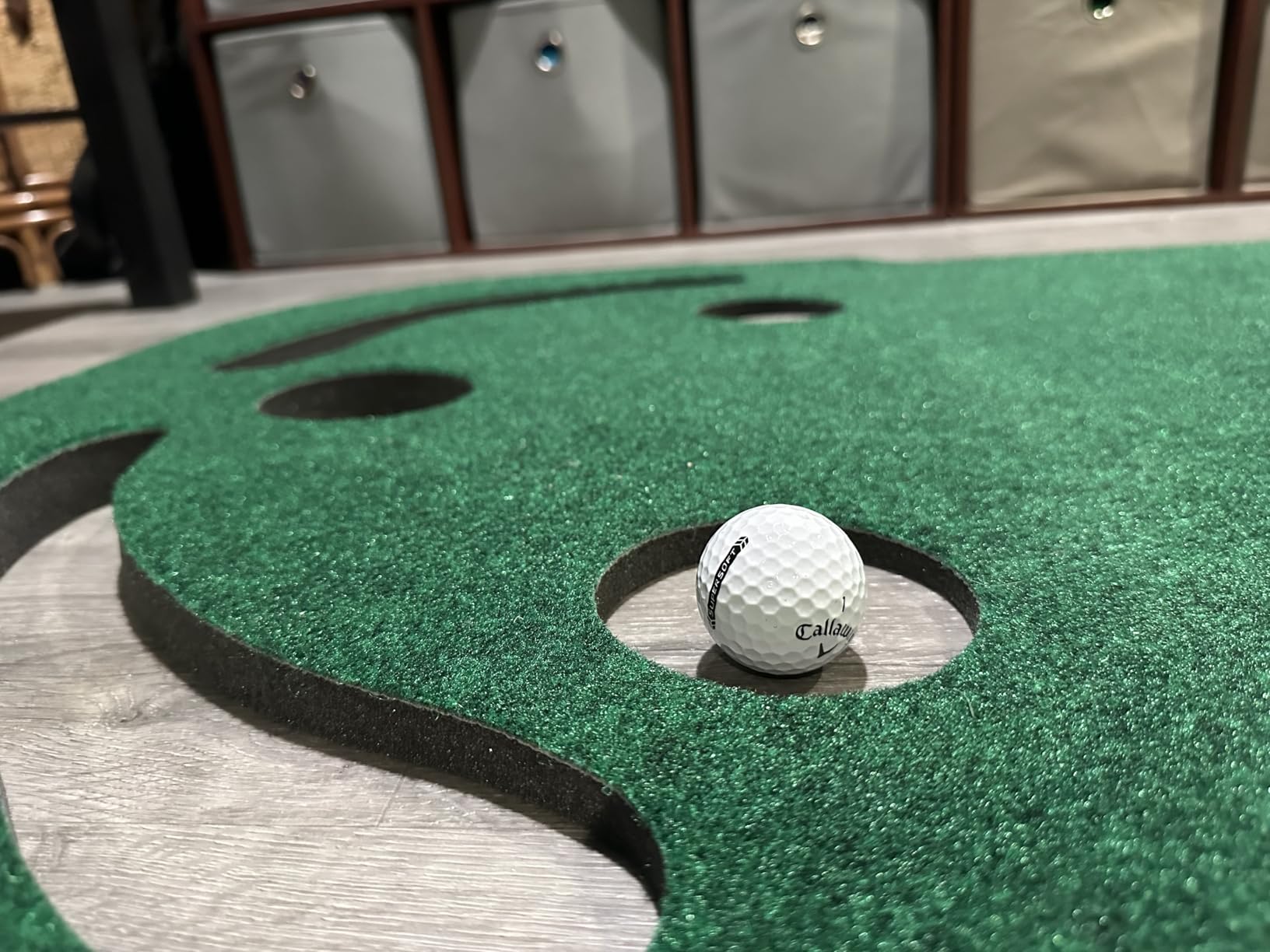
The PUTT-A-BOUT Par Three is the pick with by far the largest body of owner experience behind it, and that matters when you are buying a surface you will touch every day. Owner reviews repeat the same pattern year after year: it unrolls without curling and stays that way. On a surface you use daily, predictable flatness matters more than anything you could add to the box.
The kidney shape is smarter than it sounds. You get five hole positions plus built-in sand hazards, which means you are not drilling the same six-foot putt every evening. You can work on putts that break from either direction, and the sand features give missed balls somewhere to end up instead of in the flower bed.
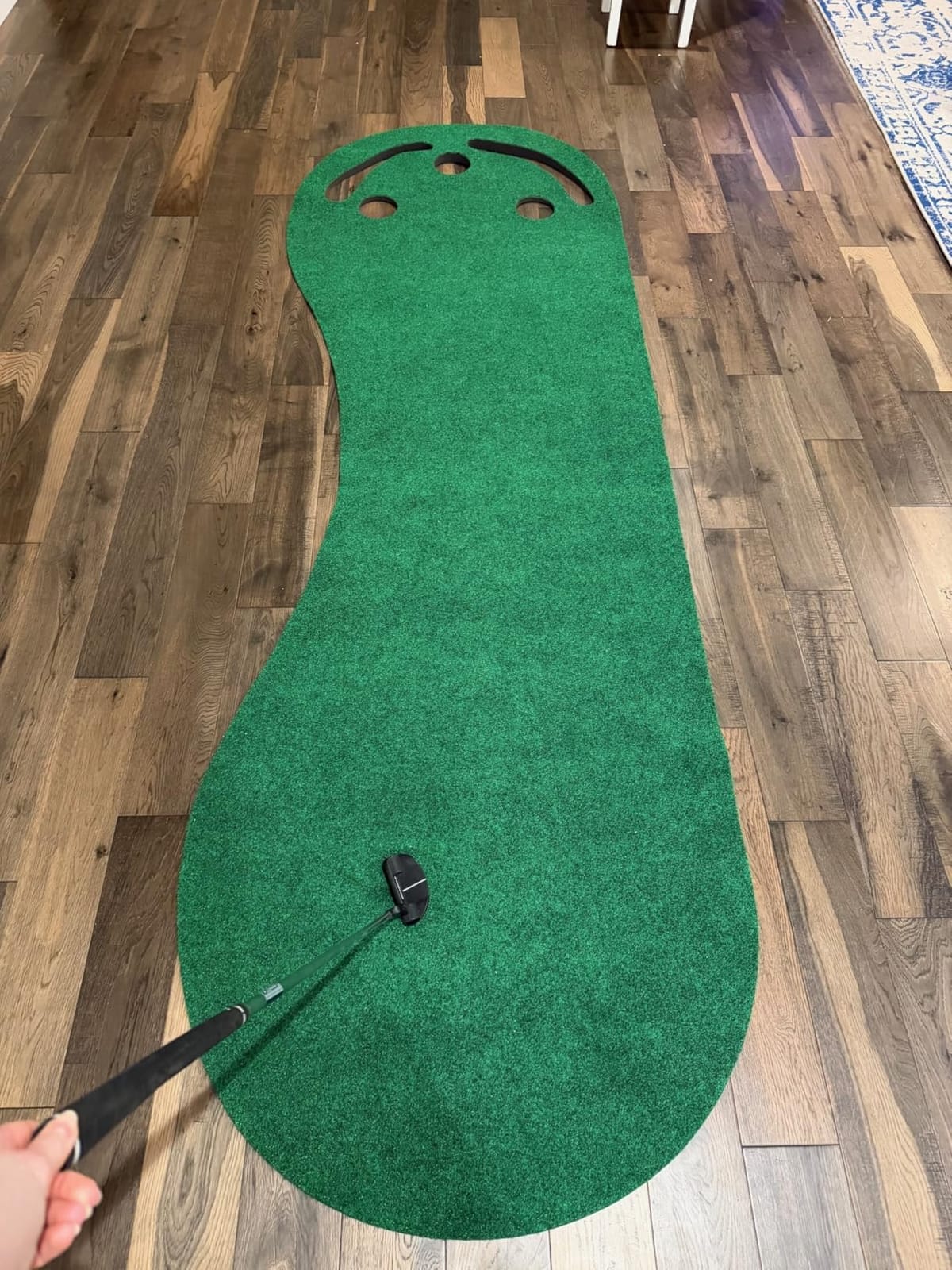
The honest limitation is the cup. It is shallow, so a ball that reaches it slows quickly rather than dropping with the drop-and-catch feel of a real green. Owners also note that a firm putt can run off the back edge, which is why a fence or a wall behind the mat matters more than you would expect. Practise lag speed rather than trying to hole everything.
Who this green suits
This suits a golfer whose real problem is inconsistency on medium-length putts rather than an inability to read a green. If you want something that goes out on the patio, survives the dog, and stores in a cupboard, this is the least fussy surface in the roundup. It also works for beginners, because a flat true surface teaches a repeatable stroke before you add slope.
What to watch for
Do not buy it expecting practice on breaking putts. There are hazards on the mat, but the surface itself is flat, so the break training has to come from angle rather than slope. If you want a genuinely contoured surface with a movable cup, read the Chriiena and FARROLL sections further down before you decide.
2. SKLZ Putting Green: Best Budget Mat With a True-Roll Surface
SKLZ Golf Indoor Putting Green, 3 x 9 feet
Nylon surface with polyurethane backing
3 cups with bunkers behind the holes
8 ft 6 in x 3 ft, 4.5 lb
1 year warranty
Pros
- True-roll surface with a stated stimp-like pace
- Subtle break built in near the holes
- Folds for storage between sessions
- No assembly needed
- A stroke-consistency win reported after a year
Cons
- Plays noticeably slower than a typical course green
- Creases from box storage can persist
- Measured footprint falls short of the advertised size
- No ball return
The SKLZ mat is the one to look at if you want a true-roll nylon surface without spending much. It is 4.6 stars across roughly 4,600 reviews, folds to nothing, and sets up with no assembly at all. The manufacturer describes the pace as similar to a real green, which is a claim we cannot verify ourselves, so treat it as a starting point rather than a measurement.
What makes it interesting is the design under the cups. The foam is thicker on one side, which produces a gentle break on putts that finish near the hole. Several owners mention that this alone changed how gently they approach the cup, which is the habit that costs strokes on real greens.
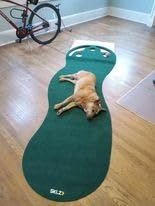
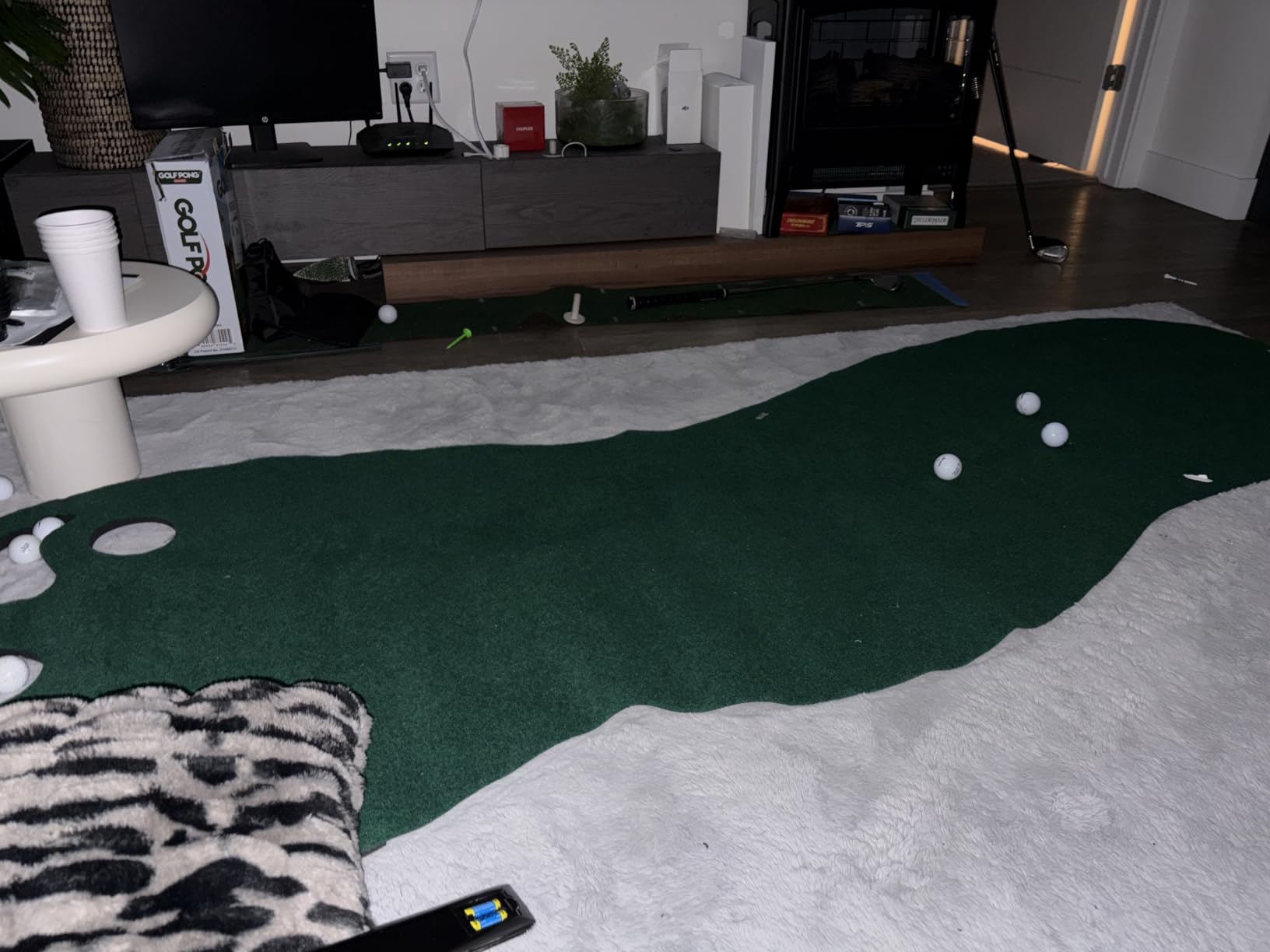
The recurring negatives are consistent enough to plan around. The surface reads slow compared with a course green, so if you are matching your home pace to your local course speed, expect to hit putts harder here. Creases from being folded into the box can also linger even after the mat has lain flat for days, and the actual measured size comes in under the advertised 9 by 3 feet.
Who this mat suits
This suits a golfer practising alone who wants a dependable carpet surface to fix a rolling putt. It is also a sensible first green for a family, since it is light enough to move, inexpensive enough to replace, and tough enough that a dropped club will not ruin it. Owner reviews suggest it holds up over years without developing bumps.
What to watch for
Skip it if your short-putt problem is reading break, since the built-in slope is subtle rather than pronounced. And if you have strong sun exposure where it would live, plan on moving it rather than leaving it out permanently, because the surface is carpet-like rather than outdoor-grade synthetic turf.
3. PutterBall Original Golf Putting Game Set: Best Putt-Pong Set for Backyard Game Nights
PutterBall Original Golf Putting Game Set – Backyard 12 ft Putting Green Pong Style Golf Mat with 2 Putters, 2 Balls & Hole Covers (Putterball Original)
High-density foam construction with EVA surface
12 ft by 2 ft playing strip
8.05 kg, foldable
1 year manufacturer warranty
Pros
- 81 percent five-star ratings in the lineup
- Comes with 2 putters plus 2 balls and 12 cup covers
- Folds down for the beach or the office
- Light enough for one person to carry
- Works indoors and outdoors
Cons
- Built as a party game rather than a practice aid
- Foam surface does not match the roll of true turf
- 12 foot footprint needs open space
- Cup covers suit group play more than solo drills
Put this one in a different category from the practice greens. PutterBall is a putt-pong game, and it is genuinely good at what it does. Roughly 81 percent of its reviews are five-star, the highest five-star share in this roundup, and owners consistently describe it as the thing that gets four people out on the lawn on a summer evening.
Everything arrives in the box: the mat, two putters, two balls and twelve cup covers. It folds flat, it works on grass or concrete, and the foam is light enough that moving it is a one-person job. For a household with golfers of different ages, that matters more than any surface specification.
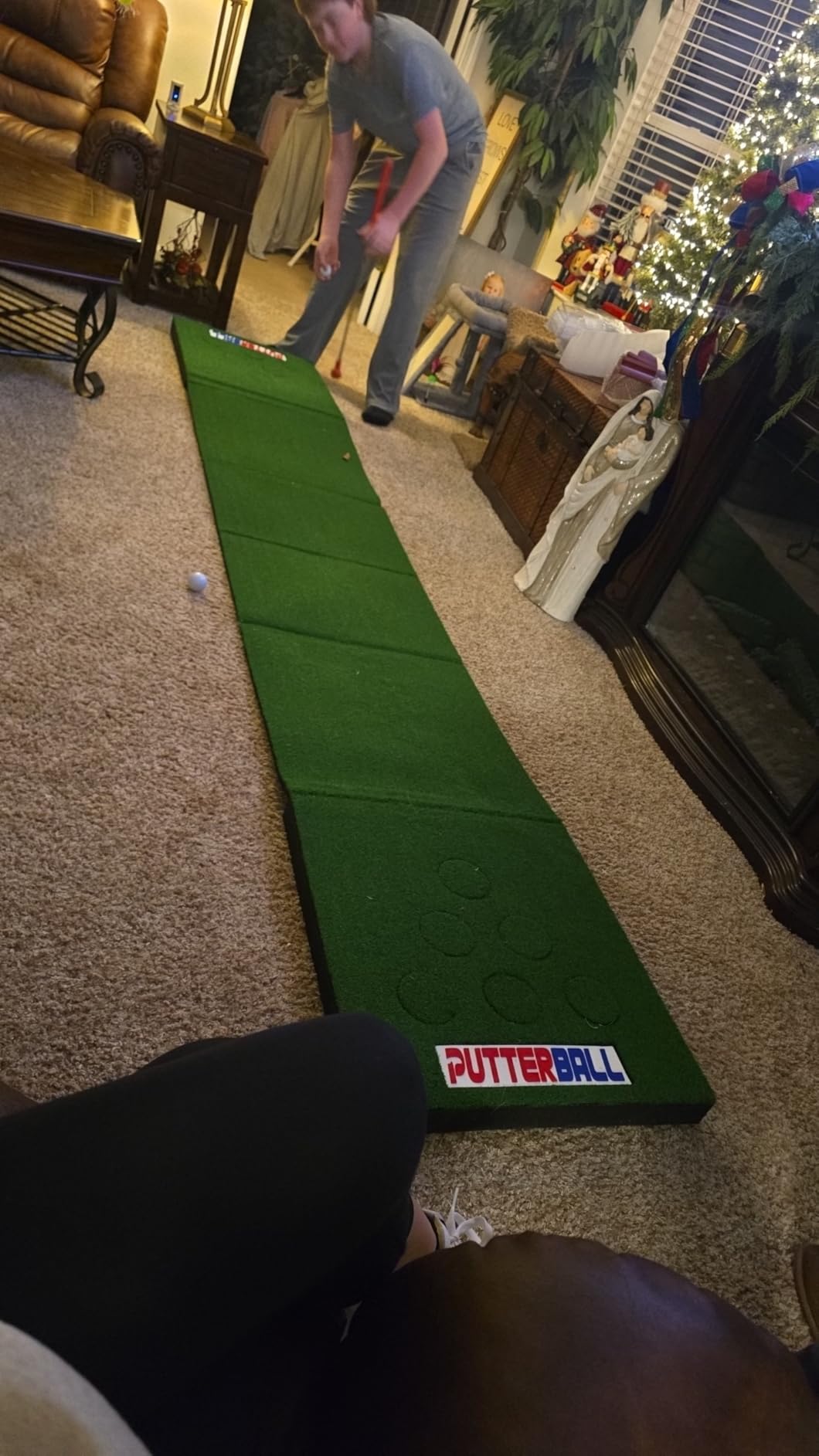
The limitation is the one buyers already know about. A foam surface does not roll like turf, so nothing you learn here transfers directly to a course green. If you buy it thinking of it as a practice aid, you will be disappointed; if you buy it as an outdoor game for a party, the rating makes sense.
Who this set suits
This suits anyone whose real problem is that nobody in the house practises. Competition gets people on the surface, and surface time is the thing that fixes a stroke. It also suits a family that wants a golf activity that does not require driving to the course, and it travels well to a beach house or a rented patio.
What to watch for
The 12 foot footprint is the practical constraint. It needs open ground rather than a narrow patio, and you will need a flat area for the two-foot-wide playing strip. Buy it as a game, not as a putting trainer, and you will probably love it.
4. GoSports BattlePutt: Best Two-on-Two Game for Groups
GoSports BattlePutt Golf Putting Game Set – 11 ft Backyard Putting Green Pong Style Golf Mat with 2 Putters, 2 Balls and 12 Hole Covers – Great Golfer Gift
Foam mat with a true-roll putting surface
11 ft footprint, foldable
Includes 2 putters, 2 balls, 12 cup caps
Sets up in seconds indoors or out
Pros
- Two-on-two pong format suits backyard parties
- Everything needed is included in the box
- Folds compactly between events
- Sets up in seconds on a patio or a living room floor
- Surface rolls true enough for accuracy work
Cons
- Foam surface is a game surface rather than a realistic green
- 11 foot footprint needs open yard or room space
- Cup caps suit pong rather than stroke drills
- Ball stops quickly past the cup area
The BattlePutt is the closest sibling to PutterBall, with one meaningful difference: it is built for two-on-two matches rather than open pong. That format works better with a group of four or more because it keeps everyone involved in rotation instead of two people at the front and two watching.
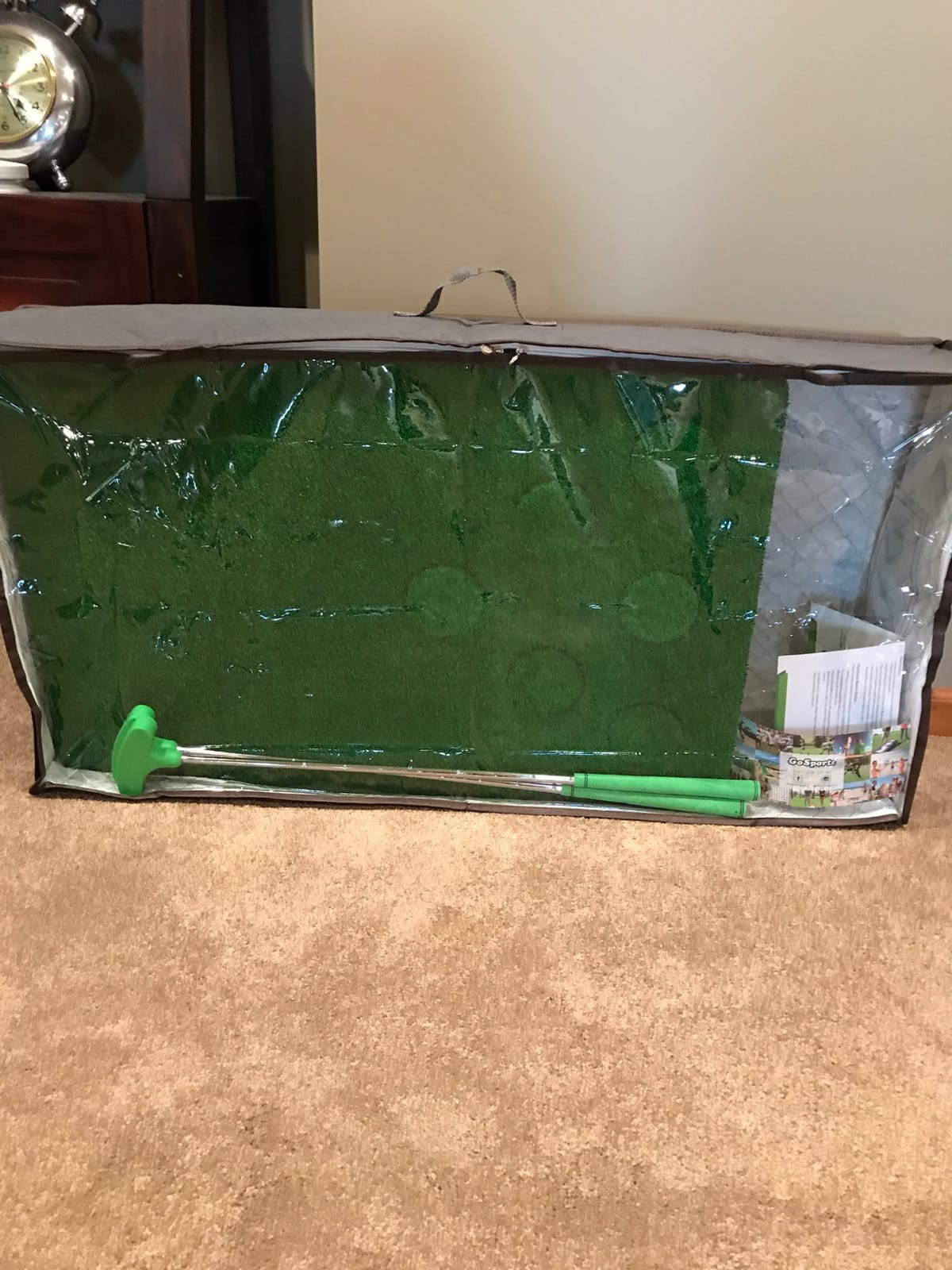
It holds a 4.6 rating from about 1,500 reviews, with praise concentrated on the all-in-one package and how fast it moves between indoor and outdoor use. Owners like that it sets up in seconds on a lawn, a patio or a living room floor, which makes it the easiest surface in this roundup to bring out when the weather turns.
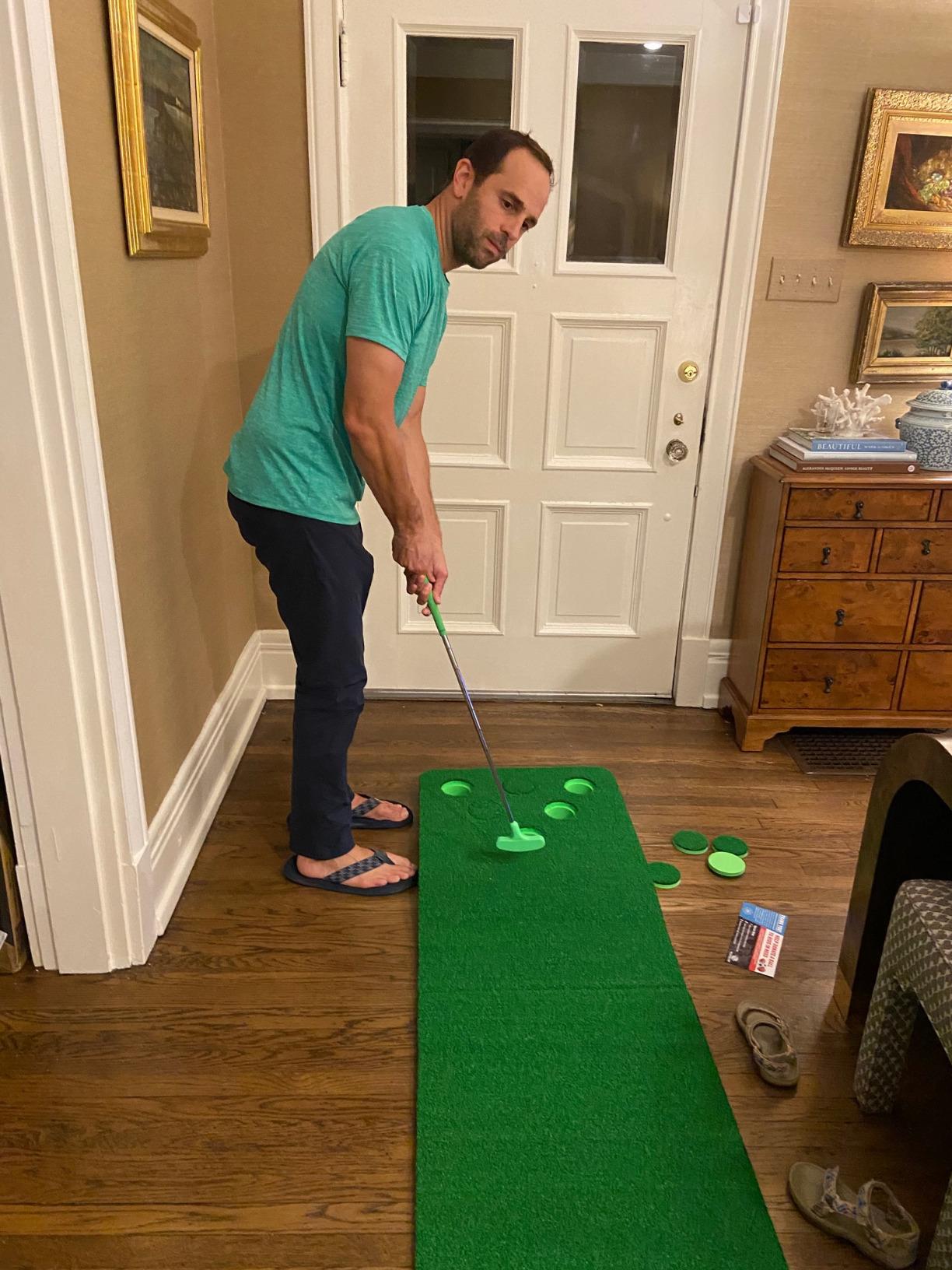
Owners are also candid about what it is not. The foam rolls truer than a party-game mat should, but it is still foam, and it is not a practice green. The 11 foot footprint wants open space, and the ball stopping shortly after the cup limits any roll-out drill you might try.
Who this set suits
This suits a group of golfers, a birthday party, or a couple of parents who want their kids outdoors doing something other than screen time. Because the mat is listed as a golfer gift and includes two putters, it also works as a seasonal purchase for someone who will use it a handful of times a year.
What to watch for
Do not expect transfer of skill. Foam puts the ball on a completely different roll from turf, and the cup caps are designed to be knocked off during play rather than to drop a ball cleanly. Judge it as entertainment, and it earns the rating it has.
5. GimiYaa Crystal Velvet Mat: Best Compact Mat With a Built-In Ball Return
GimYaa Golf Putting mat Green Indoor and Outdoor with Auto Ball Return,Game Practice Golf Gifts for Home, Office, Backyard Indoor Golf and Outdoor Use, Crystal Velvet Mat
Crystal velvet over a natural rubber base
Solid wood magnetic ball-return track
98 x 8.66 in unfolded, 3.5 lb
2 year warranty
Pros
- Automatic ball return keeps practice uninterrupted
- Solid wood frame resists pet damage better than plastic
- Velvet surface rolls smoothly with no lumps
- Two under-regulation hole sizes for accuracy work
- Rolls to the size of an average golf bag
Cons
- Needs time and hand smoothing after unrolling
- Ball return can stall on an uneven floor
- Long-term rolled storage leaves creases
- Wood dents if struck hard
This is the mat for someone with a small hard surface rather than a lawn. The GimiYaa uses crystal velvet over a rubber sole on a solid wood frame, measures 98 by 8.66 inches unfolded, and weighs 3.5 pounds, so it can live in a hallway, on a garage floor or in a spare room and come outside when the weather allows.
The magnetic wooden rails send the ball back to you automatically along the length of the mat. Owners rate this highly for a simple reason: you stop breaking your rhythm to walk after the ball. There is also a built-in alignment mirror and printed distance marks at two, four, six and 7.5 feet, which makes it useful for drills as well as casual practice.
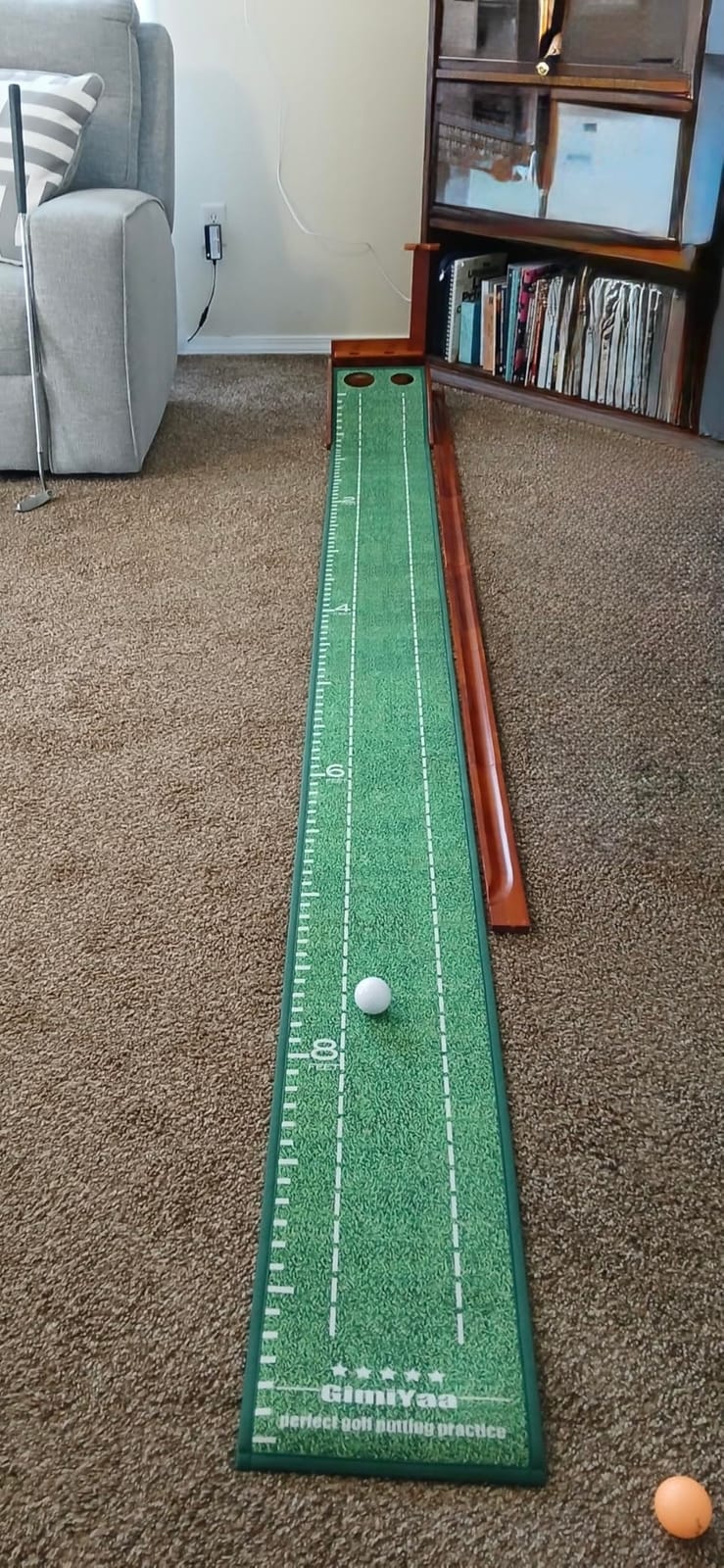
The setup notes are worth planning around. The mat needs time and a hand to flatten it after unrolling, and storing it rolled for long periods leaves creases that have to be worked out again. The ball return also depends on a level floor, so on uneven concrete it can stall partway.
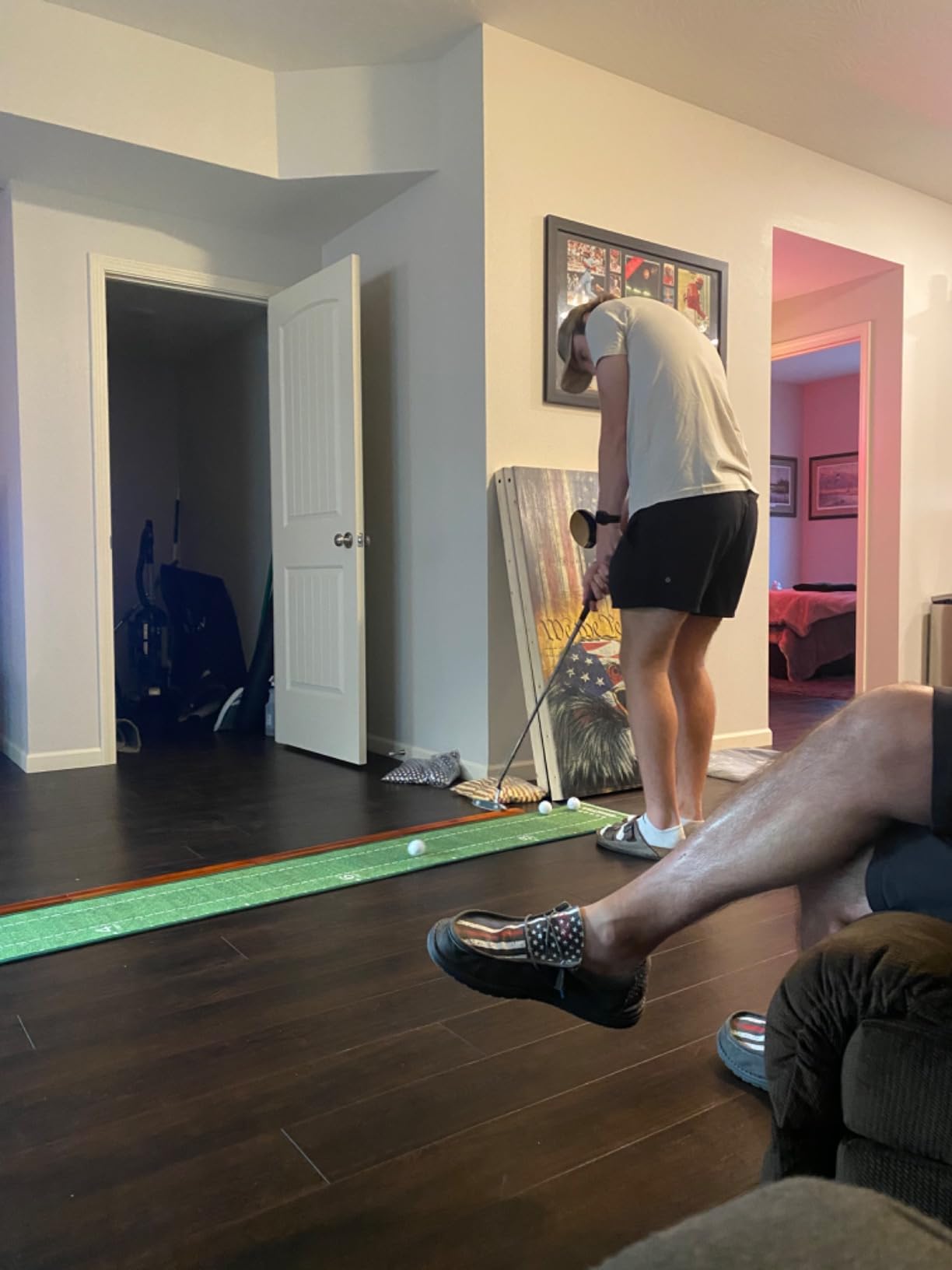
Who this mat suits
This suits an apartment or a small patio where a five-foot-wide green is not an option, and it suits a golfer who wants to putt indoors in bad weather. The solid wood construction is a genuine advantage in a household with a dog, since it takes claw marks far better than a plastic frame.
What to watch for
At roughly 8.66 inches wide, there is barely room to adjust your stance. Practise putting mechanics and pace control rather than long putts, and lay the mat out flat well before you intend to start.
6. Dachenus Two-Hole Mat: Best With an Automatic Ball Return
Putting Green Indoor Mat Outdoor Golf Putting Mat with Automatic Ball Return – Ideal for Home, Office, and Outdoor Use
Velvet over memory rubber on a solid wood frame
7 ft magnetic return rail
118 x 9.8 in unfolded
2 year warranty
Pros
- Highest rating in the roundup at 4.7 stars
- Reliable ball return along the full 7 ft rail
- Two hole sizes build precision
- Memory rubber base rolls out without creases
- Wood frame looks good enough to leave out
Cons
- Narrow runner leaves little room for stance changes
- Heavy flexible rubber can sit crooked without taping
- Uneven floors show through and affect the roll
- Heavy package because of the wood components
This is the highest-rated product we reviewed, at 4.7 stars with 79 percent five-star ratings across roughly 620 reviews. What earns that rating is the combination of a memory-rubber base that unrolls without folds and a magnetic wooden rail that reliably returns the ball the whole seven feet. Owners describe a practice session where the ball comes back to you every single time, which is exactly what a ball return is supposed to do.
Two hole sizes are included, a 2.5 inch accuracy hole and a 3.2 inch regulation-style hole. Training on a smaller target than the course forces you to start putts where a real one would drop, and several owners credit the pair of holes with visibly better short-putting. Distance tick marks at two, four, six and 9.5 feet support the same goal.
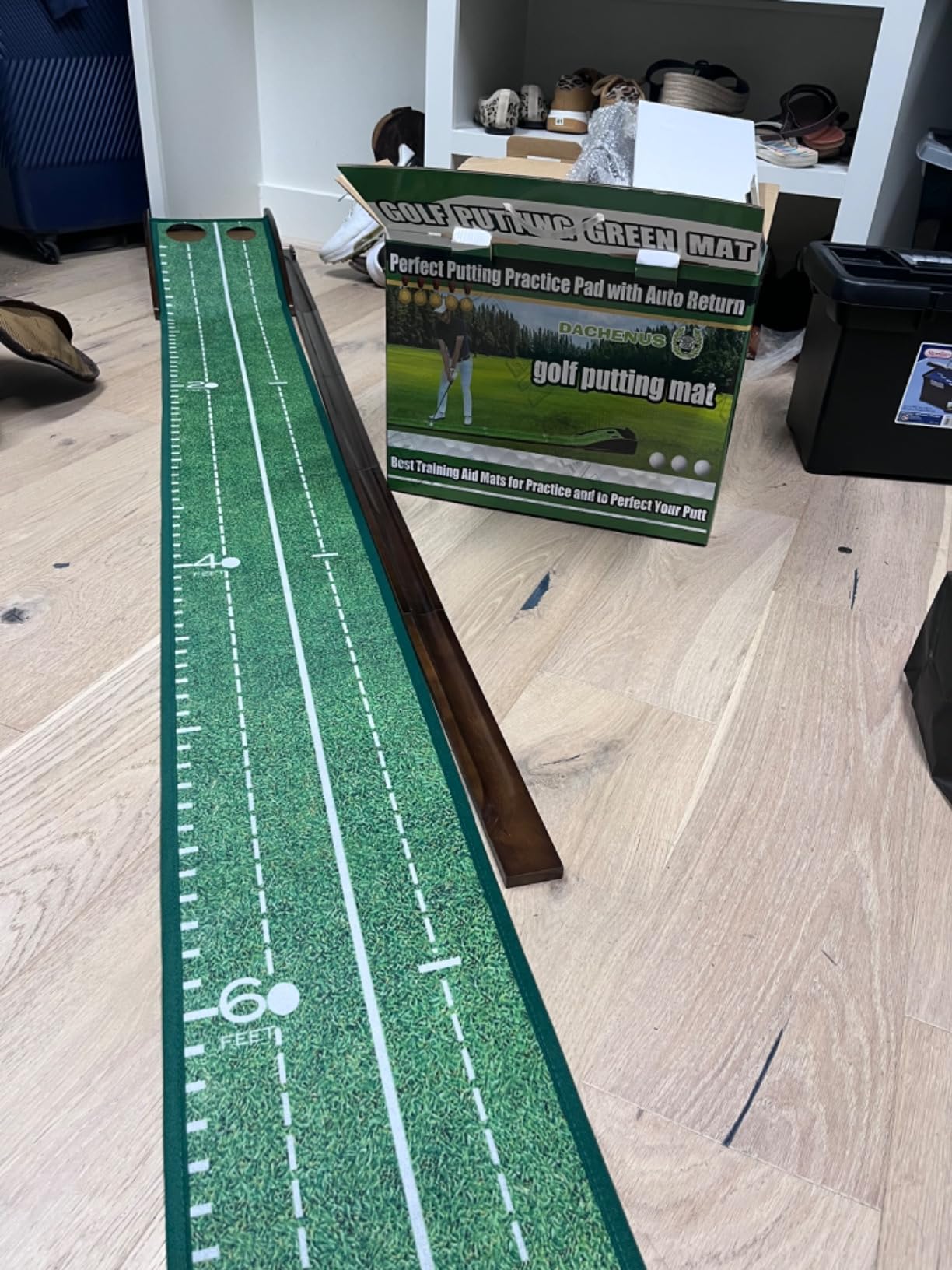
The constraints are about width and floor. At roughly 10 inches across, the mat gives you room to swing a putter but not to step across it for a different angle. It is also heavy because of the wood rails, and the flexible rubber can sit slightly crooked on a surface with any unevenness unless you tape the corners down.
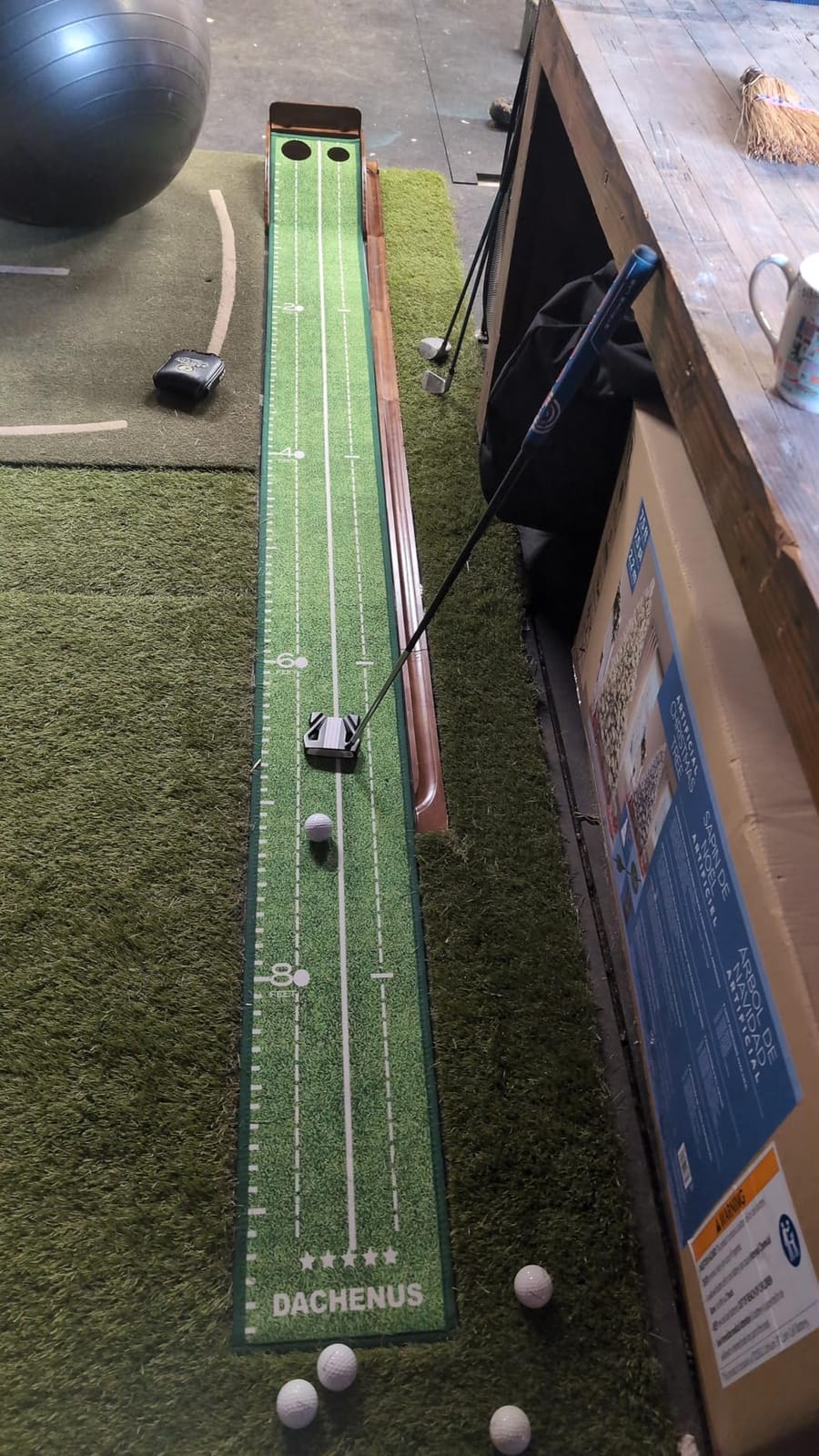
Who this mat suits
This suits a golfer putting hundreds of strokes a week who hates leaving the practice station. It also suits anyone without a lawn, because the whole thing collapses for storage and works on a hard floor. Between the crease-free velvet and the wood frame, it is one of the better-looking options in the roundup.
What to watch for
Uneven floors genuinely matter here. On a flat, level concrete slab or a clean hardwood floor this mat behaves exactly as described, and on anything less than that the roll becomes unpredictable. Check the floor before you unroll it.
7. SAPLIZE Two-Speed Mat: Best for Practising Two Green Speeds
SAPLIZE Golf Putting Mat with Alignment Mirror, Two-Speed Golf Practice Mat, 20 in x 10 ft Indoor Outdoor Putting Green with Anti-Slip Backing
Dual-speed surface rated fast 11 and medium 9
20 in x 120 in
Alignment mirror with foam slope wedges
Anti-slip rubber or TPR backing
Pros
- Two speeds in one mat
- useful for pace adaptation
- Alignment mirror squares the setup
- Included ball bumper saves retrieval time
- Works for golfers of either handedness
- Folds and sets up quickly
Cons
- Only 20 inches wide for a full stance
- Slope wedges are a rough approximation
- Alignment mirror is a small fixed panel
- Its 4.4 rating reflects mixed speed experiences
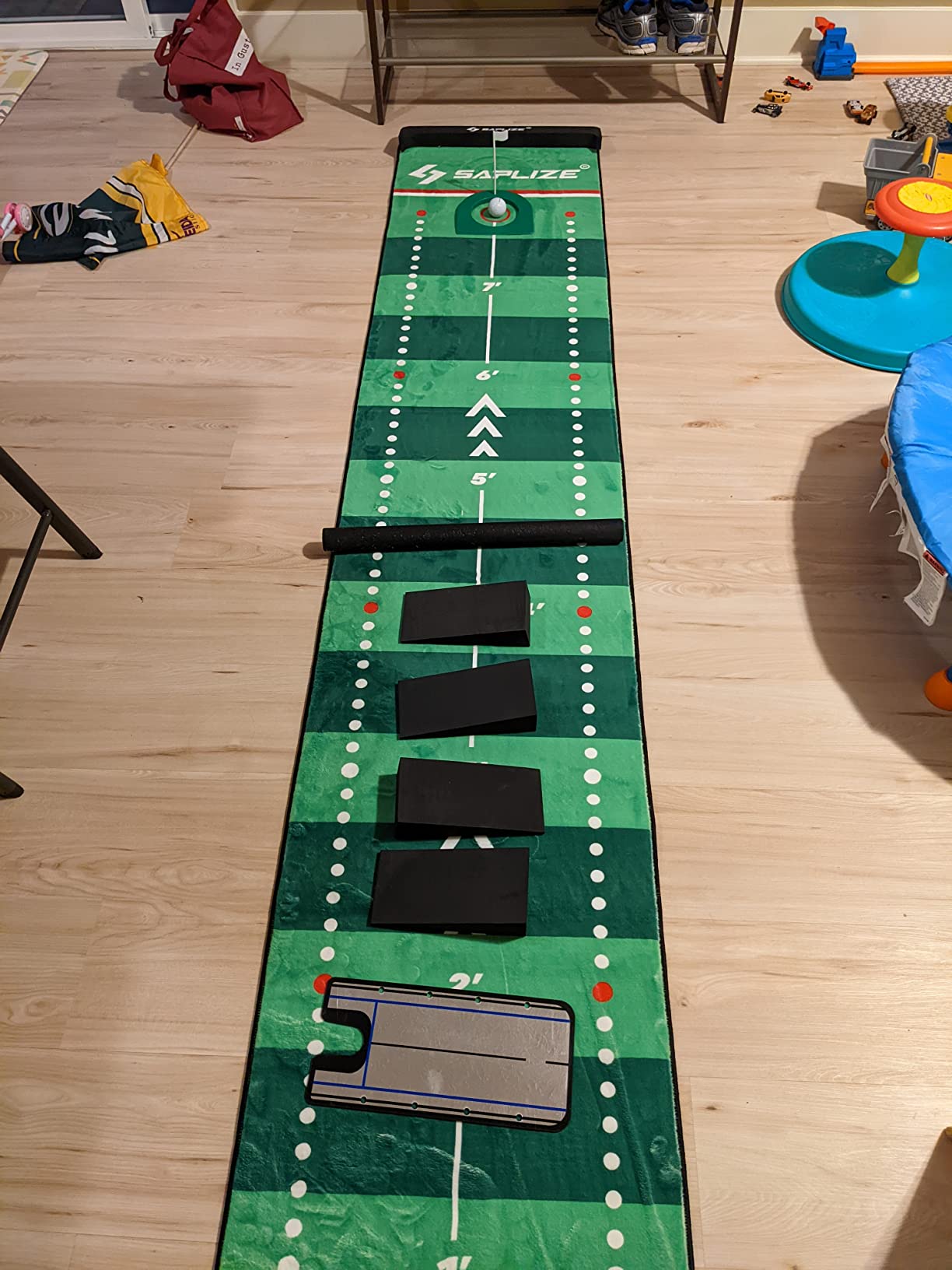
Almost every course you play has greens of different speeds, and the SAPLIZE mat is one of the few ways to practise that without buying two mats. It is built with two zones, a fast end rated at 11 and a medium end rated at 9, so you can hit the same putt from two locations and feel the difference in how hard to strike it. For a golfer whose misses are all pace errors, that is a more useful drill than repetition on one speed.
It also includes foam wedges to build a rough approximation of slope and a small alignment mirror for lining up your eyes over the ball with square shoulders. The ball bumper along the end stops balls rolling off the mat, which removes the single most common annoyance with a narrow strip.
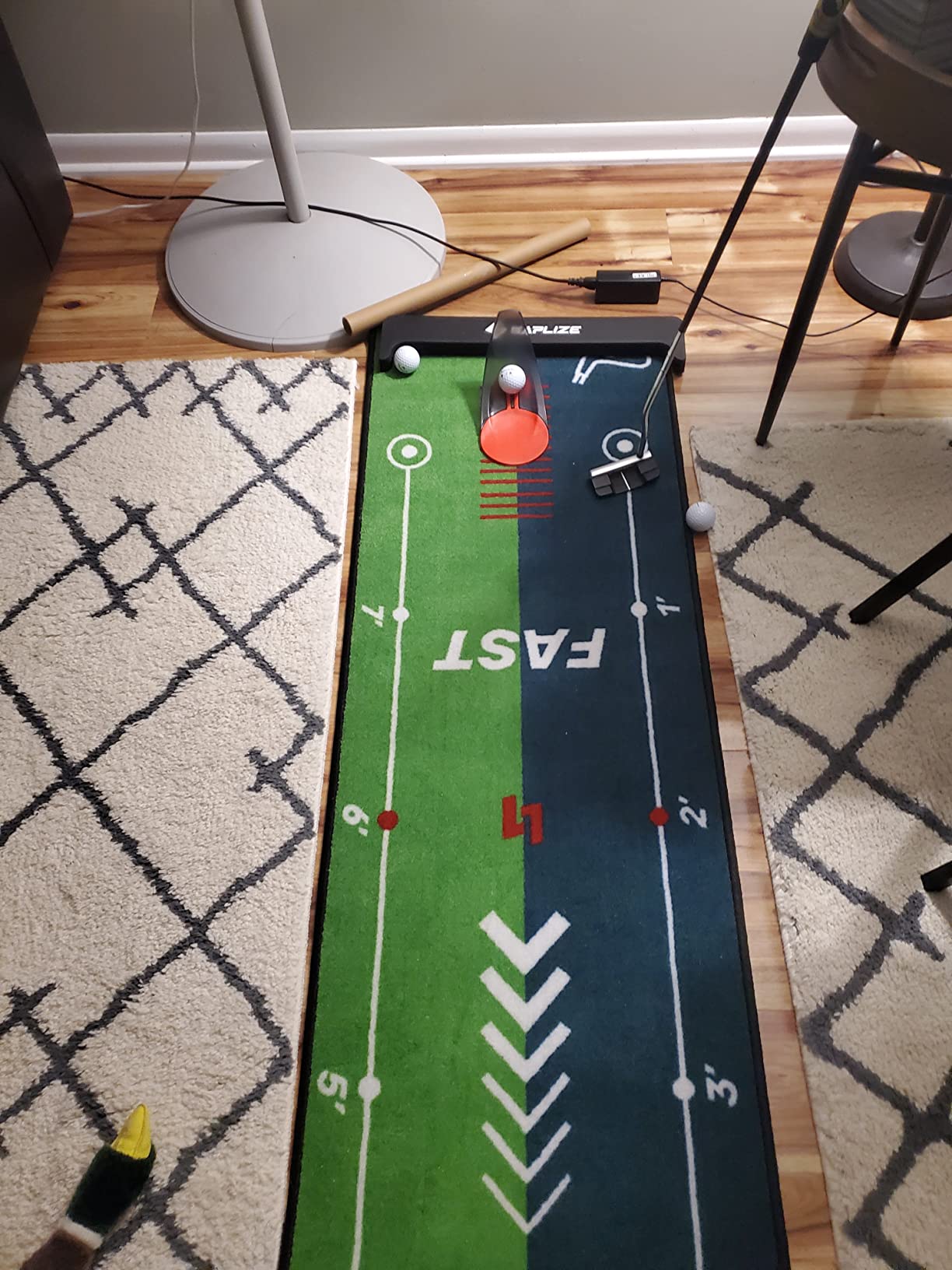
The 20-inch width is the real constraint, and owners mention it every time. That is enough for a putting stroke but not enough to walk around the ball or to practise an angled line properly. The 4.4 rating reflects that the surface speed itself divides opinion, so treat the fast and medium numbers as relative rather than absolute.
Who this mat suits
This suits a mid-handicap golfer who travels to courses with varying green speeds and wants to train the adaptation rather than one tempo. The included wedge and bumper let you run a full drill sequence in a small footprint, and the foldable design moves between a garage and a rented patio.
What to watch for
Do not buy this as a realism tool. The slope wedges are flat foam shapes rather than shaped contours, and they produce an approximation of break rather than a true reading. Practise pace on it, not putting reads.
8. Chriiena Golf Putting Green: Best for Practising Breaks and Moving Cups
Chriiena Golf Putting Green,Large Practice Putting Mat for Indoor Outdoor
High-density artificial grass, about 10 stimp
5 x 10 ft with 3 holes
120 x 60 x 0.39 in, 10 mm rubber base
Movable cup and custom slope pad
Pros
- 5 x 10 ft allows varied distance and angled putts
- Movable cup and slope pad create real break practice
- 10 mm rubber base stays put on patios and pavers
- Smooth consistent roll near real green speed
- Sizes also come in 4x10 ft and 5x12 ft
Cons
- Can take days to lie perfectly flat
- One owner reported a bubble after months outdoors
- Hand-cut turf leaves loose fibres at first
- Heavy and awkward to store folded
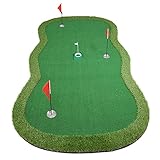
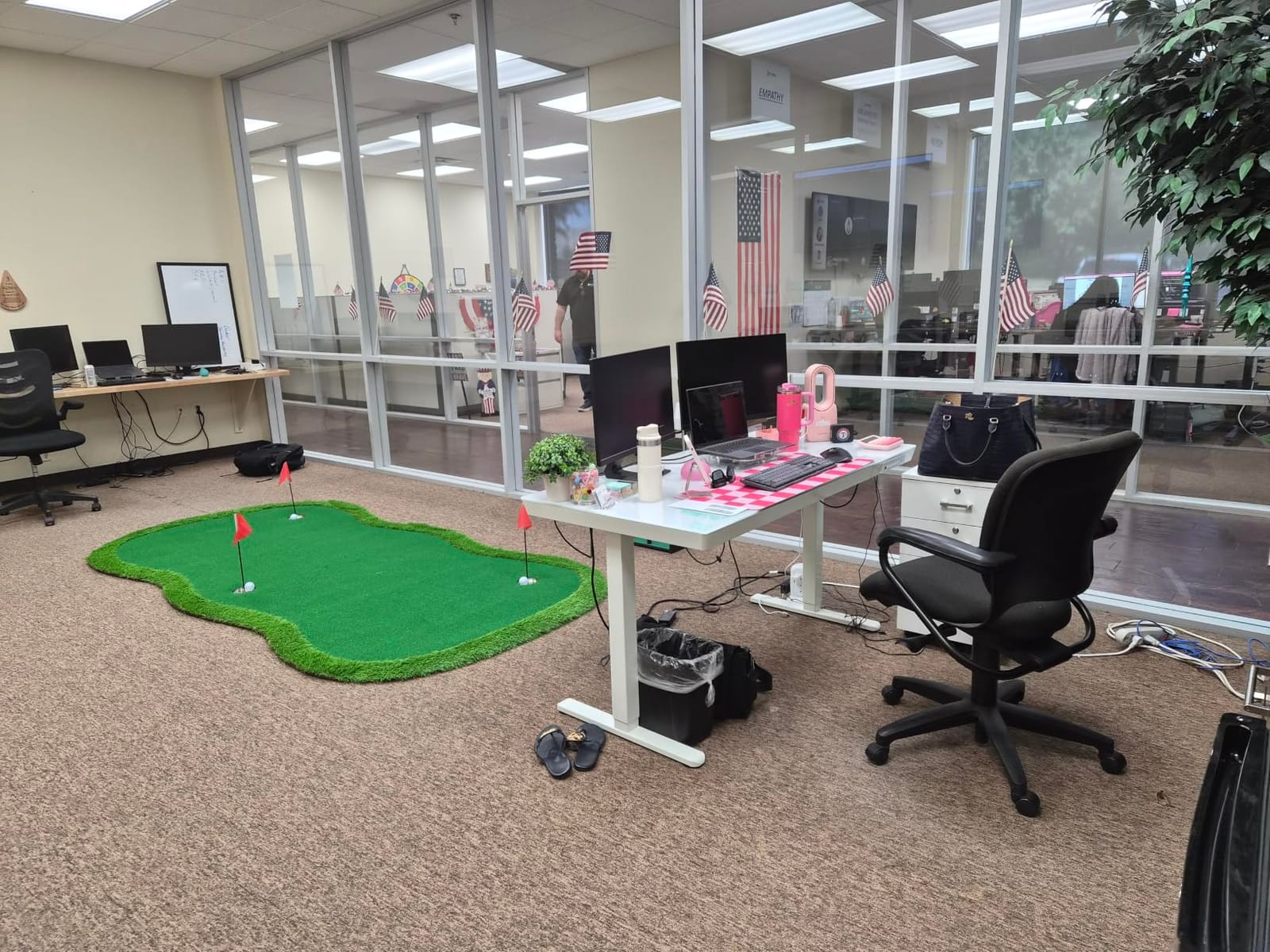
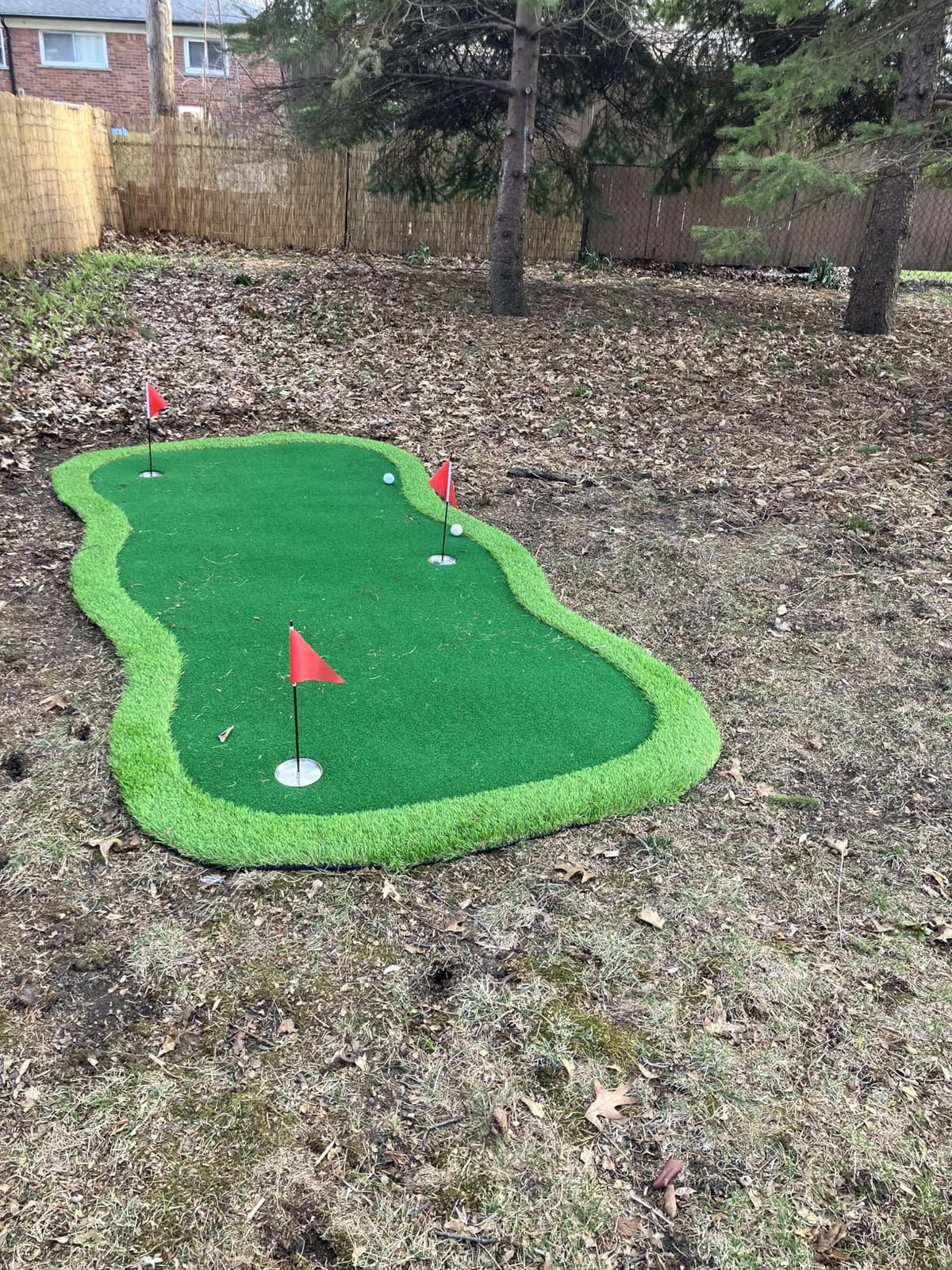
At 5 by 10 feet, this is the first green on our list where you can stand over the ball normally and still have room behind it. That single fact changes practice more than any feature. Combined with a movable cup and a custom slope pad, it lets you work the same putt from different angles, which is the actual difference between a mid-handicap and a scratch golfer.
The surface is high-density artificial grass with a published stimp reading of about 10. Owners describe the roll as smooth and consistent and reasonably close to real green pace, and the 10 mm heavy-duty rubber foam base is credited for holding position on patios and paver stones rather than creeping across them.
The patience tax is real. Owners report the mat can take days to lie completely flat, even weighted down, and because the turf is hand-cut there are loose fibres at first that need patting down or sweeping. We would put it down a few days before you want to use it rather than unrolling it the evening before.
Who this green suits
This suits the golfer whose handicap is made of missed mid-range putts rather than bad tempo. If your misses come from failing to start the ball on the right line, a movable cup and a slope pad are the two most valuable accessories in this roundup. It also suits anyone moving between an indoor floor and an outdoor patio, since the base grips both.
What to watch for
One owner reported a bubble forming after a few months of outdoor use, so we would not describe it as indestructible. Clean it with a hose or vacuum, dry it in sunlight, and avoid leaving it in standing water.
9. Storzon 2 x 9 ft Putting Green: Best Modular Mat That Expands With Your Game
STORZON Putting Green Outdoor for Golf Practice Putting Matt for Indoors
Heat-bonded XPE base, no adhesive
75,600 tufts, 10 mm pile height
Stimpmeter-equivalent speed of 9-10
108 x 24 x 0.7 in, 2 year warranty
Pros
- Heat-bonded adhesive-free base resists heat and moisture
- Realistic density with a 9-10 speed reading
- Detachable bumpers and connectable modules expand the area
- Low water absorption and simple cleaning
- Size options from 2x9 up to 4x12 ft
Cons
- Narrow 2 foot width limits stance room
- One-star ratings at 10 percent of reviews
- Cup and covers are minimal against kits with slope aids
- Needs sweeping after unrolling to clear fibres
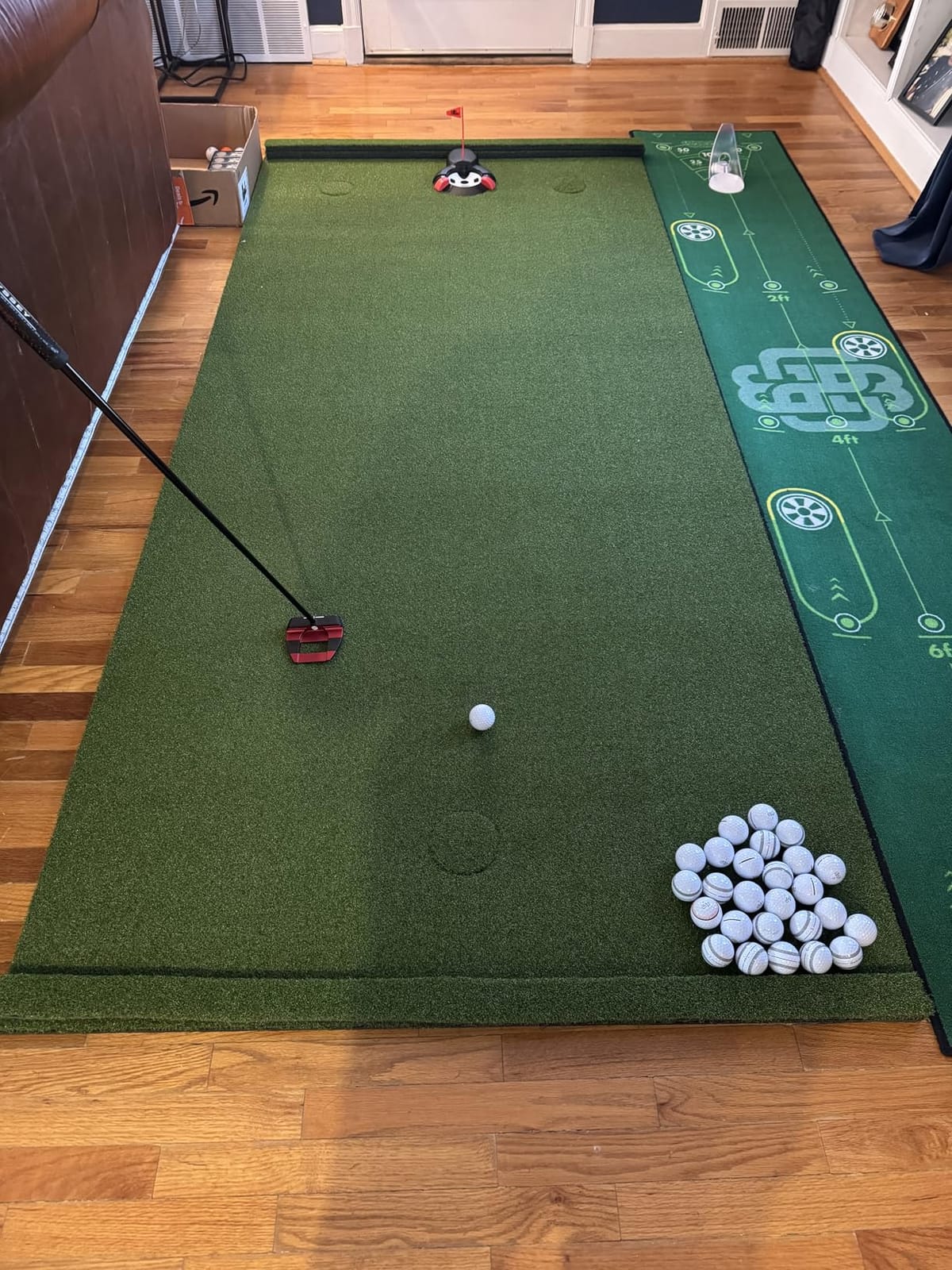
The Storzon mat is the only pick here built to grow. Its side bumpers detach and its modules connect, so a single 2 by 9 foot strip can become a wider practice area as your putting gets better. For a household starting small, buying once and expanding later is a more sensible path than committing to a large green you will not yet use.
The base is the technical story. It is heat-bonded and adhesive-free, which matters outdoors because glue lines are the first thing to fail in summer heat and standing water. The pile is 12 mm dual-tone curved fibres with 75,600 tufts at a 10 mm pile height, and the published Stimpmeter-equivalent speed of about 9 to 10 puts it in the middle of the range we see.
The rating spread is wider than most here. Ten percent of reviews are one star, which points to a durability tail we cannot explain away, so we would flag it plainly. At 2 feet wide the surface is also narrow, and the included cup and covers are minimal next to kits that ship with slope aids.
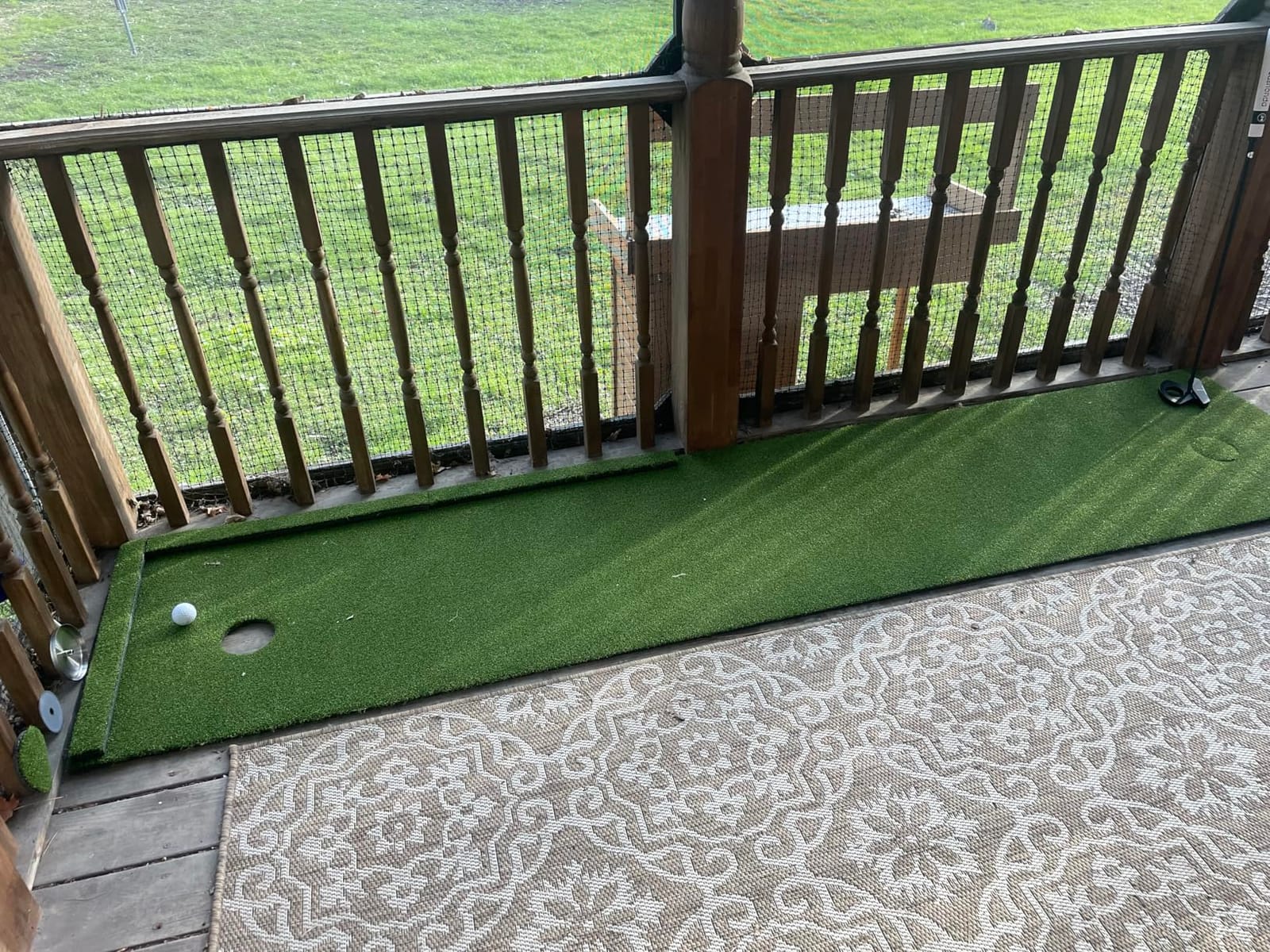
Who this mat suits
This suits a new golfer who wants a real turf surface to practise on and plans to grow into a larger area later. The low water absorption means you can hose it off and leave it out after rain, and the manufacturer rates the lifespan at five to eight years with proper care.
What to watch for
Sweep it after unrolling to remove loose fibres, or they will interfere with the first few putts. And if you need a slope aid, buy one separately, because the base kit does not include one.
10. FARROLL 5 x 10 ft Green: Best for a Ten-Foot Run of Putting
Golf Putting Green Indoor Outdoor Large Practice Putting Mat 5x10ft/5x12ft
10 mm putting grass over a 40 mm PP pile
10 mm high-resilience rubber base
5 x 10 ft with 3 cups
Includes 3 slope pads and a movable cup
Pros
- Three slope pads make it a real training aid
- Ten-foot run allows pace and distance practice
- Backing grips hardwood and patio concrete
- Movable cup varies the target line
- Rolls up for closet or garage storage
Cons
- Takes a day or two plus weights to flatten
- Sheds fibres that need sweeping
- Upright blades can give an unnatural tracking roll
- Heavy at 9.8 kg and awkward to move alone
The FARROLL green is one of the longest usable putting surfaces in the roundup at 5 by 10 feet, and that dimension does more for your practice than any other single specification we found. Putts from eight, nine and ten feet are the ones most golfers never rehearse at home, and a strip that is three feet wide simply does not allow them.
It ships with three slope pads for uphill and angled practice plus a movable cup, which makes it a genuine training aid rather than a flat carpet. The 10 mm high-resilience rubber base grips hardwood floors and outdoor patio concrete without sliding, and the whole thing rolls up for storage in a closet, garage or car trunk.
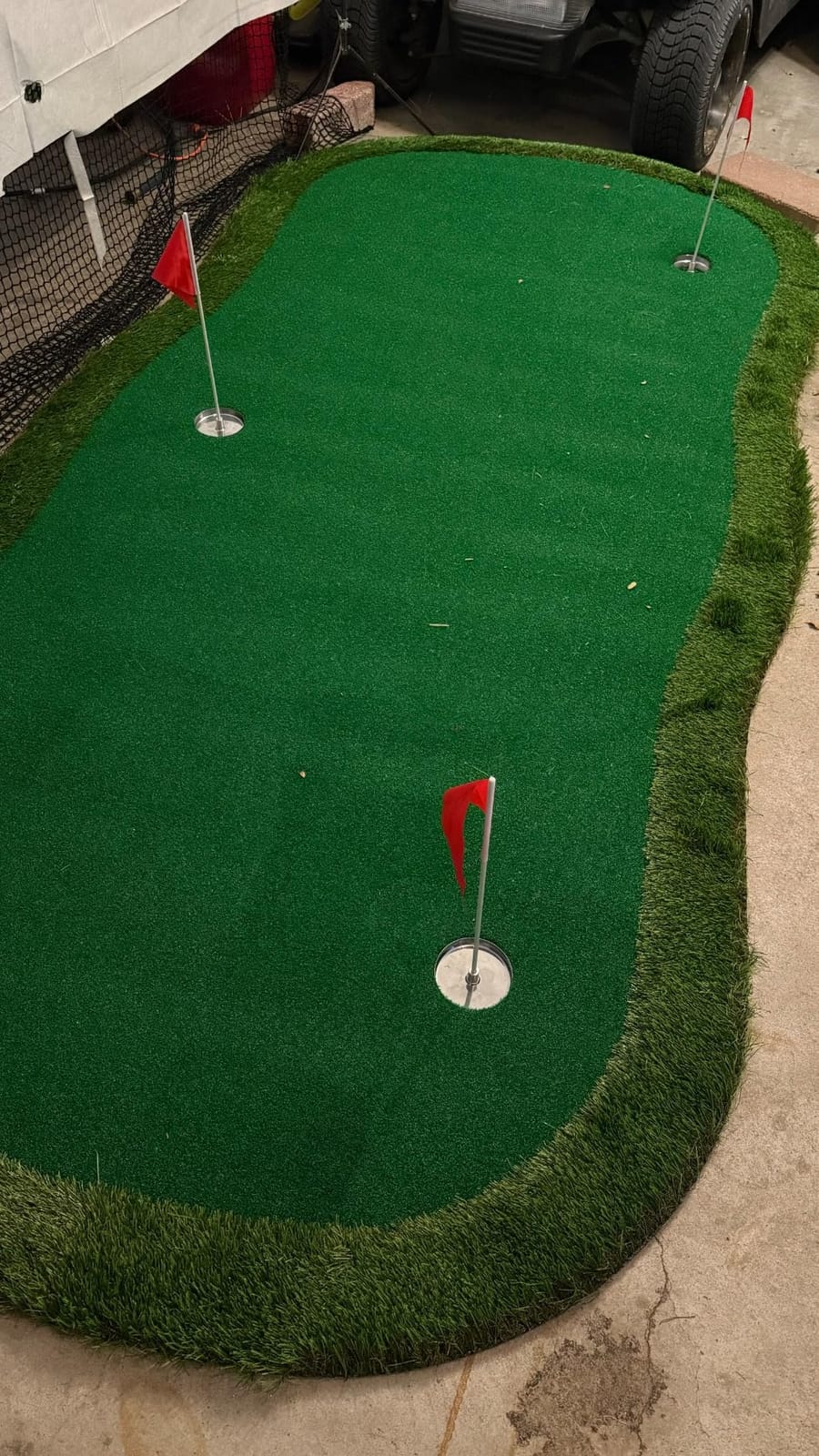
There is a real trade-off here. The 10 mm putting grass sits over a 40 mm polypropylene pile, and owners report that upright blades can produce a tracking roll and an initial skip that does not feel like a course green. Some reviews also mention fibre shedding that needs sweeping or vacuuming after use.
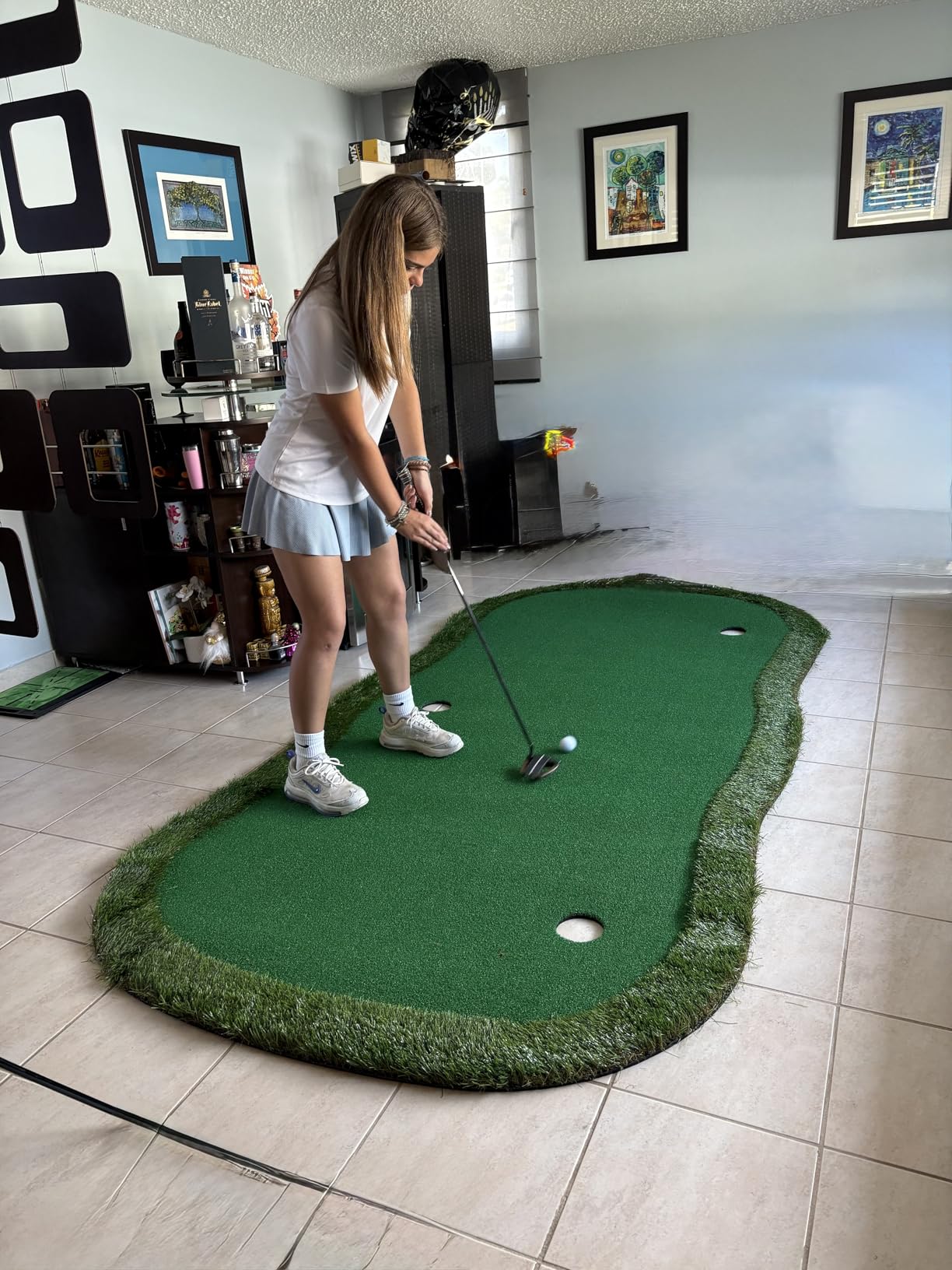
Who this green suits
This suits a golfer who wants to practise pace over real distance, especially if you are moving into the mid-handicap range and your misses are putts that were too weak. It also suits anyone hosting weddings or backyard events who wants a golf activity laid out for guests, since the five-foot width handles a group standing around it.
What to watch for
Give it a day or two to flatten after it arrives, weighed down, before judging it. At 9.8 kg it is a two-person job to reposition, so choose where it will live before you unroll it rather than moving it each session.
11. GYMAX 10 x 3 ft Mat: Best Lightweight Mat for Carrying and Storage
GYMAX Putting Green, 10 x 3 ft Par Three Putting Mat Set with 3 Putting Cups, 1 Flag and Golf Hole Covers, Putting Green Mat for Golf Training Practice Indoor/Outdoor, Garage, Backyard, Office
PVE lay-flat backing with anti-skid base
Kidney-shaped 10 x 3 ft par 3 layout
3 cup cutouts and 2 built-in hazards
Under 5 lbs, foldable
Pros
- Kidney shape gives several target positions and angles
- Two built-in hazards keep missed shots on the mat
- Anti-skid backing holds on most surfaces
- Under 5 lbs and folds for carrying anywhere
- Cups and flag plus five hole covers included
Cons
- Narrow 3 foot width for a full putting stance
- Slight incline at the end affects longer putts
- A more mixed review distribution at 4.3 stars
- Eleven percent of reviews sit at three stars
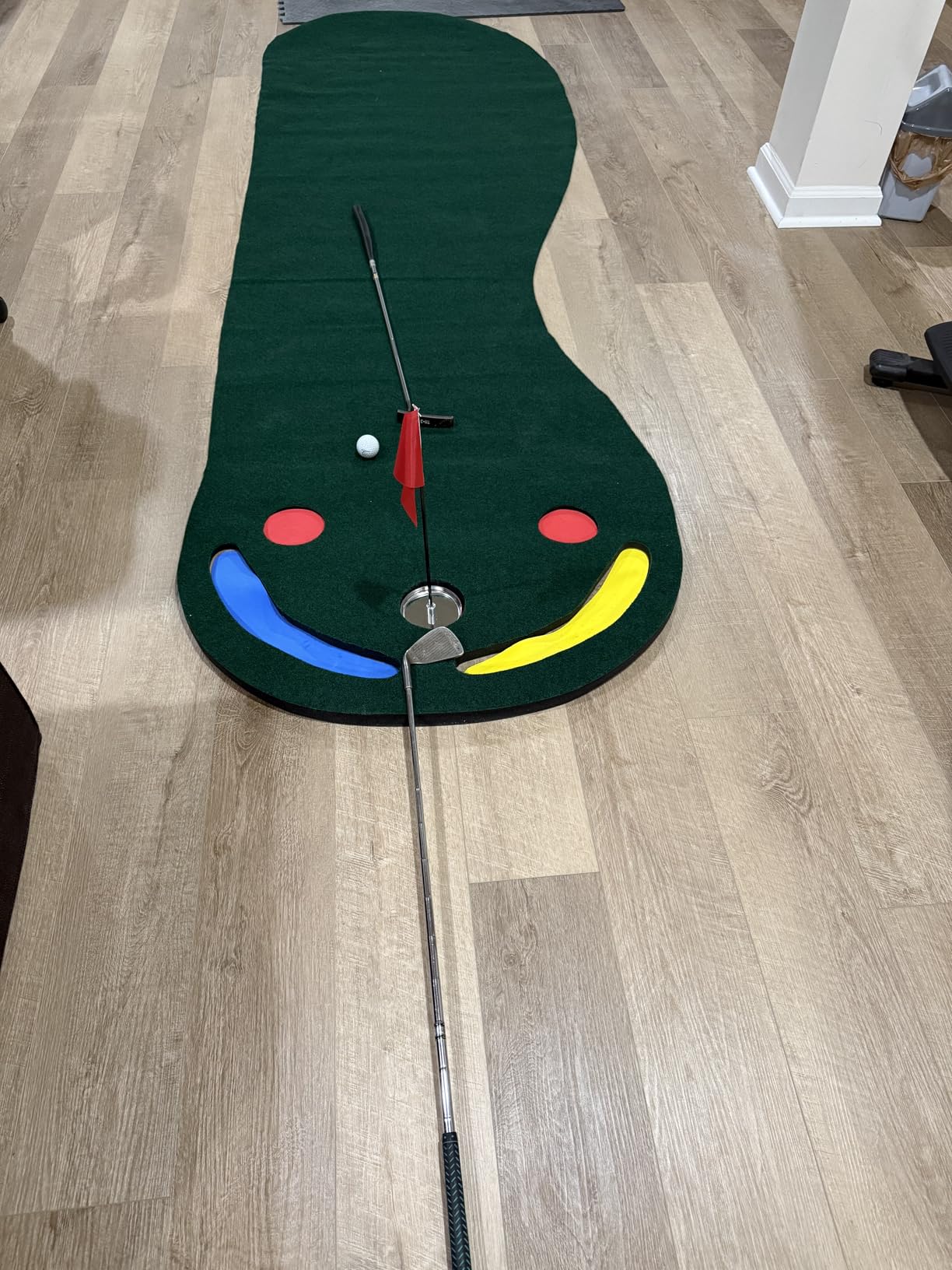
The GYMAX mat is the answer for anyone who wants to practise in two places. At under five pounds it folds and carries like a blanket, so you can take it from a garage to a rented patio to a holiday house. Kidney-shaped, 10 by 3 feet, with three cup cutouts and two built-in hazards that stop missed shots before they leave the surface.
It includes cups, a flag and five hole covers, so nothing extra needs buying. The lay-flat backing with an anti-skid base holds on a range of surfaces, and the anti-skid is the part that matters, because a mat that walks around while you putt teaches you nothing.
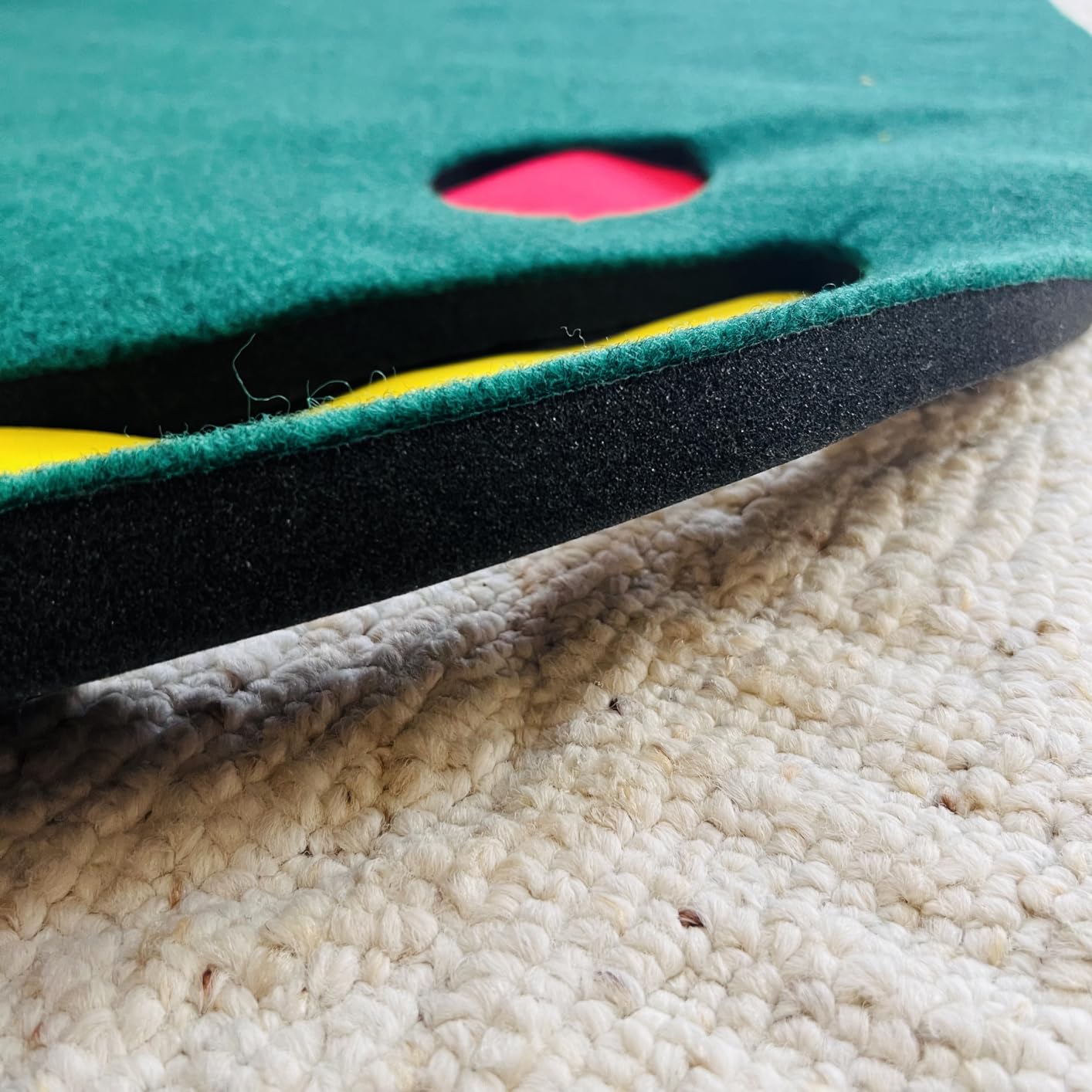
This has the most mixed review distribution in the roundup, at 4.3 stars with 67 percent five-star and eleven percent three-star. The recurring complaint is the three-foot width, which is narrow enough that you cannot move your feet around the ball. Owners also note a slight incline at the end that changes the roll on longer putts.
Who this mat suits
This suits a traveller, a renter, or anyone without a dedicated practice spot. It also suits a beginner working on contact and face control, because the narrow strip removes the temptation to step across the ball and forces a consistent setup. If you want the same layout with a stimp-like surface, the SKLZ is the closer comparison.
What to watch for
Set up on a level surface, and be aware of the end incline when putting from the far end of the mat. The 90 day warranty is the shortest on this list, so keep the packaging until you are sure it works for you.
12. ALTRUISTIC 7 x 13 ft Turf: Best for Covering a Large Yard Area
ALTRUISTIC Golf Artificial Grass Turf Pro Putting Green Mat 7ft x 13ft
Synthetic turf at 7 x 13 ft, 91 sq ft
0.47 in blade height, 156 x 84 in
Rubber backing with drainage holes
Custom sizes available
Pros
- Largest surface in the roundup at 91 sq ft
- Drainage holes let it dry fast after rain
- 0.47 in blade height takes moderate to heavy foot traffic
- Per-blade colour variation looks natural
- Also usable as general yard or gym turf
Cons
- Sold as turf
- so cups and flags are separate purchases
- Lowest five-star share here at 65 percent
- 0.47 in pile is longer than a true green and slows the ball
- Cutting a custom size takes planning
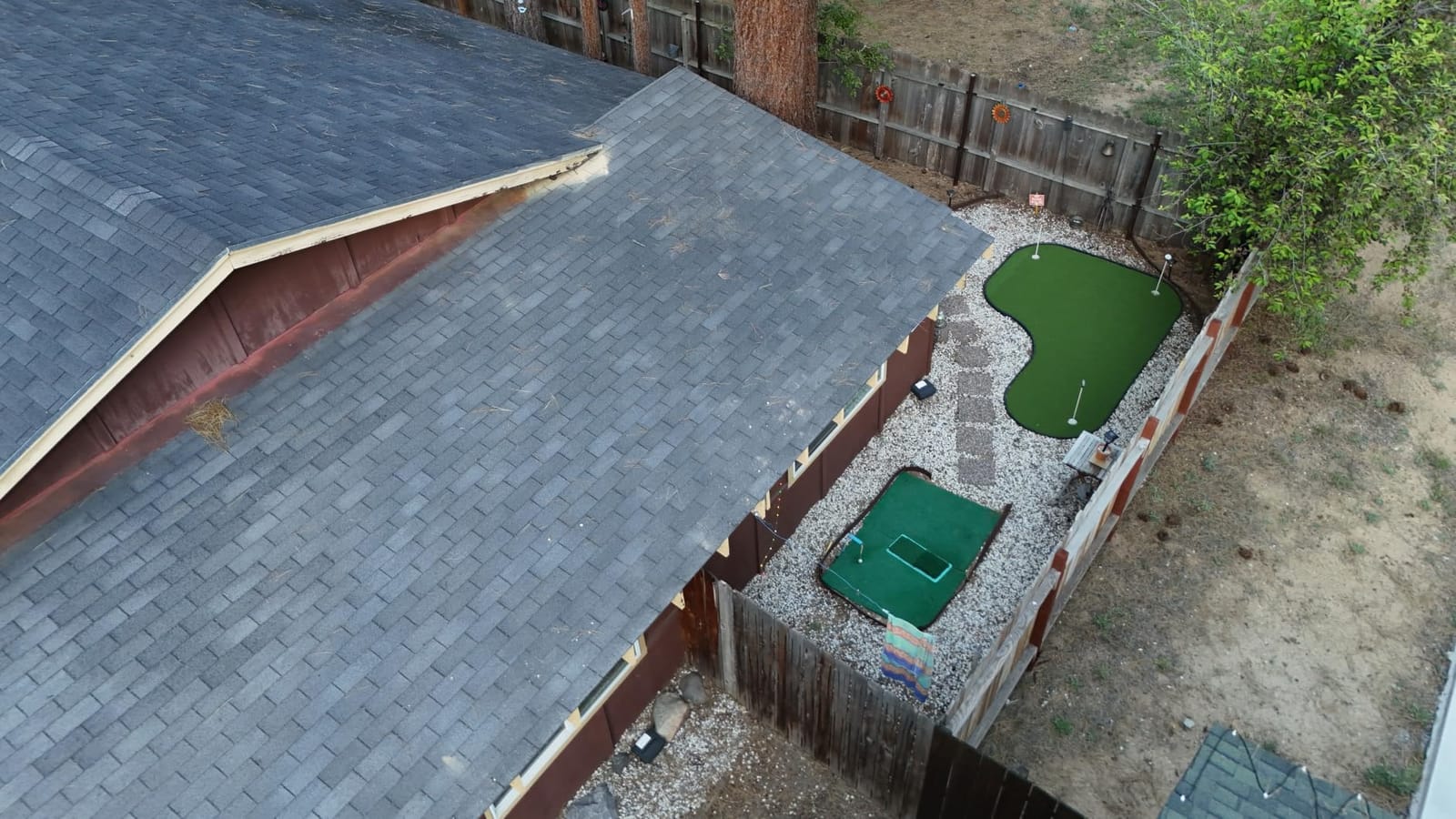
This is the pick for someone who wants a green area rather than a putting strip. At 7 by 13 feet it covers 91 square feet, which is enough to walk onto from different directions, hit putts from a variety of spots, and give the practice surface the feel of part of the garden rather than an object left on it.
Construction-wise it is high-density polyethylene synthetic with rubber backing and drainage holes rated at 23 gallons of fluid per hour. That drainage figure matters more than it sounds in practice, because a turf that dries within hours after a downpour is a turf you can keep using rather than one you have to roll up and wait on.
Two limitations deserve emphasis. It is sold as turf, not as a kitted putting green, so cups, flags and any hole-cutting are separate decisions you make yourself. And at 0.47 inches the blade height is longer than a real green, which several owners report slows the ball noticeably. This is the exact complaint r/golf users raise about installed turf, and it is worth knowing before you commit.
Who this turf suits
This suits a household that wants a multi-use surface, since the same turf works as yard flooring, a gym pad or a patio surface when nobody is putting. It also suits someone building a custom shape, because custom sizes are available and an installation grid is included. If you want genuine putting-green speed, this is not it.
What to watch for
Plan the cutting and cup placement before you unroll it, since the pile is not designed to be re-cut casually. And measure your pace expectations downward: a longer pile means more strokes, which is exactly how golfers end up hammering putts at home and then struggling on course.
How to Choose the Right Backyard Putting Green?
Start with the space, not the product. Measure the longest straight run available and subtract the room you need to stand at the end of it. A nine-foot putt plus a stance needs roughly eleven feet of clear length, so anything under that is a pace-training surface rather than a putting surface.
Next decide whether you want realism or convenience. Realism means artificial turf with real cups, slope pads and a published stimp reading. Convenience means a velvet or foam mat that stores in a closet and comes out for twenty minutes on a Sunday morning. Neither is better; they serve different routines.
Then look at width, which we mentioned earlier and will repeat because it is the most overlooked number. Three feet or less is a strip. Five feet is the point where you can address the ball the way you do on a green. If your yard can hold five feet of width, do not spend that space on extra length instead.
Finally, check what happens after rain and after the dog. A rubber-backed turf with drainage holes will be ready to use the same day. A flat foam or velvet mat that has absorbed water needs drying time, and in a household with pets, a surface that takes claw marks will not survive the year. We saw this exact question asked repeatedly in the r/golf threads on backyard greens.
If you are also upgrading the rest of your setup, our roundups of the best golf balls and the best golf rangefinders cover the two accessories golfers buy alongside a practice surface.
Artificial Turf Specs That Actually Matter
What kind of grass is used on a golf green? On a real course it is a tightly mown blend of bentgrass or bermudagrass, cut to roughly 1/8 inch so the ball rolls on the leaf tips rather than sinking into the canopy. A home synthetic green cannot replicate that exactly, which is why it comes as a manufactured approximation with published specifications rather than as living grass.
Four specs decide how close the approximation gets:
Pile height. For a putting surface, aim near 10 mm, which is about 0.4 inch. The ALTRUISTIC turf on this list is 0.47 in and owners report a noticeably slower ball, which matches the complaint r/golf users make about thick installed turf.
Face weight. This is the weight of the yarn alone, in ounces per square yard. Higher face weight holds blades upright and improves roll consistency, and 70 ounces or more is the usual target for putting surfaces.
Yarn type. Nylon resists abrasion and holds shape under foot traffic. Polyethylene is softer and more realistic in colour but crushes more easily. Polypropylene sits between them and is the most common material on the mid-priced mats here.
Backing. A rubber or heat-bonded base with drainage holes is what keeps a green flat and dry. The Storzon mat uses a heat-bonded adhesive-free XPE base specifically because glue lines fail in summer heat.
Density matters too, though it is harder to judge from a product page. The Storzon mat publishes its tuft count at 75,600, which is the kind of transparency that lets you compare two greens side by side. Where no figure is published, treat the roll description as marketing until owner reviews give you something more concrete.
Infill or No Infill: What Changes on the Roll
Infill is loose material, usually silica sand, blown into the fibres to add weight and support the blades. It makes a ball roll faster and firmer because the surface is held rigidly. It also settles, migrates and needs topping up, and MyGolfSpy regulars describe infilled greens as high maintenance and recommend them against anything used for putting.
No-infill surfaces like the mats on this list have nothing to settle and nothing to refill, which is the main reason they are easier to own. The trade-off is speed: an unfilled pile sits slightly softer, so a ball loses a little pace and the mat reads slower than an infilled green of the same nominal fibre.
The practical advice is to match your surface to your local course. If you play on fast greens, practise on something faster than your home mat to compensate. If your home green feels slow and you keep missing on the low side, that mismatch rather than your stroke is usually the culprit.
DIY Setup or Professional Installation
What are the best DIY outdoor putting green kits for the backyard? Among the products in this roundup, the 5 by 10 feet greens with a rubber base, such as the Chriiena and FARROLL mats, are the most convincing DIY options, because they sit flat on a hard surface and need no base work at all.
A DIY install of that type takes an afternoon. Lay the mat where you want it, leave it weighted for a day or two to flatten, mark your cup positions, cut the cups to your chosen diameter, and anchor the edges so it does not move. Facebook DIY builders in the backyard-green groups report the process is straightforward and recommend SYNLawn as a product, which suggests the real difficulty is the base rather than the turf.
A professionally installed green is a different project. The process runs through consultation and design, planning and groundworks over a free-draining base, installation, and aftercare. That base is the part that decides whether the green performs, because a divot or an uneven spot in the base will show through the surface and spoil the roll. Several owners in the r/golf threads described paying for a professional and ending up with turf too thick to putt on properly.
So the honest split is this. If you have a patio, a flat concrete slab or a hard-packed area, install a rubber-backed mat yourself and you will have a usable green the same weekend. If you want a green shaped into a lawn with contours and fringe, the base work is worth paying a professional to do, and the specification conversation about pile height and face weight is the part worth having before they start.
What a Backyard Putting Green Costs Over Ten Years
How much is an artificial turf putting green? The honest answer is that a roll-out mat or a rubber-backed turf panel is a modest one-time outlay, while a professionally installed and contoured green runs into thousands and depends almost entirely on square footage. Installed work is usually quoted by area, and the range most buyers are working from is roughly 18 to 25 per square foot before any contouring, fringe or multiple hole positions are added. Use that benchmark to sanity-check a quote, not as a shopping target.
Rather than a single number, it is more useful to model the four cost tiers you will actually be choosing between:
Roll-out foam and velvet mats. The lowest outlay, replaced every few years, and the only tier you can move with one hand.
Rubber-backed artificial turf greens. A mid outlay for 5 by 10 feet of surface, with a service life measured in seasons and occasional replacement of the surface layer.
Large turf panels and custom-cut areas. A larger material outlay, plus your own labour to cut and fit, plus cups and flags bought separately.
Professionally installed contoured greens. The highest outlay, and the only tier where the base, drainage and shaping are handled for you.
Over a ten-year horizon the ongoing costs are smaller than most buyers expect. You will replace the playing surface in the roll-out tiers, you will occasionally add infill if you choose that route, and you will spend an afternoon a year cleaning fibres and sweeping debris. Owning a backyard putting green is not a maintenance project; it is a purchase followed by low recurring effort.
Frequently Asked Questions
Do at home putting greens actually help?
They help most with the putts you miss most. Practising at home turns short-putt reps from occasional into daily, and consistency on putts inside ten feet is where most amateur scores move. What it will not do is teach you to read a green that changes shape every round, which is why it works best alongside regular course play.
What is the best putting green for home use?
For most people it is a rubber-backed artificial green at least five feet wide with a movable cup and slope pad, because that width lets you address the ball normally and the accessories let you practise breaking putts. If your space is small or hard-surfaced, a two-hole mat with an automatic ball return is the better compromise.
How fast should a backyard putting green be?
Aim for something around a 9 to 10 stimp reading, which is mid-range and matches most public courses. Faster greens reward a light touch and punish a heavy hand, and slower greens teach a stroke that will not travel. The practical test is whether you are missing putts short or long at your home course.
Are infilled putting greens harder to putt on?
No, they are generally faster and firmer because the loose material holds the fibres rigid. That is precisely the problem for maintenance, since infill settles, migrates and needs topping up, and MyGolfSpy regulars recommend against it for putting surfaces. No-infill mats roll slower but need no upkeep.
How long does a backyard putting green take to install?
A rubber-backed mat on a patio or slab takes an afternoon, plus a day or two weighted down before it lies flat. A turf panel you cut yourself adds measuring and cup cutting. A professionally installed contoured green runs through design, groundworks, installation and aftercare over one to three weeks depending on size.
What size putting green fits in a small backyard?
A strip of 3 feet by 10 feet is the realistic floor for a small yard, and it is enough for pace and contact work. If you can spare five feet of width, a 5 by 10 foot green doubles what you can practise, because you can address the ball normally and hit putts from eight to ten feet.
Final Verdict: Which Backyard Putting Green Should You Buy
If you want the most proven everyday surface, buy the PUTT-A-BOUT Par Three. It carries more than 24,000 reviews at a 4.6 average, it lies flat within seconds, and it folds into a hallway. It is the safest recommendation we can make because the volume of owner experience behind it is not close to anything else on this list.
If you want to practise breaking putts, buy the Chriiena 5 by 10 foot green, because the movable cup and slope pad combined with a width that lets you address the ball properly is the setup that actually trains reading. If your yard is small and hard-surfaced, buy the Dachenus mat for its reliable automatic ball return and its top rating in the group. And if the goal is to get more people on a surface rather than to chase a stroke, the PutterBall set is the one that delivers that.
Whatever you choose among the best golf putting greens for backyards, the number that will decide whether you keep using it is width, not features. Give yourself five feet where you can, match the stimp reading to the courses you play, and expect the real gain to show up as fewer three-foot putts over the next season.
While you are setting up the practice area, our roundup of the best golf irons covers the other end of the bag, and our guide to the best Adirondack chairs for backyards covers the seating that makes the space usable afterwards in 2026.