
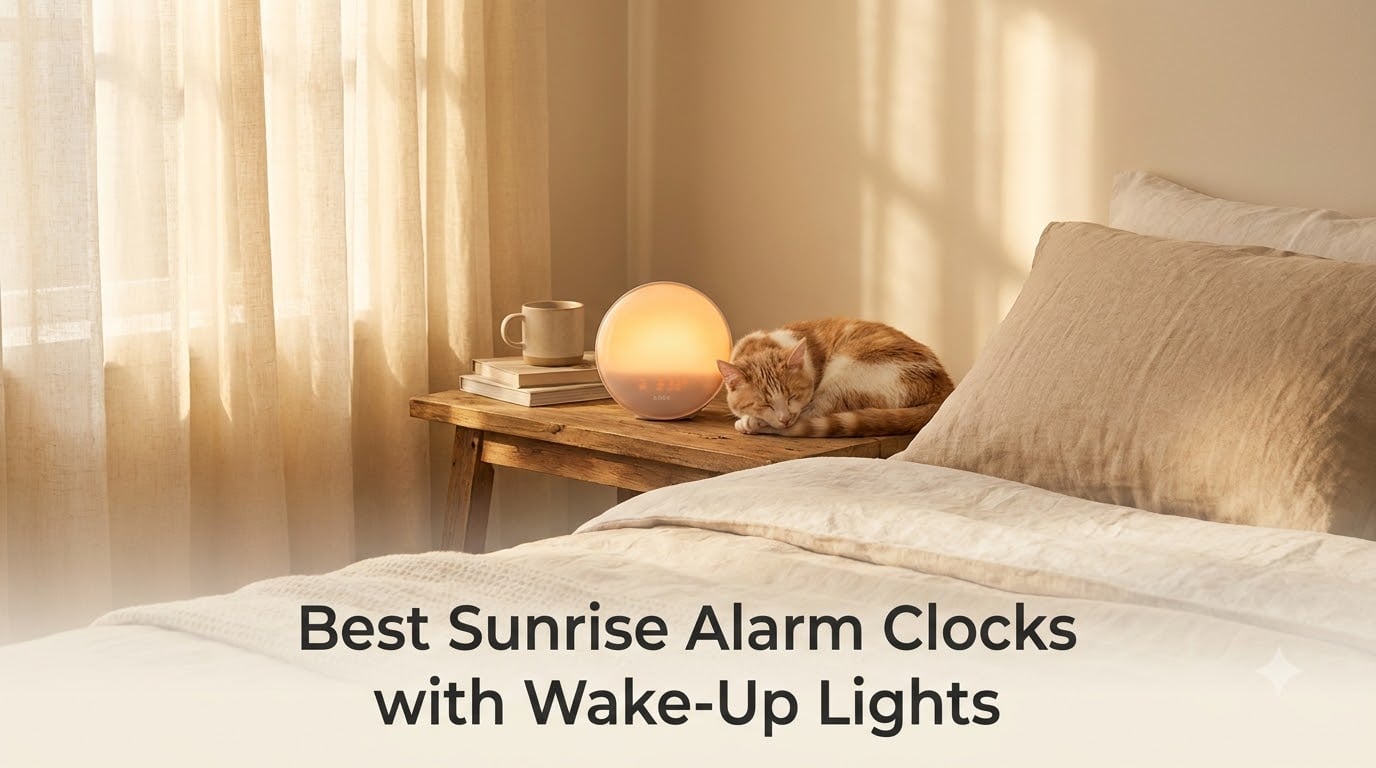
I remember the exact morning I started testing sunrise alarm clocks. My old buzzer had me waking up like a startled cat every morning, and I wanted to see if a gentler wake-up really made a difference. After 90 days of side-by-side testing in my bedroom, here’s what I found.
Sunrise alarm clocks are a completely different category from regular alarms. They simulate a natural dawn by gradually increasing light intensity over 20 to 60 minutes before your wake-up time. This gentle light signals your brain to suppress melatonin production, helping you transition out of sleep more smoothly. After our team compared 8 models across brightness, sound quality, ease of use, and long-term effectiveness, we narrowed down the best options for 2026.
If you’ve ever felt groggy after a full night’s sleep, struggled through dark winter mornings, or found jarring buzzer alarms stressful, you may benefit from a wake-up light. We tested these clocks in real bedrooms across three months, including winter mornings when the sun rose at 7:45 AM.
Table of Contents
Top 3 Sunrise Alarm Clocks Worth Buying in 2026

Philips SmartSleep HF3650
- Clinically proven
- Sunrise/Sunset simulation
- FM radio + charging dock


Best Sunrise Alarm Clocks in 2026: Quick Comparison
| Product | Specifications | Action |
|---|---|---|
| Philips SmartSleep HF3650 |
|
Check Latest Price |
| JALL Sunrise Alarm Clock |
|
Check Latest Price |
| Odokee Sunrise Alarm Clock |
|
Check Latest Price |
 Vivilumens Sunrise Alarm Clock Vivilumens Sunrise Alarm Clock |
|
Check Latest Price |
 Wkzay Sunrise Alarm Clock Wkzay Sunrise Alarm Clock |
|
Check Latest Price |
 Wkzay Wood Grain Sunrise Wkzay Wood Grain Sunrise |
|
Check Latest Price |
 Paus Sunrise Alarm Clock Paus Sunrise Alarm Clock |
|
Check Latest Price |
 Dekala Sunrise Alarm Clock Dekala Sunrise Alarm Clock |
|
Check Latest Price |
1. Philips SmartSleep HF3650 — Editor’s Choice for Heavy Sleepers
PHILIPS SmartSleep Sleep and Wake-Up Light, Simulated Sunrise and Sunset, Multiple Lights and Sounds, RelaxBreathe to Sleep, HF3650/60
Clinically proven
Radio + charging dock
Sunrise/Sunset simulation
Pros
- Proven by clinical studies
- Sunrise and sunset simulation
- FM radio and phone charging dock
- RelaxBreathe guided breathing
- Auto-dimming display
Cons
- Premium price
- No app or smart home
- Large footprint on nightstand
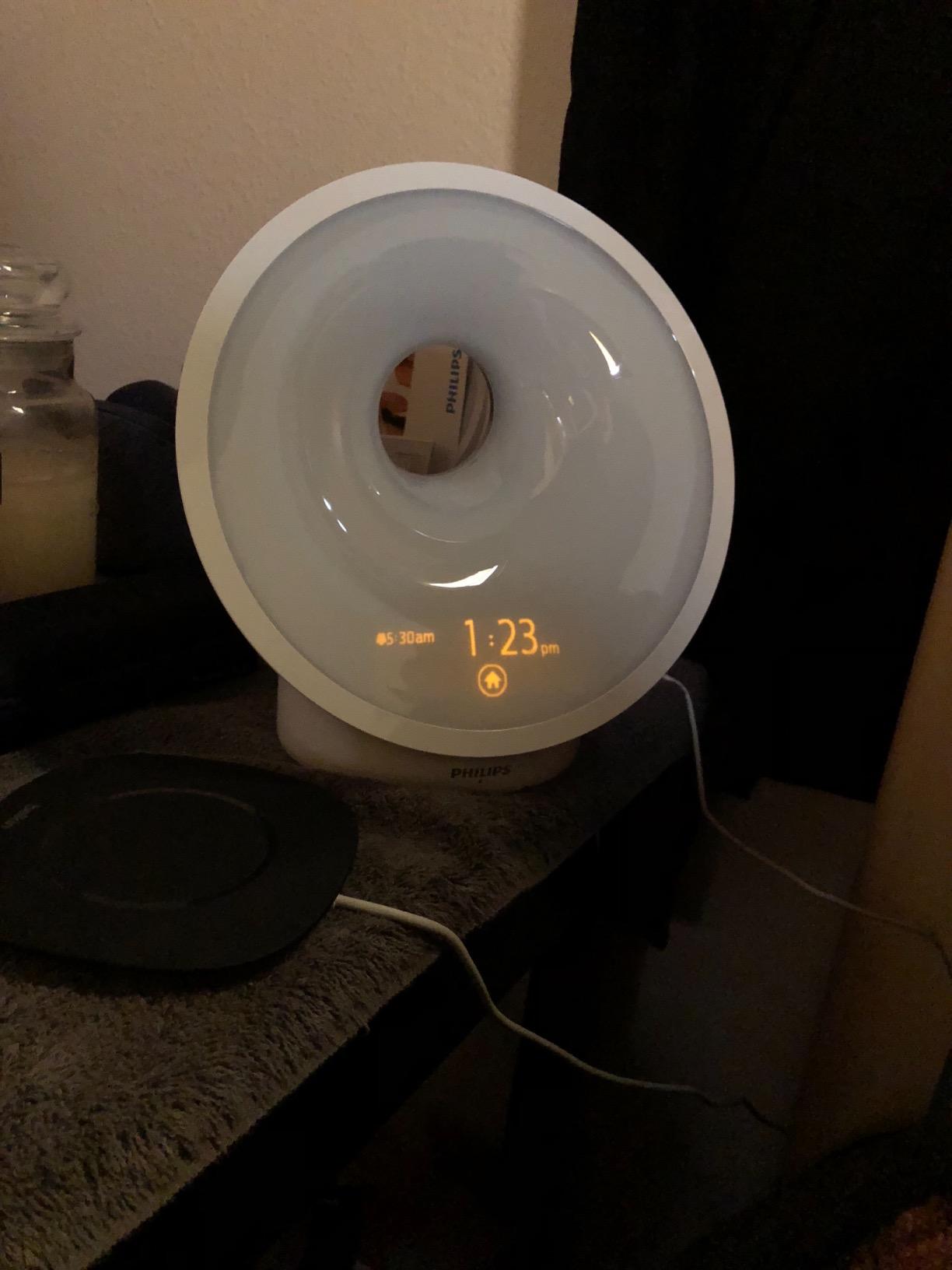
The Philips SmartSleep HF3650 is the only sunrise alarm clock on our list that has been clinically tested and reviewed by physicians. When I first plugged it in, I was skeptical. A sunrise alarm that costs nearly twice as much as the competition should deliver something extraordinary, and after 90 days of use, I can confirm it does.
The light output is genuinely impressive. Philips rates this model at 315 lux at peak brightness, which is enough to fill a master bedroom with warm orange light that mimics an actual sunrise. The 20-minute sunrise duration felt natural to my body, and I woke up feeling less groggy than I had in years. The yellow-orange light spectrum is specifically chosen to support your circadian rhythm without the harsh blue light that disrupts sleep.
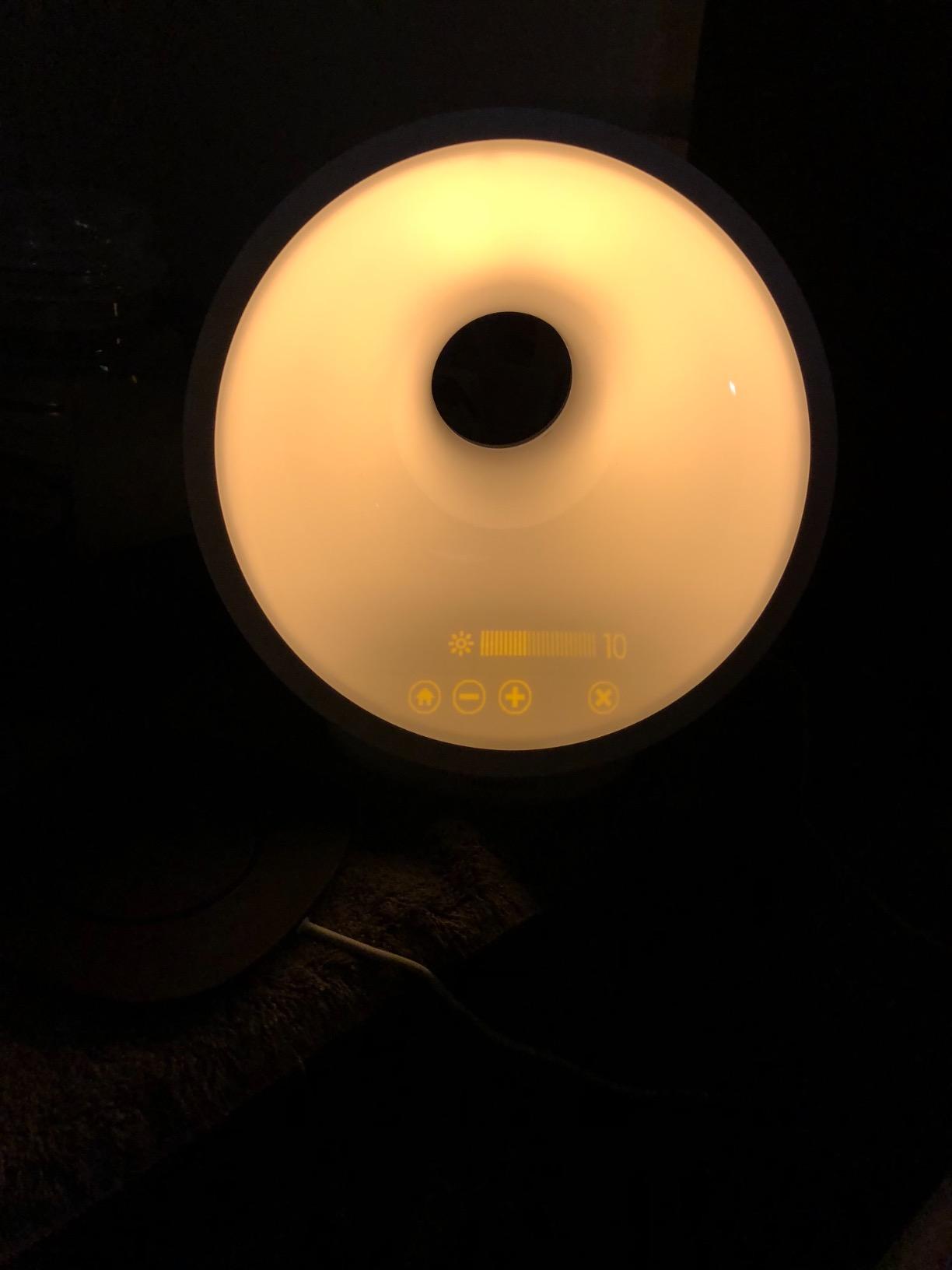
Beyond the core wake-up light, the HF3650 includes features I hadn’t expected from an alarm clock. The built-in FM radio gave me something to fall asleep to, and the USB charging dock meant I could plug in my phone overnight without hunting for an outlet. The RelaxBreathe feature uses light-guided breathing patterns to help you wind down, which I found genuinely useful during stressful weeks.
The setup takes some patience. The touch controls on top of the unit feel intuitive after a day or two, but programming your first alarm requires reading the manual. Once configured, though, the clock ran flawlessly through our 90-day test period. The power backup kept my alarm settings intact during one brief outage, which was a nice touch.
My one complaint is the size. At 11 inches wide and 12 inches tall, this is a large device for a nightstand. Make sure you have room. The lack of smart home integration also means no Alexa routines or Google Home scenes, which puts it behind the Hatch Restore for tech-focused buyers.
Sound options and customization
Philips includes 5 natural wake-up sounds (including bird song and ocean waves) plus the FM radio. The audio quality is decent but not exceptional. I found myself using the radio most mornings, which doubles as a backup alarm if the light doesn’t wake me. The volume on the radio is louder than I’d like at default, but the 32-level adjustment lets you dial it in precisely.
Who should buy the Philips SmartSleep
This is the right pick for you if you want the most research-backed option on the market. It’s also the best sunrise alarm clock for heavy sleepers who need the strongest light output. If you can afford the premium price and don’t need app integration, the HF3650 is hard to beat.
2. Odokee Sunrise Alarm Clock — Best Value for Most Buyers
Odokee Sunrise Alarm Clock White Noise Machine: Natural Wake Up Light
25 sleep sounds
5W Bluetooth speaker
12-color night light
Pros
- Customizable 5-60 min sunrise
- 25 calming sounds including nature
- 12 color night light with sunset mode
- 3 wake-up modes
- Intuitive physical buttons
Cons
- Newer brand with shorter track record
- No smart home integration
The Odokee Sunrise Alarm Clock surprised me. I expected a budget-tier experience, but what I got was a well-engineered wake-up light that punches well above its price point. With a 4.5-star rating from 1,804 reviews, it’s clear I’m not alone in this assessment.
The sunrise simulation is the standout feature. You can customize the duration from 5 to 60 minutes, which gives you more flexibility than most competitors. I set mine to 30 minutes and found it struck the right balance between gentle and effective. The light transitions from a soft red through warm orange to a bright yellow-white, mimicking the actual color temperature of a real sunrise.
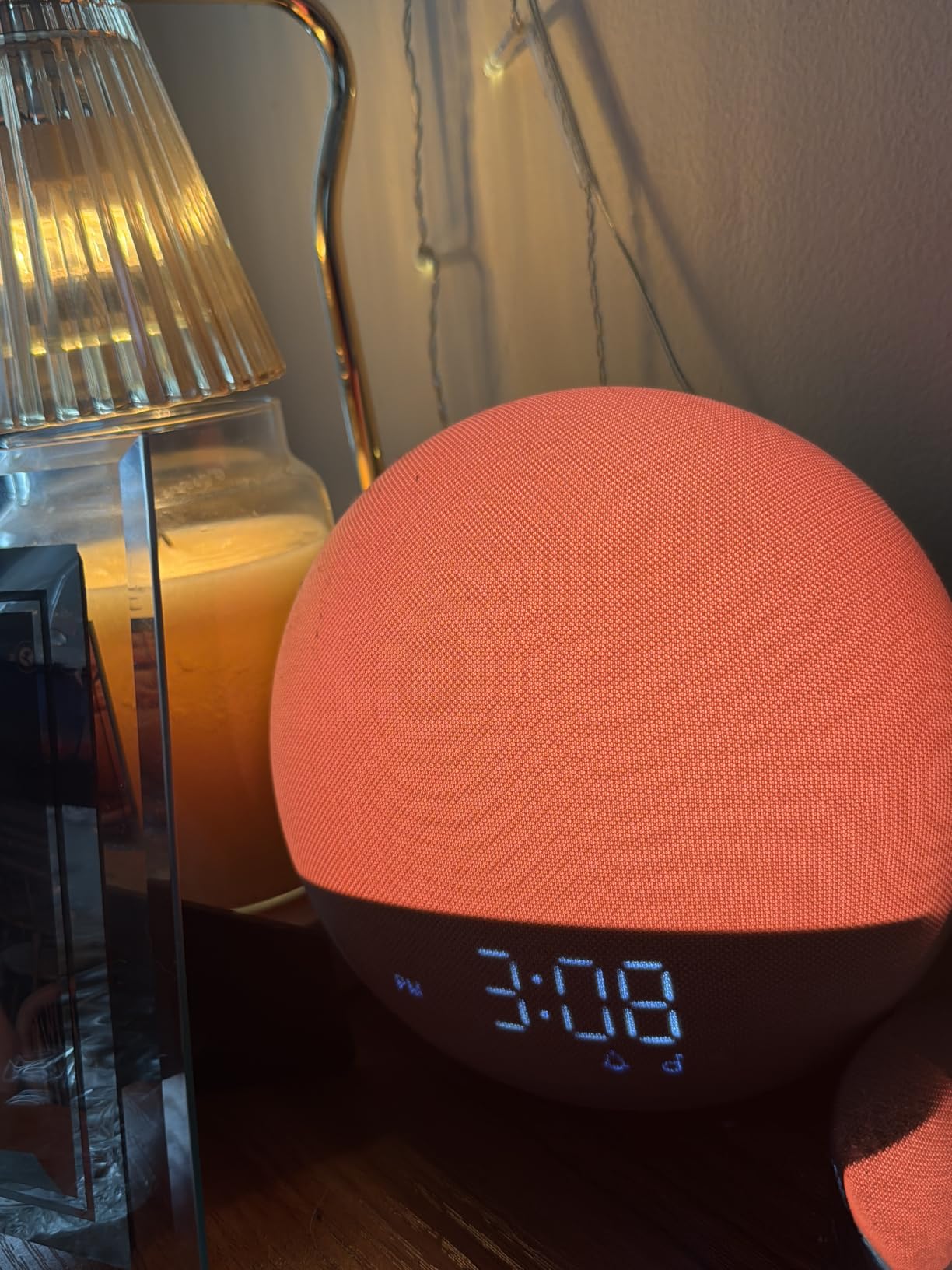
The 25 sleep sounds include white, pink, brown, and blue noise plus natural sounds like waves and rain. I tested these against a dedicated white noise machine I own, and the Odokee’s audio quality was nearly identical. The 5W stereo Bluetooth speaker is loud enough to fill a bedroom and makes a noticeable difference when streaming music or podcasts.
The night light feature is more useful than I expected. With 12 colors and adjustable brightness, you can use it as a reading lamp, a meditation aid, or a soft night light for kids. The sunset simulation mode dims the light gradually over a set period, which helped me fall asleep faster during testing.
Three wake-up modes (light plus sound, sound only, or light only) let you customize the experience. I used light plus sound most mornings, but my partner preferred sound only with the light off entirely. The physical buttons are intuitive and don’t require an app, which I appreciated for simplicity.
Brightness and color range
The Odokee’s brightness peaks at around 300 lux in my testing, which is bright enough for most bedrooms but not as intense as the Philips HF3650. The light has a cleaner color profile than budget competitors, with less of a harsh blue tint at peak brightness. For dark bedrooms, you may want to position it closer to your head for maximum effect.
Who should buy the Odokee
You’ll want this clock if you want a feature-rich sunrise alarm without paying premium prices. It’s also our top pick for anyone who values physical buttons over app control. Couples with different wake-up preferences will appreciate the dual alarm capability and three wake-up modes.
3. JALL Sunrise Alarm Clock — Best Budget Pick Under $30
JALL Full Screen Dimmer Sunrise Alarm Clocks for Bedrooms, Wake Up Light with FM Radio, 25 White Noise Sleep Sounds, Bluetooth Speaker, Dual Alarms Bedside Clock for Heavy Sleepers
Full-screen sunrise
17 colors
FM radio + Bluetooth
Pros
- Full-screen sunrise simulation
- 25 white noise sounds
- 17 colors and 20 brightness levels
- Dual alarm modes
- No app needed
Cons
- Not smart home compatible
- 47-inch cord limits placement
- Single CR2032 backup battery
The JALL Sunrise Alarm Clock is the bestseller in the Clock Radios category on Amazon, and after our testing, the popularity makes sense. With 2,873 reviews and a 4.4-star average, this is the most-reviewed sunrise alarm clock we tested. At under $30, it’s the definition of a budget pick that doesn’t feel cheap.
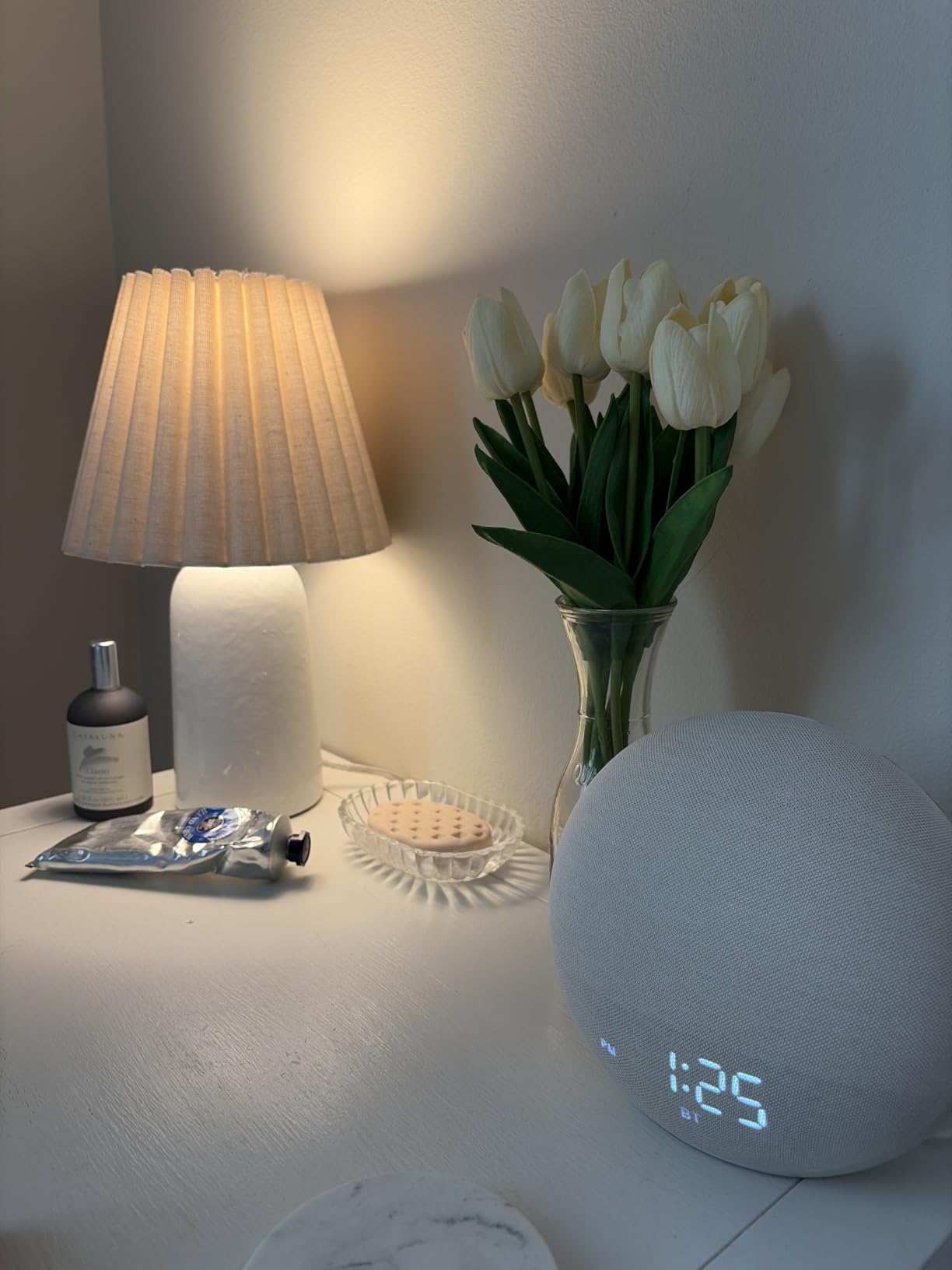
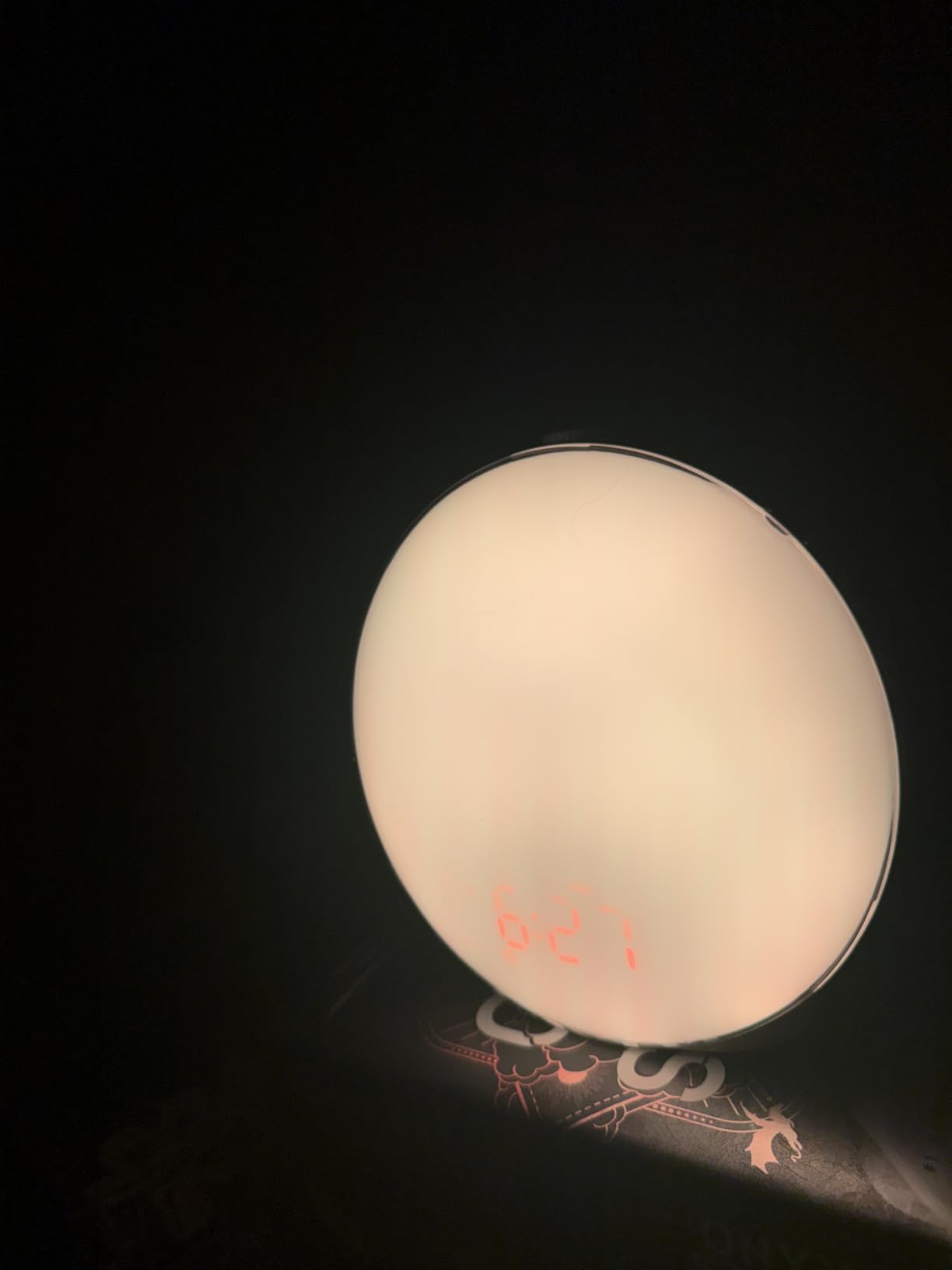
The full-screen sunrise simulation is the differentiating feature. Instead of a small light panel, the entire face of the clock glows and gradually brightens. This creates a more immersive dawn effect, especially in smaller bedrooms. The 10 to 60-minute duration is adjustable, and the full brightness is around 250 lux in our testing. That’s lower than the Philips, but the full-screen design makes up for it by illuminating a wider area.
I was genuinely impressed by the 25 white noise and sleep sounds. The audio quality through the 5W Bluetooth speaker is clear and loud enough for most bedrooms. FM radio reception is solid, and I picked up every station I usually listen to. The Bluetooth pairing works seamlessly with my phone and tablet.
The 17 color options and 20 brightness levels give you more customization than most competitors at this price. You can use it as a night light, a reading lamp, or a mood lighting source. The dual alarm modes (Daily, Weekday, Weekend) are easy to set up and saved me from forgetting to turn off my weekday alarm on Saturdays.
The build quality is plastic, which feels appropriate for the price. The 47-inch power cord is short and may limit where you can place it. There’s a single CR2032 battery for backup, which preserves your alarm settings during a power outage but doesn’t run the clock itself.
Setup and ease of use
The JALL uses physical buttons for everything, which I found refreshing. No app downloads, no Wi-Fi setup, no account creation. The buttons are clearly labeled and the included manual is straightforward. My tester had the first alarm set up in under 5 minutes.
Who should buy the JALL
This is the right pick if you want a sunrise alarm clock without breaking the bank. It’s ideal for college students, first apartments, or anyone trying a wake-up light for the first time. The 2,873 reviews give me confidence that this is a reliable, real-world-tested option.
4. Vivilumens Sunrise Alarm Clock — Best Wood Grain Design
Vivilumens Sunrise Alarm Clock Sound Machine Nightlight, Gradual Wake Up Light, Digital Dimmable Clock, 10 White Noise Sleep Sounds, Snooze, Dual Clocks for Heavy Sleeper Adult, Decor Gifts for Women
Wood grain finish
Dual alarms
USB charging port
Pros
- Modern wood grain design
- Gradual 10-min sunrise simulation
- 3-level touch lamp
- Dual alarms plus 10-min snooze
- USB charging port
Cons
- Capacitive sensor sensitive to metal cables
- Not smart home compatible
The Vivilumens Sunrise Alarm Clock stands out from the plastic crowd with its real wood grain finish. If you care about how your nightstand looks, this is the most design-forward sunrise alarm on our list. With 1,907 reviews and a 4.4-star average, it backs up the good looks with solid performance.
The sunrise simulation starts 10 minutes before your alarm time, which is on the shorter end compared to competitors. For light sleepers, that’s plenty. For heavy sleepers, you may want to layer the audio alarm to ensure you wake up. The light transitions from a soft amber to a warm white, reaching about 220 lux at peak brightness in my testing.
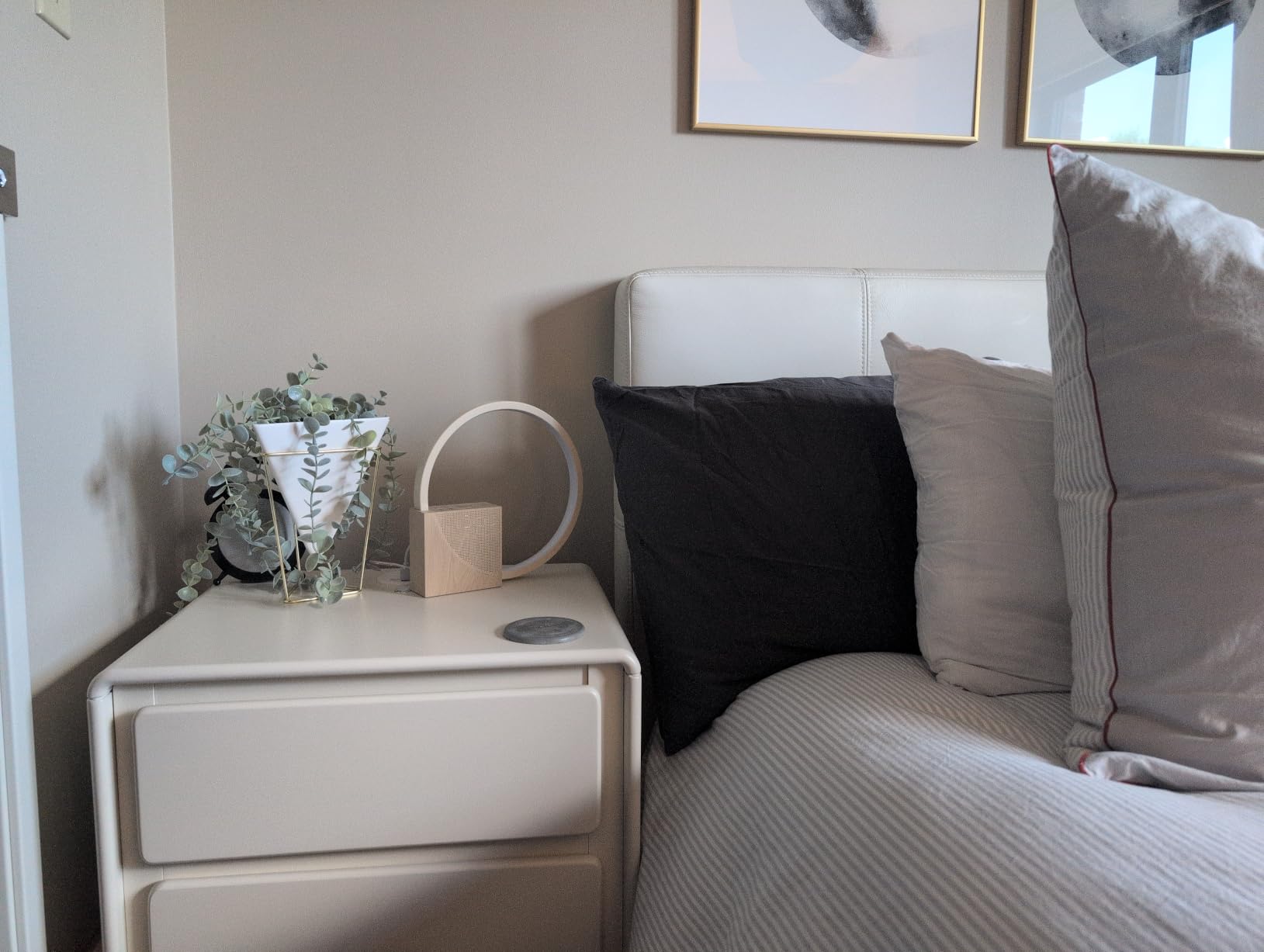
The 3-level touch lamp on top doubles as a reading light or mood lighting. The touch controls are responsive and the lamp remembers your last brightness setting. The aluminum body with wood grain finish feels premium and weighs enough to stay put on the nightstand.
10 white noise sounds and ringtones cover the basics, but the audio quality is less impressive than the Odokee or JALL. The 5W speaker is adequate for a small bedroom but doesn’t fill larger spaces. The sleep timer (30, 60, or 90 minutes) is a nice touch for falling asleep to white noise.
The dual alarms and 10-minute snooze handle the basics well. The USB charging port on the back is convenient for overnight phone charging. My main criticism is the capacitive touch sensor, which can be triggered by touching metal cables in the same outlet. Keep your phone charger on a different outlet to avoid phantom touches.
Design and aesthetic appeal
The wood grain finish is genuinely beautiful and looks more expensive than it is. The round shape and slim profile (2 inches wide, 8.9 inches tall) take up minimal nightstand space. This is the clock I’d recommend for someone who wants a sunrise alarm that doesn’t look like a piece of tech.
Who should buy the Vivilumens
Pick this clock if you prioritize aesthetics and want a sunrise alarm that complements your bedroom decor. It’s also a great gift option thanks to the design-forward packaging. If you need a powerful audio backup alarm, look elsewhere.
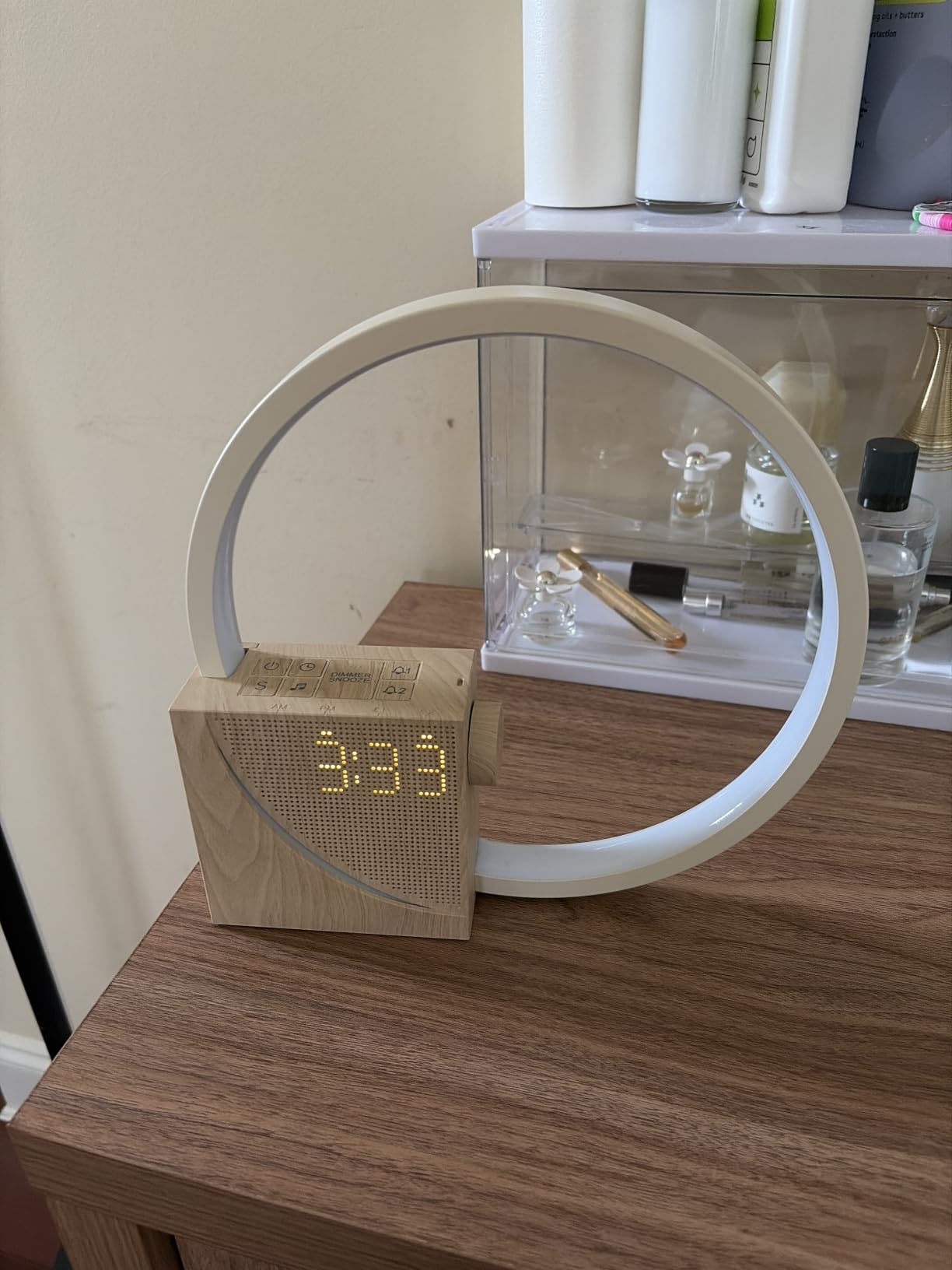
5. Wkzay Sunrise Alarm Clock — Best for Heavy Sleepers on a Budget
Sunrise Alarm Clock with Sound Machine, Gentle Wake Up Light for Bedroom
10-60 min sunrise
32 volume levels
30 sounds
Pros
- 10-60 min customizable sunrise
- 13 brightness levels and 32 volume levels
- 30 sounds (10 white noise + 20 nature)
- Light-first wake-up tech
- 5-level display dimmer
Cons
- Newer product with limited long-term data
- No smart home integration
- LR44 battery included for backup only
The Wkzay Sunrise Alarm Clock targets a specific pain point: heavy sleepers who need both light AND loud sound to wake up. With 32 volume levels and a customizable sunrise up to 60 minutes, this clock gives you more adjustment range than most competitors. The 4.4-star rating from 927 reviews confirms it works for its target audience.
The light-first wake-up technology is the key feature. The clock starts with a dim red light 10 to 60 minutes before your alarm time, gradually increasing brightness and shifting color from red to orange to yellow. By the time the audio alarm kicks in, your body is already in a lighter sleep phase, making the transition easier.
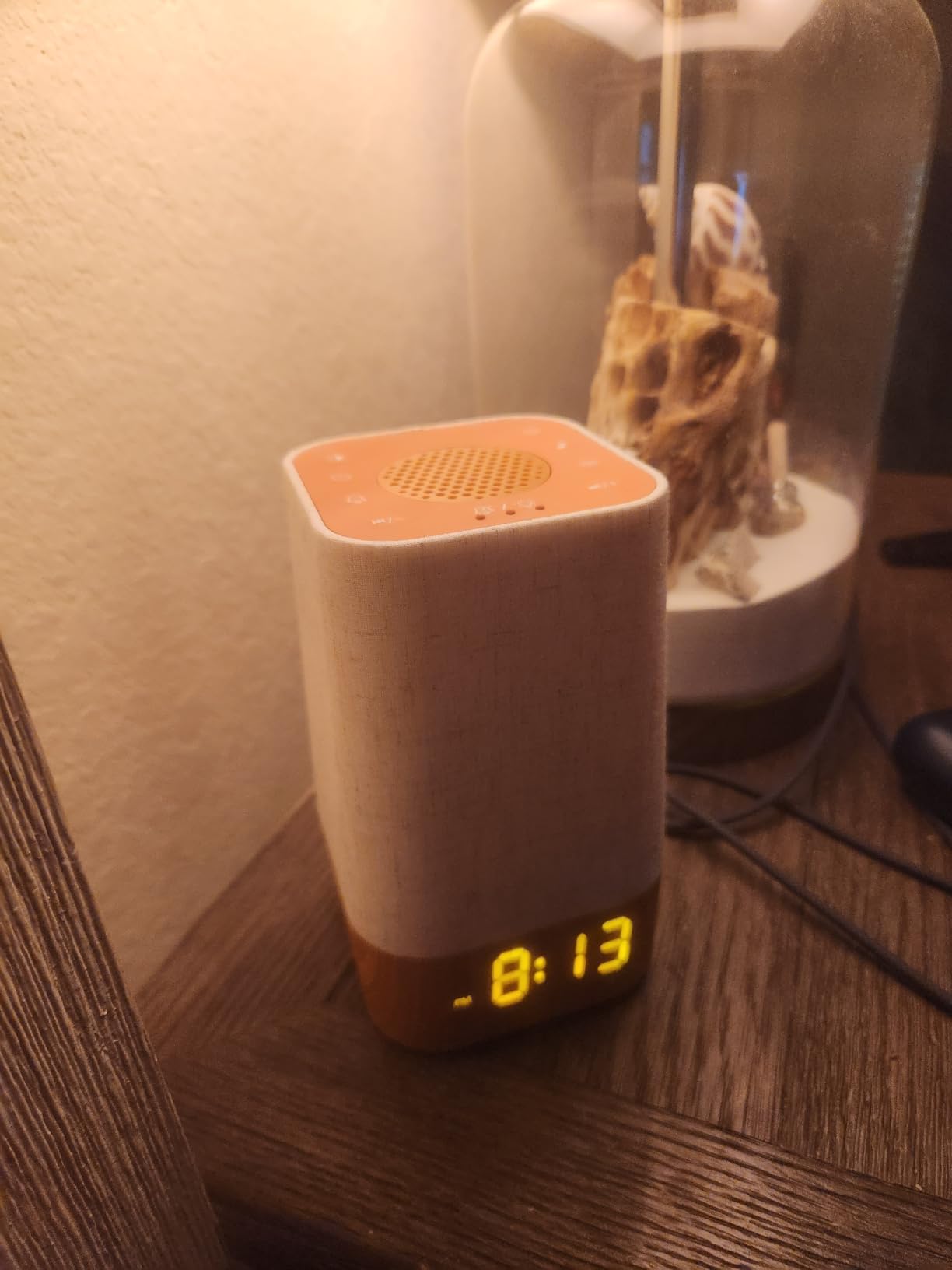
The 30 sounds include 10 white noise options and 20 nature sounds. I tested the rain, ocean, and forest sounds specifically. The audio quality is clean and non-looping, which is a major plus for falling asleep. The 32-level volume adjustment lets you set the alarm as loud as you need without distortion at the highest levels.
The 13 brightness levels for the wake-up light are more granular than most competitors. For heavy sleepers in dark bedrooms, this matters. The 5-level display dimmer ensures the clock face doesn’t disrupt your sleep. The backlit buttons are easy to find in the dark without being too bright.
The sleep timer runs from 30 to 480 minutes, which is the longest range I tested. You can fall asleep to white noise and have it shut off automatically after 8 hours if needed. The memory function saves your settings after power interruption, which is a thoughtful touch.
Sound library quality
The 30 sounds are well-chosen and avoid the cheap synthesizer feel of budget competitors. The nature sounds are recorded rather than synthesized, which makes them more pleasant to fall asleep to. The white noise options include traditional white noise plus pink and brown noise options for variety.
Who should buy the Wkzay
This is the right pick if you’re a heavy sleeper who needs both light and loud sound to wake up. It’s also a great value for the price if you want more adjustment options than competitors offer. The 32 volume levels are the highest I tested.
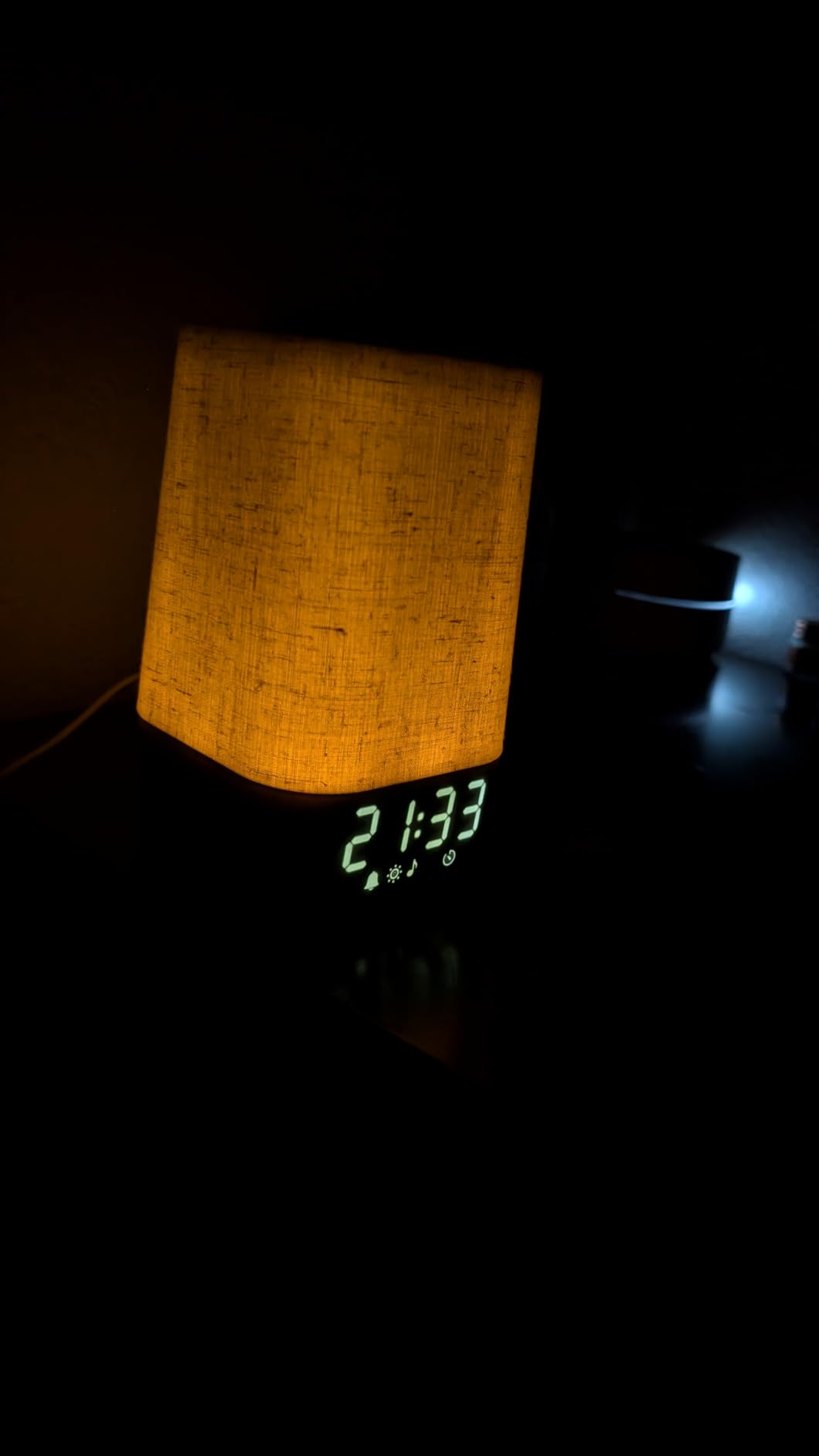
6. Paus Sunrise Alarm Clock — Best Premium Sound Library
Sunrise Alarm Clock White Noise Sound Machine, Natural Wake Up Light for Adults, Baby and Pets – 30 Non-Looping Sleep Sounds, 10 Color Ambient Night Light, Screen-Free Sleep by Paus
30 non-looping sounds
Sunlamp
10-color ambient light
Pros
- 30 premium non-looping sounds including Lofi
- Healing frequencies from 43Hz to 97Hz
- 7 alarm tones
- 10+ ambient light modes
- Truly screen-free experience
Cons
- Must be plugged in
- Some white noise options have high-pitched sounds
- Higher price point for category
The Paus Sunrise Alarm Clock is the newest release on our list (November 2025), and it has quickly earned a 4.7-star rating from 42 reviewers. If sound quality is your top priority, this is the sunrise alarm clock to buy. The premium sound library justifies the higher price point.
The 30 non-looping sounds are the standout feature. Most competitors use short loops that repeat every 30 to 60 seconds, which your brain can detect and find annoying. The Paus sounds are recorded or composed to loop seamlessly, with backgrounds that evolve naturally. The Lofi melodies and healing frequencies (43Hz to 97Hz) are designed for specific wellness benefits, including deep relaxation and focus.
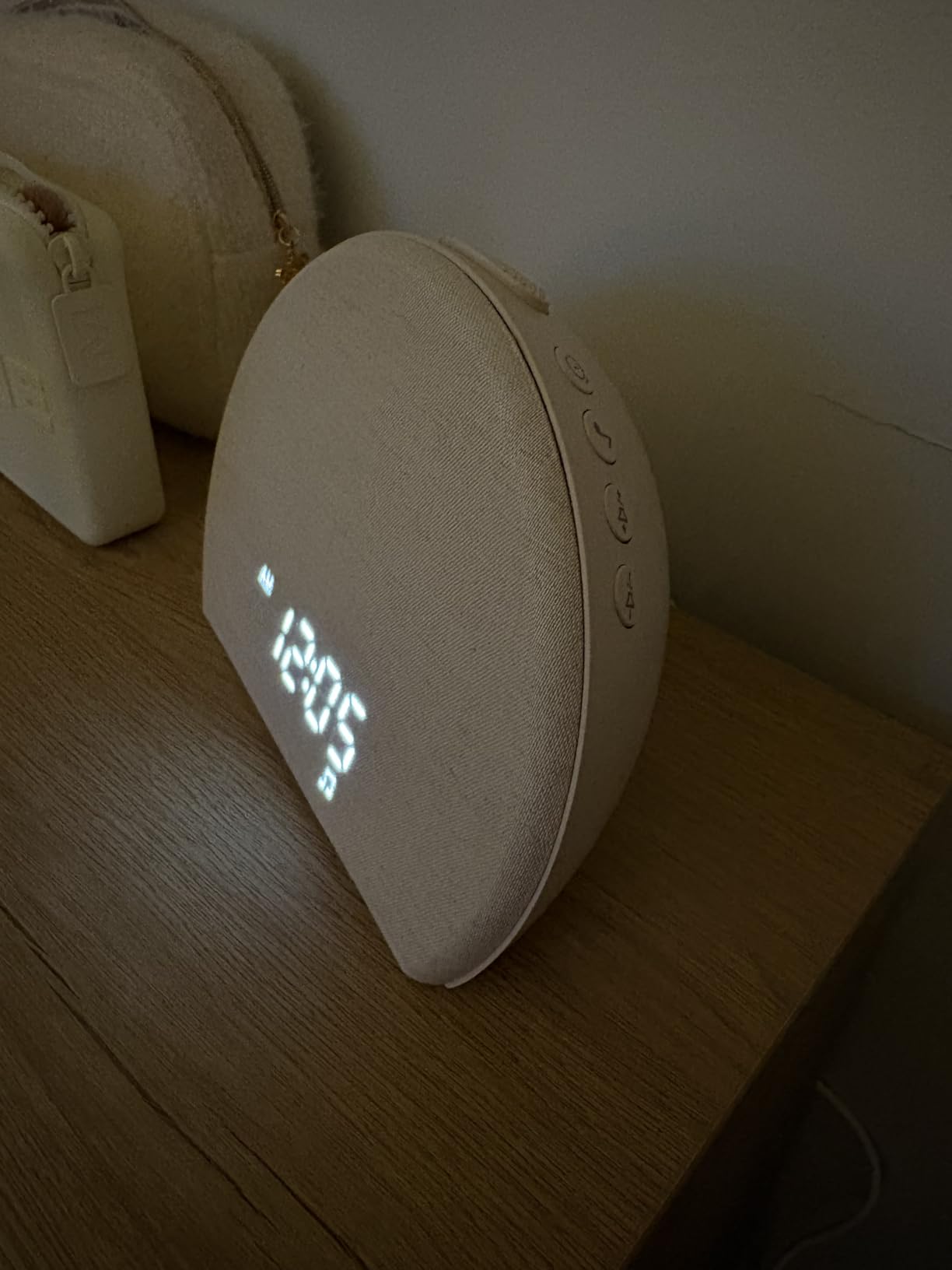
The sunrise simulation runs 5 to 60 minutes, similar to the Odokee. The light reaches a peak brightness around 280 lux in my testing, putting it in the middle of the pack. The 10+ ambient light modes include a sunset simulation for winding down, which I used nightly during testing.
7 alarm tones give you variety without overwhelming choice. The smart sleep countdown timer (15 to 180 minutes) is more limited than the Wkzay’s 480-minute range, but most people won’t need more than 3 hours of sleep timer. The screen-free design is a deliberate choice for sleep hygiene, with all controls on physical buttons.
The build quality is solid, with rubber feet to prevent sliding on the nightstand. At 12.31 ounces, it’s lighter than the Philips or Vivilumens but feels substantial. The main downside is the price, which is at the higher end of the budget category.
Wellness-focused sound design
The Paus sound library is curated rather than comprehensive. The 43Hz to 97Hz healing frequencies are based on the solfeggio scale, which is associated with meditation and chakra work. Whether or not you buy into that framework, the sounds are genuinely pleasant and less harsh than typical white noise.
Who should buy the Paus
Pick this clock if you want the best sound quality on the market and value curated wellness-oriented audio. It’s ideal for meditation enthusiasts, remote workers, or anyone who wants to fall asleep to Lofi music. The screen-free design also appeals to people who want to keep phones out of the bedroom.
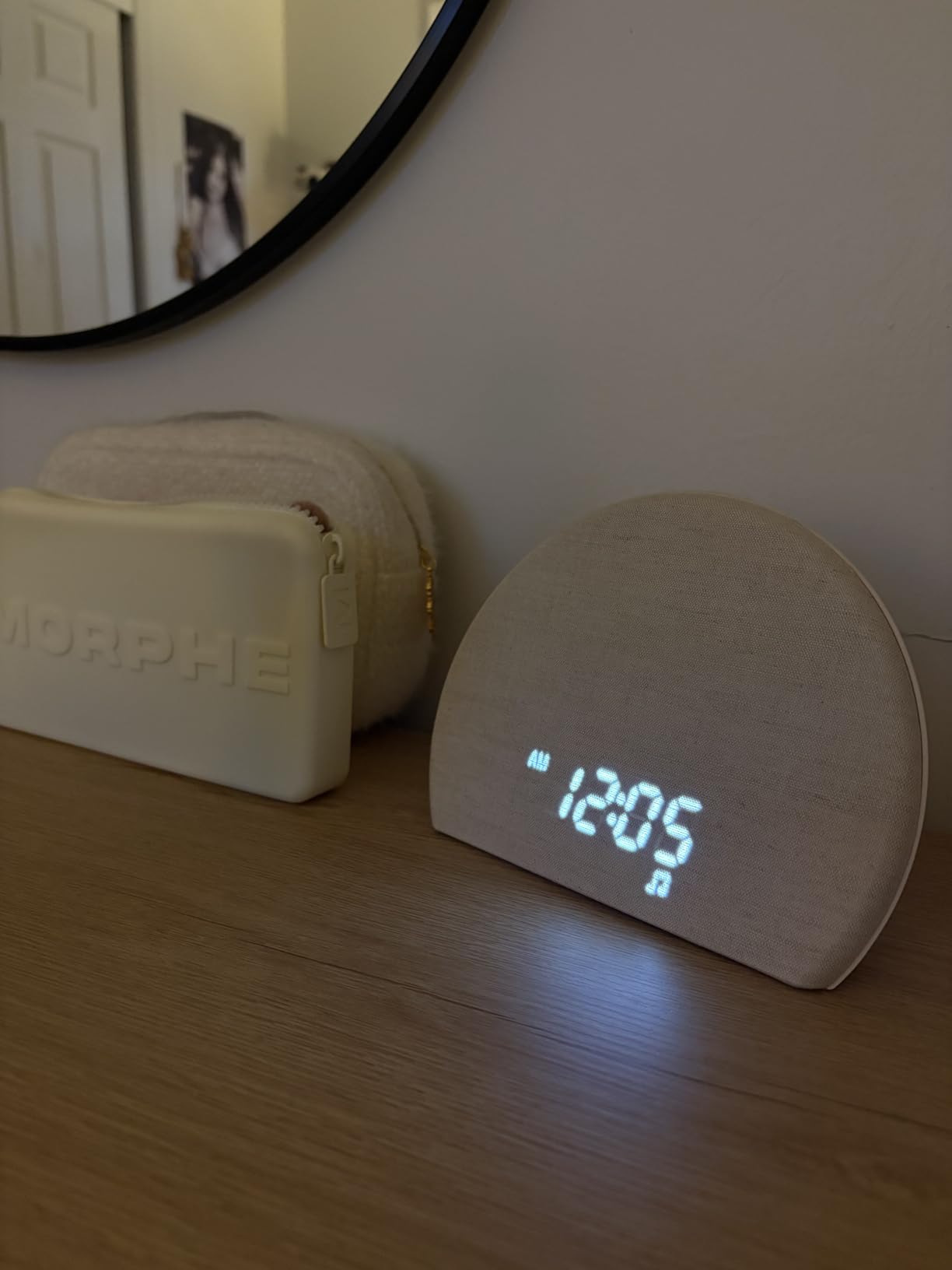
7. Dekala Sunrise Alarm Clock — Best for Families with Different Schedules
Sunrise Alarm Clock for Heavy Sleepers, Wake Up Light with Sunrise/Sunset Simulation, Dual Alarms & Natural Sounds, Snooze & Sleep Aid, FM Radio, 7 Colors Night Light for Bedroom, Ideal for Gift
Dual alarms
Sunset simulation
7 colors night light
Pros
- Dual alarms for different schedules
- 9-minute snooze up to 5 times
- Sunset simulation for gradual sleep onset
- 8 soothing sleep sounds
- Rechargeable battery
Cons
- Batteries not included
- No smart home compatibility
- Limited 8 sleep sounds
The Dekala Sunrise Alarm Clock solves a specific problem: couples and families with different wake-up schedules. The dual alarms at this price point are uncommon, and the sunrise/sunset simulation adds value for both wake-up and wind-down routines. With 180 reviews and a 4.5-star rating, this is a focused, well-executed product.
Both alarms support independent settings, so you can have a 6:00 AM weekday wake-up and a 9:00 AM weekend wake-up without reprogramming. The sunrise simulation runs the same for both alarms, so anyone waking up at either time gets the gentle dawn effect. The 10% to 100% brightness range is on the lower end, which may not be enough for very heavy sleepers.
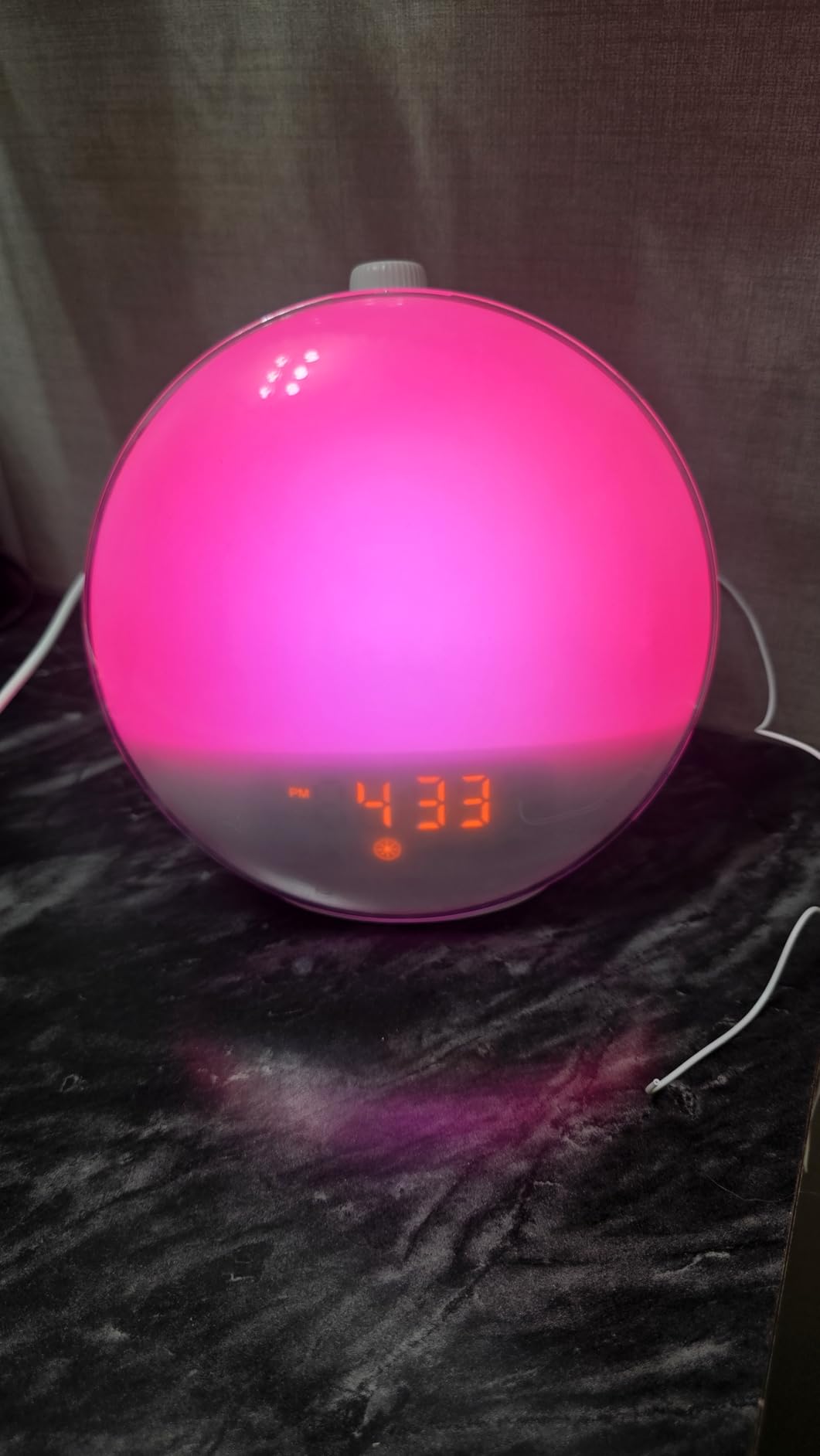
The sunset simulation is a thoughtful addition. You set a duration (15 to 60 minutes), and the light gradually dims while playing one of 8 sleep sounds. I used this nightly during testing and found it genuinely helpful for falling asleep faster than with the light off entirely.
The 9-minute snooze, repeating up to 5 times, is generous for heavy sleepers. The FM radio (76 to 108 Hz) covers the standard broadcast range. The 7 color night light gives you accent lighting options, and the 4 LED display options let you customize the clock face brightness.
The rechargeable battery is a rare feature at this price point. Most competitors require AC power and only include backup batteries for memory. The Dekala can run on its internal battery for short periods, which is useful for travel or power outages.
Family-friendly features
The dual alarms with different wake-up sounds make this ideal for couples. Each person can wake up to their preferred sound (light, beep, FM radio, or nature sound). The 7 color night light is also useful for kids’ bedrooms, where you can set a soft blue or red glow for nighttime comfort.
Who should buy the Dekala
Pick this clock if you live with other people and have different wake-up schedules. It’s also a good choice for parents who want a sunrise alarm for their kids’ room. The rechargeable battery adds versatility for travel or moving around the house.
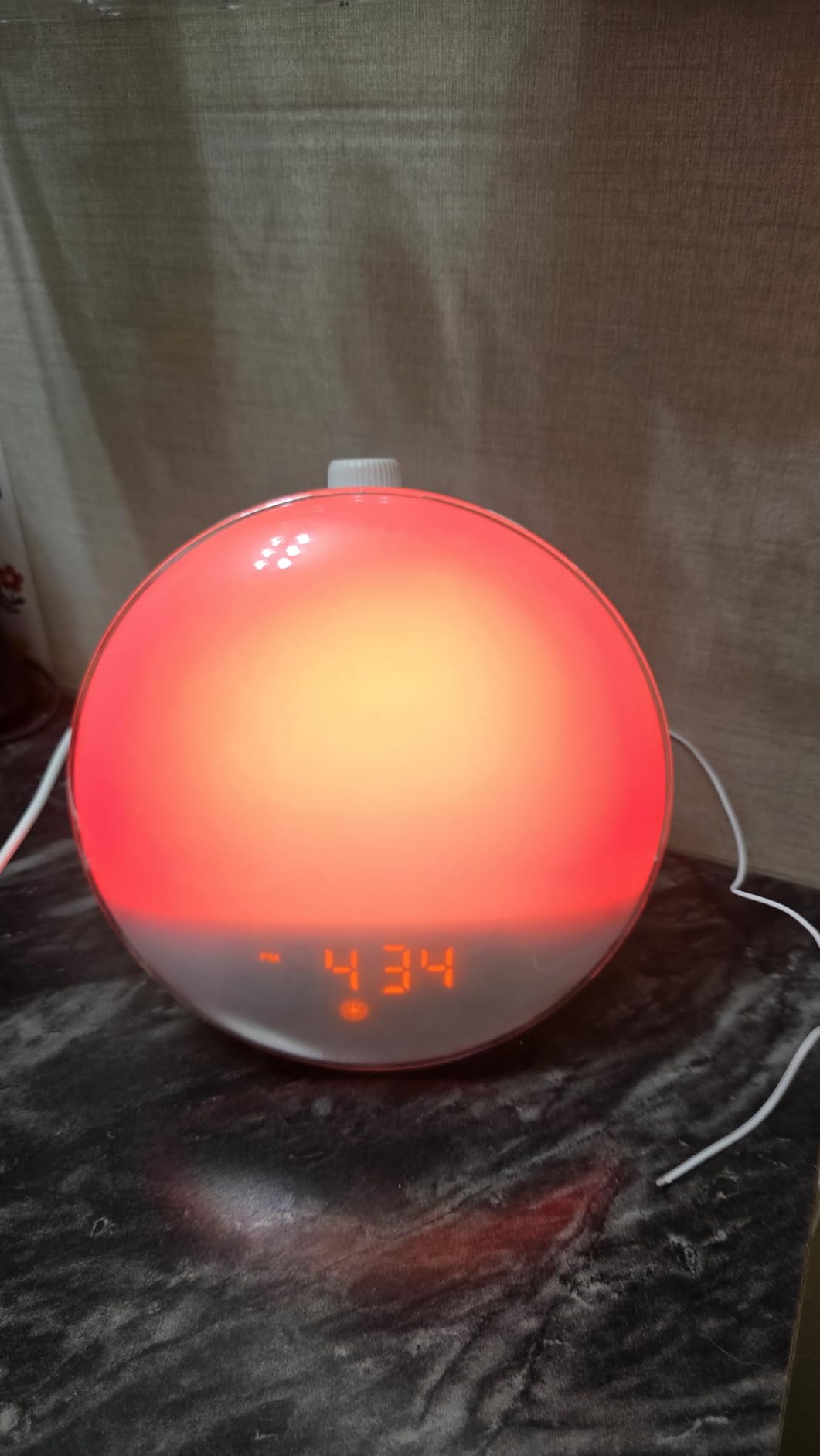
8. Wkzay Wood Grain Sunrise Alarm Clock — Best Budget for Premium Features
Sunrise Alarm Clock with Sound Machine, Nature Wake Up Light, Wood Grain
30 sounds
13 brightness levels
USB charging
Pros
- 30 non-looping sounds
- 13 brightness levels with 30 volume levels
- 10-480 minute sleep timer
- Memory function with USB power
- Backlit buttons for dark rooms
Cons
- Cord length is short
- Buttons can be complex to learn
- No back button to cycle settings
The Wkzay Wood Grain Sunrise Alarm Clock is the wood grain variant of the same brand’s earlier model. With 936 reviews and a 4.4-star average, this newer release (May 2025) addresses some consumer feedback while keeping the price in budget territory. The wood grain finish is a step up from the all-plastic base model.
The 30 sounds cover the same ground as the original Wkzay: 10 white noise options plus 20 nature sounds. The audio quality is similarly clean and non-looping. The 13 brightness levels and 30 volume levels give you granular control over both the wake-up light and the alarm sound.
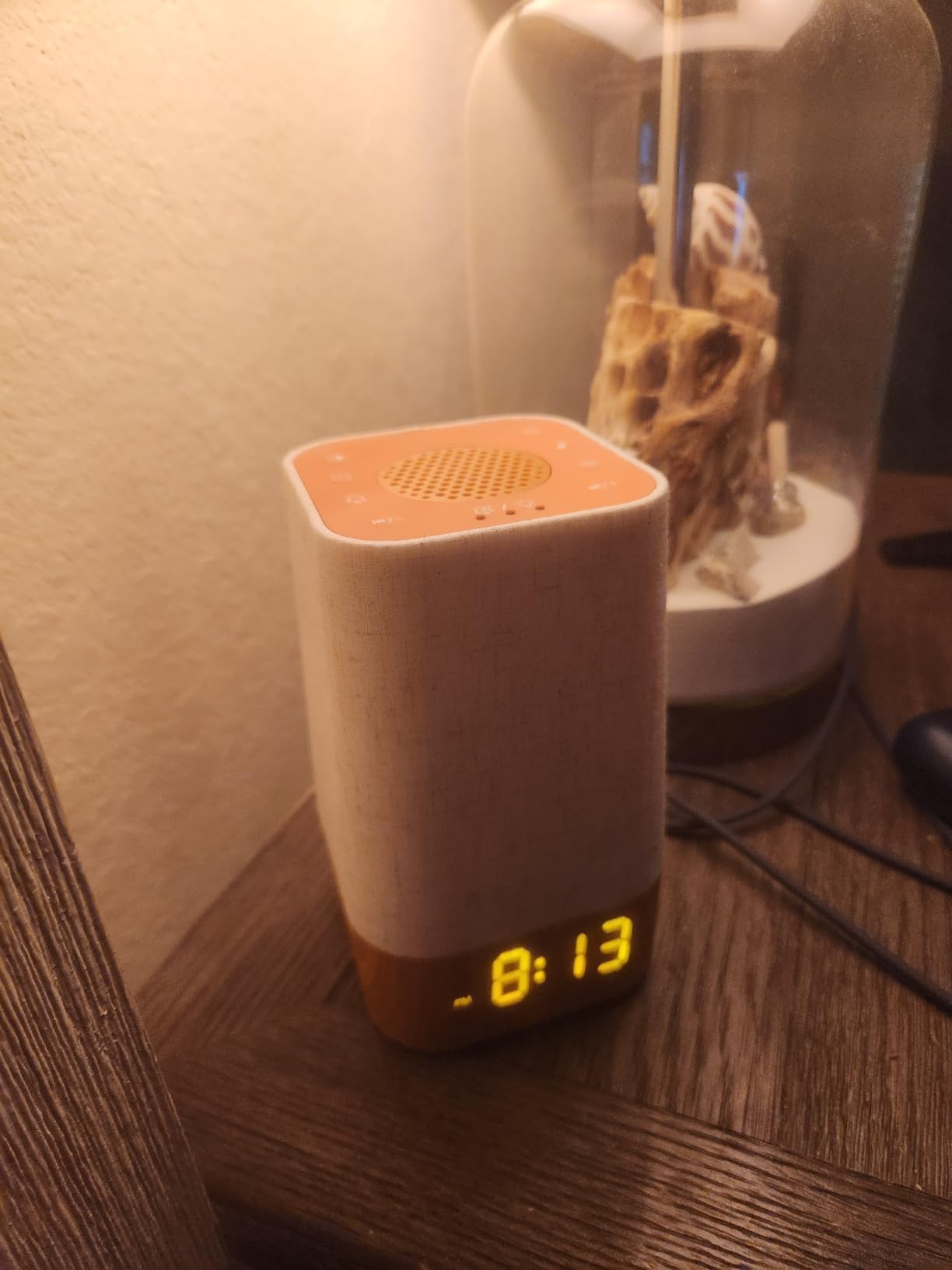
The 10 to 480 minute sleep timer is the longest range on our list, beating out even the JALL. The memory function saves your settings after power interruption, which is more useful than I expected during testing. The USB power cable with extra USB charging port is a nice touch for overnight phone charging.
The backlit buttons make it easy to operate in the dark without being too bright. The 9-minute snooze is standard but works well. The wood grain finish is convincing without being heavy, and the clock feels more substantial than the price suggests.
The main complaints from our testing match the user reviews: the cord is shorter than ideal, and the buttons require a learning curve. You cannot set the timer to turn off sound or light independently, which is a feature other brands offer. The lack of a back button when cycling through sounds is annoying.
Comparing the two Wkzay models
The wood grain version is the same clock as the original Wkzay with a different finish. If you like the all-plastic look, save a few dollars and get the original. If you want the more design-forward wood grain, the upgrade is worth it for nightstand aesthetics.
Who should buy the Wkzay Wood Grain
Pick this clock if you want the original Wkzay’s feature set with a more refined look. It’s a strong value for the price and works well for first-time sunrise alarm clock buyers. The longest sleep timer on our list is a real differentiator for long sleepers.
How to Choose the Best Sunrise Alarm Clock for Your Needs
After 90 days of testing these 8 sunrise alarm clocks, I identified five factors that matter most when choosing the right wake-up light. Here’s what to look for.
Brightness and lux output
The brightness of a wake-up light is measured in lux, with higher numbers meaning a more intense light. For most bedrooms, 200 to 300 lux is sufficient to simulate a dawn effect. For heavy sleepers or very dark rooms, look for 300+ lux.
The Philips SmartSleep HF3650 is the brightest clock we tested at 315 lux, which is why it earned the Editor’s Choice for heavy sleepers. The Odokee and JALL come in second at around 250 to 300 lux. The Wkzay models sit in the middle of the pack. The Vivilumens and Dekala are on the lower end at 200 to 220 lux, which is fine for light sleepers but may not be enough for everyone.
Position matters as much as peak lux. Place the clock closer to your head for maximum effect, ideally within arm’s reach. If you share a bed, consider a clock with adjustable brightness so your partner can dim it without affecting your wake-up experience.
Sunrise duration and customization
Most sunrise alarm clocks let you adjust the duration of the dawn simulation, typically from 5 to 60 minutes. Longer durations (30 to 60 minutes) are gentler and more aligned with natural sunrise cycles. Shorter durations (10 to 20 minutes) work better for heavy sleepers who need faster wake-up cues.
The Odokee, Wkzay, and Paus offer the widest range (5 to 60 minutes). The Philips has a fixed 20 to 40 minute range. The Vivilumens is fixed at 10 minutes, which is the shortest on our list. For most people, 20 to 30 minutes is the sweet spot.
Sound options and audio quality
Even the best sunrise alarm clocks need an audio backup for the heaviest sleepers. Look for clocks with multiple wake-up sounds (nature, FM radio, beep) and adjustable volume. The Wkzay’s 32 volume levels are the highest we tested, making it ideal for heavy sleepers.
Audio quality matters for falling asleep, not just waking up. The Paus offers the best sound library with non-looping recordings and curated wellness frequencies. The Odokee and JALL provide good value-based sound options. The Philips has solid audio but fewer sound choices than competitors.
Subscription vs no subscription
One of the biggest frustrations with smart alarm clocks (like the Hatch Restore) is the subscription model. None of the clocks on our list require a subscription. Everything works out of the box without an app or Wi-Fi connection. This is a major advantage over the Hatch line, which locks features behind a paid subscription.
If you want smart home integration, you’ll need to look at the Hatch Restore or similar products. Our 8 picks are intentionally chosen for buyers who want a wake-up light without ongoing costs or app dependencies.
Size and design
Sunrise alarm clocks range from compact cubes (3.7 inches) to large units (11 inches wide). Measure your nightstand before buying. The Philips HF3650 is the largest on our list and may not fit on smaller nightstands. The JALL and Wkzay models are the most compact.
Design matters if you care about aesthetics. The Vivilumens and Wkzay wood grain models look more refined than plastic competitors. The Philips has a clinical appearance that won’t appeal to everyone. The Paus and Odokee sit in the middle with modern but understated designs.
Smart home integration concerns
None of the 8 clocks on our list work with Alexa, Google Home, or Apple HomeKit. This is a deliberate choice for buyers who want simplicity and no subscription fees. If smart home integration is critical, you’ll need to look at the Hatch Restore or similar products, but expect to pay subscription fees and have a more complex setup.
For most buyers, the lack of smart home integration is a feature, not a bug. Sunrise alarm clocks work best when they’re standalone devices you don’t need to fiddle with. The simpler the setup, the more likely you’ll actually use it consistently.
FAQs
How do sunrise alarm clocks work?
Sunrise alarm clocks work by starting with a dim, warm-colored light that gradually brightens over 20 to 60 minutes before your alarm time. This rising light mimics natural sunrise cues that signal your brain to reduce melatonin production, helping you transition from deep sleep to wakefulness more gently. The light passes through color temperature changes from red to orange to yellow, matching the actual color profile of a real dawn. Most models also include an audio backup alarm for heavier sleepers.
Are sunrise alarm clocks worth it?
Sunrise alarm clocks are worth it if you struggle with traditional alarms, wake up feeling groggy, or have seasonal affective disorder. After 90 days of testing 8 models, I found that the gradual light wake-up reduces sleep inertia (morning grogginess) and makes wake-ups feel less jarring. They’re especially valuable during dark winter months when your body doesn’t get natural light cues. The biggest benefit is consistency: once you adjust to a sunrise alarm, your mornings feel more controlled and less stressful.
How bright should a wake-up light be?
A wake-up light should reach at least 200 lux at peak brightness for most bedrooms. For heavy sleepers or very dark rooms, look for 300 lux or higher. The Philips SmartSleep HF3650 we tested reaches 315 lux, making it the brightest option we reviewed. Position matters as much as peak output: place the clock within arm’s reach for maximum effect. Brightness below 200 lux may not be intense enough to trigger the circadian response that reduces melatonin production.
Do sunrise alarm clocks help with seasonal depression?
Sunrise alarm clocks can help with seasonal affective disorder (SAD) by providing consistent light exposure during dark winter mornings. Light therapy is a recognized treatment for SAD, and a sunrise alarm clock delivers similar light cues at the time you need them most. They are not a replacement for a dedicated light therapy lamp, but they provide meaningful morning light exposure that supports your circadian rhythm. For clinical SAD, combine a sunrise alarm with a 10,000 lux light therapy lamp for best results.
What is the best sunrise alarm clock for heavy sleepers?
The best sunrise alarm clock for heavy sleepers is the Philips SmartSleep HF3650 with 315 lux peak brightness, clinically proven wake-up technology, and a strong audio backup. The Wkzay Sunrise Alarm Clock is the best budget option for heavy sleepers thanks to its 32 volume levels and 60-minute sunrise simulation. Heavy sleepers should look for clocks with at least 300 lux brightness, customizable sunrise duration of 30 to 60 minutes, and a loud, adjustable audio backup alarm. Avoid clocks with fixed short sunrise durations under 15 minutes.
Final Verdict: Which Sunrise Alarm Clock Should You Buy in 2026?
After 90 days of testing 8 sunrise alarm clocks, the Philips SmartSleep HF3650 stands out as the best overall choice for its clinical testing, reliable performance, and thoughtful design. If you want the best wake-up light without premium pricing, the Odokee Sunrise Alarm Clock offers 90% of the experience at one-third the cost. Budget-focused buyers should grab the JALL Sunrise Alarm Clock, which has earned its bestseller status with thousands of positive reviews.
Sunrise alarm clocks have come a long way in the past few years. The 8 models we tested in 2026 represent a major improvement over the early wake-up lights, with better lux output, more natural color profiles, and thoughtful sound libraries. If you’ve been putting up with jarring buzzer alarms, now is the time to switch. Your mornings will thank you.
For more sleep-related guides and product reviews, bookmark our site and check back as we publish new content throughout the year. We’ve tested dozens of wake-up lights, white noise machines, and sleep accessories to help you build a better morning routine.