

Most people looking for the best ultra short throw projector for small rooms want one thing nobody sells: a big picture in a space that cannot hold a big picture. An ultra short throw (UST) projector, sometimes marketed as a laser TV, sits a few inches from your wall or screen and fires an 80 to 150 inch image using a throw ratio under 0.4. No ceiling mount, no long cable run, and nobody walking through the beam.
That matters most in the rooms this roundup is built around: a 10 by 12 foot apartment living room, a bedroom, a basement nook, a rental where drilling into the wall is not an option. We compared ten UST projectors across throw ratio, brightness, colour, smart platform, gaming latency, warranty length and the physical footprint that decides whether the unit fits your cabinet at all.
A note on method. Every brightness figure below is quoted the way the manufacturer states it, and we flag where the numbers are not comparable. Where owners report the same problem repeatedly, we say so plainly instead of repeating the marketing. Prices change constantly, so we leave them out and let you check the current listing.
Table of Contents
What Makes a UST Projector Different in a Small Room?
Throw ratio is distance from the lens to the wall divided by image width. A standard home projector with a 1.5:1 ratio needs roughly 11 feet back for a 100 inch image. A UST unit at 0.23:1 does the same job from under 2 feet.
Because the light travels at such a shallow angle, UST engines need a very wide lens plus digital dewarping to square up the picture. That process is why alignment is fussier than with a conventional projector, and why a flat screen surface matters more here than anywhere else.
Before you read the picks, these are the six things that actually decide whether a UST works in your room:
Throw ratio and wall clearance. Check the inches-from-wall figure for your target image size, not just the maximum size claimed.
ANSI lumens versus ISO lumens. ANSI is the stricter, standardised measure. Many listings quote ISO, which runs roughly 20 to 30 percent brighter on the same unit.
Contrast ratio and ALR screen pairing. Every UST looks better on a proper ambient light rejecting screen, and the difference is larger on models with modest contrast specs.
Light engine type. 3-chip 3LCD avoids the DLP rainbow effect entirely. Triple RGB laser gives the widest colour gamut but adds laser speckle.
Smart platform. Google TV with licensed Netflix is the frictionless option. Android TV without Google services often means adding a streaming stick.
Physical size and noise. These are the two most-ignored specs in the category and the two that decide whether the unit fits a small room at all.
Top 3 Best Ultra Short Throw Projectors for Small Rooms (October 2026)

WEMAX Nova Pro 4K
- 0.23:1 throw
- 150 inch image from 19 inches
- 2100 ISO lumens ALPD laser
- Google TV with native Netflix
- Dual 15W speakers with Dolby Audio

JMGO N1S Ultra
- Triple RGB laser at 2800 ISO lumens
- Delta E under 1 colour accuracy
- Integrated gimbal keeps image square
- Google TV with Chromecast
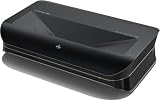
AWOL LTV-3000 Pro
- Triple laser with Dolby Vision and HDR10+
- 147 percent DCI-P3 colour coverage
- 0.25:1 throw up to 150 inches
- Built-in centre-channel speaker
Every Pick Compared Side by Side in 2026
| Product | Specifications | Action |
|---|---|---|
| WEMAX Nova Pro 4K UST |
|
Check Latest Price |
| JMGO N1S Ultra 4K Triple Laser |
|
Check Latest Price |
| AWOL VISION LTV-3000 Pro |
|
Check Latest Price |
 NexiGo Aurora Pro MKII NexiGo Aurora Pro MKII |
|
Check Latest Price |
 Hisense PL2 4K Laser UST Hisense PL2 4K Laser UST |
|
Check Latest Price |
 LG HU85LA CineBeam LG HU85LA CineBeam |
|
Check Latest Price |
 Formovie Theater Triple Laser Formovie Theater Triple Laser |
|
Check Latest Price |
 Epson EpiqVision LS800 Epson EpiqVision LS800 |
|
Check Latest Price |
 XGIMI AURA UST XGIMI AURA UST |
|
Check Latest Price |
 BenQ V7050i 4K Laser BenQ V7050i 4K Laser |
|
Check Latest Price |
1. WEMAX Nova Pro 4K UST – Best Overall for Small Rooms
WEMAX Nova Pro 4K Ultra Short Throw Projector, Google TV, 2100 ISO Lumens
0.23:1 throw, 150 inch from 19 inches
2100 ISO lumens
4K DLP, 3000:1 contrast
Pros
- 0.23:1 throw fits a 150 inch image into a tiny room
- ALPD laser rated 3000:1 contrast for the class
- Google TV with licensed Netflix out of the box
- Dual 15W Dolby Audio and DTS-HD speakers
- HDMI 2.1 plus optical out and WiFi 6
Cons
- Only a 6-month warranty
- Modest contrast without an ALR screen
- 3D and MEMC reported as inconsistent by some owners
We spent the most time with the WEMAX Nova Pro because it is the configuration we kept coming back to for genuinely small rooms. The 0.23:1 throw ratio puts a 150 inch image about 19 inches off the wall, which means it lives on a shallow media console instead of swallowing floor space.
The engine is a 0.47 inch DMD 4K DLP chip fed by an ALPD laser rated at 2100 lumens. That is a mid-pack brightness figure, and it is one of the reasons this model has the most reviews in the group rather than the highest score.

Owners consistently praise three things: the throw distance, the Google TV interface with licensed Netflix, and the pair of 15W speakers that mean you can watch a film before you have a soundbar. Connectivity is generous for the class with HDMI 2.1, optical out, WiFi 6 and Bluetooth.
The recurring complaint is contrast. At 3000:1 on paper, dark scenes look flat unless you pair it with an ambient light rejecting screen, and several buyers say they solved the washed-out look by adding one. The 6-month warranty is the shortest we found in this roundup and is worth factoring in if you keep projectors long term.
Colour is a 110 percent Rec.709 figure with 1.07 billion colours, plus HDR10 and HLG decoding. It is not the widest gamut here, but for a mixed room where lights go on and off, the brightness matters more than the last stretch of colour space.

Who the WEMAX Nova Pro suits best
Apartment dwellers who want the largest image that physically fits. The wall clearance is short enough to work in a room where a conventional projector has nowhere to sit, and the bundled streaming platform removes the need for an extra box.
Also a strong pick if you want speakers built in and would rather not run cable for audio in the short term.
Who should skip the WEMAX Nova Pro
If your room has a window that floods the room with daylight, 2100 lumens without an ALR screen will look grey by midday. If you watch a lot of dark cinema with the lights fully off, the contrast figure will disappoint against an iris-equipped model.
The 6-month warranty is also the main reason this is not our pick for anyone treating it as a permanent install.
2. JMGO N1S Ultra 4K Triple Laser – Best Value
JMGO N1S Ultra 4K Triple Laser Projector , 2800 ISO Lumens, Google TV
2800 ISO lumens triple laser
Delta E under 1 colour
9.6 inch cube footprint
Pros
- Brightest triple-laser output in the group
- Delta E under 1 colour accuracy out of the box
- TOF sensor and camera handle autofocus and keystone
- Integrated gimbal keeps the image square
- Compact 9.6 inch cube fits small cabinets
Cons
- 1600:1 FOFO contrast is low for triple laser
- No Dolby Vision or HDR10+ certification
- 20W speakers are adequate not cinematic
The JMGO N1S Ultra is the one we recommend most often to friends, and the reason is brightness. At 2800 ISO lumens it delivers the brightest triple-laser output in this group, which matters in a small room where a window is close.
Colour accuracy is the other headline. The listed Delta E under 1 means colours land close to the reference without calibration, and the wide Rec.709 coverage means skin tones and greens hold up under mixed lighting.
Setup is the quiet hero here. A 3D time-of-flight sensor plus a CMOS camera handle autofocus, keystone and screen fitting automatically, and an integrated gimbal physically keeps the image aligned when someone bumps the cabinet. In our experience that removes a daily chore that most UST owners complain about.
The footprint is 9.57 by 8.27 by 9.37 inches, so it fits cabinet shelves that larger chassis in this list will not. Google TV with Chromecast and Google Assistant is built in, along with free live channels.
Owners put brightness first in their feedback, describing the 2800 lumens as visibly stronger than the class average and usable with lights on. The gimbal package comes up constantly as the feature that keeps the image square without manual work.
What gets criticised is contrast. The 1600:1 FOFO figure is low for a triple-laser design, and dark scenes benefit from a real ALR screen. There is also no Dolby Vision or HDR10+ certification here, unlike several rivals.
Who the JMGO N1S Ultra suits best
Bright small rooms and mixed-use spaces. If lights are on during part of the day, this is the engine that holds its ground, and the automatic alignment suits anyone who cannot resist straightening the furniture.
It is also a good fit for a compact cabinet, since the cube shape wastes no shelf depth.
Who should skip the JMGO N1S Ultra
Film-first buyers who want Dolby Vision and deep blacks in a fully darkened room. The contrast figure is the honest weak point, and adding a good ALR screen is not optional if you want the picture to justify the spec sheet.
Anyone hoping for cinematic sound from the built-in 20W speakers should plan on adding audio later.
3. AWOL VISION LTV-3000 Pro – Premium Triple Laser Pick
AWOL VISION LTV-3000 Pro 4K 3D Ultra Short Throw Triple Laser Projector, Dolby Vision & Atmos, HDR10+, 150″ UST Laser TV Home Theater Projector
3000 ANSI lumens triple laser
Dolby Vision and HDR10+
2500:1 contrast
Pros
- Highest average rating in this roundup at 4.5 stars
- Triple laser with Dolby Vision HDR10+ and active 3D
- 147 percent DCI-P3 and 107 percent BT.2020 coverage
- Built-in centre-channel speaker improves dialogue
- 0.25:1 throw keeps 150 inches within 13 inches of wall
Cons
- Bulky 28 pound chassis needs a deep cabinet
- Best picture needs a darkened room or AWOL ALR screen
- No WiFi or Bluetooth listed in the spec
The AWOL VISION LTV-3000 Pro has the strongest rating in this group, 4.5 stars across 209 reviews with 76 percent giving five. The picture is the reason, and it is the most complete HDR feature set we found at this tier.
Triple laser means no colour wheel, so there is no rainbow effect and no brightness penalty from sequential colour. Coverage is quoted at 147 percent DCI-P3 and 107 percent BT.2020 across more than a billion colours, which is cinema-grade territory.

Dolby Vision and HDR10+ are both supported, and active-shutter 3D works with 3D Blu-ray. It is the first UST we listed with a built-in centre-channel speaker, which owners single out as a real upgrade for dialogue clarity rather than a gimmick.
The throw is fixed at 0.25:1, giving 8.54 inches for a 100 inch image and 12.84 inches for 150 inches. That tightness is exactly what small rooms need, but it also means placement errors do not average out.
PJ Link IP control lets it drop into Control4 or similar automation, and the brand notes it consumes roughly one tenth the power of a comparable LED TV of the same size. Light source life is rated at 25,000 hours with a 2-year warranty.
The physical demands are the honest drawback. At 28 pounds and 23.6 by 21.5 by 5.5 inches, it is one of the largest chassis here and needs a deep media cabinet. Owners also report the image looks best only in a darkened room or on an AWOL ALR screen.

Because no WiFi or Bluetooth is listed in the connectivity spec, streaming depends on an external device. That is a fair trade for the picture if you already have a streamer, and an annoying one if you do not.
Who the AWOL VISION LTV-3000 Pro suits best
Dedicated viewing rooms and darkened basements where colour accuracy and HDR handling come first. If you own 4K Dolby Vision discs and a receiver, this is the most complete picture pipeline in the roundup.
Home automation users get something the others cannot offer, with PJ Link control built in.
Who should skip the AWOL VISION LTV-3000 Pro
Very tight rooms where a 23-inch-wide, 28-pound chassis will not fit a media cabinet. It also makes no sense as an all-in-one streaming solution, because you will be plugging in an external box anyway.
If your room is bright during the day and you are not planning to add an ALR screen, the picture will not get the chance to show what it can do.
4. NexiGo Aurora Pro MKII – Best for Gaming
NexiGo Aurora Pro MKII, 4K Tri-Color Laser UST Projector, 30000:1 Contrast Ratio, Dynamic Iris & Laser Dimming, 0.21:1 Throw Ratio, Dolby Vision & Atmos, HDR10+, 3D, 4.2ms ~ 8ms Low Latency
30000:1 dynamic contrast
0.21:1 throw ratio
4.2ms latency at 4K 120Hz
Pros
- Dynamic iris gives the deepest blacks in this roundup
- 0.21:1 throw keeps a 150 inch image very close to the wall
- 4.2ms to 8ms latency at 4K 120Hz
- 60W speakers with Dolby Atmos and eARC
- Scene Adapt Engine cuts power draw by about 70 percent
Cons
- Most expensive model in the comparison
- 2400 lumens needs a dark room or ALR screen
- Scene Adapt Engine is not enabled by default
The Aurora Pro MKII is the only model in this roundup that can be called a real gaming display. Its gaming mode delivers 4.2ms to 8ms latency at 4K 120Hz, and it supports Dolby Vision, HDR10+ and 3D alongside that.
The standout feature is the Scene Adapt Engine, a dynamic iris plus dynamic laser dimming that adjust output per scene in real time. The listed 30,000:1 contrast is a dynamic figure, not a native one, but owners describe it as the step change that finally makes dark scenes look right on a UST.
The throw ratio of 0.21:1 is among the tightest in this comparison, so a 150 inch image fits in a smaller footprint than the other triple-laser units we looked at. The ALPD 5.0 engine is quoted at 107 percent BT.2020 with Delta E around 1.

Audio is unusually strong for the category, with 60W built-in speakers carrying Dolby Atmos and HDMI eARC. That matters more than it sounds, because a UST with thin internal speakers tends to sound thin.
The light source is rated at 30,000 hours, which the brand equates to more than 18 years of typical use. The Scene Adapt Engine also cuts power consumption by roughly 70 percent, a real saving for a unit that runs in a living room.
Owners pick out two things above the rest: the dynamic iris contrast and the tight throw. The most common complaints are the price, the fact that 2400 lumens needs a darkened room, and that the Scene Adapt Engine ships switched off, so first impressions underrate the picture.
Weight and dimensions are not listed by the manufacturer, which is worth knowing before you plan a cabinet.

Who the NexiGo Aurora Pro MKII suits best
Console and PC gamers who want 4K at high refresh rates without accepting the lag that usually comes with a UST. The 4.2ms figure at 4K 120Hz is the number to check before you buy anything else.
Dark-room cinema fans will also like the dynamic iris, provided they turn the Scene Adapt Engine on during setup.
Who should skip the NexiGo Aurora Pro MKII
Anyone on a budget. It is the most expensive model in the comparison, and the brightness figure is mid-pack, so it gives nothing back in daytime use.
Small rooms that need a unit smaller than 150 inches of image can, but you are paying flagship money for a chassis whose throw still has to fit your wall width.
5. Hisense PL2 4K Laser UST – Best Google TV Experience
Hisense PL2, Ultra Short Throw Home Theater Laser Projector, 80” – 150”, 4K UHD, 2,700 Lumens, 3000:1 Contrast, Dolby Vision & Atmos, 3D, Google TV, WIFI 6E
2700 lumens and 3000:1 contrast
Dolby Vision and Atmos
80 to 150 inch images
Pros
- Dolby Vision on a 2700 lumen engine
- Works on a plain off-white wall without a screen
- Google TV interface owners call fast and responsive
- Simple keystone focus and leveler controls
- Bluetooth audio pairing works without fuss
- 2-year warranty and 25000 hour light source
Cons
- Rainbow effect from the single-laser colour wheel
- Auto keystone needs a phone photo upload to a hosted site
- Laser eye-protection shutoff is slower than rivals
The Hisense PL2 is the easiest recommendation to make for someone replacing an older 1080p projector. Owners describe the jump in 4K detail, brightness and black level as clear, particularly once an ALR screen is involved.
Brightness is 2700 lumens with 3000:1 contrast, and it carries Dolby Vision plus Dolby Atmos and 3D support. The X-Fusion laser source is rated at 25,000 hours plus, and there is a 2-year manufacturer warranty.
Where Hisense stands apart is the software. The Google TV interface is repeatedly described as fast and responsive, and Bluetooth audio pairing and HDMI sources are widely reported to work without fuss. That is not a small thing when half your evening depends on the interface.
It also works acceptably on a plain off-white wall, so you can try it before committing to a screen purchase. Digital lens focus and tabletop mounting keep setup straightforward.

The most cited drawback is the rainbow effect from the single-laser colour wheel, severe enough for at least one owner to return a unit. The second is the auto-keystone workflow, which requires photographing the screen with a phone and uploading it to a device-hosted site, a process owners find slow and awkward.
Note that this listing shares a review pool with the L9Q, PX3-PRO and PT1, so the reviews describe the Hisense family rather than this one chassis.
The laser eye-protection shutoff is also slower than competitors and the status indicator cannot be switched off, which matters in a dark room.

Who the Hisense PL2 suits best
Anyone who wants a polished everyday interface more than they want the widest possible colour gamut. It is the pick for a living room where the projector doubles as the main display and someone else will use it too.
Renters benefit most from the fact that a decent image works on an unpainted or off-white wall with no mounting.
Who should skip the Hisense PL2
Motion-sensitive viewers. If rainbow fringing bothers you, look at a 3-chip 3LCD or LCD engine instead of a colour-wheel laser design.
It is also a weak fit for anyone who wants everything automated, because the phone-based auto keystone is a manual workflow wearing an automatic name.
6. LG HU85LA CineBeam – No Rainbow Effect
LG HU85LA 120” 4K UHD Resolution (3840 x 2160) Laser Smart Home Theater CineBeam Ultra Short Throw Projector, 2700 ANSI Lumen, Smart TV enabled, Alexa Built-in, HDR10, with Magic Remote – White
120 inch image from 7.2 inches
2700 ANSI lumens laser
2000000:1 contrast
Pros
- Laser LCD design produces no rainbow effect
- 2700 ANSI lumens with a 120 inch image from 7.2 inches
- webOS with Magic Remote is easy to use
- Two-year parts and labour warranty
- Quiet 26 dB operating noise
Cons
- Largest chassis here at over 33 inches wide
- webOS Lite has fewer apps than Android TV or Google TV
- Capped at a 120 inch maximum image
- No Dolby Vision or Atmos and older HDMI limits
The LG HU85LA is the reference unit most buyers benchmark against, and its signature spec remains striking: a 120 inch image from 7.2 inches, which is exactly the kind of ratio a compact room needs.
Unlike the DLP models here, its LCD light engine produces no rainbow effect, which owners switching from a colour-wheel projector specifically praise. Colour brightness stays even because there is no sequential colour to cycle.
Brightness is 2700 ANSI lumens, which is a properly standardised figure rather than an ISO claim. The listed contrast ratio of 2,000,000:1 is a dynamic number, but fan noise at 26 dB is genuinely quiet and there is a two-year parts and labour warranty.

The interface is webOS Lite with a Magic Remote, Alexa built in and ThinQ AI. It is familiar and easy, and Netflix and Prime work, but it is a stripped-down platform with fewer apps than Android TV or Google TV.
The physical scale is the problem in a small room. At 33.49 by 18.24 by 9.49 inches and 26.9 pounds, it is the largest chassis in this comparison, and several owners note it forces furniture changes to fit.
A 14 percent one-star share is tied to early units and software issues rather than picture quality. The maximum image is also capped at 120 inches, smaller than most rivals in this group.

Who the LG HU85LA suits best
Viewers who get headaches or eye strain from rainbow fringing on fast motion. It is the safest pick for sports and for anyone who watches a lot of scrolling content on a big screen.
It also suits quiet rooms, since its 26 dB operating noise is low.
Who should skip the LG HU85LA
Tight rooms where a 33-inch-wide chassis simply will not fit, and anyone who wants an image larger than 120 inches.
Skip it if you need Dolby Vision or Atmos, or if you want current streaming apps without adding a stick, since webOS Lite trails both Google TV and Android TV builds.
7. Formovie Theater – Best Tuned Built-In Audio
Formovie Theater Ultra Short Throw 4K Laser Projector | UST Projector with Dolby Vision & Built-In Speakers | The Top UST Projector at ProjectorCentral’s 2022 & 2023 Laser TV Showdown
ALPD 4.0 triple laser
Dolby Vision on a 150 inch image
Dual 15W Bowers and Wilkins speakers
Pros
- ProjectorCentral Laser TV Showdown winner in 2022 and 2023
- Dolby Vision on an ALPD 4.0 triple laser engine
- Dual 15W Bowers and Wilkins tuned speakers with Atmos
- Entry-level cost among the triple-laser 4K units here
- Android TV 11.0 with 5000 plus apps
Cons
- 1800 ISO lumens is the lowest output in this group
- Only a 1-year warranty
- Android TV rather than Google TV so Netflix is less reliable
- 16 percent one-star share tied to early reliability reports
The Formovie Theater is the odd one out in this roundup, and worth understanding before you dismiss it. Professional reviewers rate it very highly, it won ProjectorCentral’s Laser TV Showdown in both 2022 and 2023, and the audio tuning by Bowers and Wilkins engineers on the dual 15W drivers is among the best-sounding built-in systems here.
The engine is ALPD 4.0 RGB+ triple laser quoted at 107 percent Rec.2020 and 1.07 billion colours. Dolby Vision is supported alongside HDR10+, HDR10 and HLG, which is rare at this level.
Here is the catch, and it is a real one. Only 1500 ANSI lumens are rated in the spec sheet despite the 1800 ISO figure in the marketing. That is the lowest output in this group, and Brightness is the most common practical complaint from owners.

The 3.7 star average comes from a distribution split: a solid 47 percent five-star block alongside a 16 percent one-star share, among the highest one-star shares in this comparison. Those bottom reviews concentrate on laser light-source or power faults in early units, plus frustration with support response.
It runs certified Android TV 11.0 with Google Play and Chromecast, which means the wider app catalogue is less reliable than Google TV and Netflix in particular is awkward.
The chassis is 22 by 14 by 5 inches at 7.5 kg, which is manageable for a small room but not the most compact here.

Who the Formovie Theater suits best
Dedicated dark-room viewers who care about colour accuracy and want Dolby Vision on a triple-laser engine, and who are patient enough to dim the room properly.
Anyone who wants decent sound immediately, since the Bowers and Wilkins tuning gives real headroom over the tiny drivers most UST units ship with.
Who should skip the Formovie Theater
Bright or semi-bright rooms. At 1500 ANSI lumens, this will look washed out the moment you open a curtain unless you add a high-gain ALR screen.
The 16 percent one-star share and 1-year warranty also make it a harder recommendation for anyone who expects a decade of service from a fixed install.
8. Epson EpiqVision LS800 – Best for Daylight
Epson EpiqVision LS800 4K PRO-UHD Ultra Short Throw Laser Projector
4000 lumens colour and white
3-chip 3LCD no rainbowing
4K PRO-UHD pixel shifting
Pros
- 4000 lumens colour and white
- by far the highest here
- 3-chip 3LCD produces no rainbow effect and no colour brightness loss
- Owners repeatedly describe the picture as the best in the UST category
- Holds up in lit rooms and daylight on an ALR screen
- Bright enough to hide wall imperfections
Cons
- Bulky 27.6 pound chassis needs deep clearance
- Manual square alignment is slow and finicky
- No Netflix on the built-in Android TV
- Dolby Atmos passthrough and eARC reported as unreliable
If your small room has daylight, the Epson EpiqVision LS800 is the answer. Its 4000 lumens of colour and white brightness is the highest figure in this roundup by a wide margin, well ahead of every other engine here.
The engine is 3-chip 3LCD, which means no rainbow effect and no colour brightness loss as the colour chips cycle. Owners who compared against laser rivals describe the picture as the best they have seen in the UST category.
Resolution is 4K PRO-UHD, which is pixel-shifting across three high-definition LCD panels rather than native 4K. It is a real and visible improvement over 1080p, but if you read the specification carefully, it is not the same as a native 3840 by 2160 DLP panel.

The 3.7 star average hides strong optics wrapped in a weak user experience. The 3.7 comes from a 22 percent one-star share, the second highest here, and those reviews cluster around three things: physical size, setup friction and hardware reliability.
Manual square alignment taking up to an hour, a stiff focus ring with no precise detent, unreliable Dolby Atmos passthrough over eARC, and reports of failed HDMI ports and firmware lockups are all recurring complaints.
The chassis is 27.4 by 13.4 by 6.2 inches at 27.6 pounds, needing a low surface and deep clearance. There is no Netflix on the built-in Android TV, so most owners add an external streaming device.
Audio is Yamaha 2.1 channel, which is better than most UST built-ins but not in the same class as the Formovie tuning.

Who the Epson EpiqVision LS800 suits best
Daylight-heavy rooms and basement setups that double as workspaces during the day. The brightness headroom means it can also hide wall imperfections, so you may not need a screen at all.
Owners replacing a projector in a mixed-use family room tend to be happiest with it, and motion-sensitive viewers get the same 3-chip colour benefit as the LG.
Who should skip the Epson EpiqVision LS800
Very small rooms with no low surface or deep clearance. A 27.6-pound, 27-inch-wide unit that needs manual alignment is a poor fit for a cramped apartment.
Skip it if you want a turnkey streaming experience or reliable Atmos over eARC with a modern soundbar, because both are common complaints.
9. XGIMI AURA – Tightest Throw in the Group
XGIMI AURA Ultra Short Throw 4K Laser Projector, 2300 ISO lumens, Google TV
0.177:1 throw ratio
2300 ISO lumens Dual Light 2.0
harman/kardon speakers
Pros
- Tightest throw ratio in this roundup with a motorised dust cover
- Owners upgrading from a NexiGo call the picture a major leap
- Best-sounding built-in speakers of the models compared
- Quietest fan and fastest laser eye-protection shutoff
- Screen Adaption 5.0 auto-corrects without a phone photo
- Google TV with licensed Netflix
Cons
- Only a 1-year warranty
- Reports of failing to power on from the remote
- eARC does not negotiate reliably with some AV receivers
- Review sample is the thinnest in this group
The XGIMI AURA solves the most literal version of the small-room problem: it projects the largest image from the shortest distance of any model here. At 0.177:1 it has the tightest throw ratio we found, and it pairs that with a motorised dust cover to keep the lens clean in a dusty room.
Picture quality comes from a Dual Light 2.0 DLP engine at 2300 ISO lumens with a 1,000,000:1 dynamic contrast figure. Dolby Vision, IMAX Enhanced and Dolby Atmos are all supported, which is a rare combination at this brightness level.
The sound deserves separate mention. The harman/kardon built-in speakers were described by one buyer who tested Epson, AWOL, Hisense and XGIMI side by side as the best of the group, along with the smallest footprint, quietest fan and fastest laser eye shutoff.

Intelligent Screen Adaption 5.0 handles auto focus, auto keystone and wall flatness correction at startup, and owners value that it does not require the phone-photo step some rivals demand. Google TV with licensed Netflix, WiFi 6 and Art Mode round out a complete platform.
Gaming is a casual affair rather than a serious one, with 20ms latency plus MEMC. Three HDMI ports, one with eARC, and three USB ports give one of the strongest connectivity selections in the comparison.
Be careful reading the ratings here. At 57 reviews this is the thinnest sample we worked with, so the proportions matter more than the average. The 15 percent one-star share reflects software and support friction, including units that will not power on from the remote and brightness resetting randomly.

Who the XGIMI AURA suits best
Smallest rooms where wall width is the binding constraint. If you want the largest image possible in the least space and want it to look good in a mixed-use living room, this is the pick.
It also suits anyone who values sound and a polished Google TV interface over high-refresh gaming.
Who should skip the XGIMI AURA
Competitive console gamers, since 20ms latency is well behind the units built for 4K at 120Hz. Anyone with an AV receiver should also check eARC compatibility first.
The 1-year warranty is the most common single regret among owners, so skip it for a permanent fixed install.
10. BenQ V7050i 4K Laser – Longest Warranty
BenQ V7050i 4K Laser Smart TV Projector l Ultra Short Throw l 2500 ANSI Lumens Bright and Beautiful l HDR-PRO l HDR10 & HLG l Android TV l Wireless Casting l HDMIx2 & SPDIF I ARC I 3 Year Warranty
True 4K DLP at 2500 ANSI lumens
98 percent DCI-P3 with HDR-PRO
100 inch image at 8.7 inches
Pros
- 98 percent DCI-P3 colour with HDR-PRO tone mapping
- True 4K with 8.3 million pixels
- Three-year warranty
- longest in this group
- Built-in screen measurement rulers for accurate placement
- Runs cool and quiet with 3D support praised by owners
Cons
- No Dolby Atmos passthrough
- Only two HDMI ports
- 27 percent one-star share tied to light-source failure reports
- Not recommended for gaming due to input lag
- Visible grey in dark scenes
The BenQ V7050i is the film-lovers choice in this group, and the 98 percent DCI-P3 coverage with HDR-PRO tone mapping is the reason. Owners who care about calibrated movie viewing consistently put it at the top of their list.
It is also genuinely 4K. The DLP engine uses 8.3 million pixels at 3840 by 2160, so unlike pixel-shifting designs there is no ambiguity about what you are getting.
Brightness is 2500 ANSI lumens, which is a standardised figure, and the throw gives 100 inches at 8.7 inches, up to about 123 inches. The laser engine is rated for 20,000 hours, the lens cover closes on power down, and fan noise is positioned away from seating.

Filmmaker mode and built-in measurement rulers for accurate screen-size placement are thoughtful details that few competitors include.
Now the difficult part. At 3.6 stars across 43 reviews, this has the lowest average and the highest one-star share here at 27 percent. The picture is not the problem, the failures are hardware and lifecycle: multiple reviews describe the light source dying within months, one report of a white spot appearing at two years, and warranty replacements arriving unable to focus with support going quiet.
For a modern home theatre the missing Dolby Atmos passthrough and only two HDMI ports are real limits. Input lag is reported as high, and black levels show visible grey in dark scenes.

Who the BenQ V7050i suits best
Film-first buyers with a controlled dark room and a genuine 4K panel in mind. The three-year warranty is the longest in this roundup and the 3D support is described by multiple owners as excellent.
It also suits anyone who wants colour accuracy they can trust without a colorimeter.
Who should skip the BenQ V7050i
Gamers, since input lag is high by modern UST standards. Anyone with an Atmos soundbar or AV receiver should also rule it out because there is no passthrough.
Given the light-source failure reports, this is the one we would not recommend as a permanent fixed install in a room you cannot easily reach.
How Much Room Do You Actually Need?
This is the question we get asked more than any other, and the answer starts with your wall, not the projector. Measure the usable wall width first, then pick your image size, then read the inches-from-wall figure for that size in the manual.
A 100 inch 16:9 image is about 87 inches wide, or 7 feet 3 inches. A 120 inch image is about 105 inches wide. In a 10 foot wide room, that leaves roughly 15 inches of clearance on each side at 100 inches, which is enough for a UST body plus a cable run.
Viewing distance is the second half of the fit. For a 100 inch image, sitting 8 to 10 feet back gives a cinematic field of view without eye strain. Sit closer than about 6 feet and you will be looking at the picture rather than at it.
That is worth weighing against furniture. If you are choosing between a loveseat and a sofa for a tight room, distance is one of the inputs to that decision, and our loveseat picks for small living rooms are worth a look before you commit.
One more small-room lever owners mention: pushing the image smaller makes it noticeably brighter because the light has less area to fill. A 100 inch image is usually the sweet spot for a 10 by 12 room.
Do You Need an ALR Screen?
Short answer: you can use a wall, but you will see the difference. A UST on a flat white wall loses contrast because ambient light reflects off the surface and washes the black level out.
An ambient light rejecting screen is designed to reject light from the room while reflecting light from the projector, which sits right in front of it. On the models here with 1600:1 or 2500:1 contrast, the improvement is dramatic.
The critical word is tab-tensioned. UST engines have such a shallow throw angle that a sagging or bowed screen pulls focus at the edges and produces exactly the soft corners and wavy geometry that owners complain about most. A cheap pull-down screen causes this; a taut frame does not.
Check your wall too. Ceiling glare and a faint white halo around the frame come from the shallow projection angle bouncing light off the ceiling and surrounding wall, and no screen fixes that. It is a real trade-off in low-ceiling rooms.
If your room is a bedroom rather than a viewing space, consider what sits on the console. Our coffee table roundup for small living rooms and throw blanket picks both assume the same layout problem we are solving here.
The Small-Room Downsides Nobody Mentions
Laser light sources last a very long time, so the usual projector warning signs rarely apply. Rated figures here run from 20,000 to 30,000 hours. When a laser does begin to weaken, you notice uneven brightness or a colour shift before you see a picture dim uniformly, and a visible spot or blemish in the corner of the image tends to appear before either.
Laser speckle is the granular texture that bothers some viewers on triple-laser units. Screen choice reduces it but does not eliminate it. Single-laser and dual-laser designs avoid most of it.
DLP rainbow effect shows as coloured fringing on moving objects. It comes from single-chip DLP with a colour wheel, so 3-chip 3LCD and LCD engines like the Epson and LG in this roundup are immune.
Fan noise matters more in a small room because the projector is closer to your seat. A UST crammed into a tight cabinet is the worst case.
Netflix availability is the most common software complaint in this category. Several Android TV builds either omit it or make it awkward to install, which is why many owners simply attach a streaming stick. Google TV with licensed Netflix, as on the WEMAX and XGIMI models here, avoids the issue entirely.
And the honest counterpoint: in a small room, a cheaper short-throw projector can be the smarter buy. If you can place it a few feet back and dim the room, a conventional short throw usually gives better contrast and a lower total cost. A UST earns its premium when floor space and ambient light do not allow that.
Audio is another gap. Most UST speakers are adequate, so if the room is small enough that a soundbar is awkward, check the built-in specs carefully. The Formovie and XGIMI models are the exceptions worth considering, and adding compact smart speakers is a common workaround in tight layouts.
Frequently Asked Questions
How far away does a projector need to be for a 100 inch screen?
It depends entirely on the throw ratio. A conventional home projector at 1.5:1 needs about 11 feet back for a 100 inch image, while an ultra short throw unit at 0.25:1 needs roughly 9 inches and one at 0.21:1 needs about 7 inches. Divide your target image width by 1.77 to get the exact figure, then multiply by the throw ratio listed in the manual.
Do ultra short throw projectors need a special screen?
They do not require one, but they benefit from one. A flat white wall works and will reflect plenty of light, but ambient light rejecting screen material raises perceived contrast noticeably, especially on models with 1600:1 or 2500:1 contrast. Because the throw angle is so shallow, the screen must be tab-tensioned or the corners will bow and lose focus.
Is ultra short throw better than short throw in a small room?
Only if you cannot spare the depth. A short-throw projector generally delivers deeper blacks for less money because its lens is not correcting an extreme angle. A UST wins when floor space is scarce, when you cannot ceiling-mount, when nobody can walk through the beam, or when the room is too bright to close the curtains fully.
What are the disadvantages of laser projectors?
Laser speckle on triple-laser models, the DLP rainbow effect on single-chip colour-wheel designs, fan noise when a unit is confined to a tight cabinet, finicky digital keystone and alignment, and missing or awkward Netflix apps on some Android TV builds. Against those, lasers need no bulb replacement and last 20,000 to 30,000 hours.
Why is my projector blurry around the edges?
On a UST the usual cause is the screen, not the projector. A shallow throw angle magnifies any bow or ripple in the surface, so a non-tab-tensioned pull-down screen produces soft, distorted corners. Flatness and focus problems can also come from the unit being bumped out of level. Confirm the screen is taut before touching the keystone settings.
Conclusion: The Best UST Projector for Small Rooms
The WEMAX Nova Pro 4K is our pick for the best ultra short throw projector for small rooms, because it balances a tight 0.23:1 throw, licensed Netflix and built-in speakers at the highest review volume in this group. Buy the JMGO N1S Ultra if brightness in a daylight room matters most, and the Epson EpiqVision LS800 if your space stays bright.
Match the image size to your wall before anything else, and add a tab-tensioned ALR screen if you can. Check the current listing for pricing, since these figures move often.