
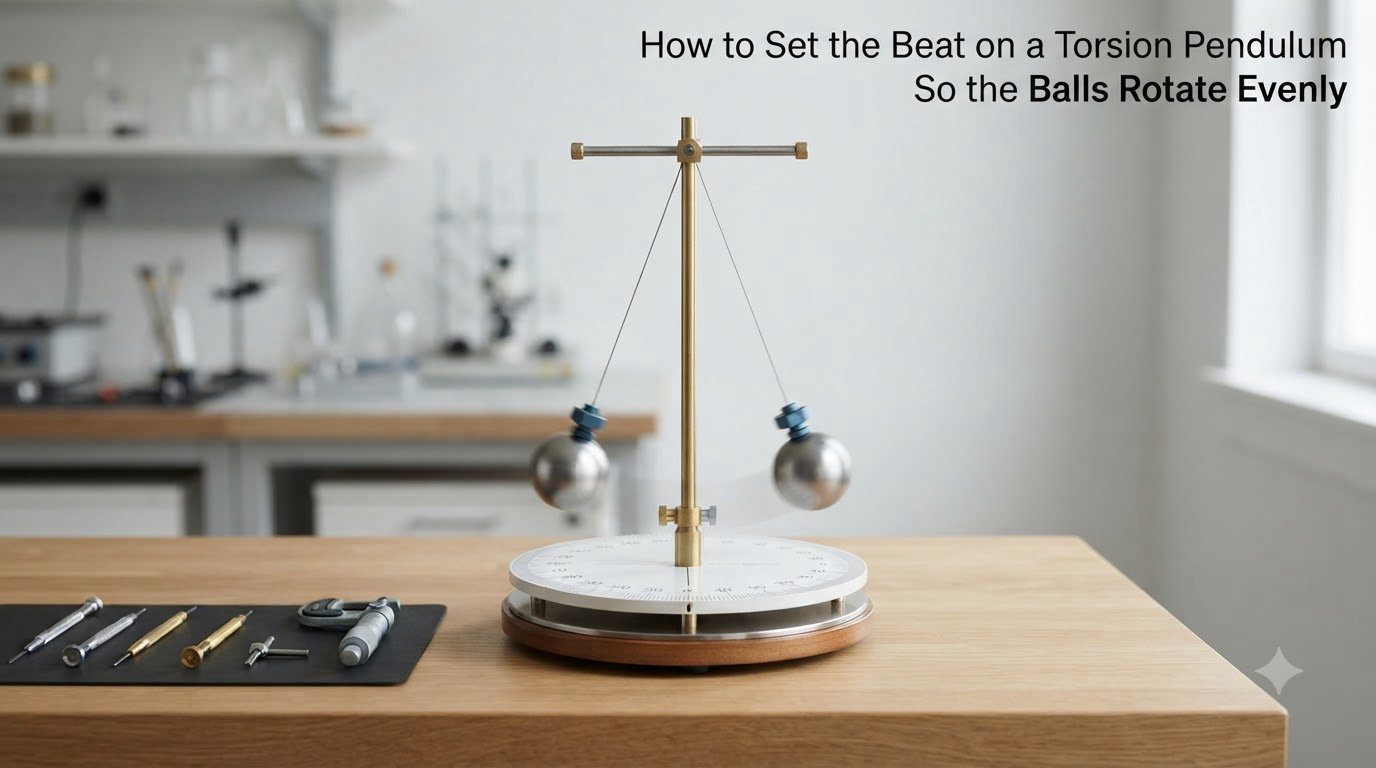
I still remember the first time I tried to set the beat on a torsion pendulum clock. The four brass balls refused to spin evenly, and the tick felt slightly off. After a few minutes of careful listening and one small adjustment on the beat scale, the rhythm settled and the balls began their slow, hypnotic rotation.
Setting the beat on a torsion pendulum is the single most important step to get the four brass balls rotating evenly. When the beat is correct, the impulse wheel nudges the pendulum at exactly the right moment, and the rotation stays smooth and symmetrical. When the beat is off, one ball seems to lag, the pendulum wobbles, or the motion dies after a few turns.
In this guide, I will walk you through exactly what the beat is, why it controls even rotation, and the step-by-step process I use on every 400-day clock I service. You will also learn how to diagnose a wrong beat by sound, how to start the pendulum by hand, and how to fix the most common causes of uneven ball rotation.
Table of Contents
What Is a Torsion Pendulum Clock
A torsion pendulum clock is a special type of timepiece that uses a rotating pendulum instead of a swinging one. The pendulum assembly has four brass balls mounted on a horizontal crossbar, suspended from a thin coiled torsion spring (also called a suspension spring) hidden inside the movement.
Instead of swinging back and forth like a grandfather clock pendulum, the torsion pendulum rotates about its vertical axis. A full swing covers roughly 270 to 360 degrees, and the rotation period is much slower than a swinging pendulum. That slow rotation is what gives anniversary clocks and 400-day clocks their calm, mesmerizing motion.
These clocks are also called anniversary clocks or 400-day clocks because the mainspring can run for about a full year on a single winding. Major manufacturers include Kundo, Schatz, and Gustav Becker, and the design has barely changed since the early 1900s.
Key Components You Should Know
The torsion spring is the thin vertical wire that holds the pendulum and provides the restoring force. The impulse wheel is the small toothed wheel inside the movement that gives the pendulum a small push with each swing. The beat scale is a tiny numbered scale on the movement that lets you fine-tune the escapement timing.
Understanding the Beat and Why Even Rotation Depends on It
The beat is the regular “tick-tock” sound the clock makes, and each beat corresponds to one half-swing of the pendulum. On a torsion pendulum, the beat must be perfectly timed so that the impulse wheel delivers its push at exactly the right moment in the pendulum’s rotation.
Here is the part most beginner guides leave out: the beat directly controls whether the balls rotate evenly. If the beat is too early, the impulse wheel pushes the pendulum while it is still trying to rotate backward, which fights the motion and causes one side to lag. If the beat is too late, the pendulum has already turned too far before receiving its push, causing uneven oscillation and a wobble.
When the beat is correct, the pendulum rotates symmetrically in both directions, and the brass balls trace even, mirror-image arcs. The tick-tock rhythm is also evenly spaced, with the same pause between each sound. I think of it as the clock finding its natural breath.
Tools You Need Before Adjusting the Beat
You do not need a full watchmaker’s bench for this job. I gather the same four items every time I work on a torsion pendulum clock.
- A stable, level surface (a sturdy table or shelf that does not vibrate)
- A small spirit level for confirming the clock is flat
- A soft cloth or pad to protect the glass dome
- A penlight or good room lighting so you can see the beat scale and impulse wheel
Make sure you have about 15 quiet minutes. The whole process is slow, and rushing is the fastest way to bend a suspension spring.
How to Set the Beat on a Torsion Pendulum: Step-by-Step
To set the beat on a torsion pendulum, listen for an even tick-tock rhythm, then tilt the clock slightly forward or backward on its base until the rhythm evens out. The beat is correct when the space between tick and tock is identical, and the pendulum rotates symmetrically without any wobble.
Follow these steps in order. Do not skip ahead, because each step depends on the one before it.
- Place the clock on a level surface. Use a spirit level on top of the case. If the level reads off, slide a small shim under one of the clock’s feet until the bubble centers.
- Remove the glass dome and unlock the pendulum. Most anniversary clocks have a locking bar that holds the pendulum still during transport. Slide it sideways to release the pendulum before you begin.
- Start the pendulum by giving it one full turn by hand. Rotate the crossbar a full 360 degrees in the direction it is supposed to swing, then let go gently. The impulse wheel should keep it moving from there.
- Listen carefully for 30 seconds. Count the tick-tock rhythm. If the pause between tick and tock is uneven, the beat is off.
- Make the beat adjustment. On most 400-day clocks there is a small beat adjustment lever or a screw marked with a scale. Move the lever a quarter-turn at a time toward the side that produces the slower, softer beat.
- Watch the balls rotate. After each adjustment, observe the four brass balls. They should trace even, symmetrical arcs. If one ball dips lower than the others or the rotation appears lopsided, repeat the adjustment.
- Set the correct time. Once the beat is even and the balls rotate smoothly, move the minute hand to the correct time. Never turn the hands backward on a torsion pendulum clock.
Patience is part of the process. I usually wait at least five minutes after each adjustment before making another. The pendulum takes time to settle into its new rhythm.
How to Start the Pendulum Rotating Evenly
The simplest way to start a torsion pendulum is to turn the pendulum one full turn by hand and let it go. The impulse wheel will catch the rotation and keep it going. This is the same trick the experts on the NAWCC forum recommend for stubborn Kundo and Schatz clocks.
Here is the exact motion I use. Grip the pendulum crossbar lightly between thumb and forefinger. Rotate the entire assembly 360 degrees in the direction it naturally wants to swing (counterclockwise on most German-made clocks). Let go smoothly without any wobble.
If the balls stop after two or three rotations, the clock is telling you that one of three things is wrong: the beat is off, the clock is not level, or the impulse wheel needs a clean. Always check the beat first, because adjusting the impulse wheel without setting the beat can damage the suspension spring.
Leveling the Clock Properly for Even Ball Rotation
Leveling is the silent hero of even rotation. Even a slight tilt as small as two degrees can cause the pendulum to drift toward one side, which makes the balls rotate unevenly even when the beat is technically correct.
Use a small spirit level on top of the case. Adjust the feet by sliding paper shims underneath until the bubble sits perfectly between the lines. If your clock sits on a shelf that is not level, shim the entire base instead of just one foot.
I also check the spot where the clock sits. A wobbly shelf, a thin glass table, or a surface near a speaker will all transmit vibrations that disturb the beat. Place your torsion clock on a solid wood surface away from speakers, HVAC vents, and foot traffic.
Beat Correct vs Beat Incorrect: Symptoms and Sounds
The easiest way to know if the beat is correct is to listen and watch at the same time. I trained myself to do this on every clock I set up, and it saves a lot of trial and error.
Beat is correct: The tick and tock are spaced evenly, with the same pause between them. The pendulum rotates symmetrically, and the four brass balls stay level throughout the swing. The clock keeps accurate time.
Beat is off: One beat sounds closer to the previous one than the other. The pendulum rotates unevenly, with one ball dipping lower than the opposite ball. The clock may run fast, slow, or stop after a few rotations.
If you hear a scratchy or irregular sound, the beat is severely off and the impulse wheel is probably trying to engage when the pendulum is not in the correct position. Stop the pendulum, recheck the beat scale, and start again.
Speed Regulation vs Beat Setting: Know the Difference
Many new clock owners confuse beat setting with speed regulation. They are two separate adjustments, and confusing them is one of the most common causes of broken torsion clocks.
Beat setting is what we have covered in this guide: it makes the tick and tock evenly spaced and lets the impulse wheel engage properly. Speed regulation is the adjustment that makes the clock run faster or slower. It changes the rotation speed of the pendulum, usually by turning a small nut on the bottom of the pendulum or moving a regulator on the dial.
Always set the beat first, then adjust the speed. Adjusting speed before the beat is correct will give you an inaccurate clock because the pendulum motion is uneven. Most torsion clocks have a small mark on the dial showing the factory speed setting.
Troubleshooting Uneven Ball Rotation
This is the section I wish I had when I started collecting anniversary clocks. Uneven ball rotation almost always has one of three causes, and I will walk you through how to test each one.
Cause 1: Beat Is Off
Listen for uneven tick-tock spacing. If the pause between tick and tock is not equal, return to the beat adjustment step and move the lever a quarter-turn. Recheck after each adjustment.
Cause 2: Clock Is Not Level
Place a spirit level on top of the case. Even a small tilt will cause one ball to dip lower than the others. Shim the feet until the bubble is centered.
Cause 3: Balls Touching the Bottom Cup
If the pendulum swings too wide, the balls may brush the bottom of the glass dome. This friction will stop the rotation in a few minutes. Lower the suspension spring by turning the adjustment nut half a turn clockwise, then test again.
If the issue persists after these three checks, the suspension spring may be weakened or the impulse wheel may need cleaning. At that point I recommend sending the clock to a qualified clockmaker, because aggressive handling of these delicate parts often causes more damage than it fixes.
Caring for Your Torsion Pendulum Clock After the Beat Is Set
Once you have the beat right and the balls rotating evenly, a small amount of routine care will keep your clock running well for many years. I follow the same simple habits on every anniversary clock in my collection.
Always lock the pendulum with the locking bar before moving the clock, even across the room. The suspension spring is one of the most fragile parts in horology, and a single jolt can snap it. Carry the clock by the base, never by the dome or the pendulum.
Wind the clock once per year on the same date. Anniversary clocks are designed to run for 400 days, but most owners wind them once a year to keep the habit and avoid a stalled movement. Use steady, even pressure on the winding key.
Dust the case and inside of the dome with a soft microfiber cloth every few months. Avoid spraying any cleaner near the movement. If the glass gets fingerprints, clean it with a small amount of glass cleaner on a cloth, never sprayed directly onto the dome.
Frequently Asked Questions
How do you adjust the beat of a pendulum clock?
To adjust the beat of a pendulum clock, place it on a level surface and start the pendulum. Listen for even spacing between the tick and tock sounds. If the rhythm is uneven, move the beat adjustment lever or tilt the clock slightly toward the side that produces the slower, softer beat. Wait five minutes between adjustments so the pendulum can settle into its new rhythm.
What causes a clock pendulum to wobble?
A clock pendulum wobbles because the beat is off, the clock is not perfectly level, or the suspension spring is damaged. An uneven tick-tock rhythm is the most common cause. Recheck the beat adjustment scale and the level of the case before opening the movement.
How to fix a rotating pendulum clock that stops after a few turns?
If your rotating pendulum clock stops after a few turns, the most likely causes are an off beat, an unlevel case, or the balls touching the bottom of the glass dome. Start the pendulum by giving it one full turn by hand, then listen for even tick-tock rhythm. Shim the feet until the case is level, and check that the balls have clearance at the bottom of their arc.
What does the impulse wheel do in a torsion pendulum clock?
The impulse wheel is the small toothed wheel inside the movement that gives the torsion pendulum a tiny push with each swing. It is connected to a coiled spring that winds up as the pendulum rotates and releases the energy to keep the pendulum moving in one direction. When the beat is set correctly, the impulse wheel engages at the exact moment the pendulum needs the push, producing smooth and even rotation.
Final Thoughts
Learning how to set the beat on a torsion pendulum is one of the most satisfying skills in clock care. Once you understand the relationship between beat, impulse wheel, and ball rotation, the whole mechanism starts to feel intuitive.
Take it slow, listen carefully, and remember that a few minutes of patience will give you even rotation for months. With the steps in this guide, your 400-day or anniversary clock will spin those four brass balls smoothly and accurately for years to come.