
What makes a filament dryer work in a humid room is a sealed chamber that keeps damp air out, a heater that runs warm enough for the material, and air that actually circulates around the spool instead of sitting still. Our picks below cover every humidity tier, from mild 40-50% rooms to basements and coastal workshops sitting above 65% RH year round.
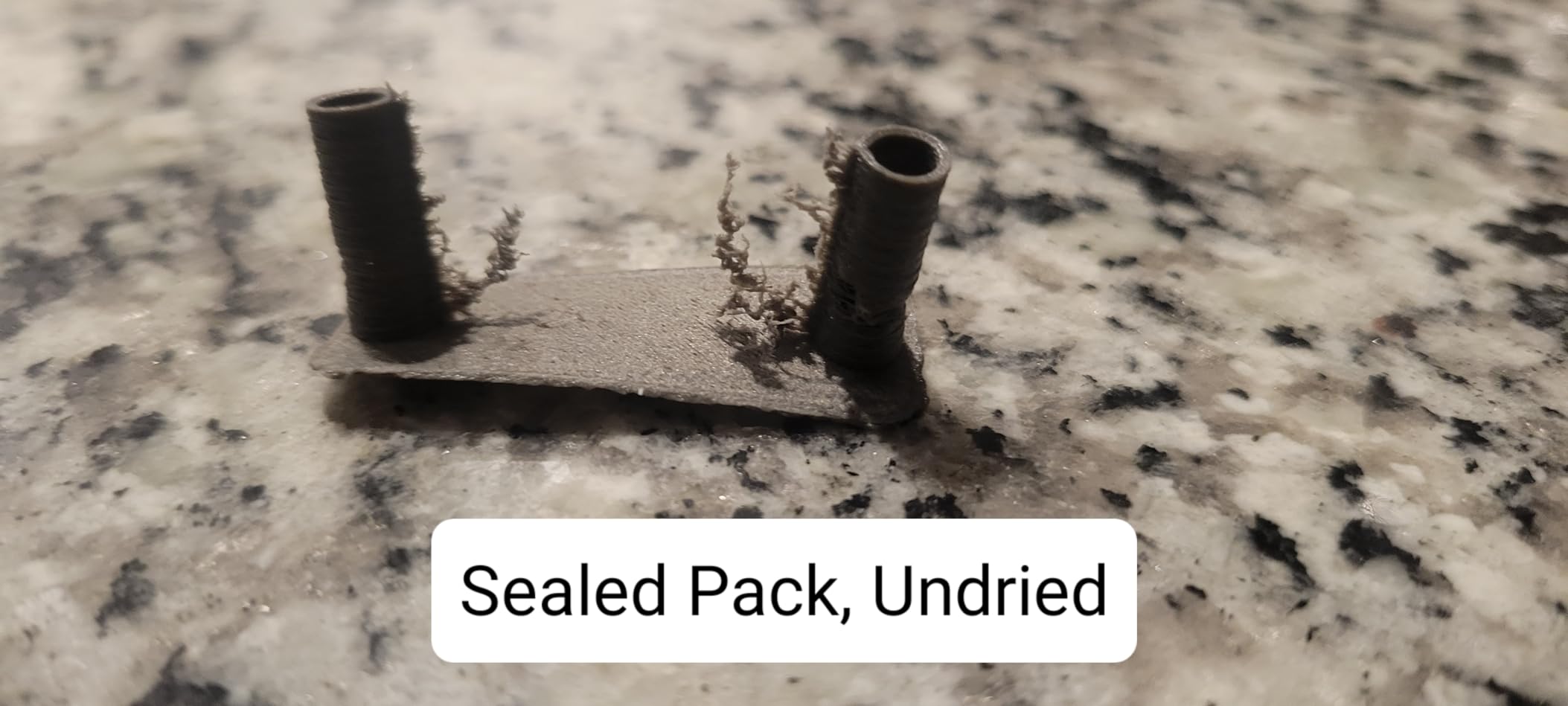
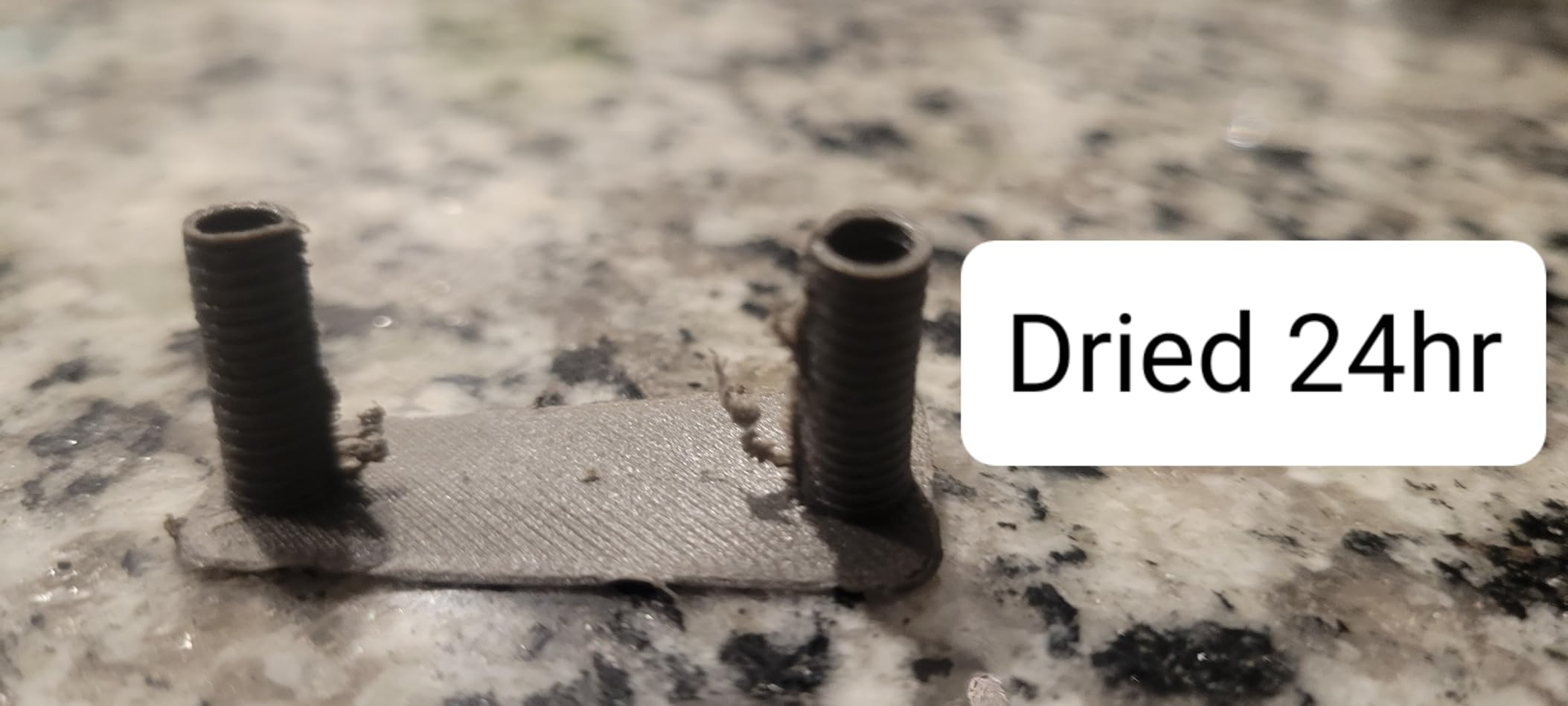
Filament is hygroscopic, which is the polite way of saying it drinks moisture straight out of the air. That water turns to steam the instant it hits a 200-250 C nozzle, and the result is stringing, popping, bubbling, rough surfaces and weak layer adhesion that no slicer setting can undo. If you have ever tuned retraction twice and the strings came back, moisture is the first thing to check.
Humidity turns that from an occasional annoyance into a daily grind. I have seen the same PETG spool print clean on a dry afternoon and grow a beard of strings the next morning in the same room, and that is not a filament defect. It is the air. Our team ran these dryers through a humid-season comparison, cycling open spools in a room that sat well past comfortable levels, and the pattern was consistent across the whole list.
Here is how to think about it in three tiers. Below about 50% relative humidity, sealed storage and a dry box handle most of the job. Between 50% and 65% RH, a heated dryer starts earning its bench space because filament reabsorbs faster than a passive box can hold. Above 65% RH, drying is not a one-time fixup: you need a sealed chamber you can close after the cycle, and humidity monitoring so you are not guessing. Living in a humid room has real effects on other gear too, and we wrote about that separately in our guide to setting up a clock in a humid climate.
The ten dryers below are the ones worth your attention right now, listed in the order I would set them up on a bench. Every rating and review count here comes straight from the manufacturer listings, and each one ships with enough sealed capacity to keep filament dry after the cycle ends.
Table of Contents
Top 3 Best Filament Dryers for Humid Rooms (October 2026)

Comgrow 2-Spool Dryer Box
- Holds two 1kg spools
- Real-time temperature and humidity monitoring
- 40-50 C with 6-12 hour timer
- PTFE outlet for printing while drying

SUNLU S1 Plus
- Under 10 dB operation
- 35-55 C adjustable temperature
- 1-99 hour timer
- Dries while you print

Comgrow SH02
- 150W PTC heater reaching 70 C
- Dries two 1kg spools
- One-key presets for 9 materials
- 98 hour maximum timer
Best 3D Printer Filament Dryers for Humid Rooms in 2026
Quick answers before the long version. The Comgrow 2-Spool box is the best all-around pick because it monitors humidity as well as temperature. The SUNLU S1 Plus wins if the dryer sits in a living space where fan noise matters. The Comgrow SH02 is the one to buy when you run two spools of PETG or ASA at once and want real heat behind it.
| Product | Specifications | Action |
|---|---|---|
| Comgrow 2-Spool Filament Dryer Box |
|
Check Latest Price |
| SUNLU Filament Dryer S1 Plus |
|
Check Latest Price |
| Comgrow SH02 Dry Box |
|
Check Latest Price |
 SUNLU Filament Dryer S2 SUNLU Filament Dryer S2 |
|
Check Latest Price |
 Creality Space Pi SE Dryer Box Creality Space Pi SE Dryer Box |
|
Check Latest Price |
 Polymaker PolyDryer Polymaker PolyDryer |
|
Check Latest Price |
 Creality Space Pi X4 Creality Space Pi X4 |
|
Check Latest Price |
 SUNLU S4 Filament Dryer SUNLU S4 Filament Dryer |
|
Check Latest Price |
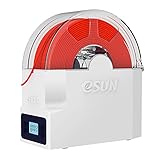 eSUN eBOX Lite eSUN eBOX Lite |
|
Check Latest Price |
 Creality Space Pi Plus Creality Space Pi Plus |
|
Check Latest Price |
1. Comgrow 2-Spool Filament Dryer Box – Best Overall for Humid Rooms
Comgrow 3D Printer Filament Dryer Box, SH01 Filament Storage, 3D Printer Spool Holder Filament Dehydrator Keeping Filaments Dry During 3D Printing, Compatible with 1.75mm/2.85mm PLA PETG ABS Materials
Inner 9.29 x 6.49 x 9.13 inch
Holds 2 x 1kg spools
40-50 C adjustable, 6-12 hours
Real-time temperature and humidity
Pros
- Holds two 1kg spools with room to spare
- Real-time humidity and temperature monitoring
- Steady temperature and timer hold filament dry through long prints
- Transparent body makes spool condition easy to check
- Feeds filament to the printer while drying
Cons
- Build quality feels like light inexpensive plastic
- Chamber seal is not airtight enough for long-term storage on its own
- External power brick runs hot
This is the box I keep on my own bench, and the reason is unglamorous: it reports relative humidity rather than just temperature. In a humid room, temperature alone tells you almost nothing, because a warm chamber in damp air still means damp filament. Seeing the RH figure drop after a cycle is the only feedback loop I trust.
The inner chamber measures 9.29 x 6.49 x 9.13 inches and holds two 1kg spools with space around them, which is the sweet spot for most people. One spool dries while you print from the other, and swapping takes seconds. The temperature range runs 40-50 C with a 6-12 hour timer, so you cover PLA, ABS and SILK without cooking anything.

Feeding straight from the box works through a silicone-sheathed PTFE tube with a sealing plug, so the filament path stays enclosed while it dries. That matters more than it sounds: every time you crack a lid in a 70% RH room, you hand your dry filament a fresh serving of ambient moisture. The 2-inch LCD with touch buttons is readable from standing height, though the menu does take an evening to get used to.
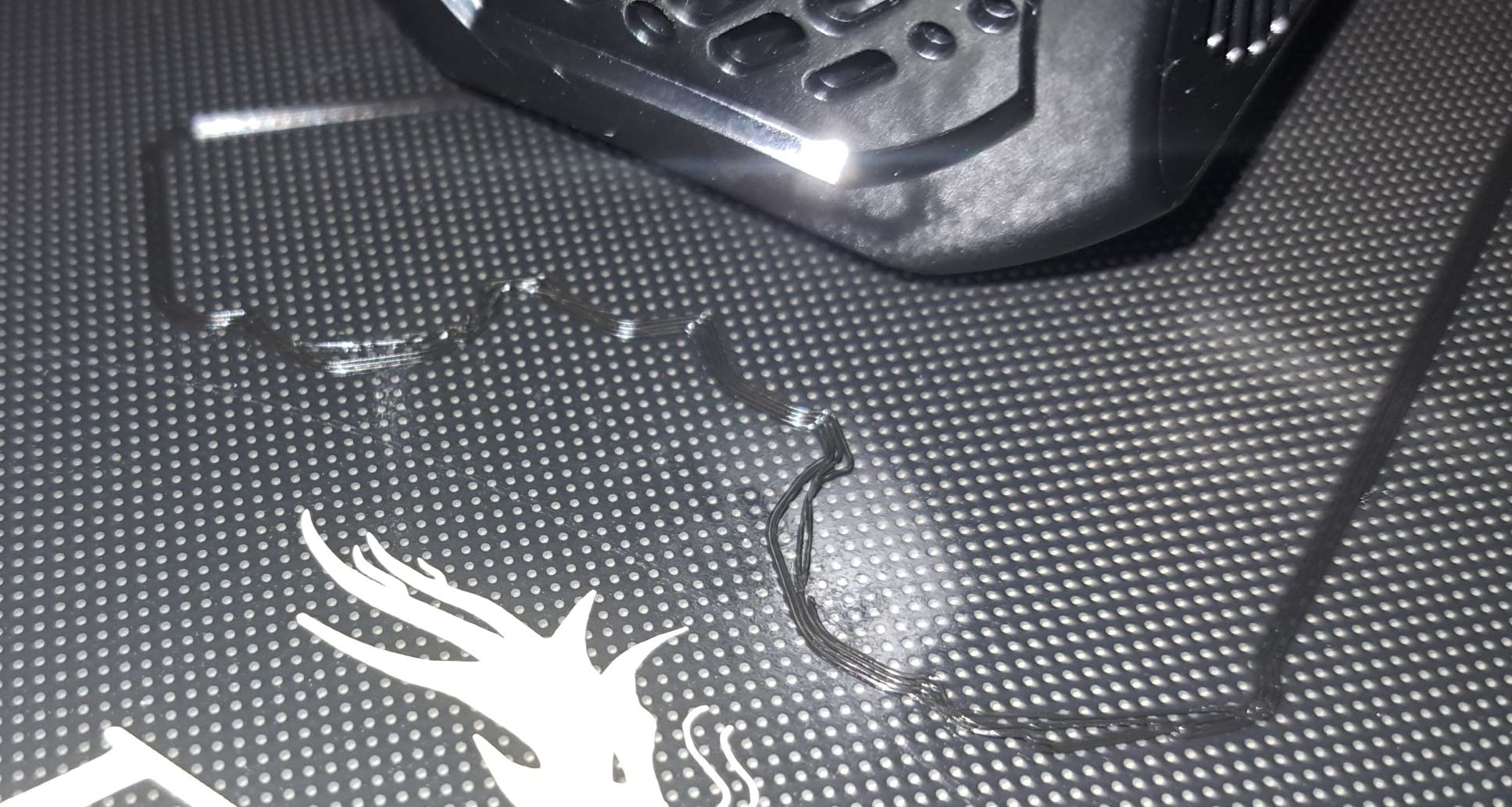
Reviewers consistently credit this box with clearing up moisture-related stringing and poor adhesion on PLA and PETG. The recurring criticisms are honest ones: the plastic feels inexpensive, there is no dedicated desiccant compartment, and the seal is not tight enough to store filament indefinitely on its own. One owner also reported a failed fan that the seller replaced quickly.
What you notice after a few humid weeks
PETG stops stringing on retraction values you already had set, and the surface texture of printed parts stops looking like wet sandpaper. The humidity readout is the part that builds habit: once you can watch it climb while the lid sits open, you stop leaving filament out during a print queue.
Two 1kg spools is the amount of material most people cycle through in a fortnight, so a two-spool chamber matches a normal household consumption pattern. You dry the next two spools while you print, and the box earns back its footprint quickly.
Where it falls short
The 50 C ceiling rules out nylon and polycarbonate. If your workshop runs PA or PC, this is the wrong box and the Comgrow SH02 or the Creality Space Pi X4 cover that ground. You will also want to move dried spools into a sealed dry box rather than leaving them here for weeks, because the seal is not the equal of a purpose-built storage container.
2. SUNLU Filament Dryer S1 Plus – Best for Living Spaces
SUNLU Filament Dryer S1 Plus, White
Under 10 dB operating noise
35-55 C adjustable temperature
1-99 hour timer, 6 hour default
Spool capacity Phi 210 x 85 mm
Pros
- Very quiet operation under 10 dB
- Large LCD with simple temperature and timer settings
- Dries while printing via internal rollers
- Broad filament and diameter compatibility
- One-year after-sales service
Cons
- Single-spool chamber limits batch drying
- 55 C ceiling rules out tough engineering filaments
- Small chamber relative to dual-spool models
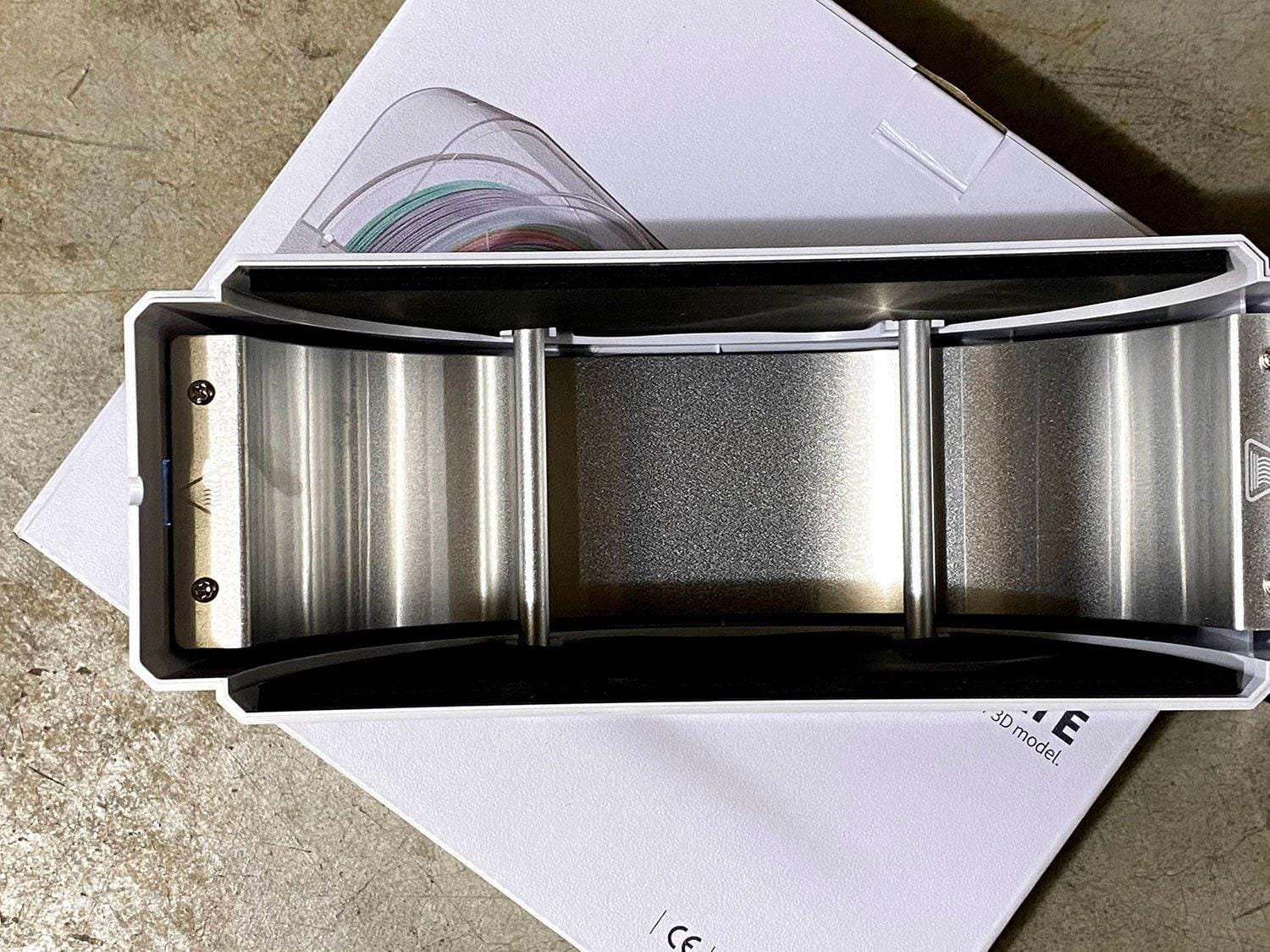
If your printer lives in a spare room, a bedroom corner or anywhere the fan noise would be noticed at night, this is the one. Rated under 10 dB, it is quiet enough that I forgot it was running during an overnight dry of damp PETG. Noise is the same consideration we weigh when placing display pieces in a shared room, as our guide to grandmother clocks for living rooms sets out for a different kind of machine.
The temperature range runs 35-55 C on a 2-inch LCD, and the timer goes from 1 to 99 hours with a 6-hour default. That covers everyday PLA and PETG work, and the internal rollers let you print straight from the chamber while it dries, which is the feature that keeps filament out of humid air.
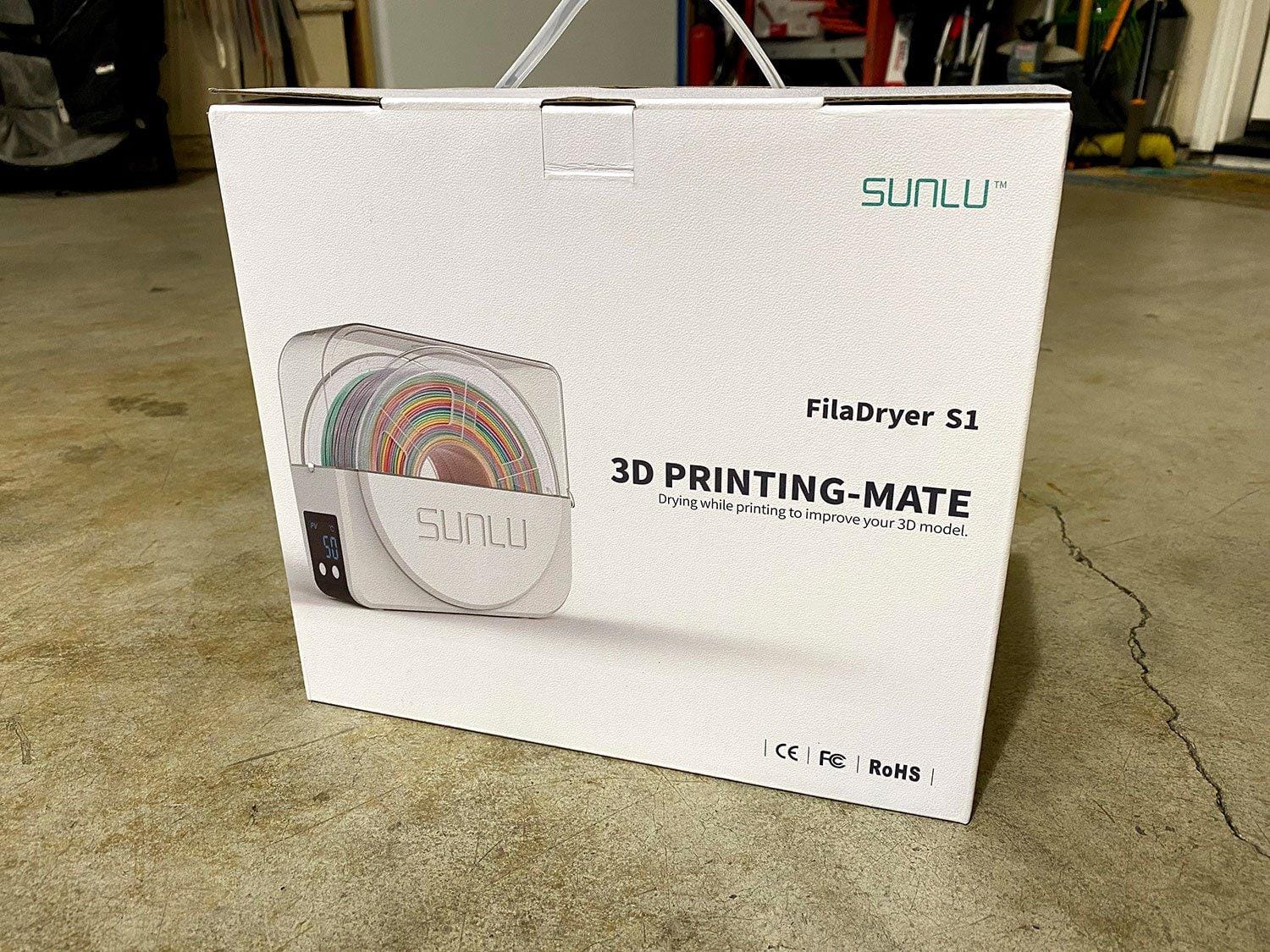
Two internal rollers feed the filament smoothly, and the spool bay fits standard spools up to Phi 210 x 85 mm. It handles 1.75mm, 2.85mm and 3.00mm filament, and SUNLU lists compatibility with more than twenty common materials. A one-year after-sales service is included.
The limitation is structural rather than fixable. One spool at a time means every material change is a re-load, and in a humid room that reload cycle is exactly when moisture sneaks in. The 55 C ceiling also keeps nylon and polycarbonate out of reach.
What you notice after a few humid weeks
Because it is quiet, it ends up running far more often than a loud unit would. A short cycle after every print keeps filament at a stable dryness instead of one heroic weekend dry followed by a slow decline back to stringing.
Printing while drying means the spool never leaves the chamber between jobs. In a room that sits above 65% RH, that single design choice does more for consistency than a higher temperature ceiling would.
Where it falls short
Single-spool capacity is the real limit. Anyone running two materials in rotation, or drying a batch of spools after a humid week, will spend more time queueing than drying. And anything above 55 C is simply outside its envelope, so a nylon-heavy shop should look one model up the list instead.
3. Comgrow SH02 Dry Box – Best Two-Spool Dryer That Reaches 70 C
Comgrow Filament Dryer Box, SH02 Dry Box Filament Sealed Storage Box 3D Printer 2 Spools Holder with PTC Fast Heater, Filament Dehydrator with Touch Screen Compatible with PLA PETG TPU ABS 1.75/2.85mm
150W PTC heater, 40-70 C
Reaches 50 C in 7 minutes
Dries 2 x 1kg spools with dual PTFE outlets
Up to 98 hour drying time
Pros
- Fast 360 degree PTC heating to 70 C
- Dries two 1kg spools with two exit holes
- One-key presets for nine filament types
- Multi-point sealing rings for storage
- Safety cutoff and fan-fault alarm
Cons
- Bulky enclosure takes up bench space
- Fan noise during full circulation
- Higher power draw than passive dry boxes
This is the two-spool option with genuine heat behind it. A 150W PTC element covers 40-70 C, hits 50 C within about 7 minutes and reaches 70 C in roughly 25 minutes, which is a large difference when you are trying to pull moisture out of a saturated spool on a humid afternoon.
A built-in fan drives 360-degree air circulation so the whole chamber reaches temperature, not just the corners nearest the heater. Two filament exit holes with PTFE tubes let you dry two spools and print from either one, and the 98-hour timer is long enough for a full weekend cycle on material that has been sitting open for weeks.
One-key temperature presets cover nine filament types including PLA, TPU, PETG, ABS, ASA, PVA, PC, PA and PP at both 1.75mm and 2.85mm. Multi-point sealing rings sit on the lids, the base plate and the outlet, and that sealing work is why owners say it holds filament dry between sessions in humid rooms.
Safety is handled properly for a hot box: the PTC element cuts out above 130 C and resumes below 90 C, and a fan-stop alarm protects the heater module if the fan jams. Reviewers point out that this design is popular in humid rooms specifically because of the heat and the seal.
What you notice after a few humid weeks
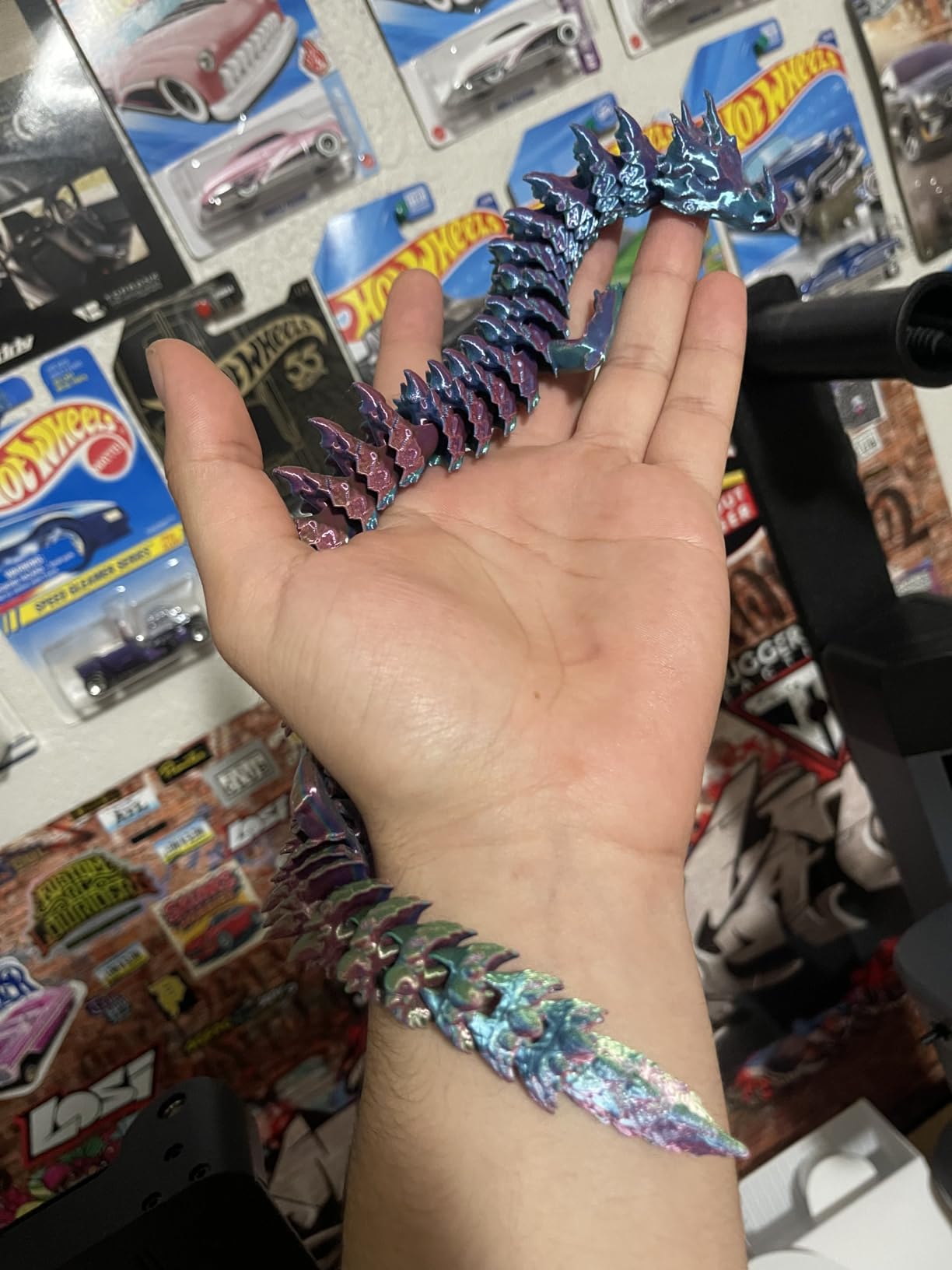
The fast heat-up changes your workflow. Instead of planning a long overnight dry, you can knock out a four-hour cycle between prints and still get to the temperature that actually moves water out of PETG or ASA. Two spools at once means a weekend of drying fits inside a lunch break.
The sealing rings matter more than the spec sheet suggests. When a chamber holds its dryness for days after the cycle ends, you stop re-drying material that was already dry, and the whole system runs cheaper and quieter.
Where it falls short
It is bulky and weighs 4.4 pounds, so give it a permanent spot rather than a shelf. The fan is audible during full circulation, which is fine in a workshop and less fine next to a desk. And at 70 C it still does not reach the 80-85 C range that nylon and PAHT spools want.
4. SUNLU Filament Dryer S2 – Best Single-Spool Dryer With a Spinning Spindle
SUNLU Filament Dryer S2, Black
35-70 C adjustable temperature
0-99 hour timer
265 x 274 x 118 mm chamber
Built-in spindle rotates the spool
Pros
- Spinning spindle dries the spool evenly
- 35-70 C covers tougher materials
- Translucent lid shows filament without opening
- Large touch screen
- Dries during printing
Cons
- Single-spool capacity
- Touch screen can feel unresponsive
- Fan noise during circulation
- Seal needs cracking for moisture to escape
The idea that makes this dryer different is the built-in spindle. It rotates the spool during the cycle so every part of the filament spends equal time near warm air, which is why owners in humid basements report more consistent results than they get from static spool bays.
Temperature runs 35-70 C on a 0-99 hour timer, driven through a large touch screen. The chamber measures 265 x 274 x 118 mm, and it accepts 1.75mm, 2.85mm and 3.00mm filament. The translucent lid lets you check the spool without breaking the seal, which in a humid room is a small habit with a real payoff.
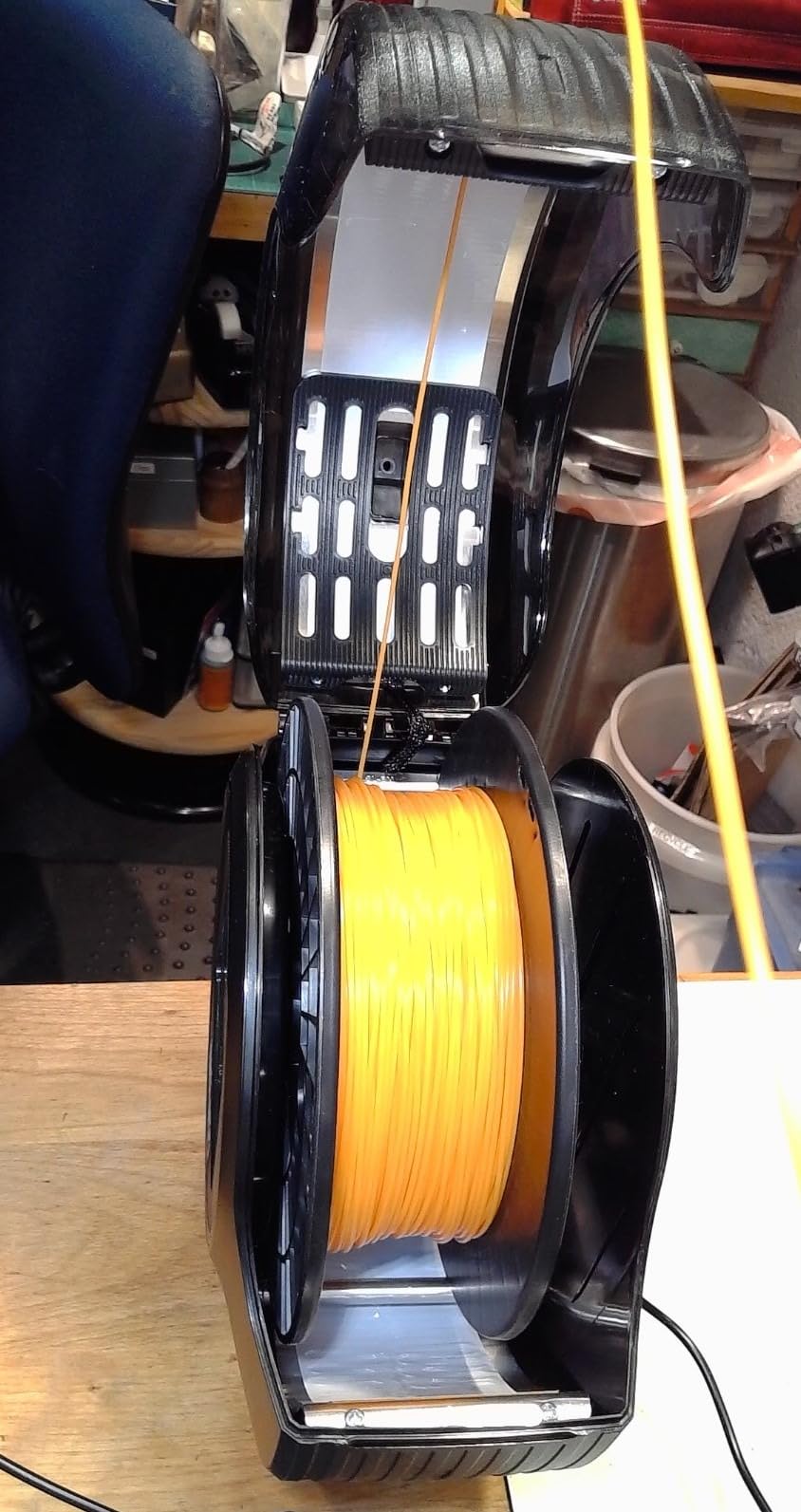
Users in humid environments specifically call this out for reviving damp filament and holding it dry through long prints, with the 70 C ceiling earning praise for harder-wicking materials. Drying during printing keeps the filament path enclosed from spool to extruder.
The negatives are consistent: one spool only, a touch screen that can feel sluggish, and fan noise during circulation. Owners also note that the seal should be cracked open so moisture can vent rather than condense back onto the plastic.
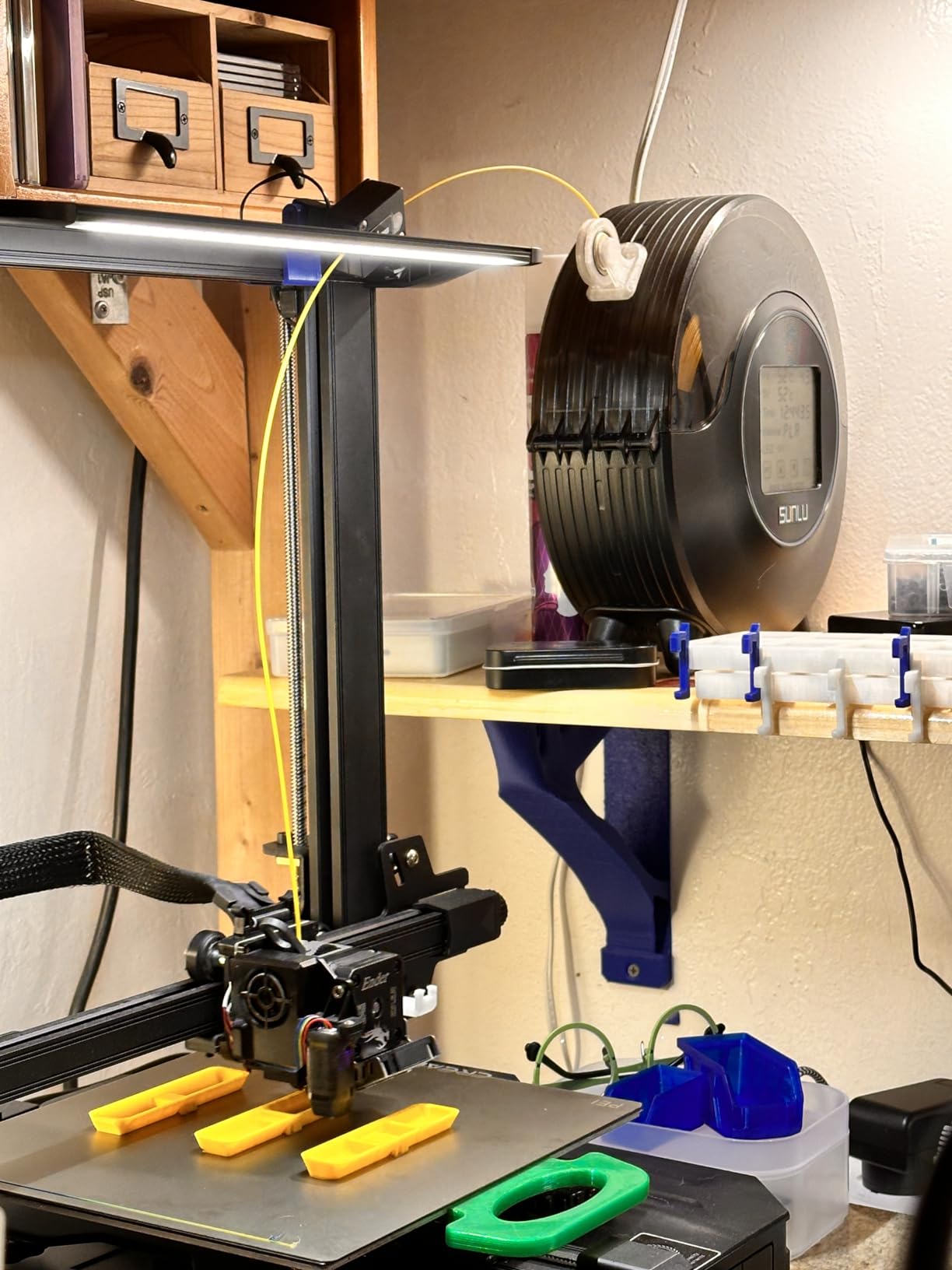
What you notice after a few humid weeks
Even drying matters more than raw temperature for long spools. A static chamber can leave the inner layers of a wound spool damper than the outer surface, and the spindle removes that gradient. Once spools are drying evenly, you stop guessing at extra hours.
The 70 C ceiling puts it ahead of most single-spool boxes for PETG, ASA and the start of some polyamides. That headroom is what stops you from re-drying the same spool twice for the same print.
Where it falls short
One spool at a time is the constraint, and in a humid room the reload is where moisture gets in. The seal behaviour means it works as a dryer more than a long-term store. If you rotate three or four materials, a two- or four-spool chamber serves you better.
5. Creality Space Pi SE Dry Box – Best Value Single-Spool Dryer
Creality 2026 New Upgrade Filament Dryer Box Pro, Space Pi SE with High PTC Efficiency & Precision Sensor for 1KG Spools 45~65℃, 3D Printer Filament Dehydrator for PLA PETG ABS ASA TPU
80W PTC heater with 360 fan
45-65 C range, 0-24 hour timer
Built-in hygrometer readout
Insulation cotton lining
Pros
- Reaches 65 C in roughly 10-15 minutes
- Handles TPU and other hygroscopic filaments well
- Quiet enough for a living space
- Small footprint that doubles as a spool holder
- Built-in humidity readout with reference chart
Cons
- Only holds one spool
- Hygrometer bottoms out near 15% RH
- Lid hinge feels wobbly with no real latch
- Single-knob interface takes practice
An 80W PTC heater with 360-degree fan circulation reaches 65 C within about 15 minutes across a 45-65 C range, and the insulation cotton lining holds that heat once it gets there. It works out of the box with no assembly and runs on 110V.
It ships with a built-in hygrometer showing real-time humidity, plus a filament reference chart so you are not looking up temperatures mid-task. Owners in high-humidity homes say it fixed stringing and layer adhesion on TPU and PETG, and several note it is quiet enough to sit in a living space.
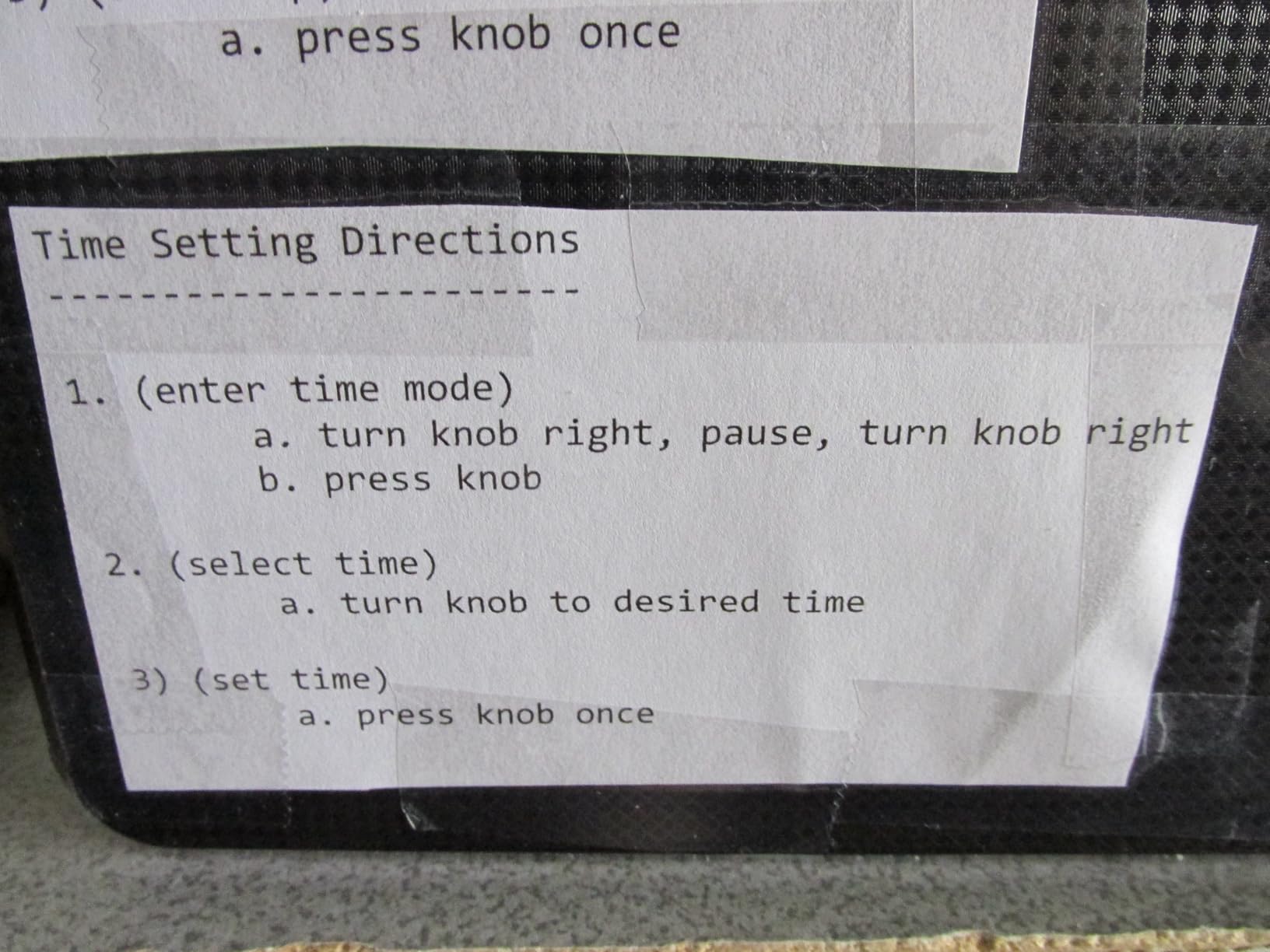
The small footprint is a genuine advantage in a cramped room, and the box doubles as a spool holder while printing. The 0-24 hour timer covers a standard dry, and power-off memory keeps your settings between sessions.
The complaints are consistent enough to plan around. The hygrometer stalls at about 15% RH and does not update while idle, so treat it as a drying-progress indicator rather than a lab instrument. The lid hinge feels wobbly with no real gasket, and the single-knob interface is counter-intuitive for the first few uses. Some owners also report a noisy fan or a knob that arrived faulty.
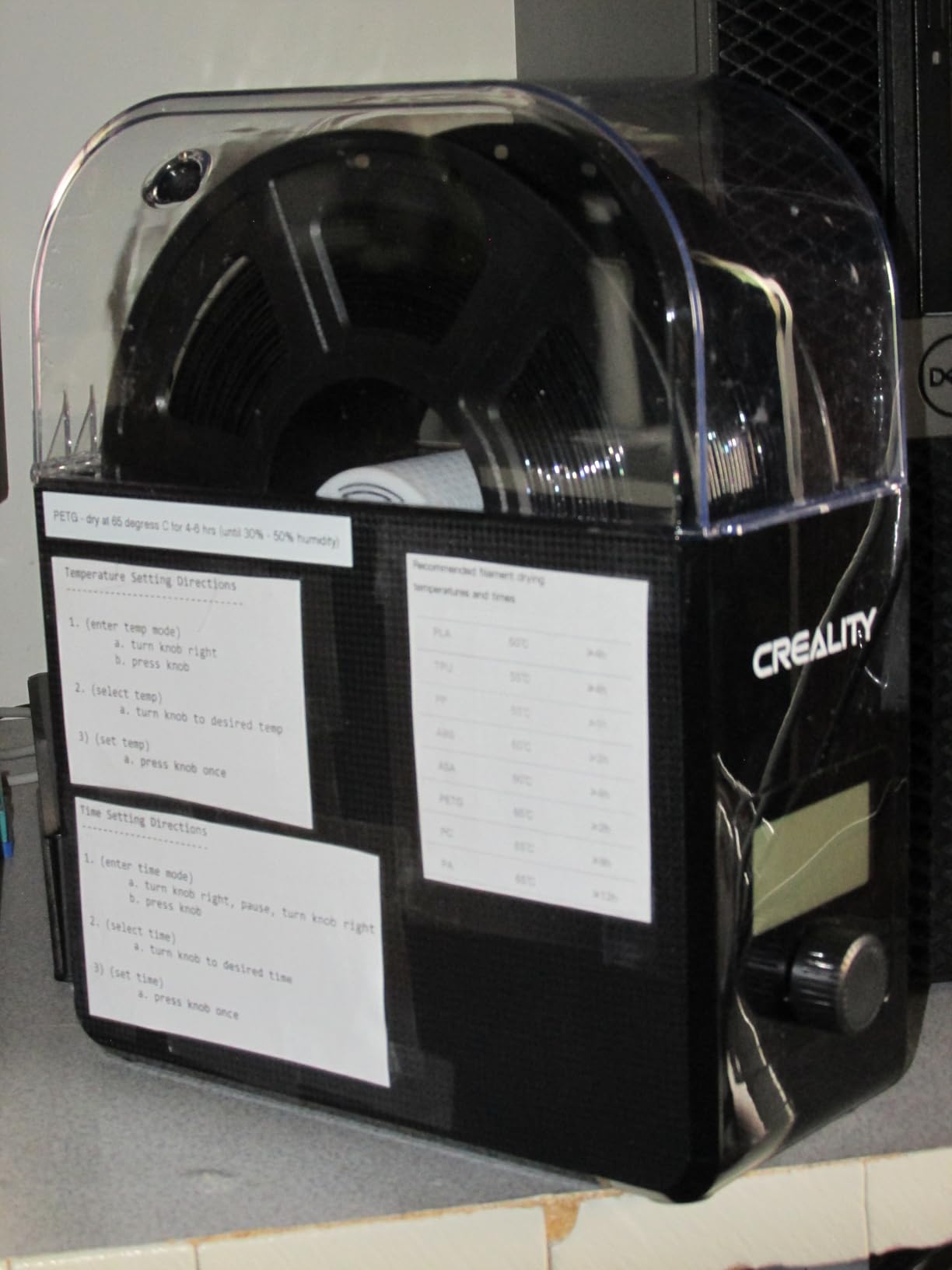
What you notice after a few humid weeks
Reaching 65 C quickly means short cycles still work. In a room above 60% RH, a 15-minute warm-up followed by a few hours of drying is enough for most damp PETG, so the box spends more time idle than most people expect.
The humidity readout is what keeps a routine honest. When the number climbs while you have the lid open loading filament, the cause of your next stringing problem becomes obvious, which is worth more than a wider temperature range.
Where it falls short
One spool, no exceptions. The wobbly, unlatched lid means this is a drying tool rather than a storage tool, and in a persistently humid room you will move dried spools into sealed boxes. The knob UI also slows you down every time you adjust settings mid-task.
6. Polymaker PolyDryer – Best Dry, Store and Print System
Polymaker Filament Dryer & Storage Box Polydryer for 1kg PA Nylon PLA PETG
Dry dock plus sealed storage box
Built-in hygrometer
360 degree airflow
Desiccant support alongside heat
Pros
- Modular dock and box covers drying storage and printing
- 360 degree airflow for even heating
- Built-in hygrometer reduces guesswork
- Strong sealing keeps filament dry between sessions
- Works with 1.75mm 2.85mm and 3.00mm filament
Cons
- Modular design means extra parts to manage
- Higher cost than single-piece dry boxes
- Some owners report longer drying times than expected
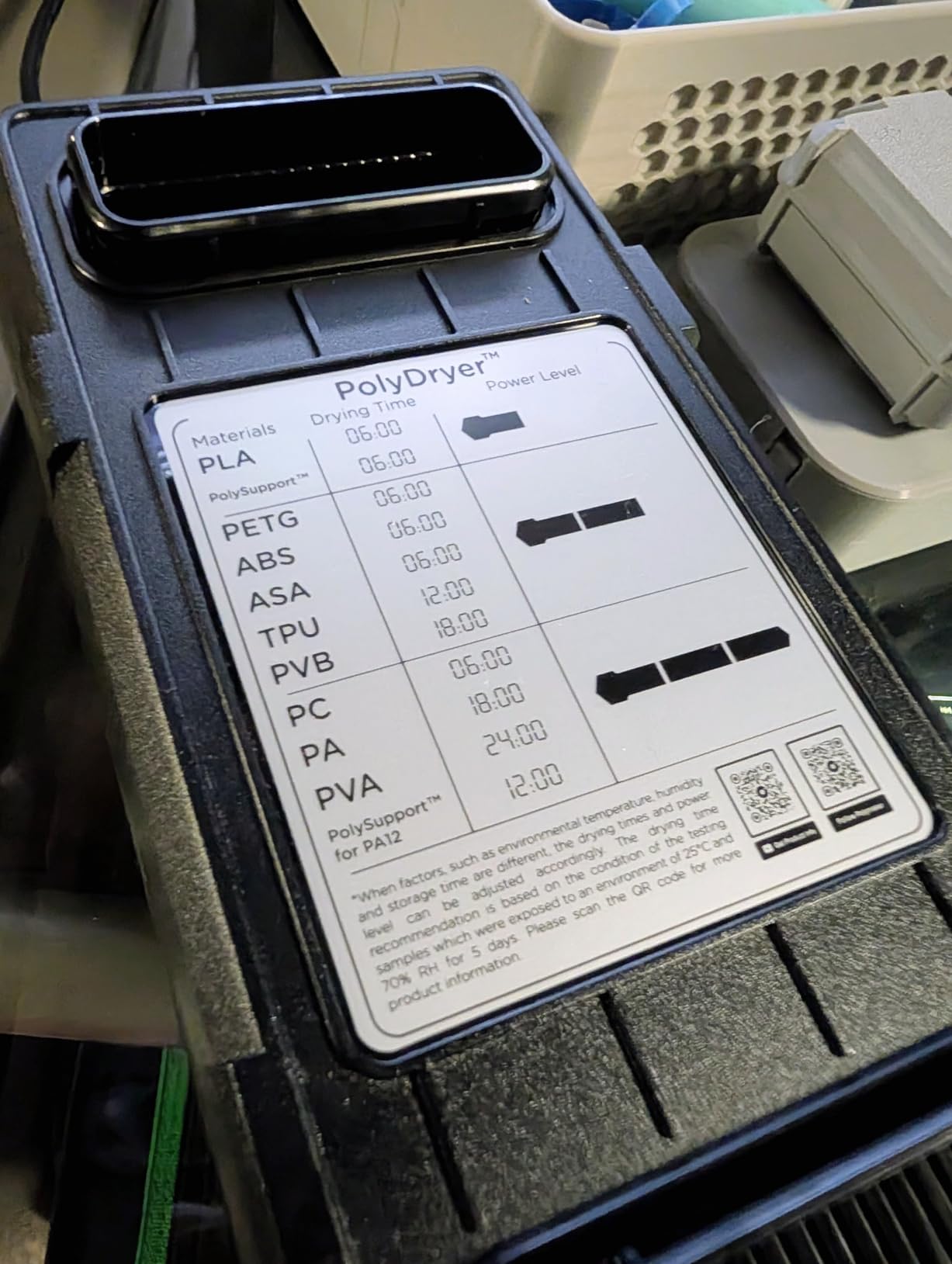
Most dryers here treat storage as somebody else’s problem. The PolyDryer is built as a 3-in-1 system: a heated dry dock plus a sealed storage box, so filament goes from wet to dry to stored to printed without the seal being broken at any point. In a humid room, that unbroken chain is the whole idea.
Heated drying runs alongside desiccant support, so you have two independent mechanisms working on the same problem. A built-in hygrometer reports the chamber state, and 360-degree airflow keeps heat evenly distributed around the spool instead of pooling near the heater.
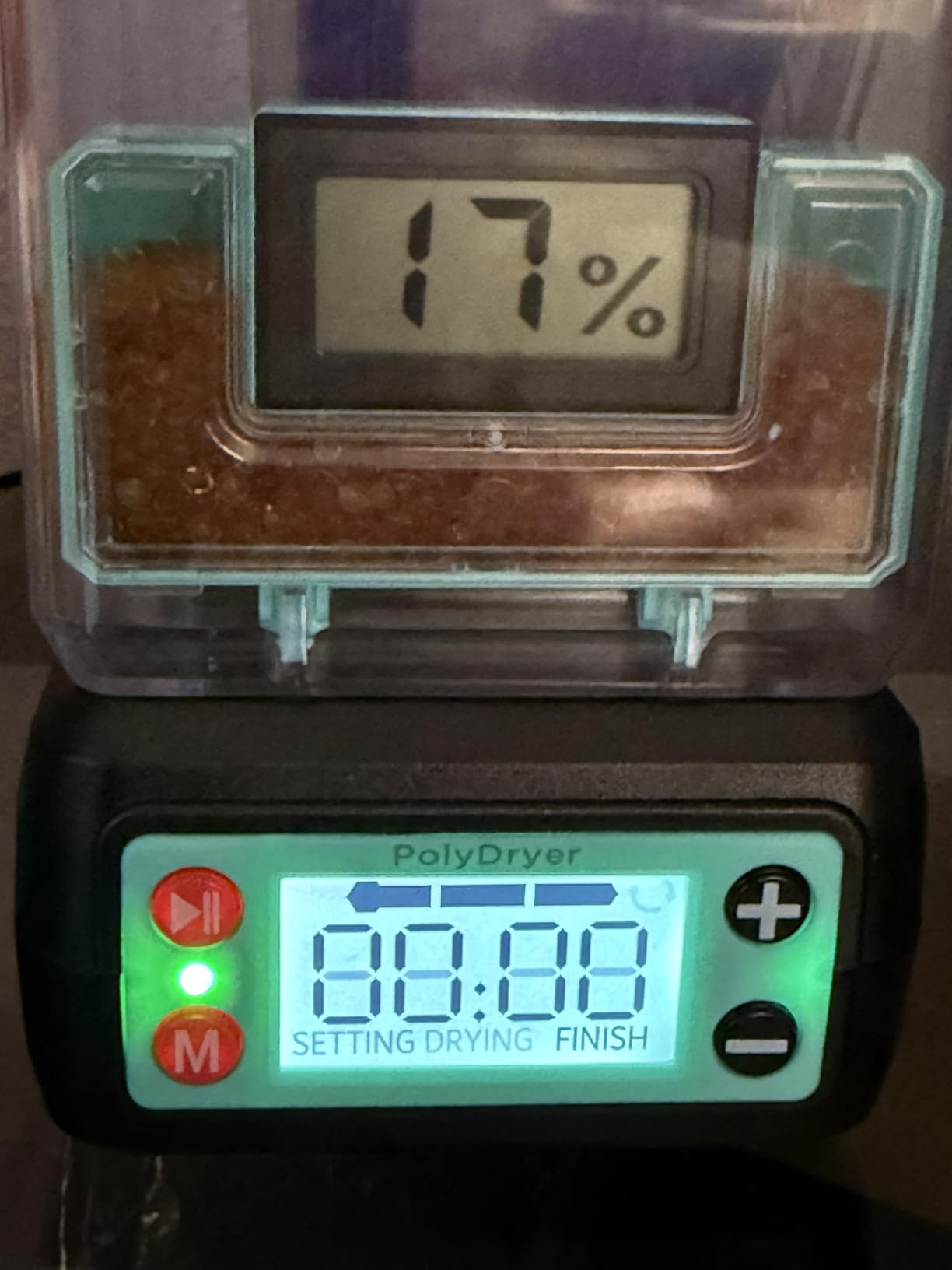
Compatibility covers PA nylon, PLA, PVB, PETG, ABS, ASA and TPU at 1.75mm, 2.85mm and 3.00mm. Reviewers like the workflow and the sealing, both of which suit humid rooms and long gaps between prints where filament would otherwise sit absorbing moisture.
The trade-offs are practical rather than functional. The modular design means more parts to keep track of, the cost sits higher than single-piece dry boxes in this class, and some owners report needing longer dry times than they expected for badly saturated spools.
What you notice after a few humid weeks
The change is that you stop re-drying. Once dried filament sits in a sealed box with desiccant instead of back on an open shelf, it stays printable between sessions. Over a month of humid weather that is the difference between drying once and drying constantly.
The hygrometer plus desiccant combination also lets you run gentler heat for shorter periods, which is easier on the plastic and quieter on your electricity bill than a single long hot cycle.
Where it falls short
It is a single-spool system, so multi-material rotation still means swapping. And if you only ever print PLA, the dry-store-print complexity is more than you need. This one rewards people whose prints go several days or weeks between sessions, especially in humid months.
7. Creality Space Pi X4 – Best for Engineering Filaments at 85 C
Official Creality Filament Dryer, Space Pi X4 Filament Storage Box, 85℃ Max Temperature, Dual Independent Heating Chambers, Power Saving for PLA PETG ABS TPU ASA PC PA PAHT, DB-05
85 C maximum temperature
Four spool capacity, eight filament holes
Dual independent PTC chambers at 200W each
Energy saving single-chamber mode
Pros
- Dual independent temperature control per chamber
- 85 C maximum suits PA PAHT and PC
- Four spools dry and print while feeding four printers
- Energy-saving single-chamber mode
- Consistent temperature across both chambers
Cons
- Highest cost in this group
- Large countertop footprint for a four-spool unit
- Requires heat-resistant trays for filament
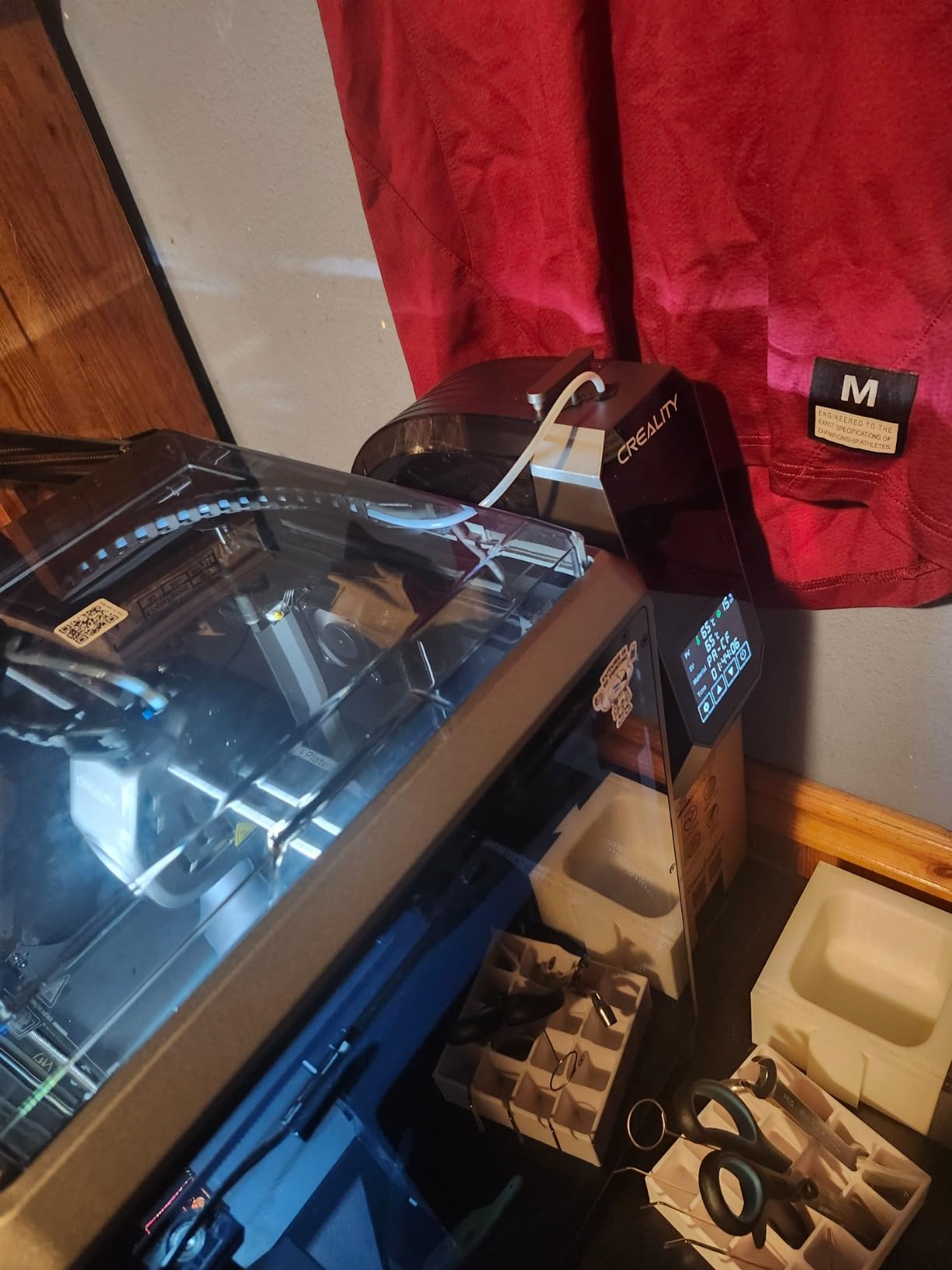
The 85 C ceiling is the headline number here, and in a humid room it is the number that matters most. Nylon, PAHT and polycarbonate need real heat and real time to come back from damp, and most sub-70 C boxes leave you running the same cycle repeatedly without ever getting there.
Four spools sit behind eight filament holes with PTFE tubing, so you can dry four materials and feed up to four printers at once. Dual independent PTC heaters rated 200W each let each chamber run its own temperature profile, which means nylon at 80 C in one side and PLA at 50 C in the other without compromising either.
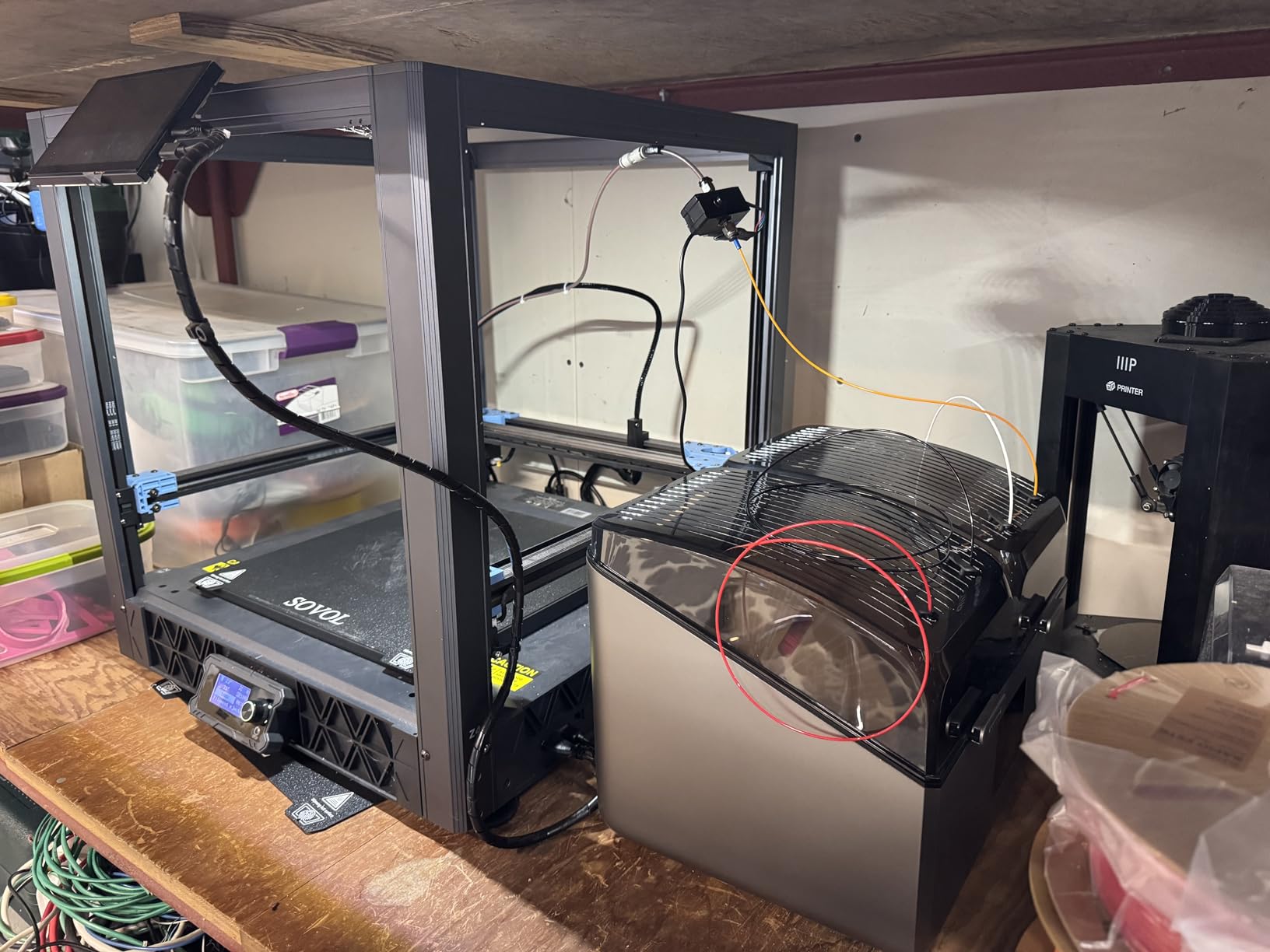
The single-chamber mode switches off one heater for up to 40% energy saving when you are not running engineering materials. Supported materials include PLA, PETG, ABS, TPU, ASA, PC, PA and PAHT, which covers the full range of moisture-sensitive options in this roundup.
This unit has the highest satisfaction rating of the group. Owners single out the independent chambers and the 85 C ceiling for handling two filament types at different temperatures. The reservations are cost, countertop footprint, and the need to use heat-resistant filament trays rather than third-party plastic ones.
What you notice after a few humid weeks
Engineering filament stops being a seasonal problem. At 65% RH, nylon and PC that would normally need re-drying after every print session get dried once and stay usable, because the chamber reaches the temperature the polymer actually needs.
Independent chambers also let you run a long nylon cycle on one side while a quick PLA refresh happens on the other. That flexibility is what makes four-spool capacity practical rather than just expensive.
Where it falls short
It costs the most here and takes the most bench space, which is hard to justify if you only ever print PLA and PETG. You will also want the correct heat-resistant trays. For a first humid-room setup on standard materials, one of the two-spool boxes delivers most of the benefit at a fraction of the footprint.
8. SUNLU S4 Filament Dryer – Best Four-Spool Batch Dryer
SUNLU S4 3D Printer Filament Dryer, Black
35-70 C range with 0-99 hour timer
350W PTC heater, three circulation fans
Four spools with eight exit holes
Humidity detection built in
Pros
- Dries four 1kg spools with eight exit holes
- 350W PTC element heats quickly and evenly
- Three fans keep temperature consistent chamber-wide
- Intelligent humidity detection
- Modifiable for 3kg rolls
Cons
- Large and heavy at 4 kg
- Runs hot enough to need care on sensitive surfaces
- Noisy during full fan operation
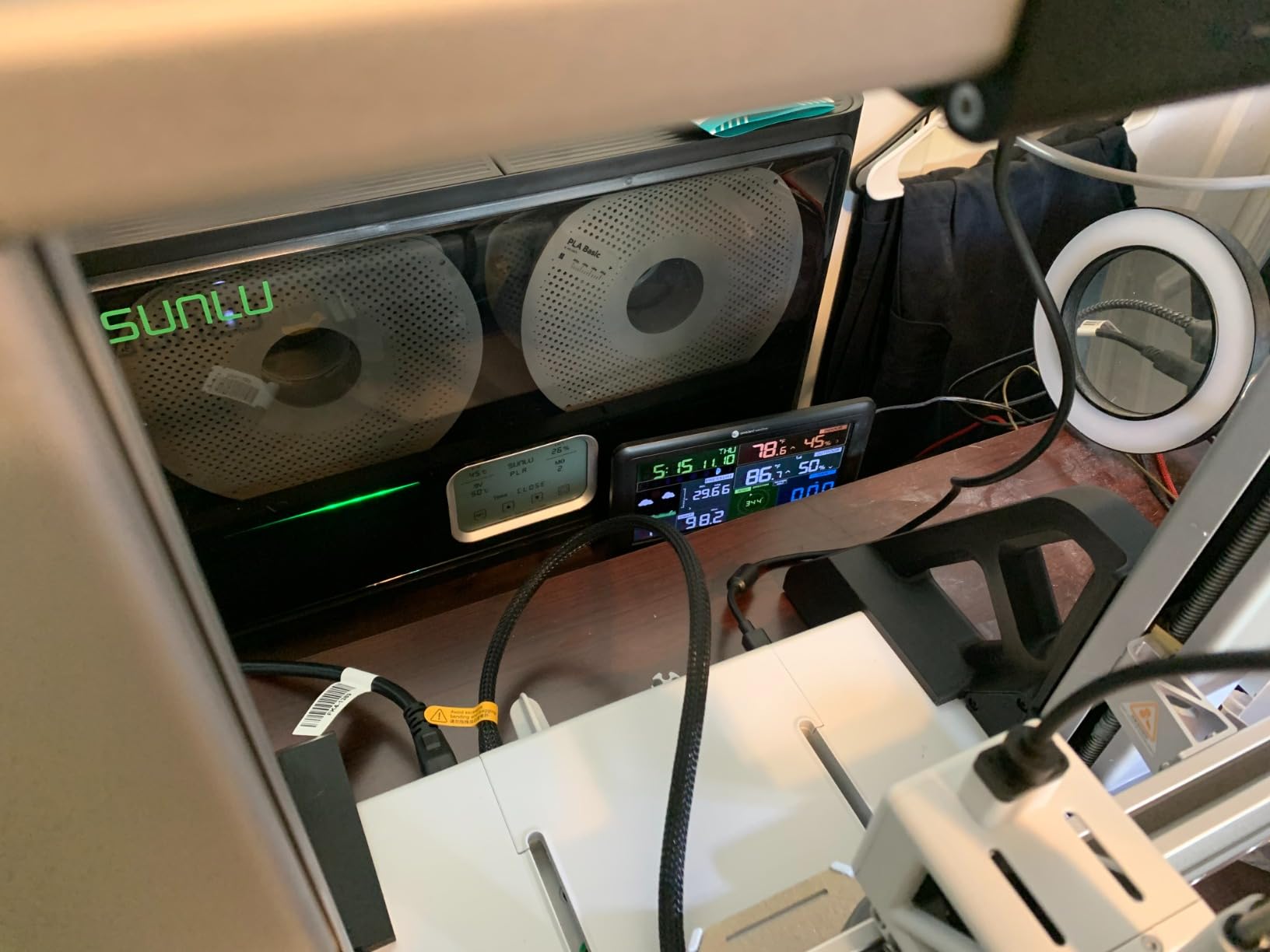
The S4 is a batch machine. Four 1kg spools dry at once behind eight filament exit holes, and a 350W PTC element delivers roughly 50% more output than the smaller SUNLU dryers, which is what makes a full weekend of drying realistic in a humid week.
Three circulation fans drive 360-degree surround heating so no spool sits in a cold corner. External dimensions are 460 x 220 x 310 mm with an internal bay of 450 x 175 x 207 mm, and the unit weighs 4 kg, so plan the bench space before you order.
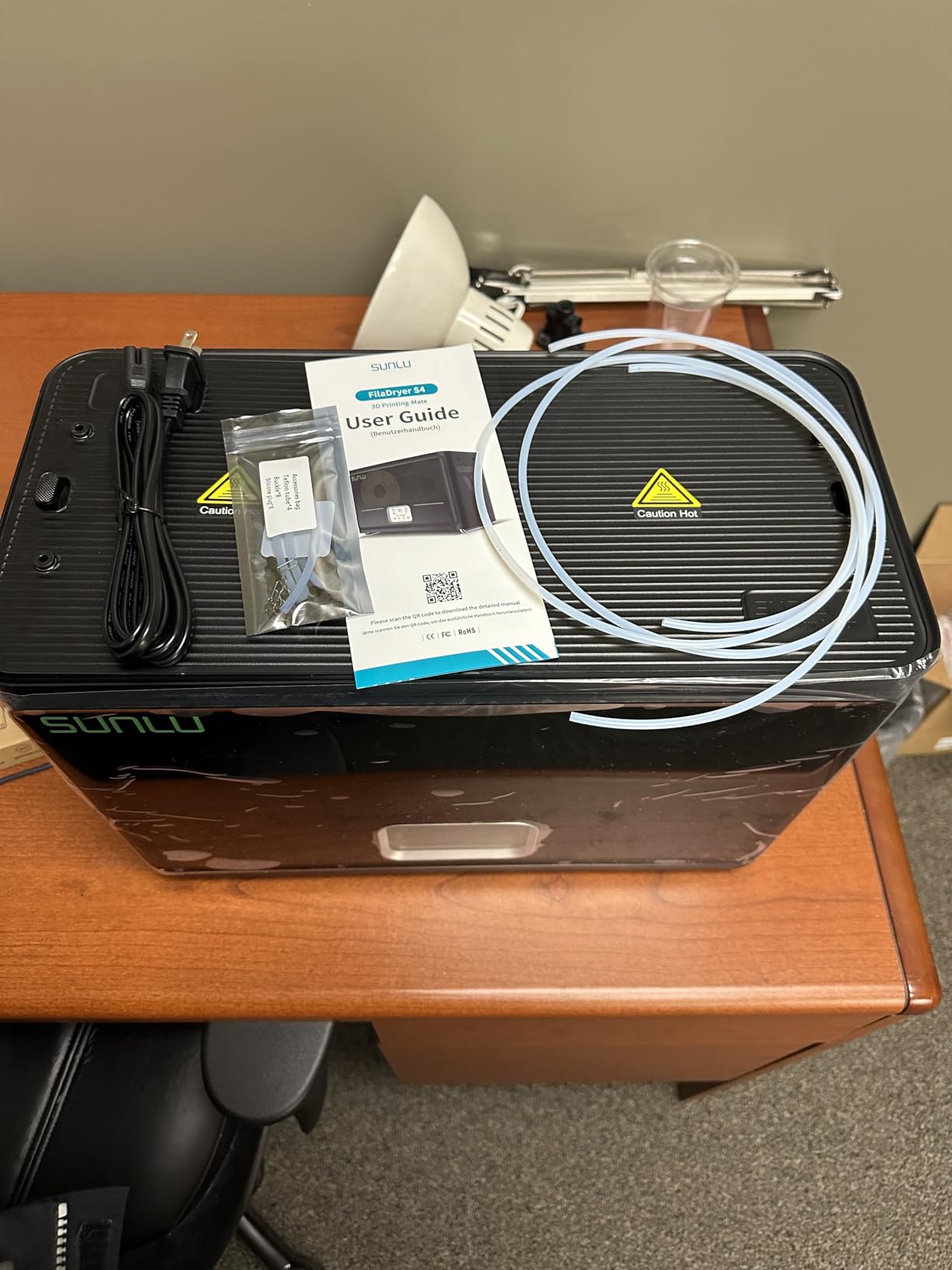
Temperature runs 35-70 C on a 0-99 hour timer, and intelligent humidity detection reports the chamber state rather than leaving you to infer it. Supported materials include PLA, PLA Plus, PLA Meta, PETG, ABS, TPU, PA, PC and nylon at 1.75mm, 2.85mm and 3.00mm.
Owners rate the throughput highly: four spools, eight feed ports and even heating across a large chamber. The repeated trade-offs are physical rather than functional, with size, weight, external heat and fan noise coming up most often.
What you notice after a few humid weeks
Batch capacity changes the mental load. Instead of deciding which spool deserves drying time, you dry everything that has been open, and you stop rationing cycles during the worst weeks of the year.
The humidity detection is what keeps a large chamber honest. Four spools with different absorption rates dry unevenly, and without a reading you are guessing which ones need another pass.
Where it falls short
It is heavy, hot to the touch around the exterior, and loud with all three fans running, so it belongs in a workshop rather than a living area. It also costs more than a two-spool box without adding the independent chamber control the Creality X4 provides.
9. eSUN eBOX Lite – Best Compact Pick for Small Workspaces
eSUN eBOX Lite Upgraded 3D Printing Filament Dryer Box, Filament Storage Box, Spool Holder for Keeping 3D Printing Filament from Moist and Keeping Filaments Dehydrating, US Power Supply
40-55 C internal range
Reaches 50-55 C in about 2 hours
0-18 hour heating time
Low-noise turbo fan and transparent lid
Pros
- Quiet low-noise turbo fan suits overnight drying
- Smooth internal rollers feed soft TPU with low tension
- Low filament exit fits bottom-loading printers
- Transparent lid for quick checks
- Compact single-spool box
Cons
- Controls use numbered levels instead of a temperature readout
- Claimed maximum is closer to 55-58 C in practice
- Slow on badly waterlogged filament
- Lid can lift during printing
This is the smallest useful dryer on the list, and it earns its place with two details most people miss. The smooth internal rollers feed soft filament like TPU with very low tension, and the filament exit sits low enough to reach bottom-loading printers such as the Prusa Tina 2 and Cadet.
Heating uses a PI heating arc structure wrapped in insulation cotton, reaching 50-55 C in about two hours across a 40-55 C internal range, with a 0-18 hour timer. The low-noise turbo fan is quiet enough for overnight drying, and the transparent lid gives you a quick look without cracking the seal.
It fits 1.75mm, 2.85mm and 3.00mm filament in 0.5kg, 0.75kg and 1kg spools. Owners find it effective for reviving damp PLA, PETG and TPU, which covers most of what a home printer in a humid room puts through it.
There are honest caveats. The controls use three numbered temperature levels rather than a real readout, so the manual matters more than it should. Some owners find it slow on badly waterlogged filament, sometimes past ten hours, and report actual temperatures below the advertised maximum. The lid can also lift during printing because of where the outlet sits.
What you notice after a few humid weeks
For standard spools that were left open overnight rather than waterlogged, this handles the job. The gentle heat is enough to bring damp PLA and PETG back, and the long 18-hour maximum covers a proper overnight cycle for one material.
Quiet operation means it can live in the room rather than a closet, which matters if your printer is on a desk. Rolling it up to the machine and printing straight from the chamber keeps the seal closed through a print.
Where it falls short
There is no humidity display, so in a humid room you are relying on temperature alone, which is the weakest signal available. The numbered control levels are frustrating once you start rotating materials, and it is not the box to reach for when a spool needs serious recovery.
10. Creality Space Pi Plus – Best for Long 48-Hour Cycles
Official Creality Filament Dryer, Space Pi Plus
45-70 C temperature range
0-48 hour programmable timer
Two 1kg spools with dual PTFE ports
3.7 inch touchscreen
Pros
- Dries two 1kg spools with dual ports for printing while drying
- 45-70 C range handles PETG and ASA
- One-touch presets for 12 plus materials
- Long 0-48 hour timer for thorough drying
- Retains internal humidity when switched off
Cons
- Touchscreen feels cheap and flexes on press
- No lock or latch on the lid
- Needs deep clearance behind the unit for lid swing
- Missing PTFE tube retention clips can cause jams
A 0-48 hour timer is the feature that sets this apart. In a room holding 65% RH or higher, a six-hour cycle on a saturated spool can leave you drying the same filament twice, and a timer that runs to two full days lets you set it once and trust the result.
Two 1kg spools dry simultaneously behind dual filament ports with PTFE tubes for printing while drying. A 110W PTC heater with 360-degree hot air circulation covers a 45-70 C range, which handles PETG, ASA and other moisture-sensitive materials properly rather than just warming them.
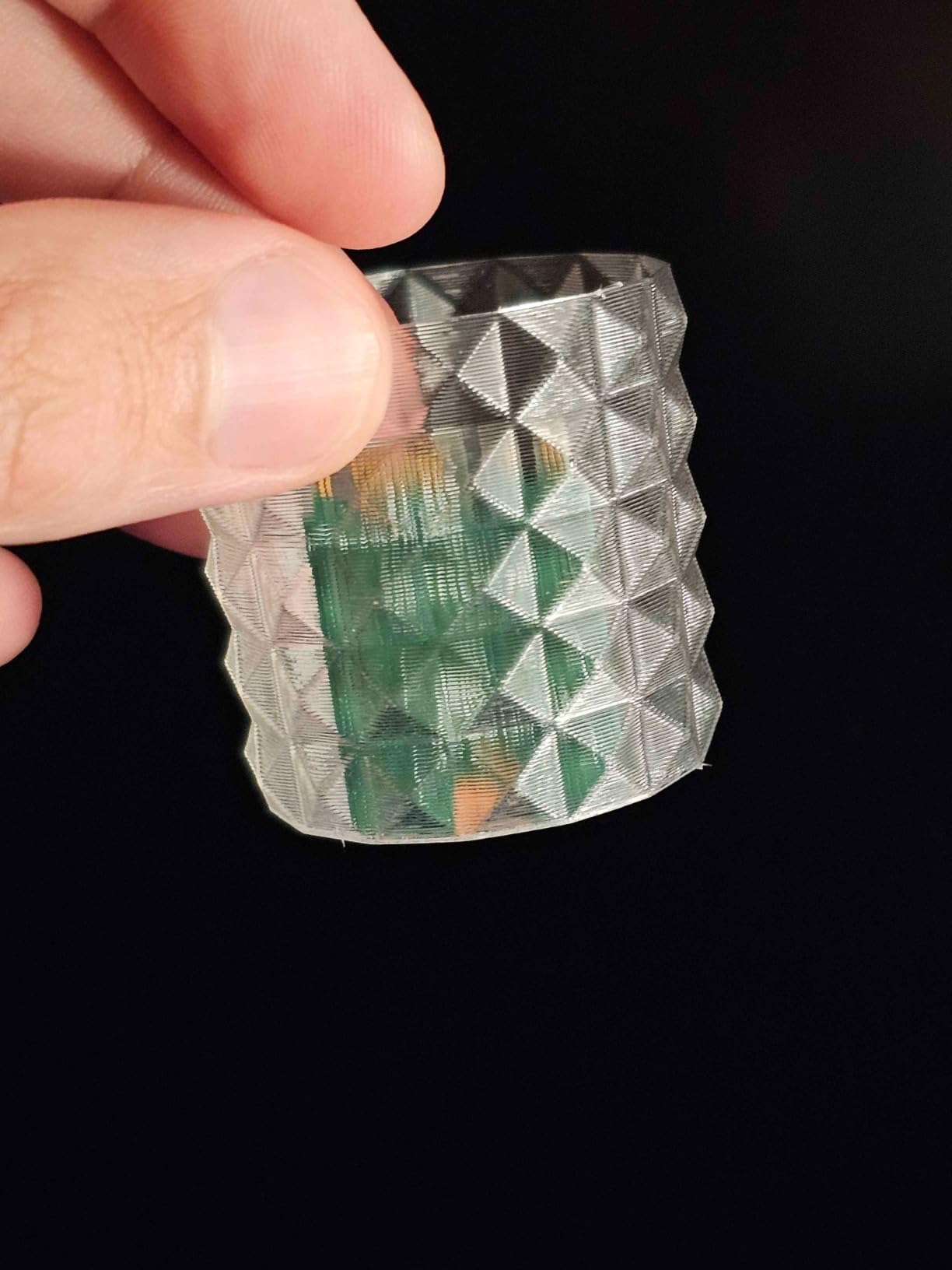
One-touch presets cover more than twelve filament types including PLA, PETG, ABS, TPU, PLA-CF, PA-CF and ASA, and the 3.7-inch touchscreen handles C and F unit switching. Owners report that it retains internal humidity when switched off for a couple of days, which matters a lot in humid weather.
Build quality is where this one loses ground. The touchscreen feels cheap, shows visual artifacts and flexes on press, and one owner received a cracked unit. There is no lock or latch on the lid, and you need deep clearance behind the machine for the lid to swing open. Missing PTFE tube retention clips mean tubes can be pulled inward during printing and cause jams.
What you notice after a few humid weeks
Long cycles let you batch properly. Two spools of spares going through a 24-hour dry while you print from another chamber means you stop carrying damp material forward into the next week.
The presets make the 45-70 C range usable without memorising numbers per material, which is the difference between a dryer you run weekly and one you leave in the corner.
Where it falls short
The touchscreen and lid hardware are the weak points, and a cracked display out of the box is a real possibility. Plan the footprint for lid clearance rather than the base dimensions alone. It also sits below the 70-85 C band that nylon needs, so engineering-heavy shops should look higher up the list.
Drying Temperatures and Times by Material
Setting temperature by guesswork is the most common reason a humid-room dryer feels like it is not working. Here are the ranges that matter, and they are material properties rather than dryer settings.
PLA and PLA Plus: 45-50 C for 4-6 hours. PLA absorbs moisture slowly, so a gentle cycle after it has been sitting open in a humid room is usually enough.
PETG and PETG-CF: 60-65 C for 6-8 hours. This is the material that causes most humid-room stringing complaints, and it also needs the higher end of the range to recover properly.
TPU and TPE: 50-55 C for 6-8 hours. Drying helps consistency more than it helps printability, and soft filaments pick up moisture quickly.
ABS and ASA: 60-65 C for 8-12 hours. These warp easily when damp, and ASA is popular in humid rooms for exactly that reason.
Nylon, PA and PA-CF: 70-80 C for 12-24 hours. Nylon absorbs moisture faster than any other common filament, which is the single strongest reason to buy a dryer with an 85 C ceiling.
Polycarbonate and PAHT: 80-85 C for 12-24 hours. Very few boxes on this list reach this range, and those that do are the Creality Space Pi X4.
On duration, treat the first two hours as warm-up rather than drying time, especially in boxes with slower heating elements like the eSUN eBOX Lite. And crack the seal slightly or use the outlet as a vent during the cycle so moisture leaves instead of condensing back onto the plastic.
How to Choose a Filament Dryer for a Humid Room?
Start with your humidity tier, not with the product list. Below about 50% RH, sealed dry boxes with desiccant and an occasional gentle dry are enough, so a compact single-spool box is a reasonable place to begin. Between 50% and 65% RH, look for a heater that reaches at least 65 C with a real humidity readout, because that is the band where stringing starts appearing mid-print.
Above 65% RH, treat storage as part of the purchase. A unit that dries well but leaks humidity back in is only solving half the problem, so favour multi-point seals, a gasket that closes properly, and an outlet you can plug when you are not printing. If your room regularly sits in that band, a dry-store-print system like the Polymaker PolyDryer saves you the most repeat cycles.
Next, check the temperature ceiling against your materials. Anything printed above 60 C on a regular basis, and nylon or PC above 80 C, needs a heater that gets there. The Comgrow SH02 reaches 70 C, the SUNLU S2 runs 35-70 C, and only the Creality Space Pi X4 reaches 85 C with independent chambers.
Capacity follows from how many materials you rotate. Single-spool units are quiet and cheap but make you reload constantly, and every reload in a humid room is a moisture event. Two spools let one dry while you print the other. Four spools plus feed ports handle multi-printer setups, and independent chambers matter when two materials need different temperatures at once.
Humidity monitoring is the feature that changes behaviour in humid rooms. A box that reports relative humidity tells you when a spool is ready and when an open lid has ruined a dry, which removes most of the guesswork. Just remember the reading has limits: the Creality Space Pi SE stalls around 15% RH, and units with no display make you infer everything from temperature alone.
Noise and placement come last but matter daily. Under 10 dB units like the SUNLU S1 Plus can live in a room, while three-fan boxes such as the SUNLU S4 belong in a workshop. If the machine sits in a space you also use for other gear, plan it the way we plan display pieces in our 3D wall clock guide for living rooms, around where the noise and heat land rather than where the object looks best. Give hot units a permanent spot on a surface that tolerates heat, and check lid clearance behind the unit before you commit to a spot.
On running cost, the levers are temperature, cycle length and how often you run it. A hot 85 C chamber on a long timer draws the most, while a 50 C overnight cycle on a single spool draws the least. In a room above 65% RH you will run more cycles than you expect, so a longer timer that finishes the job in one pass often costs less than repeating a short cycle twice.
Dryer vs Dry Box vs Room Dehumidifier
These three get confused constantly, and they solve different problems. A dry box is passive: sealed walls plus desiccant slow moisture down, which protects filament in a room around 40-50% RH. It cannot recover a spool that is already damp, because there is no heat involved.
An active filament dryer is targeted. It heats one or a few spools to a material-specific temperature and drives moisture out, which is what you need for PETG, TPU, nylon and anything already wet. In a humid room it is usually the only thing that fully reverses the problem, and it only touches the spools you choose.
A room dehumidifier lowers ambient humidity across a whole space, which protects filament, electronics and your prints at once, and it is cheaper to run than heating a chamber. It will not fix a saturated spool, and it will not help if the outdoor air keeps pushing moisture in through an open window or a leaky door. Many owners pair a dehumidifier with a modest dryer and cover both cases, which is why the forum debate rarely settles on a single answer.
Our practical read for a humid room: run a dehumidifier if your space hits 65% RH or above, and pair it with a two-spool heated dryer for PETG and nylon work. Below that band, a dryer with a humidity display is usually enough on its own.
Keeping Filament Dry After the Cycle
Dry filament goes stale fast in humid air, so what happens in the ten minutes after the cycle matters as much as the cycle itself. Print directly from the chamber whenever the outlet height suits your printer, and keep the filament path enclosed from spool to extruder.
For spools that go into storage, use a sealed dry box with rechargeable silica gel desiccant rather than the dryer itself. Most of the single-spool boxes on this list are drying tools, not storage containers, and their lids are not gasketed for multi-week holds.
Vacuum bags with a valve and a desiccant sachet are the cheapest reliable option for part-used spools, and they work well at 50-65% RH. Keep them away from direct sun on a warm shelf, since heat drives moisture back into the plastic even in a sealed bag.
Finally, label dried spools with the date and material. In a humid room, knowing what was dried last week and what was opened yesterday is the difference between one drying pass and three. If you enjoy tracking how ambient conditions affect other gear, our humid climate setup guide covers the same corrosion issues in a different form factor.
Frequently Asked Questions
What is the best 3D filament dryer?
For most people printing in a humid room, the Comgrow 2-Spool Dryer Box is the best all-around choice because it reports both temperature and relative humidity and holds two 1kg spools. Pick the SUNLU S1 Plus if noise matters where you print, the Comgrow SH02 if you need 70 C for PETG and ASA, or the Creality Space Pi X4 if you print nylon or polycarbonate.
What humidity should 3D printer filament be stored at?
Store sealed filament at 40-50% relative humidity or lower. Between 50% and 65% RH, expect to dry filament regularly and keep it in sealed dry boxes with desiccant. Above 65% RH, sealed storage alone is not enough: you need heated drying plus a chamber that stays closed, and you should dry before each print cycle rather than after problems appear.
Is it worth getting a filament dryer?
It is worth it if your room sits above roughly 50% RH, if you print PETG, TPU, nylon or polycarbonate, or if your prints show stringing and popping that tuning cannot fix. Below 50% RH with only PLA and PETG, sealed dry boxes with desiccant handle most situations for far less money and no heat or fan noise.
What should I set my Sunlu filament dryer to?
Set it by material, not by habit: PLA and PLA Plus at 45-50 C for 4-6 hours, PETG at 60-65 C for 6-8 hours, TPU at 50-55 C for 6-8 hours, ABS and ASA at 60-65 C for 8-12 hours, and nylon at 70-80 C for 12-24 hours. The S1 Plus tops out at 55 C, so it suits PLA, PETG and TPU rather than nylon.
Does a filament dryer work in high humidity?
Yes, but only if the chamber seals properly. A heated dryer works fine in humid air because it drives moisture out of the plastic rather than relying on dry ambient air. The part that matters is what happens after the cycle: move spools into a sealed dry box or keep the chamber closed, because warm damp air entering a poor seal undoes the drying quickly.
How long does it take to dry filament in a Sunlu dryer?
Allow for warm-up first. The S1 Plus reaches its set temperature within roughly an hour, while the larger S4 heats a large chamber more slowly. After warm-up, most damp PLA or PETG needs 4-8 hours, TPU 6-8 hours, and nylon 12-24 hours at 70-80 C. Badly waterlogged spools can need a second pass on any of these units.
Conclusion
The best 3d printer filament dryers for humid rooms come down to how damp your air is and how high your temperatures need to go. Below 50% RH, a compact box or a dry box with desiccant is enough. Between 50% and 65%, a heater that reaches 65 C and reports humidity will fix your stringing. Above 65%, you want a sealed chamber you can leave closed, plus a dry-store system for spools that are not on the printer.
Our pick for most people is the Comgrow 2-Spool Dryer Box, with the SUNLU S1 Plus for quiet rooms, the Comgrow SH02 for 70 C two-spool work, and the Creality Space Pi X4 when nylon and polycarbonate are part of the rotation. Whichever you choose, set the temperature by material, dry before the problems appear, and store sealed afterwards.