
The Affver A4 is the best dash cam with GPS tracking we recommend in 2026, because the GPS module is fitted in the box rather than sold as an add-on, and you get a 4K front channel plus a 2.5K rear on the same unit. Nine of the ten models we looked at log speed, route and coordinates out of the box. One does not, and that single fact changes which one you should buy.
GPS logging sounds like a small extra on a spec sheet. It is not. Video alone shows what happened in front of the glass, but a burned-in speed stamp, a date and time and a set of coordinates turn that footage into something a third party can check. An insurer, a collision report or an insurance-fraud investigator can verify that the car was where it says it was, doing what it says it was doing.
That corroboration is why the best dash cams with GPS logging are worth more than the best dash cams. A camera with no GPS produces a video that is only as persuasive as the driver’s memory. A camera with GPS produces a record. Over the past few weeks we worked through ten GPS-equipped models, checked what each one ships with, and noted where the GPS data ends up after you pull the file.
What follows is the full roundup, followed by the questions buyers actually ask: whether the GPS module is included, how to read the track data later, whether your phone can do the same job, and whether all your cameras get the speed stamp or only the front one.
Table of Contents
Top 3 Best Dash Cams With GPS Logging for 2026

Affver A4 4K + 2.5K Dual Cam
- Built-in GPS in the box
- 4K front plus 2.5K rear
- 5GHz WiFi 6 at 10MB/s

PRUVEEO D90 4-Channel Cam
- Four channels at once
- Built-in GPS and route map
- 128GB card included
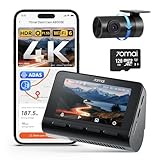
70mai A800SE 4K Dual Cam
- 4K front with 1080P rear
- Built-in GPS route logging
- 512GB storage ceiling
A VIOFO mention is worth a word. Buyers on r/dashcams consistently favour VIOFO models such as the A119 Mini 2 and the A229 Plus for the Sony STARVIS 2 sensor’s night performance, but we could not include them in a set where we could not verify the specification ourselves. Where a sensor changes the verdict, we name it instead.
All 10 Dash Cams With GPS Logging at a Glance (October 2026)
Read the GPS column first. Nine of these log speed, route and coordinates from hardware inside the camera. The ZMOPO D435 lists its GPS logger as a separately purchased module in this configuration, which changes the real cost and the cable routing.
| Product | Specifications | Action |
|---|---|---|
| Affver A4 4K + 2.5K Dual Dash Cam |
|
Check Latest Price |
| PRUVEEO D90 4-Channel 360 Dash Cam |
|
Check Latest Price |
 70mai T800E 3-Channel Dash Cam 70mai T800E 3-Channel Dash Cam |
|
Check Latest Price |
| 70mai A800SE 4K Dual Dash Cam |
|
Check Latest Price |
 COOAU D20S Front and Interior 4K Cam COOAU D20S Front and Interior 4K Cam |
|
Check Latest Price |
 JOMISE J6 4K Touchscreen Dash Cam JOMISE J6 4K Touchscreen Dash Cam |
|
Check Latest Price |
 ZMOPO D435 4-Channel 360 Dash Cam ZMOPO D435 4-Channel 360 Dash Cam |
|
Check Latest Price |
 COOLCRAZY N8 4K 60fps Dash Cam COOLCRAZY N8 4K 60fps Dash Cam |
|
Check Latest Price |
 WANLIPO A13 4K + 2.5K Dash Cam WANLIPO A13 4K + 2.5K Dash Cam |
|
Check Latest Price |
 Beferich J18 4K + 2.5K Dash Cam Beferich J18 4K + 2.5K Dash Cam |
|
Check Latest Price |
1. Affver A4 4K + 2.5K Dual Dash Cam – GPS In The Box
Affver 4K+2.5K Dash Cam Front and Rear, Built-in 5G WiFi 6 GPS Dual Dashcam
4K front + 2.5K rear
Built-in GPS
5GHz WiFi 6
256GB maximum
Pros
- GPS logs speed route and coordinates from hardware in the box
- 4K front and 2.5K rear both legible
- 5GHz WiFi 6 transfers up to 10MB/s
- 64GB card already fitted
- Low-profile body keeps the forward view clear
Cons
- Parking mode needs a hardwire install to work properly
- Listed dimensions of 1 inch cube are wrong
- Rear cable is a long run in a crew-cab pickup
The A4 is the model I would hand to someone who wants evidence-grade footage without a second purchase. It records 4K at 30fps through a 160-degree front lens and 2.5K at 25fps through a 155-degree rear lens, and the GPS receiver is built into the front camera rather than supplied as a dongle. Speed, route and coordinates come through in the app or in a desktop GPS player.
Both 4K and 2.5K are marked in the listing, and the rear camera was upgraded from 1080p in June 2026 alongside the move to WiFi 6. That refresh matters because the older version of this camera is still circulating on forums with 1080p rear footage and 2.4GHz WiFi, so the model you receive is not always the model people describe.
Low light is where the F1.5 aperture and six-layer lens pay off. The WDR processing keeps oncoming headlights from blowing out the middle distance, which is where licence plates usually sit. In daylight the 160-degree front field of view is wide enough to catch a vehicle entering from the side in most incidents.
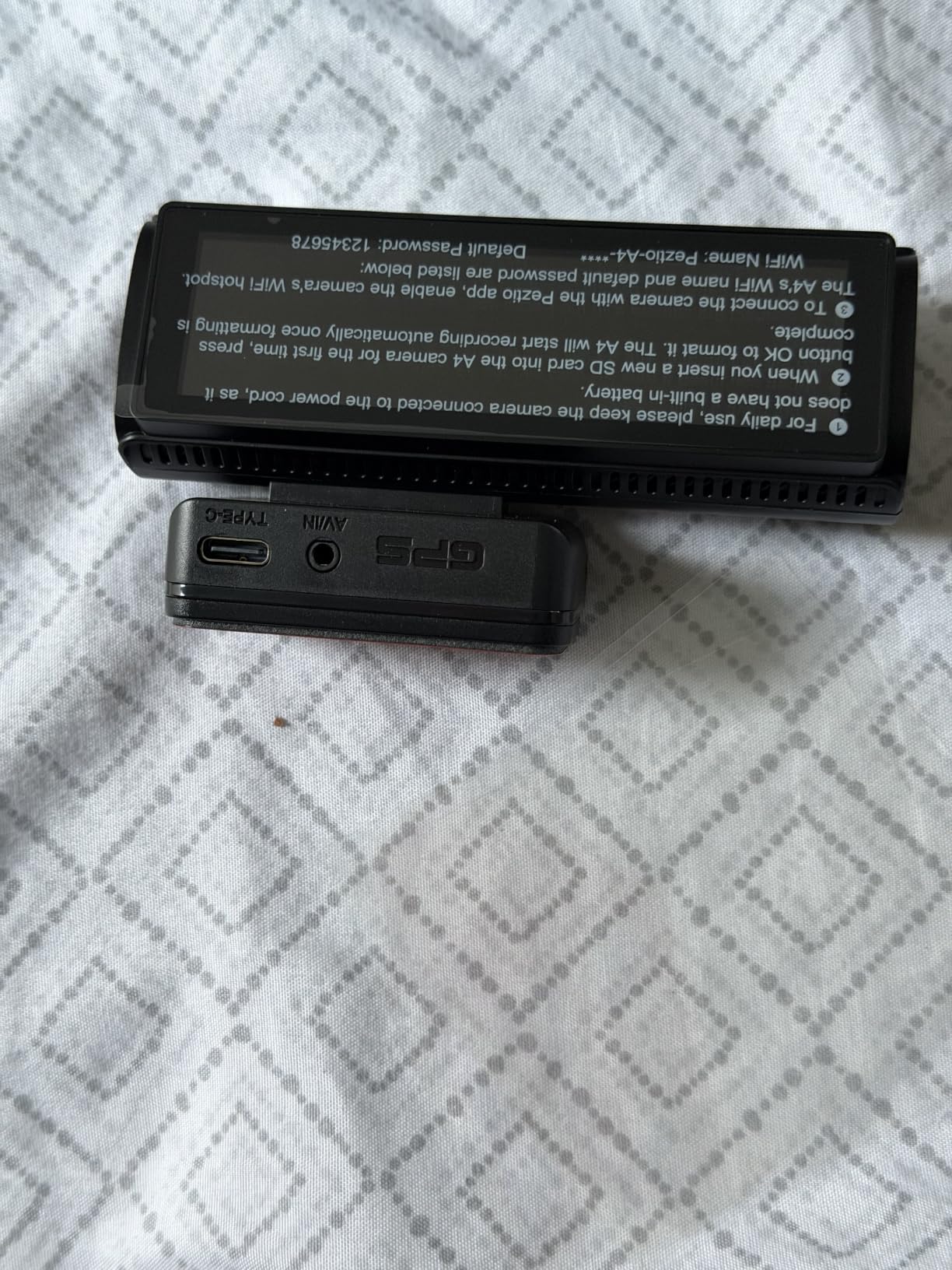
The 3.59-inch IPS screen is unusually large for a low-profile unit, which means you can check framing and confirm that the GPS lock has acquired before you drive away rather than finding out afterwards. A 64GB card is pre-installed and the unit accepts cards up to 256GB, so you are recording on the box it arrives in.
What the GPS data actually gives you
Every clip carries a speed readout and a coordinate pair, and the app draws your route as a line on a map once the drive is finished. If you never open the app, the stamp still sits in the corner of the video, which is the version that matters for an insurance file because it travels with the file.
Expect the speed number to read a little under what your speedometer shows. Dash cam GPS modules derive speed from satellite positions over time rather than from the vehicle itself, so a reading 1 to 2 mph low is normal and not a fault.
Where it falls short
Parking mode is the weakness. Run from the 12V socket and the camera has to be unplugged or it will drain the battery, so continuous parking surveillance effectively requires a hardwire kit bought separately. Set the low-voltage cutoff properly once you install it.
The listed dimensions of 1 by 1 by 1 inch are simply wrong, and the rear cable needs patience to route through a long pickup bed. Neither issue touches recording quality, but both are the kind of thing that annoys you on installation day.
2. PRUVEEO D90 4-Channel 360 Dash Cam – Four Angles, One Camera
PRUVEEO 360° 4 Channel Dash Cam Front and Rear Inside Left Right, Dash Camera for Cars, Built-in GPS WiFi Night Vision, 24/7 Recording Parking Mode Monitor, 128G Card Included
Four 1080P channels
Built-in GPS and WiFi
128GB card included
256GB maximum
Pros
- Four cameras cover front rear and both sides at once
- Built-in GPS maps speed and route
- 128GB card means it records on arrival
- Supercapacitor avoids heat damage in parked cars
- Time-lapse mode stores an hour in a minute
Cons
- Companion app needs repeated reconnects
- Main body is bulky on the windshield
- Rear bracket screws are described as flimsy
The D90 answers a different question from the rest of this list: what should the camera see, rather than how sharp is it. Four 1080p channels record simultaneously for genuine 360-degree coverage, which means a single incident on a roundabout or in a car park can be reconstructed without a second vehicle pointing the other way.
GPS is built in and logs speed, location and route onto a map. The interesting part for a buyer filtering on GPS is the time-lapse mode, which compresses 60 minutes of parking into a minute of video and still carries the position data, so you get a full day of parked coverage without filling the card.
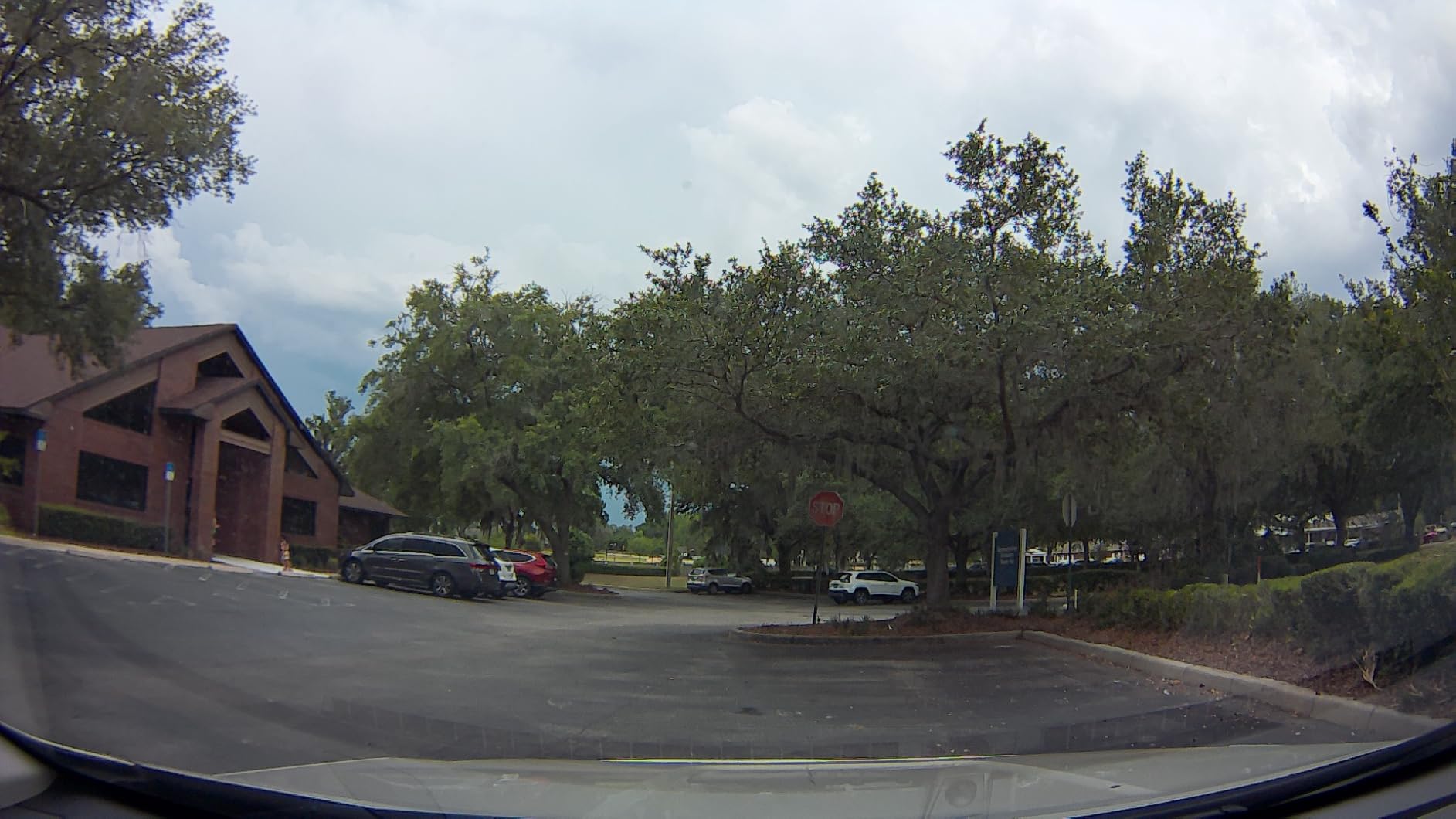
Power comes from a built-in supercapacitor rather than a lithium cell, which matters more in a parked car than any resolution figure. A capacitor is far more tolerant of the temperature swings a vehicle sees over a season, and this unit is battery-free by design.
The included 128GB card is generous, and the unit accepts cards up to 256GB. Cable-hiding clips and an installation tool are in the box, so the four cameras can be routed along the headliner and pillars without adhesive on the glass.
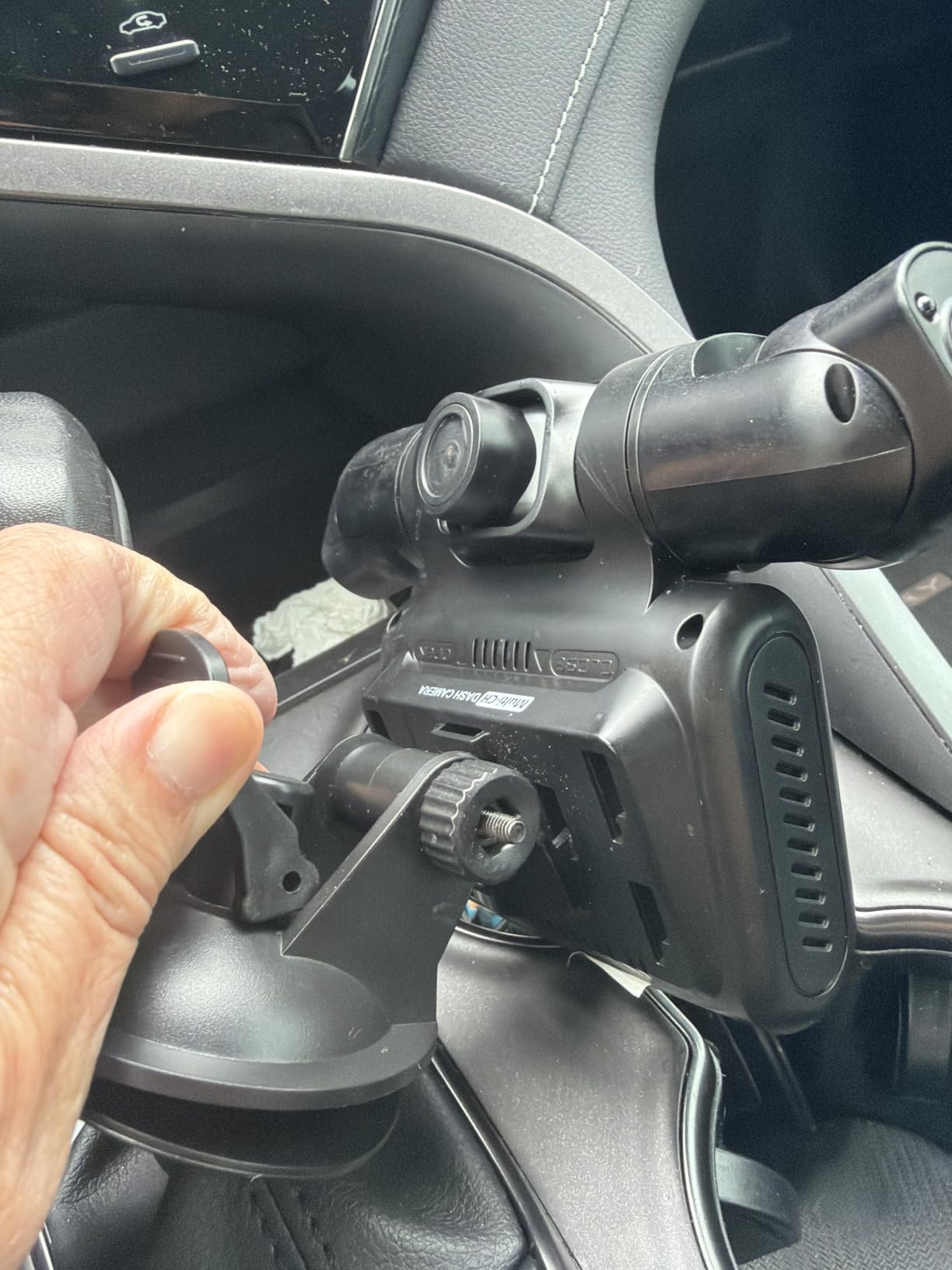
Where the 360-degree approach pays off
Rideshare drivers, delivery fleets and anyone parking on a residential street get the most from four channels. A sideswipe that never appears on the front camera is captured on a side channel, and the interior infrared lights mean the cabin is recorded in genuine darkness rather than as a black rectangle.
The tradeoff is resolution. Every channel here is 1080p, so a plate at 30 metres is a smudge on the side cameras even when it is crisp on the front.
When a single simpler camera is the better buy
If your concern is a rear-end collision claim, four 1080p channels are overkill and a 4K front camera is the smarter allocation of the same budget. Our guide to the best rear view mirror dash cams covers the single-body alternatives if a four-camera install feels like too much hardware on the glass.
The D90 also draws complaints about its app, and several owners report that the app only connects reliably while the phone is inside the car. The main body is bulky for a windshield mount and the rear camera bracket is the weak point. Cable-hiding clips mitigate the routing, but the hardware at the rear end is not built to the same standard as the front.
3. 70mai T800E 3-Channel Dash Cam – Five-Mode GPS And A Cabin Record
70mai 4K Dash Cam Front and Rear Inside, 3 Channel Car Dash Camera for Cars, Dashcam with GPS, Wi-Fi 6, Voice Control, Parking Monitor, Night Vision, Loop Recording, 64GB SD Card Included (T800E)
4K front + two 1080P channels
5-mode built-in GPS
WiFi 6 at 10MB/s
512GB maximum
Pros
- 5-mode GPS gives the most detailed route output here
- Three channels record at once
- Switchable infrared lights up the cabin at night
- HDR and 3D noise reduction keep plates readable
- Voice control for photos and locked clips
Cons
- Only a 1.9 inch screen
- Rear and interior channels are 1080P
- Parking mode needs a UP06 or UP03 hardwire kit
- No 4G cellular option
The T800E carries the highest average rating of the ten models we assessed, and the reason is specific rather than general. Its five-mode GPS is the most granular route output in this group, and it records 4K at the front alongside 1080p interior and rear channels, so you get a 402-degree combined view with a proper cabin record.
That combination suits a rideshare driver who needs the front for the road, the interior for passenger disputes and the rear for whatever happens behind the car. WiFi 6 moves files at up to 10MB/s through the 70mai app, so pulling a full day of three-channel footage does not eat an evening.
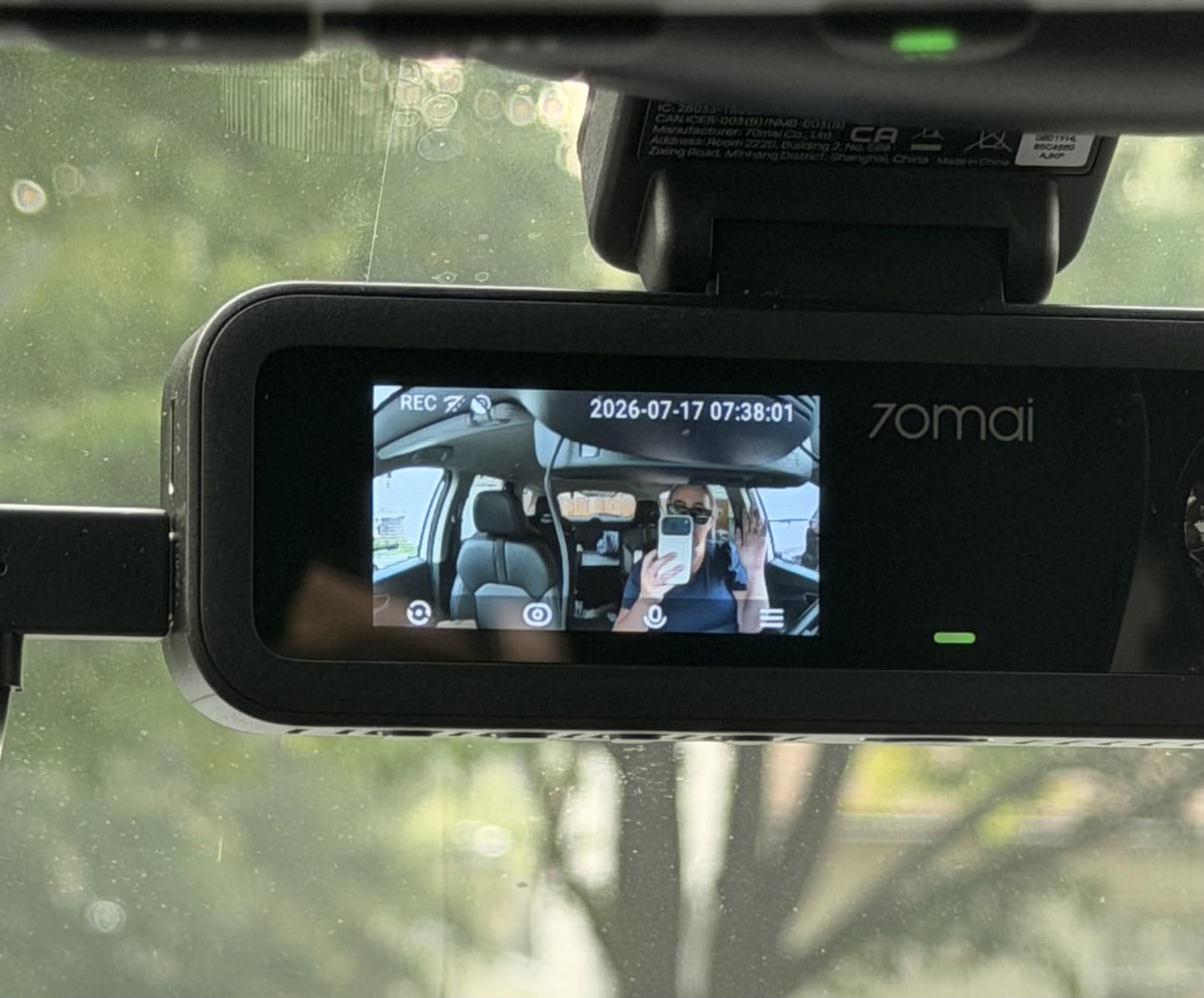
Night work is handled by a switchable infrared source on the interior camera plus HDR imaging and 3D noise reduction through an F1.55 aperture. Voice control lets you start recording, grab a photo or lock a clip without taking your hands off the wheel.
Storage is the standout. A 64GB card is included and the unit accepts cards up to 512GB, which is the highest ceiling here and the only sensible choice if you plan to run parking surveillance without checking the card every fortnight.
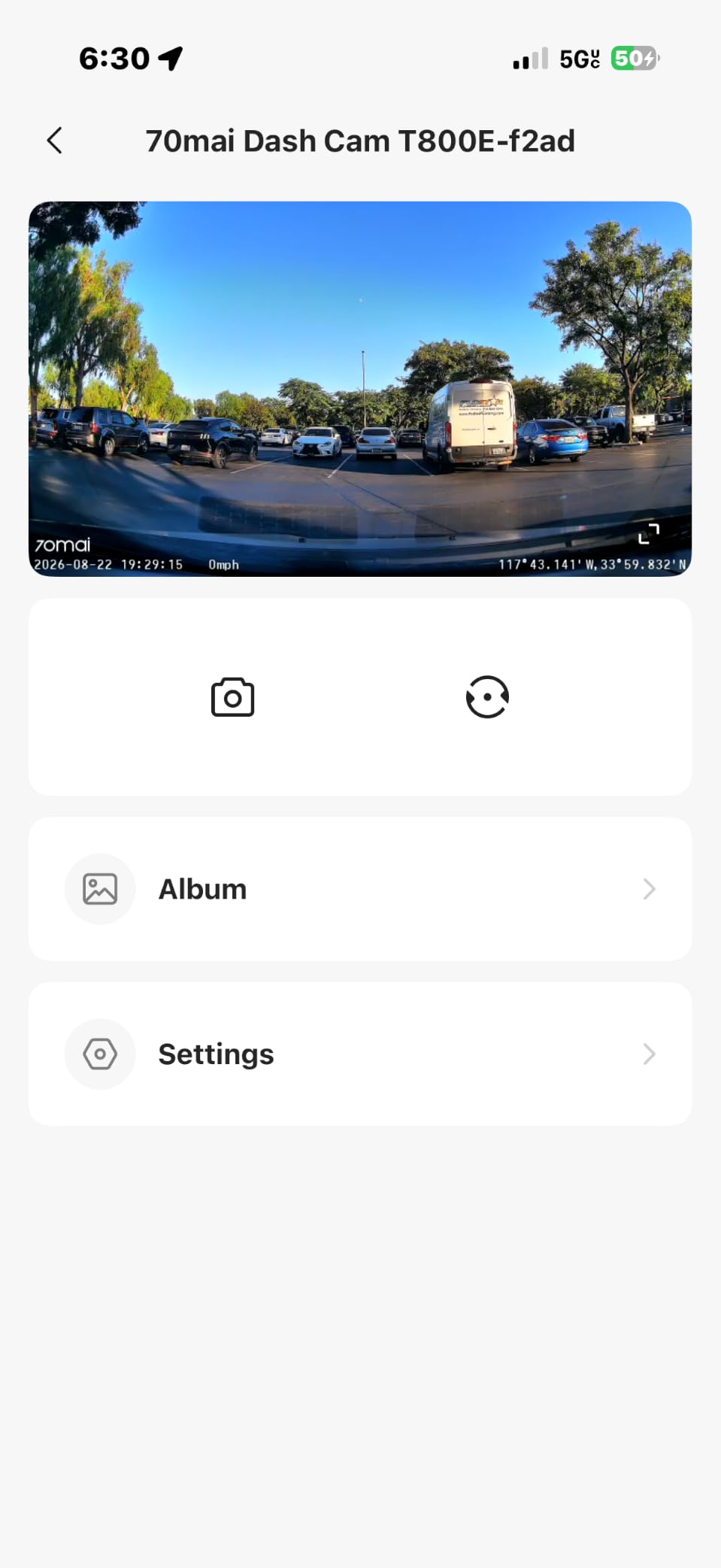
What five-mode GPS changes
Five-mode refers to the satellite combinations the receiver can use, which in practice means a faster and more consistent lock in poor conditions between tall buildings or under tree cover. The practical effect is fewer clips with no location data attached, which matters when you are reconstructing an incident rather than watching a drive.
Route tracking, speed and position are all retrievable in the app after the fact, and each channel is timestamped against the same clock so front and interior footage stay synchronised.
Where it stops short
The 1.9-inch display is small. You will set it once and then work through the app on your phone, which is fine, but it is the smallest screen on a camera in this roundup.
Both secondary channels are 1080p, and parking monitoring needs a separate UP06 or UP03 hardwire kit. There is no 4G cellular connectivity on this model, so no live remote view or cloud upload while you are away from the vehicle.
4. 70mai A800SE 4K Dual Dash Cam – Best 4K Evidence Recorder
70mai 4K Dash Cam Front and Rear, Built in Wi-Fi 6 & GPS Car Camera, Super Night Vision, ADAS, 3” IPS Screen, 24H Parking Mode, Time-Lapse, Loop Recording, with 128GB Card (A800SE)
4K front + 1080P rear
Built-in GPS
WiFi 6
512GB maximum
Pros
- 4K front with adjustable rear lens captures plates and signs
- Built-in GPS logs position and route
- WiFi 6 preview without removing the card
- F1.55 lens and Dual HDR for night and tunnel driving
- 128GB card included with 512GB support
Cons
- Rear camera is 1080P rather than 2.5K or 4K
- Parking surveillance needs a separate hardwire kit
- 140 degree field of view is narrower than rivals
- App setup and voice prompts take practice
If your claim will be judged on the front camera alone, the A800SE is the one I would pick. The 4K front sensor reads licence plates and road signage at distances where dual-camera rivals running 1080p rear and 2.5K front start to soften, and the built-in GPS logs position and route for the same clip.
The rear lens is adjustable, so you can aim it at the cabin or at the road behind depending on whether you are the driver or the passenger. That single mounting option covers both the family sedan and the rideshare use case without a second camera.
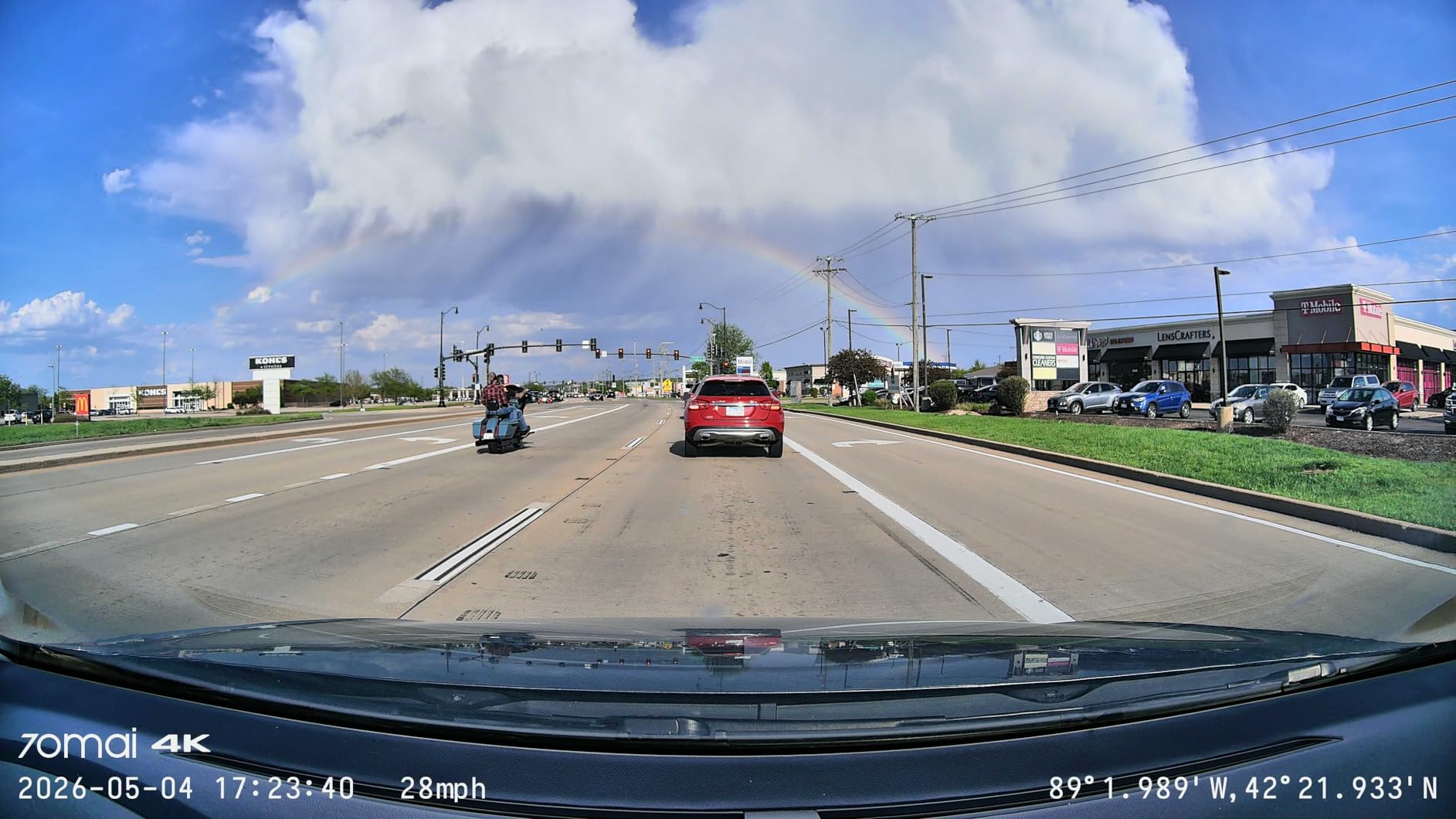
Night and tunnel footage is where the F1.55 aperture, seven-layer glass lens and Dual HDR earn their place. Owners consistently single out the bright picture in low light, and the 512GB storage ceiling means a week of driving is comfortable at this resolution.
ADAS lane departure and forward collision alerts are unusual at this level, and they arrive with over-the-air firmware updates. A three-inch IPS screen handles the menus, and the warranty runs 18 months with service centres in New York and California.
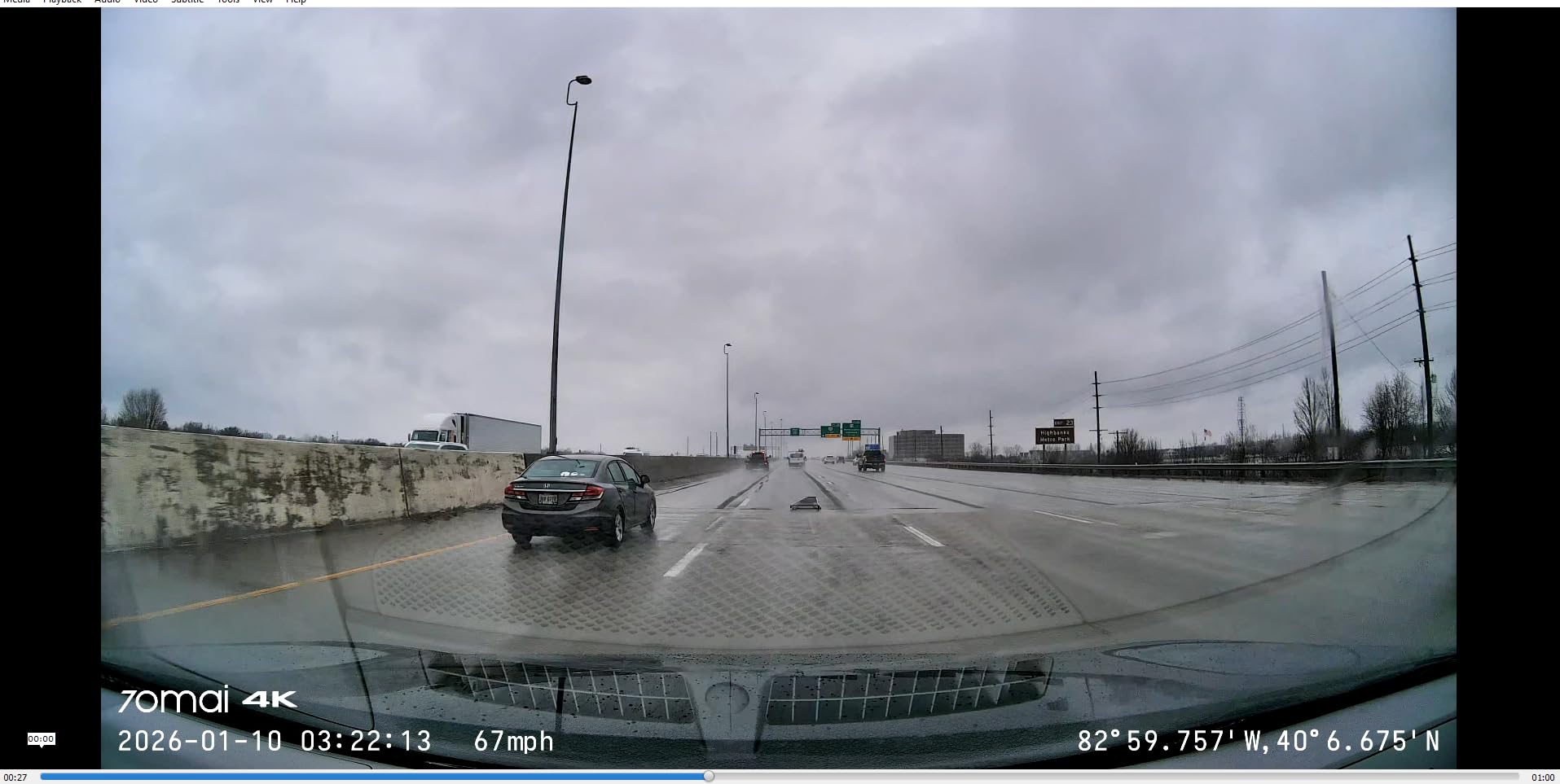
Why front resolution drives claim outcomes
An insurer reviewing footage needs to identify a vehicle, read a plate or establish a junction priority. That is a front-camera job, and it is why 4K front with a 1080p rear is a defensible trade for an evidence-first buyer. The rear channel exists to catch what follows you, not to identify it.
For a family car running mostly solo journeys, the ADAS alerts add a second layer. They will not prevent a collision, but drivers report that the audible lane warning catches drifting on long motorway drives.
Who should choose the T800E instead
If you need a cabin record as well as a rear record, the T800E at a similar specification level gives you three channels instead of two. This model is for the driver who values front sharpness over interior coverage.
Note the 140-degree field of view, which is narrower than most dual-channel models here. You will see slightly less of the vehicle immediately beside you at a junction, and parking surveillance needs a hardwire kit that is not included.
5. COOAU D20S Front And Interior 4K Dash Cam – For Rideshare Cabins
COOAU 4K Dual Dash Cam, Built-in GPS WiFi, 2.5K+1080P Dash Cam Front Inside
4K front + 2.5K interior
Built-in GPS
Sony STARVIS
256GB maximum
Pros
- 4K front plus 2.5K interior covers six to eight lanes
- Built-in GPS with map route playback
- Sony STARVIS sensor at a mid-range cost
- Infrared lights record the cabin in full darkness
- Dual supercapacitors rated minus 4F to 158F
Cons
- 1.5 inch display is very small
- No memory card included
- Hardwire kit not included and parking mode needs one
- App pairing has proven difficult for some users
The D20S pairs a 4K front camera with a 2.5K interior camera through a Sony STARVIS sensor, and the interior channel has four infrared lights for genuine darkness recording. For a rideshare or taxi driver, that interior record is the reason to buy it: it documents the conversation and the drop-off without a separate cabin camera.
GPS is built in and records time, location and speed with route playback on a map in the app. The 170-degree front and 150-degree interior angles cover six to eight lanes, which is generous enough to capture the vehicle that cut across you rather than only the one in front.
Power runs off dual supercapacitors rated from minus 4F to 158F. That range covers both ends of the temperature problem, and owners running long shifts report the unit holding up in a hot car where battery-powered cameras tend to quit. The customer support record is worth noting too: buyers report free hardwire kits and warrantied replacements arriving when parking mode failed to activate.
Where the interior channel earns its place
Interior footage only matters if it is legible. The four infrared lights mean the cabin camera records faces and hands in total darkness rather than a grey wash, which is the difference between useful and unusable in a night-time dispute. Three parking modes are offered as well, and all three need a hardwire kit that is not in the box.
The 2.5K interior resolution is high enough to identify a passenger and low enough to avoid doubling your storage consumption. Combined with the 4K front, this is the most balanced two-channel cabin setup here.
Before you buy, check three things
The memory card is not included. Budget for a card up to 256GB, and format it in the camera rather than on a computer before the first drive.
The app name has changed. The listing now points to a dedicated COOAUDash app while older documentation referenced different names, and some buyers have installed the wrong one and concluded the GPS does not work.
The 1.5-inch display is the smallest here and effectively decorative. Accept that you will review footage on your phone, because that is where you will live with this camera.
6. JOMISE J6 4K Touchscreen Dash Cam – The Low-Cost Entry Point
JOMISE 4K Dash Cam Front Rear with 64GB Card & Touch Screen, 4K+1080P Dual Dash Camera for Cars, Built-in GPS Wi-Fi, UHD 2160P Night Vision, WDR, 24H Parking Monitor (J6)
4K front + 1080P rear
Built-in GPS
3.16 inch touchscreen
256GB maximum
Pros
- Genuine 4K front at 170 degrees plus a 1080P rear
- Built-in GPS logs route speed and timestamps
- STARVIS 2 sensor with F1.6 aperture and WDR
- 3.16 inch touchscreen makes setup straightforward
- 64GB card included
Cons
- Printed manual shows an outdated app name
- Parking monitoring needs an extra hardwire kit
- Only 12 months of service coverage
- Lower overall review volume than mainstream brands
The J6 is the lowest-cost entry in this roundup and it does not feel like one, which is why it earns a place here. You get true 4K at 170 degrees on the front, a 1080p rear at 140 degrees, a STARVIS 2 sensor behind an F1.6 aperture and a 3.16-inch touchscreen for on-device menus.
GPS is built in and logs driving route, speed and timestamps, which is the same metadata the higher-spec models provide. For an insurance file the front resolution does most of the work, and the STARVIS 2 sensor keeps backlit and low-light footage clean when a car’s headlights hit the lens.
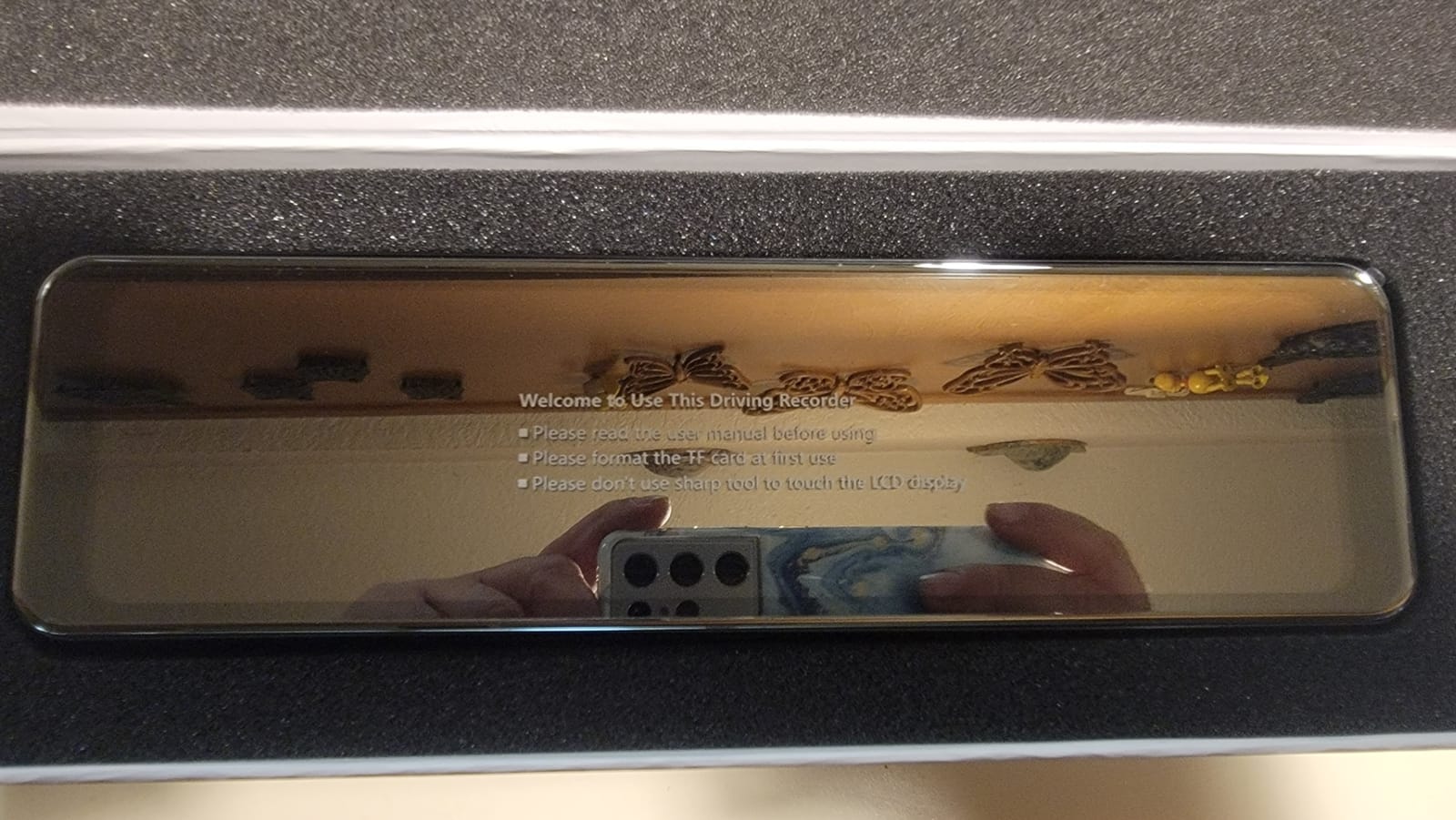
A supercapacitor rated from minus 4F to 158F handles the temperature range that ends parked-camera season. There is also a one-touch emergency lock, so you can protect a clip in the moment rather than finding it overwritten later.
WiFi connection is reported as more stable than on several competing models in this group, which matters because you need it to pull footage and to view the GPS track in the app without removing the card.
What a touchscreen actually does for you
On a dash cam the touchscreen is mostly about setup speed and accidental inputs. Being able to open the parking-mode settings and confirm the GPS lock status from the driver’s seat, in daylight, without squinting at a 2-inch panel, is a real convenience.
The more useful consequence is fewer menu mistakes. Navigating menus by pushing small buttons while parked in sunlight is where settings get changed by accident, and an owner who cannot read the panel is the owner who cannot check it.
The two caveats worth knowing
Install the current Road Cam app, not the one printed in the manual. The printed documentation names an older app, and buyers who follow it end up unable to reach the GPS playback.
Service coverage is 12 months, shorter than the 18 to 24 months offered by the mainstream names here, and the brand carries less field data because fewer owners have bought it. If a camera is being bought as evidence, the warranty length is part of the risk calculation.
7. ZMOPO D435 4-Channel Dash Cam – The Add-On GPS Option
360 View 4 Channel Dash Cam Front and Rear Left Right Inside Camera for Cars, GPS and 5G Band WiFi, Night Vision, 160 Wide Angle, WDR, 24H Parking Mode, Supercapacitor, Included 128GB Card
Four 1080P channels
GPS logger sold separately
5GHz WiFi
128GB included
Pros
- Four channels with plenty of mounting adjustment
- Bright daytime image with a simple menu
- 128GB card plus suction cup and adhesive pad
- 5GHz WiFi with an app that handles playback well
- Supercapacitor supports parking mode
Cons
- GPS logger is a separate purchase in this configuration
- Adhesive mount reported to fail in very hot climates
- WiFi drops repeatedly for some users
- Night footage confused by oncoming lights
Start with the catch. The ZMOPO D435 is a four-channel 360-degree camera with a good sensor and an easy menu, but in this configuration the GPS logger is a module you buy separately. If GPS logging is the reason you are reading this page, that changes the arithmetic on every other feature.
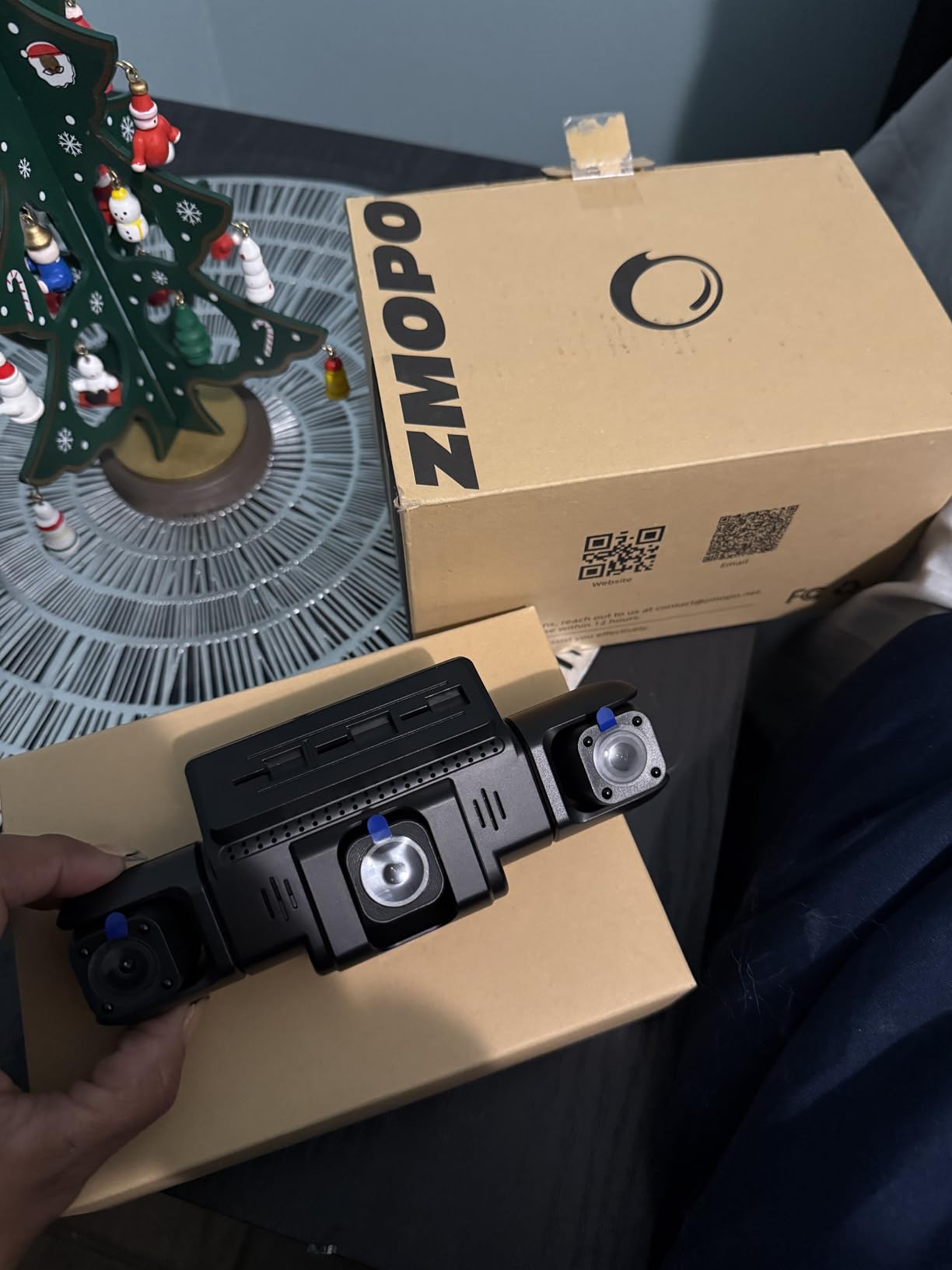
The camera itself is capable. Four 1080p channels with adjustable front angles, eight infrared lights for the cabin, WDR, 5GHz WiFi and a supercapacitor for heat-tolerant parking operation. A 128GB card is in the box and the unit accepts cards up to 256GB.
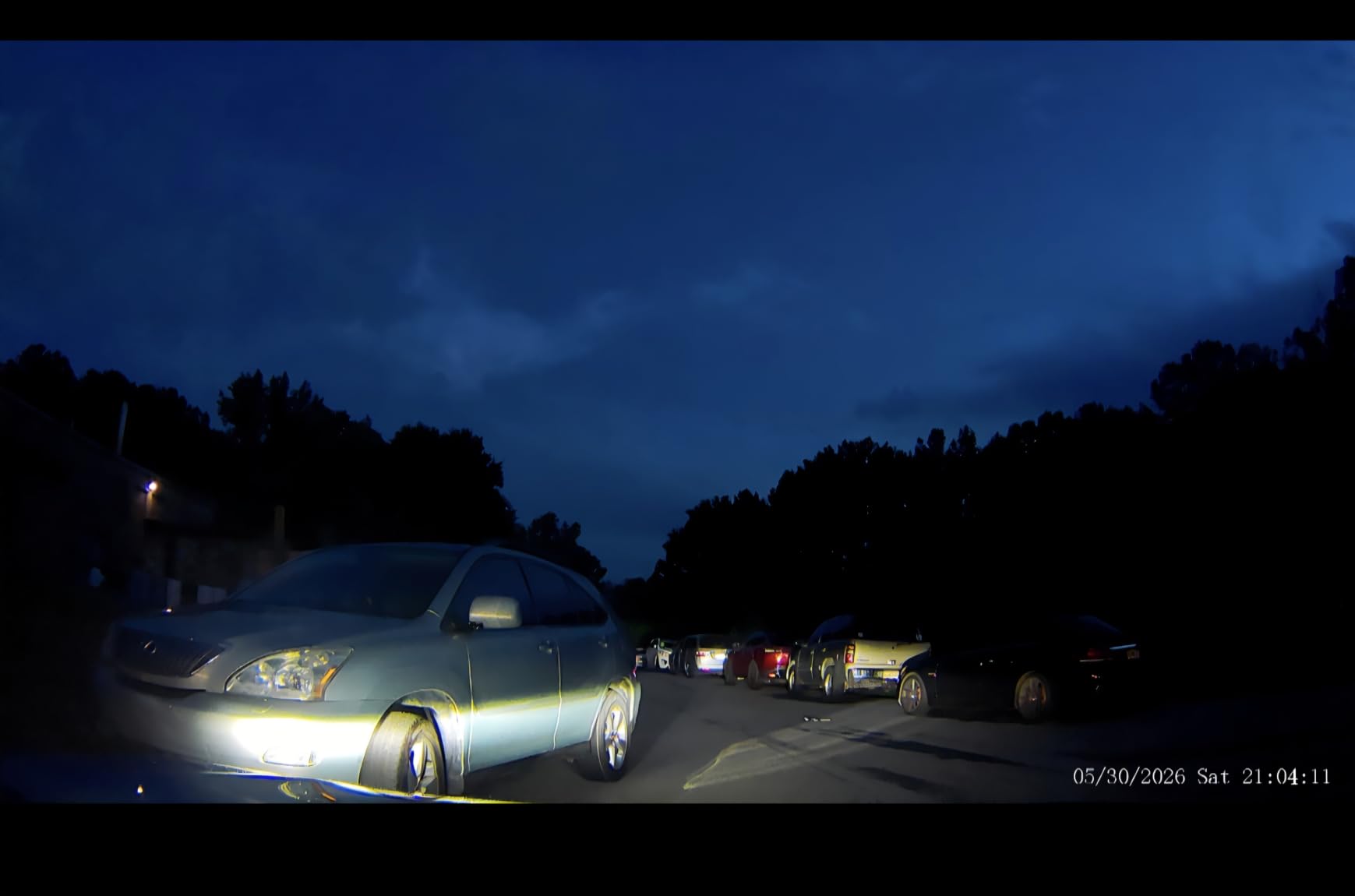
Daylight picture quality is bright and clear, with app download and sharing that reviewers call straightforward. The on-screen menu needs very little setup, which is a genuine advantage if you are installing in a vehicle rather than a car.
Compatibility is broad. The listing names ATVs, buses, cars, minivans, RVs and trucks, and the small footprint suits a truck or RV windshield where a bulky mirror-mounted body would obstruct the view.
When buying the camera first and the GPS later works
It works if you already have a solution for position data. If you pair this with a phone app that logs your route, or with a standalone tracker mounted in the OBD port, you can reconstruct a trip from two sources rather than one. Redundancy is not a bad thing in evidence.
It also works if you fit the module yourself and are comfortable routing one extra cable to the front camera. Check that the module you order matches this listing rather than a similar four-channel model.
Why we would not start here
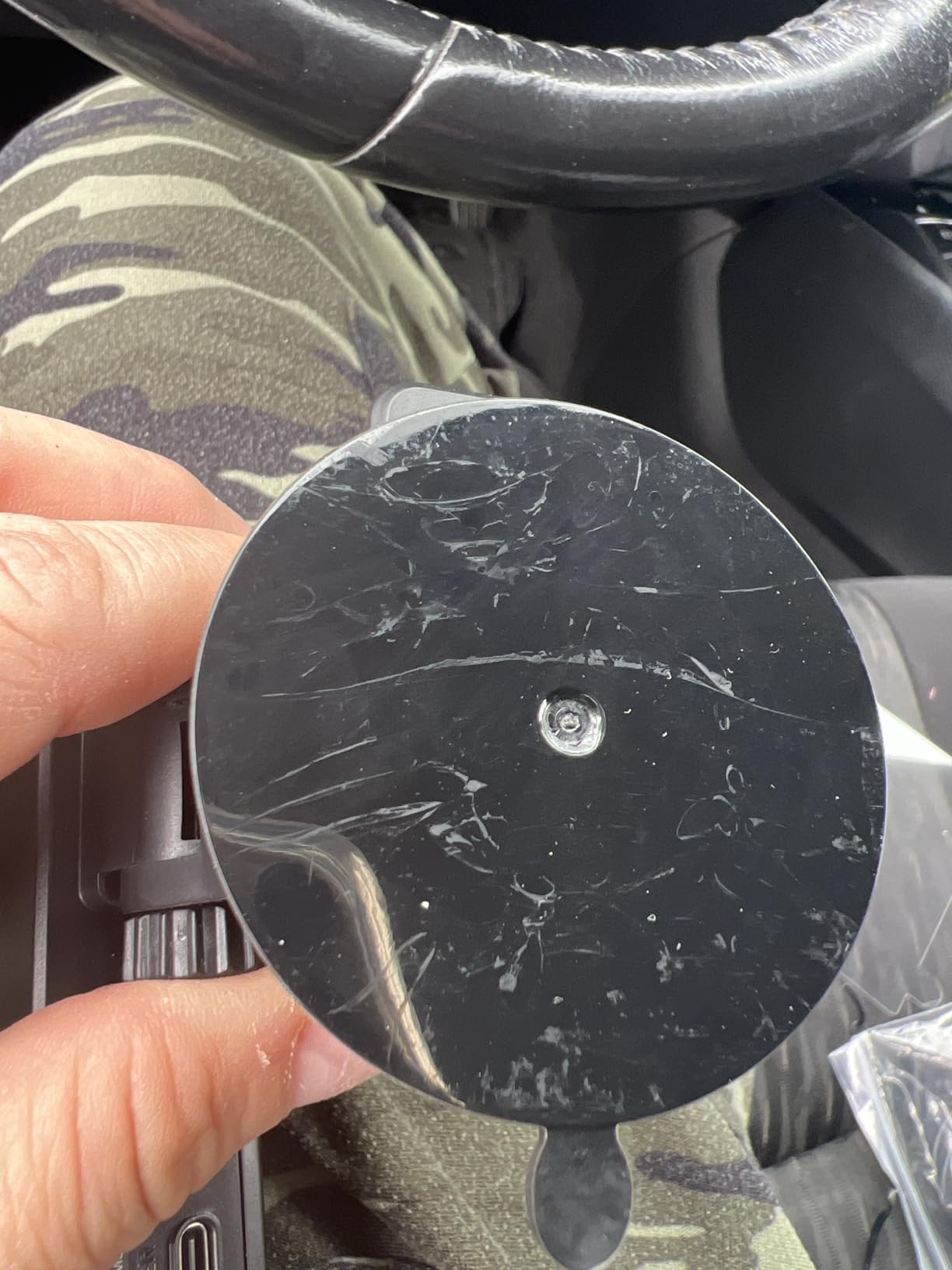
Mounting durability is the concern. Owners report the adhesive pad failing to hold the body up in very hot climates, which matters more for a four-camera setup than a small wedge camera because there is more mass on the glass.
WiFi also drops repeatedly for some users, and the error message offers no support number, which leaves the GPS playback route inaccessible when it fails. Night footage can be confused by oncoming lights and passing streetlights, so treat the 1080p channels as supplementary rather than primary evidence.
8. COOLCRAZY N8 4K 60fps Dash Cam – Smoothest Plate Capture
Coolcrazy 4K Dash Cam Front and Rear, STARVIS Sensor, Free 128GB Card Included, 5GHz WiFi-up to 20MB/s, Dual Dash Camera for Cars, Built-in GPS, G-Sensor, WDR/HDR Super Night Vision, 24H Parking Mode
4K front at 60fps
Built-in GPS
STARVIS F1.5
256GB maximum
Pros
- 4K at 60fps gives smoother motion and better plate capture
- STARVIS sensor with F1.5 aperture and WDR/HDR
- Built-in GPS syncs location speed and route
- 5GHz WiFi up to 20MB/s is the fastest here
- 128GB card included and ready to record
Cons
- Rear camera is 1080P
- Listed 1.5 inch dimensions are inaccurate
- Far fewer reviews than established brands
- App and accessories carry a lesser-known brand name
The N8 is the only model here recording 4K at 60fps, and that single spec changes how readable fast-moving detail is. A plate crossing your path at 40mph is far easier to read in a 60fps frame than in a 30fps one, because each frame has half the motion blur.
The Sony STARVIS sensor behind an F1.5 aperture handles the other half of the problem, which is light. WDR and HDR processing reduce the blowout from oncoming headlights and lift detail in unlit stretches, and GPS syncs each clip with location, speed and route for accident trajectory tracing.
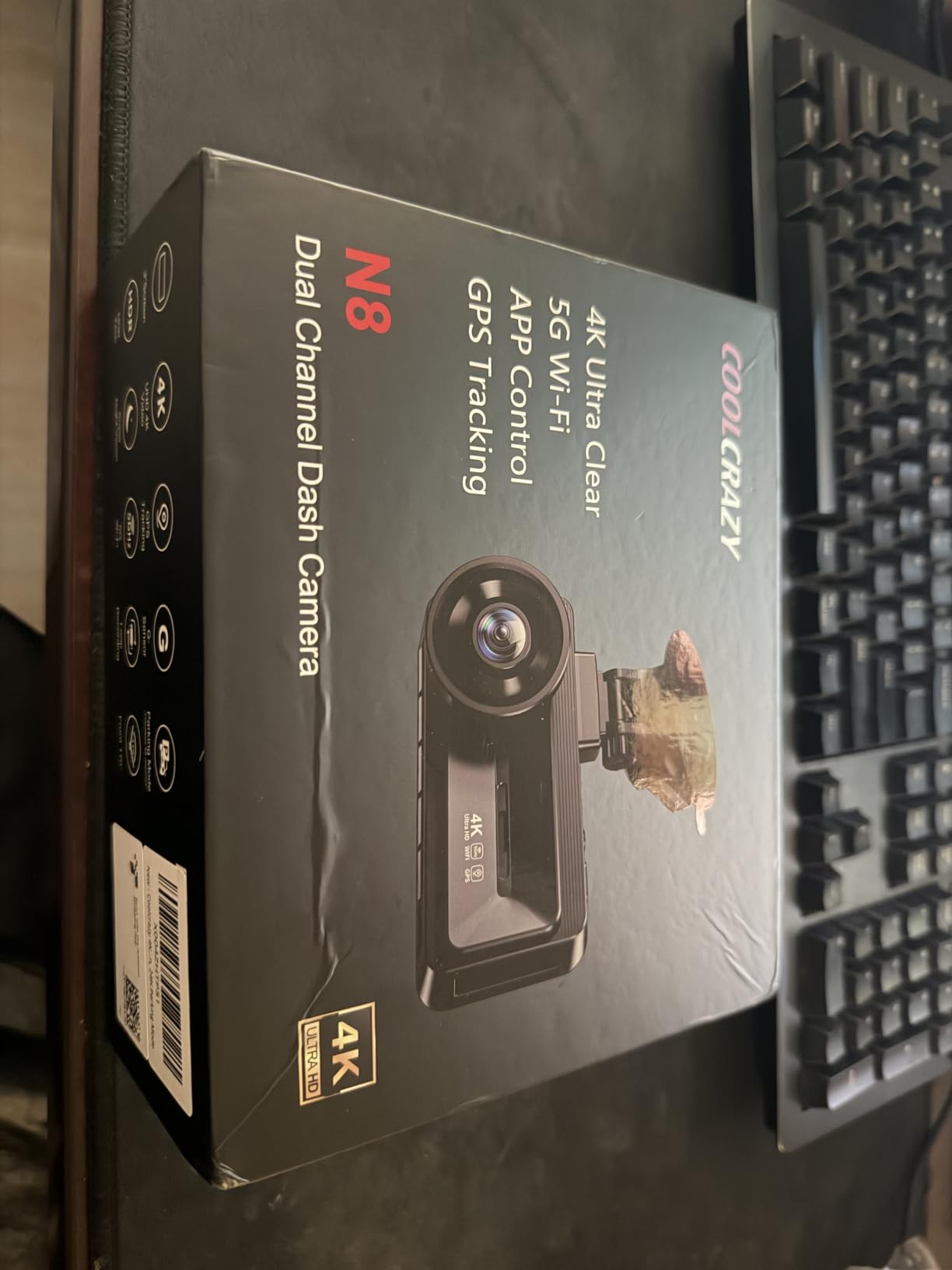
Transfer speed is the quiet standout. 5GHz WiFi at up to 20MB/s is the highest in this group, roughly double what most rivals manage, so a full day of 4K footage moves to a phone in a fraction of the time.
A 128GB card is included and the unit accepts cards up to 256GB. The three-inch IPS display is on the larger side, and one-click automatic recording means it starts without menu diving.
Where 60fps earns its storage cost
High frame rates produce more data per minute, so a 128GB card fills faster than on a 30fps model at the same resolution. If you plan to run parking surveillance as well, size the card up or accept a shorter recording window.
The benefit concentrates in exactly the scenarios that produce claims: a vehicle crossing your path, a pedestrian stepping out, a junction where relative speed decides fault. Static detail is already sharp at 30fps.
The trade-offs you accept
The rear channel is 1080p with a 150-degree lens, which is fine for situational awareness and weak for identifying a following vehicle. Front and rear mismatch is common at this level and rarely matters.
The smaller evidence base is worth weighing. At 363 reviews there is less long-term field data than the 70mai and PRUVEEO models carry, and the app and accessories are branded under a lesser-known name with limited third-party support. For a camera you are relying on as evidence, that is a fair concern rather than a disqualifier.
9. WANLIPO A13 4K + 2.5K Dash Cam – No App Membership Needed
Dash Cam Front and Rear: 4K+2.5K Dual Channel Dash Cam-5GHz WiFi, GPS Dash Camera for Cars with 64GB Card, 2.0″ IPS Screen, App Control,G-Sensor,Loop Recording,170°Wide Angle,Night Vision,Parking Mode
4K front + 2.5K rear
Built-in GPS
5GHz WiFi
256GB maximum
Pros
- Integrated GPS logs speed route latitude and longitude
- View playback and sharing need no membership payment
- 4K front plus 2.5K rear reads signs and plates
- 5GHz WiFi up to 8MB/s beats the 2.4GHz option
- Compact body tucks behind the mirror
Cons
- Lowest average rating here at 4.0 with a 13 percent one-star share
- Some Viidure features are gated behind a membership
- Rear lens is 120 degrees
- Parking monitoring needs a separately sold hardwire kit
The A13’s distinguishing feature is not the hardware, it is the app terms. Viewing, switching channels, playback, downloading and sharing all work without a membership payment. Several competing models in this roundup gate playback or timeline features behind a subscription, and that cost recurs every year for as long as you own the camera.
GPS is integrated and logs speed, route, latitude and longitude, viewable on a map through the app or in a GPS player on your computer. That separate track file matters: it means the position data is not locked inside the app.
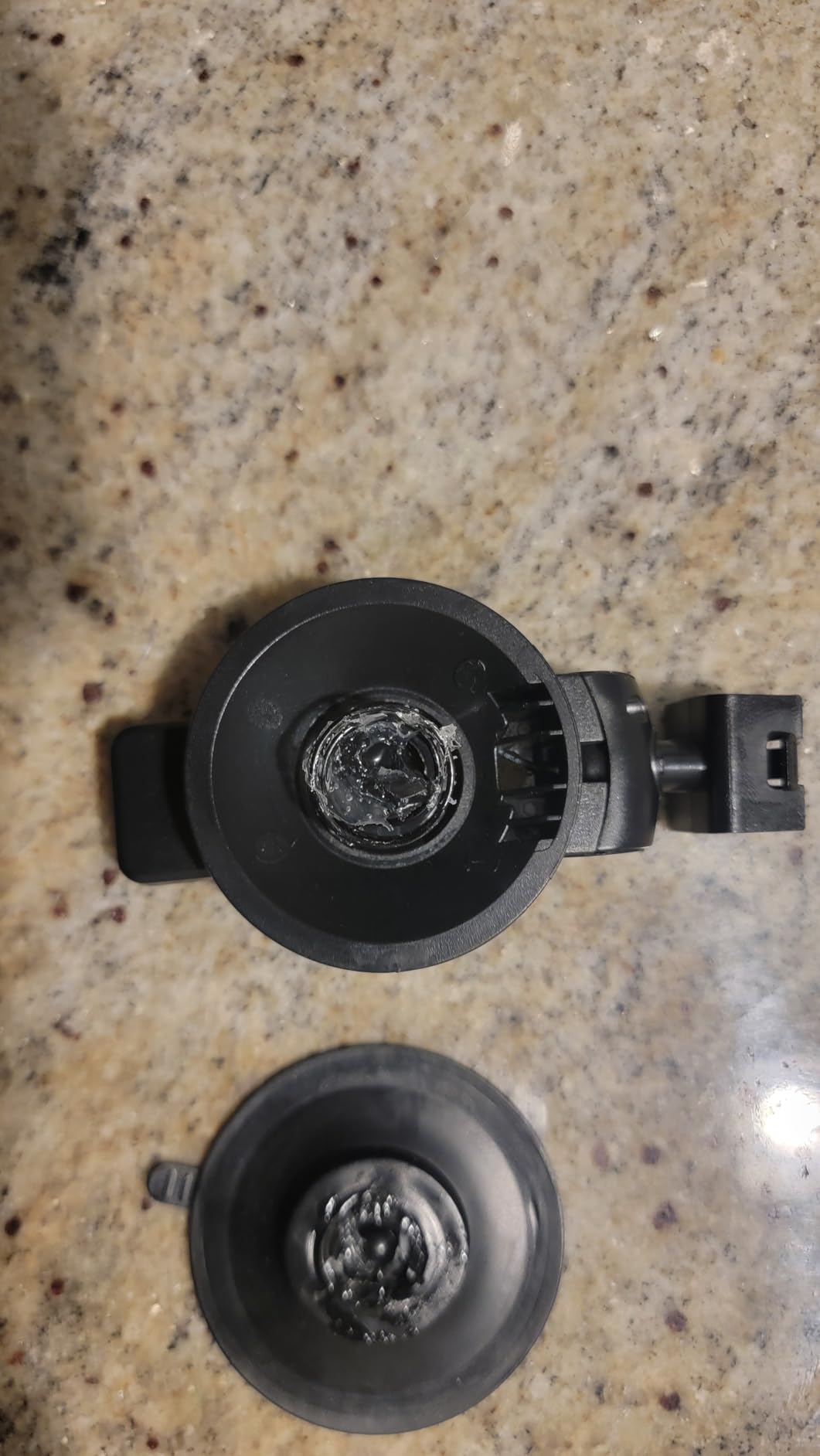
Recording quality is 4K through a 170-degree front lens with a 2.5K rear, an F1.8 aperture, a six-layer lens and WDR. A 64GB card is included and the unit accepts cards up to 256GB. The G-sensor is tuned to lock footage on lighter impacts than most, which suits car parks and low-speed contact.
Parking monitoring records a locked 15-second clip when strong vibration is detected. That needs a hardwire kit sold separately, and it is a shorter clip than the 20 to 30 seconds many rivals record, so an incident at the edge of the detection window may be half-recorded.
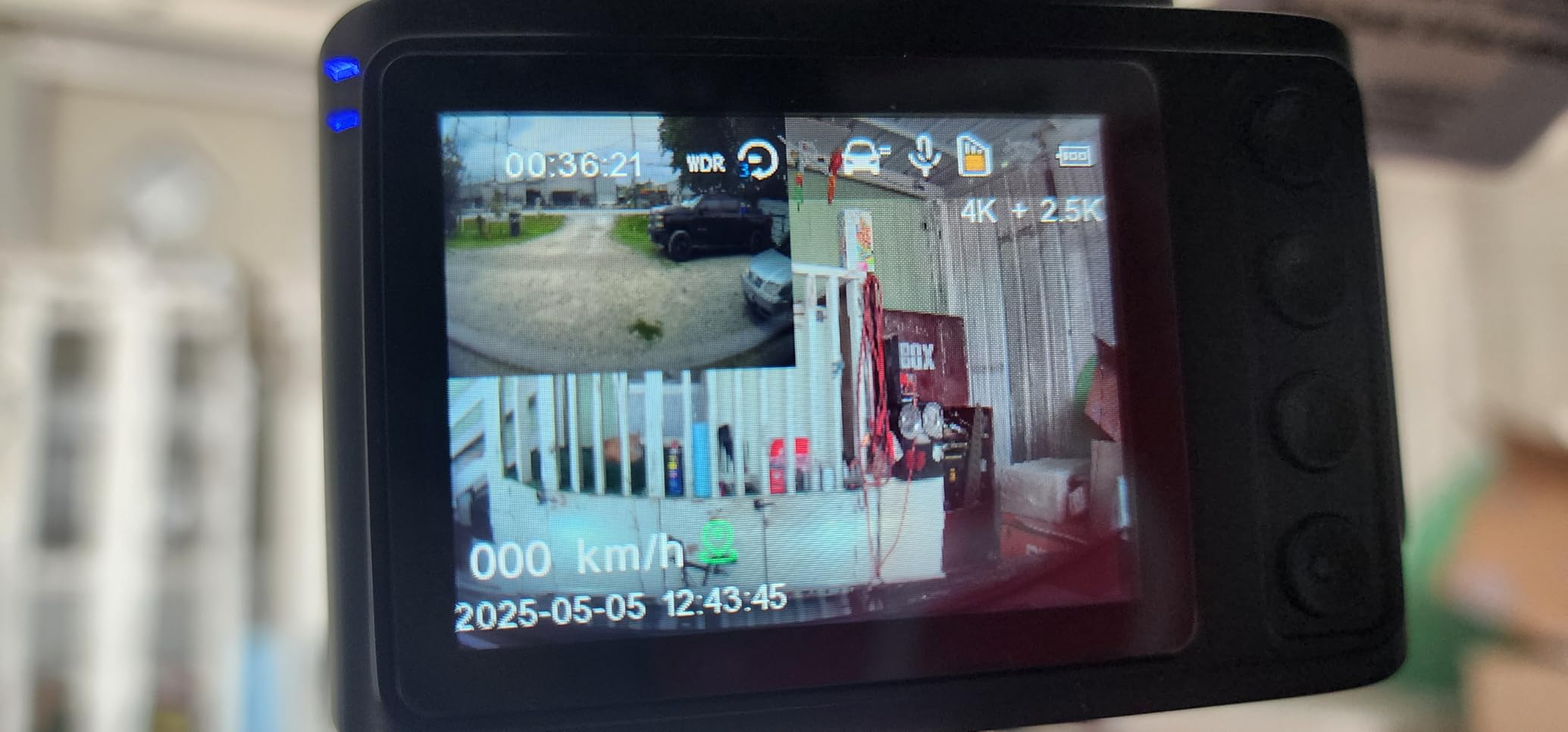
Why the free app matters for GPS work
Every step of viewing a GPS track involves the app: opening the file, reading the overlay, drawing the route. When those steps are behind a paywall, the data is technically present and practically unavailable. Getting it out without paying removes a recurring cost and one more reason to abandon the camera later.
The coordinate-level logging here goes further than a simple speed stamp. Latitude and longitude can be matched against satellite or cellular records in a serious dispute, which is the strongest form the metadata takes.
Where it comes up short
The 4.0 average is the lowest in this roundup, with a 13 percent one-star share. That is a signal worth taking seriously rather than a rounding error, particularly from a brand with a small base of owner reports.
The 120-degree rear lens is the narrowest here, and the rear camera is described as optional in the box contents rather than a guaranteed channel. Check what actually ships before you plan a three-point installation.
10. Beferich J18 4K + 2.5K Dash Cam – Big Screen, Mapped GPS
Beferich 4K+2.5K Dash Cam Front and Rear, Built-in GPS, 5.8G WiFi, Free 64GB Card Included, Dash Camera for Cars, 2-Channel Car Camera,3.16” IPS Screen,G-Sensor,WDR&HDR,24H Parking Monitor,Max 256GB
4K front + 2.5K rear
Built-in GPS
3.16 inch IPS screen
256GB maximum
Pros
- 4K plus 2.5K at 170 and 150 degrees cuts blind spots
- Built-in high-precision GPS logs speed and coordinates
- 5GHz WiFi at 8MB/s through the app
- 64GB card and card reader in the box
- Parking monitor plus 12 24 or 48-hour time-lapse
Cons
- Weakest rating distribution here with only 52 percent five-star
- Uses the shared Viidure app and some features need a membership
- Lithium polymer cell listed rather than a supercapacitor
- Time-lapse parking needs the separately sold hardwire kit
The J18 pairs 4K front and 2.5K rear coverage at 170 and 150 degrees with a built-in high-precision GPS that logs speed, route and live latitude and longitude. The 3.16-inch IPS screen is the joint-largest here, which makes it the easiest of the ten to configure and the easiest to confirm a GPS lock on before driving away.
Storage is handled well for a starter camera. A 64GB card and a card reader are included, the unit accepts cards up to 256GB, and WiFi runs at 5GHz for transfers up to 8MB/s through the Viidure app on both iOS and Android.
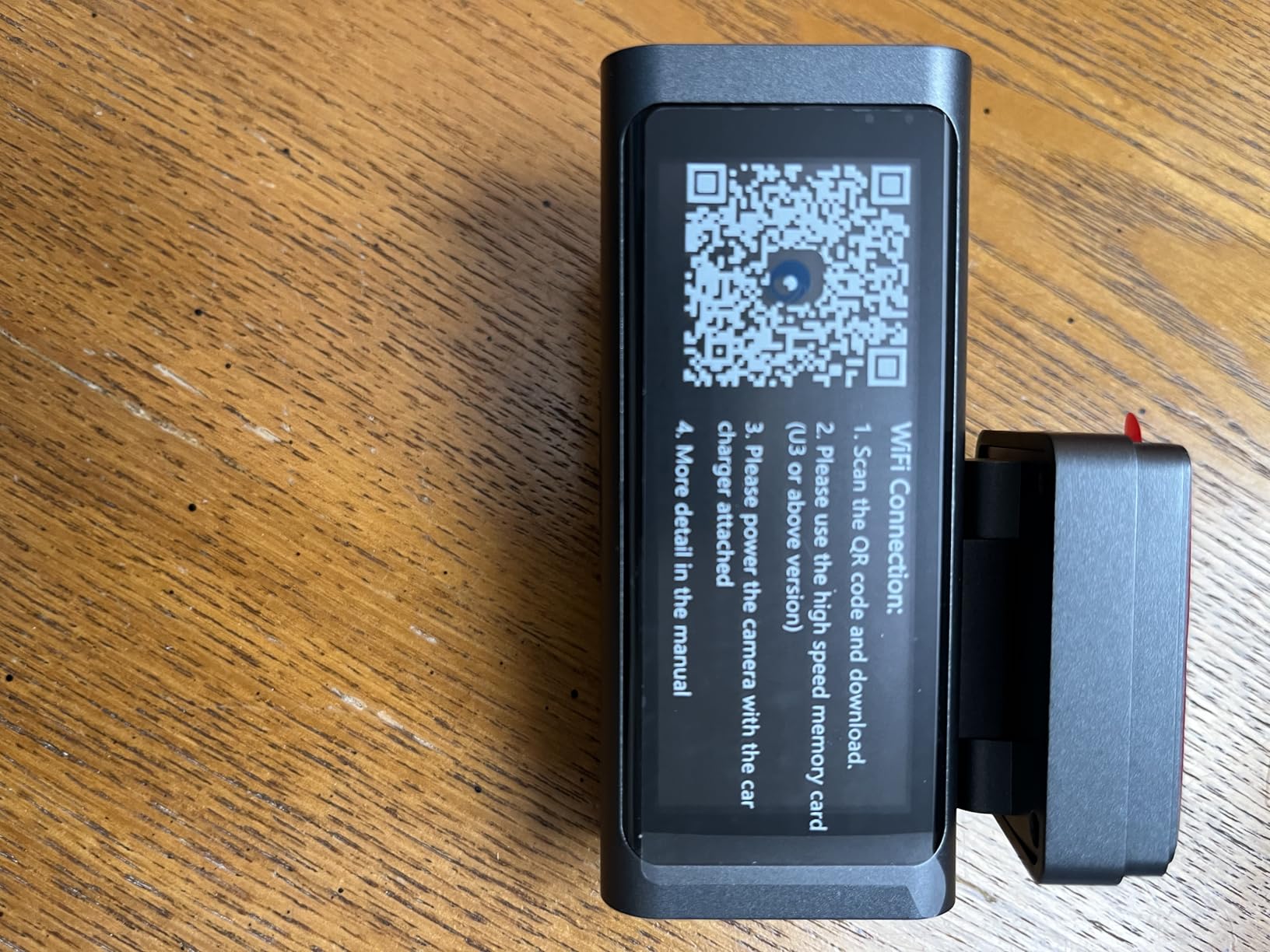
Parking features are broad on paper. The parking monitor locks a 15-second clip on vibration, and time-lapse monitoring can be set to 12, 24 or 48 hours with the hardwire kit. That long time-lapse window is a reasonable way to cover a full parked weekend.
A 12-month guarantee and 24/7 customer support back it, and the six-layer F1.8 lens with HDR and WDR handles the usual low-light compromises at this resolution.
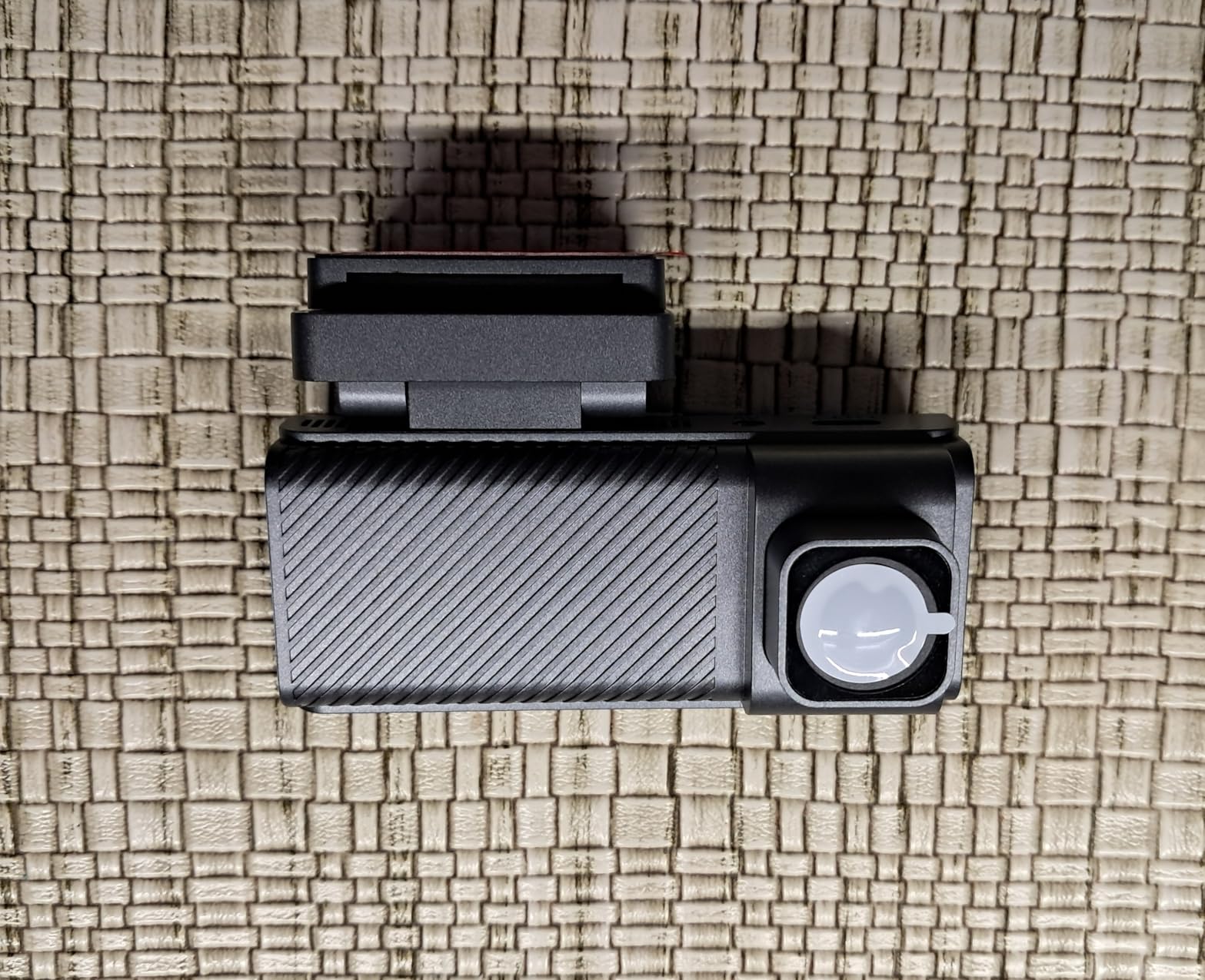
The lithium polymer question
The battery cell type is listed as lithium polymer rather than a supercapacitor. That is the specification to think about if the car sits parked in summer sun: a lithium cell degrades faster under sustained heat than a capacitor, and a failing cell eventually means a camera that will not switch on at the worst moment.
If you park outdoors or live in a hot climate, treat this as a reason to move up to one of the supercapacitor models rather than a reason to reject an otherwise good camera.
Reading the rating honestly
A 4.0 average with 29 percent of buyers settling on four stars and 9 percent on one star is a mixed response, and this is the weakest distribution of the ten. It is not a broken product, but it is the model to buy when you want the feature set over the refinement.
The shared Viidure app is also worth checking against your priorities. Some features require a membership, and a third-party app means your camera’s behaviour can change when someone else’s app updates.
What Is GPS Logging in a Dash Cam?
GPS logging means the camera has a satellite receiver that stamps each recording with date, time, speed and coordinates, and usually writes a matching GPS track file you can overlay on a map later. The receiver locks onto satellites, works out its position and ground speed, then either burns that data into the video as an on-screen overlay or saves it as a separate track file beside the footage. It records your route; it does not navigate you.
Built-in GPS vs an Add-on GPS Module vs Your Phone
This is the question that decides the purchase more often than resolution does, and almost no competitor page answers it directly. Buyers searching for the best dash cams with GPS logging are really asking one thing: will I have to buy anything else?
Built-in GPS. The receiver is in the front camera, the cable run is the one you already have for power and video, and the speed and coordinates appear on the clip from the first drive. Nine of the ten models here work this way. The cost is that the GPS is fixed to the front channel, so rear and interior footage usually inherit the timestamp but not always the full coordinate stamp.
Add-on GPS module. A small puck with its own antenna plugs into the camera and adds position data. It is cheaper than replacing a whole camera and it is a legitimate route if you already own a good unit without GPS. The drawbacks are one more cable, one more thing to mount correctly, and the antenna sitting in the wrong place in a screened or metallic vehicle, which degrades the fix.
Your phone. The phone knows where you are and records the route, but it is a second device on a second timeline. Synchronising it with dash cam footage after an incident is manual, the phone may drop out in a pocket or a bag, and a court or insurer will ask how the two clocks were aligned. Phone GPS is excellent at navigation and weak as evidence.
One forum answer worth carrying with you, from an Ars Technica civics discussion: when people ask how to see the GPS data embedded in video, the reply explains the two mechanisms we cover next. Coordinate stamp in the corner, or a separate track file opened in PC and Mac software. Both are legitimate, and the difference matters for what you can do with the file.
If you are still weighing formats, our guide to the best dash cams overall covers the sensor and resolution questions that GPS does not settle.
How to View and Export Your Dash Cam GPS Track Data
Do this once, calmly, before you need it in a hurry. Almost everyone discovers the process after an incident.
1. Find out where the data lives. Most models burn the speed, date and coordinates into the video frame itself. If the numbers are visible when you play the file in any ordinary video player, the data travels with the file and you are done. The 70mai, Affver and WANLIPO models all produce this kind of overlay.
2. Check for a second file. Several models also write a separate track file beside the video, holding a timestamped list of coordinates. The WANLIPO A13 and Beferich J18 point you to a GPS player for this. If a track file exists, keep it; it is the version that can be plotted on a full map.
3. Use the manufacturer’s app first. Open the clip in the brand app and look for a map or playback button. Route lines, speed graphs and per-clip location all appear here without any extra software.
4. Open the track file on a computer. Desktop GPS players read the track file and pair each point with the nearest video segment. This is the route that gives you a full journey map rather than a single clip’s coordinates.
5. Export before the card overwrites. Loop recording starts deleting the oldest segments once the card fills. Copy anything you might need to a laptop or a cloud folder the same day, and keep the original file rather than a re-encoded copy.
6. Note which channel carries the stamp. On most models only the front channel carries the full coordinate overlay. Rear and interior cameras inherit the timestamp, not the position. If an incident happened behind you, the front clip is your evidence.
7. Check the speed against your own record. The module derives speed from satellite positions, so expect a reading 1 to 2 mph below the dashboard. Document that limitation if the footage is ever contested rather than treating it as an error.
Dash Cam GPS vs a Standalone GPS Tracker
If your question is specifically the best GPS and dash cam combo, the honest answer is that they are not substitutes. A dash cam’s GPS exists to annotate video. A standalone tracker, whether a magnetic puck or an OBD-II device, exists to report position to an app over weeks or months, and many of them also log harsh acceleration and braking events.
A dash cam wins on evidence, because the position data is fused with the image and the moment it describes. A tracker wins on history, because a month of continuous tracking gives you a pattern of routes and driving behaviour that a dash cam which overwrites every few hours never will.
For most drivers, the dash cam GPS is the one that matters. For a fleet operator or a parent tracking a new driver, a tracker answers questions the camera cannot.
What GPS-Stamped Footage Does for an Insurance Claim
When fault is disputed, the argument is usually about a junction, a right of way or a speed. Footage without position data settles what the camera saw. Footage with position data settles where the camera was, and that single addition changes how an adjuster reads the clip.
Owners on r/KiaEV6 put it plainly when they describe installing a dash cam with GPS: they want speed and location data to corroborate their own recollection of an incident. That instinct is correct. Memory under stress is unreliable in a way that a satellite fix is not.
Several threads also describe footage proving official misconduct, in one widely repeated account a recording leading to an officer’s resignation. Whatever the truth of any single anecdote, the pattern is consistent: footage that cannot be dismissed on the grounds that the driver staged it carries far more weight.
Does a dash cam lower your premium? Some insurers offer a reduction, many do not, and terms change. Ask your provider directly rather than assuming, and treat the claim-handling benefit as the reliable reason to buy one.
Our picks for dash cams for rideshare drivers go deeper on the cabin-side details that matter for passenger disputes.
Dash Cam Buying Guide for GPS Logging
Confirm the module is in the box. This is the single most useful line on a listing. Nine models here log GPS from hardware fitted at the factory. The ZMOPO D435 lists its logger as a separately purchased module, and no competitor page we found flags that distinction clearly.
Check which channels get the stamp. On most units the front camera carries the full coordinate overlay while rear and interior channels inherit only the timestamp. If your risk is a rear impact, verify this before you rely on the rear file.
Decide between a capacitor and a lithium cell. A car interior reaches temperatures that degrade lithium cells. Most of the models here name a supercapacitor, with the Beferich J18 listing a lithium polymer cell instead. In a hot climate the capacitor is the safer long-term choice, and community advice on Ars Technica civics converges on the same conclusion after heat killed one owner’s battery.
Size the card for three channels. A 4K front plus two 1080p channels consumes storage far faster than a single camera. The two 70mai models accept cards up to 512GB, which is the sensible ceiling if you plan to run parking mode, while most rivals stop at 256GB.
Expect the speed to read low. GPS-derived speed typically sits 1 to 2 mph under the dashboard. Know this before a clip appears to contradict your own account of how fast you were going.
Test the app before the incident. Glitchy or unreliable phone apps are the most common complaint across these reviews, and they lock you out of GPS playback exactly when you want it. Download the app, pair the camera and confirm a track appears before you leave the driveway.
Treat parking mode as a separate install. Continuous parking surveillance on almost every camera here requires a hardwire kit that is not included. See the next section.
If you are still working out the sensor side, our breakdown of 4K dash cams covers what resolution actually buys you at licence-plate range.
How to Hardwire a Dash Cam for Parking Mode
Most of the cameras here need a hardwire kit for continuous parking surveillance, and none of the ten include one. Dash cam enthusiasts on DashCamTalk consistently treat hardwiring as the step that separates a camera that records events from one that merely claims to.
1. Choose the fuse. Use an accessory circuit that switches off with the ignition, never a safety-critical feed. Dash cam forums recommend an ACC fuse and steering-wheel controls where available, because they switch the camera with the car.
2. Set the low-voltage cutoff. This is the single most important setting on the install. Without a cutoff the camera will drain your battery to the point where the car will not start, which is precisely when your footage matters least.
3. Route the cable along the headliner. Nearly every camera here includes cable-hiding clips or a trim tool. Tuck the cable into the pillar and across the headliner rather than across the A-pillar, where it obstructs an airbag deployment.
4. Connect the radar or ACC lead if you have one. Optional parking-mode accessories tap the reverse-light circuit to trigger recording when you shift into reverse. Do that with an add-a-fuse and a multimeter rather than by piercing the wire.
5. Format the card in the camera. Before the first hardwired drive, format the microSD in the camera’s own menu. A card that works in a phone can still fail silently in a dash cam.
6. Test with the ignition off. Confirm the camera wakes into parking mode, saves a clip and shuts down cleanly. Repeat the test the following morning before you rely on it.
If you want parking coverage without any wiring at all, our guide to dash cams with parking mode covers which models manage the best on socket power alone.
Legal and Privacy Notes on Dash Cam GPS Data
Two questions come up repeatedly on forums and neither has a simple answer. The first is admissibility. Dash cam footage is regularly admitted, and footage with embedded speed and location data is treated as no different from any other video, with the metadata serving as corroboration rather than as proof on its own. Authentication is the part that matters: an untouched original file, with the card and device retained, is far stronger than a clip that has been re-encoded or copied between phones.
The second is privacy. A camera that logs your route is accumulating a record of where you have been, and users on Ars Technica civics raise subpoena and deletion as real concerns.
Two practical points follow. Files stored only on a card in the car remain under your control, while anything uploaded to a manufacturer’s cloud servers sits on infrastructure you do not control. There is also no quick-erase on most models beyond deleting the files yourself.
This is general information, not legal advice. If you are dealing with an active dispute, a subpoena or a question about your own data, talk to a lawyer in your jurisdiction.
Frequently Asked Questions
What is the best dash cam with GPS tracking?
The Affver A4 is our top pick because its GPS module is fitted in the box rather than sold separately, and it pairs 4K front video with a 2.5K rear channel. For the highest-rated three-channel option with detailed five-mode GPS, the 70mai T800E is the alternative. Nine of the ten models we tested log speed, route and coordinates from built-in hardware.
Do you really need GPS on a dash cam?
You need it if you plan to use the footage as evidence. Video alone shows what the camera saw, while a speed stamp, timestamp and coordinates let a third party verify where the car was and what it was doing. If you only want peace of mind or a theft deterrent, GPS adds little.
Is GPS logging the same as GPS navigation?
No. GPS logging records where you went, how fast and when. It produces a route map and a speed stamp after the drive, not turn-by-turn directions. A dash cam with GPS logging will not guide you through a junction, and that is why people searching for navigation with a dash cam keep ending up with a separate GPS unit.
How do I see the GPS data on my dash cam footage?
Most models burn speed, date and coordinates into the corner of the video, so they appear in any video player. Some also write a separate GPS track file that you open in the manufacturer’s app or in a desktop GPS player to plot the route on a map. Check which channels carry the full stamp, because rear and interior cameras often inherit only the timestamp.
Can police or a court use dash cam GPS data against you?
Yes. A speed stamp burned into the footage can be used to support a speeding allegation, and it can equally help you contest a ticket you believe was issued unfairly. Expect the recorded speed to sit 1 to 2 mph below your dashboard, since the module derives it from satellite positions rather than the vehicle. For anything involving court, keep the untouched original file and consult a lawyer.
Conclusion: The Best Dash Cams With GPS Logging for 2026
The Affver A4 takes the top spot in 2026 because it removes the question that trips up most GPS-focused buyers: the receiver is in the box, the front channel records 4K, and the route data comes out in the app or a desktop player. If you need three channels with the most detailed GPS output available, step up to the 70mai T800E. If you need four angles in a rideshare or delivery vehicle, the PRUVEEO D90 covers more of the car than anything else here.
Before you buy any of them, confirm the GPS module is included, set the low-voltage cutoff on your hardwire install, and open the app once to make sure a track actually appears. Those three steps take ten minutes and save you from a camera that cannot do the one thing you bought it for.