
Short answer: for a property with 10 or more irrigation zones, the Rachio 3 16-Zone is the best smart sprinkler controller for large yards because it pairs 16-zone capacity with the most accurate weather-based scheduling in this group, and the Hunter PRO-HC 24-Zone wins when you need contractor-grade diagnostics. A “large yard” in controller terms means 10+ zones, which usually starts around the half-acre mark.
Every pick below was filtered on one axis first: zone capacity. A controller with six zones cannot run a property with twelve, no matter how good its app is. After that we weighed weather intelligence, what happens when the WiFi drops, and whether you can still water the yard from the panel when you are standing next to it.
We also spent time on the unglamorous parts, because they decide whether a big property actually works. Two controllers on one WiFi network, 2.4GHz-only radios in a detached garage, pump-start relays for well-fed systems, and flow meters that can tell you a buried lateral is leaking while you are in another state. None of that appears on the box, and all of it matters at acreage scale.
While you are planning the irrigation side of a big property, you may also be replacing equipment elsewhere on it, like a lawn mower for smaller yard work. Last updated for 2026.
Table of Contents
Top 3 Picks for Large Yards in 2026
Best Smart Sprinkler Controllers for Large Yards in 2026: Full Comparison
| Product | Specifications | Action |
|---|---|---|
 Rachio 3 16-Zone Rachio 3 16-Zone |
|
Check Latest Price |
 Orbit B-hyve 12-Zone 57950 Orbit B-hyve 12-Zone 57950 |
|
Check Latest Price |
 Orbit B-hyve XR 16-Zone 57995 Orbit B-hyve XR 16-Zone 57995 |
|
Check Latest Price |
 Hunter PRO-HC 24-Zone Hunter PRO-HC 24-Zone |
|
Check Latest Price |
 Rain Bird ESP-TM2 8-Zone with LNK2 Rain Bird ESP-TM2 8-Zone with LNK2 |
|
Check Latest Price |
 Netro Sprite 12-Zone Netro Sprite 12-Zone |
|
Check Latest Price |
 Yardian Pro 8-Zone Yardian Pro 8-Zone |
|
Check Latest Price |
 Hunter X2 14-Zone Hunter X2 14-Zone |
|
Check Latest Price |
The table above is the fast read. The shortlist for most large properties: the Rachio 3 for anyone who wants the best app and no recurring fee, the Orbit B-hyve 12-Zone if twelve zones is enough, and the Hunter PRO-HC when the property has slopes, drip zones and a pump that needs wiring. Everything else fills a specific gap.
1. Rachio 3 16-Zone: Best Overall for Large Yards
Rachio 3: Smart Sprinkler Controller, 16-Zone (Simple Auto Scheduling + Local Weather Intelligence. Save Water w/ Rain, Freeze & Wind Skip), Fast & Easy Install
16 zones
9.1 x 1.4 x 5.6 inch
1.1 pounds
2-year limited warranty
Pros
- App control is fast and modern
- Browser access alongside the phone app
- Skips watering for rain wind and freeze
- No subscription fee
Cons
- Auto-calculated run times sometimes overshoot
- Stops at 16 zones
- Weather accuracy varies by region
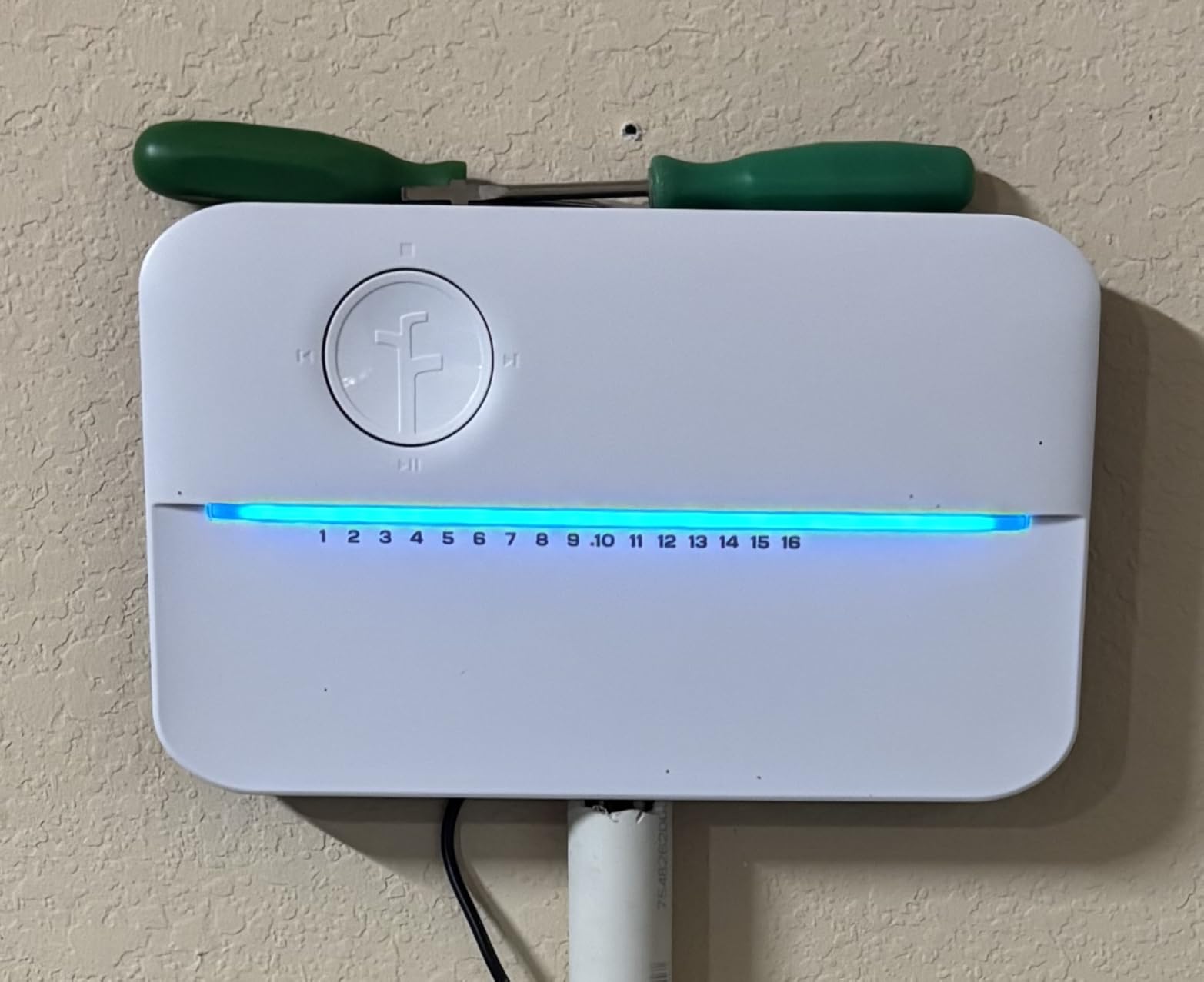
This is the unit we keep coming back to for acreage properties. Sixteen zones covers a half-acre to full-acre lot with turf, beds and drip on the same controller, and the app is the most responsive of the eight we looked at. I set up zones by hand in minutes, and the run-time estimates it produces are a starting point you nudge rather than a black box.
Weather Intelligence is the reason it wins for large yards. It reads local conditions and skips a cycle for rain, wind or freeze, which on a 16-zone property is where most of the waste happens. One zone out of sixteen failing to skip is a bigger deal than the same miss on a four-zone system.
There is no subscription. Everything is paid for at purchase and the app does not hold back features behind a tier, which matters if you plan to keep this controller for a decade. Grow-in schedules for new landscaping are included, and that is exactly the phase most people forget to account for on a big property.
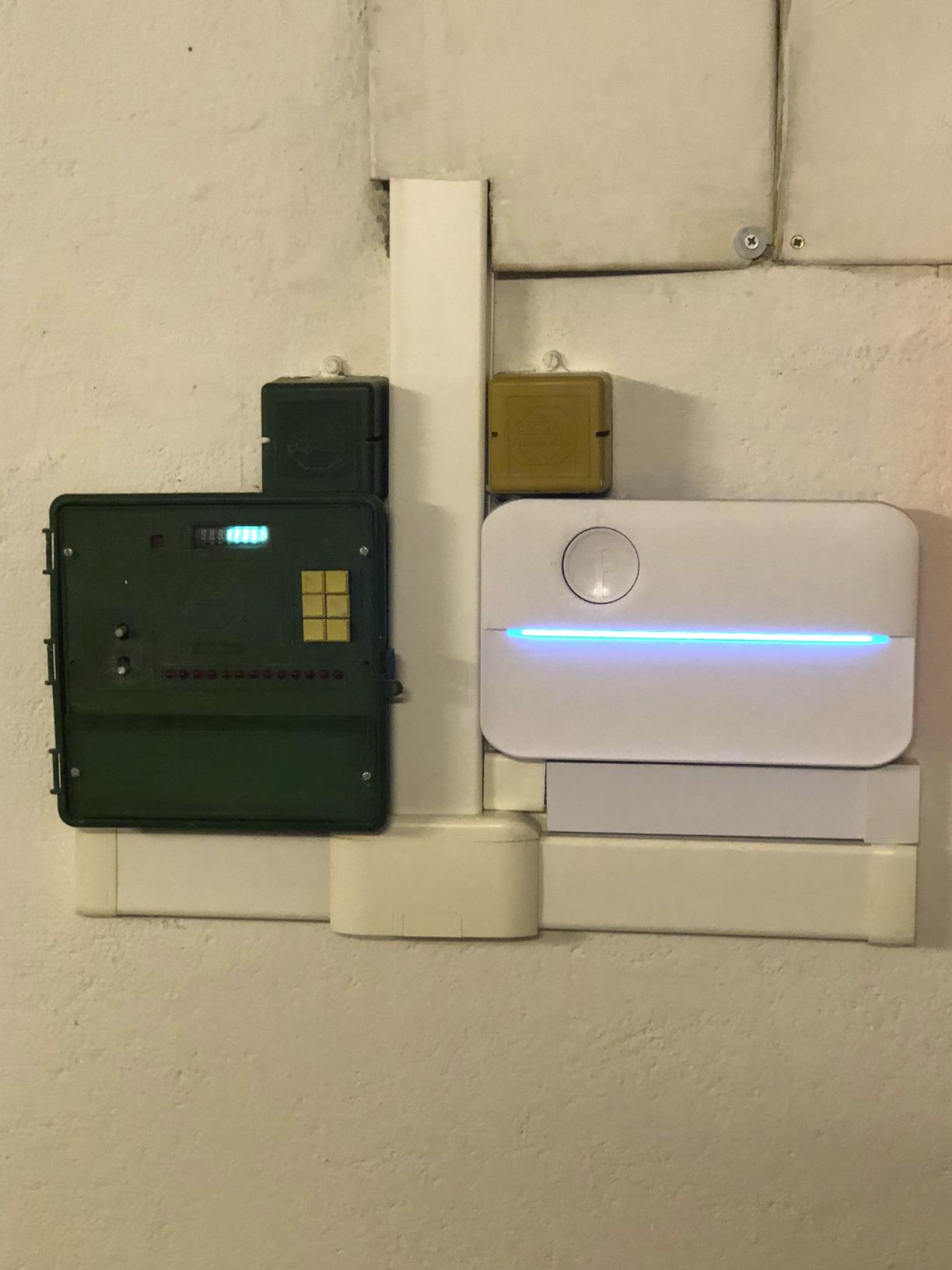
The physical unit is 9.1 by 1.4 by 5.6 inches and weighs 1.1 pounds, so it is a small box in a large job. It runs on 110 volts and is intended for indoor mounting. The wider panel can make reusing an existing narrow wiring run in a cramped garage a little awkward, so measure the cavity before you buy.
What you give up with the Rachio 3
Two things. There is no option above 16 zones, so a property with 18+ valves needs a second controller or a different brand. And owners outside the US and Canada report that regional weather data can read high, which makes the engine skip more often than the season calls for.
The automatic schedule math also over-calculates for some setups, especially on clay soil with poor distribution uniformity. If your heads are not matched to precipitation rate, the algorithm is guessing on bad inputs. Fix the hydraulics first and the software problem mostly disappears.
Who should buy the Rachio 3
Buy it if you have 10 to 16 zones, want to avoid a subscription, and will spend the time naming zones properly in the app. It is also the friendliest option for a contractor who wants to hand a homeowner an app they will actually keep using.
Skip it if the controller lives outdoors in a shed with no real WiFi, or if you plan to add zones every year for the next decade. It has no expansion path beyond 16 and no outdoor-rated housing in the box.
2. Orbit B-hyve 12-Zone (57950): Best Value for Double-Digit Yards
Orbit B-hyve Smart Indoor/Outdoor Sprinkler Controller – 12-Zone – App Controlled Smart Controller with Custom Irrigation Schedules – Weatherproof Multi-Zone Sprinkler System – 57950
12 zones
Indoor or outdoor
3.5 pounds
Two-year limited warranty
Pros
- Most reviewed controller in this group
- Weatherproof case mounts inside or out
- Custom schedules with per-zone photos
- Easy installation
Cons
- Limited program slots
- Occasional WiFi drops or pairing issues
- Weather data uneven by region
With 6887 reviews behind it, the B-hyve 12-Zone has the deepest installed base of anything on this list, and that matters on a large property because spare knowledge is easy to find. When something acts up at 2am, there is a large community that has already seen the same behavior.
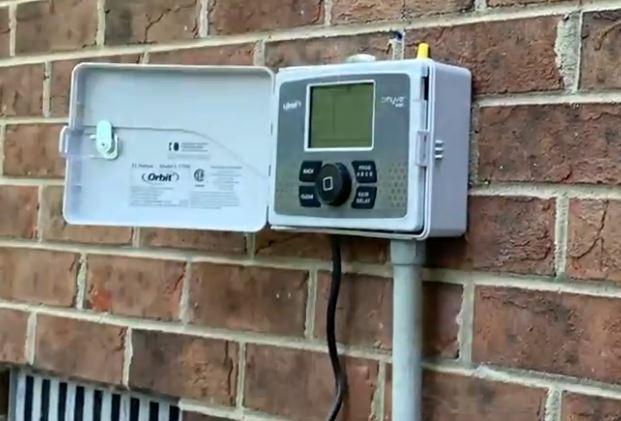
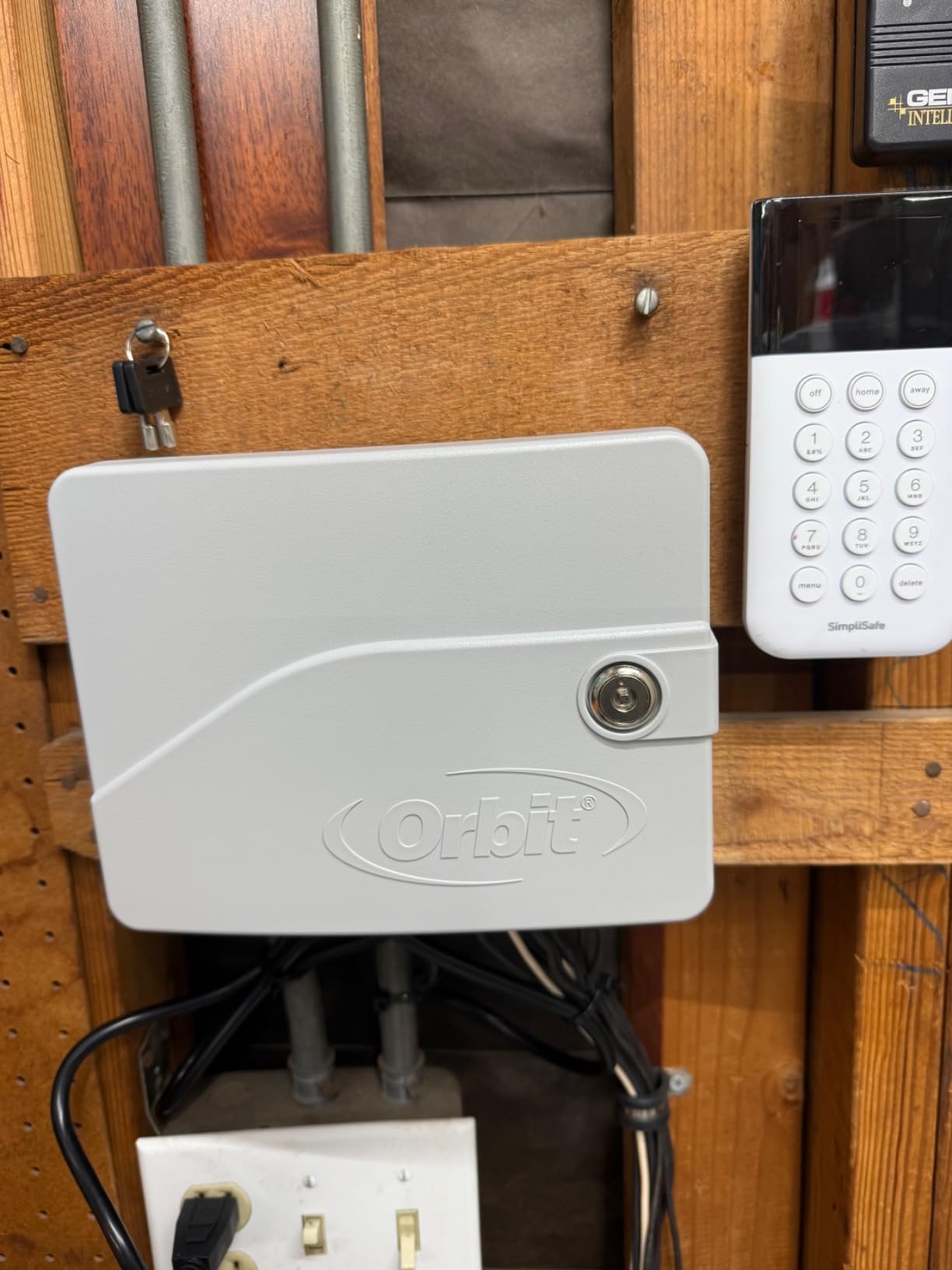
Twelve zones is the practical sweet spot for a half-acre property with separate turf, beds and drip circuits. The weatherproof case is the quiet advantage here: you can mount it in a garage, a shed or on an exterior wall without buying an enclosure, which is a real cost and one more thing to fail.
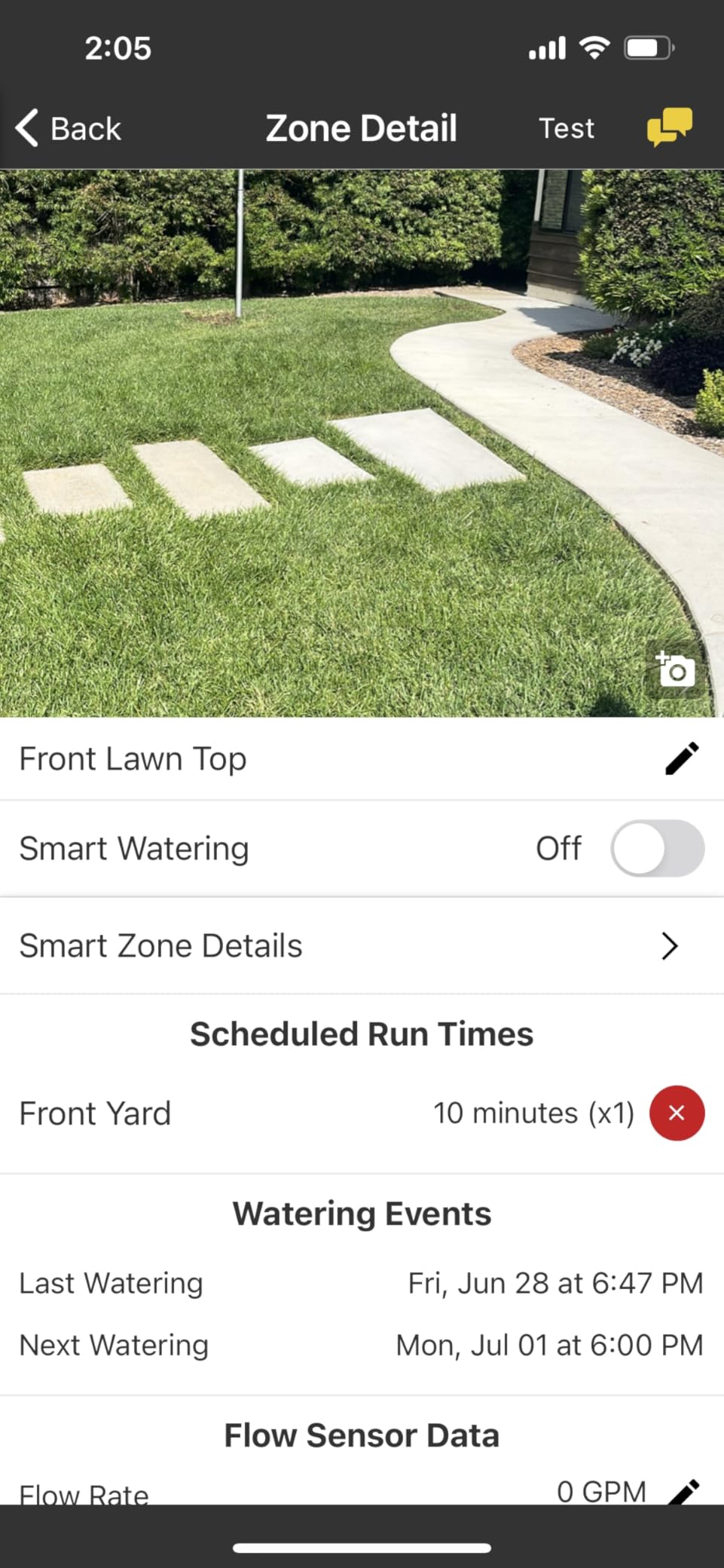
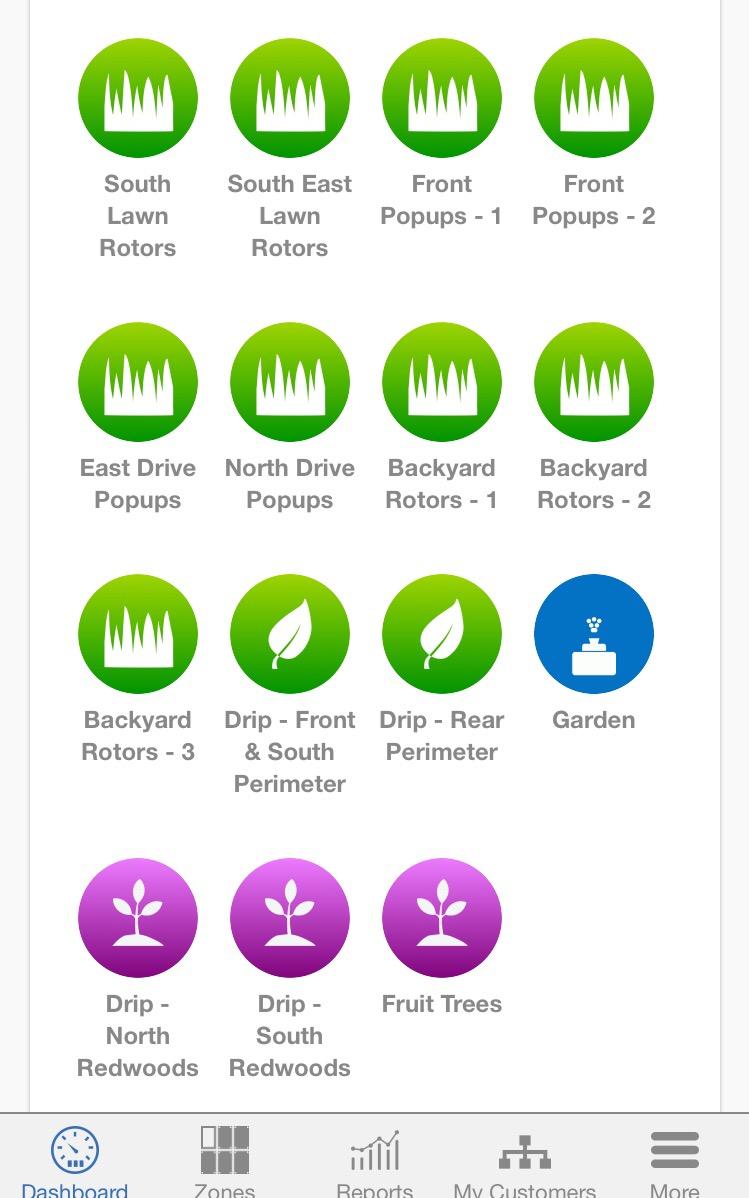
Per-zone photos in the app are more useful than they sound. On a big property with sixteen heads groups and a drip block, seeing a thumbnail of each zone tells you in seconds whether the problem is coverage, a stuck valve or a broken head, and you can do it from a hotel room.
Program slots are where it runs out of room. On a property with turf front and back, a slope that needs cycle and soak, and drip on two different schedules, you will be compressing distinct watering windows into the available programs. Plan the program structure before you wire anything.
How the B-hyve handles a bad connection
Orbit added Bluetooth local control so you can configure and test the controller even when WiFi is down, and owners consistently treat that as the resilience feature that separates it from app-only rivals. For someone who travels, that is not a minor spec.
That said, connectivity complaints still show up: dropped cloud links and pairing friction are the two most repeated issues. Run a quick phone-based signal check at the mounting spot before you commit, and treat a mesh node as part of the install rather than an accessory.
Who should buy the Orbit B-hyve 12-Zone
Buy it when twelve zones covers the whole property, the mounting location is indoors or sheltered, and you want a proven, widely supported unit. It is also the pick for a large yard on a budget where a 16-zone model would be paying for capacity you will never use.
Pass if you already know you will exceed twelve zones within a couple of years, or if your system needs more than a handful of separate watering windows for slopes and drip.
3. Orbit B-hyve XR 16-Zone (57995): More Zones, Same Idea
Orbit B-hyve XR 16-Zone Indoor/Outdoor Smart Sprinkler Timer – 57995
16 zones
WiFi-enabled
Alexa compatible
Two-year limited warranty
Pros
- 16-zone capacity in a weatherproof box
- Quick zone testing from a phone
- Forecast-driven cycle adjustment
- Works with Alexa
Cons
- App stability and firmware issues reported
- WiFi pairing slow in weak-signal garages
- Only four program slots
The XR is the 16-zone version of the same design, and on paper it looks like the natural upgrade path from the 12-Zone. In practice the two behave similarly, so the decision comes down to whether four extra zones are worth the differences in app maturity.
Zone testing from the phone is the part we use most on a large property. Standing at the far end of an acre with a valve box open, being able to fire a single zone remotely and watch the pressure change is worth more than it sounds. The XR does that quickly when the connection is healthy.
The 4.1 average across 689 reviews is lower than its siblings here, and the pattern is consistent rather than random. Owners who get a working unit like it. The complaints cluster on app stability, run timers resetting mid-cycle, and firmware updates that fail and leave the controller in a strange state.
Four program slots is the same ceiling as the 12-Zone. Sixteen zones sharing four programs means careful planning of which heads group together, and on a sloped property you will want a dedicated program for cycle and soak rather than folding it into a general turf program.
Where the XR stumbles that the 12-Zone does not
WiFi pairing. The 12-Zone has a longer track record of connecting first try, while XR owners report long pairing attempts and outright failures in garages with weak signal. Both are 2.4GHz-only devices, so the radio in your router and its placement are the deciding factors, not the controller.
Some owners also see red fault codes traced back to aging solenoids rather than the controller itself. If you are replacing an old mechanical timer, budget for valve work at the same time; a new box will not fix a solenoid that draws too much current.
Who should buy the Orbit B-hyve XR
Buy it when you need exactly 16 zones now, want physical weatherproofing, and already have reliable 2.4GHz coverage where it will live. Voice control through Alexa is a genuine plus for quick on-and-off checks.
Skip it if you are replacing a controller for the first time and want the smoothest possible path. In that situation the 12-Zone has more installed experience behind it and fewer reported app failures at the same 4+ rating level.
4. Hunter PRO-HC 24-Zone: Best for Diagnostics and Complex Properties
Hunter PRO-HC WiFi Sprinkler Controller, 24 Zone Smart Irrigation Timer
24 zones
2.75 inch touchscreen
2.57 kilograms
P/MV output
Pros
- Highest zone count here at 24
- Built-in milliamp flow and wire fault alerts
- 6 programs with 6 start times each
- Operates fully from the touchscreen offline
Cons
- Highest cost in the group
- Hydrawise interface takes time to learn
- Hunter ROAM remote is not compatible
Twenty-four zones is more capacity than any other controller here, and on an estate with turf, drip, a slope, a garden and a fountain circuit, that headroom is the whole point. You stop counting valves in your head before you buy.
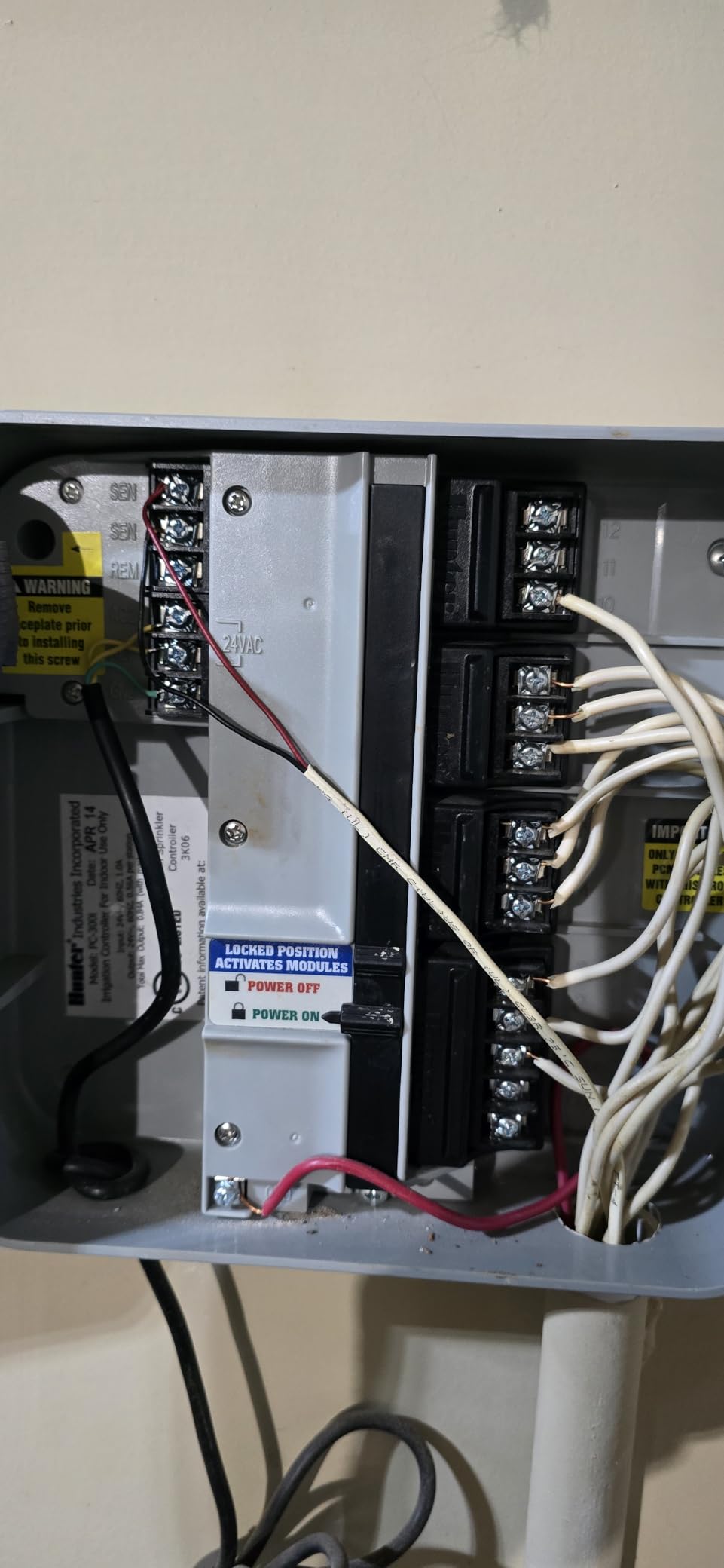
The diagnostic tooling is what separates this from the consumer units. Milliamp sensing catches shorted wires and stuck valves, and the two sensor inputs plus the pump/master-valve output mean a flow meter and a well or booster pump can be wired in directly. On a property where a buried lateral failure can run for a week before you notice, that input is worth planning for at install time.
Six independent programs with six start times each give you room to run turf, drip, a slope on cycle and soak, and a full shutdown window without fighting for slots. The 2.75-inch full-color touchscreen is readable in daylight, and the whole thing works from the panel if the network is gone.
Owners with large properties tend to install it in about half a day. The learning curve is real though: Hydrawise exposes more settings than a homeowner needs, and one account describes the interface as over-engineered enough that he returned it. Know your program structure before you power it up.
What a big property needs that a small one does not
Flow monitoring and leak alerting. Every other controller on this list schedules water; the PRO-HC can tell you when the system is still running after it should have stopped, which catches a broken line or a stuck valve before the bill arrives. A yard that gets irrigated daily across 20 zones is exactly where that matters.
Pump-start and master-valve wiring is the second one. If your system draws from a well, a pond or a booster pump, you need the P/MV output to trigger the pump when a zone opens. Retrofitting that later means opening the cabinet again.
Who should buy the Hunter PRO-HC
Buy it for a property with 18+ zones, mixed turf and drip on separate schedules, slopes that need cycle and soak, or a pump-fed system where you want diagnostics. It is also the one to buy if a contractor will be servicing the system and expects pro-grade tools.
Pass if your property fits comfortably in 12 zones and nobody will ever look at the diagnostics. You would be paying for capability you will not use, and the interface will frustrate you in the meantime.
5. Rain Bird ESP-TM2 8-Zone with LNK2 WiFi: Best for Offline Control
Rain-Bird ESP-TM2 Indoor Outdoor Irrigation WiFi Zone Controller Timer Box and Link Lnk WiFi Mobile Wireless Smartphone Upgrade Module Sprinkler System (8 Zone)
8 zones
Back-lit LCD panel
3.5 pounds
Factory 6 foot outdoor cord
Pros
- Physical panel and app control together
- Highest rating in this group
- Three-step programming
- Contractor Default saves your schedule
Cons
- Eight-zone ceiling
- WiFi module is 2.4GHz-only with a weak antenna
- Run logs not backfilled after a reconnect
This is the resilience pick. The ESP-TM2 keeps a real panel with a large back-lit LCD, and the app adds remote control on top rather than replacing it. On a big property, having a controller you can operate by hand when the network is down removes a category of worry that app-only designs create.
Programming takes three steps and the existing wires reconnect to the new terminals, which makes a retrofit straightforward if your valve count is under the ceiling. Contractor Default stores your custom schedule and restores it in one action, useful after any power interruption or service visit.
Water savings come from automatic weather adjustments that change daily run times, and iPhone and Alexa control handle the remote checks. The factory-installed six-foot outdoor-rated power cord means you can mount it in a garage or utility space without rewiring the feed.
Eight zones is the hard limit, and on a half-acre property that is usually not enough. This is a case where the panel quality is exactly right but the capacity is short, so treat it as the pick for a mid-size property or a second controller on a segmented system.
The LNK2 WiFi module, honestly
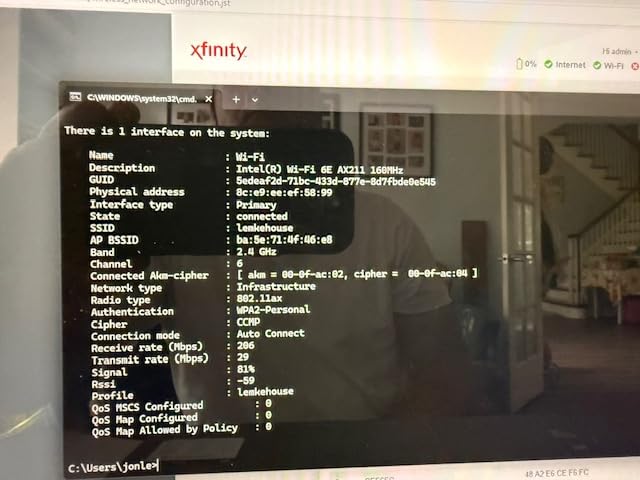
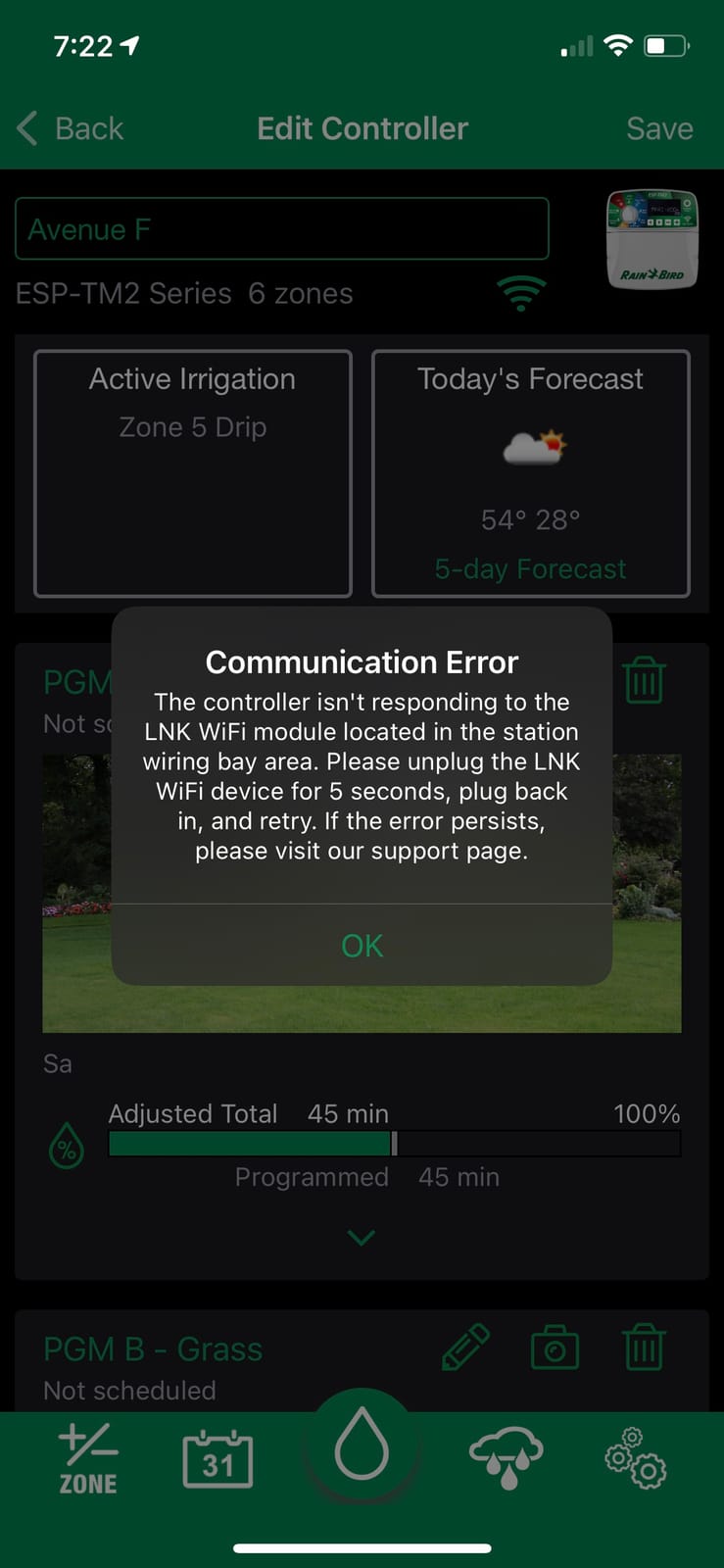
The module is a separate piece that snaps onto the controller, and it is the weak link. It is 2.4GHz-only with an antenna that struggles in metal-sided garages, and installers report that a meaningful share of their service calls end with removing one. Owners also note run logs that do not backfill after the cloud reconnects.
For a large property, plan the signal. Put the controller near a mesh node or run an Ethernet drop if you can, and test the 2.4GHz band at the panel before you buy. The hardware underneath is solid; the radio is what fails.
Who should buy the Rain Bird ESP-TM2
Buy it if your property genuinely fits in eight zones, you travel often, or you want a controller that behaves like a mechanical timer with an app attached. It carries the highest average rating of the eight we reviewed.
Pass if you are at half an acre or more with drip and turf already split, because you would outgrow it within a season. A second controller in a different location is the usual answer for larger systems.
6. Netro Sprite 12-Zone: Budget Pick for a 12-Zone System
Netro Sprite 12 Zone Smart Sprinkler Controller for Lawn 2.4GWiFi App-Based
12 zones
5.7 x 5.7 x 1.2 inch
8.16 ounces
2-year warranty
Pros
- Twelve zones at an entry-level cost
- Weather forecast for rain temperature humidity and wind
- Up to 60 days of irrigation history
- Works with Alexa Google Home and IFTTT
Cons
- Indoor installation only
- No on-device display
- No battery backup
- 2.4GHz Wi-Fi required
The Sprite covers twelve zones at the lowest entry point of anything here, and buyers treat it as the value answer for a large yard on a tighter budget. It weighs a little over eight ounces and measures 5.7 inches square, so it is a small box for a big system.
Weather service covers precipitation, temperature, humidity and wind with automatic rain skips, and the app stores up to 60 days of irrigation history with start times and durations. On a property where you are trying to prove a change reduced usage, that log is more than a nice extra.
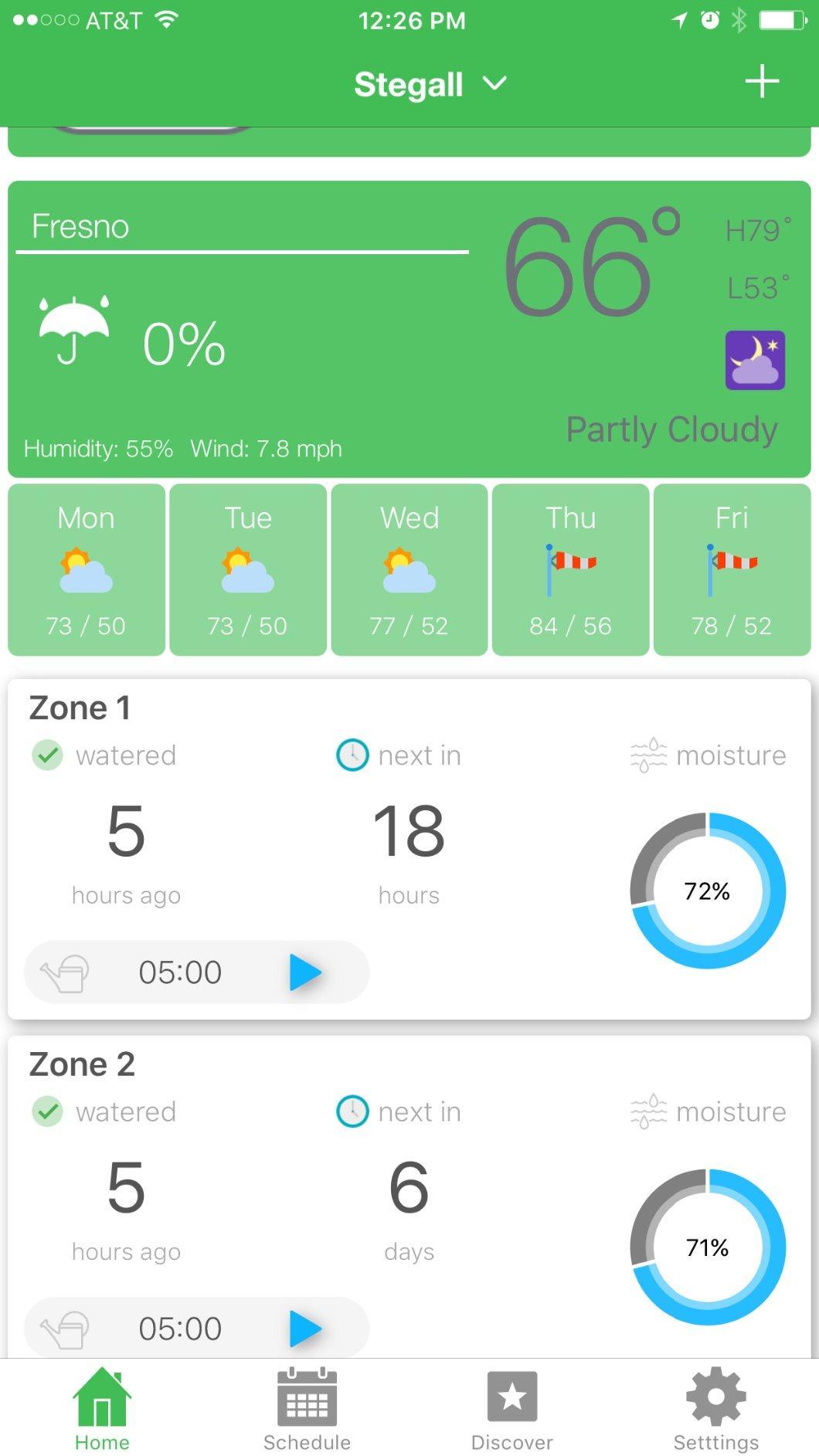
Zones get custom names and photos, which makes a 12-zone schedule far easier to manage than a numbered list. Cyclic schedules, month selection, and daily, weekly or odd-even cycling give you the scheduling shapes large properties usually need, and a plant library with light, humidity and temperature guidance comes along with it.
The hardware limits are the deciding factor. Installation is indoor only, there is no display on the unit at all, and there is no battery backup, so a power interruption stops irrigation until power returns. If your mounting spot is outside, you need to add protection yourself.
Why the missing on-device controls matter at scale
Everything is viewed in the app, which means no local read on what is running right now. If the controller loses its network link, you have no panel to check and no screen telling you whether zone 9 is open. On a small yard that is an inconvenience; across twelve zones and an acre, it is a Saturday morning project.
The indoor-only design has a second consequence. The controller is 24V AC and must stay plugged in, so mounting it in a detached garage or a shed is not a straight swap. Plan an indoor location within cable reach of the valve box, or budget for a rated enclosure and a proper feed.
Who should buy the Netro Sprite
Buy it when twelve zones is the real number, the controller can live indoors on 24V power, and you want history logging and voice control without spending near the top of the range. It is a sensible pick for a rental or a second home you do not want to service often.
Pass if you need any on-device control, outdoor mounting, or protection through a power outage. Those three gaps are structural rather than minor, and they matter more the more land you are watering.
7. Yardian Pro 8-Zone: Best for Apple HomeKit and Wired Internet
Yardian Pro 8-Zone Smart Sprinkler Controller, Apple HomeKit & Wi-Fi
8 zones
RJ45 Ethernet port
16 ounces
ET-based smart watering
Pros
- Native Apple HomeKit plus Alexa Google Home and Home Assistant
- Built-in Ethernet port fixes weak WiFi
- Physical on-device buttons for zone testing
- Supports wired and wireless flow sensors
Cons
- Eight zones is the lowest count here
- Advanced scheduling is complex to configure
- App has no step-by-step quick start
This is the odd one out and the most interesting for specific houses. It is the only controller here with native Apple HomeKit, alongside Alexa, Google Home and Home Assistant, and the only one with a built-in RJ45 Ethernet port, which removes the 2.4GHz problem for anyone willing to run a cable.
Eight zones is the smallest count in the group, so this is a segmented-system pick or a mid-size property option. What it adds over a comparable 8-zone unit is real: physical on-device buttons for running a zone without a phone, and support for wired or wireless flow sensors for leak and burst pipe alerts.
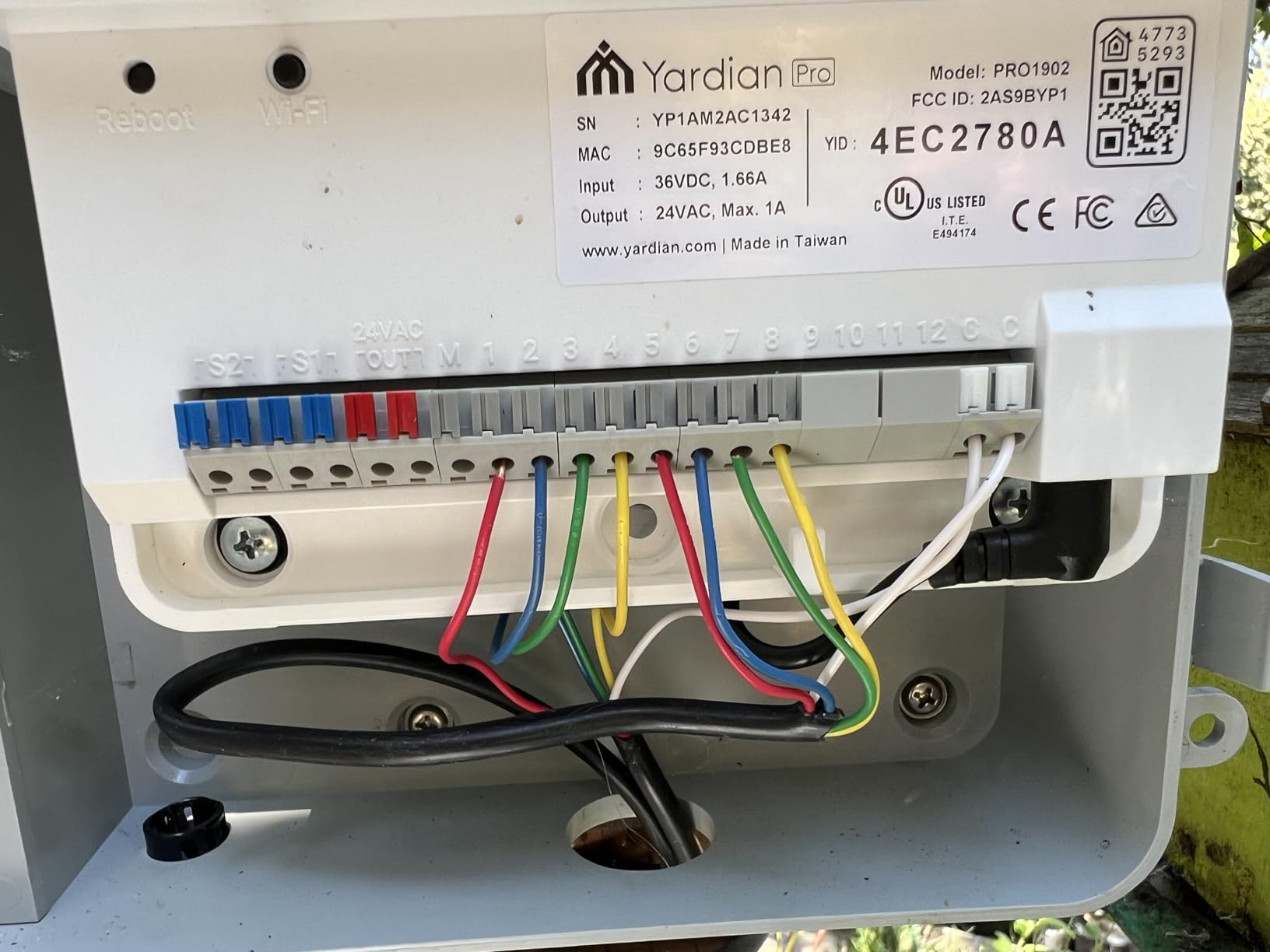
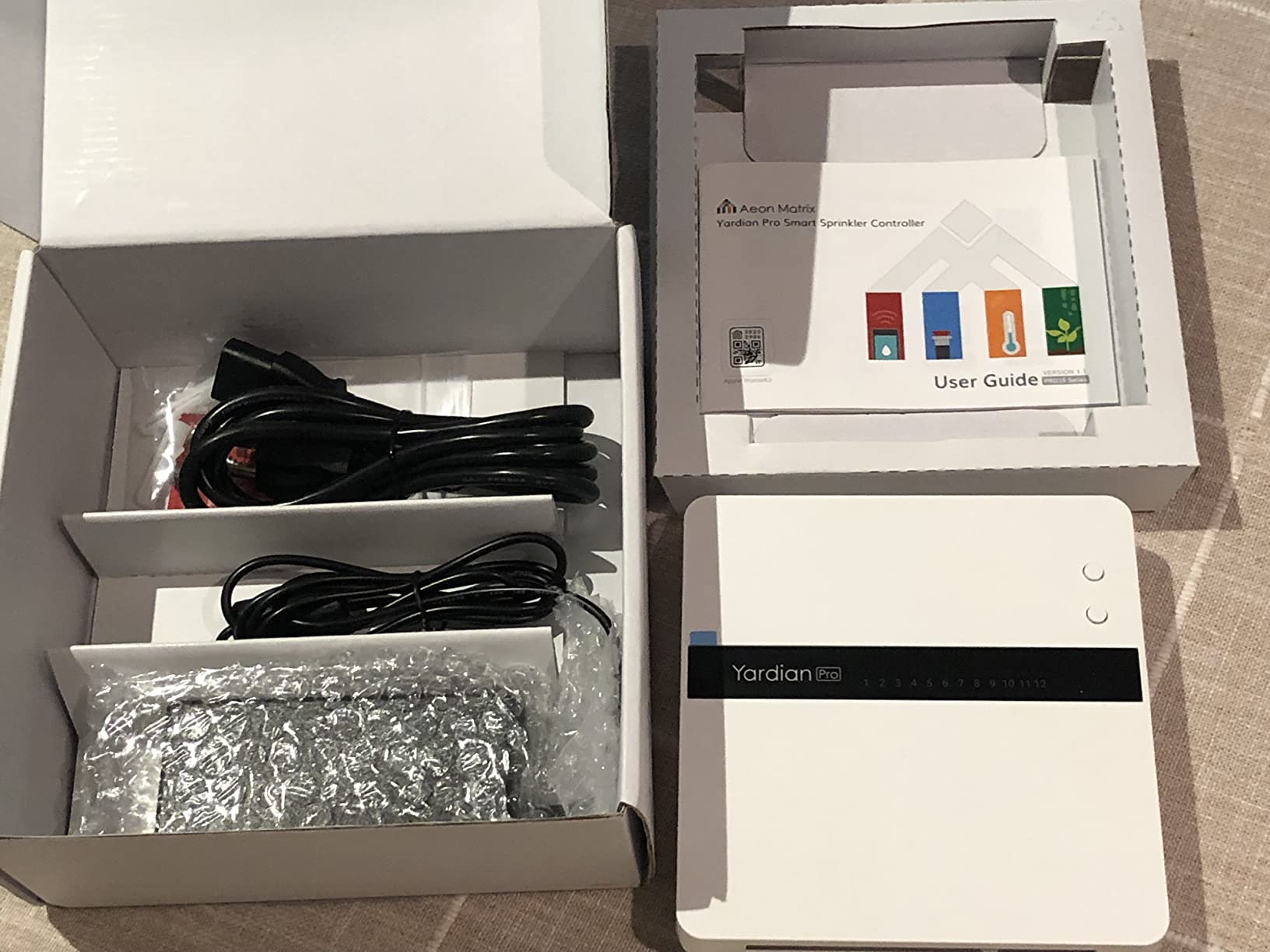
ET-based smart watering uses hyper-local weather data, and the 6 by 1.38 by 6-inch body fits an existing irrigation box so you can swap the old timer without cutting new space. A 100V-240V universal power adapter means it works on either supply, and an IP56 weatherproof outdoor enclosure is available separately for exposed mounting.
Setup is the friction point. Advanced automated scheduling has a lot of settings, the app has no step-by-step quick start, and the valve scan is hard to re-run if a zone fails its first setup pass. Some owners returned the unit for that reason, so budget time for configuration rather than expecting a 15-minute job to also produce a correct schedule.
Why the Ethernet port is a large-yard feature
Signal problems are the most cited complaint across every brand we reviewed, and they come from one place: 2.4GHz-only radios in metal buildings at the far edge of a property. A built-in Ethernet port means signal strength stops being a factor, and a Cat5 run to a detached garage is a weekend project with a permanent payoff.
The flow sensor support is the second large-yard feature. Paired with a wired flow meter, it turns the controller from a scheduler into a monitor that can alert you when usage does not match the schedule, which is how a mainline break or a stuck valve gets caught early on an acre.
Who should buy the Yardian Pro
Buy it if your home is Apple HomeKit-based, you want Home Assistant rather than a closed cloud, or your controller location has poor WiFi and you would rather run cable. Physical buttons also make it a good fit for anyone who wants local control.
Pass if you have more than eight zones, or if you want a controller that configures itself. The scheduling depth here assumes you are willing to read the documentation.
8. Hunter X2 14-Zone: Flexible Scheduling, WiFi Added Separately
Hunter X2 14 Zone Sprinkler Controller, WiFi Compatible Sprinkler Timer
14 zones
3 programs, 4 start times
2.8 pounds
Run times to 6 hours
Pros
- Fourteen zones at a mid-range tier
- Three programs with four start times each
- QuickCheck finds wiring faults fast
- Easy Retrieve backs up the schedule
Cons
- Not smart until the WAND module is added
- Fewer programs and start times than the PRO-HC
- Weakest review mix in this group
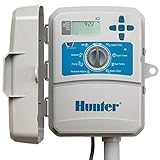
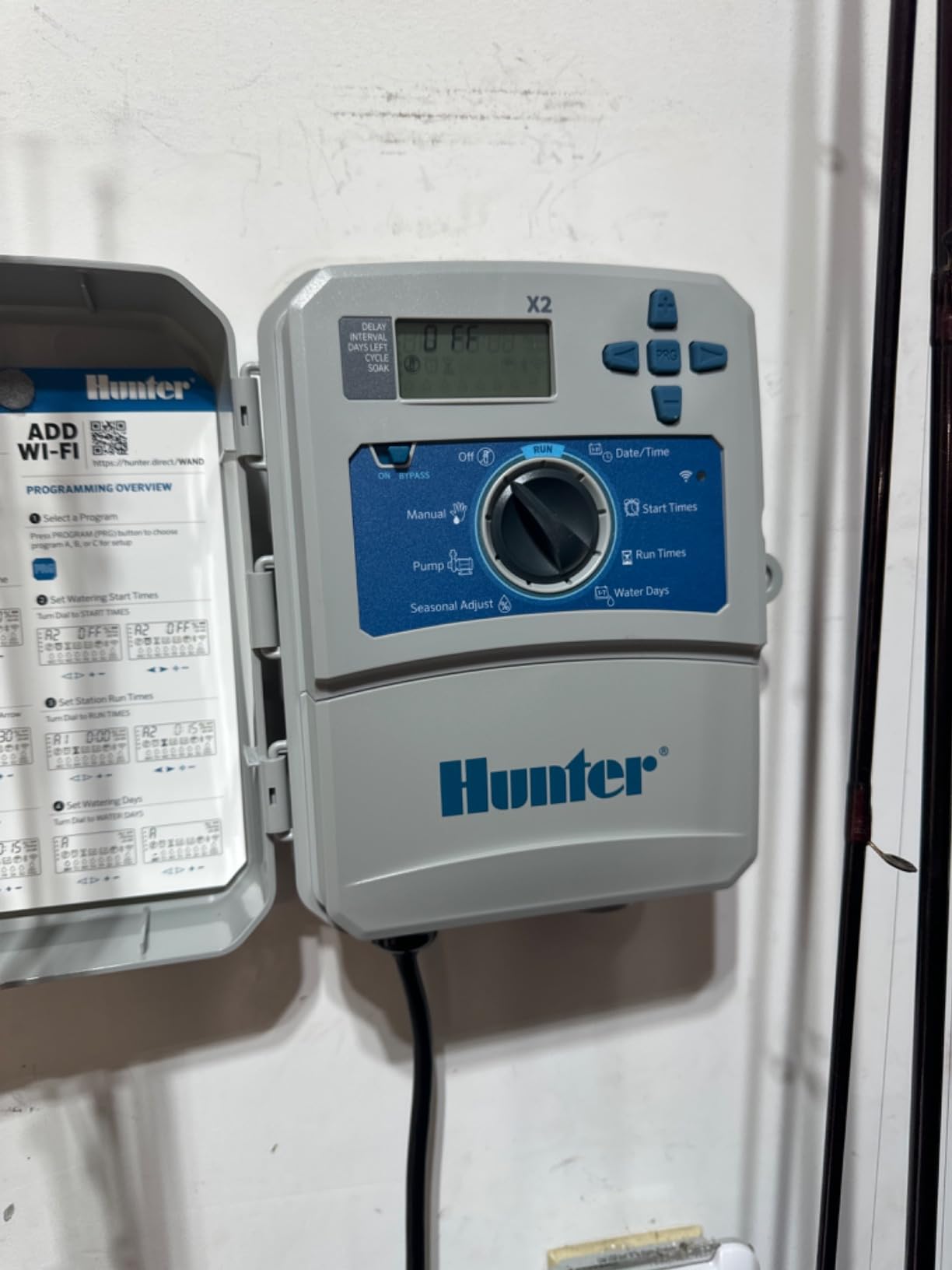
The X2 is the scheduled-controller answer rather than the app answer. It runs fourteen zones with three programs and four start times each, run times up to six hours with seasonal adjustment, and a weather-resistant outdoor enclosure with a large backlit display for sunlight and low light.
QuickCheck wiring fault detection is the feature that earns it a place in a large-yard guide. On a property with buried wire runs, knowing instantly that a circuit is shorted or miswired turns a multi-hour troubleshooting session into a short one. Easy Retrieve keeps the schedule in memory, so a power event does not cost you your programming.
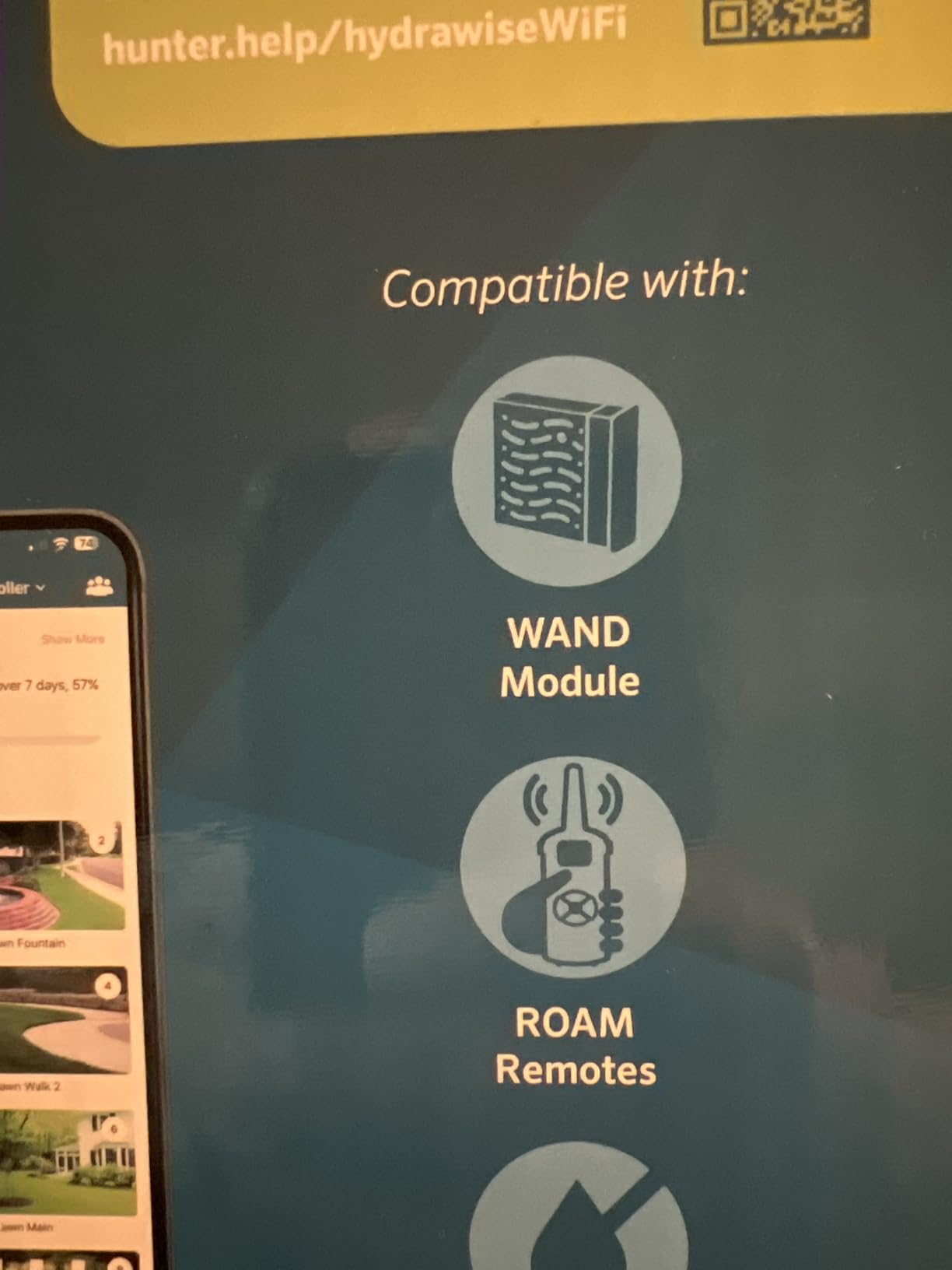
Important: it is not WiFi out of the box. The plug-in WAND module is sold separately and adds Hydrawise access, so the smart upgrade is a two-part purchase. That is fine if you are installing now and want the option later; it is a poor fit if you want remote control on day one without another step.
The 4.1 average across 133 reviews is the lowest here, and owners point to a comparatively high share of one-star reviews. The recurring complaint is the missing WAND module, where buyers expected a smart controller and received a good timer with a hint of one.
When the X2 beats the PRO-HC
On a 12 to 14 zone property with straightforward scheduling, the X2 does the job without the higher tier cost or the steeper interface. Three programs and four start times cover turf, drip and a vacation window for most layouts, and the seasonal adjustment handles the month-to-month drift on its own.
You give up the diagnostics depth. There is no flow monitoring or milliamp fault reporting, no pump or master-valve output for a well-fed system, and the same Hydrawise app if you add the WAND. If your property has a pump or a leak exposure, the PRO-HC is the better target.
Who should buy the Hunter X2
Buy it if you are at 12 to 14 zones, want a rugged outdoor box with a readable display, and would rather not pay for connectivity you might never turn on. It is also a good fit if you are staging an install and want the WAND later.
Pass if you want a smart controller the day it arrives, or if you want leak alerts and pump control. Those are reasons to move up to the PRO-HC rather than add a module later.
How Many Zones Does a Large Yard Need?
A zone is one valve-controlled circuit: a group of sprinkler heads or a run of drip line that turns on and off together. Counting zones is simple, and it is the first thing to do before choosing anything.
Step 1: Find the backflow preventer at the main water line and count the wires coming off the existing controller. One wire per valve means one zone, plus a common wire. A controller with eight terminal screws does not mean eight zones.
Step 2: Look at your valve box. Each valve in the box is one zone, and valves are often grouped, with two or three on the same manifold for different areas.
Step 3: Count heads, not area, when you are designing a new system. A sprinkler head covers roughly 15 to 20 feet in diameter, so a 40 by 60 foot front lawn is usually three or four heads on one zone, and the same area on a slope needs more zones because runoff forces shorter run times.
Step 4: Add a safety margin. Count your planned zones, then add one to two spare terminals for a future bed, a new tree ring or a fountain circuit you will want in two years.
Roughly, a quarter-acre suburban lot runs four to six zones. A half-acre property commonly lands between eight and twelve. A full acre with turf, beds, drip and a slope sits in the fourteen to twenty-four range, which is where the capacity ceiling starts to decide the model for you.
Drip lines count as zones too, and a property that runs a dedicated drip circuit for beds plus another for a vegetable garden plus turf in four areas is already in double digits before you add anything new. Many owners doing larger garden and yard projects discover this the hard way halfway through an install.
How to Choose a Smart Sprinkler Controller for a Large Property?
Zone capacity and expansion
Buy for your zone count plus two spares, not for your current count. Controllers here top out at 24 zones, and only the Hunter PRO-HC reaches that ceiling. If your property needs 26 or more valves today, plan on two controllers from the start rather than adding one later, because a second unit is easier to install alongside an existing system than to retrofit around.
Note that none of these units expand through modules. Expansion in this category means buying a bigger controller, so treat the zone number as a five-year decision rather than a purchase-order line.
Weather-based scheduling you can trust
Every controller here adjusts for weather; they differ in how. The Rachio 3 uses patented Weather Intelligence that skips cycles for rain, wind and freeze, the Orbit units adjust cycles from forecast data, Rain Bird makes daily run-time changes, and the Netro and Yardian units lean on evapotranspiration data with local forecasts. On a large property this is where the savings come from, because you have many more opportunities to waste water.
Test any of them through a dry spell. A controller that skips watering after a tiny rain event will save you nothing and annoy you all summer, and that is a common complaint about the Orbit units in particular.
WiFi placement and the 2.4GHz-only reality
Most smart irrigation controllers, including every product on this list, connect only on the 2.4GHz band. That band reaches further but is crowded and slower, and a metal-sided garage or a detached building can be a dead zone even when the router is fine.
Check the signal at the mounting spot before you buy, on the 2.4GHz network specifically. If it is weak, the fix is a mesh node in that room, a WiFi extender, or an Ethernet run. The Yardian Pro accepts a cable directly, which makes it the simplest answer when you are willing to run one.
Indoor or outdoor mounting
Orbit’s units, both Hunter controllers, the Rain Bird and the Yardian Pro all support outdoor mounting in a weather-resistant case. The Rachio 3 and the Netro Sprite are indoor units, so either they live in a garage or utility room, or you add an outdoor enclosure. Decide this before you pick a model, not after.
Outdoor mounting also means UV exposure and temperature swings over a decade, so a ventilated quality case is worth the upgrade over a basic plastic box on a south-facing wall.
Diagnostics, flow monitoring and pump-start wiring
These are the features a large yard needs that a small yard does not, and only one controller here offers them. The Hunter PRO-HC has two sensor inputs, a pump or master-valve output, and built-in milliamp flow and wire fault monitoring. The Yardian Pro supports wired and wireless flow sensors, and the Hunter X2 has QuickCheck wire fault detection.
If your system runs on a well, a pond or a booster pump, you need a controller with a pump-start relay or master-valve output. Only the PRO-HC lists one in this group. If a buried lateral breaks on an acre, flow monitoring is what turns a large water bill into an early alert.
Contractor-grade versus homeowner-grade
Installers doing high volumes consistently rank the Hunter Hydrawise class as the choice for complex or large systems, the Rachio for the best homeowner experience, the Orbit B-hyve for clients who want good features without the top spend, and Rain Bird mainly when the customer already trusts the brand. That ordering holds up against how these units actually feel to configure.
Your local preference may differ, and contractors are biased toward hardware they can service quickly. Weight the interface you will actually live with above the tool your installer prefers, especially if you will be adjusting schedules yourself.
Do You Need More Than One Controller?
Yes, and on genuinely large properties this is the normal case, not an edge case. Twenty-four zones is the ceiling in this category. A full acre with turf in front and back, drip beds, a slope, a tree ring and a fountain circuit passes that quickly.
The practical reason people get this wrong is zone count alone. If you have 20 valves but only 14 are in active use, one controller is enough. If all 20 are live, you need a second unit, and the second unit should be a different model from the first, because the app you manage everything in matters more than the two boxes matching.
Rachio handles multiple controllers in one app, and the Hydrawise app does the same for the Hunter units, so both ecosystems cover the two-controller property. If you are mixing brands, you end up with two apps, which is workable but not ideal.
One more constraint at acreage scale: two controllers on one 2.4GHz network can be a stretch. Put them in different buildings and you may need a mesh node or an extender rather than a signal booster taped to the wall.
Frequently Asked Questions
What is the best sprinkler system for a large yard?
For a property with 10 or more zones, a smart controller like the Rachio 3 16-Zone is the best overall fit, while the Hunter PRO-HC 24-Zone leads when you need contractor-grade diagnostics, flow monitoring or pump-start wiring. A large yard usually means 10+ zones, which starts around the half-acre mark.
How many zones do I need for a large yard?
A quarter-acre lot typically runs four to six zones, a half-acre property runs eight to twelve, and a full acre with turf, drip and a slope sits between fourteen and twenty-four. Count one zone per valve, and add one to two spare terminals for future beds or drip circuits.
Is Rachio better than Hunter Hydrawise for a large yard?
Rachio wins on app design, cross-platform smart home support and no subscription. Hunter Hydrawise wins on raw zone count, flow monitoring, pump and master-valve wiring, and wire fault diagnostics. Choose Rachio for ease of use and Hunter for a complex, pump-fed system.
Is Hydrawise worth the money?
Yes, for a property with 12 or more zones and mixed turf, drip and slope scheduling. The PRO-HC adds flow monitoring and 24-zone capacity that cheaper units lack. The tradeoff is a steeper interface to learn and the highest cost in this group.
Is Rachio better than Rain Bird for large properties?
Rachio 3 offers 16 zones and better weather-based scheduling, but it is an indoor unit. The Rain Bird ESP-TM2 has a physical panel that works offline and a weather-resistant case, but only eight zones. For a half-acre or more, zone capacity usually decides it.
Which is better, Rachio or Orbit B-hyve?
Rachio has the better app and more accurate weather intelligence with no subscription. Orbit B-hyve has physical controls, Bluetooth local control when WiFi is down, and a lower entry point. B-hyve has no Apple HomeKit support, which matters in Apple households.
Do smart sprinkler controllers need a WiFi signal booster?
Often, on a large property. All of these controllers use the 2.4GHz band only, and a metal-sided garage or detached building can be a dead zone. Test the 2.4GHz signal at the mounting spot first, then add a mesh node or extender. The Yardian Pro accepts an Ethernet cable as an alternative.
Do smart sprinkler controllers work without WiFi?
It depends on the model. The Hunter PRO-HC, Hunter X2 and Rain Bird ESP-TM2 all run schedules from their own panels when the network is down. The Orbit units support Bluetooth local control. The Rachio 3 and Netro Sprite rely on their apps, and the Netro Sprite also has no battery backup for power outages.
Bottom Line: Which Smart Sprinkler Controller Fits Your Property
The best smart sprinkler controllers for large yards come down to one number: your live zone count. At 10 to 16 zones, the Rachio 3 is the pick, with the best app, the sharpest weather-based scheduling and no subscription. Below that count, the Orbit B-hyve 12-Zone gives you the same idea with a weatherproof case at a lower entry point.
Above 16 zones, or on a property with a pump, a slope or a leak exposure, the Hunter PRO-HC is the one that earns its cost. Past 24 zones, plan on two controllers and one app that can manage both.
Before you buy, count the valves, test the 2.4GHz signal where the box will live, and decide whether you need physical controls for the times you are standing next to it. Get those three right and any of these eight will do the job.
Seasonal upkeep matters as much as the hardware. Autumn is when you blow out the lines and check each zone by hand, and the holidays are the easiest time to add lighting and landscape lighting while the irrigation is already shut down, so you can route new wiring once.