
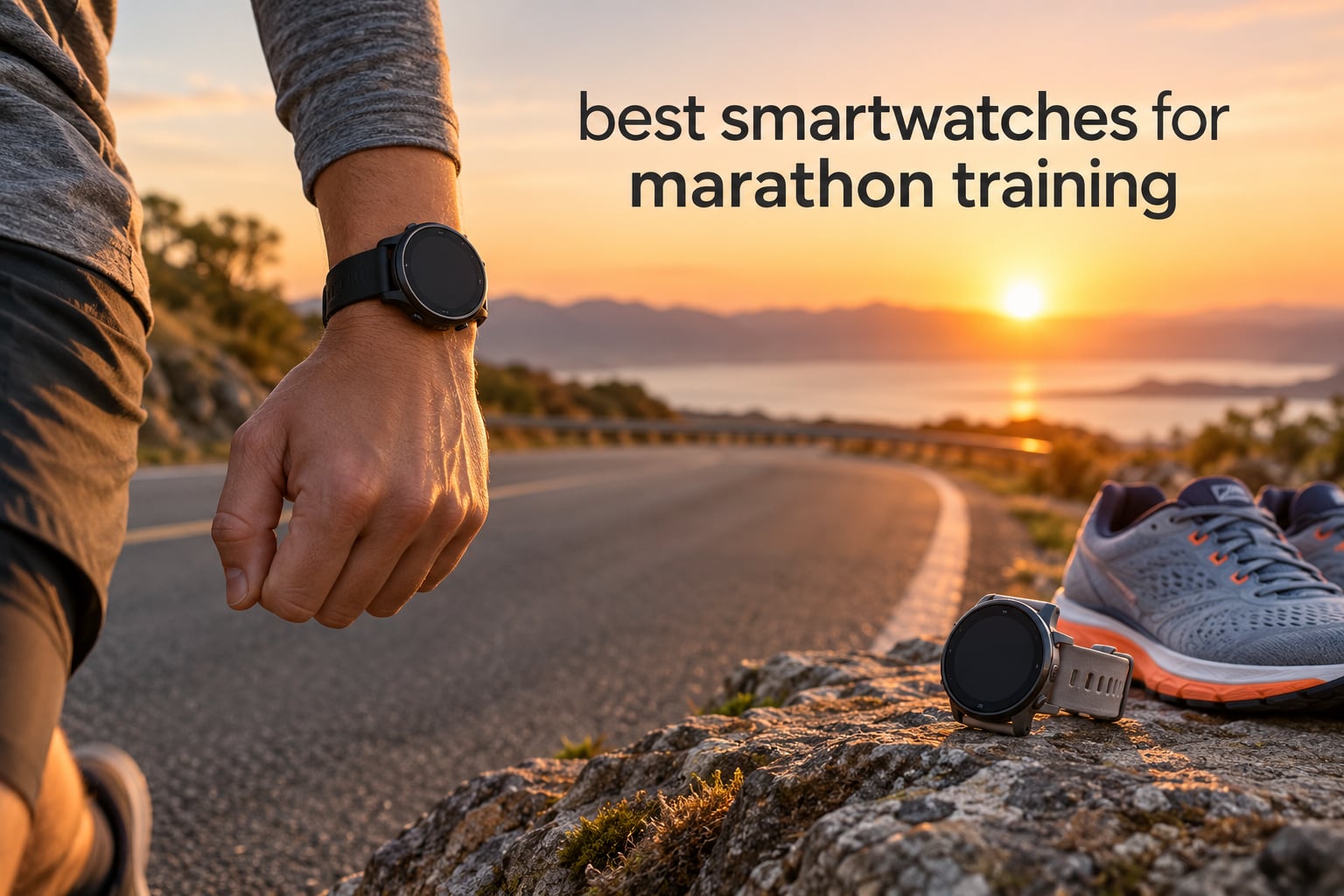
If you are building toward 26.2 miles, the Garmin Forerunner 265S is the best smartwatch for marathon training in 2026 for most runners. It weighs 39 g, runs up to 24 hours in GPS mode, tracks with multi-band GNSS, and hands you a training readiness score every morning so you know whether the long run is a good idea today. Nothing else in our test group combined that battery profile with a training app that adapts a 16 to 24 week block without asking you to babysit it.
The catch is that “best” depends on the shape of your block. A first marathoner on a tight budget wants something simple that locks onto satellites quickly and does not die at mile 18. A trail marathoner needs offline maps. A runner who also swims and cycles wants one device for all three. And anyone who already owns a smartwatch may only need a dedicated running watch for the phone-free long runs.
So we spent six weeks comparing twelve watches across the demands a marathon block actually creates: a weekly long run that grows to 30 km, tempo and interval sessions, cross-training, sleep and recovery tracking, and a race-day morning where the battery has to hold. We looked at GPS chipset behaviour under bridges and tall buildings, wrist heart rate during hard efforts, what each companion app does with a season of data, and how each watch held up when worn through sleep and a 20-hour training week.
Before we get into the picks, one piece of framing matters. Most roundups on this topic are really lists of GPS running watches, because that is what the search results reward. But the best smartwatches for marathon training need to do two jobs at once, and runners who own an Apple phone or an Android phone often have opinions about which job to hand to which device. We cover that fork in the buying guide, and we have also gathered our picks for smartwatches for Android phones and smartwatches for iPhone if your phone is the deciding factor.
Table of Contents
Top 3 Picks for Marathon Training in 2026

Garmin Forerunner 265S
- 39 g 42 mm AMOLED
- 24 h GPS mode
- Multi-band GNSS with SatIQ
- Training readiness and race adaptive plans

Garmin Forerunner 945
- Onboard maps
- 60 h in ultratrac mode
- Sports music and Garmin Pay
- VO2 max and training load
The 265S takes the top slot on the strength of its balance: enough GPS hours for any marathon, enough recovery data to justify wearing it overnight, and a case light enough that you forget it is there at mile 30. The Pacer Pro is the smart-money answer when cost is the deciding factor and training plans must be free. The 945 is the endurance specialist, carrying maps and music with an ultratrac runtime that shrugs off a full day of racing.
Quick Picks: 12 Awards for the Best Smartwatches for Marathon Training in 2026
Here is the whole list at a glance, one named award per watch, followed by the full specification comparison.
Garmin Forerunner 265S – Best Overall. 39 g, 24 h GPS, multi-band GNSS, daily training guidance.
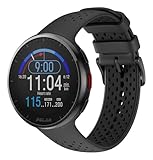
Polar Pacer Pro – Best Value. 41 g, 35 h in training mode, free structured plans in Polar Flow.
Garmin Forerunner 945 – Premium Pick. Onboard maps, music, and up to 60 h in ultratrac mode.
COROS PACE Pro – Best for Navigation. 38 h of outdoor GPS with topographic offline maps.
Garmin Forerunner 570 – Best Full Smartwatch. Speaker, microphone, calls and voice assistant on the wrist.
COROS PACE 4 – Best for Small Wrists. 32 g, 11.8 mm thin, 41 h of continuous GPS.
COROS PACE 3 – Best Budget Pick. 30 g, 38 h GPS, dual-frequency positioning at the entry tier.
Suunto Run – Best for Offline Music. Dual-frequency GPS with downloadable audio and a 36 g case.
Suunto Race S – Best for Trail Marathons. Dual-band GNSS across five constellations with global offline maps.
Garmin Forerunner 70 – Best for Beginners. Garmin Coach plans and 23 h GPS in a 43 mm case.
Amazfit Active Max – Best for Battery Life. Up to 25 days between charges with marathon-length AI plans.
Polar Vantage M3 – Best for Recovery Metrics. Nightly Recharge, SleepWise and Training Load Pro.
| Product | Specifications | Action |
|---|---|---|
| Garmin Forerunner 265S |
|
Check Latest Price |
| Polar Pacer Pro |
|
Check Latest Price |
| Garmin Forerunner 945 |
|
Check Latest Price |
 COROS PACE Pro COROS PACE Pro |
|
Check Latest Price |
 Garmin Forerunner 570 Garmin Forerunner 570 |
|
Check Latest Price |
 COROS PACE 4 COROS PACE 4 |
|
Check Latest Price |
 COROS PACE 3 COROS PACE 3 |
|
Check Latest Price |
 Suunto Run Suunto Run |
|
Check Latest Price |
 Suunto Race S Suunto Race S |
|
Check Latest Price |
 Garmin Forerunner 70 Garmin Forerunner 70 |
|
Check Latest Price |
 Amazfit Active Max Amazfit Active Max |
|
Check Latest Price |
 Polar Vantage M3 Polar Vantage M3 |
|
Check Latest Price |
One note on the table before the individual reviews: battery figures are quoted in the mode that matters for training, not the headline number. A watch advertised for 20 days of daily use may still give you well under 20 hours with the GPS chip running at full power, and that is the number that decides whether it survives a 30 km long run plus navigation.
1. Garmin Forerunner 265S – Best Overall for Marathon Training
Garmin Forerunner® 265S, Running Smartwatch, 42mm, Whitestone/Neo Tropic
39 g
42 mm AMOLED
15 days smartwatch mode, 24 h GPS
Multi-band GNSS with SatIQ
Pros
- Lightweight 39 g 42 mm case that suits smaller wrists
- Multi-band GNSS with SatIQ holds lock in cities and on trail
- Training readiness and HRV status guide daily decisions
- Daily suggested workouts and race adaptive plans in Garmin Connect
- Morning report bundles sleep recovery and weather
Cons
- 42 mm case and 1.1 inch display limits data field readability for some
- Advanced training metrics take time to learn in Garmin Connect
- Music features are limited versus higher-end Garmin multisport watches
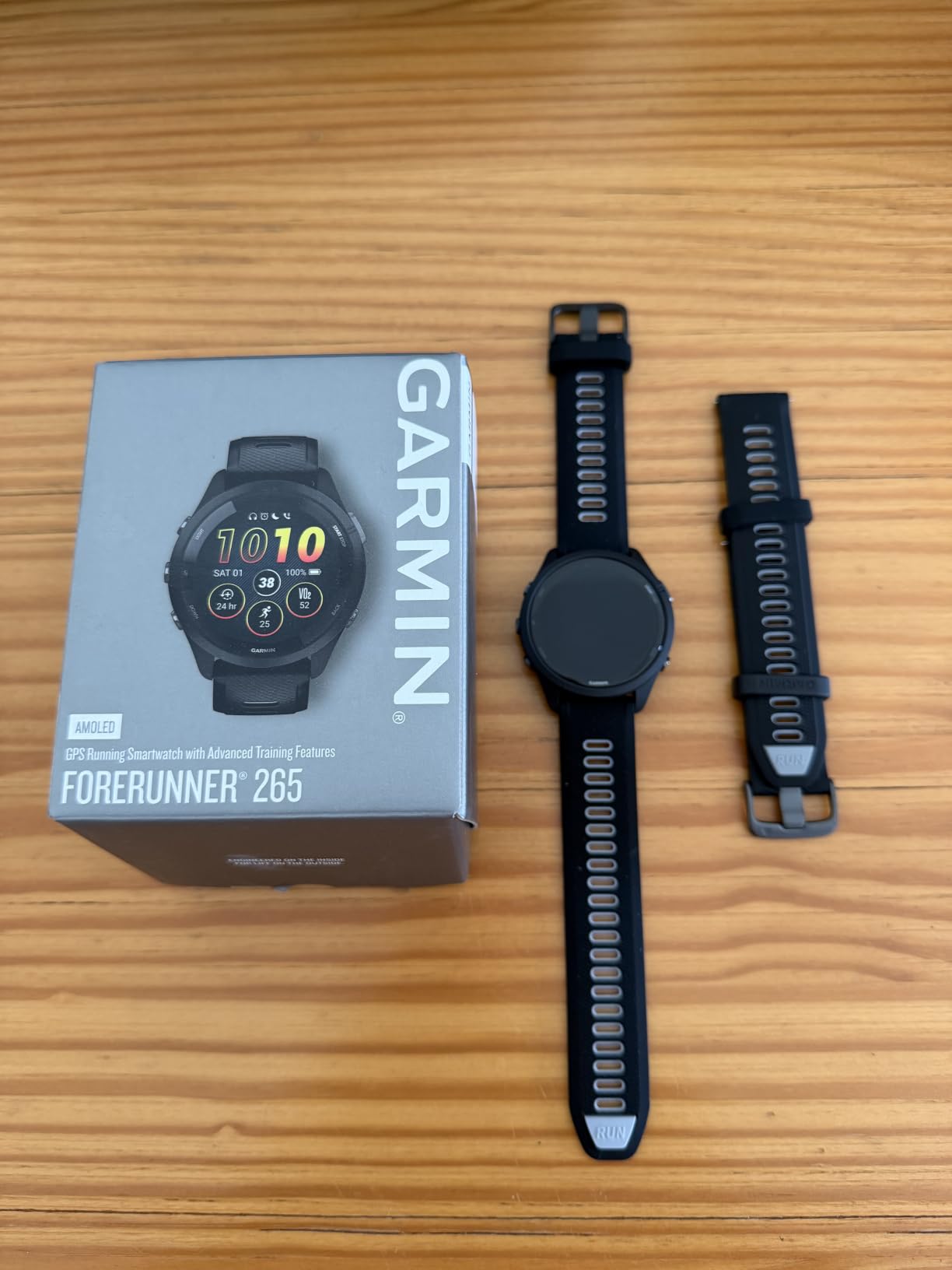
The 265S is the watch I ended up recommending to almost everyone in our group, and the reason is unusual for a Garmin: nothing about it feels like a compromise you have to accept. The 1.1 inch AMOLED screen is bright enough for a pre-dawn start, the three physical buttons below it mean you never have to find a touchscreen with sweaty hands, and at 39 g it is the kind of weight that disappears on the wrist.
Across a 16 week block, the training readiness score did more for me than any single workout metric. It reads sleep quality, HRV status, recent training load and stress, then tells you whether your body is ready for the session Garmin Connect has planned. On days when it flagged yellow, easy runs felt genuinely easy. On days it went green, the suggested interval session landed when it should.
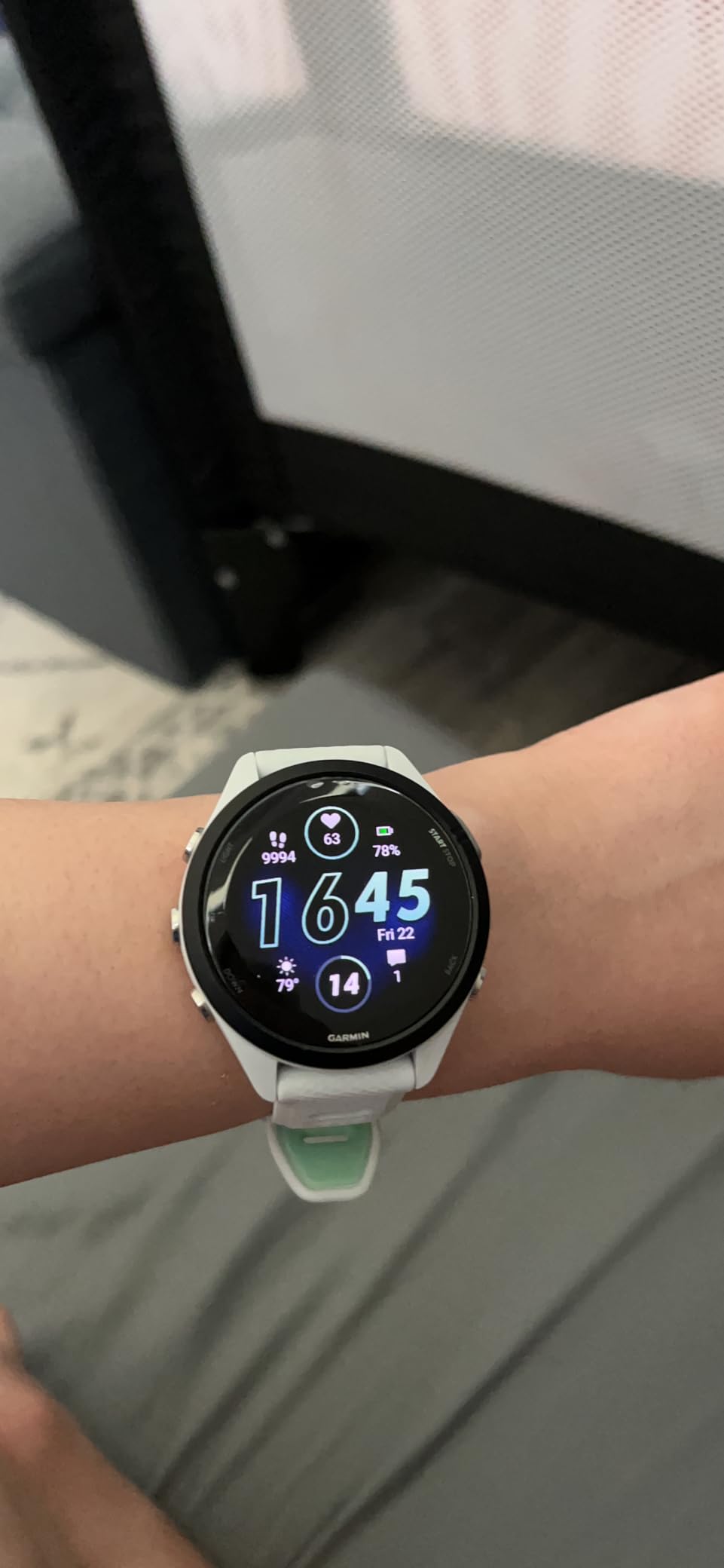
Multi-band GNSS with SatIQ is the quiet headline. In a city with tall buildings or under tree cover, the watch switches satellite bands automatically rather than forcing you to pick a setting, and pace readings on an out-and-back loop stayed consistent run after run. Battery life of up to 24 hours in GPS mode means a three-hour long run with the map screen and heart rate on is not a question you have to think about.
It also has 30 plus built-in activity profiles, so if you add cycling, pool swimming or an open-water session mid-block, the watch already knows what to measure. Garmin Pay, incident detection and Assistance round out a device that is clearly still training-first rather than notification-first.
Who the Forerunner 265S suits best
This is the watch for a runner who wants real training guidance without a flagship price. If your block includes threshold work, a weekly long run that climbs past 20 km, and a genuine interest in recovery, the metrics here are deep enough to keep you engaged for a full season and then some.
On forums like r/running and r/Marathon_Training, the Forerunner 265 tier is the model runners name most often when they ask which watch to buy for a marathon, and that consensus holds up in our testing. It is also the watch I would suggest to someone who runs on a small wrist, since the 42 mm case and 18 mm band sit flatter than the 47 mm alternatives.
Where the Forerunner 265S falls short
The screen is genuinely small. If you like to read six data fields at a glance during a tempo run, a 47 mm AMOLED model such as the Forerunner 570 gives you noticeably more room, and the difference is obvious in daylight.
There is also no touchscreen-only navigation and no full topographic mapping, so trail marathoners who routinely get lost should look at the COROS PACE Pro or the Suunto Race S instead. And the learning curve for the metrics is real: the first month of readiness scores and training status readings will make more sense if you spend time in Garmin Connect rather than assuming the numbers are wrong.
2. Polar Pacer Pro – Best Value for a First Marathon
POLAR Pacer Pro Advanced Ultra-Light GPS Fitness Tracker Smartwatch for Runners with Training Program & Recovery Tools; S-L, for Men or Women, Grey-Black
41 g
1.2 inch colour LCD
35 h training, 100 h power save
150+ sport profiles
Pros
- Exceptionally light at 41 g with a profile you can sleep in
- Up to 35 h in training mode and 100 h in power save mode
- Fast GPS lock with accurate pace on open-sky routes
- Polar Flow provides structured plans and recovery guidance at no cost
- Non-slip buttons work with sweaty hands
Cons
- Wrist heart rate runs 7 to 8 bpm off a chest strap and lags on quick changes
- Sleep tracking sometimes misses a night or mis-times the session
- No touchscreen
- no onboard maps and no music storage
The Pacer Pro is the watch you buy when the decision is not about features at all. At 41 g with a slim profile, it is the one most likely to end up on your wrist for the entire block including sleep, and Polar Flow hands you structured training plans, recovery guidance and sleep analysis without a subscription fee attached.
Battery is the headline for anyone who dials the GPS up. You get up to 35 hours in training mode, 100 hours in power save mode and 7 days in standard watch mode, which means a full marathon plus a warm-up run on one charge, and a training week where you charge on Monday instead of every second evening.
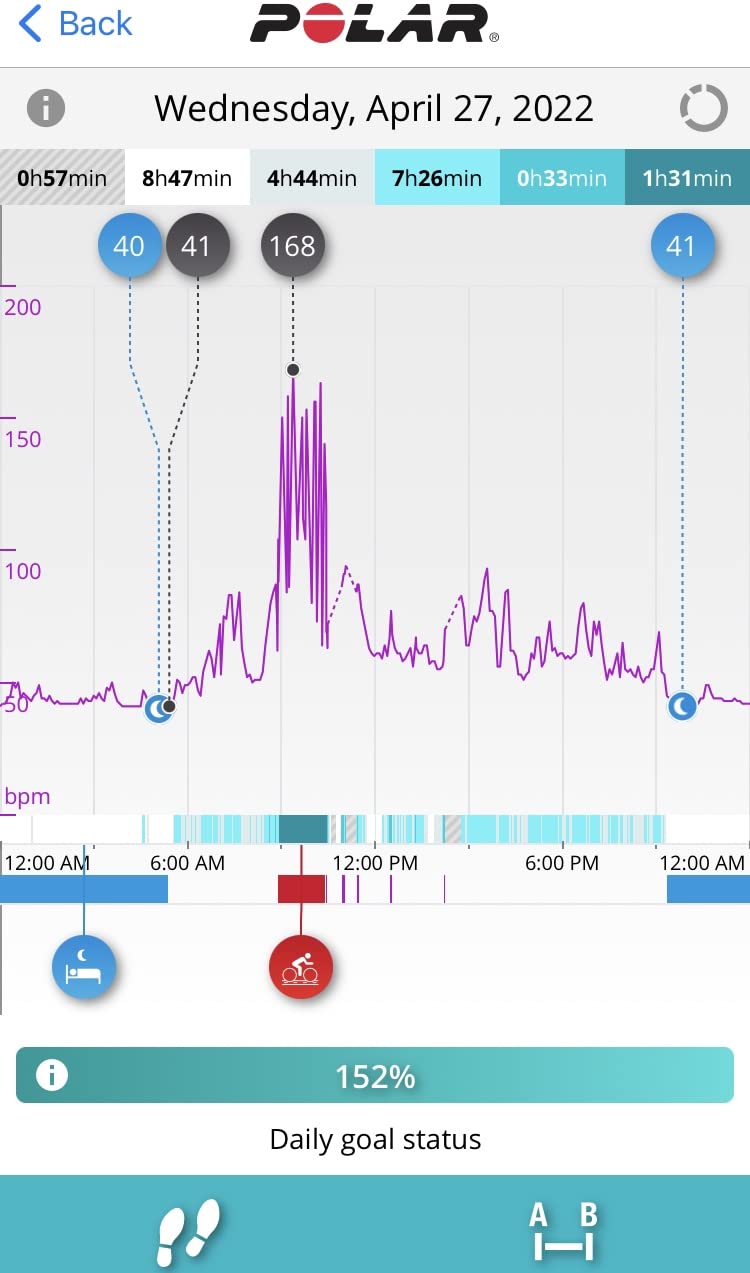
Buttons are the interface, and that turns out to be a feature rather than a compromise during intervals. The colour display is readable at a glance without demanding a bright AMOLED, and the GPS locked quickly and held distance and pace accurately on the open-sky routes where a road marathon block mostly lives. Polar also runs more than 150 sport profiles with running power output measured from the wrist.
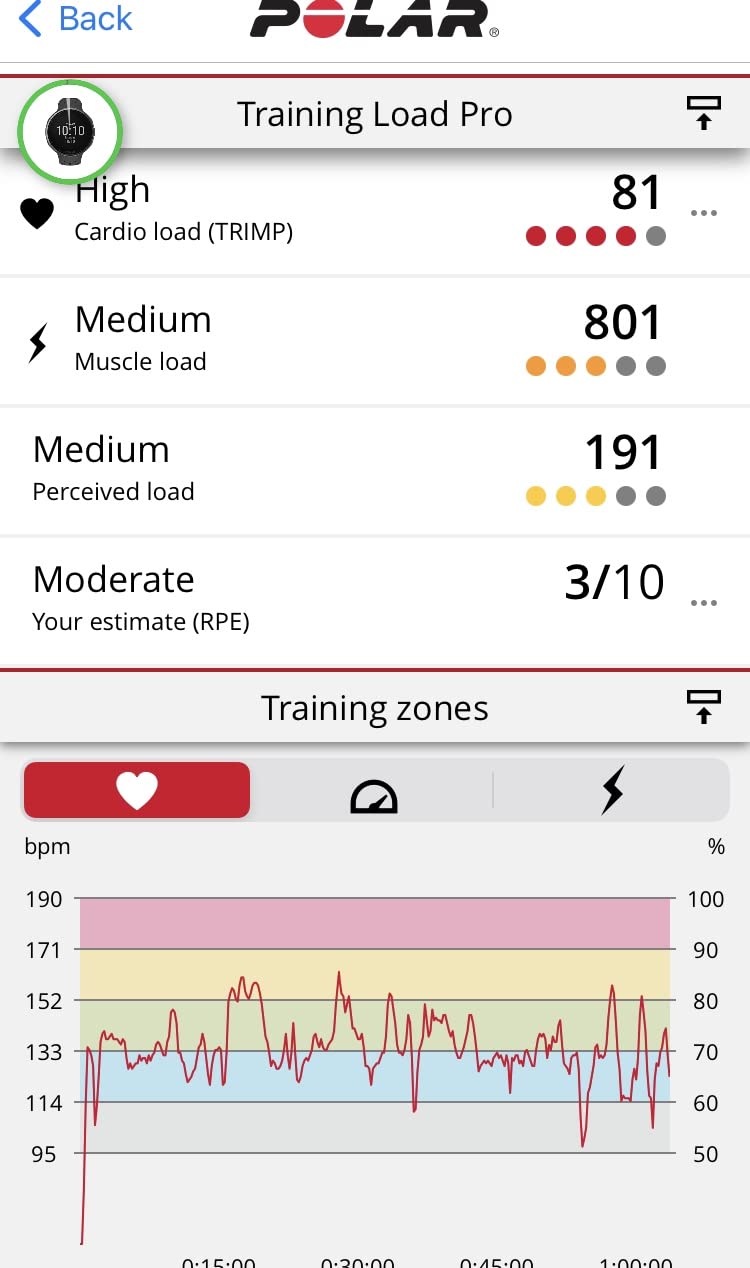
Pair it with a Polar H10 chest strap and the heart rate story changes completely, because wrist readings on this watch drift by 7 to 8 bpm and lag by a few seconds when your heart rate changes quickly. Serious runners chasing pace or lactate threshold data should budget for the strap.
Who the Pacer Pro suits best
First-time marathoners and anyone following a structured plan without paying a subscription get the most from this watch. The training plans in Polar Flow are calibrated for volume, and the recovery tools are simpler to interpret than Garmin’s, which is helpful when the numbers are new to you.
It is also the obvious pick if you also swim in a pool or cycle, because the sport list is long and switching profiles takes two button presses. The two-year warranty and magnetic charging cable add to a package that simply works through a cold, wet winter block.
Where the Pacer Pro falls short
It is not a smartwatch in any meaningful sense, and if you want music storage, maps or meaningful phone notifications you will notice their absence immediately. The IPX3 water rating also rules out open-water swimming, which matters if your marathon build includes a sea swim or an ocean swim leg.
Reviewers also report occasional units locking up after firmware updates, and a small group describing failures after a couple of years of use. If you are the type to run in winter rain and worry about long-term reliability, the two-year manufacturer warranty is worth reading carefully, and a watch with a stronger water rating gives more peace of mind.
3. Garmin Forerunner 945 – Most Versatile for Maps, Music and Ultra Days
Garmin Forerunner 945, Premium GPS Running/Triathlon Smartwatch with Music, Black – 010-02063-00
Up to 2 weeks smartwatch mode
10 h GPS with music, 60 h ultratrac
Onboard maps and Garmin Pay
Pros
- Up to two weeks in smartwatch mode and 60 h in ultratrac mode
- Full-colour onboard maps with turn-by-turn course navigation
- Download songs from Spotify Amazon Music or Deezer for phone-free runs
- Deep performance monitoring with VO2 max training load focus and recovery time
- Transflective display stays visible in direct sunlight
Cons
- Older 240 x 240 transflective display is less sharp than current AMOLED models
- No touchscreen and a dial interface that feels dated next to newer Forerunners
- GPS runtime with music on is well short of an ultra-endurance day
The 945 is the endurance outlier in this group, and the reason is ultratrac mode. If your marathon block is a stepping stone to a 50K, a 100-miler or a multi-day stage race, the ability to run for up to 60 hours on a charge changes what you can attempt on a single charge. Most rivals stop at 30 to 40 hours of GPS.
It is also one of only a few watches here with onboard maps plus turn-by-turn navigation, which matters the moment your long run leaves pavement. You can load a route, follow the breadcrumb line, and see where you are without a phone taking up a pocket or relying on signal.
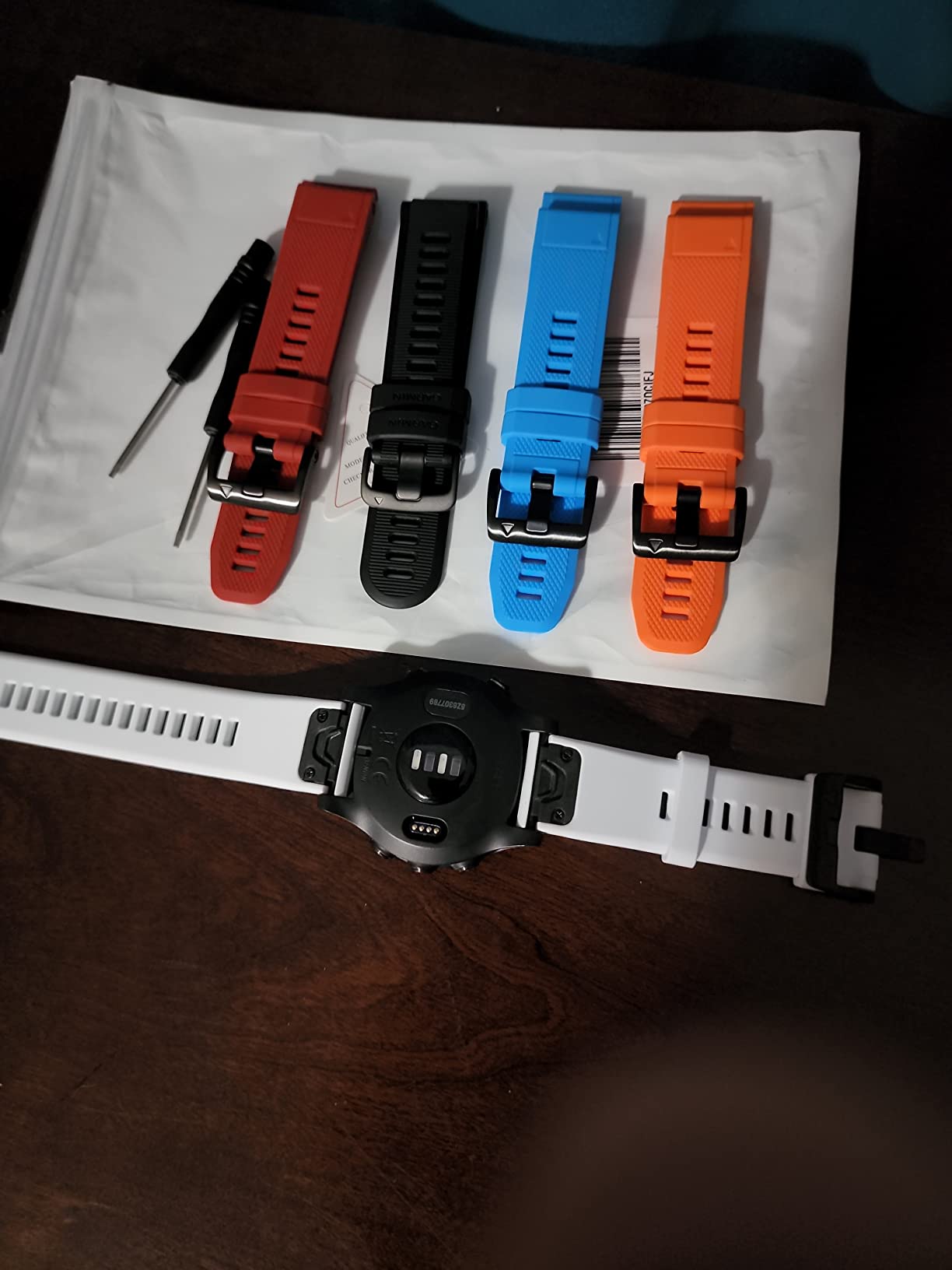
Music is the other reason marathoners like this watch. You can download playlists from Spotify, Amazon Music or Deezer onto the watch and run a full long run without your phone, and Garmin Pay covers contactless payments at a race expo or a coffee stop afterwards. The transflective display is dim by AMOLED standards but stays readable in direct sun and costs very little power.
Analytics are as deep as it gets here: VO2 max, training status adjusted for heat and altitude acclimation, training load focus, recovery time, and both aerobic and anaerobic training effect. Across a 24 week block that gives you a real picture of whether a big week was absorbed or absorbed too fast.
Who the Forerunner 945 suits best
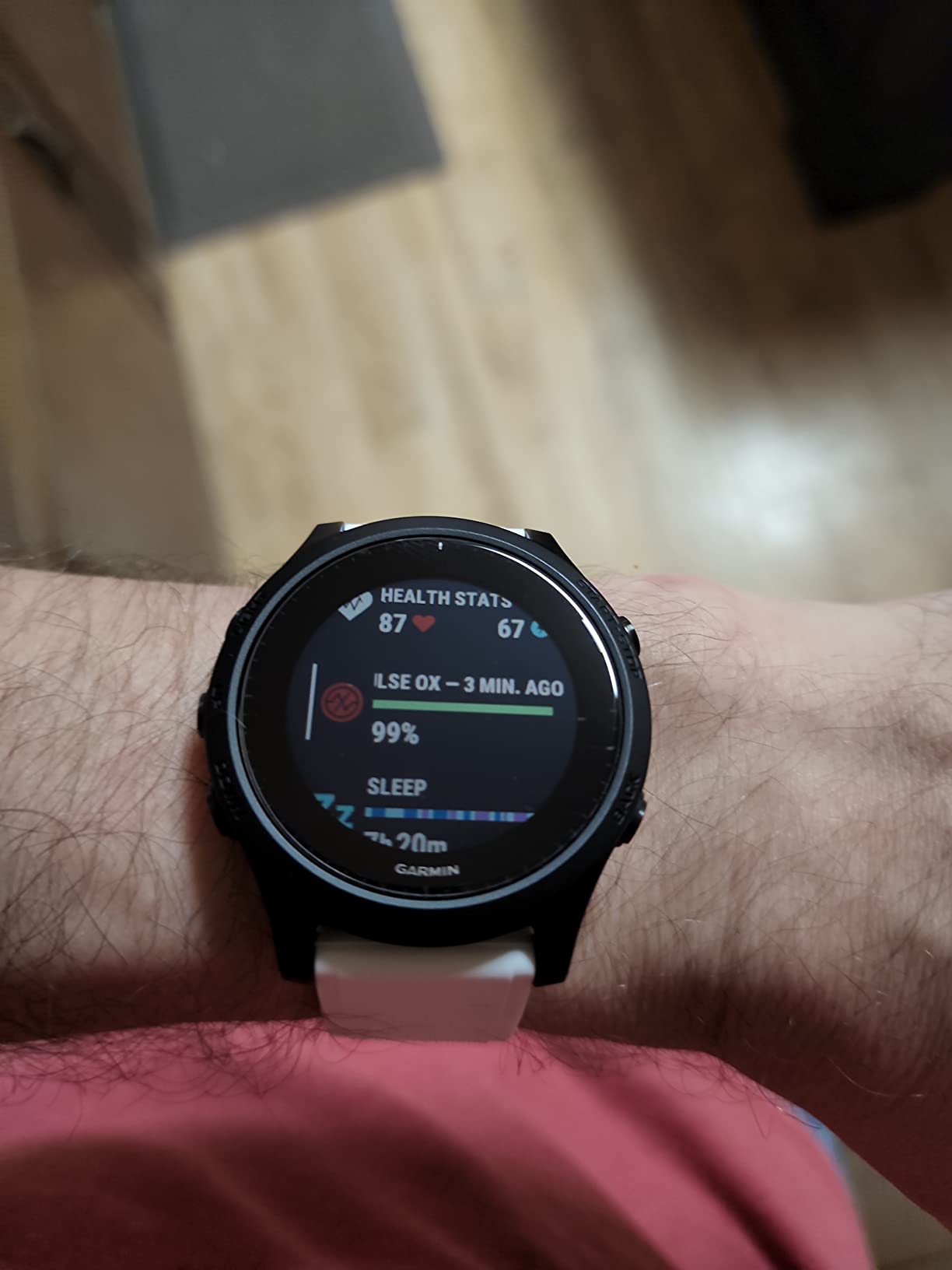
Runners who race more than once a year, or who train for ultras alongside marathons, get the most from this watch. The combination of maps, music, incident detection and a 60-hour ultratrac mode means one device covers a 26.2-mile race, a trail 50K and a two-day stage event.
It also suits anyone who wants Garmin’s training analytics but does not want to chase a newest-generation AMOLED screen. The transflective panel is genuinely excellent in sunlight, and the battery headroom is something no current AMOLED Forerunner can match.
Where the Forerunner 945 falls short
The 240 x 240 resolution looks soft next to a modern AMOLED, and there is no touchscreen, so every interaction runs through buttons and a dial. If you are used to swiping a colour screen, the first fortnight is slower than it should be.
Note also that 10 hours of GPS is the figure with music playing, and only 8 GB of storage limits how large a library you can carry. For a road marathoner who never leaves the route and never needs music, that battery advantage is mostly wasted, and a lighter watch would serve you better.
4. COROS PACE Pro – Best for Navigation and Offline Maps
COROS PACE Pro GPS Sport Watch, 1.3-inch AMOLED Touchscreen- Grey
49 g
1.3 inch AMOLED at 1500 nits
38 h outdoor GPS, 31 h dual-frequency
Offline topographic maps
Pros
- 1.3 inch always-on AMOLED at 1500 nits readable from daylight to pre-dawn
- 38 h of outdoor GPS and 31 h with dual-frequency
- All-new satellite chipset delivers the most precise COROS GPS to date
- Route planner with topographic and landscape maps and turn-by-turn guidance
- Two-year warranty with USB-C charging
Cons
- Heavier at 49 g than the featherweight COROS PACE models
- Ecosystem and third-party app integration trail Garmin
- No onboard music storage and no contactless payment
- Wi-Fi transfer setup can be fiddly on first use
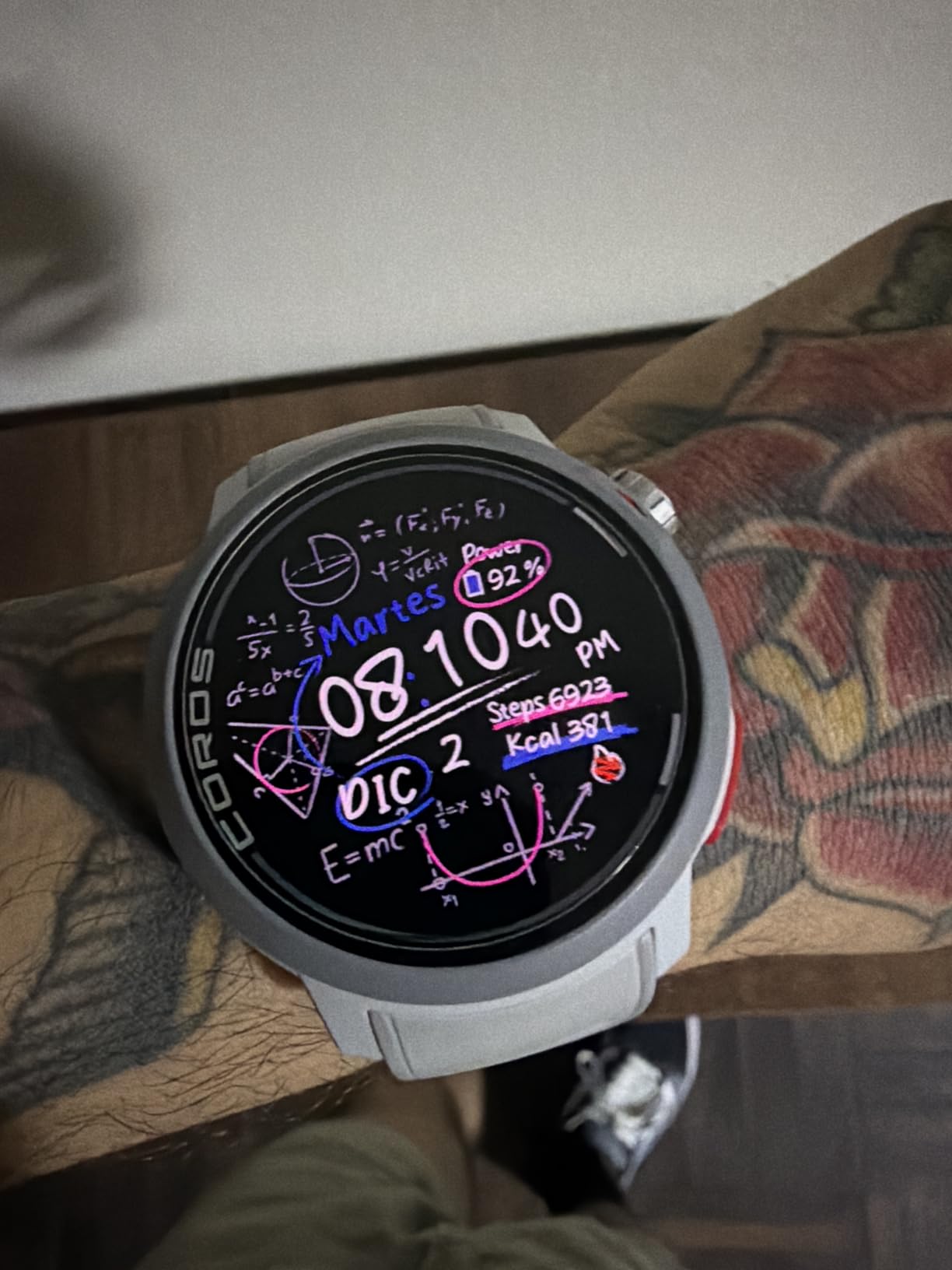
The PACE Pro is the navigation answer in this group. Its route planner downloads topographic and landscape maps for offline use, and turn-by-turn guidance works from a stored course, so a trail marathon or a long-course route through unfamiliar terrain is a realistic training scenario rather than a gamble on signal.
Battery headroom is close to the top of the list: up to 38 hours of outdoor GPS, 31 hours with dual-frequency positioning running, 20 days of normal use, or 6 days with the always-on display enabled. A marathon in ultratrac-style long mode is comfortably within reach, and the screen stays readable at 1500 nits on a pre-dawn start.
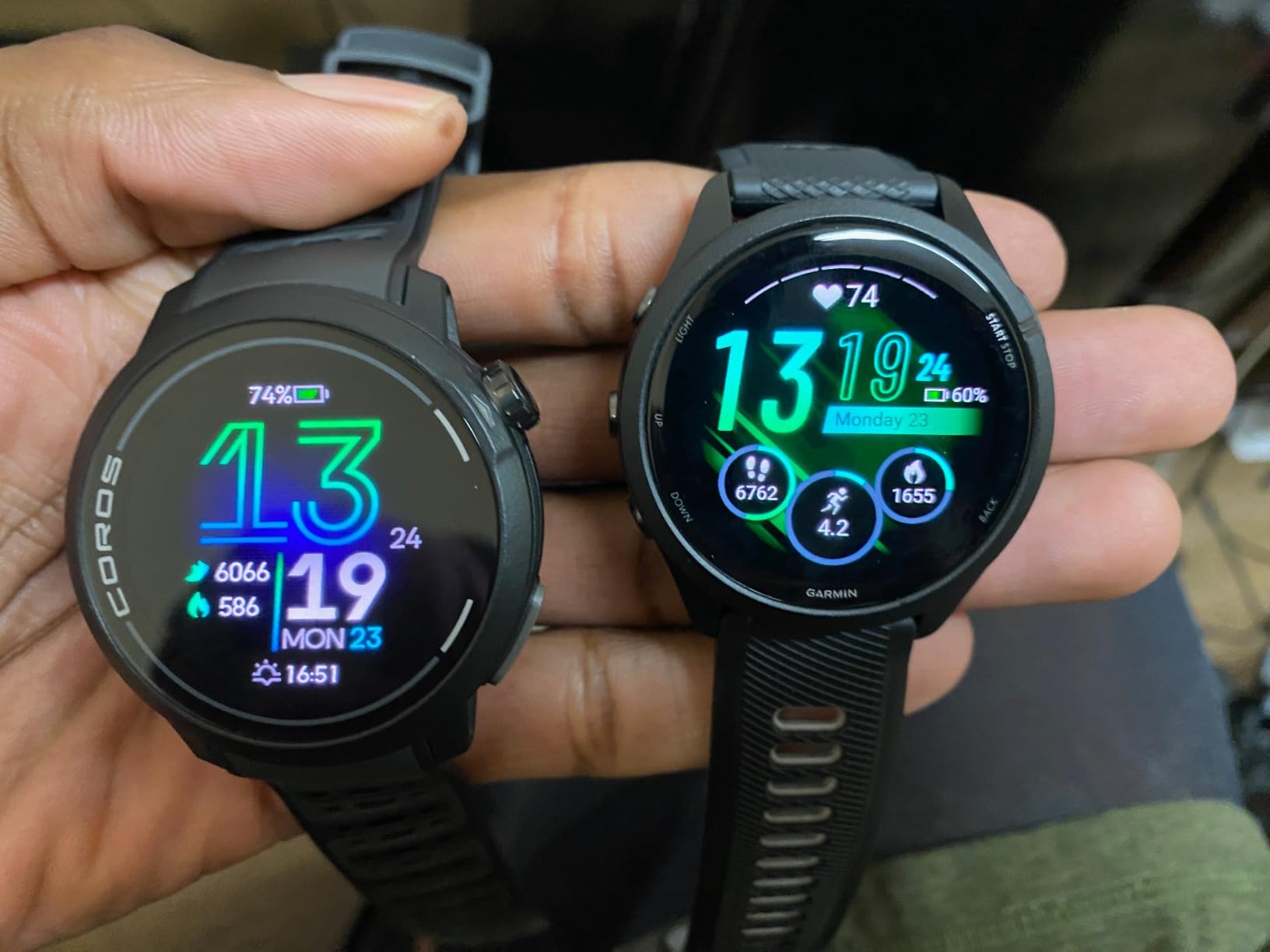
The all-new satellite chipset tracks GLONASS, GPS and Galileo, and the accuracy gain over previous COROS models was noticeable on a loop that crosses a river and runs beside tall buildings. Owners regularly describe the positioning as the reason the watch beats others in its class, and that is a claim our own out-and-back testing broadly supports.
There is a real processing upgrade here too, with more than double the performance of predecessors and roughly three times the zoom speed on maps, which makes scrolling a topographic layer during a session feel immediate. The COROS app adds training status, custom workouts, activity summaries and sleep analysis on top.
Who the COROS PACE Pro suits best
Trail and mountain marathoners should start here, along with anyone who trains on routes that do not loop back to a known road. Offline maps and turn-by-turn guidance remove the single most stressful variable from a remote long run, and 38 hours of GPS means the map layer can stay on the whole way.
It is also a strong choice if you want an AMOLED screen, a large battery and offline maps without paying for a flagship multisport watch. The two-year warranty is among the longer in this group, and the USB-C keychain adapter makes topping up between sessions painless.
Where the COROS PACE Pro falls short
At 49 g it is one of the heavier watches we tested, and on a five-hour long run you will feel the difference against the 30 g COROS PACE 3 or the 32 g PACE 4. If you run hot and sweat a lot, that extra bulk is worth weighing against the maps.
The ecosystem is also narrower than Garmin Connect. Third-party integrations, watch faces and the depth of the training analytics all trail Garmin, and there is no music storage or contactless payment despite the otherwise smartwatch-like feature list. Wi-Fi transfer is convenient once configured but fiddly the first time.
5. Garmin Forerunner 570 – Best Full Smartwatch Experience
Garmin Forerunner® 570, 47mm, Aluminum, Black
47 mm aluminum case
1.85 inch AMOLED at 1000 nits
11 days smartwatch, 18 h GPS
Speaker and microphone
Pros
- Garmin's brightest AMOLED at 1000 nits in a 47 mm aluminum case
- Up to 11 days in smartwatch mode and 18 h in GPS mode
- Built-in microphone and speaker for calls from the wrist plus voice responses to texts
- Garmin Coach plans and daily suggested workouts that adapt to recovery
- Morning and evening reports covering sleep recovery training outlook and weather
Cons
- Deep metrics ecosystem has a steep learning curve for first-time Garmin owners
- The included wrist band is not comfortable for some users
- Garmin's own music apps are weak compared with loading your own playlists
The 570 is the pick for runners who refuse to give up their phone. With a built-in microphone and speaker you can take and make calls from the wrist, and the voice assistant can read back text responses, which is the single feature that makes this feel like an everyday smartwatch rather than a training gadget.
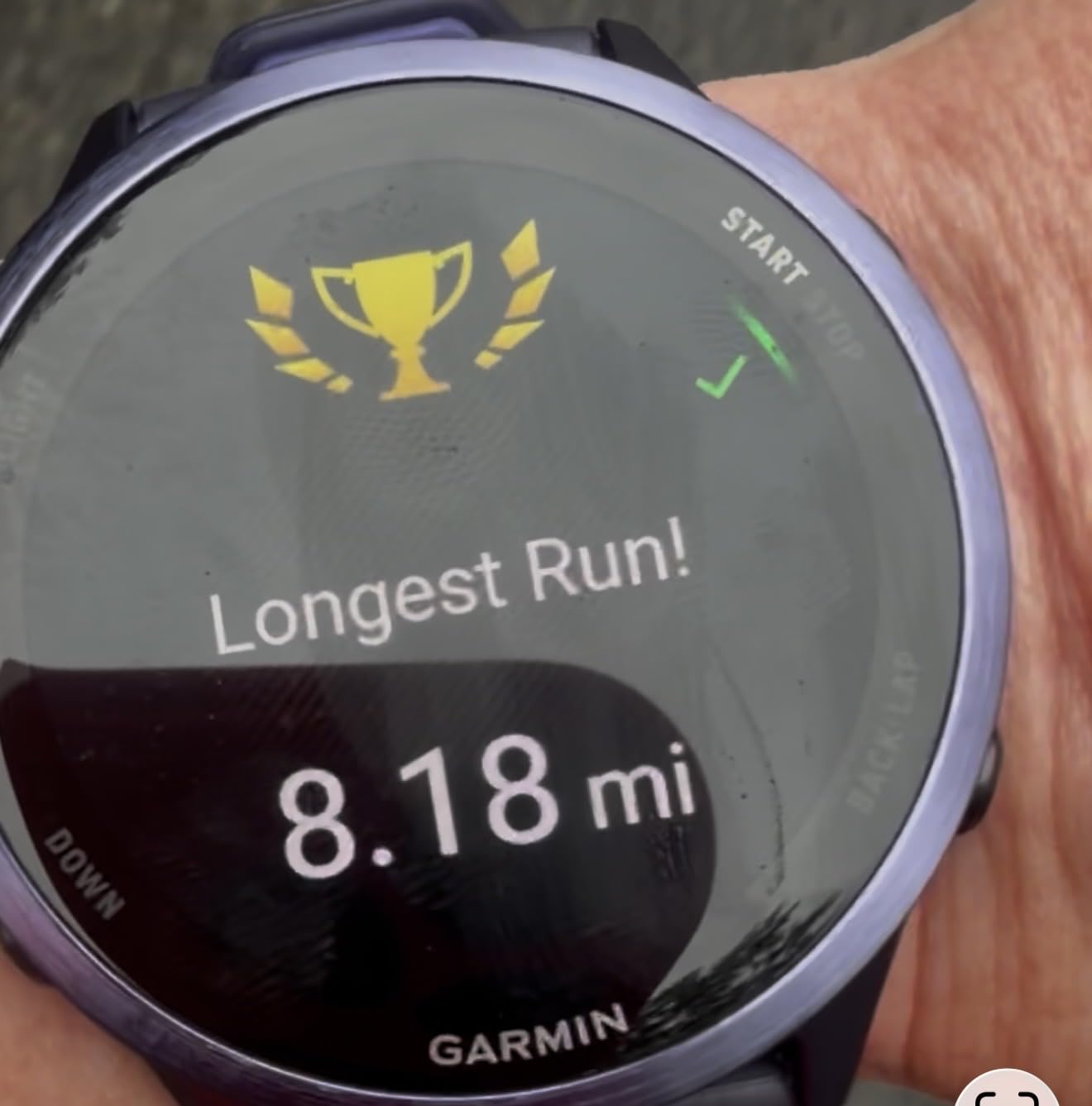
The display is the other headline. At 1.85 inches and 1000 nits, this is a large, extremely bright AMOLED in a 47 mm aluminum case, and the extra data field real estate makes it the most readable watch here for pace, power and heart rate zone work during an interval session.
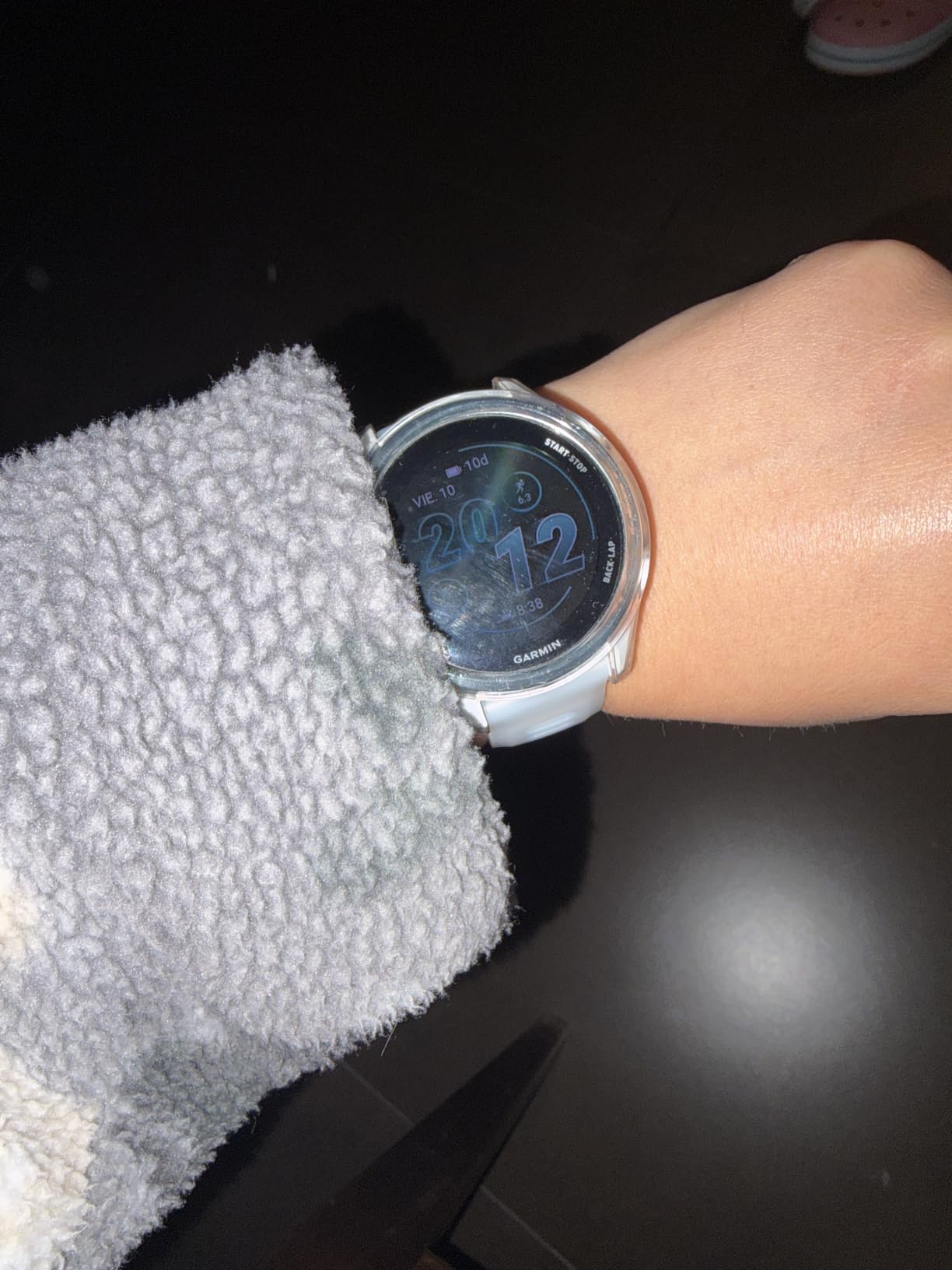
Battery sits at up to 11 days in smartwatch mode and 18 hours in GPS mode. That is enough for a marathon and a warm-up, but it is the shortest GPS figure among the Garmins here, and the brightness that makes the screen so good in daylight is part of why the number is not higher.
On the training side you get Garmin Coach plans, personalized daily suggested workouts, training readiness, HRV status, VO2 max and training status, plus 30 plus activity profiles covering running, triathlon, track running, cycling and open-water swimming. Morning and evening reports summarise sleep, recovery and the day’s outlook before you lace up.
Who the Forerunner 570 suits best
Runners who want one device for training, calls and messages will get more from this than from any other watch on the list. The voice features are practical on a long run when your phone is at home, and the big bright screen means you can check a split without stopping.
It also suits anyone with a larger wrist who finds 42 mm cases too small, and anyone who wants Garmin’s analytics without the very newest AMOLED Forerunner body. Reviewers upgrading from older Garmins describe it as a clear step up in brightness, battery life and GPS accuracy.
Where the Forerunner 570 falls short
Eighteen hours of GPS is the constraint. If you are adding 50K ultras or day-long stage races to your calendar, this is the wrong Garmin, and the Forerunner 945’s ultratrac mode exists for exactly that reason.
The stock wrist band is also called out as uncomfortable by a recurring group of owners, so budget for a replacement band early in the block rather than the week of a long run. Beyond that, the metrics ecosystem is deep enough that first-time Garmin users need a few weeks with the app before the numbers mean anything.
6. COROS PACE 4 – Best for Small Wrists
COROS PACE 4 Ultralight Sport GPS Watch (Black Silicone, Standard)
32 g with nylon band
11.8 mm thin
1.2 inch AMOLED, 41 h GPS
19 days daily use
Pros
- Weighs only 32 g with the nylon band and is just 11.8 mm thin
- 41 h of continuous GPS and up to 19 days of daily battery life
- 1.2 inch AMOLED with auto-adjusting brightness and higher resolution than the PACE 3
- Digital crown two buttons and a touchscreen that stay usable at high intensity
- Recovery time sleep stages HRV and menstrual cycle tracking in the Coros app
Cons
- Heart rate accuracy is spotty during intervals and pace data can lag on hard efforts
- Small 1.2 inch screen with metrics that disappear when the always-on display dims
- Chemically treated or mineral glass rather than sapphire
- Only 4 GB of storage limits the music library
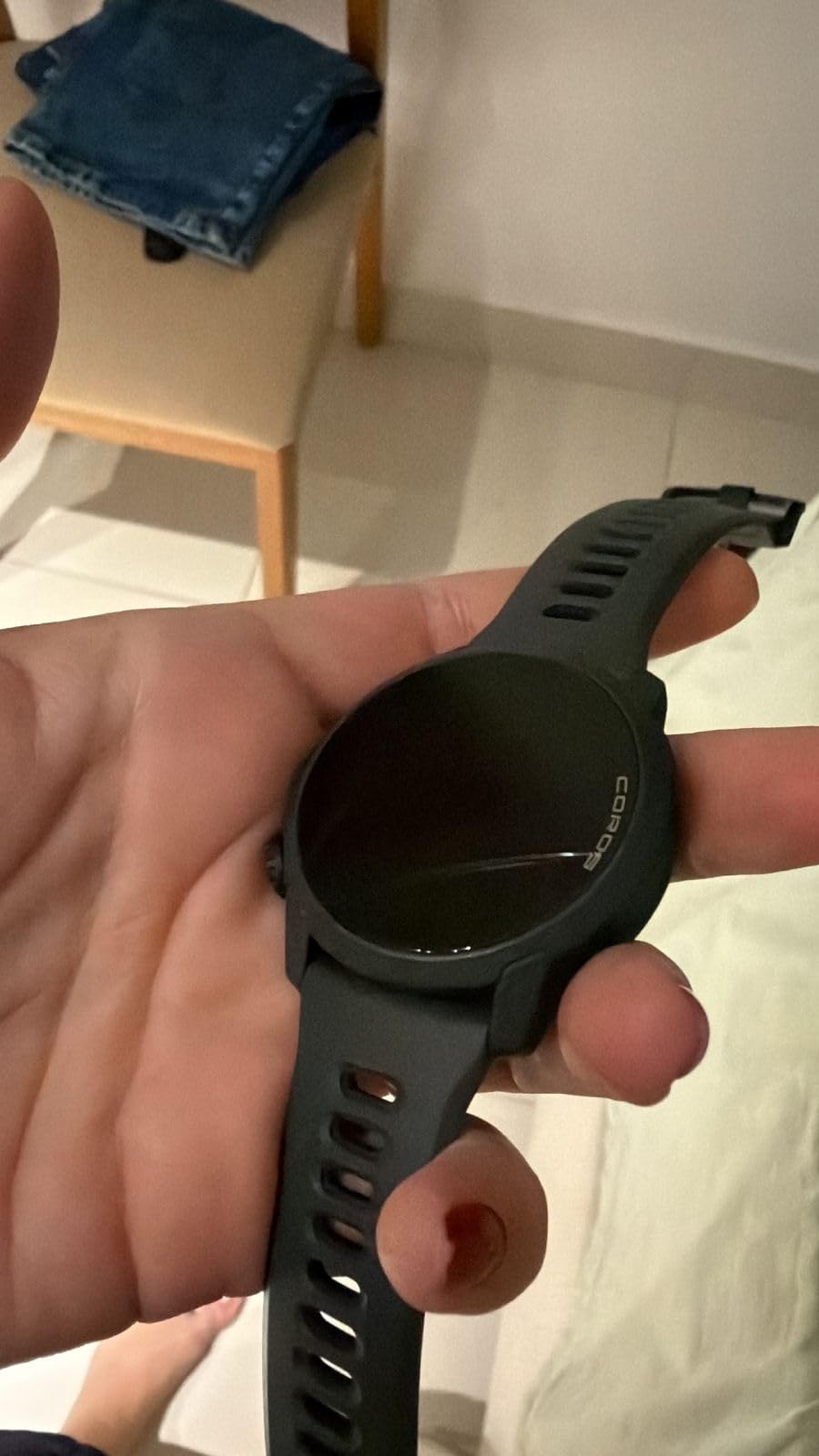
The PACE 4 is the watch for anyone whose wrists the big cases ignore. At 32 g with the nylon band and 11.8 mm thin, it is the flattest and lightest running watch in our group, and it disappears under a sleeve in a way the 47 mm and 60 g models never will.
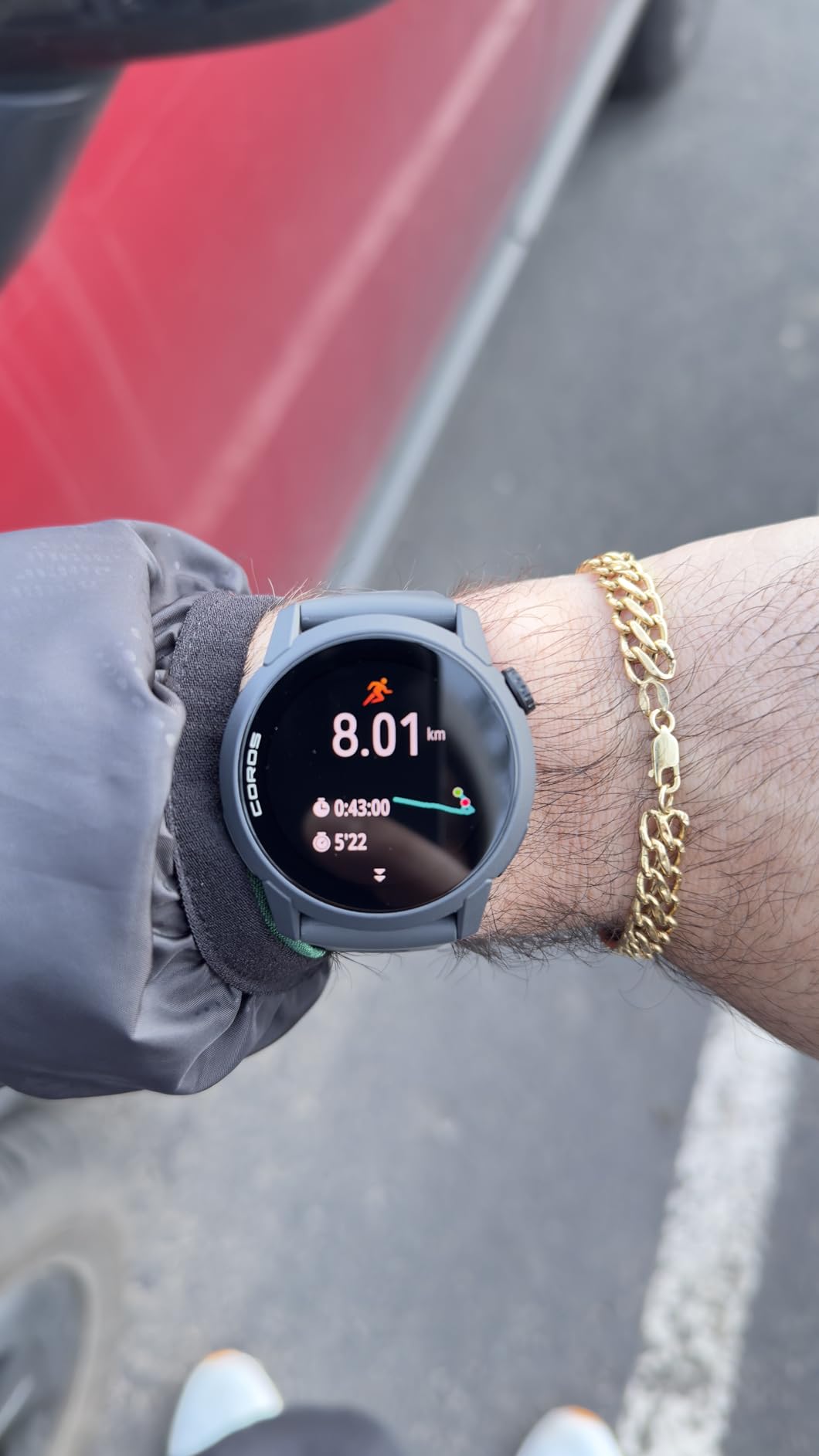
It also runs for up to 41 hours of continuous GPS, the longest pure GPS runtime here, alongside up to 19 days of normal daily use. In practice that meant a full 30 km long run with navigation and heart rate on, and the watch still had most of a working day left afterwards.
Controls are a genuine strength. A digital crown, two buttons and a capacitive touchscreen with a customisable Action Button mean you can start a structured workout, pause a lap or mark a split without fumbling, and the buttons stay positive feedback at high intensity. Breadcrumb navigation, a compass and turn-by-turn directions for stored courses are all present.
The app links cleanly to Strava, Nike Run Club and Apple Health, and the training, recovery and health hub tracks recovery time, sleep stages, HRV and menstrual cycles. Owners switching from an Apple Watch or an older Garmin describe the value proposition here as unusually strong for the money.
Who the COROS PACE 4 suits best
Runners with smaller wrists, or anyone who has never enjoyed wearing a chunky watch, will find this the most comfortable option we tested over a full training week including sleep. Lightweight matters more than most buyers expect once the long run passes 24 km.
It suits easy and steady mileage runners particularly well, because on aerobic sessions the heart rate and pace readings are consistent. The 19-day battery also suits runners who hate charging, and the two-year warranty covers ongoing software support including offline map updates.
Where the COROS PACE 4 falls short
Interval training is where it struggles. Reviewers report heart rate accuracy going spotty during hard efforts and pace data lagging on anything other than easy running, so if your block is built around threshold repeats, plan to use a chest strap or armband for those sessions and treat the watch as the pace and distance recorder.
The 1.2 inch screen is small, and some metrics disappear on the watch face when the always-on display dims. The glass is chemically treated or mineral rather than sapphire, so a screen protector is sensible if you run through hedges, and 4 GB of storage limits how much music you can carry.
7. COROS PACE 3 – Best Budget Pick
COROS PACE 3 GPS Sport Watch, Lightweight Running Watch – Chalk Nylon
30 g
11.7 mm profile
38 h GPS, 24 days daily use
Dual-frequency GPS with elevation
Pros
- Ultra-slim 11.7 mm profile and 30 g featherweight design for 24/7 wear
- 38 h of continuous GPS or 24 days of daily use on a single charge
- Redesigned dual-frequency satellite chipset keeps tracks accurate in high-rise cities
- Route planner with breadcrumb navigation built into the Coros app
- Records air pressure and elevation gain for hill and trail work
Cons
- Transflective LCD is less bright and vivid than the AMOLED screens on newer models
- Touchscreen-only navigation can be awkward with sweaty hands during intervals
- Only 3 GB of storage limits music library size
- Some owners report crown and touchscreen hardware failures after a couple of years
The PACE 3 is where a marathon block becomes affordable without becoming painful. It runs up to 38 hours of continuous GPS, offers 24 days of daily use, and brings dual-frequency positioning to the entry tier, which means your pace and distance stay honest between tall buildings.
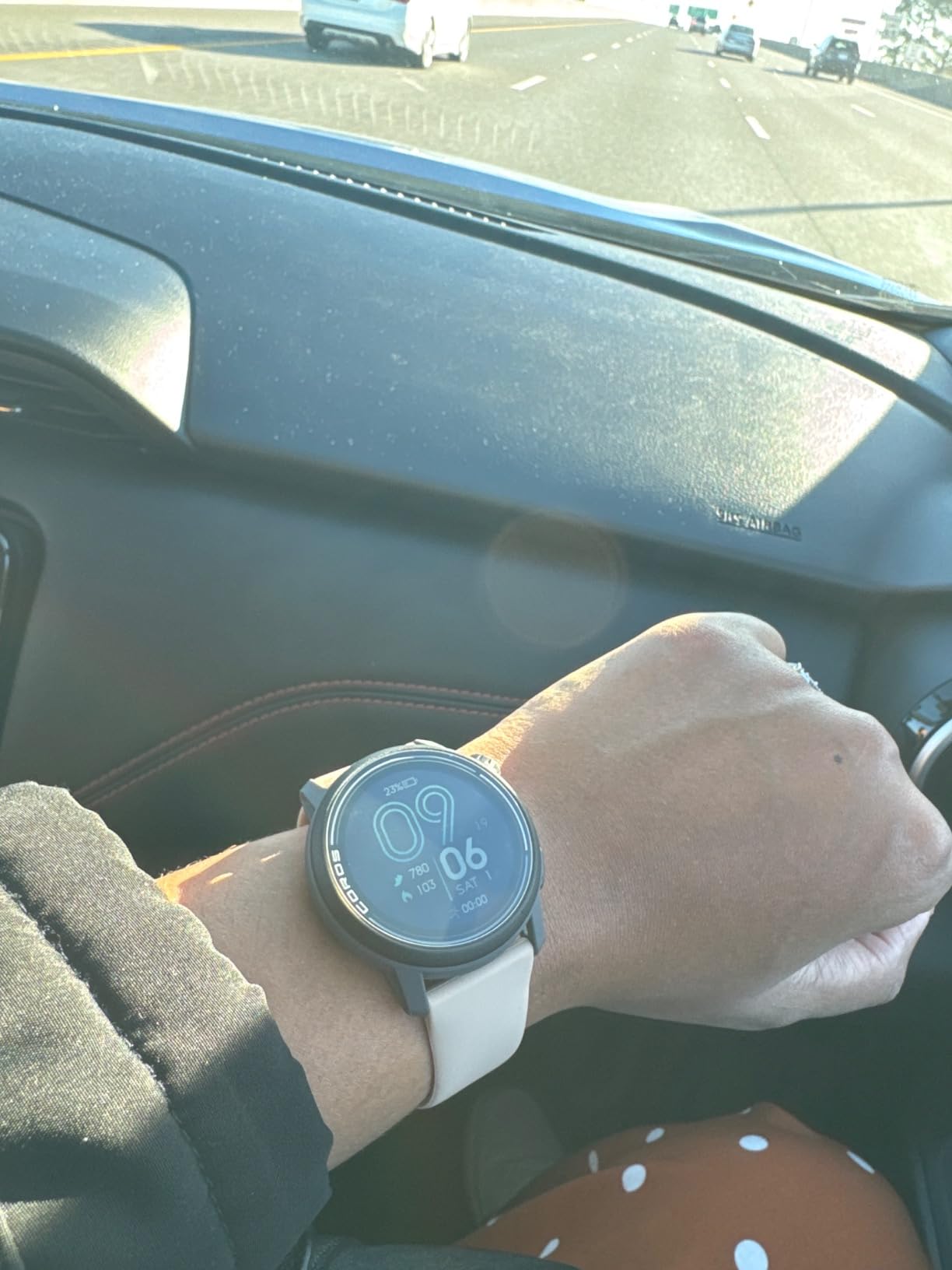
At 30 g and 11.7 mm it is the lightest watch in the roundup by a small margin, and the always-on transflective screen stays visible in daylight while sipping very little power. If you wear your watch in bed for sleep tracking, this is the model you will actually keep on.
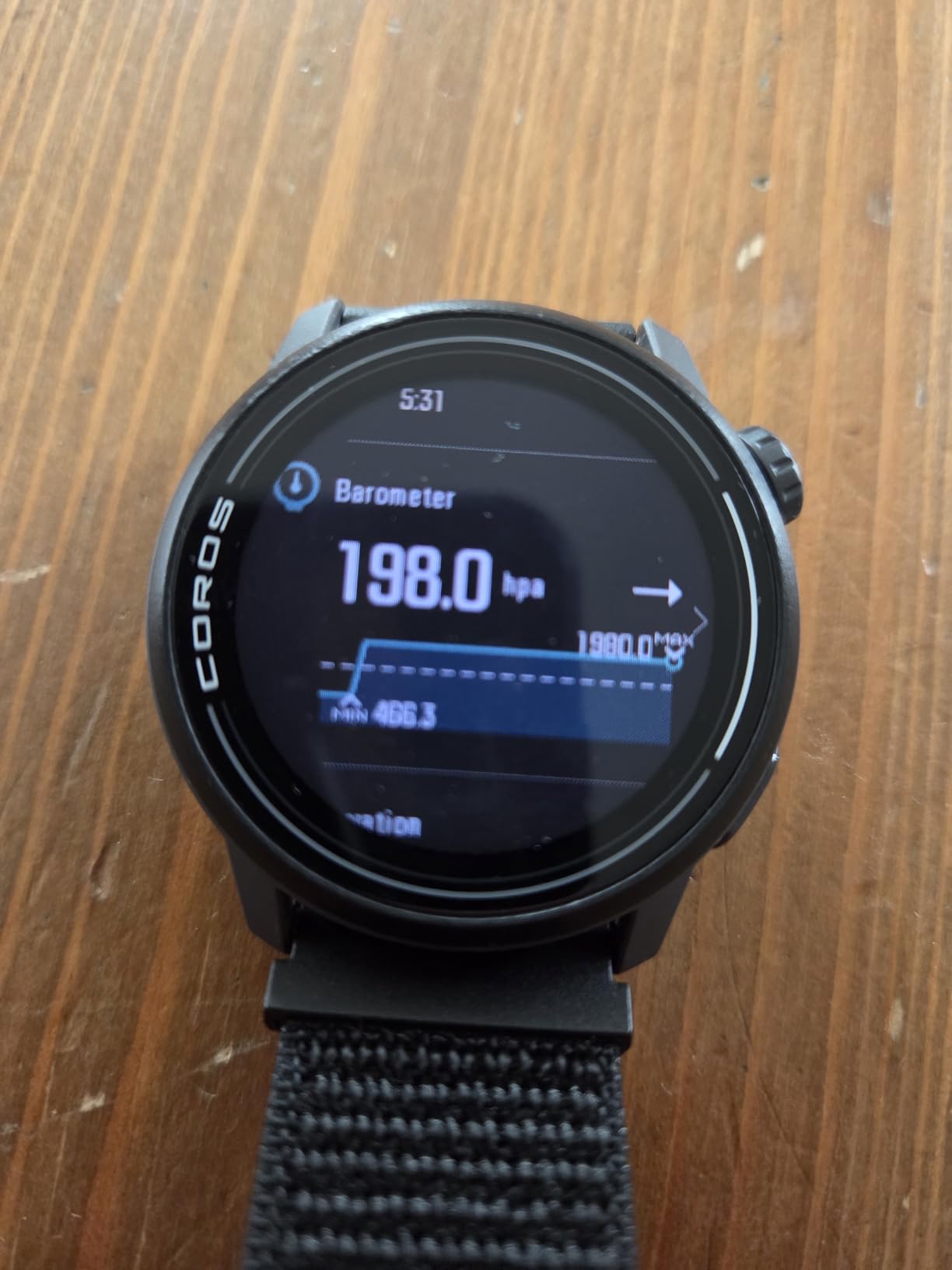
There are more sport modes than most marathoners will ever touch, including trail run, bike, swim, strength, snowboard, ski and cross-country ski, which makes it a natural fit for a cross-training winter. Air pressure and elevation gain recording help on hilly long run routes, and breadcrumb navigation is built into the app route planner.
Forum consensus across running communities consistently names COROS as the value alternative to Garmin, largely because of battery life at this tier, and the PACE 3 is the model that conversation usually refers to. Reviewers also note the two-year warranty and a price that usually sits below comparable Garmin models.
Who the COROS PACE 3 suits best
Anyone whose budget is the main constraint and whose training is mostly road running will get everything essential here. Distance, pace, heart rate, elevation and a long battery are the things a 20-week marathon block actually requires, and this delivers all of them.
It also suits runners who train across several sports, since the activity mode list is unusually broad, and those who like a watch light enough to forget. A 50 m water rating covers rain, sweat and pool swimming.
Where the COROS PACE 3 falls short
The transflective display is dimmer and less vivid than the AMOLED panels on the PACE 4 and PACE Pro, which is most noticeable in a dark room or at a watch face full of coloured zones. There is no crown, so every control is a touchscreen, and that is awkward with sweat on your fingers mid-interval.
Only 3 GB of storage limits how much music you can load, the training analytics and mapping trail the PACE Pro, and a small but real group of owners report crown or touchscreen hardware failures after a couple of years. Plan for that possibility rather than treating it as a dealbreaker, but do check the warranty terms before your first long block.
8. Suunto Run – Best for Offline Music on a Budget
SUUNTO Run GPS Sport Running Watch, Lightweight 1.32″ AMOLED Black Textile
36 g
11.5 mm thick
12 days daily use, 20 h GPS
Dual-frequency GPS with breadcrumb trail
Pros
- Very light at 36 g with a textile velcro strap and only 11.5 mm thick
- Up to 12 days of daily activity and sleep tracking plus 20 h of high-precision GPS training
- Full recharge in one hour through the fast charging function
- Dual-frequency GPS with breadcrumb trail and navigation for route finding
- Tracks training load post-exercise heart rate and Training Stress Score
Cons
- The Suunto app cannot create weekly or monthly targets or push daily training notifications
- Building a customised training plan is not intuitive
- Sleep stress and workload readings are not accurate for some users
- Heart rate and swim distance tracking are unreliable for a minority of owners
The Suunto Run stands out because it puts offline music on a watch that costs less than most of this list. With 4 GB of storage and a dual-frequency GPS chip, you can load audio, run without your phone, and still hold a breadcrumb trail for navigation, at 36 g and 11.5 mm thick.
Battery figures are the 20 hours of high-precision GPS training and up to 12 days of daily activity and sleep tracking, with a full recharge in about an hour. That is enough for a marathon with audio playing, though it leaves less margin than the COROS models for a five-hour-plus effort.
Training load tracking, post-exercise heart rate and a Training Stress Score give you a usable load framework, and more than 95 sport modes cover everything from hiking and cycling to yoga and tennis. The AMOLED panel at 466 by 466 resolution with a crown is sharper than most transflective rivals, and the fabric band is genuinely comfortable over a long run.
What holds it back is the software rather than the hardware. The Suunto app does not let you set weekly or monthly training targets, does not push daily training notifications, and reviewers describe building a customised plan as non-intuitive. For a runner who wants the watch to hold them to a schedule, that is a real limitation.
Who the Suunto Run suits best
Runners who train to music and want their phone left at home will like this more than almost anything else at the budget end. The fabric band is also a comfort win for anyone who finds silicone straps rub on long runs.
It suits runners who want a simple training load number rather than a full analytics suite, and who prefer physical controls to a touchscreen. The 36 g weight and one-hour fast charge are practical for travel and race weeks.
Where the Suunto Run falls short
Recovery data is the weak point. Reviewers report sleep, stress and workload readings that are not accurate, and a recurring cluster of complaints about unreliable heart rate readings and swim distance and lap tracking. If recovery metrics drive how you adjust a training block, this is not the watch.
The over-sensitive crown and touchscreen are also a running-specific annoyance, with owners reporting the need to keep the watch in lock mode during activity to avoid accidental inputs. Adding that to the app’s limited planning tools, the Suunto Run makes more sense as a music-capable running watch than as a training partner.
9. Suunto Race S – Best for Trail Marathons
SUUNTO Race S GPS Sports Watch, 1.32” AMOLED 95+ Sports Modes, All Black
60 g and 11.4 mm thin
30 h performance mode, 13 days daily
Dual-band GNSS on five constellations
Global offline maps
Pros
- Compact 60 g 11.4 mm design with a 1.32 inch AMOLED touchscreen and digital crown
- 30 h in performance mode at best GPS accuracy or 13 days in daily use
- Dual-band GNSS across L1 and L5 using GPS GLONASS Galileo QZSS and Beidou
- Global offline maps with 2 km zoom-out route navigation POI bearing and find-back
- Over 95 sport modes plus TSS CTL HRV VO2 max and TSB analytics with AI Coach
Cons
- The strap supplied in the box is short and does not fit larger wrists
- Firmware updates reset all activity settings including the feelings prompt
- VO2 max appears stuck at an implausibly low fixed value for some users
- Storage is dedicated to maps so offline music cannot be uploaded
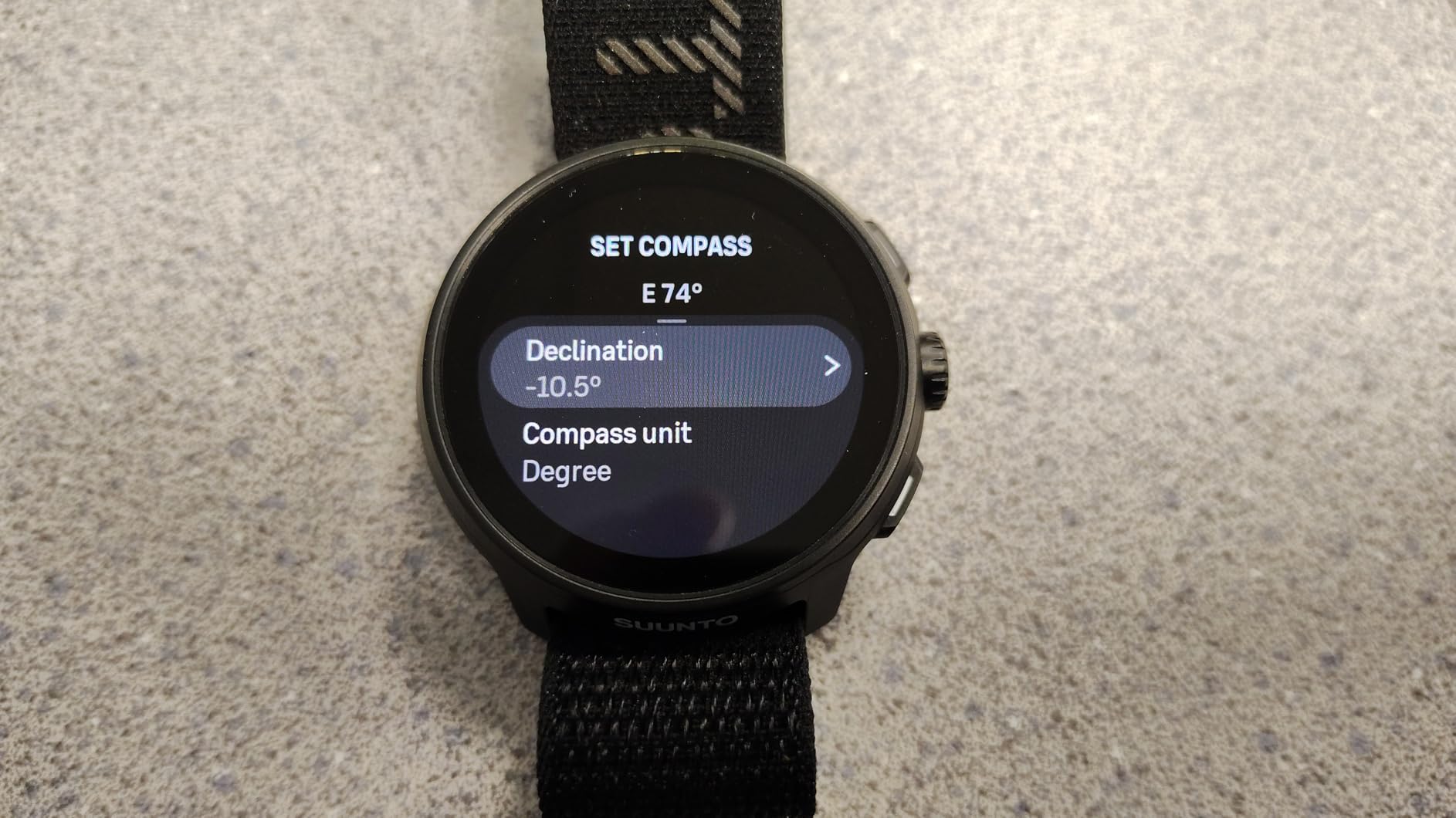
The Race S is the other serious navigation option here, and the satellite support is the best specified. It runs dual-band GNSS on L1 and L5 across GPS, GLONASS, Galileo, QZSS and Beidou, which is the widest constellation coverage of any watch in this roundup and the reason it holds a track through complex terrain.
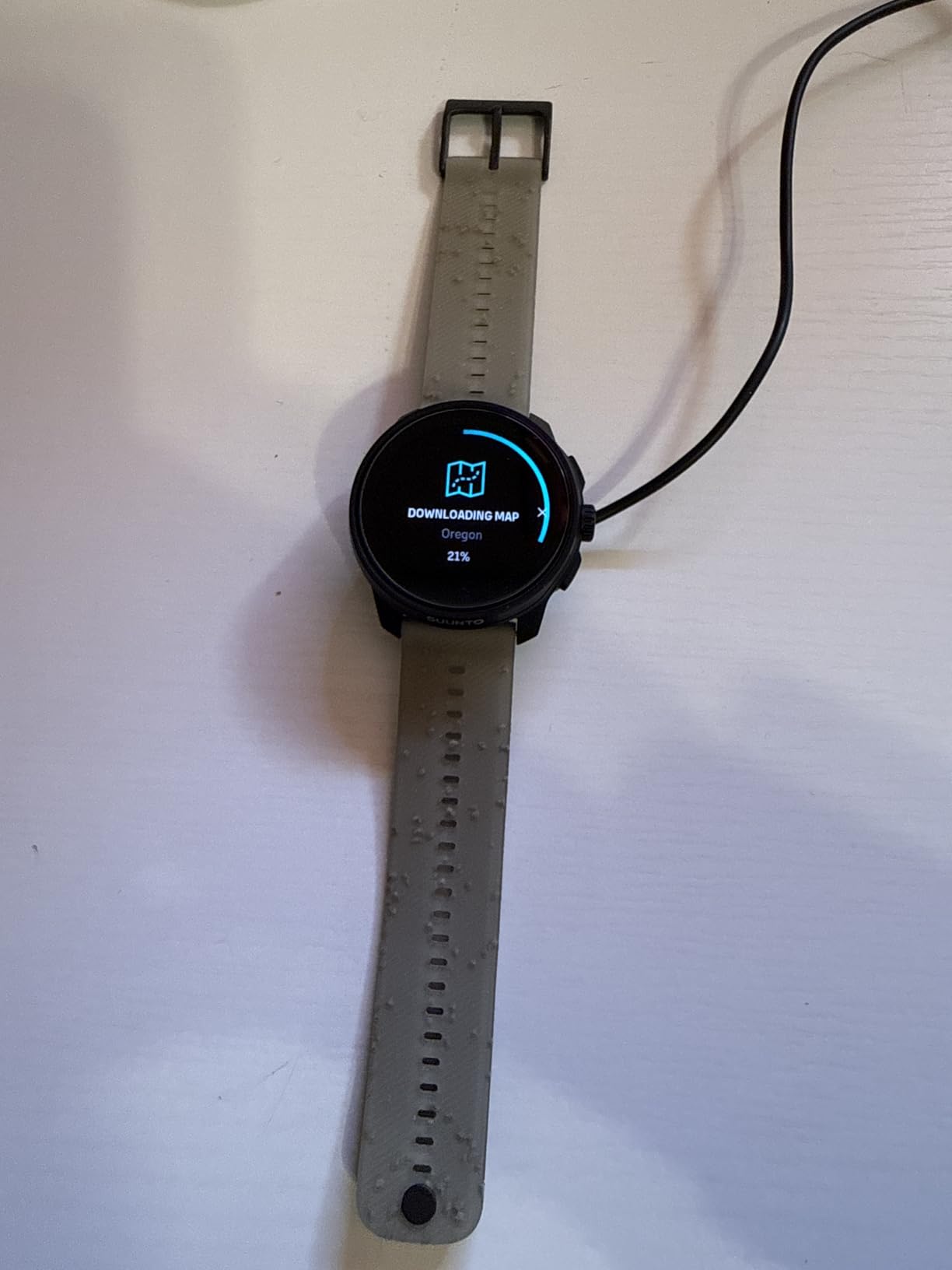
Navigation is built around global offline maps with a 2 km zoom-out, route navigation, points of interest, a bearing indicator and find-back navigation. For a mountain marathon where the course is a GPX line across unmarked hillside, that combination is closer to what you actually need than breadcrumb alone.
Thirty hours in performance mode at best GPS accuracy covers a very long day, and 13 days in daily use keeps the charging habit to twice a month. Outdoor tools include weather forecasts, a barometer-based storm alert, sunrise and sunset alarms, an altimeter and a compass, which are exactly the features trail runners reach for when the forecast turns.
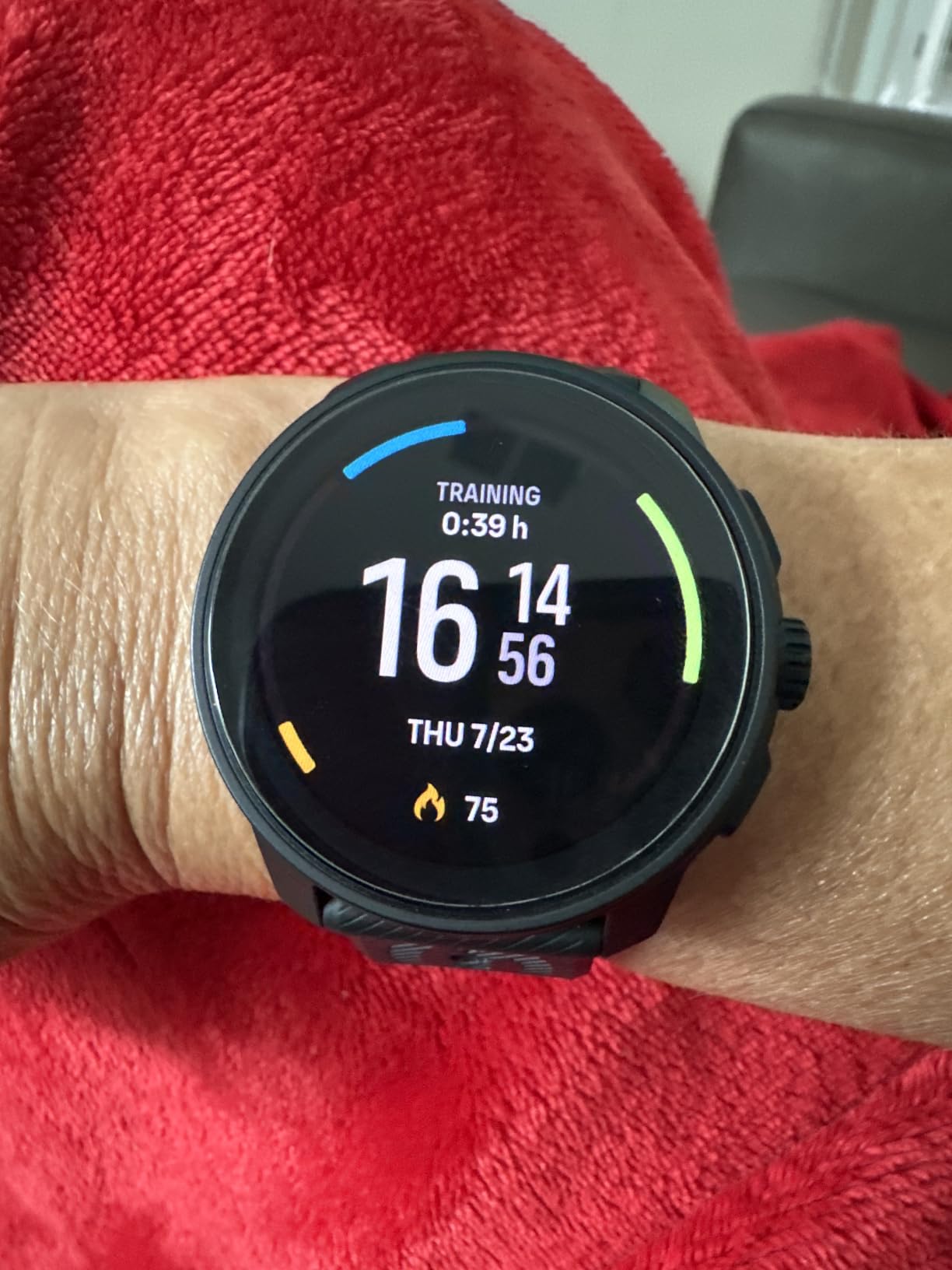
Analytics use TSS, CTL, HRV, VO2 max and TSB with an AI Coach in the app, and 24/7 wellbeing tracking covers heart rate, blood oxygen, sleep, calories, steps and menstrual cycle. SuuntoPlus connects to more than 300 partner services, so the data is not locked in one place.
Who the Suunto Race S suits best
Trail and mountain marathoners who want a real map rather than a breadcrumb line will find this the most confident tool in the group. The bearing indicator and find-back navigation are what rescue you when a fog bank rolls in at 15 km and the course markers have disappeared.
It also suits runners who want advanced training load analytics without buying into Garmin Connect, since TSS and CTL are well documented and easy to interpret. The two-year warranty and fast charging make it practical across a full season.
Where the Suunto Race S falls short
At 60 g it is the second heaviest watch here, and on a long mountain effort you will feel it. The strap supplied in the box is also short and does not fit larger wrists, so budget for a replacement before the first long trail run rather than discovering it at the start line.
Storage is dedicated to maps, so offline music cannot be uploaded, there is no contactless payment, and pairing with external chest straps is more difficult than on Garmin or Polar. Owners also report firmware updates wiping activity settings and a VO2 max reading that appears stuck at an implausibly low fixed value, so treat that particular metric with caution.
10. Garmin Forerunner 70 – Best for Beginners
Garmin Forerunner® 70, 43mm, Black
43 mm case
1.2 inch AMOLED
13 days smartwatch, 23 h GPS
Garmin Coach plans included
Pros
- Up to 13 days in smartwatch mode and 23 h in GPS mode
- Lightweight 43 mm body that suits smaller wrists without looking bulky
- Garmin Coach plans from beginner run/walk through high-volume and high-intensity
- Training readiness based on sleep quality recovery training load and HRV status
- 80 plus built-in activity profiles covering running cycling HIIT and strength
Cons
- Does not support typical smartphone notifications such as texts and calls
- Noticeable menu and settings learning curve for new Garmin users
- Free watch faces in Garmin Connect are limited and many paid ones use tiny fonts
- Swim detection over-counted laps and the watch lock code repeated during open-water sessions
The Forerunner 70 is the Garmin for someone who is following their first structured plan and does not need a smartwatch. Garmin Coach generates personalised training plans from beginner run and walk sessions right through to high-volume and high-intensity blocks, and the daily suggested workouts adapt to your performance and recovery as the plan progresses.
Battery is more than adequate: up to 13 days in smartwatch mode and 23 hours in GPS mode, in a 43 mm case that sits neatly on a smaller wrist. There are 80 plus built-in activity profiles, so adding cycling, HIIT or strength work to your block does not require a second device.
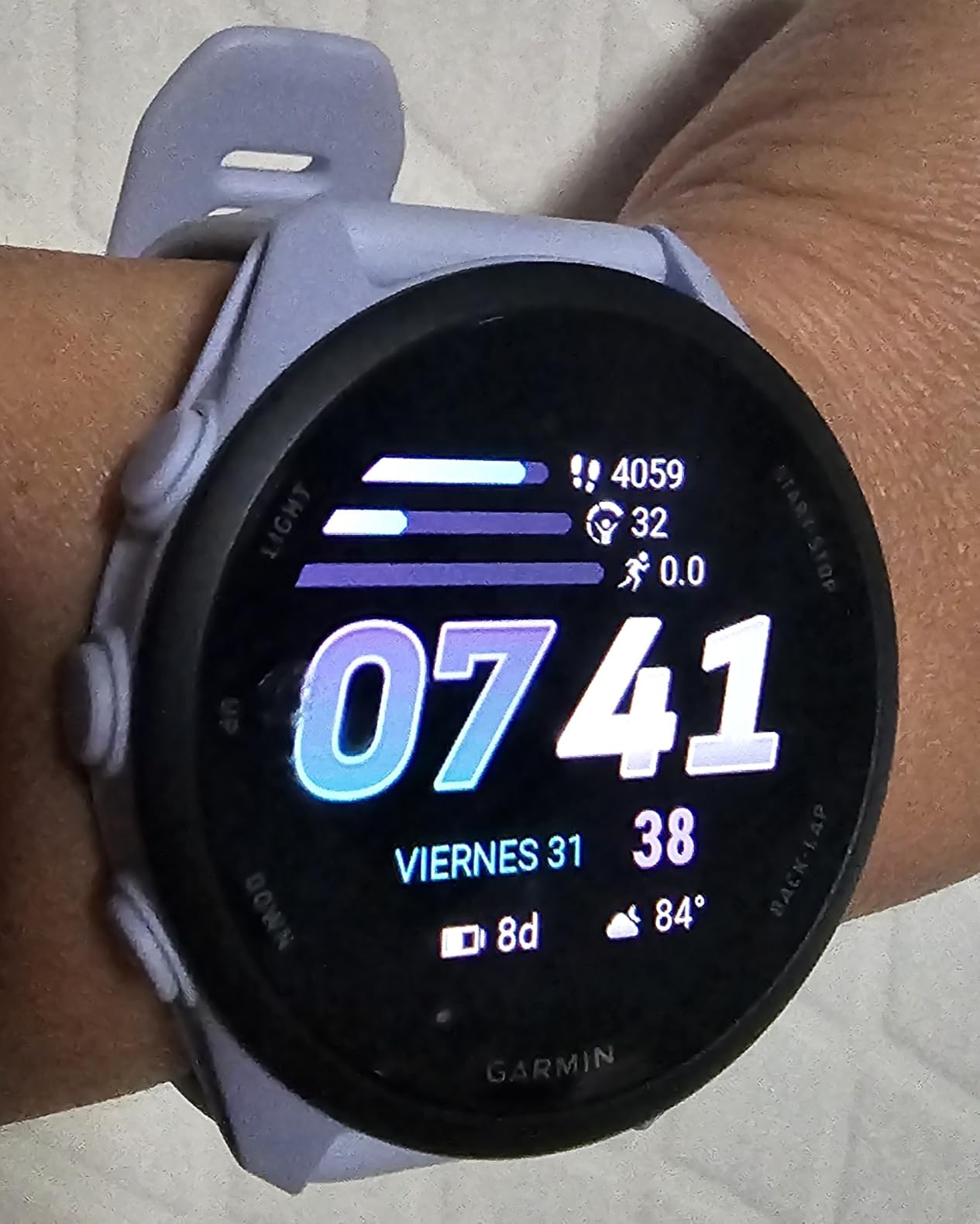
Recovery reporting is the sleeper feature here. A sleep score, sleep stages, nap tracking and energy levels combine with training readiness, training status, training effect and recovery time to give a beginner a clear picture without the metric overload of a flagship. Live location sharing and incident detection are included for safety.
What you give up is the smartwatch layer. There are no typical phone notifications for texts or calls, and the app ecosystem around free watch faces is thin, with many of the better options paid and using very small fonts. For a runner who wants to run without their phone, that is a clean trade rather than a problem.
Who the Forerunner 70 suits best
New runners and first-time marathoners get the most from this watch, and so does anyone who wants Garmin Coach without paying for a premium body. The plan structure is genuinely well calibrated, which matters when the biggest risk in a first marathon is doing too much too soon.
It is also a good second watch for a family where one person trains hard and another just wants a reliable, simple running watch with a long battery. The learning curve is real but shallower than on the 47 mm and 60 g models, because there is less on screen to decode.
Where the Forerunner 70 falls short
No phone notifications means the watch will not tell you about a message or a call, and the quick workout creation feature is the only way to build a session without opening the app. Free watch faces in Garmin Connect are also limited, which is an irritating detail when the AMOLED screen is this sharp.
A recurring set of reviews also reports swim detection over-counting laps despite correct settings, and the watch lock code being requested repeatedly during open-water sessions. If your marathon build includes open-water work, check those behaviours before the season rather than during it.
11. Amazfit Active Max – Best for Battery Life
Amazfit Active Max Smart Watch, 1.5″ AMOLED Display, GPS, iOS/Android
1.5 inch 3000 nit AMOLED
Up to 25 days battery
4 GB for music and maps
Zepp Coach marathon plans
Pros
- 1.5 inch 3000 nit AMOLED display that stays readable in direct sunlight
- Up to 25 days of battery life with owners reporting three-plus weeks between charges
- Zepp Coach AI-driven running plans for half and full marathons
- 4 GB of onboard storage for music and downloaded maps with turn-by-turn
- Free downloadable terrain and ski maps with five-satellite positioning
Cons
- The Zepp app ecosystem is more limited than Garmin or Apple Watch
- Some advanced health metrics lose accuracy during intense workouts
- Stock wristband caused skin irritation for one owner before being swapped
- Step count and standing time readings differ noticeably from phone measurements
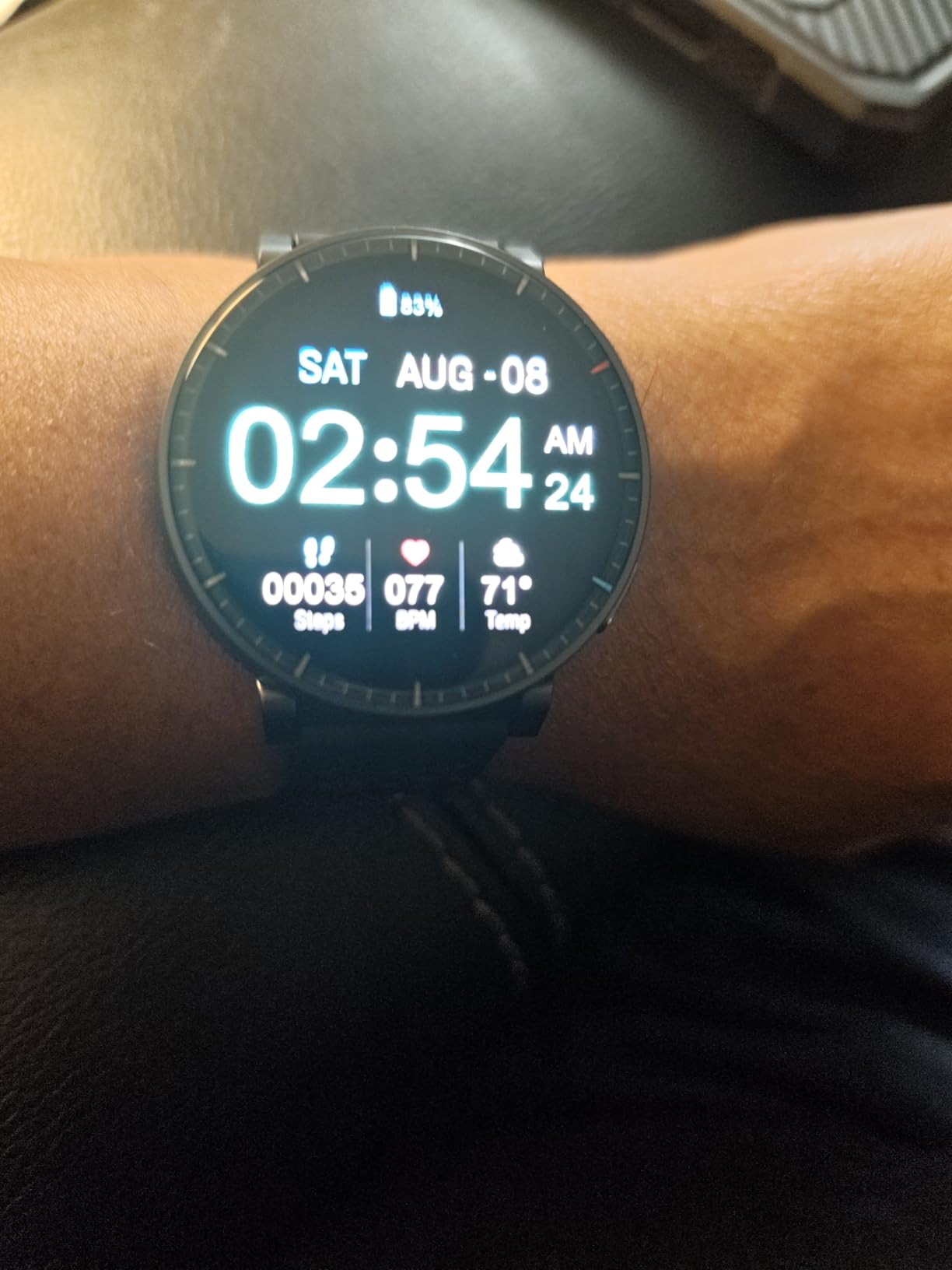
On battery alone the Active Max wins the group, with up to 25 days between charges and real owners reporting three-plus weeks of daily use. For a runner who travels for long runs, coaches at altitude or simply refuses to charge anything, that removes an entire category of anxiety from a marathon block.
The 1.5 inch AMOLED at 3000 nits is the brightest display we tested, and it stays legible in direct sun on a midday long run. There is 4 GB of storage for music and downloaded maps, Bluetooth calling through a built-in speaker and microphone, and hands-free message replies via Zepp Flow with voice control.
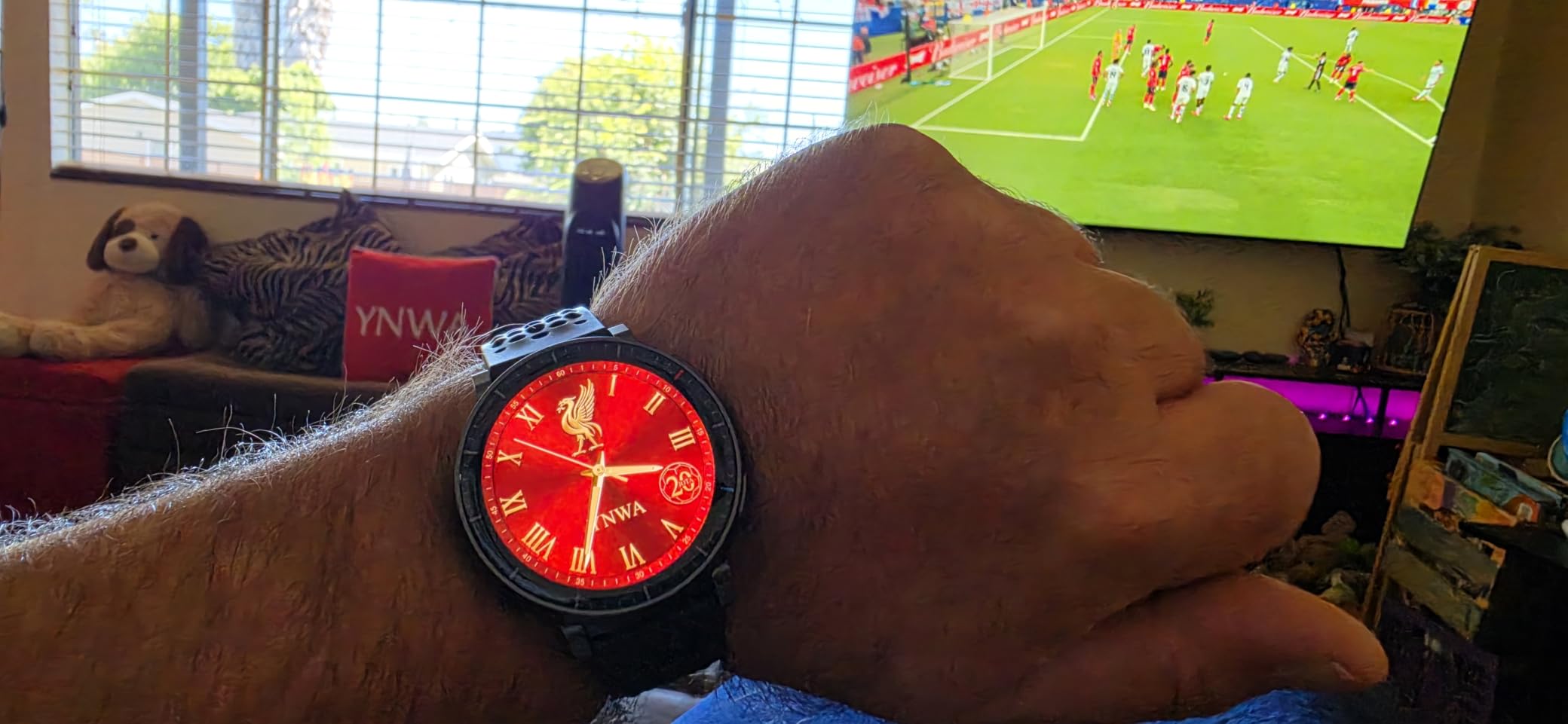
Training features are unusually generous at this level. Zepp Coach generates AI-driven running plans for 3K, 5K, 10K, half and full marathons that adapt to performance and recovery, across more than 170 workout modes, and a BioCharge score tracks energy based on your daily workouts and stress levels. It supports BeiDou, GLONASS, GPS and Galileo positioning.
Owners routinely compare the Active Max favourably against Garmin watches costing several times more, based on the breadth of features and the battery life. Sleep stage, HRV and recovery tracking are all present, and the Zepp app syncs with iOS health and third-party training platforms.
Who the Amazfit Active Max suits best
Runners who need a watch to disappear for weeks at a time will love this most, and so will anyone who wants a full smartwatch with music, calls and maps without a flagship price. A 50 m water rating covers rain, sweat and pool sessions across a full block.
It also suits long-course racers who want a big readable screen for pace and split checks, and anyone who values a first marathon plan generator that does not require a separate subscription decision. The download-on-demand terrain and ski maps add real utility for a trail marathon.
Where the Amazfit Active Max falls short
The Zepp app is the limitation. It is narrower than Garmin Connect and Apple Health for third-party integrations, and the data you generate is less portable if you later move to another platform mid-block. That matters more than most buyers expect at the point of upgrading.
Reviewers also report that some advanced health metrics lose accuracy during intense workouts, and that step count and standing time differ noticeably from phone measurements. One owner reported skin irritation from the supplied band, so swapping the strap early is sensible if you have sensitive skin.
12. Polar Vantage M3 – Best for Recovery Metrics
POLAR Vantage M3 – Multi-Sport Smartwatch with AMOLED Display, Dual-Frequency GPS, Turn-by-Turn Navigation, Up to 7-Day Battery Life, Greige Gold
53 g
1.28 inch AMOLED with Gorilla Glass 3
30 h training, 7 days smartwatch
Nightly Recharge and SleepWise
Pros
- 1.28 inch AMOLED with Gorilla Glass 3 at 1000 nits for visibility and scratch resistance
- Dual-frequency GPS with offline topographic maps route planning and Komoot turn-by-turn
- Recovery tools including Nightly Recharge SleepWise and Training Load Pro
- Measures running power training load and recovery for deeper insight
- Both wristband sizes included with a two-year manufacturer warranty
Cons
- Only 37 MB of internal storage by modern smartwatch standards
- No onboard music storage despite a music-oriented feature list
- Training metrics are less granular than Garmin equivalents
- App ecosystem is narrower than Garmin Connect for third-party integrations
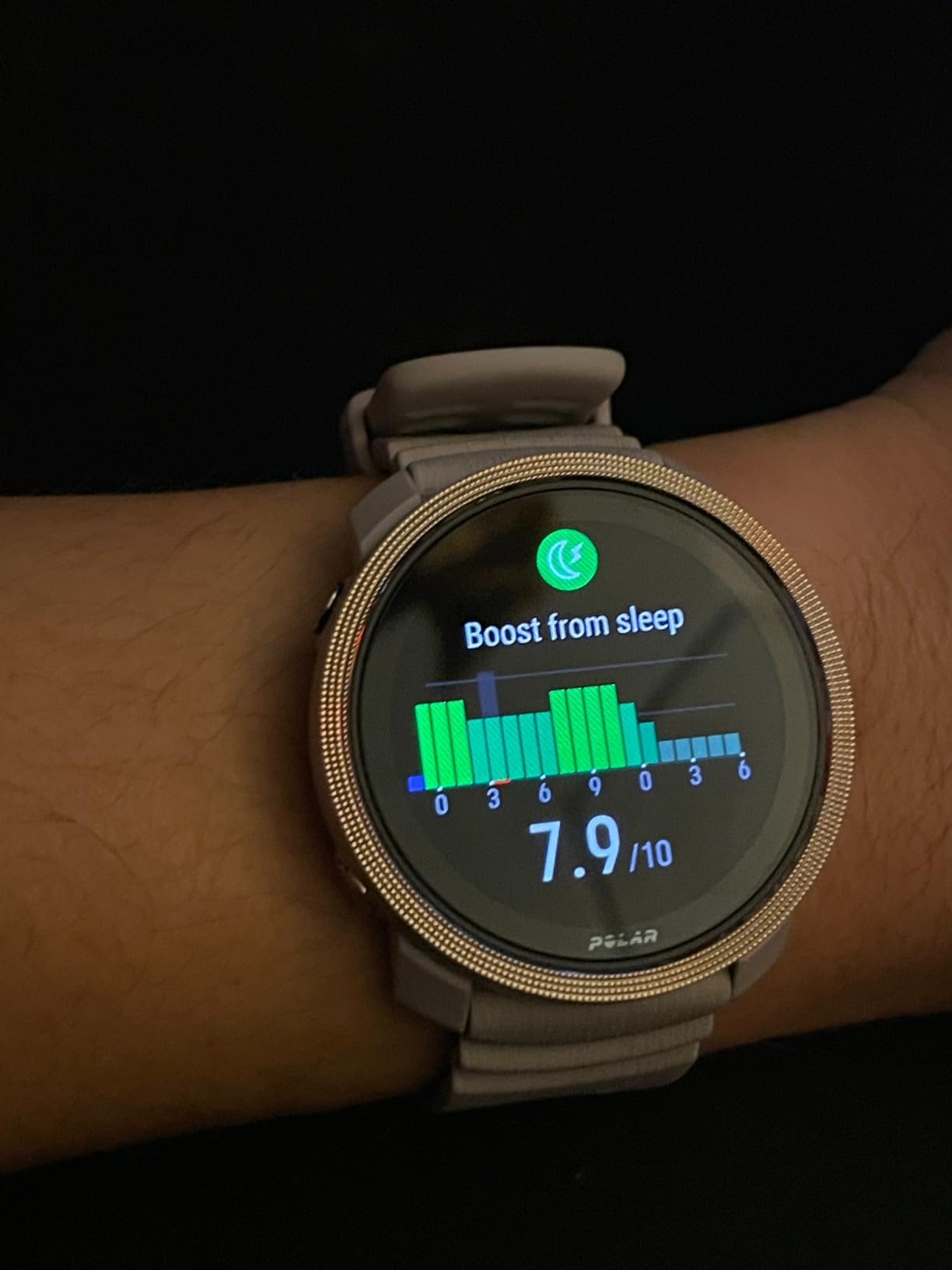
The Vantage M3 is the watch to buy if your training decisions hinge on recovery rather than on pace. Nightly Recharge, SleepWise and Training Load Pro are Polar’s own recovery system, and Polar has a long-standing reputation for heart rate and autonomic data that serious runners trust more than the wrist optical estimate alone.
It also handles navigation properly, with dual-frequency GPS, offline topographic maps, route planning and Komoot-powered turn-by-turn guidance. That makes it a legitimate option for a trail marathon, and the 1.28 inch AMOLED with Gorilla Glass 3 at 1000 nits is bright and well protected against the knocks that come with trail running.
Battery is up to 30 hours in training mode and 7 days in smartwatch mode, with 50 m water resistance and a 53 g weight. There are more than 150 sport profiles, performance tests and sleep tracking, and Polar includes both small and large wristbands in the box with a two-year manufacturer warranty.
Running power measurement from the wrist is a genuine addition if you care about economy and threshold work, and it feeds into the training load picture. It is one of the few watches here that measures running power without demanding a separate pod.
Who the Polar Vantage M3 suits best
Runners who adjust training based on how recovered they feel will get the most from this watch, and so will anyone whose heart rate data has to be reliable. Reviewers repeatedly single out Polar for wrist heart rate accuracy and recovery metrics, and that is the reason some runners choose it over Garmin.
It suits triathletes and multisport athletes too, with over 150 sport profiles, 50 m water resistance and offline maps. If you want a smaller case than the Forerunner 570 without giving up a bright AMOLED, the 53 g M3 is a reasonable middle ground.
Where the Polar Vantage M3 falls short
Storage is the standout weakness, with only 37 MB of internal memory by modern smartwatch standards, and there is no onboard music storage despite a music-oriented feature list. If you want to run with downloaded audio, this is not the watch.
Training metrics are also less granular than the Garmin equivalents, with fewer sport-specific analytics, and the app ecosystem is narrower than Garmin Connect for third-party integrations. It is a superb recovery instrument that stops short of being a complete training platform.
How to Choose a Running Watch for Marathon Training?
A marathon block is roughly 500 to 800 km spread across four to six months, and the watch is the only device that sees all of it, session by session. That changes what matters when you compare models. Screen quality matters for five seconds at a time; battery, GPS consistency and recovery data matter for months. Here is how we think about the trade-offs, in the order that actually affects your training.
Marathon battery math: how many GPS hours you actually need
Work backwards from your slowest expected effort. A 26.2 mile marathon at a 9 minute-per-mile pace takes about 3 hours 55 minutes of movement time, and add 15 minutes for aid stations, chip transitions and the walk from the hotel to the start line. A first marathoner on a generous 11 minute pace can exceed five hours of running.
So for a road marathon, any watch with 8 hours or more of GPS runtime clears the bar comfortably. The reason to buy 30 hours or more is not the marathon itself; it is the training around it, the case where a navigation layer is left on, or the plan where you enter a 50K or a multi-day race in the same season. If your calendar is a single marathon, prioritise something lighter and cheaper with a good screen.
One practical rule: run your longest long run at the settings you will use on race day. A watch that manages 20 hours on its most efficient GPS setting may give you considerably less with all satellite systems active, and you only find out at mile 26 if you did not test it.
GPS accuracy and satellite systems
Single-band GPS is adequate on an open road with clear sky. It struggles where signals reflect, which means between tall buildings, under dense tree cover, in a deep valley or in a mountain amphitheatre. Dual-frequency or multi-band positioning uses two frequency bands to correct for exactly that interference, and it shows up as cleaner pace readings and a straighter track on loops you run repeatedly.
Satellite system support also matters. The Suunto Race S tracks GPS, GLONASS, Galileo, QZSS and Beidou across L1 and L5, the COROS PACE Pro supports GLONASS, GPS and Galileo, and the Amazfit Active Max covers BeiDou, GLONASS, GPS and Galileo. More constellations means better fix times in urban canyons.
For a road marathon block, dual-frequency is a nice-to-have that costs you a few hours of battery. For a trail marathon with a course that crosses ridges and forest, treat it as essential, and pair it with offline maps and a breadcrumb trail so a lost signal is not a lost race.
Heart rate accuracy and when to add a chest strap
Optical wrist sensors are good on steady aerobic running and unreliable on fast transitions. Every watch in this group drifts during intervals, and the drift matters when your training decisions are based on heart rate zones, lactate threshold work or aerobic decoupling. The Polar Pacer Pro, for example, is described by reviewers as running 7 to 8 bpm off a chest strap and lagging a few seconds on quick changes.
The rule we use: run easy on the wrist sensor, and pair a chest strap for threshold sessions, tempo runs and any workout where heart rate is the target rather than a by-product. The COROS PACE 4 in particular is praised for steady-state accuracy and criticised for interval sessions, so treat it accordingly.
Buying a chest strap is a small addition to any budget here, and it upgrades every watch on this list. If you only add one accessory to a marathon purchase, make it that rather than a nicer band.
Training apps and analytics ecosystems
Garmin Connect with Garmin Coach is the deepest system, with adaptive plans, daily suggested workouts, race adaptive training built around a course you input, morning reports and training status that tells you whether you are productive, peaking or strained. It is also the most complex, and the most common complaint we saw was the learning curve rather than the feature set.
COROS’s app is cleaner and faster, with training status, custom workouts, activity summaries and sleep analysis, and it connects to Strava, Nike Run Club and Apple Health without friction. Polar Flow provides structured plans, recovery guidance and sleep analysis at no subscription cost, which is unusual in this category.
Zepp on the Amazfit Active Max generates AI-driven plans for half and full marathons, and the Suunto app offers TSS, CTL, HRV, VO2 max and TSB with an AI Coach, but owners report limited custom target and notification options. Choose the ecosystem you can tolerate, because you will open it three or four times a week for four months.
Comfort, weight and strap fit for a 20-hour training week
Weight matters more than buyers expect. The lightest watches here sit at 30 to 36 g, while the COROS PACE Pro is 49 g and the Suunto Race S is 60 g. Across a five-hour long run, the heavier watches are noticeably more noticeable, and anything over 50 g tends to bounce on foot during fast running.
Case size is a separate issue. If your wrist is under about 16 cm, the 42 mm Forerunner 265S and the 43 mm Forerunner 70 will sit flat where a 47 mm model overhangs. The 32 g COROS PACE 4 and 30 g COROS PACE 3 are the safest choices for small wrists in this group.
On straps, replace the supplied band early rather than late. Reviewers single out the Forerunner 570 band and the Amazfit Active Max band as uncomfortable, and a fabric or velcro band such as the one on the Suunto Run is a good long-run upgrade. Sleep tracking also argues for a light case, because you will keep the watch on overnight. Our broader picks for smartwatches with strong sleep tracking go deeper on that specific problem.
Water resistance and year-round durability
Ratings in this category are quoted as ATM or IPX, and they are not directly comparable. A 5 ATM rating suits rain, sweat and surface swimming. IPX8 and 50 m ratings open up pool swimming and open-water sessions, and the Polar Pacer Pro’s IPX3 rating is the one to note carefully, because it excludes open-water use.
For a winter block, check the screen material as much as the water rating. The COROS PACE 4 uses chemically treated or mineral glass, so a screen protector is worth adding if you run through hedges or stony trails. Sapphire is the choice for repeated impact, and Gorilla Glass 3 on the Polar Vantage M3 is a good middle ground.
Durability also means firmware behaviour. The Suunto Race S resets activity settings after updates, and several watches in this group have owners reporting hardware failures after a couple of years. A two-year warranty, which COROS, Suunto and Polar all offer, is worth more here than an extra day of battery.
If you already own an Apple Watch or a Garmin
This is the fork most buyers reach, and the honest answer is that you may not need to replace anything. If your current watch already runs a marathon comfortably and syncs the data you use, the upgrade is optional. Buying a second watch is a legitimate choice for ultrarunners, but it is a cost you should decide on purpose rather than drift into.
If you are an iPhone owner who runs without music and mostly easy mileage, an existing smartwatch will cover it. If you are training for a trail marathon, running at night, or doing phone-free long runs where battery and maps matter, a dedicated GPS running watch earns its place alongside it. Our smartwatch picks for outdoor adventures cover the smartwatch side of that decision.
Existing Garmin owners face the brand’s price tiering, which is the single most confusing part of the ecosystem. The same Forerunner nameplate spans a wide range, and features such as maps, music and advanced training load are gated by tier. The practical move is to work down from what your block needs: maps and music only if you will use them, and a chest strap before a more expensive body.
One more community correction worth repeating, because it comes up constantly in running forums: beginners over-buy. GPS accuracy and heart rate reliability matter more in year one than training analytics, and a watch that feels simple in week three is worth more than one you stop opening by week eight.
Frequently Asked Questions
What smartwatch is best for marathon training?
The Garmin Forerunner 265S is the best smartwatch for marathon training for most runners. It weighs 39 g, runs up to 24 hours in GPS mode, tracks with multi-band GNSS, and gives you a training readiness score each morning so you can judge whether the planned long run is wise. If you need more, the Forerunner 945 adds onboard maps and 60 hours of ultratrac battery for ultra and stage racing.
How much battery life does a marathon watch need?
Work from your slowest expected pace. A marathon at a 9 minute-per-mile pace is close to 4 hours of movement, and a first-timer at 11 minutes can exceed 5 hours. Add 15 minutes for aid stations and transitions. So 8 hours of GPS runtime clears a road marathon comfortably, and anything above 30 hours matters only if you also train for ultras, run with maps on, or race multi-day events.
Is a Garmin worth it for marathon training?
Garmin is the most common answer in running communities, and the Forerunner 265 tier is the model most often recommended for marathons. The reason is the combination of multi-band GNSS, up to 24 hours of GPS, HRV-based training readiness and race adaptive plans in Garmin Connect. The trade is price tiering: maps, music and advanced analytics are gated by model, so choose the tier that matches what you will actually use.
What is the best budget running watch for a marathon?
The COROS PACE 3 is our budget pick. It runs up to 38 hours of GPS, offers 24 days of daily use, weighs 30 g and includes dual-frequency positioning, so pace and distance stay accurate between tall buildings. The Polar Pacer Pro is the alternative if you want structured training plans at no subscription cost and prefer physical buttons to a touchscreen.
Should I use a chest strap with my running watch?
Yes, for hard sessions. Wrist optical sensors read accurately on steady aerobic running and drift during intervals, and reviewers report the Polar Pacer Pro running 7 to 8 bpm off a chest strap with a lag of a few seconds on quick changes. Use the wrist sensor for easy runs and a chest strap for threshold work, tempo sessions and any workout where heart rate is the target.
Do I need a running watch if I already have an Apple Watch?
Only for specific reasons. If your current watch already gets through a marathon and syncs the data you use, the upgrade is optional. A dedicated GPS running watch earns its place if you run without a phone, need offline maps for a trail marathon, want a week-plus battery, or train with music stored on the wrist. Many runners deliberately keep both, one for daily life and one for long training sessions.
Conclusion
Twelve watches, six weeks, and one conclusion: the best smartwatches for marathon training are not the ones with the longest spec sheet. They are the ones that still work at mile 30 of a long run, at midnight during a shift week, and on the morning your training readiness says maybe not today.
The Garmin Forerunner 265S takes our overall recommendation because it is the rare watch with no weak quarter: 39 g, up to 24 hours of GPS, multi-band GNSS, and a training platform that will adjust a 16 to 24 week block without demanding your constant attention. If you need maps, music and multi-day battery, the Forerunner 945 is the endurance answer. If cost decides it, the Polar Pacer Pro gives you structured plans for nothing, and the COROS PACE 3 and PACE 4 give you the longest battery per pound in the group.
Whatever you pick, test it on your longest training run at the settings you plan to use on race day, and add a chest strap before you upgrade the watch again. That single habit will do more for your marathon than any feature on this list.