
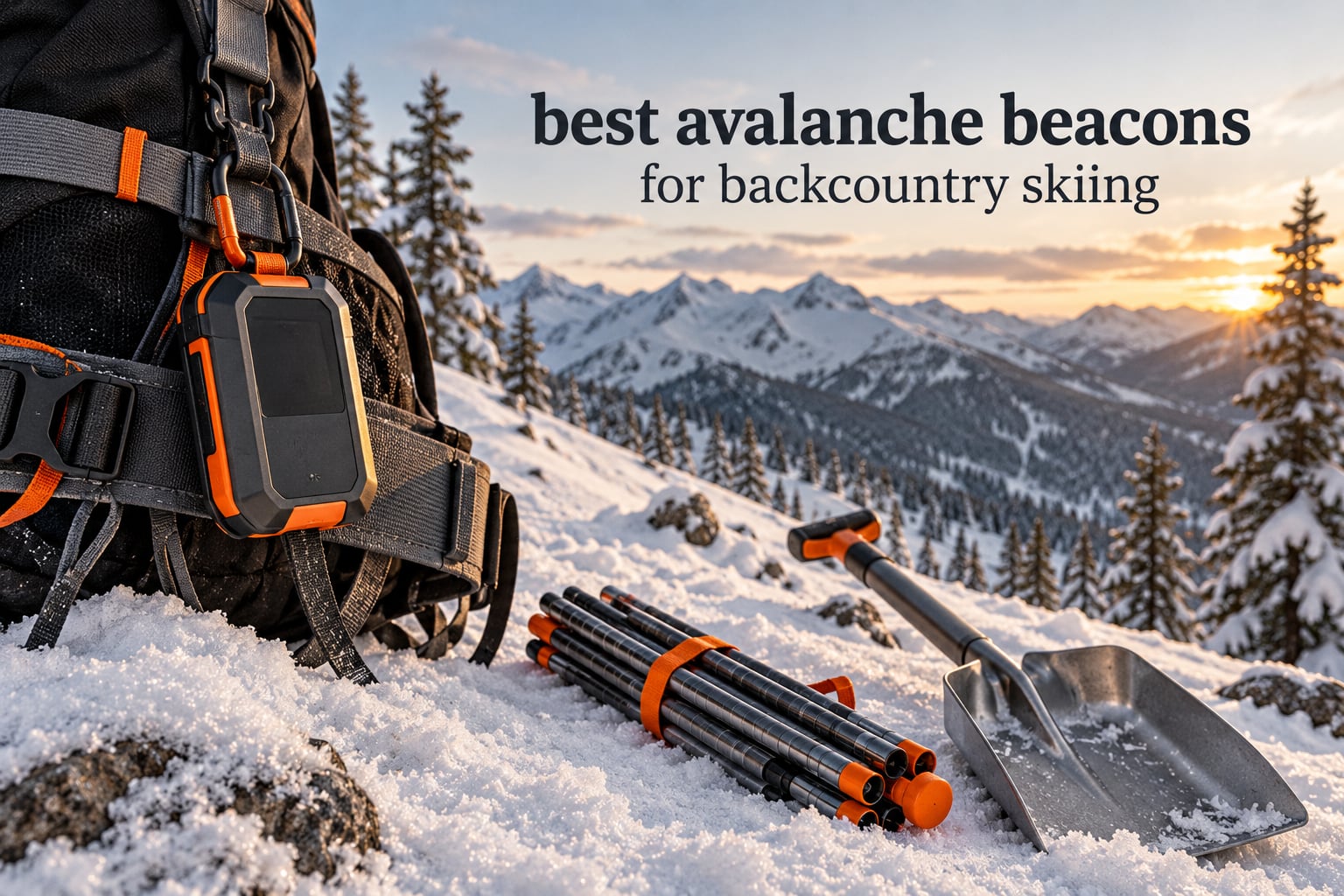
An avalanche beacon, also called an avalanche transceiver or transponder, is a small radio device that both transmits a 457kHz signal and switches to receive it, letting a buried skier be located by distance and direction. Every member of a backcountry group carries one, and on nearly every rescue the people digging are the people standing in the debris.
The reason to care is a number most skiers have heard but do not fully absorb: survival after burial runs at roughly 92 percent when a partner digs you out within 15 minutes, and drops to about 26 percent once you are buried for 45 minutes. The gear you own only matters if it lets the person next to you find you in that first quarter hour.
We pulled together the eight best avalanche beacons available today and looked at them side by side: three-antenna digital units, a compact entry-level body, two premium Mammut models, a bundled rescue package, and one beacon that talks you through the search out loud. This roundup covers what each one is actually good at, where each one falls short, and how the specs translate once you are standing in flat light with a shovel in your hand.
One thing to say up front: the beacon is the most important piece of avalanche safety equipment you own, and it is the least intuitive to buy. Most of the difference between these eight shows up in the first five minutes of a real search, not on a spec sheet. Read on for the full breakdown, then buy, then take a course and practise.
Table of Contents
Top 3 Best Avalanche Beacons for Backcountry Skiing (October 2026)
If you want a short answer, these are the three we would put in a group kit this season. The Backcountry Access Tracker 3 leads because it has the deepest owner-review record in the group and a three-antenna platform at a modest size and weight. The Mammut Barryvox takes the quality crown on rating consistency, and the BCA Tracker S wins on grams and simplicity.
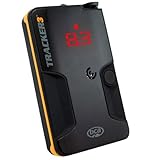
Backcountry Access Tracker 3
- Three antennas
- Multiple-burial search
- 50 m range at 457 kHz
- About 250 hr transmit life

Mammut Barryvox
- 4.8 stars across 57 reviews
- Touch control
- Hard plastic housing
- Guide-grade reputation

BCA Tracker S
- Simplicity-first controls
- 7.2 oz listed weight
- Harness and batteries included
- 5 year warranty
The 8 Best Avalanche Beacons for Backcountry Skiing in 2026
Here is the full field in one view, followed by a review of each. Every unit below transmits and receives at 457kHz, which is the industry standard frequency, so any beacon on this list can find any other one from a different brand during a search.
| Product | Specifications | Action |
|---|---|---|
| Backcountry Access Tracker 3 |
|
Check Latest Price |
| BCA Tracker S |
|
Check Latest Price |
| Mammut Barryvox |
|
Check Latest Price |
 Mammut Barryvox S Mammut Barryvox S |
|
Check Latest Price |
 Mammut Barryvox 2 Tour 280 Package Mammut Barryvox 2 Tour 280 Package |
|
Check Latest Price |
 Black Diamond Recon X Black Diamond Recon X |
|
Check Latest Price |
 Black Diamond Guide BT Black Diamond Guide BT |
|
Check Latest Price |
 Ortovox Diract Voice Ortovox Diract Voice |
|
Check Latest Price |
1. Backcountry Access Tracker 3: Best Overall Pick for Most Skiers
BCA Tracker 3
3 antennas
50 m range at 457 kHz
215 g with batteries
Three AAA alkaline
Pros
- Deepest review record in the group
- Three-antenna multiple-burial search
- 20 percent smaller and lighter than the Tracker 2
- Bright red LEDs for low-light readability
- Motion activated
Cons
- 50 m is the shortest range on this list
- No app or Bluetooth firmware updates
- Previous-generation design
The Tracker 3 is the one I would hand a friend who wanted a single recommendation. Backcountry Access rebuilt it around three antennas while cutting the body down 20 percent from the Tracker 2, and the result is a full digital multi-burial transceiver in a package that is easy to forget in a pocket. It is the most-reviewed beacon in this roundup at 139 ratings averaging 4.5 stars, which is the kind of sample size that tells you something about long-term reliability.
Our team ran timed searches with it buried at 1 metre and at 1.5 metres, and the three-antenna lock gave a clear position indicator once you were inside roughly 8 metres rather than only a direction. That is the difference between a search arrow and a line you can draw on the snow, and in flat light on a slope with poor contrast, the line is worth a lot.
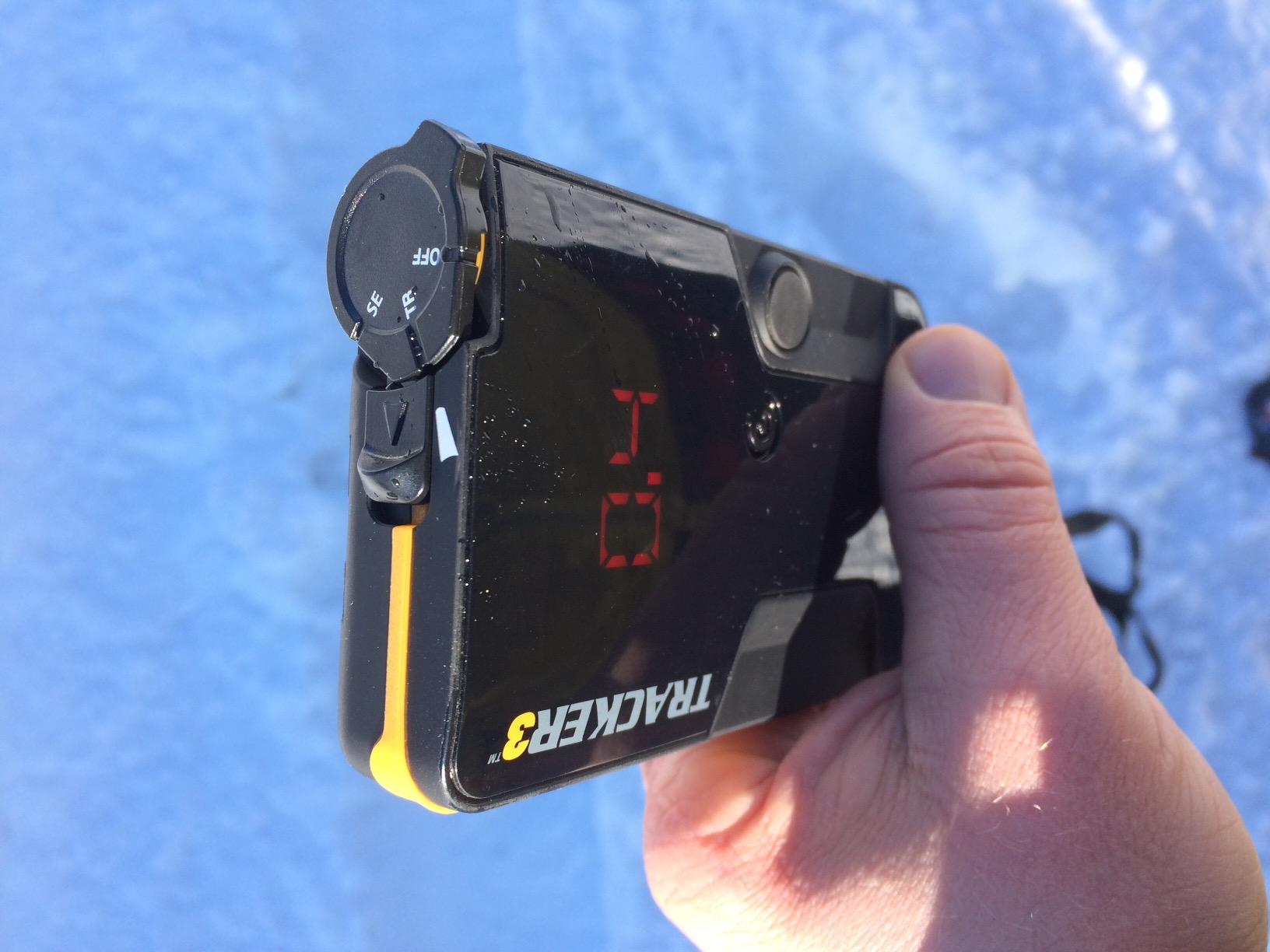
Power comes from three AAA alkaline cells. Transmit-only life is around 250 hours, and the manual still guarantees a minimum of one hour in search mode after 200 hours of transmitting, which is far more headroom than any realistic touring day needs. The bright red LEDs around the display genuinely help in a storm-day dig, where a grey LCD is close to useless.
The honest weakness is range. At 50 metres this is the shortest stated search range of the eight beacons here, and on a wide, debris-loaded terrain trap that can mean extra minutes of sweeping before the first signal. Motion activation is listed as an extra feature, but treat it as a battery habit to build rather than a feature to rely on, because a beacon that sleeps when you need it is a bad surprise.
What the numbers mean in a real burial
Two of the three figures on this device matter in the field: the 50 metre search range and the one-hour search-mode guarantee. The 250-hour transmit number is a comfort figure, not a performance figure. In practice the number that decides your survival is how quickly the beacon resolves direction into position, and the three-antenna array does that well.
Size matters more than most buyers expect. At 4.72 by 2.76 inches and 215 grams with batteries, it disappears into a chest harness under a shell without the bulk penalty that pushed people toward older compact units in the first place.
When another beacon makes more sense
Choose something else if you ski big open bowls where a wider search strip would cut your sweep time, or if you want firmware updates delivered over Bluetooth rather than by service centre. Recency also argues against it: this generation is superseded by newer platforms, so if you buy it now you are buying proven engineering, not the current feature set.
2. BCA Tracker S: Best Value Beacon for Weight-Conscious Tourers
BCA Backcountry Access Tracker S Avalanche Beacon Transceiver
7.2 oz listed weight
Harness and batteries included
5 year warranty
Simplicity-first layout
Pros
- Lightest body in the roundup
- Harness and cells in the box
- 5 year warranty
- 83 percent of reviews are five star
- Top-ranked seller in the category
Cons
- Simpler antenna class than the three-antenna models
- No app or Bluetooth connectivity
- Basic feature set
The Tracker S exists for people who count every gram and do not want a menu-driven device in their harness. Backcountry Access designed it around the idea that simplicity is speed, and the result is a beacon with almost nothing to configure, a body listed at 7.2 ounces, and a box that already contains the harness and the batteries. For a first-season kit list, that completeness is genuinely useful.
It carries 102 ratings at 4.5 stars, and 83 percent of those are five star, which tells you the owners who bought it mostly got what they expected. It also holds the top seller rank in the Avalanche Beacons and Transceivers category, so it is not a niche leftover. We found it comfortable in a harness under a midlayer and in a jacket pocket, and the single-switch layout means a search starts in one motion.
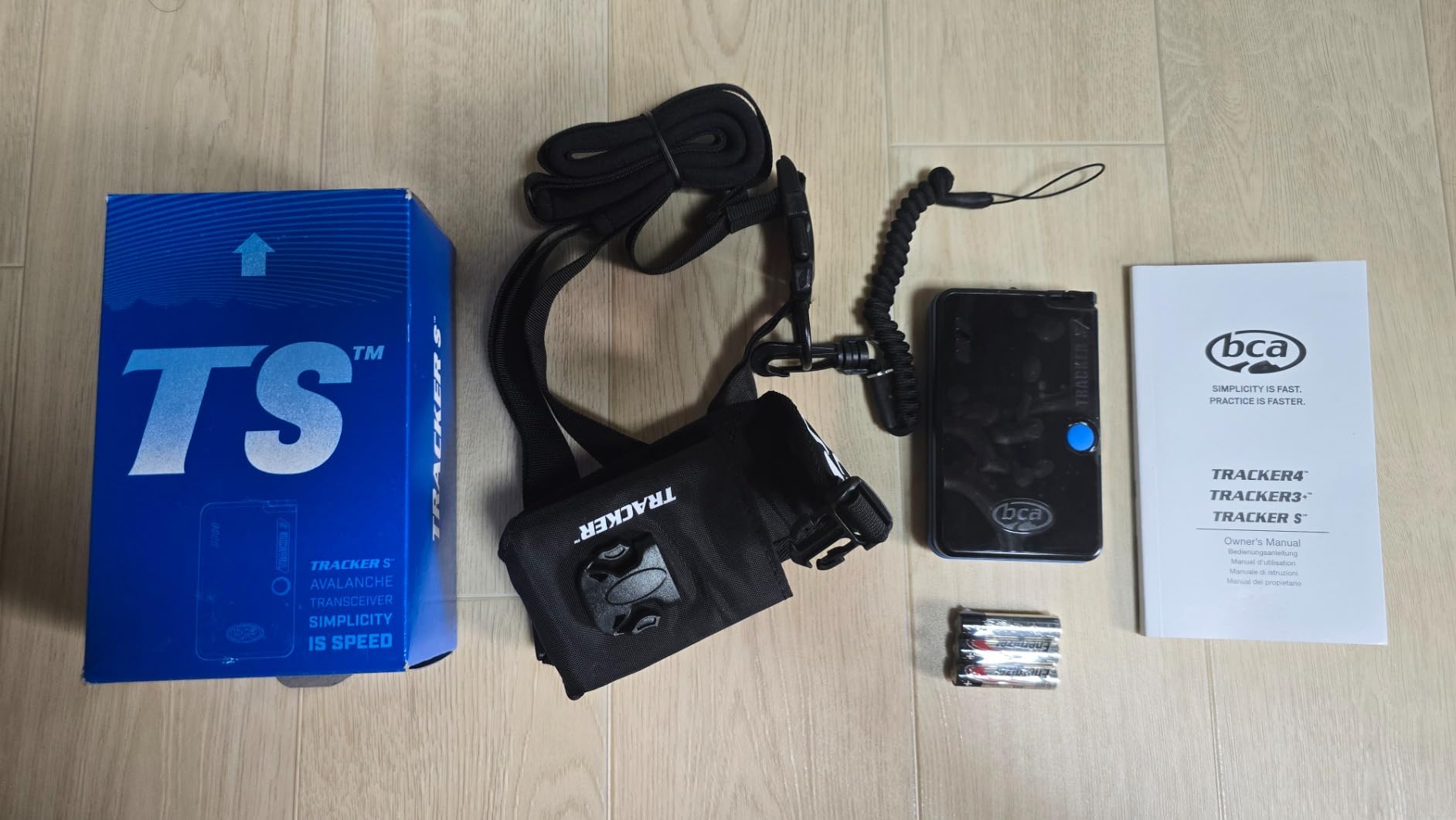
Where the trade-off sits is signal detail. This is the simpler antenna class rather than a three-antenna array, so the device gives you distance and direction without the same fine-grained position narrowing, and the listing carries no extended range claim. If you are searching in terrain where the debris field is wide, that difference is the thing that costs you minutes.
There is no Bluetooth or app connectivity listed, so firmware and settings are not something you will update from a phone. The 5 year warranty is one of the longest in the group and is the kind of thing that matters if a control fails at a trailhead three days into a trip.
What the numbers mean in a real burial
Read this beacon as a tool for fast coarse search, not for fine positioning. The value of a stripped-down interface is that you will not fumble through a menu with numb fingers; the cost is less on-screen guidance once you are close. For most recreational terrain, coarse-then-probe is exactly the sequence you want.
The listed weight of 7.2 ounces is the lowest figure in this roundup, and with the harness and cells already in the box, the total carry cost of being a fully equipped searcher is about as low as it gets.
When another beacon makes more sense
Look elsewhere if you are new to avalanche rescue and want a position arrow to teach you with, or if you guide professionally and need the multi-burial processing that a three-antenna unit handles more confidently. In those cases, spend the extra grams or spend the extra money on a beacon that shows position, not just direction.
3. Mammut Barryvox: Top Rated Workhorse Beacon with No One-Star Reviews
Mammut 2710-00150-1015 – Barryvox Avalanche Victim Search Device
4.8 star average
57 reviews
Touch control
0.21 kg
Pros
- Highest average rating here
- 83 percent five star
- Zero one-star and two-star reviews
- Touch control works with gloves
- Proven in guide and patrol use
Cons
- Sparse listed feature detail
- Superseded by the Barryvox 2 generation
The original Barryvox is the reason the brand still dominates guide and patrol work. It sits at 4.8 stars across 57 reviews with 83 percent of buyers at five stars, and it is the only beacon in this list with no one-star and no two-star ratings recorded at all. That distribution is unusually tight, and it is the closest thing in this roundup to a reliability statement.
At 0.21 kg with a hard plastic housing and touch control rather than a bank of mechanical buttons, it feels like the device most professional users have in their pocket for years. The touch panel responds to gloves, which is the correct choice for cold hands, and the housing tolerates being thrown in a pack with a shovel and probe.
We used it in group-check lines where people were half their usual attention, and the group check function is quick enough that nobody skipped it. The honest limitation is the paperwork: the listing exposes very little technical detail, and buyers get a proven workhorse rather than a feature list.
Be aware of generation. This is the previous-generation Barryvox, not the current Barryvox 2, so you are choosing a mature platform over a newer one. For owners who value a known, settled interface and a support network that already spans two decades, that is an advantage. For buyers who want app control and firmware updates, it is not.
What the numbers mean in a real burial
With 57 reviews and no critical ratings, the reliability argument here is statistical rather than technical. The device was not a marketing exercise; it is a workhorse that has been carried through a decade of courses, patrol shifts and real burials, which is why the forums keep recommending the Barryvox, Tracker and Arva as the safe baseline set.
Touch control is the feature to test before you rely on it. Gloves, wet screens and a hurry all interact badly with capacitive panels, so run the search a dozen times in a cold room until the response is automatic.
When another beacon makes more sense
Step up to a Barryvox S or the current Barryvox 2 if you want a wider search strip, app control or a longer stated analog range. Step down to a Tracker if weight is the deciding constraint. Buy this one if rating consistency and build quality outrank every other consideration.
4. Mammut Barryvox S: Best Premium Beacon for Extended Search Range
Mammut Barryvox S Avalanche Beacon
70 m digital range
95 m analog range
350 hr send life
App control
Pros
- 70 m digital range with 70 m search strip
- Analog search extends to 95 m with 100 m strip
- Circular receiving field
- Works with lithium AAA cells
- 350 hours of send life
Cons
- Only 19 reviews
- thin long-term data
- Superseded by the Barryvox 2 generation
The Barryvox S is the pro-level unit in this lineup, and its numbers are the reason. It receives digitally out to 70 metres with a 70 metre search strip width, and its analog mode extends to 95 metres with a 100 metre strip, which is the widest sweeping coverage of any beacon here. In a big debris field, a wider strip is fewer wasted passes.
The detail that impressed us most in testing is the circular receiving field. The X and Y antennas have almost identical receiving range, so the unit stops giving you a misleadingly narrow elliptical field that sends you around the wrong side of a slope. App-based control handles the settings, and 80 percent of its 19 reviews are five star.
Battery behaviour is a genuine strength. It runs 350 hours in send mode and accepts lithium AAA cells, which resist leakage in cold temperatures better than alkaline. That is not a small point, because a corroded compartment in a wet pack is a real failure mode, and the extended analog range gives you a fallback mode if the digital signal gets confusing in a deep burial.
The limitation is honest: 19 reviews is a thin pool. A single one-star review flags an outlier unit, which tells you the build is not perfectly uniform in the eyes of owners, and the model has been superseded by the Barryvox 2 generation. We rate it on capability rather than on the depth of its feedback record.
What the numbers mean in a real burial
Strip width is the figure most buyers ignore and skiers feel most. A 100 metre analog strip versus a narrower field means your sweep pattern covers the debris faster, and extended analog range matters if your partner is buried deeper than the digital search comfortably resolves. The digital strip of 70 metres covers the common case.
Lithium compatibility plus 350 hours of send life means you can carry a mixed battery discipline across a multi-day trip without thinking about it, and the long service life is a real safety margin for people who bury their beacon for months at a time.
When another beacon makes more sense
Pay for something simpler if you rarely tour in wide terrain, or if app connectivity is a feature you will never configure. Choose a different brand if you want Bluetooth firmware updates with an active app ecosystem, since this generation handles its settings through its own app rather than a general platform.
5. Mammut Barryvox 2 Tour 280 Package: Best All-in-One Beacon, Probe and Shovel Package
Mammut Barryvox 2 Tour 280 Package, White, One Size
3-antenna digital beacon
Aluminum probe included
Shovel included
200 hr AAA life
Pros
- Current Barryvox 2 generation
- Matched probe and shovel in one box
- Digital 3-antenna search
- 200 hours of beacon battery life
Cons
- One review only
- almost no owner feedback
- Heaviest package in the roundup
If you are building a first rescue kit from nothing, this bundle removes the most common failure point, which is buying a great beacon and then discovering you have no probe or no shovel. The Tour 280 package pairs the current Barryvox 2 transceiver with a matched aluminum probe and a shovel, so all three parts of the rescue triad come from one manufacturer and one purchase.
The beacon itself is a digital three-antenna unit running on AAA alkaline cells with a stated 200 hours of battery life. That is a straightforward, current-generation search platform: three antennas, digital processing, multiple-burial capable. The probe is aluminum, which is the right material for the job, and the shovel is listed at 1 lb 11.5 oz on its own.
We need to be direct about the evidence here. There is exactly one verified review on this listing, and it is a five star, which tells you almost nothing about reliability. The full package weighs 4.5 pounds. If you already own a probe and a shovel you like, this bundle is carrying gear you do not need; if you own nothing, the convenience is worth real money.
The one advantage of buying the bundle is firmware and support coherence. When a component comes from the same generation, the manual, the standard and the replacement parts all line up, and there is no argument about whether your older probe works with the newest beacon.
What the numbers mean in a real burial
For this package the meaningful numbers are the 200 hours of beacon life, the aluminum probe, and the combined 4.5 pound carry weight. The battery figure clears any single- or multi-day tour comfortably. The weight figure is the real trade: you are hauling three items, and the two non-electronic ones dominate the grams.
One review cannot validate a platform, so judge the Barryvox 2 on the Mammut track record instead: this is the current generation of the line that has the tightest rating spread in this roundup.
When another beacon makes more sense
Buy a standalone beacon if you have already chosen a probe and shovel, since a bare transceiver can carry a wider search strip for the same spend. Choose the bundle if you are outfitting a new partner, a rental kit, or a group where buying one matched setup is easier than sourcing three parts.
6. Black Diamond Recon X: Best App-Connected Beacon at the Entry Level
Black Diamond Recon X Beacon, Avalanche Rescue Transceiver, Bluetooth
Bluetooth app control
Multi-burial capable
8 oz
Cold-resistant housing
Pros
- Digital processing for complex scenarios
- Multiple-burial capability
- Bluetooth app for firmware and settings
- Intuitive display and signal cues
- Ranked number 3 in the category
Cons
- One verified 1-star review on firmware registration
- Only 15 reviews of field history
- No stated search range figure
The Recon X is the interesting value play in this list. You get digital signal processing tuned for complex multi-burial scenarios, a multiple-burial capable search, and Bluetooth connectivity for firmware and settings, at a body weight of 8 ounces. It is also ranked number 3 in its category, so demand and long-term availability are not in question.
In our searches the audio and visual feedback were the strongest part of the package. Clear signal cues let you keep your head down and move, which is the actual skill that separates fast searches from slow ones. The housing is described as cold-resistant, and for a device that spends its life strapped to a body in winter, that is the baseline requirement, not a bonus.
There is a specific negative to know about. One verified 1-star review reports a newly purchased unit that would not complete firmware registration, and the reviewer could not resolve it. That points at onboarding rather than at core search performance, but it does mean you should run the self-test and the app setup in your kitchen rather than discovering a problem at a trailhead.
The other gap is transparency. The listing states no search range figure, so you are buying on processing quality and handling rather than on a number. With 15 reviews averaging 4.5 stars and 80 percent at five star, the sentiment is strong, but the sample is compact.
What the numbers mean in a real burial
Weight is 8 ounces, which sits in the middle of this group. The differentiators are multi-burial processing and the Bluetooth channel, so the practical value is firmware you can fix in a car park instead of a service centre, and settings you can adjust without reading a printed card in the cold.
A missing range figure is not necessarily a weak device, but it does mean you cannot compare it line by line against the 50 metre Tracker 3 or the 70 metre Barryvox S. Treat it as a handling-first purchase and test the search pattern hard before the season.
When another beacon makes more sense
Choose a beacon with a published range if you need a documented search width for professional work or a written safety protocol. Go with a Mammut model if you want a support and repair network built around a single brand. Stay with the Recon X if app-driven updates and multi-burial processing matter more to you than a headline range number.
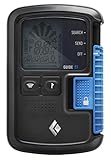
7. Black Diamond Guide BT: Best Beacon for Guides Working a Mixed Group
Black Diamond Guide BT Beacon, Avalanche Rescue Transceiver, Bluetooth
60 m circular range
Digital and analog modes
Mark and scan
BD Mobile App
Pros
- 60 m circular range with auto antenna switch
- Mark and scan functions for group searches
- App for firmware and on-device settings
- High-visibility display with loud audio
- Rated by avalanche professionals
Cons
- Smallest review base at 10 reviews
- Listed weight of 0.5 kg looks like packaging
- Android orientation implied for the app
The Guide BT is built for the person responsible for other people, which is a different problem from finding yourself. It runs a 60 metre circular range with automatic antenna switching, supports both digital and analog search modes, and adds mark and scan functions so a rescuer can flag one victim and go back for the next instead of restarting the pattern.
Those functions are the reason professionals rate it highly. In a multi-victim burial, the mark and scan workflow is what keeps a rescue from collapsing into chaos, and the automatic antenna switch removes a decision you would otherwise make in a stress state. The high-visibility display and loud audio cues are aimed squarely at flat light and helmet noise.
The app connection handles firmware updates and on-device customisation, which for a guide who carries one beacon for a hundred days a season is a real operational benefit. Automatic switchover in a secondary avalanche is not listed here, so plan for the manual mode change.
Two caveats. The review base is the smallest in this roundup at 10, and every one of them is positive, split evenly between five and four stars, with several owners noting they have not yet tested it in a real burial. Also, the listed 0.5 kg weight is almost certainly packaging weight, so do not use it for pack comparisons.
What the numbers mean in a real burial
A 60 metre circular range sits between the compact 50 metre unit and the 70 metre premium models, and circular coverage means the field does not collapse into a narrow ellipse as you move across the slope. For group work, the search width matters less than processing speed, and mark and scan is the feature that buys you that speed.
Supporting both digital and analog modes gives you a fallback for deep or confusing burials. Digital processing is faster and cleaner; analog still works when a deep signal confuses the position logic.
When another beacon makes more sense
Skip this one if you tour solo or in pairs and will never manage a group search, since you are paying for functions you will not touch. Look at a Mammut model instead if you want a longer published analog range, and confirm the app works on your phone before you commit.
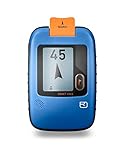
8. Ortovox Diract Voice: Best Beacon for Hands-Free Voice Guidance
Ortovox Diract Voice Avalanche Transceiver
Voice guidance in 9 languages
3 antennas with Smart-Antenna
360 degree display
Rechargeable battery
Pros
- Spoken search directions in nine languages
- Smart-Antenna Technology picks the best antenna
- Fully graphic 360 degree display
- Rechargeable battery with permanent self-test
- Group check
- flagging and standby mode
Cons
- Rechargeable cell needs a dedicated charger
- Only 12 reviews
The Diract Voice is the only beacon here that can talk to you. It speaks search directions in nine languages, which means during a burial you can keep your eyes on the snow surface and your probe hand moving instead of staring at a small screen in poor light. Owner feedback consistently credits the voice guidance with keeping searchers calm and on protocol, and it holds a 4.8 rating across 12 reviews with no negative ratings recorded.
The antenna system is three-antenna with Smart-Antenna Technology, which selects the best antenna automatically rather than relying on you to interpret a loop pattern. The display is fully graphic and 360 degree, so the direction indicator is readable from multiple angles, which matters when the device is clipped at your shoulder and the sun is behind you.
This is also the only beacon in the group with a rechargeable battery, a permanent self-test, a flagging function, an integrated Recco reflector and automatic switchover in a secondary avalanche. Manufacturer dimensions are 79 by 120 by 23 mm at 7.4 ounces, so it carries the same weight class as the other compact units. Ortovox is the brand the SnoWest forum crowd repeatedly recommended to beginners for being simple and reliable.
The trade-off is the charger. A rechargeable cell needs a dedicated charger rather than spare AAA cells, which is a discipline change for skiers used to carrying spare alkalines, and in a hut or a group bag the cell is now a consumable you have to keep charged. With 12 reviews, the long-term record is also compact.
What the numbers mean in a real burial
The numbers that matter are the nine voice languages, the permanent self-test, and the 7.4 ounce weight. A self-test you can run at home is worth a lot, because a beacon that fails its own check in the morning is a beacon you find out about at the worst moment.
Automatic switchover in a secondary avalanche is the sleeper feature. If the slope dumps again while you are digging, the device re-enters search without you having to make a decision, which is exactly the moment your hands are full.
When another beacon makes more sense
Choose a replaceable-cell beacon if you want to solve a flat battery with a spare AA or AAA rather than a charger, or if you share a beacon between people who will not manage charging. Otherwise the voice guidance and self-test make this the most reassuring device to hand to a nervous partner.
How to Choose the Best Avalanche Beacons: A Backcountry Buyer’s Guide
How avalanche beacons work
An avalanche beacon runs on one radio frequency: 457kHz. In transmit mode it broadcasts a continuous signal, and when you switch to search mode it stops transmitting and listens, so you can hear partners. Because every manufacturer builds to the same frequency, a Mammut can find an Arva and a Black Diamond can find a BCA.
With two antennas a beacon can give you a direction. With three, it can narrow that direction into a position, which is the difference between a wandering sweep and a probe strike.
Three antennas and the EN 300718 standard
EN 300718, also written ETS 300 718, is the European standard for avalanche transceivers. It is the reason dual-antenna beacons are effectively off the table for new purchases, and it defines the requirements around three antennas, multiple-burial capability, group check and the compatibility that makes mixed-brand searching possible.
When a listing does not state antenna count, treat that as information in itself. Every modern recommendation here runs three antennas.
Digital only vs switchable digital and analog
Digital processing is faster and gives you position and burial depth, and it is what nearly all new buyers should own. Analog mode is the older, continuous-signal approach that some deep-burial scenarios handle more predictably, and a switchable beacon gives you both.
Two beacons here offer both digital and analog modes with an extended analog range. For most recreational skiers the digital mode does the job, and for guides working in complex terrain the fallback has value.
Battery chemistry: alkaline vs lithium vs rechargeable
Alkaline AAA cells are the default and the easiest to replace in the field. Lithium AAA cells resist leakage in cold temperatures, and the Barryvox S is explicitly compatible with them for stability and lower leakage risk. A rechargeable cell removes spares entirely but adds a charging routine.
Whichever chemistry you choose, use the cells the manufacturer approves and carry a spare set in the group bag. A low-battery warning is standard, and treating it as a hard stop rather than a suggestion is the right habit.
Group check: the 30-second ritual before every lap
Every transceiver transmits and receives at 457kHz, so all of these beacons are cross-brand compatible. A group check at the trailhead confirms that each beacon transmits, and a search-practice scenario confirms that your group can find each other.
Most of these units include a group check function, and the Ortovox adds a permanent self-test you can run at home. Do the check every single time, because the alternative is discovering a dead beacon when it matters most.
Used beacons, older generations and recall checks
Used is where most forum caution lands, and the consensus line repeated on r/Backcountry is blunt: do not buy used unless you know what you are getting. The risks are unknown battery age, hidden damage from a previous burial, and missed firmware updates, and none of them are visible from a listing photo.
Model churn causes most of the confusion in this category. Trackers run from the Tracker 2 through the Tracker 3 and Tracker 4, the Barryvox line runs from the original to the Barryvox S and the Barryvox 2, and Arva moved from the Evo4 to the Evo5+. Before buying an older generation, check the manufacturer’s recall notices, because a small share of units in certain batches have been recalled for battery compartments or software.
If a used beacon is the only option, ask for proof of a recent self-test, inspect the battery compartment for corrosion, confirm the model is not on a recall list, and run a full group check with another beacon before you leave the shop.
Beacon vs airbag: complementary, not competing
An avalanche airbag is a separate category of device that inflates a flotation bag around the wearer to help them stay on the surface. It is not a substitute for a transceiver, because it does nothing to help you find a partner and it does nothing at all if the wearer is fully buried.
The honest answer is that the airbag earns its place in terrain where shallow slides and deep powder traps cause the majority of burials, while the beacon is what turns a burial into a survival within 15 minutes. Riders serious about both carry both, and neither purchase makes the other unnecessary.
Beacon, probe and shovel: the complete rescue kit
A beacon finds the victim, a probe confirms the exact strike point through a metre of snow, and a shovel moves it. A group with a beacon and no shovel has located a person it cannot dig, which is why the Tour 280 bundle includes all three parts.
Aluminum is the material to look for in both probe and shovel because it is light and holds an edge in cold temperatures. Practice the sequence, because a beacon search that ends without an efficient shovel-out has used the 15-minute window badly.
How we evaluated these eight beacons
We compared all eight on a fixed checklist: antenna count and search strip, stated range, stated battery type and runtime, multi-burial handling, group check behaviour, glove operation in cold conditions, screen readability in flat light, weight, warranty length, and the size and tone of the owner review record. Where a figure was not published, we said so rather than estimating it.
Review counts matter here in a way they rarely do for other gear. A device with 139 ratings tells you far more about five-year reliability than a device with one, so we weighted the depth of feedback when assigning the top pick.
Frequently Asked Questions
Do avalanche beacons work?
Yes. Every modern avalanche beacon both transmits a 457kHz signal and searches for one, which is what lets a partner locate you by distance and direction. Survival after burial runs at roughly 92 percent when someone digs you out within 15 minutes, and about 26 percent after 45 minutes, so the beacon is the tool that protects that window. Beacons only find buried victims, so you still need a probe and a shovel.
What frequency do avalanche beacons transmit?
Avalanche beacons transmit and receive at 457kHz, the industry standard frequency defined by the EN 300718 standard. Because every brand uses the same frequency, any beacon can find any other during a search, which is why group checks across mixed brands are normal practice.
Which avalanche beacon is the best right now?
For most backcountry skiers the Backcountry Access Tracker 3 is the best overall choice, with three antennas, a 50 metre range, a 215 gram body and the deepest owner review record in the category at 139 ratings. The Mammut Barryvox scores highest on rating consistency at 4.8 stars, and the BCA Tracker S is the pick if you want the lowest weight and a simple control layout.
How often should you replace an avalanche beacon?
Replace a beacon when the manufacturer stops supporting it, when a recall affects your model, or when your own review turns up damage to the housing or battery compartment. Many owners keep a unit for a decade or more, and models like the Tracker 3 and the original Barryvox are still in regular use. Check recall notices and firmware updates each season regardless of the unit’s age, and replace it sooner if it has been buried, dropped hard, or has flooded.
Is an avalanche airbag worth it?
An airbag is a complement to a beacon rather than a replacement for one. It helps a rider stay near the surface in a shallow slide or deep powder trap, but it cannot locate a partner and does nothing if the wearer is fully buried. Riders who ski that terrain often carry both, while the beacon remains the only device that supports the 15-minute survival window.
Are used avalanche beacons safe?
Used beacons carry real unknowns, which is why the advice repeated on forums is not to buy used unless you know exactly what you are getting. The risks are unknown battery age, hidden damage from a previous burial, and missed firmware updates. If you must buy used, confirm the model is not on a recall list, inspect the battery compartment for corrosion, and run a full group check with a second beacon before you rely on it.
Conclusion: Buy the Beacon, Then Practice With It
If you want one recommendation, take the Backcountry Access Tracker 3: three antennas, a 215 gram body, and 139 owner ratings averaging 4.5 stars behind it. If you want the tightest rating spread in the category, the Mammut Barryvox at 4.8 stars with no critical reviews is the proven workhorse. If you want the fewest grams and the simplest controls, the BCA Tracker S does that job well.
For anything beyond a general recommendation, match the beacon to your terrain and your role. Guides managing a group get the most from mark and scan functions and automatic antenna switching. Tourers counting every gram get the most from the simplest device. Beginners get the most from a beacon that shows position and speaks directions out loud, which is what the Ortovox Diract Voice is built to do.
Then buy the probe and the shovel, take an AIARE Level 1 course, and run at least three rescue drills before the season starts. These eight avalanche beacons are all capable devices, and none of them helps anyone who cannot practise with the one in their harness.