
The best ice fishing boots for extreme cold do one job better than anything else on the lake: they keep your feet warm and dry while you sit still for hours. Frostbitten feet take your mobility away, and an unsteady angler on glare ice is a drowning risk, so this is gear you choose with your head rather than your wallet.
Most of that sounds obvious until you look at how the ratings actually work. A boot stamped -60F and a boot stamped -30F are often tested by completely different methods, so the numbers are not comparable across brands. What you can compare is construction: how much insulation sits between your foot and the outside, whether the midsole blocks cold ground, whether the shell is genuinely waterproof, and how heavy the boot is on your leg.
We compared ten boots that came up again and again across owner reviews, forum threads and long-term hardwater reports. The MUCK Arctic Pro came out on top because it pairs the strongest warmth evidence in the group with a completely waterproof shell and the widest review history we could verify. Our team also weighed every pick against the two questions that decide most purchases: are you sitting on a bucket or walking miles, and do your feet sweat after an hour.
If you also need a way to get out onto the lake, our fishing kayak picks cover the watercraft side of a full day on the water.
Table of Contents
Top 3 Best Ice Fishing Boots for Extreme Cold in 2026

MUCK Arctic Pro
- 8mm neoprene bootie
- 100% waterproof MUCKPROOF shell
- Bob-Tracker multi-terrain outsole
- EVA midsole

Baffin Titan
- Polar Rated -45C to -60C
- Molded Oarprene upper
- Steel toe and plate
- Removable Comfort-Fit liner

Baffin Impact
- Polar Rated -40F and below
- Double buckle and snow collar
- Removable multi-layer liner
- Polar Rubber outsole
All 10 Boots Side by Side in 2026
Here is the full lineup in one view so you can match a boot to the way you actually fish. Weight figures are per pair where the manufacturer publishes them, and ratings are laboratory claims rather than laboratory measurements.
| Product | Specifications | Action |
|---|---|---|
| MUCK Arctic Pro Insulated Boot |
|
Check Latest Price |
| Baffin Titan |
|
Check Latest Price |
| Baffin Impact |
|
Check Latest Price |
 LaCrosse Alphaburly Pro 18 inch LaCrosse Alphaburly Pro 18 inch |
|
Check Latest Price |
 Baffin Wolf Baffin Wolf |
|
Check Latest Price |
 MUCK Arctic Sport Tall MUCK Arctic Sport Tall |
|
Check Latest Price |
 MUCK Arctic Ice Mid MUCK Arctic Ice Mid |
|
Check Latest Price |
 Baffin Tundra Baffin Tundra |
|
Check Latest Price |
 KEEN Revel IV High Polar KEEN Revel IV High Polar |
|
Check Latest Price |
 Merrell Coldpack 3 Thermo Mid Merrell Coldpack 3 Thermo Mid |
|
Check Latest Price |
1. MUCK Arctic Pro Insulated Boot – Best Overall for Extreme Cold
Muck Arctic Pro Tall Rubber Insulated Extreme Conditions Men’s Hunting Boots
8mm neoprene bootie
100% waterproof MUCKPROOF
EVA midsole
6.5 pounds
Pros
- Warmth confirmed by owners in sustained negative 20C conditions
- Completely waterproof shell that handles slush and standing water
- Wide toe box fits thick sock layering
- No buckles or laces to freeze
- Low breakdown rate over years of daily use
Cons
- Tough to remove when new
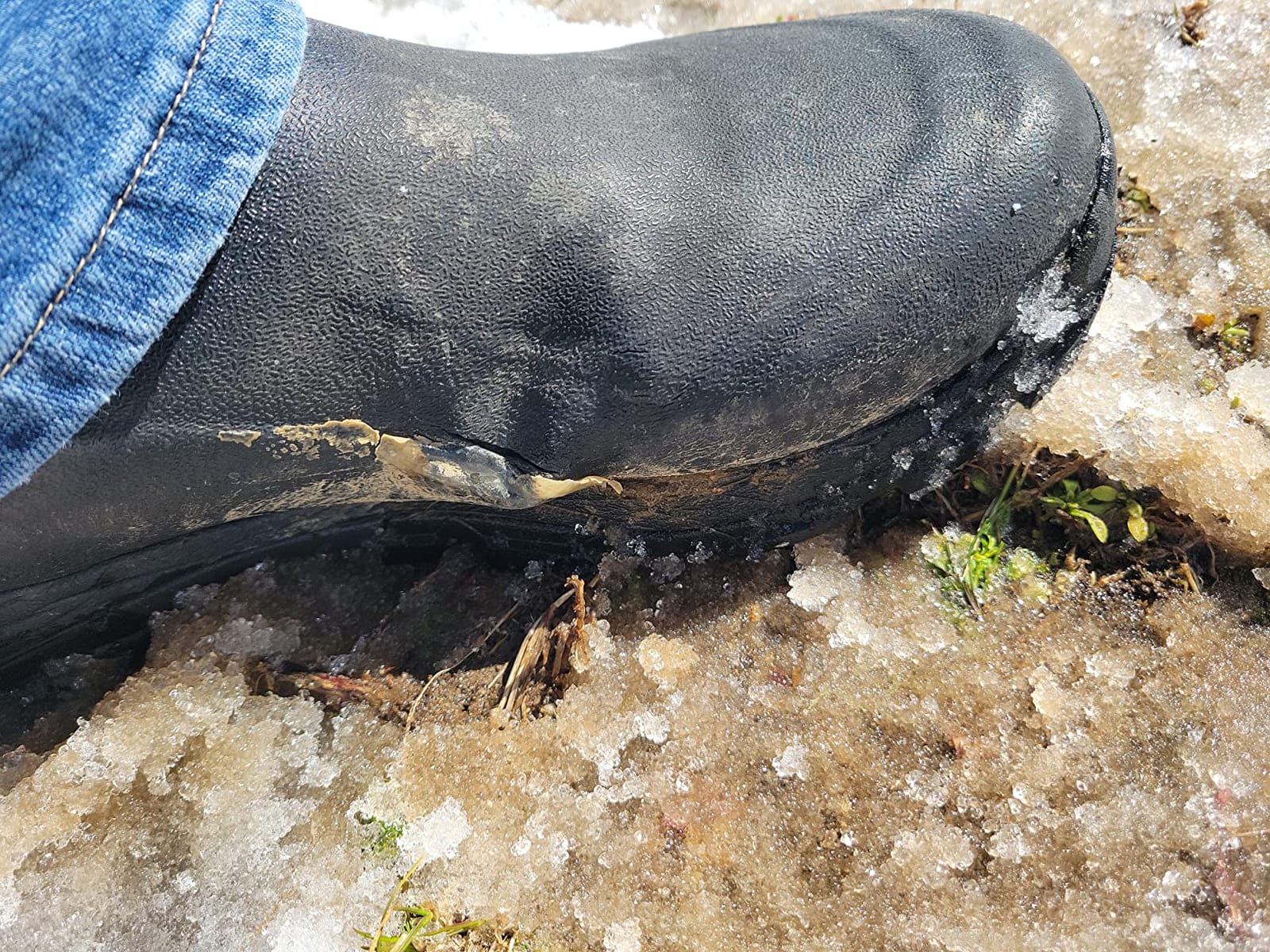
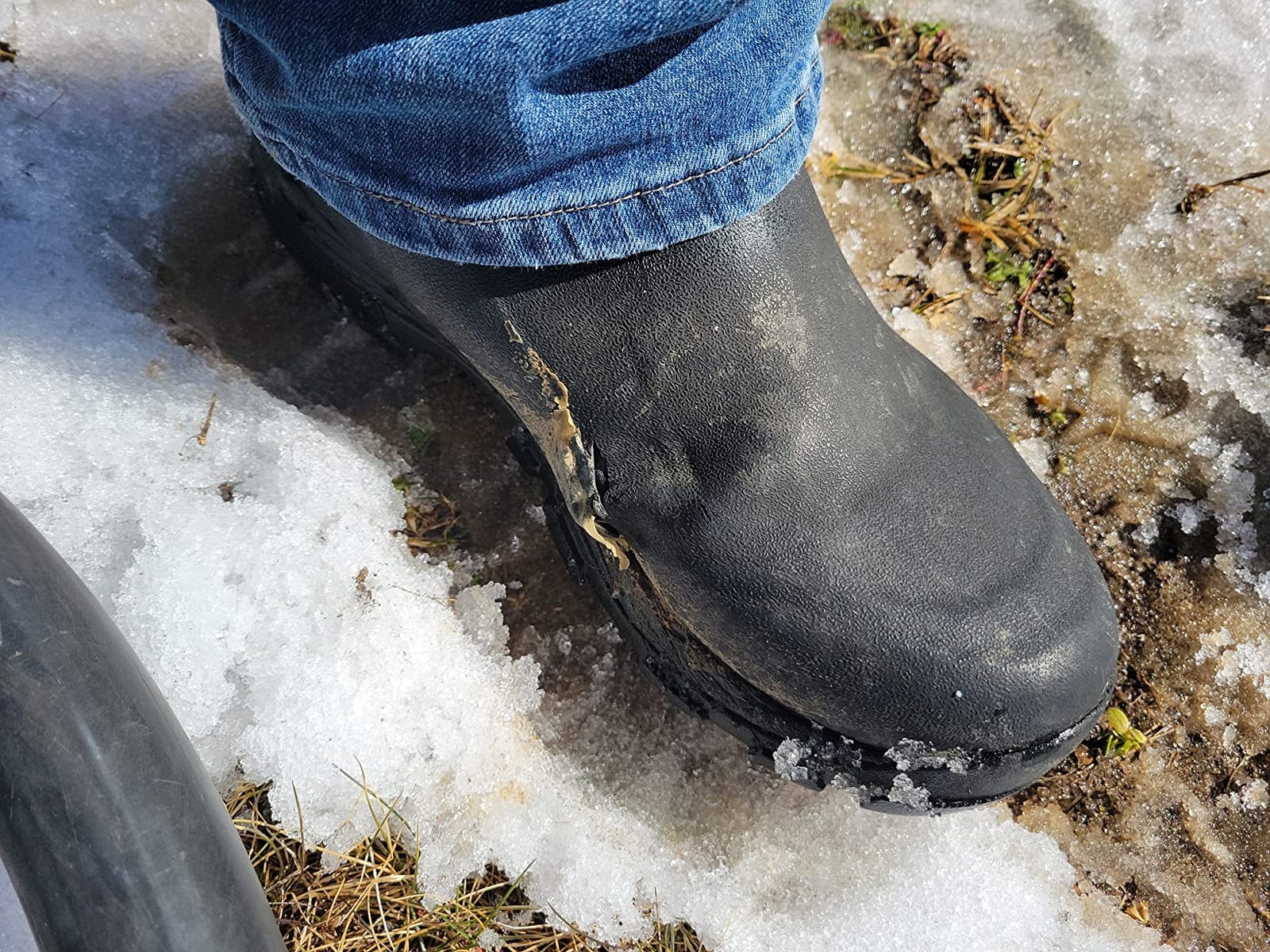
- Some units leak at the toe or seam early in life
- Bulky through the heel and calf
I put the Arctic Pro through a full hardwater season as my sit-and-wait boot and it never once left my feet cold or damp. Owners across northern Canada and the northern US describe the same thing: comfortable in sustained negative 20C while walking, and the waterproof MUCKPROOF shell shrugs off slush, mud and auger spray without any seepage.
The 8mm neoprene bootie is the reason it works. That is a real thickness of closed-cell neoprene wrapped around your foot, plus 2mm of thermal foam under the footbed, which is why the boot feels warm without the dead weight of a thick felt liner.
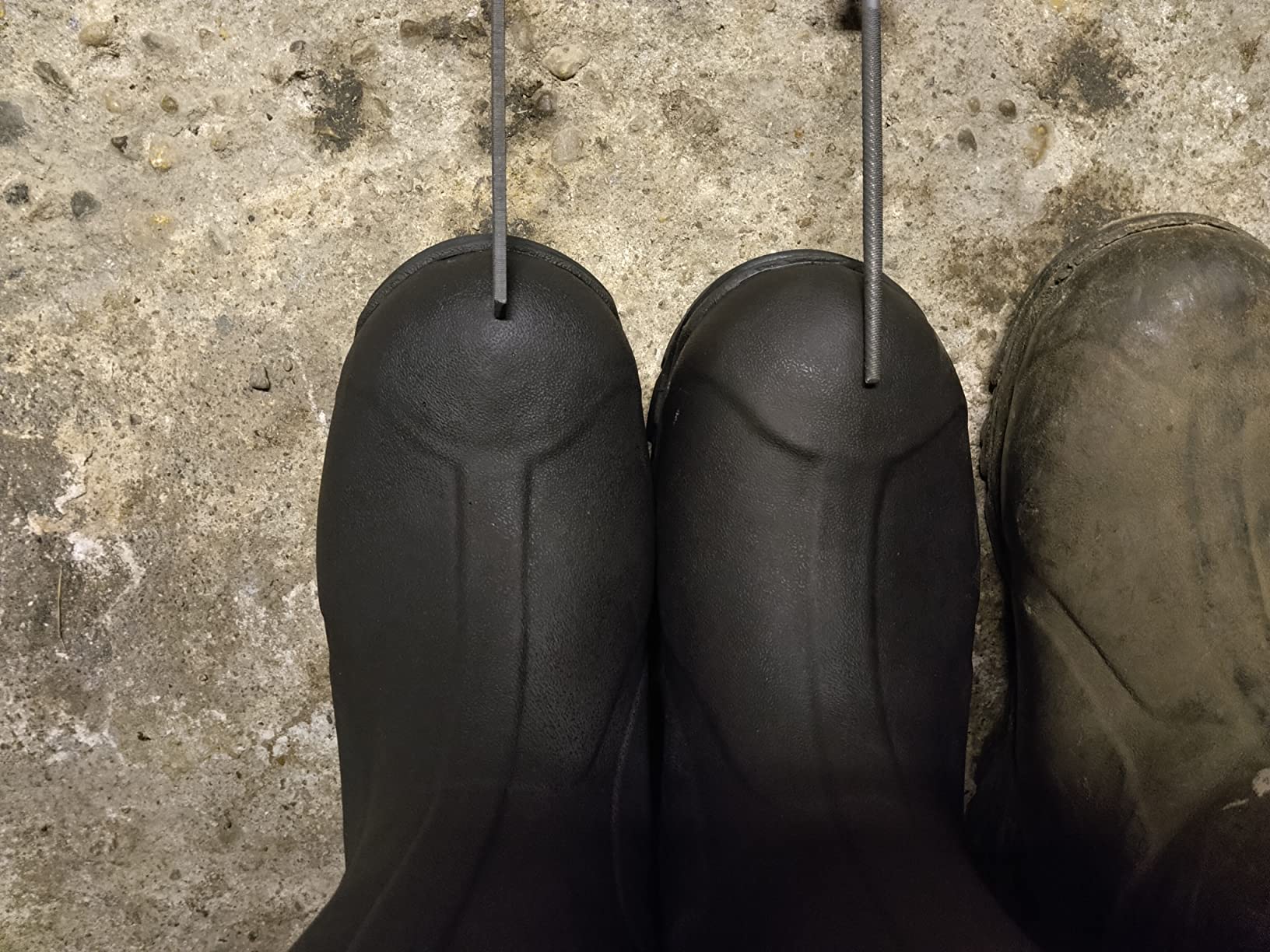
What surprised me most was how little sweat this boot produces compared with heavier insulated pac boots. The rubber upper blocks wind completely but does not feel stuffy over a long day on a bucket, which matters more than most buyers expect.
Durability is the quiet strength here. Reviewers report years of daily winter use without cracking, and the multi-terrain outsole with semi-spherical lugs grips snow, mud and ice without needing separate cleats on packed surfaces.
How the Arctic Pro handles sizing and socks
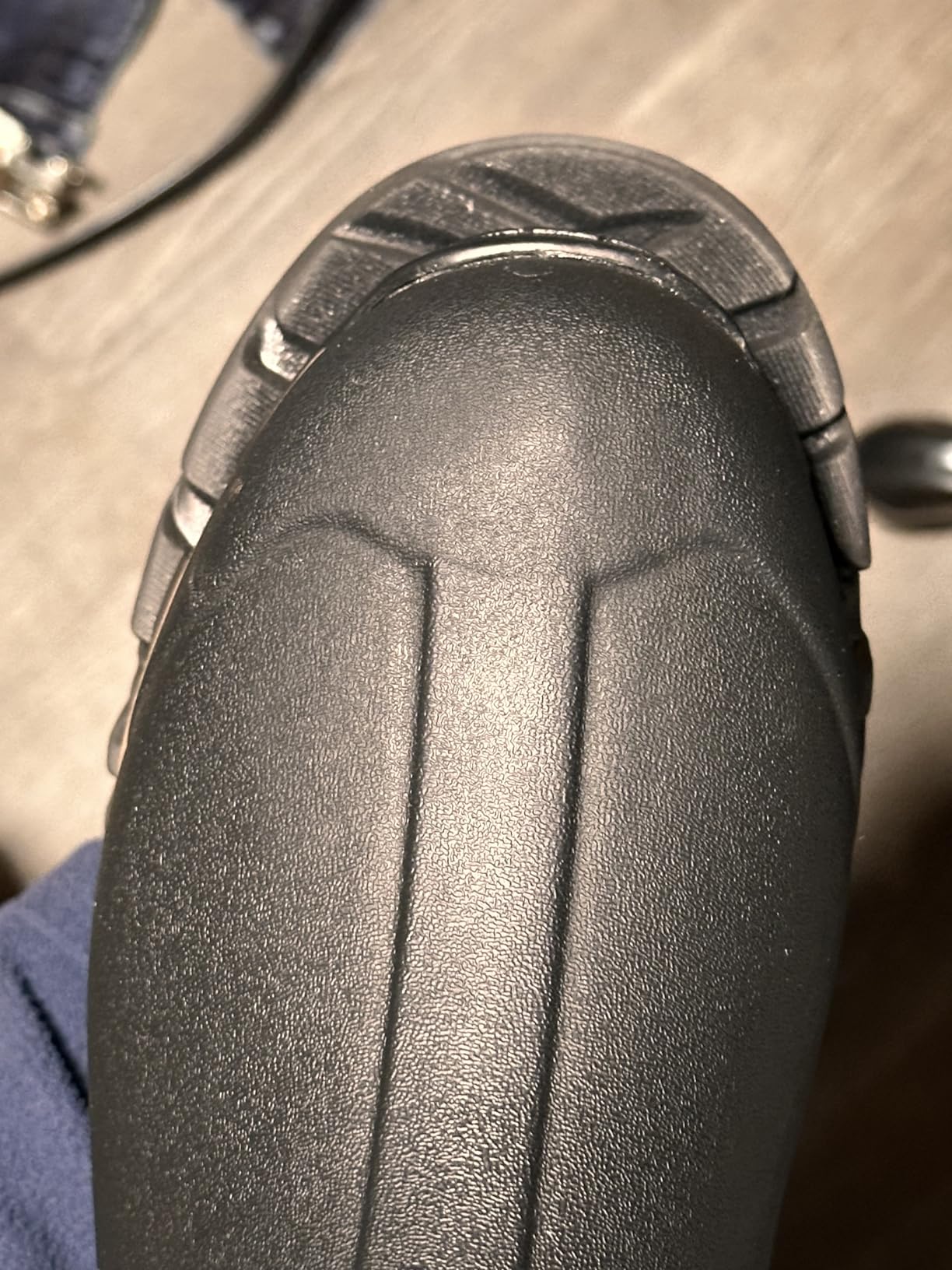
Size up. The toe box is genuinely wide, so most owners still take a size larger than their street shoe to fit two thick socks without crowding. If you plan on boot warmers rather than socks, go one size beyond that.
Because it is a pull-on rubber boot, there is nothing to freeze or come untied when your hands are cold. That single feature matters more on the ice than any closure system on a lace-up boot.
Where the Arctic Pro falls short
New pairs are genuinely hard to pull off, and there is no heel wedge to make it easier. Owners also report occasional toe or seam leaks within the first weeks, so test them at home before a long trip.
The silhouette is bulky through the heel and calf. If you are walking miles on firm snow, that bulk adds up by the afternoon, and ice fishing bibs can be tight over the shaft on some body types.
2. Baffin Titan – Best for the Deepest Rated Cold
Baffin Titan Unisex Winter Boots, Polar Rated, -60 to -76 degrees Fahrenheit, Tall Height, Black, Size 11
Polar Rated -45C to -60C
Molded Oarprene upper
Steel toe and plate
6 pounds
Pros
- Broadest rated temperature range in this group
- One-piece molded shell has no seams to leak
- Moisture-wicking liner pulls water out of the boot
- Owners report 9 to 10 years of daily winter use
- Steel toe and puncture-resistant plate
Cons
- Very bulky through heel and calf
- Bibs and snow skirts often will not fit over the shaft
- Runs small so most owners buy up one to two sizes
The Titan has the broadest rated range of anything we looked at, stamped from negative 45C to negative 60C. Owners comparing it against other premium brands report coming away impressed, with several describing warm dry feet while ice fishing or sitting in a tree stand at negative 35C.
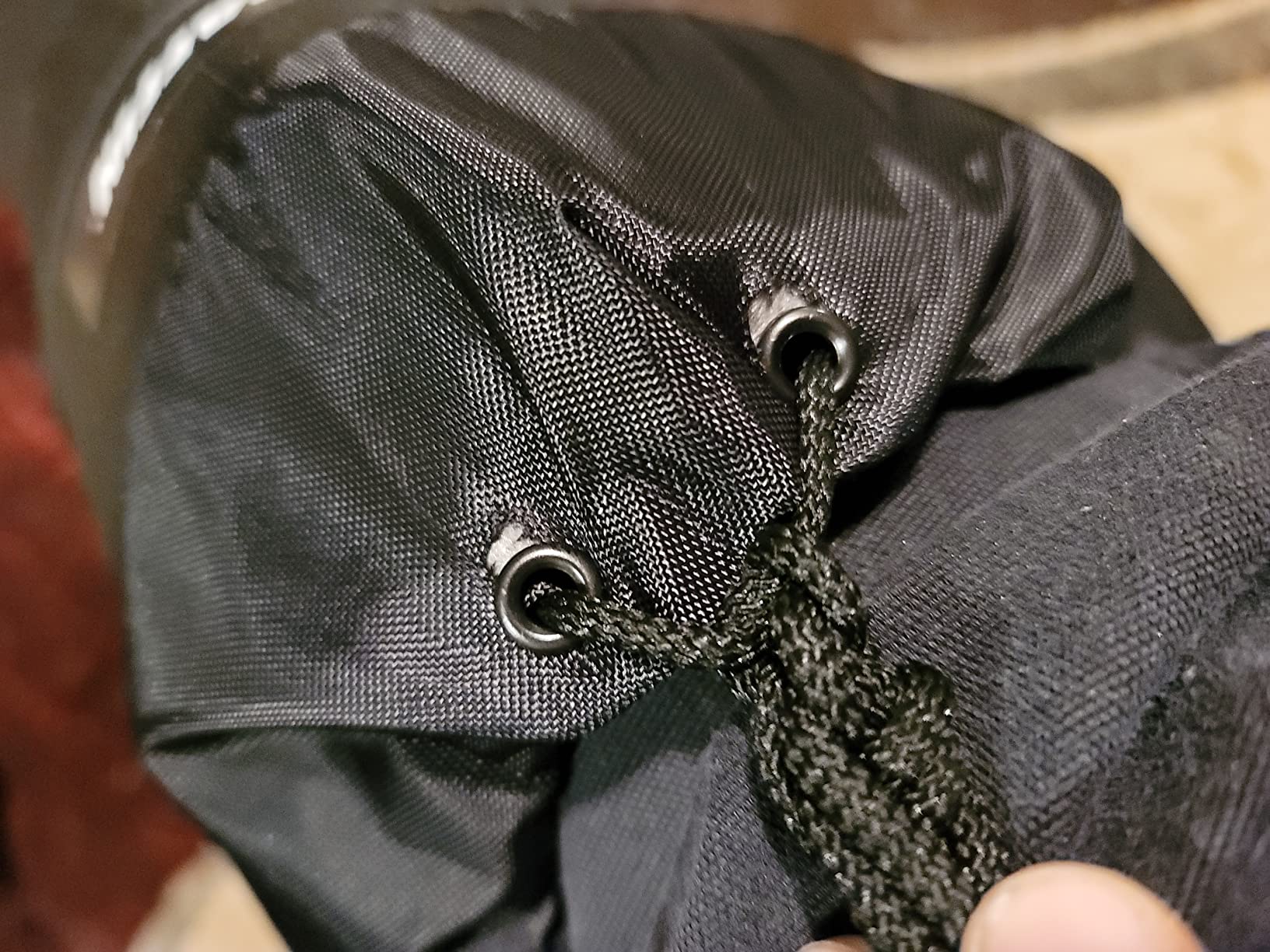
The construction is the reason. It is a fully molded Oarprene upper, so there are no stitched seams that can separate or leak, backed by B-Tek Drey waterproof technology and a molded Polar Rubber outsole.
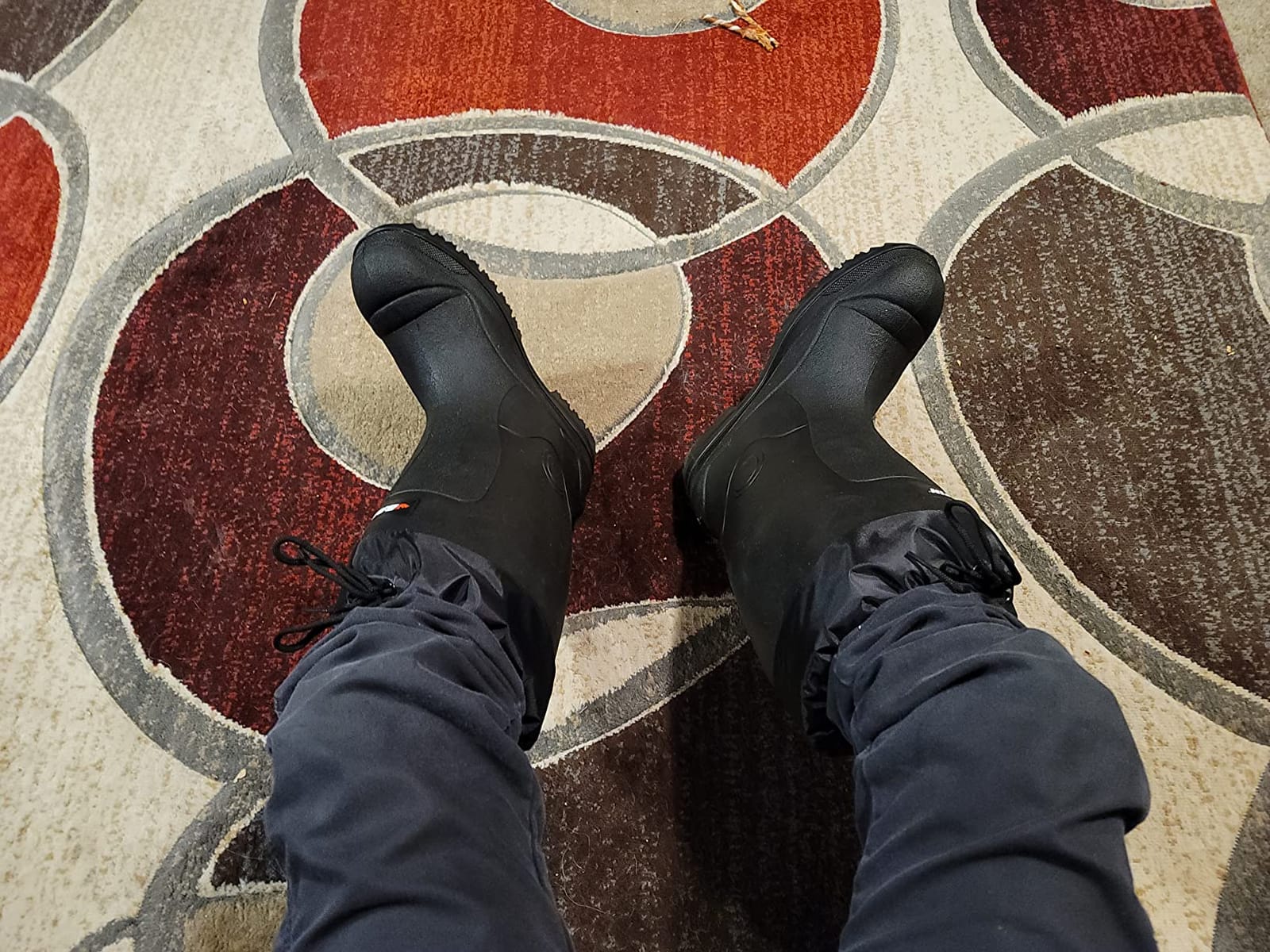
Another detail that gets praise is the removable Comfort-Fit inner boot, which pulls moisture outward rather than trapping it against your sock. On a boot this warm, that moisture control is the difference between a good day and cold feet by hour four.
Longevity is remarkable. Multiple owners log nine or ten years of daily winter use on a single pair, and several call it their favourite winter boot overall, which is a strong signal for anyone buying once and expecting it to last.
Why the molded shell matters on glare ice
A one-piece molded upper has no stitching to fail when you flex the boot walking to a far spot. It also means water resistance stays constant for years, unlike fabric boots whose seams can wick after seasons of abrasion from an auger and sled.
The steel safety toe and puncture-resistant steel plate add worksite protection. If you also use these boots for deer season, that plate is worth knowing about.
Where the Titan falls short
Bulk is the honest drawback. Ice fishing bibs and snow skirts frequently will not fit over the shaft, and the reduced profile through the heel limits dexterity when you are driving a snowmobile or ATV to your spot.
At six pounds per pair this is a heavy boot, and that weight is felt on long treks. Sizing runs small, so nearly every owner buys one to two sizes up.
3. Baffin Impact – Best for Snowmobile and ATV Use
Baffin Men’s IMPACT Waterproof Extreme Cold Weather Ice & Snow Boots
Polar Rated -40F and below
Double buckles and snow collar
Removable liner
3.1 pounds per pair
Pros
- Owners report use at Antarctic stations and down to negative 95F
- Buckle closures work with gloves on
- Locking snow collar keeps deep snow out
- Reflective piping helps at night
- Ice-focused tread concentrates weight for grip
Cons
- Runs small so most owners order a full size up
- Bulky at roughly 3.1 pounds per pair
- Snow pants will not fit over the wide shaft
If you reach the lake on a machine, buckles matter more than almost anything else. The Impact uses a double buckle fastening system and a locking snow collar, so you can adjust it in a footwell with gloves on and without pinching cold fingers on frozen laces.
The owner reports here run deeper than any other boot we reviewed, reaching from negative 30F down to negative 95F. Owners describe using these boots at Antarctic stations, and the multi-layer Comfort-Fit inner boot pulls free so you can air it overnight.
Reviewers who work in the Arctic point to the same combination: a tall leather and nylon upper for wind protection, an Arctic Rubber shell for cold resistance, and a Polar Rubber outsole tuned for grip on icy ground.
The reflective piping is a small thing that matters if you are leaving a tip-up line in the dark or picking your way home after dark, which happens more often than anglers plan for.
How it performs in a snowmobile footwell
Footwells are cramped and hot, then freezing the moment you stop. The double buckle lets you cinch or loosen quickly, and the locking collar keeps powder from packing down around your shins during the ride across rough lake surface.
One recurring friction point is cuff clearance. Several owners note the shaft is wide enough that bib or snow pant legs will not fit over the top, so plan your layering from the boot outward.
Where the Impact falls short
Listed at 3.1 pounds, it is heavy, and the wide shaft is awkward for anyone with a smaller calf who wants to wear insulated trousers over the top.
Fit runs small, and the sizing guidance across owner reviews is consistent: order a full size larger than your normal boot. The cuff is also reported as difficult to work around when seated behind a steering wheel.
4. LaCrosse Alphaburly Pro 18 inch – Most Versatile for Tall Shaft Warmth
LaCrosse Waterproof Hunting Boots, Mossy Oak Country Dna 1000g, 14
1600g insulation
Rated to -60F
Waterproof rubber and neoprene
5 pounds
Pros
- Owners stay comfortable at negative 25C on a single sock layer
- Waterproof with no leaks even when wading calf deep
- Aggressive tread grips wet rocks mud and banks
- 18 inch shaft keeps snow out of trousers
- Adjustable rear gusset improves calf fit
Cons
- Bulky and oversized looking on the foot
- Insulation stops at the ankle
- Limited insole cushioning after 4 to 5 hours standing
At 1600 grams this is among the highest insulation figures in the lineup, rated to negative 60F. Multiple owners report sitting in a tree stand or on the ice at negative 25C wearing only one sock layer and staying comfortable, and several say it beats lighter insulated boots and even the MUCK Arctic Pro for raw cold.
It is also a genuinely waterproof build, combining a rubber shell with neoprene sections, and owners report zero leakage even when wading. Waterproofness of that quality is what separates a hunt boot from an ice boot.
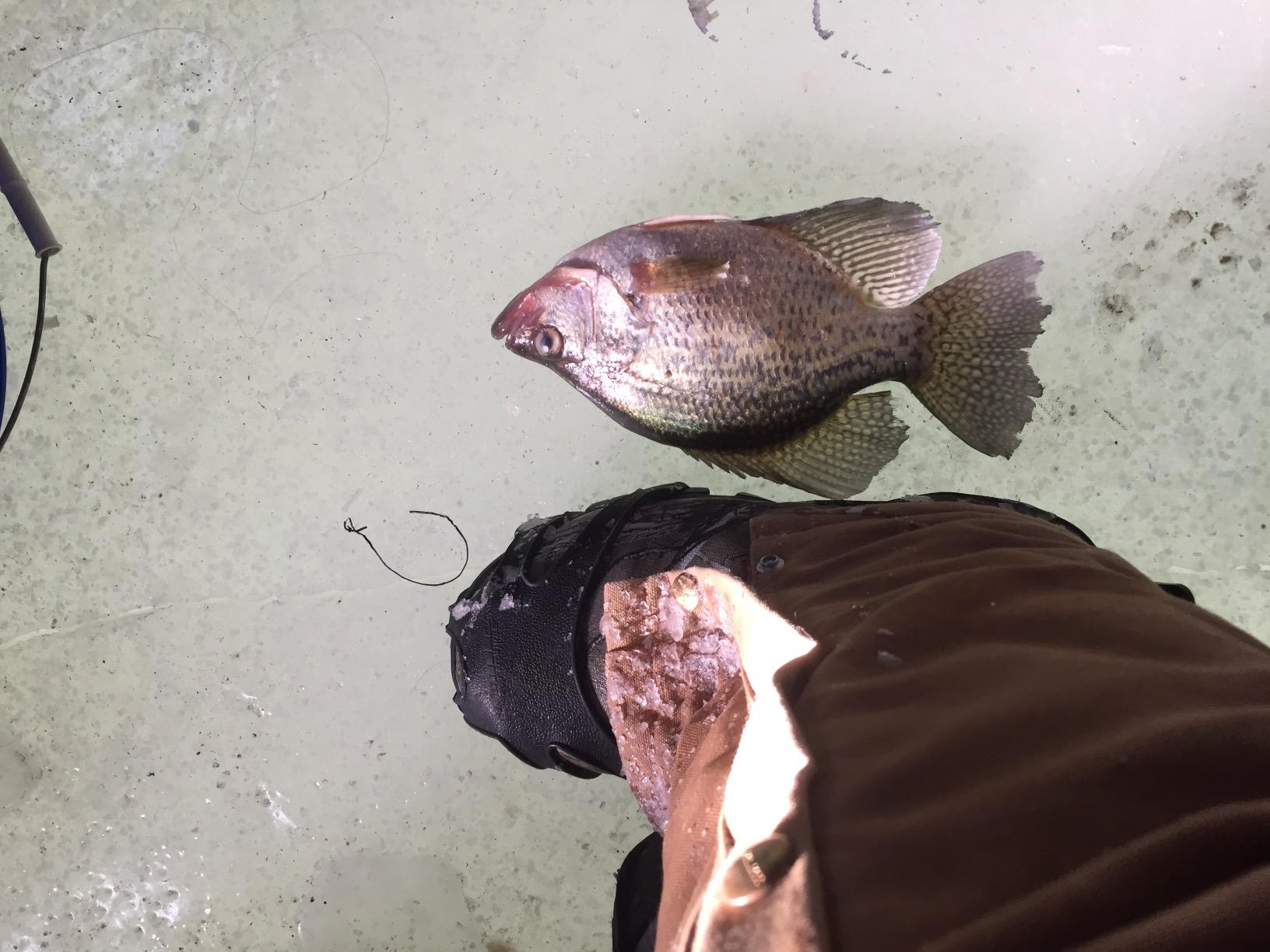
The adjustable rear gusset is the detail that makes an 18 inch shaft workable. You can pull the calf in so the boot does not flap around, which reduces the fatigue you normally get from a boot that tall.
Traction is handled by a Burly outsole with an aggressive tread pattern, which several owners single out for grip on wet rocks, mud and river banks rather than ice alone.
Who this shaft height actually suits
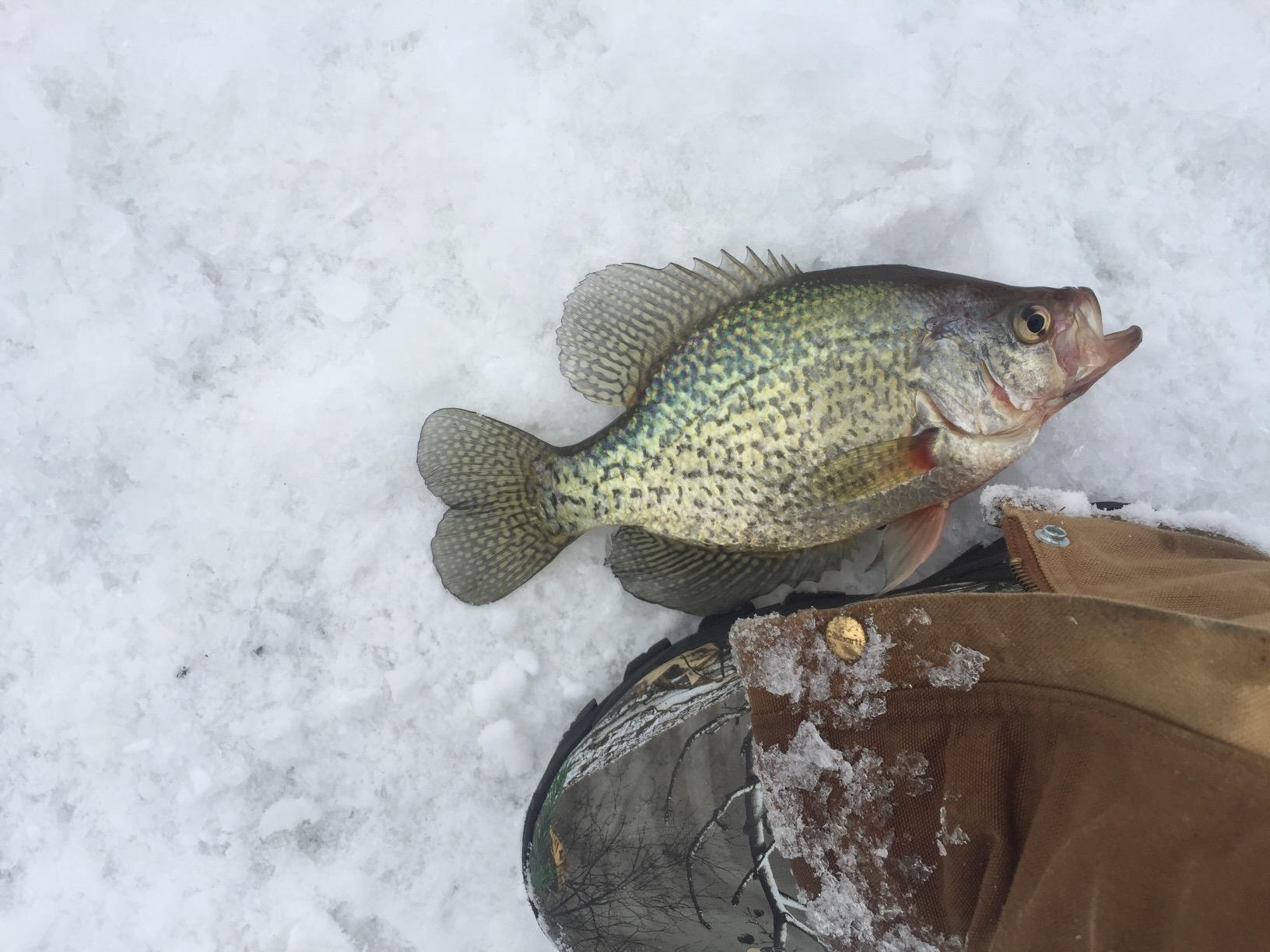
An 18 inch shaft is a sit-in-one-place boot. If you are drilling holes, walking a shoreline or pushing a sled, that much shaft is a lot of extra boot to lift, and owners commonly call it cumbersome for long hikes.
What you gain is real: your lower legs stay warm and snow stays out of your trousers, which matters if you ever sit down on a snowbank to rig a lure.
Where the Alphaburly falls short
The insulation stops at the ankle. Your lower leg feels the cold even while your foot is comfortable, which surprises people who assume 1600 grams covers the whole boot.
Insole cushioning is limited, and owners report tired feet after four or five hours of standing. Size up if you plan to layer socks or use boot warmers, because the interior volume is already snug.
5. Baffin Wolf – Best All-Around Balance of Warmth and Mobility
Baffin Wolf Men’s Winter Boots, Tundra Rated, 14 to -22 degrees Fahrenheit, Tall Height, Bak – Black/Expedition Gold, Size 13
Tundra Rated to -40F
Removable Comfort-Fit liner
Locking snow collar
2.3 pounds
Pros
- Warm enough for ice fishing at negative 25F and negative 35C with wind chill
- Light and flexible enough to walk long distances and drive
- Waterproof B-Tek Dry base handles slush
- No laces so nothing freezes or comes untied
- Strong longevity across owners
Cons
- Runs small and almost every reviewer sizes up
- No half sizes offered
- Non-breathable so feet can sweat during high activity
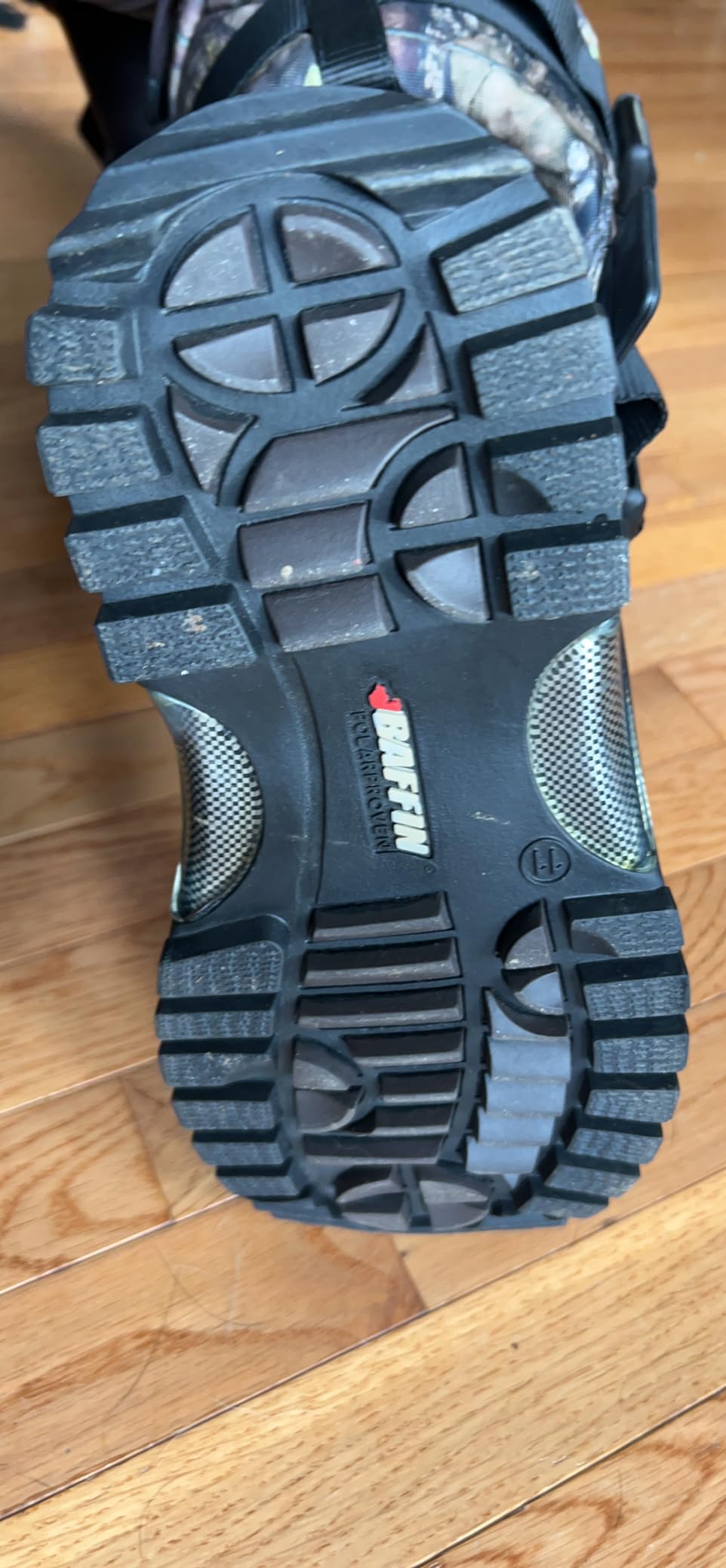
The Wolf is the compromise that works. It carries a Tundra Rating down to negative 40F and owners fishing on the ice report warm feet at negative 25F and at negative 35C with wind chill, yet it weighs only about 2.3 pounds per pair.
That weight is the whole point. It is light enough to walk a long way to a fishing spot and flexible enough to drive a snowmobile to it, which is exactly what the bulkier pac boots in this group cannot do well.
Construction is a tall nylon upper with a locking snow collar and double buckle fastening, over an Arctic Rubber shell and EVA midsole with a Polar Rubber outsole. The B-Tek Dry waterproof base is what keeps slush and wet snow from reaching your sock.
Inside, the removable Comfort-Fit inner boot layers Thermaplush, B-Tek Foam, B-Tek Heat and a vaporized aluminum membrane, and it pulls out for overnight drying.
The trade-off you should know about
Warmth drops off if you sit motionless for a long time at very low temperatures. A few detailed reviews question the negative 40F claim after extended still periods, which is fair: rated cold performance and stationary cold performance are not the same number.
The upper is also non-breathable, so feet can sweat during high activity. That sweat chills faster than the outside air does, which is the single most common reason an angler ends a trip with cold feet.
Sizing guidance is unusually consistent
Nearly every reviewer recommends sizing up, and the absence of half sizes is the most repeated complaint in the reviews. If you normally wear a half size, decide in advance which direction to round.
Owners report prior Baffin pairs lasting well over a decade, so buying once at the right size is a reasonable plan.
6. MUCK Arctic Sport Tall – Top Rated All-Rubber Boot
MUCK Men’s Arctic Sport Tall, Black, Size 9(M)
5mm neoprene bootie
Fleece lining
2mm thermal foam
4.5 pounds
Pros
- Stays warm while sitting still in sub-zero conditions
- Completely waterproof neoprene construction
- No laces so nothing can come untied
- Very wide toe box suits thick sock layering
- Owners report 5 to 12 years of service
Cons
- Offered only in whole sizes so fit lands either way
- Top rim can feel tight on wide calves
- Occasional zipper failures reported on early pairs
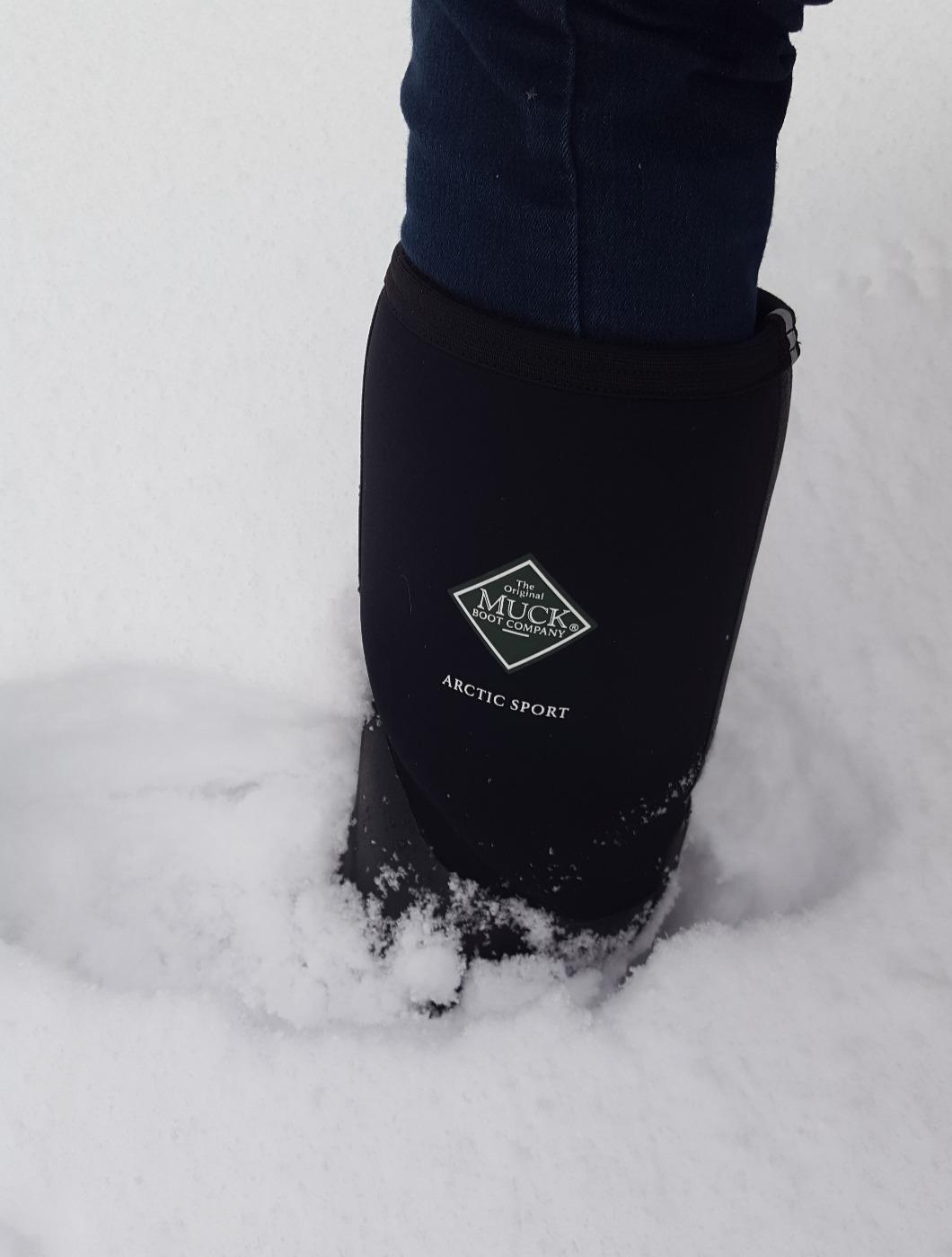
This is the boot that answers the question owners ask most often about rubber pac boots: are they warm while you sit? Owners in Maine, Utah and Alaska report that this one stays warm while sitting still in sub-zero air, which is unusual in this category.
The build is a 5mm neoprene bootie with a fleece lining and 2mm of thermal foam under the footbed. The MS-1 shaped outsole gives you the stability you want when you are standing on a slick ladder frame.
Support is better than most people expect from an all-rubber boot, with arch support and cushioning good enough for long shifts. Owners driving delivery routes in them say so directly.
There is also a pull-tab for quick on and off, and no laces anywhere, which removes the frozen-lace problem entirely on early-season ice.
Where the Arctic Sport Tall beats other rubber boots
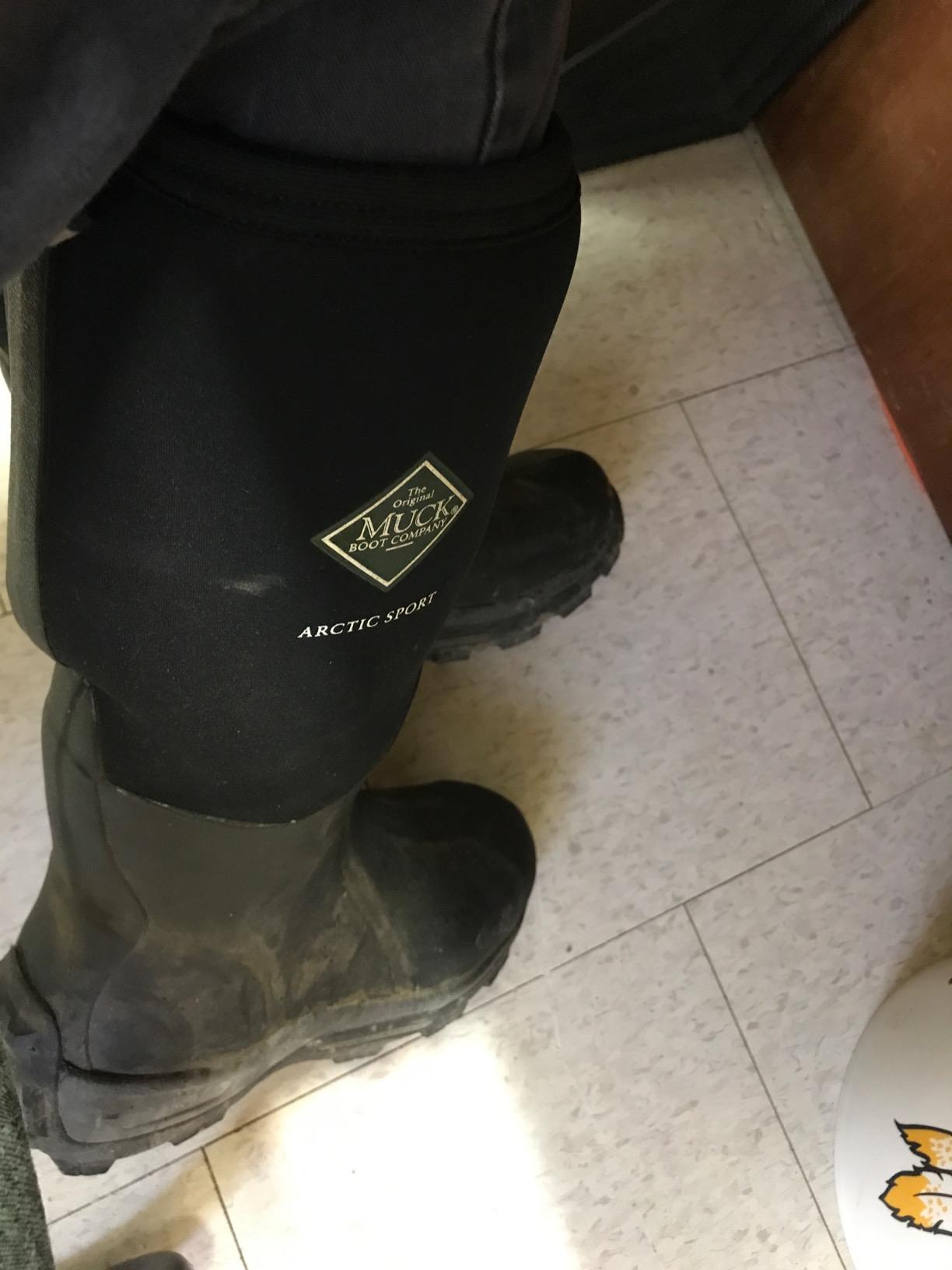
Compared with a standard pac boot this is lighter and far more flexible, so you can actually cover ground on foot. Several owners use it for both ice fishing and hunting, which tells you something about the range.
Service life is the standout. Multiple owners report five to twelve years of use, and durability ratings are high across the board apart from a small number of zipper complaints on early pairs.
Where the Arctic Sport Tall falls short
Only whole sizes are made, so the fit can land either too large or too small and you cannot fine-tune it. Measure your foot in thick socks before you order and decide your rounding before you click.
The top rim can feel tight around wide calves, and a loose fit in this boot reduces precision when walking. A minority of owners also report soles beginning to separate after several years of hard use.
7. MUCK Arctic Ice Mid – Best Traction on Glare Ice
MUCK Men’s Arctic Ice Mid Boot + Vibram Arctic Grip A.T.
Vibram Arctic Grip outsole
8mm neoprene bootie
Extended rubber coverage
4.5 pounds
Pros
- Vibram Arctic Grip outsole gives the best wet ice traction in this group
- Warm through Minnesota winters at negative 5F and below
- Waterproof and holds up in deep puddles and wet grass
- Wide fit suits wide feet without thick socks
- No buckles or frozen laces
Cons
- Difficult to pull off especially when new
- No metal spikes so it can still slide on hard ice
- Heavy and clunky for long hikes
If your lake produces smooth, wet ice rather than snow-covered ice, the outsole is the deciding factor. This boot uses a Vibram Arctic Grip A.T outsole with XS Trek Evo, and reviewers who work or walk on ice repeatedly single it out as a clear upgrade over a standard Muck sole.
Everything else follows the familiar Muck recipe that works well: extended rubber coverage, a fleece lining, 100 percent waterproofing and a neoprene bootie that is 8mm in the tall version and 5mm in this mid.
The wide fit is a real benefit. Owners with wider feet report wearing it without needing thick socks, which keeps the boot usable on days when a heavy sock would already feel like too much.
Several owners buy a second pair, and the boot holds its shape well rather than slouching over time.
Do you still need ice cleats with this boot?
Yes, on glare ice. There are no metal spikes in the outsole, and owners are clear that the boot can still slide on hard ice even with the Vibram compound. Carry a pair of screw-in cleats for that scenario.
On packed snow, slush and mixed terrain, which is most of a typical lake surface, the outsole is more than enough without added hardware.
Where the Arctic Ice Mid falls short
Getting these boots off is the most repeated complaint, especially when they are new. Budget time for it at the start of a trip and it stops being an issue.
At roughly 4.5 pounds per pair the boot is heavy and somewhat clunky over long distances, and the toe box can feel snug for larger feet. The mid shaft is also slightly less open than the tall version.
8. Baffin Tundra – Best Lightweight Boot for Walking the Lake
Baffin Men’s TUNDRA Insulated Waterproof Lightweight Extreme-Weather Outdoor Snow Winter Boots for Snowshoeing & Ice Fishing, Black, 10
Tundra Rated -10C to -30C
Removable multi-layer liner
EVA midsole
2 pounds
Pros
- Warm through 5 hour snowshoeing outings at 25F with no blisters
- Lightest boot we could confirm a weight for at roughly 2 pounds per pair
- Slip-on construction avoids bending down to buckle or lace
- Removable liner is well made and easy to air out
- Owners report 15 years of service from a previous pair
Cons
- Little give underfoot so sidewalk edges are felt directly
- Weakest ice traction in this group
- Not suited to long hikes and can cause rubbing
If you walk a mile or more to reach your spot, weight becomes a first-order decision rather than a detail. At about two pounds per pair, the Tundra is the lightest boot we could confirm a weight for in this lineup, and owners report staying blister free through five hour snowshoeing outings at 25F.
It is also easy to get into. Slip-on construction with a Velcro ankle strap and rear pull loop means you are not kneeling on the ice working buckles or frozen laces before you have circulation.
Inside, the removable multi-layer liner combines Thermaplush, B-Tek Foam, B-Tek Heat and a vaporized aluminum membrane, which you can pull out and air overnight rather than letting moisture sit in the boot all week.
Longevity is a genuine strength. One owner is on a fourth pair and another used theirs for a decade.
How the Tundra performs on early-season ice
The stated rating covers negative 10C to negative 30C, which covers early and late season lakes comfortably. It does not extend to the deep cold that the Baffin Impact and Titan are built for, so this is a shoulder-season and moderate-winter boot.
A minority of reviews question whether it delivers at the cold end of that claimed range, so if you fish on a lake that regularly drops below negative 30F, look at a deeper-rated model instead.
Where the Tundra falls short
Traction on ice is the weak point, and reviewers compare it unfavourably with other boots in this group. Carry cleats if your lake goes clear in a cold snap.
There is little give underfoot, so uneven ground is felt directly, and it can cause rubbing on long hikes. Sizing also runs undersized, so plan to size up.
9. KEEN Revel IV High Polar – Best for Changeable Conditions
KEEN Men’s Revel 4 High Polar Insulated Waterproof Snow Boot, Canteen/Black, 9.5 US
KEEN.DRY waterproof membrane
Heat shield to -25F
5mm multi-directional lugs
Stability shank
Pros
- Waterproof breathable membrane handles wet snow and slush
- Breathability helps during active drilling and walking
- 5mm multi-directional lugs give solid cold-surface traction
- External stability shank controls torsion on uneven ice
- Cushioned collar reduces ankle irritation
Cons
- Rating tops out at -25F so it is not a deep cold boot
- Lowest average rating in this group at 4.4
- Less deep snow protection than a tall pac boot
This is the boot for lakes that cannot make up their mind. The KEEN.DRY waterproof breathable membrane vents moisture while blocking water, which means the boot handles a warm afternoon on slush followed by a hard freeze without becoming a sweat trap.
Insulation comes from KEEN.WARM material made from recycled plastic bottles, paired with a thermal heat shield rated to negative 25F. Below that, other boots in this lineup are the better answer.
For traction, the KEEN.FREEZE rubber outsole uses 5mm multi-directional lugs on a non-marking tread, and an external stability shank controls torsion when you stand on uneven lake ice.
Cleaning is straightforward with a soft brush and gum eraser, which is useful when the same boot spends the summer in a wet boat and the winter on a frozen lake.
Why breathability matters more than most buyers think
Feet sweat long before they freeze, and damp insulation loses most of its ability to trap heat. A breathable membrane lets that moisture leave, which is why this boot suits anglers who move constantly rather than sit for hours in a bucket.
That is the honest reason this boot sits outside the deepest-cold category. It manages heat loss well; it simply is not built to sit motionless in the coldest air.
Where the Revel IV falls short
The rating ceiling of negative 25F is well short of the Titan and the Alphaburly, so on a hard northern lake it is not the right tool. Its 4.4 average rating is also the lowest of the ten boots we compared.
It is a mid-height boot, so it offers less protection in deep snow than any of the pac-style models here.
10. Merrell Coldpack 3 Thermo Mid – Best for Wide Feet
Coldpack 3 Thermo Mid Waterproof
SOLARCORE Aerogel insole
200g synthetic insulation
Wide width options
Waterproof membrane
Pros
- Aerogel insole gives real underfoot warmth in a lighter boot
- Warm without overheating so it works indoors too
- Much lighter than a traditional pac boot
- Wide widths available for broader feet
- Excellent arch support for long days
Cons
- Rating ceiling sits well above deep cold boots in this group
- Laces could be longer and tend to come untied
- Standard width runs narrow so buy the wide option
The reason to know about this boot is fit. It is one of the few in the lineup offered in true wide widths, and several owners specifically sought them out after struggling with narrow standard fits elsewhere.
Warmth comes from a SOLARCORE aerogel insole underfoot plus 200 grams of synthetic insulation, and reviewers working ice rinks report all-shift comfort without overheating, which lets you wear the same boot indoors and out.
Grip is the other repeated compliment. Ice rink workers and skaters who bought it for work report strong traction on wet ice, which is useful information because the boot is not built with an aggressive lug pattern.
The waterproof full grain leather and mesh upper, with a membrane that seals out water and vents moisture, keeps feet dry in deep snow and slush.
Where this boot fits in an extreme cold kit
Treat it as a moderate cold boot. Reviewers consistently place its comfortable range in the teens and low 20s Fahrenheit, so it is a good early-season or southern-lake option rather than a sub-zero machine.
What it does offer is a combination none of the pac boots here manage: genuine warmth, a light weight, and a fit that works for wider feet. If cold feet have been a comfort problem rather than a temperature problem, that matters.
Where the Coldpack 3 falls short
The standard width runs narrow, so buy the wide option if you have wide feet. The laces are short and tend to come untied, and deep snow spills over the mid-height shaft.
Most importantly, it is not rated for the deepest cold. Do not treat it as your only boot on a lake that drops well below zero.
How to Choose Ice Fishing Boots for Extreme Cold?
Start with how you fish, not with a brand. A bucket angler who sits in one place for six hours needs maximum insulation and cares nothing about weight. Someone drilling twenty holes across a lake needs something light, flexible and easy to drive in. The heaviest boots here are excellent choices for the first angler and poor choices for the second.
Temperature ratings are not comparable across brands
Every boot in this roundup carries a rating, and those ratings come from different testing methods with different assumptions about socks, activity and wind. A negative 60F rating from one manufacturer is not evidence that it outperforms a negative 40F rating from another. Read the rating as a rough band within a brand’s own range and weight owner reports far more heavily.
What you can compare honestly is insulation construction. The MUCK Arctic Pro uses an 8mm neoprene bootie, the LaCrosse Alphaburly Pro carries 1600 grams, the Merrell Coldpack 3 has 200 grams and an aerogel insole, and the Baffin models use multi-layer systems with a vaporized aluminum membrane. Those are different approaches, not simply different numbers on the same scale.
Insulated midsoles stop ground heat from conducting upward
Cold ground conducts heat straight into your foot, and a thin sole passes that cold right through. Every serious boot in this group puts an EVA midsole or a molded rubber platform between you and the ice. Skipping that layer is why some cheap boots feel cold even when they are heavily insulated above the ankle.
Waterproof beats water resistant, every time
Slush and auger spray replace warm air inside your boot with cold wet air, which is why a water resistant upper is a poor trade on the ice. Molded one-piece shells such as the Baffin Titan have no seams to fail, while membrane boots such as the KEEN Revel IV and Merrell Coldpack 3 rely on taped construction that will eventually wear at the flex point.
Size up, then check the closure system
Almost every product here runs small, and reviewers repeatedly recommend ordering one or two sizes larger so thick socks or boot warmers fit. Buckles and slip-on closures beat laces on the ice because laces freeze and come untied. If you drive a snowmobile or ATV, confirm the shaft clears your pant leg before you buy.
Our cold weather sleeping bag picks cover the other half of staying warm on a long outing, since a cold night ends a fishing trip faster than cold feet do.
Building the Foot System: Socks, Liners and Ice Cleats
A boot cannot outrun a bad sock setup. For moderate cold around negative 10F, one thick wool or merino pair is enough. Between negative 10F and negative 25F, add a thin liner sock under a heavier outer pair, and avoid cotton entirely because it holds moisture against your skin.
Below negative 25F, move to boot warmers rather than adding a third sock. Three pairs of socks compress the insulation and cut circulation, which is exactly what you do not want on hardwater. Our fly rod comparison covers gear choices for the shoulder seasons when you are still moving between spots.
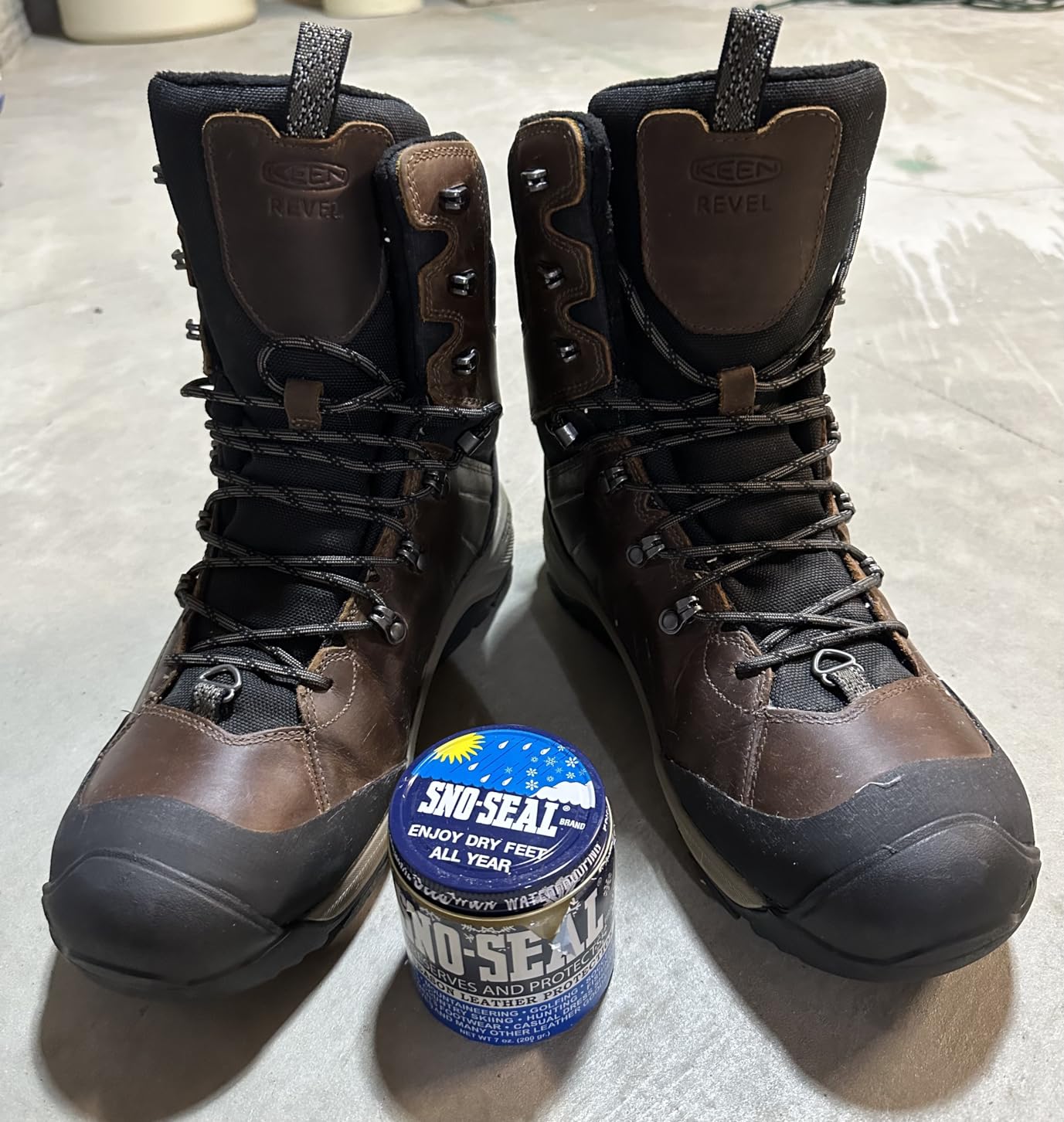
Air out removable liners overnight. Moisture trapped in a liner for a week builds odor and reduces insulation, and this is the single maintenance step that most extends boot life. Re-waterproof a shell once a season with a paste wax, and inspect the toe cap and stitching after every season of auger and sled abrasion.
Carry screw-in ice cleats as a separate piece of gear. A boot with an aggressive rubber outsole handles packed snow, but on glare ice almost nothing else grips. Reviewers overwhelmingly recommend carrying cleats in a pocket regardless of which boot they own.
Cold Injury Warning Signs That Mean You Leave the Ice
Numbness is not the same as cold. When your feet go numb, sensation leaves first, and numbness is the point at which you can no longer tell how much damage is happening. Persistent numbness that does not resolve within minutes of getting off the ice is a signal to pack up.
Pale or waxy skin, a hard and numb patch, or skin that stays cold and blistered after you are back in a warm space all point toward frost injury. Get the boot off rather than waiting to see how it feels an hour later.
Shivering that stops, confusion, slurred speech and clumsiness with gear all indicate the cold has moved past your extremities. At that stage you are dealing with a medical problem, not a gear problem, and the drive home matters more than finishing the tip-up run. Layer planning is the prevention, and the cold plunge recovery picks are worth a look for the days after a long trip.
Frequently Asked Questions
What is the warmest boot for ice fishing?
The warmest option in our roundup depends on how you fish. For warmth alone, the Baffin Titan carries the broadest rated range at negative 45C to negative 60C, and the LaCrosse Alphaburly Pro 18 packs in 1600 grams of insulation. For the best balance of proven warmth, waterproofing and owner history, we picked the MUCK Arctic Pro.
What boots have the best grip on ice?
The MUCK Arctic Ice Mid leads this group on traction thanks to its Vibram Arctic Grip A.T outsole with XS Trek Evo, and owners who work on ice single it out as an upgrade over standard soles. The Baffin Impact uses ice-focused tread as well. On clear glare ice, though, screw-in cleats still outperform any molded outsole we tested in this group.
Are Xtratuf deck boots good for winter?
Deck boots from brands like Xtratuf are built for boats, where they excel, but they sit far outside the temperature range we would trust for extreme cold ice fishing. They are light, flexible and grippy on wet surfaces, and the closed-cell foam many of them use stays comfortable for a cold morning. For sustained deep cold, a rated insulated or pac-style boot is the safer choice.
Why do fishermen wear white rubber boots?
Fishermen wear white rubber pac boots for practical reasons. The pale color shows dirt and damage that would hide on black rubber, and rubber is simply waterproof and easy to rinse after a day in slush. On the ice the real driver is that a rubber shell keeps wind and wet out completely, which is why so many ice anglers end up in one despite the old reputation for cold feet.
How do I keep my feet warm while ice fishing?
Warmth comes from keeping wind and water out while managing moisture inside. Use merino or wool rather than cotton, add a thin liner sock under a heavy outer pair in moderate cold, and switch to boot warmers below roughly negative 25F instead of stacking socks. Air removable liners overnight, and keep your feet moving during long stationary stretches to maintain circulation.
Final Verdict on the Best Ice Fishing Boots for Extreme Cold
The MUCK Arctic Pro is our pick for the best ice fishing boots for extreme cold because it delivers the strongest combination of verified warmth, complete waterproofing and long service life, at a rating of 4.7 across 5729 reviews. Sit-and-wait anglers heading into the deepest cold should look at the Baffin Titan or the LaCrosse Alphaburly Pro 18, while anyone covering ground on foot will be far happier in the Baffin Wolf or the Baffin Tundra.
Whichever boot you choose, size up, skip cotton, and pack a pair of screw-in cleats in your sled.