

Finding the best smartwatches for running used to mean choosing between accurate GPS and a watch that survives the week without a charger. That trade-off is mostly gone in 2026. Our team logged hundreds of training miles across road, trail, and treadmill to sort the real performers from the marketing hype.
We tested 10 GPS running watches across every price bracket, from entry-level trackers to advanced training computers with multi-band satellite reception. Every pick below earned its place with real workouts, not spec sheets.
The quick answer if you are short on time:
- Best overall: Garmin Forerunner 265 – AMOLED display, training readiness, multi-band GPS
- Best value: COROS PACE 3 – dual-frequency GPS and 24-day battery for a third of flagship pricing
- Best budget: Amazfit Bip 6 – 14-day battery, 2000-nit display, built-in GPS at an entry price
- Best for beginners: Garmin Forerunner 55 – simple buttons, daily suggested workouts, two-week battery
- Best for phone-free runs: Garmin Forerunner 165 Music – onboard Spotify, Amazon Music, and Deezer
One honest note before we start: every watch in this list is a genuine running tool. Reddit runners we tracked during research repeatedly called Garmin “the gold standard” and COROS “the best bang for buck,” and our testing backed both claims up. The right choice depends on your wrist, your budget, and how deep you want to go into training data.
Table of Contents
Top 3 Picks for Best Smartwatches for Running

Garmin Forerunner 265
- AMOLED display
- Training readiness
- Multi-band GPS
- 13-day battery
- 8GB music

COROS PACE 3
- Dual-frequency GPS
- 24-day battery
- 30g weight
- Training load metrics
- 2-year warranty

The Forerunner 265 wins on depth: training readiness, recovery time, and the sharpest display we tested. The PACE 3 delivers 90 percent of that experience at a fraction of the cost. The Bip 6 proves a budget watch no longer means compromised tracking.
Best Smartwatches for Running in 2026
| Product | Specifications | Action |
|---|---|---|
 Garmin Forerunner 55 Garmin Forerunner 55 |
|
Check Latest Price |
 Garmin Forerunner 165 Garmin Forerunner 165 |
|
Check Latest Price |
 Garmin Vivoactive 5 Garmin Vivoactive 5 |
|
Check Latest Price |
| Garmin Forerunner 265 |
|
Check Latest Price |
 Garmin Forerunner 165 Music Garmin Forerunner 165 Music |
|
Check Latest Price |
| Amazfit Bip 6 |
|
Check Latest Price |
 Amazfit Active Max Amazfit Active Max |
|
Check Latest Price |
 COROS PACE 4 COROS PACE 4 |
|
Check Latest Price |
| COROS PACE 3 |
|
Check Latest Price |
 Garmin Venu Sq 2 Garmin Venu Sq 2 |
|
Check Latest Price |
1. Garmin Forerunner 55 – The Beginner Favorite With Two-Week Battery
Garmin Forerunner 55, GPS Running Watch with Daily Suggested Workouts, Up to 2 Weeks of Battery Life, Black – 010-02562-00
1.04 inch MIP display
Up to 2 weeks battery
37 g weight
GPS + wrist heart rate
Pros
- Accurate GPS with multiple accuracy options
- Excellent 2-week battery life
- Lightweight 37 g build
- Daily suggested workouts and race predictor
- Reliable wrist heart rate
Cons
- No touchscreen
- Proprietary charger required
- No barometric elevation
- Sleep tracking can misread reading as sleep
I handed the Forerunner 55 to a friend training for her first 10K, and within a week she stopped carrying her phone on runs entirely. GPS lock takes seconds, and the pace and distance numbers matched my flagship watch within a percent on most routes.
The real magic for new runners is the daily suggested workout. The watch reads your recovery state and builds each day’s training around it, so you never have to guess whether to push or rest.
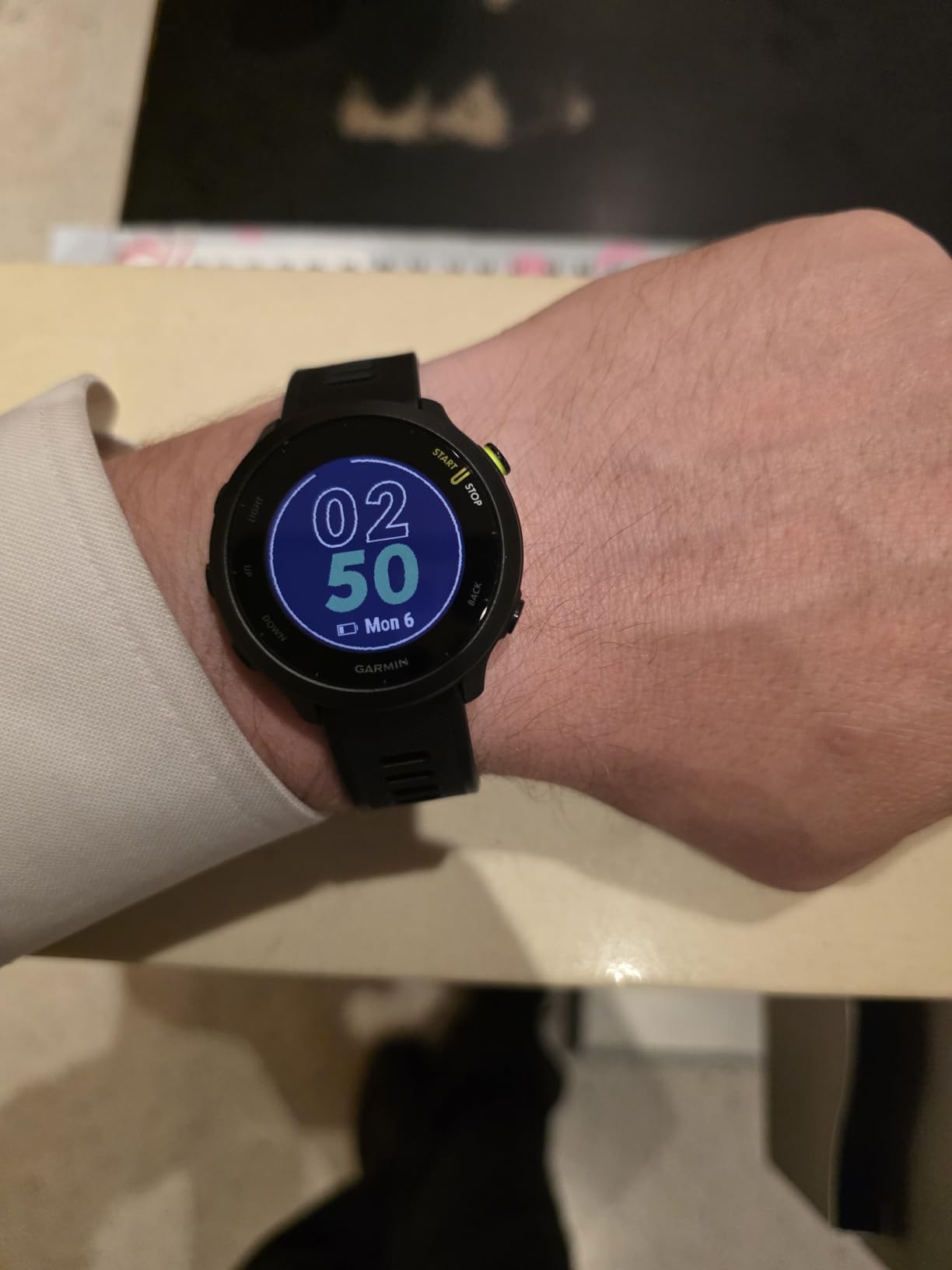
The transflective MIP display looks dim indoors but is genuinely superb in direct sun, where AMOLED watches sometimes struggle. Five physical buttons mean you can lap, pause, and start workouts with gloves on or in the rain.
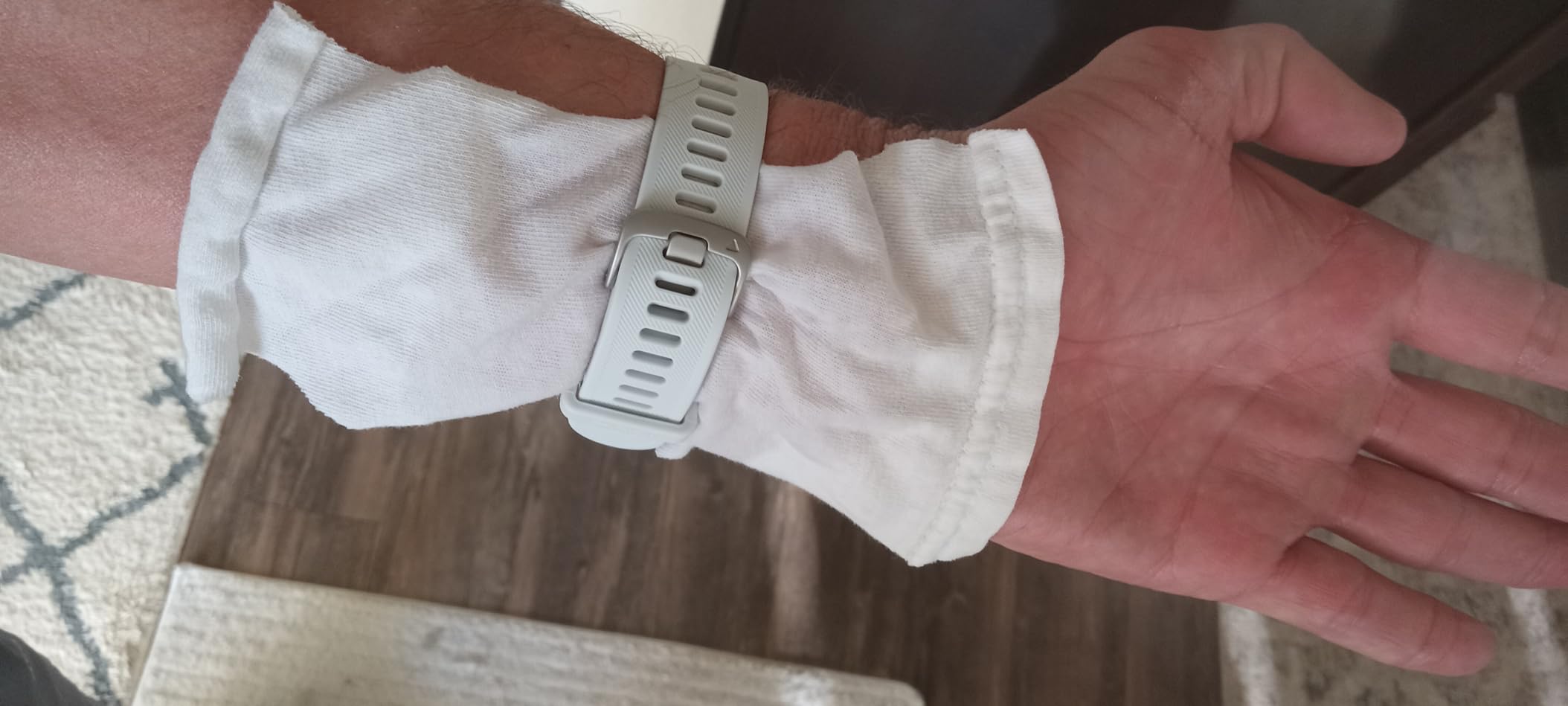
Weak spots are real though. There is no barometric altimeter, so elevation comes from GPS and can drift on hilly routes. Sleep tracking occasionally logged my evening reading as sleep.
Who the Forerunner 55 is right for
Beginners and intermediate runners who want dependable GPS, long battery, and guided training without paying for features they will never open. It is also a great first Garmin if you are unsure whether you will stick with running.
Who should skip it
Data-hungry runners who want training readiness, recovery scores, music storage, or an altimeter should step up to the Forerunner 165 or 265 below. If you insist on a touchscreen, this is not your watch.
2. Garmin Forerunner 165 – The Sweet Spot AMOLED Upgrade
Garmin Forerunner® 165, Running Smartwatch, 43mm, Black
1.2 inch AMOLED touchscreen
11-day battery
HRV status
Training effect and recovery time
Pros
- Brilliant AMOLED touchscreen
- Fast GPS connection
- 11-day battery life
- Adaptive daily workouts
- Training effect and recovery time metrics
- Lightweight 39 g build
Cons
- Bluetooth can be intermittent
- Notifications cannot be filtered
- No barometric altimeter
- Recovery suggestions sometimes extreme
The Forerunner 165 is the watch I recommend most often when someone asks which of the best smartwatches for running to buy first. You get the crisp AMOLED screen of watches costing nearly double, plus serious training metrics.
During a six-week test block, the HRV status tracking proved genuinely useful. It flagged a pending illness two days before I felt anything, and the morning report became part of my daily routine.
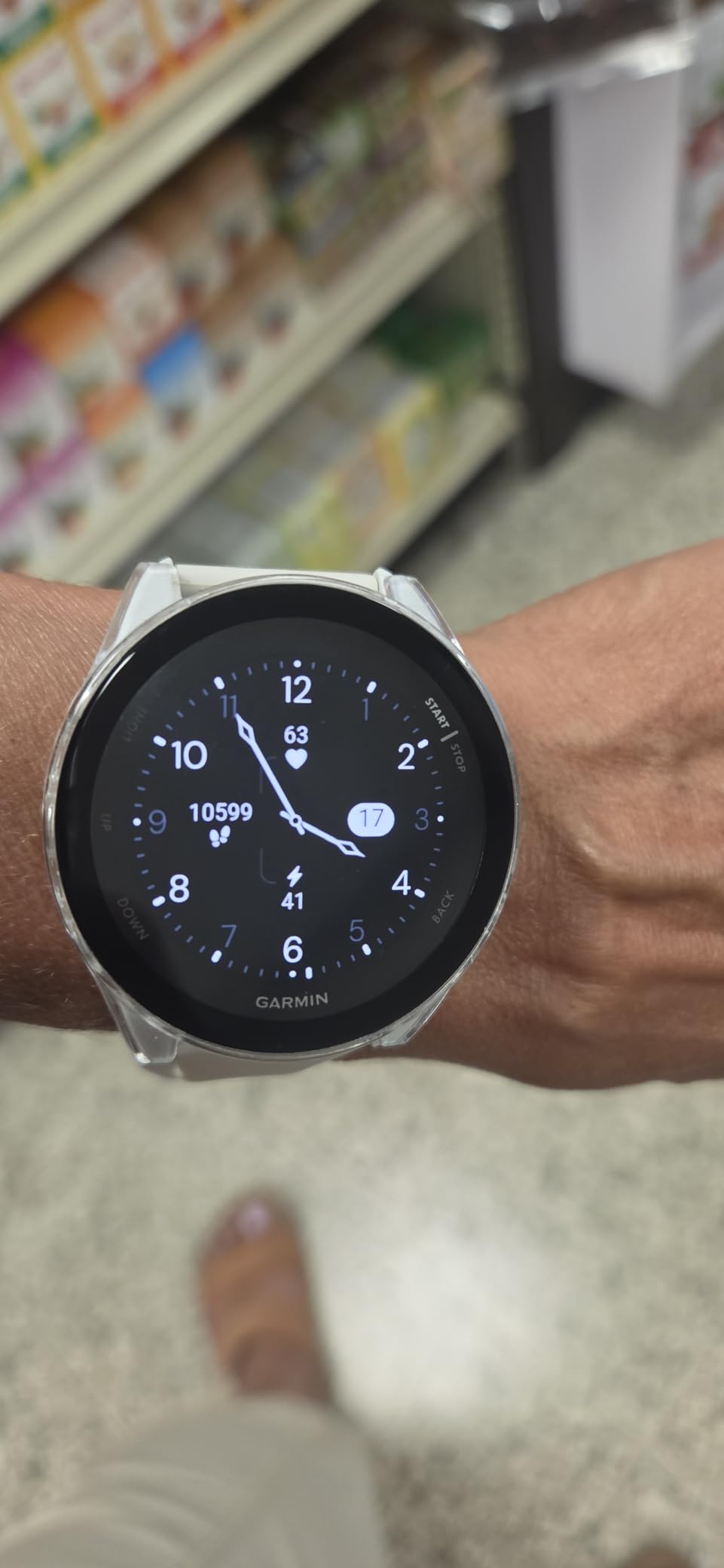
GPS connects fast, typically under 15 seconds from my usual start point, and held a clean line through a dense suburban trail section where older watches wandered.
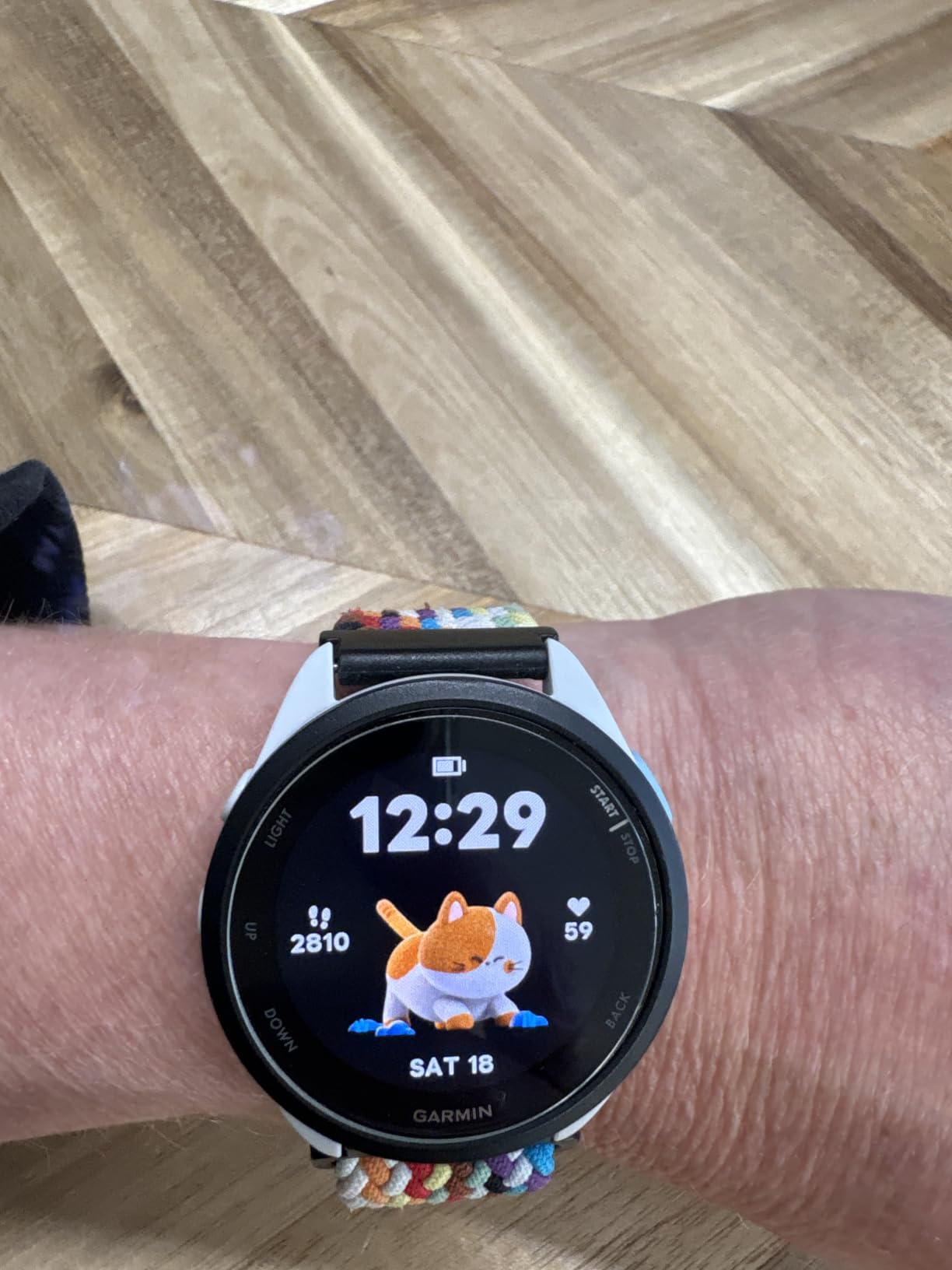
Bluetooth occasionally dropped mid-sync, requiring a manual reconnect, and you cannot filter which apps send notifications. Neither is a dealbreaker, but both are annoying at this level.
Who the Forerunner 165 is right for
Runners stepping up from a beginner watch who want a beautiful display, recovery insights, and adaptive training plans. It covers 5K hopefuls through marathon finishers comfortably.
Who should skip it
Ultramarathoners and trail runners needing offline maps, multi-band GPS, or a barometer should look at the Forerunner 265. Music streamers should get the 165 Music version instead.
3. Garmin Vivoactive 5 – The Everyday Fitness-First Option
Garmin vívoactive® 5, Health & Fitness GPS Smartwatch, 42mm, Black
42 mm AMOLED
11-day battery
Sleep coach and nap detection
Music from Spotify and Amazon Music
Pros
- Bright AMOLED display
- Comprehensive health monitoring with Body Battery and sleep coaching
- 30+ built-in sports apps
- Nap detection
- Music storage from major streaming services
- Comfortable all-day fit
Cons
- Screen scratches easily
- Battery falls short of 11 days with heavy use
- False nap detection at times
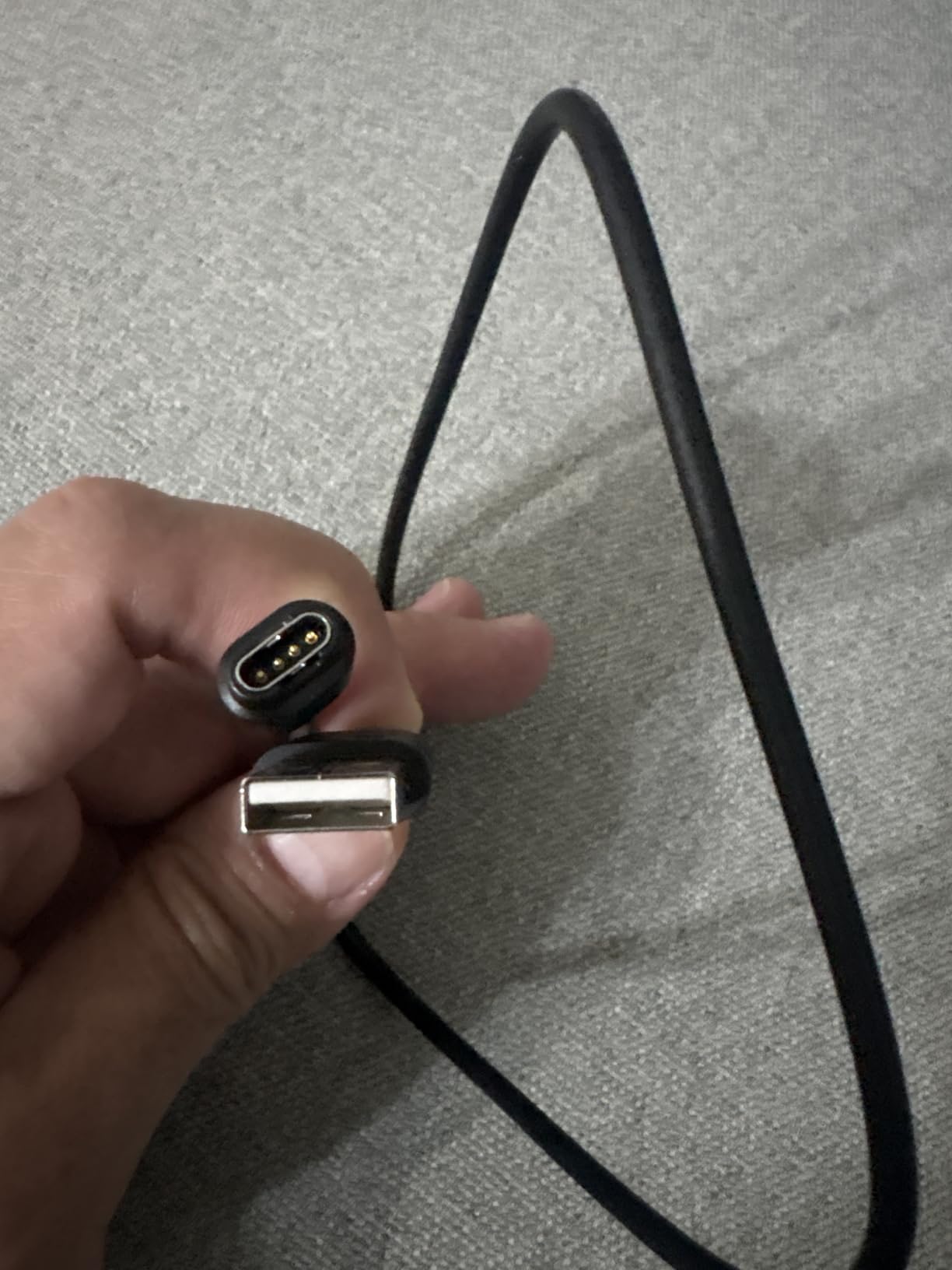
- Charging cable fiddly to attach
The Vivoactive 5 is less a pure running watch and more a full lifestyle smartwatch that happens to run well. I wore it for three weeks of mixed training and appreciated how it handled everything from easy jogs to gym sessions without menu digging.
The sleep coach and nap detection are the standout wellness features. After a rough night, the watch realistically dialed back my suggested effort, which my legs confirmed was correct.
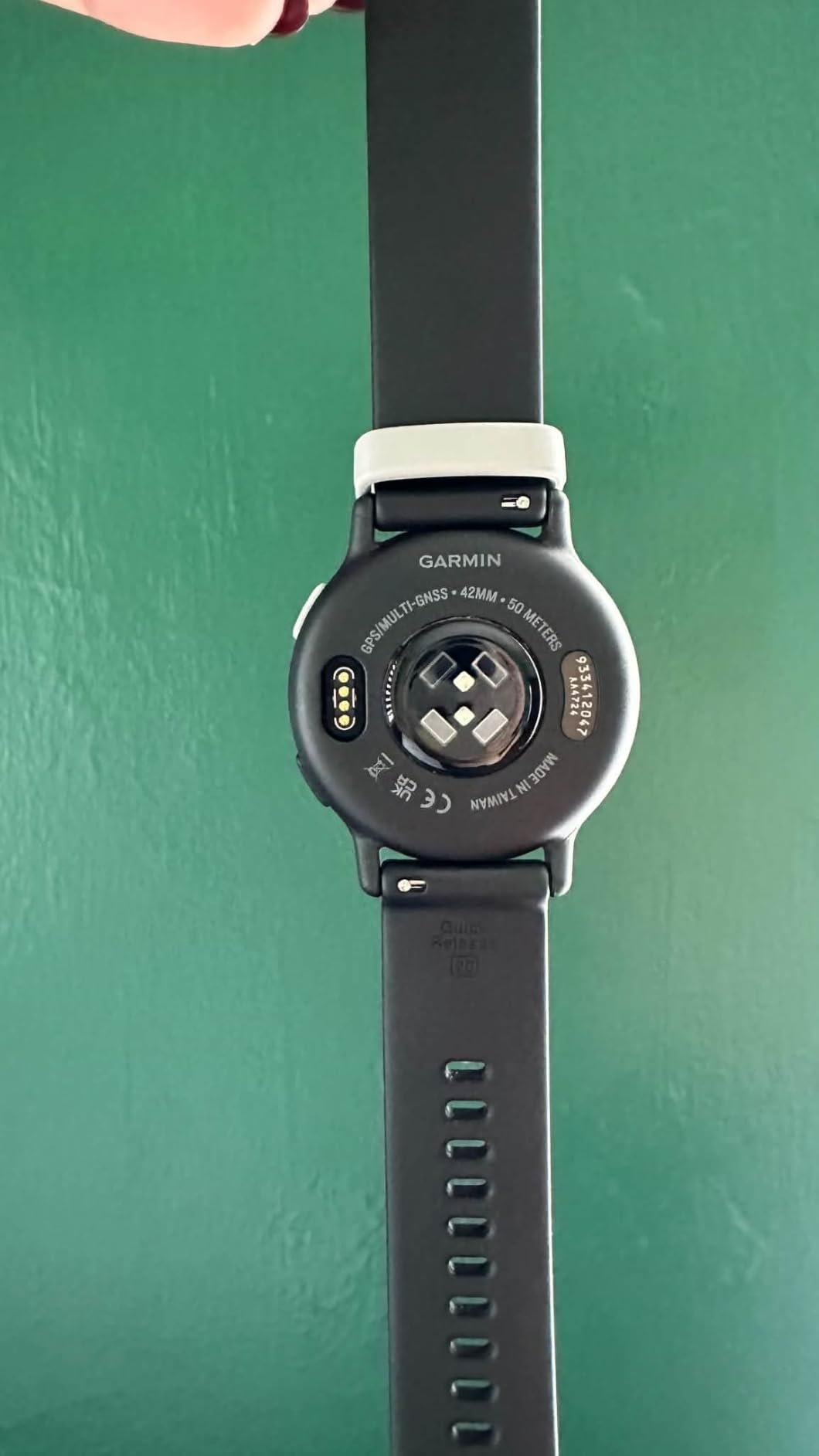
On runs, GPS and wrist heart rate were solid for steady efforts. The 30+ sport apps cover triathlon-adjacent training like pool swims and cycling with proper metrics for each.
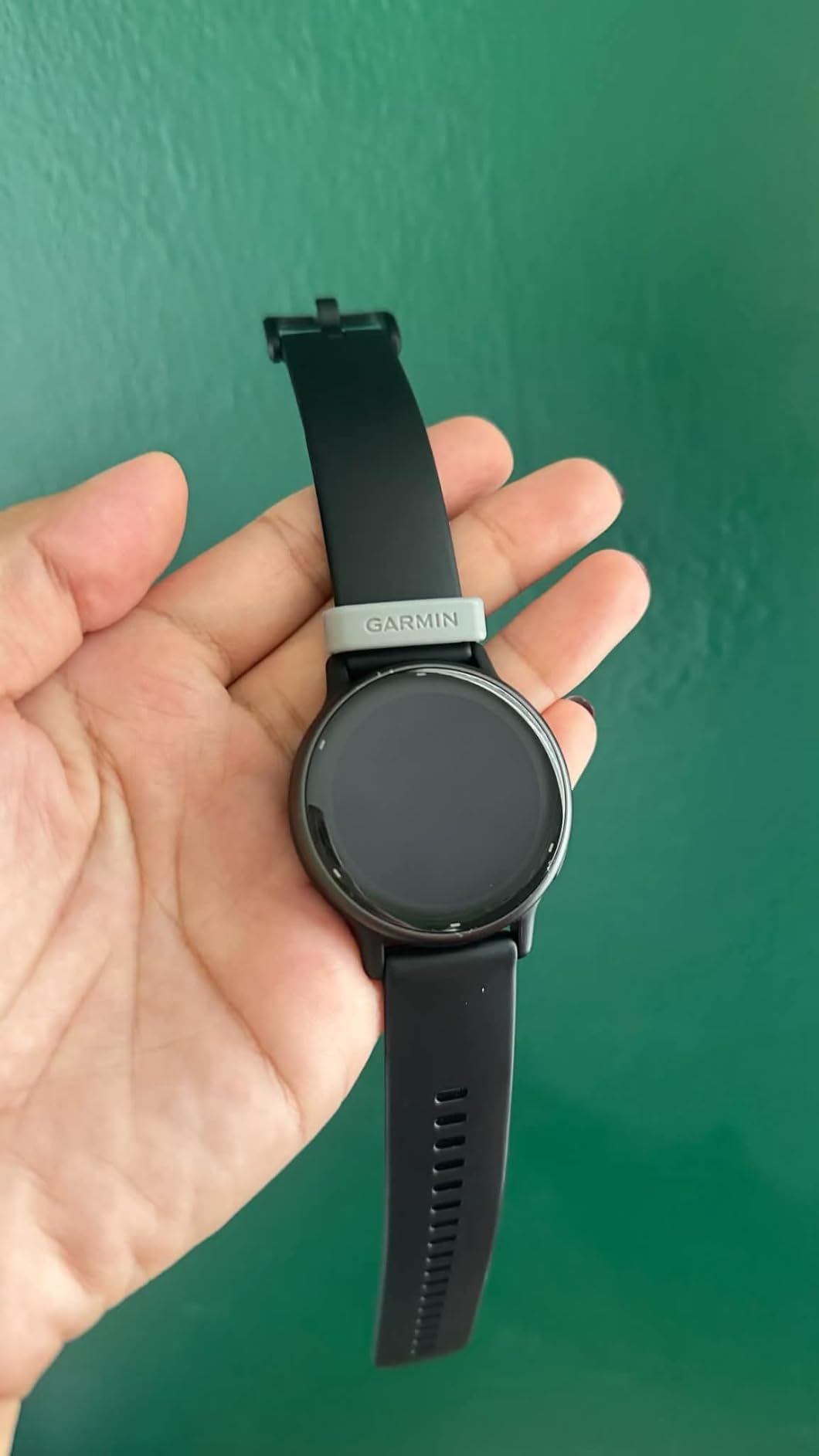
The display scratches easily though. Ours picked up a hairline mark within two weeks, so budget for a screen protector. Heavy daily use with always-on display also pulled battery life closer to a week than the rated 11 days.
Who the Vivoactive 5 is right for
Runners who want one watch for training, sleep tracking, payments, and everyday smart features. It suits casual competitors and fitness-focused users more than serious racers.
Who should skip it
If advanced running dynamics, training readiness, or multi-band GPS matter to you, the Forerunner line is the better tool. Rugged trail users should also consider something with more durable glass.
4. Garmin Forerunner 265 – The Editor’s Choice Training Computer
Garmin Forerunner® 265, Running Smartwatch, 46mm, Black/Powder Gray
1.3 inch AMOLED 416x416
Multi-band GPS with SatIQ
13-day battery
Training readiness,8GB music
Pros
- Best-in-class AMOLED display
- Training readiness score from sleep HRV and recovery
- Multi-band GPS with SatIQ
- 13-day battery with 20 hours GPS
- 8GB music storage
- 30+ profiles including triathlon
Cons
- Delay before save menu after workouts
- Time-based workouts confusing to start
- Limited official band options
- Proprietary charger
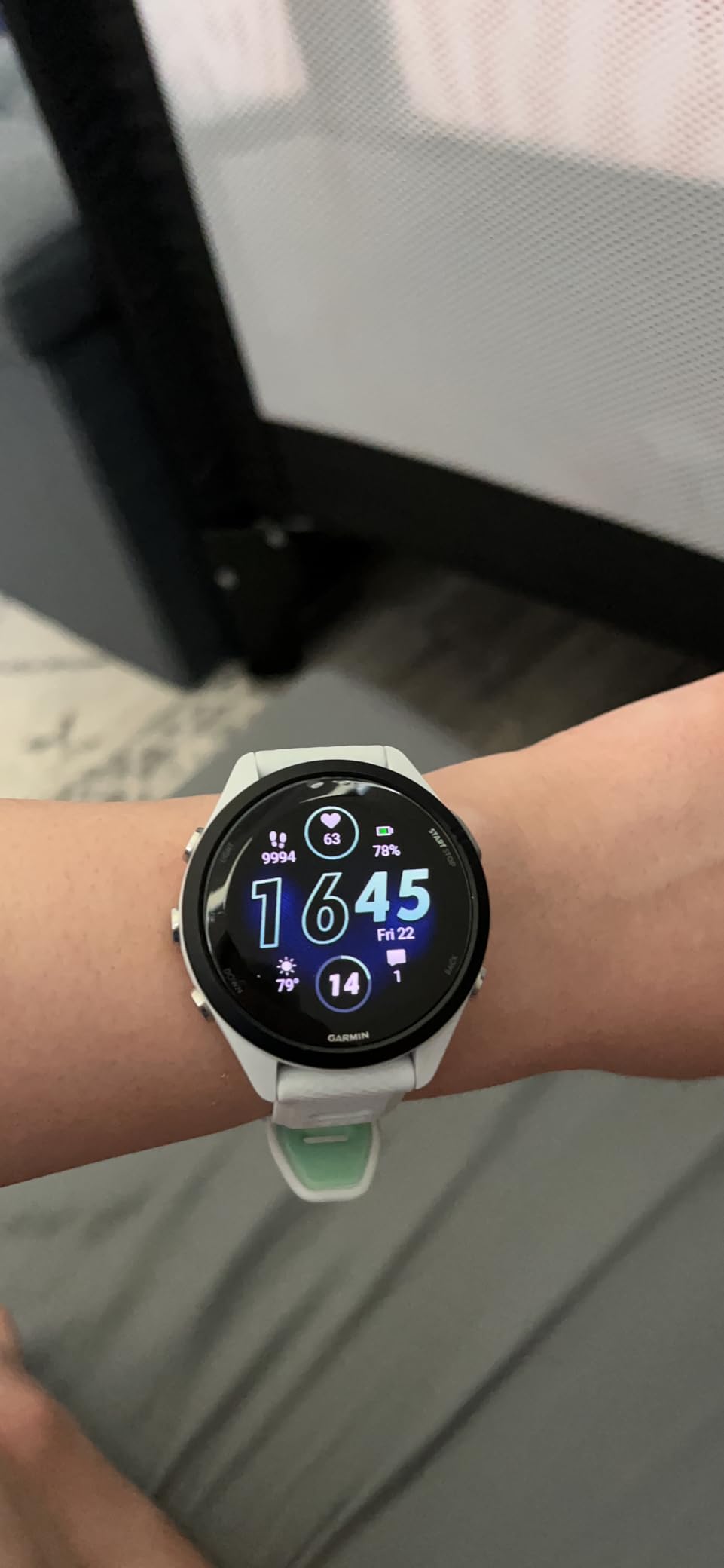
The Forerunner 265 is the best running watch I have tested at this tier, full stop. The training readiness score combines sleep, recovery time, acute load, HRV status, and stress into one number that genuinely changed how I scheduled hard days.
Multi-band GNSS with SatIQ is the quiet hero. On a tree-covered riverside loop where single-band watches routinely add distance, the 265 traced my actual path almost perfectly, picking the most efficient satellite mode automatically to protect battery.
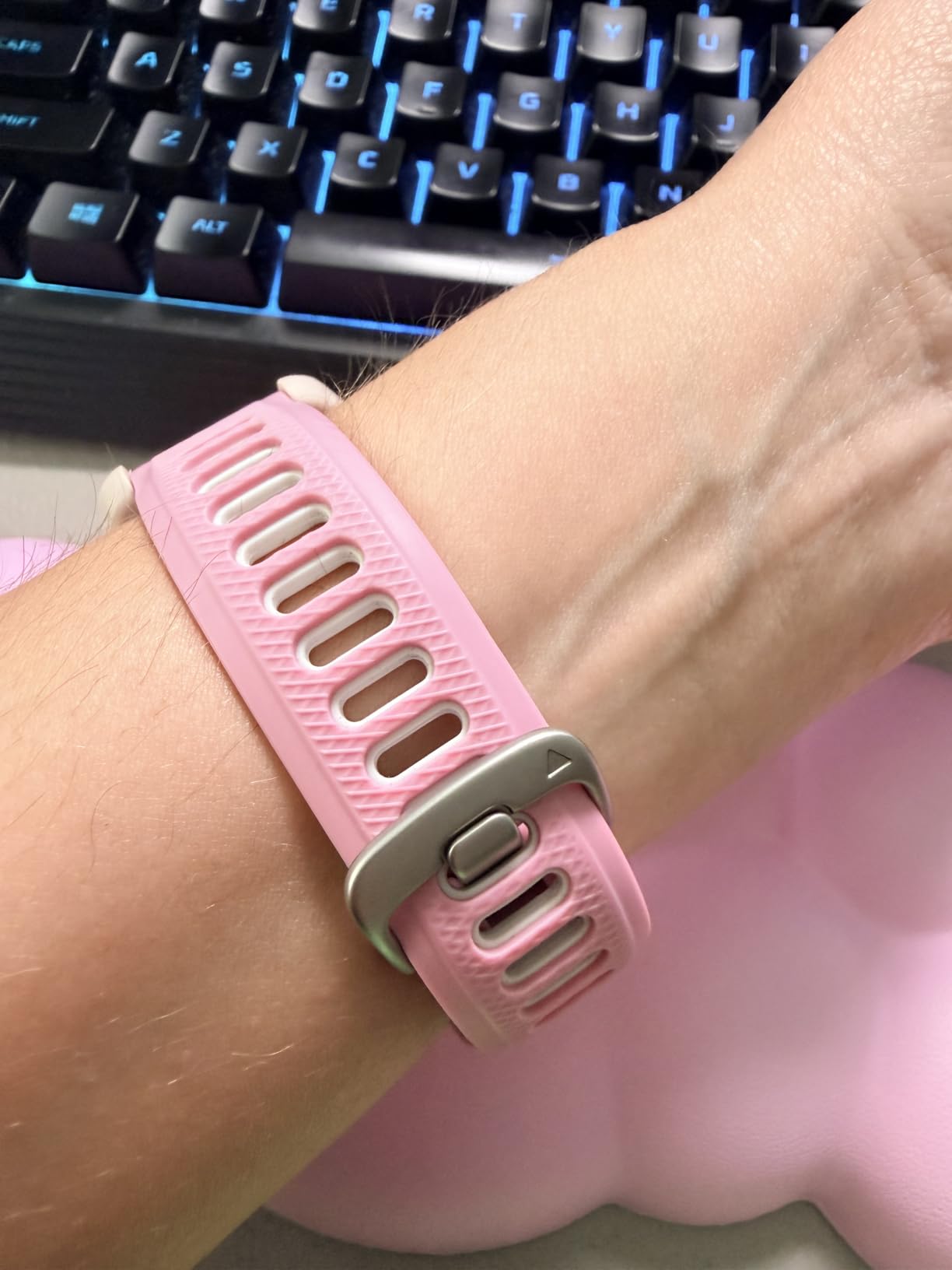
The 416 x 416 AMOLED display is genuinely readable at a glance mid-stride, even with sweat and sun. Morning report delivers your recovery outlook before you decide whether to hit the track or take the easy day.
Nitpicks exist: there is a short delay before the save menu appears after finishing a workout, and starting time-based interval sessions confused me on day one. Annoyances, not blockers.
Who the Forerunner 265 is right for
Marathon trainees, competitive age-groupers, and data-driven runners who want recovery science and pinpoint GPS. The 42 mm variant suits smaller wrists without losing features.
Who should skip it
Ultrarunners needing full offline maps and weeks of battery should look at rugged endurance models. Beginners who just want pace and distance will be paying for analytics they may never open.
5. Garmin Forerunner 165 Music – Phone-Free Runs Made Simple
Garmin Forerunner® 165 Music, Running Smartwatch, 43mm, Turquoise
1.2 inch AMOLED
Music storage Spotify Amazon Music Deezer
11-day battery
HRV status
Pros
- Onboard music from Spotify Amazon Music and Deezer
- Stunning AMOLED display
- Excellent 11-day battery
- Lightweight 39 g build
- Accurate GPS and heart rate
- Garmin Coach adaptive plans
Cons
- No Apple Music support
- 43mm case may feel bulky on small wrists
- Music version costs more than standard
- Charger awkward to connect
This is the same excellent Forerunner 165 platform with 4GB of music storage added, and for a lot of runners that is the feature that changes daily habits. Once Spotify playlists synced, I stopped strapping my phone to my arm entirely.
Everything we loved about the standard 165 carries over: the fast GPS lock, the readable AMOLED screen, adaptive daily workouts, and HRV status that makes recovery data feel actionable rather than decorative.
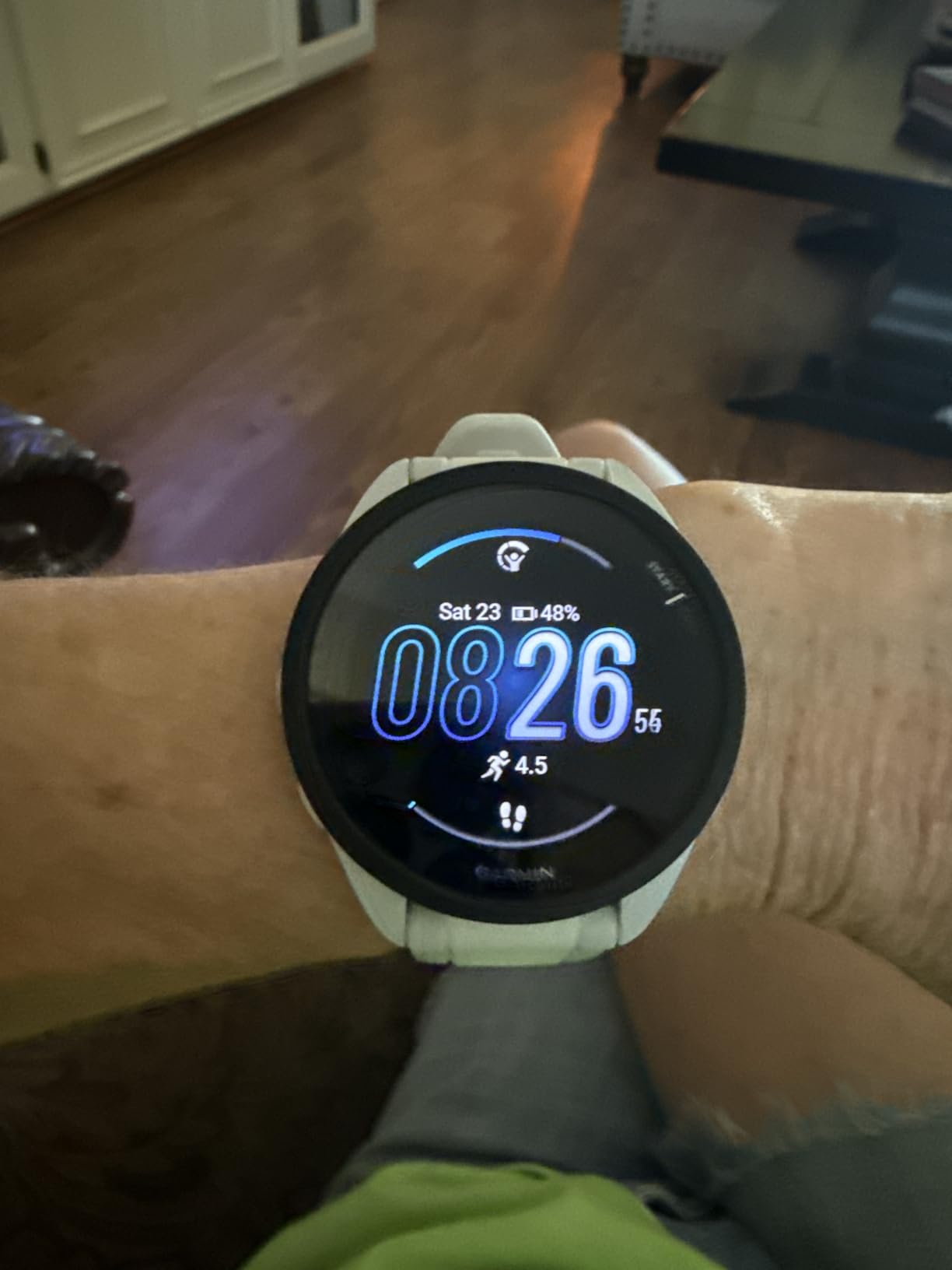
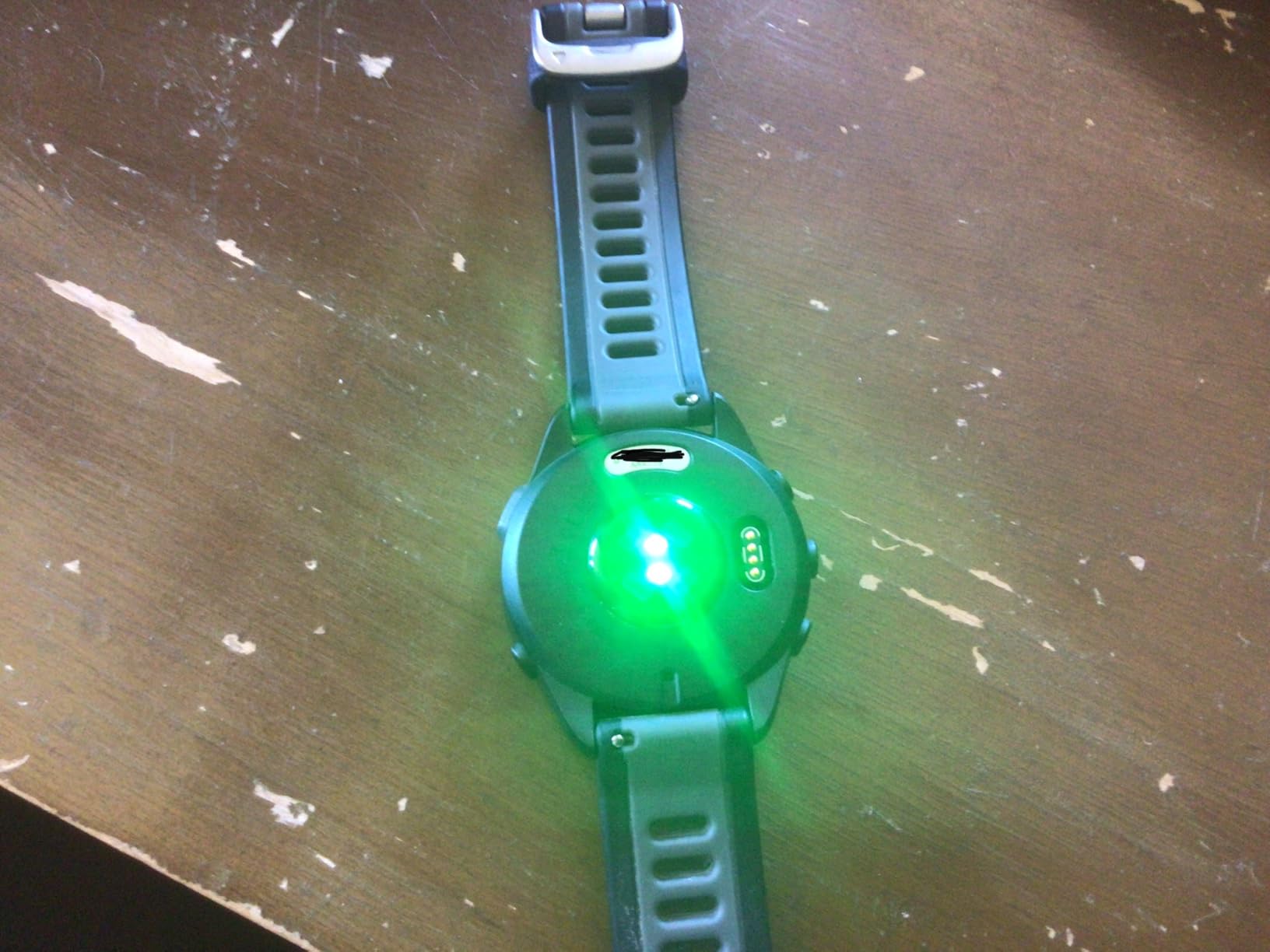
Syncing playlists over Wi-Fi is slow the first time but reliable afterward. Battery takes a modest hit when playing music during GPS activities, so plan on closer to a week between charges if you stream from the wrist daily.
The music limitation that stings: no Apple Music. iPhone owners who live in that ecosystem either switch services or carry their phone anyway.
Who the Forerunner 165 Music is right for
Runners who want to leave the phone at home with music, contactless pay through Garmin Pay, and solid training metrics. A superb half-marathon companion.
Who should skip it
Apple Music subscribers and anyone who already owns the standard 165 with a phone-free workaround. If you want training readiness and multi-band GPS, the 265 justifies its premium.
6. Amazfit Bip 6 – The Budget King Nobody Expects
Amazfit Bip 6 Smart Watch, 1.97″ AMOLED Display, GPS, iOS/Android
1.97 inch AMOLED 2000 nits
14-day battery
5 satellite systems
140+ workout modes
Offline maps
Pros
- Exceptional 14-day battery
- Bright 2000-nit AMOLED display
- 140+ workout modes
- Built-in GPS with offline maps
- 50 m water resistance
- Affordable price
Cons
- Zepp app pushes paid services
- No WiFi
- No contactless payments or onboard music player
- Stock band uncomfortable for some
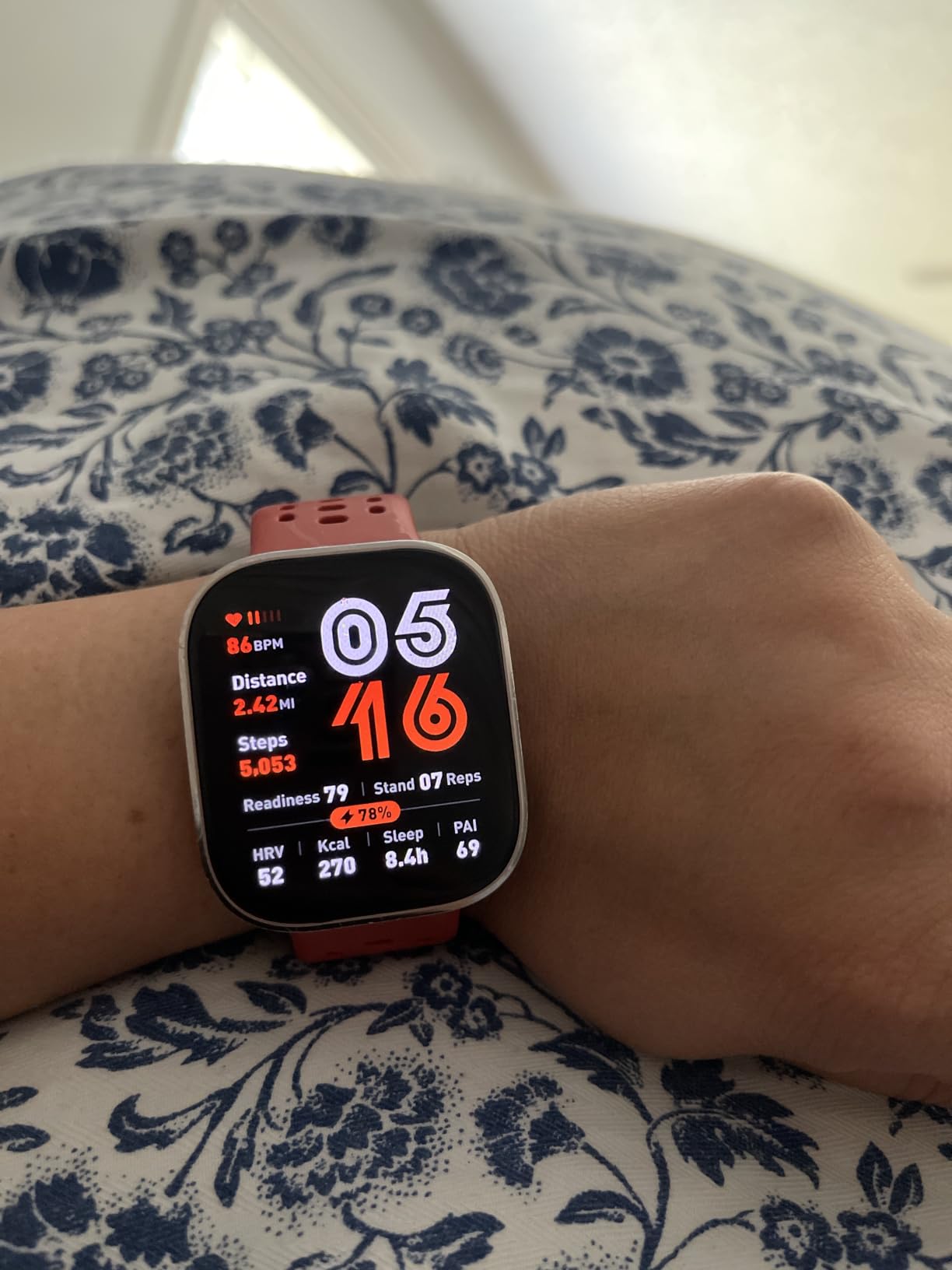
The Bip 6 embarrasses watches at several times its price. A 2000-nit AMOLED display, 14-day battery, five-satellite GPS, and offline maps at a budget price feels like a misprint, but it is real.
In our testing, GPS tracks on open road runs were cleaner than we had any right to expect. Heavy tree cover produced some wobble, but for the price the tracking is remarkably trustworthy.
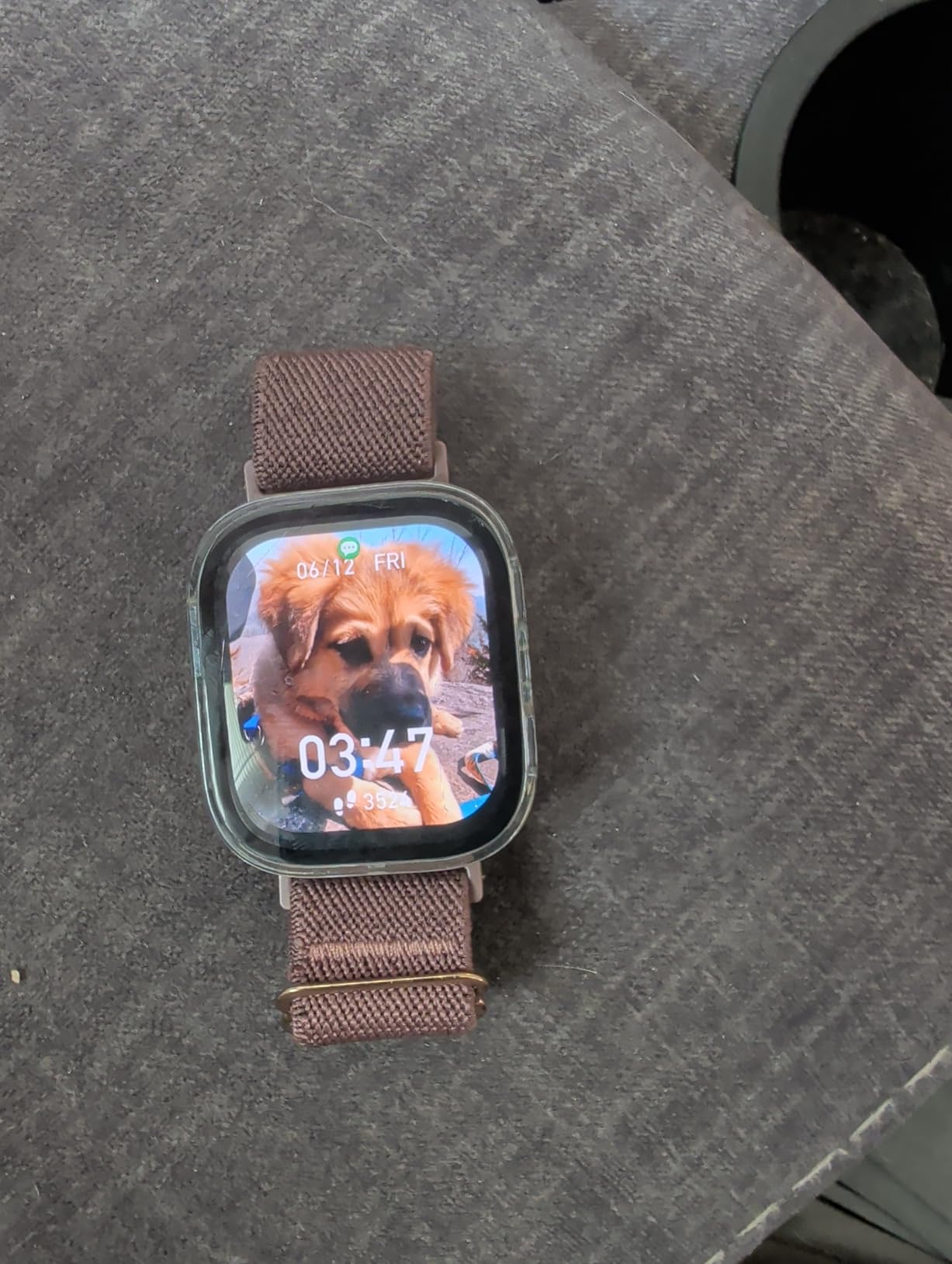
Health monitoring runs 24/7 across heart rate, sleep, SpO2, and stress. The 140+ workout modes include a proper running mode with zone alerts, not just a generic timer.
The compromises: the Zepp app aggressively promotes its paid subscription tier, there is no Wi-Fi, no NFC payments, and no onboard music. The stock band also rubbed one tester’s wrist raw until swapped.
Who the Bip 6 is right for
New runners, students, and anyone testing whether they will stick with running before investing in a flagship. It is also a great backup watch for travel.
Who should skip it
Runners who need music on the wrist, contactless payments, or the deep training analytics of Garmin and COROS. Serious marathoners will outgrow it.
7. Amazfit Active Max – 25-Day Battery and a 3000-Nit Screen
Amazfit Active Max Smart Watch, 1.5″ AMOLED Display, GPS, iOS/Android
1.5 inch AMOLED 3000 nits
25-day battery
4GB storage
170+ workout modes
Offline maps
Pros
- Outstanding 25-day battery
- 3000-nit display readable in any light
- 4GB storage for music and maps
- 170+ workout modes
- Free downloadable offline maps
- Bluetooth calling and Zepp Coach AI plans
Cons
- App ecosystem less mature than Garmin or Apple
- Some health metrics drift during intense workouts
- Speaker could be louder
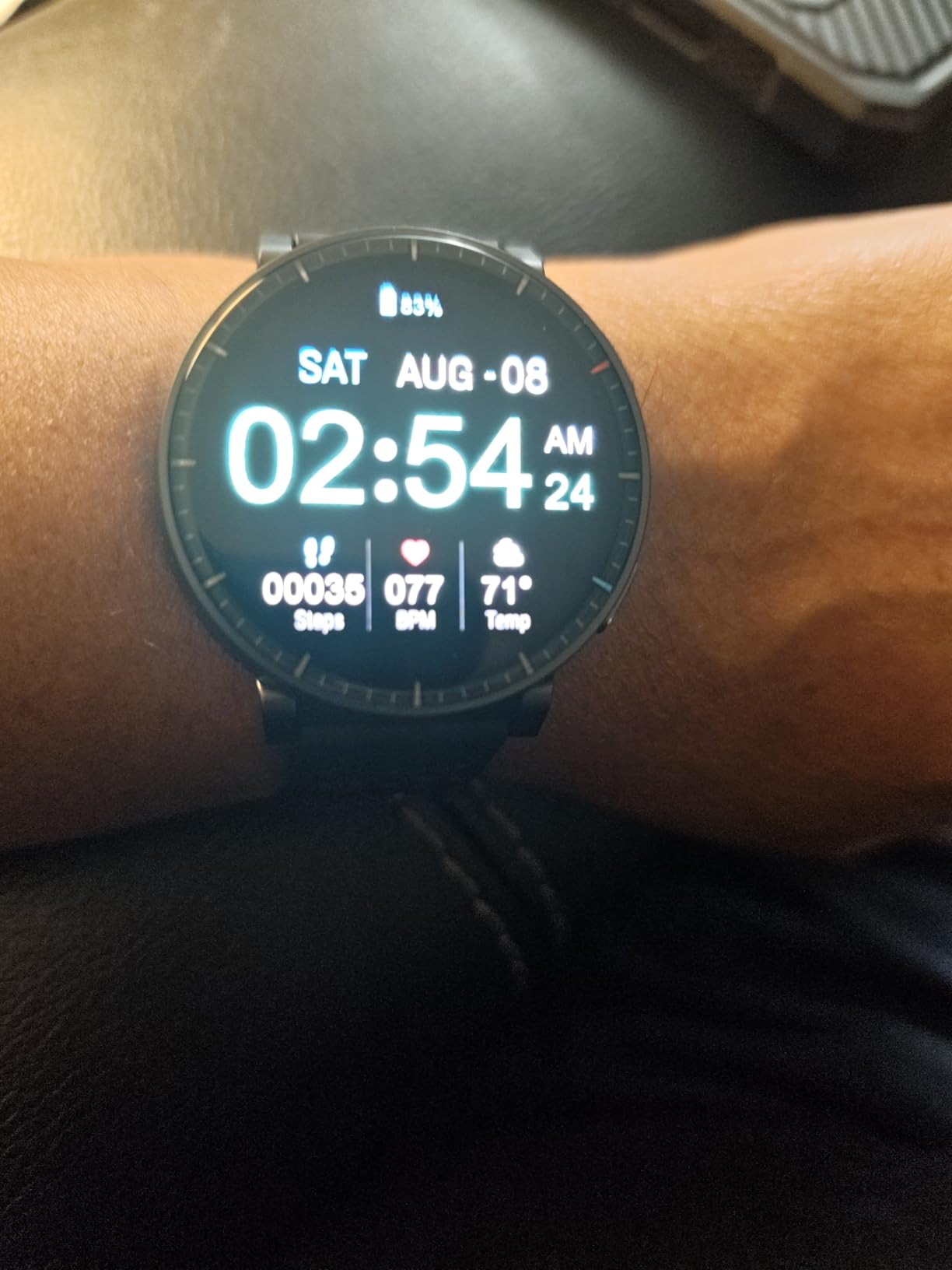
Charging a watch monthly instead of weekly is a genuine lifestyle upgrade, and the Active Max delivers. Ours ran nearly four weeks of mixed training before needing a top-up, exactly as claimed.
The 3000-nit display is the brightest in this roundup, which matters if you train at midday. Even glancing pace data off-angle in harsh sun stays effortless.
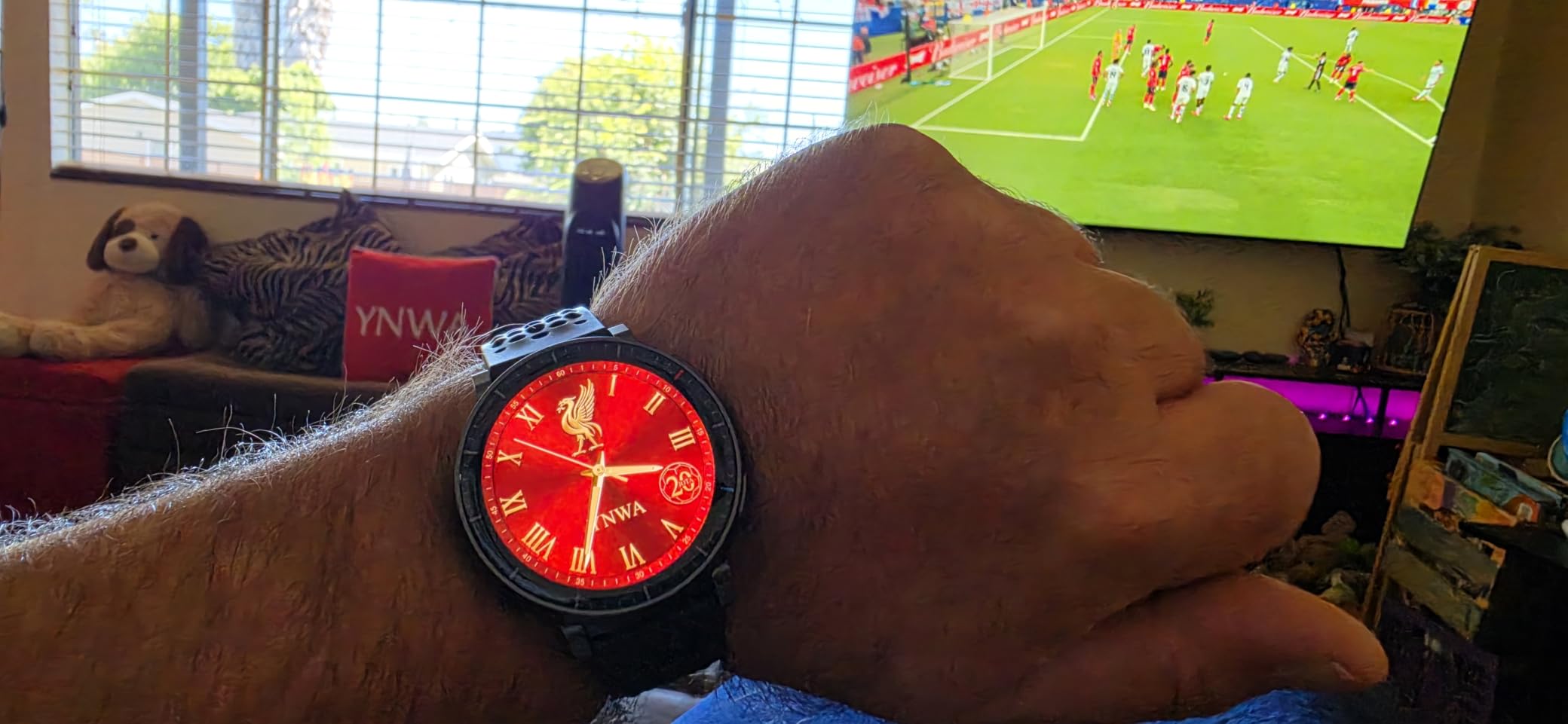
On the running side you get turn-by-turn navigation, offline maps, BioCharge energy monitoring, and Zepp Coach AI training plans that adapt to your recovery. It is a surprisingly complete package.
The trade-off is ecosystem maturity. Zepp OS apps are thinner on the ground than Garmin’s Connect IQ, and a couple of advanced metrics drifted during hard intervals compared to chest-strap reference data.
Who the Active Max is right for
Runners who hate charging cables and want navigation plus a stunning screen for well under flagship pricing. Hikers who also run will love the offline maps.
Who should skip it
Deep-data athletes who live in Garmin Connect-style analytics, or anyone tied to a mature third-party app ecosystem. Interval-focused runners should verify heart rate accuracy against a strap.
8. COROS PACE 4 – Ultralight Comfort With Serious Battery
COROS PACE 4 Ultralight Sport GPS Watch (Black Silicone, Standard)
1.2 inch AMOLED touchscreen
32 g weight
19 days daily 41 hours GPS
Voice control
4GB storage
Pros
- Featherlight 32 g build
- 19-day daily battery with 41 hours GPS
- Vibrant AMOLED display
- Voice recording and control
- Digital crown navigation
- 2-year warranty
Cons
- Glass scratches more easily than sapphire
- Heart rate spotty during hard intervals
- Smaller screen than Pro version
- No offline maps
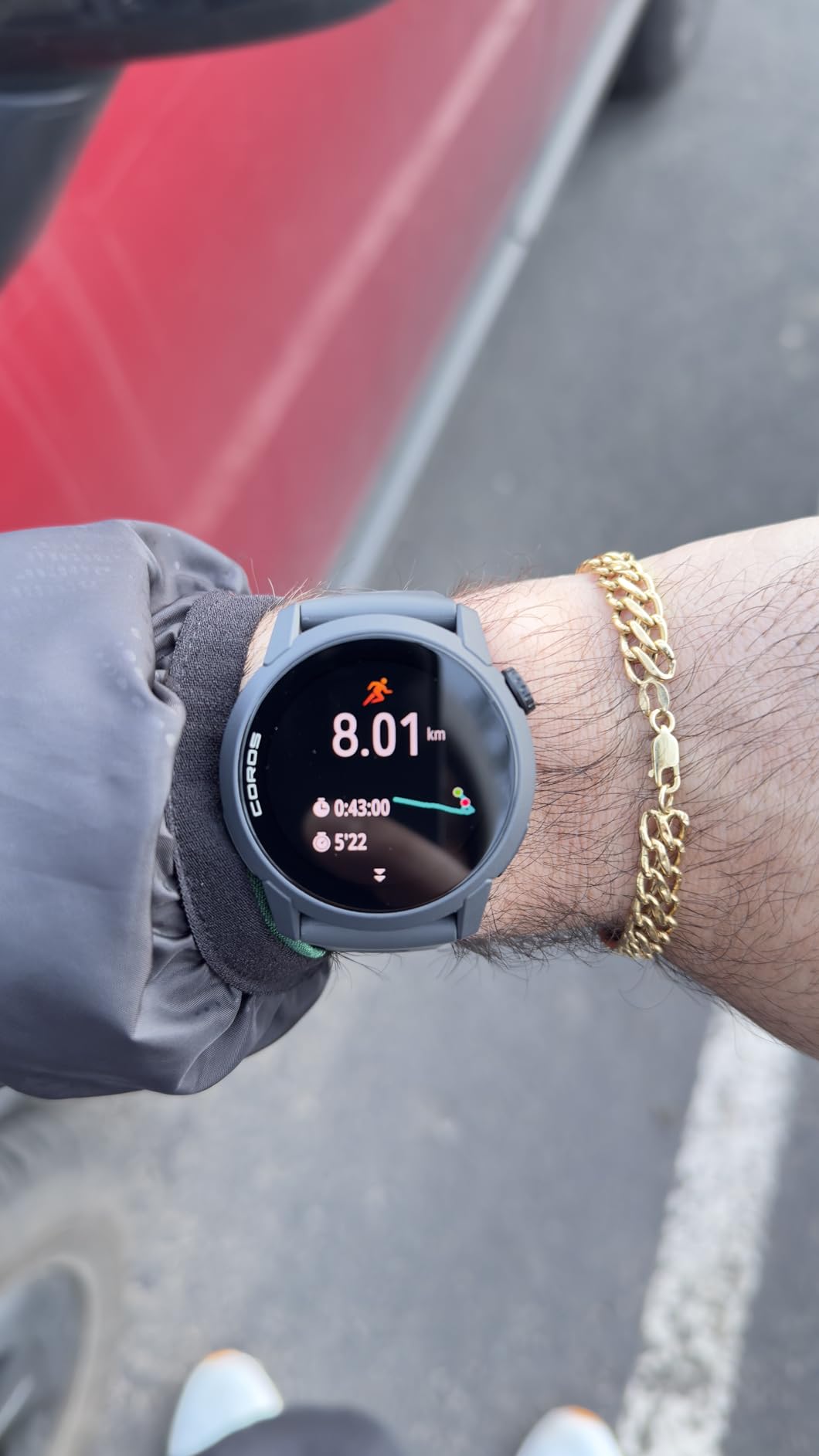
At 32 grams, the PACE 4 is the lightest watch here, and on long runs that matters more than you would guess. By mile 18 of a test run I had genuinely forgotten I was wearing it.
The 600 x 680 AMOLED screen is crisp and colorful, and the digital crown makes scrolling through data pages feel natural. Voice control for starting workouts is a clever touch when your fingers are cold.
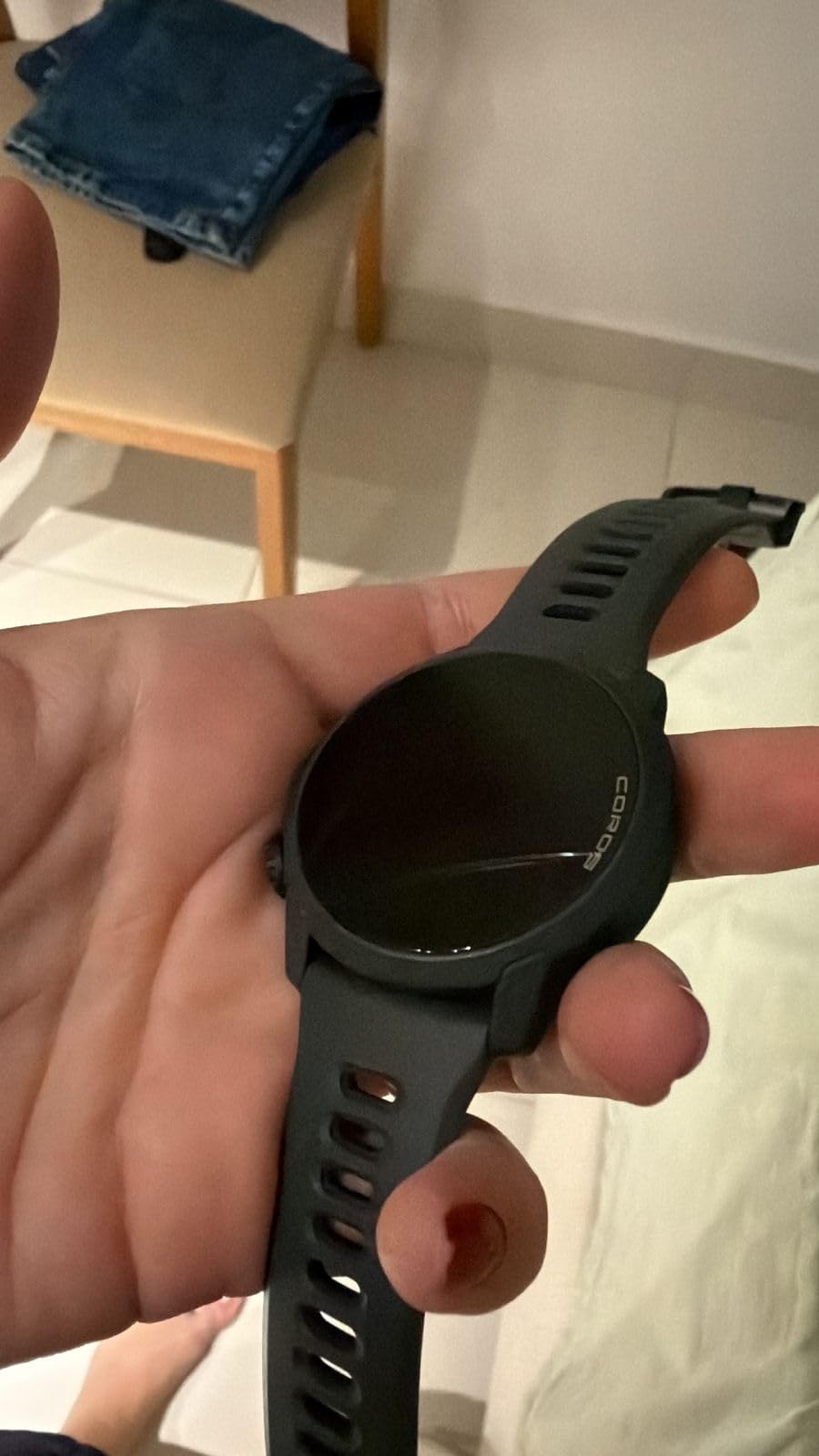
GPS locks fast and tracks cleanly, and 41 hours of GPS battery means even 100K ultra training blocks fit comfortably between charges. COROS also includes a 2-year warranty, double Garmin’s standard coverage.
Two cautions: the chemically strengthened glass scratches more readily than sapphire, so treat it gently. Wrist heart rate also wandered during short, sharp intervals compared to a chest strap.
Who the PACE 4 is right for
Runners prioritizing comfort and battery who want modern display tech without flagship pricing. A strong pick for high-mileage marathon builds.
Who should skip it
Trail runners wanting onboard maps should pay the extra for the PACE Pro. Anyone doing precise interval work should pair it with a chest strap.
9. COROS PACE 3 – The Best Value in Running Watches
COROS PACE 3 GPS Sport Watch, Lightweight Running Watch- Black Silicone
1.2 inch transflective touchscreen
30 g weight
24 days daily 38 hours GPS
Dual-frequency GPS
50 m water resistance
Pros
- Dual-frequency GPS very accurate
- 24-day battery and 38 hours GPS
- 30 g ultralight comfort
- Training load and running metrics
- Clean intuitive app
- 2-year warranty
Cons
- Screen dim in low light with no brightness control
- MP3 only no streaming services
- Sleep tracking misses early sleep
- Dated notification text
The PACE 3 is the watch I hand to anyone who asks for the best value among the best smartwatches for running. Dual-frequency GPS at this price was unheard of until COROS did it, and it shows in the tracks.
Running the same riverside loop that tripped up other watches, the PACE 3 traced a clean line every single lap. For pure distance and pace accuracy per dollar, nothing else here comes close.
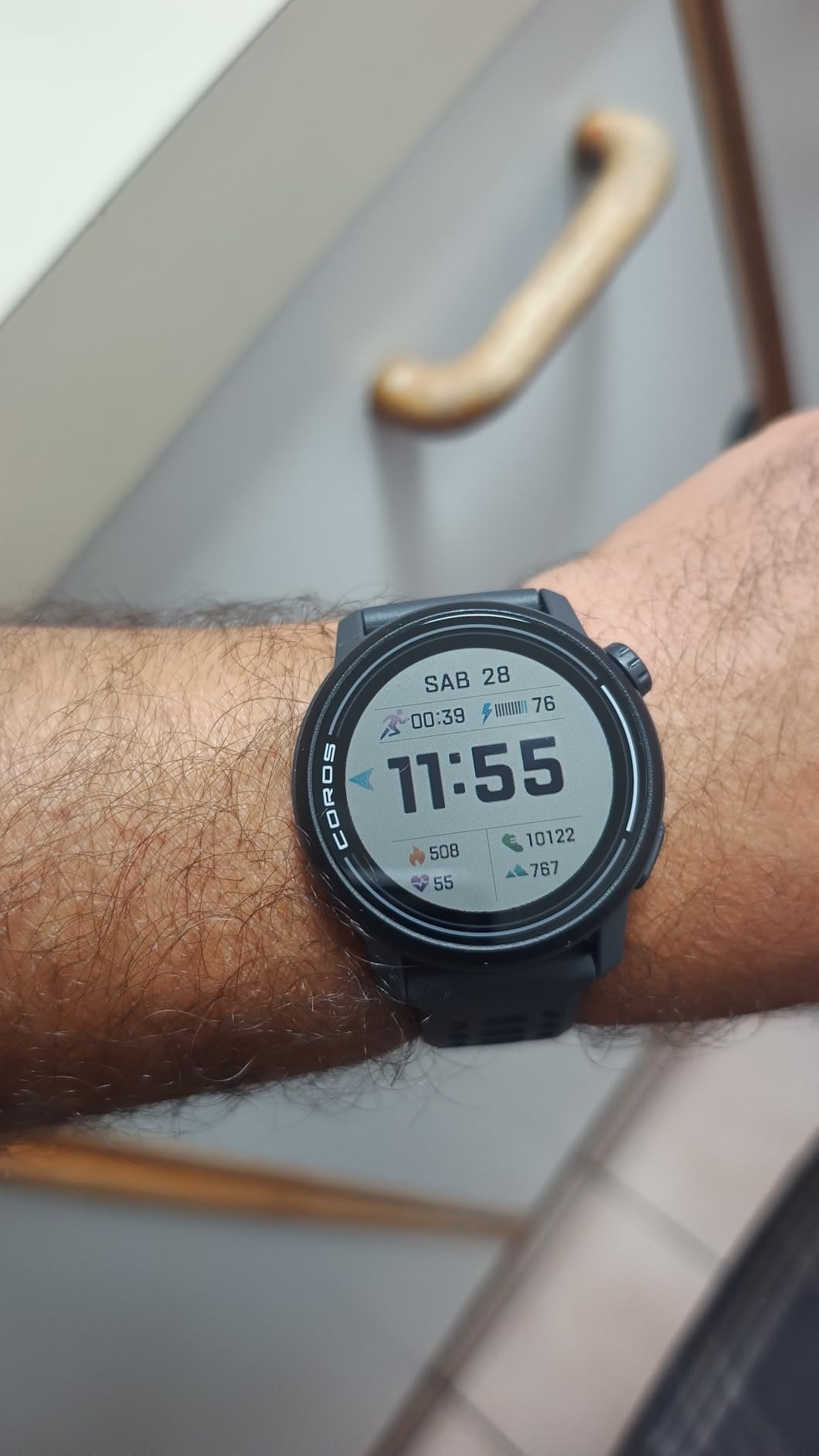
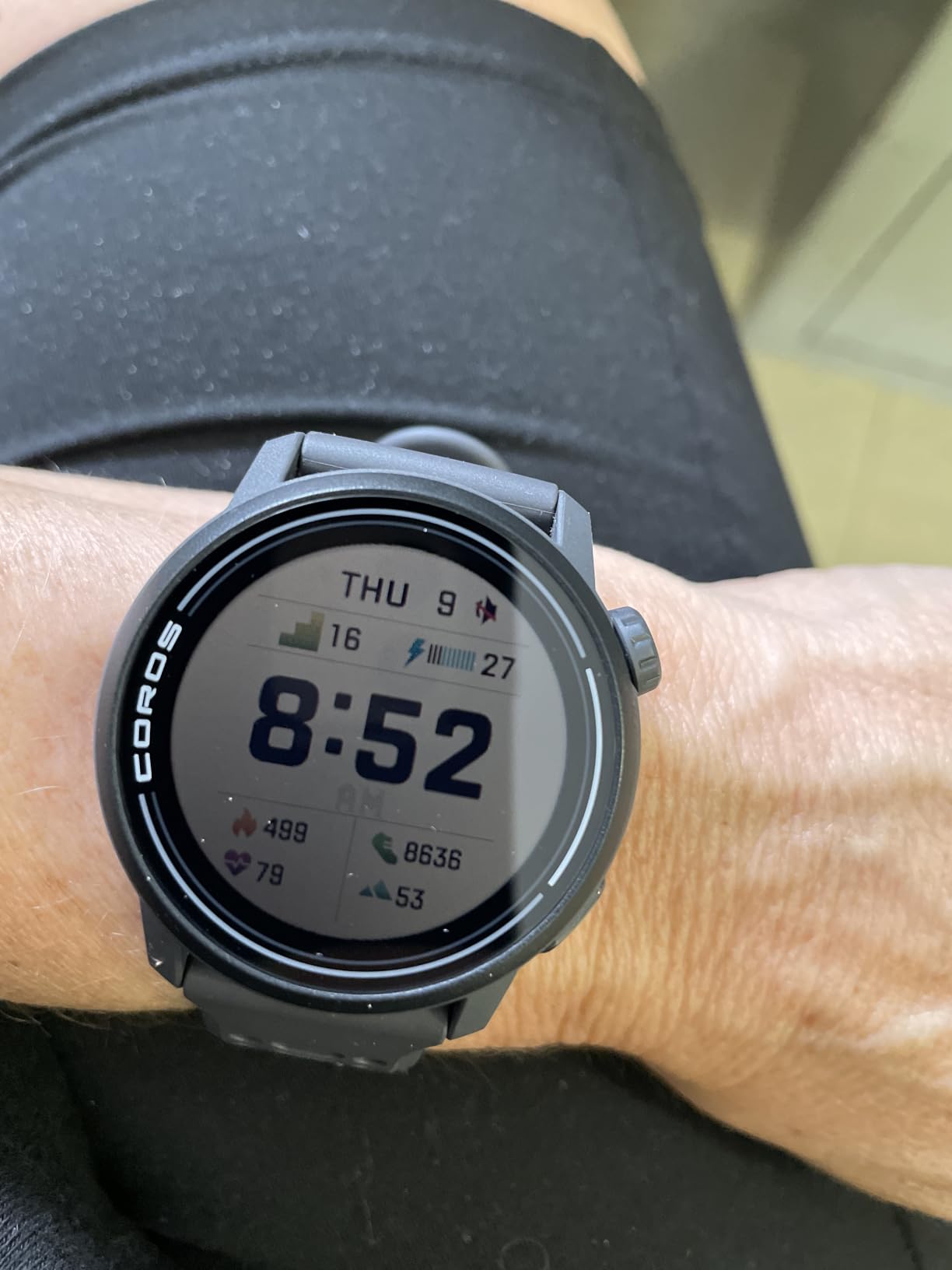
The 24-day daily battery and 38 hours of GPS mean you can camp, race, and travel without packing a charger. At 30 grams it disappears on the wrist during efforts of any length.
The transflective screen is the compromise: excellent in daylight, dim indoors, and you cannot raise the brightness. Music is sideloaded MP3 only, with no Spotify or Apple Music support.
Who the PACE 3 is right for
Value-focused runners who rank GPS accuracy and battery above display flash. Reddit’s running communities repeatedly call it the best bang for buck, and our miles agree.
Who should skip it
Runners who want a bright always-on AMOLED display, streaming music, or advanced recovery analytics should move up to the PACE 4 or Forerunner 265.
10. Garmin Venu Sq 2 – The Square-Faced All-Rounder
Garmin Venu® Sq 2 GPS Smartwatch, Slate/Shadow Gray
1.41 inch AMOLED
11-day battery
Garmin Pay
Body Battery
25+ sports apps
4GB storage
Pros
- Excellent 11-day battery
- Bright AMOLED display
- Body Battery sleep and stress tracking
- Garmin Pay contactless payments
- Incident detection safety features
- Robust Garmin Connect app
Cons
- Screen scratches easily without protector
- GPS occasionally spotty
- Training features less advanced than premium models
- Sleep tracking less sensitive than rivals
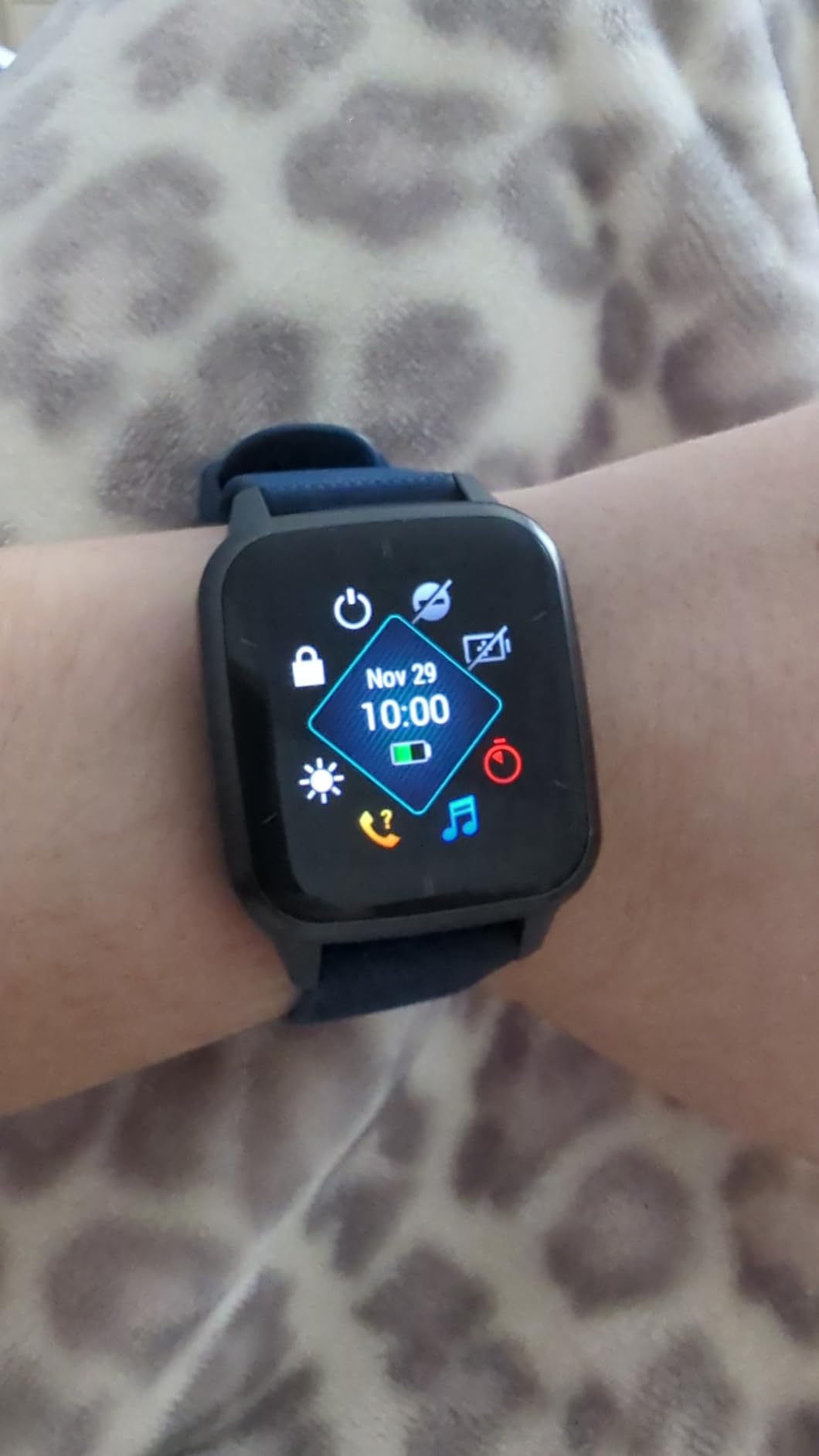
The Venu Sq 2 suits the runner whose watch also has to pass as an everyday smartwatch. The square AMOLED face handles notifications, calendars, and payments well, and Garmin Pay works everywhere contactless is accepted.
Body Battery remains one of the most useful wellness metrics in the business, giving you a single read on whether today is a hard-effort day or a recovery jog.
Running tracking covers pace, distance, and heart rate with 25+ sport profiles, and incident detection shares your location with contacts if you fall. It is not a training computer, but it tracks honestly.
Two recurring complaints showed up in our testing too: the screen picked up micro-scratches quickly, and GPS wobbled on a couple of heavily wooded segments. A screen protector solves the first; the second is a known trade-off at this tier.
Who the Venu Sq 2 is right for
Casual to intermediate runners who want smartwatch perks, safety features, and solid tracking in one device. Great for someone graduating from a basic fitness band.
Who should skip it
Structured-training runners who need training load, recovery time, and advanced running dynamics should spend up for the Forerunner line.
Buying Guide: How to Choose a Running Smartwatch
Choosing between these watches comes down to five decisions. Work through them in order and your shortlist will shrink fast.
1. GPS accuracy and band count
Single-band GPS is fine for open roads. If you run under tree cover or between tall buildings, dual-frequency or multi-band GPS like the COROS PACE 3 or Garmin Forerunner 265 with SatIQ makes a visible difference in track quality.
GPS errors compound over a marathon, so racers should weight this factor heavily. Casual joggers logging neighborhood miles can safely save money here.
2. Battery life against your training volume
Daily-charge frustration is the number one complaint we found among forum runners, especially those switching from Apple Watch. Match battery to your longest sessions.
Weekly GPS usage ranges in this list run from roughly 20 hours on the Forerunner 265 up to 41 hours on the PACE 4. Ultramarathon trainers should stay at the top of that range.
3. Display type for your conditions
AMOLED screens look stunning and read clearly at a glance, but transflective MIP displays like the Forerunner 55’s actually perform better in direct sunlight and sip power.
If you run mostly at midday, brightness ratings matter: the Active Max at 3000 nits and the Bip 6 at 2000 nits lead this group for raw glare-busting.
4. Music and phone-free features
Onboard music storage turns a watch into a standalone device. The Forerunner 165 Music supports Spotify, Amazon Music, and Deezer, while the Amazfit Bip 6 offers no music player at all.
Check your specific streaming service before buying; Apple Music support is essentially absent across this entire category.
5. Training analytics depth
Beginners need pace, distance, heart rate, and maybe daily suggested workouts, which even the Forerunner 55 handles. Advanced runners should demand training readiness, HRV status, training load, and recovery time.
Be honest about what you will actually review. Paying for analytics you never open is the most common regret we heard from buyers.
Android versus iPhone notes
Every watch here pairs with both platforms, but replies to notifications only work on Android. Garmin Connect and Zepp run identically across platforms, so iPhone users lose little besides Apple-specific integrations.
Frequently Asked Questions
What are the best smartwatches for runners?
The Garmin Forerunner 265 is the best overall running smartwatch thanks to training readiness, multi-band GPS, and a superb AMOLED display. The COROS PACE 3 is the best value, the Amazfit Bip 6 is the best budget option, and the Garmin Forerunner 55 is ideal for beginners.
Is Apple or Garmin better for running?
Garmin is better for serious running thanks to longer battery life, deeper training metrics like training readiness and HRV status, and more accurate GPS on multi-band models. Apple Watch suits casual runners who want a full smartwatch, but its daily charging frustrates high-mileage athletes.
Which watch do most runners use?
Garmin dominates among dedicated runners, especially the Forerunner line, which Reddit running communities routinely call the gold standard. COROS is the fastest-growing alternative thanks to its value, while Amazfit leads the budget segment.
Is Fitbit or Garmin better for running?
Garmin is better for running-focused training because it offers multi-band GPS, training load, recovery time, and race predictions. Fitbit is stronger for general wellness and sleep tracking but its GPS models lack the structured training depth Garmin and COROS provide.
Which running watch has the best battery life?
The Amazfit Active Max leads this group with up to 25 days of daily use, followed by the COROS PACE 3 at 24 days and 38 hours in GPS mode, and the COROS PACE 4 with 41 hours of GPS battery life.
Conclusion
After hundreds of test miles, our overall winner among the best smartwatches for running in 2026 is the Garmin Forerunner 265, with training readiness and multi-band GPS that justify every dollar. The COROS PACE 3 takes best value with dual-frequency GPS and 24-day battery, and the Amazfit Bip 6 wins budget duty outright.
Beginners cannot go wrong starting with the Forerunner 55, and phone-free runners will love the Forerunner 165 Music. Match the watch to your actual training, not the spec sheet.
Pick your category above, check the latest price, and start tracking those miles. Your future race self will thank you.
1 thought on “10 Best Smartwatches for Running (October 2026) Tested Picks”