
The best cross country skis for beginners are shorter, wider, forgiving waxless classic skis sized by body weight, not height. That combination turns easily, stops quickly, climbs without waxing, and survives a season of lessons before you know whether you even like the sport.
That default matters more than any brand. A ski that is too long, too stiff or too narrow feels unnerving in your first hour, and most beginners who feel that way never come back for a second season. If you are still comparing alpine gear, our beginner ski picks guide covers the downhill side of the sport, which is a different set of problems.
What follows is a six-ski shortlist drawn from real beginner-capable listings, plus the sizing arithmetic and grip-system explanation that almost every roundup leaves out. Every length recommendation below comes from a published weight range, not a rule of thumb. Every grip claim comes from the base construction the manufacturer actually specifies.
One warning before the picks. Waxless does not mean wax-free. You will still want a tin of universal glide wax, and I explain why further down.
Table of Contents
Top 3 Cross Country Skis for Beginners in 2026
These three cover the three ways most adults start: a complete boxed set you can ski the same afternoon, a smaller complete set for a lighter rider, and a hybrid that needs no ski boots at all.

Whitewoods NNN Package 207cm
- Complete ski boot pole set
- NNN step-in touring bindings
- Waxless negative base
- 207cm for 180 lbs and up

Whitewoods 3Pin Package 177cm
- Complete ski boot pole set
- 75mm 3-pin bindings pre-mounted
- Waxless negative base
- 177cm for 121-150 lbs
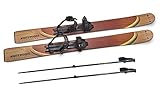
Whitewoods Outlander 139cm
- Ski in ordinary winter boots
- Strap bindings fit shoe size 7 to 13
- Fishscale waxless base with 3/4 metal edges
- Includes telescoping poles
Best Cross Country Skis for Beginners in 2026: Quick Overview
All six skis below are classic-platform beginner models with a waxless or fish-scale grip zone, which means no kick wax routine before or after a day out. Only the two Whitewoods packages include boots and poles; the Rossignol models are skis and bindings only.
| Product | Specifications | Action |
|---|---|---|
| Whitewoods Adult NNN Package 207cm |
|
Check Latest Price |
| Whitewoods 75mm 3Pin Package 177cm |
|
Check Latest Price |
| Whitewoods Outlander 139cm |
|
Check Latest Price |
 Rossignol EVO OT 65 IFP 175cm Rossignol EVO OT 65 IFP 175cm |
|
Check Latest Price |
 Rossignol EVO XT 55 Positrack 175cm Rossignol EVO XT 55 Positrack 175cm |
|
Check Latest Price |
 Rossignol EVO XT 60 Positrack 175cm Rossignol EVO XT 60 Positrack 175cm |
|
Check Latest Price |
1. Whitewoods Adult NNN Package 207cm: Best All-in-One Complete Set
Whitewoods Adult NNN Cross Country Ski Package, 207cm – Skis, Bindings, Boots, Poles (48, 180 lbs. & Up)
207cm ski, 64-55-59 sidecut
Waxless negative base
NNN step-in bindings
12 lb package
Pros
- Everything in one box at a sane entry price
- NNN is the standard most new boots are sold in
- Step-in bindings forgive stiff knees and frozen fingers
- Waxless base means no prep routine
Cons
- 207cm length will not suit a rider under 180 lbs
- Wood build is heavier than composite race construction
- Package is bulky to carry to a trailhead
This is the package I keep coming back to for anyone starting Nordic skiing with no idea whether they will still be skiing in March. It arrives as skis, bindings, boots and poles in a single box, and the bindings are already mounted. There is no trip to a shop, no drill, no guessing at compatibility.
What you get is a 207cm Cross Tour ski with a laminated wood core, a powder tip, a 64-55-59 sidecut and a machined negative waxless base, paired with Rottefella NNN Touring Basic bindings. The boots are the Whitewoods 302-NNN, which work with any standard NNN binding. The poles are Cross Trail Nordic poles with a 15mm tapered shaft and adjustable padded straps.
Two details make this the pick I would hand to a friend. The NNN standard matters, because NNN is what almost every new Nordic boot in circulation uses, so the door is open if you later want different boots. And the step-in binding design has no metal heel piece to hook, which removes the single most common early-season frustration.
The honest limitation is length. This ski is listed for skiers at 180 pounds and up, so if you weigh less, the 177cm package in the next section is the correct match and you should not force this one. At 207cm it also tracks better and feels more stable on long groomed loops than anything shorter here, provided you are heavy enough to load it properly.
Owners consistently point to the completeness of the box and the ease of the step-in bindings rather than to outright performance. At 12 pounds for the package, weight is unremarkable for a wood-core classic ski, and the flex is soft and forgiving rather than tuned for racing. That is exactly what a first-season ski should be.
The sidecut is the widest of the three long skis in this list at a 59mm tail, which helps the ski hold an edge on a firm or icy track instead of washing out. A machined negative base is a slightly concave base structure, and it contributes a small amount of edge contact and snow suction on the glide section. You do not need to understand that to benefit from it, but it is why the glide feels settled rather than skatey on a groomed surface.
Warranty is listed at two years, which matters if you are splitting a set across two people or planning to hand it down. My advice is to buy the boots last in this package and swap them early, because a boot that fits your arch beats a ski plate that suits your weight. A tighter ski you can grow into is a better first purchase than a perfect ski wrapped around a boot that fights you.
Who this package suits
Anyone at 180 pounds or above who wants one transaction to end the gear question. It is the lowest-friction path to a first season I have found: no separate boot shopping, no mounting, no compatibility arithmetic.
It also suits anyone who already owns downhill boots and will not wear them, and beginners who plan to take a few lessons before committing to a season pass.
Who should look elsewhere
Lighter skiers under 180 pounds should use the 177cm version, and anyone who wants glide on ungroomed or rolling terrain should add metal edges rather than stretch a waxless classic ski across more ground than it suits.
If you plan to skate rather than striding, none of the six skis here will serve you, because every one is built on a classic platform with a grip zone.
2. Whitewoods 75mm 3Pin Package 177cm: Best Value Complete Set
Whitewoods Adult 75mm 3-Pin Cross Country Ski Package, 177cm – Skis, Boots, Bindings, Poles (40, 121-150 lbs.)
177cm ski, 64-55-59 sidecut
Waxless negative base
75mm 3-pin bindings
12 lb package
Pros
- Largest review base of any ski in this roundup
- Complete package for the mid-weight range
- Bindings pre-mounted so there is no install step
- Works in track or light off-track touring
Cons
- 75mm 3-pin system is less common than NNN or SNS
- One length means less room to grow
- Entry-level boots and bindings rather than race grade
This is the mid-weight version of the same idea, and it carries the largest body of owner feedback of any ski in the roundup at 48 reviews. For a first purchase, that matters. A package with dozens of people reporting on it is a safer bet than a technically nicer ski with two reviews.
The 177cm ski is listed for skiers between 121 and 150 pounds, which covers a large share of adult beginners. You get the same 64-55-59 sidecut and machined negative waxless base as the longer package, plus Norse 75mm 3-pin touring bindings already mounted for 12mm-thick soles with flat heel plates, Cross Trail poles, and Whitewoods 301-75mm boots with a 100 gram Thinsulate lining and a removable insole.
The trade-off is the binding standard. 75mm 3-pin is a three-pin system that requires thick soles with flat heel plates, and it is far less common than NNN or SNS in modern boots. If you later upgrade to boots, expect to change bindings too. That is a normal, cheap swap, but it is friction you can avoid by going NNN from day one.
Reviewers are split in a predictable way. People who bought it as a complete first set report that it works and that having everything in one box removed the stress of a first purchase. A minority hit sizing or component-quality friction, which is what a fixed-weight-range package with one length tends to produce when someone lands on the wrong size.
Technically this is a light touring classic ski. The laminated wood core with a light cap construction and a powder tip is aimed at days that mix groomed track with a short off-track excursion, not full backcountry touring. The ABS tail protector is a small detail that saves the ski from chipping when you wedge the tail into a slope to stop, which beginners do constantly in the first few days.
The waxless machined base is worth one clarification, because it is the most misunderstood term in this category. Waxless means no kick wax for the grip zone. The glide section still benefits from a thin layer of universal glide wax, which repels ice, keeps the base from frosting and protects it from dry snow. One tin covers a whole season of casual use.
Who this package suits
Beginners between roughly 121 and 150 pounds who want the full set in one box and who plan to ski groomed tracks with the occasional short detour. The pre-mounted bindings and included poles remove every setup decision from day one.
It also suits households sharing a set, since the fit range is the middle of the adult curve rather than the top of it.
Who should look elsewhere
Riders above 150 pounds will find a 177cm ski with a soft beginner flex underpowered on long climbs. Riders who already own NNN boots should buy NNN skis instead of re-binding a 3-pin setup.
Anyone chasing speed on a prepared skate track, or anyone who wants to tour serious backcountry terrain, is outside what this ski was built for.
3. Whitewoods Outlander 139cm: Best for Skiing in Ordinary Winter Boots
Whitewoods Outlander 139cm Cross Country Ski Set – Snowshoe Grip, Nordic Glide, Brown
139cm hybrid ski, 129-109-127 profile
Fishscale waxless base
3/4 metal edges
11 lb with poles
Pros
- Works in ordinary winter boots so boot cost is zero
- Strap bindings fit shoe sizes from about 7 to 13
- Metal edges and a wide profile handle packed and icy snow
- Includes telescoping four-season poles
Cons
- 139cm ski tracks poorly and is less stable on real trails
- Metal edges add drag on Nordic trail surfaces
- Only one length so very large riders have no second option
This one answers a question the other five do not: what do you do if you are not ready to commit to ski boots? The Outlander is a hybrid Nordic ski and snowshoe. Strap bindings adjust from roughly a women’s size 7 to a men’s size 13, so most people can step in using the winter boots already in their closet.
That removes the single largest cost and the single largest fit risk in Nordic skiing. Boot fit is where beginners get hurt, with heel blisters and cramped arches coming from toe boxes that are too narrow, so a ski that lets you start in a comfortable boot is a genuinely useful entry point. The bundled Appalachian two-piece telescoping 6061 aluminum poles run 115 to 140cm, which is a sensible range for track skiing.
The construction is more interesting than the boot situation suggests. This is a 129-109-127 profile, far wider than a classic track ski, with tip rocker for float in soft snow, a positive waxless die-cut base with a fishscale center, a steering groove, and three-quarter length metal edges along most but not all of the sidecut. The result is a ski that climbs packed snow without wax and holds on ice.
What you give up is efficiency. A 139cm ski is short, so it dives into snow at the tip and tracks poorly on a long groomed loop. The metal edges that give it grip in variable snow also create drag on a prepared Nordic track, where a narrow edgeless ski glides faster. Treat this as a ski for learning, touring near the trailhead and having fun, not as a fitness machine for distance.
Reviewers mostly appreciate the zero-boot-cost entry. Half give it five stars, and the ones who do not tend to be people who tried it on real trails and found the short ski less capable than a full-length Nordic ski. Maximum weight recommendation is listed at 230 pounds, so size is not the limiting factor here. One length is.
The steering groove deserves a mention because it is a genuine handling feature. A groove cut along the top surface of a ski, usually on the forebody, helps it track in a straight line and resists side-slip, which is one of the first things beginners find frustrating on a flat track. With the wide 127mm tail behind you, this ski is stable in a way the 207cm package is not, and it is far easier to turn.
Who this hybrid ski suits
Complete beginners who do not want to buy ski boots, anyone on a tight first-season budget, and families or group leaders who want a ski that fits a wide range of feet without a fitting appointment. The bundled poles also mean you are skiing the same day it arrives.
It works well for adults returning to winter sport after years away, and for anyone who wants to try Nordic skiing without committing to a groomed-track habit.
Who should look elsewhere
Anyone who wants to cover distance on a groomed loop will find the short ski tiring. Anyone who already owns NNN or SNS Nordic boots and wants one platform for everything is wasting that investment with a strap-binding hybrid.
Tiny children fit this ski well too, since the straps absorb a growth spurt, but sizing for kids changes as quickly as their feet do.
4. Rossignol EVO OT 65 IFP 175cm: Best for Variable Snow and Edgy Conditions
Rossignol EVO OT 65 IFP Positrack Mens XC Skis 175 W/Control Step in Bindings
175cm XC ski
Positrack waxless base
Wood air core
Partial steel edges
Pros
- Positrack base grips in variable snow with no prep
- Control step-in bindings are the easiest entry point
- Wood air core and Activ Cap give a supple forgiving flex
- Partial steel edges add control on firm and icy sections
Cons
- Boots and poles are a separate purchase
- Men's sizing runs narrow for some feet
- Small review base means durability is not well documented
The EVO OT 65 is the ski in this list I would trust on a day that starts on groomed track and ends somewhere ungroomed. The OT in the name stands for off-track, and the design follows through: a wider sidecut than a track ski, partial steel edges, and a base that grips without wax.
The grip system is Rossignol Positrack, a waxless moulded base that works across a wide range of snow temperatures. Unlike a fish-scale pattern, Positrack is a continuous structure, so grip does not depend on scale height in the way a scaled base does. In practice that means fewer cold mornings where the scales feel smooth and the ski slides when you push back.
Underneath is a wood air core, which is a wood core with channels cut through it to drop weight without losing longitudinal stiffness. The Activ Cap construction puts more material in the tip and tail profile for a supple flex over uneven terrain. Together they produce a ski that absorbs chatter and rolling terrain rather than transmitting it straight into your ankles.
The honest caveat is the size of the feedback base. Nine reviews is a thin foundation, and the strong ratings should be read as indicative rather than settled. Owners mention the grab-and-go base and the simplicity of the Control step-in bindings most often. The most common complaint is simply arithmetic: you are buying skis and bindings, and boots and poles are a separate bill.
Partial steel edges are the reason this ski belongs on mixed terrain. Full metal edges are for skiing firm snow and ice; partial edges cover the section underfoot, giving edge control where you need it for steering and stopping while leaving the tips and tails metal-free to glide. On a track ski that never leaves the groomer, those edges are dead weight. Here they are the reason to buy it.
Step-in bindings are worth a sentence for a first-timer. Rather than a metal heel piece you have to flick up and guide into, a step-in closes around the toe and captures the heel with a latch. It works with winter boots in a pinch, though proper NNN or SNS boots are the right call once you are serious. For a lesson or a weekend rental substitute, they remove the learning curve entirely.
Who the EVO OT 65 suits
Beginners on rolling terrain, coastal snow, or a local trail system with a mix of groomed and ungroomed. The sidecut and partial edges make it the most forgiving of the six on anything that is not a flat prepared track.
It also suits anyone who wants one ski that handles both a groomed loop and a short untracked detour without changing equipment, and anyone who already owns NNN boots from another sport.
Who should look elsewhere
A skier who wants the fastest possible glide on a prepared Nordic track will find the steel edges working against them. Anyone shopping for a complete first setup on a single budget should account for boots and poles separately, because they are not in the box.
Those with wider feet should note that the men’s fit on this model runs narrow, so try it on rather than ordering blind.
5. Rossignol EVO XT 55 Positrack 175cm: Best for Groomed Tracks
Rossignol Evo XT 55 Positrack Mens XC Skis 175 W/Tour Step in Bindings
175cm ski, 55/48/52 sidecut
Fish scale grip base
Tour step-in bindings
Two year warranty
Pros
- Narrow 55mm waist tracks easily and turns fast on flat terrain
- Four length options let you match the ski to your weight
- Published weight chart removes sizing guesswork
- Tour step-in bindings are simple and forgiving
Cons
- Boots and poles are a separate purchase
- Narrower sidecut is less stable in deep snow
- Very few reviews behind the rating
The XT 55 is the pure track ski in this roundup. A 55mm waist at the narrowest point, held across the full size range, gives you a ski that sits flat on a groomed deck and rolls sideways onto its edge when you weight it. For a beginner learning on a maintained nordic center loop, that is the correct starting geometry.
Grip comes from a fish-scale base, the simplest and cheapest grip technology available. Scales moulded into the base point backward and dig into snow when you kick, so you get kick and glide with no wax. Fish scales wear down with use and lose effectiveness in very warm or very wet snow, which is the main reason experienced skiers move to skins or wax, and the main reason a waxless ski is a good first-season choice.
Sizing here is unusually well documented for a beginner ski. The published chart lists 165cm for skiers between 85 and 135 pounds, 175cm for 110 to 155 pounds, 185cm for 130 to 180 pounds, and 195cm for 180 pounds and above. That is exactly the arithmetic most beginner guides lack, and it lets you order confidently instead of guessing at the shop counter.
The Tour step-in bindings are the version Rossignol uses for touring-oriented classic skis, and they are straightforward to get into. The ski carries a two-year manufacturer warranty. Boots and poles are not included, so budget for them separately. One caution: the listed item weight is inconsistent between sources, so use the sizing chart above rather than any weight figure printed on a listing page.
Where this ski is not the answer is off-piste. A 55mm waist is built for the snow surface a groomer leaves behind, so in fresh or deep snow the tips dive and you need technique you will not have in your first season. It also has no metal edges listed, which is correct for a track ski and wrong for anything hard or icy. Match this ski to a maintained trail, and pair it with the EVO OT 65 if your local conditions are variable.
With a 4.6 average across five reviews, this is the best-rated ski in the group with a meaningful review history, and it is also one of the thinnest evidence bases here. Both facts are true at once. Treat the rating as a signal about the design rather than as proof, and let the sizing chart, not the star average, drive your decision.
Who the XT 55 suits
Beginners who will learn on groomed nordic center tracks and stay on them, and anyone who wants a narrow, efficient ski for flat terrain. The four published lengths make it the easiest model here to size without a shop visit.
It also suits skiers who already own compatible bindings or boots, since the savings on a skis-only package are real.
Who should look elsewhere
Anyone skiing ungroomed trails, packed powder or rolling backcountry terrain should skip the narrow waist and go wider. Those who cannot get a weight-to-length match in their preferred length should check the other Rossignol model instead.
If you have no boots at all and want a single purchase, this listing is not the right format, because boots and poles sit outside the box.
6. Rossignol EVO XT 60 Positrack 175cm: Best for a Durable All-Round First Ski
Rossignol Evo XT 60 Positrack XC Skis w/Tour Step-in Bindings Sz 175cm
175cm Positrack XC ski
Tour step-in bindings
Waxless base
Fiberglass and polypropylene build
Pros
- Positrack base needs no prep and gives predictable grip
- Tour step-in bindings are the simplest type for a new skier
- Fiberglass build is durable and forgiving of beginner technique
- Light and easy to carry for short trips
Cons
- Only one owner review so there is almost no independent feedback
- Boots and poles are not included
The XT 60 sits between the narrow XT 55 and the wider OT 65, and that middle position is the argument for it. A 175cm ski with a waxless Positrack base and Tour step-in bindings gives a beginner one setup that is not extreme in either direction.
Construction is fiberglass and polypropylene, listed for adult riders. That combination is inherently tough and forgiving, which suits someone who will scrape the tails, drop the skis in a car park and generally treat the equipment as transportation rather than as an object of study. A composite or race-grade core would be lighter and stiffer, and neither benefit matters yet.
Positrack is the same waxless system as the OT 65, and it is the reason this model feels predictable rather than finicky. You step in, push back, and the base grips across a range of conditions without a waxing session the night before. For someone who has never cross country skied, removing a maintenance ritual from the list of reasons not to go out is genuinely valuable.
Let me be direct about the evidence here. This listing carries a single owner review, and a five-star average from one person is not a satisfaction signal. Judge it on its specification, which is clear and sensible, rather than on its rating. It is the pick I would describe as lowest-regret rather than best, because there is little about it that will disappoint a beginner.
Step-in bindings once again remove the heel-piece learning curve. If you are buying boots to go with it, aim for an NNN or SNS Nordic boot in a supportive mid-flex, and have the boot fitter pull the liner out so the toe box does not crowd the widest part of your foot. Crowd the toes and you will meet the two most common beginner foot complaints within a season.
On the sizing question, 175cm is a sensible default for an adult in the middle of the weight range, and the sibling XT 55 listing publishes a weight chart you can use as a cross-reference. Do not treat 175cm as a rule of thumb on its own, because a 110-pound skier and a 180-pound skier should not be on the same length.
Who the XT 60 suits
A beginner who wants a middle-of-the-road classic ski and already has boots, or who is willing to buy them separately. It suits skiers on mixed local trails who want waxless grip without committing to a narrow track ski or a wide touring ski.
It also suits anyone who expects to hand the ski down or share it, since the fiberglass and polypropylene build tolerates rough handling better than a delicate race construction.
Who should look elsewhere
Anyone who wants evidence before spending money should choose a model with a meaningful review history. Skiers who need a specific length outside the common adult range should check the published weight chart on the sibling model first.
Skate skiers should note that this is a classic-platform ski with a grip zone, and it will not skate.
How to Size Cross Country Skis by Weight?
Size cross country skis by body weight, not height. Ability level matters far less for Nordic skis than it does for alpine skis, which is why a beginner can comfortably use a ski a competitive skier would also enjoy. Height only enters as a sanity check that the resulting length is not absurd for your frame.
The Rossignol XT listing publishes the cleanest adult weight chart available, and it holds across all four of its lengths: 165cm for 85 to 135 pounds, 175cm for 110 to 155 pounds, 185cm for 130 to 180 pounds, and 195cm for 180 pounds and above. Notice that the ranges overlap by design, so a skier at 135 pounds could reasonably take either the 165 or the 175. If you fall in an overlap and are new, take the shorter option, because a short ski turns and stops more easily.
The two Whitewoods packages are narrower because each is a fixed length. The 177cm package is listed for 121 to 150 pounds. The 207cm package is listed for 180 pounds and up. The Outlander hybrid is a special case at a single 139cm length with a listed maximum of 230 pounds, because it is sized by binding adjustment rather than by ski length.
This resolves the contradiction most beginners run into. The advice that shorter is easier and the advice that length comes from weight are both true, and they operate on different things. Skill level argues for shorter, weight sets the range, and the overlap between length bands is where the beginner decision lives.
Flex is the other half of sizing and nobody measures it. A softer flex absorbs mistakes and forgives a wobble, while a stiff flex is faster and more precise. Buy soft for your first season. You will not notice a stiffer ski until you have the technique to make it work, and a stiffer ski under a beginner is a punishment machine.
A final tip: your ski and your boot are two separate purchases, and only one of them has a size chart you cannot argue with. Have the boots fitted first, then match the ski length to the weight range that overlaps your flex. If you want a broader primer on beginner equipment, the beginner skis guide covers the downhill decisions too.
Classic vs Skate: Which Style Should You Learn On?
Learn classic first, then move to skate once you can already glide and stop. Classic skis move forward one stride at a time, like walking, which matches how beginners naturally balance. Skate skis push side to side in a V-shaped skating motion, and that requires edge control and balance you build up over a season.
The physical difference is the base and the geometry. A classic ski has a grip zone in the middle third for the kick, and a long flat running surface for the glide. A skate ski has no grip zone and a shorter, more curved sidecut that creates a stable platform to push against sideways. Skate skis are also stiffer, because the side-to-side force would crush a soft flex.
Every ski in this roundup is a classic platform. That is a deliberate choice, not a limitation of the list. If your goal is a winter fitness routine on a maintained nordic center track, classic skis will teach you the fundamentals and let you explore ungroomed terrain later, which is the cheaper way to discover whether you like the sport.
Where skate genuinely wins is on a prepared skating loop, where the technique converts your effort into speed much more efficiently. If you know you will only ever ski on a groomed skate track, buy skate skis from the start and take a lesson. If you are unsure, classic is the lower-risk first choice.
Waxless, Skin or Waxable: How Grip Systems Actually Work
Every beginner classic ski should be waxless, in the sense of needing no kick wax on the grip zone. The grip systems you will meet are waxless fish-scale, waxless moulded bases like Positrack, skin skis, zero-skin skis, and fully waxable skis. Only the last two are worth a beginner’s attention today, and the reason is effort.
A fish-scale base has tiny scales moulded into the grip zone that point backward and bite the snow when you push off. It is cheap, durable and nearly indestructible for a first season, which is why it is the default across this roundup. A moulded waxless base like Positrack works on a similar principle with a continuous pattern that tends to hold up across more temperature ranges.
A skin ski attaches a mohair or synthetic skin to the base in the grip zone. Mohair is the fastest natural fibre for grip because it grabs snow without suction, and skin skis glide almost as well as waxed ones. They cost more, need a locking pin tool to secure, and in our view are a second-season purchase rather than a first.
Waxable skis are the traditional route and the traditional pain. You apply kick wax for grip and glide wax for speed, and you learn a temperature-specific wax chart, a scraper, an iron and a bench. That is real knowledge worth having eventually, and it is exactly the friction that stops beginners before they start. Learn the sport first, then learn the wax.
Now the correction that matters most. Waxless means no kick wax, not no wax. The glide section still deserves a thin layer of universal glide wax, which keeps ice from bonding to the base, prevents frost and protects the base in dry cold snow. One tin of a universal fluid or paste glide wax handles every temperature you are likely to meet in a first season.
Bindings Explained: NNN, SNS, Prolink and Step-In
Bindings have to match your boots, and that is the only rule. NNN is the modern standard and the one most new Nordic boots are built around, so buying NNN skis keeps your options open. SNS and SNS Profil still exist on older equipment, which is why a boot-bagging swap is worth discussing before you buy.
NNN uses two pins at the toe and a metal heel piece that your boot heel clips into. It is the most widely supported Nordic standard today. SNS uses a single pin and was largely superseded by NNN. Prolink is Rossignol and Salomon’s related system, found on many of their current skis, including the ones in this roundup, and it functions as a broader category for modern Nordic binding systems.
Step-in is not a standard but a mechanism, and it can appear on NNN, Prolink or hybrid systems. Rather than flicking a heel piece up and guiding your boot down, you step in and a latch closes around the toe. For a beginner, it is the least frustrating binding to get into, especially with cold hands or stiff knees.
The practical advice from people who have already hit this problem is simple: bindings can be swapped. Mounting a new pair onto a ski you already own costs a modest amount at a shop, so a pair of skis on the wrong standard is a solvable problem rather than a reason to refuse the deal. Decide on NNN if you are buying new boots and have no reason to go further.
Do Beginners Need Metal Edges?
No, if you will stay on groomed tracks. Metal edges add weight, add drag on a prepared surface, and are not needed where a groomer has already shaped the snow. If you plan to ski ungroomed, packed, hard or icy terrain, edges are the difference between a controlled stop and an unchecked slide.
Full metal edges run the entire sidecut and are for hard or rocky snow. Partial edges, like the three-quarter length edges on the Whitewoods Outlander hybrid, cover the section underfoot, giving you steering and stopping control where you need it while leaving the tips and tails free to glide.
The beginner trap is buying wide metal-edge touring skis and then skiing them on flat groomed track, where the edges scrub and slow every glide. Match the ski to the terrain, not to an imagined future version of yourself. A Ski Diva user described the Outlander 139cm as a wide non-metal-edge ski that still works in a standard groomed track, and that balance is the right instinct: pick the narrowest ski that covers the snow you will actually ski.
A rough guide: groomed tracks only, no edges. Mixed groomed and ungroomed local trails, partial or short edges. Rolling terrain, backcountry touring and anything above the tree line, full edges and a wider ski.
Boot Fit and Foot Health
Buy the boots first, and spend your budget there before you upgrade skis. Boots are where beginners get hurt, and the injuries are avoidable. The recurring complaints in Nordic forums are heel blisters, cramped arches, banged toes and re-ignited Morton’s neuroma, and all four trace back to a toe box that is too tight.
Two things fix most of it. Pull the liner out of the boot and stand in the shell, then check that you can wiggle your biggest toe without the toe touching the front wall. If you cannot, the shell is too small regardless of what the size label says. Second, lift the heel and make sure the boot does not lift out from under you when you push forward, because that heel lift is the direct cause of blisters on a long day.
Flex matters as well. Beginners want a supportive mid-flex boot, not the softest one on the wall. A soft boot lets the ankle roll sideways and makes turning harder to learn, while a stiff race boot is punishing on technique errors. Mid is the answer, and it is the widest category in any Nordic boot wall.
On layering, beginners consistently overdress because they dress for downhill skiing. Cross country skiing generates a lot of heat from the legs, and forum advice is to wear less than you think and to keep gloves thin enough that your hands do not overheat. Being too warm is more common than being too cold, and it ruins a day faster than a light layer does.
Should You Rent Before You Buy?
Rent for your first season if you can, because the technique you need is physical and you cannot shop your way into it. The core skill is the snowplow turn, a wedge that slows and redirects you downhill, and it takes a season of practice before it feels automatic. Beginners who take a lesson progress dramatically faster than beginners who just push out onto a trail.
Renting also solves sizing cheaply. You can try two or three lengths across a season and learn what your weight range actually feels like, which is far more reliable than any chart. Use demo days at a nordic center as well, since a demo lets you ski one unfamiliar ski on familiar terrain and compare it directly to what you rented.
Then there is the honest case for buying early. A touring ski is a significant purchase and waiting can waste a full season of good snow. If you have taken a lesson, skied several rentals and know your weight range, buying is reasonable. The mistake forum users regret is buying an expensive pair before ever taking a lesson or skiing a demo.
Our compromise, and the one we suggest most often: buy boots first, rent skis for a season, then buy skis once you know your size and your terrain. The boot fit is the durable part of the purchase and the part that hurts most when it is wrong.
What a First Season Actually Costs
The skis are the smallest part of a first-season budget, which surprises people. The three line items that matter are skis, boots and poles, and boots usually carry the highest cost of the three while also being the item that determines whether your season is comfortable.
If you buy a complete package, the arithmetic is done for you and the risk is that the boots are the wrong fit. If you buy separately, you can put the money where the pain is, which is boots, and take the cheapest workable skis. A beginner on a low budget is better served by spending on a properly fitted boot and a waxless ski with pre-mounted bindings than by stretching the same amount across a premium ski and a bargain boot.
Add a tin of universal glide wax, a waxing scraper and a small brush to the list. That is a modest addition that keeps a waxless base from frosting and protects it through the season. Waxless reduces your maintenance, it does not eliminate it.
Do not forget the third season factor. A waxless ski and a mid-flex boot that fits properly will still be there in year two, and year three, while a narrow or wrong-sized ski will be replaced. Buying the ski you can grow into costs less over three seasons than buying the cheapest one twice.
Frequently Asked Questions
What are some good cross country ski sets for beginners?
The best complete beginner sets are the two Whitewoods packages, which arrive with skis, bindings, boots and poles already matched. The NNN version suits skiers at 180 pounds and up, and the 3-pin version suits skiers between 121 and 150 pounds. If you already own boots, a Rossignol Positrack ski with step-in bindings is the cheaper route.
What are the best budget cross-country skis?
On a tight budget, the Whitewoods Outlander 139cm hybrid is the value pick, because strap bindings let you ski in ordinary winter boots and eliminate boot cost entirely. It includes telescoping poles. If you will buy boots anyway, the Whitewoods 3Pin package is the better long-term setup for a mid-weight adult.
What do I need to know before buying cross-country skis?
Know four things. First, size by body weight rather than height, and aim for the shorter option where length ranges overlap. Second, choose classic rather than skate to start. Third, pick a waxless grip zone so you skip the kick wax routine. Fourth, have boots fitted before you commit to any ski, because boot fit causes most beginner foot injuries.
What is the best brand of skis for beginners?
For this roundup, Rossignol offers the widest choice of beginner geometry, from a narrow 55mm track ski to a wider off-track model with partial steel edges. Whitewoods offers the best complete packages, with skis, boots, bindings and poles matched and pre-mounted. Brand matters less than matching width to your terrain and length to your weight.
What are the different types of cross country ski bindings?
NNN is the modern standard and uses two toe pins with a heel piece, and it is the system most new boots are built around. SNS is the older single-pin standard found on legacy gear. Prolink covers current Rossignol and Salomon Nordic systems. Step-in describes a mechanism rather than a standard, where you step in and a latch closes, which is the easiest type for beginners.
Do beginners need metal edged cross country skis?
Not if you ski groomed tracks only, where metal edges add weight and drag without helping. Add partial or short edges if you will ski packed and ungroomed local trails, and full edges with a wider ski for backcountry or rolling terrain. A useful rule is to buy the narrowest ski that covers the snow you will actually ski.
Are 20 year old skis still good?
Age alone does not condemn a ski. What matters is structural condition, base integrity and whether the core and edges are intact. A well-stored ski with sound edges and a flat base can still ski, but old foam cores, hardened glue joints and worn fish scales reduce grip and glide. Old skis are a rental bargain, not a first-season investment.
How do I learn cross-country skiing?
Start with a lesson at a nordic center, because the fundamentals are physical. Learn the snowplow turn for stopping and steering downhill, then practise the kick and glide stride before adding speed. Rent for a first season, wear less clothing than you think, and use thin gloves, since cross country skiing generates more heat from the legs than most beginners expect.
Final Verdict: The Best Cross Country Skis for Beginners in 2026
The Whitewoods Adult NNN package at 207cm is our pick for 2026, and it wins on a simple combination of a 4.4 average across 40 reviews, the most widely supported binding standard, and a box that contains everything you need to ski this winter. For lighter skiers, the 177cm 3-pin package is the same idea sized correctly and carries the largest review base in the group.
If you are not ready to buy ski boots, the Outlander 139cm hybrid removes that cost entirely and will get you onto snow this weekend. If you already own NNN boots, the Rossignol Positrack models put the money into ski choice instead, and the EVO OT 65 handles the widest range of terrain.
Whichever you pick, size by weight, stay on classic skis for the first season, buy the boots first, and keep a tin of glide wax in your car. Those four decisions solve most of what goes wrong in a beginner season.