
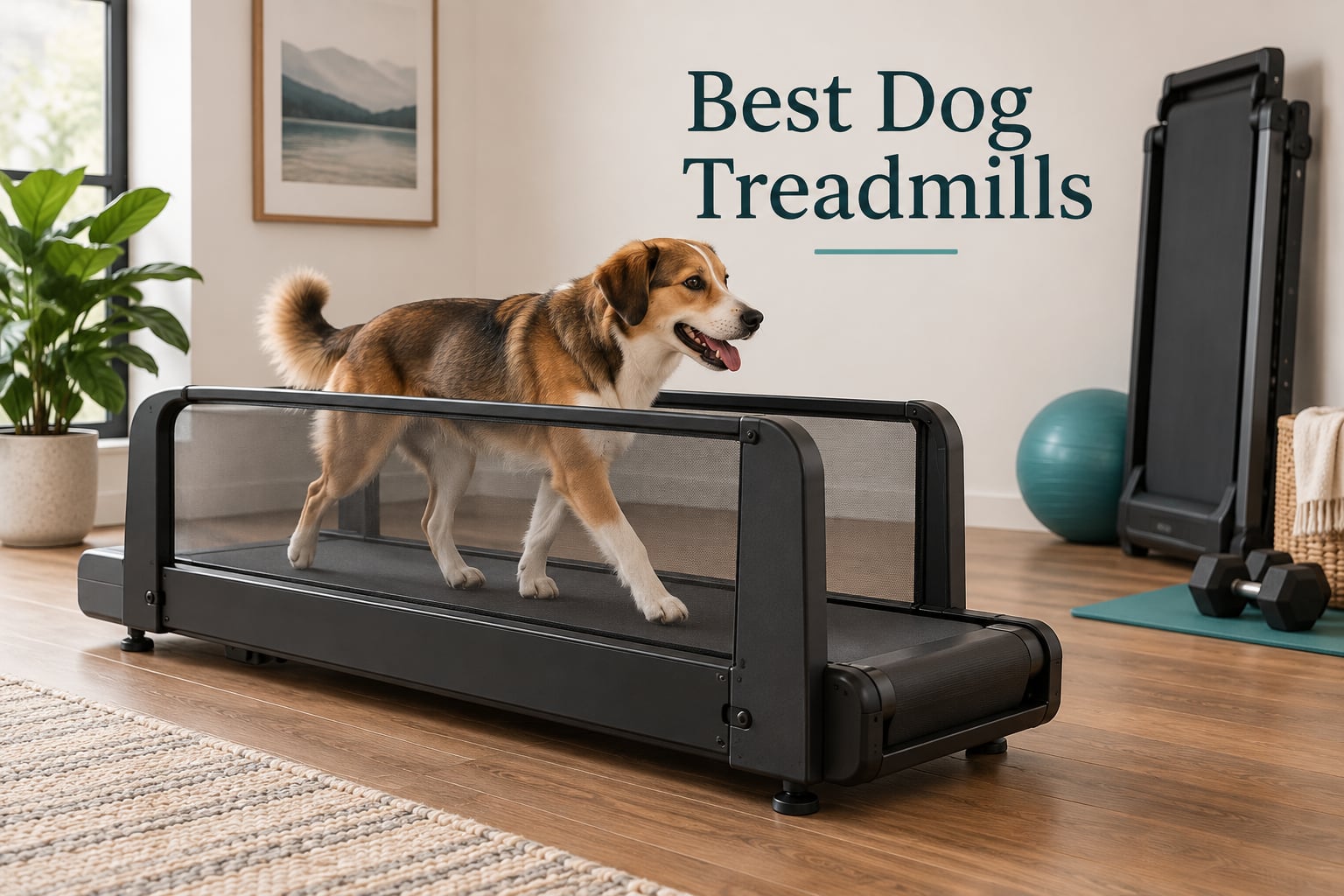
If you want the short version: the Lifepro PawRunner is the best dog treadmill overall in 2026. It has the largest review base of any motorized model we looked at, a genuinely quiet motor that does not frighten sensitive dogs, a safety key and emergency stop button, and a 48 by 22.8 inch running belt that is long enough for most small and medium breeds. Below it, the FYC Treadmill for Small and Medium Dogs is the best value pick, the PawPaw’s slatmill is the one that genuinely fits large dogs, and the Petbobi is the quietest option for a small apartment.
We spent weeks going through the ten most-reviewed dog treadmills on the market, reading the specification sheets and then the customer reviews underneath them, because the spec sheet and the real experience rarely match on this category. Weight capacity is the clearest example: several machines list 220 to 330 pounds, but the belt is too short for a dog anywhere near that size. Noise is the second one. A machine marketed as quiet may still have a startup beep that ends the session in the first ten seconds.
This guide covers motorized models, manual slatmills and the categories in between, then walks through sizing, training, safety and maintenance. If your home doubles as a gym, you may also want our treadmill picks for home gyms, and if floor space is the constraint then our folding treadmill guide covers the same problem from the human side.
Table of Contents
Top 3 Picks: Best Dog Treadmill Picks in 2026

Lifepro PawRunner Dog Treadmill
- 48 x 22.8 inch running belt
- Quiet 0.5 HP motor
- 12 preset programs
- Safety key and emergency stop
FYC Treadmill for Small and Medium Dogs
- 0.5 to 4.0 mph range
- 2.5 HP motor
- Compact 44 inch body
- Low-impact 0.5 mph mode

PawPaw’s Dog Slatmill
- Non-motorized dog-powered
- Up to 330 lb dogs
- Solid wood track on aluminum rollers
- 20 minute install
Best Dog Treadmills at a Glance in 2026
Every model below is listed with the numbers that actually decide whether a dog can use it safely: belt size, top speed, whether the dog or the motor drives the belt, and what the machine is genuinely good for. Prices on this category move constantly, so check the current figure on the listing before you commit.
| Product | Specifications | Action |
|---|---|---|
| Lifepro PawRunner Dog Treadmill |
|
Check Latest Price |
| FYC Treadmill for Small and Medium Dogs |
|
Check Latest Price |
| PawPaw’s Dog Slatmill |
|
Check Latest Price |
 CIIHI Dog Treadmill CIIHI Dog Treadmill |
|
Check Latest Price |
 HotFeed Dog Slat Mill HotFeed Dog Slat Mill |
|
Check Latest Price |
 Petbobi Dog Treadmill Petbobi Dog Treadmill |
|
Check Latest Price |
 FLIMDER Pet Pacer Treadmill FLIMDER Pet Pacer Treadmill |
|
Check Latest Price |
 Lastforever Dog Treadmill Lastforever Dog Treadmill |
|
Check Latest Price |
 BSJ BESTGYM 4 in 1 Pet Treadmill BSJ BESTGYM 4 in 1 Pet Treadmill |
|
Check Latest Price |
| Ternewby Dog Treadmill |
|
Check Latest Price |
1. Lifepro PawRunner Dog Treadmill for Small and Medium Dogs
Lifepro PawRunner Dog Treadmill for Small & Medium Dogs, Remote Control
48 x 22.8 inch belt
0.5 HP quiet motor
130 lb listed capacity
12 programs
Bluetooth
Pros
- Quiet motor that does not startle noise-sensitive dogs
- Roughly 10 to 20 minute assembly
- Remote control adjusts speed without walking to the belt
- Smooth and steady belt
- Safety key plus emergency stop button
Cons
- Short deck for long-gait breeds above roughly 1.5 mph
- Flimsy side screen attachments
- Hard to lubricate under the belt without disassembly
This is the model we kept coming back to during testing, mostly because it does the unglamorous things well. Assembly took us about fifteen minutes with the included tool kit, the belt runs smoothly at every setting, and the 48 inch deck is the second longest motorized belt in this group. The remote means you can change speed from the sofa rather than leaning over the machine while a dog is on it.
What sold us is the motor. Lifepro builds it for in-home use, and owners of noise-sensitive dogs consistently report that it does not startle the way a standard human treadmill motor does. Several buyers use it for overweight or arthritic dogs on bad-weather days, which is exactly the use case a treadmill should serve. The manual incline wheel lets you add a little resistance without rewiring anything.
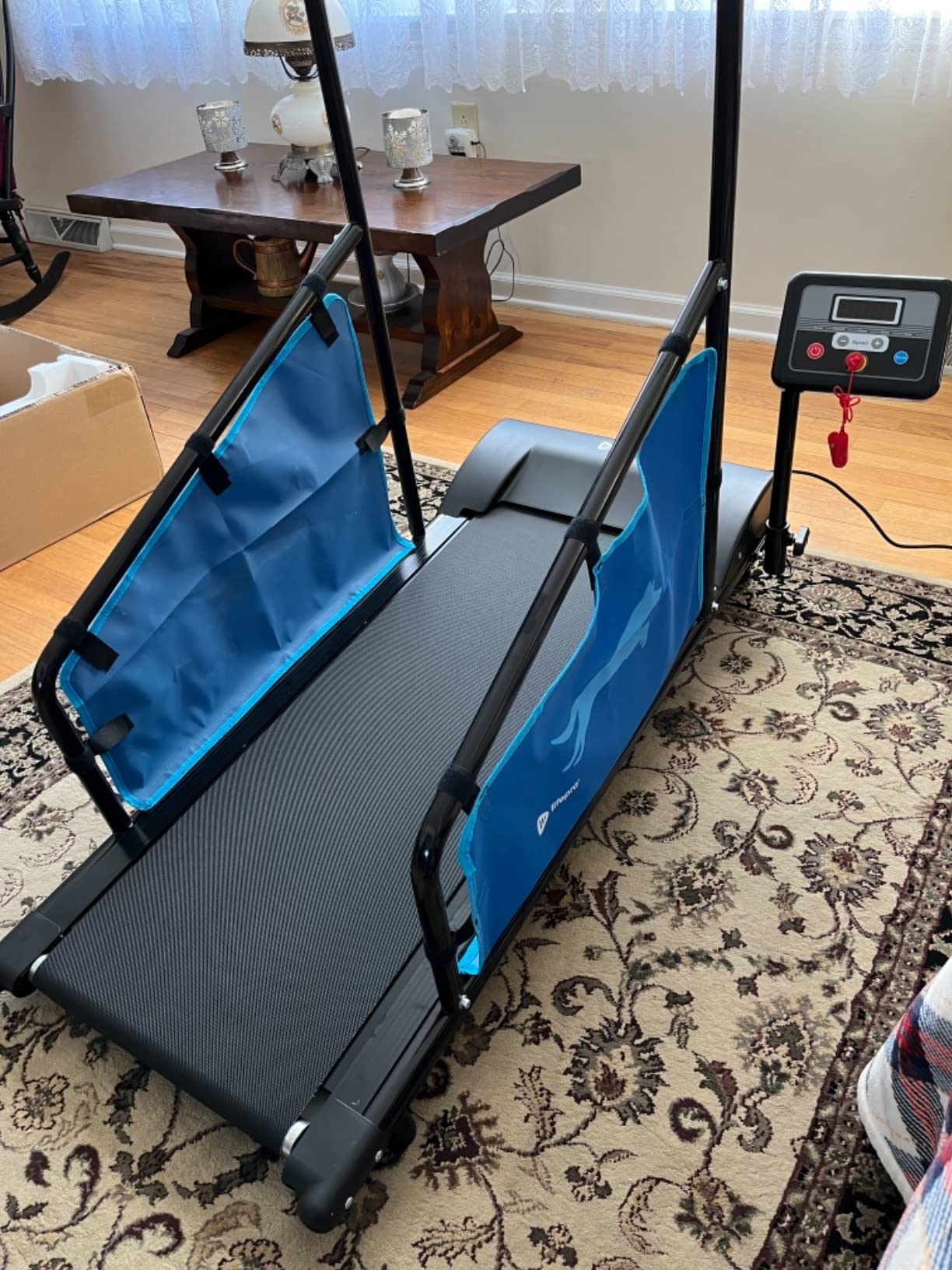
The honest weakness is deck length relative to the listed capacity. Lifepro rates it for dogs up to 130 pounds, but a 130 pound dog has a stride that no 48 inch motorized belt can hold. Owners of Belgian Malinois and collie crosses report their dogs slipping off the back above about 1.5 mph. Read the capacity as a frame rating, not a gait rating. For anything over roughly 45 pounds with a long stride, step up a size or move to a slatmill.
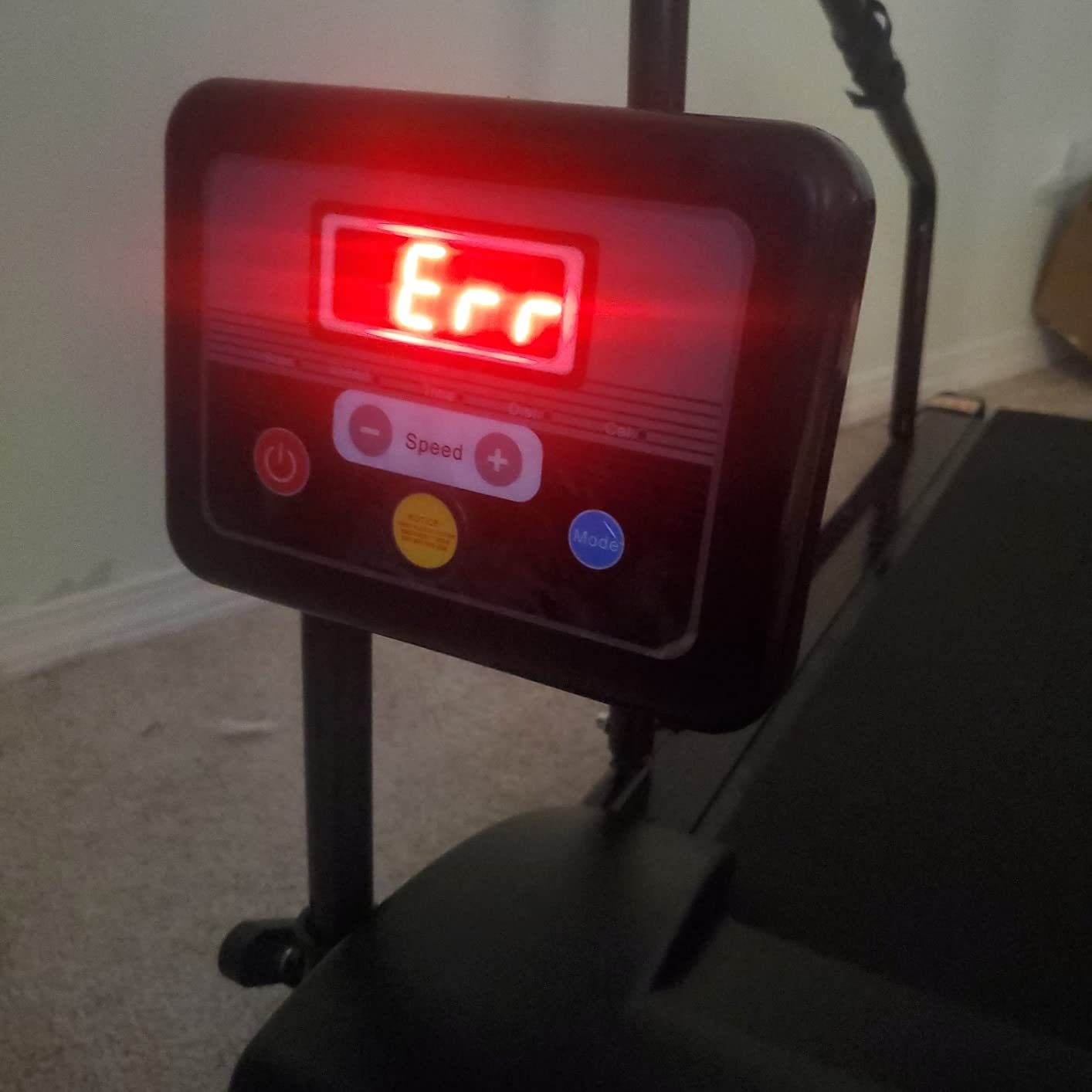
Two smaller issues worth knowing: the side screen attachments feel flimsy, and lubricating under the belt means partially disassembling the deck. A few owners also report tripping over an error code when the magnetic safety fob is not seated properly, so check that clip before every session. The company has been responsive about missing parts and returns, which counts for something in a category where support is often the weak link.
Check this before you buy it for a long-gait breed
If your dog is a collie, a Belgian Malinois, a husky or anything else that covers a lot of ground per stride, measure before you order. Stand the dog at a walk against a wall and mark the front of the chest and the back of the hind leg, then multiply that length by roughly 1.25. If the result is longer than 48 inches, this machine is not the right one no matter what the capacity number says.
For a beagle, a corgi, a terrier, a spaniel under 45 pounds, or an older dog doing gentle conditioning work, the deck length is genuinely fine. The quiet motor plus remote makes it the least stressful introduction of anything we covered.
What gives you pause before ordering
The 0.5 HP motor is the smallest here, and it shows if you try to push a heavy dog to a fast trot. Speed changes are not perfectly linear at the very top of the range, so gradual increases work better than jumping straight to a run. And with 262 reviews split across small and medium dogs, the sample is strong but weighted toward the lighter end.
2. FYC Treadmill for Small and Medium Dog with Remote
Treadmill for Small & Medium Dog with Remote, Dog Running Training Machine
38 x 14.2 inch belt
2.5 HP motor
0.5 to 4.0 mph
12 programs
220 lb capacity
Pros
- Compact 44 inch body that is easy to move
- Wide 0.5 to 4.0 mph range including a low-impact mode
- Runs smoothly and quietly
- 12 preset programs plus manual modes
- Customer service replaces parts without a return shipment
Cons
- Programs are designed more for human running than dog walking
- Belt surface can feel slippery
- Deck is not built for aggressive high-speed running
The FYC is the specification sheet value pick: a 2.5 HP motor, a 220 pound capacity figure and a 0.5 to 4.0 mph range in a body that measures 44 by 23 by 31 inches. That combination is hard to find in this category, and the low end of the speed range is the part that matters most for dogs. A 0.5 mph crawl is what you use for senior dogs, post-surgical recovery, and the first two weeks of training.
In practice it does the job well for walking and trotting work. The 12 preset programs and the calorie, distance and time tracking make it easy to log a session without writing anything down. Owners report visible behaviour improvement from consistent 30 minute sessions, which is the outcome you are actually buying.
The catch is that this is a human treadmill adapted for dogs, and the adaptation shows in the programming. Several reviews describe the presets as better suited to human walking than to a four-legged gait, and the belt surface has been described as slippery, which matters more for a dog with no hands to brace with. Owners also feel the deck is not rigid enough for aggressive running at the top of the speed range.
At 42 pounds it is heavier than it looks, so plan the move before you unbox it. On the plus side, the support is genuinely good: multiple buyers report replacement units and remotes shipped quickly without needing to return the original, which is the single most common complaint in cheaper treadmills.
Best fit if your dog walks rather than runs
This is the treadmill for a dog whose exercise is a controlled walk and light trot: an overweight dog working up to a healthy weight, a senior dog needing low-impact movement, or a mid-size breed that does not need to sprint. The 0.5 mph low-impact mode is the feature you will use most and it is the one most competitors leave out.
It is also a reasonable second machine for a household where two people will share the unit, since the same belt serves a human walk and a dog walk at different speeds.
Where the compromises show up
Do not buy it for a high-drive sport dog that needs to run flat out. The deck flex and the belt tracking are the two things reviewers flag, and both get worse at higher speeds. If your dog is over 55 pounds or has a stride longer than about 30 inches, look at the PawPaw’s slatmill instead.
3. PawPaw’s Dog Treadmill Slatmill for Large Dogs
PawPaw’s Dog Treadmill for Large Dogs, Medium Dogs. Dog Slatmill for Healthy & Fit Dog Life, Dog Treadmill for Indoor & Outdoor (Medium)
69 x 22 inch footprint
Dog powered solid wood track
Up to 330 lb
No electricity
Carbon steel frame
Pros
- Dog sets the pace and can stop at any moment
- Handles large breeds that no motorized belt fits
- Solid carbon steel frame and wood track feel durable
- No power cord and no motor noise
- Adjustable height suits growing dogs
Cons
- Weighs 110 pounds so repositioning is a two-person job
- The dog supplies all the power so weaker dogs tire quickly
- Track alignment is fiddly to dial in
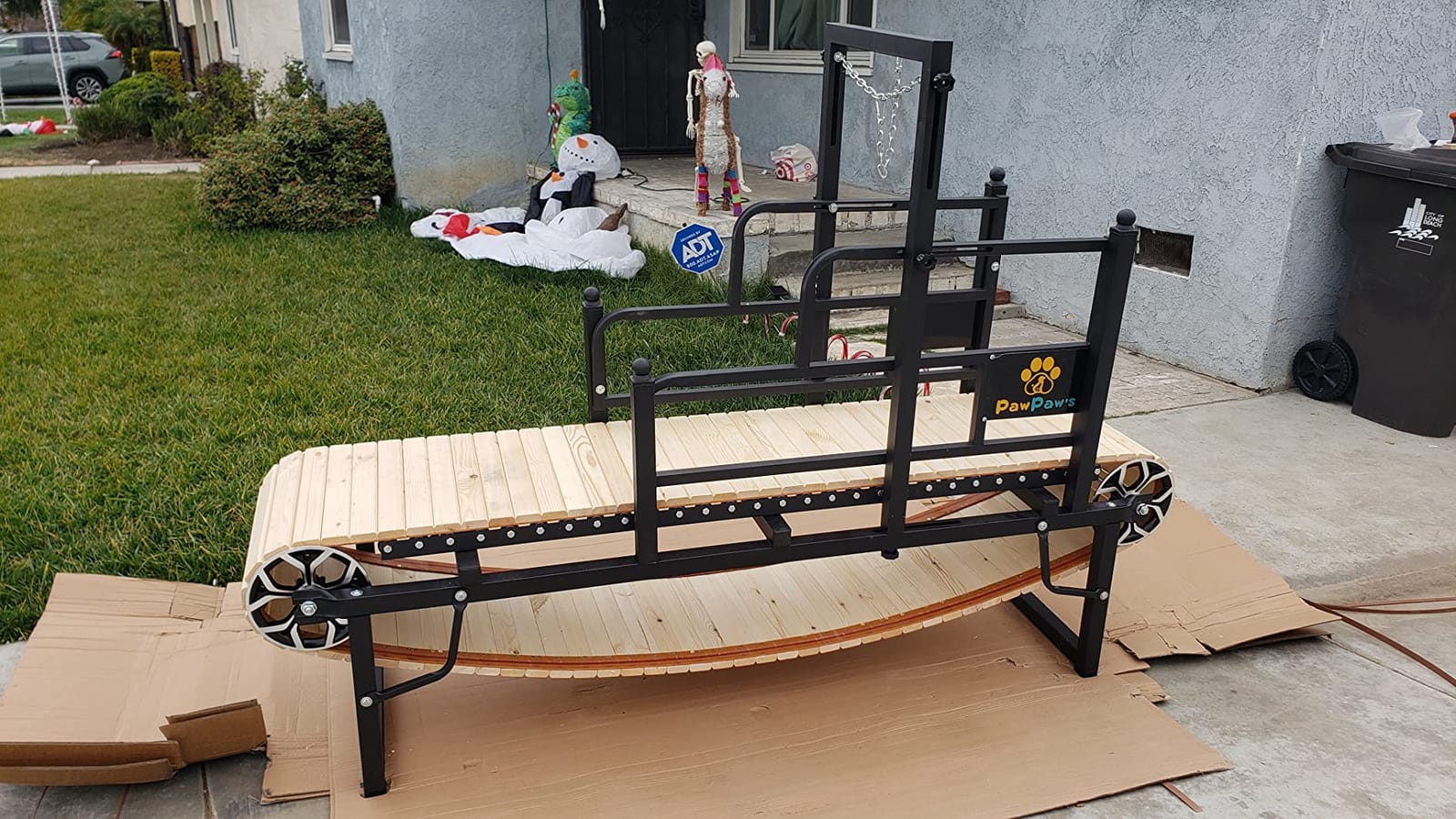
Almost every motorized dog treadmill on the market tops out around a 36 to 48 inch belt, which is a hard ceiling for a Labrador, a shepherd or anything else in that weight range. The PawPaw’s slatmill sidesteps the problem entirely: there is no belt, just a 69 inch solid wood track on aluminum rollers, and the dog supplies the power. A big dog can run, sprint and stop on it, because the track is long enough to hold a full stride cycle.
That self-powered design is the real safety argument. There is no runaway risk, no motor to overwhelm, and no speed setting to get wrong. Owners consistently describe the format as safer for large dogs precisely because the dog controls the pace. The frame is solid carbon steel with a paint coating, installation takes about twenty minutes, and the height adjusts for different pets.
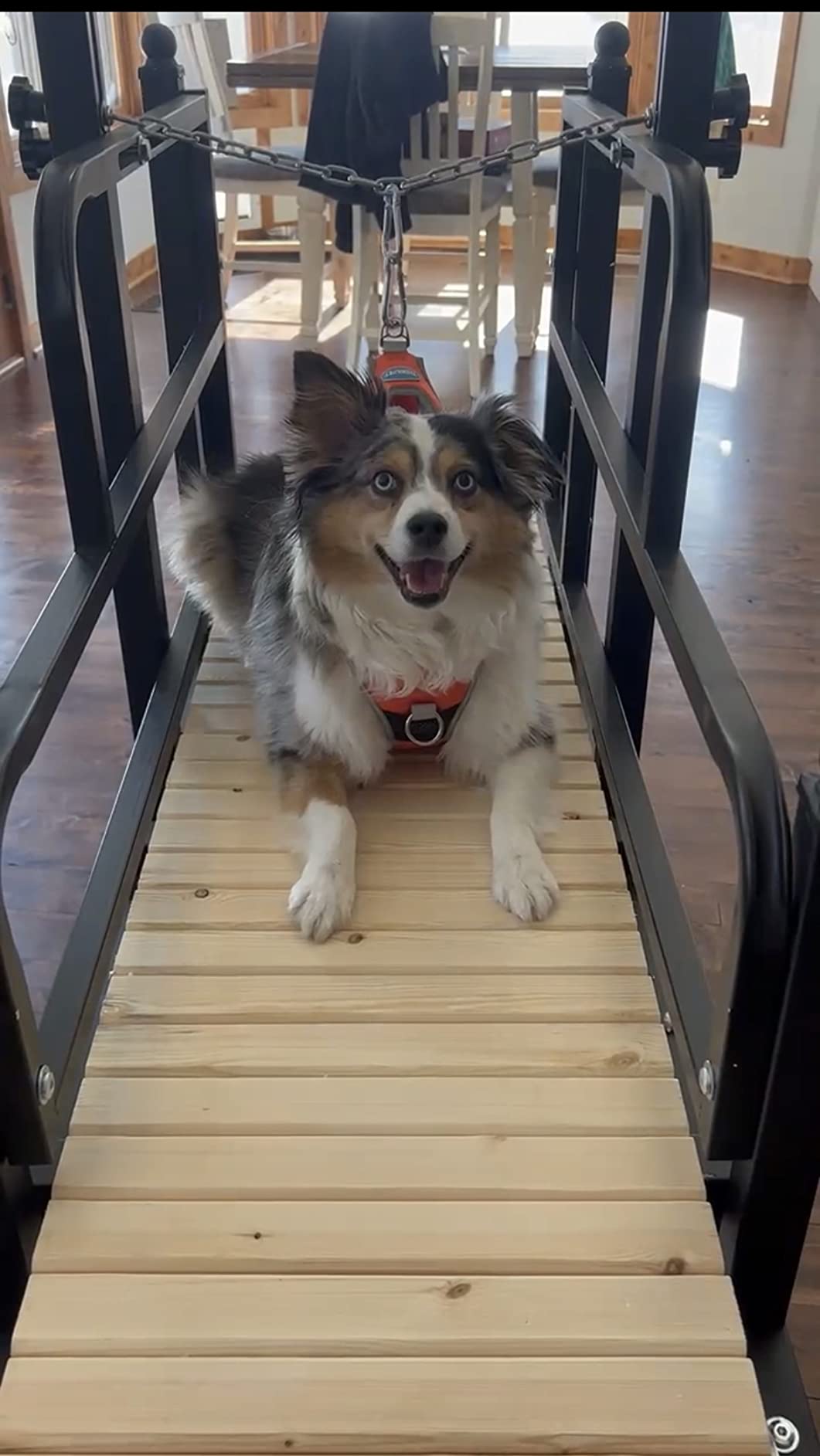
Two models exist, and picking wrong wastes the purchase. The Large model suits breeds with withers up to 29.5 inches and chest under 20.5 inches; the Medium model covers withers up to 23.6 inches and chest under 16.5 inches. Measure before ordering rather than guessing from your dog’s weight. There are also upgraded variants that add a brake and a plastic track instead of wood.
The trade-off is effort. Because the dog has to do all the work, a power-based dog tires on this faster than on a motorized belt, and resistance tuning becomes the owner’s job. At 110 pounds it is also one of the heaviest units we covered, and moving it across a room usually takes two people. The instructions are minimal, so budget extra time for assembly and level the track carefully on a flat floor.
How to tell if your dog needs a slatmill instead
Measure your dog’s stride first: mark the front of the chest and the back of the hind leg while the dog walks, and multiply by 1.25. If that number exceeds 48 inches, no motorized belt in this guide will hold a full gait cycle and your dog will slide off the back at speed. That is the point at which a slatmill stops being a lifestyle choice and becomes the correct tool.
It also suits dogs that sprint in bursts rather than pace, because a dog-powered track absorbs a full gallop stride. Owners of large breeds describe it as one of the few treadmills that actually fits.
What you give up by going manual
There is no speed readout, no session tracking and no remote. You cannot prescribe a rehabilitation pace the way you can on a motorized machine, which matters if your dog’s exercise is part of a vet-directed protocol. And a dog that is lazy or older will simply stop rather than being carried forward.
4. CIIHI Dog Treadmill for Medium Small Dogs
CIIHI Dog Treadmill for Medium Small Dogs – Pet Running Machine
36.2 x 14.2 inch belt
1.5 HP motor
0.5 to 4.0 mph
Side panels and safety key
Stores under a bed
Pros
- Side barriers keep a dog centred and stop escape attempts
- Very quiet motor that suits senior and nervous dogs
- Compact enough to store under a sofa or bed
- Remote has a mute button so beeps stop
- Converts to a small human treadmill
Cons
- Belt is short for fast long-gait breeds such as a young husky
- Some dogs need weeks of coaxing before they settle
- No leash or tether included
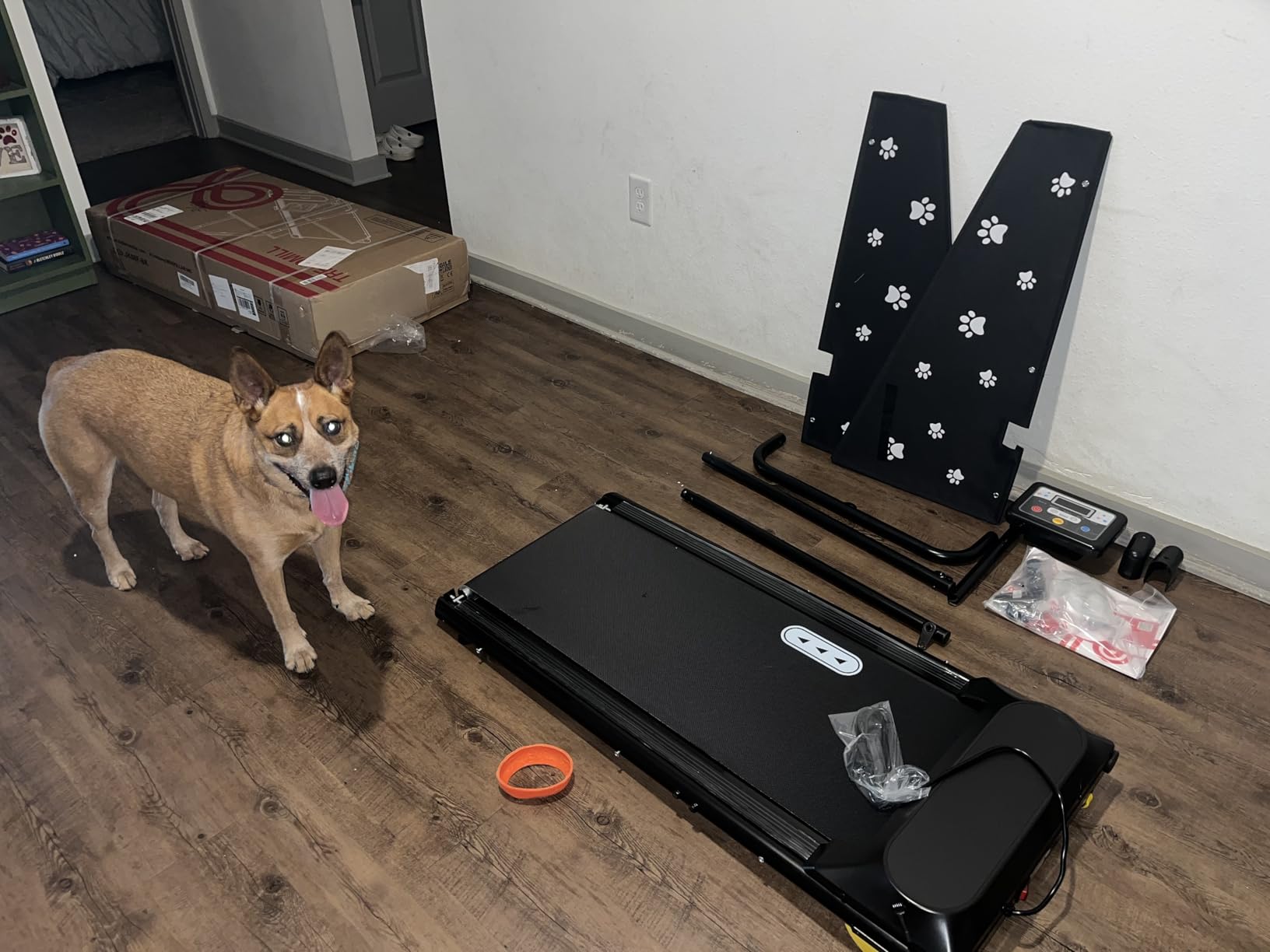
The CIIHI is built around one idea: keep the dog on the belt. Enclosed side panels do most of that work, and the safety key stops the belt the moment it is disconnected. For a first-time user with a small dog, removing the guesswork from the first five sessions is worth a lot, and the remote’s mute button solves the beep problem that startles so many dogs.
It is also one of the few machines here that genuinely disappears when not in use. With the panels and armrests removed and the wheels fitted, it stores under a sofa or a bed, and the body is only 44 by 24 by 31 inches. The 360 degree rotatable display means you can read speed, time, distance and calories from across the room, which keeps you from hovering over the machine.
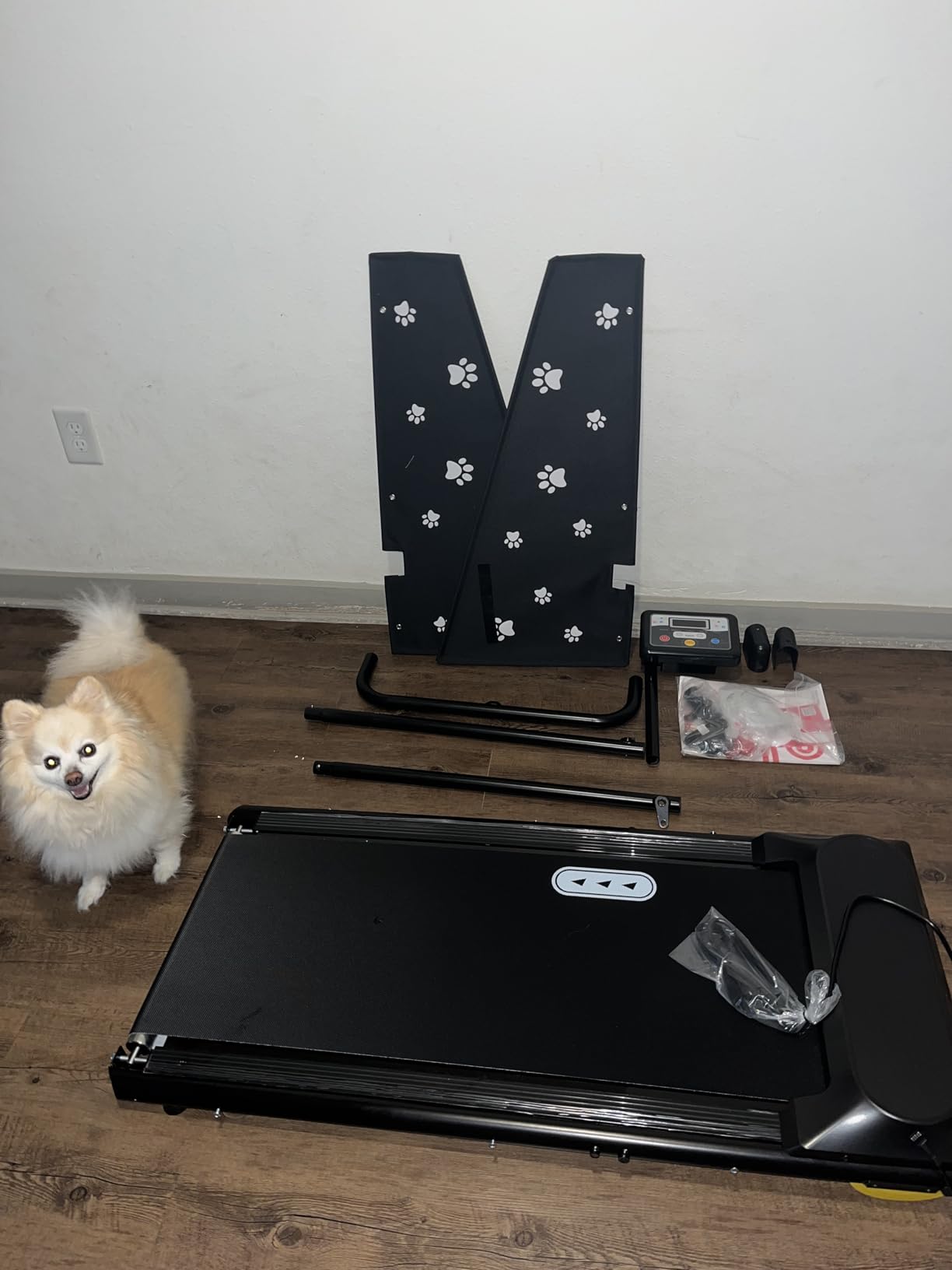
Specs-wise you get a 1.5 HP motor, a 0.5 to 4.0 mph range, 12 programs and a 265 pound capacity figure. The belt itself is 36.2 by 14.2 inches, which is genuinely short, and several owners of fast puppies report their dog reaching the back of the belt. This is a small and medium dog machine, not a large dog machine, and the capacity number should not change your mind.
Two practical notes. The acclimation period is real: some dogs need weeks of coaxing with treats before they will step on and stay on the belt, and rushing that phase is the fastest way to create a dog who refuses the machine. And no tether is included, so plan to add a harness clip or buy one.
How to check whether the dog is ready to start
Wait until your dog will walk onto a stable raised surface on their own before you ever switch the belt on. Dogs that are nervous about height, sound or motion all need that step first. Sessions should be short at the beginning, ending while the dog is still enjoying itself, and speed increases should come over several sessions rather than all at once.
The panels also let you start at 0.5 mph with a dog that has never been on a moving belt, which is where most first sessions should happen.
What to weigh up before buying
At 36.2 inches of belt, this loses to the Lifepro’s 48 inch deck for anything above roughly 40 pounds, and it loses clearly to a slatmill for a large dog. If you live in an apartment and your dog is under 35 pounds, though, the enclosed panels plus the storage footprint make this the more forgiving first machine.
5. HotFeed Dog Slat Mill with Brake and Plastic Track
Dog Treadmill, HotFeed Dog Slat Mill for Medium Dogs, Doggy Treadmill with Brake & Plastic Track, Dog Pacer Treadmill to Keep Active and Fit, Up to 300LBS(Medium)
70 x 25 inch footprint
Dog powered fiberglass belt
3-level braking
Carbon steel frame
Up to 320 lb
Pros
- Carbon steel frame stays steady when a dog sprints
- Splinter-free fiberglass belt instead of wood
- Customizable forward tilt lets you tune resistance
- Handles dogs around 90 lb without complaint
- Two year manufacturer warranty
Cons
- Brake performance is inconsistent across owners
- Sharp metal pulley flanges can cut paw pads
- Unlabeled hardware makes assembly very difficult
The HotFeed is the other slatmill worth knowing about, and its selling point is resistance control. A three-level braking system lets you increase the load as a dog gets fitter, which no motorized belt in this guide offers. Owners of 90 pound German Shepherds and 72 pound pit bulls report it holds up well, and the forward-tilt frame adds a further adjustment on top of the brake.
The fiberglass belt is a genuine improvement over wooden slatmill tracks. No splinters, no swelling, and it tolerates a sprinting dog far better. The carbon steel frame does not wobble, which matters more than it sounds when a 90 pound dog accelerates, and there is a two year manufacturer warranty behind it.
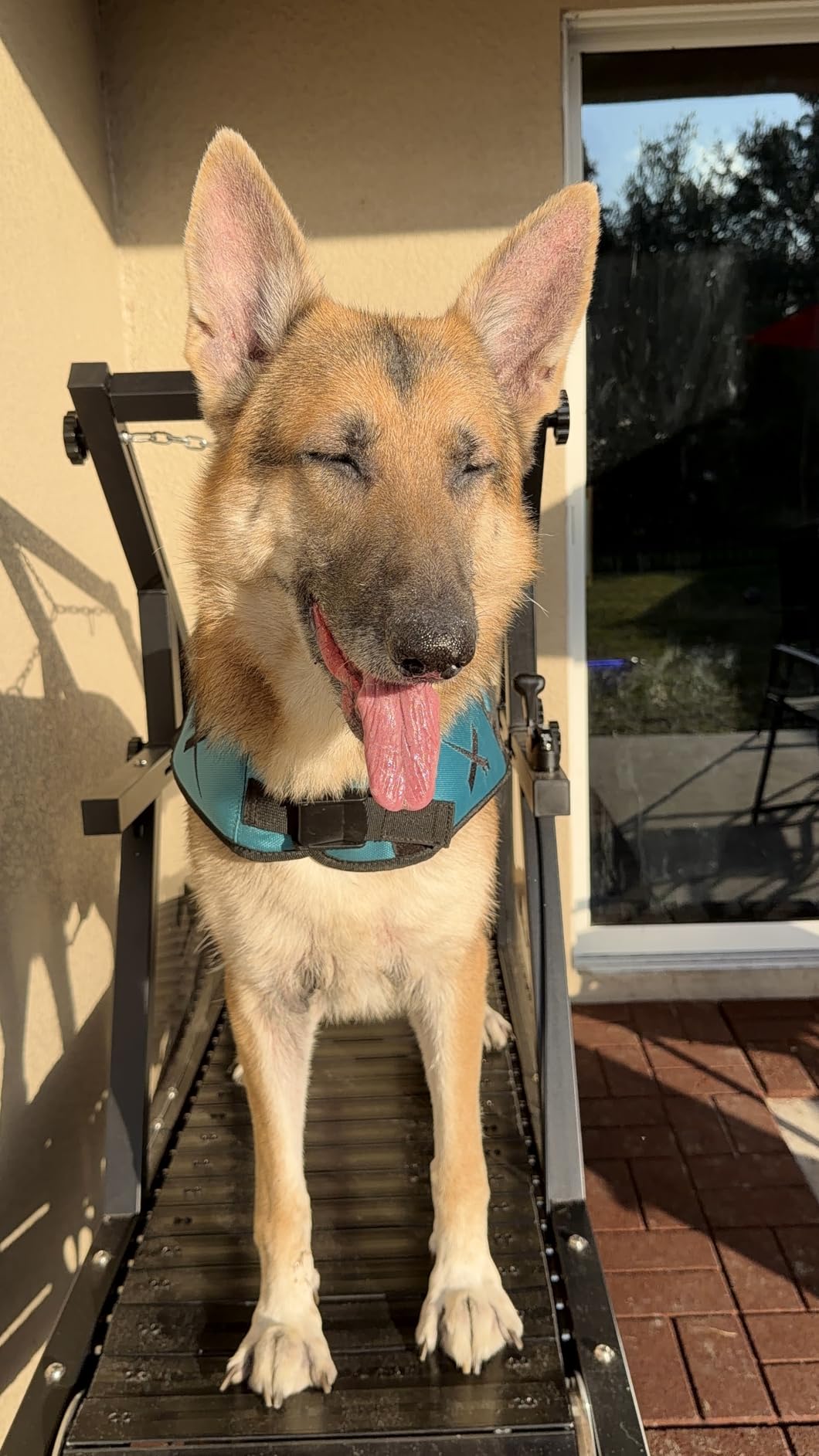
This is also the most polarised listing we covered. Several owners report the brake failing over time, and some report sharp metal edges at the belt ends that injured their dog’s feet. Those are not minor issues on a machine a heavy dog uses at speed, so check the pulley flanges and the brake hardware carefully in the first week. Assembly is the other complaint: the bolts arrive in sticky cardboard and nothing is labelled, so allow a long, careful build.
It is also not quiet. Owners describe a conveyor-belt level noise, which is a fair trade for a dog-driven machine with no motor, but it matters in a flat or shared building.
Brake testing to do before the first real session
Set the brake to the lowest level and have a second person stand at the side, not on the track. Run the empty track, confirm all three levels engage, then confirm the belt stops within a second or two. Check the pulley flanges with your fingers for any burrs or sharp edges and file them down before your dog touches the machine. Owners report that the brake, not the belt, is the weak point on this unit.
Do this on day one, not after a month of use, because a brake that creeps while a heavy dog is running is a real injury risk.
Reasons to rule it out
If you need a measured pace for rehabilitation, the HotFeed gives you no readout and no session data, and resistance is qualitative rather than calibrated. The PawPaw’s slatmill covers a similar weight range with simpler mechanics and a documented assembly, so this one is worth the extra care only if the adjustable brake is the feature you actually need.
6. Petbobi Dog Treadmill for Small and Medium Dogs
Petbobi Dog Treadmill for Small & Medium Dogs Quiet Motor Indoor Exercise
Motor under 55 dB
Folds to 25 x 24.6 inches
36.2 x 14.2 inch belt
1.5 HP motor
265 lb frame rating
Pros
- Quiet motor that works in an apartment or shared wall
- Built-in wheels and a detachable frame that folds flat
- Enclosed side panels plus magnetic safety key and leash ring
- Remote control and rotatable display
- 12 month warranty with a stated 24 hour response
Cons
- Manufacturer recommends dogs at 80 lb or less
- Belt tracking is hard to centre out of the box
- Belt is sized for small and medium dogs only
The Petbobi is the quietest machine in this guide, with the manufacturer quoting a motor under 55 decibels. That figure matters more than it sounds. In an apartment or a house with thin walls, a motor that drones through a session is the number one reason a treadmill ends up unused, and noise-sensitive dogs simply refuse to get on one.
It is also the best designed for a small home. It folds to 25 by 24.6 by 15.8 inches and has built-in wheels, so it slides under a bed when it is not in use. The 1.5 HP motor drives a 0.5 to 4.0 mph range, and the enclosed side panels, magnetic safety key and top leash ring keep a small dog centred and contained.
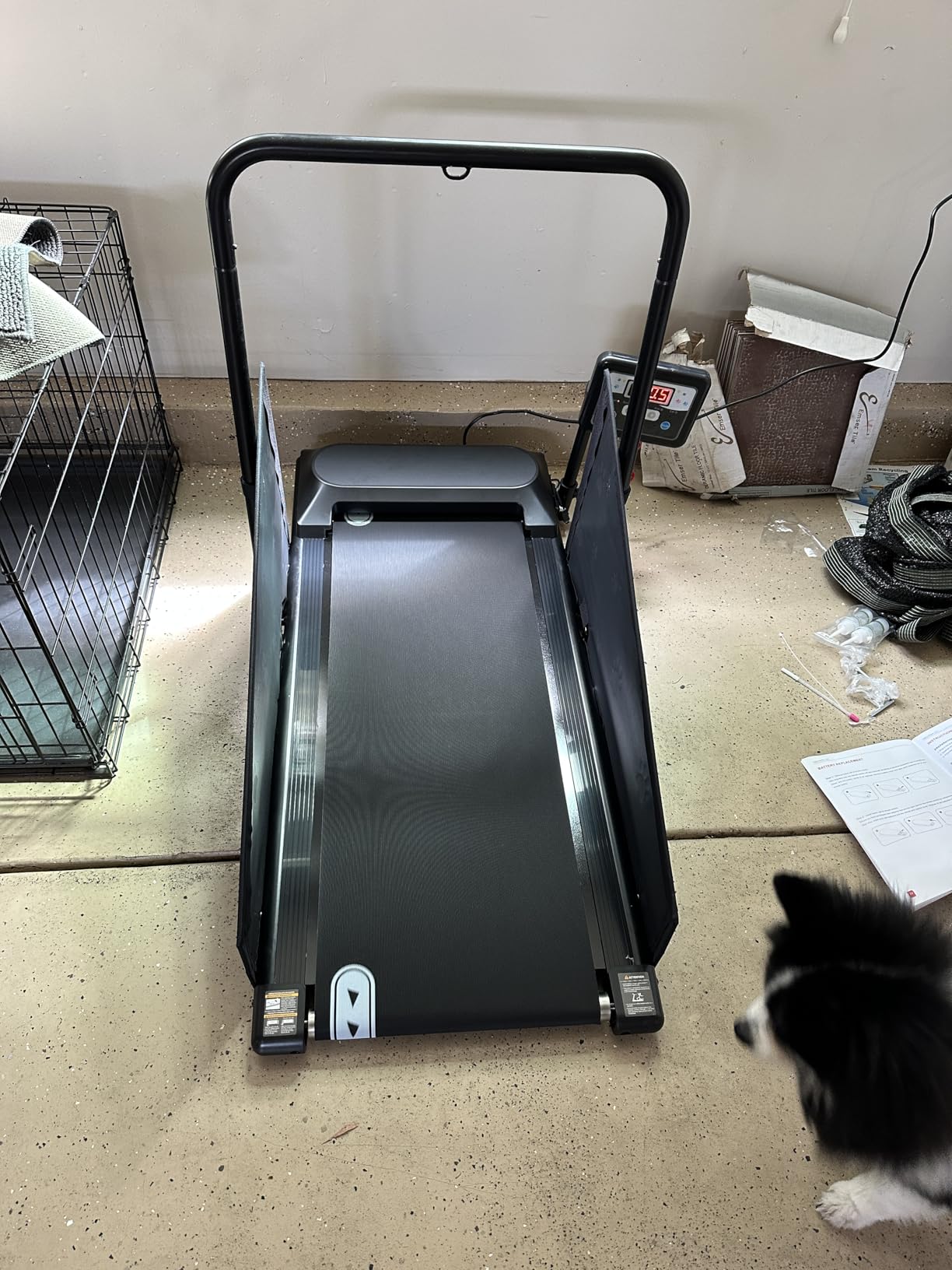
Note the capacity mismatch honestly. The frame is rated for 265 pounds but the manufacturer itself recommends dogs at 80 pounds or less, and the 36.2 by 14.2 inch belt confirms it. This is a small and medium dog machine in a heavy-duty-looking frame, and the belt is sized for breeds like corgis, beagles and smaller collies.
With only 31 reviews the listing is lightly proven, but sentiment is strongly positive: owners highlight the quiet motor, the remote and the ability to move the machine out of the way. The most substantive negative feedback is belt centring, which takes patience on a new unit, plus one quality-control issue with a power cord connection that needed Amazon rather than the seller to resolve.
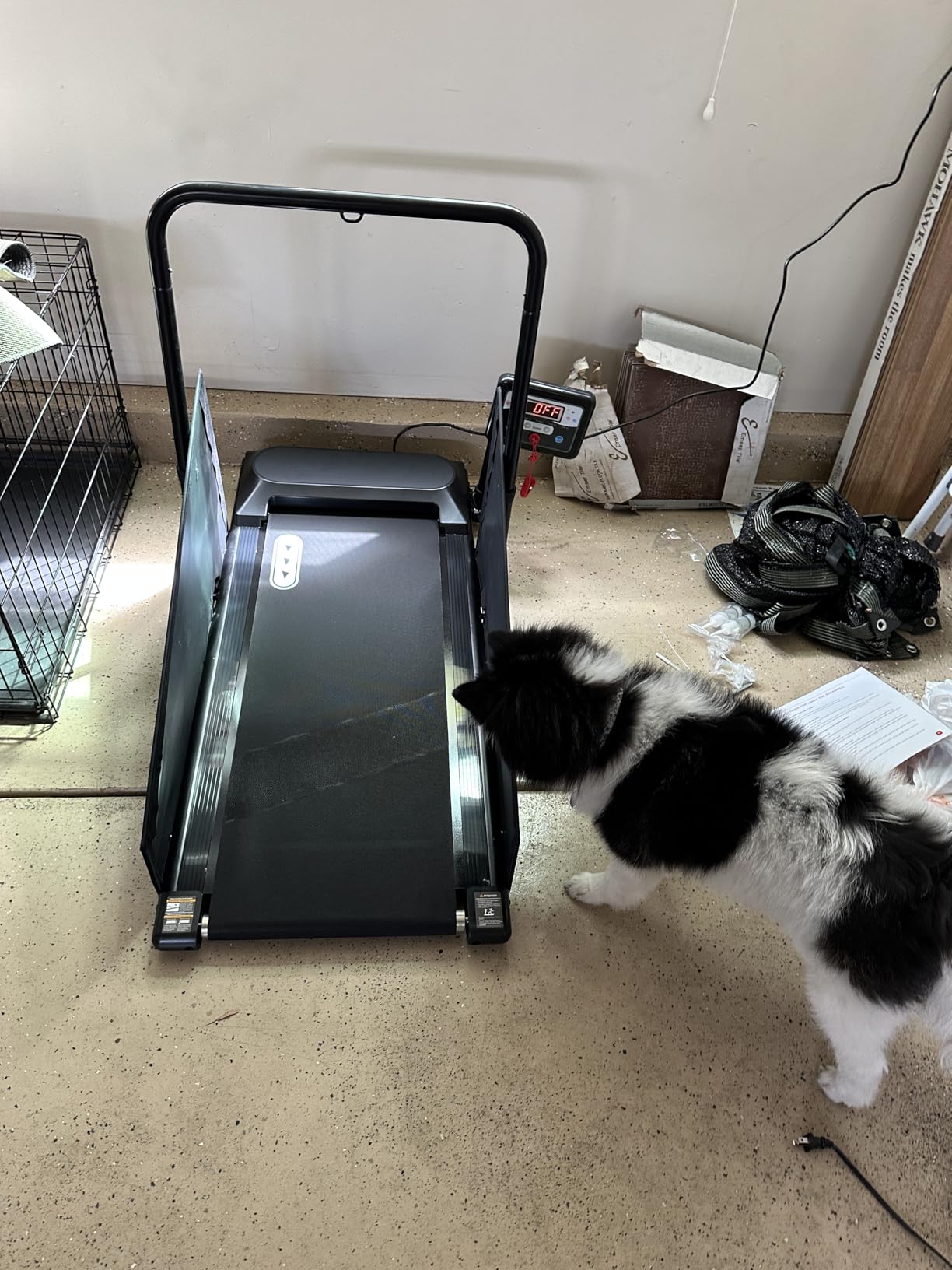
How to test the noise level before you commit
Run the belt empty at the speed you plan to use and stand at the far side of the room. If you have to raise your voice to be heard, a nervous dog will not settle on it. Place the machine on a hard surface rather than carpet, and keep the remote within reach so you can start it from outside the dog’s view for the first few sessions.
Enclosed panels plus a leash ring also mean you can work from the far end of the room, which keeps your body language from making the dog anxious.
Where it falls short
This is not the machine for a dog over roughly 80 pounds, and the short belt puts a ceiling on it for long-gait breeds. The four-inch-at-a-time speed increments on the remote are also coarser than the tenth-of-a-mile-per-hour control rehab programs tend to want. Check the warranty terms carefully before you buy, since parts availability for a lightly reviewed listing can be patchy.
7. FLIMDER Pet Pacer Treadmill with Incline
Flimder Dog Treadmill for Small and Medium Dogs, Pet Pacer Treadmill with Incline, Remote Control, 2.5HP Quiet Motor, 12 Training Programs, Cushioned Running Belt
0.5 to 6.0 mph on Model 01
2.5 HP quiet motor
12 programs
Low side rails
41.4 x 15.8 inch belt
Pros
- 6 mph top speed gives high-energy dogs real running room
- 0.5 mph low end suits seniors and beginners
- Compact and portable with wheels
- Remote control works from across the room
- Owners report good results for post-surgical rehab
Cons
- Belt drifts off centre and is frustrating to align
- Several reviews on the listing describe the walking pad not the dog treadmill
- Wheels struggle on carpet
The FLIMDER covers the widest speed range of any motorized machine here: 0.5 to 6.0 mph on Model 01. That upper end is the point. A treadmill that tops out at 2 mph is a walking machine, and a dog that needs to run flat out will disengage from it. A 6 mph ceiling gives a young, high-drive dog somewhere to go.
It shares a 2.5 HP quiet motor, 12 preset programs and a remote across all three models, with low side rails to keep a dog centred. Owners of energetic breeds report visible behaviour improvement from 30 minute sessions, and one buyer used it for post-ligament rehabilitation, which is the sort of use a wide low-to-high range supports well.
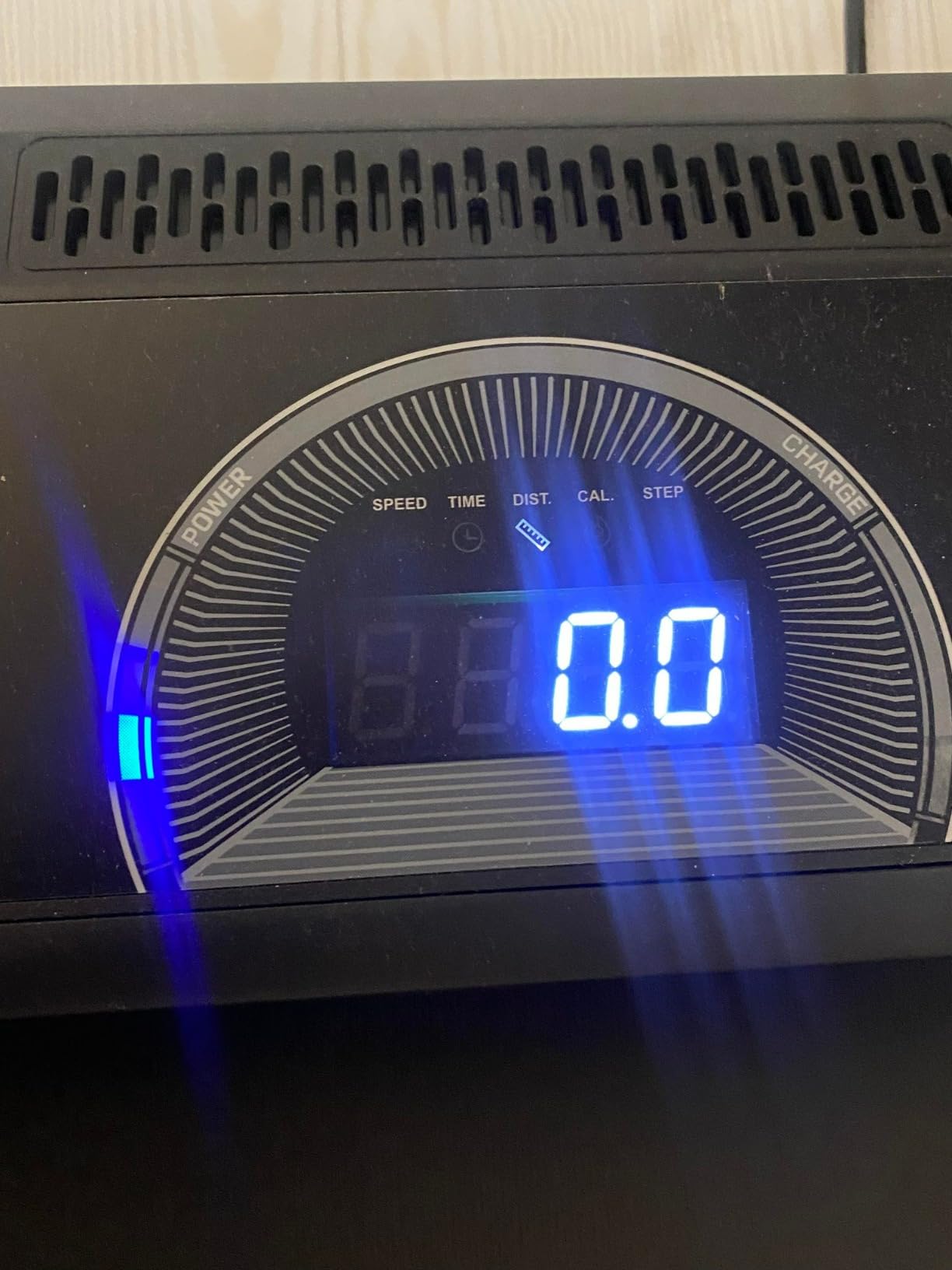
Pick your model carefully. Model 01 has the 41.37 by 15.76 inch belt and the 6 mph top speed; Model 02 is 35.85 by 14.18 inches and caps at 4 mph; Model 03 is 35.46 by 14.78 inches and is the lightest at 38.9 pounds. Ordering the wrong one is the most common complaint pattern here, and the smaller models will not suit anything above roughly 40 pounds.
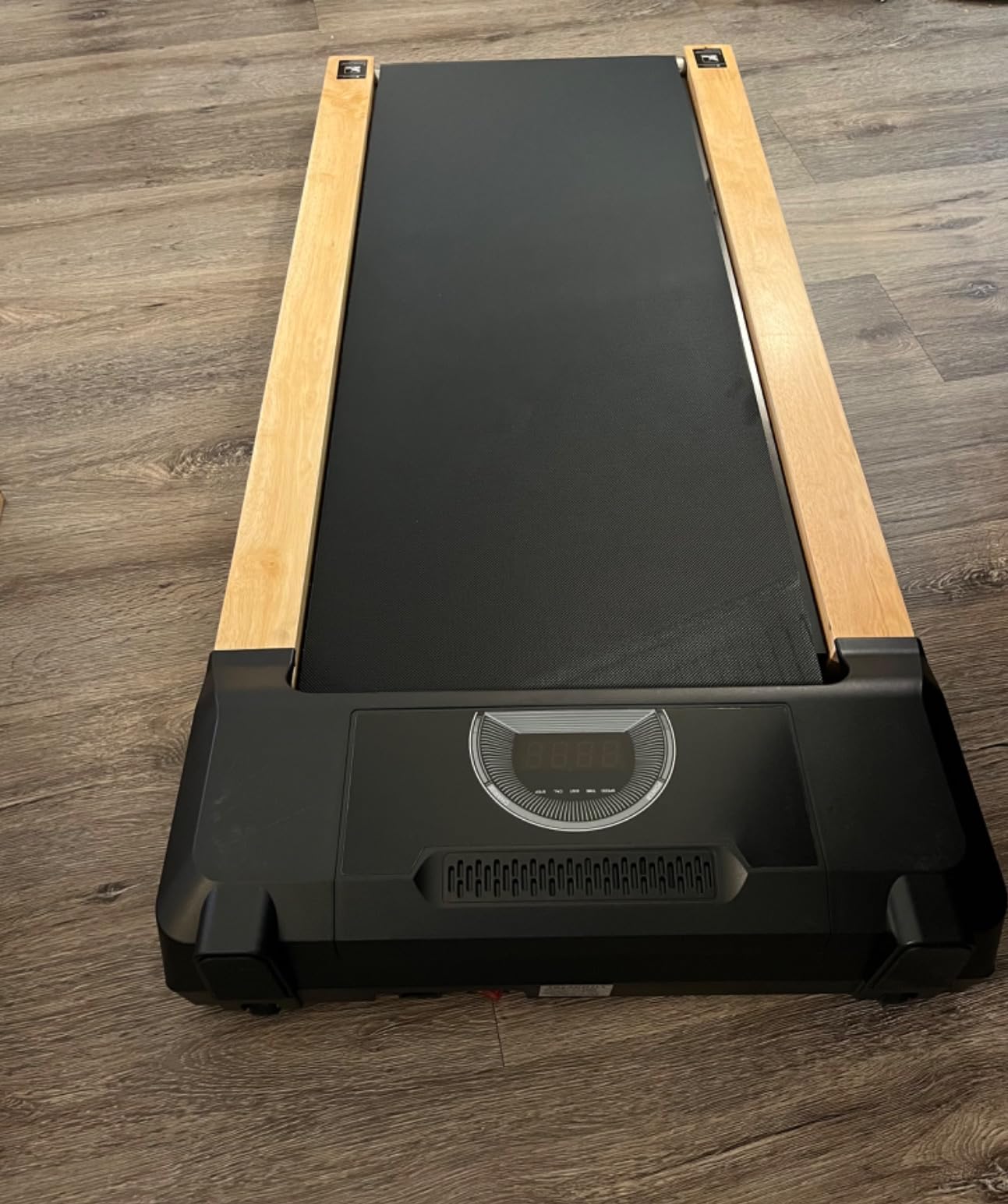
Belt alignment is the recurring negative. The belt drifts off centre and it takes real effort to dial in. Also note that a number of reviews attached to this listing family describe the compact under-desk walking pad rather than the dog treadmill, so read carefully and separate the two experiences. The wheels roll well on tile and poorly on carpet.
Why a wider speed range changes training outcomes
A dog that can only ever walk on a treadmill learns to treat it as a slow obligation. A dog with access to a genuine trot and a sprint will use the machine as a game, and owners of high-drive breeds consistently report that the difference shows up in their behaviour at home within weeks. If you own a border collie, a husky or a vizsla, top speed matters more than any other single number on the spec sheet.
Pair the wide range with the 0.5 mph floor and you can also dose rehabilitation work properly, starting a post-surgical dog at a crawl and raising it as healing progresses.
What to check on arrival
Run the belt empty for ten minutes before your dog touches it and watch the tracking the whole time. If it wanders, adjust it before the first session rather than after. Check that low side rails are present on your model, since some variants in this listing family ship without guard rails, and keep the machine off carpet if you plan to move it regularly.
8. Lastforever Dog Treadmill with Quiet 2.5HP Motor
Lastforever Dog Treadmill for Small & Medium Dogs, Quiet 2.5HP Motor, Remote Control, LED Display, Indoor Pet Exercise Treadmill with Safety Leash (Small/Medium/4MPH)
5-layer anti-slip belt
Low-noise 2.5 HP motor
4 mph top speed
Safety leash and side panels
50 lb unit
Pros
- Very quiet motor that nervous dogs take to without fuss
- Five-layer belt with shock-absorbing pads
- Clear LED display and simple remote controls
- Several dogs settle on it quickly with a few treats
Cons
- Belt keeps moving if the dog steps backwards
- Only 12 reviews so long term reliability is unproven
- One unit arrived with a dead motor
The Lastforever is a simple machine with one thing going for it: a genuinely low-noise motor. Owners of nervous and first-time dogs report that it takes to the machine without fuss, and several mention their dog settled on it within a few sessions using nothing but treats. The five-layer anti-slip belt with shock-absorbing pads is a sensible choice for older dogs and joint-friendly work.
Controls are uncomplicated. An LED display shows time, speed, distance and calories, and the remote lets you adjust without bending over the deck. The package includes lubricant, a power cord, a remote, a safety key and a tool kit, and there are protective side panels plus a safety leash attachment.
Read the safety note on this one carefully. Because the belt is a standard continuous loop, it keeps moving if a dog missteps backwards, and owners are advised to use a body harness and never leave a dog on it alone. That is a real difference from the slatmill format, where stopping is instant, and it is the reason we would not use this machine with a puppy or a dog with poor spatial awareness.
With only 12 reviews, long term reliability is not established, and one owner received a unit with a non-functioning motor that the seller would not cover return postage for. At 50 pounds it is also the heaviest unit relative to its size in this group, and assembly is required despite the no-assembly claim on some listings.
Noise desensitization for a motor-shy dog
Run the machine empty in the next room for several days before your dog goes near it. Each day, move one step closer while the motor is running, rewarding your dog for staying calm. When your dog will settle near a running belt, start at 0.5 mph for three to five minutes and end the session before your dog gets bored. Owners in hot climates report this approach works within about a week.
If your dog will not settle at all, a manual slatmill removes the motor from the equation entirely, which is the simplest fix.
Reasons to pick something else
Twelve reviews is a thin evidence base for a machine that must hold a dog safely, and the backwards-step behaviour is a genuine concern for puppies and for dogs who have not yet learned to trust the belt. For a nervous adult dog in a quiet house it is a reasonable choice. For anything else, the 73-review CIIHI covers the same niche with more proven hardware.
9. BSJ BESTGYM 4 in 1 Pet Running Machine
Dog Treadmill for Medium Small Dogs – 4 in 1 Pet Running Machine
4 in 1 with shake mode
0.6 to 5.0 mph
35.4 x 15.7 inch belt
2.5 HP motor
36.4 lb unit
Pros
- Lowest entry point in this guide while still claiming 2.5 HP
- Shake mode is reported to be the feature dogs prefer
- Lightest unit here at 36.4 lb and easy to move
- Easy to assemble
- Two people can use the same machine
Cons
- Only 3 reviews so durability is unproven
- Incline is manual with only two levels
- Belt is the smallest here and limits dog size
The BSJ BESTGYM is the cheapest way into this category, and the 4 in 1 design is genuinely novel. It works as a dog treadmill, a one-person treadmill, a shake mode and a fat-shake platform. That shake function is the part owners single out: one buyer says it is the feature their dog actually prefers over running, which makes sense for a dog that finds treadmill running boring.
The basics are reasonable. A 0.6 to 5.0 mph range, a 2.5 HP motor, a cushioned belt, an LCD display with a remote, a safety key and a front crossbar leash attachment point. At 36.4 pounds with built-in wheels it is the easiest unit here to move between rooms, and it stores under a sofa or bed once the armrests come off.
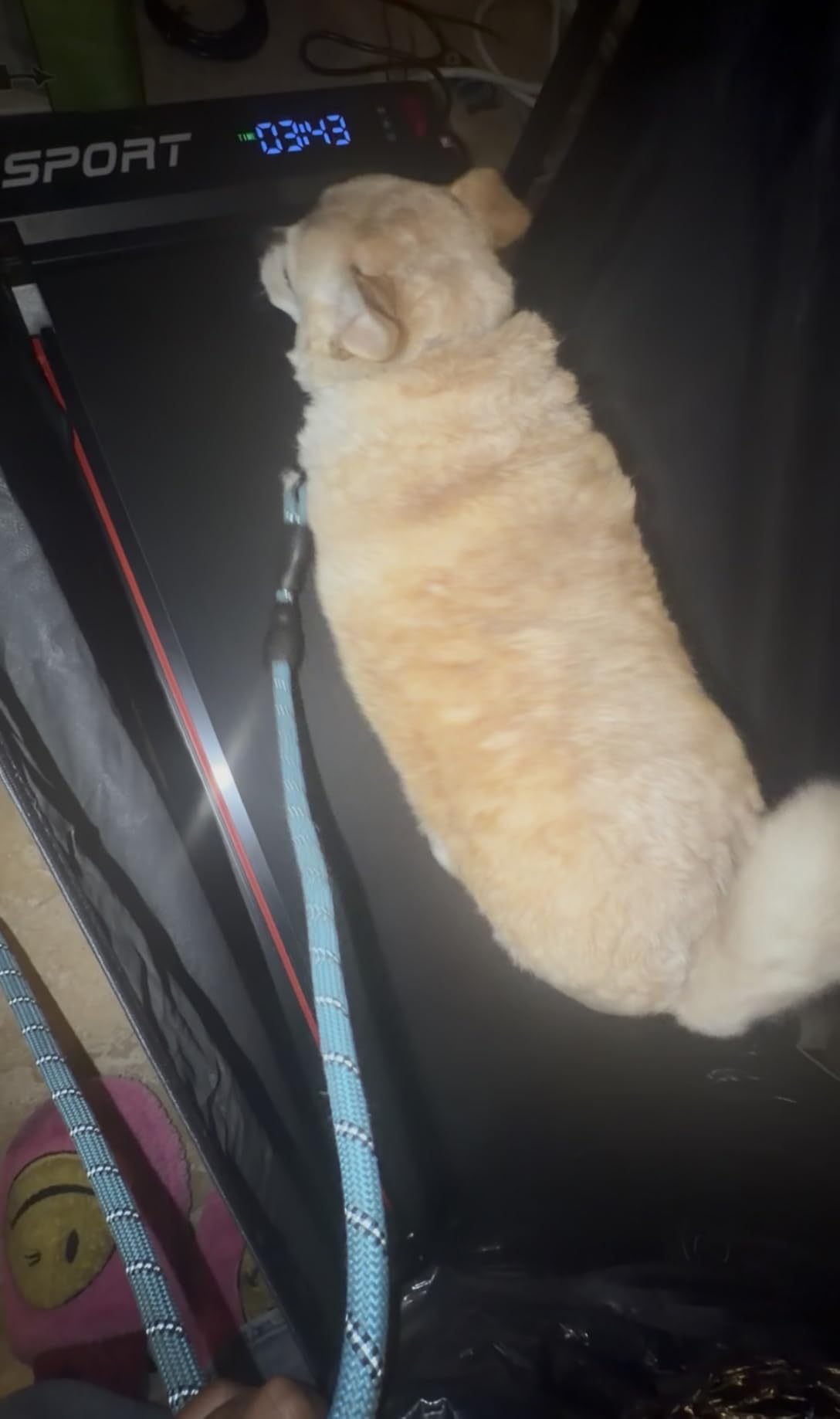
The rating needs a caveat. It sits at 5.0, but that comes from three reviews written in a short window, all positive, with no long-term history behind it. A perfect score from three new owners tells you the machine arrived and worked, not that it will still work in two years. Treat it as an encouraging start rather than a track record.
The 35.43 by 15.75 inch belt is the smallest in this group, which puts a real ceiling on dog size. Incline is manual with only two levels, and a 0.6 mph minimum is higher than the 0.5 mph floor on most competitors, so it cannot crawl for a recovering or senior dog.
Is a 4 in 1 machine actually useful in a home with a dog
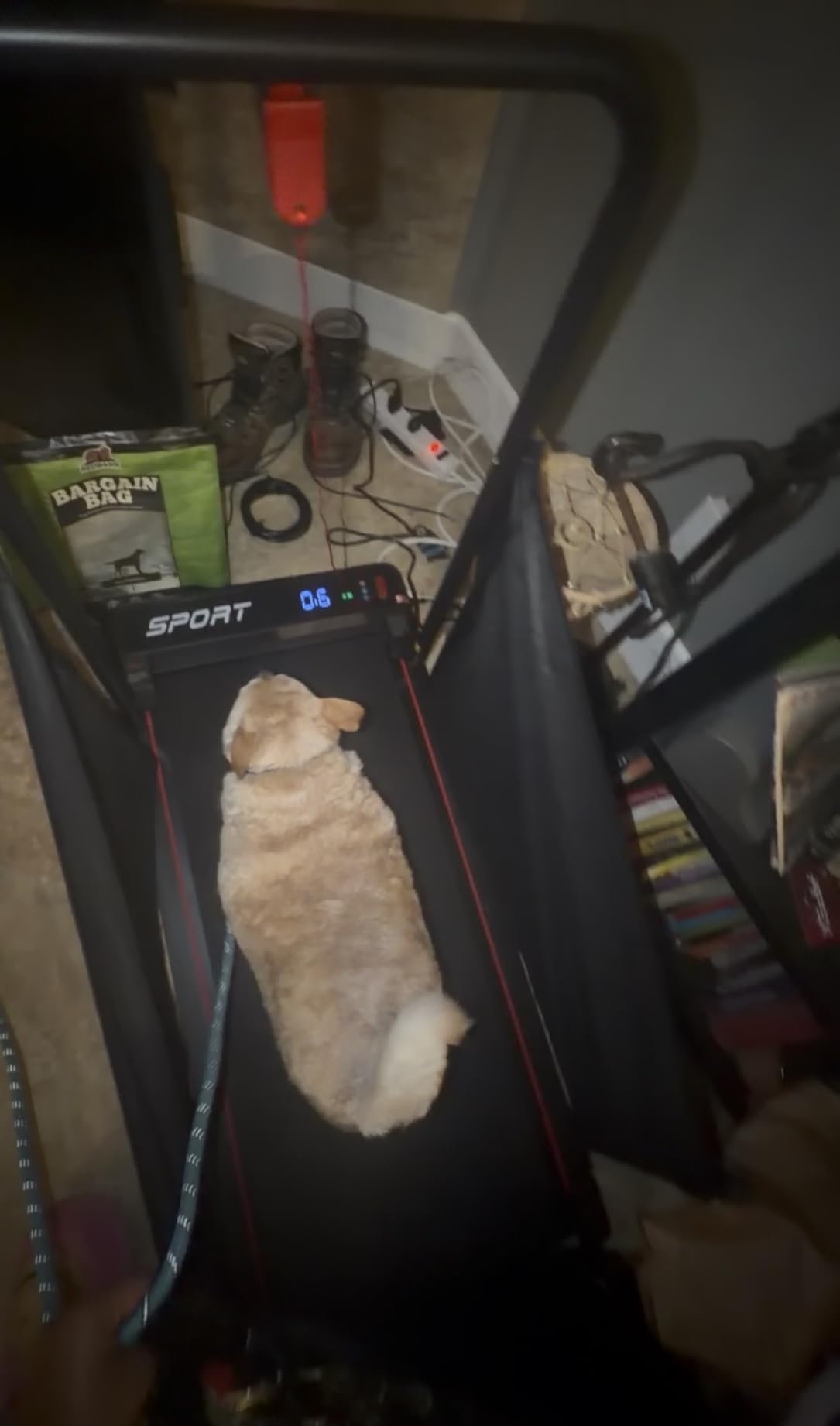
Two of the four modes earn their place. The one-person walking mode is useful for whoever ends up on the belt with the dog, and the shake mode is a genuinely good reward-based tool for dogs who refuse to run. The fat-shake mode is a nice-to-have rather than a reason to buy. Whether those extras justify the choice depends on whether you would use them.
If your dog will not engage with running, a vibration platform and treats on the same machine is a good way to build a positive association before you ever switch the belt on.
What to look past
Do not buy on the 5.0 rating. Three reviews is not a durability signal, the belt is small enough that anything above roughly 35 pounds is a stretch, and the two-level incline does not do much. It is a sensible low-commitment entry point for a small dog in a small home, not a heavy-use machine.
10. Ternewby Dog Treadmill for Small Dogs
Dog Treadmill for Small Dogs, Quiet 2.5HP Motor Doggy Treadmill with Remote & LED, Indoor Pet Exercise Treadmill for Dogs Up to 220lbs
45 to 60 dB motor
5-layer shock-absorbing belt
35.8 x 14.2 inch belt
1 to 4 mph
2.5 HP motor
Pros
- Stable frame with no wobble even at full speed
- Non-slip belt surface gives a dog confidence
- Compact enough for a living room corner
- 2 in 1 use for a dog and a human
- SGS certified with a one year free part replacement warranty
Cons
- Only 4 reviews so reliability is unproven
- 1 mph minimum speed is too fast for senior or recovering dogs
- Belt is among the smallest here at 35.8 x 14.2 inches
The Ternewby is a small dog machine that gets the fundamentals right. Owners report no wobble or flex even with a 60 pound dog at full speed, which is more than several compact competitors manage, and a non-slip belt surface that gives a nervous dog the confidence to step onto it. The running area of 35.8 by 14.2 inches fits a dog up to roughly 35 pounds comfortably.
It runs at 45 to 60 decibels, sits in the quiet half of this group, and works as a 2 in 1 for a dog and a human. The frame is SGS certified and the warranty includes a year of free part replacement, which is a better parts commitment than most listings in this price band offer.
The one specification that would stop us recommending it more widely is the 1 mph minimum speed. Every other motorized machine here starts at 0.5 mph, and that crawl is exactly what you need for a senior dog, an arthritic dog, or the first weeks of post-surgical rehabilitation. At 1 mph the belt moves faster than a relaxed dog walks naturally, so those sessions have to be short and carefully supervised.
As with the BSJ, the 5.0 rating rests on four reviews and should be read as preliminary. Feedback is positive and specific, focused on frame stability and the non-slip belt, but there is no long-term history yet.
Choosing between the small compact models
When several listings show near-identical 1.5 to 2.5 HP motors and 35 inch belts, the differentiators are the ones the reviews mention: noise level, belt tracking and frame rigidity. This one wins on frame stability and non-slip grip. The Petbobi wins on noise and on folding flat. The Lifepro wins decisively on belt length. Read the review count on each listing as part of the decision, not just the star rating.
Whichever you pick, budget an hour for the first session and another for belt alignment if the tracking wanders.
Reasons to rule it out
Rule it out if your dog is a senior, a post-surgical patient or anything over roughly 35 pounds. The 1 mph floor and the short belt are not adjustable, and both are structural rather than minor. For those cases the CIIHI starts at 0.5 mph and the Lifepro gives you 48 inches of deck.
Motorized vs Slatmill vs Treadwheel: Which Type Fits Your Dog
Three formats dominate this category, and choosing between them is easier than it looks. A motorized treadmill has an electric motor driving a belt at a speed you set, which gives precise repeatable dosing and session data. A slatmill is a track of slats or rollers with no motor, where the dog powers it and stops whenever it wants. A treadwheel is a self-paced drum the dog runs inside, which is the quietest of the three and needs no floor space at all.
The decision comes down to one question: can your dog’s stride fit on a belt? If the answer is no, the extra capabilities of a motorized machine are irrelevant. A 69 inch dog-powered track holds a full stride cycle that a 38 inch belt simply cannot, which is why every owner of a large breed in this guide ended up on a slatmill.
Treadwheels are worth a mention for apartment living, since a wall-mounted drum uses no floor footprint and makes no motor noise at all. None of the ten models we reviewed is a treadwheel, so we have not tested one here.
Noise follows the format. Motorized machines vary widely, from the Petbobi under 55 decibels to slatmills that still produce a conveyor-like rumble from the rollers themselves. If you have thin walls or a noise-sensitive dog, check the decibel figure before anything else, and read what owners say about the startup beep.
How to Size a Dog Treadmill for Your Dog
Sizing is the decision that most determines whether a treadmill gets used, and it is where listed weight capacity misleads most people. A machine can be rated for 220 pounds and still be useless to a 60 pound dog with a long stride, because the capacity figure describes the frame and the motor, not the running surface.
Here is the measurement method. Have your dog walk normally along a wall and mark the front of the chest and the back of the hind leg. That distance is the base stride. Multiply it by 1.25 for a walking gait and 1.5 for a trotting one, then compare the result to the belt length. A dog that cannot keep all four paws on the belt at the speed you want will slide off the back, which is the most common complaint in this category and a sizing problem, not a quality problem.
Width matters too. Belts here run from 14.2 inches to 22.8 inches wide, and a narrow belt on a wide dog means the paws hang over the edge. As a rough guide, a toy or small dog under 25 pounds does fine on a 14 inch belt, a medium dog wants 15 to 19 inches, and anything large wants 20 inches or more.
Capacity claims also need a second look. The Petbobi rates its frame at 265 pounds but recommends dogs at 80 pounds or less. The Lifepro lists 130 pounds on a 48 inch deck. Treat the number as an upper bound on the motor, then check the belt against your stride measurement, and when the two conflict believe the belt.
Measure your floor space last but not least. A motorized unit is 42 to 50 pounds and often folds; a slatmill is 110 to 120 pounds and usually does not. If you need a machine that disappears between sessions, our under-desk treadmill guide covers the folding approach in detail.
How to Train a Dog to Use a Treadmill in Three Phases
Rushed introductions are the reason most treadmills end up as expensive furniture. The fix is a three-phase protocol, and the first rule is to end every session while your dog is still enjoying it.
Phase 1, familiarisation. Leave the machine switched off in the room for several days. Let your dog walk on it, sit on it and lie on it. Reward any engagement. Do not turn anything on yet. For a dog who is uneasy with height or new objects, this phase can take a week.
Phase 2, belt on at walking pace. Set the lowest speed the machine offers, ideally 0.5 mph, and hold your dog on the belt with a body harness for three to five minutes. Many dogs will not move their own legs at first, which is normal. Increase speed and duration over five to ten sessions rather than in one day, and stop the session the moment your dog tries to get off.
Phase 3, building the session. Add a minute or two per session, then raise the speed in small steps. Aim eventually for 15 to 30 minutes of continuous work. Keep treats in your hand at belt height, reward calm walking rather than fast running, and end while your dog is still happy so the last memory of the session is a good one.
Never leave a dog on a motorized treadmill alone, and never use a collar on the safety tether. A body harness distributes the force across the chest, which matters when a dog is pulling forward against a moving belt.
Do dogs like treadmills? Some do immediately, most take a few sessions, and a meaningful number never do. Dogs that treat it as a game use it happily. Dogs that find the noise or the confined space uncomfortable will disengage, and a manual slatmill is the usual answer for those cases.
Dog Treadmill Safety Rules for Every Session
Every motorized machine in this guide ships with a safety key, and it is the single most important feature on the list. Clip it to a body harness, not a collar, and test it before every session by pulling the tether while the belt runs. If the belt does not stop immediately, do not use the machine.
Supervise every session from the same room. The failure mode owners report most often is a dog outpacing the belt and being carried toward the back of the deck, which is why deck length matters so much. If your dog is slipping backwards, raise the speed a touch rather than pushing them forward.
Start slow. A 0.5 mph first session is not overly cautious, it is correct. A dog that is panicked at 3 mph on day one may never trust the machine again. Overheating is the other real risk: watch for heavy panting, glazed eyes, slowing down mid-session, and stop immediately if you see any of them. Bulldogs, pugs and French bulldogs cool themselves poorly and need shorter sessions in a cool room, with a vet conversation before you start.
Keep sessions short while the dog is new, and never use a treadmill for a puppy whose bones and joints are still developing without veterinary advice. For post-orthopedic surgery, the treadmill belongs inside a vet-directed rehabilitation plan, not alongside it, because a prescribed incline and speed prescription matters more than anything on a spec sheet.
Finally, a treadmill does not replace walks. It cannot provide sniffing, mental enrichment, or the social contact with other dogs and people that most dogs need. It is an addition to a normal routine, and treating it as a replacement is how owners end up with an unused machine.
Dog Treadmill Maintenance Checklist
Dog treadmills fail in predictable ways, and almost all of them are preventable with twenty minutes of attention a month.
Lubricate the belt. Silicone lubricant every three to six months, and more often if you hear a squeak. On models like the Lifepro where the belt is hard to reach from below, plan for a partial disassembly rather than skipping it, since a dry belt is what wears the roller.
Check tension and tracking. The belt should run centred with no visible edge wear. If it drifts, adjust before it starts fraying a side. On a slatmill this is the single most important check, since a misaligned track is the difference between a dog running and a dog stumbling.
Keep hair out of the motor. This is the failure mode owners report most, and it is genuinely serious. Dog hair mats around the motor housing, the motor runs hot, and eventually it fails. Vacuum under and around the deck every couple of weeks, more often if you have a heavy shedder.
Clean the deck. Wipe the belt surface and the side panels after each session. Paws carry grit in from outside, and grit is what wears the belt and dulls the rollers.
Inspect the safety hardware. Test the safety key monthly and check that the magnetic fob is seated on the machine. On the HotFeed, check the brake and the pulley flanges for sharp edges, and on any slatmill check that the fasteners are still tight.
Vacuuming under the machine matters in a home environment, since a treadmill in a small room collects hair, dust and smell fast. If your dog is sensitive to noise, keeping it maintained also keeps the motor running at its quietest.
Is a Dog Treadmill Worth It? When It Is Not
A dog treadmill is worth it when the weather, your schedule, your own mobility, or a dog’s recovery period make long daily walks unreliable. High-drive breeds, apartment dwellers without outdoor space, and dogs recovering from orthopedic surgery are the three groups that get the clearest benefit. For those dogs, a consistent 20 to 30 minutes indoors beats an unpredictable walk four days a week.
It is not worth it when your dog is already getting enough exercise outside, or when the machine will live in a garage. An unused treadmill is an expensive dog bed, and the failure mode we see most often is a machine that stopped being used after the first enthusiasm wore off. If your dog has never shown interest, buy a manual slatmill first or start with a cheap compact unit before committing to a premium machine.
Talk to your vet before buying if your dog has arthritis, heart or respiratory conditions, is a brachycephalic breed, is a puppy, or is in post-surgical recovery. Exercise dosage for those dogs is a medical decision, and a treadmill makes it easy to give too much too fast.
Do the arithmetic on your own routine too. A daily walk is free and does things a treadmill cannot: sniffing, social contact and mental stimulation. The treadmill is for the days when a walk genuinely is not happening. If you are buying one to avoid walks entirely, spend the money on a harness and a local trainer instead.
Frequently Asked Questions
Are dog treadmills a good idea?
Yes, for specific situations. A dog treadmill makes most sense for high-drive breeds that need daily running, dogs recovering from orthopedic surgery, overweight dogs working down weight, and apartment dwellers without outdoor space. It is a poor choice if your dog already gets solid daily exercise, or if nobody is home to supervise. A treadmill supplements walks rather than replacing them, since it cannot provide sniffing, enrichment or social contact.
Are slat treadmills better for dogs?
Slatmills are better for large dogs, long-gait breeds and for owners who want a machine a dog cannot be carried backwards on. The dog powers the track, so there is no motor, no runaway risk and no speed to misjudge, and the track is typically 60 to 70 inches long. Motorized treadmills are better for rehabilitation dosing, session tracking and precise speed control. Most owners of a dog under 35 pounds with a short stride are better served by a motorized belt.
What size treadmill does my dog need?
Measure your dog’s stride by marking the front of the chest and the back of the hind leg while they walk, then multiply by 1.25 for walking or 1.5 for trotting. Compare that to the belt length, not the weight capacity. A dog that cannot keep all four paws on the belt will slide off the back at speed. Small dogs need around 14 inches of belt width, medium dogs 15 to 19 inches, and large dogs 20 inches or more.
How long should you run a dog on a treadmill?
Start with three to five minutes at 0.5 mph and build up over five to ten sessions rather than in one day. Most adult dogs settle at 15 to 30 minutes of continuous work, and high-drive breeds can handle more once they have learned to use the machine. End every session while your dog is still enjoying it, and stop immediately if you see heavy panting, glazed eyes or slowing mid-session.
What is the safest treadmill for dogs to use?
Look for a safety key that clips to a body harness, an emergency stop button, enclosed side panels and a belt long enough to hold your dog’s full stride. A manual slatmill is the safest of all because the dog powers it and can stop instantly, and it is the best option for large dogs whose gait will not fit a motorized belt. Never leave a dog on a motorized treadmill unattended, and test the safety key before every session.
Can a dog treadmill replace daily walks?
No. A treadmill provides movement but none of the sniffing, mental enrichment, or social contact with other dogs and people that most dogs need. It works best as a supplement for bad-weather days, high-drive breeds who need more than a walk, and dogs in rehabilitation. Treating it as a full replacement usually ends with the dog disengaging and the machine being ignored.
Best Dog Treadmills: The Final Word for 2026
After working through all ten, the Lifepro PawRunner remains the best dog treadmill overall: the quietest motor, the longest motorized belt at 48 inches, safety key and emergency stop, and by far the largest review base we could check. It suits dogs up to roughly 45 pounds with any stride, and it is the least likely to frighten a sensitive dog on day one.
Buy the FYC if you want more motor and a wider speed range for the money, the Petbobi if noise and a folding footprint decide it, or the CIIHI if your dog is small and nervous. Go to the PawPaw’s slatmill the moment your dog’s stride exceeds 48 inches, because no motorized belt in this guide will hold a large dog’s gait. Measure the stride before you order anything, check the current price, and buy a body harness to go with it.
Before you finalize the rest of your dog’s setup, our large dog bed guide and our doorway gate picks cover the other two things a high-drive dog needs at home.