
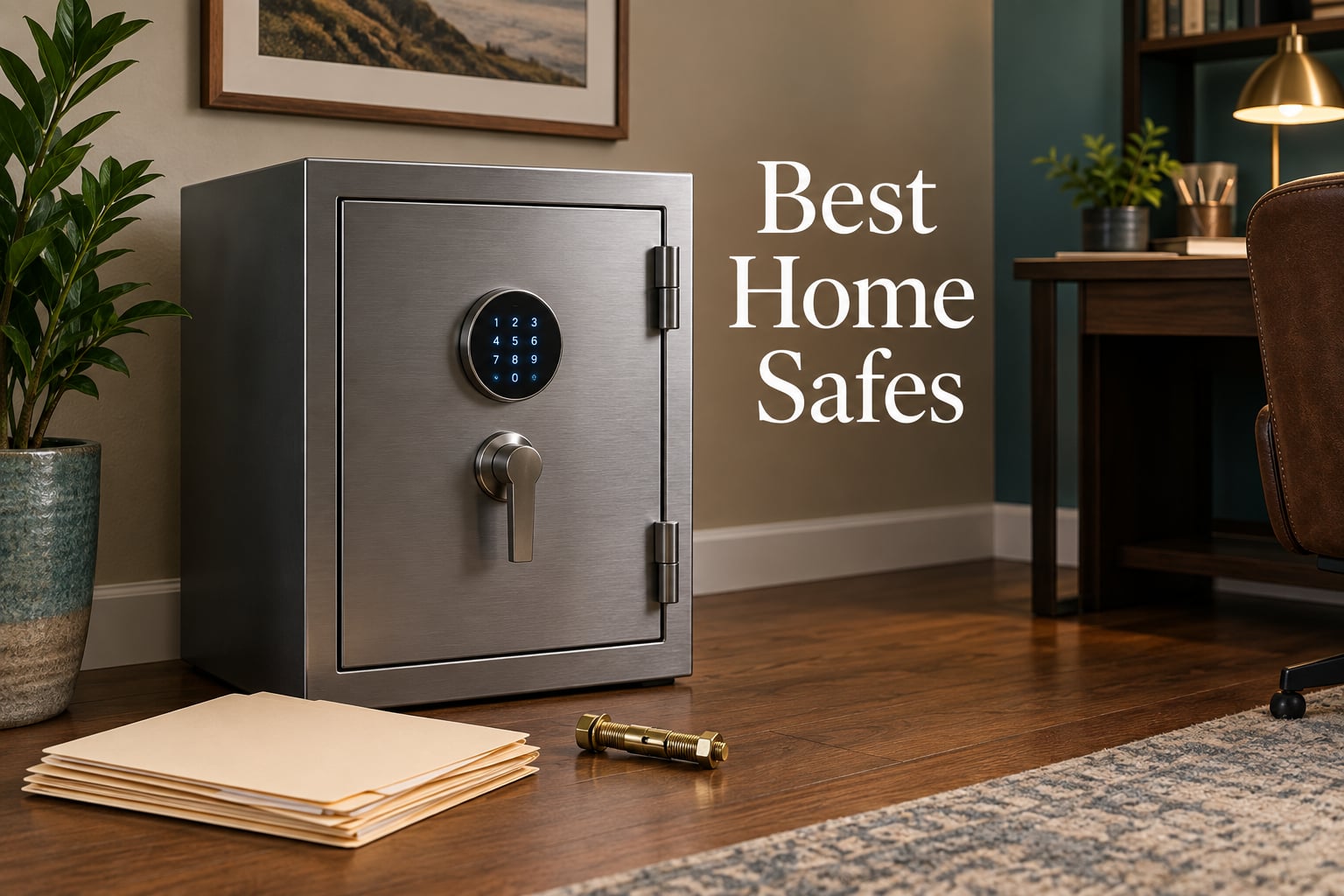
Short answer: the Amazon Basics Steel Home Security Safe Box (1.8 cu ft) is the best home safe for most people in 2026, and the SentrySafe SFW123GDC is the one to buy if fire protection is your top concern. Both come from names that show up consistently across owner reviews, and both are honest about what they do and do not stop.
A home safe is a lockable steel cabinet rated to resist fire, water and forced entry, used to store documents, cash, jewelry, firearms and heirlooms inside a residence. Most people buying one are really asking one of three questions: will my deeds and passports survive a fire, will a burglar walk out with my jewelry, or can I keep a firearm away from kids and curious guests. The right answer to any of those is a different safe.
Here is the threat model that shaped every pick below. A low-weight safe with a thin door and a tubular key lock stops a smash-and-grab search, not a prepared thief with a pry bar. A safe weighing 80 pounds and bolted to concrete changes the arithmetic entirely, because now a burglar needs tools, time and noise. A UL Class 350 fire rating matters in exactly one scenario, a house fire, and it does nothing at all against a burglar. Buyers who conflate those two threats routinely overpay for fire insulation they do not need or underbuy on a door they cannot resist.
We compared ten safes across the categories that actually come up in homes: document storage, jewelry and cash, gun storage, biometric access, and small hide-a-key boxes. Every spec quoted here comes from the manufacturer listing or the owner review record, not from marketing adjectives. If a listing says “fireproof” with no minutes and no test temperature, we treat it as unrated. We also read the reviews, because the gap between a spec sheet and a real safe is usually in the hardware nobody photographs.
One note before you start: fitting a home safe into a finished room often matters more than the safe itself. If you are still planning the space, our guide to standing desks for home offices and bookshelves for home libraries covers the same built-in, screwed-down approach that makes anchoring a safe straightforward later.
Table of Contents
Top 3 Best Home Safe Picks in 2026

Amazon Basics 1.8 cu ft Steel Safe
- 8-gauge steel door
- 1.8 cu ft interior
- Electronic keypad with two backup keys

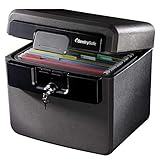
The Amazon Basics 1.8 cu ft box wins this roundup because it combines real steel gauges, a programmable keypad and an unusually large interior for a mid-size unit, and it carries the largest review base here at over 30,000 owner ratings. The SentrySafe SFW123GDC takes the fire protection slot with a genuine one-hour UL rating at 1700F plus ETL waterproof verification. The SentrySafe HD4100 is the document specialist, sized internally for hanging file folders and UL classified for 30 minutes.
Best Home Safes in 2026: Quick Overview
All ten picks, with the award each one earned and the job it does best:
- Best overall: Amazon Basics Steel Home Security Safe Box (1.8 cu ft) – the general-purpose safe for documents, jewelry and cash.
- Best fire protection: SentrySafe SFW123GDC – UL classified 1 hour at 1700F with ETL waterproofing.
- Best for file folders: SentrySafe HD4100 – 30-minute UL rating and an interior built for hanging folders.
- Best for water protection: SentrySafe CHW30220 – ETL verified for 72 hours of submersion in a flat, light box.
- Best value fire-rated safe: Amazon Basics Fire Safe YB-50YLA-F – programmable keypad with a 20-minute Intertek-tested rating.
- Best large capacity: DAYI D-45 – 2.0 cu ft interior, two shelves, a 70-decibel tamper alarm and a bundled fireproof bag.
- Best for quick gun access: TOPMEDA GS202 – 0.1-second fingerprint reads, 100 stored fingerprints, USB-C emergency power.
- Best for handgun storage: ONNAIS IRON PRO – the largest consensus of owner reviews among the biometric handgun safes here.
- Budget pick: Yuanshikj 0.23 cu ft Safe Box – the small cash, card and spare-key box for a dorm, apartment or desk.
- Best for multi-gun storage: Grimtron GM02 – a real 4-slot pistol rack in a 32-pound biometric body.
| Product | Specifications | Action |
|---|---|---|
| Amazon Basics Steel Home Security Safe 1.8 cu ft |
|
Check Latest Price |
| SentrySafe HD4100 |
|
Check Latest Price |
| SentrySafe SFW123GDC |
|
Check Latest Price |
 SentrySafe CHW30220 SentrySafe CHW30220 |
|
Check Latest Price |
 Amazon Basics Fire Safe YB-50YLA-F Amazon Basics Fire Safe YB-50YLA-F |
|
Check Latest Price |
 DAYI D-45 DAYI D-45 |
|
Check Latest Price |
 TOPMEDA GS202 Biometric Gun Safe TOPMEDA GS202 Biometric Gun Safe |
|
Check Latest Price |
 ONNAIS IRON PRO Biometric Gun Safe ONNAIS IRON PRO Biometric Gun Safe |
|
Check Latest Price |
 Yuanshikj 0.23 cu ft Safe Box Yuanshikj 0.23 cu ft Safe Box |
|
Check Latest Price |
 Grimtron GM02 Biometric Safe Grimtron GM02 Biometric Safe |
|
Check Latest Price |
1. Amazon Basics Steel Home Security Safe Box (1.8 cu ft) – Best Overall
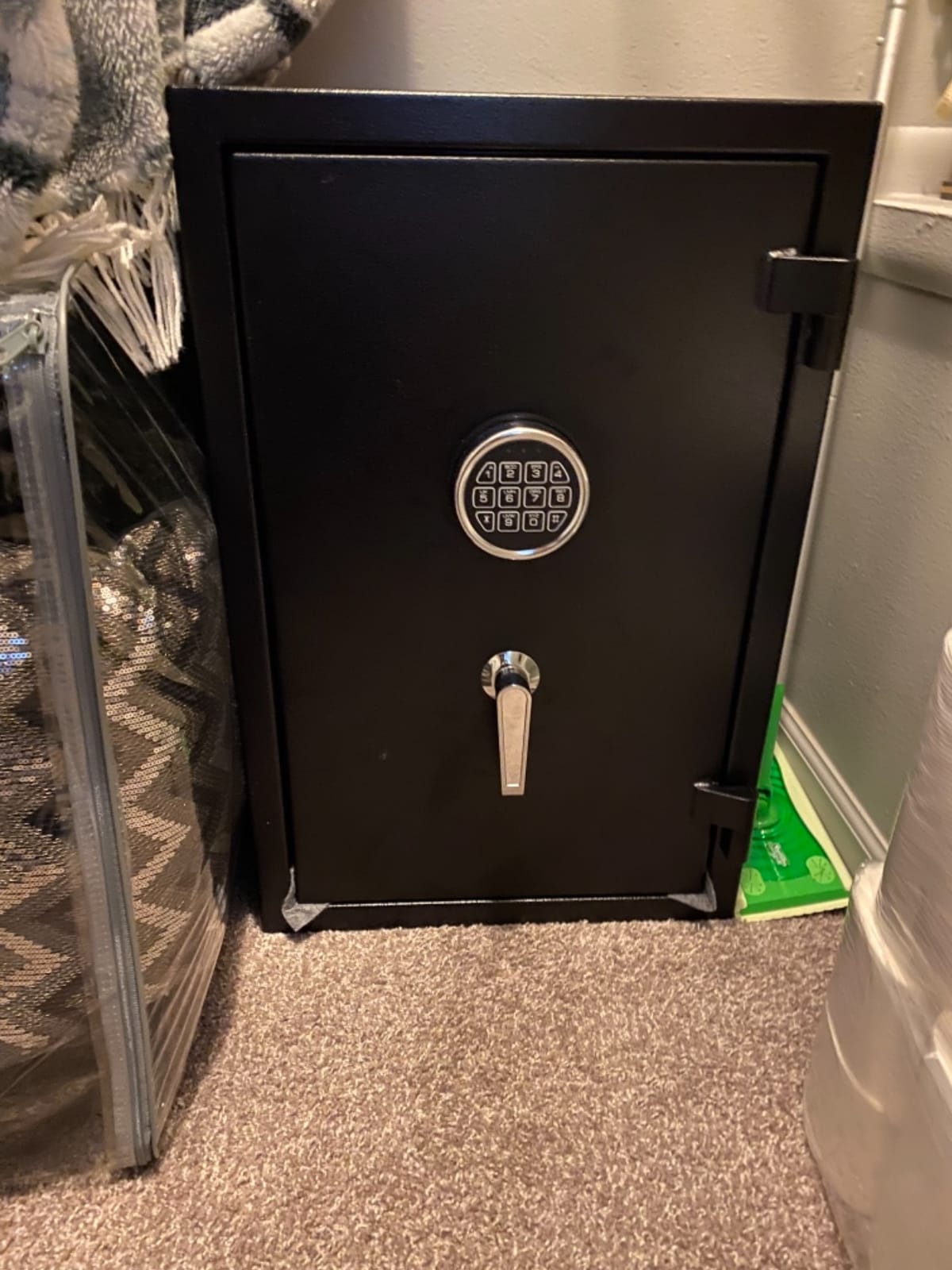
Amazon Basics Steel Home Security Safe Box with Electronic Keypad Lock for Documents, Jewelry, Valuables, 1.8 Cubic Feet, Black, 13.8″W x 13″D x 19.7″H
1.8 cu ft
8-gauge steel door
14-gauge body
37.5 lb
Keypad plus two backup keys
Pros
- Largest review base in this roundup at 30000+ ratings
- 8-gauge door and 14-gauge body at this weight class
- Programmable keypad with two physical backup keys
- Pre-drilled mounting holes and hardware included
- Roomy interior with a shelf for folders and binders
Cons
- No fire or water protection of any kind
- Light enough to be carried away if unanchored
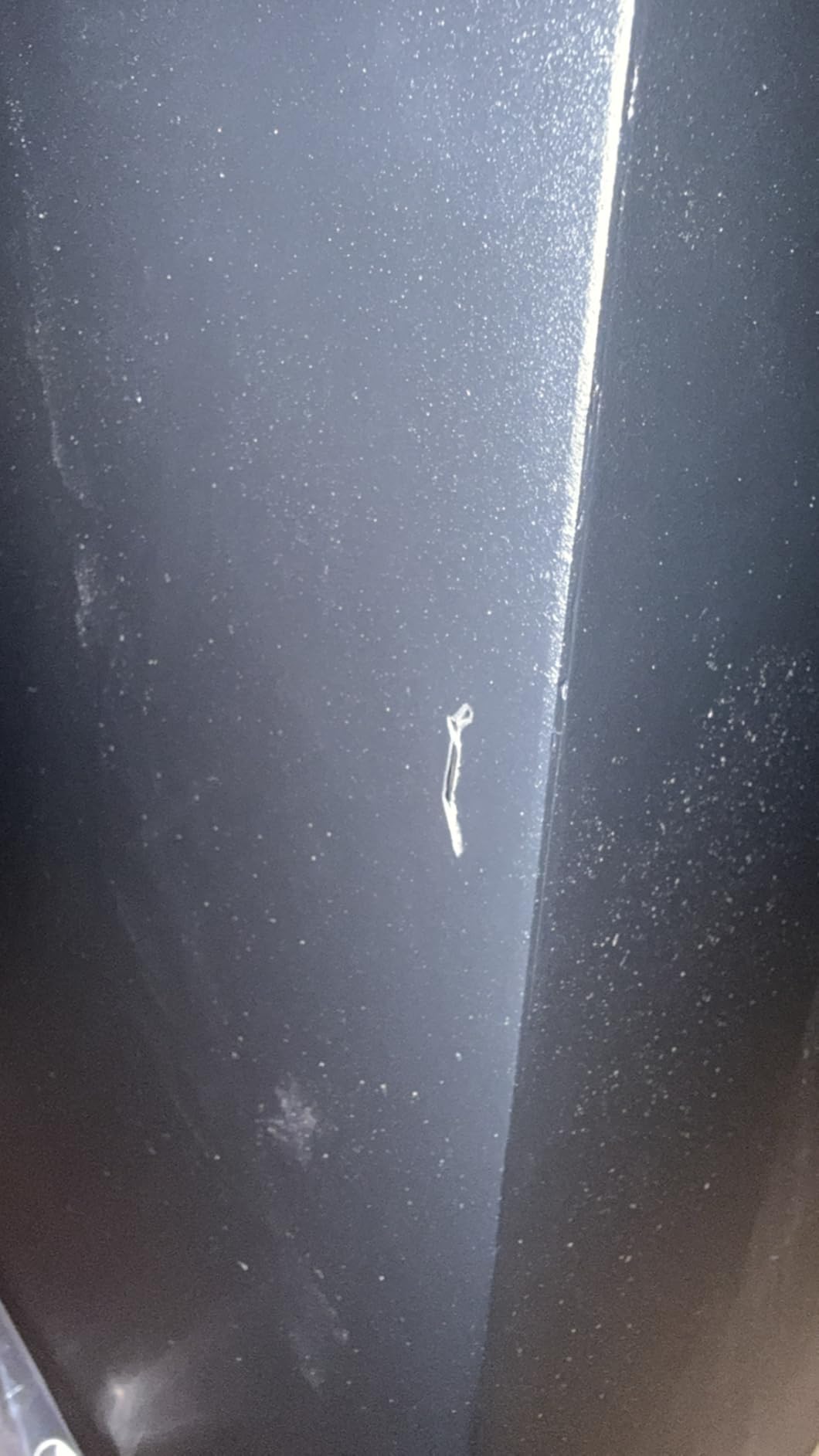
- Supplied anchoring screws are weak in masonry
- Some keypad and electronics failures reported
This is the safe I recommend to a friend who has one safe to buy. The steel specification is the part that matters: an 8-gauge door and a 14-gauge steel body at 37.5 pounds is heavier construction than most safes in the same size class, and it is why one owner described the security level as a solid five out of ten rather than decoration.
The interior surprised me more than the shell. At 1.8 cubic feet it swallows a ring box, a passport wallet, a small jewelry case and a few bank books, with a shelf to split the load. The keypad is straightforward to program, and owners frequently point out that two physical keys are in the box, which is the difference between a dead battery and a ruined evening.
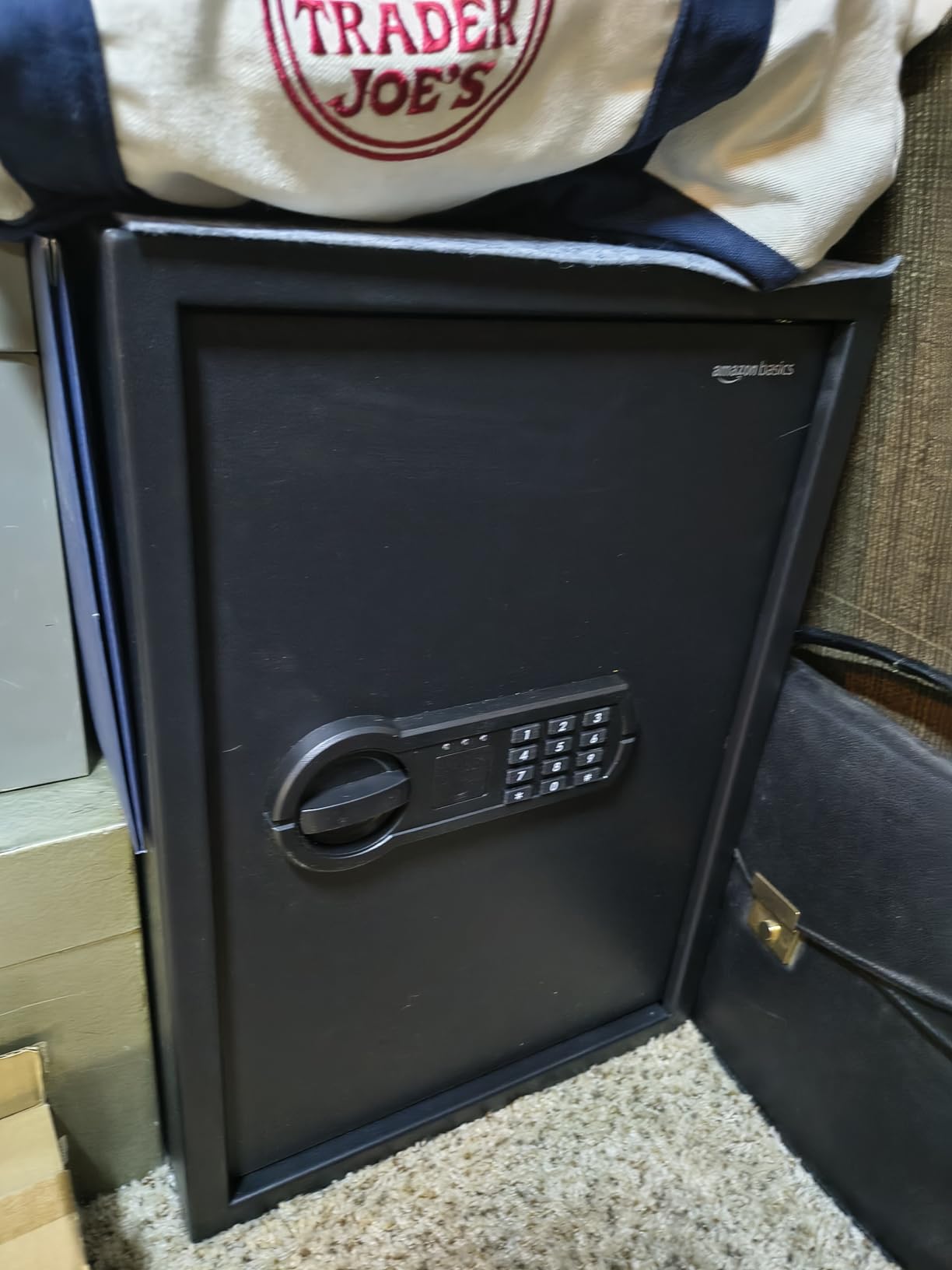
What it does not do is resist fire or water in any way. If a house fire reaches this box, the contents are at the mercy of the response time of your local fire department, and the manufacturer makes no claim otherwise. That is a fair trade for a general-purpose valuables safe, but it is not the pick if you are storing deeds, titles or irreplaceable paperwork.
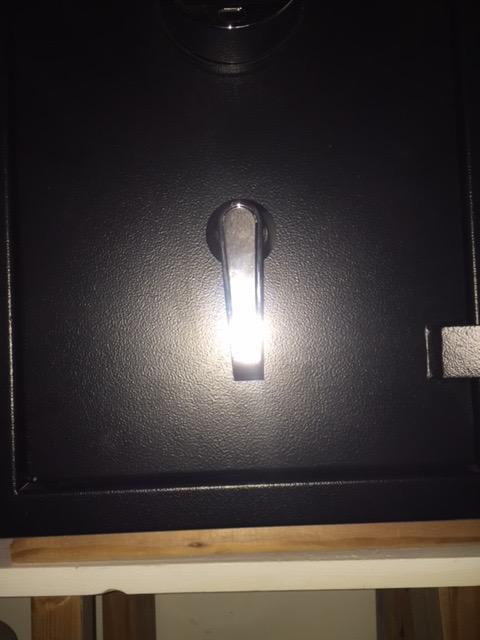
Two practical warnings from the review record. First, the safe weighs 37.5 pounds, which is awkward but not impossible for one person; unanchored, it is a two-handed lift and a thief with a dolly would treat it as a slow grab-and-go. Use the pre-drilled holes. Second, the anchoring hardware included in the box draws repeat complaints for being soft in masonry, so buy proper anchors if you are going into concrete or brick.
What to check before you buy this safe
Measure the swing. The door opens a full 90 degrees and the box needs roughly 14 inches of clearance in front of it, so a closet with a sliding door will not work. Check the floor load as well if you are installing on an upper floor, and confirm the pre-drilled hole spacing matches the anchor plate you intend to use.
Who should skip it
Skip it if paper documents are the priority. There is no fire rating, and no amount of steel changes the fact that documents char in minutes in a structure fire. Pick the SentrySafe SFW123GDC or the Amazon Basics Fire Safe instead.
Also skip it if you want a fingerprint lock. The keypad is the access method here, and there is no biometric option. Anyone who needs instant touch-to-open access should read the two biometric sections further down.
2. SentrySafe HD4100 – Best for File Folders and Documents
SentrySafe Black Fireproof and Waterproof Safe, File Folder and Document Box with Key Lock, 14.3 x 15.5 x 13.5 inches, HD4100
0.65 cu ft
UL 30-minute fire rating
ETL water verified
38.8 lb
Key lock with two keys
Pros
- Genuine UL-classified 30-minute fire protection
- ETL Verified water protection
- Interior fits hanging file folders
- Low profile suits a closet
- office or under a desk
Cons
- Very heavy and awkward to move
- Door gasket can pop out of position before closing
- Plastic front latch takes force to snap
- Interior is narrower than standard manila folders
The reason this safe is on the list is dimensional. The interior measures 12 inches wide by 8.1 inches deep by 11.5 inches high, which is the size a banker’s box expects, so hanging folders hang instead of lying flat. For anyone filing a mortgage, a deed or a set of insurance documents, that single measurement eliminates the frustration of refolding everything to make it fit.
The fire claim is the real differentiator. This box is UL classified to withstand high temperatures for up to 30 minutes, and it is ETL Verified to protect contents during water exposure. That combination of two independent certifications is what separates it from a marketing claim of “fireproof” with no number attached.
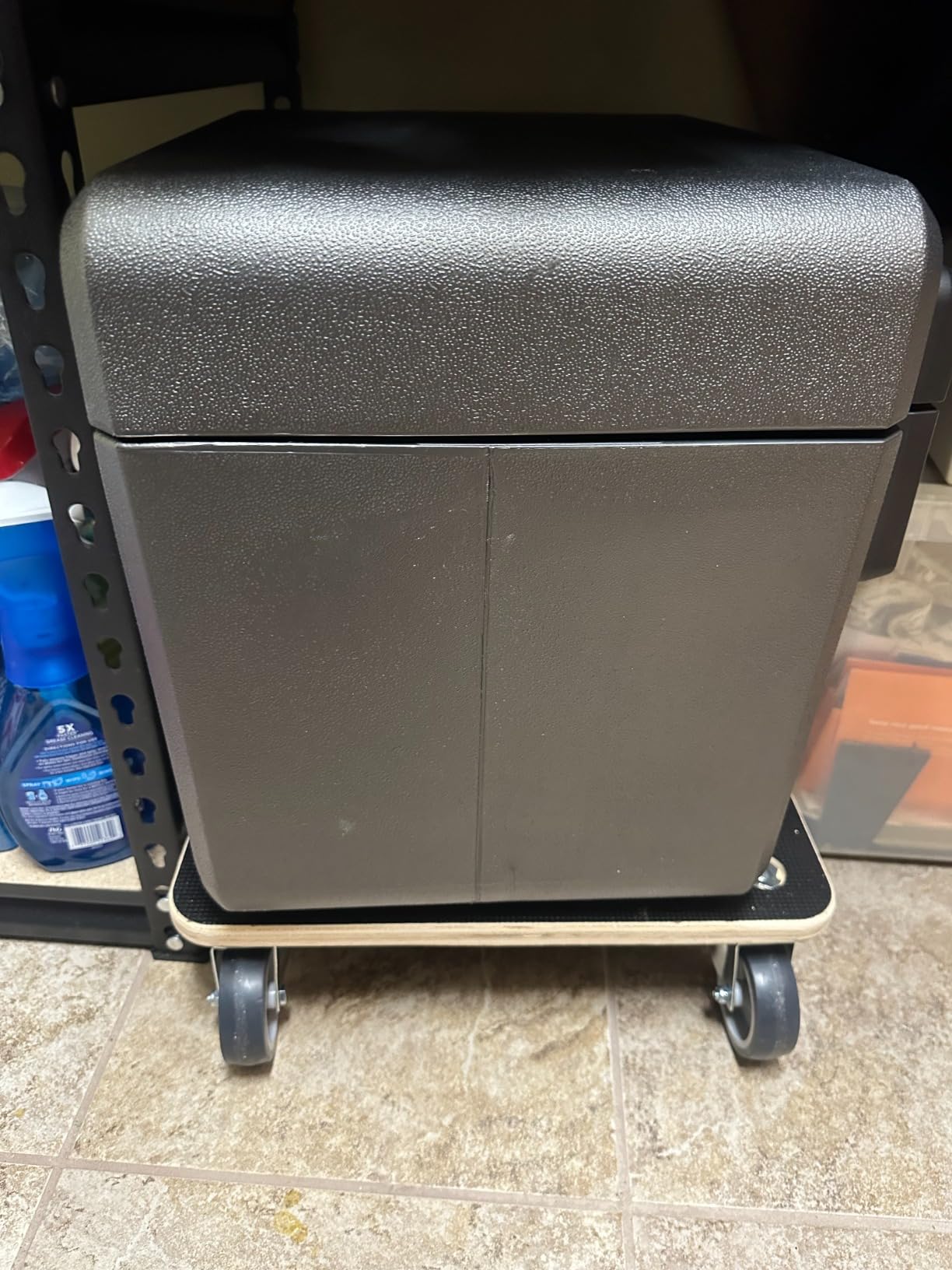
Owners also like the construction. Thick steel walls with fire-resistant composite insulation make it feel closer to a bank deposit box than a sheet-metal cabinet, and SentrySafe customer service resolves issues quickly according to the review record. The elastic straps inside for coins, keys and small items are a small touch that prevents the classic rattle-and-scatter problem.
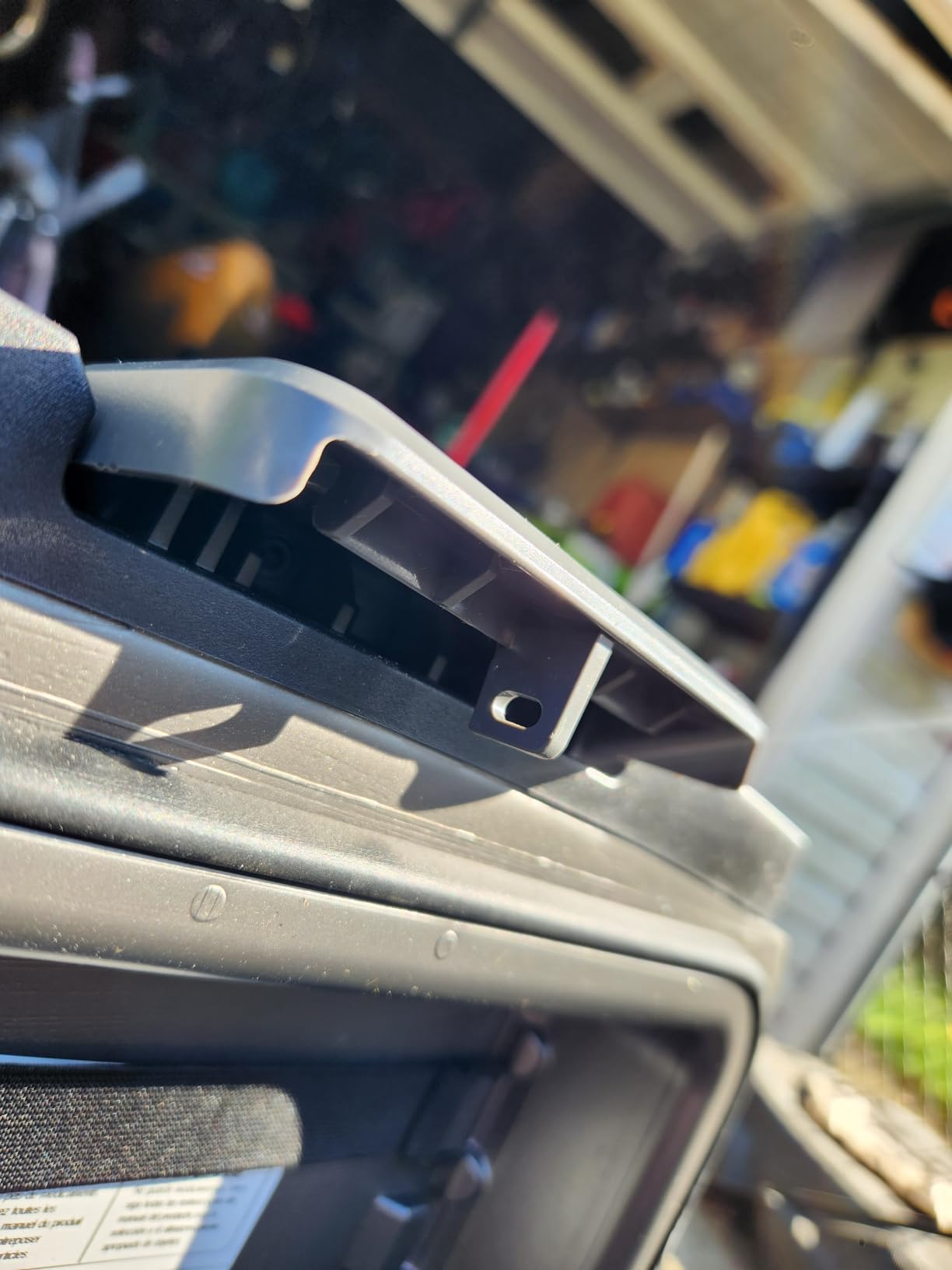
The complaints are physical rather than security related, and they are worth knowing before the box arrives. It weighs 38.8 pounds, which makes stairs a genuine two-person job. The lid gasket can be pushed out of its channel by careless closing, and if you do not reseat it the fire seal is compromised. Several reviewers also note the interior is a few inches narrower than a manila folder, so A4 sheets have to be folded.
How to check the fire rating before you buy
Then measure your documents. A hanging folder plus a stack of paper is roughly 1.5 inches of clearance, and the HD4100’s 11.5-inch interior height leaves room for a real file, not a token one. If you keep legal-size folders, check before ordering.
Who should skip it
Skip it if you plan to move it often. At 38.8 pounds with a wide, awkward profile, this is a permanent fixture rather than something you relocate between rooms. It is also a document safe, not a jewelry safe, with 0.65 cubic feet of space that fills up quickly with paper.
Skip it if you want electronic access. This is a tubular key lock, and reviewers note the key itself is not reinforced against anti-pick techniques. It slows casual theft, which is what a document safe is for.
3. SentrySafe SFW123GDC – Best Fire Protection
SentrySafe Waterproof and Fireproof Alloy Steel Digital Safe Box for Home with Code Button Keypad, 1.23 Cubic Feet, 17.8 x 16.3 x 19.3 Inches (exterior), SFW123GDC
1.23 cu ft
UL 1 hour at 1700F
ETL 24-hour waterproof
86.69 lb
Keypad plus locking key
Pros
- UL classified 1 hour at 1700F
- the strongest rating here
- ETL verified 24 hours of water protection up to 8 inches deep
- ETL verified to survive a 15-foot fire fall
- Four live-locking bolts and a pry-resistant hinge bar
- Locking drawer plus interior light
Cons
- Roughly 87-90 lb
- so moving it needs two people or a dolly
- AAA batteries not included and need periodic replacement
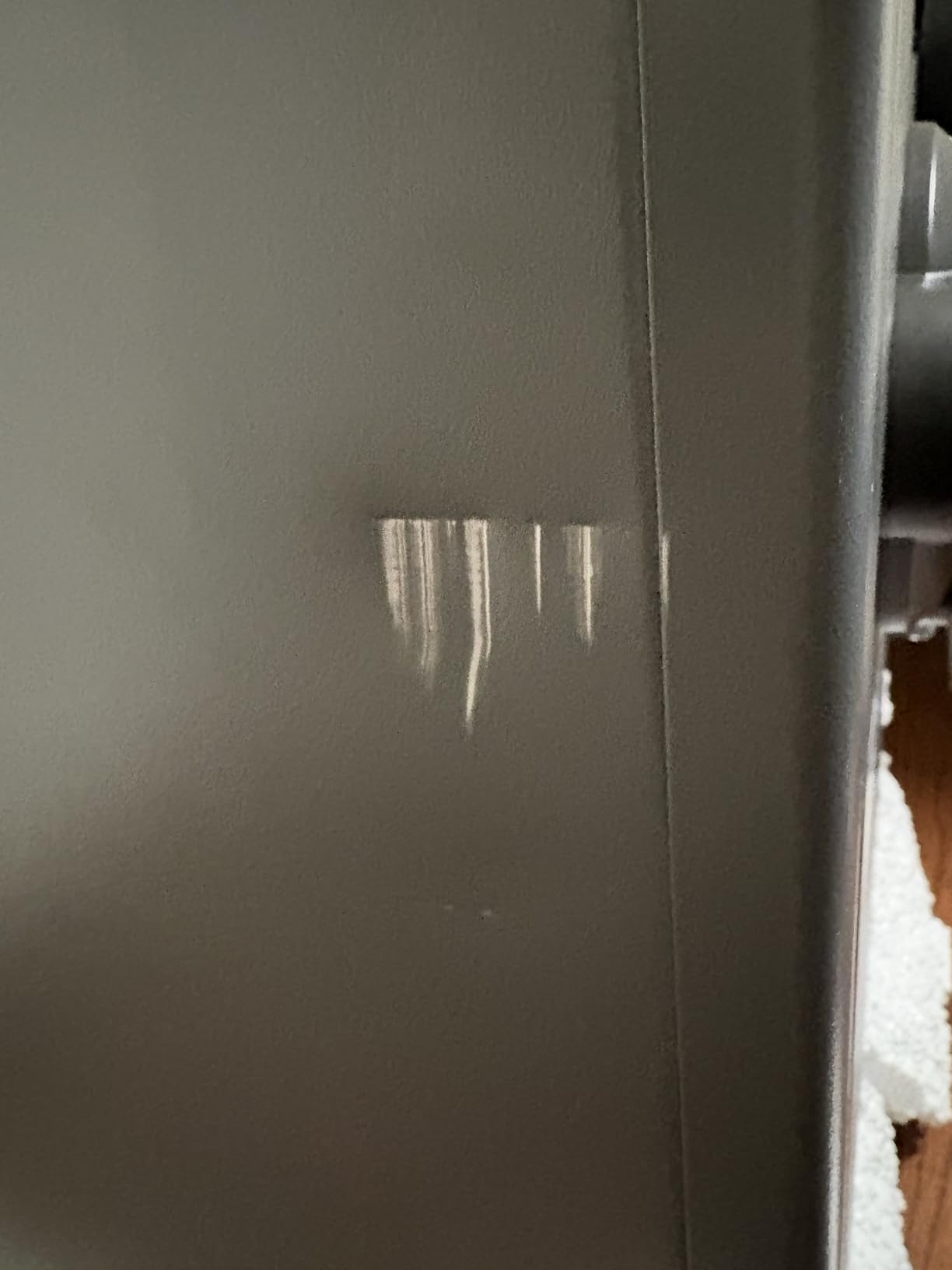
- Gun metal finish shows scratches and fingerprints
- Bolt-down drilling can void the water warranty
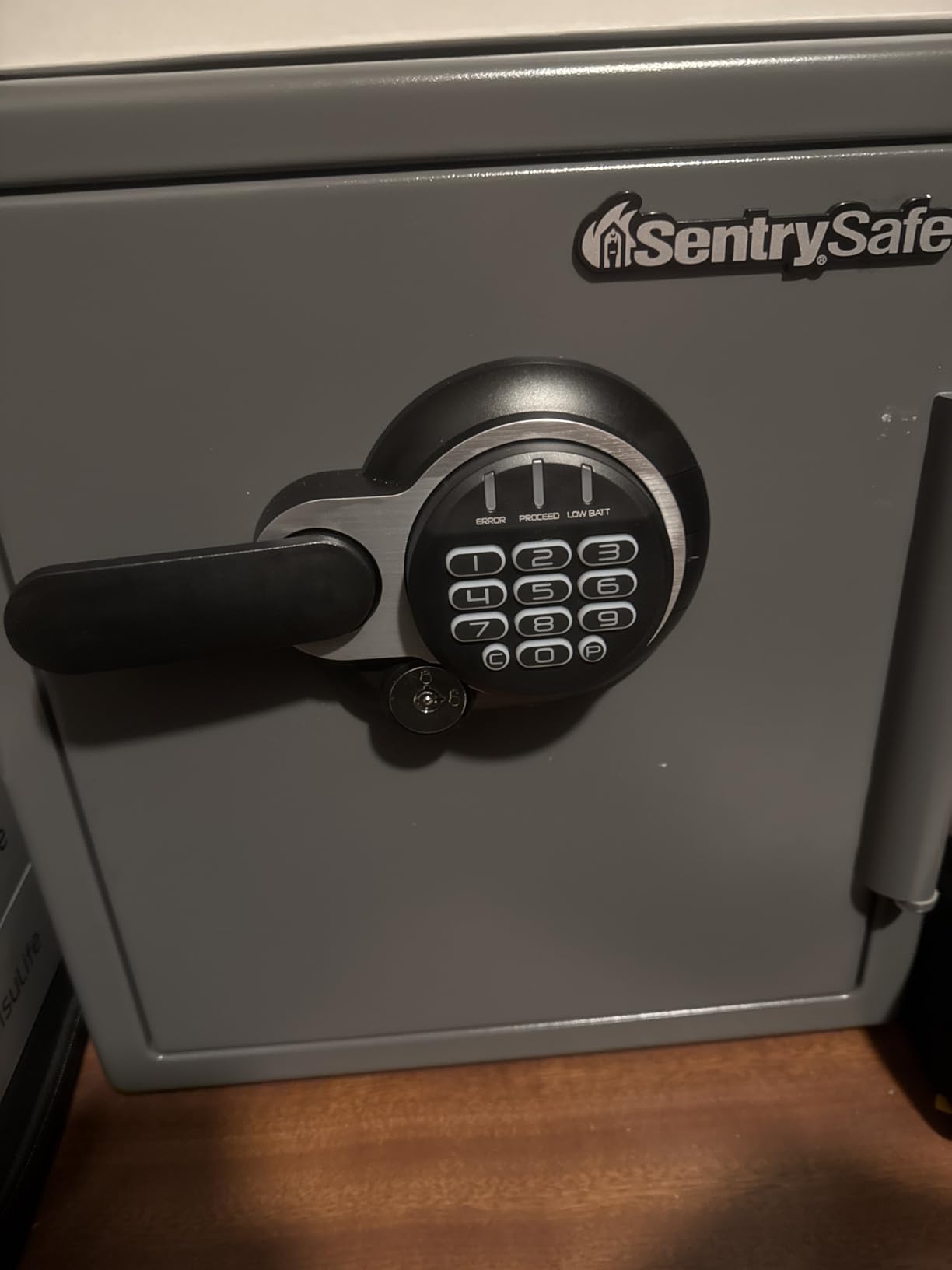
This is the safe for the person whose real fear is a house fire, and the specifications are the reason. UL classified to endure one hour at 1700F, ETL verified for 24 hours of water protection in up to 8 inches of water, and ETL verified to withstand a 15-foot fall during a fire and remain closed. Very few residential safes in any price bracket carry all three.
One hour matters because that is roughly the window between ignition of a room fire and the arrival of a fire crew in a typical residential response. Below that threshold the interior of a properly rated safe stays under 350F, the point at which paper begins to discolor and eventually char. Papers that survive are papers you can actually use to rebuild.
The build supports the rating. Four live-locking bolts, a pry-resistant hinge bar, alloy steel construction and a secondary locking key behind the digital keypad mean a thief faces a steel body and a redundant lock, not a thin door with one mechanism. The locking drawer is the feature owners mention most often as the reason they are happy, and the interior light matters more than it sounds when you are looking for a deed at 2am.
Two caveats matter. The box weighs about 87 to 90 pounds depending on the listing, so plan the delivery route and the door clearance before it arrives; the door needs 14.75 inches of clearance to open fully. And if you anchor it, check the warranty language first. Bolting down certain waterproof models can void the water portion of the manufacturer coverage, which is exactly the kind of fine print that only shows up in customer reviews.
Fire rating minutes versus real risk
Match the rating to your response time. In a dense urban area with a good fire department, 30 minutes is usually workable. In a rural area, a house with a wood stove, or a home with an older relative sleeping in it, an hour is the safer target. Buyers in a hurry often overpay for four-hour ratings they will never use, which is why this is the top fire pick rather than the top-cost pick.
Who should skip it
Skip it if weight is a real constraint. Nearly 90 pounds and a 19.3-inch depth is a two-person job on stairs and a planning exercise for the room. The Amazon Basics box at 37.5 pounds is far easier to place if you are retrofitting an awkward space.
Skip it if you plan to relocate it often, and read the anchoring warranty terms before you drill. Batteries are not included, so budget for a fresh set of name-brand alkaline AAA cells and a replacement habit every six months or so.
4. SentrySafe CHW30220 – Best for Water Protection and Flat Storage
SentrySafe Fireproof and Waterproof Document Safe with Key Lock, Lock Box for Cash, Passport, Jewelry, Exterior: 16.5 in W x 14.8 in D x 7.6 in H, Black, 0.36 Cubic Feet, CHW30220
0.36 cu ft
UL 30 min at 1550F
ETL 72-hour water rating
24 lb
Flat alloy steel body
Pros
- ETL verified for 72 hours of water submersion
- UL classified 30 minutes at 1550F
- Only 24 lb so it moves between rooms alone
- Flat interior holds A4 paper without folding
- Internal straps organize small valuables
Cons
- Key-only lock with no electronic entry
- Small 0.36 cu ft interior
- Easy to spot and lift if not secured
- Functional rather than decorative finish
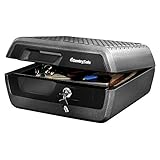
The distinguishing spec is the water rating. This box is ETL verified for 72 hours of water submersion, the longest such figure attached to any safe in this roundup. If your concern is a burst pipe, a failed sump pump or a sprinkler head rather than a burglar, that number is the whole argument.
The fire side is a UL classification for 30 minutes at 1550F. That is a lower test temperature than the SFW123GDC, and it maps to a shorter safe window, but it is a real certified figure rather than an adjective, and for documents kept in a cabinet rather than a dedicated fire room it is a sensible trade for the flat footprint.
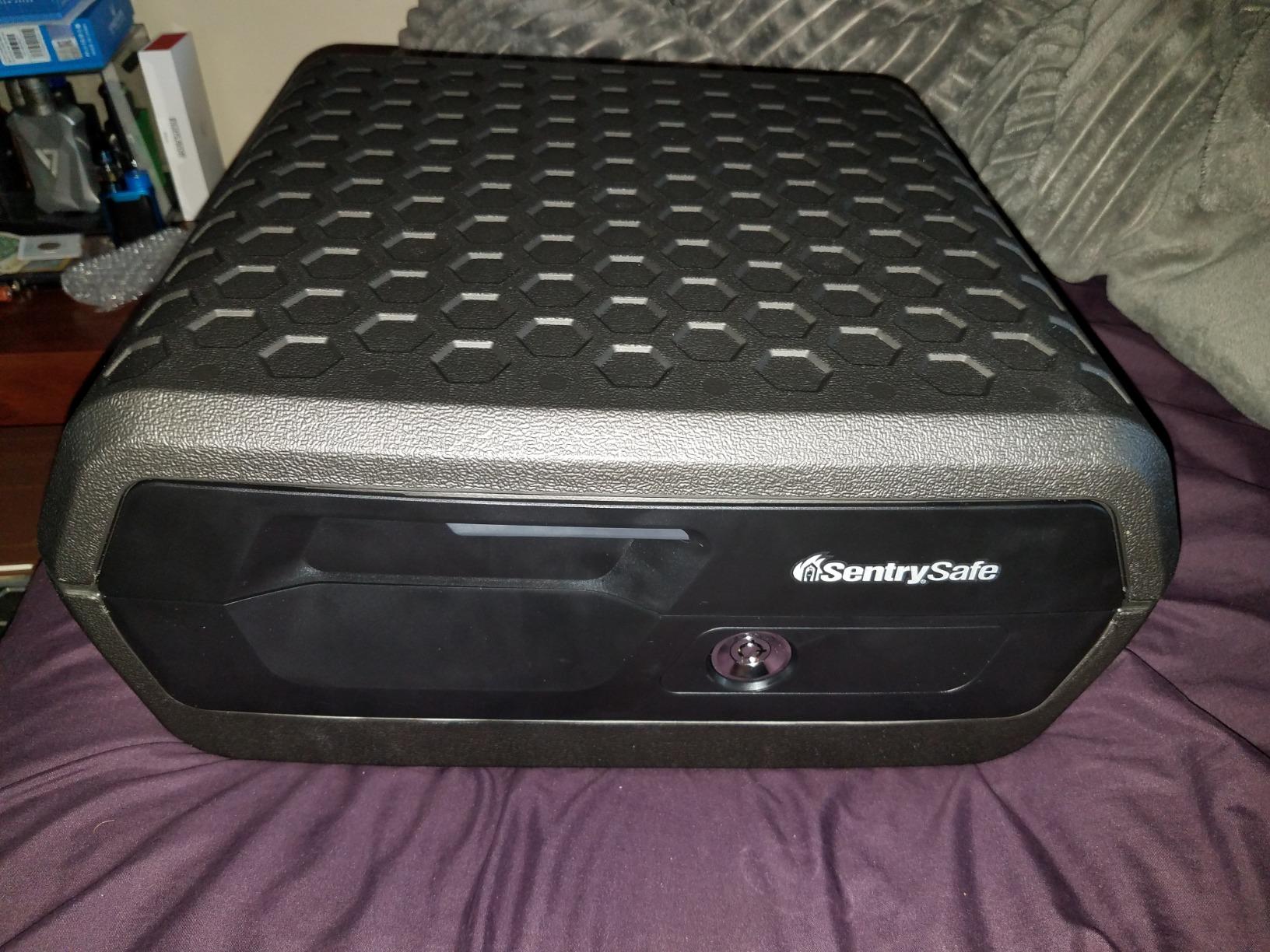
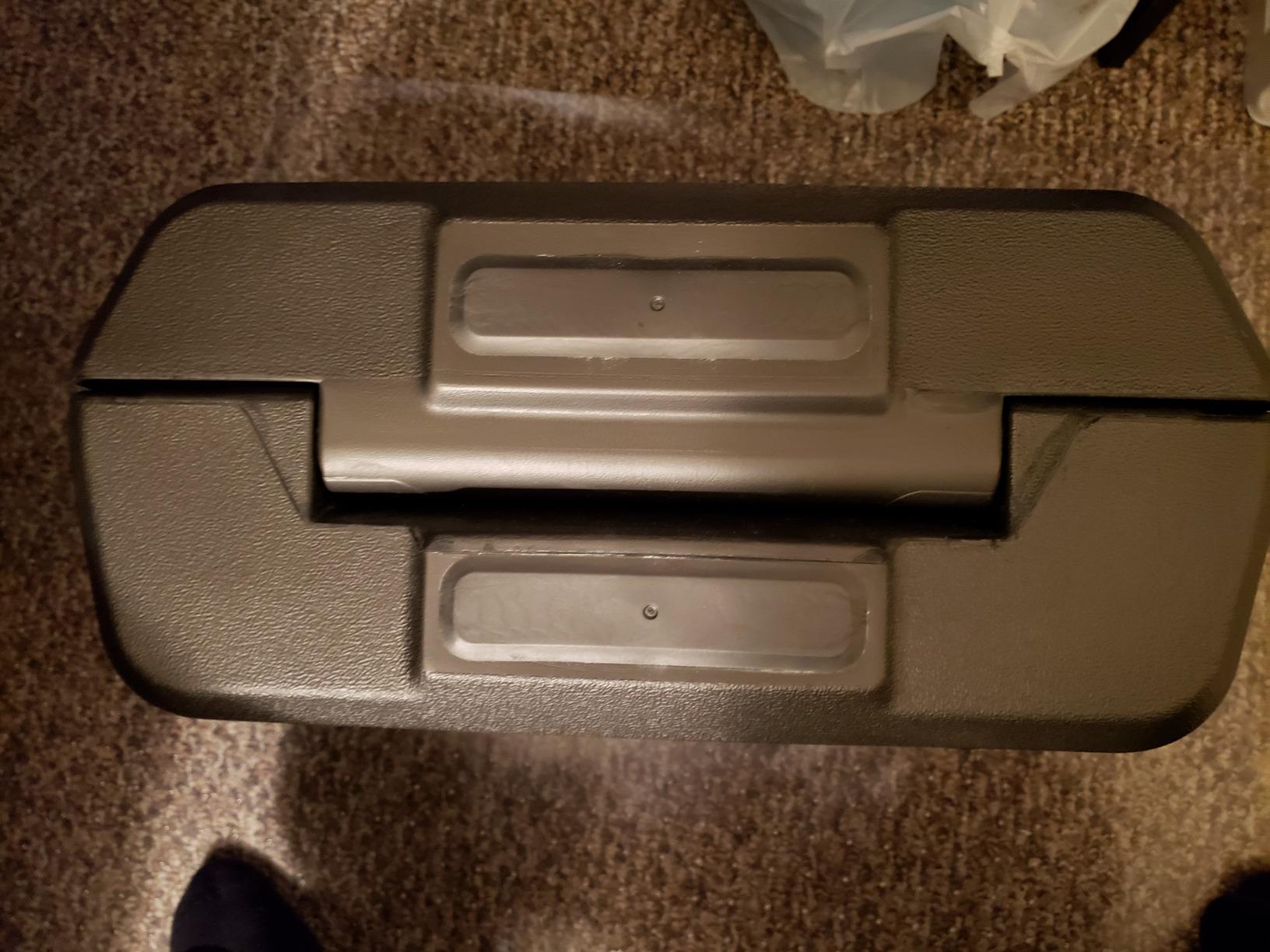
At 24 pounds this is the only fire-and-water-rated box here you can carry between rooms by yourself, which matters enormously in a rental or an apartment where the storage location may change. The flat interior at 12.6 by 9.2 by 5.4 inches holds passports, birth certificates and cash without the folding that owners complain about in the HD4100.
Be clear about what it is not. The tubular key lock means a lost key is a real problem, and there is no keypad. The low-profile lid design also means it is easy to identify as a safe, so it needs to be placed discreetly rather than left in the open.
Where this box belongs
Put it at the lowest point in the house that still counts as dry, not the lowest point that exists. A basement safe in a flood zone is a document bag with extra steps, no matter how many hours of submersion the ETL test covers. Placed on a bedroom closet shelf or a hall cabinet, it protects against the two most common sources of water damage in a home, which are plumbing failures and sprinkler discharge.
Who should skip it
Skip it if you are storing a jewelry collection. At 0.36 cubic feet, there is room for a few pieces and nothing more, and the low profile offers no way to organize them. That is a job for the DAYI D-45 or the larger Amazon Basics box.
Skip it if you want a theft deterrent. At 24 pounds, with a key lock and a low, recognizable profile, this is a protection-from-fire box rather than a protection-from-burglary box. Pair it with a concealed location rather than relying on the lock alone.
5. Amazon Basics Fire Safe (YB-50YLA-F) – Best Value Fire-Rated Safe with a Keypad
Amazon Basics Fire Safe with Programmable Electronic Keypad, 1.24 Cubic Feet, 14-Gauge Steel, UL 72 Compliant, 14.2″W x 13.8″D x 19.7″H, Black, for Documents and Valuables
1.24 cu ft
20 minutes at 1200F per UL 72
14-gauge steel
67 lb
Five 0.75-inch bolts
Pros
- Fire-rated body paired with a fully programmable electronic keypad
- Intertek tested to a modified UL 72 standard
- Five large 0.75-inch locking bolts
- 14-gauge steel body
- Adjustable shelf and backup key included
Cons
- 20-minute rating is short next to a one-hour safe
- Battery not included so the keypad is dead on arrival
- Not water resistant
- Keypad can be finicky to program
This safe occupies a gap most roundups ignore: a fire-rated body with electronic entry at a mid-range weight. The certification is Intertek testing against a modified UL 72 standard for 20 minutes at 1200F. That is a genuine third-party test with a number attached, which puts it in a different category from the many listings that simply say fireproof.
The hardware is the other half of the story. A 14-gauge steel body with five large 0.75-inch locking bolts is a genuine step up from the thin-sheet safes in the small box category, and the 67-pound weight means it is not a casual carry-away item. The adjustable shelf makes the 1.24 cubic foot interior work harder, and a backup key is included for dead batteries.
Where it falls short is duration, and the manufacturer is not coy about it. Twenty minutes at 1200F is well short of the one-hour rating on the SFW123GDC, and in a slow-burning fire that difference can be the whole outcome. Owners looking for the longest possible survival window should step up a section.
Two smaller gripes recur. The battery is not in the box, so the keypad does nothing until you add cells. And the fire rating is written for paper-type contents; it is not a promise for electronics or for anything that degrades with heat.
Is a 20-minute fire rating worth paying for
Yes, if the realistic fire in your area is slow-burning and your documents are in a cabinet. UL 72 and UL 350 are different standards, and the modified UL 72 figure here is a shorter, lower-temperature test. Treat it as meaningful protection rather than a guarantee, and back up irreplaceable papers digitally in a cloud vault regardless.
Who should skip it
Skip it if you need serious fire survival time, a flood risk, or a large jewelry collection. It is not water resistant, and 1.24 cubic feet disappears quickly once a few ring boxes are in it.
Skip it if you dislike programming a keypad. Owners report the touchpad takes practice to set up, and the manual override is a small key rather than a mechanical handle, so store that key somewhere sensible.
6. DAYI D-45 (2.0 cu ft) – Best for Large Capacity and Alarm Features
DAYI Safe Box, 2.0 Cu. Ft. Home Safes with Fireproof Bag for Valuables Docs
2.0 cu ft
33.1 lb
70-decibel tamper alarm
4 bolts of 1.2 inch
Keypad plus two keys
Pros
- Largest interior here at 2.0 cu ft with two removable shelves and hooks
- Only safe in this roundup with a built-in 70-decibel alarm
- Four-layer fireproof and waterproof document bag included
- Backup battery box and two physical keys
- Integrated LED sensor light
Cons
- The safe body is not fireproof
- reported steel is thinner than the listing suggests
- Wide hinge-side door gap invites a pry tool
- Light enough at 33 lb to be carried away unanchored
Capacity is the pitch here. At 2.0 cubic feet this is the largest interior in the roundup, and it is the only pick with a built-in 70-decibel alarm that trips after three incorrect codes or a forced breach. That alarm is a real deterrent feature for a safe sitting in a bedroom or an office, because noise does more to end a burglary than steel does.
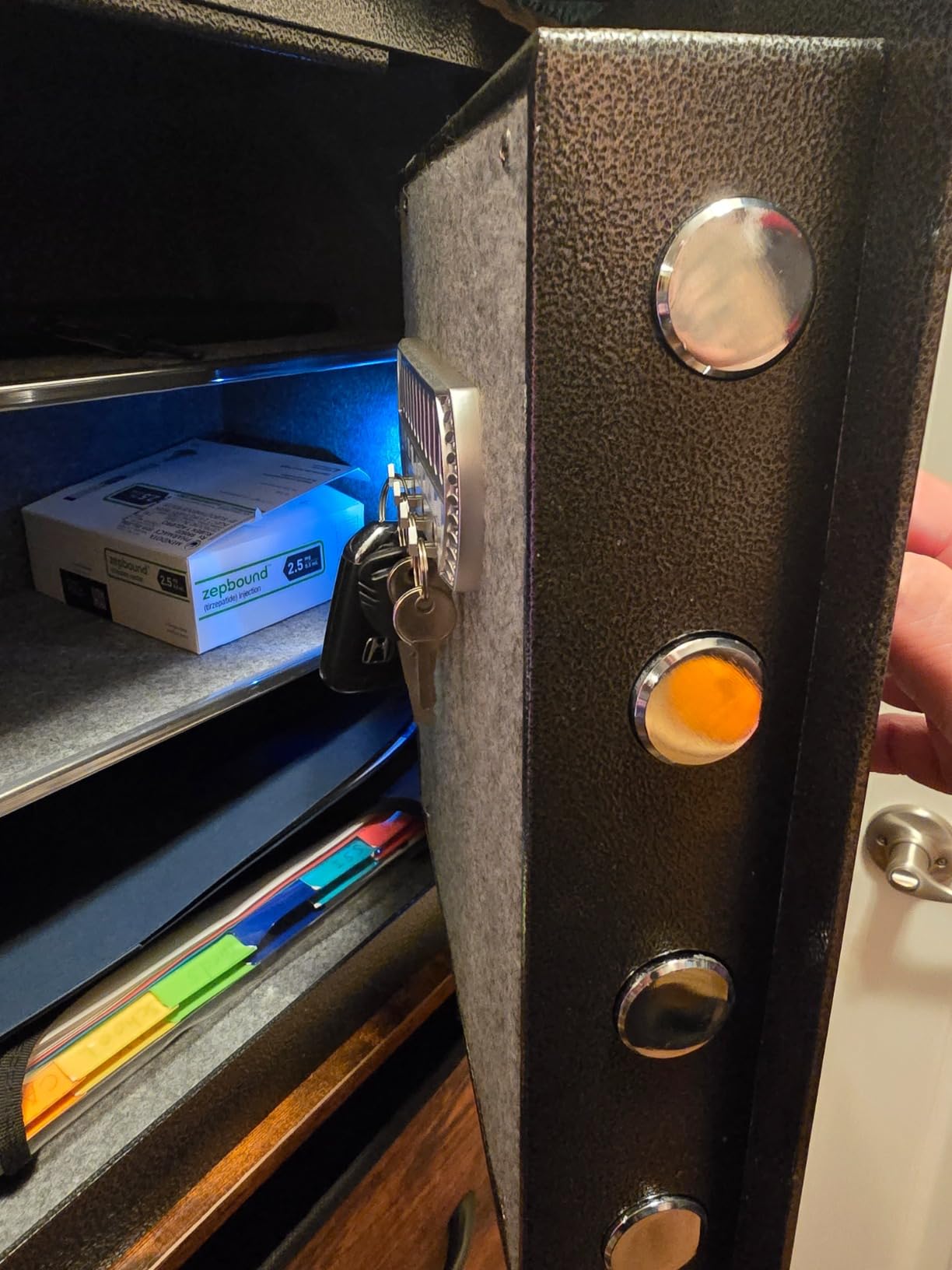
Owners also like the completeness of the package. Two removable shelves, built-in hooks, a carpet-lined interior and an integrated LED sensor light that comes on when you open the door. The bundled four-layer fireproof and waterproof document bag is worth noting carefully, because it is the only fire protection in this product at all.
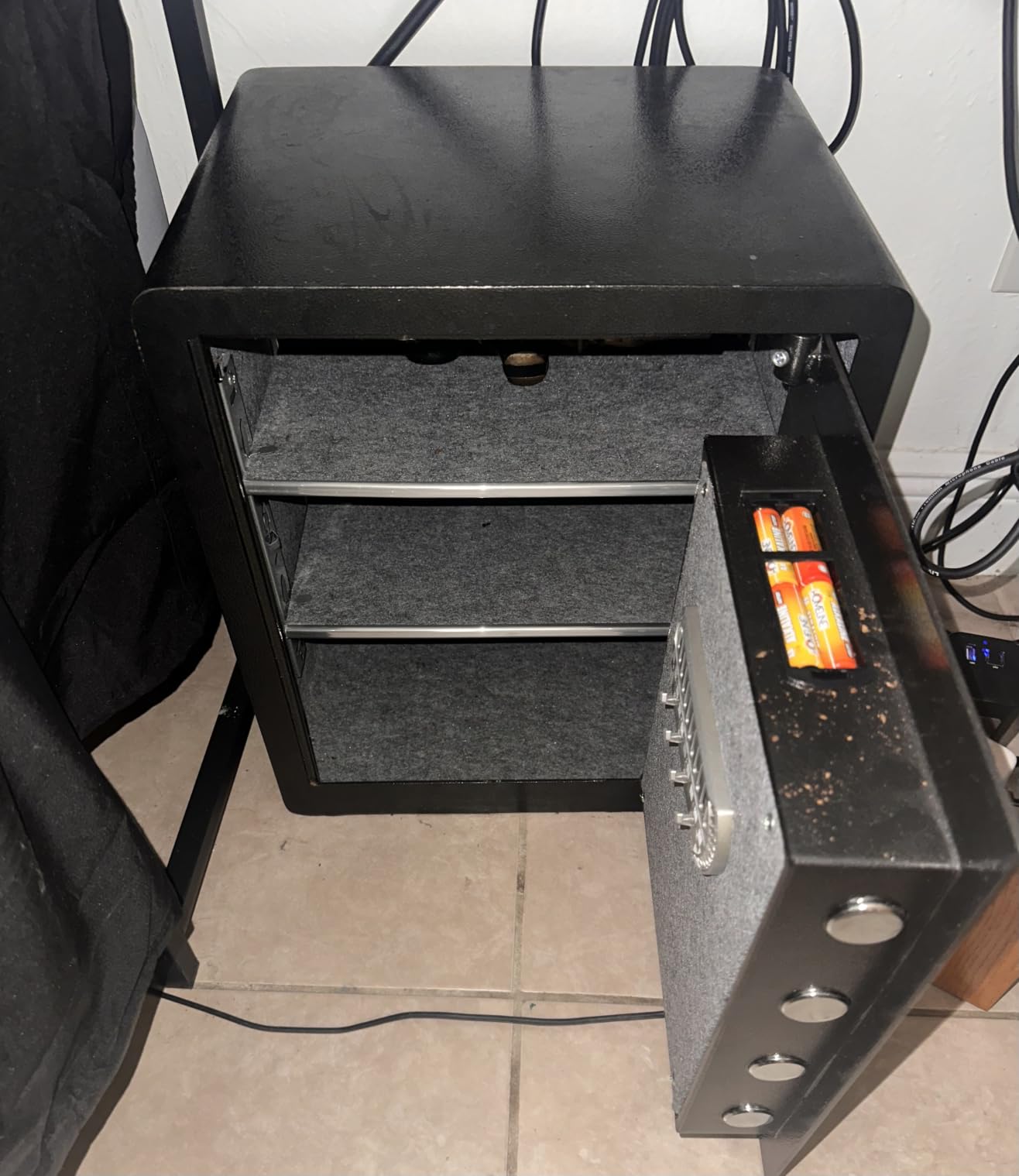
It also includes an external backup battery box and two physical keys, which removes the most common biometric and keypad failure mode: a dead cell and a locked safe. That is a smarter design than many safes at twice the weight.
The honest criticism is construction. Buyers who have measured it report roughly 1.5 mm body steel and a 3 mm door, thinner than the listing implies, and they note a wide gap on the hinge side that a pry tool can enter. At 33.1 pounds it also needs anchoring to be more than a carry-off object. One recurring complaint is a backup key that does not turn a full 90 degrees and will not release the lock.
Is the included fireproof bag enough
For a folder of documents, yes. The bundled four-layer bag is a reasonable secondary layer, and combined with the alarm it makes this a sensible pick for someone whose priority is visible, audible deterrence in a small room. It is not a substitute for a UL-rated safe if irreplaceable papers are the priority.
Who should skip it
Skip it if fire protection is the point. The manufacturer does not claim the body resists fire, and a bag inside a non-rated box is a compromise rather than a rating. Skip it if you want a flush, zero-gap door fit or if you can measure the steel and want heavier gauge.
Renters should note that the wall mount requires drilling. Mounting hardware is included, but the box itself is light enough that a determined person could take it and the anchors with it.
7. TOPMEDA GS202 Biometric Gun Safe – Best for Quick Access
TOPMEDA Large Biometric Gun Safe for Pistols, 100 Sets of Fingerprint Handgun Safe with Internal Light & Silent Mode, Gun Lock Box for Home Bedroom Bedside Nightstand and Car, AA batteries
260 cu in
8.8 lb
100 fingerprints
0.1-second unlock
USB-C emergency port
Pros
- Fastest fingerprint reader here at about 0.1 seconds with up to 100 prints
- Three access paths: fingerprint
- PIN and key
- USB-C port opens it when batteries die
- Fits a car
- drawer or nightstand
- Spring-loaded lid opens the instant access is granted
Cons
- Advertised pistol capacity is optimistic
- mostly one or two fit
- PIN limited to digits 1-6
- Thin top shell
- no fire or water rating
Where this safe wins is speed and flexibility. It stores up to 100 fingerprints, reads in about 0.1 seconds, and the self-learning scanner improves with regular use. Owners who have used it describe it as the fastest box they have owned, and the spring-loaded lid popping the instant access is granted is the detail that makes it feel like a different category of product.
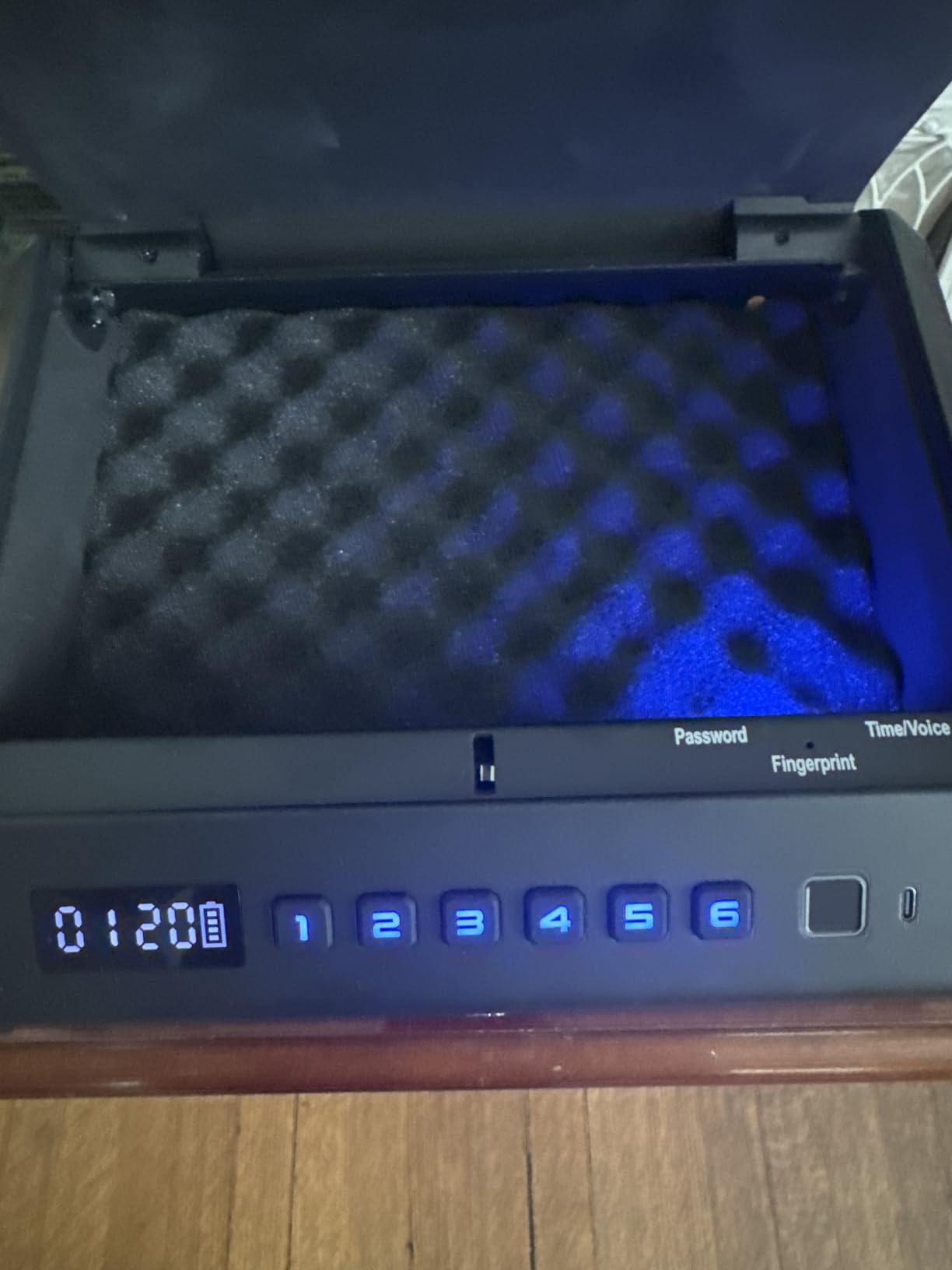
Three access methods matter in practice. Fingerprint for daily use, a PIN keypad when a finger is wet or dirty, and two physical keys as the last resort. The emergency USB-C port is the detail that separates this from cheaper biometric boxes, because a dead battery stops being a crisis.
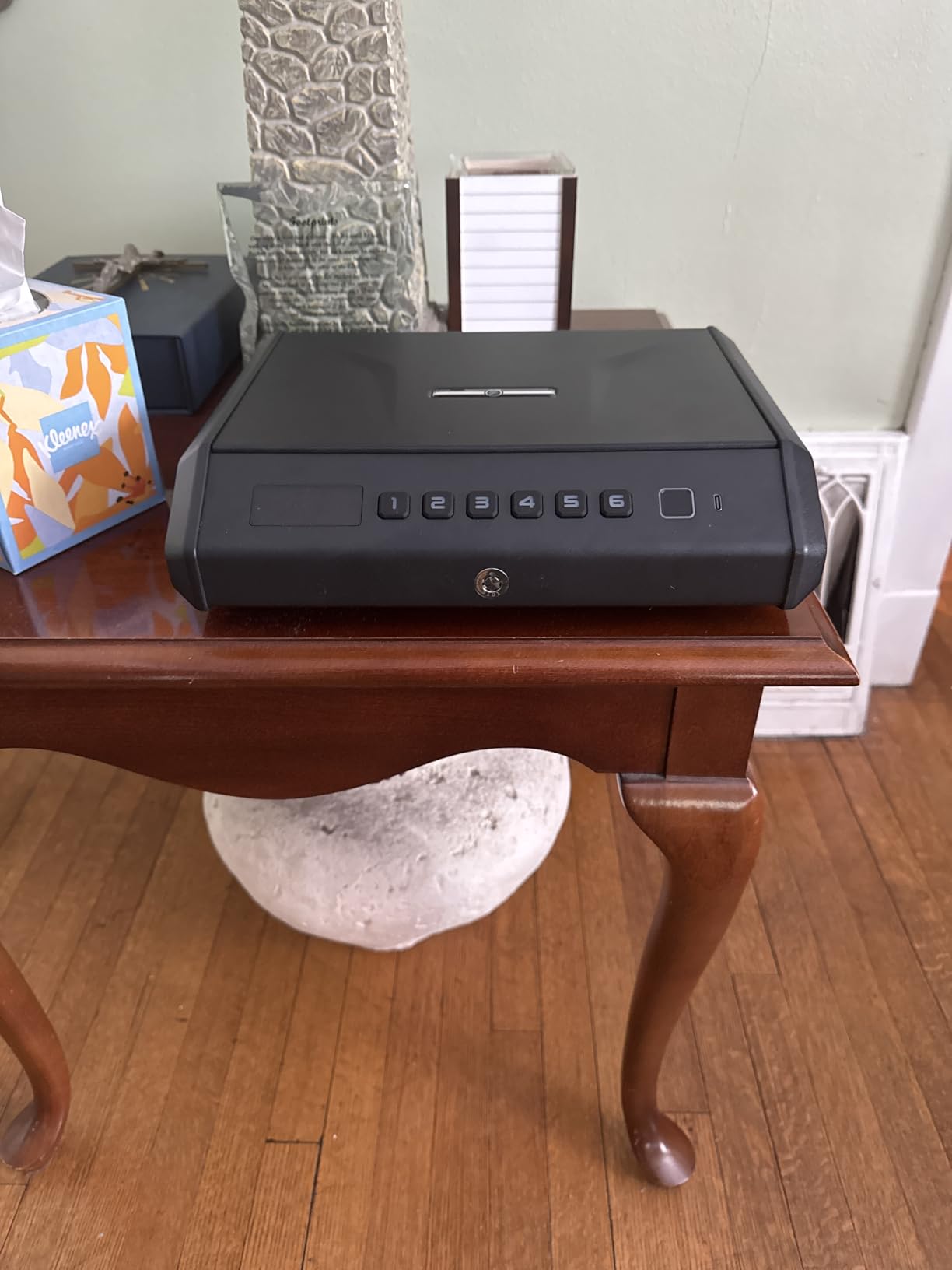
Several owners cite it as a child-proofing measure for a nightstand, which is a legitimate use given the storage format. A padded adjustable anti-scratch lining protects the finish of the firearms, the LCD shows time and battery level, and silent mode keeps it usable in a bedroom.
The clearest complaint is capacity. Owners report fitting one or two full-size pistols with magazines, well short of what the listing suggests, and the PIN can only use digits 1 through 6, which limits real code choices. There is also no fire or water rating despite one owner reporting the unit survived a house fire with two guns inside, which is an anecdote rather than a certification.
Fingerprint reliability and dirty fingers
Every biometric scanner in this category struggles with a dry fingertip, a cut or a scab, and the fix is consistent: program more than one finger per person, and keep the sensor surface clean. The diamond-like coated glass on this unit is easier to wipe than the matte sensors on cheaper boxes, which shows up in the long run.
Who should skip it
Skip it if you need more than a couple of firearms. A 12.5 by 10.5 inch interior with 2.76 inches of height is a one or two pistol space, and the interior gets tight fast once magazines are loaded. Owners with a collection should read the Grimtron section.
Skip it if resistance to power tools matters, or if you need fire or water protection. At 8.8 pounds with a thin top shell, this deters opportunistic access and curious children, not a determined attacker.
8. ONNAIS IRON PRO Biometric Gun Safe – Best for Handgun Storage
ONNAIS Iron PRO Biometric Fingerprint Gun Safe for Handgun with Keypad Lock
9.17 by 3.07 by 2.91 in
Alloy steel
Holds 2 pistols
Fingerprint plus keypad plus key
Pros
- Largest consensus of owner reviews among the biometric handgun safes here at 8400+
- Fingerprint scanner with keypad unlock as a backup
- Low-profile body fits a nightstand
- car or drawer
- Switchable interior light
- Protective padding and security cable included
Cons
- Sized for only two standard pistols
- No silent mode on the fingerprint reader
- Small interior leaves no room for magazines
- No fire or water rating of any kind
This is the biometric handgun safe with the largest body of owner feedback in the group, and that matters more than any spec line when you are trusting a lock with a firearm. Over 8,400 reviews at a 4.6 average is the kind of sample size that surfaces real defects, and the recurring picture is a box that opens fast and opens reliably.
Access is a three-way redundancy: fingerprint scanner, keypad unlock, and a physical backup key. There is also an emergency USB-C power option for when the battery dies, so the most common failure mode in this category simply does not apply here.
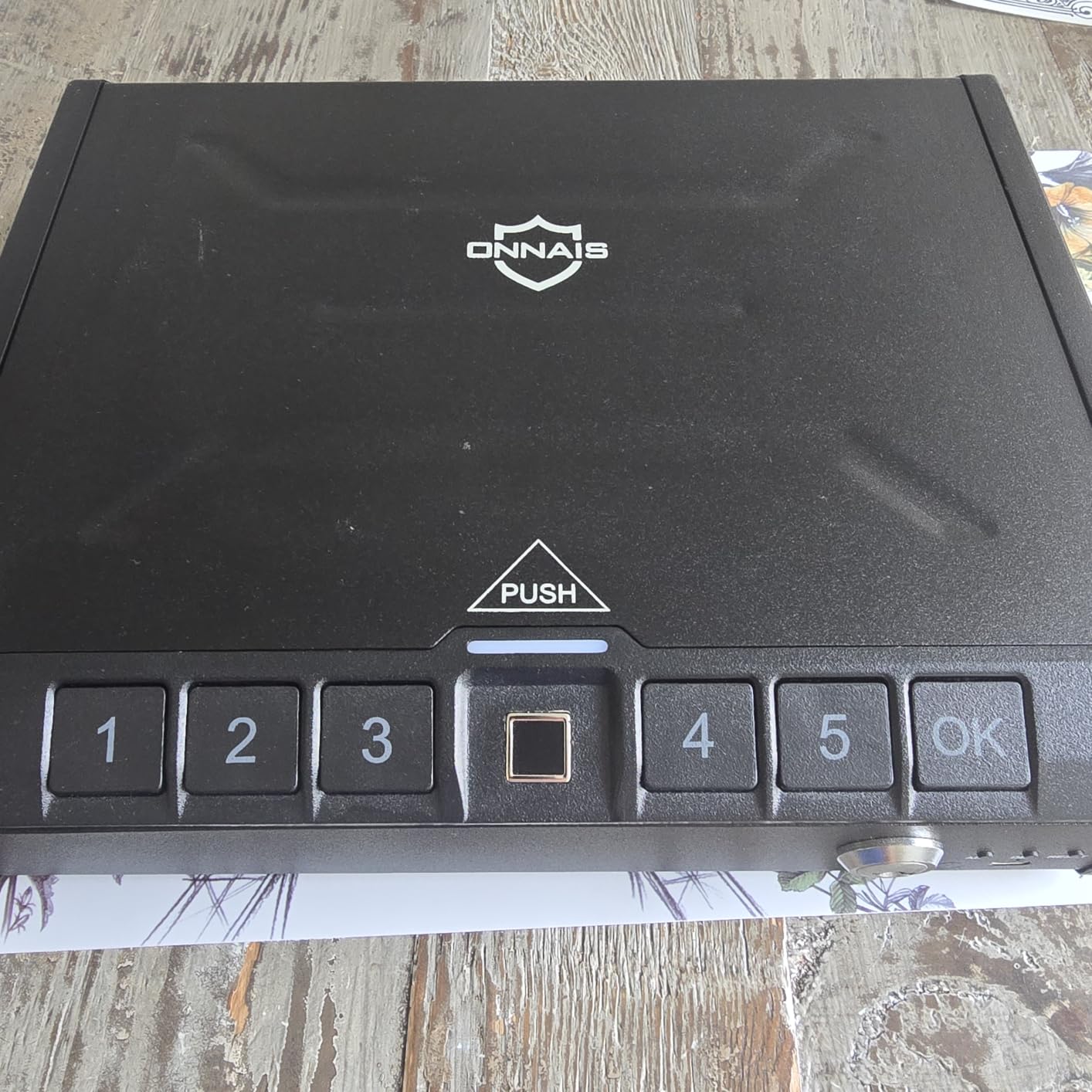
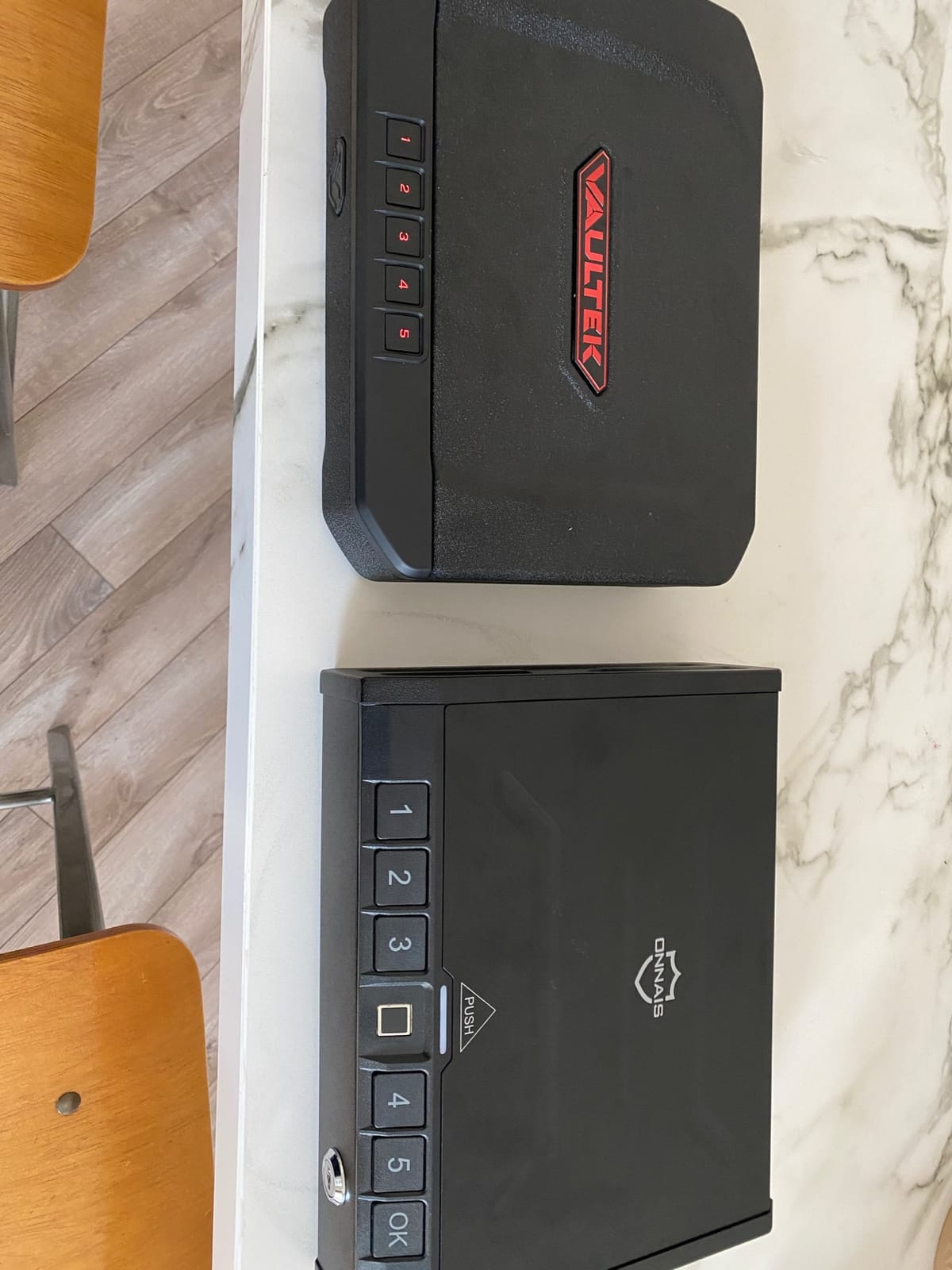
The form factor is the other selling point. At 9.17 by 3.07 by 2.91 inches it is low and narrow, which means it sits flat in a nightstand drawer or a bedside cabinet rather than looking like a safe. The switchable interior light helps in a dark room, and the padding keeps finishes from getting scratched in storage.
Anchoring hardware comes in the box: a security cable, pre-drilled holes and four screws for wall or floor mounting. That matters more than it sounds, because at this weight the box is otherwise an object anyone could pick up and take with them.
Silent mode and the bedroom question
There is no silent mode here, and that is the single most common reason bedroom owners end up choosing the TOPMEDA instead. A fingerprint reader that announces a successful unlock is fine in a hallway and irritating at midnight, so decide where the box will live before you buy.
Who should skip it
Skip it if you own more than two handguns, or if you need magazine storage alongside them. The padded interior holds two standard-sized pistols and little else, and a loaded magazine will not fit comfortably beside them.
Skip it if you need a silent opening or any fire or water rating. And if you want a fingerprint reader that tolerates imperfect fingers, read the Grimtron entry, where owners specifically single out read reliability.
9. Yuanshikj 0.23 cu ft Safe Box – Budget Pick
Yuanshikj Small Steel Security Safe Box with Keypad,Key;0.23 CuFt, Black
0.23 cu ft
5.8 lb
Programmable keypad plus two keys
Magnetic auto-lock
Wall or floor mount
Pros
- Entry-level safe with over 23000 owner ratings
- Programmable keypad plus two emergency keys
- Magnetic lock means you cannot forget to close it
- Reinforced steel walls with dual locking bolts
- 5.8 lb so it moves between rooms easily
Cons
- Only 0.23 cu ft of interior space
- No fire or no water resistance
- Light-gauge steel in the category
- Keypad battery not listed as included
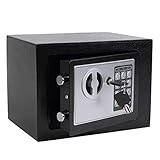
This is the box people buy without research and then feel good about, which is a real service. It holds a house key, a spare card, some cash and a couple of pieces of jewelry, and it weighs 5.8 pounds, so it moves from dorm to apartment to office without a dolly or a second person.
The magnetic lock is a nicer idea than it sounds. Because the door cannot be left ajar by forgetting to bolt it, the contents are always covered when you walk away, and owners consistently mention this as the feature they did not expect to like.
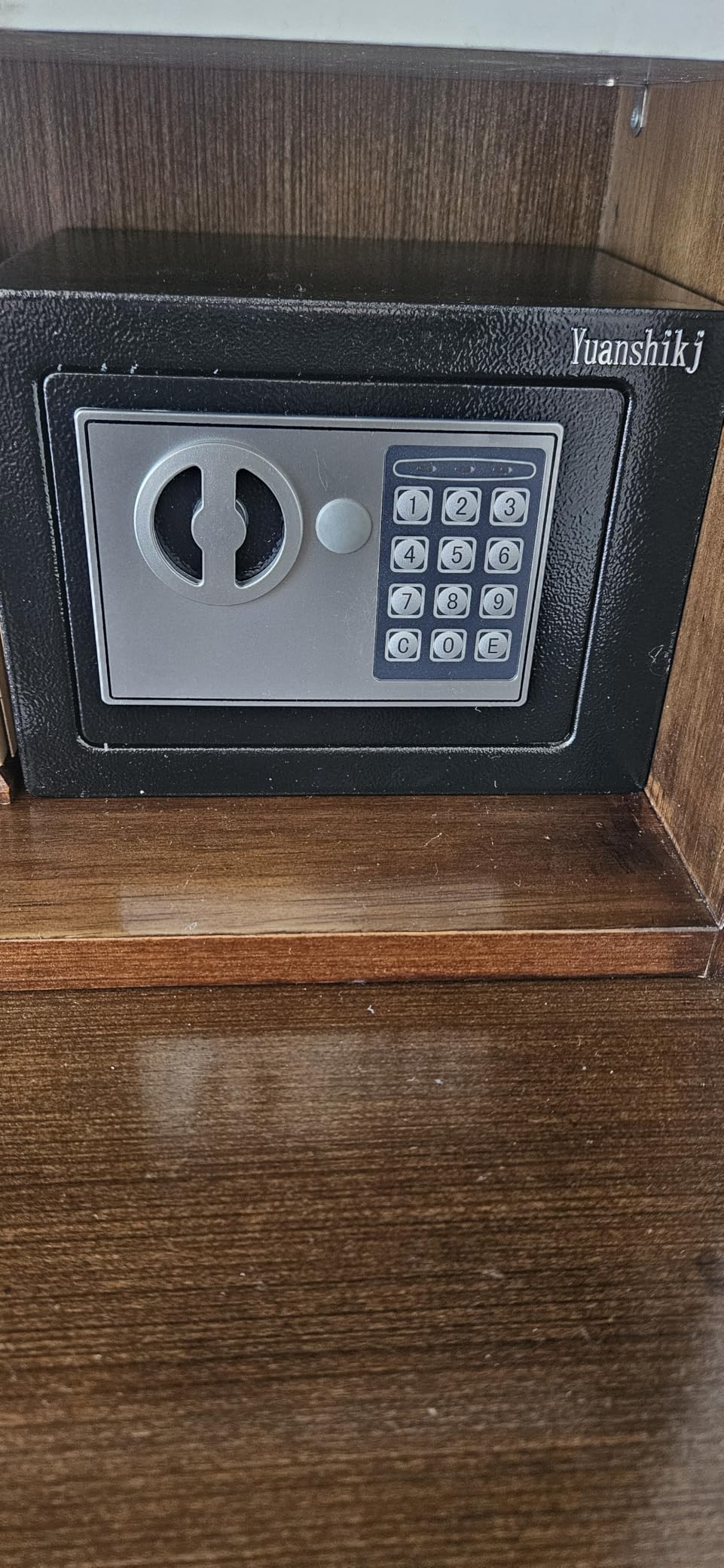
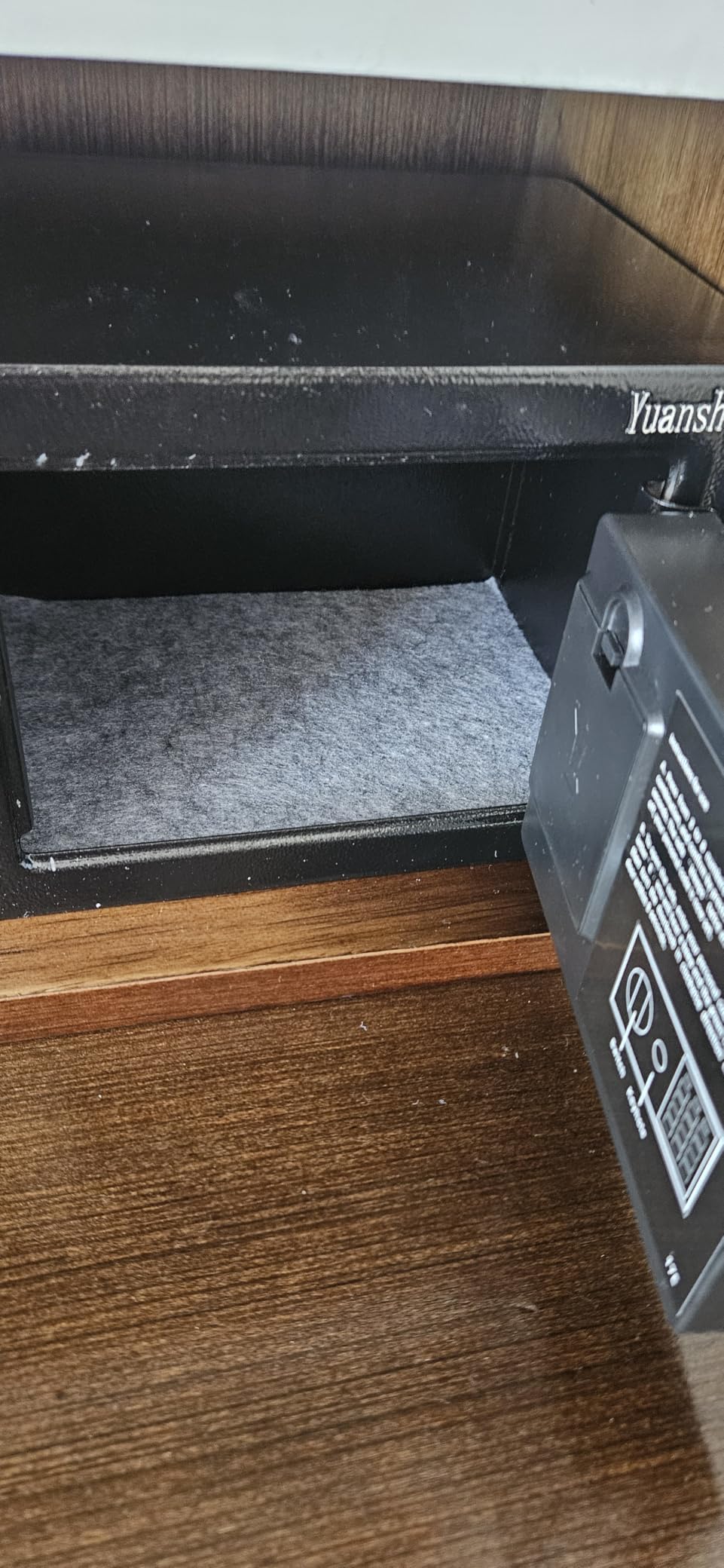
Two emergency keys are included, and the keypad programs in about a minute. The corrosion and stain-resistant powder coat finish is sensible for a bathroom or garage, and pre-drilled holes with mounting bolts are included so it can be fixed to a wall or floor rather than sitting loose on a shelf.
Set expectations honestly. At 0.23 cubic feet this is not a document safe or a firearm safe, it has no fire or water protection, and the steel is light gauge, in the range owners describe as deterring casual snooping rather than burglary. Treat it as a very good lockbox.
Where a small lockbox genuinely solves the problem
Renters get a clean answer to the no-drilling problem. Use the pre-drilled holes with removable anchors, or place the box inside a cabinet that closes, and you get most of the benefit without touching the wall.
Who should skip it
Skip it if you are storing documents. The interior will not take a folder, and there is no fire rating of any kind, so a home fire means the contents are unprotected. That job needs one of the SentrySafe models or a certified document bag.
Also skip it if you plan to store a firearm. The interior is not sized for one, and light-gauge steel with a small door is the wrong format for that responsibility.
10. Grimtron GM02 – Best for Multi-Gun Storage with a Biometric Lock
Grimtron 32LB Biometric 4 Pistols Safe with Fingerprint Lock, 3-8 Digit PIN
1.71 cu ft
32 lb
30 fingerprints
4-slot pistol rack
Sub-1-second unlock
Pros
- Best fingerprint sensor in this group per owners
- Genuine 4-slot gun rack holds pistols upright
- Three access methods plus a USB-C emergency port
- Front-panel battery indicator
- Door organizer for magazines and passports
Cons
- Smooth metal knob is hard to grip
- Keyhole cover slides off easily
- Interior LED is dim
- Supplied anchors are cheap and mismatched
Owners single out the fingerprint reader as the best they have used, and that is the whole reason this box finishes above the other biometric safes. It stores up to 30 fingerprints, responds in under 0.3 seconds, and unlocks in under a second, with a self-learning scanner that improves as the enrolled fingers are used repeatedly. Reviewers describe it as rarely missing a first-try read.
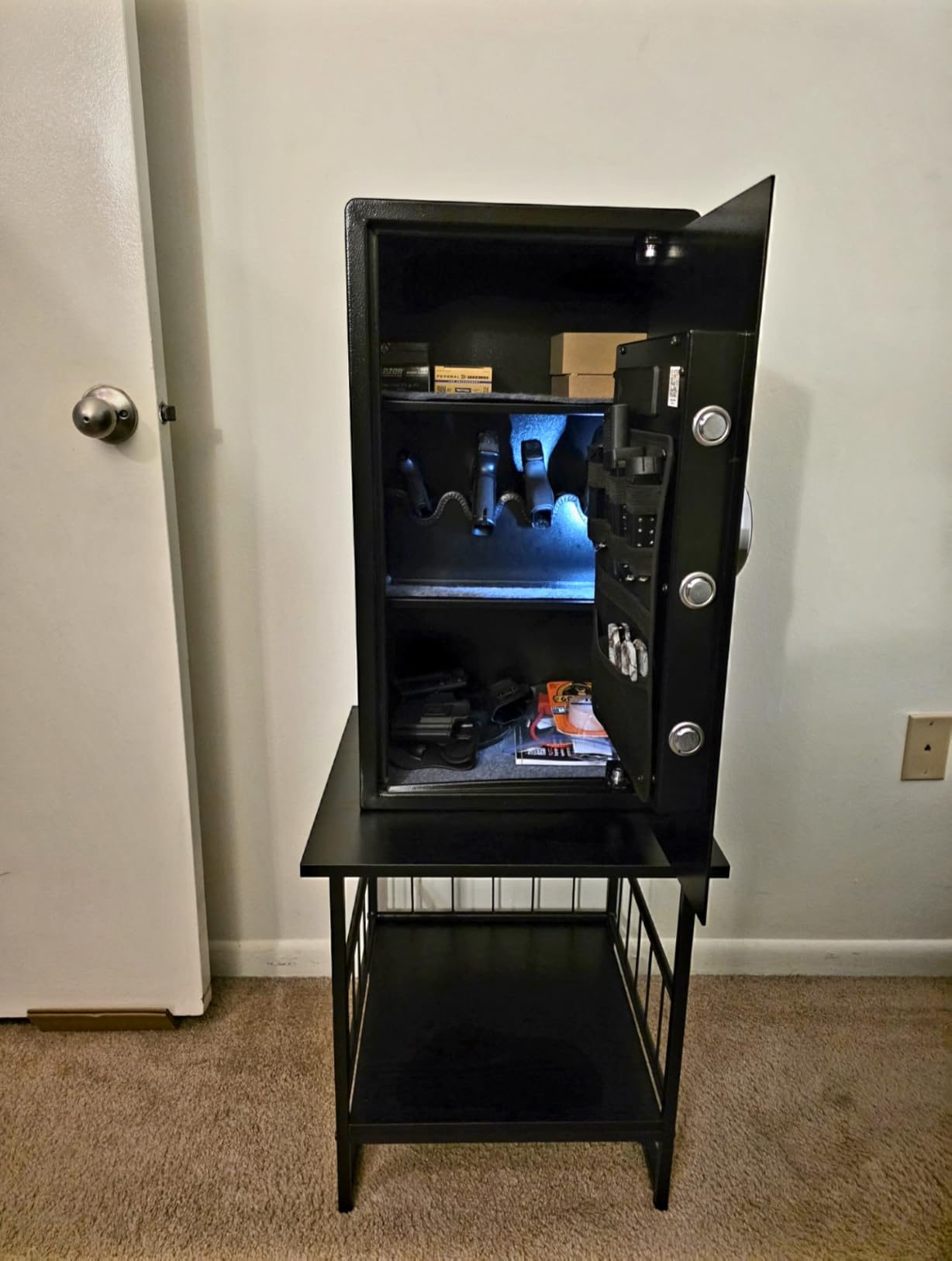
The 4-slot gun rack is the other differentiator. Instead of pistols lying loose on a shelf, they stand upright in a fitted rack, which protects finishes and stops magazines and slides from knocking together. A door organizer adds Velcro-detachable pockets for magazines, keys, passports and flashlights.
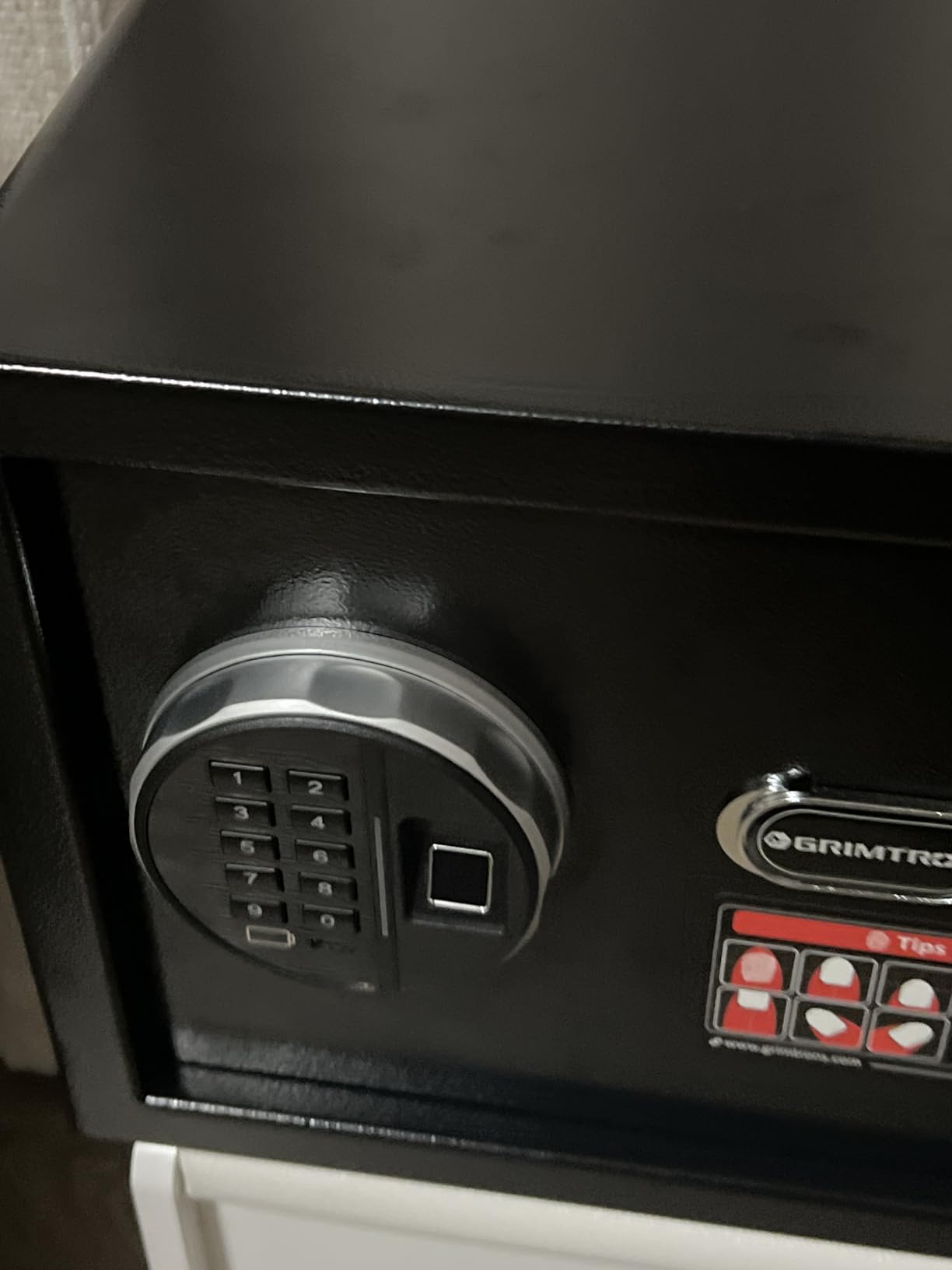
At 32 pounds the box is heavy enough to deter a grab-and-go thief while still being movable when empty. Access is redundant in the right ways: fingerprint, a 3-8 digit PIN keypad with 6.7 million permutations, and two emergency keys. A USB-C port covers the dead-battery case, and the front-panel battery indicator lights on every open so power status is never a guess.
Small hardware issues are the recurring complaint. The turntable-style knob is smooth and hard to grip with sweaty hands, the keyhole cover plate slides off and exposes the lock, the interior LED is dim enough that solid shelves block light reaching the back, and the supplied anchors are cheap and mismatched to the bolt size.
Matching safe size to firearm count
Count firearms and magazines together before you buy, then leave a slot free. A four-slot rack that fits four pistols has no room for spare magazines unless you add the door organizer, and owners who bought for capacity alone report the interior filling faster than expected. Sizing a safe one firearm larger than your current count is the most common piece of advice in owner discussions.
Measure the door swing in the intended location as well. The unit is 13.78 inches wide by 12.99 inches deep by 16.54 inches high, and a full door open needs clear floor space in front of it, not just a clear shelf.
Who should skip it
Skip it if you have one or two handguns. The ONNAIS IRON PRO is quieter, lower and cheaper for that job, and it has a larger review base. This model earns its bulk when you have four firearms to organize.
How We Chose These Home Safes
We ranked every safe on five things, and the first two did most of the work. First, certification: a UL or ETL figure with a stated number of minutes and a test temperature, or a stated water submersion time. A listing that says “fireproof” and stops there lost points regardless of how good the photographs look.
Second, honest mass and hardware. Gauge of steel, count and diameter of live locking bolts, and whether concealed hinges are claimed. Weight in pounds told us whether carry-out is realistic for an unanchored box.
Third, access redundancy. A keypad without a backup key and an external power option is a lockout waiting to happen, and dead batteries are the top real-world failure in this category.
Fourth, review volume and review substance. We weighted the large, long-running bodies of owner feedback above a single high rating, because thousands of reviews surface the recurring problems, which is how we found the DAYI door gap and the Amazon Basics anchoring screws.
Fifth, installability: whether pre-drilled mounting holes and hardware exist, and how the door clearance compares to the space people actually have.
We cut anything whose theft protection depended on an anti-pick tube lock marketed as security, and we cut listing families where near-identical models appear under several brands with recycled product photos. We also excluded units with a strong rating but a small enough interior to be a lockbox, since those get covered as lockboxes.
Home Safe Buying Guide: What Actually Matters
Owners often ask whether a cheap safe is worth anything at all. The honest answer is that value depends entirely on the threat: a light lockbox with a keypad stops a casual hand search in a bedroom, and no amount of money changes that. Spending more only buys resistance to tools, noise and weight, which matters in specific situations rather than always.
Two cheap upgrades deliver more protection than moving up a model: proper masonry anchors, and a concealed location. Owners who skip both are the ones who end up disappointed, and owners who do both report the safe performing better than the next model up.
UL Class 350 fire ratings, decoded
Fire resistance is the most misused word in this category. A real rating comes from a third-party lab and states two things: how long the safe holds its interior below a set temperature, and what furnace temperature it is tested in. UL Class 350 refers to the paper-protection standard.
Within that standard, longer is better and hotter is harder. A 30-minute rating at 1550F is a modest protection level. One hour at 1700F is a meaningful upgrade. Two hours at 1850F and four hours at 2000F exist for users with slower response times or more valuable collections, and most homeowners never need them.
The number 350 matters too. It refers to the maximum interior temperature the safe must hold, and it is the threshold where paper starts to discolor and eventually char. A safe that keeps its interior under 350F for the stated duration keeps documents readable, which is the entire point.
Burglary resistance ratings and what they promise
Burglary ratings answer a different question from fire ratings: how long does this safe resist a prepared thief with tools? The scale runs from B, through B/C, RSC, C, and up to TL-15 and TL-30, where the higher tiers require resistance to 15 and 30 minutes of attack respectively.
Map the tier to the contents. An RSC-rated safe is the sensible target for a few thousand dollars of jewelry in a normal neighborhood. TL-15 becomes relevant when the contents are genuinely valuable and the location has prolonged response times, and owner discussion on specialist forums generally suggests a homeowner rarely needs to go past TL-15.
No safe in this roundup carries a published TL rating, and that is honest. The bolts, hinges and gauges listed across these picks are what actually separate them from a lockbox: a pry-resistant hinge bar, live bolts on more than one side, and steel thick enough that force takes time.
Lock types and backup access
Key locks are mechanical, dependable and slow. The complaint most often raised about them is the quality of the key cylinder, so check for a tubular or better lock rather than a flat stamped one.
Combination dials need no power and no key, but they take time to open and they invite a determined ear. Electronic keypads are fast and programmable, and their weakness is batteries, which is why every electronic pick here also offers a physical key or an external power port.
Biometric fingerprint locks are the fastest and the most convenient, and they depend on clean, slightly damp fingers. The practical rule from owners is to enroll at least two fingers per user and to keep a keypad or key as a fallback. Across this roundup, boxes that pair a fingerprint reader with a PIN and a key are the ones owners report as problem-free.
Steel, hinges and live locking bolts
Steel gauge is a simple, honest comparison. An 8-gauge door and a 14-gauge body, as on the Amazon Basics 1.8 cu ft box, describes a heavier door than the thin-sheet products in the small lockbox category. Thicker gauge resists bending and prying, which is the difference between a door that flexes and a door that holds.
Live locking bolts are the round steel bars that shoot into the body of the safe when the door shuts. A single bolt can be levered against; three or four bolts on more than one side, as on the SFW123GDC with four and the Amazon Basics fire safe with five, cannot be defeated by the same leverage.
Concealed hinges matter for the same reason. External barrel hinges give an attacker a place to insert a lever, so a pry-resistant hinge bar or concealed hinge is a meaningful upgrade on a safe that is meant to be found.
Portable, in-wall, floor and gun safes
Portable boxes are the flexible option. They are cheap, light enough to move and wrong for anything anchored or heavy, which is most of the Yuanshikj and the smaller biometric gun safes in this roundup.
In-wall safes are installed between studs during construction and are nearly impossible to remove, which is their security advantage. Their capacity is small and their installation is a job, so they suit documents and jewelry in a renovation rather than a firearm collection.
Floor and stand-alone safes give the largest capacity and the highest mass, and that is the format where weight, bolts and hinges do the real work. The SentrySafe SFW123GDC and the Amazon Basics fire safe are both stand-alone designs, and both are at their most effective bolted to a concrete slab.
Gun safes split into biometric handgun boxes, which prioritize fast access and child deterrence, and larger rated cabinets, which prioritize fire rating, weight and legal compliance. The three biometric models here are the first category, and none of them carries a fire rating.
Maintenance on an electronic safe takes five minutes a year and prevents the two problems that actually cause lockouts: dead batteries and a drifting code. Change the keypad batteries every six months, and more often if the unit opens slowly or the tone weakens. Write the master code on paper and keep the backup key somewhere other than the safe.
Test the mechanical override twice a year, while the safe is easy to open. If the backup key does not turn cleanly, replace it before you need it. On a biometric box, wipe the sensor and re-enroll one spare finger per user, because wear and small cuts change prints over time.
Waterproofing, moisture and desiccant
Water resistance is stated in two very different ways. “Water repellent” or “water resistant” on a listing is a paint property, not a certification. ETL Verified figures, such as 24 hours in 8 inches of water on the SFW123GDC and 72 hours of submersion on the CHW30220, are test results.
Sealed fireproof safes have a second problem, which is trapped humidity. In a basement or a garage with seasonal moisture, the interior can develop a musty smell and, over time, damage paper. Two habits fix it: replace the desiccant pack every six months in humid months, and open the door briefly after any plumbing or sprinkler event so trapped air can move.
One warning worth repeating: on some waterproof models, bolting the unit down for anchoring can void the water portion of the manufacturer warranty. Read the warranty language before you drill.
Anchoring and placement
A safe is only as strong as its anchoring, and this is the single most-repeated point in owner discussion. An 80-pound safe is a two-person carry; a 37-pound safe is a determined one-person carry. Bolting to a concrete slab with proper masonry anchors is the step that changes the threat model.
Most of the picks here ship with pre-drilled mounting holes, which saves the hardest part. What ships in the box is often soft, though, and several models draw complaints about included screws or mismatched anchors, so plan to buy your own hardware rather than trust the free kit.
For placement, avoid windows and avoid anywhere a passerby can see the box. Basements, closets and the wall behind a large piece of furniture such as a book-matched sofa are the conventional answers. Whatever you choose, test the door swing and the approach path before the safe is delivered, not after.
What to store, and what to keep elsewhere
The irreplaceable paper comes first: deeds, titles, birth and marriage certificates, passports, insurance policies, wills and powers of attorney. Scans of each belong in a cloud vault too, because a safe protects against fire and theft, not against a flood that reaches the box.
Then valuables: jewelry, watches, small silver, coins, trading cards and any collectible with a resale market. Cash in small amounts rather than a large sum, since insurance and recovery for a large documented cash holding is more trouble than most people want.
Collectors need a slightly different approach. Trading cards, coins and watches suffer from humidity swings and from contact with paper and PVC sleeves, so leave air gaps between items, avoid stacking flat against a rubber door seal, and keep a desiccant pack in the interior. A larger safe with an adjustable shelf is worth more here than any specific lock, because you can space things out.
Firearms belong in a safe, and local storage law should be checked before installation. Digital media and password recovery kits belong in more than one place, ideally including a copy that is not inside the safe at all.
And a note on what a safe does not replace. It does not replace a monitored alarm, a home security camera, or a flood plan. It does not stop a crew that arrives with a thermal cutting tool and time, and it does not protect anything stored above the water line in a flood.
Frequently Asked Questions
What is the best house safe to buy?
For most people, the Amazon Basics Steel Home Security Safe Box with 1.8 cubic feet is the best balance of steel gauge, capacity and price. It uses an 8-gauge door and a 14-gauge steel body at 37.5 pounds, comes with a programmable keypad and two backup keys, and has the largest review base of any safe in our roundup. If your priority is fire protection rather than theft deterrence, choose a UL-rated model such as the SentrySafe SFW123GDC instead.
What is the hardest home safe to break into?
The hardest home safes are the ones built around time, mass and hardware rather than lock sophistication. Burglary resistance ratings such as TL-15 describe how long a safe resists a prepared attacker with tools, and that time is what stops most burglars, who move on when a job becomes noisy and slow. Practical features that contribute are a thick steel door, three or four live-locking bolts on more than one side, and a concealed or pry-resistant hinge. Weight and anchoring matter just as much as the lock.
Where is the most secure place to keep a safe in my house?
A basement, a walk-in closet or the wall behind a large piece of furniture are the conventional answers, and the rule is simple: keep it out of sight from windows, the door and the street. Avoid any spot a visitor can see while standing in the room. Also plan the approach and door swing before the safe arrives, and bolt the unit to a concrete slab or wall with proper masonry anchors, because an unanchored safe is only as secure as the person carrying it.
What is the best fireproof home safe for the money?
The best balance of certified fire protection and moderate weight in our roundup is the Amazon Basics Fire Safe, which is Intertek tested to a modified UL 72 standard for 20 minutes at 1200F and weighs 67 pounds. If your fire response times are slower or your documents are truly irreplaceable, the SentrySafe SFW123GDC is the better answer, with a UL classification for one hour at 1700F. Always check that the listing states a duration and a test temperature before treating a safe as fireproof.
Are Liberty safes a good quality?
Liberty is a well-regarded safe manufacturer, and mid-range Liberty models are frequently praised for 50 to 60 minute fire ratings. In practice the brands that appear most consistently in owner feedback and retailer reviews are SentrySafe, Liberty, AMSEC, Honeywell, Hollon, Gardall and Viking. The most common complaint about Liberty is about delivery and damage in transit on heavy units rather than the safe itself, so inspect the unit on arrival and document any dents before installation.
Do home safes need to be bolted down?
Yes, for any safe worth more than a few hundred dollars, anchoring is what turns it from a carry-off object into a fixed obstacle. Most models in this roundup ship with pre-drilled mounting holes, but the included screws and anchors are frequently of low quality, so buy proper masonry anchors sized to the bolt holes. One caution to check before drilling: on some waterproof models, bolting the unit down can void the water portion of the manufacturer warranty.
Final Verdict: Which Home Safe Is Right for You
Start with the threat. If a house fire is what frightens you, buy a certification: the SentrySafe SFW123GDC for a full hour at 1700F, or the Amazon Basics Fire Safe if 20 minutes at 1200F fits your response time and your budget. If a burglar is what frightens you, buy mass and anchoring, and the Amazon Basics Steel Home Security Safe Box gives you the most usable storage for the effort. If you are protecting a firearm from a curious child, the TOPMEDA GS202 and the ONNAIS IRON PRO both do that well, and the Grimtron GM02 is the one for four pistols.
Whatever you choose, do three things before you pay: read the fire rating for a stated number of minutes and a test temperature, measure the door swing in the intended location, and buy real anchors rather than trusting the hardware in the box. Those three steps account for more of your protection than the lock does.
We update this roundup through 2026 as new models land and owner reviews accumulate, so check back before you buy.