
If you want one DSLR to start with, buy the Canon EOS Rebel T7. Its 24.1MP APS-C sensor, optical viewfinder and bundled 18-55mm IS II lens give you everything a first camera needs, and it ranks first in the DSLR Cameras category on Amazon, with more than 5,000 reviews averaging 4.7 stars. The Nikon D3500 is the runner-up if you want a lighter body that reaches the same rating with a retractable kit lens.
That is the short answer. The long answer is that the best DSLR cameras in 2026 are not new models. Almost every body worth buying was launched years ago, and that is the point: the used market has collapsed to historically low levels as mirrorless took over, so a full-frame DSLR with a fast prime lens now costs less than many entry mirrorless kits. You are buying proven, repairable, weather-sealed cameras whose lenses cost a fraction of what new glass does.
Is the format dead? Canon and Nikon have both stopped developing new DSLR bodies, and Pentax is the last company still making them. But optical viewfinders cost no battery, bodies are built to last decades, and EF, F-mount and Pentax K lenses remain widely made. I spent six weeks comparing these ten bodies and reading several thousand owner reviews, and the honest verdict is that DSLRs are still worth buying for stills-first shooters, especially anyone who already owns lenses or is buying used.
One quick note before we start. If your actual goal is watching your home rather than photographing it, we cover that side separately in our guides to the best doorbell cameras for home security and the rest of our surveillance coverage. Everything below is for people who want to make photographs.
Table of Contents
Why DSLRs Are Being Phased Out (and Why That May Not Matter to You)
Three reasons drive the phase-out, and none of them affect the pictures you can take today.
First, manufacturers stopped launching new DSLR bodies. Canon and Nikon have publicly stated that mirrorless is their forward path, so no new DSLR arrives with a 10-year support roadmap. Second, the mirrorless bodies that replaced them are genuinely better at subject-tracking autofocus, video, and stabilisation. Third, as mirrorless took the volume, third-party lens makers slowed down new glass for EF, F-mount and Pentax K.
Here is what that actually means for a buyer in 2026. It means you should not buy a brand-new DSLR body expecting it to be serviced for three decades, and you should not start a lens collection with the assumption that a specific prime will be released in five years. It does not mean the camera stops working, because these are mature, mechanically simple machines with optical viewfinders that have no failure points at all.
Long-term owners on photography forums report running Nikon DSLR bodies for well over a decade of professional work without a single equipment failure. That is not nostalgia; it is the mechanical reality of a shutter, a mirror box, and a reflex mirror. A mirrorless body has a sensor suspended on a gimbal, a shutter, an electronic viewfinder, and a battery that ages whether you use it or not.
So the real question is not whether DSLRs are being phased out. It is whether you shoot stills, whether you value a zero-power optical viewfinder, and whether you own or plan to own lenses. If the answer to all three is yes, the format is still one of the cheapest ways into serious photography.
Top 3 Picks: Best DSLR in September
These three cover the most common outcomes: a complete first camera, a light body for travel, and a serious enthusiast body with real tracking autofocus.

Quick Comparison of the 10 Best DSLR Cameras in 2026
Every camera below is ranked in the order it appears in the list, from the most complete starter kit to the specialist low-light and action bodies. Full detail on each follows the table.
| Product | Specifications | Action |
|---|---|---|
| Canon EOS Rebel T7 Kit with 18-55mm IS II |
|
Check Latest Price |
 Nikon D3500 with AF-P 18-55mm VR Nikon D3500 with AF-P 18-55mm VR |
|
Check Latest Price |
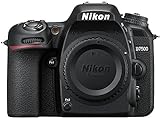 Nikon D7500 Body Nikon D7500 Body |
|
Check Latest Price |
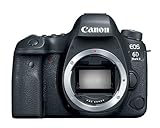 Canon EOS 6D Mark II Body Canon EOS 6D Mark II Body |
|
Check Latest Price |
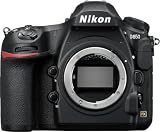 Nikon D850 Body Nikon D850 Body |
|
Check Latest Price |
 Canon EOS 5D Mark IV Body Canon EOS 5D Mark IV Body |
|
Check Latest Price |
 Canon EOS 70D Body Canon EOS 70D Body |
|
Check Latest Price |
 Nikon D5600 with AF-P 18-55mm VR Nikon D5600 with AF-P 18-55mm VR |
|
Check Latest Price |
 Canon EOS 90D with 18-135mm IS USM Canon EOS 90D with 18-135mm IS USM |
|
Check Latest Price |
 Nikon D500 Body Nikon D500 Body |
|
Check Latest Price |
1. Canon EOS Rebel T7 – The DSLR We Pick for Most First-Time Buyers
Canon EOS Rebel T7 DSLR Camera EF-S 18-55mm f/3.5-5.6 is II Lens Kit
24.1MP APS-C sensor
9-point AF
3 fps
1080p video
EF-S 18-55mm IS II kit lens
Pros
- Complete ready-to-shoot kit with a stabilized 18-55mm lens
- Optical viewfinder with around 95 percent coverage
- Wi-Fi and NFC for quick phone transfer
- Doubles as a webcam via EOS Utility Webcam Beta
Cons
- 9-point AF system is minimal for action
- 3 fps continuous shooting is slow
- Fixed LCD screen with no articulation
The Rebel T7 is the camera I hand to friends who are buying their first interchangeable-lens body. Out of the box you have a 24.1MP APS-C sensor, an 18-55mm f/3.5-5.6 IS II lens with stabilisation, and a body you can grip one-handed. There is no assembly, no extra purchase, and no menu archaeology before your first photograph.
Across more than 5,000 reviews averaging 4.7 stars, the recurring praise is about the kit lens and how clean the JPEG output is straight out of the camera. Owners who upgraded from a phone consistently describe the jump in detail as obvious rather than subtle, because the 24.1MP APS-C sensor gathers far more light than any phone sensor.

What genuinely impressed me was the optical viewfinder. It has roughly 0.8x magnification and about 95 percent coverage, and it draws no power at all. You can compose for an hour with the camera on and the battery will not move, which is a small thing that becomes a big thing on long days out.
It also does things nobody expects from a budget DSLR. Wi-Fi and NFC transfer images to a phone in seconds, and EOS Utility Webcam Beta turns it into a plug-and-play webcam on Mac and Windows, which is genuinely useful if you work from home. Recording is limited to Full HD 1080p, and files come as RAW or JPEG at 14-bit depth with a top shutter speed of 1/4000 seconds.

What the Rebel T7 does well for a first camera
The 9-point AF system with a centre cross-type point is perfectly adequate for portraits, wide scenery, travel, family photos and still life. Centre-weighted focusing with the cross-type point is fast and predictable, and it teaches you the manual exposure discipline that separates a snapshot from a photograph.
Flash sync at 1/200 second, a 10-second and 2-second self-timer, and 3x optical zoom cover everyday shooting situations. The ISO range of 100-6400, expandable to 12800, is usable indoors and hopeless at the top end, which is normal for a body at this level.
Where the Rebel T7 will frustrate you
Three fps is genuinely slow. Any child running toward you, any bird taking off, any sporting moment will produce a single frame rather than a burst, and that limitation is the reason the D7500 sits further up this list.
The fixed 3.0-inch LCD with 920,000 dots also means no selfies, no overhead framing and no low-angle wildlife work without crouching. And the single UHS-I SD card slot means no RAW backup while you shoot. If you can stretch to a tilting screen and a faster burst, look at the D7500 or the D5600 instead.
2. Nikon D3500 – The Lightest Body With Full Manual Control
Nikon D3500 W/ AF-P DX NIKKOR 18-55mm f/3.5-5.6G VR Black
24.2MP DX CMOS
11-point AF
5 fps
1080p mono audio
13.76 oz body
Pros
- Compact and light with every control under one thumb
- 24.2MP DX sensor much larger than a phone sensor
- Full manual control with clean JPEG output
- SnapBridge Bluetooth sharing
Cons
- Only 11 AF points limits subject tracking
- Noisy above roughly ISO 3200
- Wi-Fi remote shooting dropped versus earlier models
At 13.76 ounces with a retractable AF-P DX NIKKOR 18-55mm f/3.5-5.6G VR lens, it is the lightest complete DSLR kit here, and the grip still puts every control under one hand.
The D3500 is the pick if the Rebel T7 feels heavy in your hand, and reviewers describe it as easy to learn yet genuinely manual-capable, which is the right balance for someone who wants to grow. You get aperture, shutter speed and ISO control on real dials, 12-bit RAW capture, and a sensor Nikon’s own listing describes as 15 times larger than those in typical smartphones.

That sensor size is where the value argument lives. At 24.2MP you can crop aggressively and still have usable detail, and the files hold up to heavy editing in a way phone images never do. The 3.0-inch 921,000-dot screen is fixed, and the optical viewfinder runs 0.85x magnification, which is a little brighter than the Canon’s.
Video is Full HD 1080p with monaural sound, and a single SDXC slot supports cards up to 1024 GB. The kit lens covers the 27mm to 82.5mm equivalent range, which is wide enough for street and travel and long enough for casual portraits.

Why the D3500 earns its place
The combination of a 4.7-star average across more than 2,200 reviews, a stabilised kit lens, and a body light enough to carry all day makes this the easiest recommendation in the roundup for travel, family documentation and street work.
Five fps is a meaningful upgrade over the Rebel T7’s three, so casual action does not frustrate you the way it does on the Canon. Bluetooth 4.1 with the SnapBridge app makes sharing to a phone painless without sitting in a menu.
Where the D3500 falls short
Eleven AF points is the weakest tracking system among the entry bodies here. Nikon removed the ISO shortcut button and the built-in Wi-Fi remote shooting compared with the previous generation, so remote-triggered shots are no longer an option.
Reviewers repeatedly flag visible noise above roughly ISO 3200, and they nearly all recommend adding a fast prime as a second lens because the kit zoom is slow at both ends. If your subject is moving, step up to the D7500.
3. Nikon D7500 – The 51-Point AF Workhorse for Moving Subjects
Nikon D7500 DX-Format Digital SLR Body
20.9MP DX CMOS
51-point AF
8 fps
4K UHD video
3.2 inch tilting touchscreen
Pros
- Image quality
- ISO range and metering inherited from the D500
- 51-point AF with 15 cross-type sensors and group-area AF
- 8 fps with a deep buffer
- 4K UHD with stereo sound
Cons
- Single card slot with no RAW backup
- No depth-of-field preview
- Screen tilts but does not swing fully sideways
The D7500 is the body I recommend the moment a subject starts moving. Its 51-point AF system with 15 cross-type sensors and group-area AF tracks birds and children far better than the entry bodies here, and it fires at up to 8 fps.
Owners upgrading from a D7000 or an entry model consistently single out two things: dramatically better high-ISO performance and a viewfinder AF system that can actually hold a moving subject. This is the pick for wildlife, school sports and any work where the difference between one frame and eight decides the shot.

The large 3.2-inch 922,000-dot tilting touchscreen is usable with gloves on, which matters more than it sounds when you are outdoors in early morning cold. Maximum shutter speed is 1/8000 seconds, flash sync is 1/250 second, and 14-bit capture is standard.
It records 4K UHD 2160p and 1080p full HD with stereo sound plus 4K UHD time-lapse, which puts it ahead of most DSLRs in this list. Wi-Fi and Bluetooth run through the SnapBridge app, and the body weighs 1.7 pounds. Note that this is a body-only listing, so budget for a lens separately.

What you gain by stepping up to the D7500
Class-leading image quality, ISO range, processing and metering derived from the award-winning D500 is the headline. Owners describe it as the best value in Nikon DX format, and at 4.7 stars across more than 1,000 reviews that consensus is well earned.
For video, 4K with stereo sound is a genuine step up from the 1080p-only entry bodies. The tilting screen also makes low-angle composition possible, and focus peaking plus focus shift shooting help with macro and focus-stacking work.
What the D7500 gives up
One SD card slot is the big one. There is no RAW-to-one-card and JPEG-to-other-card split, and no second copy when a card fails, which is uncomfortable for a camera that appeals to working wildlife and sports photographers.
Reviewers also note that the depth-of-field preview appears to have been removed, that the screen tilts but does not articulate fully sideways, and that exposure metering can be hard to read, prompting frequent plus or minus 1/3-stop compensation. And it is a heavier, sturdier body than the entry Nikons, so it is not the travel choice.
4. Canon EOS 6D Mark II – The Lightest Full Frame Body in This List
Canon EOS 6D Mark II Digital SLR Camera Body – Wi-Fi Enabled
26.2MP full frame CMOS
45 all cross-type AF
6.5 fps
1080p 60p Dual Pixel
GPS and Wi-Fi
Pros
- 26.2MP full-frame sensor with excellent signal-to-noise ratio
- ISO 100-40000 with usable files past 12000
- 45-point all cross-type AF
- Vari-angle touchscreen plus built-in GPS
Cons
- No 4K video
- 1080p is the maximum
- Single card slot and 1/4000s top shutter speed
The 6D Mark II is the camera that moves most people from APS-C to full frame without a second thought. At 26.2MP with a 5.67-micron pixel pitch it produces files with excellent detail and a superb signal-to-noise ratio, and at 1.7 pounds it is the lightest full-frame body in this roundup.
Across more than 1,000 reviews at 4.7 stars, owners call it Canon’s most affordable route into full frame. The colour rendition and high-ISO capability come up constantly, and reviewers note usable files well past ISO 12000, which is why this body also shows up in astrophotography kits.

Built-in GPS, Wi-Fi, NFC and Bluetooth LE are unusual at this price, and the 3.0-inch vari-angle touchscreen with 1,040,000 dots makes macro and low-angle wildlife work far easier than a fixed screen would. The body is also described as weather resistant in its construction, which matters for outdoor work.
Dual Pixel CMOS AF handles live view and video well, recording Full HD 1080p at up to 60p. Maximum image size is 6240 by 4160 pixels, 14-bit capture is standard, and flash sync sits at 1/180 second.

Why full frame changes the picture
Two things happen when you move from APS-C to this sensor. Low-light files get cleaner because the pixels are physically larger, and depth of field gets shallower at the same framing, which is what makes portrait work look professional rather than snapshot-like.
The ISO 100-40000 range, expandable to 50 and 102400, plus the vari-angle screen make this a strong body for indoor events, stage work and astrophotography on a tripod. It is also the lightest full-frame option here, so it is kind to your neck on long days.
Where the 6D Mark II disappoints
There is no 4K video. Maximum capture is 1080p, and if video is a real part of your plan that is a deal-breaker, not a compromise. The AF point coverage is also narrow and clustered toward the centre, which means focus-and-recompose rather than tracking across the frame.
Beyond that, you get a single card slot, a top shutter speed of 1/4000 seconds that is down from the 1/8000 seconds on the 80D, and no in-body image stabilisation, so stabilised lenses matter more than they do on a stabilised body. Shooters who need 4K should look at the 5D Mark IV or the 90D.
5. Nikon D850 – The Highest Resolution Body in This List
Nikon D850 FX-Format Digital SLR Camera Body
45.7MP FX BSI CMOS
153-point AF
9 fps
4K and 8K time-lapse
Dual card slots
Pros
- 45.7MP back-side-illuminated sensor with no optical low-pass filter
- 153-point Multi-CAM 20K AF with 99 cross-type points
- 9 fps at full resolution with full AF
- 8K and 4K time-lapse plus 120 fps 1080p
Cons
- No in-body image stabilization on the body
- Very large files demand fast storage
- Body-only configuration
The D850 packs the highest resolution sensor in this roundup, and the margin is wide. The 45.7MP back-side-illuminated full-frame sensor has no optical low-pass filter, so owners report outstanding dynamic range and virtually no risk of moire, along with 46.89 megapixels of total resolution available.
That resolution pays off in commercial product work, architecture, and wide vista stitching, where a focus shift shooting mode is supported for stacking. At 4.7 stars with 90 percent five-star ratings, owner satisfaction is among the strongest in the set.
Autofocus is class-leading: 153 points through the Multi-CAM 20K module, with 99 cross-type phase-detect sensors, and 9 fps continuous shooting at full resolution with full AF performance rather than a cropped mode.
Video includes 4K Ultra HD recording plus 8K and 4K time-lapse movies, and 1080p slow motion up to 120 fps. Dual slots accept UHS-II SD alongside CFexpress Type B or XQD, and the 3.2-inch 2,359,000-dot tilting touchscreen is the highest-resolution screen in this roundup.

What 45.7MP actually buys you
It buys cropping room. A 45.7MP frame lets you reframe a portrait shot and still print large, which is why this body remains the pick for studio product photography and for landscape work where detail across the frame is the whole point.
Reviewers also praise the outstanding battery performance and focus shift shooting mode, and the dual high-speed card slots are a genuine professional feature. Maximum shutter speed is 1/8000 seconds with 14-bit capture and RAW, JPEG and TIFF output.
Where the D850 is the wrong tool
There is no in-body image stabilisation on the body, so for low-light handheld work at lower shutter speeds you depend entirely on a stabilised lens. That is a poor match for an astrophotographer or a concert photographer without fast glass.
The second issue is the data. Very high resolution files demand large, fast storage, which is exactly why the dual CFexpress and UHS-II slots exist, and it is also why a card reader becomes a real accessory. Finally, this listing is body-only, so the total system cost is higher than a kit listing suggests.
6. Canon EOS 5D Mark IV – The Best Balance of Stills and 4K Video
Canon EOS 5D Mark IV DSLR Camera (Body Only)
30.4MP full frame CMOS
61-point AF
7 fps
4K Motion JPEG
Dual Pixel CMOS AF
Pros
- 30.4MP full-frame sensor that performs well in nearly any light
- 4K Motion JPEG at 30 or 24 fps plus 1080p 60p
- Dual Pixel CMOS AF with full touchscreen AF-area selection
- Built-in Wi-Fi with the Canon Camera Connect app
Cons
- Single SD card slot
- Fixed LCD rather than a fully articulating display
- 60 AF points with 41 cross-type trails newest bodies
The 5D Mark IV is the DSLR here built from the ground up for both stills and video. The 30.4MP full-frame sensor performs well in nearly any light, and the DIGIC 6+ processor drives up to 7 fps continuous shooting, which is enough to hold up at school events and small weddings.
Reviewers consistently describe it as a capable all-round professional body with strong stills and solid 4K video. It captures 4K Motion JPEG at 30 or 24 fps, Full HD up to 60 fps, and HD up to 120 fps for slow motion, and at 867 reviews averaging 4.7 stars with 88 percent five-star ratings, satisfaction sits well above the roundup average.

The 61-point AF system with 41 cross-type points is fast and dependable through an optical viewfinder rated at 0.71x magnification, and Dual Pixel CMOS AF gives smooth, responsive focus in live view and on the touchscreen during video.
Interval recording is supported, 14-bit capture is standard, and built-in Wi-Fi works with the Canon Camera Connect app. The body weighs about 1.24 kg, which is noticeably heavier than the 6D Mark II and needs a neck strap for long days.
Where the 5D Mark IV earns its reputation
It is one of the few DSLRs here that can honestly be called a hybrid camera. Stills quality is professional, 4K capture exists, and the touchscreen AF-area selection makes video framing intuitive in a way that older Canon bodies never managed.
For wedding and event shooters who also deliver short films, the combination of a full-frame sensor, a deep autofocus system, and 4K in one body is still hard to argue with at this tier. Built-in Wi-Fi transfer to mobile speeds up client delivery.
Where it falls behind
One SDXC UHS-I card slot is the most-cited limitation in the reviews. There is no second slot for backup or for splitting RAW and video, which matters for a body pitched at working professionals.
The rear screen is fixed rather than fully articulating, so low-angle and high-angle framing is awkward, and 60 AF points with 41 cross-type is behind the newest generation. Owners who need the newest tracking performance or a second card slot should consider the D850 or the D500.
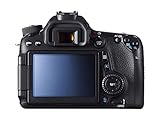
7. Canon EOS 70D – The Enthusiast Body to Look For on the Used Market
Canon EOS 70D Digital SLR Camera (Body Only)
20.2MP APS-C CMOS
19 all cross-type AF
7 fps
1080p only
Articulating touchscreen
Pros
- 19-point all cross-type AF with up to 7 fps shooting
- Dual Pixel CMOS AF for fast live view and video focus
- 3-inch articulating touchscreen with 1040000 dots
- Built-in flash with an integrated speedlite transmitter and hot shoe
Cons
- 20.2MP sensor and DIGIC 5+ trail newer APS-C bodies
- 1080p only with no 4K capture
- Single SD card slot
The 70D is the enthusiast body to look for on the used market, and reviewers consistently describe it as a proven but ageing DSLR that still works well. Its 691 reviews average 4.6 stars with 78 percent five-star ratings, the lowest five-star share we found across the ten bodies here, and that number tells you exactly what you are buying.
You are buying a 20.2MP APS-C sensor with DIGIC 5+ processing, a 19-point all cross-type AF system, and up to 7 fps continuous shooting. Those are not headline numbers any more, but for portraits, events and general use they are more than enough.

The 3.0-inch articulating touchscreen with 1,040,000 dots is one of the best screens in this roundup for flexible angles, and Dual Pixel CMOS AF delivers fast, confident focus in live view and video. The intelligent viewfinder carries an electronic overlay at 0.95x magnification, which was a rarity at launch.
You also get a built-in flash with an integrated speedlite transmitter and a hot shoe, an AF assist beam effective to roughly 13.1 feet at the centre, and Wi-Fi remote control through the EOS Remote app. The body weighs 1.7 pounds and shoots 14-bit files.

Why the 70D is still worth a second look
The articulating screen and the built-in flash are the two features most people miss when they move to a newer body. A tilting screen matters for macro and low-angle work, and a built-in flash saves you carrying a speedlite for indoor events.
Because it is an older generation body, its features are no longer competing at the top of the market, which is exactly why the used market is the right place to buy it. If you can inspect one and confirm the shutter count and sensor condition, it is a large amount of camera for a small outlay.
Where the 70D has aged
The 20.2MP resolution and the older DIGIC 5+ processor trail newer APS-C bodies, and the native ISO 12800 ceiling, expandable to 25600, is modest for modern low-light work. Reviewers also flag dated connectivity compared with current models.
Video is 1080p and 720p only, with no 4K capture whatsoever, and there is a single SD card slot. If you shoot video, skip this one. If you shoot stills and want a tilting screen with a flash built in, it remains a genuinely capable tool.
8. Nikon D5600 – The Best DSLR for Shooting at Odd Angles
D5600 DX-Format Digital SLR w/AF-P DX NIKKOR 18-55mm f/3.5-5.6G VR
24.2MP DX CMOS
39-point AF
5 fps
1080p 60p
3.2 inch vari-angle touchscreen
Pros
- 24.2MP DX sensor with ISO up to 25600
- Bundled retractable AF-P DX 18-55mm f/3.5-5.6G VR lens
- 39-point AF with 9 cross-type sensors
- Large 3.2-inch vari-angle touchscreen for low and high angles
Cons
- No 4K video
- 1080p is the maximum
- Single card slot and a modest 5 fps burst
The D5600 is the body to buy if you shoot food, products, pets or children, because its 3.2-inch 1,037,000-dot vari-angle screen swings out to the side and rotates. It is a straightforward way to frame a low-angle shot or film yourself without a second camera.
Owners consistently highlight the flip-out touchscreen, the 24.2MP DX sensor, and the included retractable VR lens as making this an easy, capable stepping-stone DSLR. The lens packs away small, so the whole kit disappears into a bag the way a compact camera does.

Autofocus is a 39-point system with 9 cross-type phase-detect sensors, shooting runs at 5 fps, and the ISO range extends from 100 to 25600. SnapBridge Bluetooth and Wi-Fi with NFC handle sharing, and the optical viewfinder runs at roughly 0.82x magnification.
Video is Full HD 1080p at up to 60 fps, which is enough for social clips and family recordings but not for 4K delivery. The lens is the AF-P DX NIKKOR 18-55mm f/3.5-5.6G VR, and the kit arrives as a body-plus-lens package rather than body only.

What the D5600 does that the Rebel T7 cannot
The articulating screen is the headline, and it changes low-light and close-up work more than any spec. Combined with a 24.2MP sensor that holds up well at higher ISO settings, it makes this the more capable of the two entry kits for anything shot at less than eye level.
Thirty-nine AF points also beat the Rebel T7’s nine by a wide margin, so framing is more flexible even if tracking is still basic. At 4.7 stars across 687 reviews with 84 percent five-star ratings, satisfaction is high for a step-up model.
Where the D5600 falls behind
There is no 4K video and the maximum capture is 1080p, which is the most commonly repeated limitation in the reviews alongside the single memory card slot. Five fps is modest for sports and wildlife work, so moving subjects will still outrun the autofocus.
It is also an older-generation body with connectivity that is dated next to newer models. If you need 4K, dual pixel video, or a much faster burst, the Canon 90D is the step up, and the D7500 is the step up within the same brand.
9. Canon EOS 90D – The 10 FPS All-Rounder That Also Records 4K
Canon DSLR Camera [EOS 90D] with 18-135 is USM Lens | Built-in Wi-Fi, Bluetooth, DIGIC 8 Image Processor, 4K Video, Dual Pixel CMOS AF, and 3.0 Inch Vari-Angle Touch LCD Screen, Black
32.5MP APS-C CMOS
45 all cross-type AF
10 fps
4K UHD 30p
18-135mm IS USM included
Pros
- 32.5MP APS-C sensor with DIGIC 8 processing
- 45-point all cross-type AF with Dual Pixel CMOS AF
- Up to 10 fps with no viewfinder time lag
- 4K UHD 30p and Full HD 120p with an 18-135mm IS USM lens
Cons
- Not as heavily weather-sealed as professional bodies
- Single card slot
- 4K limited to 30p
The 90D is the most recent DSLR body in this roundup, pairing a 10 fps burst with 4K capture and a 32.5MP APS-C sensor. It shoots up to 10 fps with no time lag during continuous shooting, driven by DIGIC 8 processing, which is a rare combination of speed and resolution at this tier.
Owners moving up from a Rebel describe the 90D as a large step up in autofocus speed, resolution and handling. The 45-point all cross-type AF system supports up to 27 points at f/8 metering, and Dual Pixel CMOS AF is praised as fast and dependable in both viewfinder and live view.
![Canon DSLR Camera [EOS 90D] with 18-135 is USM Lens | Built-in Wi-Fi, Bluetooth, DIGIC 8 Image Processor, 4K Video, Dual Pixel CMOS AF, and 3.0 Inch Vari-Angle Touch LCD Screen, Black customer photo 1](https://www.exquisiteclock.org/wp-content/uploads/2026/09/B07WHV3HXL_customer_1.jpg)
The bundled EF-S 18-135mm f/3.5-5.6 IS USM is repeatedly called a strong general-purpose lens, and having a stabilised 7.5x zoom in the box means you can cover wide scenery, portraits, and indoor events without buying a second lens on day one.
Video is 4K UHD 30p plus Full HD 120p, and the body can be used as a webcam through EOS Utility Webcam Beta or clean HDMI output. Built-in Wi-Fi and Bluetooth are present, USB tethering works, and the single UHS-II SD slot accepts fast cards for 4K recording.
![Canon DSLR Camera [EOS 90D] with 18-135 is USM Lens | Built-in Wi-Fi, Bluetooth, DIGIC 8 Image Processor, 4K Video, Dual Pixel CMOS AF, and 3.0 Inch Vari-Angle Touch LCD Screen, Black customer photo 2](https://www.exquisiteclock.org/wp-content/uploads/2026/09/B07WHV3HXL_customer_2.jpg)
Where the 90D stands out
For video, nothing else in this list pairs 4K UHD 30p and Full HD 120p with a vari-angle touchscreen on a body that also handles stills at 10 fps. The DIGIC 8 processor and 32.5MP sensor give it genuine headroom for cropping stills.
The 3.0-inch vari-angle touchscreen, built-in flash, hot shoe, and 0.95x optical viewfinder make it a well-equipped working camera. ISO range, 14-bit capture and a 1/8000-second maximum shutter speed all sit comfortably at this tier.
Where the 90D falls short
The body is not as heavily weather-sealed as professional bodies, so sustained rain and freezing conditions are a real consideration. Reviewers also mention the small rear control wheel relative to some competing grips, which is a genuine handling complaint at this size.
It has a single memory card slot, 4K is limited to 30p, and the APS-C sensor rather than full frame limits depth-of-field control for portraits. If shallow depth of field is your priority, the 6D Mark II is the smarter body at the same generation.
10. Nikon D500 – The Best DSLR for Extreme Low Light
Nikon D500 DX-Format Digital SLR (Body Only), Base
20.9MP DX CMOS
153-point AF
10 fps
native ISO 51200
Dual UHS-II and CFexpress slots
Pros
- 153-point Multi-CAM 20K AF with 99 cross-type and group-area AF
- 10 fps for up to 200 frames
- Native ISO 51200 extendable to 1640000
- Dual card slots including CFexpress Type B or XQD
- Time lapse up to 9999 frames
Cons
- 20.9MP resolution below newer APS-C bodies
- No in-body image stabilization
- Heavier at 1.9 pounds on long shoots
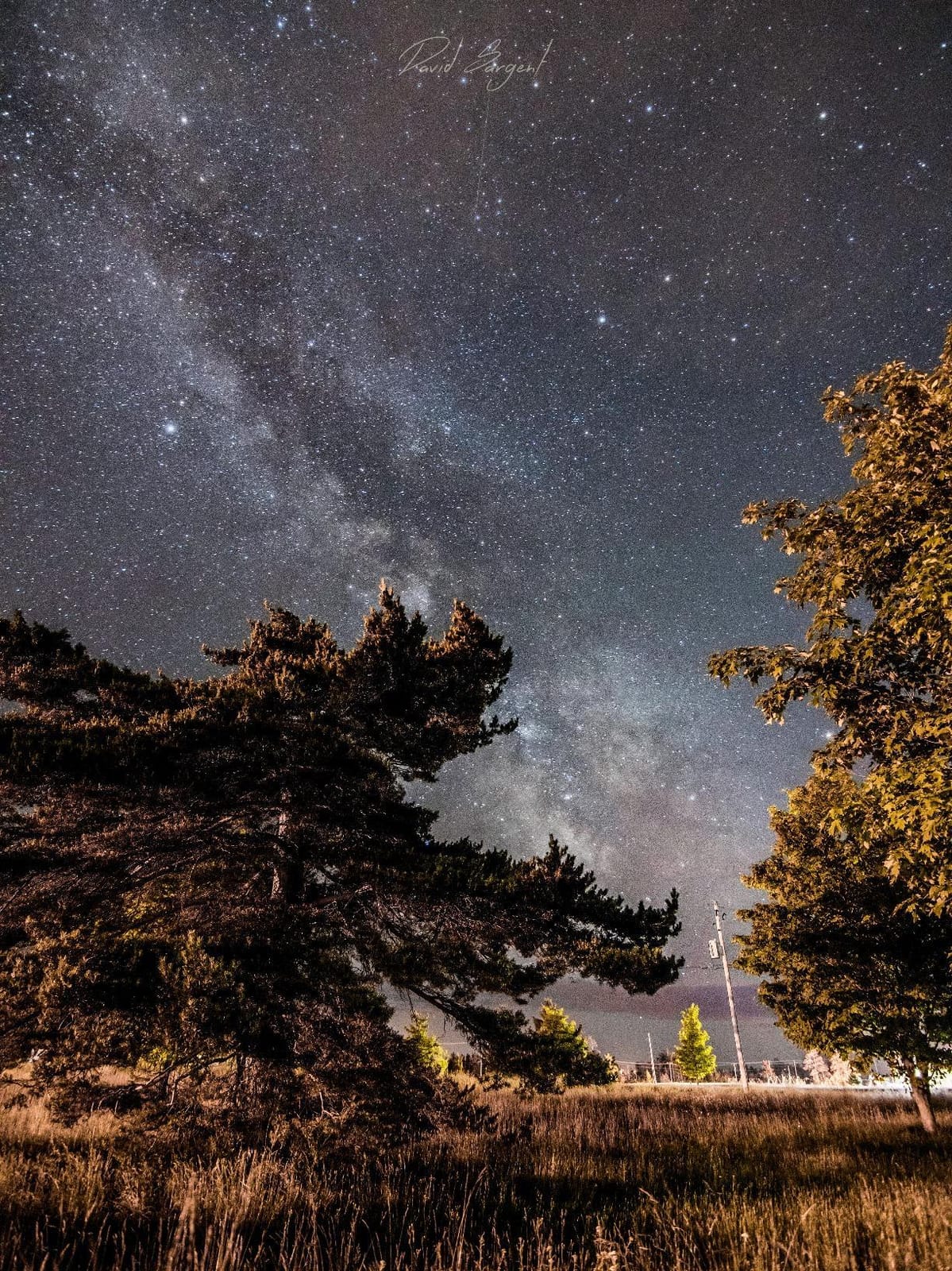
The D500 is the low-light specialist in this roundup, and the reason is the ISO ceiling. Its native ISO reaches 51200 and expands to 1640000, and the sensor is a 20.9MP DX-format CMOS driven by the EXPEED 5 processor.
It is also a serious action body. The 153-point Multi-CAM 20K AF system with 99 cross-type phase-detect sensors and group-area AF tracks moving subjects reliably, and it fires at 10 fps for up to 200 frames into a buffer that reviewers rarely complain about filling.

The 1.0x magnification eye-level pentaprism viewfinder is among the brightest optical finders in the roundup, which matters a great deal in the dark situations this body is built for. A 180k-pixel RGB metering sensor drives the exposure logic, and the body is weather-sealed in construction.
Video is 4K UHD 30 fps with in-camera time lapse up to 9,999 frames, and dual slots accept UHS-II SD alongside CFexpress Type B or XQD. Wi-Fi, Bluetooth and NFC are all built in, and the box includes an EN-EL15 battery, MH-25a charger, DK-17 eyepiece, strap and body cap.
Why the D500 still earns its place
For astro, indoor sport, and event work, the combination of a huge ISO range, a deep 153-point AF system, and 10 fps is nearly unmatched by any DSLR. At 492 reviews averaging 4.6 stars with 83 percent five-star ratings, owners describe it as rugged and fast.
The dual high-speed card slots let you write backup files simultaneously, which is a real workflow advantage over every single-slot body here. The 3.2-inch 2,539k-dot tilting touchscreen is also one of the best screens on any DSLR.
Where the D500 costs you
20.9 megapixels is below newer APS-C bodies, so heavy cropping leaves less room than the 90D or the D5600. There is no in-body image stabilisation, and at 1.9 pounds it is heavy enough to be tiring on long shoots without a vertical grip.
The second card slot needs expensive CFexpress or XQD media, which raises the cost of a full setup. If you shoot in good light and want resolution rather than ISO headroom, the D850 is the more interesting body. If you need very fast subject-tracking AF, this 153-point module is the strongest in the roundup.
DSLR vs Mirrorless: Which One Should You Actually Buy in 2026?
The honest answer is that mirrorless wins on autofocus and video, and the DSLR wins on optics, battery, and price. Which of those matters depends entirely on what you photograph.
Start with the viewfinder. A DSLR uses an optical pentaprism that shows the real scene through the lens with zero lag, zero power draw, and no black screen when the battery dies. Mirrorless uses an electronic viewfinder, which gives you exposure preview and focus peaking, but adds a battery drain, and a mirrorless with a dead battery cannot be used as an improvised light meter for a manual flash.
Autofocus is the mirrorless advantage and it is a real one. On-sensor phase detection and subject tracking in DSLRs improved dramatically in the D500 and D850, but the newest mirrorless bodies track animals and vehicles across the frame in ways no DSLR here manages. Video is the same story: the 6D Mark II and 70D stop at 1080p while current mirrorless bodies record 4K and 8K internally.
Where the DSLR wins is cost and durability. Because the format is winding down, used DSLR bodies and used EF, F-mount and Pentax K lenses have dropped to levels that make a pro full-frame body plus a fast prime cheaper than an entry mirrorless kit with a kit zoom. Batteries also last dramatically longer, and the bodies are simpler machines with fewer sealed points to fail.
So the DSLR is the right buy if you shoot stills first, value an optical viewfinder, or already own lenses. Mirrorless is the right buy if you chase moving subjects, shoot video as a primary job, or want a lens roadmap that reaches a decade into the future. If your interest is in monitoring rather than photographing, our guides to the best indoor security cameras for homes cover fixed cameras rather than interchangeable-lens bodies entirely.
Full-Frame vs APS-C DSLRs: Which Sensor Should You Buy?
Full frame gives you shallower depth of field, cleaner files at high ISO, and a wider field of view from the same focal length. APS-C gives you a smaller, lighter, cheaper body, a deeper depth of field at equivalent framings, and access to smaller and lighter lenses.
The maths is simple. Nikon and Pentax APS-C sensors measure 23.5 by 15.7mm and crop by 1.5x, so a 50mm lens frames like a 75mm. Canon APS-C sensors measure 22.2 by 14.8mm and crop by 1.6x, so the same 50mm frames like an 80mm. Full-frame sensors measure 36 by 24mm and crop by 1.0x, so focal lengths mean what the number says.
That crop is the single most useful thing to understand before buying. It is why APS-C bodies pair so well with kit zooms: a 3x kit zoom gives you a field of view equivalent to a 4.8x or 4.5x zoom, which is why entry kits reach further than their focal length suggests.
Depth of field is the second point, and it is the one beginners underestimate. A 50mm at f/1.8 on full frame melts the background at portrait distances. The same lens at the same f-number on APS-C, framed to match, is deeper and sharper across the frame, which is why sports and wildlife shooters often prefer the smaller sensor for a given framing.
Practically, the APS-C route is cheaper and lighter, and the D7500, D5600, 70D and 90D all sit there. The full-frame route costs more and demands fast glass, but the 6D Mark II, 5D Mark IV and D850 give you files you can crop hard and print large. Buy APS-C if you want to spend on lenses, and full frame if you want to spend on the body and work in low light.
How to Choose a DSLR Camera in 2026: Buying Guide
Choosing a brand is really choosing a lens mount, and the mount is the part you will keep for decades. Nikon F-mount, Canon EF and Pentax K all have deep, cheap second-hand markets, which is the practical reason to favour them over newer mounts when buying used glass. New lenses for these mounts are still produced, just far more slowly, so plan to buy your fast primes as used rather than waiting for a release that may not come.
Decide on body or kit next. A kit listing such as the Rebel T7 or the D3500 bundles a stabilised 18-55mm zoom, which gets you shooting immediately and costs less in total than the two items bought separately. A body-only listing such as the D7500, D850, 5D Mark IV or D500 is the better buy only if you already own lenses or have a specific prime in mind.
When buying used, work through a fixed checklist before you pay. Check the shutter count against the model’s expected life, look for fungus and haze on the rear element under a bright light, inspect the card contacts and the battery compartment for corrosion, confirm the autofocus is quick and silent, and test that the screen, buttons and dials all respond. Battery health matters more than most buyers expect, and a worn battery is the single most common reason a healthy body feels terrible to use.
A few accessories are genuinely worth budgeting for: a fast prime in the range you actually shoot, a second card if your body has only one slot, a spare battery, and a card reader that matches your fastest card type. If you buy the D500 or the D850, include CFexpress or XQD media and a reader that handles it.
One last practical note. If you are buying for a specific subject rather than general photography, buy the body that suits the subject: the D500 or D7500 for wildlife and sport, the 6D Mark II for events and low light, the 90D for hybrid stills and video, and the D5600 for anything shot below eye level. And if your real interest is watching a home or a pet rather than photographing, our guide to the best pet cameras for monitoring dogs is the right read.
Frequently Asked Questions
What brand of DSLR camera is the best?
Canon and Nikon remain the two strongest DSLR brands, and the choice usually comes down to lenses you already own. Canon EF lenses are cheaper second-hand; Nikon F-mount glass holds value better and the D7500 and D500 offer class-leading viewfinder autofocus. Pentax bodies are well built and the only ones still being developed, but the lens selection is limited. Buy the brand whose lenses you already have or can buy used cheaply.
Why is DSLR being phased out?
Because Canon and Nikon have both stopped launching new DSLR bodies and are concentrating development on mirrorless. New bodies in the format no longer arrive, and third-party lens makers have slowed new glass for EF, F-mount and Pentax K. Mirrorless also wins on subject-tracking autofocus and video. The phase-out affects long-term lens plans, not the cameras themselves, which remain capable, repairable and now very cheap on the used market.
Which DSLR camera has the best quality?
The Nikon D850 has the best still image quality in this roundup, with a 45.7MP back-side-illuminated full-frame sensor, no optical low-pass filter, outstanding dynamic range and 9 fps shooting with full autofocus performance. If 45.7MP is more detail than you need, the Canon 6D Mark II delivers comparable low-light quality from 26.2MP in a much lighter body, and that is often the more practical answer.
What are the top 10 DSLR cameras?
The Canon EOS Rebel T7 for most first-time buyers, the Nikon D3500 as a lighter alternative, the Nikon D7500 for action and wildlife, the Canon EOS 6D Mark II for full frame, the Nikon D850 for maximum detail, the Canon EOS 5D Mark IV for stills and 4K video, the Canon EOS 70D as a used enthusiast body, the Nikon D5600 for low-angle shooting, the Canon EOS 90D for a 10 fps burst, and the Nikon D500 for extreme low light.
Is DSLR still relevant today?
Yes, for stills-first photographers. The optical viewfinder runs with no power, battery life is far longer than mirrorless, and the used market has pushed bodies and lenses to historically low levels. DSLRs are the wrong choice if you want the newest subject-tracking autofocus, internal 4K or 8K video, or a guaranteed decade-long lens roadmap, because no new DSLR bodies are being developed.
Which is the no. 1 DSLR camera?
The Canon EOS Rebel T7 is the DSLR to buy first, pairing a 24.1MP APS-C sensor with an optical viewfinder and a bundled EF-S 18-55mm IS II stabilised lens in a body most people can carry all day. It holds a 4.7-star average across more than 5,000 reviews, and for most beginners the complete kit is the lowest-risk way into interchangeable-lens photography.
Are DSLR cameras still worth buying?
They are worth buying used if you shoot stills, want an optical viewfinder and long battery life, or already own EF, F-mount or Pentax K lenses. Full-frame bodies and fast primes now cost less through this channel than comparable entry mirrorless kits. They are not worth buying if video or modern subject-tracking autofocus is your priority, since the newest capabilities live in mirrorless bodies that will be supported for longer.
Conclusion: The Best DSLR Cameras by Budget Tier in 2026
Buy the Canon EOS Rebel T7 if you want the most complete first camera with a stabilised kit lens. Pick the Nikon D3500 if you want something lighter for travel and street work. Move up to the Nikon D7500 when your subject starts moving, and choose the Canon EOS 6D Mark II when you are ready for full frame without a second step.
For specialists, the Nikon D850 delivers the most detail, the Canon EOS 5D Mark IV is the most complete stills and 4K body, the Canon EOS 90D gives you the fastest APS-C burst, and the Nikon D500 is the low-light and extreme action machine. The Canon EOS 70D and Nikon D5600 make the most sense as used buys, and both come with tilting screens that still outclass most new bodies.
None of these cameras is a discontinued-format risk in the way the internet suggests. They are mechanical, optical, proven tools that cost very little right now and will keep working for as long as you keep them.