
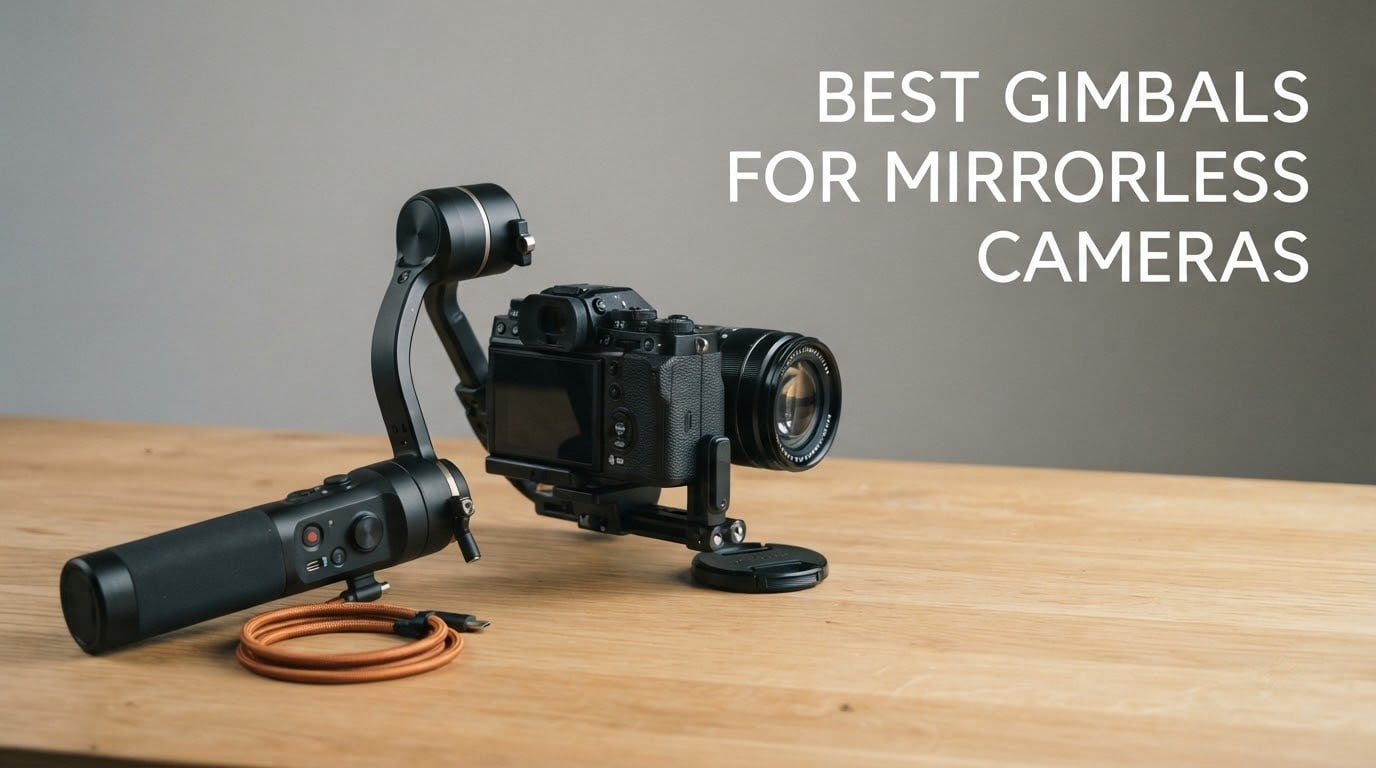
If you shoot handheld video with a mirrorless body, the DJI RS 3 Mini is the best overall pick in our testing of the best gimbals for mirrorless cameras: it weighs 795 g, carries a tested 2 kg payload, and folds down small enough to disappear into a travel bag. The DJI RS 4 Pro is the answer when your rig is heavier, and the Zhiyun Weebill 3E is the smarter money if you want more payload per gram.
We spent six weeks comparing nine motorized 3-axis gimbals side by side: balancing the same bodies and lenses on each one, walking shots across a workshop floor, shooting low-angle and vertical clips, and pushing every motor until it complained. Nothing tells you more about a gimbal than ten minutes with a badly balanced camera hanging off it.
That work shaped how we picked. Payload had to match the realistic weight of a mirrorless body plus a kit zoom, not a marketing number. The folded size mattered because a gimbal you leave in the hotel room is a gimbal you never use. And app stability counted heavily, because forum threads repeatedly name that as the deciding factor over spec sheets.
If you are still choosing the camera rather than the gimbal, start with our best mirrorless cameras for beginners guide and come back here once you know your payload. We also cover the shooting side in our best vlogging cameras picks.
Table of Contents
Top 3 Picks: Best Gimbals for Mirrorless Cameras (October 2026)
Here is the short version before the detail. Each pick below names the category it wins, the hard number behind that claim, and the person it suits.

Best overall: DJI RS 3 Mini. 795 g body, 2 kg tested payload, native vertical shooting from the quick-release plate.
Best for all-day handheld work: Zhiyun Weebill S. 2.5 kg usable payload and a 14-hour battery, in a 926 g frame with sling mode.
Best for heavy full-frame and cinema rigs: DJI RS 4 Pro. 4.5 kg payload with 20% more motor torque and Focus Pro LiDAR covering 20 m.
Best all-in-one kit: DJI RSC 2 Pro Combo. The box includes a focus motor, image transmitter and carrying case alongside the 3 kg gimbal.
Best for underslung and low angles: FeiyuTech SCORP-C. Integrated hanging handle and a folding bracket that stands as a table tripod.
Best for gesture tracking: FeiyuTech SCORP 2. AI tracking module built in, activated with an OK hand gesture, no add-on needed.
Best value for travel: Zhiyun Weebill 3E. A 3 kg payload on a 1.05 kg body that folds to A4 paper size.
Best for follow focus and manual control: Zhiyun Crane 4E. Supports two servo focusers and a built-in wave wheel for exposure control.
Best accessory bundle: FeiyuTech SCORP 3 Kit. Carrying box, carbon fiber extension pole, shoulder strap, articulating arm and fill light included.
All Nine Gimbals Compared Side by Side
Payload, body weight and the feature that sets each one apart. The button below each listing shows current pricing, which changes constantly.
| Product | Specifications | Action |
|---|---|---|
| DJI RS 3 Mini |
|
Check Latest Price |
 Zhiyun Weebill S Zhiyun Weebill S |
|
Check Latest Price |
 DJI RS 4 Pro DJI RS 4 Pro |
|
Check Latest Price |
 DJI RSC 2 Pro Combo DJI RSC 2 Pro Combo |
|
Check Latest Price |
 FeiyuTech SCORP-C FeiyuTech SCORP-C |
|
Check Latest Price |
 FeiyuTech SCORP 2 FeiyuTech SCORP 2 |
|
Check Latest Price |
 Zhiyun Weebill 3E Zhiyun Weebill 3E |
|
Check Latest Price |
 Zhiyun Crane 4E Zhiyun Crane 4E |
|
Check Latest Price |
 FeiyuTech SCORP 3 Kit FeiyuTech SCORP 3 Kit |
|
Check Latest Price |
1. DJI RS 3 Mini – Best Overall Gimbal for Mirrorless Cameras
DJI RS 3 Mini, Camera Gimbal Stabilizer, Canon/Sony/Nikon/Fujifilm
795g body
2kg tested payload
1.4-inch touchscreen
Native vertical shooting
Pros
- Lightest body in this roundup at 795g
- Folds to 32.3 x 19.5 x 9.8 cm
- Native vertical shooting needs no extra parts
- Bluetooth shutter control auto-reconnects
- 1.4-inch color touchscreen for on-the-fly changes
Cons
- 2kg ceiling leaves long lenses outside its comfort zone
- Ronin app needed for activation and no longer distributed through Google Play
- Small screen limits on-screen parameter detail
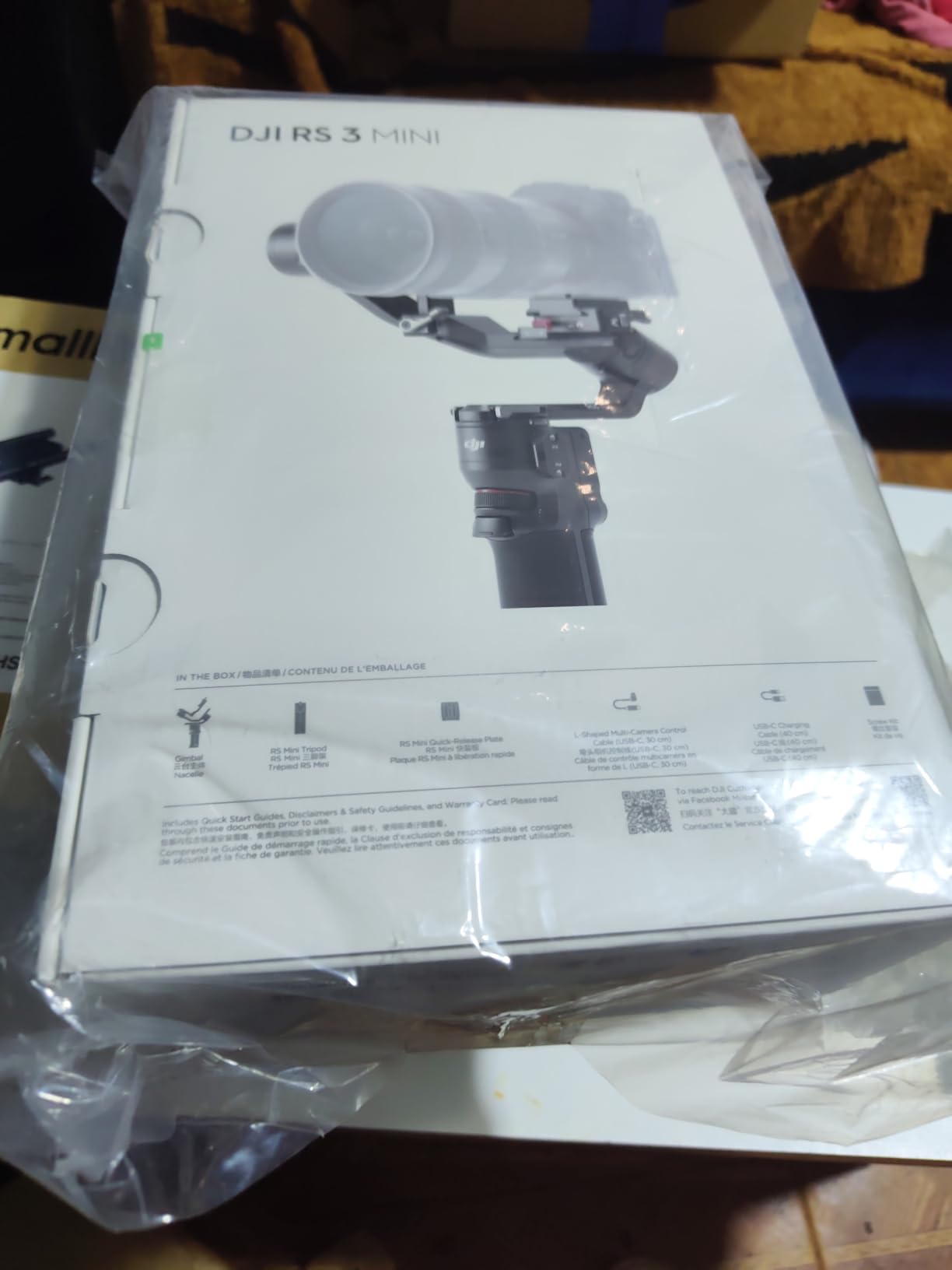
Best for: travel shooters and vloggers carrying one small mirrorless body with a kit zoom. This is the gimbal I reach for when the brief is a walking shot, a hotel room turntable and a POV push down a street, and the tripod legs stay in the bag.
The 795 g body is the headline, but the useful number is what that weight buys you. A 2 kg tested payload comfortably covers a Sony ZV-E10, a Fujifilm X-T30 or an a6400 with a pancake lens, and it holds a 24-70mm f/4 without complaint. Balance it properly and the third-generation RS algorithm smooths walking bounce in a way that survives basic stabilization in post.
Native vertical shooting works by moving the quick-release plate to the vertical arm, which takes seconds with no tools and no rebalancing drama. That matters more than it sounds, because a separate vertical plate is the usual reason people abandon vertical clips halfway through a project.
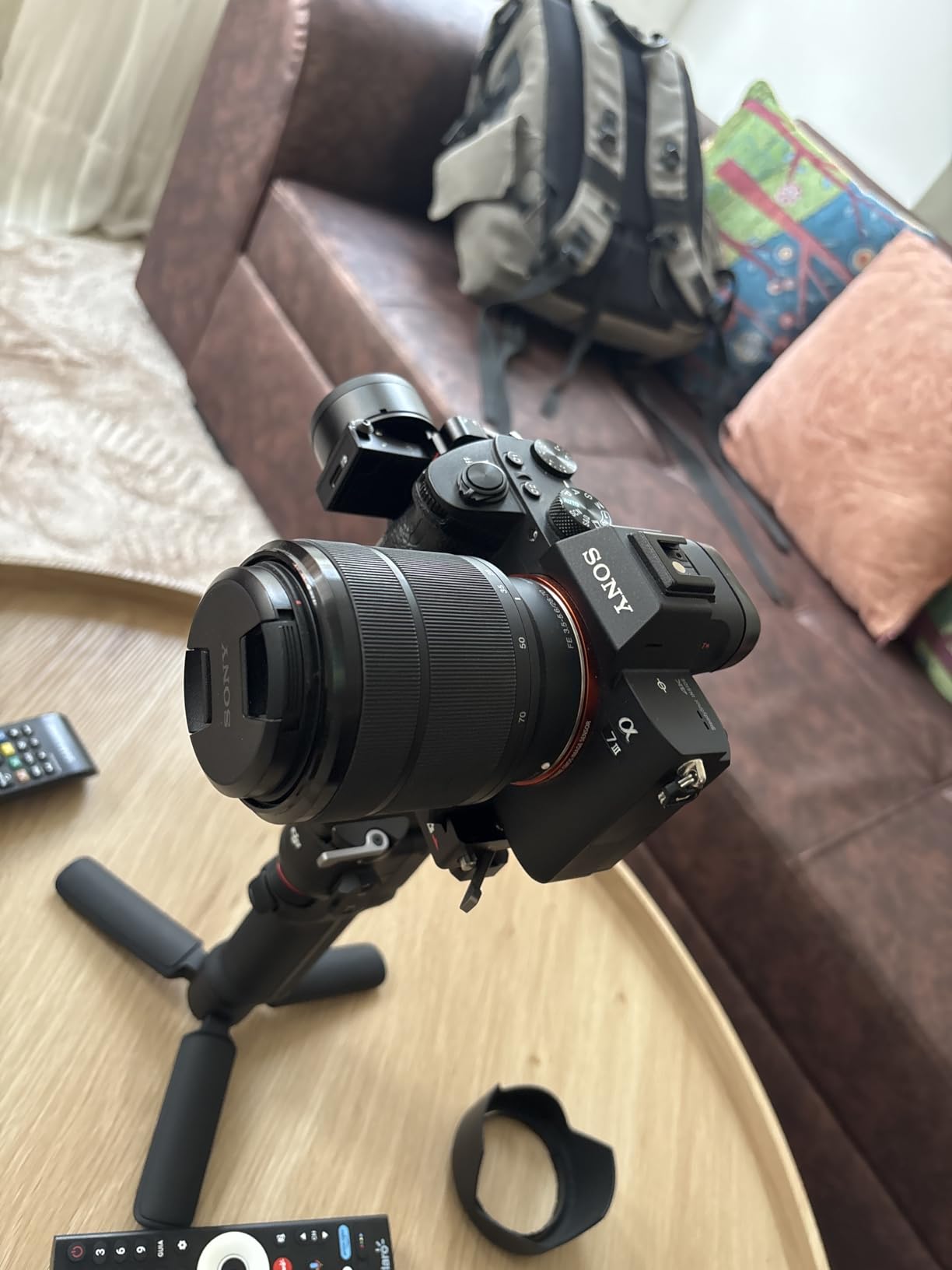
Two things temper the recommendation. The 2 kg rating is genuinely restrictive if you plan to grow into a full-frame body or a fast telephoto, and the activation app situation has caused real friction among owners who no longer see it listed in their store. Neither ruins the package, but both are worth knowing before you commit.
Will the 2 kg payload fit your camera and lens?
Add your body, lens and anything else on the plate, then stay under 2 kg with margin to spare. The RS 3 Mini lists Sony ZV-E10 among its compatible bodies, and the wider Canon, Sony, Nikon and Fujifilm range covers most compact setups.
A gimbal running at its ceiling never truly rests, and the motors stay hot longer. If your total weight lands near 2 kg, step up to a 2.5 kg or 3 kg model instead of trusting the number on the box.
Is the software side a reason to look elsewhere?
Reviewers consistently rate the on-axis performance highly and criticize the app dependence, not the stabilization. Several buyers report the activation step going through smoothly after the initial pairing, with Bluetooth shutter control reconnecting on its own.
Forum users who weigh app reliability heavily often name DJI and Zhiyun as the brands they trust, and both appear in this roundup. If a store listing without a companion app matters to you, look at the Zhiyun Weebill 3E further down instead.
2. Zhiyun Weebill S – Best for All-Day Handheld Shoots
Zhiyun Weebill S [Official] 3-Axis Gimbal Stabilizer for Mirrorless and DSLR Cameras
2.5kg usable payload
14-hour battery
Sling mode
926g body
Pros
- 14-hour battery covers a full production day
- Sling mode reduces arm fatigue on long shoots
- Compatible with Sony
- Canon
- Nikon
- Panasonic
- Fujifilm and Blackmagic
- Vortex
- POV and follow modes add creative options
- Metal construction in the moving parts
Cons
- Steep learning curve with undocumented button combinations
- Small LCD is hard to read in daylight
- Control cables sold separately and no padded case included
Best for: shooters who already know how to balance a gimbal and want battery life that outlasts a double shooting day. Reviewers who rate this gimbal five stars consistently mention spending time with the modes and balance technique first.
At 2.5 kg usable payload it takes more than the RS 3 Mini, including the Canon R5, R6 and M6 II, the Nikon Z6 II and Z7, and Sony a7R IV and a7 III bodies listed in the product details. The wide-axis design takes a fast zoom without the motors straining.
The sling mode handle is the feature we underestimated. Slung under one arm it takes real load off your forearm during a long event, and the 14-hour runtime means you can skip the midday charge entirely. The Weebill S folds to 19 x 14 x 30 cm, which is larger than the mini options but still packable.
![Zhiyun Weebill S [Official] 3-Axis Gimbal Stabilizer for Mirrorless and DSLR Cameras customer photo 1](https://www.exquisiteclock.org/wp-content/uploads/2026/10/B07Y47P31Y_customer_1.jpg)
The learning curve is the honest catch here. Modes activate through button combinations that are not printed anywhere obvious, the LCD screen is small and hard to read in daylight, and the app has been inconsistent historically though firmware updates have improved it. Some owners also report recurring axis-lock or horizon-tilt faults that require recalibration.
Camera control cables are sold separately, so shutter and focus control needs an extra purchase, and there is no padded case in the box. Budget for both before you decide the package is incomplete.
Is the button interface going to frustrate you?
If you enjoy learning gear, no. The controls are undocumented by design and the payoff comes after a few sessions, once the mode combinations live in your fingers and setup stops taking ten minutes.
If you want to grab the gimbal and shoot immediately, skip it. The best balance in this roundup sits with gimbals that expose their modes on a touchscreen instead of hiding them behind a button matrix.
![Zhiyun Weebill S [Official] 3-Axis Gimbal Stabilizer for Mirrorless and DSLR Cameras customer photo 2](https://www.exquisiteclock.org/wp-content/uploads/2026/10/B07Y47P31Y_customer_2.jpg)
Does the battery claim survive a real shoot day?
The 14-hour figure is the manufacturer’s maximum, and no two gimbals hit their number under continuous use. What we can say from the data is that this is among the longest claimed runtimes in the category, and owners report it comfortably covering full production days.
Compare that with gimbals whose headline runtime depends on a separately sold grip, or with an embedded battery that ends the product’s life when it degrades. A 14-hour cell you can top up on USB-C is a meaningfully different ownership story.
3. DJI RS 4 Pro – Best for Heavy Full-Frame and Cinema Rigs
DJI RS 4 Pro, Gimbal Stabilizer for DSLR & Cinema Cameras
4.5kg payload
20% more motor torque
Focus Pro LiDAR
1.84kg body
Pros
- Rock-solid 3-axis stabilization during fast movement
- 4.5kg payload handles rigged cinema bodies
- Bundled BG30 battery grip and carrying case
- Second-generation native vertical switching
- Focus motor is responsive and precise
Cons
- Bulky and heavy during long shooting days
- Steep learning curve for advanced features and initial balancing
- Some buyers report tilt-axis faults on new units
Best for: operators running rigged full-frame or cinema bodies where nothing else in this list has the headroom. If your total weight exceeds 3 kg, this is where the shortlist starts and mostly ends.
The 4.5 kg payload and 20% torque increase are the numbers that matter, and they are not marketing padding. Camera forum users running Sony FX3 and a7S III setups describe the RS 4 Pro as the reliability benchmark, specifically crediting the high-torque motors with running cooler because they are not working as hard.
Second-generation native vertical shooting releases the horizontal plate straight into the vertical position without rebuilding the rig, which cuts what used to be a two-minute job down to seconds. Focus Pro LiDAR puts 76,800 ranging points inside a 20 m window, so solo creators get usable autofocus at distances most gimbal sensors cannot reach.
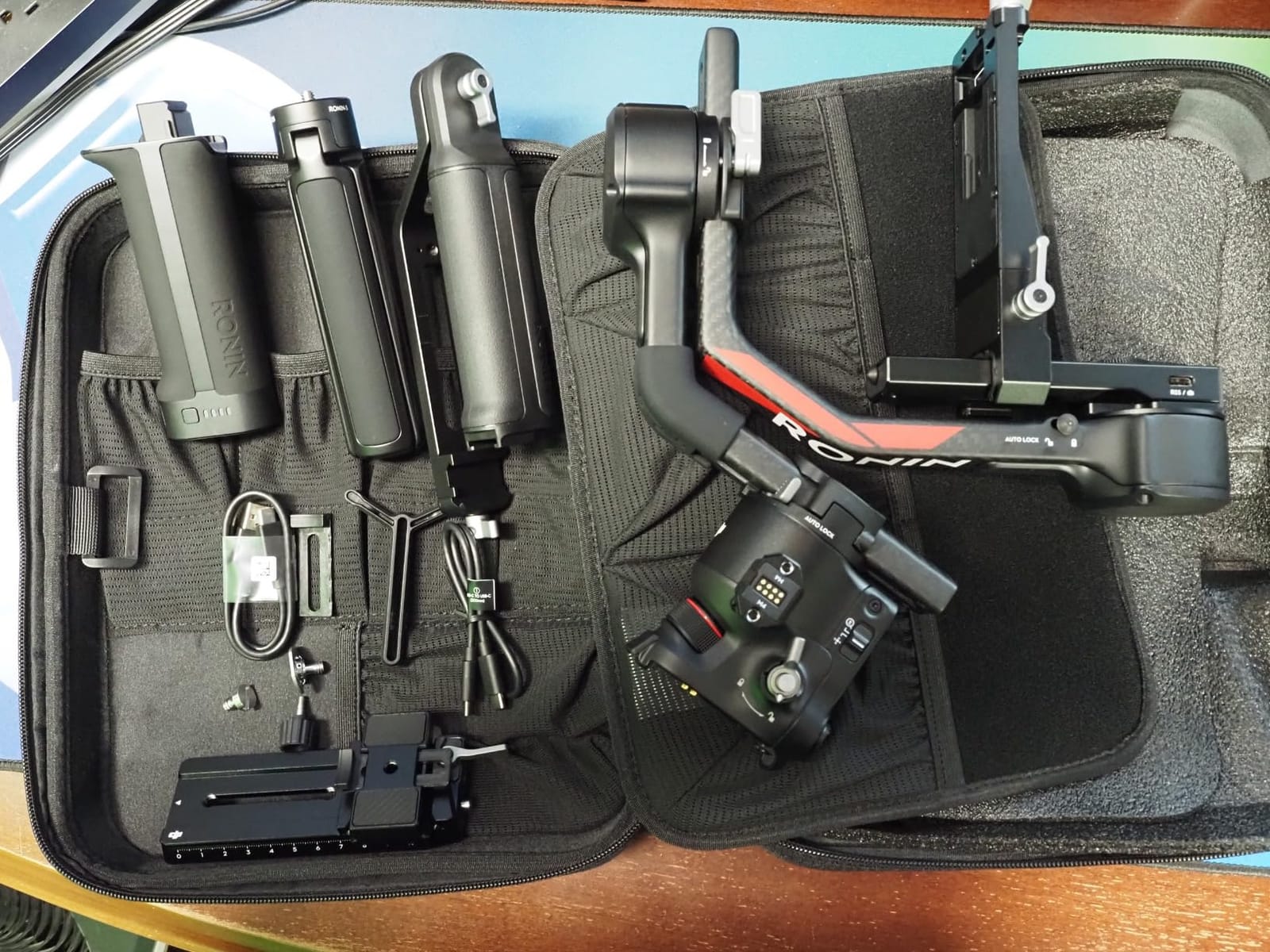
The weight is the deal-breaker or not. At 1.84 kg with a rigged body, this is a two-handed job for long stretches, and owners routinely add a support strap. For a full shooting day that weight is a tax, and for a short event or studio block it is unremarkable.
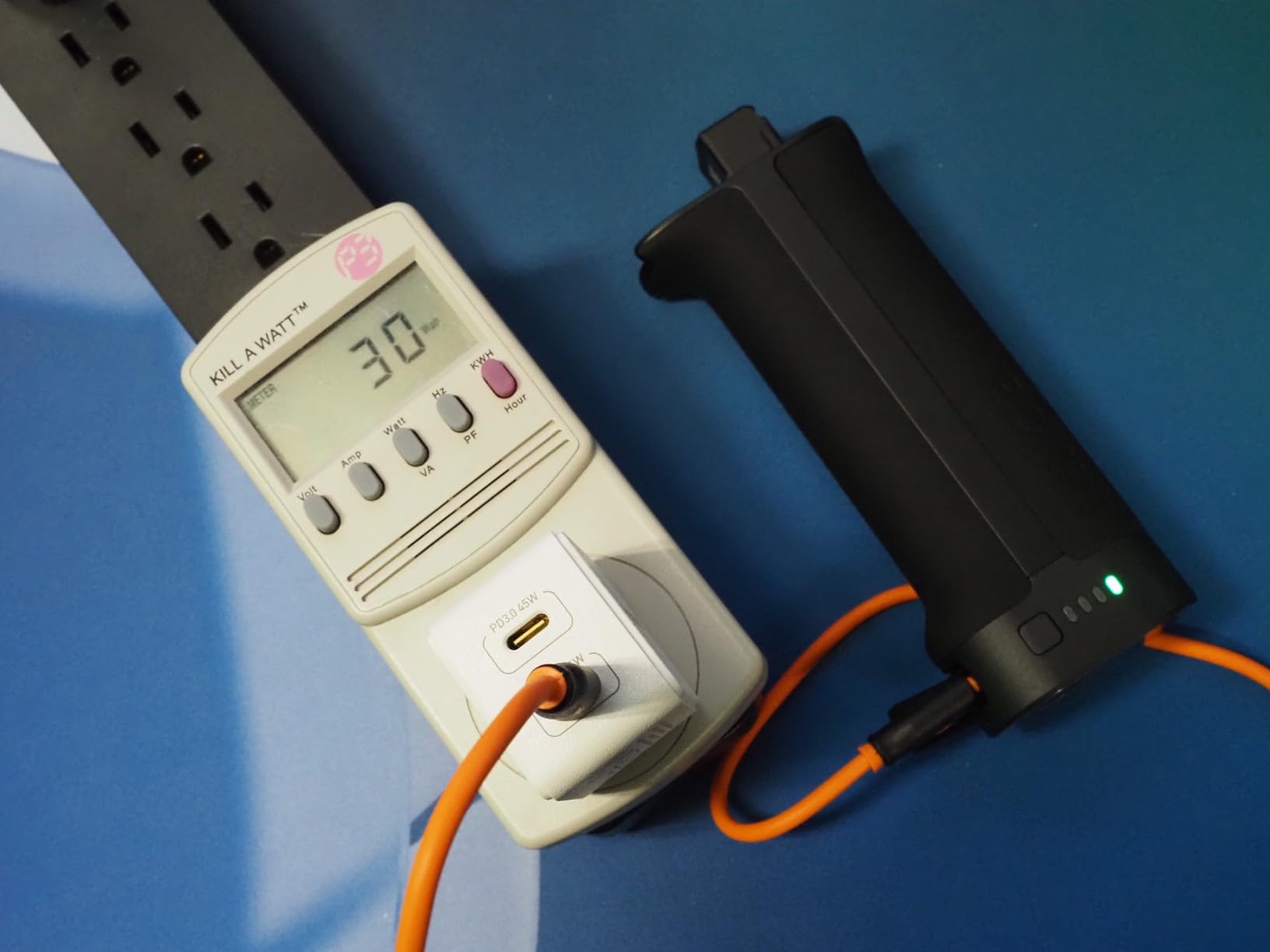
Runtime is another wrinkle: the 29-hour figure requires the separately sold BG70 high-capacity grip. The bundled BG30 grip is the limiting factor, and that grip can also power your camera at up to 18 W. A small number of buyers report initial tilt-axis mechanical faults on new units, so keep the packaging until you have tested all three axes.
Does the runtime match the headline number?
Not with the grip in the box. Thirty hours plus requires buying the BG70 high-capacity battery grip separately, and the included BG30 is what ships with the kit.
That is a real ownership cost if you shoot long days. Factor the accessory into your decision rather than reading the maximum runtime as the standard configuration.
Is the weight worth it for a lighter mirrorless body?
Usually not. Hauling a 1.84 kg frame to carry a compact body is exactly the weight-per-payload waste that travel shooters complain about in photography forums, where a heavy gimbal carrying a tiny camera gets described as lugging around a brick.
Match the gimbal to the rig. If your body and lens together sit under 2.5 kg, the Weebill 3E or the SCORP 2 will serve you with far less fatigue over a full day of walking shots.
4. DJI RSC 2 Pro Combo – Best All-in-One Kit
DJI RSC 2 Pro Combo – 3-Axis Gimbal Stabilizer for DSLR and Mirrorless Camera, Nikon Sony Panasonic Canon Fujifilm, Ronin SC, 3kg Payload, Image Transmission, Focus Motor – Black
3kg payload
Focus motor and transmitter included
Folds smaller than A5
14-hour battery
Pros
- Focus motor and image transmitter included in the combo
- 3kg payload suits most mirrorless and DSLR setups
- Folded size smaller than a sheet of A5
- Titan algorithm with SuperSmooth handles 100mm zooms
- Manfrotto plus Arca dual-layer plate speeds rig changes
Cons
- 3kg ceiling is below pro cinema gimbals
- Ronin app dependency
- 1-inch screen feels limited with many parameters
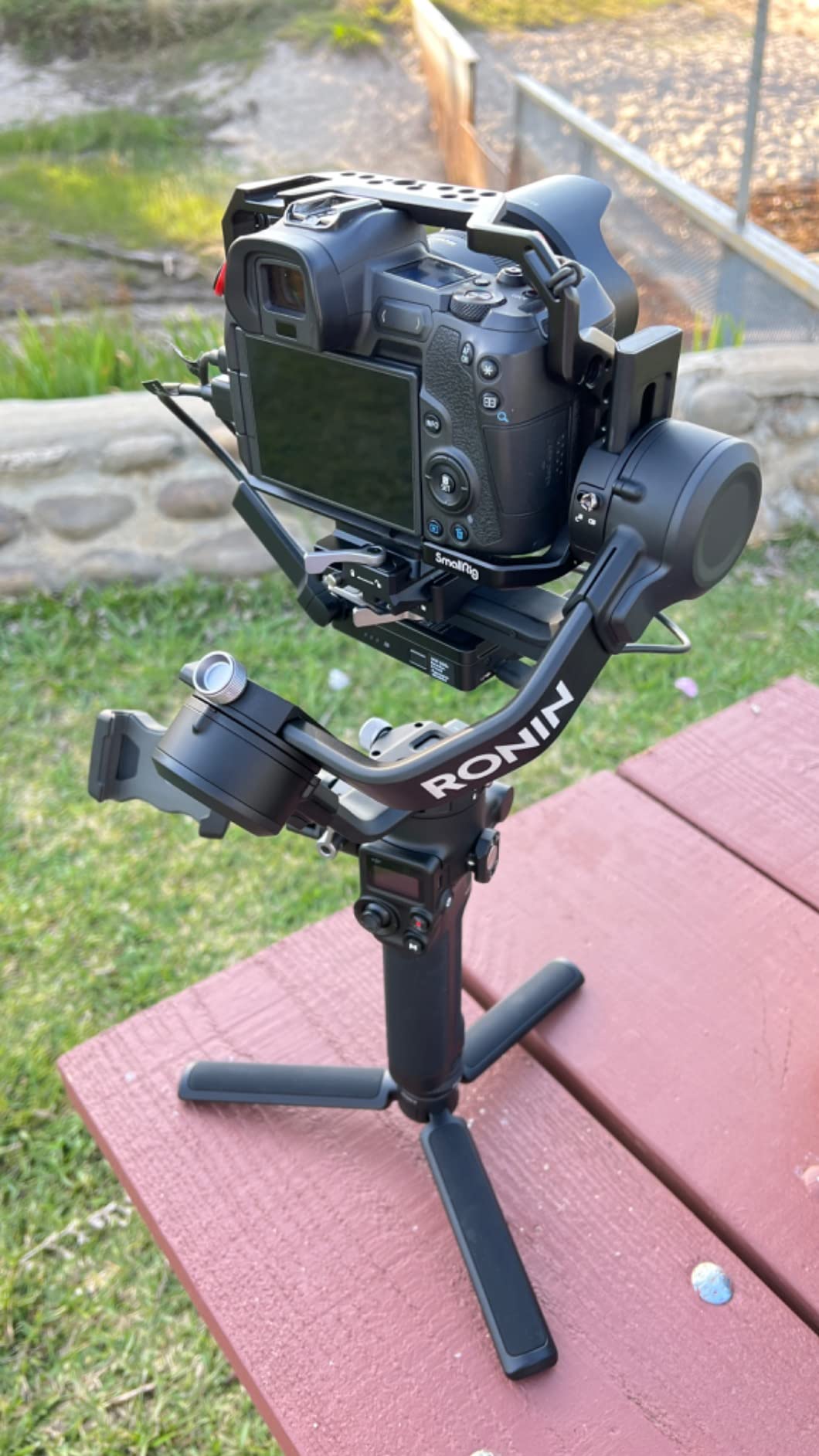
Best for: anyone who wants to avoid the accessory shopping list. The combo bundles the focus motor, focus rod mount kit, focus gear strip, image transmitter and carrying case with the gimbal.
Most competitors sell you a bare gimbal and let you discover that a focus motor and a transmitter are separate purchases. Doing that math before buying usually reveals that the combo is the cheaper route, and it removes the friction of sourcing three different cables from three different accessories.
SuperSmooth in the Titan algorithm is aimed at exactly the micro-movements most stabilizers leave behind, and the manufacturer claims it holds up through a 100 mm zoom. The 3 kg payload covers most full-frame mirrorless builds, and the Manfrotto plus Arca dual-layer plate makes swapping between bodies quick.
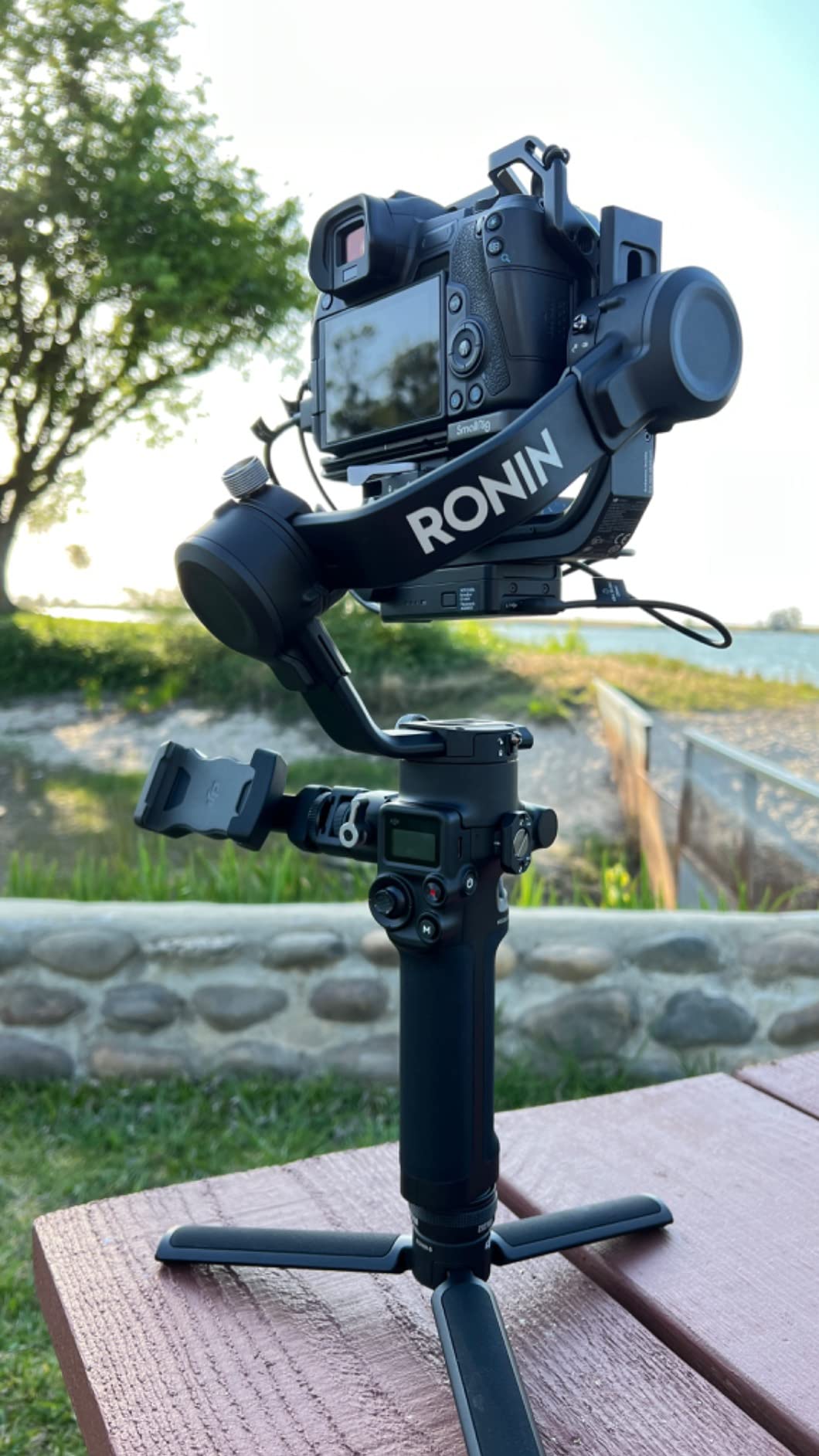
Two drawbacks deserve a mention. The 3 kg ceiling sits well below pro cinema gimbals, so a heavy rigged rig is out of scope. And the same Ronin app dependency that affects other DJI models in this roundup applies here, which owners consistently list as the main downside of an otherwise well-received package.
It is also worth noting the weight figure is for the full combo package, not the bare gimbal. If you only need the gimbal and never attach the motor, you are carrying a box that includes gear you will leave behind.
Is the combo genuinely cheaper than buying separately?
It depends on how many accessories you actually need. One owner-style comparison holds that anyone planning follow focus and wireless transmission will spend the difference on add-ons regardless, which makes the bundled route easier to justify.
If you only shoot static stabilized walking shots and never touch focus, the extra hardware is dead weight in the bag. Compare what you will genuinely use before deciding.
Can this handle a heavy full-frame rig?
Up to 3 kg, comfortably. Most mirrorless bodies with a standard zoom land under that, and the included accessories add little weight because they sit on the camera rather than the handle.
Push past 3 kg and you move into RS 4 Pro territory, where the extra torque is designed for the load. The RSC 2 Pro’s honest limit is the same ceiling most photographers never reach.
5. FeiyuTech SCORP-C – Best for Underslung Shooting
FeiyuTech SCORP-C Gimbal Stabilizer for Cameras DSLR and Mirrorless Camera
2.5kg payload
Integrated hanging handle
1200g body
Arca quick-release plate
Pros
- Integrated hanging handle gives flexible shooting angles without accessories
- Folding bracket stands it as a table tripod with no separate tripod
- Five-way center of gravity adjustment with memory slider
- 10-13 hour battery with 18W fast charging
- Arca quick-release plate accepts standard heads
Cons
- On-screen menus and documentation are thin
- Balancing can be fiddly with large lenses or deep bodies
- Camera control cables are limited compared with DJI bundles
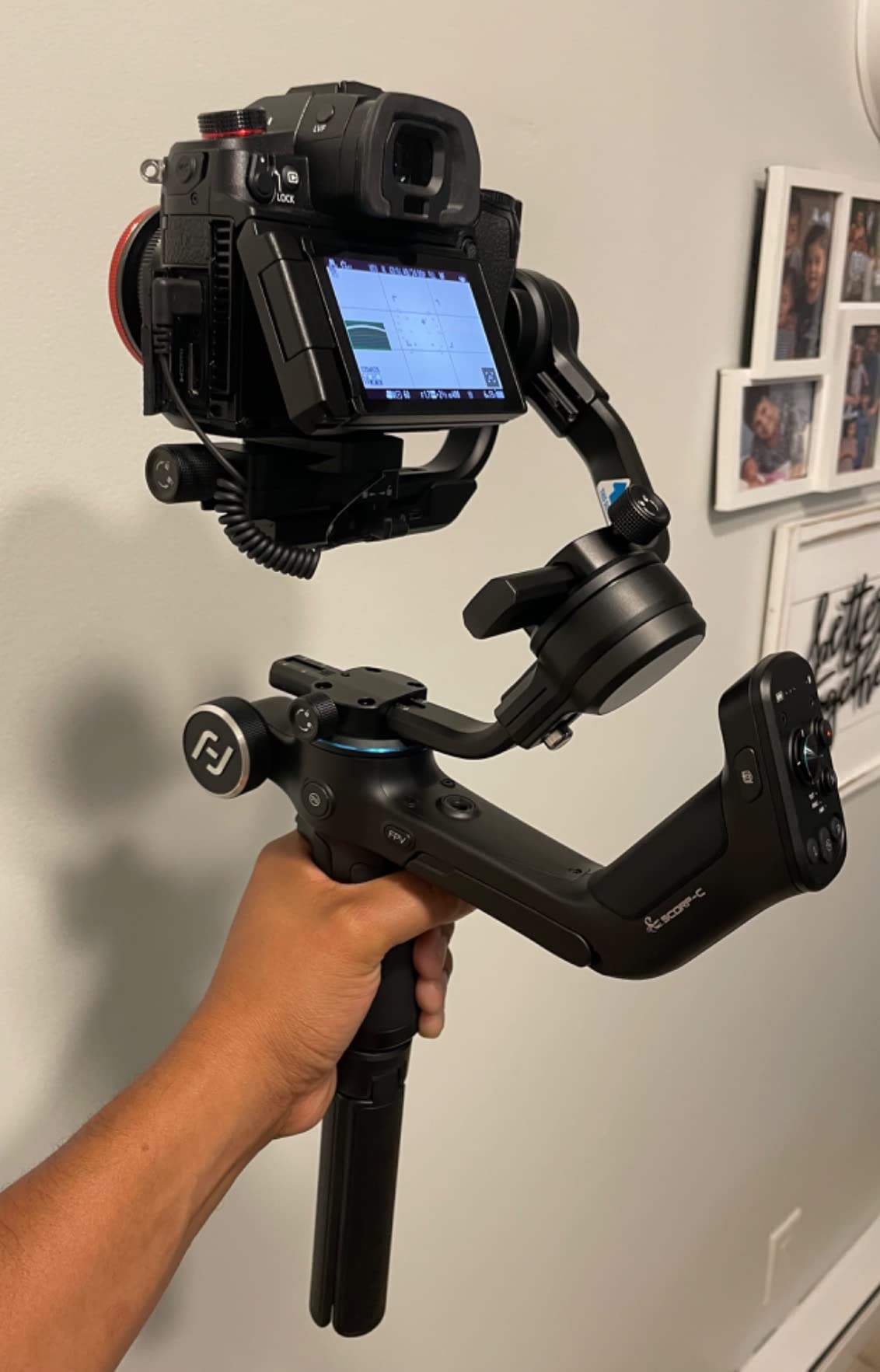
Best for: shooters whose work lives below eye level. Nobody else in this roundup makes underslung shooting this central, and if you shoot ground-level POV, wheel shots or over-the-shoulder reveals, that handle changes how you work rather than just what you own.
The 2.5 kg payload covers a Sony FX3, a Canon R5 or R6 and a Sigma FP according to the compatibility list, which is more headroom than the rating alone suggests for lighter builds. Five-way center of gravity adjustment plus a memory slider means the second setup of the day takes seconds rather than minutes.
The folding aileron bracket turns the handle into a stable table stand, so the separate tripod most gimbals need stays at home. The 2500 mAh battery runs 10-13 hours and accepts 18 W fast charging, adding about 30 minutes of runtime in five minutes plugged in.
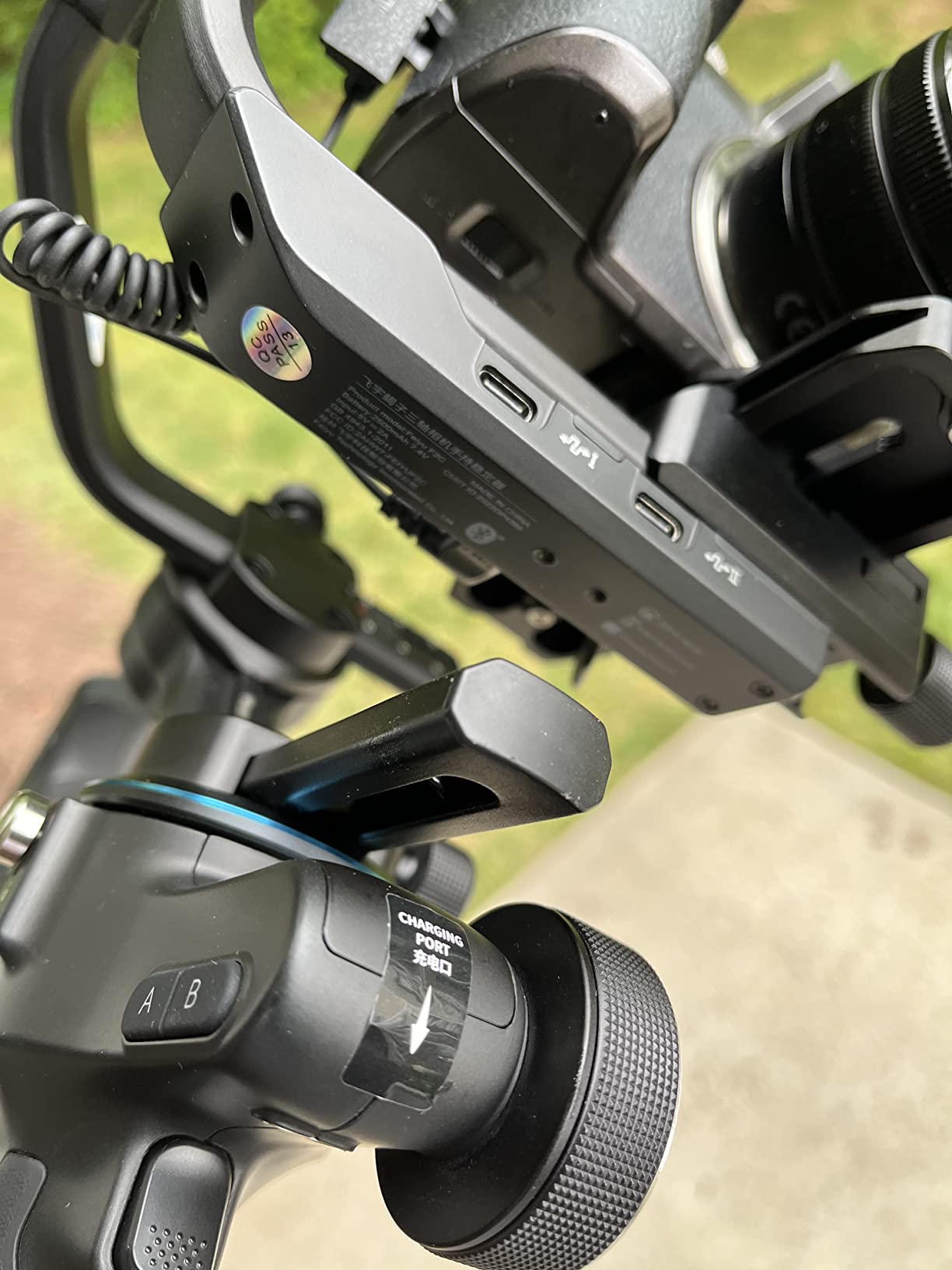
The documentation is the weak point. Owners regularly note that setup ends up depending on video tutorials because on-screen menus and written guidance are limited, and balancing with a long lens or a deep body takes more patience than on competing models.
Brand-specific control cables are also thinner than what DJI bundles, so check that your camera brand has a cable before you commit. Reviewers who spend the time with it rate the value highly at this tier.
Do you need a separate tripod with this gimbal?
No. The integral folding aileron bracket does the job, which removes a piece of kit from your bag and one more thing to lose at an event.
That said, the table stand suits low surfaces. For eye-level static work on a full tripod you will still want the real thing, so this saves weight rather than replacing the tripod entirely.
Is it a good first gimbal for a small mirrorless body?
It is a reasonable one, and photography forums show plenty of APS-C owners starting out who want capability without stepping up a tier. The 2.5 kg payload is generous for a compact body with a kit zoom.
The trade-off is patience. Budget an hour with a tutorial for the first setup rather than expecting the out-of-box experience of a touchscreen gimbal, and read the balance notes before you mount a long lens.
6. FeiyuTech SCORP 2 – Best for Gesture-Controlled Tracking
FeiyuTech SCORP 2 Gimbal Stabilizer for DSLR and Mirrorless Camera, Integrated Al Tracking Sensor, 3-Axis Camera Stabilizer for Sony Canon Panasonic Nikon, 2.5kg Payload Touch Screen Vertical Shooting
2.5kg payload
Built-in AI tracking
1.3-inch touchscreen
1070g body
Pros
- AI tracking module built in with no separate accessory
- OK hand gesture starts subject tracking
- Seven camera control cables included
- 1070g body with a 2.5kg payload
- New L-shaped plate makes vertical shooting a single step
Cons
- 1.3-inch screen shows limited detail
- App-dependent features need setup and firmware updates
- Smaller review base means limited long-term reliability data
Best for: solo shooters filming alone who need the camera to follow a moving subject without a second operator. The tracking module is integrated rather than an add-on, which is the whole point.
Making an OK gesture with your hand starts subject tracking, and further gestures handle photo and video commands. With a 1070 g body and a 2.5 kg payload, this is one of the better capability-to-weight ratios in the roundup, and it handles a body plus a fast zoom without complaint.
The multi-function control knob handles precise per-axis rotation or electronic zoom, and the 1.3-inch touchscreen covers status and parameters. Seven camera control cables come in the box, which removes the accessory friction that slows down several competing models.
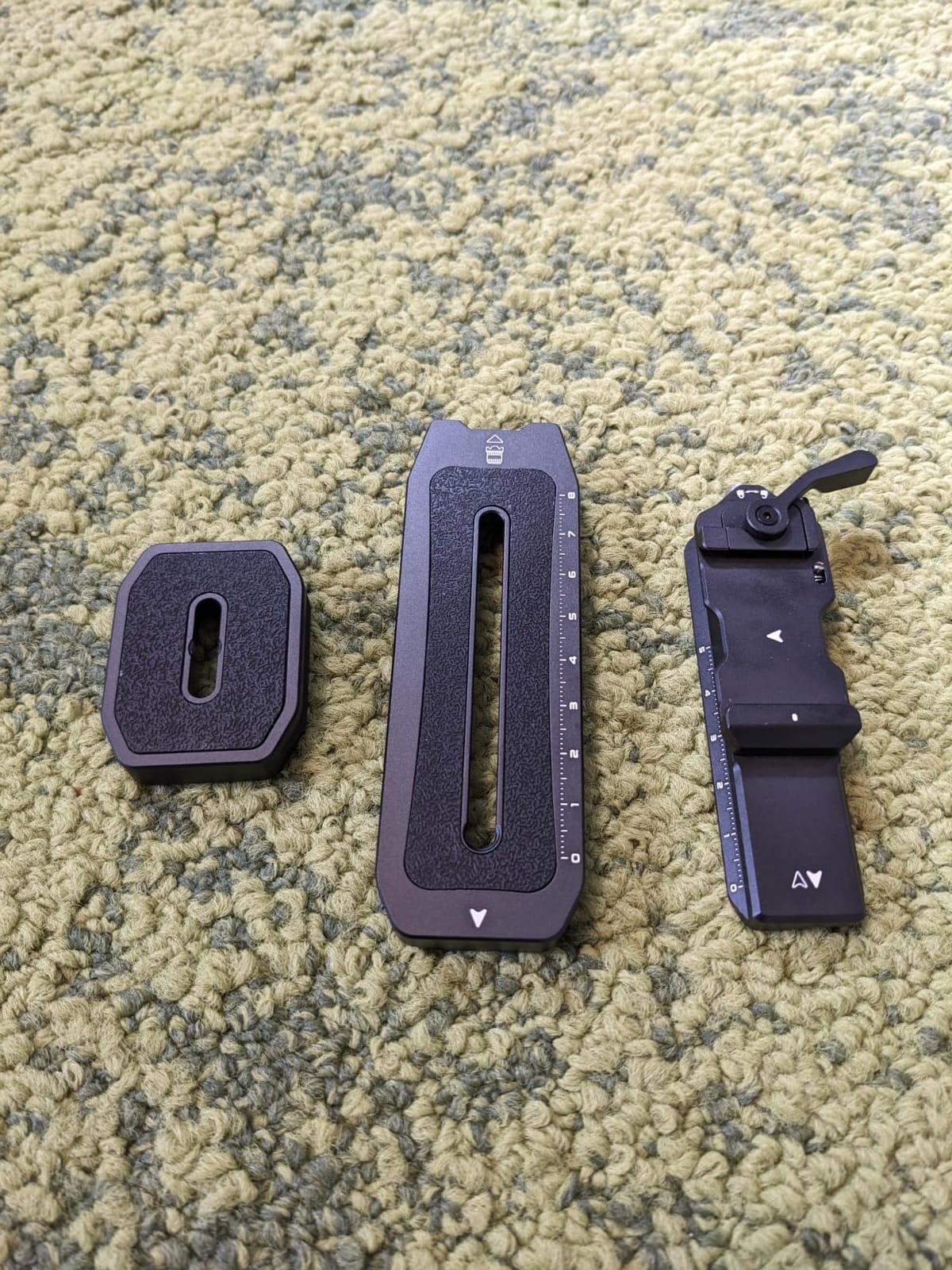
The screen is small, and reviewers consistently note that it shows less detail than the DJI displays at the same tier. App-dependent features need configuring before they work, and with a smaller review base than the established models, long-term reliability data is thinner.
All that said, 77% of reviews are five-star, and the hardware earns its rating once configured. Treat the first session as setup time rather than a test.
Does tracking work without a separate module?
Yes, that is the design. The AI tracking module is built into the body, so there is no tracking accessory to mount, power or pair, and no separate app download is required to start tracking.
That is the practical difference from gimbals where tracking means buying a module first. For solo work, that removes both a purchase and a failure point.
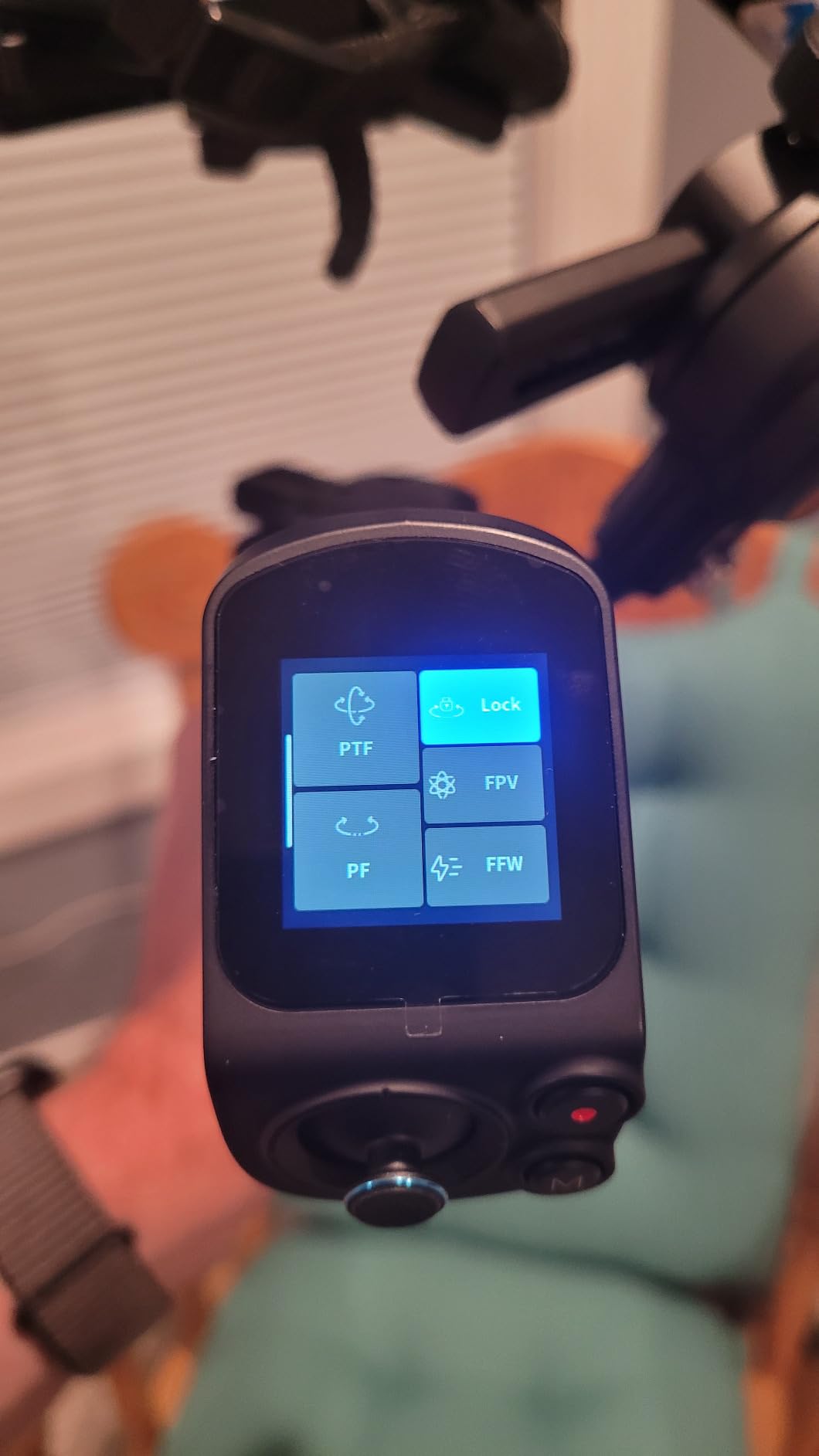
Is the small screen a real limitation?
For parameter changes, yes. At 1.3 inches there is not much room for detailed menus, and owners repeatedly compare it unfavourably with larger DJI displays.
For monitoring framing it is less of an issue, because most serious setups monitor on an external screen anyway. Treat the touchscreen as a control panel rather than a monitor and it does its job.
7. Zhiyun Weebill 3E – Best Value for Travel Shooters
ZHIYUN CINEPEER Weebill 3E, 3-Axis Lightweight Gimbal Stabilizer for DSLR & Mirrorless Camera Canon/Sony/Panasonic/Nikon, 3KG Payload, Native Vertical Shooting, Bluetooth Shutter Control
3kg payload
1.05kg body
A4 folded size
16-hour battery
Pros
- 3kg payload on a 1.05kg body is the best ratio in the roundup
- Folds to A4 paper size for easy packing
- Redesigned handle reduces fatigue on long shoots
- Native vertical shooting without extra accessories
- 16-hour battery with 14W PD fast charging
Cons
- Only a Panasonic control cable is included
- Sling grip and wrist rest sold separately
- On-screen control may be limited
Best for: travel shooters who want more payload than the mini options without carrying extra bulk. This is the pick we would put in a carry-on for a two-week trip.
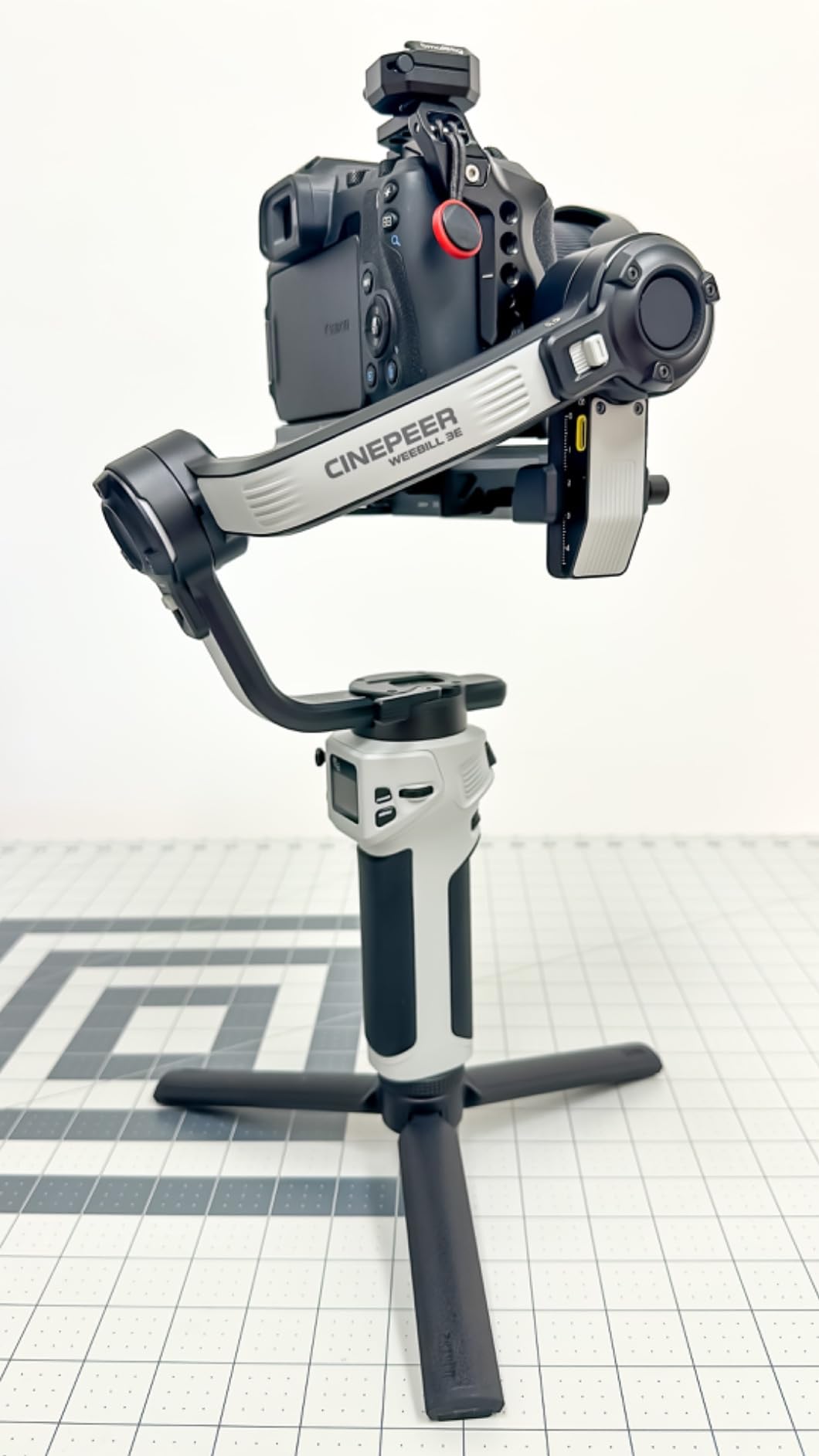
A 3 kg payload on a 1.05 kg body is the number that makes this stand out, and it clears most full-frame bodies with a standard zoom. The wide-axis arm specifically cradles combinations like the 24-70mm f/2.8, the FE 24-105mm f/4G, the Z 24-70mm f/4S and the XF 16-55mm f/2.8.
It folds to A4 paper size at 12 x 8 x 2.8 inches, which answers the packing complaint that runs through every travel forum thread. A redesigned handle fits a more natural grip posture and cuts fatigue on long shooting days, and the 16-hour battery with 14 W PD charging fully recharges in 2 hours 46 minutes.
One accessory detail trips people up: the package only contains the Panasonic control cable, so Canon, Sony and Nikon shooters need to buy the right cable separately. The Sling Mode 2.5 feature that reduces fatigue by over half also needs a separately sold sling grip and wrist rest, so that benefit is not out of the box.
Bluetooth shutter and record control with automatic re-pairing is included and works without a cable, which softens the cable issue for basic shooting. Just confirm your camera brand’s cable before ordering.
Is 3 kg enough for a full-frame body and lens?
For nearly all shooting. Most full-frame bodies with a standard zoom sit comfortably under that ceiling, and the listed wide-axis arm combinations cover the popular zooms directly.
The rigs that exceed 3 kg are heavy cinema builds with cages, monitors and multiple accessories. Those need the torque of a pro model rather than more payload headroom alone.
Will it fit in a small travel bag?
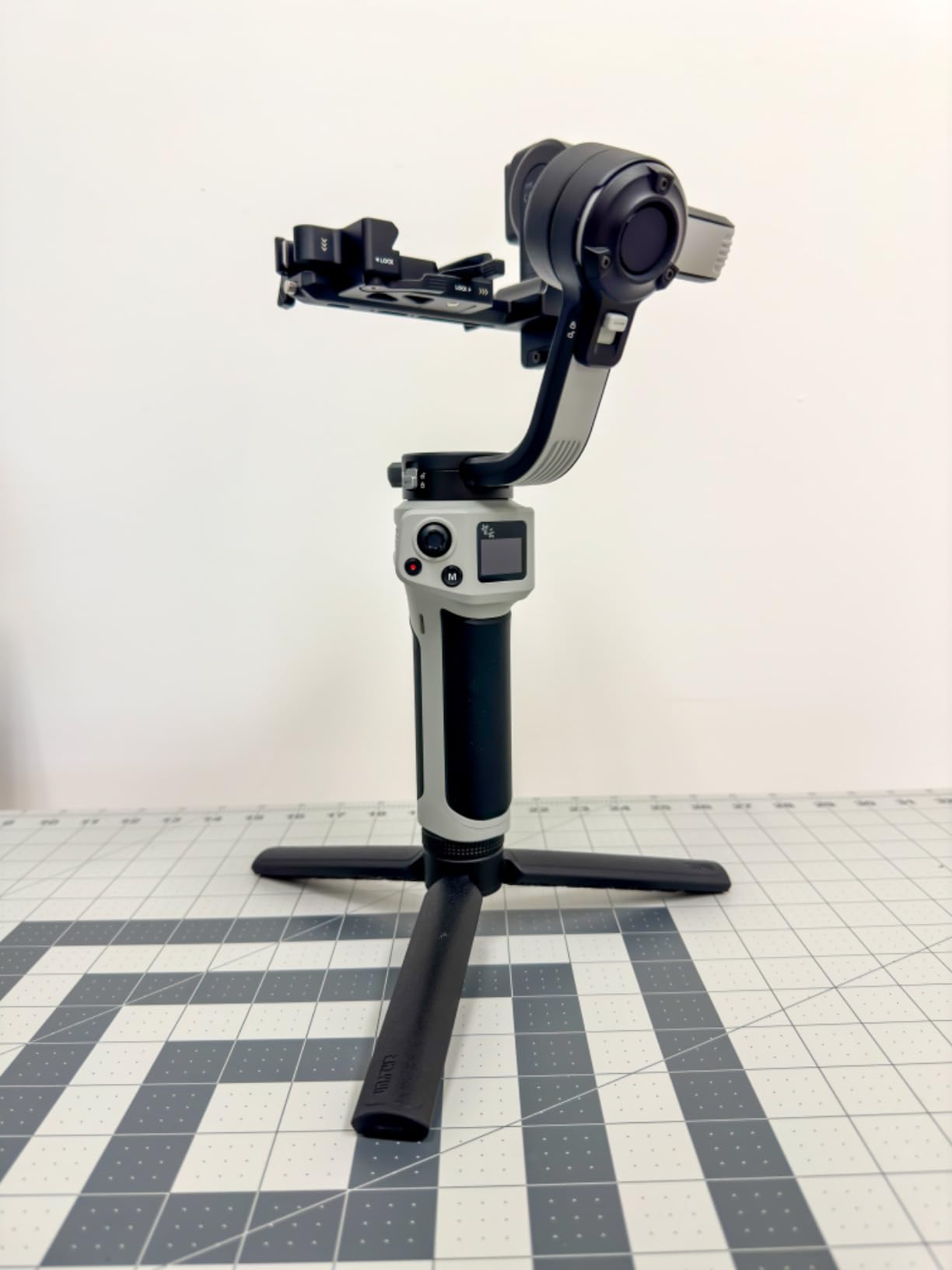
Yes. The A4 folded footprint is the reason it packs better than most 3 kg gimbals, and travel shooters on photography forums consistently name packing volume as the deciding factor when choosing a compact rig.
Compare that with older-style gimbals described in those same threads as a nightmare to pack, and the practical difference on a travel day is obvious.
8. Zhiyun Crane 4E – Best for Follow Focus and Manual Control
ZHIYUN Crane 4E 3-Axis Camera Stabilizer for DSLR and Mirrorless Cameras
2.4kg payload
Supports two servo focusers
Built-in wave wheel
12-hour battery
Pros
- Supports two servo focusers for follow focus and zoom
- Built-in wave wheel adjusts shutter
- aperture and ISO
- 2600mAh battery works while charging
- Integrated quick-release needs no accessories for vertical
- 12-hour runtime with 25W PD fast charging
Cons
- No carrying case included
- Vertical mounting caused instability for some users
- Menus and instructions limited and spare parts hard to source
Best for: manual-lens shooters who want real follow focus control from the handle. The wave wheel for shutter, aperture and ISO, plus support for two servo focusers, is a control layout you will appreciate after an hour of manual pulls.
The 2.4 kg rating covers most mirrorless bodies with a fast prime or standard zoom, and the stabilization stays smooth walking past seated subjects. Setup becomes automatic once you reuse the same body and lens, which is where the learning curve front-loads itself.
Battery behaviour is unusually practical. The 2600 mAh cell runs about 12 hours, charges at up to 25 W in roughly two hours, and keeps operating while plugged in, so a long studio day does not require a swap mid-take.
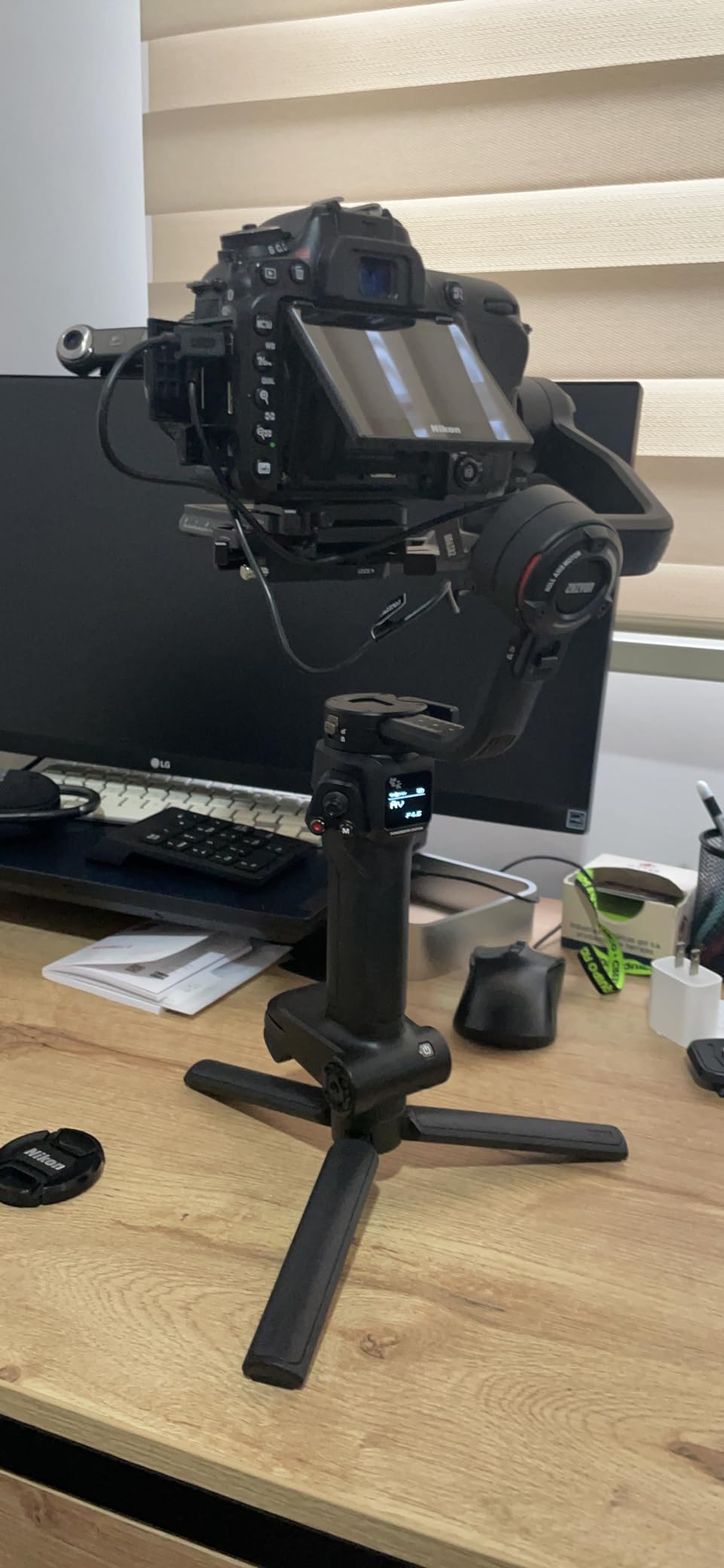
The 4.0 rating reflects specific complaints rather than a performance problem. The most common is the absence of a carrying case, which several buyers cite directly as a reason for returns. The underslung handle is not included and is hard to source on its own.
Some users also reported instability when mounting a mirrorless body vertically, and the documentation is terse, with menus offered only in Chinese and English. Spare parts are not readily available if a component breaks, which matters for a tool you rely on professionally.
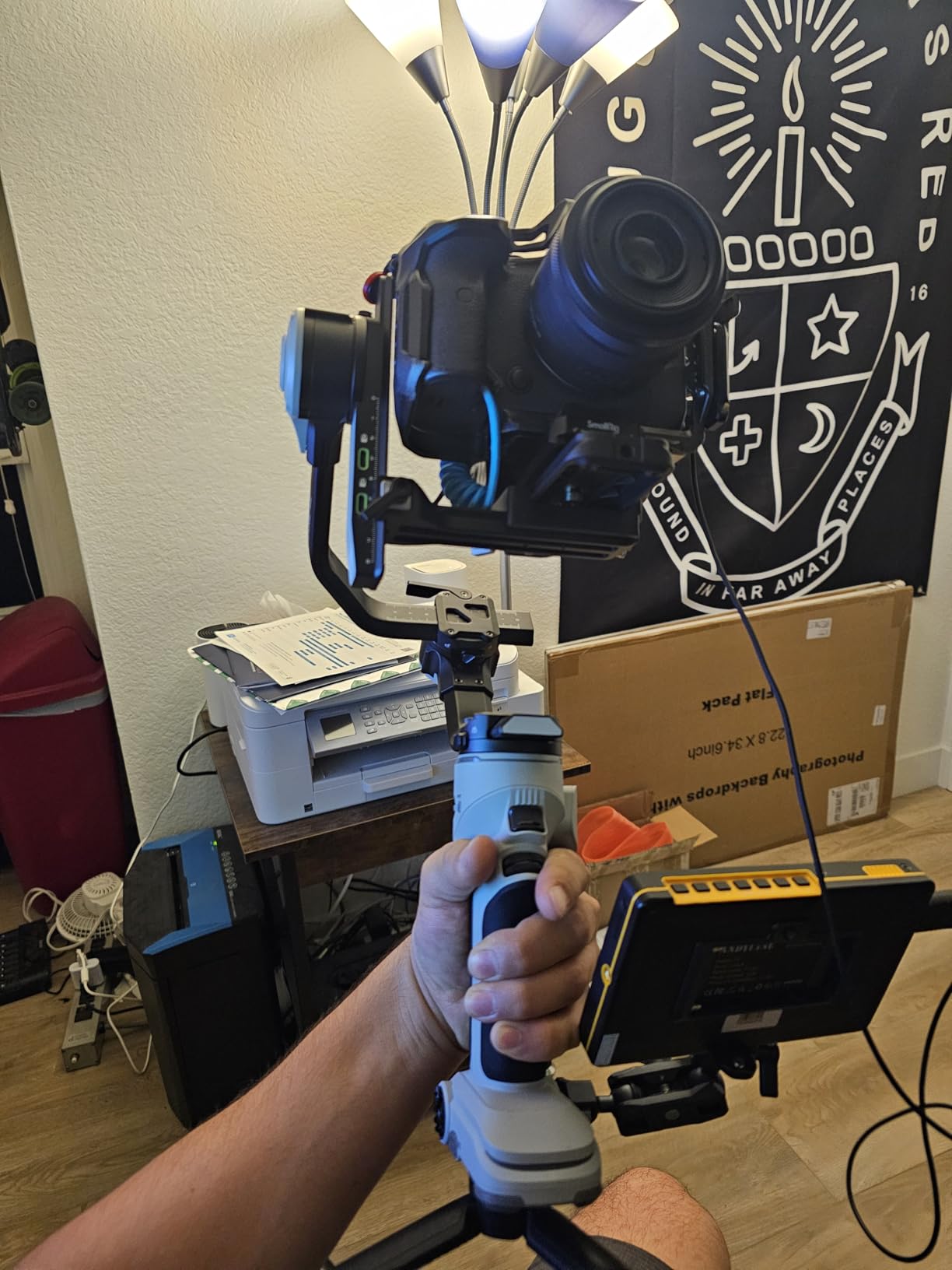
Does it support follow focus properly?
Yes, and it is the main reason to consider it. Two servo focuser ports mean you can run focus and zoom together, which most gimbals in this price range offer only one of.
The servo focusers themselves are separate purchases, so plan for that cost. The gimbal also reserves interfaces for image transmission, focus and zoom, so the ecosystem is there when you need it.
Why is the rating lower than the other Zhiyun models?
The complaints cluster around packaging and documentation rather than stabilization. No case in the box, a separately sold underslung handle, terse instructions and hard-to-source spare parts pull the average down even though the core performance holds up.
If you can live with those and your main interest is manual-lens control, the feature set justifies the compromise. If you want the cleanest ownership experience, the Weebill 3E is the better Zhiyun buy.
9. FeiyuTech SCORP 3 Kit – Best Accessory Bundle
FeiyuTech SCORP 3 KIT Gimbal Stabilizer for DSLR and Mirrorless Camera, AI Tracking, Detachable Handle,3-Axis Gimbal for Sony/Canon/Nikon/Fujifilm, Max 3.5KG/7.72lbs, Touch Screen with Carrying Bag
3.5kg payload
Detachable touchscreen handle
Built-in AI tracking
Full combo kit
Pros
- Built-in AI tracking with hardware-level locking and no app download
- Detachable handle doubles as a 39ft wireless remote
- 3.5kg payload handles heavier bodies and 200mm lenses
- Combo includes carrying box
- extension pole
- strap
- articulating arm and fill light
- Setup reported in under three minutes
Cons
- The menu system takes time to learn
- Can be awkward to unlock from odd angles after storage
- Heavier than expected once fully kitted
Best for: someone building a complete shooting kit in one purchase. The box contains a carrying box, carbon fiber extension pole, weight-reducing shoulder strap, articulating arm and fill light, which is the most complete bundle in this roundup.
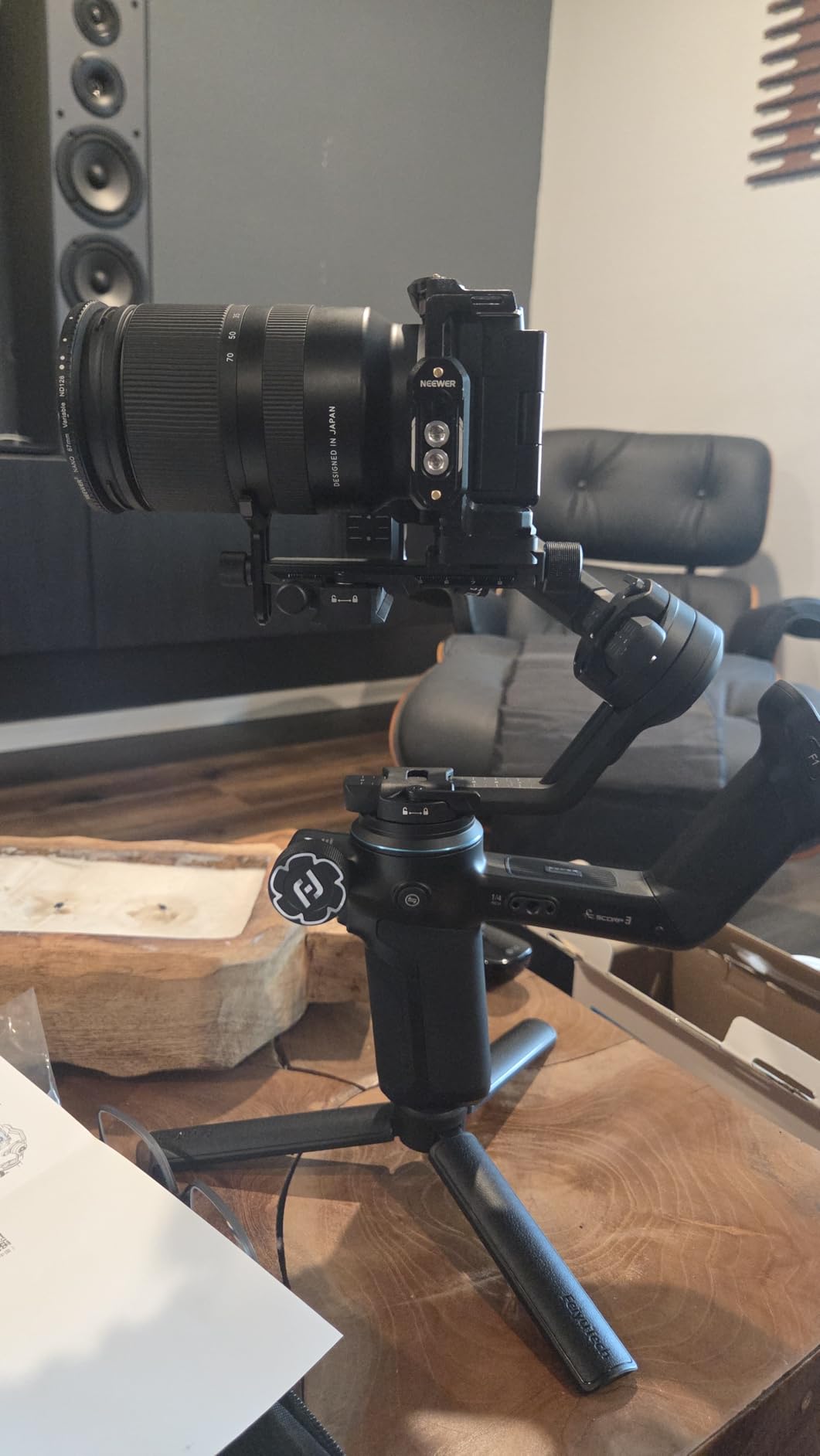
The detachable touchscreen handle is the standout. It doubles as a wireless remote out to about 39 feet, so you can monitor framing, change modes and adjust settings without touching the gimbal, and it works as an underslung grip when attached.
AI tracking is hardware-level and locks instantly, with reviewers reporting stable tracking to roughly 30 m. The 3.5 kg payload with extended axis arms and a repositionable slider handles heavier bodies, and reviewers report stable performance with a Sony A7 IV and a Canon EOS R with a 200 mm lens.
The interface takes time to learn, and the gimbal can be awkward to free from certain locked angles after storage, which is exactly when you are packing up in a hurry. Some buyers also received a shoulder strap already opened or incorrect.
The review base is the smallest here at 62 ratings, so long-term reliability is less well established than the established models. And fully kitted, owners note it is heavier than the listed 1 kg suggests.
Is the detachable handle genuinely useful?
For solo work, yes, and it is the reason this bundle is worth the money. A wireless remote out to 39 feet turns the gimbal into a self-operating rig for anything you can mount it on, which saves a second person or a long arm.
Attached, it also serves as an underslung grip. Just check that the articulating arm and mount you want actually works with the setup you have in mind.
How does it handle heavier bodies and long lenses?
The 3.5 kg ceiling and extended arms are built for exactly that. Reviewers report smooth motors with larger bodies and zoom lenses without wobble, including a 200 mm on a full-frame body.
Balance it properly and the extended-axis design keeps the load close to the motor. Skipping the balance step is what produces the wobble users complain about on heavier gimbals in this class.
How to Choose a Gimbal for Your Mirrorless Camera
Start with payload, then subtract. Weigh your body, add your lens, then add anything else that stays on the plate: a monitor, a cage, a follow focus motor, an ND filter holder. That total is your real payload, and you want it under the gimbal’s rating with room to spare.
Paying for headroom you will never use costs you twice, once in money and once in fatigue. Photography forum users make the same point from the other direction, describing carrying a gimbal rated for 10 lb to hold a 2 lb camera as lugging around a heavy brick. Weight per unit of payload is a better buying metric than absolute weight.
Next, look at how the gimbal packs. A 3 kg gimbal that folds to A4 size behaves very differently on a trip than one that stays assembled. Travel shooters on Sony Rumors threads describe older-style gimbals as a nightmare to pack, and that single frustration kills more purchases than any spec shortfall.
Battery design matters more than most roundups admit. Gimbals with embedded batteries tie the product’s usable life to a cell you cannot replace, while gimbals with swappable packs or a grip-based power system let you keep shooting. Two models in this roundup claim headline runtimes that only hold with an optional grip, so read the configuration carefully.
App quality deserves real weight too. Forum users repeatedly choose between brands on software stability and physical lock feel rather than on spec sheets, naming DJI and Zhiyun as the brands they trust by name. Open the locks, turn the axes, and check that your camera brand’s control cable is available before you commit.
Vertical shooting is worth checking explicitly, because it is the feature most often implemented awkwardly. Gimbals with native vertical arms switch orientation in seconds; others need a separate plate or a rebuild that breaks your balance.
Finally, consider buying second hand. Older models such as the Weebill S, the RSC 2 and earlier Ronin bodies still perform well for mirrorless work, and forums show plenty of working shooters running them without regret. Check that the axis locks are smooth, the battery holds a charge, and the brand still ships firmware updates and parts. Brands that abandoned their line leave you without accessories or repairs.
Mirrorless Camera and Gimbal Compatibility Matrix
Match your camera body and lens weight to the right tier. Starting with APS-C and Micro Four Thirds bodies with compact zooms, anything up to about 1 kg total, the DJI RS 3 Mini and FeiyuTech SCORP 2 both handle it comfortably on a sub-1.1 kg body. For full-frame bodies with standard kit zooms in the 1 to 1.8 kg range, the Zhiyun Weebill 3E, FeiyuTech SCORP-C and DJI RSC 2 Pro Combo all have the headroom.
For Canon shooters, the Weebill S lists the R5, R6 and M6 II as compatible, and the RSC 2 Pro Combo lists the EOS R, R5, R6, 5D and 90D. For Sony shooters, the Weebill S covers a7R IV, a7 III and a6600, the RSC 2 Pro Combo lists the a6400, a6600 and a7R IV family, and the SCORP-C adds the FX3 to its compatibility list. The RS 3 Mini names the Sony ZV-E10 among its supported bodies.
For Nikon shooters, the Weebill S lists the Z6 II, Z7 and Z50, and the RSC 2 Pro Combo lists the Z6, Z7 and Z50 along with the D850. Fujifilm shooters are covered across the Weebill S with the X-T3 and X-T4, and the RSC 2 Pro Combo with the same bodies.
Rigs above 3 kg, which means full-frame bodies with fast zooms plus cages, monitors or accessories, belong in the RS 4 Pro. Its 4.5 kg payload and 20% torque increase exist for exactly that load, and reviewers running Sony FX3 setups describe the motors staying cool under it.
One last compatibility check matters more than the brand list: the control cable. Some packages include only one brand’s cable, and Weebill S and Weebill 3E owners specifically note buying their own. Confirm your camera brand is covered before you order.
Do You Need a Gimbal If Your Camera Has IBIS?
Yes, if you walk while you shoot, and no, if you mostly do not. In-body image stabilization corrects for small shakes from a nearly stationary camera and stills a handheld frame. It cannot compensate for the large, deliberate movement of a walking shot, which is exactly the motion viewers notice most.
A gimbal’s job is different in kind. Three brushless motors on the tilt, roll and pan axes hold the camera level through movement, producing the floating look of a Steadicam without the operator training or the rig weight.
That said, there are cases where a gimbal is the wrong tool. Locked-off tripod work, static talking heads and tripod-mounted long lenses gain nothing from one, and adding a gimbal there just adds weight and a battery to manage. If your video is mostly static, your camera’s own stabilization is enough.
Some users also carry a healthy skepticism, and it is fair. Modern IBIS in a hybrid camera is genuinely good, so a gimbal is not a cure for bad technique. It is a different capability, not a strictly better version of the same thing.
How to Balance and Set Up Your Mirrorless Gimbal
Balancing is the step beginners skip, and skipping it is what makes a gimbal feel unstable and drives its motors hot. Five steps cover it.
1. Power on and level the base. Turn the gimbal on before you mount anything, with the camera off the plate. Let the motors find their own level, which takes a few seconds and gives you a correct starting reference.
2. Mount the camera and lock the yaw axis. Slide the camera onto the quick-release plate, tighten the plate screw, then switch the yaw motor to lock mode. Locking yaw keeps the camera from swinging while you work on the other axes.
3. Balance the roll axis. With the camera facing forward, slide the plate side to side until the camera no longer tilts in either direction. Tighten the knob firmly once it holds.
4. Balance tilt and pitch. Support the camera with one hand and rotate the tilt motor until the camera neither rises nor drops. Then push the plate forward and back until it stays where you put it. Both directions must be neutral.
5. Balance the pan axis and calibrate. Balance front to back by sliding the camera along the arm, then run the gimbal’s auto-tuning or calibration routine in its app. Switch every axis from lock to follow mode and confirm the camera stays level in each.
The whole process takes under five minutes once you have done it, and models with center of gravity memory, like the SCORP-C, cut the repeat setups to seconds.
Frequently Asked Questions
Which gimbal is best for a mirrorless camera?
The DJI RS 3 Mini is the best overall choice for most mirrorless shooters, weighing 795 g with a tested 2 kg payload and native vertical shooting. Choose the DJI RS 4 Pro for rigs above 3 kg, and the Zhiyun Weebill 3E when you want a 3 kg payload on a 1.05 kg body that folds to A4 size.
What is the best affordable gimbal for mirrorless cameras?
At the entry end, the FeiyuTech SCORP-C and the DJI RS 3 Mini cover most APS-C and compact full-frame setups with 2 kg to 2.5 kg payloads. The Zhiyun Weebill 3E goes further, giving a 3 kg payload, a 16-hour battery and A4 folded size without moving to a pro tier.
What is the difference between a gimbal and a stabilizer?
A gimbal uses brushless motors on the tilt, roll and pan axes to actively correct movement in real time, producing a floating Steadicam look. A passive stabilizer relies on counterweights and damping with no powered correction, so it handles small shake but not the deliberate motion of a walking shot.
Do photographers use gimbals?
Yes, though mainly videographers rather than stills photographers. Gimbals stabilize video movement, and their benefit disappears the moment the camera is locked off on a tripod. Photographers working in motion, such as documentary and event coverage, use them because in-body stabilization cannot correct walking movement.
How to keep a gimbal steady?
Balance it properly and move with your legs. Balance tilt, roll and pan with the motors in lock mode, calibrate through the app, then walk with soft knees and small steps. Smoothness comes from your lower body, not your arms, and an unbalanced gimbal will never feel steady regardless of technique.
Which Gimbal Should You Buy?
The DJI RS 3 Mini is our pick for most people: 795 g, a 2 kg payload and vertical shooting that takes seconds to engage. Buy the Zhiyun Weebill 3E if you want 3 kg of payload without extra bulk, the DJI RS 4 Pro if your rig is genuinely heavy, and the DJI RSC 2 Pro Combo if you would rather not assemble an accessory list yourself.
Whichever you choose, match the payload to your real rig, learn the balance routine once, and check the control cable situation before the box closes. That is the best gimbals for mirrorless cameras advice that actually saves you money. For the cameras themselves, our best backup cameras and best DSLR cameras guides cover the other side of the kit.