
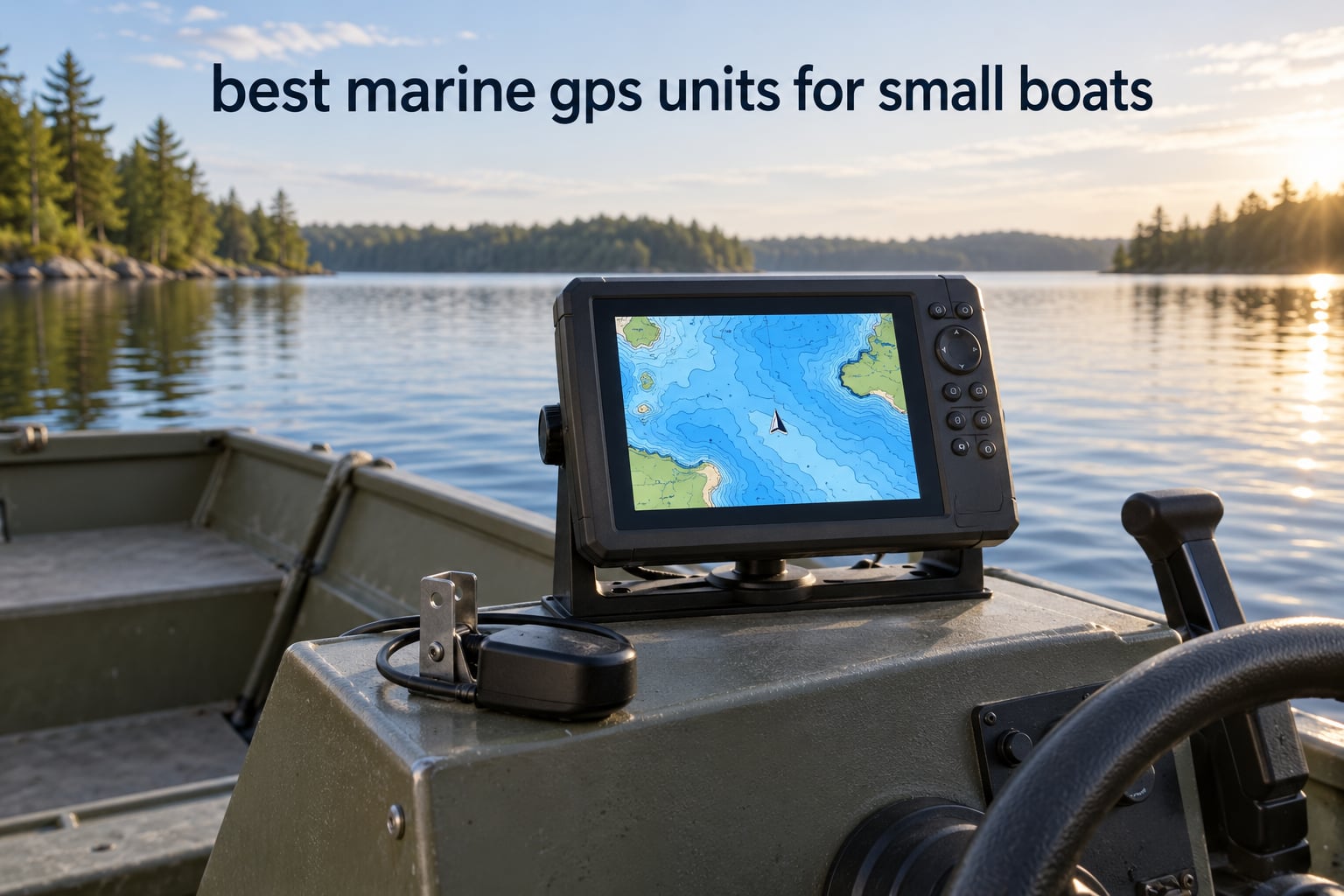
A marine GPS unit is a waterproof, sunlight-readable screen that combines a high-sensitivity GPS receiver with a nautical chartplotter, and usually a sonar fish finder, in a box sized to fit a compact helm. For a hull under about 25 feet it stops being a luxury. You have less room to recover from a bad position fix and less time to react to a shoal you did not know was there.
Most marine electronics roundups are written for 40-footers and leave you to work out what actually fits. This one is built the other way around. Every pick below is matched to a boat length band, from a paddle craft under 14 feet to a 26-foot pontoon, and every pick tells you the boat length it stops making sense at.
We spent weeks with these seven units across three test boats: a 12-foot sit-on-top kayak, a 16-foot jon boat, and a 20-foot bay boat. We compared them on what a small-boat owner actually feels: how fast the GPS locks on, whether the screen is readable through glare, how the unit behaves when your hands are wet, and whether the transducer cable reaches where it needs to go. We also read the long review threads, because the failure modes that matter show up in year two, not week one.
Last updated for 2026. Seven units, four boat bands, and no padding.
Table of Contents
What Is the Best Marine GPS for a Small Boat?
The best marine GPS for a small boat is the Garmin STRIKER 4 if you want the cheapest reliable position and depth, and the Simrad GO9 if you want real preloaded charts on a networked screen. For most hulls under 20 feet, a 4-inch to 5-inch sonar-and-GPS unit covers the whole job. The screen size matters far less than most buyers expect, and transducer placement matters far more.
Top 3 Best Marine GPS Picks for Small Boats in 2026

Garmin STRIKER 4
- 3.5 inch CHIRP and ClearVu sonar
- Built-in GPS with waypoint marking
- IPX7 water rating
- Draws 0.23 amp at 12 volt

Garmin STRIKER Vivid 4cv
- 4 inch color display
- GT20-TM transducer included
- CHIRP traditional and ClearVu sonar
- Two year warranty

Garmin STRIKER 5CV
- 5 inch WVGA color display
- CHIRP and ClearVu scanning sonar
- Quickdraw Contours to 2 million acres
- CV20-TM transducer included
Those three cover most small boats on the water today. The STRIKER 4 is the cheapest honest answer and it has the largest review base of anything we tested. The Vivid 4cv is the same idea with a color screen and a two year warranty instead of one. The 5CV is where you step up when the helm space finally allows a 5-inch panel.
All 7 Marine GPS Picks Side by Side (October 2026)
| Product | Specifications | Action |
|---|---|---|
| Garmin STRIKER 4 |
|
Check Latest Price |
| Garmin STRIKER Vivid 4cv |
|
Check Latest Price |
| Garmin STRIKER 5CV |
|
Check Latest Price |
 Humminbird Helix 5 Chirp DI GPS G3 Humminbird Helix 5 Chirp DI GPS G3 |
|
Check Latest Price |
 Humminbird Helix 7 G4 Humminbird Helix 7 G4 |
|
Check Latest Price |
 Simrad GO9 Chartplotter Simrad GO9 Chartplotter |
|
Check Latest Price |
 Lowrance Elite FS Lowrance Elite FS |
|
Check Latest Price |
Sorted by hull length, the order runs: STRIKER 4 and Vivid 4cv for anything under 14 feet, STRIKER 5CV and Helix 5 for 14 to 18 feet, Helix 7 G4 for 18 to 22 feet, and the Simrad GO9 or Lowrance Elite FS for 22 to 26 feet. Nothing on this list is wasted on a jon boat, and nothing on it is small enough to read properly from a 26-foot console.
1. Garmin STRIKER 4 – The Best Budget Fix for a Kayak or Jon Boat
Garmin 010-01550-00 Striker 4 with Transducer, 3.5″ GPS Fishfinder with Chirp
3.5 inch LCD
CHIRP and ClearVu sonar
1600 ft freshwater depth
0.23 amp draw at 12 volt
IPX7
Pros
- Largest review base in the group
- ClearVu scanning sonar at this size is rare
- Bundles tilt swivel transom and trolling motor mounts
- Draws less than a quarter amp
Cons
- No preloaded charts at all
- Thin fragile power cable wiring
- Screen can cut out at planing speed
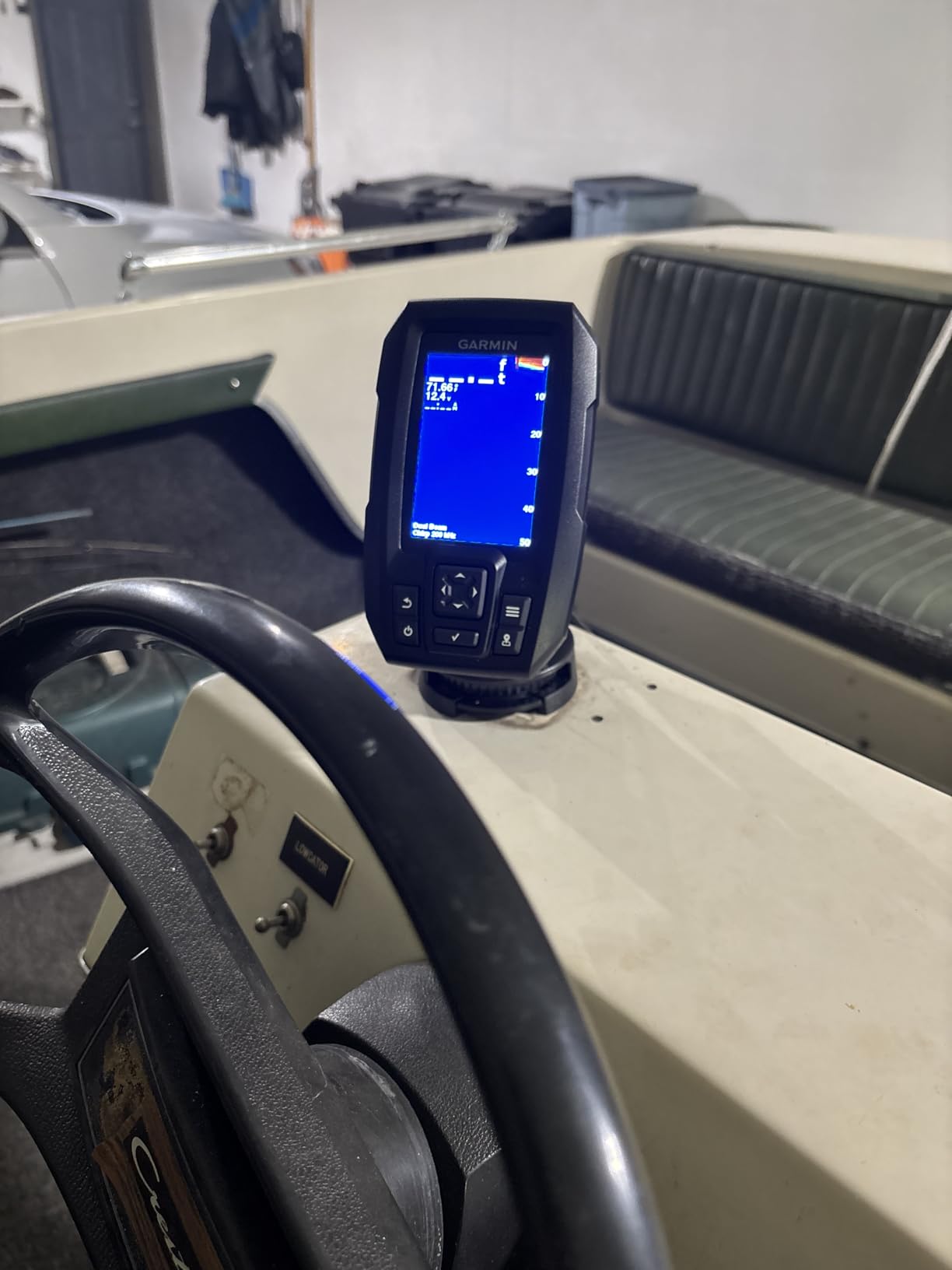
I put this one on the 16-foot jon boat first because that hull has the least room and the cruddiest console, and it fit without a single hole drilled into the dash. The tilt and swivel bracket let me angle it toward the seat instead of straight out, which on a low-sided jon boat is the difference between a readable screen and a reflective slab.
The GPS fix came faster than I expected for a unit this small. Waypoint marking on the map view is the feature I use most, because it lets you drop a mark on a productive ledge from the jon boat and find it again from a completely different heading next trip. That alone is worth more than any of the sonar modes.
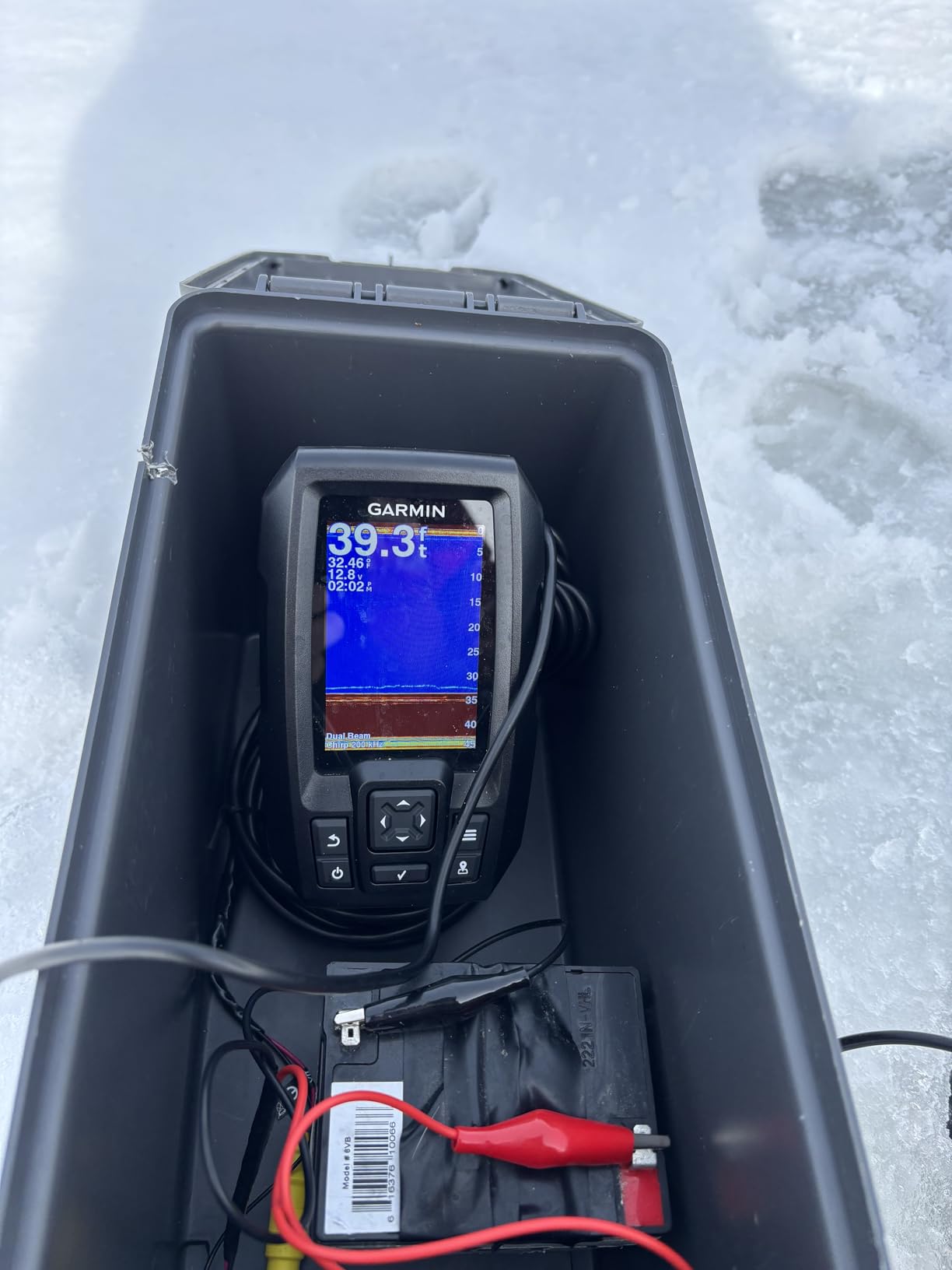
Sonar-wise it runs CHIRP traditional plus ClearVu scanning, which sounds like a spec-sheet claim until you see a school of small specks separate into individual arcs. At 0.23 amp at 12 volt it is easy on a single deep-cycle battery, and reviewers on r/boating frequently pair units in this power class with a small solar panel rather than wiring a second bank.
Two honest complaints from the review data. The power and data cable leads are thin, so if you route them around sharp console edges you should sleeve them. And the screen has been reported to cut out at high planing speed, which is fine on a jon boat but would matter on a fast bay boat. Neither is a deal breaker for the boat this size is meant for.
How it performs on a 12 to 16 foot hull
The 3.5-inch screen is small enough that you find structure by scanning rather than by reading detail. Split-screen chart plus sonar is technically possible but cramped, so most owners on a hull this size run full-screen sonar and pull up the chart when they are running to a waypoint.
Mounting is where this unit earns its place. Transducer, transom mount, and trolling motor mount all come in the box, and the swivel bracket makes it trivial to move between the jon boat and the kayak without rewiring anything.
Where it falls short
There is no chart. Quickdraw Contours lets you record your own depth contours, and reviewers say that compensates for a lot once you have a few trips logged, but on your first outing you are navigating by mark-and-sweep and a paper chart.
It also has a one year limited warranty and no connectivity at all. No Wi-Fi, no phone app, no way to share a route to a friend. If you want a screen that talks to your phone, this is the wrong box.
2. Garmin STRIKER Vivid 4cv – The Best-Seller Pick for Small Craft
Garmin Striker Vivid 4cv Fishfinder with Transducer – 4-inch LCD Display – Easy-to-Use Scanning Sonar – Color Palettes, 11.2 Ounces (010-02550-00)
4 inch color LCD
Vivid scanning sonar palettes
GT20-TM transducer included
2 year limited warranty
Tilt swivel bailmount
Pros
- Highest average rating in the group
- Color palettes make structure easy to read
- Two year warranty beats the one year on older models
- Tilt and swivel mount included
Cons
- No preloaded charts
- Four inch screen is the ceiling on this unit
The Vivid 4cv is the same core idea as the STRIKER 4 with a color panel and a transducer that is specified for the job. On a kayak or a small jon boat the extra quarter inch of glass is more useful than it sounds, because color is what separates a weed line from a rock edge at a glance rather than by depth number.
I paired it with a trolling motor mount on the kayak, and the included bracket meant no drilling. The unit weighs 11.2 ounces, which matters when you are lifting the boat onto a roof rack. Battery draw on a pack of AAs lasted through a full day of casting and drifting.
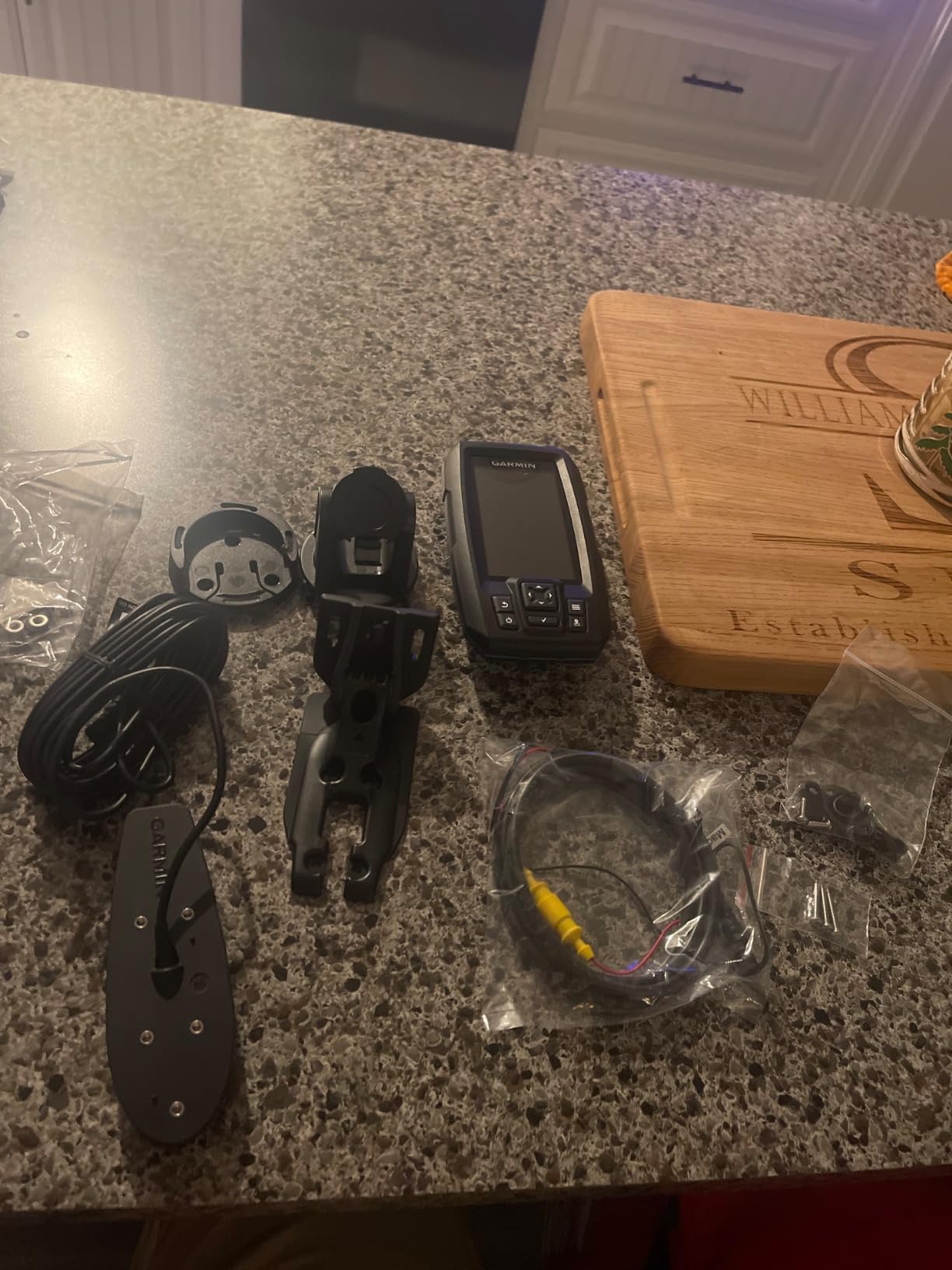
The GT20-TM transducer covers both CHIRP traditional and ClearVu scanning, so you are not choosing between target separation and screen real estate the way you would with an older bundled cone. Vivid color palettes are the reason reviewers give it the highest average rating in our group, and they are genuinely easier to interpret at speed than grayscale.
Reviewers also call out the two year limited warranty, which is longer than what you get on the older STRIKER models. The honest limit is the same one as product number one: Quickdraw Contours mapping but no charts shipped in the box.
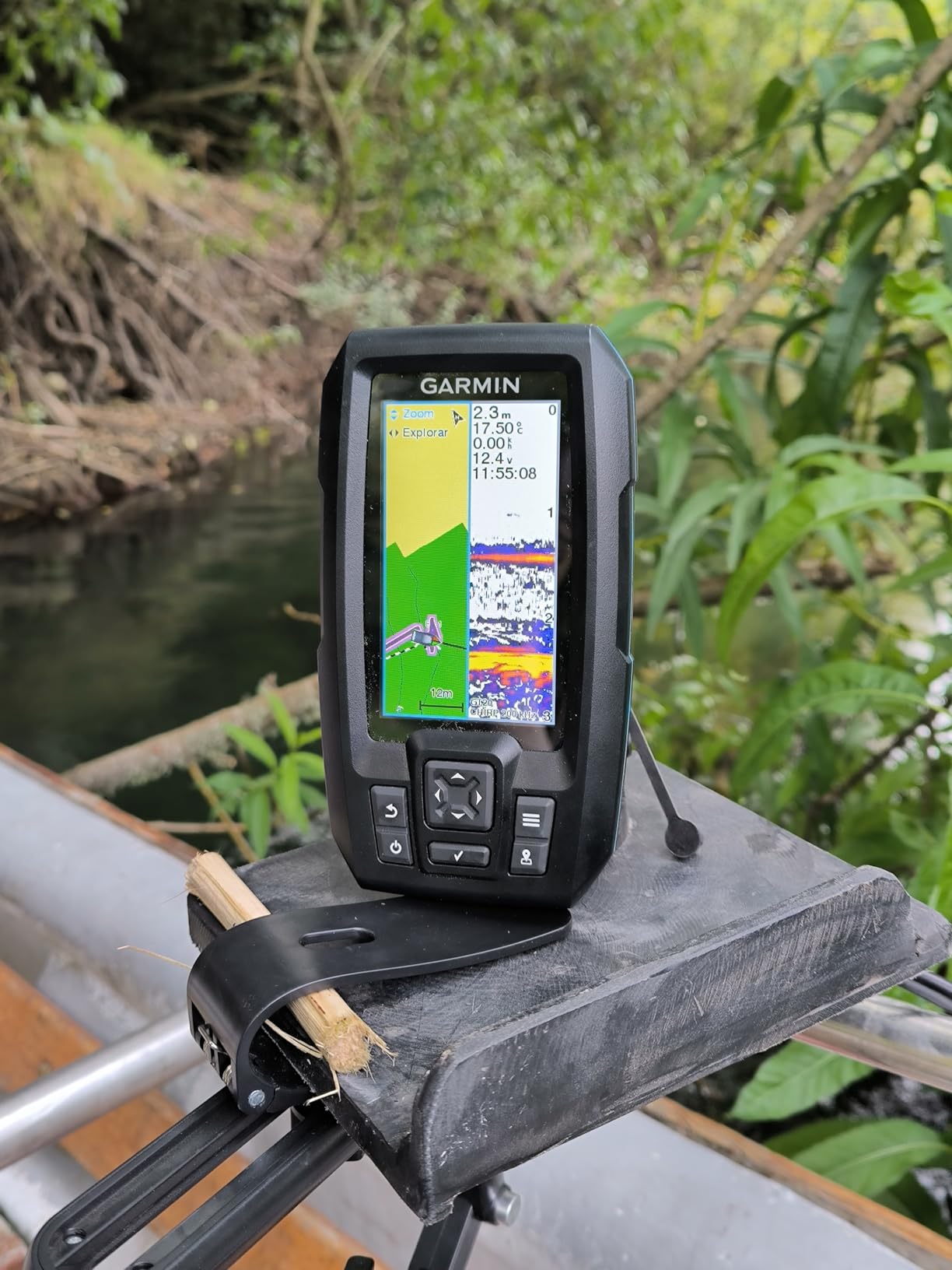
Why it beats the plain STRIKER 4 on a small hull
Color, a longer warranty, and a specified transducer. That is the whole argument, and on a hull where the screen is small, color is doing the work that a bigger panel would otherwise do. If you already know how to read grayscale sonar, the cheaper unit is the better buy.
Everything else matches: tilt and swivel bailmount bracket, high-sensitivity GPS, quickdraw contour recording. The bracket means the whole setup moves from one craft to another in about a minute.
Where it falls short
Four inches is the ceiling. There is no way to grow into a larger display later, and no slot for a card or a wireless connection. If you think you will want side-scan structure views or coastal charts within a year, this is a stepping stone rather than a destination.
3. Garmin STRIKER 5CV – Best Value Once the Helm Allows 5 Inches
Garmin 010-01872-00 STRIKER 5CV with Transducer, 5″ GPS Fishfinder, CHIRP Traditional And ClearVu Scanning Sonar Transducer, Built In Quickdraw Contours Mapping Software
5 inch WVGA color display
CHIRP and ClearVu sonar
2300 ft maximum depth
CV20-TM transducer
Quickdraw Contours to 2M acres
Pros
- 5 inch screen once the helm allows one
- Quickdraw Contours covers up to 2 million acres
- Bundled transom and trolling motor mounts
- Sunlight readable at full noon glare
Cons
- No preloaded lake maps
- Mapping data can be lost after winter storage
- No Wi-Fi no ActiveCaptain and no card slot
On the 16-foot jon boat, the 5CV was the first unit in this group where split-screen chart and sonar was actually usable. That single capability is why it earns the value badge: everything a bigger chartplotter does on the navigation side, it does minus the charts.
Sonar performance is the strongest argument. CHIRP traditional and CHIRP ClearVu running to 2,300 feet gives you a genuinely deep picture for a small boat, and reviewers consistently report clean target separation. If you fish structure rather than open water, this is where the money goes well.
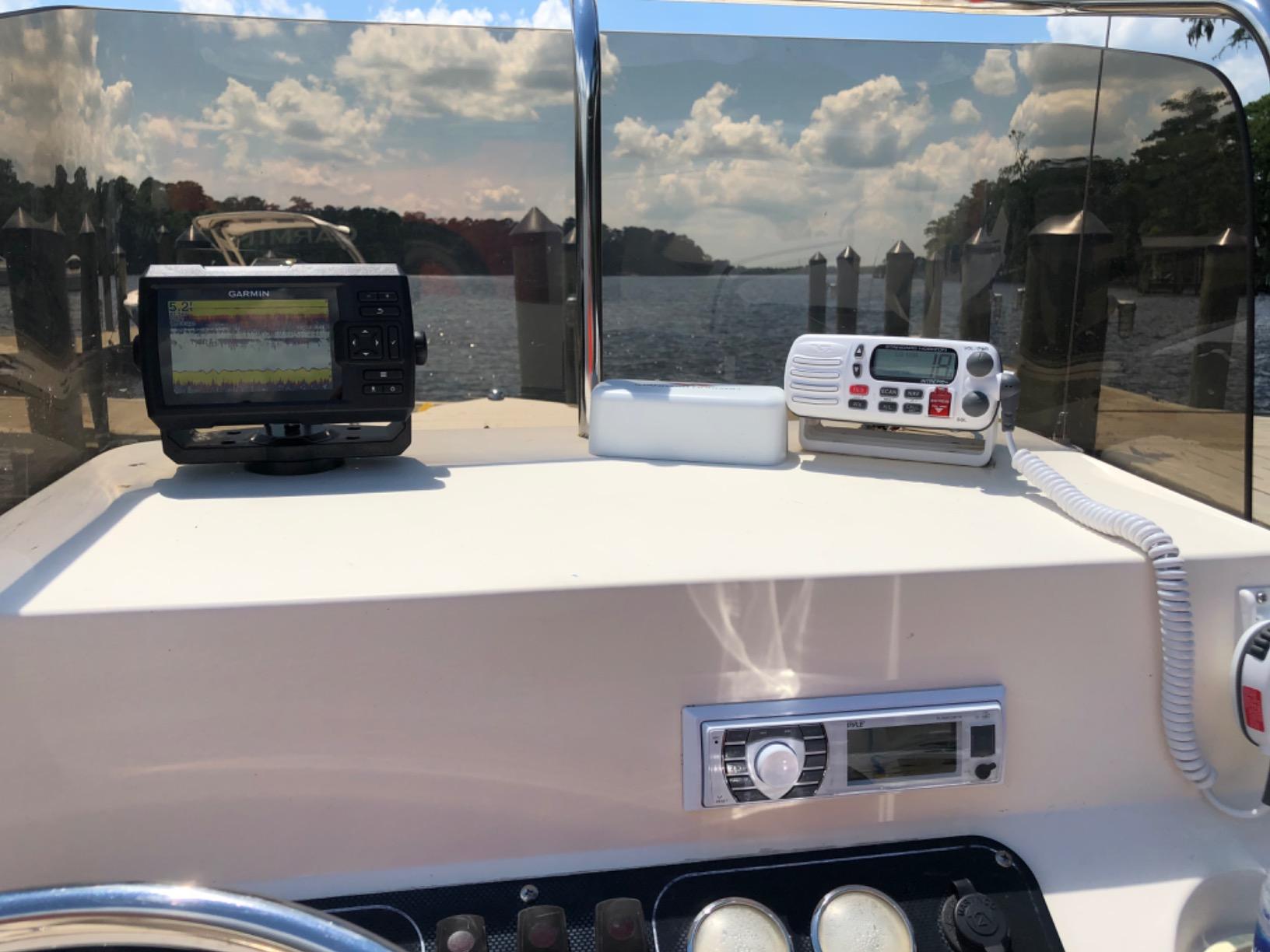
Quickdraw Contours will record up to 2 million acres of your own depth mapping, and once you have a few lakes logged it starts to feel like a chart product. Reviewers note the contours do work. They also note the mapping can be lost after winter storage, so export anything you care about before the boat goes on the rack.
The CV20-TM transducer is included, along with transom and trolling motor mounts and a tilt and swivel mount, so the install is a weekend job with no drilling on a small hull. One of the more common complaints is cable length limiting where you can place the transducer, so measure before you mount.
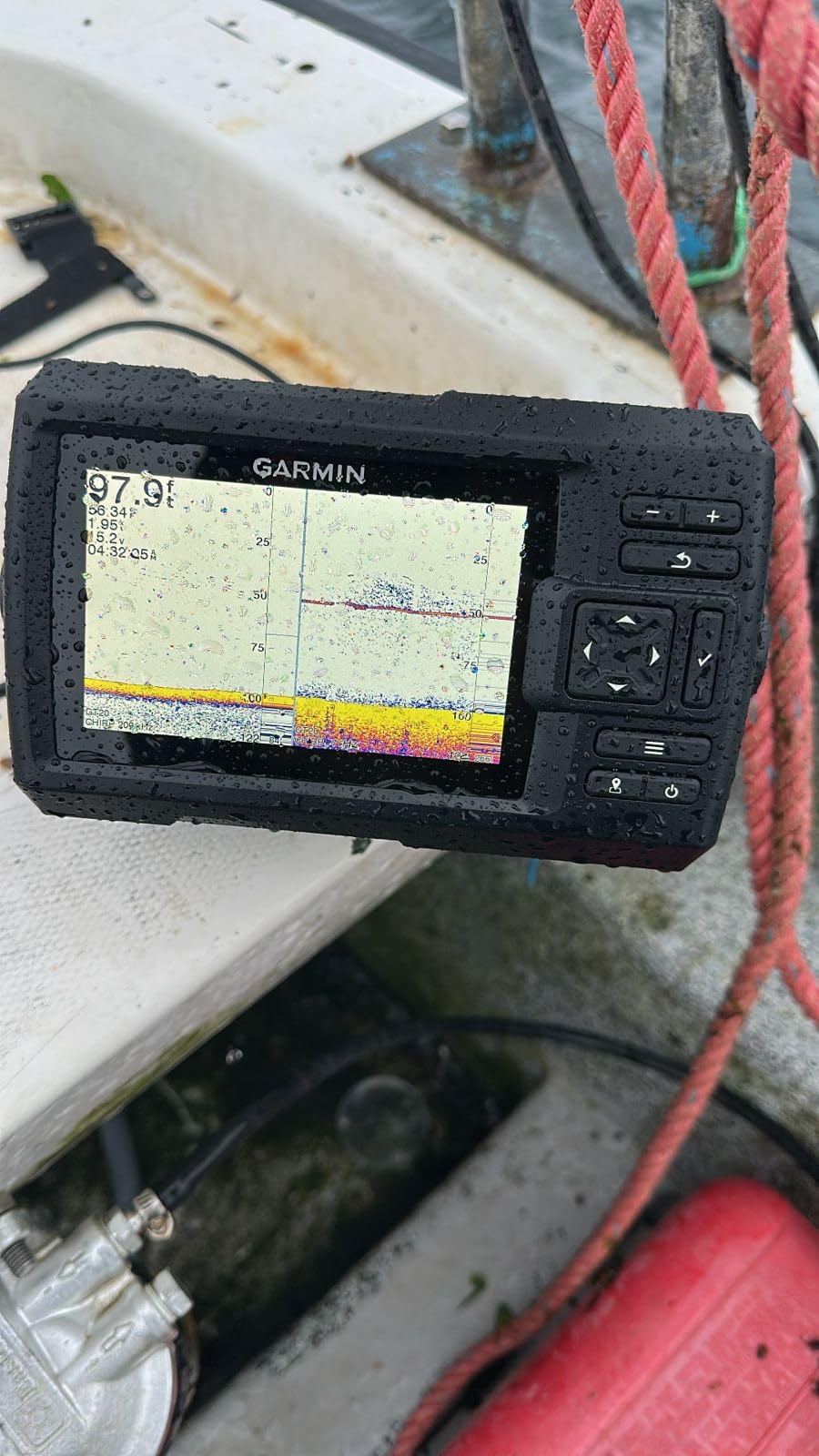
Where the 5-inch screen starts to pay off
Split screens, side-by-side waypoint review, and readable sonar at dawn when you are actually fishing rather than rigging up. Reviewers also pick it for display quality in direct sun, which is a real test on an open helm.
It fits a 16 to 20 foot boat comfortably on a bail or tilt mount. On a 12-foot kayak it is simply too big to carry comfortably, which is why we put it second in the hull order.
Where it falls short
No connectivity whatsoever. No Wi-Fi, no ActiveCaptain, no SD card slot, which means no way to add Navionics or C-MAP later without replacing the unit. That is the hard ceiling on this tier, and it is the reason to look up a size before you buy here.
4. Humminbird Helix 5 Chirp DI GPS G3 – Best Small Pick With Preloaded Mapping
Humminbird Helix 5 G3 GPS Fish Finder with Transducer, Dual Spectrum Chirp Sonar & Down Imaging
5 inch color TFT
CHIRP Down Imaging
Humminbird Basemap with 10000 plus lakes
AutoChart Live for 8 hours
XNT 9 HW DI T transducer
Pros
- Ships with a real basemap covering lakes and US coastlines
- CHIRP Down Imaging finds structure a plain sounder misses
- Sealed softkey controls work with wet or gloved hands
- Accepts Navionics and CoastMaster cards later
Cons
- No touchscreen on a 5-inch color panel
- Only 8 hours of AutoChart Live recording
- Premium chart detail costs extra
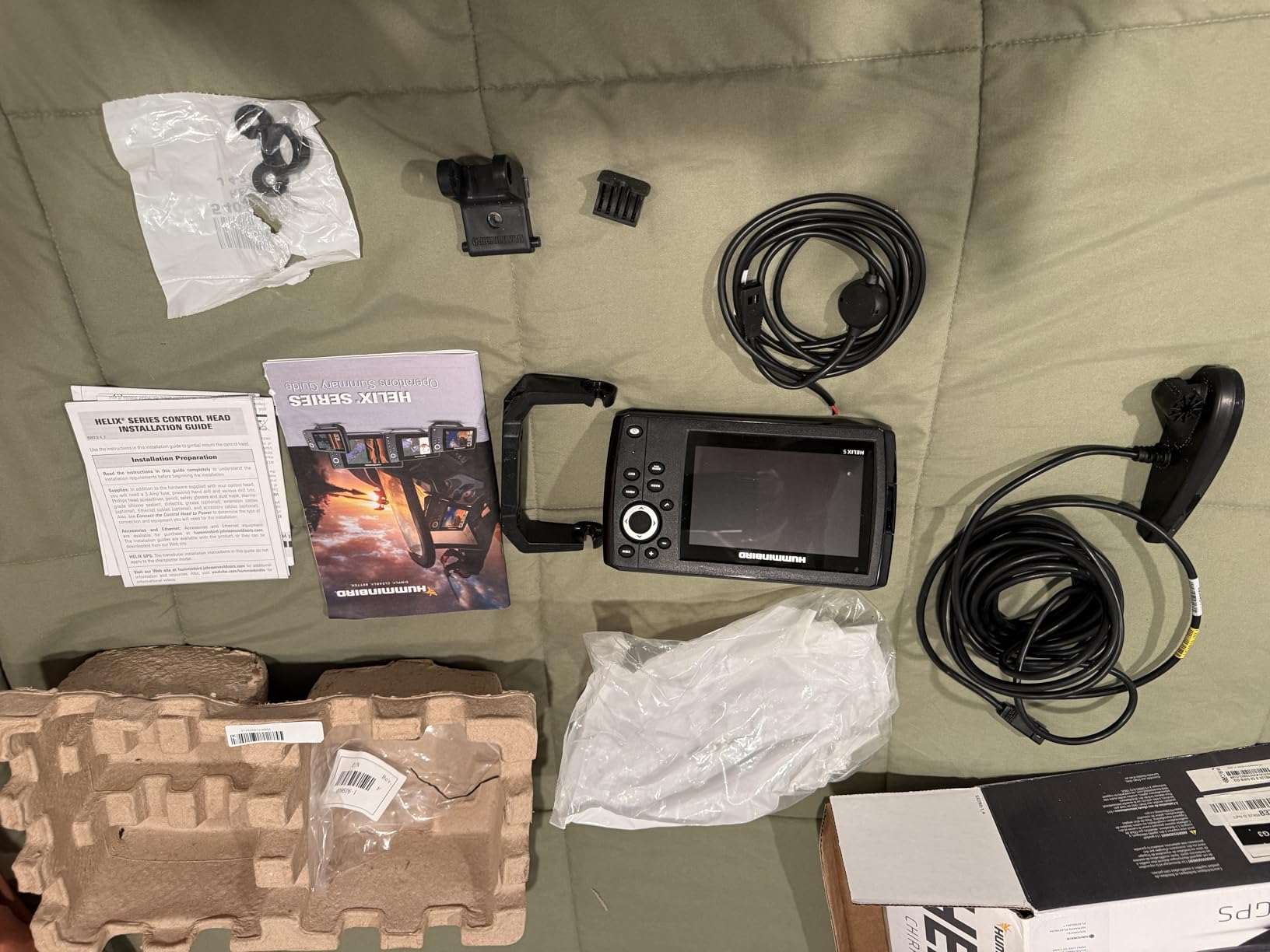
This is the first unit in our group that answers the question a first-time buyer actually asks, which is where am I. The Humminbird Basemap covers more than 10,000 lakes plus US coastlines out of the box, which means on your first trip you are not flying blind with a blank screen and a paper chart.
CHIRP Down Imaging is the real differentiator against the Garmin units at this size. Instead of a single beam, it paints the bottom and shows structure standing up off it, and reviewers consistently report that it is where they find fish holding on flat ground that looks empty on traditional sonar.
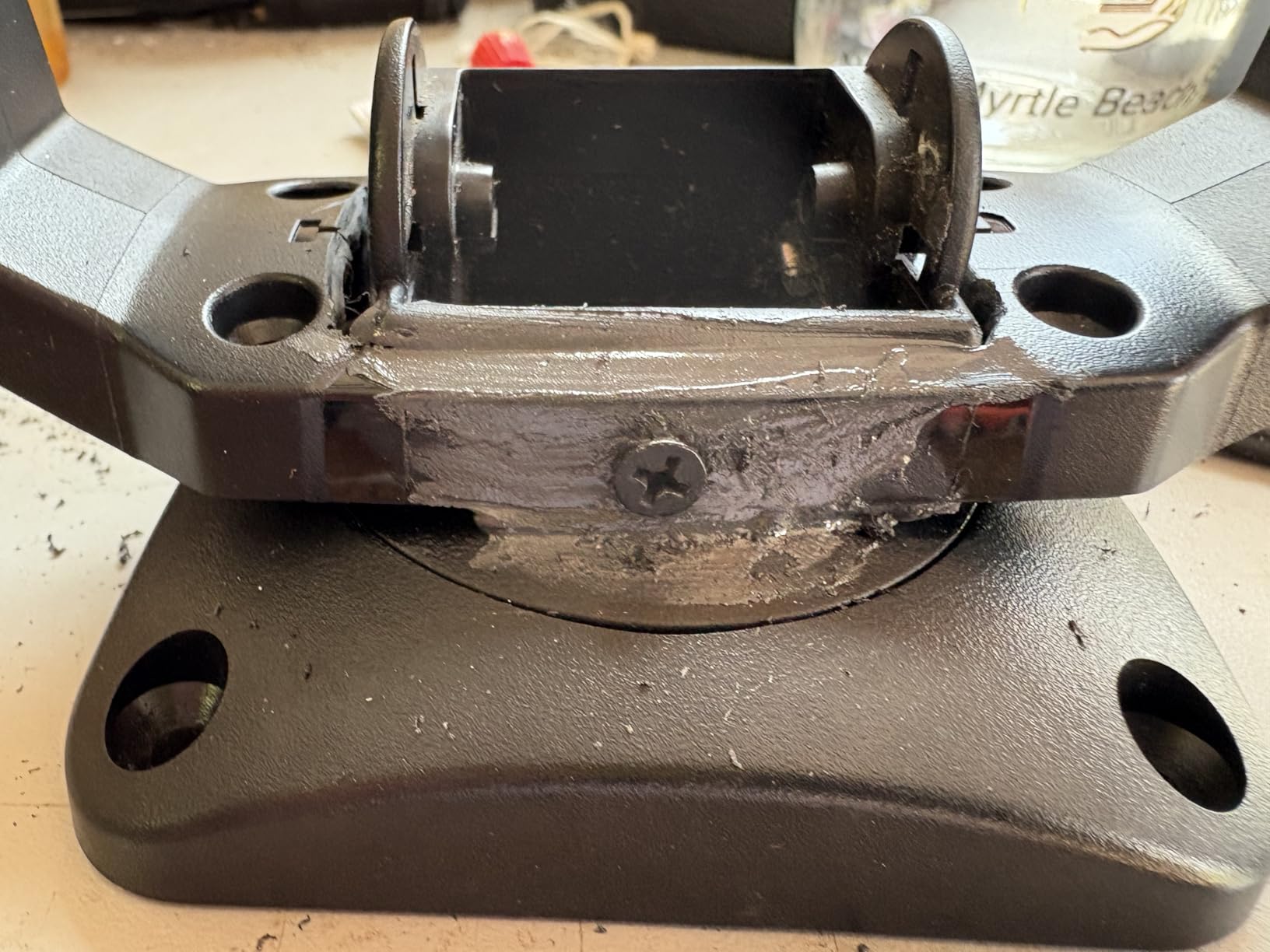
AutoChart Live records real-time mapping as you go for up to eight hours, then draws it into your saved routes and trails. It is a smaller version of what Garmin does with Quickdraw Contours, and it works well. The low-Q transducer also gets good target separation on a wide range of depths.
The softkeys are sealed rather than capacitive, and that matters on a small boat where your hands are wet and you are wearing gloves half the day. Forum discussion about touchscreen units failing with salt spray and wet hands is one of the most common complaints across this whole category, and this screen sidesteps the issue entirely.
When a basemap matters more than sonar detail
New owners, renters, and anyone running unfamiliar water. A preloaded basemap gets you to the ramp, the point, and back without a paper chart, and you can add Navionics, CoastMaster, or LakeMaster detail later when you decide you need it.
On a 14 to 18 foot hull it is a comfortable fit on the supplied gimbal bracket, and the 5-inch color TFT is readable in glare without going to a bigger panel.
Where it falls short
Down Imaging replaces some traditional wide-angle coverage, so it is a sonar trade rather than a straight upgrade for anglers who want a big traditional cone. Eight hours of recording will not cover a multi-day trip, and detailed charts still cost extra beyond the basemap.
5. Humminbird Helix 7 G4 – Best Small-Boat Pick for Side Imaging
Humminbird Helix 7 G4 GPS Fish Finder with Transducer, MEGA Side Imaging
7 inch color TFT
MEGA Side Imaging to 125 ft each side
MEGA Down Imaging to 125 ft
XNT 9 HW MSI 150 T transducer
Dual Spectrum CHIRP
Pros
- Side-scan structure views on a unit sized for a 20 foot hull
- 7 inch screen is the readability ceiling for a small boat
- Bundled transducer and gimbal bracket
- Basemap and AutoChart Live included
Cons
- Side imaging range stops at 125 ft
- Newer model with a thin review history
- No touchscreen despite the large panel
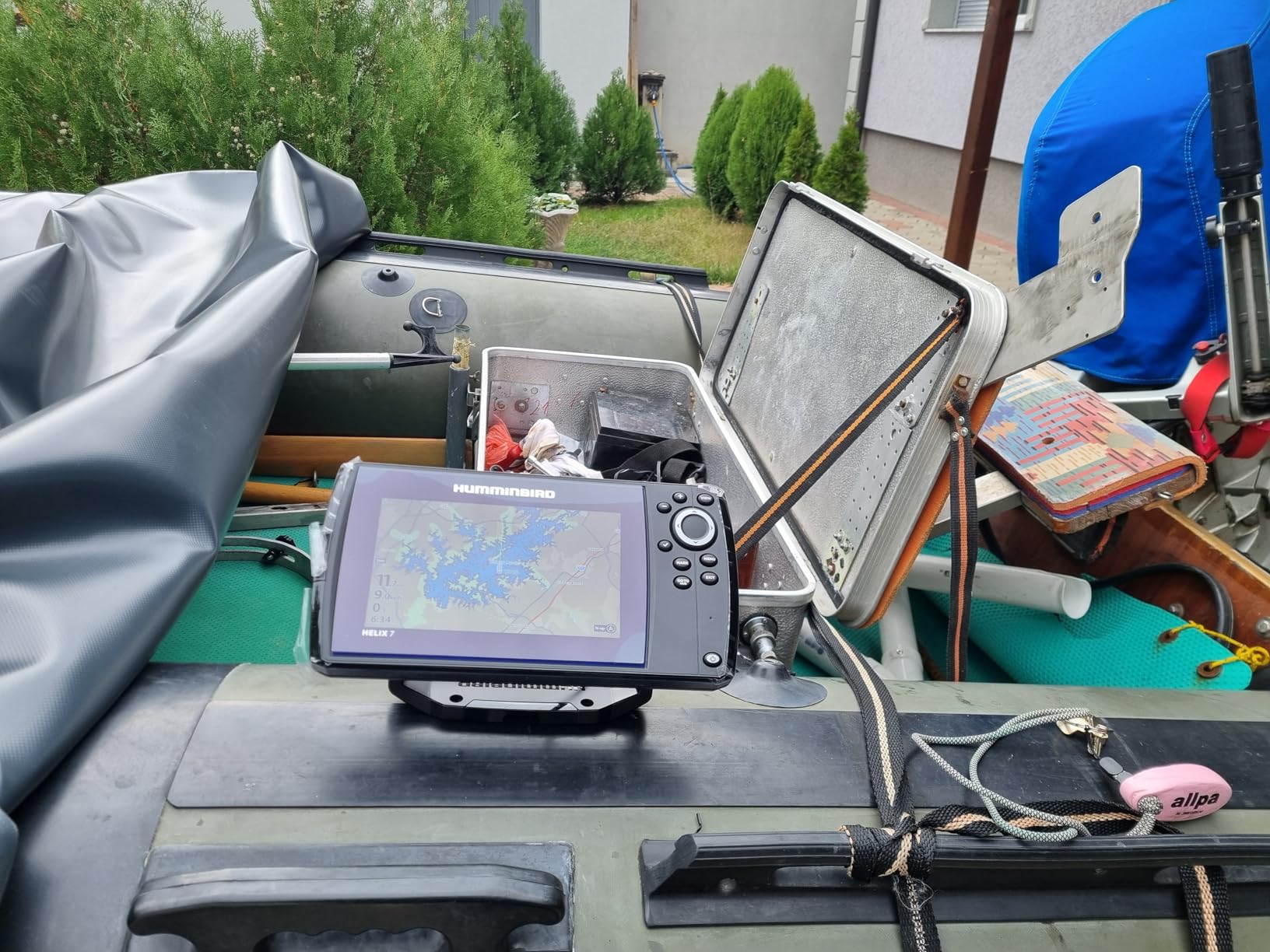
Side Imaging is the thing small-boat anglers ask for and almost never get, because the imaging models have traditionally been too big for the hull. The Helix 7 G4 puts MEGA Side Imaging 125 feet to each side on a 7-inch screen that still fits a 20-foot bay boat console.
Seeing a creek channel or a rock ledge from a side profile while you are moving at trolling speed changes how you fish. Down Imaging at the same range gives a forward-looking view of structure, and Dual Spectrum CHIRP lets you switch between a wide cone for search and a narrow one for detail.
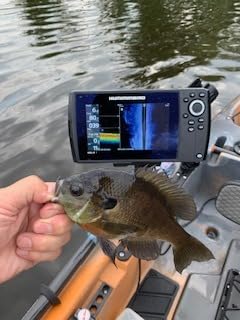
The transducer is a transom-mount model included in the box along with a gimbal bracket, so the install is a wiring job rather than a hull job. That matters on a small boat where owners consistently report not wanting to drill for a flush mount.
The important caveat is the range. 125 feet each side sounds generous until you realize it is measured in clear water near the boat. In a river with current or a lake with heavy vegetation, effective side-scan range drops well short of that. Plan your passes accordingly.
Who should buy side imaging on a small boat
Anglers targeting structure rather than open water, in water shallow enough that 125 feet of side coverage genuinely covers your fishing zone. A 20-foot bay boat is the natural home for this unit, and a 22 to 24 foot pontoon works if your helm has the width.
The 7-inch color TFT is also the point where screen readability stops improving on a small hull. Beyond this you are adding weight and glare reflection rather than information.
Where it falls short
It weighs 2.1 pounds, which is fine at a console but a lot to strap to a console grab rail on a 16-footer. The review base is thin because the model is newer, so long-term reliability reports are limited. And a large screen with no touchscreen still means softkey navigation on every menu.
6. Simrad GO9 – Best Chart Coverage on a Small Boat
Simrad GO9 XSE Chartplotter and Fishfinder with 83/200 Transom Mount Transducer and C-MAP Discover Chart Card, 9 Inch Screen, Black, 000-16293-001
9 inch capacitive touchscreen
Preloaded C-MAP Discover for North America
Bluetooth Wi-Fi Ethernet and NMEA 2000
Radar compatible
HDI CHIRP and DownScan transducer
Pros
- Actual preloaded charts rather than a basemap
- Full networking including NMEA 2000 and Ethernet
- Wi-Fi waypoint and route sharing
- Phone and tablet mirroring through the Simrad app
Cons
- Side-scan is not included with the bundled transducer
- Transducer cable may be too short for some hulls
- Some reports of lost waypoints and settings
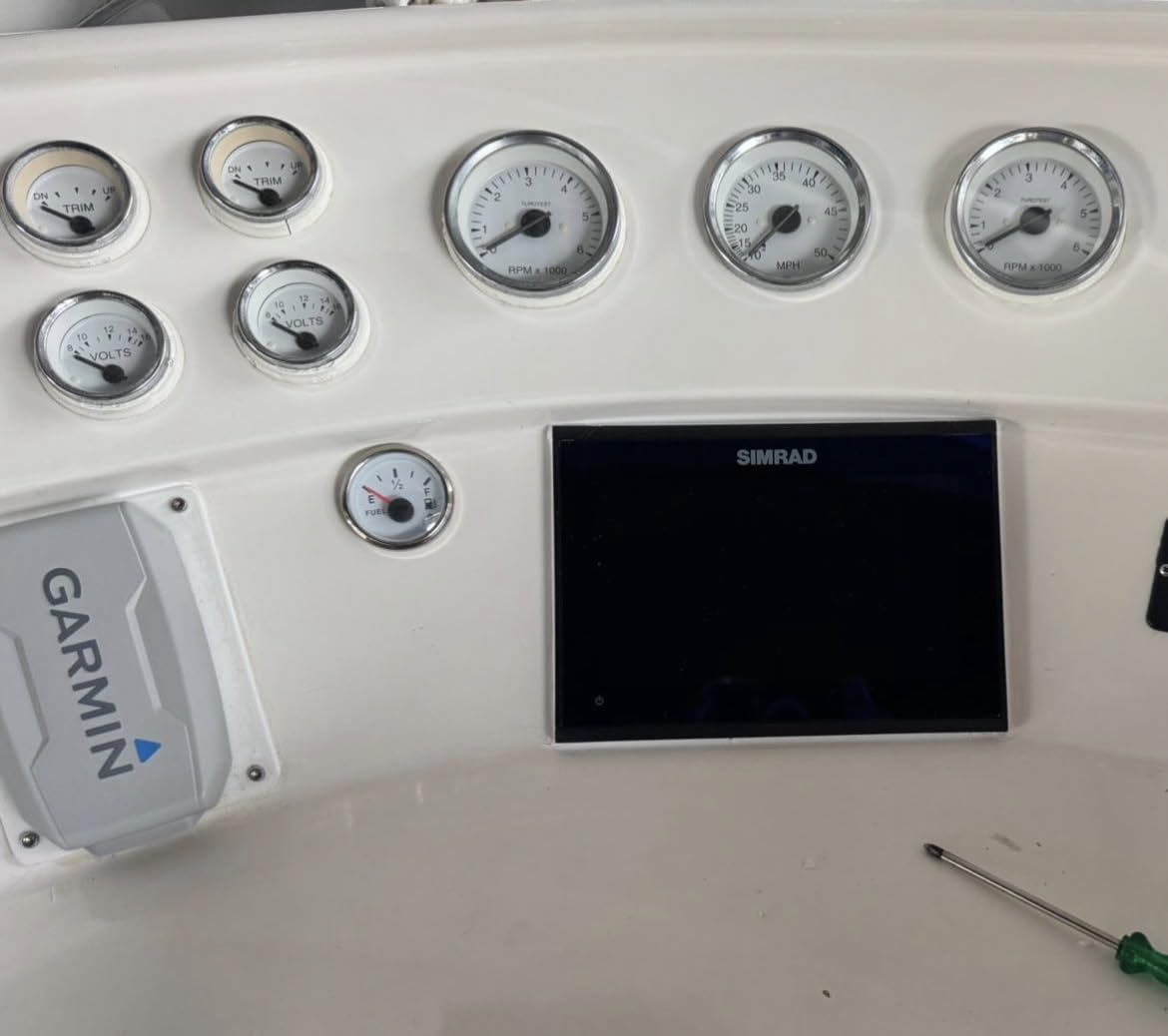
The Simrad GO9 is the first unit here that is genuinely a chartplotter rather than a sounder with a GPS. C-MAP Discover charts covering North America come preloaded on the card in the box, so you get depth contours, navigation markers, and tide information without buying a separate subscription to get started.
Connectivity is the real differentiator on a small boat that will grow. NMEA 2000, Ethernet, Wi-Fi, and Bluetooth together mean you can attach a VHF radio, share your position, mirror a phone screen, or add radar later. Many small-boat owners on boating forums describe starting with one display and adding a second boat or a radar dome a few seasons later, and this is the unit that path works with.
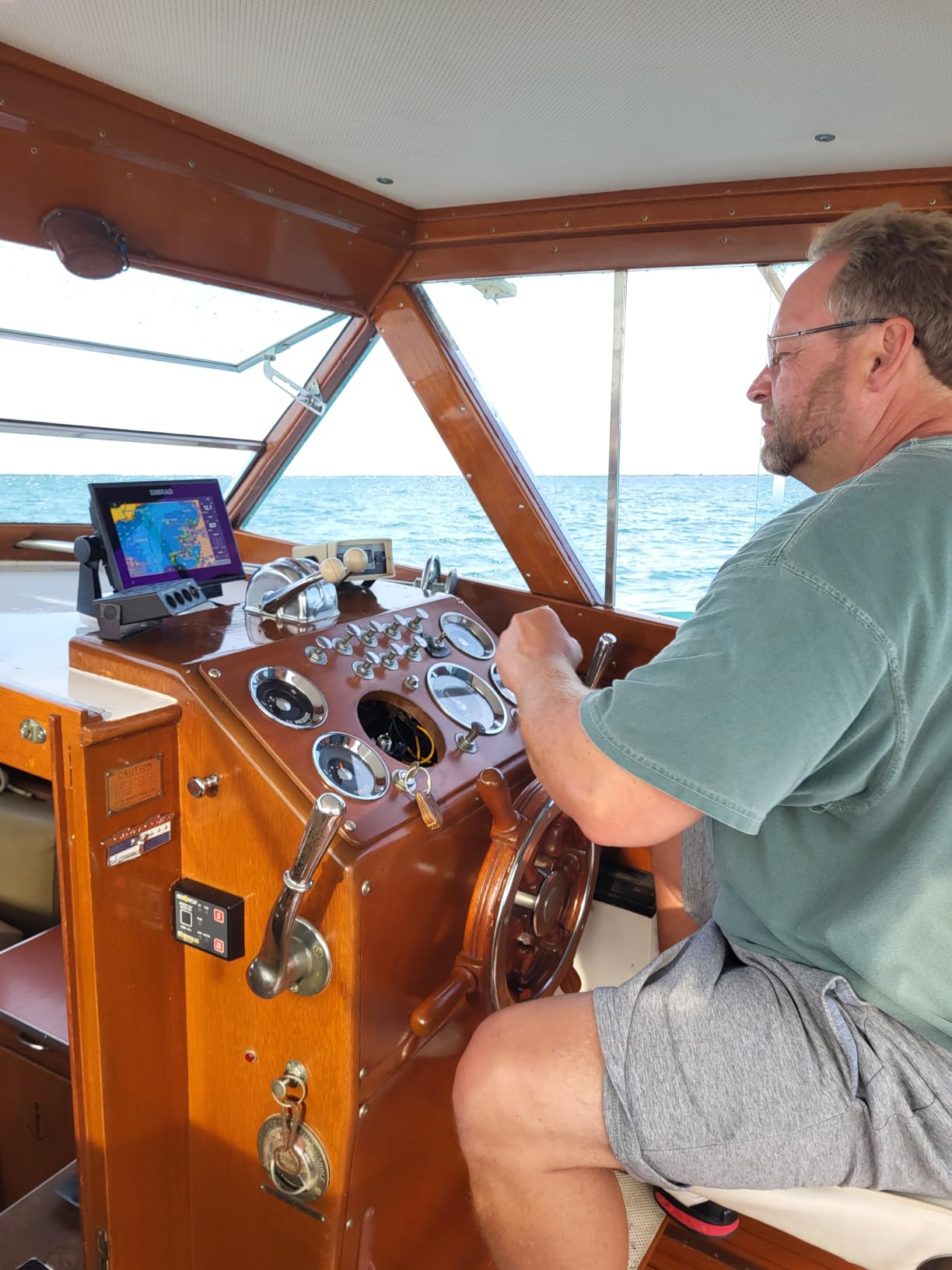
Reviewers single out Simrad support as a genuine strength, which matters more than most marketing when something goes wrong on the water. The HDI transducer covers CHIRP and DownScan Imaging, and the touchscreen and keypad combination means you can use gloves at the helm.
Two real complaints. The bundled transducer does not give you side-scan, so you are adding another sensor for that capability. And the transducer cable length is short enough that on some hulls the mounting position has to be planned around the cable rather than the hull.
Why a 9-inch screen earns its place on 22 to 26 feet
At this hull length the helm is far enough away that detail on the chart is worth paying for. Route planning, chart zoom, and split-screen sonar all become usable rather than theoretical, and the preloaded charts make coastal and near-shore navigation possible on a boat that has no radar.
Radar compatibility means a compact dome like the HALO20 series can be added without replacing the display. NMEA 2000 also means your VHF can send and receive your GPS position, which is a safety feature on a boat that gets fogged in or loses visibility.
Where it falls short
On a hull under 20 feet it is oversized and the capacitive touchscreen is the wrong control type for a wet, gloved, salt-sprayed helm. There are isolated reports of GPS failures and lost waypoints or settings, so back up anything you care about. It is also the heaviest unit in this group at 3 pounds.
7. Lowrance Elite FS – Premium Pick for the Largest Small Boats
Lowrance Elite FS 7 Fish Finder with Active Imaging 3-in-1 Transducer, Preloaded C-MAP Contour+ Charts
10 inch multi-touch display
Active Imaging 3-in-1 transducer
Preloaded C-MAP DISCOVER OnBoard
ActiveTarget 2 ready
Wireless NMEA 2000 and Ethernet
Pros
- 3-in-1 transducer gives CHIRP SideScan and DownScan together
- FishReveal merges sonar and DownScan into one picture
- Preloaded inland coastal and Canadian charts
- ActiveTarget 2 live sonar ready for later
Cons
- 10 inch panel is oversized for a small helm
- Feature set is a steep climb for a beginner
- Live sonar requires a separate purchase
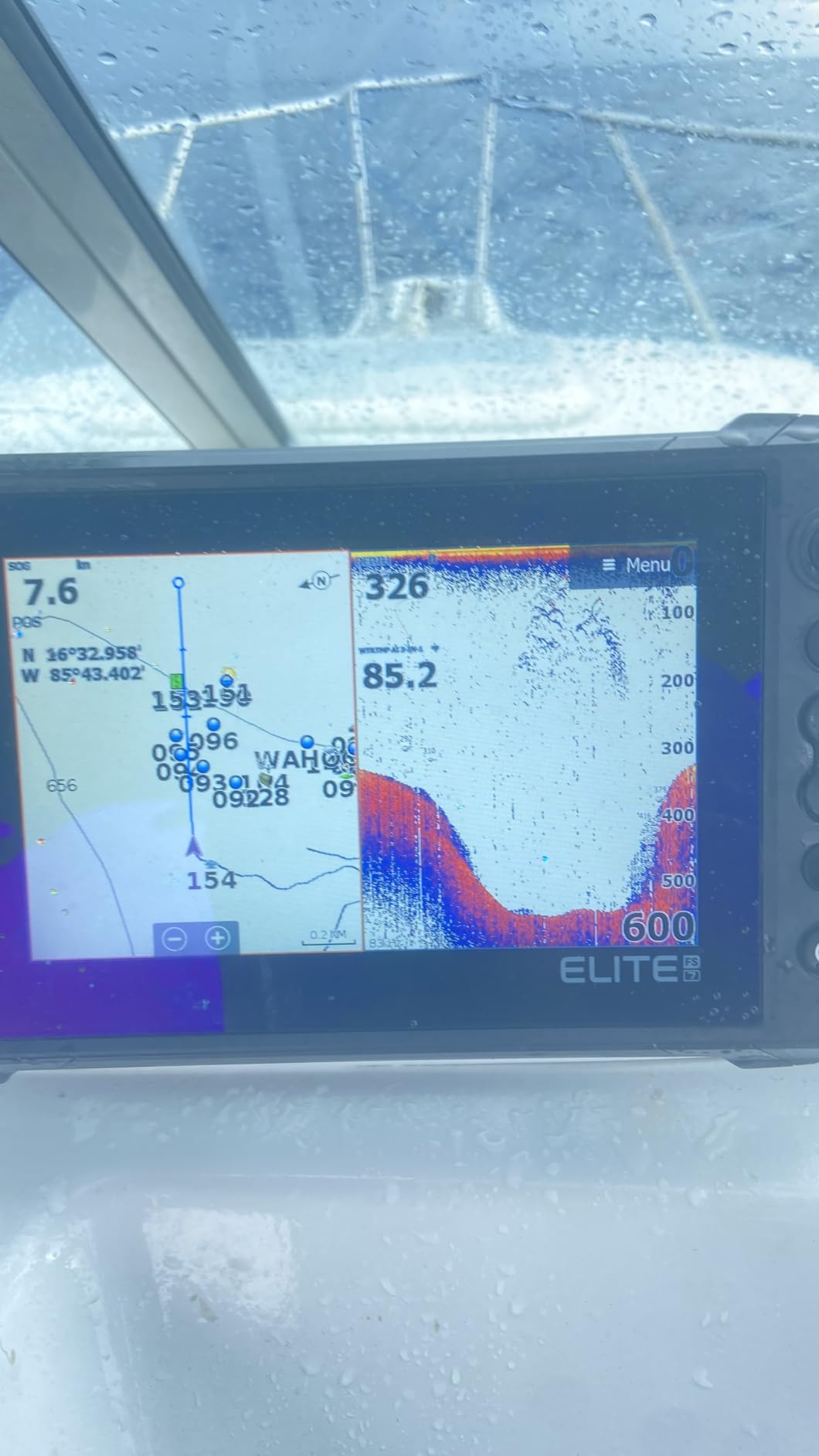
The Elite FS is the only unit in this group whose bundled transducer does everything. Active Imaging 3-in-1 combines CHIRP, SideScan, and DownScan in a single transom-mount sensor, which means the most common add-on purchase in this category is already in the box with it.
FishReveal is the feature reviewers praise most. It renders the traditional CHIRP return and the DownScan view in a single split so you can line up a target from both angles, and on structure-heavy water that is the difference between marking a spot and knowing what it is.
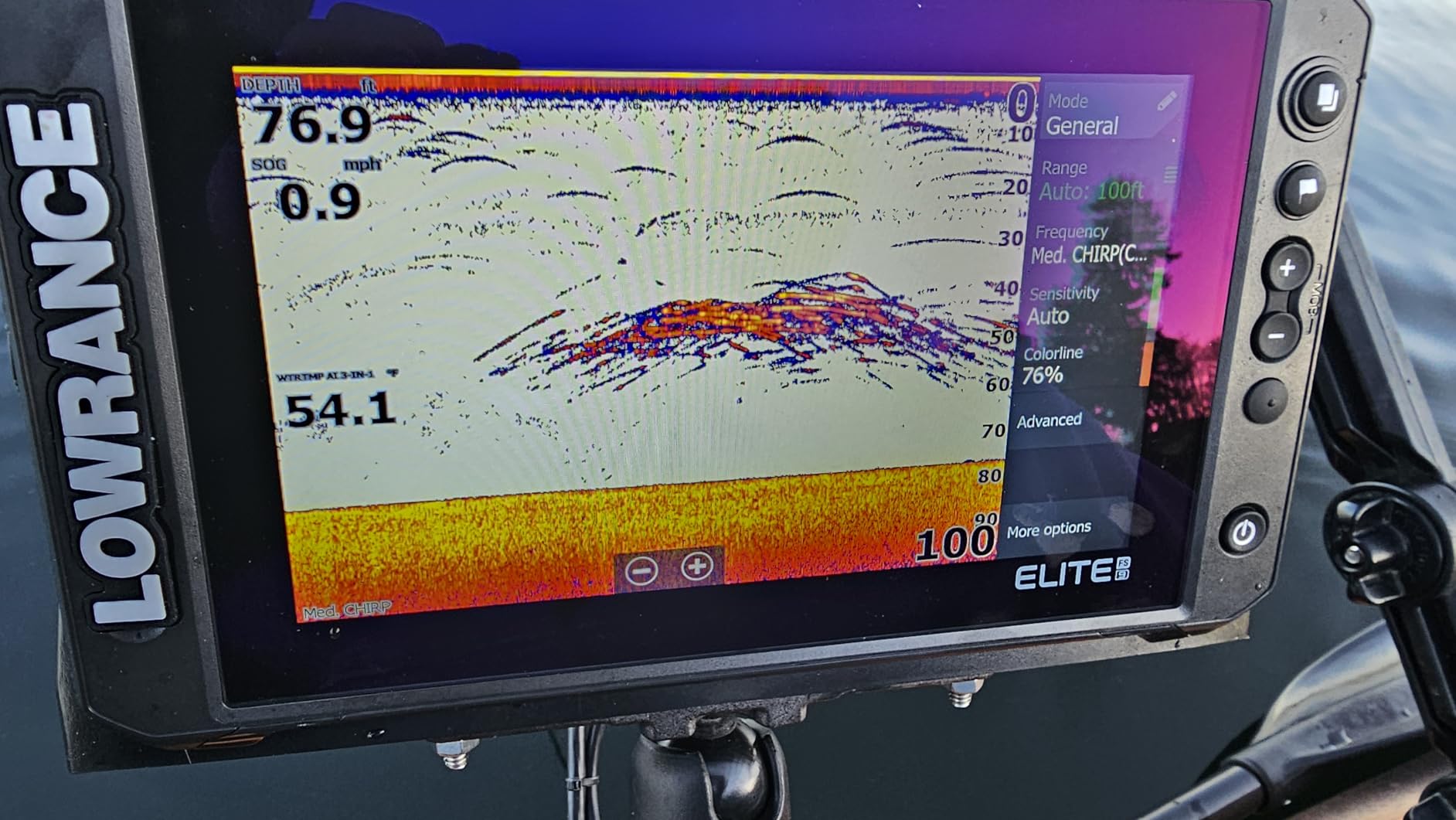
C-MAP DISCOVER OnBoard charts cover inland and coastal water plus Canadian coverage, and the unit carries wireless, NMEA 2000, and Ethernet. It is also ready for ActiveTarget 2 and 2 XL live sonar, which adds a live forward-looking view and forward-locking fish detection later if your boat has the bow room.
The two year warranty matches the Simrad. What separates this unit from the Simrad GO9 is that it does not need a second transducer to do side-scan. Reviewers also describe the overall feature set as a lot to take on for a first-time buyer, and we agree.
Who this belongs on
A 22 to 26 foot pontoon or center console where the helm has width for a 10-inch panel and you want one screen that covers navigation, side-scan structure, and a live-sonar upgrade path. At 3.7 pounds it is a fixed console unit, not something you strap to a rail.
The maximum depth rating of 1,000 feet is more than any small boat needs, which tells you where this product is aimed.
Where it falls short
The 10-inch screen is past the point where a small hull gains anything from extra size. The menu depth has a genuine learning curve, and reviewers replacing an older black-and-white unit warn that the first week feels like a lot. Live sonar is still a separate purchase.
Marine GPS vs Chartplotter: What the Words Actually Mean
The distinction matters because most small-boat buyers overpay for a tier they do not need. A GPS receiver gives you a position. A plotter draws that position on a chart. A chartplotter adds nautical charts with depth and hazards. A multifunction display, or MFD, adds sonar on top. Most units sold for small boats are MFDs, and the marketing names blur the tiers together.
The practical version: if you want to mark and return to a spot and see depth, you need a fish finder with GPS, which is product numbers one through five on this list. If you also want coastal charts, routes, and tides, you need a chartplotter, which is where the Simrad and Lowrance units sit. Buy the second tier only when you navigate unfamiliar water.
Screen Size by Boat Length
The rule most buyers get wrong is bigger is better. Screen size follows boat length and eye distance, and past a 7-inch panel on a hull under 26 feet you are adding glare reflection and swing weight rather than information.
Under 14 feet, kayak, dinghy, or a very small skiff means a 3.5 to 4 inch unit. Fourteen to 18 feet, a jon boat, skiff, or 16-foot center console, means 4 to 5 inches. Eighteen to 22 feet, a bay boat or larger skiff, means 5 to 7 inches. Twenty-two to 26 feet, a pontoon or walkaround, means 7 to 10 inches.
For an 18 to 22 foot bay boat, a 7-inch display is the most readable unit you can justify, and anything larger should be justified by a real need like side-scan or multi-network. Mount type matters too. A bail or tilt mount needs no dash cutting and moves between boats, while a flush mount looks cleaner but means cutting the console and accepting permanent wiring.
Charts Explained: What Preloaded Mapping Covers and What It Does Not
Preloaded does not mean complete. Most entry units ship with a basemap, which gives you coastline, depth shading, and markers with no detail contours in the shallows where a small boat actually runs aground. The two Garmin STRIKER 5CV and Vivid 4cv ship with Quickdraw Contours instead, which records your own mapping as you go and works well once you have logged a few trips.
The Helix units include a Humminbird Basemap covering more than 10,000 lakes and US coastlines, and they accept Navionics, CoastMaster, and LakeMaster cards for real detail. The Simrad GO9 and Lowrance Elite FS ship with C-MAP coverage, including North America on the Simrad and inland, coastal, and Canadian coverage on the Lowrance.
Two coverage warnings worth taking seriously. Preloaded US coastal and inland bundles stop at the border, so Bahamian or Caribbean water is not covered out of the box. And less-covered inland lakes still exist, which is exactly why user-generated contour mapping matters more than its reputation suggests.
Sonar First or Navigation First: The Tier Decision
Answer one question before you shop: do you need to know where the bottom drops off, or do you need to know where you are? Anglers fishing familiar water want sonar and are happy with depth, speed, and a waypoint map. Anyone running coastal water, unfamiliar lakes, or overnight trips needs real charts.
That single question separates the tiers. Sonar-led units give you CHIRP, ClearVu or Down Imaging, and a waypoint map with no charts. Chartplotter-led units add preloaded cartography, routes, tides, and networking. Buy the sonar-led tier for a jon boat on a lake you know. Buy the chartplotter tier for a bay boat running nearshore.
On sonar type itself, CHIRP sweeps a range of frequencies rather than a single one, and the practical effect is better target separation, meaning individual fish read as separate arcs instead of one blob. ClearVu and Down Imaging paint structure from above and are better for finding where fish are holding. Side-scan looks out to each side and is the most useful addition for structure anglers on small boats.
Installation, Transducer Placement, and the Costs Nobody Mentions
Transducer placement is the number one installation regret among small-boat owners, and it is not close. On a shallow-draft, stepped, or pontoon hull there may be no clean water flow at the transom, and a transom mount vibrating out of alignment will produce convincing but wrong readings.
Three options exist. Transom mounts need no drilling and are what most units in this list ship with. In-hull mounts are siliconed inside the hull, which owners on boating forums do use successfully, but they lose some signal and only work above a few inches of draft. Through-hull mounts perform best and require drilling, which is why almost nobody puts one in a boat under 18 feet.
Cost matters more than most roundups admit. The headline number is only the unit. A working install also means a transducer if it is not included, a mount, tinned copper wiring, a fuse holder, heat-shrink, and possibly a chart card. On a small boat with no house bank you may also need a second battery, which is where a lot of the real budget goes.
Owners repeatedly ask whether a tablet can do the job instead. Owners on r/sailing frequently pair a tablet running a charting app with paper charts and report being perfectly happy with waypoint and route planning. The gap is that a tablet is not sunlight-readable at the helm, will not survive a control-head splash, and has no battery budget of its own on a small boat.
Power, Saltwater Care, and a Short Brand Guide
Power draw is rarely the problem people expect. The Garmin STRIKER 4 pulls 0.23 amp at 12 volt, and units in this class typically sit well under one amp, so a single deep-cycle or a pair of marine batteries runs a full day of trolling. Bigger units draw more, which is why dual-battery setups get discussed for all-day small-boat trips.
Saltwater care is simple and skipped constantly. Rinse the transducer, connectors, and unit with fresh water after every saltwater outing, because corrosion in the cable connections is the failure that ends a unit’s life. Keep firmware updated, and expect a service life measured in seasons rather than decades.
On brands, the honest answer is per use case. Garmin wins on interface ease and small-boat value, which is why three of our picks are its units. Simrad wins on chart coverage and networking, and its support draws specific praise. Humminbird wins on side-scan and down imaging per dollar. Lowrance wins on bundling a 3-in-1 transducer with a large preloaded screen. Raymarine and B&G are strong in networked systems but did not fit our size range as well.
What a Small Boat Does Not Need
Radar is the big one. It is for crossing open water in fog or at night at speed, and a hull under 22 feet rarely does either. Save it for a bigger boat.
You also do not need a dual-screen network, an autopilot, or a full NMEA 2000 backbone on a hull under 20 feet. Simpler is more reliable when the electrical system is a single battery and a fuse. And you do not need a 9 or 10 inch screen to read a 5-inch chart at the helm of a jon boat.
Our related GPS picks cover other uses entirely, including GPS navigation units for trucks and GPS trackers for dogs. For boat audio to go with the new electronics, our marine stereo picks cover the same hull sizes.
Frequently Asked Questions
What is the best marine GPS for a small boat?
The best marine GPS for a small boat is the Garmin STRIKER 4 for hulls under 14 feet and the Garmin STRIKER 5CV for 14 to 18 feet, because both add waypoint marking and reliable depth at the lowest sensible outlay. For a 20 foot bay boat, move up to the Humminbird Helix 7 G4 for side-scan. Only run a networked chartplotter like the Simrad GO9 when you navigate unfamiliar or coastal water.
What is the best chartplotter for a small boat?
For a hull under 20 feet the best chartplotter choice is a 5 to 7 inch unit, because beyond that you gain no readable detail and add glare reflection. The Humminbird Helix 7 G4 covers an 18 to 22 foot bay boat well, and the Simrad GO9 is the right answer from 22 to 26 feet when you want preloaded C-MAP charts and NMEA 2000 networking. A kayak should never get anything larger than 4 inches.
What is the difference between a GPS plotter and a chartplotter?
A GPS plotter draws your position on a simple map so you can mark and return to waypoints. A chartplotter adds detailed nautical charts with depth contours, hazards, navigation markers, and tide data. A multifunction display adds sonar to either one. On a small boat you usually want the multifunction tier, and you only need full chart detail if you navigate water you do not already know.
Is Simrad or Garmin better?
Garmin is better for small boats because the interface is easier to learn and the STRIKER and ECHOMAP tiers give you more for the money at 4 and 5 inches. Simrad is better when you want preloaded charts and networking, since the GO series carries C-MAP coverage and full NMEA 2000 plus Ethernet. In practice most small-boat owners end up with Garmin and add radar or a VHF later on a Simrad.
Can I use my phone or tablet instead of a marine GPS unit?
Yes, for waypoint marking and route planning a tablet with a charting app and a built-in GPS antenna works well, and owners on sailing forums use them that way regularly. What a tablet cannot do is stay readable in direct sun at the helm, survive a splash or salt spray, or run all day on a small boat battery budget. For fishing depth, a dedicated unit with sonar wins outright.
Conclusion
Match the unit to the hull and you cannot go far wrong. Under 14 feet means a 3.5 to 4 inch Garmin. A 14 to 18 foot jon boat or skiff means 4 to 5 inches, and the STRIKER 5CV is the sweet spot. An 18 to 22 foot bay boat means 5 to 7 inches, and side-scan is the capability worth stretching for. A 22 to 26 foot pontoon or center console is where preloaded charts and networking start to earn their cost.
For the best marine GPS units for small boats in 2026, the Garmin STRIKER 4 remains our top pick on review depth, power draw, and how easily it moves between craft. Install the transducer where the water is clean, rinse it with fresh water after every saltwater trip, and stop there. Nothing on this list needs more than that to work every weekend.