
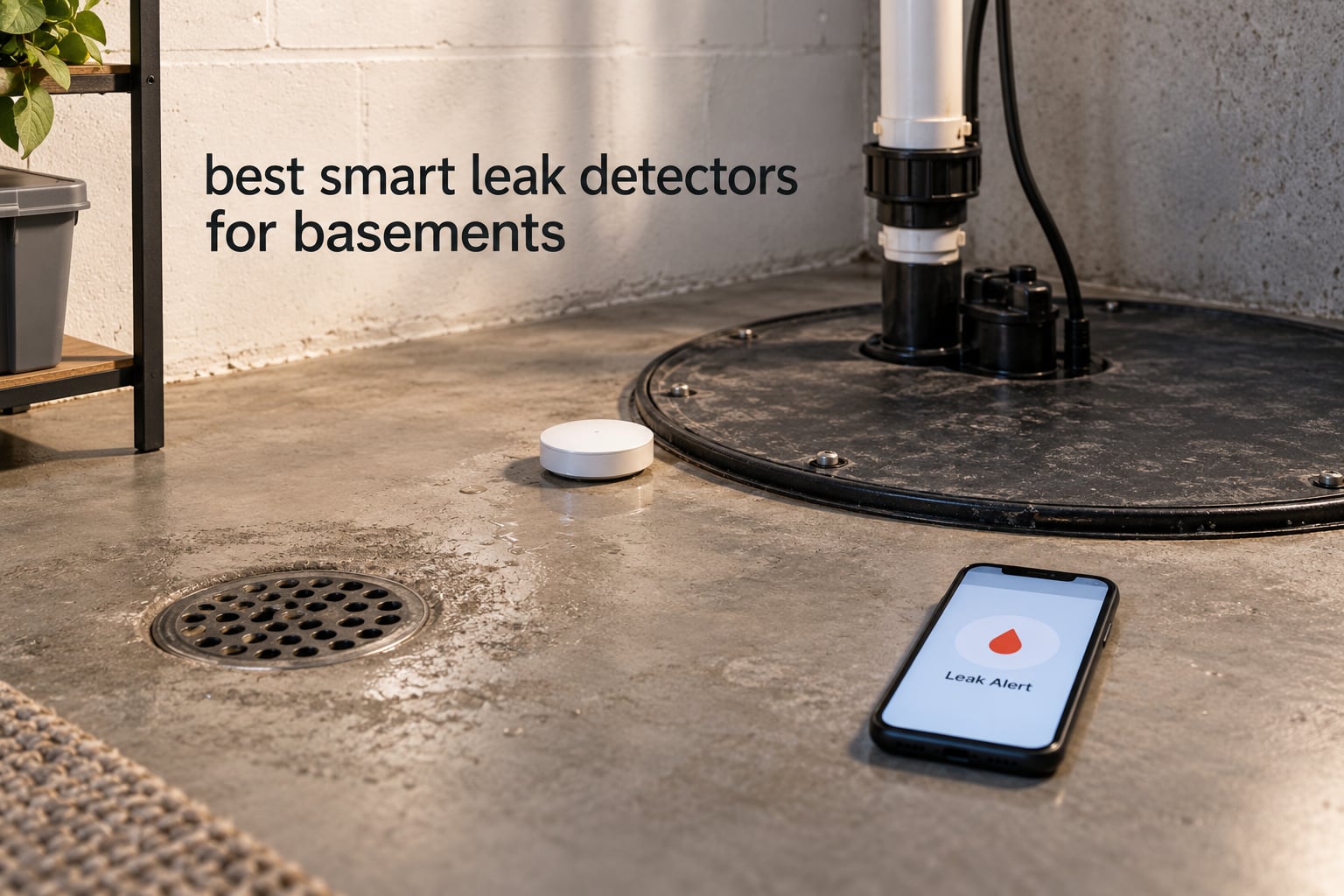
A failed sump pump does not announce itself politely. Water finds the lowest point in your basement, spreads across the slab, and starts soaking particleboard, baseboards, and anything you stacked down there to get it out of the way. The difference between a cleanup and a renovation is usually a single sensor that shouts in the first sixty seconds instead of the first six hours. That is the whole promise behind the best smart leak detectors for basements, and it is a promise most cheap sensors almost keep.
We spent weeks reading thousands of owner reviews on ten widely sold sensors, comparing alarm output, radio range, battery chemistry, ingress rating, and alert channels, and we worked through the failure modes that show up in basements. This is a spec-driven roundup rather than a lab teardown, and we say so plainly because you deserve to know how the picks were made.
One basement-specific finding shaped everything below. Signals below grade are weak, and below-grade Wi-Fi dead zones are the single most common complaint in smart-home forums from people who put sensors in a basement and then watched them go silent. The fix is not a better app. It is a sensor that reports to a hub or gateway upstairs and lets that device handle the internet connection, which is why most of the best smart leak detectors for basements in this guide ship with one. If you are also fighting damp air down there, our guide to the best dehumidifiers for basements is worth a look, since condensation is the number one source of false alarms.
Table of Contents
Top 3 Best Smart Leak Detectors for Basements in 2026

YoLink Water Leak Sensor 1 Kit 6-Pack
- LoRa range to 2034 ft
- 6 sensors plus hub
- Works with no internet at all
- Silent design needs a paired siren

GoveeLife Water Leak Detector 1s 5 Pack
- 105 dB local alarm
- 1804 ft Sub-1G range
- SMS app and email alerts
- IP67 reusable housing

X-Sense Wi-Fi Kit SWS54 3 Sensors
- 120 dB siren on sensor and base
- 0.4 mm six-probe detection
- Alerts shared with 12 users
- IP66 floor-mount body
Quick Overview: 10 Smart Leak Sensors Compared for 2026
The table below covers all ten sensors in this guide. The shortest version of our thinking: if your basement has weak signal, buy a kit with a hub; if it has reliable 2.4 GHz Wi-Fi, a direct unit costs less and takes a minute to set up; if you are near a water heater or a finished floor, weight the local siren output heavily.
| Product | Specifications | Action |
|---|---|---|
| YoLink Water Leak Sensor 1 Kit 6-Pack |
|
Check Latest Price |
 Aqara Water Leak Sensor 3 Pack Aqara Water Leak Sensor 3 Pack |
|
Check Latest Price |
| GoveeLife Water Leak Detector 1s 5 Pack |
|
Check Latest Price |
| X-Sense Wi-Fi Kit SWS54 3 Sensors |
|
Check Latest Price |
 GoveeLife Water Leak Detector 2 6 Pack GoveeLife Water Leak Detector 2 6 Pack |
|
Check Latest Price |
 YoLink Water Leak Sensor 4 6-Pack Kit YoLink Water Leak Sensor 4 6-Pack Kit |
|
Check Latest Price |
 SwitchBot WiFi Water Sensor SwitchBot WiFi Water Sensor |
|
Check Latest Price |
 X-Sense Water Leak and Freeze SWS0B X-Sense Water Leak and Freeze SWS0B |
|
Check Latest Price |
 Shelly Flood Gen4 Shelly Flood Gen4 |
|
Check Latest Price |
 Eve Water Guard Eve Water Guard |
|
Check Latest Price |
1. YoLink Water Leak Sensor 1 Kit 6-Pack and Hub: Best Overall Multi-Point Coverage
YoLink Water Leak Sensor 1 Kit: 6-Pack + Hub
6 sensors plus hub
LoRa radio to 2034 ft
AAA power, up to 5 years
Silent, needs a paired siren
Pros
- 6 sensors plus a hub cover the main risk points in one box
- App email and SMS alerts with location naming
- Control-D2D triggers a local siren or valve with no internet
- One hub scales to 300+ devices
Cons
- Sensors are silent
- so audible on-site alerts need a SpeakerHub or siren
- Cost climbs quickly once you expand past the six included
Six sensors and a hub in a single box is the configuration we kept coming back to while reviewing this category. The hub plugs into an outlet upstairs, the sensors report to it over a LoRa radio that reaches up to 2034 feet in open air, and the phone alert leaves the house from the hub rather than from the sensor. That single design decision is why this kit survives a basement where a direct Wi-Fi sensor would stall.
It is also the most reviewed product in our set, with more than 6900 ratings averaging 4.6 stars. Owners repeatedly describe the same story: a sump pump gave out, a sensor near the pit fired, and they got an SMS while they were at work. People running rentals and multi-unit buildings like that the same app holds several properties.
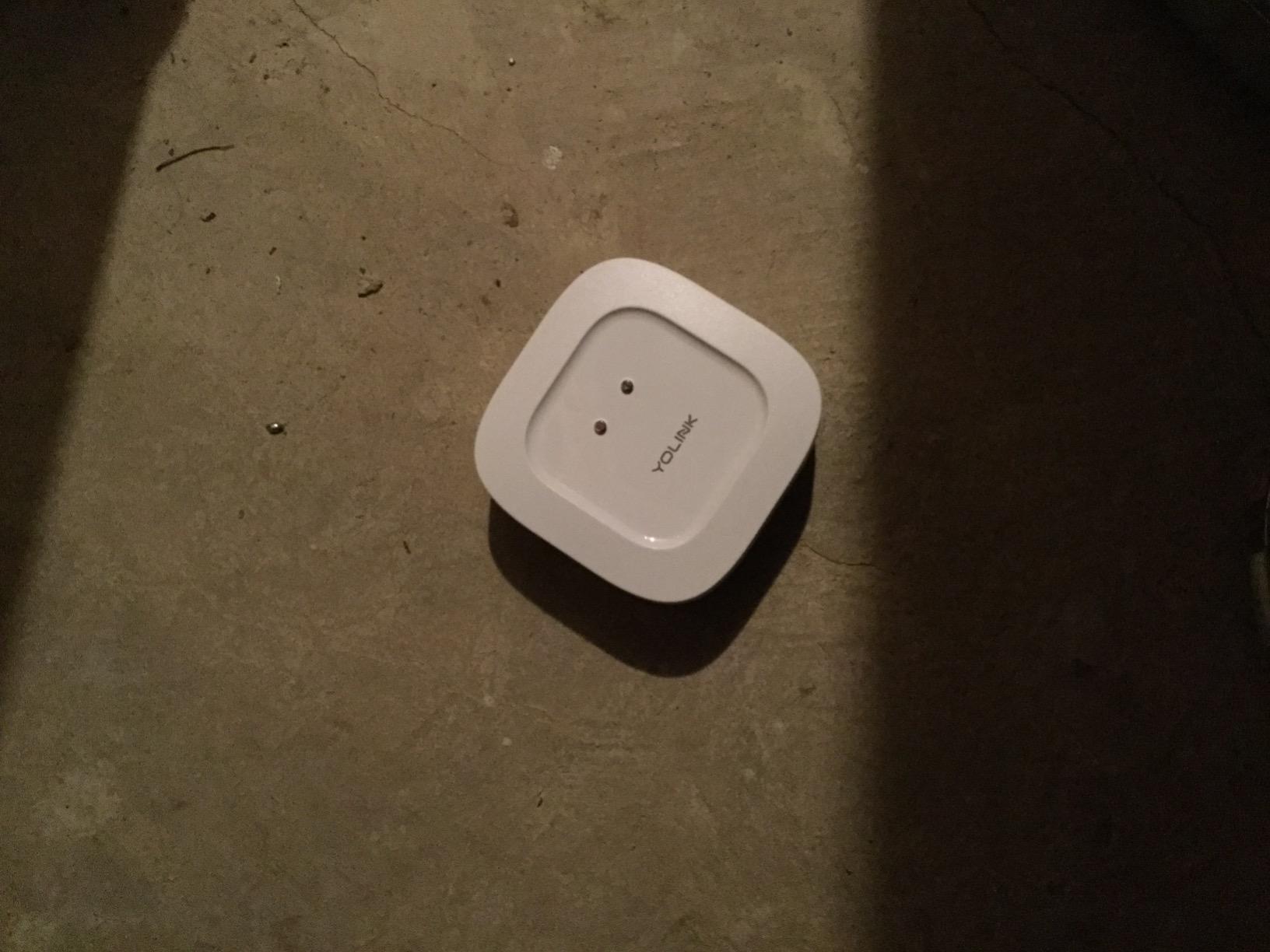
The Control-D2D feature is the sleeper advantage here. When the internet drops, sensors can still talk directly to other YoLink devices and trigger a siren or a shutoff valve on the local network. In a finished basement where the router lives two floors up, that offline capability is worth more than another feature in the app.
Battery life is rated at up to 5 years per sensor on two AAA cells, and each unit is capacitive rather than probe-based, so there are no metal contacts to corrode in a damp pit. The hub supports 300+ YoLink devices, so this scales from one basement to a whole property without new infrastructure.
Where this kit earns its place
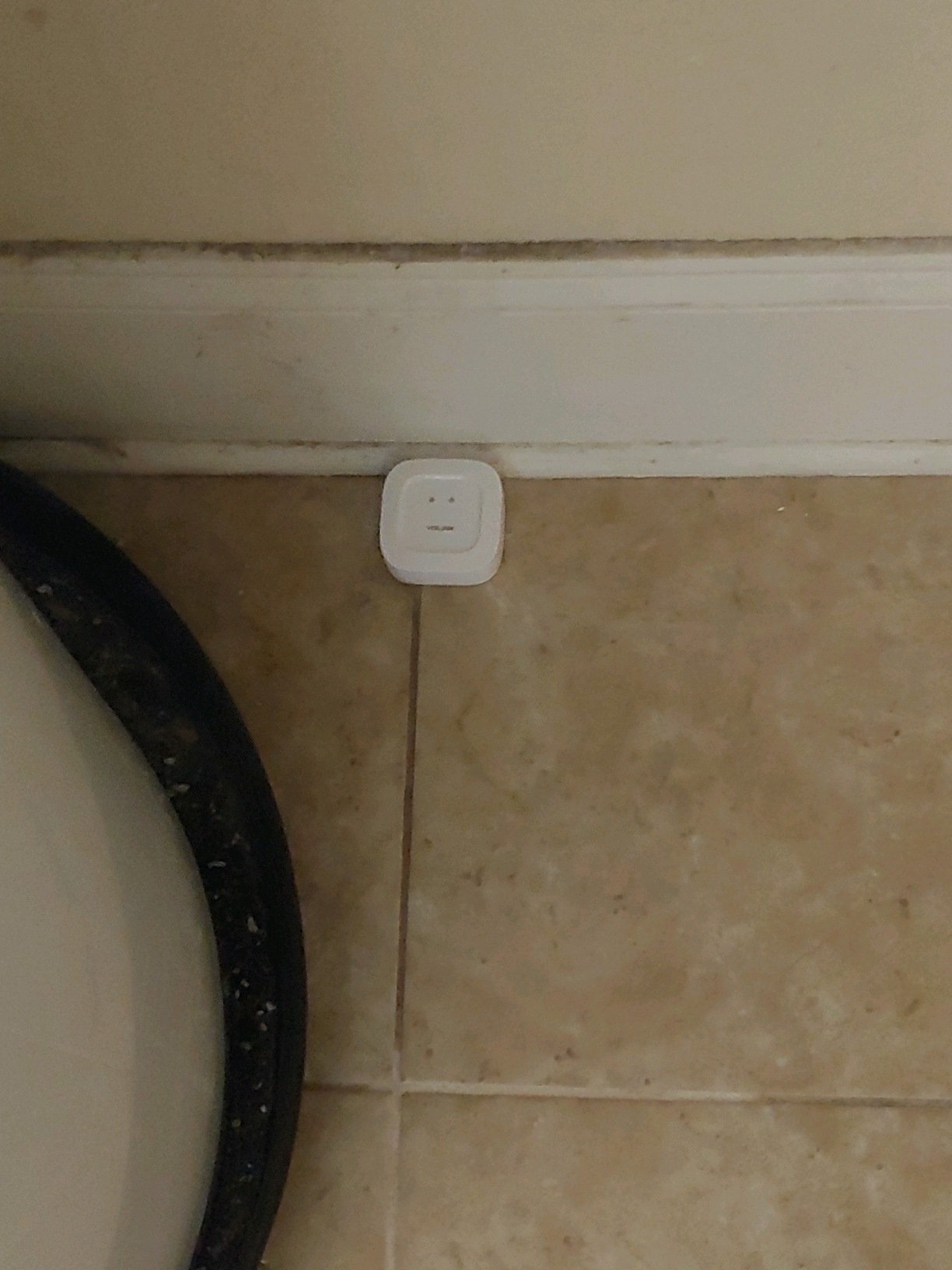
This is the pick for a basement with more than two risk points, and for anyone who wants coverage that keeps working during an internet outage. Six sensors give you room to cover the sump pit, the water heater base, the washer supply, the floor drain, the egress window well, and the dehumidifier pan at once.
Where it will disappoint you
The sensors themselves make no noise. If someone is standing at the bottom of the stairs and you are upstairs, you will not hear anything without adding a SpeakerHub or a paired siren, which is an extra purchase on top of an already substantial kit. And if your basement is a single small room with one water heater, six sensors is more coverage than the space requires.
2. Aqara Water Leak Sensor 3 Pack: Best for Tight Corners and HomeKit Homes
Aqara Water Leak Sensor 3 Pack, Zigbee Water Leak Detector for Alarm System
0.5 mm probe threshold
55 dB local alarm
IP67 with rust-proof coat
1.97 inch square body
Pros
- Smallest footprint in the set for low-clearance spots
- Triggers on 0.5 mm of standing water
- IP67 housing with rust-resistant coating
- Works with HomeKit Google Home and Alexa
Cons
- Needs an Aqara hub bought separately
- Only about 10 m of Zigbee range from that hub
- Tied for the lowest average rating among the picks
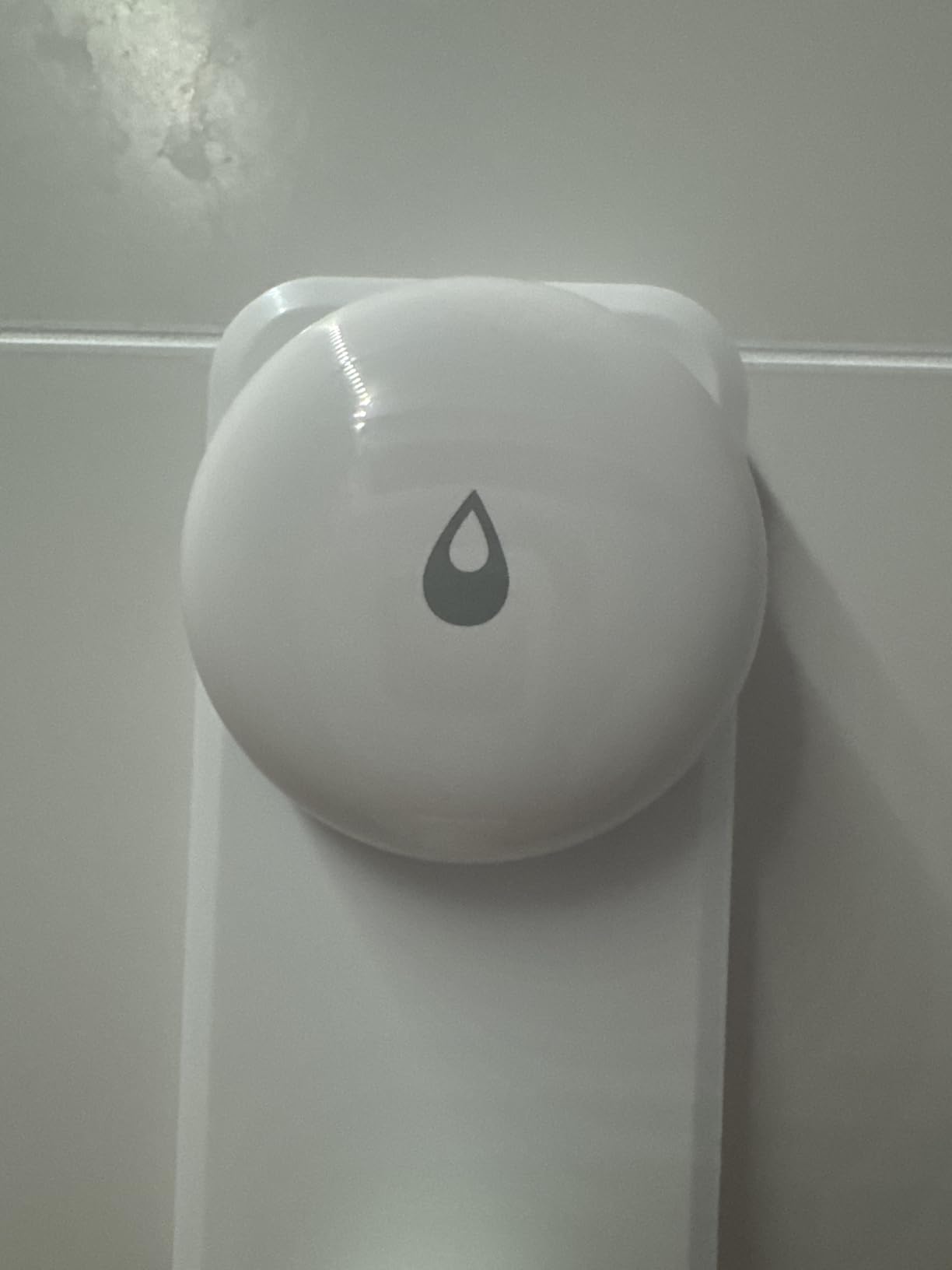
At 1.97 inches square and a little over half an inch thick, this is the puck you can slide behind a washing machine, tuck under a stair riser, or wedge into the gap between a finished wall and the slab. That size is the entire reason to buy it when every centimeter of clearance matters.
Detection is genuinely sensitive. The probes trigger at roughly 0.5 mm of pooled water, and the IP67 housing carries a rust-proof coating, which matters in a sump pit or an unheated space where condensation sits on surfaces for months. HomeKit users get native pairing through an Aqara hub, alongside Google Home and Alexa.
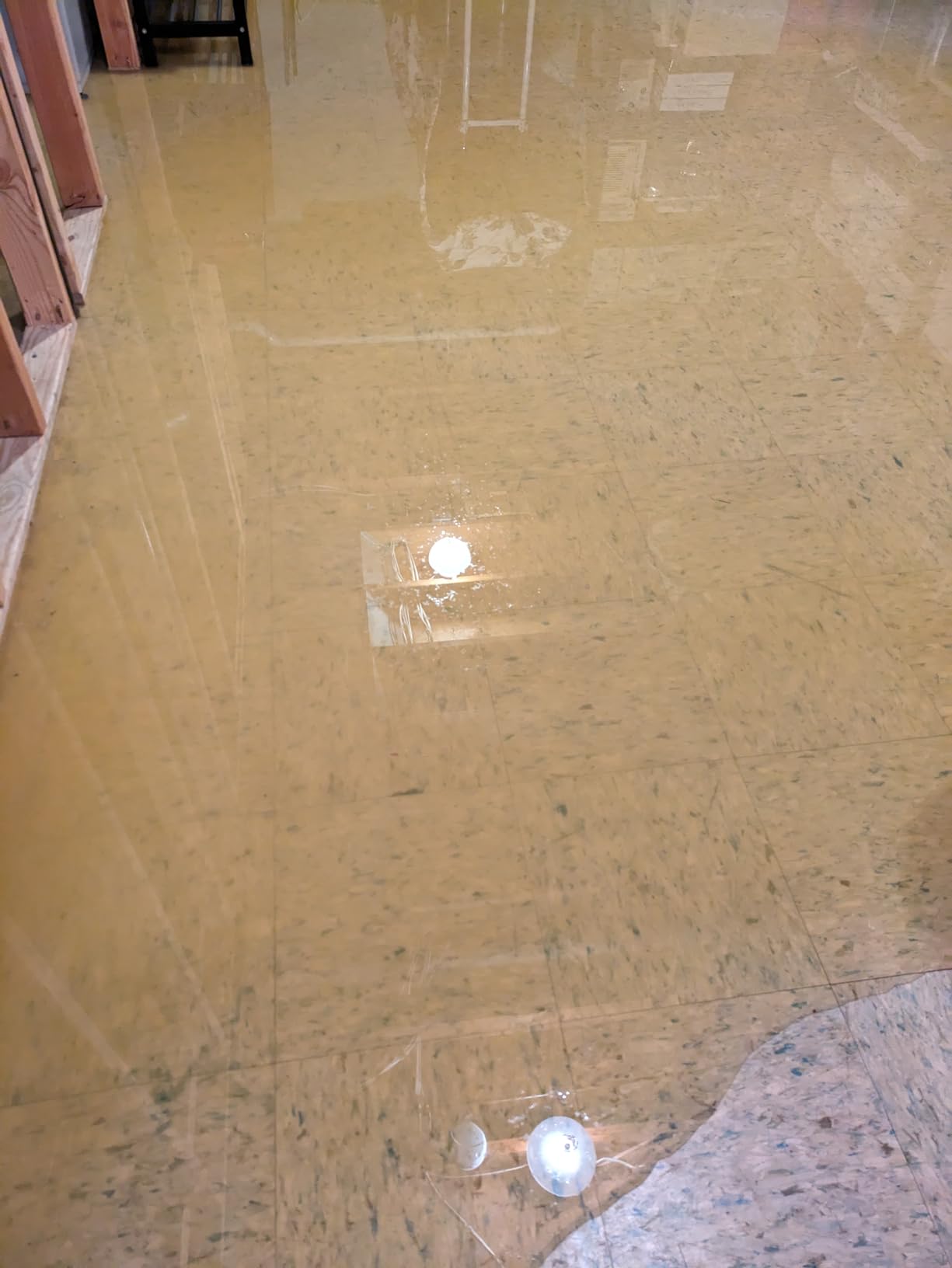
Reviews average 4.2 stars across more than 3600 ratings, with about 67% five-star. Buyers like the footprint and the ecosystem fit, and they repeat one frustration more than any other: the hub is a separate purchase, and it is not interchangeable with third-party Zigbee coordinators. Budget for that before you order.
The 10-meter radio limit is the other real constraint. In a large finished basement, the Aqara hub needs to sit roughly where the sensors do, or you need to be deliberate about which end of the room gets coverage.
Where this sensor earns its place
Choose this when clearance is the deciding factor, such as under a finished floor with a low ceiling joist, inside a utility chase, or behind an appliance pulled tight to the wall. It is also a natural fit for a household already running HomeKit and willing to add one Aqara hub.
Where it will disappoint you
It carries an average rating of 4.2 stars, which is tied for the lowest in this roundup, and roughly 9% of reviews are one-star. The 55 dB alarm is soft enough that you will likely not hear it from another room, so this is a phone-alert sensor first and a siren sensor second. If you need on-site sound, look at the X-Sense kits further down.
3. GoveeLife Smart Water Leak Detector 1s 5 Pack: Best for Basements
GoveeLife Upgraded Smart Water Leak Detector 1s with High Alarm, 5 Pack
105 dB alarm with 4 volume levels
1804 ft Sub-1G range
IP67 reusable housing
Up to 5 year battery
Pros
- Loudest siren among the multi-sensor kits we analyzed
- Sub-1G radio punches through dense walls to reach a basement
- SMS app and email alerts to multiple recipients
- Housing can be wiped dry and reused after a flood
Cons
- Initial app setup is long and click-heavy for some owners
- Gateway accepts only 2.4 GHz Wi-Fi and only GoveeLife sensors
- About 11% of reviews are one-star
This is the kit we would put in a typical American basement with a sump pump, and it is the one most owners describe as having stopped real damage. GoveeLife ranks first in its category, and multiple reviews describe a sensor firing after a sump pump failure or a drain backup while the family was away.
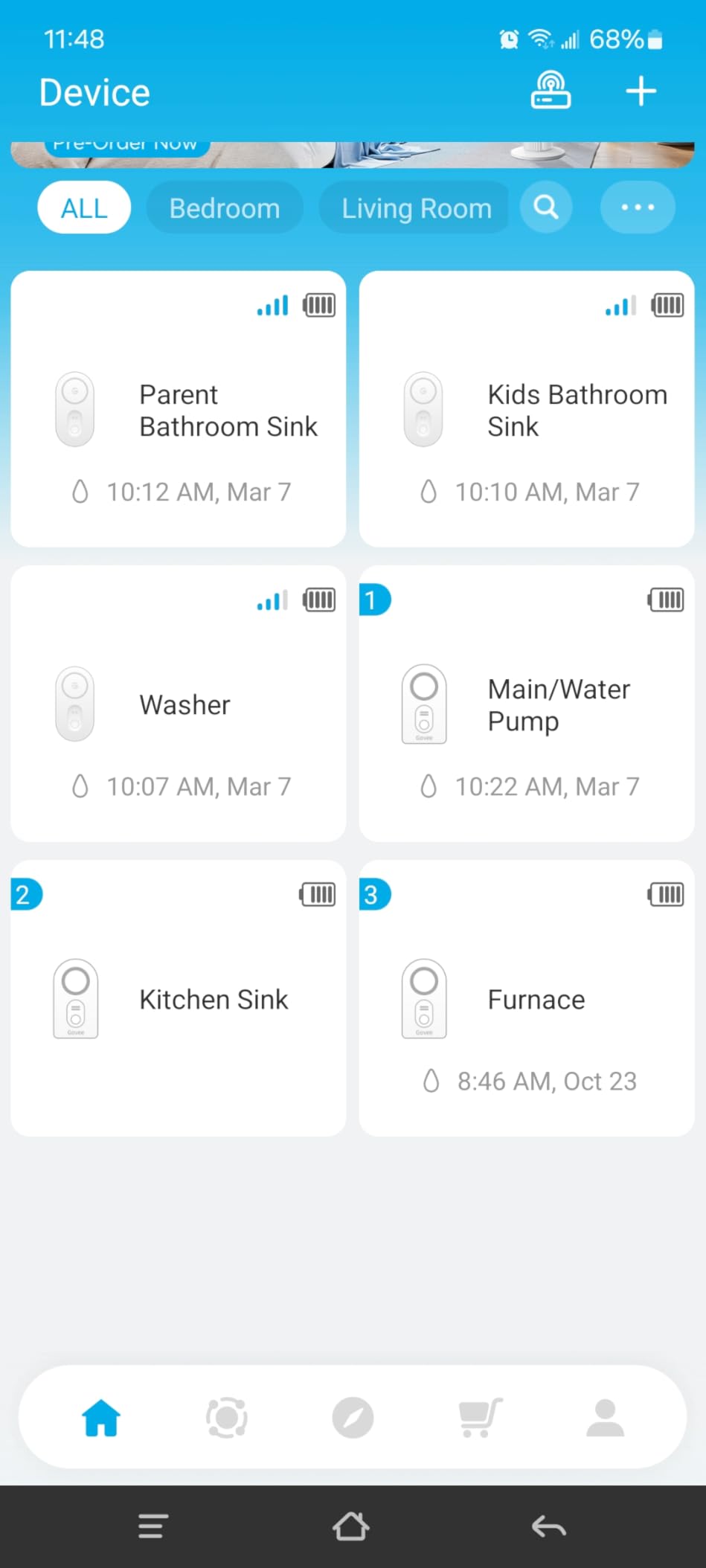
The Sub-1G radio is the reason it works below grade. It reaches up to 1804 feet through five dense walls, so the gateway can sit upstairs near your router while the sensors sit in the dampest corner of the lower level. The 105 dB alarm has four volume levels and a flashing red light, and the app supports push alerts, a Find Device feature that beeps a lost sensor, and multiple email recipients.
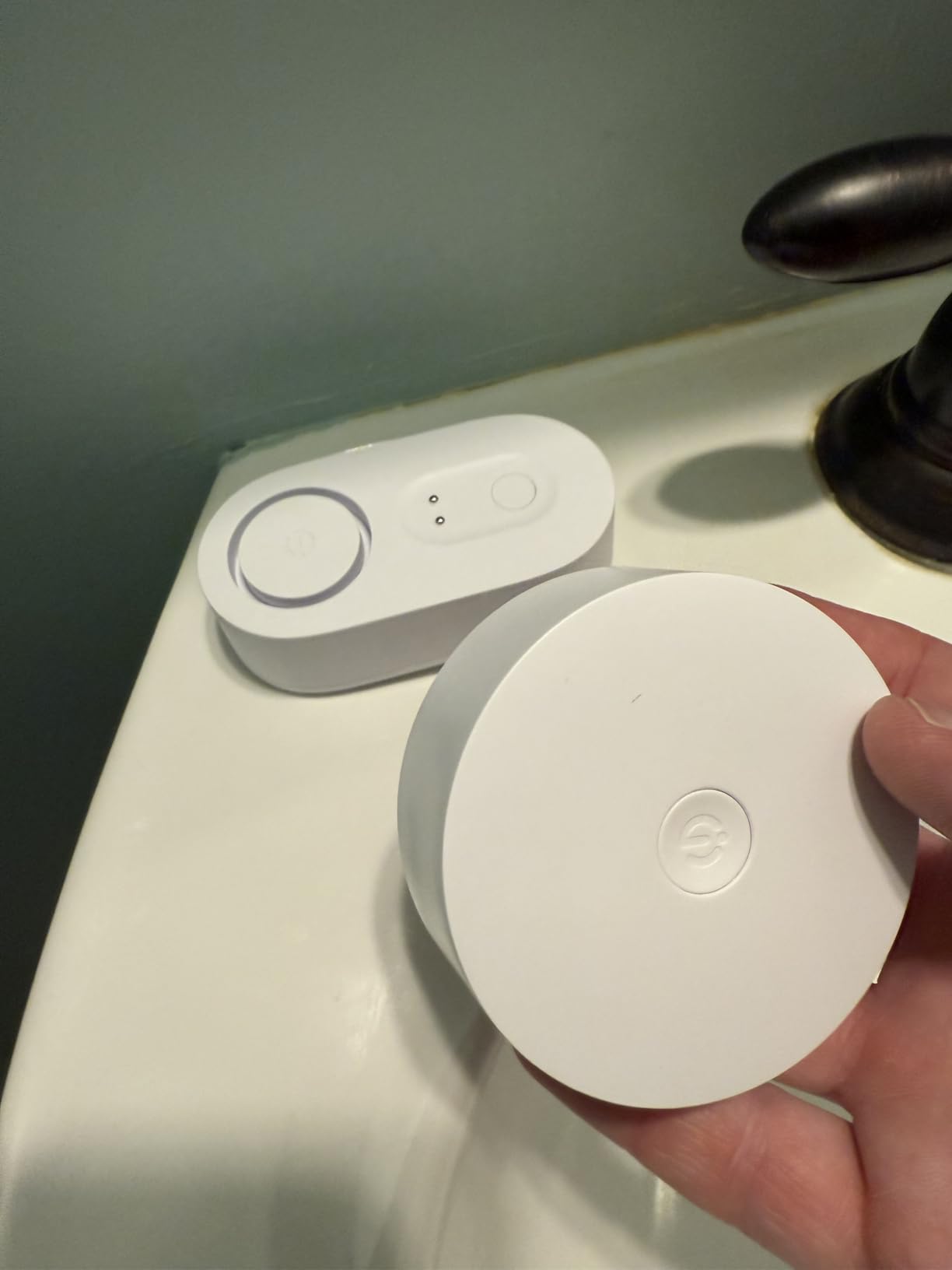
Around 71% of ratings are five-star, with a 4.3 average across more than 2700 ratings. The housing is IP67 rated and reusable after you wipe it dry, which matters when a sensor ends up briefly underwater in a pit. Battery life is rated at up to 5 years, with low-battery reminders in the app.
Setup is the sore spot. Owners describe the pairing process as long and click-heavy, with instructions that do not explain bonding a sensor to the gateway clearly. Budget an unhurried twenty minutes with your phone and the gateway in the same room.
Why this is our basement pick
It balances the three things a basement demands: a radio that survives concrete and masonry, a siren loud enough to be heard over a dehumidifier and a furnace, and a housing rated for standing water. Five sensors cover the main risk points without a subscription or a monthly fee.
What to watch out for
The gateway joins 2.4 GHz Wi-Fi only and will not accept non-GoveeLife sensors, so you are committing to one ecosystem at the hub level. If your router disables the 2.4 GHz band for some reason, pairing simply will not happen. Check that band before you unbox anything.
4. X-Sense Wi-Fi Water Leak Detector Kit SWS54: Best for the Loudest Alarm
X-Sense Wi-Fi Water Leak Detector Kit, 120 dB, 3 Sensors + Base, SWS54
120 dB on sensor and base
0.4 mm six-probe detection
1804 ft open-area range
3 sensors plus base station
Pros
- Loudest siren in the roundup at 120 dB
- from sensor and base
- Catches dripping water and pooling as shallow as 0.4 mm
- App sharing for up to 12 users with snooze options
- Long range puts sensors far from the base
Cons
- Local alarm cannot be disabled in the app without opening the unit
- Base station needs 2.4 GHz Wi-Fi and does not support 5 GHz
- Battery swaps are awkward on high or hard-to-reach sensors
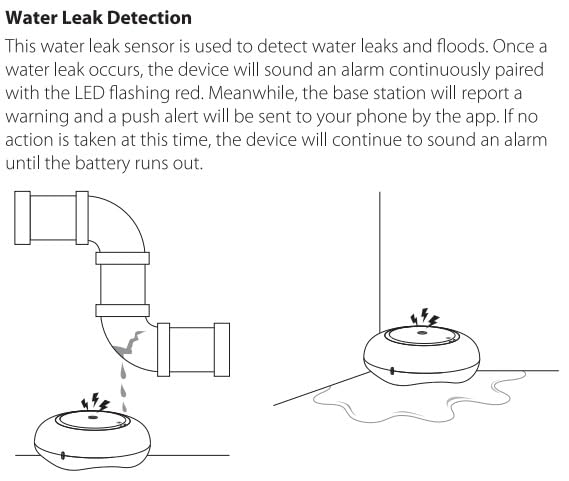
Decibels matter more than most buyers expect. A finished basement with a dropped ceiling, carpet, and a running dehumidifier will swallow an 85 dB siren completely, and 120 dB is the difference between a warning and an event. This kit is the loudest option we analyzed, and both the sensor and the base station sound.
Detection is thorough as well. Six probes, two on top for a drip from a supply line and four on the bottom for pooling, fire at roughly 0.4 mm. The radio reaches up to 1804 feet in open areas, and the app shares alerts with up to 12 users and offers a Remind Me Later snooze, which matters when you have just walked down and dragged a wet carpet.
About 80% of ratings are five-star, with a 4.6 average across more than 2200 ratings. Owners with rental properties and multi-unit buildings point out that one app handles several buildings, and several reviews describe catching a sump pump failure early. The body is IP66 rated and comes in slim and ultra-slim thicknesses, which helps under low-clearance spots.
The design decision owners argue about most is that the local alarm cannot be muted in the app. To silence it you have to open the unit and unplug the speaker. Some people love that, because a leak should never be silenced from a sofa.

Who should buy this kit
Anyone with a finished basement where an audible warning is the primary defense, or a home with multiple people who all need to hear about a flood. The base station can sit in a hallway or upstairs while the three sensors cover distant risk points, which suits a long basement with a laundry area at one end.
Where it falls short
It is a direct Wi-Fi architecture, so the base station has to hold a reliable 2.4 GHz connection to your router. If the base sits far from the router or below grade, you may be setting yourself up for the connectivity complaints that dominate forum threads about basement sensors. Swapping batteries on a sensor tucked behind a wall or up near a ceiling is also fiddly.
5. GoveeLife Smart Water Leak Detector 2 6 Pack: Best for Large Properties and Outbuildings
GoveeLife Smart Water Leak Detector 2 with 1968ft Ultra-Long Range, 6 Pack
1968 ft LoRa receiving range
100 sensors per gateway
100 dB alarm
IP66 waterproof body
Pros
- Very long 1968 ft radio reach for basements and outbuildings
- One gateway supports up to 100 sensors
- SMS app and email alerts plus voice assistant support
- Two top and four bottom probes catch drips and pooling
Cons
- Gateway is restricted to 2.4 GHz Wi-Fi
- Siren peaks at 100 dB which is well below the 120 dB X-Sense kit
- Additional sensors add cost for very large layouts
If your basement is not the only water risk on the property, this six-pack makes more sense than a smaller kit. The gateway handles up to 100 sensors, and reviewers describe covering basements, sump pumps, and detached buildings from a single hub. That is a landlord or a multi-unit owner use case.
Range is the headline. The gateway is rated to 1968 feet, and the IP66 body suits wet and damp locations including a sump pit. Six probes detect both dripping and pooling water, and the app works with Alexa and Google Assistant so you can ask which sensor triggered.
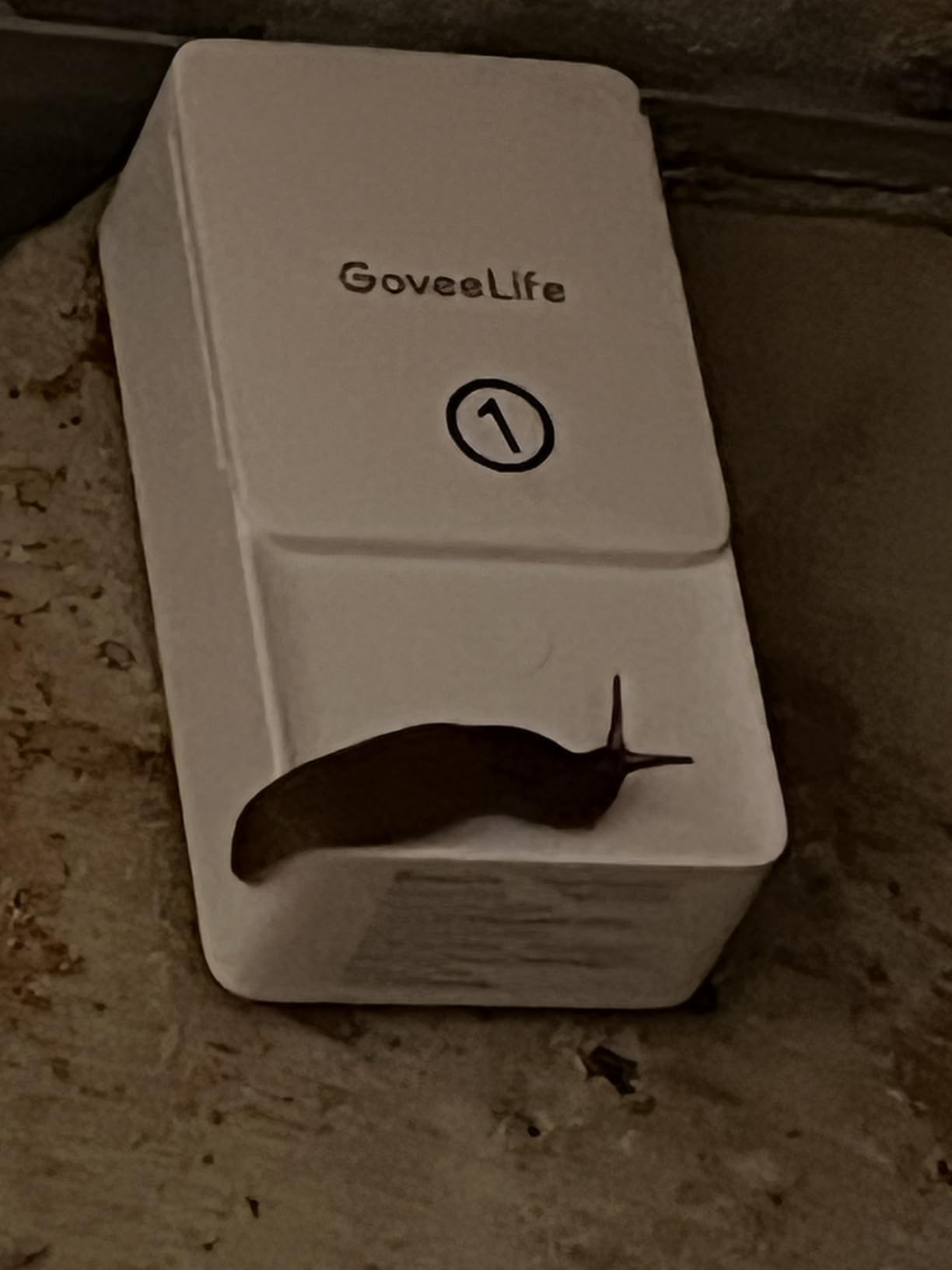
Ratings average 4.4 across roughly 1900 reviews, with about 75% five-star. People like pairing long radio reach with SMS and email alerts, and one battery pack is rated to run over 5 years under normal use across the included 12 AAA cells.
Two things temper that. The 100 dB siren sits well below the 120 dB of the X-Sense kit, which matters if your finished basement swallows sound. And the gateway again locks to 2.4 GHz Wi-Fi, so confirm your router is not running 5 GHz only.
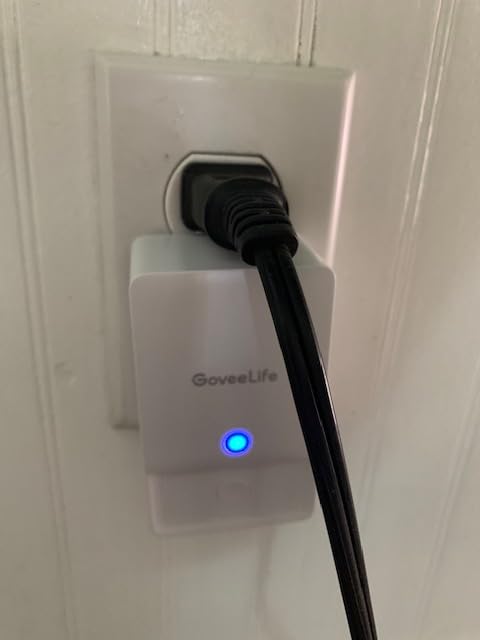
Where this one fits
Covering a basement plus a garage, a workshop, a rental unit, or a second property from one dashboard. If your basement is modest and you only need three or four points, the smaller five-pack covers the same ground with less hardware.
Where it does not
For a single finished basement, a hundred-sensor gateway is capability you will not use, and the 100 dB alarm is well below the loudest options in this guide. Choose it for reach and scale, not for noise.
6. YoLink Water Leak Sensor 4 6-Pack Kit: Best for a Siren in Every Spot
YoLink Water Leak Sensor 4 105 dB Alarm Kit: 6-Pack + Hub
105 dB alarm in every sensor
IP67 housing
LoRa to one quarter mile
2 AAA per sensor
Pros
- One of the highest average ratings in the roundup at 4.8 stars
- Every sensor carries its own 105 dB alarm
- App email and SMS alerts with location-based naming
- Control-D2D works with no internet to trigger sirens or valves
Cons
- A six-sensor hub kit costs more up front than one direct unit
- Hub needs power and a stable network for phone-level alerts
The difference between this kit and the first YoLink kit on our list is simple: every sensor here has a 105 dB alarm built into it. If a leak starts behind the water heater in a finished room, that location screams on its own instead of relying on a speaker somewhere else in the house.
It also carries an average rating of 4.8 stars, the highest in this roundup, with 89% five-star reviews and only 2% one-star, across more than 1600 ratings. Buyers consistently point to the combination of a built-in siren and a LoRa radio that reaches a quarter mile in open air.
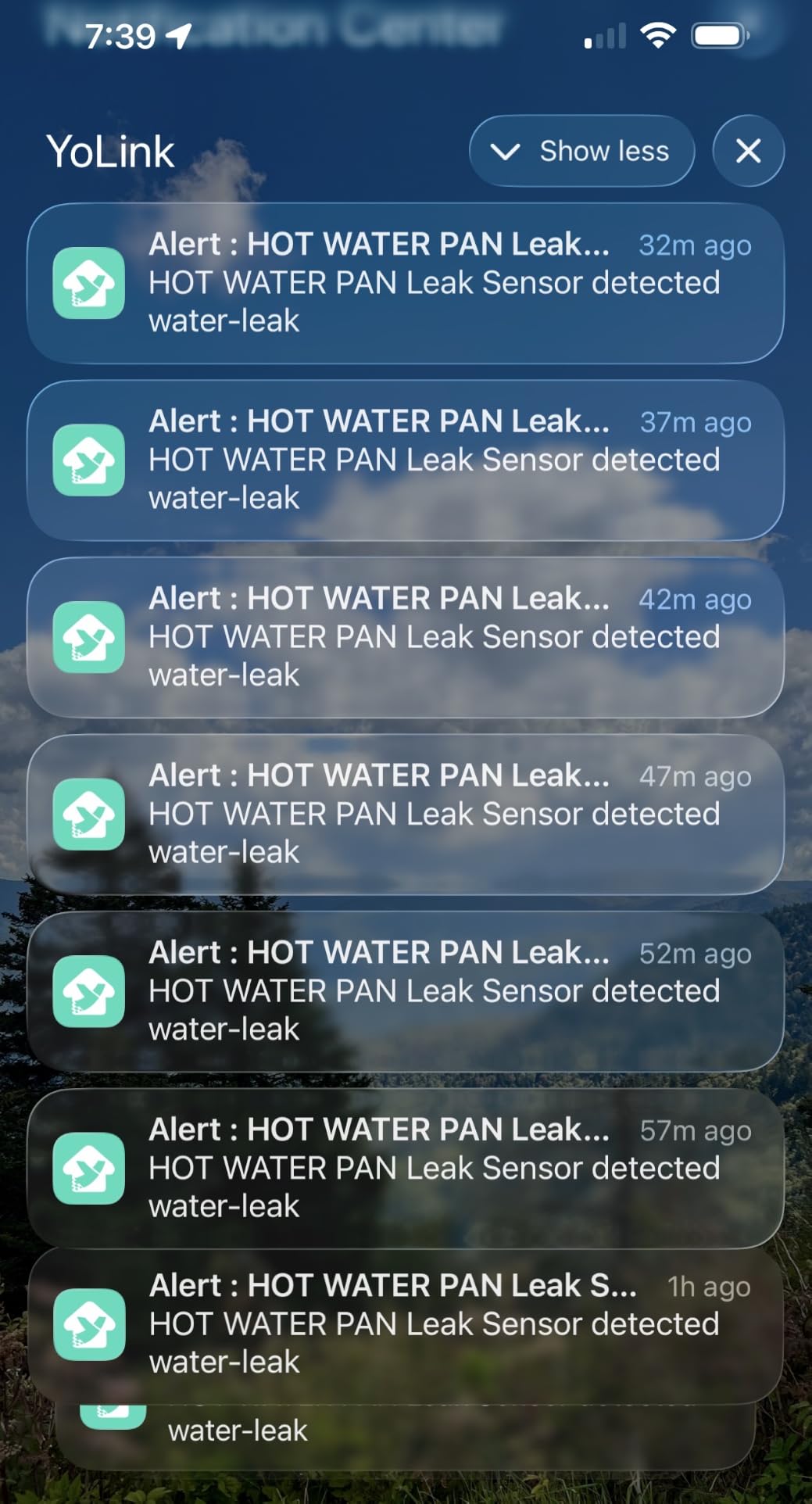
Two AAA batteries per sensor are rated at up to 5 years of typical life, and the housing is IP67. The Control-D2D function lets sensors trigger a siren or a shutoff valve over the local network when the internet is unavailable, which is exactly the scenario that matters during a storm.
One hub supports 300+ YoLink devices, and hub options include a SpeakerHub and a Cellular Hub if your basement has no dependable internet at all. That last option is a genuine answer to the dead-zone problem for a building with poor connectivity.
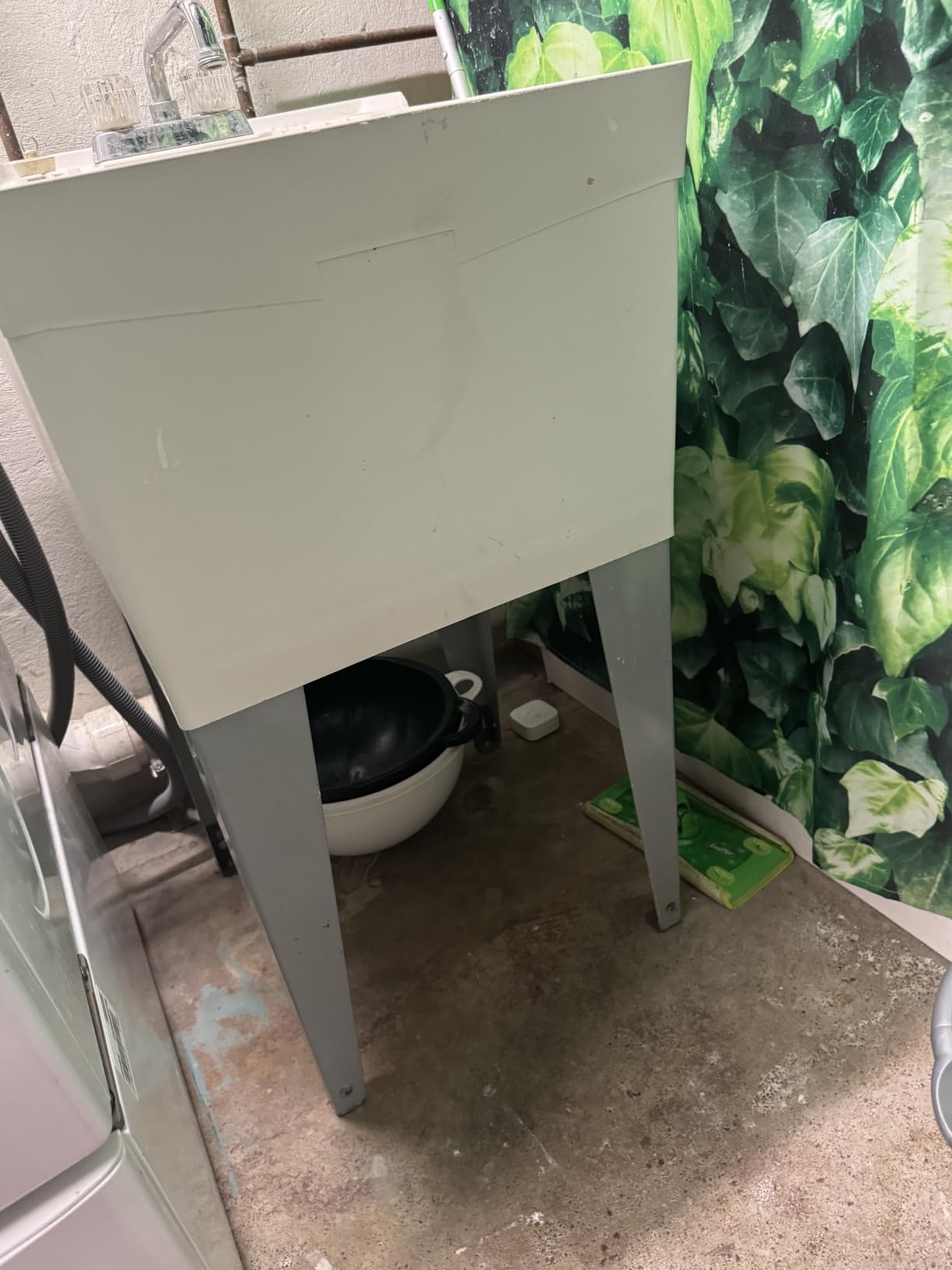
Who should buy this version
Choose this when you want audible protection at each point rather than at a single central hub. It suits a basement with several finished rooms, or a house where people are often downstairs and would hear a local siren before they checked a phone.
What it costs you
A six-sensor hub kit costs more up front than a single direct unit, and phone-level alerts still depend on the hub having power and a stable network. If you already run a YoLink hub from another project, this kit is a straightforward expansion.
7. SwitchBot WiFi Water Sensor: Best for Simple Hub-Free Setup
SwitchBot WiFi Water Sensor, Smart Water Leak Detector, 100dB Adjustable Alerts & App Alerts, IP67 Waterproof, Wireless Detector for Kitchen, Bathroom, Basement, No Hub Required (Support 2.4G)
No hub required
100 dB adjustable alarm
0.5 mm four probes
IP67 shell, 2 AAA cells
Pros
- No hub or gateway to buy or configure
- Adjustable 100 dB siren volume
- Four probes detect micro-leaks at about 0.5 mm
- Works with Alexa Google Siri IFTTT and SmartThings
Cons
- Sensors need manual reset after a Wi-Fi drop
- Battery life of up to 2 years is shorter than hub-based kits
- Real range often falls short of the claimed 120 m
Sometimes the correct basement sensor is the one you can install in five minutes without buying anything else. This SwitchBot connects straight to a 2.4 GHz network with Bluetooth as backup, so there is no hub to position, no gateway to pair, and no second device to mount upstairs.
It is also the only unit here that reports to an app over direct Wi-Fi with Bluetooth backup and nothing else in between, and its 100 dB siren has adjustable volume, which lets you turn it down in a living space and up in a storage room. Four high-precision probes catch micro-leaks at about 0.5 mm, and the IP67 shell handles high-humidity basement air. It also works with Alexa, Google, Siri, IFTTT, and SmartThings, and can trigger a Plug Mini to cut power to a leaking appliance.
Where kits start to matter is coverage count. Hub-based packs like both YoLink options and the two GoveeLife sets carry several sensors per box, while the two direct X-Sense units and this SwitchBot cover one or three points at a time. A hub-based kit makes sense once you are protecting four points or more, or when the basement signal rules out direct Wi-Fi.
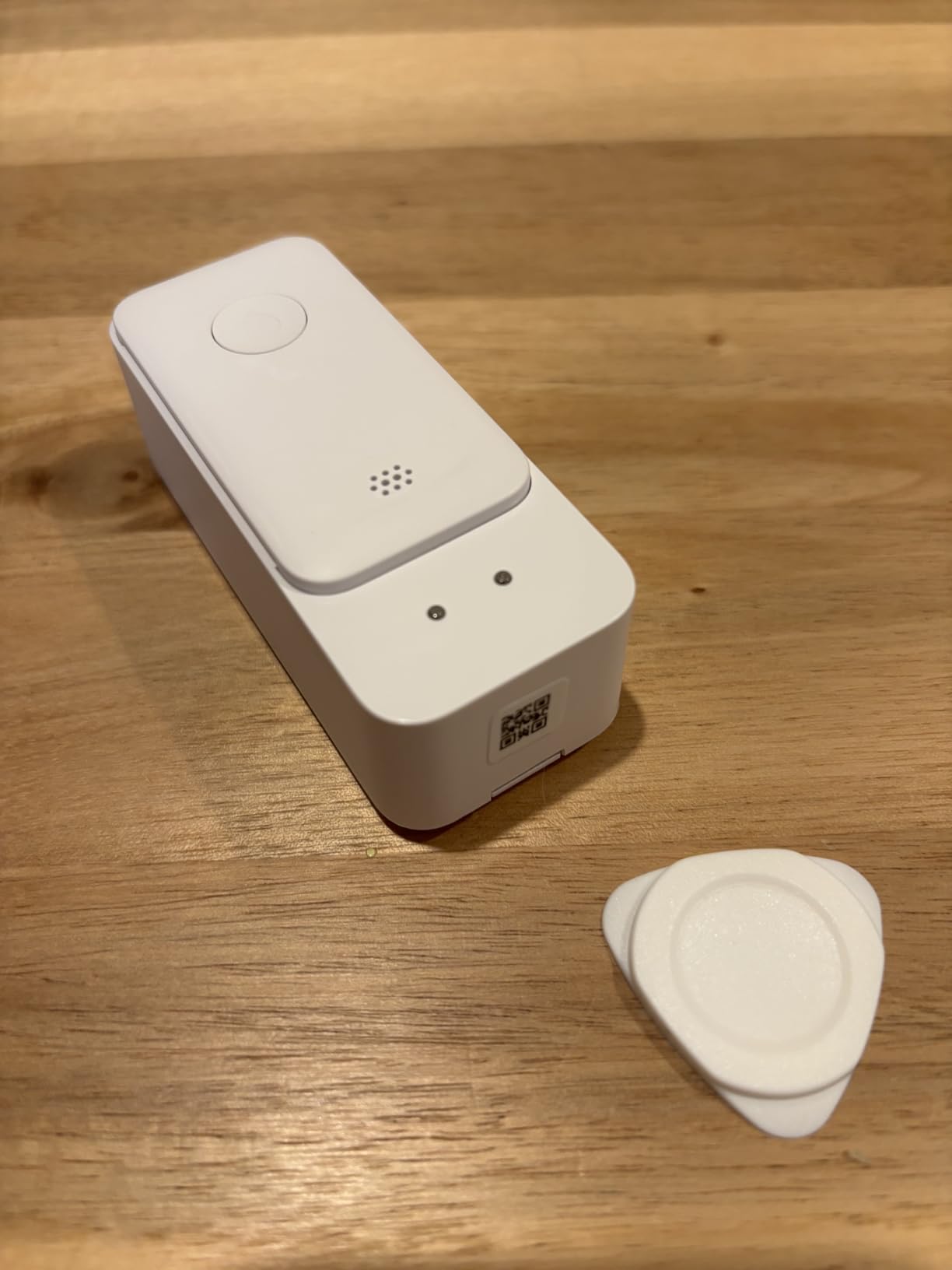
Ratings average 4.5 across more than 1600 reviews, with 75% five-star. The most common praise is the no-hub setup and the low cost of adding another point later. It is the pick we would suggest for a single rental unit or one small mechanical room.
The recurring complaint is connectivity. Owners report that after a Wi-Fi dropout, the sensor has to be reset by hand, and the claimed 120-meter range is optimistic in homes with masonry and finished walls. Battery life of up to 2 years on two AAA cells is also the shortest of the hub-based kits here.
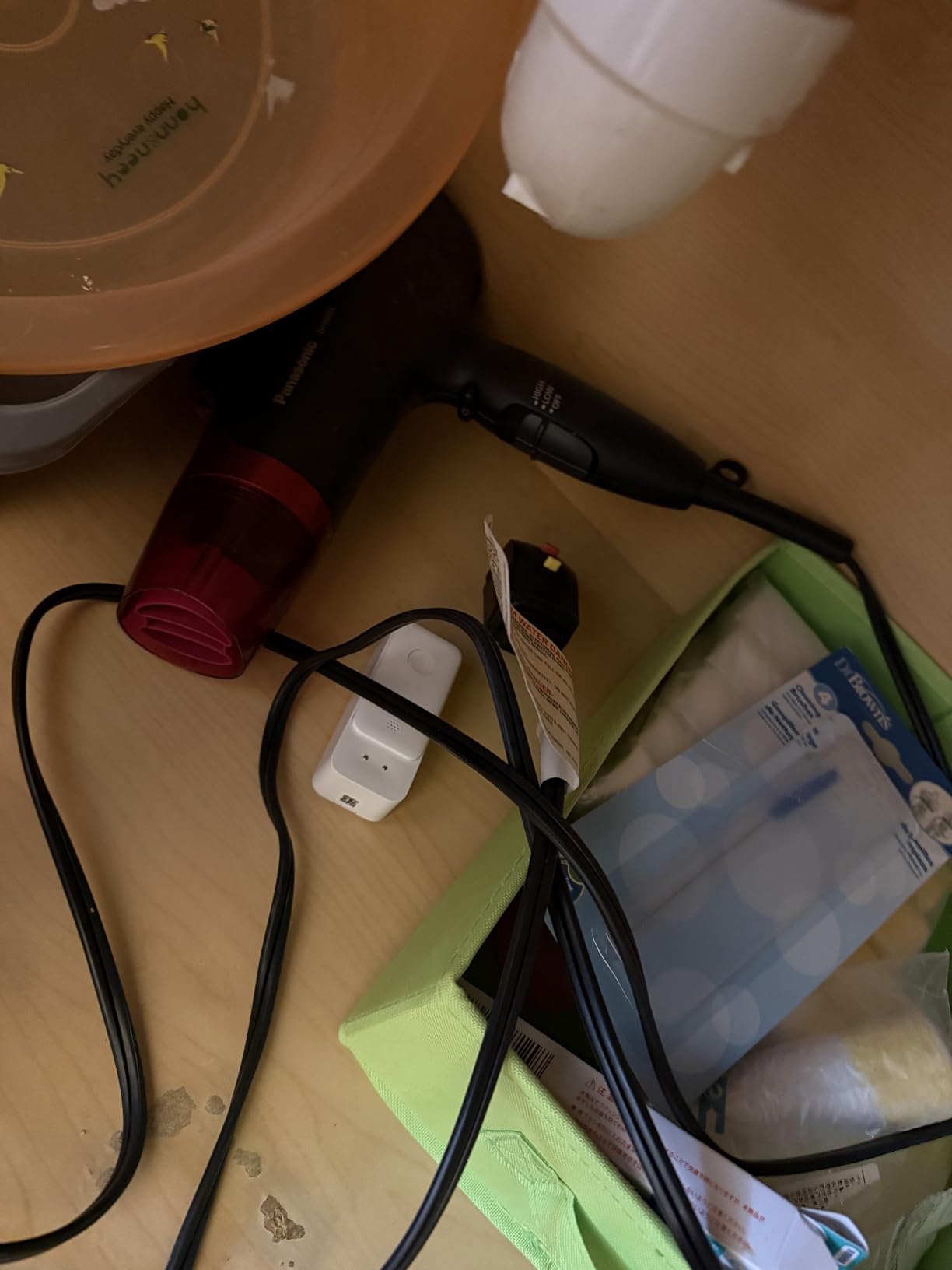
Where it fits
One or two points in a small basement with good Wi-Fi coverage, a rental property where you do not want to install a hub, or a spot you want to add later without redoing infrastructure. It also makes a good second line of defense behind a hub-based kit.
Where it does not
Below-grade dead zones are the problem. If your basement is at the edge of your network footprint, this sensor is the one most likely to go quiet without telling you, which is precisely the complaint pattern that dominates r/smarthome basement threads.
8. X-Sense Wi-Fi Water Leak Detector and Freeze Alarm SWS0B: Budget Pick
X-Sense Wi-Fi Water Leak Detector & Freeze Alarm, No Hub Required, 1-Pack
110 dB local alarm
Leak and freeze alerts
0.4 mm six-probe detection
CR123A battery, up to 2 years
Pros
- One of the lowest per-point costs among the hub-free units here
- No base station or hub to install
- Tracks leaks and freezing below 39F in one device
- Alerts share with up to 12 users
Cons
- Recent reviews report missing notifications and dead batteries
- The alarm cannot be silenced from the app in some units
- Bottom-pin probes miss wet surfaces that do not pool underneath
Place this one next to the water heater in the lowest-risk spot, and you are done. Alongside leak detection it tracks temperature and warns you below 39F, which in an unheated basement with a drain line is not a gimmick. It is a freeze warning and a leak sensor in the same 0.67-inch-tall body.
Detection uses the same six-probe layout as the larger X-Sense kit, two on top for drips and four underneath for pooling at about 0.4 mm. The 110 dB siren is the second loudest in this guide, and the IP66 body mounts on a floor with no wiring or drilling. A replaceable CR123A cell is rated at up to 2 years.
It is also the one pick where the rating history and the recent record disagree, and we think you should know it. The long-term average is a strong 4.6 stars, but the newest reviews are heavily negative, with repeated reports of dead batteries, constant beeping, and notifications that never arrive after setup. Treat the 4.6 as a historical average rather than a description of what a new buyer will experience this year.
Where it earns its place
A single point with a job to do: under a water heater, beside a laundry supply line, or next to a pipe run in an unheated space where freeze and leak are the same risk. It needs no hub, no base station, and no second device anywhere in the house.
Where it will frustrate you
The bottom-pin design does not register a wet surface unless water pools directly underneath, so a wall-side seep that runs along a sill will not trip it. The most recent battery and notification complaints are the main reason we do not place it higher, and the single-pack format means covering a basement means buying several.
9. Shelly Flood Gen4: Best for Matter, Zigbee, and Local Control
Shelly Flood Gen4, WiFi, Bluetooth, Zigbee, Matter Smart Flood Sensor with Leak Sensor Cable, Alexa, SmartThings, Google Home, Apple HomeKit Compatible, Flood and Rain Detection, Easy to Use, IP44
Wi-Fi Bluetooth Zigbee and Matter
6.56 ft extendable cable
91 g floor-mount body
3 year warranty
Pros
- Only sensor here speaking Wi-Fi Bluetooth Zigbee and Matter at once
- Extendable cable covers a wider area than a point puck
- Works with HomeKit Alexa Google Home and SmartThings
- Three year manufacturer warranty with real support
Cons
- IP44 is the weakest ingress rating here for a genuinely wet corner
- Thin long-term reliability data at 259 ratings
- Cable must lie flat to register water
If you run Home Assistant or care about open protocols, the Shelly Flood Gen4 is the odd one out in this list. It speaks Wi-Fi, Bluetooth, Zigbee, and Matter on the same device, so it drops into a local mesh without a vendor cloud and still works inside HomeKit, Alexa, Google Home, and SmartThings.
The 6.56-foot sensor cable is extendable and covers far more ground than a point-probe puck, which is genuinely useful along a wall base or across the front of a water heater. The body is 3.82 by 2.91 by 0.91 inches and weighs 91 grams, so it is easy to reposition as you learn where water actually goes.
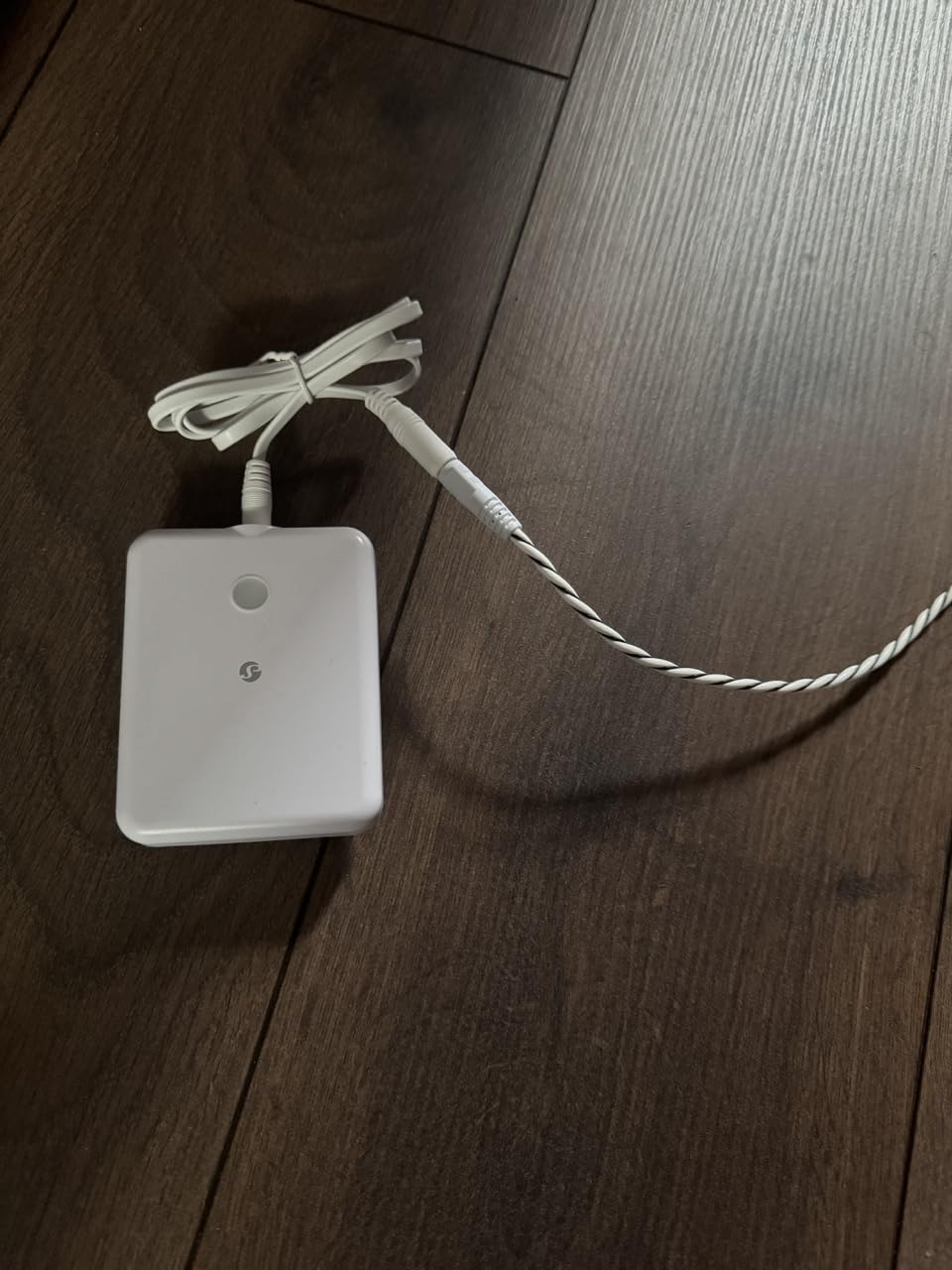
Battery operation includes an Economic Alarm Mode, which thins out reporting for unattended or seasonal properties, and the manufacturer warranty runs 3 years. Shelly lists basements, garages, laundry rooms, and holiday homes among its intended uses.
Two cautions. The IP44 rating is the weakest ingress protection in this roundup, so it is a poor choice for a sump pit that regularly takes standing water, and the cable has to lie flat against the surface to register anything, which means it needs a route you can tape down.
Why pick it
Multi-protocol support is the reason. Households that have moved away from cloud-dependent devices and want local automations can add this sensor without reworking their automation stack, and the extendable cable handles long linear runs a puck cannot.
What to accept
The thinnest evidence base here at 259 ratings means there is less long-term reliability data than the kits above. Pair it with a second brand rather than making it your only layer, and keep it out of the wettest corner of the pit.
10. Eve Water Guard: Best for Apple Homes and Wide Cable Coverage
Eve Water Guard – Smart Home Water Leak Detector, 6.5 ft Sensing Cable, 100 dB Siren, (Apple HomeKit), App Notifications, Bluetooth, Thread
6.5 ft cable, extendable to 490 ft
100 dB siren with red light
Thread router node
Corded, no battery
Pros
- Cable extends up to 490 ft for long linear runs
- Corded power keeps it working through power outages
- No Eve cloud
- no account
- no tracking
- Native Thread mesh support
Cons
- The priciest single unit in this roundup
- Needs a nearby outlet and the plug can block a second socket
- Requires an iPhone or iPad and limits non-Apple setups
The Eve Water Guard takes a different approach. Rather than a puck that senses a single spot, it lays a 6.5-foot cable along the surface you want to watch, and that cable extends up to 490 feet. Laid along the base of a foundation wall or across a laundry room floor, it watches a whole run rather than one point.
It is corded, which in a basement is an advantage. Water, a sump failure, or a tripped breaker does not silence it, and you will never find a dead battery in a pit you cannot see into. It joins a Thread network automatically and acts as a router node that extends mesh reach for other devices, and it needs no bridge or gateway.
The 100 dB siren pairs with a red flashing light and notifications on iPhone, iPad, and Apple Watch. Privacy is the quiet selling point: there is no Eve cloud, no registration, and no tracking, and everything runs locally.
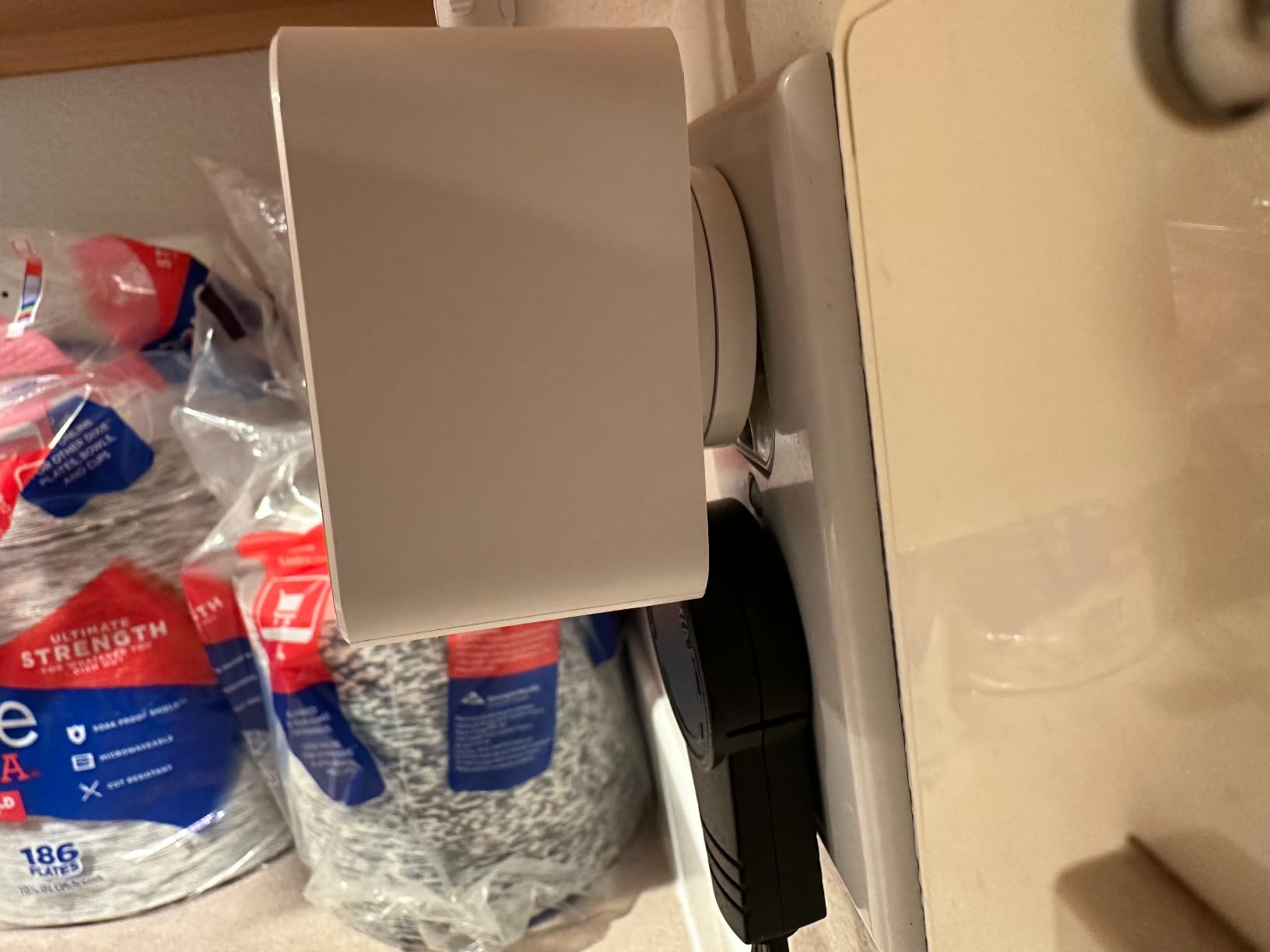
Ratings average 4.5 across 204 reviews, with 75% five-star. Owners emphasize the cable coverage, the corded reliability during outages, and the no-cloud approach. One of the more common installation notes is that the cable resists lying flat on some surfaces, which can let water pass underneath it, so secure the run carefully.
The tradeoffs are cost and platform. This is the priciest single unit in the roundup, its plug is large enough to occupy a US outlet on its own, and the setup assumes an iPhone or iPad on a current version of iOS.
Where it is the right call
An Apple household with an outlet near a long, linear risk. A foundation wall base run, a finished laundry room, or a utility room where a cable can follow the pipe is exactly the shape of problem this solves, and corded power removes battery anxiety from a space you rarely enter.
Where it is the wrong call
A large basement with scattered point risks and no outlets near them, or a mixed-ecosystem home without Apple devices. The cable also needs a flat, secure route, and a basement corner where water hits from several directions defeats the point of a linear sensor.
Where to Place Leak Sensors in a Basement: 8 Points in Priority Order
Placement decides how much these sensors are worth. A single sensor in the wrong corner protects nothing, and the most common mistake is putting one sensor in the middle of an open floor. Work this list in order, because the points are ranked by how often they fail and by how much damage each one causes.
Sump pit and discharge line. The single most common failure. A sensor near the pit catches both pump failure and a discharge line that has come loose.
Base of the water heater. Old tanks fail from the bottom, and relief valves drip long before they fail completely.
Washer and dryer supply lines. Behind and beside the machine, where a hose fails out of sight.
Floor drain and the lowest point of the slab. This is where a slow leak becomes a standing pool, and the best place for one of the highest-sensitivity sensors you own.
Egress window well and its drainage. Below grade, outside the foundation, and completely invisible from the room.
Dehumidifier condensate pan and drain line. A blocked or disconnected line puts water on the floor fast. Pair this point with our basement dehumidifier picks so the unit and the sensor agree on capacity.
Lowest point along a foundation wall. The first place cove joint seepage and groundwater intrusion show themselves.
Main water line entry and the water meter. A burst upstream of everything else is why whole-home flow monitoring exists.
Two placement habits do more to reduce false alarms than any feature in this roundup. Keep sensors off the bare slab near a dehumidifier outlet, because condensation beads there and can trip a probe. And give every sensor a name tied to its location in the app, so a 2 a.m. alert tells you the laundry room instead of making you hunt.
If you are storing anything down there, remember that the sensor only limits the damage. Keeping utility shelving off the floor and away from the wall base is the cheap half of flood protection, and it is the half that survives a total loss.
What to Do in the First 10 Minutes After a Basement Leak Alert
When an alert fires at 2 a.m., the order of operations matters more than speed. Most people start hauling belongings out of the way and end up standing in water with a wet vacuum.
Shut the main water supply. If you have a smart shutoff valve, trigger it from your phone. If you do not, find the main and close it. Every minute of supply keeps feeding the problem.
Kill power to the affected area if water is near an outlet, a dehumidifier, a furnace, or a water heater. Water and energized equipment is the fastest route to a dangerous situation.
Check the sump pump directly. Most basement alerts are a sump that stopped, not a burst pipe. Confirm the pump is running before you assume the worst.
Start extraction. A wet vacuum on the lowest point does more than anything else you can do in the first hour.
Photograph everything before moving property. Insurers ask for documentation, and it is much easier to take now than later.
Note the time and the sensor location so you can tell your insurer exactly when water started, which routinely shapes the claim.
One important clarification that gets confused constantly: a leak sensor detects and alerts, it does not stop the water. Automatic shutoff is a separate valve on the main line, and no sensor in this roundup shuts anything off on its own except through an integration you set up yourself.
What Smart Leak Detectors Cannot Detect?
Every one of these sensors is a point-of-leak device, and that design has limits you should accept before you buy ten of them. Knowing the boundary is what keeps a single sensor from creating a false sense of security.
Slow seepage behind a finished wall. Water migrating through a foundation cove joint or a weep hole can wick through framing for weeks before it reaches a floor. Point sensors will not see it. A relative-humidity sensor or a whole-home water usage monitor that catches a change in consumption is the right tool for that pattern.
Condensation mistaken for a leak. In a humid basement, a bead of water on a concrete floor is normal in spring. This is the most common false alarm we found, and it is why a good basement dehumidifier matters as much as a sensor. Keep probes off cold concrete, raise humidity control first, and give a sensor a month to settle before you trust its alerts.
Leaks above the sensor line. A puck detects water that reaches its probes. A burst pipe spraying into a wall cavity, or a supply line that drips into a joist bay, may not run to the floor for hours. The top probes on the six-probe designs help, but they help at the sensor location, not at a different point in the room.
Anything that does not use the household supply. Sewer backflow through a floor drain, and groundwater coming through the slab from outside, are not connected to the water line your sensor protects. A main-line flow monitor is a supplement here, not a replacement.
Buying Guide: 7 Criteria That Matter in a Basement
The category divides into three things buyers constantly conflate. A spot sensor is what all ten products here are: a battery-powered puck that senses moisture at a location and alarms. A whole-home water monitor watches flow on the main line and reports abnormal usage, so it catches a slow leak nobody sees. An automatic shutoff valve is a motorised valve that closes the main when a monitor detects trouble. The first alerts you. The second diagnoses. The third acts. You do not have to own all three, but you should know which one you actually bought.
Connectivity is the basement-specific decision
This matters more below grade than anywhere else in the house. Concrete, masonry, finished ceilings, and a router on the main floor all conspire against a 2.4 GHz signal. The recurring pattern in owner reviews and on r/smarthome is a direct Wi-Fi sensor that works fine until the day it does not, and a phone that stays silent because the sensor never reached the network.
Three architectures exist, and they are not equal in a basement. Direct 2.4 GHz Wi-Fi units like the SwitchBot and the single X-Sense are the simplest and the cheapest, and they are the right answer when you have confirmed coverage where the sensor will sit. Sub-1GHz gateway kits like the GoveeLife models and the X-Sense SWS54 use a separate low-frequency radio between sensor and gateway, which punches through masonry and reaches far beyond Wi-Fi range. LoRa hub kits like both YoLink options push that further, to roughly a quarter mile in open air, and the YoLink units add Control-D2D so a sensor can still trigger a local siren or valve with the internet down. Zigbee units like the Aqara need a hub within about 10 meters, so the hub placement becomes the whole design problem.
Our rule of thumb: put the gateway upstairs near the router and let the sensor handle the basement. If your basement has no usable signal at all, a hub with a local siren is not optional.
Alarm output has to beat the room
An undecorated utility room and a finished rec room are different acoustic problems. The range here runs from the Aqara at 55 dB to the X-Sense SWS54 at 120 dB, and the gap is enormous in practice. Treat anything under 85 dB as a phone-alert device rather than an on-site alarm, and prefer a design where the siren sits where the water is rather than where the router is. The adjustable volume on the SwitchBot and the per-sensor sirens on the YoLink Sensor 4 both solve this more cleverly than raw decibels alone.
Alert channels decide whether you find out in time
A push notification on a phone in a pocket is the weakest possible channel for a water event. People on forums ask for SMS, email, and phone calls precisely because they have learned to ignore a buzz. Prioritise kits that send SMS and email, name each sensor by location, and let you add multiple recipients, because a single-contact alert is a common complaint and a real gap in coverage. Any recurring subscription fee is worth walking away from; all ten sensors here work without one.
Battery chemistry matters in unheated spaces
Cold and damp drain coin cells faster than the box claims, and forum users in unheated basements consistently report shorter real life than the advertised figure. Most units here run two or three AAA cells, which is the sweet spot: cheap, widely available, and enough capacity to survive a cold basement season. The single X-Sense uses a CR123A lithium cell, which tolerates cold better but costs more to replace and lasts about 2 years. Corded units like the Eve Water Guard sidestep the question entirely, at the price of needing an outlet.
Whichever chemistry you choose, test the low-battery warning before you need it, and note that a unit that has never sent a test alert is not a unit you should trust in a sump pit.
Coverage count and probe design
Count the risk points first, then buy a pack that covers them with one or two spares. Kits of five or six are the sweet spot for a typical basement. On probe design, six-probe layouts are better than two because they catch dripping water from above as well as pooling below, and lower detection thresholds around 0.4 to 0.5 mm are the current norm. Cable-based sensors cover a longer run but need a flat, secure route and see less of a scattered room.
Ingress rating tells you where it may live
IP66 and IP67 housings can tolerate spray, dust, and brief submersion, which is what a sump pit and a floor drain will do. The Shelly Flood Gen4 at IP44 is splash-resistant only, so keep it out of the wettest corner. Several products are reusable after a flood if you wipe them dry, which is worth checking because a sensor lost in a sump is an expensive lesson.
Shutoff pairing is a separate purchase
If you want the water to stop, you need a motorised shutoff valve on the main line, and that is an install with real cost and often real plumbing work. The good news is that most kits here can trigger one through their ecosystem or through a hub pairing, and the YoLink Control-D2D function works even with the internet down. Plan the sensor coverage now, and add the valve later if the budget allows. Renters and landlords can skip this entirely and get nearly all the benefit from battery sensors alone, since no plumbing access is needed.
One last habit worth more than any feature: pour a cup of water across both probes, confirm the local siren within a few seconds, confirm the phone alert inside a minute, and then wipe the sensor dry and re-seat it. Do that on install day, and again each spring.
Frequently Asked Questions
What is the best water sensor for a basement floor?
The best water sensor for a basement floor is a puck with probes on both the top and the bottom, IP66 or IP67 housing, and a local siren of at least 85 dB. Our pick is the GoveeLife Water Leak Detector 1s 5 Pack, whose Sub-1G radio reaches a basement from a gateway upstairs and whose 105 dB alarm carries over a finished room.
Which water leak detector is the most accurate?
Accuracy comes down to detection threshold and probe count, not brand. The six-probe designs here fire at roughly 0.4 mm of pooled water and also catch dripping from above, while two-probe units stop at about 0.5 mm. In practice all ten sensors detect a real leak within seconds, so placement matters more than the last tenth of a millimetre.
What is the best water leakage detector for home use?
For most homes, the best water leakage detector is a kit with a hub and five or six sensors, because hub-based models keep working where direct Wi-Fi sensors drop off below grade. Our top pick is the YoLink Water Leak Sensor 1 Kit, and its Control-D2D mode can still trigger a local siren or valve when the internet is down.
How can I detect a water leak in my house?
Place point sensors at every water risk point: the sump pit, the water heater base, washer supply lines, the floor drain, an egress window well, the dehumidifier pan, and the lowest point of the foundation wall. Add a whole-home flow monitor if you want to catch a slow leak nobody can see. Test every sensor with a cup of water on install day.
Do smart water leak detectors work without Wi-Fi?
Mostly, but it depends on the design. Sensors that report to a hub over a radio link keep alarming locally and can still send an alert as long as the hub has internet. The YoLink kits go further with Control-D2D, letting a sensor trigger a local siren or shutoff valve with no internet at all. Direct Wi-Fi sensors lose all remote alerts during an outage.
What kind of alerts do water leak sensors send?
Most send app push notifications, and the better kits add SMS texts and email. The most useful feature is naming each sensor by location, so the alert reads as a leak in the laundry room rather than an unnamed device. Prioritise kits that support multiple recipients, because a single-contact alert leaves the rest of the household uninformed.
Can a water leak detector stop the water automatically?
Not on its own. A leak sensor only senses moisture and raises an alarm. Stopping the water requires a separate motorised shutoff valve on the main line, which is a plumber job. Several kits here, including both YoLink options, can be paired to trigger such a valve when a sensor fires, but the valve itself is always an additional purchase and install.
Where should I place water leak sensors in a basement?
Start with the sump pit and discharge line, then the base of the water heater, washer supply lines, the floor drain, the egress window well, the dehumidifier condensate pan, and the lowest point along a foundation wall. Keep sensors off cold bare concrete where condensation can bead, and name each one by location so alerts are actionable.
The Best Smart Leak Detector for Your Basement
The best smart leak detectors for basements are not the ones with the most features. They are the ones that hold a signal through concrete, sound an alarm you can hear, and send an alert to more than one person. The YoLink Water Leak Sensor 1 Kit 6-Pack and Hub is our overall choice because six sensors, a 2034-foot radio, and offline Control-D2D triggering solve the basement problems in one box. The GoveeLife 1s 5 Pack is the strongest single alternative when you want a louder siren at each point, and the X-Sense SWS54 wins on raw decibels.
Pick the kit that covers your risk points, install it on the eight-point map, and test every sensor with a cup of water before you trust it. A few hours of setup in 2026 is a small price next to inches of water across a finished floor.