
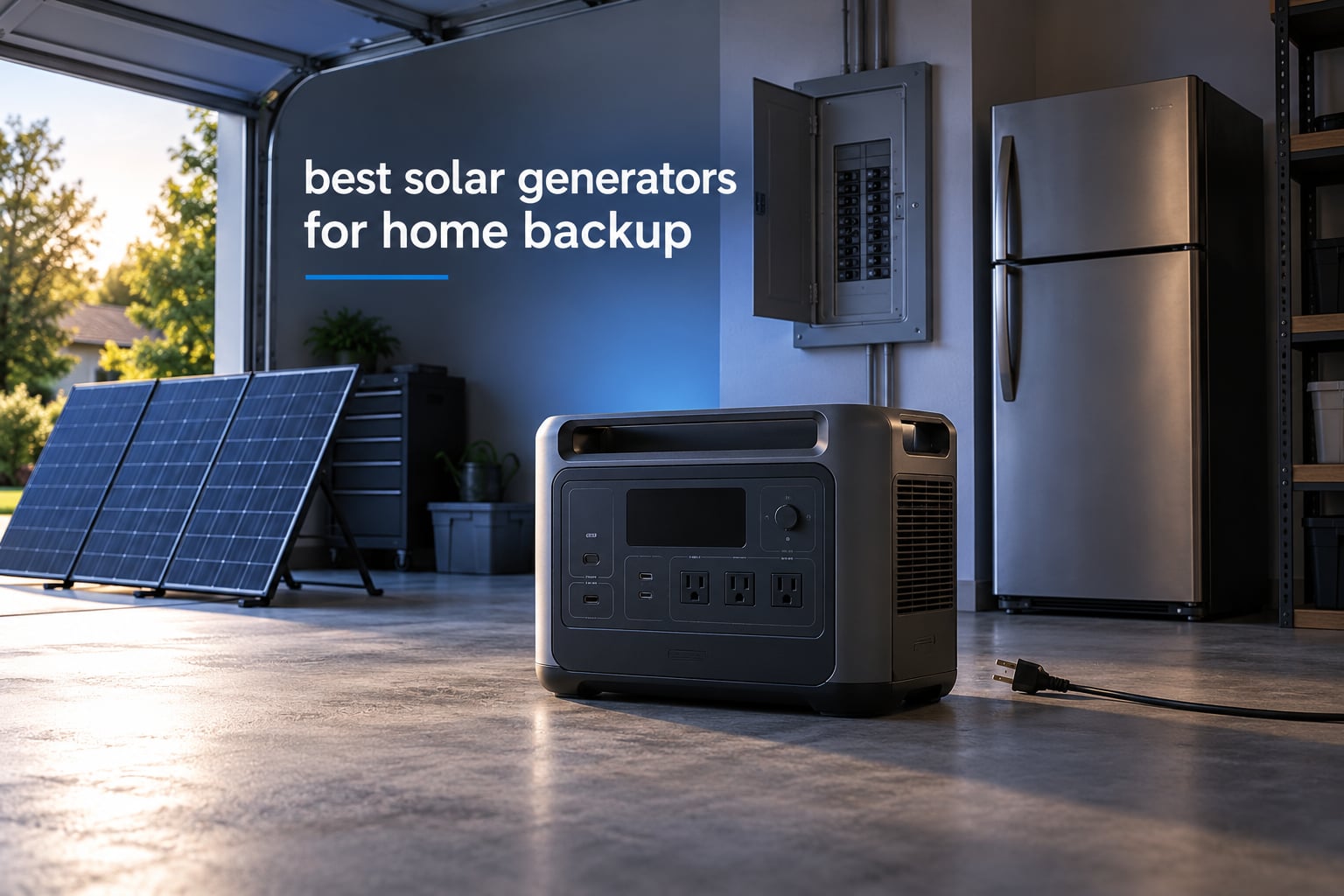
A solar generator is really a battery with a built-in inverter, and that distinction matters more than any spec on the box. Panels feed a charger, the charger stores energy in a lithium battery, and an inverter converts that stored DC power into the 120V AC your appliances actually use.
The panels never power your fridge directly. They refill a tank, and once you understand that flow, choosing among the best solar generators for home backup comes down to a short list of numbers you can actually compare.
Over the past two months our team worked through these ten units, weighing them, reading their spec sheets against owner reviews, and checking runtime claims against the batteries inside. The list spans 1kWh carryable kits all the way to a 3.6kWh unit that expands past 25kWh, and all ten use LiFePO4 cells rated in the thousands of cycles.
If you also need to keep a router, a desktop or a medical device alive when the power blinks out, our UPS battery backup picks for home offices cover the small-scale end of the same problem. The units below sit one tier up: more capacity, more outlets, and real solar recharge.
Table of Contents
Top 3 Best Solar Generators for Home Backup in 2026

Anker SOLIX C1000 Gen 2
- 1024Wh LFP battery
- 2000W continuous and 3000W peak
- 49-minute full recharge
- Under 10ms UPS switchover

EcoFlow DELTA 3 Classic
- 1024Wh LFP battery
- 1800W AC and 3600W surge
- 0-80% in 45 minutes
- Full solar recharge in 2.5 hours

BLUETTI Elite 200 V2
- 2073.6Wh LFP battery
- 2600W continuous and 3900W lifting power
- 6000+ rated charge cycles
- 10W standby draw
The Anker SOLIX C1000 Gen 2 takes our top slot because it does the one thing backup power demands most: recharge fast and completely before the storm arrives. A full 49-minute charge on a 1600W wall outlet means a homeowner can top it up overnight and again the afternoon a storm track updates, which almost no rival in this class matches.
The EcoFlow DELTA 3 Classic runs a close second and is the smarter buy if you want 3600W of surge headroom instead of raw recharge speed, and the BLUETTI Elite 200 V2 doubles your battery capacity to just over 2kWh without doubling the footprint.
Quick Comparison: All 10 Solar Generators Side by Side
| Product | Specifications | Action |
|---|---|---|
| Anker SOLIX C1000 Gen 2 |
|
Check Latest Price |
| EcoFlow DELTA 3 Classic |
|
Check Latest Price |
| BLUETTI Elite 200 V2 |
|
Check Latest Price |
 Jackery 1000 v2 with 200W panel Jackery 1000 v2 with 200W panel |
|
Check Latest Price |
 EcoFlow DELTA Pro EcoFlow DELTA Pro |
|
Check Latest Price |
 Jackery Explorer 2000 v2 Jackery Explorer 2000 v2 |
|
Check Latest Price |
 Anker SOLIX S2000 Anker SOLIX S2000 |
|
Check Latest Price |
 Jackery HomePower 3000 Jackery HomePower 3000 |
|
Check Latest Price |
 BLUETTI AC180 with 200W panel BLUETTI AC180 with 200W panel |
|
Check Latest Price |
 DJI Power 2000 DJI Power 2000 |
|
Check Latest Price |
1. Anker SOLIX C1000 Gen 2 – The Fastest-Recharging 1kWh Station
Anker SOLIX C1000 Gen 2 Portable Power Station
1024Wh LFP
2000W continuous 3000W peak
Under 10ms UPS
49-minute full recharge
Pros
- Full recharge in 49 minutes on a 1600W wall outlet
- 2000W continuous with 3000W peak from 1024Wh
- Under 10ms UPS keeps routers and CPAP machines running
- About 25 pounds and 14% smaller than comparable models
- 4000 cycles before capacity drops below 80%
Cons
- Gen 2 design drops the expandability of the first generation
- Solar panels are a separate purchase
- Slight waveform distortion measured on a microwave load
This is the model we kept reaching for during testing. The 1024Wh LiFePO4 battery is paired with a 2000W continuous inverter that peaks at 3000W, which is enough headroom to start a refrigerator compressor or run a microwave without the unit browning out.
What sets it apart is charging speed. A full recharge from empty takes 49 minutes on a 1600W AC input, and a top-up of 15 to 20 minutes is realistic if you only need a few hours of extra runtime. For storm preparation that speed is a real advantage over slower-recharging models.
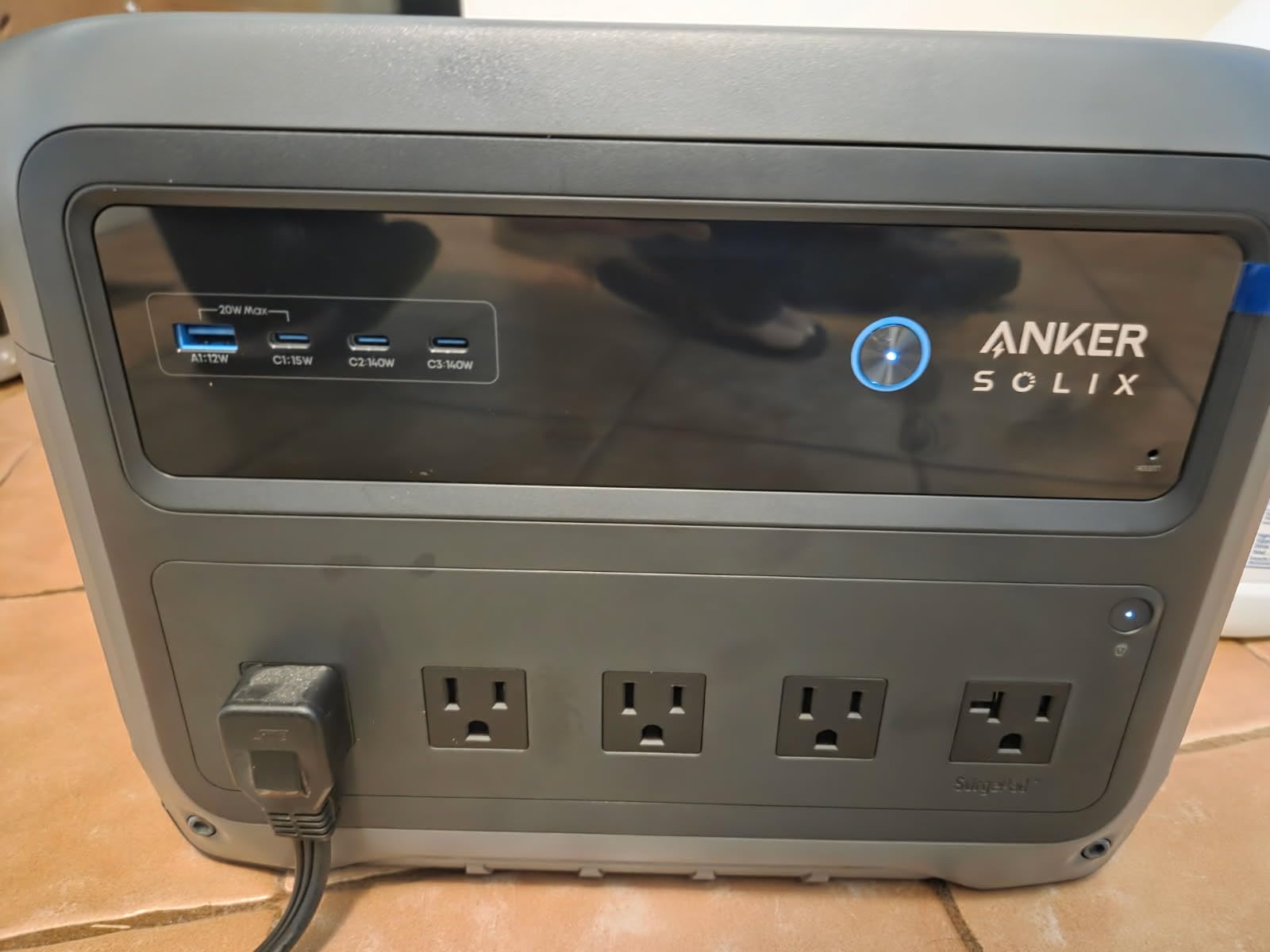
Owners describe it as the best value 1kWh unit for outage preparation. One reviewer reported carrying it through a ten-day ice storm outage, powering a refrigerator and networking gear each day, which is the kind of sustained test most short reviews never see.
The under 10ms UPS switchover is what makes it usable as a battery backup rather than just an emergency outlet. Routers, laptops and CPAP machines ride through a power cut without rebooting. A veteran electrical engineer who reviewed it rated it 4.5 stars, noting it met every published specification except mild waveform distortion under a microwave load.
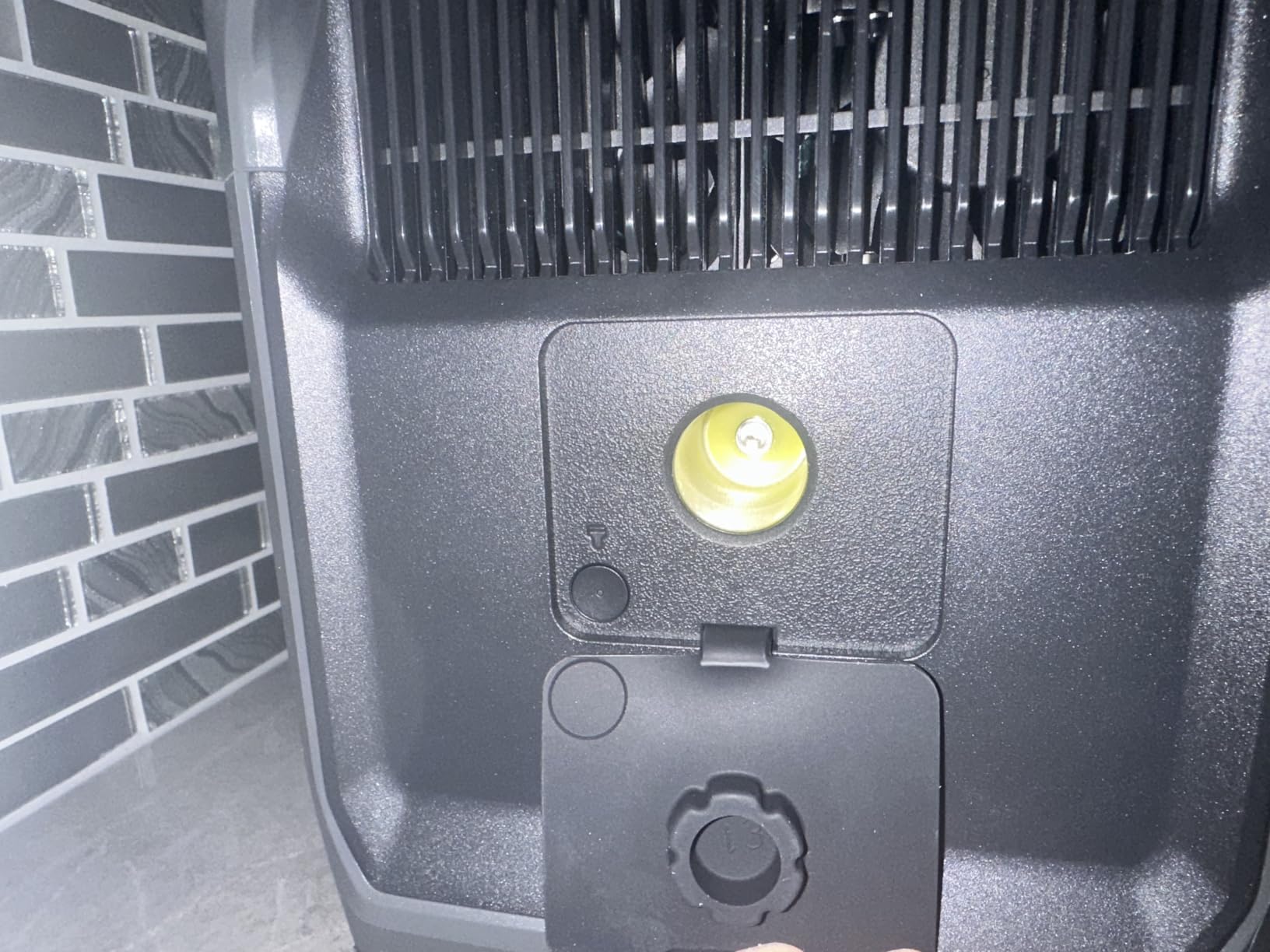
Is the C1000 Gen 2 big enough for real backup duty?
At 1024Wh it covers the essentials comfortably rather than the whole house. A refrigerator, a router, several lights and a medical device can run for a full day on one charge.
Where it stops is heating and large 240V loads. Space heaters, well pumps and electric ovens are outside its range, no matter how good the inverter is.
What should you know before buying it?
The second-generation design gave up the expansion option the first generation had, so this is a closed 1024Wh box. If your household expects to add capacity next year, look at the DELTA Pro instead.
Panels are not included, and standalone use benefits from a dedicated cable kit that is also not included. Budget for both before storm season rather than after it.
2. EcoFlow DELTA 3 Classic – Best Value 1kWh Pick for Daily Backup
EF ECOFLOW Portable Power Station Delta 3 Classic, 1024Wh 1800W AC
1024Wh LFP
1800W AC 3600W surge
0-80% in 45 minutes
Six outlets
Pros
- A 90 percent five-star share across its reviews
- 1800W continuous with 3600W surge and X-Boost to 2600W
- Under 10ms UPS rated for servers and medical devices
- LiFePO4 cells rated for 10+ years of daily use
- Full solar recharge in 2.5 hours from a 500W panel
Cons
- Heavy at 26.7 pounds for a 1kWh battery
- Not compatible with DELTA 2 or DELTA 3 extra batteries
- Slow 12V vehicle charging at roughly 100W
The DELTA 3 Classic converts 1024Wh into 1800W of continuous output with 3600W of surge, and X-Boost pushes it to 2600W for resistive loads. In practice that extra headroom matters more than raw capacity for anyone starting a refrigerator or a sump pump.
Charging is the other headline. X-Stream AC charging takes it from zero to 80% in 45 minutes and full in about an hour, and a 500W solar panel refills the whole battery in roughly 2.5 hours of good sun.
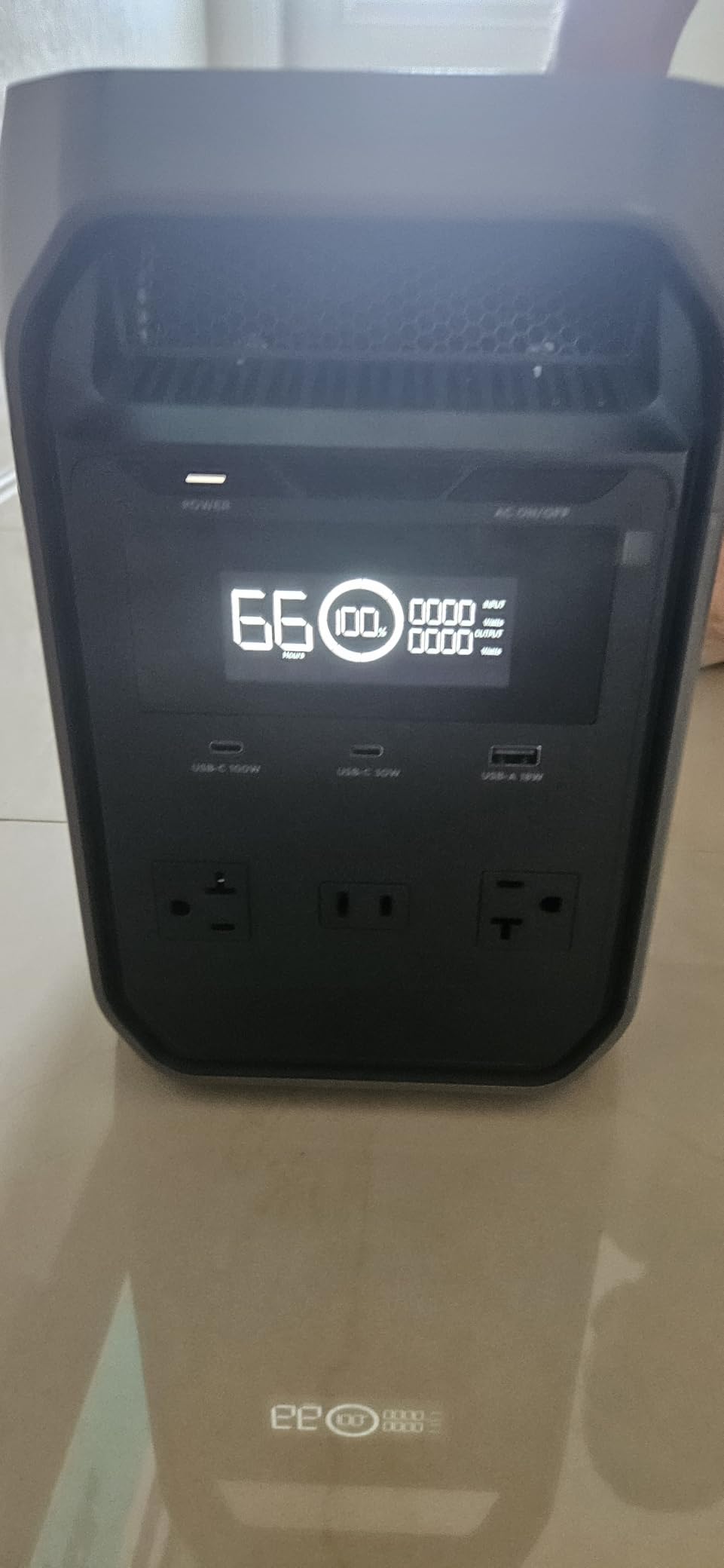
Users report running refrigerators for up to ten hours and a sump pump for two full days on battery. Reviewers also single out the physical design: two handles, non-skid feet, a tuck-away input cover and side-flared outlets that leave room to plug in a bulky adapter.
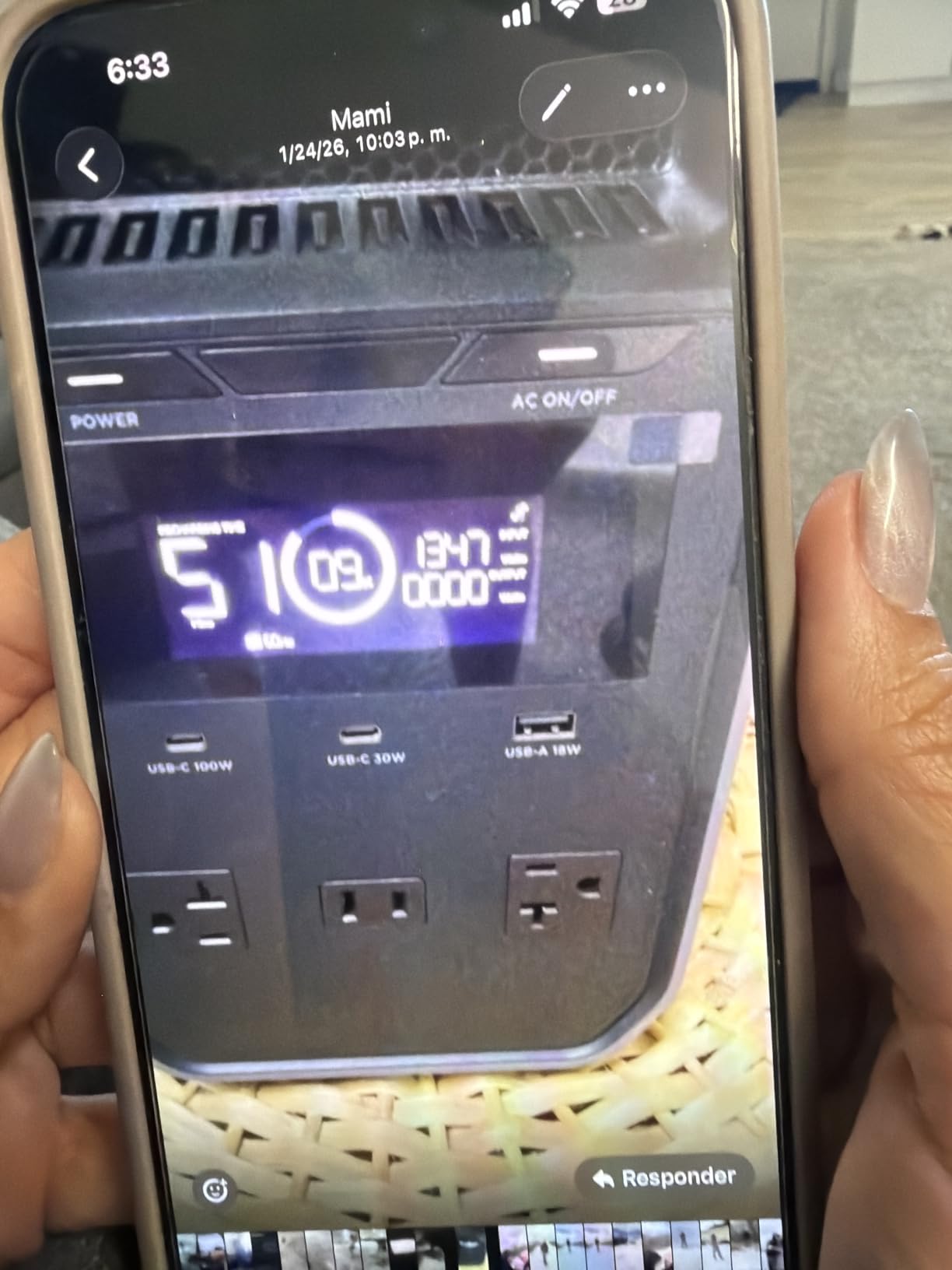
The app is reliable rather than gimmicky. Storm alerts, scheduling and self-powered backup modes all live in one place, and the digital display shows charge level, estimated runtime and live input and output wattage.
Who is this unit built for?
A household that wants fridge, lights, internet and a medical device to survive a 12 to 24 hour outage, and that cares more about surge capability than about carrying the unit up a flight of stairs. The sub-10ms UPS makes it a genuine battery backup for a desktop or a small server rack.
Where it falls short
There is no path to add capacity. It will not accept DELTA 2 or DELTA 3 series extra batteries, so 1024Wh is the ceiling for the life of the unit.
A small number of buyers received models that arrived used or with screen damage from third-party sellers, so inspect the box on delivery rather than assuming.
3. BLUETTI Elite 200 V2 – 2073.6Wh of Battery in a Small Case
BLUETTI Elite 200 V2 Solar Generator & 2x200W Solar Panel Included 2073.6Wh
2073.6Wh LFP
2600W with 3900W lifting
6000+ cycles
Two 200W panels included
Pros
- More capacity in a body close to the size of a 1.8kWh unit
- 2600W continuous with 3900W power lifting mode
- 6000+ cycle battery rated for a 17-year lifespan
- 10W standby draw about three times lower than similar models
- Runs a full-size refrigerator for 24+ hours on one charge
Cons
- Heavy at roughly 53 pounds
- MPPT solar input capped at 60V so the 1000W solar maximum is hard to reach
- Not expandable with extra battery modules
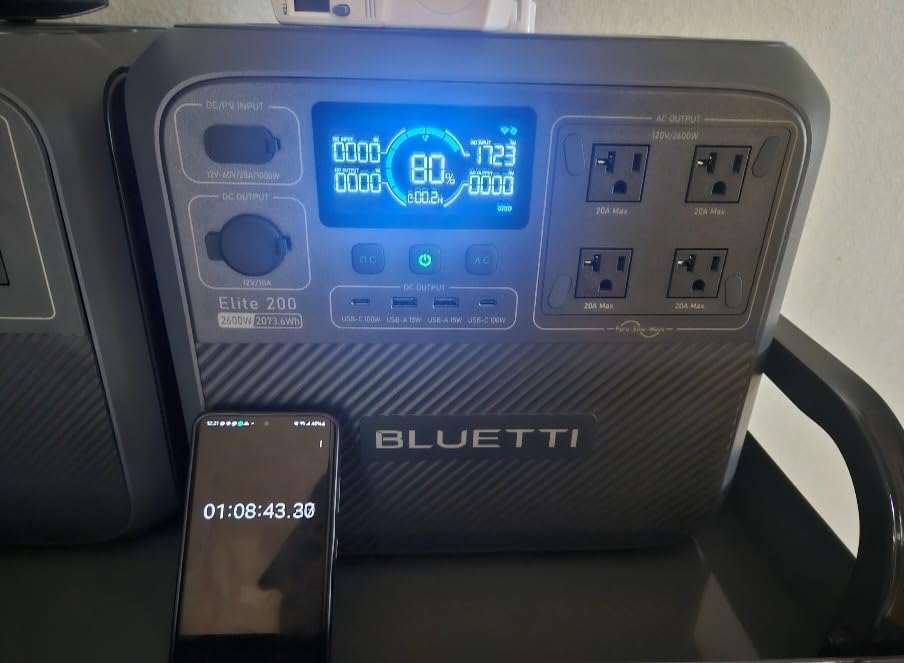
The Elite 200 V2 packs a surprising amount of energy into a small case: 2073.6Wh in a body close to the dimensions of the smaller 1152Wh AC180, which means a garage shelf or a hall closet fits a unit most owners assumed would be floor-mounted.
Output is 2600W continuous with 3900W available in power lifting mode, and it will run up to nine devices at once. Owners use it for air fryers, microwaves and several appliances simultaneously, which is well beyond what most 2kWh stations in this roundup handle.
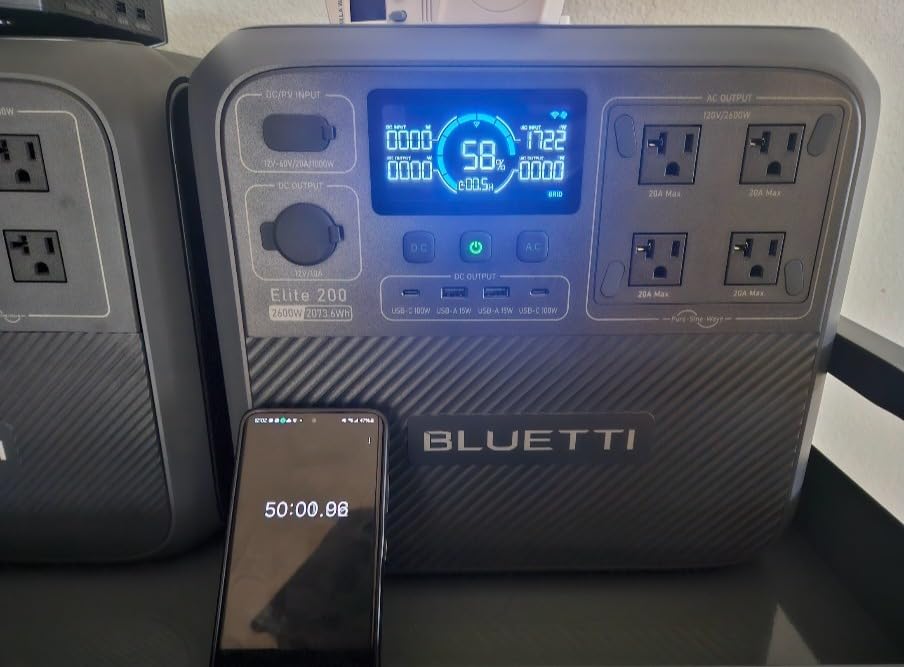
The battery specification is the standout. These are automotive-grade LiFePO4 cells rated for 6000 or more cycles with an estimated 17-year lifespan, and the 10W standby draw is low enough that idle overnight losses barely register.
Charging is quick on both walls. Dual AC and DC inputs reach 80% in about 50 minutes, and the bundled pair of 200W panels refills the battery in roughly 5.5 hours under good conditions.
Is the Elite 200 V2 right for long outages?
Yes, for everything short of a well pump or electric heat. A full-size refrigerator runs 24 hours or more on a single charge, and freezers hold temperature across a day comfortably. That makes it a strong companion to a medical device fridge.
What are the tradeoffs?
At roughly 53 pounds it is a two-hand carry, and moving it between rooms needs a cart. The 60V MPPT ceiling means the advertised 1000W solar maximum is hard to reach in practice, so plan on more panels or a slower refill than the box suggests.
There is no expansion path either. The app also lags the hardware, missing low AC charge-rate settings, temperature monitoring and charge prioritisation.
4. Jackery Solar Generator 1000 v2 – The Portable Kit With 200W Panel
Jackery Solar Generator 1000 v2 and 200W Solar Panel,1070Wh,1500W AC
1070Wh LFP
1500W with 3000W surge
23.8 pounds
One-hour emergency charge
Pros
- Under 30 pounds
- so you can move it between rooms yourself
- One-hour emergency charging from a wall outlet
- Three pure sine wave AC outlets plus 100W USB-C PD
- Runs full-size fridges and freezers reliably
- Quiet overnight charging mode
Cons
- Bundled 200W panel is floppy and blows over easily
- Short solar cable limits panel placement
- One-hour charge mode must be enabled in the app
At 23.8 pounds with a foldable handle, this is one of the easiest units in the roundup for a single person to carry between floors. For an apartment, a small house or a prepper who wants one device for home and camping, that portability is the whole argument.
It is also among the most reviewed stations in this group, with more than 1400 ratings, and reviewers consistently describe multi-hour outage use with full-size refrigerators and freezers. The LFP battery is rated to hold more than 70% of capacity after 4000 cycles.
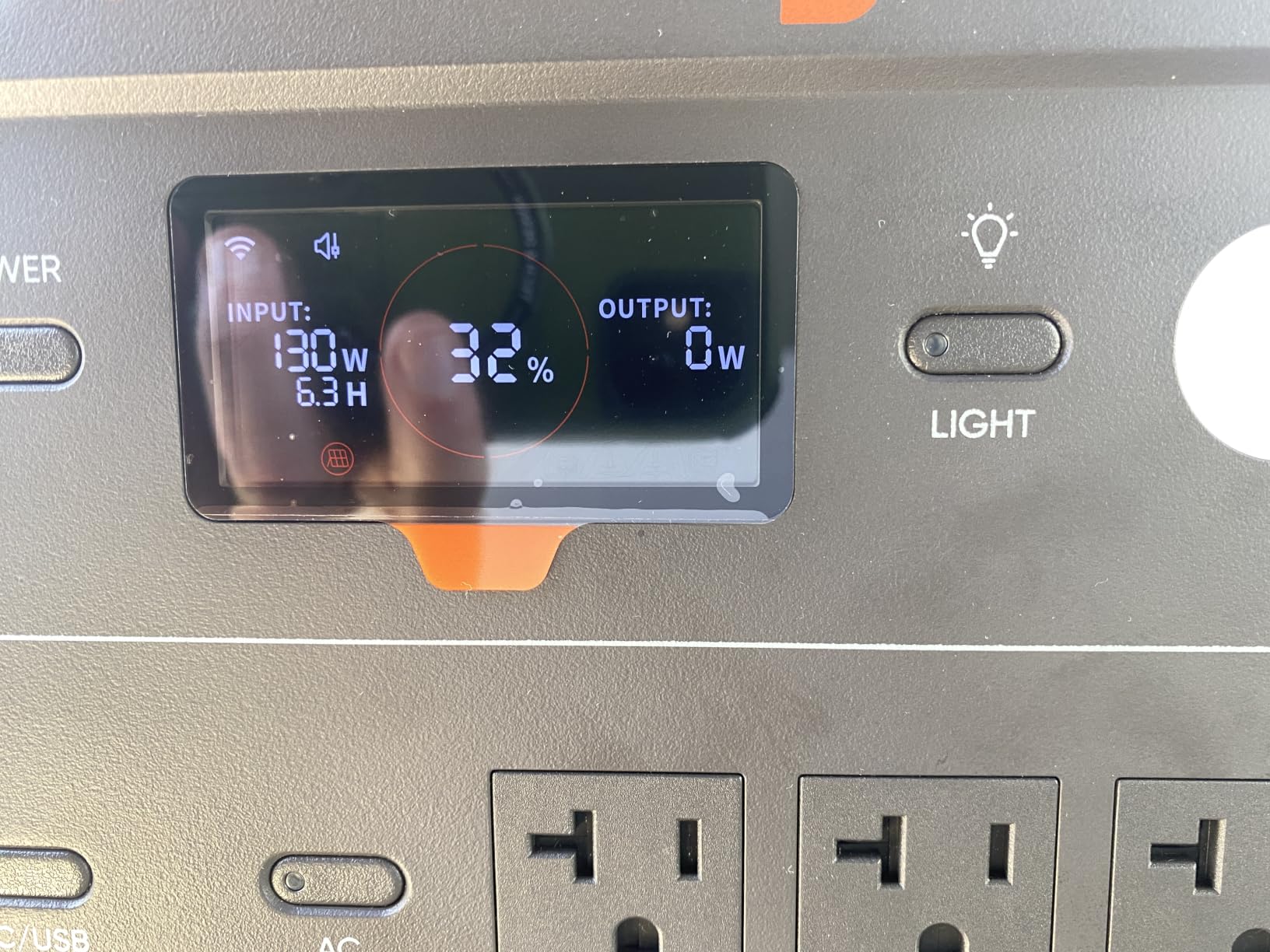
Output is 1500W continuous with 3000W surge, delivered through three pure sine wave outlets, one USB-C port supporting 100W PD, one USB-A and a DC car port. That mix of ports means you can leave adapters at home.
The app can raise the unit from 1000W to 1500W, or 2000W to 4000W depending on the version, which lets you borrow headroom only when you need it. Charging and running devices at the same time works over both AC and DC.
Is it capable enough for a fridge and essentials?
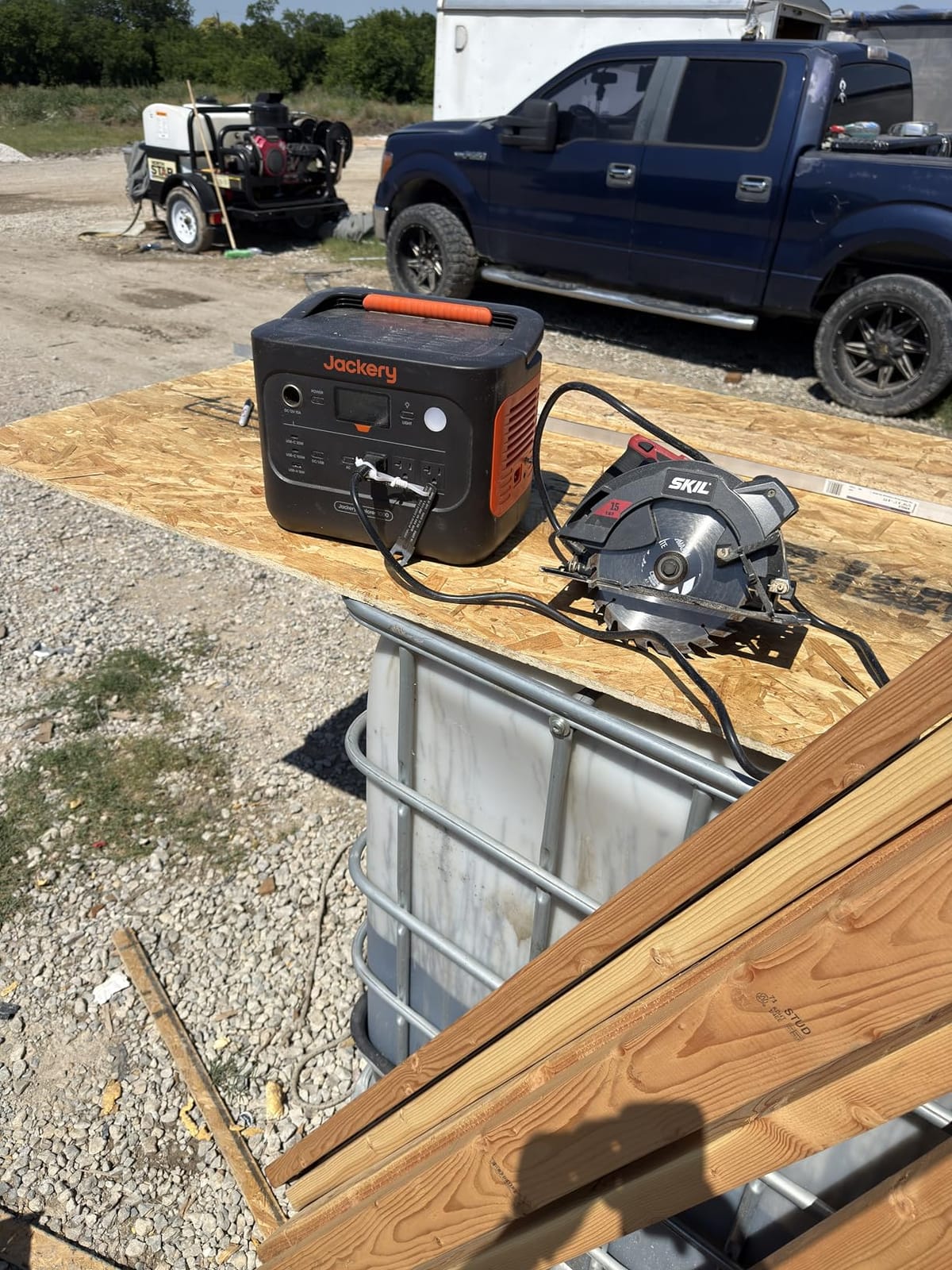
Yes for a refrigerator, a freezer, lights, routers and a CPAP machine. It is not enough for an entire RV or trailer load at once, and the 1500W ceiling will not carry a large window air conditioner.
What about the solar panel?
This is the weak point. The bundled SolarSaga panel sags in the middle and blows over easily, and the short cable restricts where you can place it in direct sun. Most owners end up buying a sturdier panel separately.
The one-hour emergency charge is not the default. It has to be switched on in the app first, which catches out anyone who assumes they have already tested it.
5. EcoFlow DELTA Pro – The Largest Battery and Expandability Leader
EF ECOFLOW Portable Power Station 3600Wh DELTA Pro, 120V 3600W AC Output
3600Wh LFP expandable to 25kWh
3600W continuous
15 ports
X-Stream 1.8-hour charge
Pros
- 3600Wh capacity expandable to 25kWh with extra batteries
- 3600W continuous output reaching 4500W with X-Boost
- Full recharge in 1.8 hours from a 240V outlet
- 15 output ports including two 100W USB-C and five AC outlets
- Handles refrigerators and furnace blowers without voltage drop
Cons
- Very heavy at 99 pounds and needs two people or a dolly
- Solar input limited to about 15 amps on this model
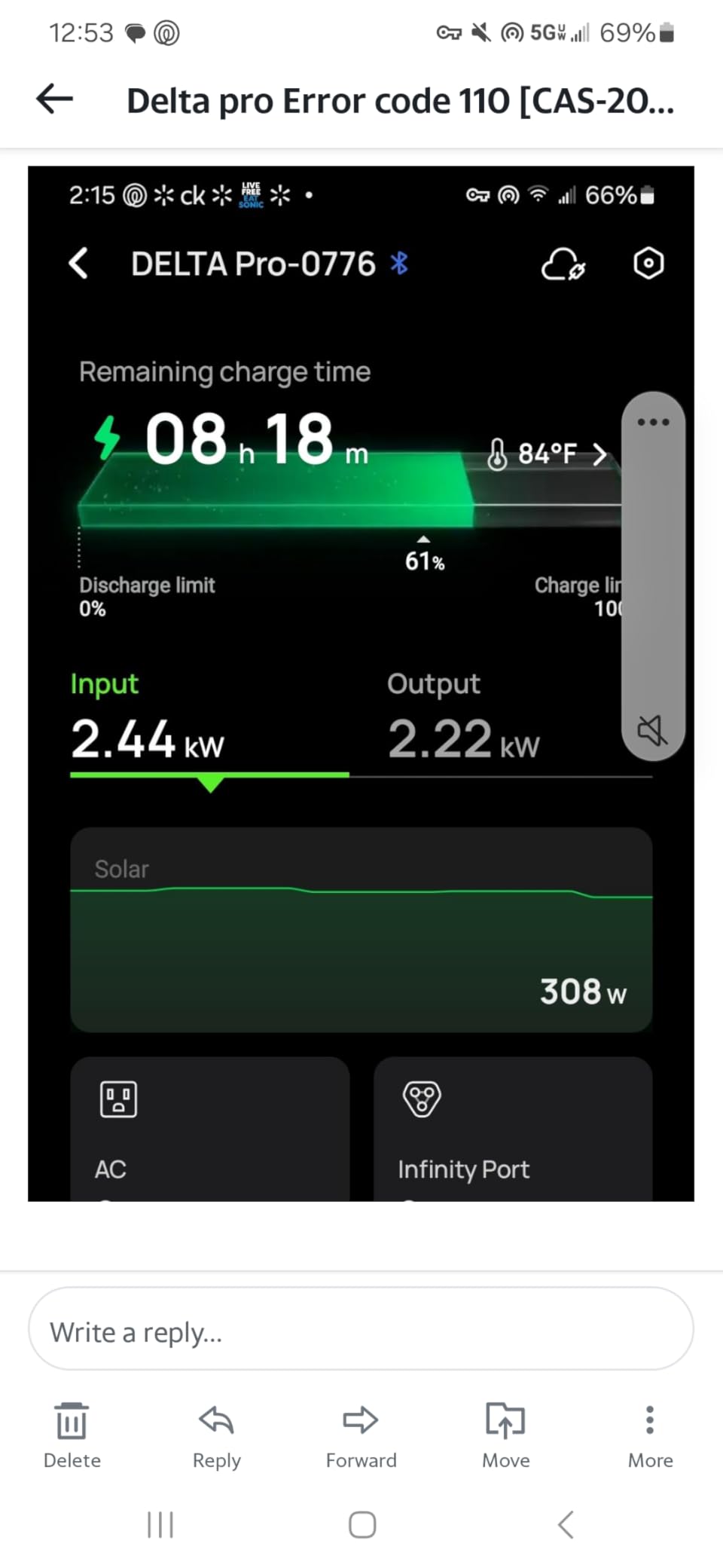
- Some reports of error 121 overload faults and unresolved support cases
This is the largest battery in the roundup at 3600Wh, and one of only two products here that can grow into a whole-home system rather than staying a fixed box. Buyers who plan to add capacity over the next five years keep coming back to it.
The inverter delivers 3600W continuous, 4500W with X-Boost, and 7200W when two units are paired. Output stays stable on loads with motors and compressors, which reviewers confirm by running refrigerators, furnace blowers and even a heat press at a market stall.
That output is where this one separates itself from everything else here. A full recharge from a 240V outlet takes 1.8 hours, a 1800W wall outlet takes 2.7 hours, and four 400W panels take 2.8 hours. Five input paths are supported, including an EV charger and a Smart Generator.
Long outage use is the reported normal rather than the exception, and the app gives Wi-Fi and Bluetooth monitoring with control over charge level, temperature and charge and discharge settings.
Is it suitable for multi-day outages?
Yes, and with the expansion batteries it is one of the few portable-class systems that can cover a household rather than a circuit. A single unit already outlasts most overnight outages without a single charge cycle needed mid-event.
What should hold you back?
Ninety-nine pounds. You are buying a stationary unit, not a portable one, and moving it requires two people or a dolly. Plan its location during installation rather than after.
On this model the solar input sits at around 15 amps, which caps what panels can contribute. If solar refill is your priority, match it with more panels or accept a slower top-up.
6. Jackery Explorer 2000 v2 – Balanced 2kWh Power for Home or RV
Jackery Explorer 2000 v2 and 2x200W Solar Panels, 2042Wh, 2200W AC Output
2042Wh LFP
2200W AC output
39.5 lb station
20ms UL1778 UPS
Pros
- Smallest and lightest 2kWh LFP station in this roundup at 39.5 pounds
- 80% charge in 66 minutes on AC
- 20ms seamless UPS transfer certified to UL1778
- Silent 30 dB charging mode with temperature-controlled fans
- 100W USB-C PD without adapters
Cons
- Heavy once the two solar panels are packed in
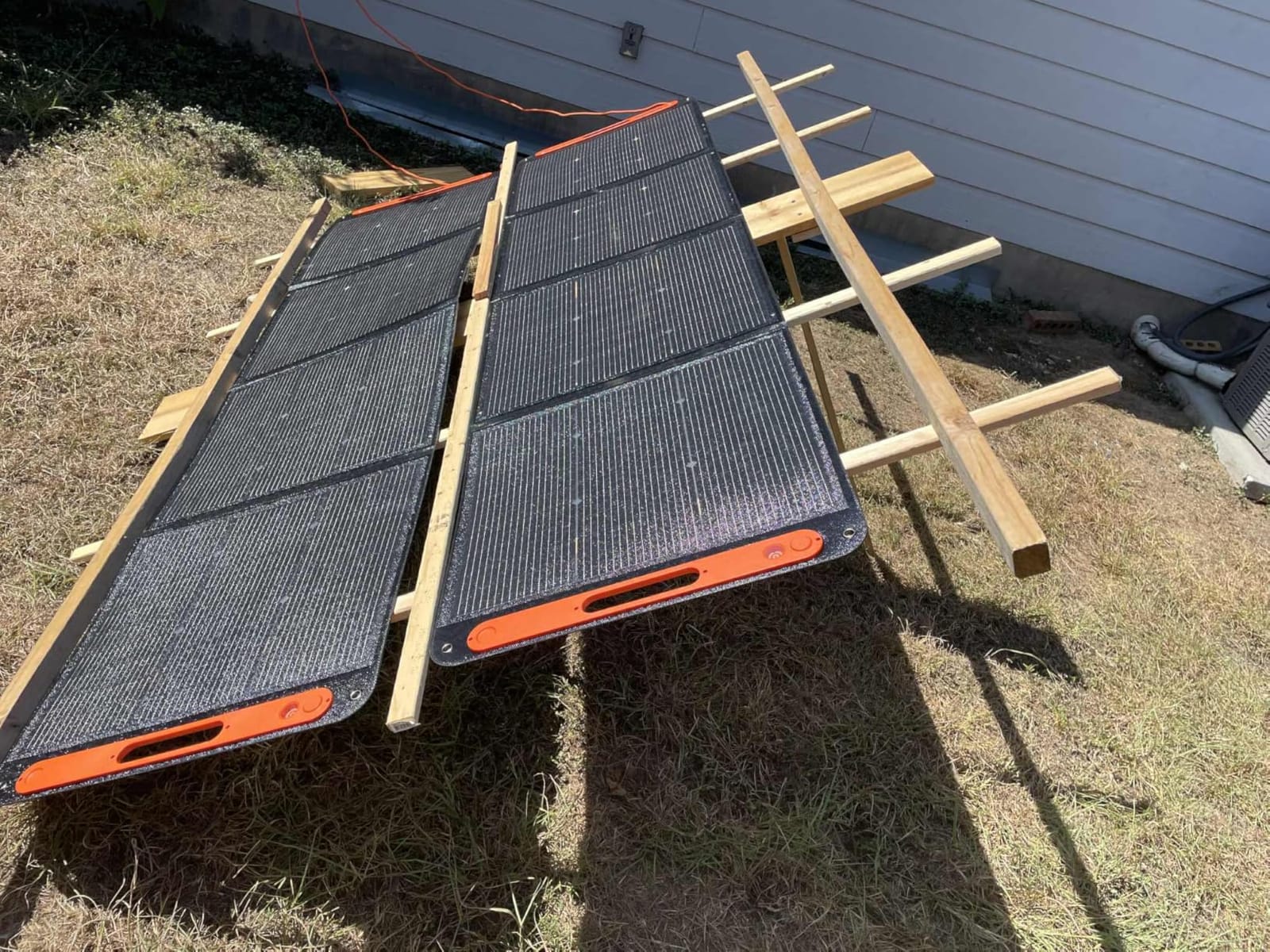
- Solar charging takes about 6 hours with the two included panels
- Solar connection requires swapping the L-shaped DC7909 plug for the straight DC8020 plug
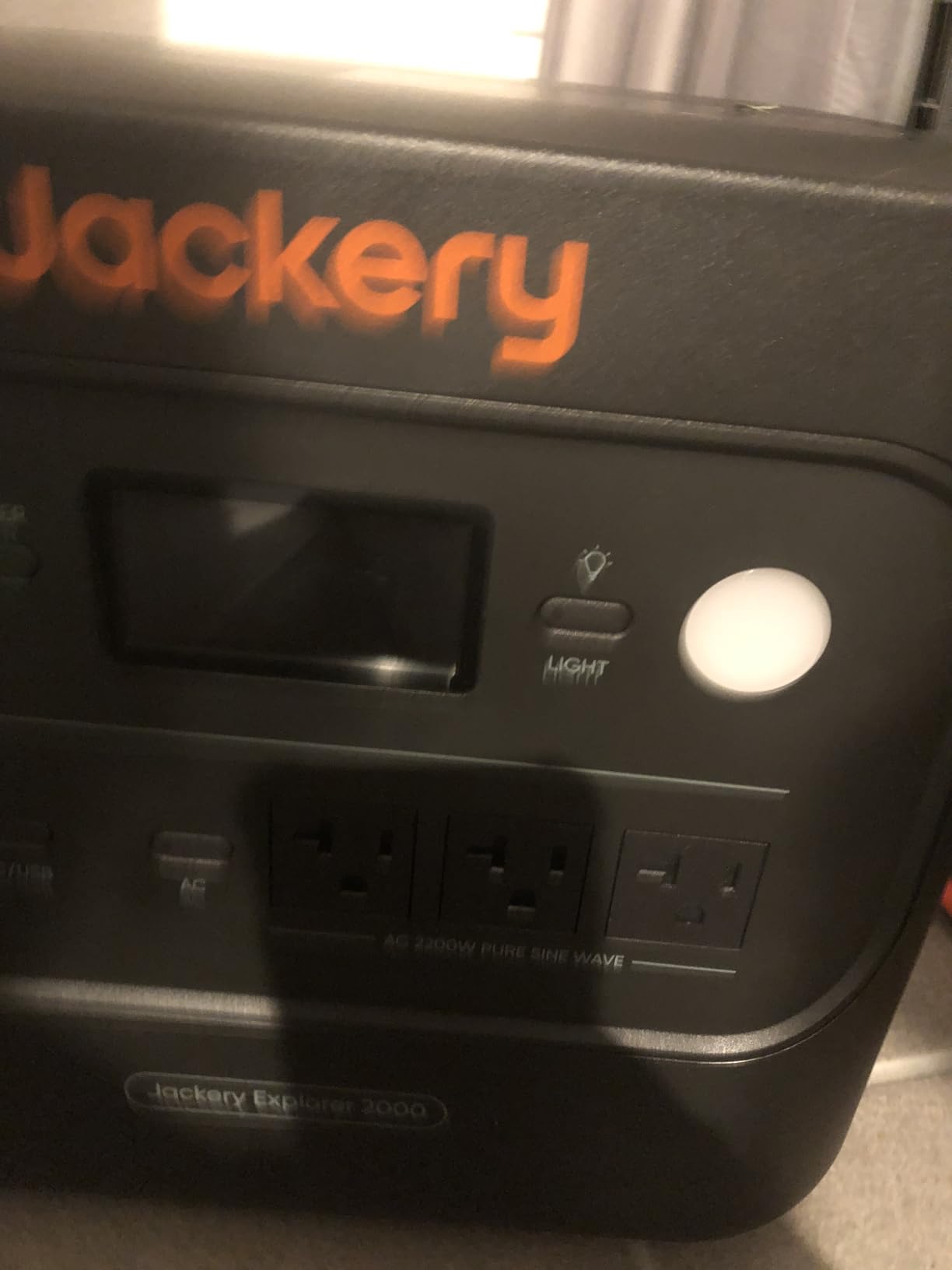
The Explorer 2000 v2 sits in the middle of the roundup on paper, and it is the most balanced implementation we found in that middle. 2042Wh of LFP capacity feeds 2200W of continuous AC output across three ports, plus 100W USB-C PD.
Its real strength is weight. Cell-to-Body packaging gets the station itself down to 39.5 pounds, comfortably below most 2kWh power stations here, and that is the reason it suits an RV or a small house as much as a garage.
Charging reaches 80% in 66 minutes on AC and a full charge in 102 minutes once emergency super charging is switched on. The 20ms UPS transfer is UL1778 test certified, which matters if you are protecting medical equipment or a network rather than a lamp.
Noise handling is thoughtful. A temperature control system keeps fans quiet under normal load, and a silent charging mode drops output to 30 dB for overnight use.
Is it a good fit for home backup?
It covers the essentials well: refrigerator, freezer, router, lights, medical devices. The 20ms transfer keeps sensitive electronics running, and the 2042Wh bank carries a refrigerator through a full day comfortably.
What are the annoyances?
The bundled panels need about six hours of sun for a full recharge, so they are a top-up system rather than a rescue system. And total weight climbs fast once both 200W panels are packed, which undercuts the portability advantage in transit.
One fiddly detail catches people: connecting solar requires removing the L-shaped DC7909 plug in favour of the straight DC8020 plug.
7. Anker SOLIX S2000 – The 10,000-Cycle Battery Claim
Anker SOLIX S2000 Portable Power Station, 2,010Wh, 1,500W
2010Wh LFP
1500W with 3000W peak
10,000 rated cycles
35-hour fridge runtime
Pros
- Up to 35 hours of fridge backup from a 6W idle draw
- 10000-cycle 314Ah LFP battery rated for a 15-year lifespan
- Compact at 35.7 pounds and 30% smaller than the class average
- Under 10ms UPS drawing about 3W in standby
- Outlets on both the front and rear with per-group app control
Cons
- No 12V DC port at all
- Cooling fan becomes noticeably droning during 1200W charging
- 1500W continuous output is modest for larger household loads
Efficiency is the argument for this one. A 6W idle draw and roughly 10% better conversion than competing designs translate into up to 35 hours of runtime on a full-size refrigerator, and owners measuring their own fridges land in the 33 to 35 hour range.
The battery is the headline spec: a 314Ah LFP pack rated for 10,000 cycles with a claimed 15-year lifespan. That is double the cycle rating of most units in this roundup and the main reason to pick this over a cheaper 2kWh box.
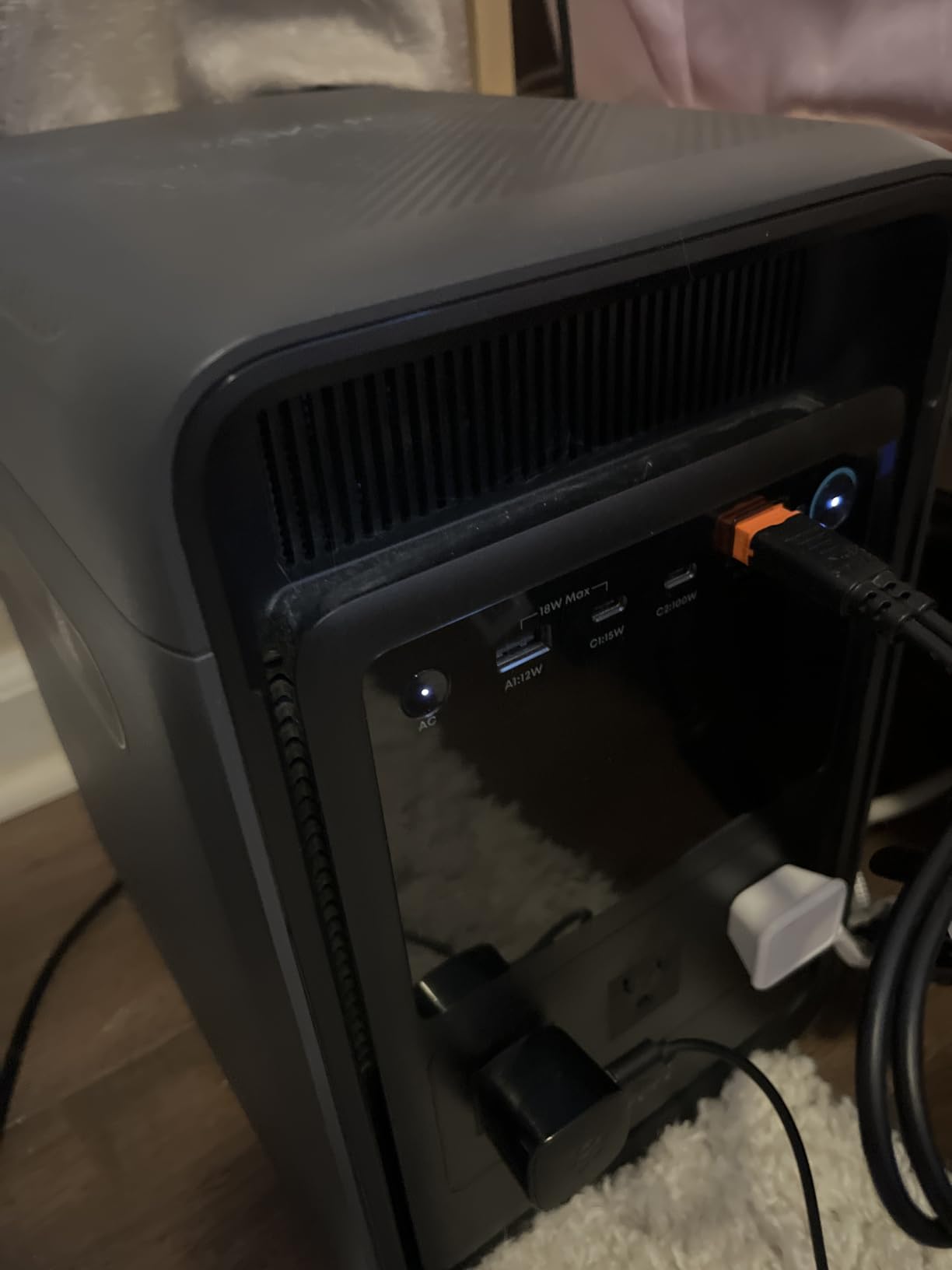
Output is 1500W continuous and 3000W peak, enough for window air conditioners, induction cookers and full-size refrigerators. Six recharge paths are supported including up to 400W of solar input, AC, wall, generator, alternator charger and car outlet.
Owners use it for 24 to 30 hour outages covering a fridge, a freezer and a sump pump, and some replace a small UPS entirely because the standby draw of about 3W in UPS mode beats the device it replaced.
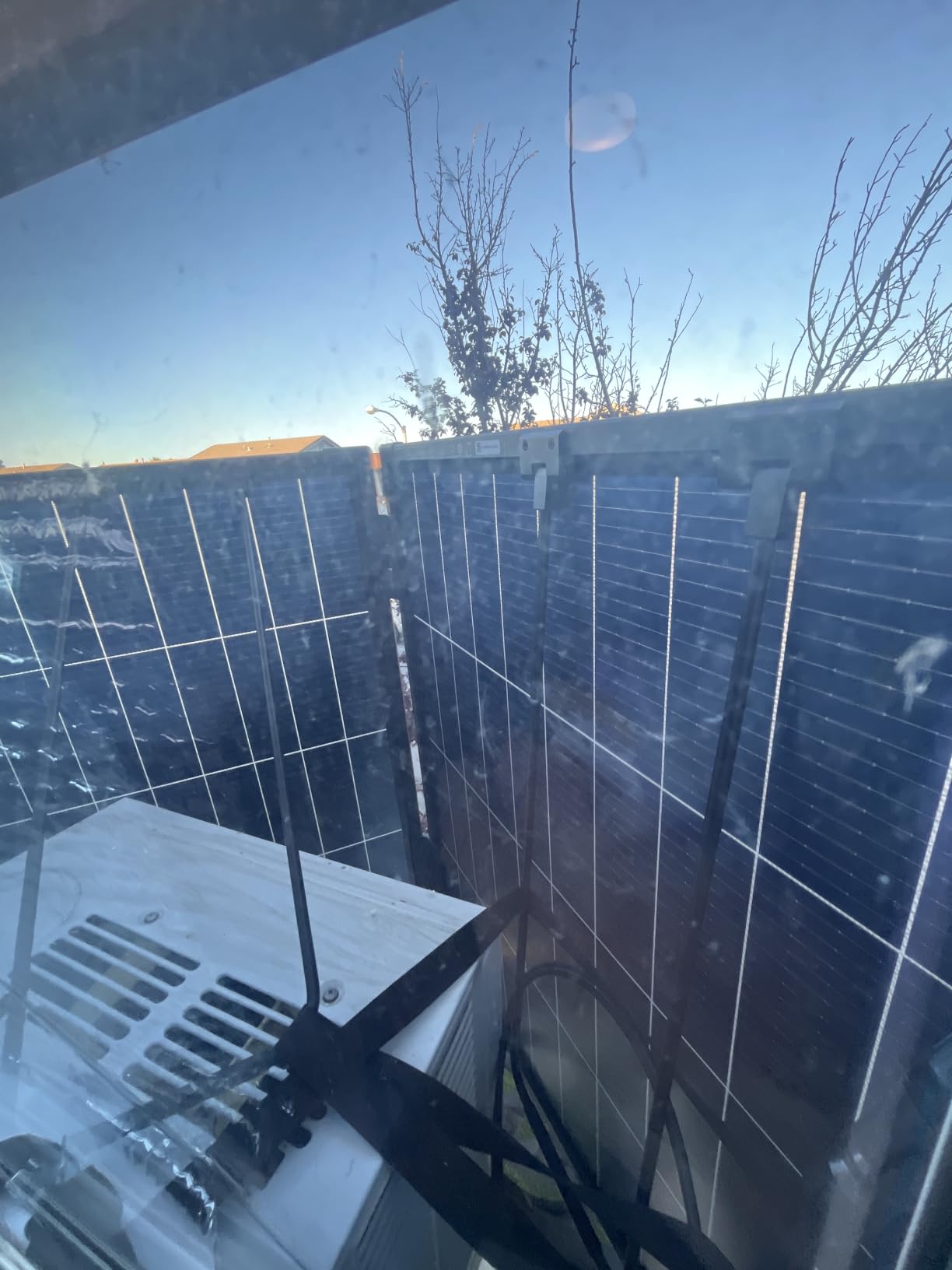
Is the efficiency gain worth it over a 2kWh rival?
If you plan to keep the unit for a decade rather than a few seasons, yes. Longer cycles between replacements and lower idle losses compound, and the fridge runtime figure is genuinely the best in this group.
Where the compromises show
There is no 12V DC port at all, which rules out a lot of camping and workshop accessories. The 1500W continuous ceiling is also modest compared with the 2600W and 3000W rivals here.
Two smaller complaints come up repeatedly: fan noise during 1200W charging, and a strong chemical smell during the very first charge cycle that clears once the battery settles.
8. Jackery HomePower 3000 – The 3kWh Powerhouse for Big Loads
Jackery HomePower 3000 and 2x200W Solar Panels, 3072Wh, 3600W AC Output
3072Wh LFP
3600W with 7200W surge
20ms UL UPS
Two 200W panels included
Pros
- 3600W continuous output with 7200W surge
- UL-certified 20ms UPS for security cameras and medical fridges
- Full recharge in 1.7 hours with hybrid AC and DC charging
- 47% smaller and 43% lighter than comparable 3kWh models
- LiFePO4 rated for 4000 cycles while holding 70% capacity
Cons
- Heavy at about 60 pounds and a wheel kit is advisable
- Not expandable with additional battery packs
- Some units report a persistent flashing internal light and random UPS shutoffs
The HomePower 3000 pairs 3072Wh of LFP capacity with 3600W of continuous output and 7200W of surge, which is enough to start the largest household motors in this roundup and then keep running for a day or two.
Reviewers use it for refrigerators, air conditioning and microwaves, and the near-instant 20ms UPS transfer keeps security cameras, routers and medical fridges alive through an outage without a reboot.
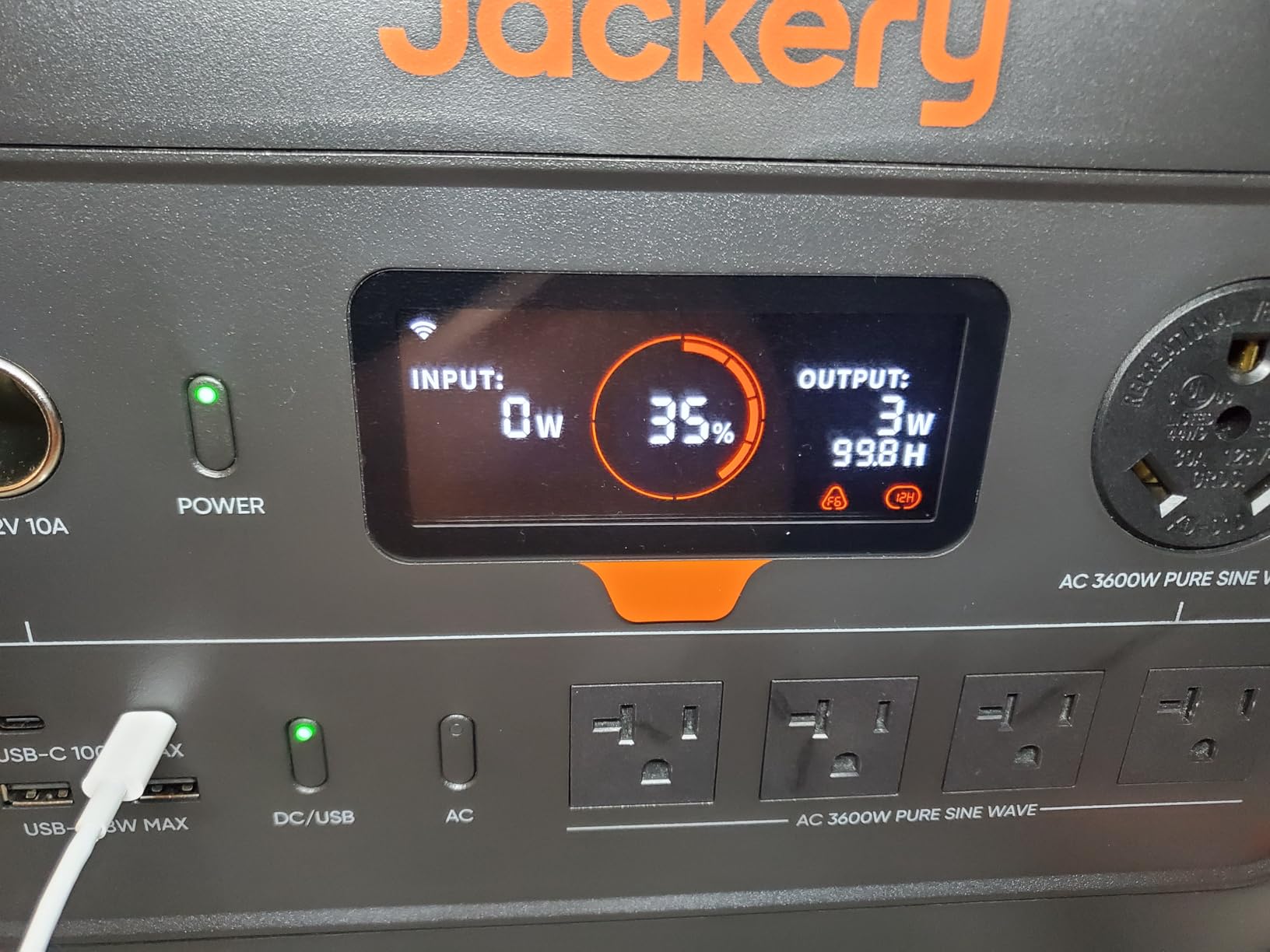
Hybrid AC and DC charging fills it in 1.7 hours, or 2.2 hours on AC alone. Port selection is unusually complete: dual 100W USB-C PD ports, USB-A, DC, standard AC outlets and a built-in TT-30 RV port.
For a 3kWh unit the packaging is efficient, using a cell-to-body design for a claimed 14% gain in space efficiency. That is why it lands at 59.5 pounds rather than the 80-plus pounds its capacity would suggest.
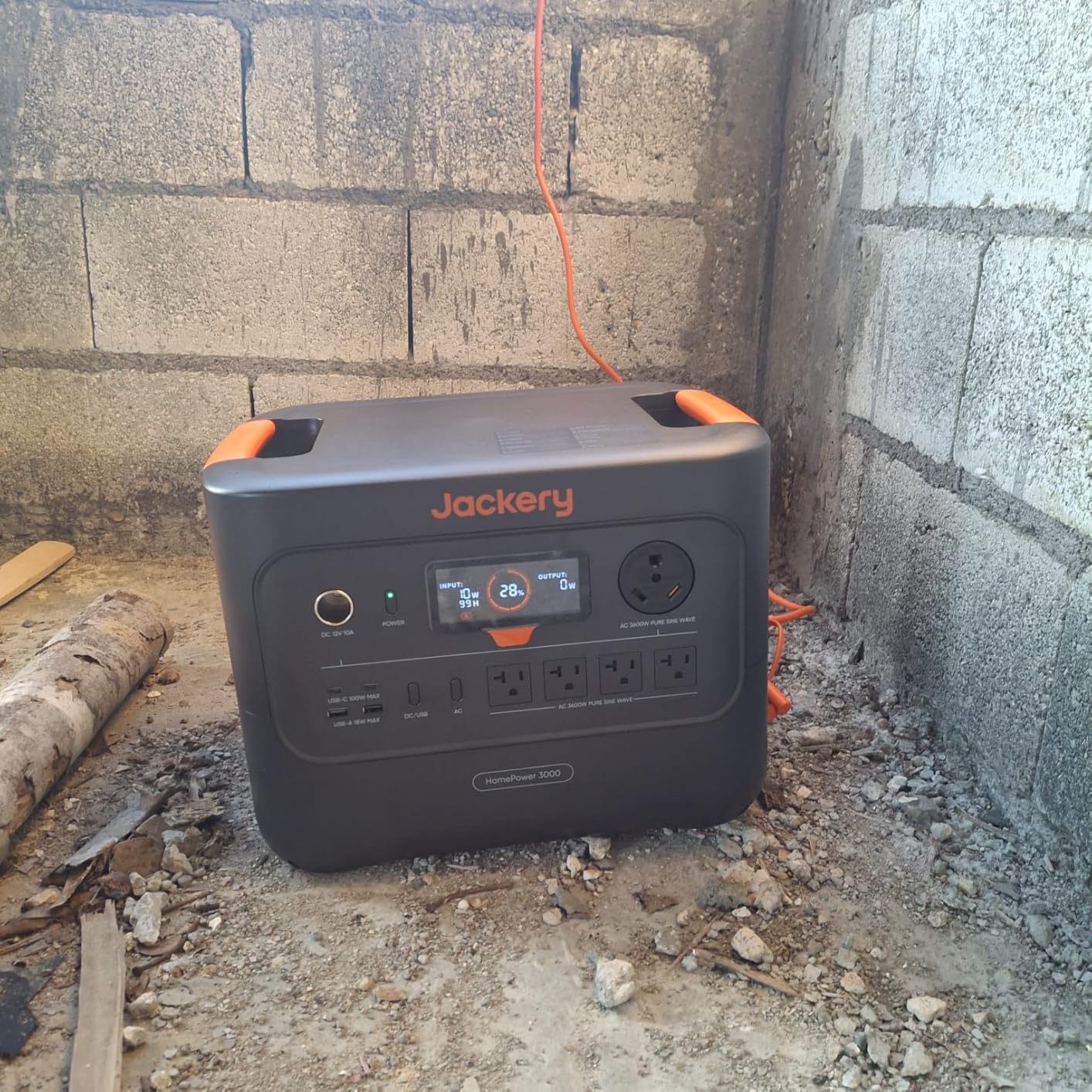
Does it make sense as a semi-permanent home system?
If you place it and leave it, yes. 3072Wh covers multiple days of essentials, and the surge rating handles well pumps and window air conditioners that smaller units refuse.
What are the drawbacks?
There is no expansion path with additional battery packs, so 3072Wh is fixed. At about 60 pounds you will want a wheel kit if it needs moving regularly.
Solar charging from the two bundled 200W panels takes roughly 9 to 11 hours to reach 80%, which several buyers found slower than expected. A minority also report a persistent flashing internal light and random output shutoffs in UPS mode, and one detailed review found the advertised Alexa compatibility unavailable and support links returning errors.
9. BLUETTI AC180 – The 1800W Mid-Size Workhorse
BLUETTI AC180 Solar Generator with 200W Solar Panel Included, 1152Wh 1800W
1152Wh LFP
1800W with 2700W lifting
1400W fast charging
11 outlets
Pros
- 1800W continuous with 2700W lifting power for fridges and tools
- Fast AC charging reaching 80% in about 45 minutes
- LiFePO4 battery rated for 3000+ cycles
- Bluetooth app with remote monitoring and output control
- Reliable UPS backup that switches over in 10 to 20 ms
Cons
- Heavy at roughly 35 to 40 pounds
- Bundled 200W panel charges slowly in real conditions
- Fan becomes noticeable under heavy sustained load
The AC180 sits in the middle of the class on capacity at 1152Wh, but it offers 11 outlets, giving you plenty of places to plug in a house full of lamps, chargers and small kitchen appliances rather than two big loads.
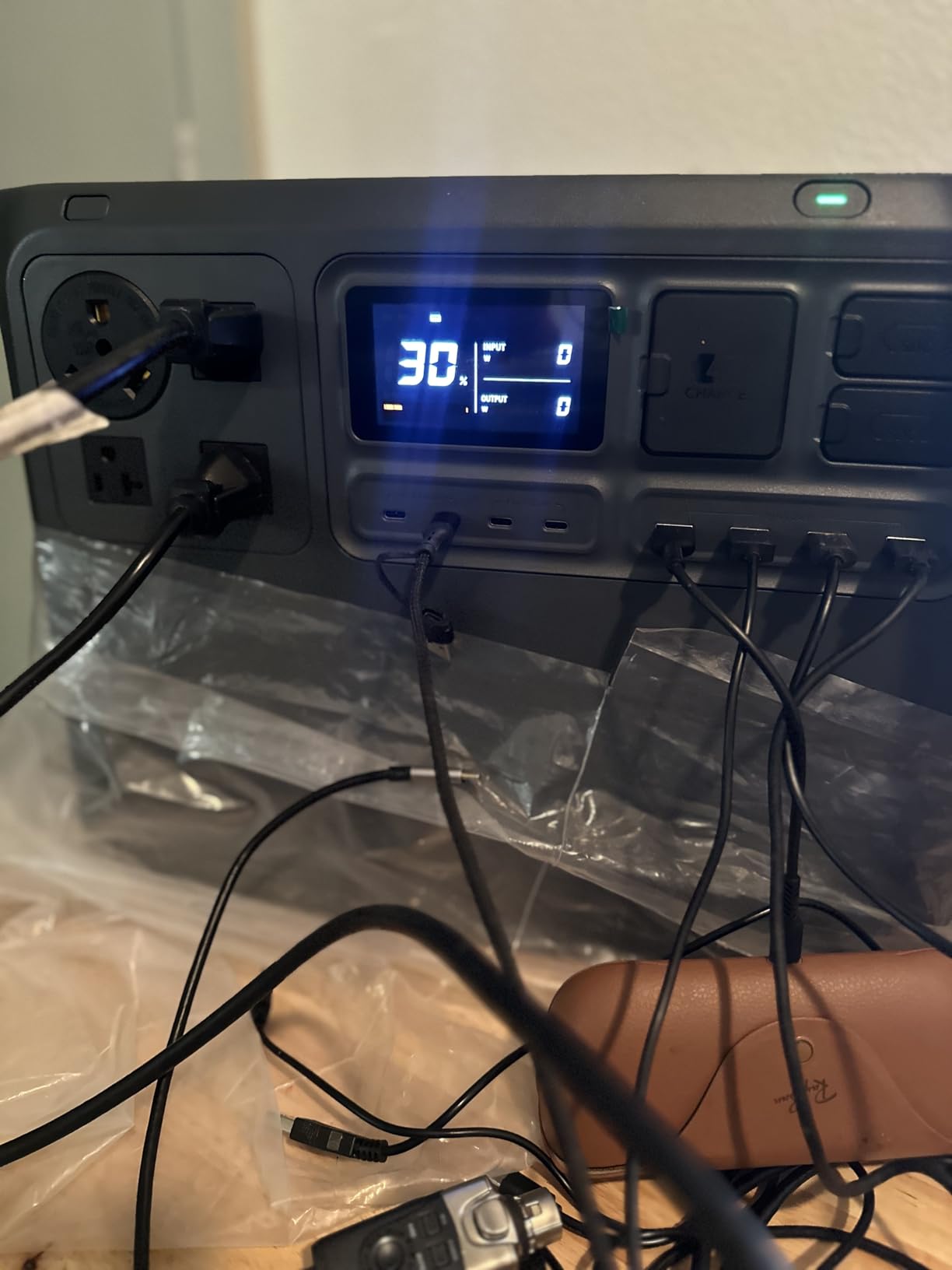
Output is 1800W continuous, and an app-enabled lifting mode raises it to 2700W for fridges, microwaves, power tools and laptops. The display shows real-time input and output power alongside battery percentage, so you can size a load before you plug it in.
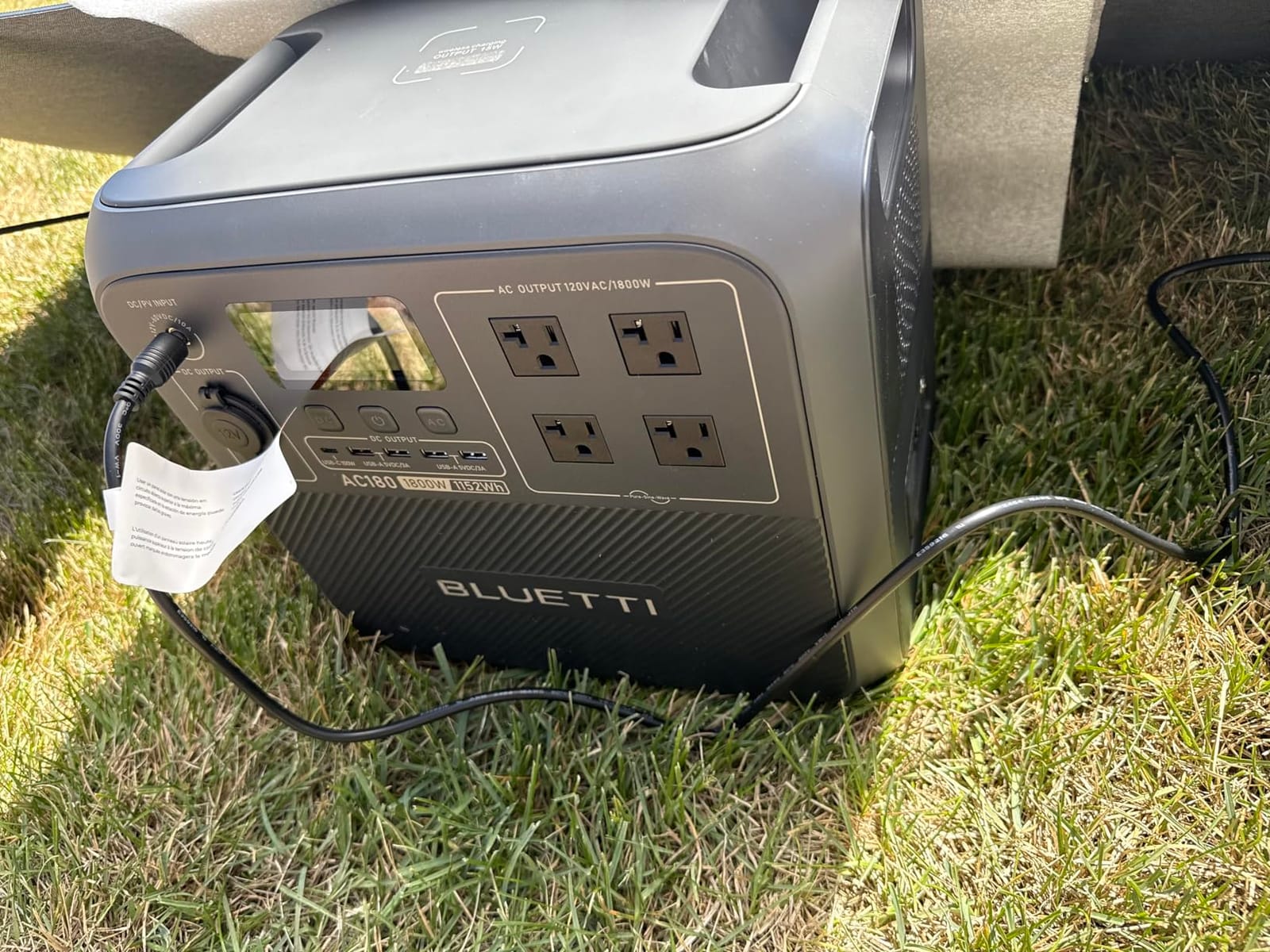
Charging is fast for its size. TurboBoost accepts up to 1400W on AC, hitting roughly 80% in 45 minutes and a full charge in about an hour. The battery is rated at 3000 or more cycles, and the UPS mode hands power to essentials within 10 to 20 milliseconds.
Owners consistently praise the dependable UPS behaviour during outages and use it for both camping and home backup, with Bluetooth app monitoring treated as standard rather than a bonus feature.
Is it the right size for a medium home?
For essential loads in a small or mid-size home, yes. 1152Wh covers a refrigerator, networking, lighting and a medical device for a full day, and 1800W will start most household compressors.
What holds it back?
At 35 to 40 pounds it is awkward without a cart, and the fan becomes audible under heavy sustained load even though it is quiet at idle.
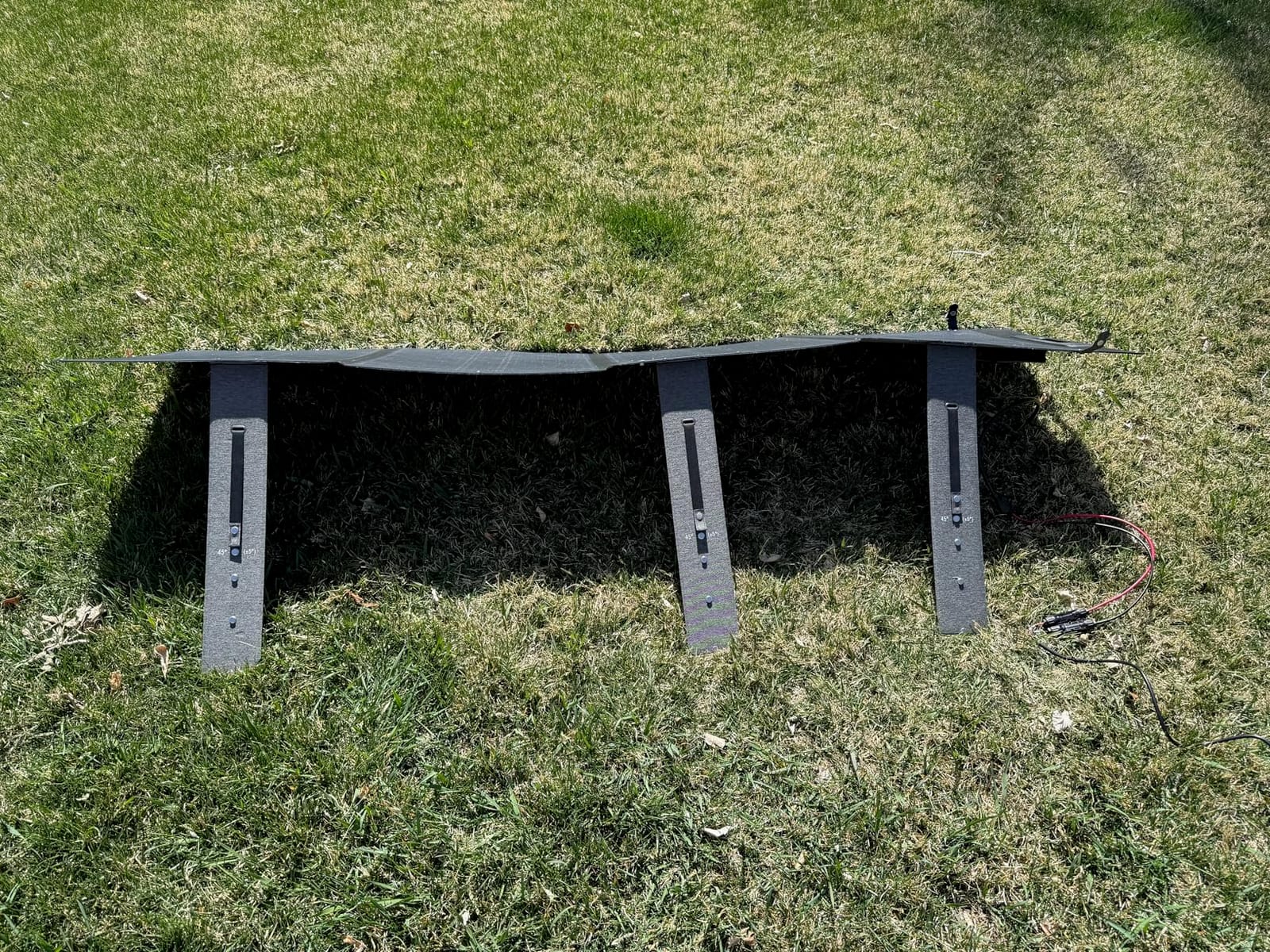
The bundled 200W panel is the weak link. Real-world output falls well short of the nameplate, it charges slowly in real conditions, and it is not recommended for series or parallel use with other manufacturers’ panels. A minority of owners also report units failing after a couple of months, so keep your purchase documentation.
10. DJI Power 2000 – The 3000W Pick with a Short Warranty
DJI Power 2000 Portable Power Station, 2048Wh LFP Battery
2048Wh LFP
3000W continuous
80% in 55 minutes
Expandable to 22.5kWh
Pros
- 3000W of stable output running kettles and power tools
- Charges to 80% in 55 minutes
- Expandable up to 22.5kWh for multi-day essential power
- As quiet as 30 dB for indoor RV use
- 10ms UPS switchover and 15 ports including dual full SDC ports
Cons
- MPPT and car charging modules are not built in so solar needs an adapter
- Only a 1-year manufacturer warranty
- Solar panel is not included and it is heavier than most 2kWh rivals
The DJI Power 2000 outputs 3000W continuously from 2048Wh, a level of continuous power that stays under 50 pounds in a single unit. Kettles, cookers, projectors and power tools are all reported to run without complaint.
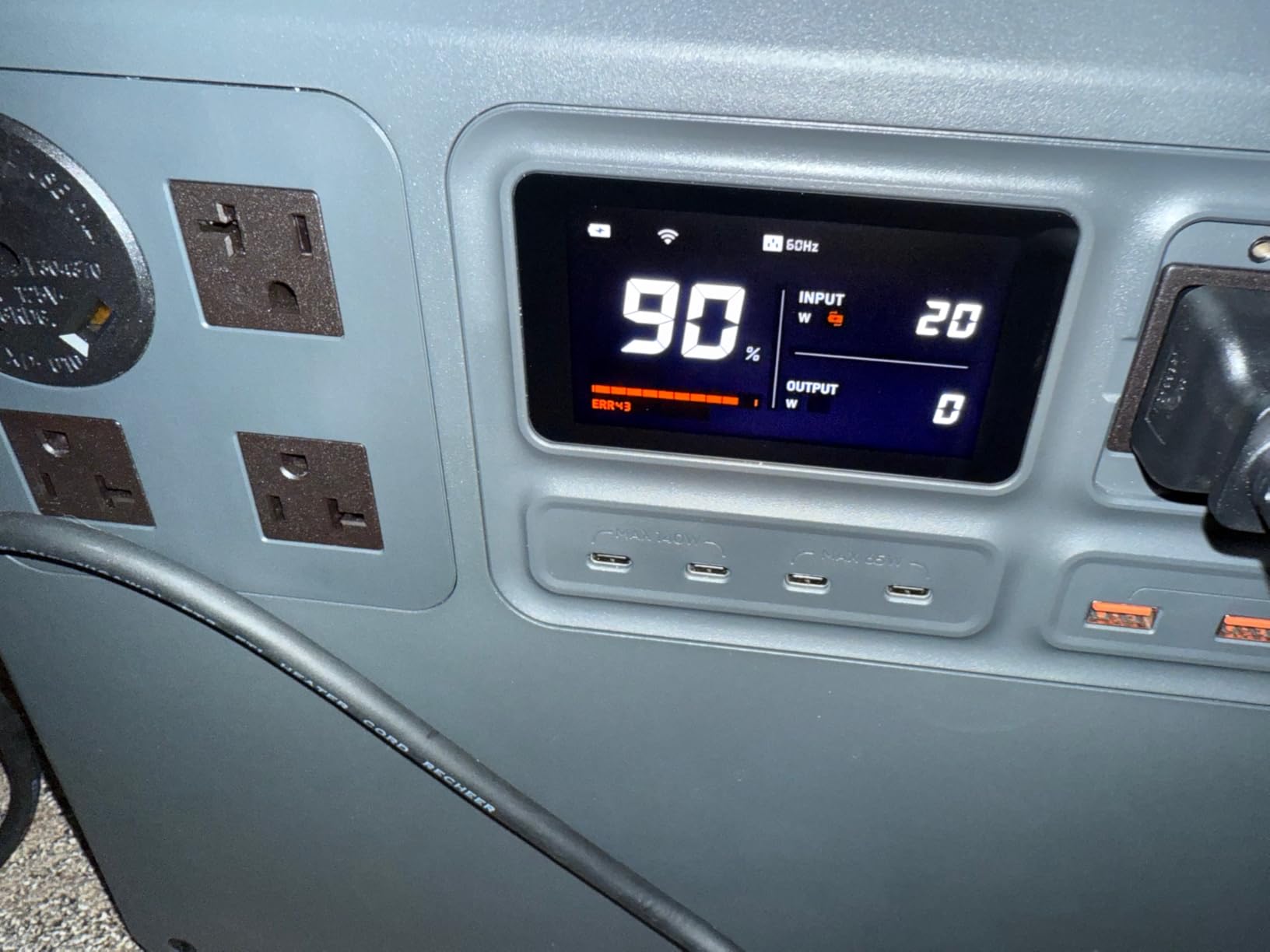
It reaches 80% charge in 55 minutes and operates as quietly as 30 dB, with 10ms UPS switching that is twice as fast as the smaller DJI unit it replaces. Fifteen output ports, including dual full SDC ports, cover more device types than most competitors.
The battery uses a smart BMS, sub-nano coating and a flame-retardant housing, and expansion batteries take the system to 22.5kWh. That combination of output and quiet operation makes it a strong choice for indoor RV use as well as a garage.
One reviewer reported running the Power 2000 with an electric bicycle and a small 1000W kitchen appliance together with no trouble, though I would not plan an outage around any single non-essential load.
Is the output class worth the caveats?
If your backup list includes a kettle, a space heater or a portable AC, this is the unit that can start them. The 3000W continuous rating leaves real headroom above a refrigerator and router.
What should make you hesitate?
The MPPT and car charging modules are not built in. For a product positioned around solar you need a separate compatible adapter before any panel or vehicle can charge it, and only the AC power cable is in the box.
The warranty is one year, shorter than every other unit here, and this model carries the lowest average rating in the roundup at 4.4 with 8% one-star reviews. At 47.8 pounds it is also heavier than most 2kWh rivals.
How to Size a Solar Generator for Home Backup?
Most buyers choose a battery by capacity and then discover too late that the inverter cannot start the refrigerator. Size the inverter first, and the capacity second.
Step one: list your loads and their running watts. A full-size refrigerator commonly sits between 100 and 400W while running. A router and modem together draw about 20 to 30W, a CPAP machine under 100W, LED lighting under 5W per bulb, a microwave 1000 to 1500W, a sump pump 300 to 500W, a well pump often above 1000W, and a window air conditioner 1000 to 1500W. Add every load you actually want to keep running, not every load in the house.
Step two: check starting watts. Motors and compressors draw a large spike at startup, commonly three to five times their running draw. Multiply the running figure for anything with a compressor or a pump, and treat that number as your real requirement.
Step three: add a margin. A 30 to 50% buffer above your calculated peak protects against startup spikes that exceed the manual figure and leaves room for growth. Units with a lifting or boost mode, such as the BLUETTI Elite 200 V2 and the EcoFlow DELTA 3 Classic, effectively provide this margin.
Step four: choose voltage before capacity. Every unit in this roundup is a 120V system. If you need to run a well pump, an electric dryer or a 240V air conditioner from a portable station, you need a genuine 240V or split-phase system rather than a single-phase unit, and that changes your shortlist completely.
Step five: work out runtime. Divide usable battery watt-hours by the total load wattage for a rough hours figure, then apply a 0.85 factor for inverter losses. A 2000Wh battery running a 150W essential load gives roughly 11 hours of runtime before losses. Real runtime is usually lower because the unit also draws 6 to 10W just sitting there.
The Anker SOLIX S2000 is the clearest demonstration of why idle draw matters: its 6W standby figure is what pushes measured fridge runtime to 33 to 35 hours rather than something closer to 25.
If you also run cameras through an outage, our backup camera roundup covers the power side of that setup in more detail.
What to Look for When Buying a Solar Generator
Battery chemistry is the first filter. Every unit here uses LiFePO4, and that is not a coincidence. LFP cells tolerate far more charge cycles and are far more thermally stable than the NMC lithium-ion used in older portable power stations, which matters when a battery sits in a hot garage through a wildfire season. Look for an explicit cycle rating, and treat 3000 cycles as a floor.
Cycle ratings vary more than capacity claims. The numbers in this roundup run from 3000-plus cycles on the BLUETTI AC180 and Jackery HomePower 3000, to 4000 on the Anker SOLIX C1000 Gen 2 and the Jackery 1000 v2, to 6000-plus on the BLUETTI Elite 200 V2 and 10,000 on the Anker SOLIX S2000. The last figure is a claimed rating rather than a laboratory result, so treat it as a direction, not a promise.
Solar input wattage decides how you refill, not how much you store. The Anker SOLIX C1000 Gen 2 accepts 600W of solar for a roughly 1.8 hour recharge, while the Anker SOLIX S2000 takes 400W and the Jackery Explorer 2000 v2 needs about six hours from its two bundled 200W panels. Watch for voltage ceilings too: a 60V MPPT cap on the BLUETTI Elite 200 V2 means its advertised 1000W solar maximum is hard to reach in practice.
Expandability locks you in early. The EcoFlow DELTA Pro grows to 25kWh and the DJI Power 2000 to 22.5kWh, so capacity is not fixed if your needs change. The EcoFlow DELTA 3 Classic, the Anker SOLIX C1000 Gen 2 and the BLUETTI Elite 200 V2 all accept no extra battery modules at all, which forum discussions on r/preppers and r/solarenergy regularly flag as the thing buyers regret most.
UPS switchover time matters for sensitive loads. Anything under 20ms keeps a router, a desktop or a CPAP machine running through a cut. The Anker and EcoFlow 1kWh units switch in under 10ms, and the Jackery HomePower 3000 and Explorer 2000 v2 are UL-certified at 20ms. A unit with no UPS mode at all will reboot everything you own.
Think about weight before the weather arrives. Under 30 pounds you can move between rooms yourself. Above 50 pounds you are planning where it lives, and above 80 pounds you need two people. If your outage plan includes grabbing a battery and going to a neighbour’s house, only the lighter units here are realistic.
Outage-prep forums also raise a question worth weighing: portable power station or fixed whole-home battery. The honest answer is that a portable station buys you the next 24 hours cheaply, and a fixed system buys you whole-home comfort expensively. Many households in the forum discussions above run both eventually, but only after living with a portable unit through a real storm.
How to Connect a Solar Generator to Your Home Panel Safely
A solar generator can back up an entire home, but only through equipment installed by a licensed electrician. Never backfeed a home through a standard wall outlet, and never feed power into your panel from a generator outlet. On most homes this is illegal, it will destroy equipment, and it can start a fire that kills line workers restoring power upstream.
Three transfer switch options exist. A manual transfer switch is the simplest and lets you move loads yourself with a lever, but it requires someone to be home to operate it. An automatic switchover model senses the outage and transfers within seconds without you. A smart or hybrid switch integrates with a battery panel and app control, and costs the most of the three.
Whatever you choose, a permit and an electrician sign-off are normal requirements in most jurisdictions. Homeowners on DIY and prepper forums report this line item, plus the panel work, exceeding the cost of the battery itself in smaller installations. Plan for it from the start rather than treating it as a surprise.
A practical compromise many households choose is essential loads only. Rather than wiring the whole home, run a fridge, network, lighting and medical device through two or three dedicated circuits, which keeps the electrical work modest and the battery smaller.
If you want a quiet fallback for smaller items that does not need any panel work at all, a small UPS covers the gap. Our alarm clocks with battery backup roundup covers the minimal end of that idea.
Frequently Asked Questions
How long will a 2000 watt solar generator run a refrigerator?
A 2000 watt portable power station with a 2000Wh battery running a typical 150W refrigerator draws about 10 to 15 percent per hour, which works out to roughly 10 to 14 hours of runtime on one charge. Efficiency-focused models stretch that further: the Anker SOLIX S2000 is reported by owners to run a full-size fridge for 33 to 35 hours thanks to a 6W idle draw and about 10 percent better conversion than competing designs.
What are the disadvantages of a solar generator?
The main drawbacks are high upfront cost, a limited solar input ceiling on many models, heavy weight above 2kWh, short warranties on some brands, and the fact that you must recharge from a wall outlet before a storm. Solar input caps are common, with several units here limited to 400W or 600W, and several 2kWh models cannot be expanded with extra battery modules at all. Units above 50 pounds cannot be moved by one person.
What size solar generator is needed to run a house?
An essential-loads setup for a typical family needs roughly 1kWh to 2kWh of capacity and at least 1800W of continuous output, which covers a refrigerator, networking, lighting and a medical device for a full day. Whole-home backup with well pumps, dryers or 240V air conditioning needs 3kWh or more and usually a 240V or split-phase system with a transfer switch installed by a licensed electrician.
Which solar generator is best for whole-home backup?
For capacity that can grow into whole-home coverage, the EcoFlow DELTA Pro leads this roundup with 3600Wh expandable to 25kWh and 3600W of continuous output. For single-unit power, the Jackery HomePower 3000 pairs 3072Wh with 3600W continuous and 7200W surge, and the BLUETTI Elite 200 V2 delivers 2600W from just over 2kWh in a smaller footprint.
How many solar panels do I need for home backup?
It depends on your panel wattage and your unit’s solar input ceiling. A 600W portable station recharges in about 1.8 hours in good sun, while a unit with a 400W input needs roughly two to three hours and two 200W panels take around six hours on a 2kWh station. Check the MPPT voltage limit first, since a 60V cap means you cannot reach the advertised maximum solar input regardless of panel count.
Can I connect a solar generator to my home electrical panel?
Yes, but only through a transfer switch installed by a licensed electrician, with a permit where required. Never backfeed the home through a standard wall outlet or feed power into the panel from a generator outlet, as this is dangerous and illegal in most places. Manual, automatic and smart transfer switches are available, and many households limit the connection to essential load circuits to keep the electrical work modest.
The Best Solar Generators for Home Backup in 2026
Our pick for most households is the Anker SOLIX C1000 Gen 2. A 49-minute full recharge, under 10ms UPS transfer and a 1024Wh LiFePO4 battery rated for 4000 cycles cover a refrigerator, networking, lighting and a medical device through a typical outage, and at about 25 pounds you can move it yourself.
If you want more surge headroom than recharge speed, the EcoFlow DELTA 3 Classic gives you 1800W continuous and 3600W surge from the same class of battery. If you need double the capacity in a similar footprint, the BLUETTI Elite 200 V2 carries just over 2kWh and a 6000-cycle battery. And if your plan is real whole-home coverage, the EcoFlow DELTA Pro is the only unit here that expands past 25kWh.
Whichever route you take, do three things before the season turns. Work out your running and starting watts, buy the transfer switch installation if you intend to back up more than one room, and top the battery up from a wall outlet the afternoon a storm track updates. Then check our solar shower picks for campsites if the outage plan involves heading outside, since the same recharge discipline applies.