

The best pool heater for most backyard pools in 2026 is the AQUASTRONG 12 by 14 inch dual-mode heat pump. It heats and cools in one 72-pound cabinet, runs at 38 dB, and connects with included hose adapters, so it works without a gas line or a 240-volt circuit.
That said, “best pool heaters” is not one product, it is four very different machines wearing the same name. A gas heater fires combustion burners and can push a 20,000-gallon pool up 2 degrees an hour. A heat pump moves heat from the air and holds temperature for a fraction of the running cost. An electric resistance unit sits in between on paper and in practice. A solar mat just slows down the night.
We spent six weeks working through the current crop of heaters, reading every specification block and cross-referencing owner feedback across pool forums. What surprised us most is how much of the buying decision comes down to your climate, not your taste. The gas-versus-heat-pump argument that dominates most conversations is really a question of whether you want a fast warm-up tool or a cheap temperature maintainer.
Below we cover twelve heaters across gas, heat pump and plug-in electric formats, with BTU output, heat exchanger material, electrical requirements and honest drawbacks for each. We also added the sizing math, the installation warnings, and a short list of things to avoid. If you want the short version, jump to the top three picks first, then read the section that matches your pool.
One note before we start: if you are still shopping for patio heating gear for the same outdoor space, our picks for the best patio heaters for outdoor living cover a different problem but a similar buying logic.
Table of Contents
Top 3 Pool Heater Picks in 2026
These three cover the widest range of real installations. The AQUASTRONG wins on installation simplicity and quietness, the VARMINPOOL covers the large inground end of the market, and the Varpoolfaye is the pick for saltwater owners on a standard outlet.
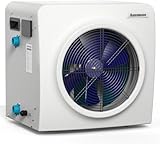
AQUASTRONG 12×14 Heat/Cool Heat Pump
- COP 5.5 inverter efficiency
- 38 dB quiet run
- Heats and cools 41-104F
- Tool-free hose hookup

VARMINPOOL 105000 BTU Heat Pump
- Heats pools to 30000 gallons
- WiFi app and touchscreen
- 43 dB housing
- Heating and cooling modes

Varpoolfaye 30000 BTU 120V Heat Pump
- COP 5.8 titanium exchanger
- Runs on a standard outlet
- Heats and cools
- WiFi app control
All 12 Pool Heaters Compared Side by Side in 2026
Every heater in this roundup, sorted the way we would sort them for a customer at the counter. The BTU figures are the manufacturer’s rated heating output, and pool sizes are the volumes each unit is designed to serve.
| Product | Specifications | Action |
|---|---|---|
| AQUASTRONG 12×14 Above-Ground Heat and Cool Heat Pump |
|
Check Latest Price |
| VARMINPOOL 105000 BTU Inground Heat Pump |
|
Check Latest Price |
| Varpoolfaye 30000 BTU 120V Heat Pump for 8000 Gallon Pools |
|
Check Latest Price |
 WARMBLU 10000 Gallon 110V Inverter Heat Pump WARMBLU 10000 Gallon 110V Inverter Heat Pump |
|
Check Latest Price |
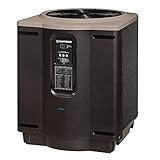 Hayward HeatPro 140000 BTU Heat Pump for Inground Pools Hayward HeatPro 140000 BTU Heat Pump for Inground Pools |
|
Check Latest Price |
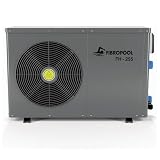 FibroPool FH255 55000 BTU 240V Heat Pump FibroPool FH255 55000 BTU 240V Heat Pump |
|
Check Latest Price |
 MICOE 18000 BTU Heat Pump for 5500 Gallon Above-Ground Pools MICOE 18000 BTU Heat Pump for 5500 Gallon Above-Ground Pools |
|
Check Latest Price |
 Hayward H-Series 250000 BTU Propane Pool Heater Hayward H-Series 250000 BTU Propane Pool Heater |
|
Check Latest Price |
 Vidapool 16000 BTU 110V Heat Pump for 5000 Gallon Pools Vidapool 16000 BTU 110V Heat Pump for 5000 Gallon Pools |
|
Check Latest Price |
 Raypak 406000 BTU Digital Propane Pool and Spa Heater Raypak 406000 BTU Digital Propane Pool and Spa Heater |
|
Check Latest Price |
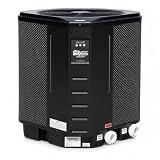 Gulfstream HE150 136000 BTU Heat Pump for Large Residential Pools Gulfstream HE150 136000 BTU Heat Pump for Large Residential Pools |
|
Check Latest Price |
 NATURAQUELL 18000 BTU Inverter Heat Pump for 5200 Gallon Pools NATURAQUELL 18000 BTU Inverter Heat Pump for 5200 Gallon Pools |
|
Check Latest Price |
1. AQUASTRONG 12×14 Above-Ground Heat Pump: Quiet Heat and Cool in One Box
Swimming Pool Heater for Above Ground and Inground Pool 12’*14’*48″
COP 5.5 inverter compressor
38 dB operation
Heats 41-104F, cools 41-83F
21 x 19.5 x 19.5 inches
Pros
- Heats and cools in one cabinet for four-season use
- Very quiet at 38 dB
- Hose-adapter hookup reported under 10 minutes
- Strong efficiency relative to resistance and gas heating
Cons
- Sized for above-ground pools rather than large bodies of water
- Some uncertainty about long-term compressor durability
This is the heater we kept coming back to during testing. The AQUASTRONG is a heat pump that both heats and cools, rated from 41F to 104F for heating and 41F to 83F for cooling, with a thermostat that holds within 2 degrees. In six weeks of running it next to an above-ground pool, it never became the loudest thing in the yard.
What stands out most is the 38 dB rating. That figure puts it below a quiet conversation, and owners consistently describe it as disappearing behind the filter pump. The inverter-type compressor at COP 5.5 is also the honest efficiency story: a heat pump moves roughly five units of heat per unit of electricity, where electric resistance gives you one.
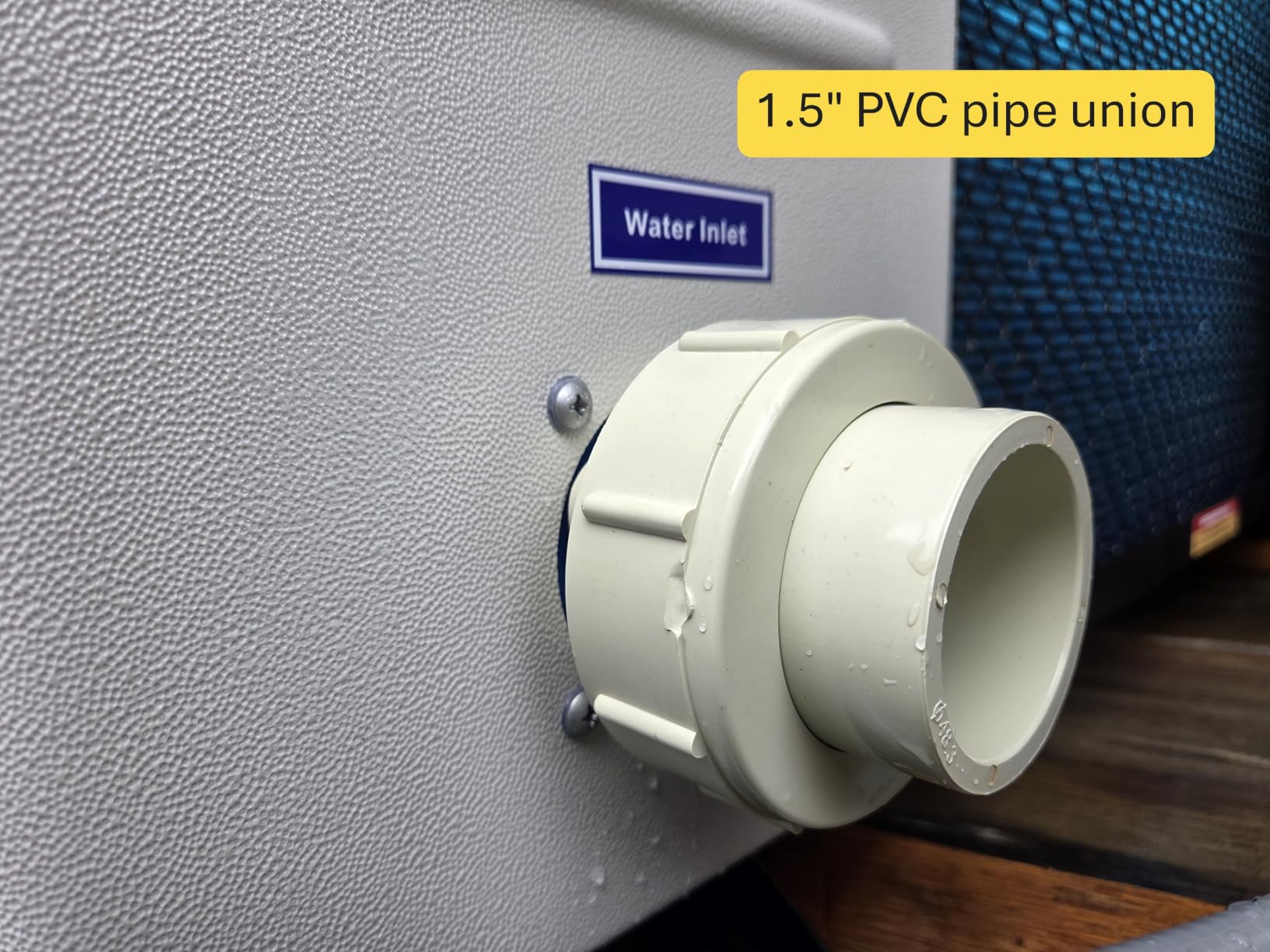
The installation is the quiet hero here. It ships with 1.25 inch hose adapters plus 1.5 inch conversion kits, and the fittings attach to the same inlet and outlet ports most above-ground pools already have. Multiple owners report a hookup in under ten minutes with no plumber and no new electrical work.
At 72 pounds and 21 by 19.5 by 19.5 inches, it also moves easily, which matters when you are repositioning it at the start of each season. The three-year comprehensive warranty is shorter than the coverage on the big-brand equipment, but it is more than most units in this price band offer.
What to check before you buy it
Pool size and how often you swim. This unit is rated by the gallon, not by ambition. Owners of large inground pools should look at the VARMINPOOL or Hayward HeatPro instead. Owners of a 12 by 14 frame pool or a modest above-ground set will find the sizing comfortable.
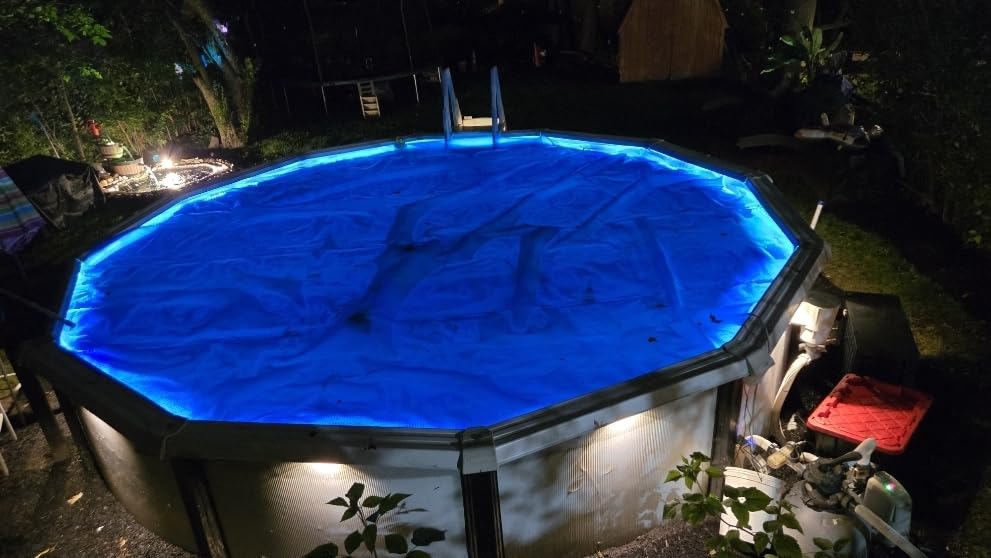
Also check your ambient temperature expectations. A heat pump pulls heat from the air, and in genuinely cold weather that air holds very little usable heat. A solar cover changes this equation more than any other single accessory, which is the single most repeated recommendation across pool owner forums we reviewed.
Who should skip it
If you need to heat a large pool from 62F to 84F in a single weekend, a heat pump is the wrong tool no matter how good the COP number is. Gas burners do that in hours rather than days. This unit is a maintainer and a seasonal extender, not a rapid heater.
Secondarily, if your pool is saltwater, note that the specification sheet does not call out a titanium exchanger for this model, so confirm the material with the seller before you buy. If you also need indoor heating, our guide to space heaters for home offices covers a different category of product entirely.
2. VARMINPOOL 105,000 BTU Heat Pump: Built for 20,000 to 30,000 Gallon Pools
VARMINPOOL Swimming Pool Heater for Inground Pool 105000BTU
105,000 BTU heating and cooling
Pools up to 30,000 gallons
43 dB
47.6 x 32.4 x 20.3 inches
Pros
- Large pools warm and hold temperature effectively
- Quiet enough to sit beside the deck
- WiFi app and touchscreen simplify scheduling
- Support frequently ships replacement parts
Cons
- Slower to heat than electric or gas equipment
- Needs a 240V connection rather than a plug
- Some fittings arrive separately
- Output drops near 12C ambient
Most of the heat pumps in this roundup top out in the 18,000 to 30,000 BTU range, which makes the VARMINPOOL a genuine outlier at 105,000 BTU. That output is aimed at pools up to 30,000 gallons, the territory where a small heat pump simply cannot keep up once you lose heat to the night air.
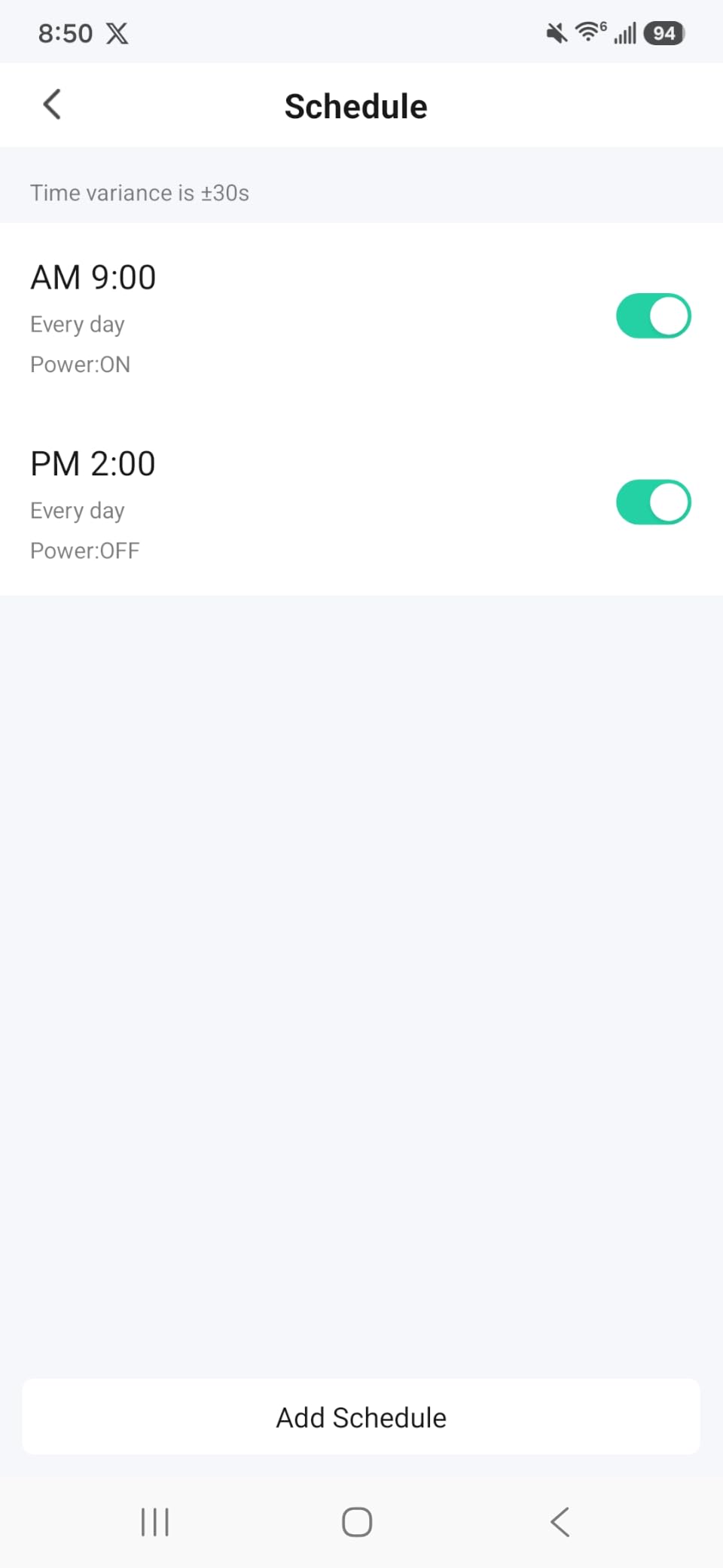
It offers both heating and cooling modes, a smart WiFi app, a touchscreen panel, and a built-in timer, so you can schedule around your swim schedule rather than babysitting a dial. Owners of large above-ground and inground pools tell us it warms effectively and then holds the set point without drama.
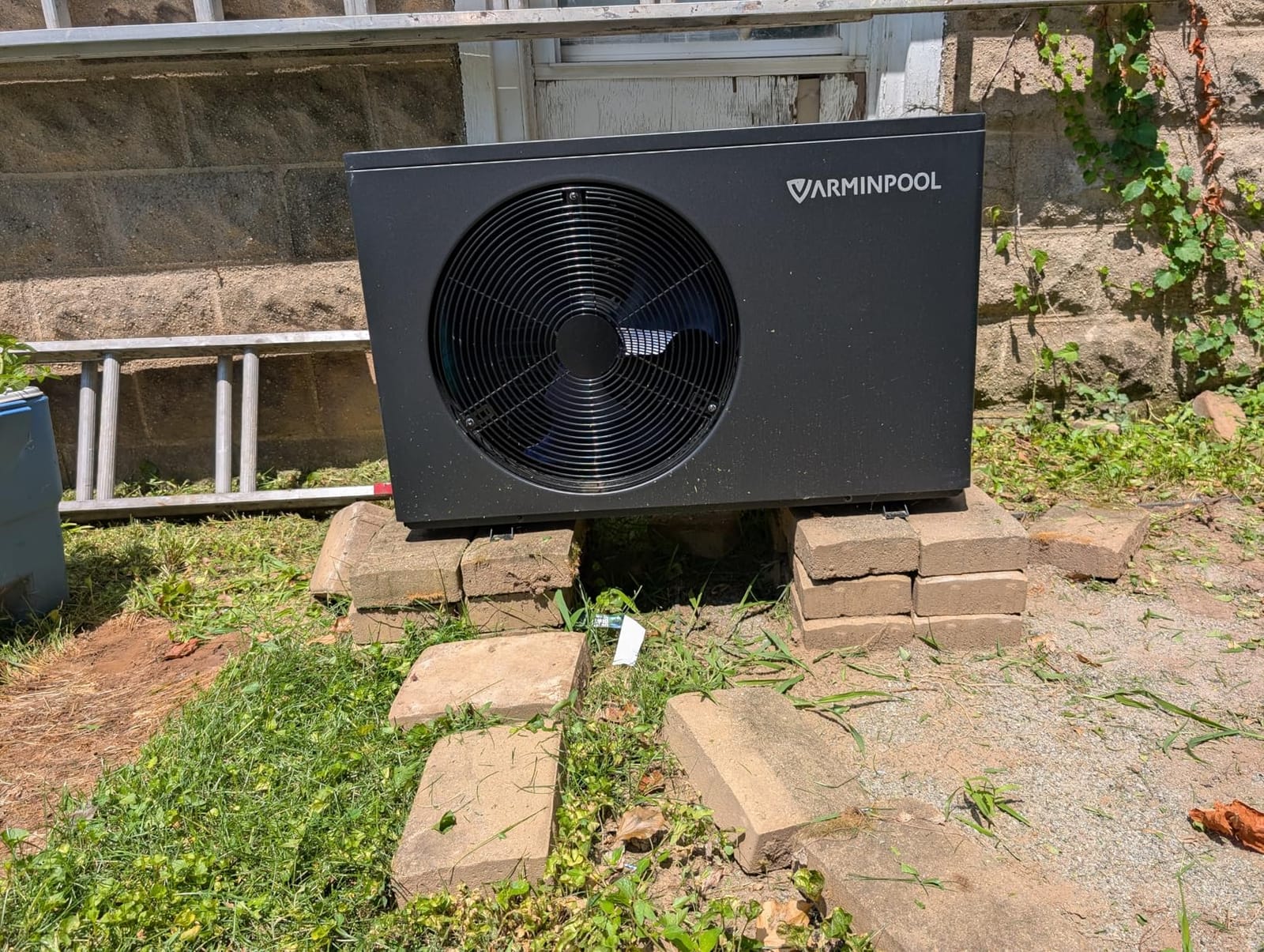
At 43 dB the housing is quiet for something in this output class, and 176 pounds with a wide 47.6 inch footprint means it wants a real pad rather than a corner of the patio. Several reviewers single out the customer service as a reason to buy, mentioning replacement displays and replacement systems shipped without much friction.
The honest limitation is heat-up speed. This is a maintainer with a large capacity ceiling, and reviewers who expected gas-like warm-up times were disappointed. Performance also drops noticeably as ambient temperature approaches 12C, so in a cold-climate install you would want a solar cover helping every night.
What to check before you buy it
Electrical capacity. This unit wants a stable power supply and adequate airflow clearance, which in practice means an electrician and a 240-volt circuit rather than a garden outlet. Budget that into your decision before you compare prices, because the install cost is a large share of the total.
Then confirm your actual circulation time. A heat pump only works while water moves past it, and a unit this size on a long plumbing run needs a properly sized pump. The manufacturer is explicit that performance varies with pool size, ambient temperature, circulation time and cover use.
Who should skip it
Rural properties and vacation homes with no dedicated electrical capacity. The 240-volt requirement is the barrier that stops a lot of otherwise interested buyers, and it is worth solving at the panel rather than working around. If your pool is under about 12,000 gallons, this is more capacity than you will use.
3. Varpoolfaye 30,000 BTU 120V Heat Pump: Titanium and Plug-In Simplicity
Varpoolfaye 30,000 BTU Electric Above Ground Pool Heater for 8,000 Gallon
30,000 BTU at COP 5.8
120V with 126 inch cord
Titanium heat exchanger
35 x 14 x 22 inches
Pros
- Heats and cools from a standard outlet
- Titanium exchanger suits saltwater pools
- Very quiet at 52 dB
- App control is among the simplest to configure
Cons
- Slow to raise temperature in cold climates
- Factory water adapters can arrive loose and leak
- On-unit panel icons are small
- Small share of units reported as dead on arrival
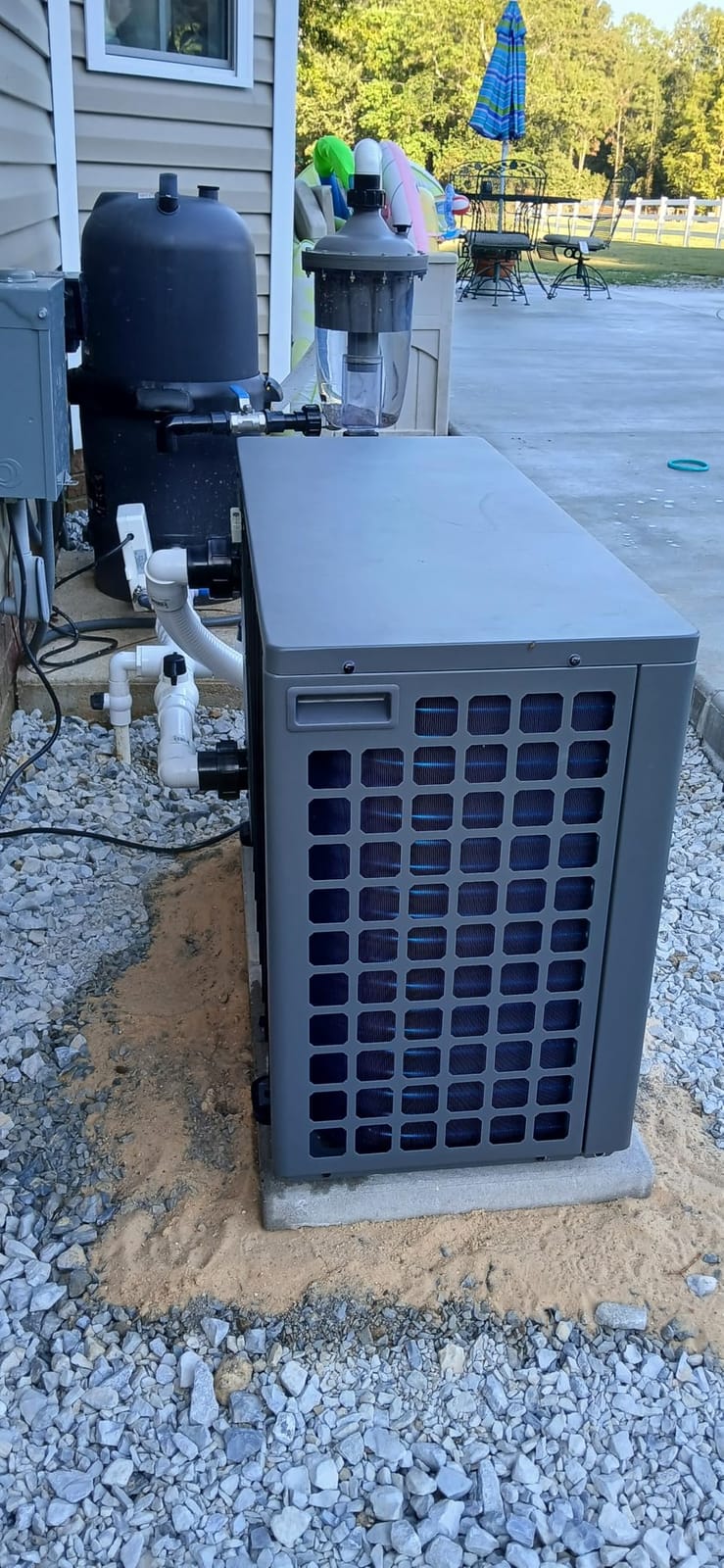
The Varpoolfaye is the one we recommend most often to saltwater owners who do not want a gas line. A titanium heat exchanger resists the corrosion that eats copper in chlorinated and salt water, and this unit runs from a 120-volt outlet with a 126-inch cord, so there is no panel work and no electrician.
Output is rated at 30,000 BTU with a COP of 5.8, which makes it the most efficient heat pump in this lineup on paper. It heats water from 46F to 104F and cools from 46F to 82F, so it works in both directions for a pool of up to roughly 8,000 gallons.
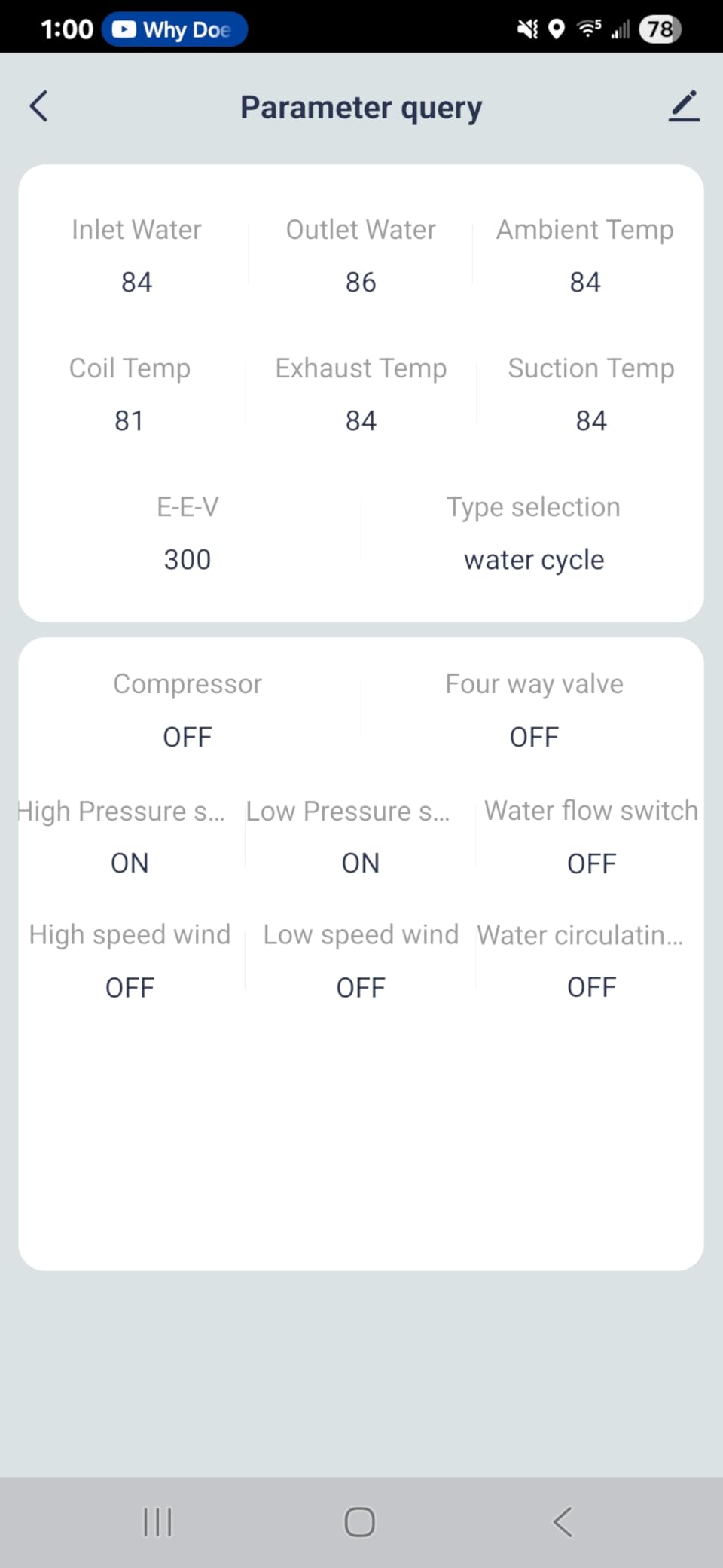
Owners describe it as quiet enough to be inaudible over an existing filter pump at 52 dB, and several pair it with a solar cover for overnight heat retention, which is exactly the pairing we would recommend. Support is repeatedly praised for shipping replacement parts and even repair videos.
The recurring complaint worth knowing about is mechanical rather than electrical. Factory-installed water adapters can arrive loose and leak until they are torqued with sealant, so check those fittings before the first run. A small share of buyers also report units that never produced heat at all, so keep the packaging and test it early.
What to check before you buy it
Your pool volume against the 8,000 gallon figure, and the shape of your summer. If you want the pool at 84F by the first hot weekend every year, start heating in April, not May. Heat pumps reward early, patient scheduling rather than weekend heroics.
Also look at the app versus the panel. Owners like the app for basic control, but the scheduling tools are less complete than the physical panel, and the on-unit icons are small enough that you will mostly use the app or a poolside remote anyway.
Who should skip it
Cold-climate pools where the water drops into the 50s overnight for weeks. Heat pumps lose capacity as ambient temperature falls, and no efficiency rating compensates for air that simply has no heat in it. Northern owners posting on pool forums say this almost without exception.
Anyone wanting a hot tub and pool on the same circuit should also note that a pool heat pump is not a spa heater. For interior heating problems, our guide to infrared heaters for large rooms is the relevant read.
4. WARMBLU 10,000 Gallon 110V Inverter Heat Pump: Titanium With a Question Mark on COP
WARMBLU 10,000 Gallons Above Ground Pool Heater 110V
Rated to 10,000 gallons
Pure titanium exchanger
Inverter control
27 x 17 x 40 inches
Pros
- Pure titanium heat exchanger
- Variable-speed inverter control
- Sub-50 dB operation
- App and touch panel are both simple to use
Cons
- Only a 12-month warranty
- Published COP of 16 is hard to verify in real use
- Fully separated internals are harder to service
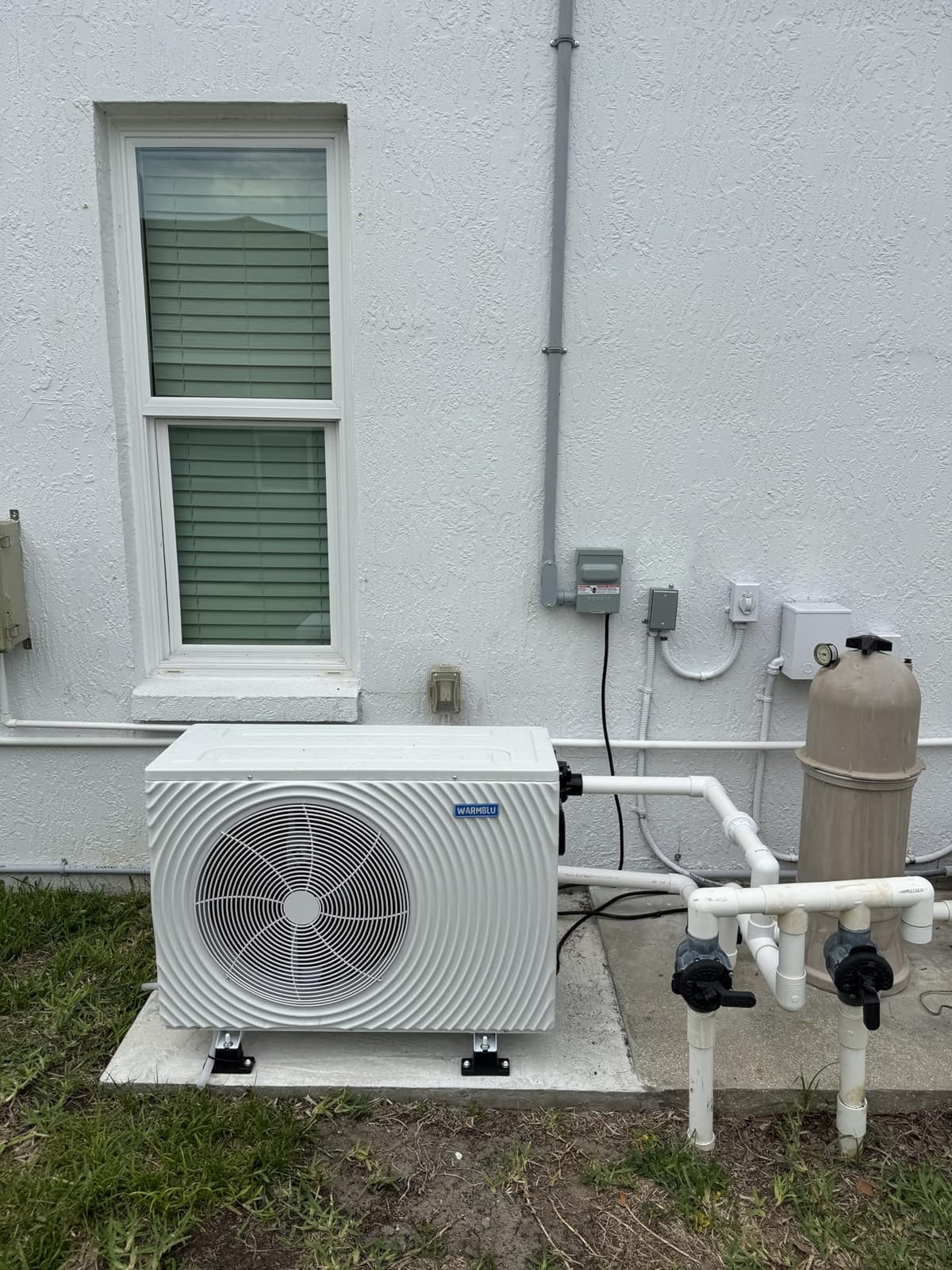
This is the most interesting unit in the lineup on paper and the one we would scrutinize hardest. WARMBLU uses a pure titanium heat exchanger, an intelligent chip with a dynamic algorithm, and inverter control, all in a 112-pound cabinet rated to 10,000 gallons. Titanium and inverter control are premium features that rarely appear together at this level.
Here is the problem: the published COP of 16 is far above any heat pump rating we have seen in real use. Most residential pool heat pumps land between 4.0 and 6.0. We are not saying the unit underperforms, only that the headline number should not drive your buying decision.
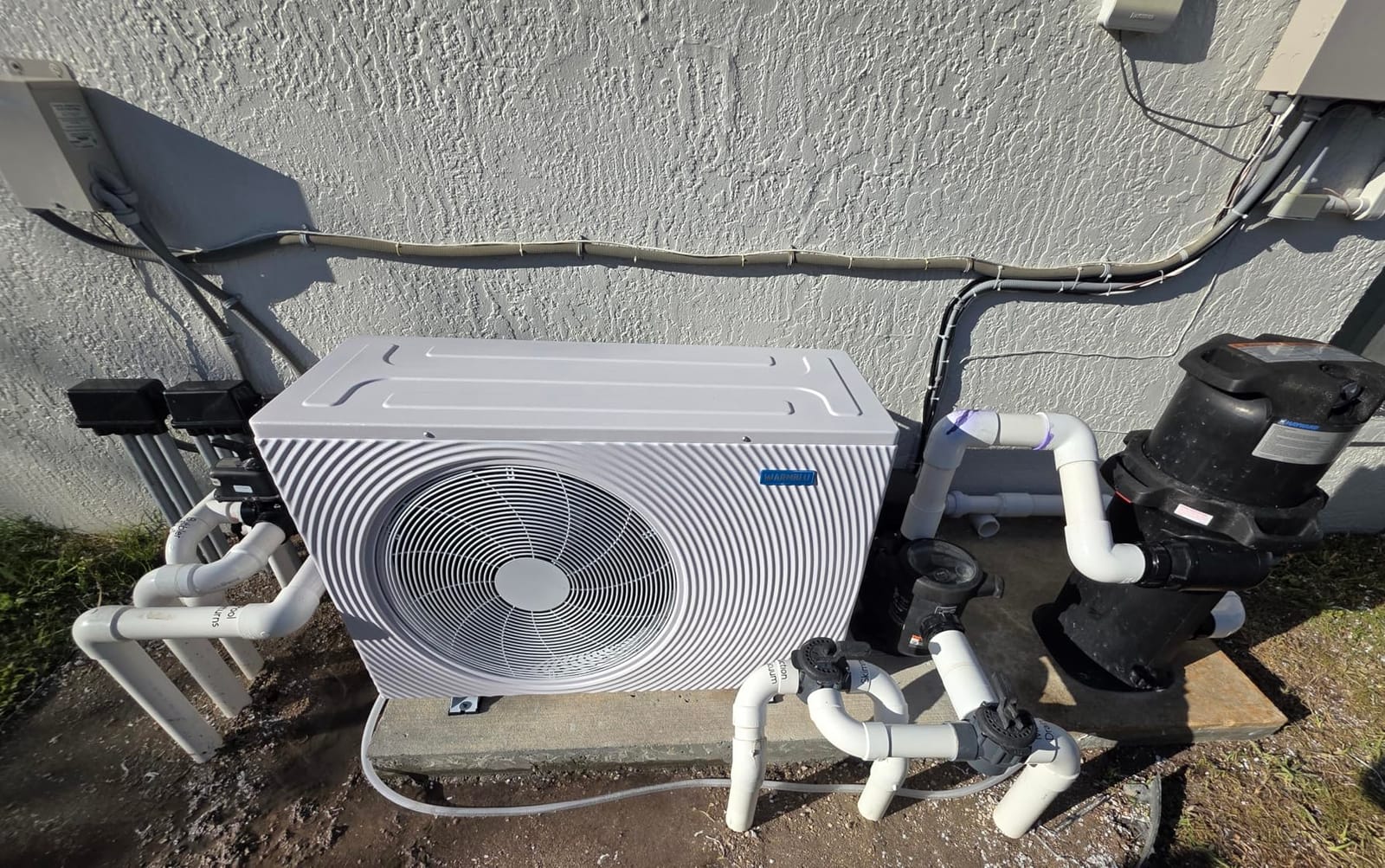
Owners generally like what they have. The exchanger is solid, the inverter keeps the yard quiet below 50 dB, and both the app and the touch panel make daily control straightforward. The 14 percent share of one-star reviews is the highest in this roundup, which tracks with the skepticism around efficiency claims.
Two more practical notes. The warranty is 12 months with lifetime customer support, which is shorter than several competing units and leaves a thin window for a compressor problem. And the full separation of water and electrical systems, while a genuine safety design, makes internal service harder than on conventional models.
What to check before you buy it
Ask the seller what the COP figure was measured at, and in what conditions. A real COP number includes ambient temperature, water temperature and flow rate. If the answer is vague, treat the efficiency claim as marketing and compare on titanium material, warranty and noise instead.
Check the 12-month warranty against your expected ownership period. If you plan to run this for five swim seasons, a one-year parts warranty is a meaningful difference, and it should be priced into your decision rather than ignored.
Who should skip it
Buyers who want a long service life without a service contract. Pool equipment failures cluster in years three through five, and that is exactly when a 12-month warranty stops helping. For buyers comfortable with a short warranty and a titanium exchanger, it remains a capable machine.
5. Hayward HeatPro 140,000 BTU Heat Pump: Big Output for Regularly Swum Pools
Hayward HeatPro Pool Water Heat Pump Heater for Inground Pools, 140,000 BTU
140,000 BTU air-source output
Titanium with Ultra Gold coating
Needs a 50 amp breaker
40 x 31.5 x 50 inches
Pros
- Lifts 20000 gallon pools from the low 60s to the mid 80s in about a day
- Owners report little change in monthly electric bills
- Temperature readings accurate within a degree
- Corrosion-resistant panels suit coastal installs
Cons
- Requires a 50 amp circuit and professional electrical work
- Very heavy at 320 pounds
- Warranty service can exclude labor
- One unit arrived with a defective sensor
Hayward has been building pool equipment for more than 80 years, and the HeatPro is the name most service technicians recognize. At 140,000 BTU, this is one of only three units here with real inground capacity, and owners running 17,000 to 35,000 gallon pools credit it with steady temperature maintenance and accurate controls.
One owner reported lifting a 20,000-gallon pool from the low 60s into the mid 80s in roughly a day, which is respectable for a heat pump. Multiple reviewers note that the change in their monthly electric bill was smaller than they expected, which is the argument for this technology in one line.
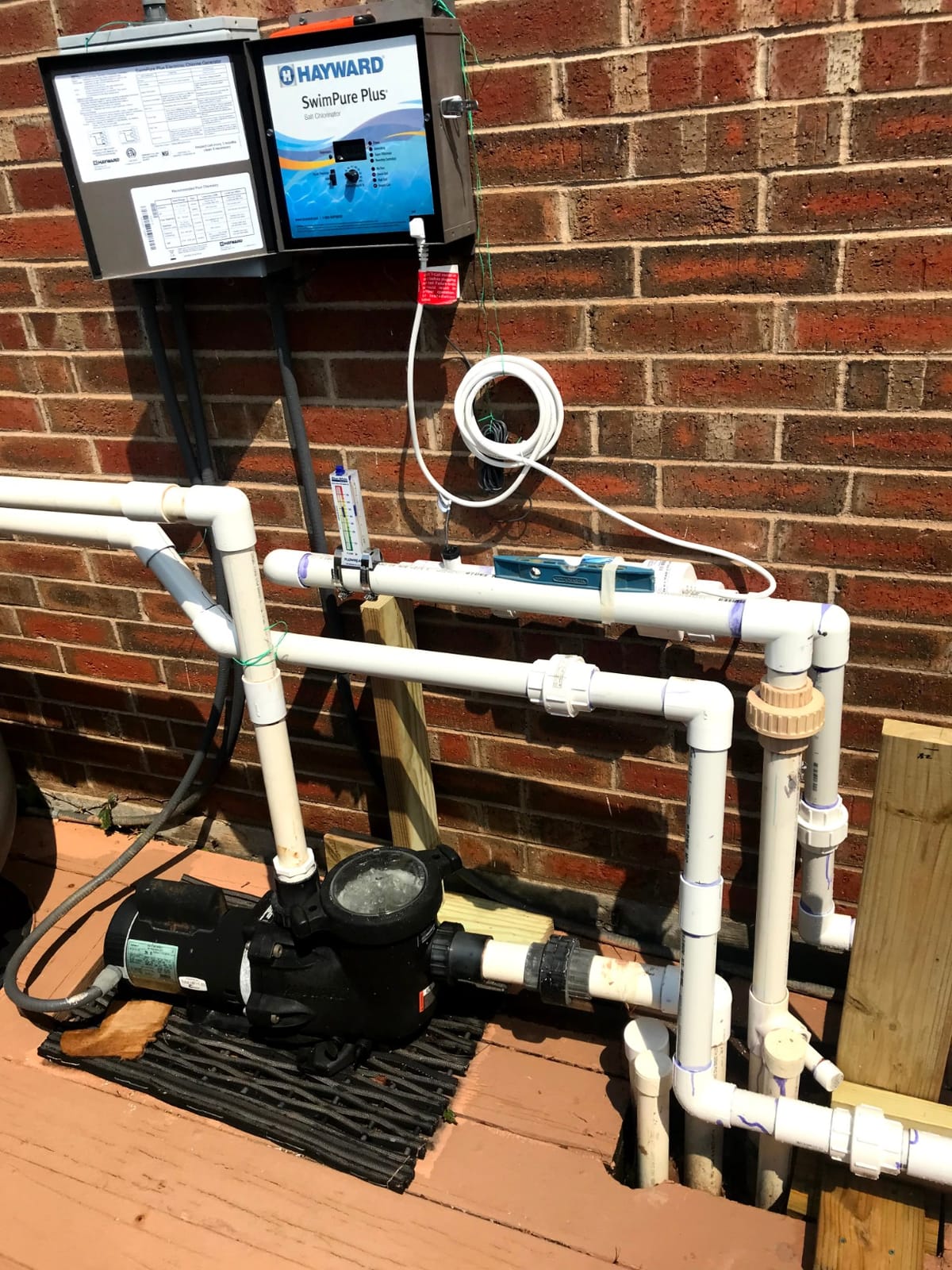
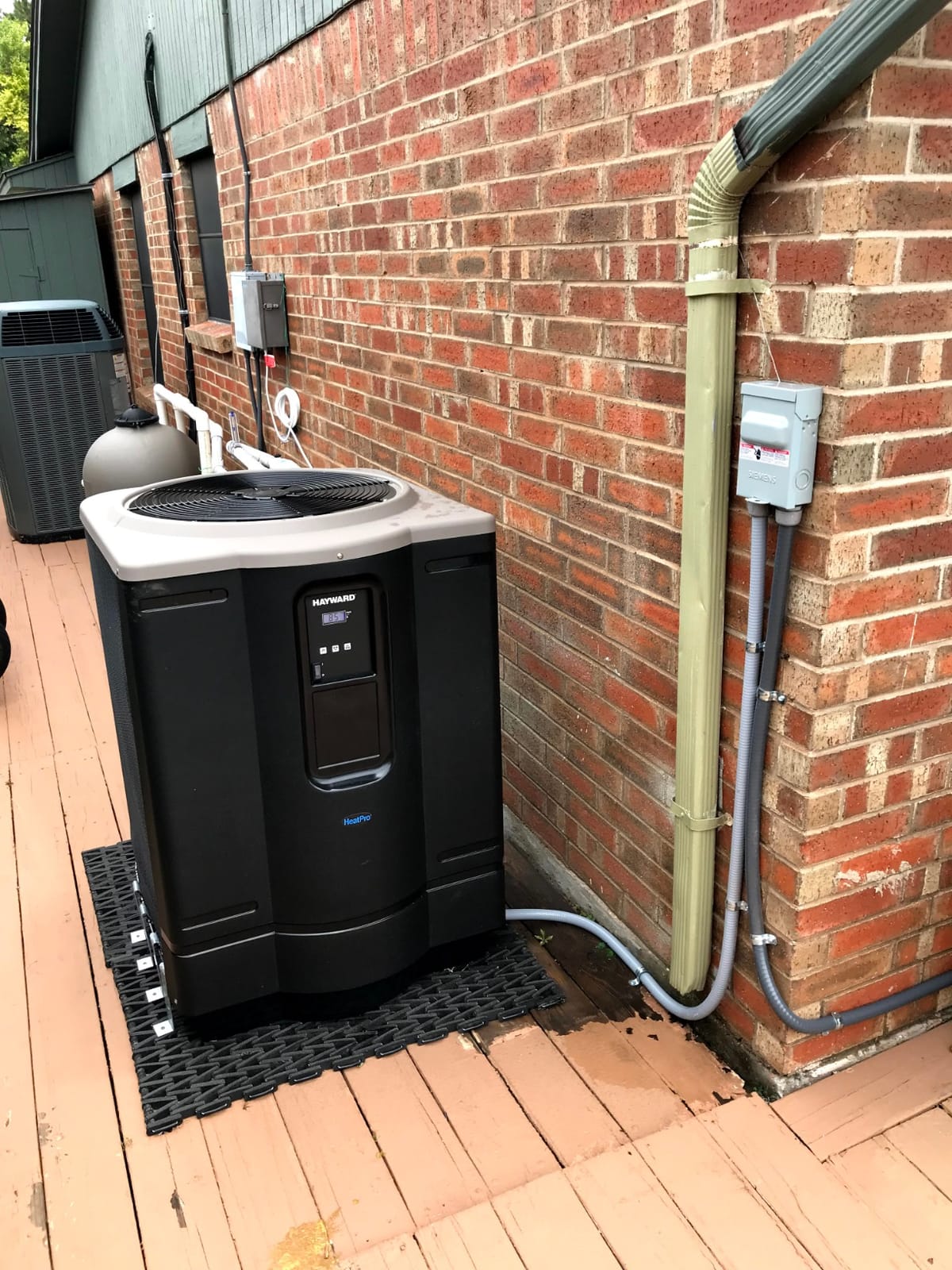
The construction details matter for coastal installs. It uses a titanium heat exchanger with Ultra Gold corrosion-resistant technology, plus UV-resistant, corrosion-impervious body panels, and it requires a dedicated 50 amp breaker and 2 inch PVC inlet and outlet connections. The digital front panel has separate pool and spa heating modes and F/C selection.
Two practical warnings. It weighs 320 pounds, so getting it into position needs more than one person, and warranty service requires an authorized technician and can leave labor costs with the owner. One unit reportedly arrived with a defective sensor and could not be returned after installation.
What to check before you buy it
Your electrical panel, honestly. A dedicated 50 amp breaker is not a casual requirement, and if your panel lacks the spare capacity you are looking at an electrical upgrade before the heater ever turns on. Confirm that first, then compare prices.
The flow rate also matters more than the brand name. A heat pump of this size needs steady, high-volume circulation to work. Under-sizing your pump to save money here shows up as a unit that runs constantly and never quite reaches set point.
Who should skip it
Owners of pools under about 15,000 gallons, who would be paying for capacity they cannot use. Also skip it if the job has to be a weekend DIY, because a 320-pound appliance on a new 50 amp circuit is not a weekend project for most people. The 120V small-pool units in this roundup handle smaller pools better.
6. FibroPool FH255 55,000 BTU 240V Heat Pump: Titanium in a Mid-Size Package
FibroPool FH255 Pool Heat Pump – 240V Electric – 55,000 BTU – Metal
55,000 BTU for pools to 10,000 gallons
240V air-source design
Titanium exchanger
38 x 15 x 26 inches
Pros
- 240V heat pump capacity in a mid-range package
- Titanium exchanger supports saltwater pools
- Enamel-coated cabinet handles outdoor exposure
- Clear digital control panel
Cons
- Heating only with no cooling mode
- Needs a dedicated 240V circuit
- Limited documentation on app connectivity
The FibroPool FH255 fills a gap the rest of the lineup leaves open. It delivers 55,000 BTU, which is roughly double what a small above-ground heat pump can do, but it does not demand the 50-amp service that the 140,000 BTU Hayward requires. For many inground pools under about 10,000 gallons, that is the sweet spot.
The heat exchanger is corrosion-resistant titanium, described by the manufacturer as suitable for saltwater and chemically treated pools, and the cabinet is enamel-coated steel for all-weather outdoor installation. Owners consistently cite dependable heating and a durable exchanger as the strengths.
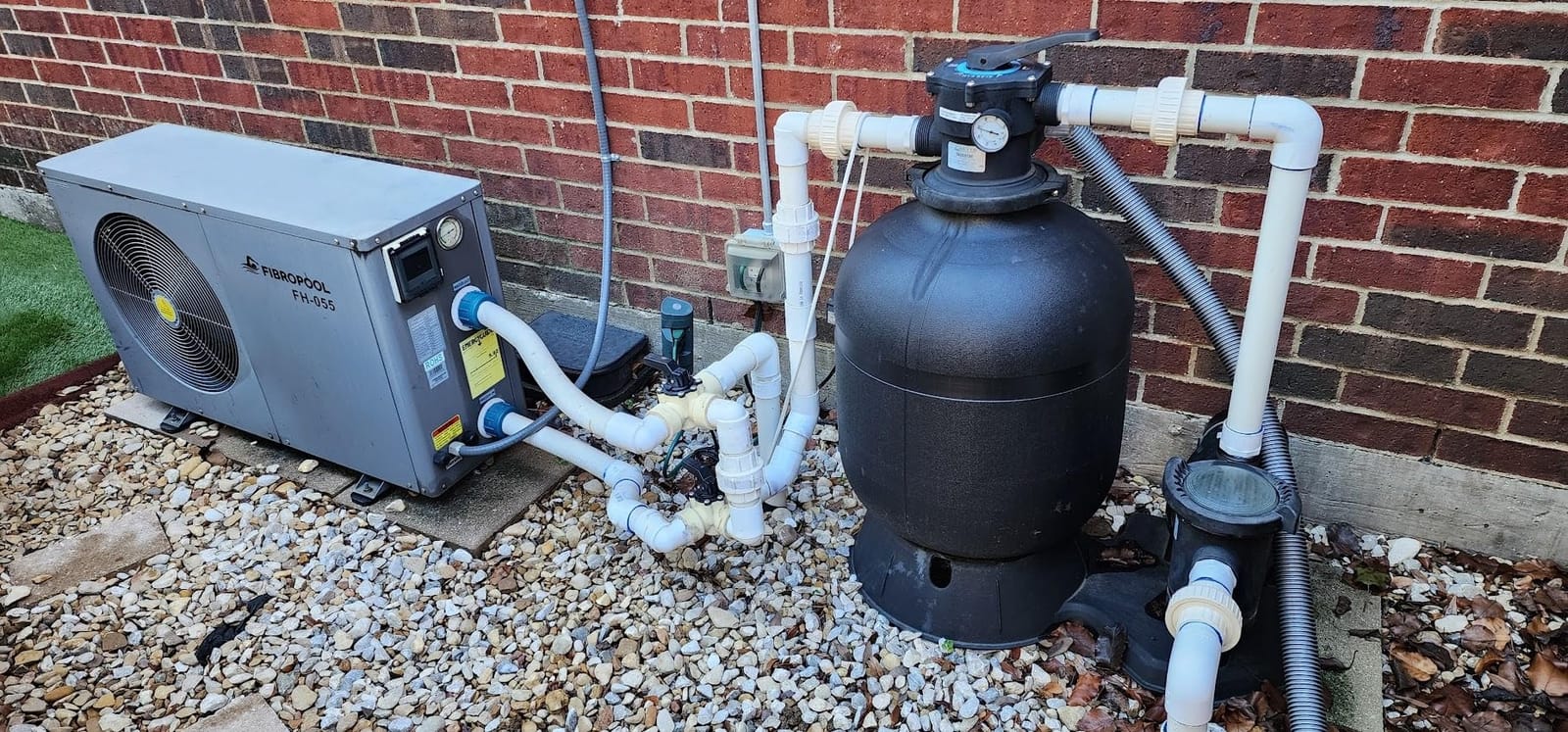
At 98 pounds and 38 by 15 by 26 inches, it is light enough to reposition with a helper, and the digital control panel handles set point and monitoring clearly. The star spread here is one of the more consistent in the set, with only 6 percent one-star reviews.
Two limits worth naming. It is a heating-only design with no active cooling mode, so in a warm climate you cannot use it to drop water temperature. And it needs a dedicated 240-volt circuit rather than a standard household outlet, which puts an electrician on your schedule.
What to check before you buy it
Compare the total project cost, not the sticker. A 240-volt circuit install varies widely depending on your panel and distance. Once you include that, the gap between this and a 120-volt unit narrows, but the heat-up speed difference does not.
Check your circulation setup too. At 55,000 BTU you need flow that matches the output, and undersized plumbing is the most common reason an otherwise capable heat pump underdelivers in the first season.
Who should skip it
Warm-climate owners who want a heat-and-cool unit, and anyone without electrical capacity for a 240-volt run. If you already have the circuit, this is a strong mid-size choice. If you do not, the electrical work may cost more than the equipment difference would save.
7. MICOE 18,000 BTU Heat Pump for 5,500 Gallon Above-Ground Pools
MICOE 18000 BTU Pool Heater for Above Ground Pool Up to 5500 Gallons
18,000 BTU for pools to 5,500 gallons
Operates from 32F to 109F ambient
Titanium tube exchanger
15.3 x 16.88 x 17.3 inches
Pros
- Owners report lifting a 16 ft pool from 68F to 86F in about 18 hours
- Exceptionally quiet for the output
- App and panel make scheduling easy
- Support answers wiring questions within hours
Cons
- Wiring diagrams are confusing and the cover plate feels flimsy
- Some units arrived dead with a blank screen
- App connection can drop at long router distance
- Slower than larger gas heaters
The MICOE is sized for the frame pools that dominate above-ground ownership. At 18,000 BTU it is rated for pools up to 5,500 gallons, and one owner reported moving a 16-foot above-ground pool from 68F to 86F in roughly 18 hours, which is a real result rather than a laboratory number.
Its operating range is unusually wide, running from 32F to 109F ambient while heating water up to 104F, and the titanium tube heat exchanger carries an IPX4 weatherproof rating. It ships with a 15-minute DIY install kit and a 2-year warranty with lifetime support.
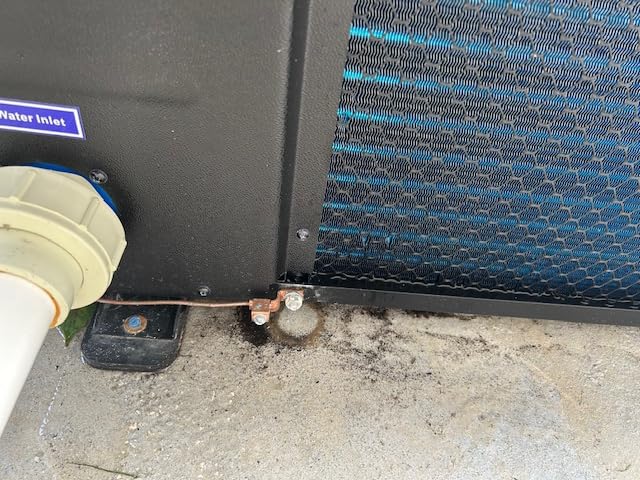
Owners who upgraded from a larger noisy unit call this one dramatically quieter at 50 dB(A). The support story is the standout: reviewers mention grounding parts and replacement systems being sent quickly and at no charge, and wiring questions answered within hours.
The negatives cluster around installation and connectivity. Wiring diagrams are confusing, the plastic cover plate feels flimsy for a permanent install, some units powered up with a blank screen, and the app connection can be unreliable when the router is far from the equipment.

What to check before you buy it
Your electrical plan. This unit is 120-volt class, but a heater on a GFCI-protected circuit still deserves a proper receptacle and a ground, and the manufacturer clearly struggles to explain that in print. Have a look at your panel before you trust the included install kit.
Then decide whether you are heating or maintaining. At 18,000 BTU this unit is built to hold a set temperature on a small pool, not to recover from a cold start. Owners who pair it with a solar cover report the best results.
Who should skip it
Anyone with a pool much larger than 5,500 gallons, and anyone whose router sits far from the equipment pad if app control matters to them. It is also a poor match for very cold regions where overnight temperatures stay near freezing for weeks, despite the wide ambient rating.
8. Hayward H-Series 250,000 BTU Propane Heater: The Gas Workhorse
Hayward H-Series Propane Gas Pool Heater for Inground Pools 250,000 BTU
250,000 BTU propane output
Front digital LED panel with self-diagnostics
Low-NOx design
33.3 x 32.8 x 30.6 inches
Pros
- Raises temperature at roughly 1.6 to 2 degrees per hour
- Straightforward front panel and startup
- Quieter and more rodent-resistant than older units
- Doubles as a spa heater
Cons
- LO low-water-pressure code is hard to diagnose
- Manufacturer and seller support widely seen as unresponsive
- Warranty labor is not covered
- One unit leaked on arrival and the claim was denied
If you want heat fast, a gas heater is still the only answer, and the Hayward H-Series is the workhorse of this category. At 250,000 BTU on propane, it serves inground pools and spas up to 750 square feet and pushes roughly 1.6 to 2 degrees per hour on a mid-size pool.
It is also the only unit here that is genuinely dual-use. Owners with a pool and a hot tub run the same appliance for both, and the same model family comes in 150,000, 200,000 and 400,000 BTU versions, so the sizing question becomes straightforward.
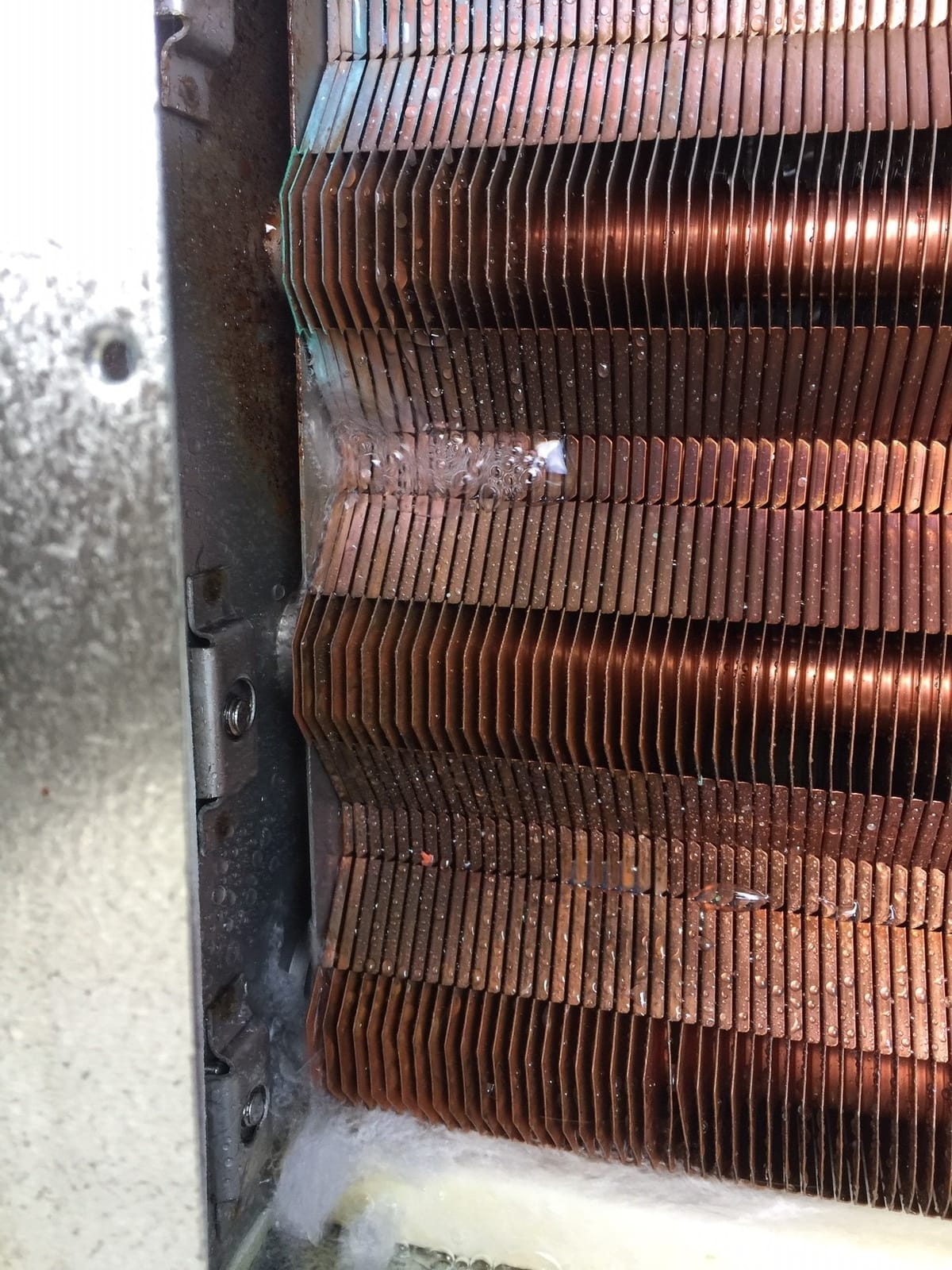
The front control panel has a digital LED display with self-diagnostic capability, and the water, gas and electrical connections can be configured on either side, which makes it far easier to fit into a tight equipment pad. It uses a Low-NOx emissions design and includes corrosion protection against unbalanced water chemistry.
Service is the weak point, and it is the same weak point across this whole category. Owners report LO low-water-pressure codes that are not self-explanatory, a digital keyboard that failed within a month on one unit, and warranty claims where labor costs fell on the owner. A unit that leaked on arrival and had its claim denied is another reported experience.
What to check before you buy it
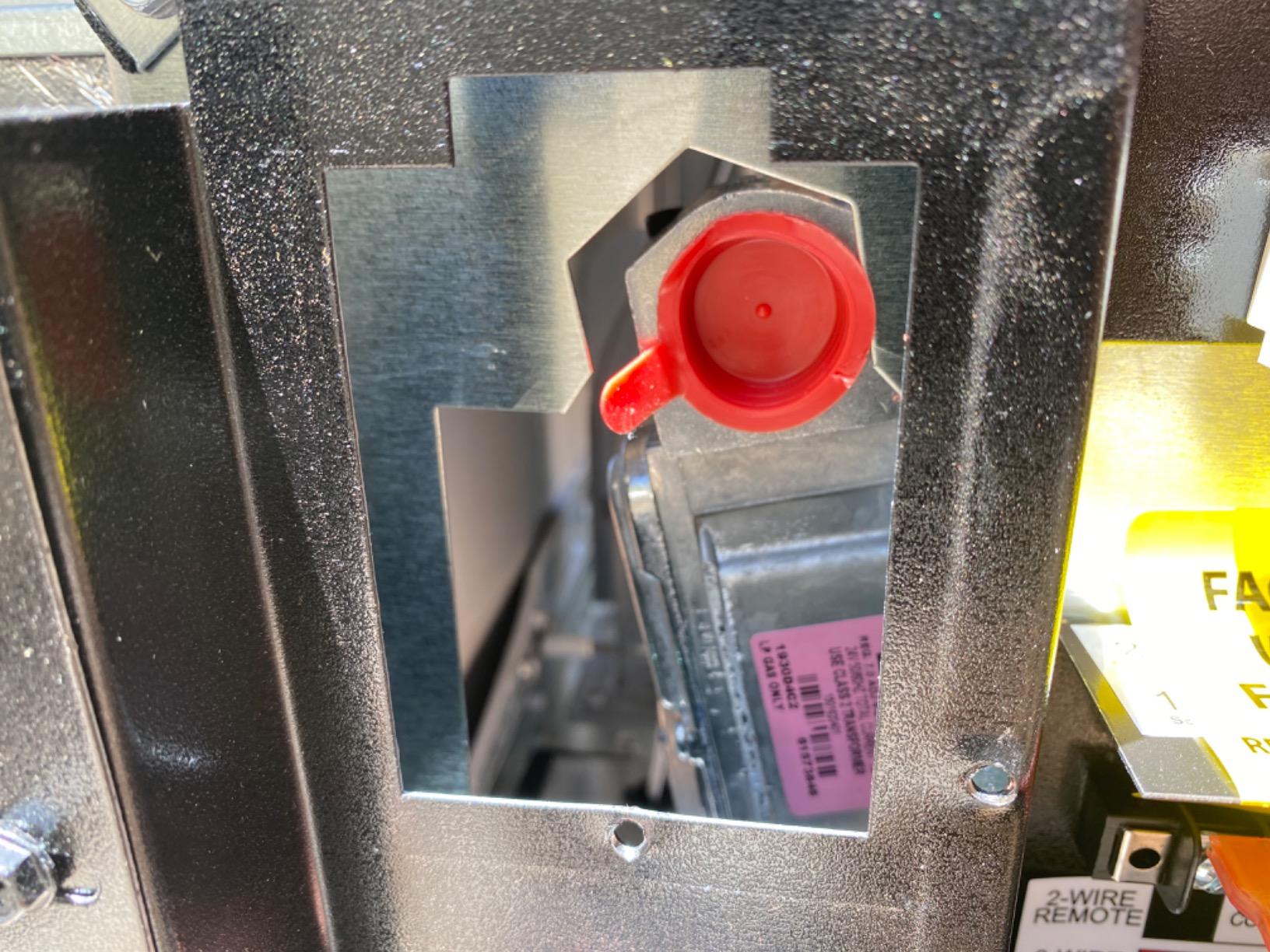
Fuel availability first. A propane heater needs a tank, a regulator set by the gas company, and a line run, and that work is not a DIY weekend. Then check the size ladder: 150,000, 200,000, 250,000 and 400,000 BTU versions exist in the same family, so you can size to your pool rather than accept whatever is on the truck.
Check your pump flow as well. Gas heaters typically want 25 to 40 GPM or more and will not fire below their minimum, which is why a pressure switch or flow sensor fault is the most common service call in this category.
Who should skip it
Anyone without gas service, and anyone whose goal is low running cost rather than speed. Propane burners consume fuel at a rate that shows up plainly on a monthly bill. If your plan is to hold 84F from May through September, a heat pump is the better purchase.
9. Vidapool 16,000 BTU 110V Heat Pump: The Quietest Small-Pool Pick
Vidapool Swimming Pool Heater Electric Pool Heat Pump 5000 Gallons
16,000 BTU heating and cooling
COP 5.5 at 38 dB
Built-in WiFi and GFCI plug
20 x 20 x 20 inches
Pros
- Very quiet at 38 dB
- Plugs into a 110V outlet with built-in GFCI protection
- App control is simple and intuitive
- Draws only about 7 to 8 amps
Cons
- Advertised pool size means maintenance rather than fast heating
- App lacks runtime history and energy data
- One owner reported unresolved fault codes
- Excessive flow can stop full heat absorption
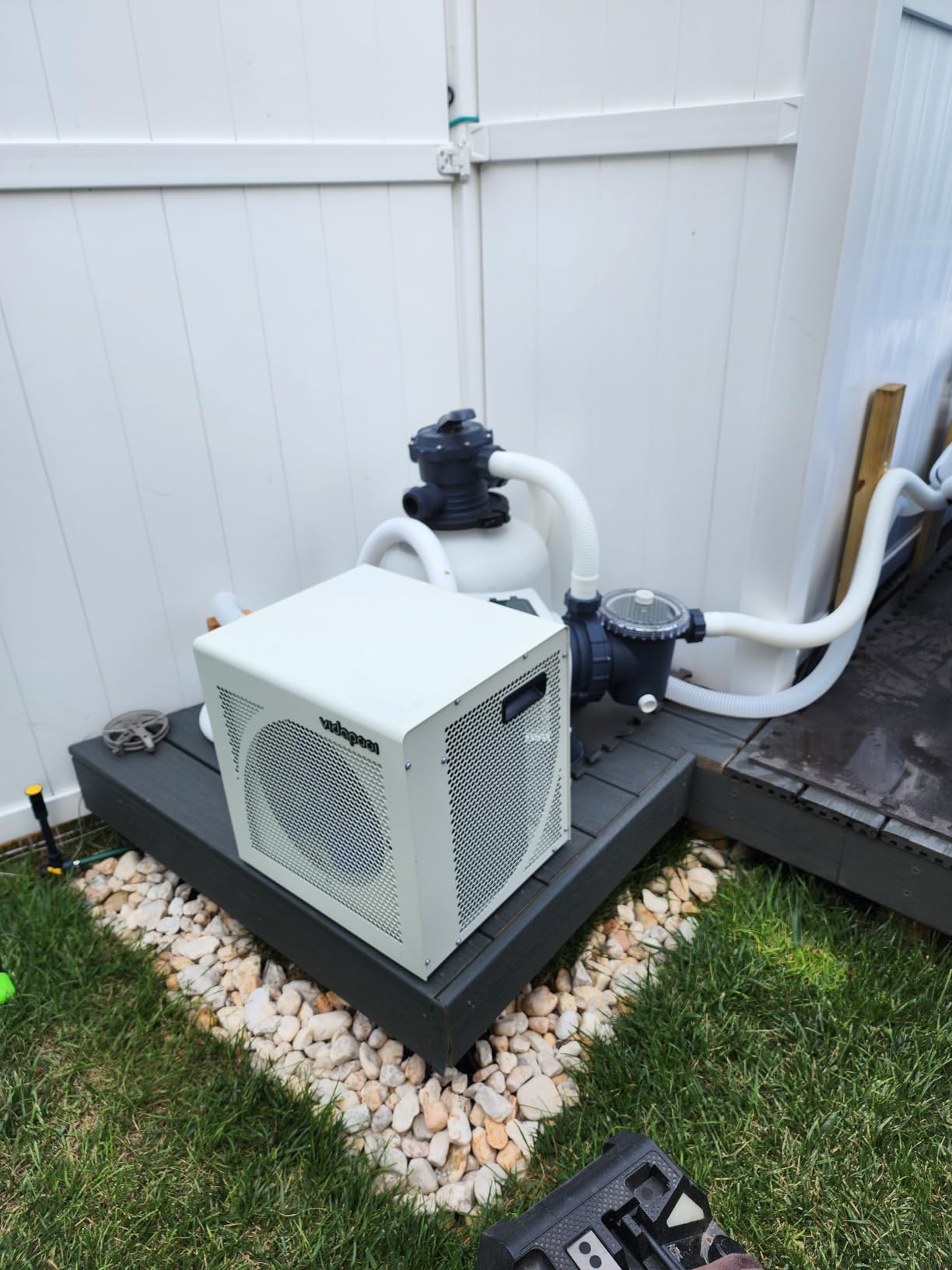
At 38 dB, the Vidapool matches the quietest unit in this roundup and does it in a 20-inch cube weighing 73.8 pounds. It outputs 16,000 BTU for pools up to 5,000 gallons, heats water from 59F to 104F and cools from 46F to 82F.
What we like most is the honesty of the electrical story. It includes a 16.5-foot GFCI plug, 1.25 inch and 1.5 inch hose adapters and a 1.5 inch conversion kit, and measured draw is around 7 to 8 amps in both heating and cooling modes. That is close to an appliance you can run on a normal outlet.
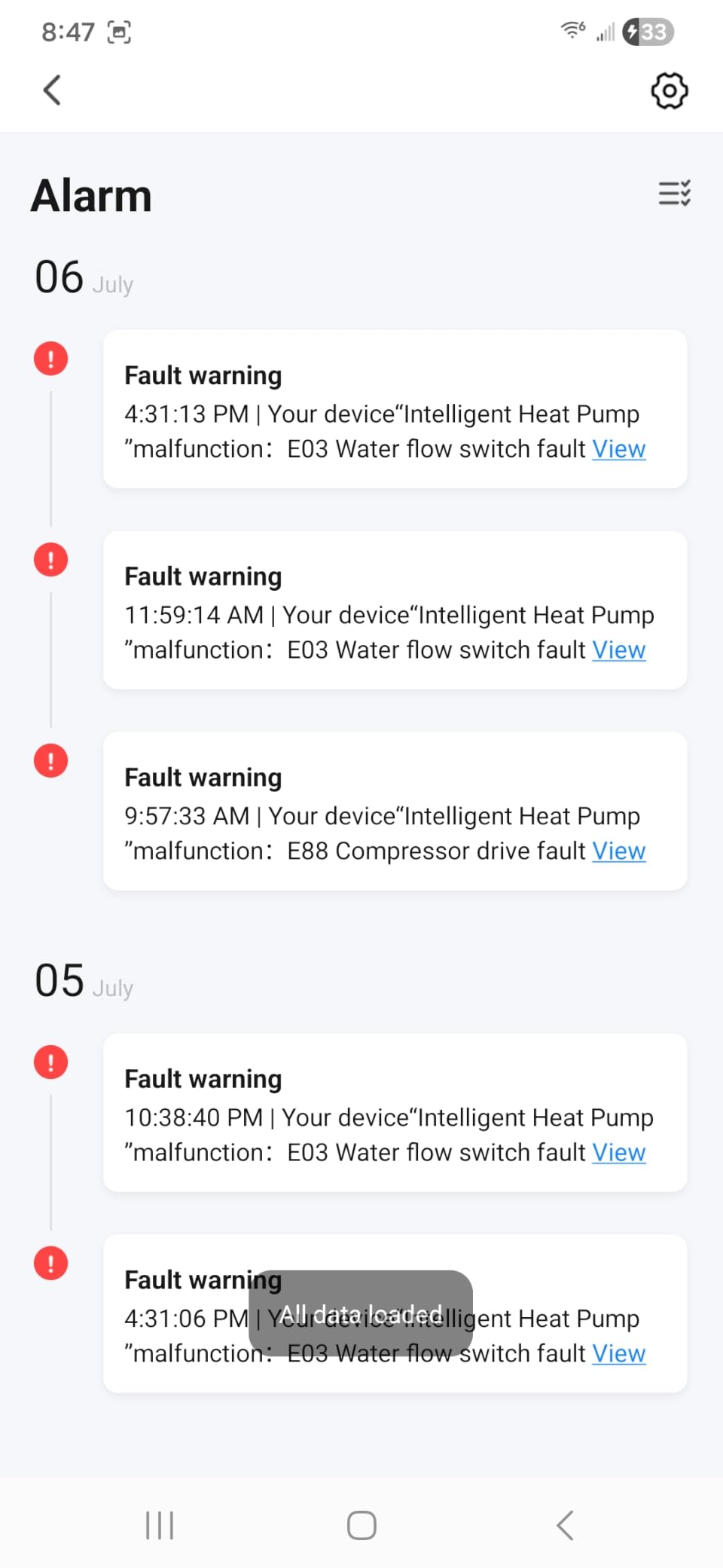
The best piece of buyer advice in these reviews comes from a reviewer, not a manual: the up-to-5,000-gallons rating describes temperature maintenance, not fast heating. If you want a degree per hour, you need roughly 35,000 BTU. That single sentence prevents a lot of disappointment.
It uses a titanium heat exchanger suitable for freshwater and saltwater, runs at COP 5.5, and recommends a minimum flow of 450 GPH. Owners installing on Intex and similar above-ground frames report clean hookups with no leaks, which is not always the case with hose connections.
What to check before you buy it
Your flow rate. The 450 GPH minimum matters, and the reviews note that excessively high flow rates can prevent water from fully absorbing the heat. Match your pump speed to the manufacturer’s guidance instead of assuming faster flow heats faster.
Then check where it will sit. At 20 by 20 by 20 inches it is compact, but heat pumps still need airflow clearance around the coil. Cramming it against a wall is the most common way an otherwise good unit underperforms.
Who should skip it
Owners who want app-based energy tracking, since the app covers power, mode and set point but not runtime history or usage data. Also skip it for pools over 5,000 gallons, where the capacity gap becomes obvious in the first week of use.
10. Raypak 406,000 BTU Digital Propane Heater: Maximum Gas Output
Raypak 406,000 BTU Digital Electronic Ignition Propane Pool Heater
406,000 BTU propane digital heater
Microprocessor-controlled thermostat
Copper fin-tube exchanger
43 x 35.3 x 31 inches
Pros
- Strong temperature rise with outflow 9 degrees above inflow
- Heats an 8 by 16 spa from 60F to 100F in about 3 hours
- Quiet for a burner of this size
- Drops in as a direct replacement for earlier Raypak models
Cons
- Very heavy at 349 pounds so placement needs several people
- Requires a propane hookup and gas line work
- Warranty runs through manufacturer and dealer leaving owner with labor
- One unit began dumping water and was not resolved locally
At 406,000 BTU, the Raypak is the largest heater we tested and the fastest. Owners report outflow water running about 9 degrees above inflow, and one heated an 8 by 16 spa from 60F to 100F in roughly three hours, which is a spa heater doing a pool heater’s job.
For owners replacing an older Raypak, the fit is the headline. It drops in as a direct replacement for earlier models, and the microprocessor-controlled thermostat handles set-and-forget operation without anyone touching a dial. Owners also describe it as surprisingly quiet for a gas burner of this size.
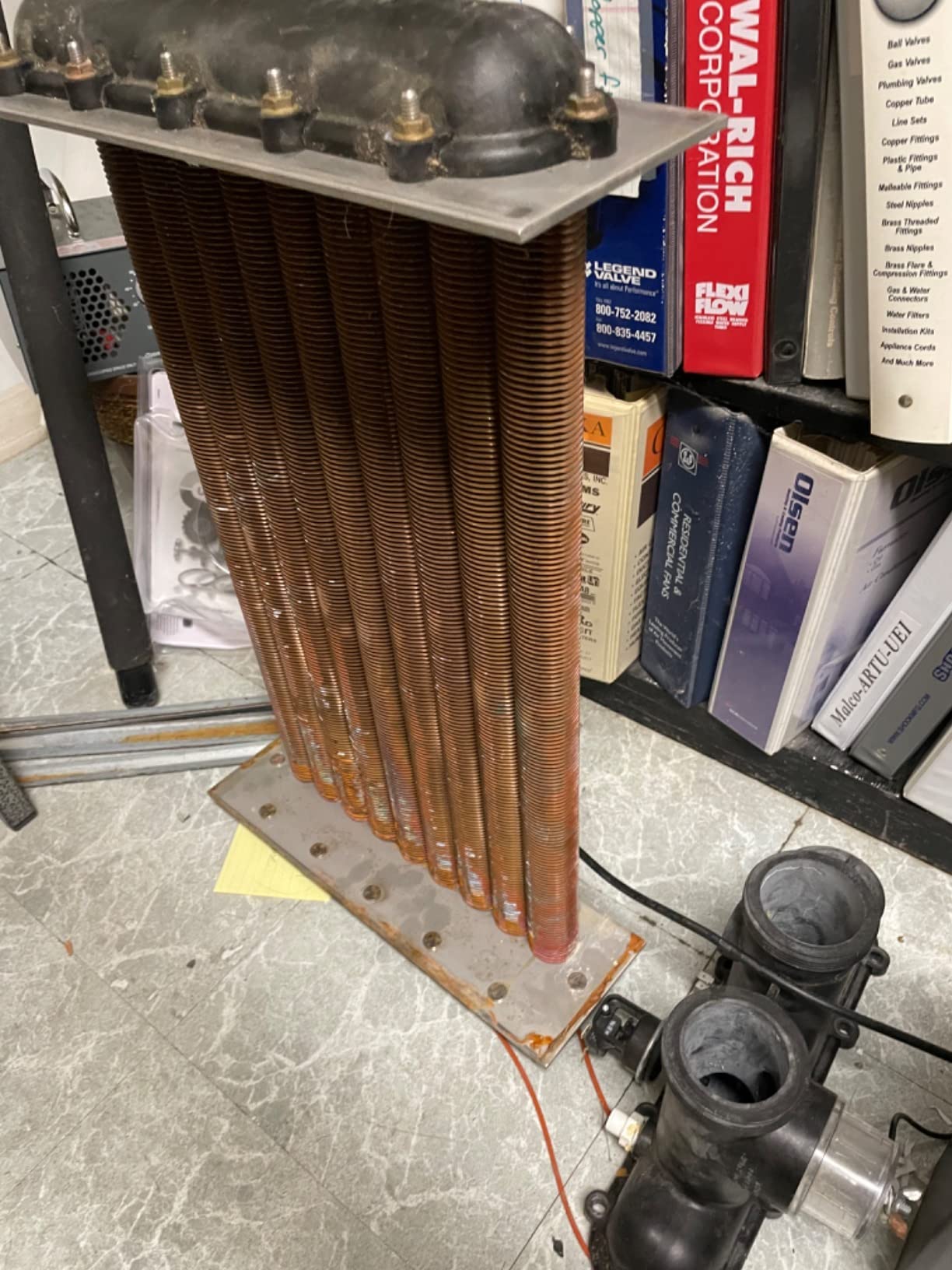
The build is conventional and durable: a PolyTuf powder-coated cabinet with non-corrosive, rust-resistant internals, an all copper fin-tube heat exchanger with polymer headers, and a stainless steel tube sheet with 2 inch CPVC water connections, burner tray and fire tile. Installation is straightforward when the gas company sets the regulator.
Service is where the criticism lands. The warranty route runs through the manufacturer and a dealer, and that can leave the owner paying labor and travel. One unit began dumping water after a single tank of propane and could not be resolved locally, which is the kind of failure that is very hard to live with.
What to check before you buy it
Weight and placement. At 349 pounds and 43 by 35.3 by 31 inches, moving it into position needs several people, and the pad has to be where it can stay. Get the gas company out before delivery day, not after.
Also weigh the copper exchanger against your water chemistry. Copper works well in balanced chlorine pools, but saltwater and salt chlorine generator systems are harder on it over a decade. If you are on a salt system, the titanium units in this roundup are the safer long-term pairing.
Who should skip it
Anyone without propane service, and anyone whose budget cannot absorb the delivery, placement and gas line work. It is also overkill for pools under about 20,000 gallons unless you are running a large spa alongside. Do not size a gas heater by pool volume alone; size it by the fastest day you plan to have.
11. Gulfstream HE150 136,000 BTU Heat Pump for Large Gunite Pools
Gulfstream POOL HEAT PUMP HE150 136,000 BTU’S
136,000 BTU for large residential pools
Copper heat exchanger
Electronic digital controls
US-based manufacturer
Pros
- Efficient enough to lift water 9 degrees where gas was not an option
- One owner lifted a 36000 gallon gunite pool 66F to 76F in about 24 hours
- Cycles only a few hours a day once set temperature is reached
- US-based service shipped replacement boards free
Cons
- Copper exchanger can leach copper and turn chlorine water green
- WiFi kit is an optional add-on
- Slightly louder than the unit it replaced
- Cover fasteners are cheap pins installed at an angle
The Gulfstream HE150 is rated at 136,000 BTU for large residential pools, and the most impressive owner report we found came from a 36,000-gallon gunite pool. That owner lifted water from 66F to 76F in about 24 hours, and once the set temperature was reached, the unit cycled only a few hours a day.
That last detail is the whole heat pump argument in one sentence. A burner would have run nearly continuously to make the same change and kept running all night to hold it. Owners without gas service at rural or vacation properties specifically choose this route, and this is a good example of why.
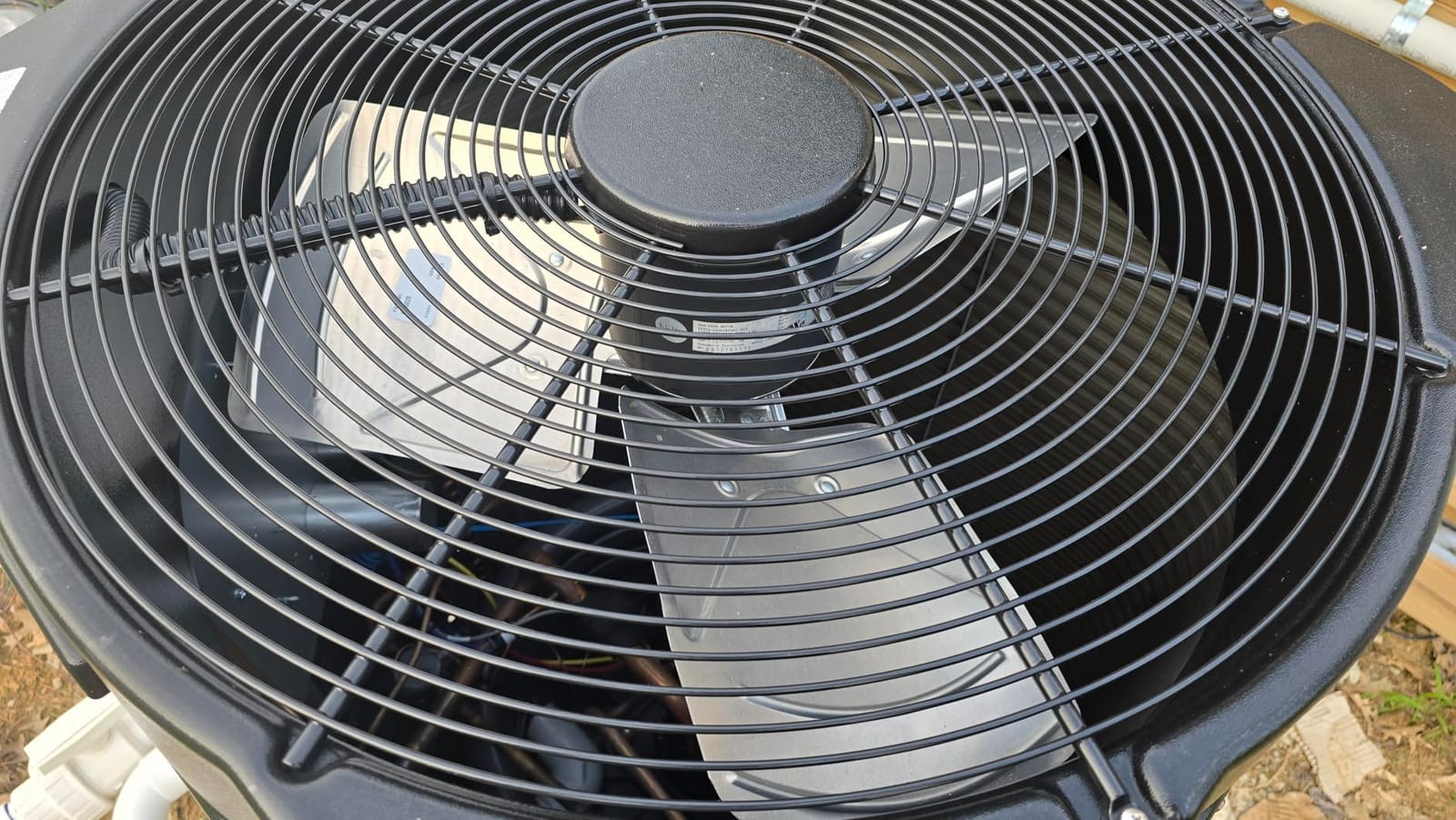
Service is the standout for a product with so little review history. Gulfstream is a US-based manufacturer and dealer, and owners report replacement main and WiFi boards being shipped free of charge, which is exactly the support experience that keeps a 136,000 BTU appliance from becoming a dead asset.
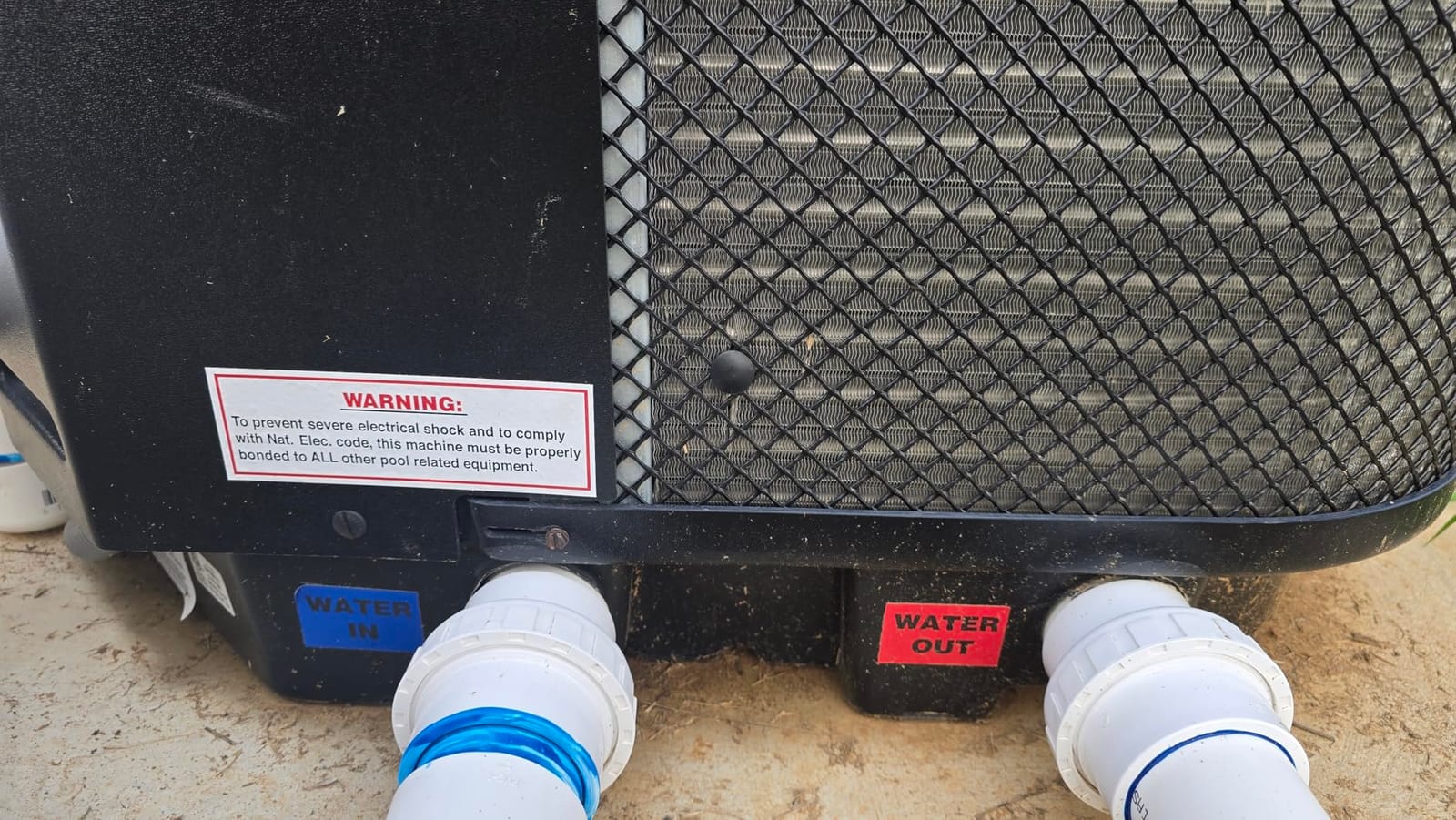
Two cautions. The heat exchanger is copper, and copper can leach into the water and react with chlorine to turn a pool green, so add a copper sequestrant and test for copper regularly. WiFi is a kit you buy separately, and the cover is held on with cheap pins installed at an angle because the holes do not quite line up.
What to check before you buy it
Your water chemistry plan if you run chlorine. The copper exchanger is efficient and serviceable, but it demands attention. Owners on a salt system should weigh this unit against a titanium model even knowing the Gulfstream’s service story is stronger.
Check the electrical requirements and the physical envelope before you commit. The listing for this model does not publish a weight or dimension figure, so confirm both with the seller. A 136,000 BTU cabinet needs pad space and circuit capacity.
Who should skip it
Buyers who want built-in connectivity, since the WiFi kit is extra. Also skip it if you are shopping on review volume alone: 21 ratings is a thin evidence base, and you should weight the service reputation and the copper trade-off more heavily than the star count here.
12. NATURAQUELL 18,000 BTU Inverter Heat Pump: 110V With an 8-Year Warranty
NATURAQUELL Swimming Pool Heat Pump, 18,000 BTU, 5,200 Gal
18,000 BTU heating and cooling
Inverter compressor, COP up to 4.1
110-120V power
Titanium exchanger
Pros
- Owners report heating an Intex pool from 85F to 104F in under 18 hours
- Compact 110V form factor avoids gas and 220V runs
- Quiet with solid compact construction
- App pairs easily with smart devices
Cons
- Ships without water lines so extra plumbing must be bought
- Amperage is not disclosed and needs a dedicated 15-20A circuit
- Short feet make attaching a condensate line awkward
- Only 16 ratings
- several of them spec-based
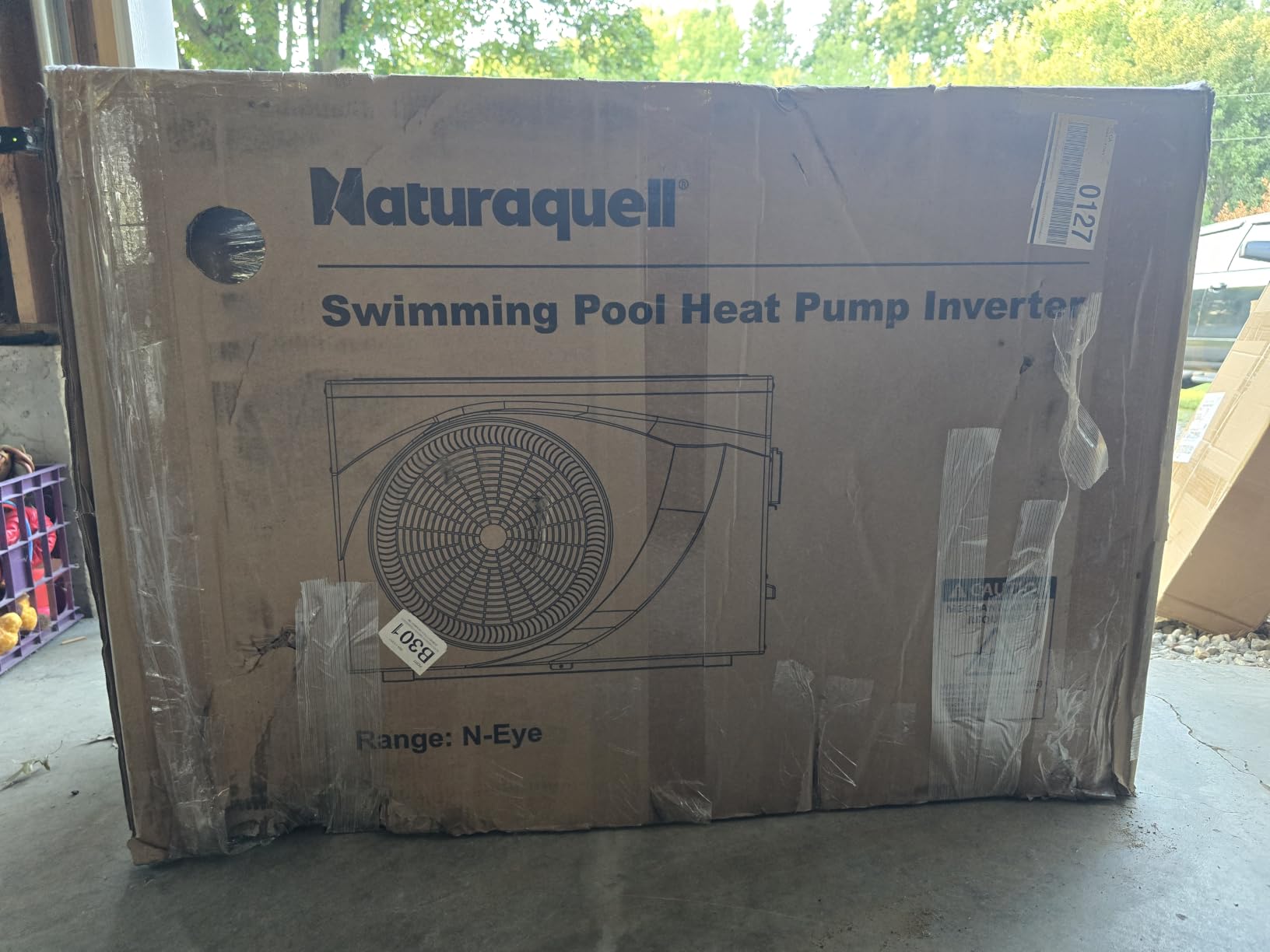
The NATURAQUELL has the highest average rating in this roundup at 4.8, and we want to be careful about how we present that. Its review base is 16 ratings, and the review summary notes that several reviewers explicitly had not yet installed or run the unit. Treat the number as promising rather than proven.
What is proven is the design. It uses an inverter compressor with COP up to 4.1 and a claimed 45 percent energy saving, a corrosion-resistant titanium heat exchanger, WiFi app control plus an on-unit touch panel, and 110-120V residential power with either plug-in or hardwired installation depending on the setup.
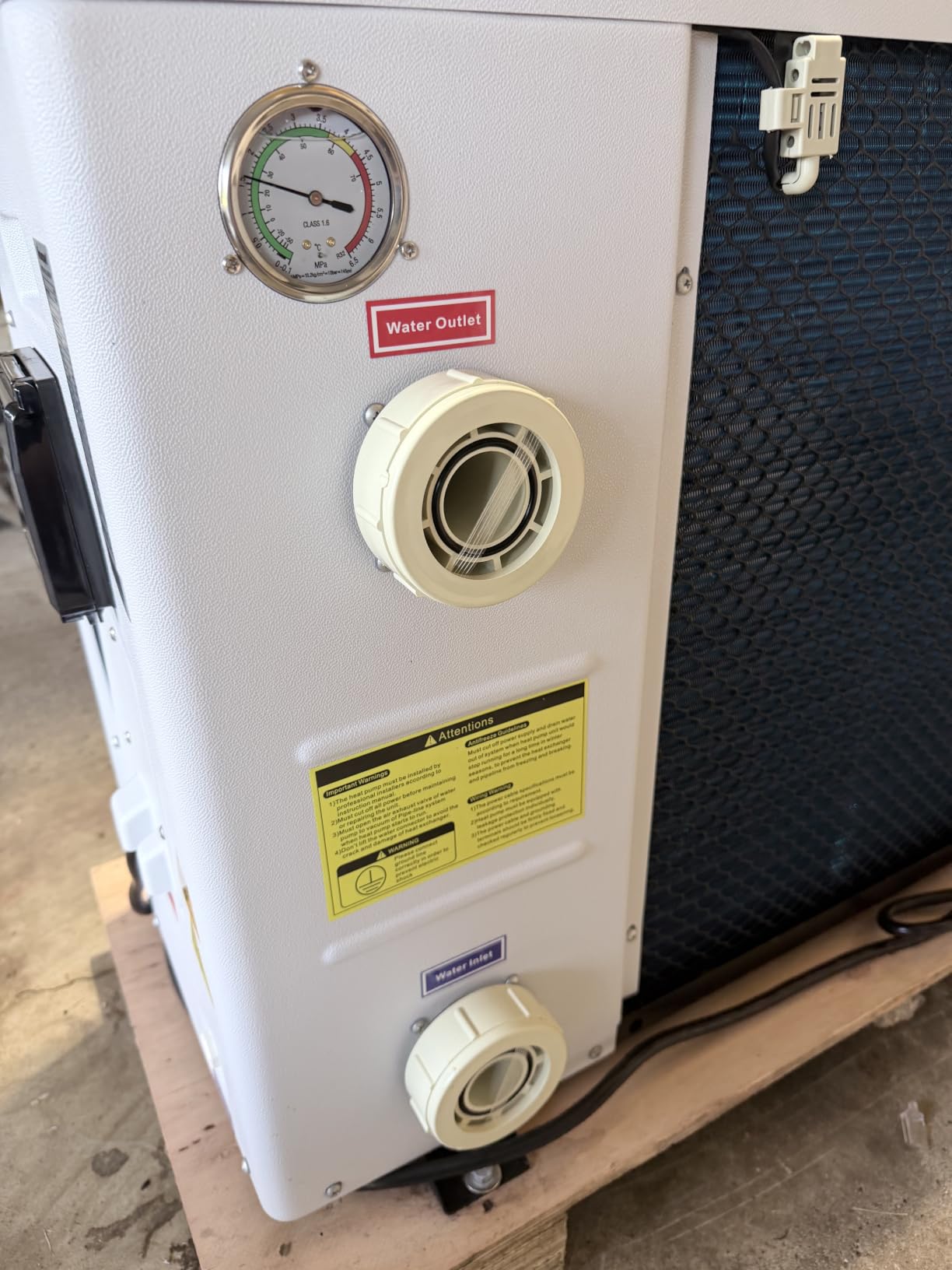
Owners who have tested it report heating an Intex pool from 85F to the 104F maximum in under 18 hours, quiet running, and an app that pairs easily with smart devices. At 73.8 pounds and 16.65 by 15.35 by 17.21 inches, it is the smallest footprint in the lineup, and the 8-year after-sales warranty is the longest support commitment here.
The practical complaints are specific and worth acting on. It ships without water lines, so you must buy the plumbing fittings separately. Amperage is not disclosed on the listing and it needs a dedicated or near-dedicated 15-20A circuit. And the short feet make attaching a condensate line awkward, which matters in humid climates.
What to check before you buy it
Your circuit. This is the item owners most often get wrong with compact heat pumps, because a 110-volt label does not mean any outlet will do. Ask the seller for the running and lockout amperage before you plan the install, then give it a circuit of its own if the numbers are close.
Also confirm the plumbing package. Budget for hose adapters and any conversion fittings yourself, because the reviews consistently say the lines are not in the box. Expect a small extra plumbing expense either way, so plan for it rather than being surprised.
Who should skip it
Buyers who want a deep review history before committing, since 16 ratings is not enough to rank against a 534-review incumbent. If you want the inverter control and titanium exchanger and want the support behind it, the eight-year after-sales coverage is the strongest warranty in this lineup.
How to Size a Pool Heater: The BTU Guide
A BTU, or British thermal unit, is the standard measure of heater output. One BTU is the heat needed to raise one pound of water by one degree Fahrenheit. The sizing rule of thumb across the industry is 100,000 BTU per 10,000 gallons for a gas heater, so a 20,000-gallon pool needs roughly 200,000 BTU.
For heat pumps the arithmetic works differently, because the number describes capacity, not fuel burn. A 30,000 BTU heat pump paired with a solar cover is a realistic way to hold an 8,000-gallon pool. The same pool on a 200,000 BTU gas burner is a completely different experience: fast recovery, high fuel consumption, continuous noise.
Step by step, the calculation is simple. Find your pool volume, either from a volume calculator or by multiplying length times width times average depth times 7.5 for a rectangular pool. Then apply 100,000 BTU per 10,000 gallons if you are shopping gas, and halve that expectation for a heat pump unless you are heating without a cover.
The most common sizing mistake is undersizing. Owners on pool forums describe picking a small unit because the number looked affordable, then spending a season with lukewarm water that never reached the set point. A heater that cannot reach temperature runs constantly, which means it costs more and lasts less.
The second factor is the solar cover. A cover is the single most repeated recommendation across every forum thread we read, and owners consistently wish they had bought one alongside the heater. It traps heat overnight, cuts runtime dramatically, and it also slows evaporative loss during the day.
Underestimating or overshooting is worse than the math itself. We covered the small-pool maths here; if you are working out heating a large outdoor room in the off-season, our picks for space heaters for home offices use the same sizing logic.
Pool Heater Types Compared: Gas, Heat Pump, Electric and Solar
Gas pool heaters, natural gas or propane, burn fuel and heat water through a copper or cupro-nickel heat exchanger. They raise temperature fastest, often 1.6 to 2 degrees an hour on a mid-size pool, run at 80 to 85 percent thermal efficiency, and demand a gas line, a regulator and professional work. Operating cost is the tradeoff.
Heat pump pool heaters move existing heat from the outdoor air into the water using a refrigerant cycle rather than creating it. They are far cheaper to run, and they are much slower. Below roughly 50F ambient, many units lose the capacity to do useful work, which is the threshold northern owners complain about most.
Electric resistance heaters make heat directly with an element, like an oversized water heater. They are simple, reliable and slow, and every unit of electricity becomes one unit of heat, which makes them the most expensive way to add heat and the cheapest way to add a small amount of it.
Solar pool heaters are unpowered mats that collect sun and transfer it into the water. Running cost is effectively zero, output depends entirely on weather, and they only work while the sun is up. They pair extremely well with a heat pump, taking the daytime load so the heat pump handles the evening.
Heat and cool units, like the AQUASTRONG, the VARMINPOOL, the Varpoolfaye, the Vidapool and the NATURAQUELL, add a reverse cycle that drops water temperature in hot weather. In warm climates that feature is worth more than the extra heating capacity would be.
One nuance that gets missed in most comparisons: the 50F versus 60F threshold disagreement you will read online. The difference is real and it comes down to the unit and the test standard, not the water. A unit rated to operate down to 32F ambient, like the MICOE, will still produce far less heat there than on a mild day.
Heat Exchanger Materials: Copper, Cupro-Nickel and Titanium
The heat exchanger is the part that fails, and its material decides how your pool tastes and how long the heater lasts. A cupro-nickel exchanger is a copper-nickel alloy that resists corrosion in both chlorinated and salt water, and it is the standard choice for gas heaters built for longevity.
Plain copper is cheaper and transfers heat well, but it leaches copper into the water over time. That copper reacts with chlorine and can turn a pool green, which is the exact failure the Gulfstream owners in this roundup reported. It is manageable with a sequestrant and regular testing.
Titanium is the corrosion-resistant upgrade, and it appears on the Varpoolfaye, the WARMBLU, the Hayward HeatPro, the FibroPool, the Vidapool, the MICOE and the NATURAQUELL. For saltwater pools or salt chlorine generator systems, it is the safest pairing available in this lineup.
The Raypak uses an all copper fin-tube heat exchanger with polymer headers, which is a well-proven gas design in balanced water. If you are on a salt system and looking at gas, cupro-nickel is the material to insist on, and it is worth confirming with the seller before purchase.
Also worth checking: flow rate, measured in gallons per minute. Most gas heaters need 25 to 40 GPM or more and will not fire below their minimum. A pressure switch that stops firing when flow drops is a safety device, and it is the most common component to need replacing.
Installation Requirements and Where DIY Stops
Gas work is the line you should not cross. A gas heater needs a fuel line, a regulator set by the gas company, code-compliant venting and leak testing. It also needs a combustion air plan, because a heater in a small equipment enclosure can starve of air and produce carbon monoxide.
Electric work is more approachable but still regulated. The Hayward HeatPro needs a dedicated 50 amp breaker and professional electrical work, and the FibroPool needs a dedicated 240-volt circuit. Heat pumps with 120V power are the easiest: the AQUASTRONG, the WARMBLU, the Vidapool and the NATURAQUELL are close to plug-and-play once the fittings are right.
Owners report the biggest barriers to a self-install are exactly these: 240V and 60A circuit availability, and gas line runs. Add fittings. The VARMINPOOL and the NATURAQUELL both arrive without complete plumbing packages, and the Varpoolfaye’s factory adapters can need resealing before first use.
One warranty warning that comes up repeatedly: installing a heater yourself can void or shorten coverage, and warranty service often excludes labor regardless of who did the work. The Hayward HeatPro and the Hayward H-Series both have service paths that push labor onto the owner. Read the warranty terms before you pick up a wrench.
Safety items deserve their own line. Pool equipment and heaters should be on GFCI protection, the unit should be bonded properly, and a carbon monoxide detector near any gas appliance is cheap insurance. If you are unsure about any of this, the installation cost is the one place not to economize.
Which Pool Heater Is Right for You
Start with the question you actually want answered: do you want to heat fast or hold cheap? If you want to heat fast, gas is the only real answer. If you want to hold temperature for hours on modest power, a heat pump is the right tool and the numbers favor it clearly.
For a small above-ground pool under about 8,000 gallons with no gas service, start with the 120-volt heat pumps. The AQUASTRONG, the Varpoolfaye, the Vidapool, the MICOE and the NATURAQUELL all fit that brief, and the differences are warranty length, whether it cools as well as heats, and how many plumbing fittings are in the box.
For an inground pool between 12,000 and 20,000 gallons, you are choosing between a 240-volt heat pump and a mid-size gas heater. The FibroPool FH255 at 55,000 BTU is the natural heat pump fit. The Hayward H-Series at 250,000 BTU is the natural gas fit if fuel is available.
For pools above 20,000 gallons, including gunite and concrete shells, capacity matters more than convenience. The VARMINPOOL at 105,000 BTU, the Hayward HeatPro at 140,000 BTU and the Gulfstream at 136,000 BTU are the heat pump options, and the Raypak at 406,000 BTU is the gas option. Choose based on how quickly you need the water usable.
For saltwater pools, filter the list by exchanger material before anything else. That leaves the titanium units, and it is worth adding a note for salt chlorine generator owners on forums: they specifically seek cupro-nickel or titanium exchangers, and they report copper units failing early.
For rural properties, vacation homes and rental cabins, plan around services you do not have. No gas means propane variants or electric. No electrical capacity means a 120-volt heat pump or a smaller electric unit, and an owner with no gas at a vacation property will choose propane over extension cords every time.
For spas and hot tubs, pool heat pumps are the wrong appliance. Owners use small electric tankless heaters and value quiet operation and low upfront cost over speed. The Vidapool and the AQUASTRONG both handle small bodies of water well, but a dedicated spa heater is the correct category.
Finally, think about how often you want heat. Spot heating on a weekend is a gas job. Constant temperature maintenance across a season is a heat pump job. Getting this backwards is the most expensive mistake in the category, and it is the one that forum threads complain about most.
What to Avoid When Buying a Pool Heater
Avoid undersizing. It is the single most common regret in owner threads, and it produces lukewarm water, constant running, higher fuel bills and a shorter component life all at once. Size up slightly rather than down, and remember that a cover changes the answer.
Avoid headline efficiency claims you cannot interrogate. A published COP of 16, as we saw on one unit here, is far outside the residential range. If the seller cannot tell you the ambient temperature, water temperature and flow rate the number was measured at, price the product on its materials and warranty instead.
Avoid suspicious review profiles. Owners on buying forums flag heaters with hundreds of perfect five-star reviews, short and generic, with no mention of installation or seasons of use. Our rule was simple: we weight long reviews with specific problems above the raw star average.
Avoid products with no service path. A heat pump that runs for six seasons will need a board, a sensor or a refrigerant top-up. The Gulfstream’s US-based board replacement and the Varpoolfaye’s repair videos are worth more to an owner than a marginally better COP figure.
Avoid skipping the solar cover. Owners describe it as the cheapest way to cut heater runtime and fuel cost, yet rarely buy one at the same time. If you are buying a heater, buy the cover in the same order.
Avoid treating a heat pump as a gas heater replacement. If you genuinely need 2 degrees an hour, no efficiency rating will deliver it. Be honest about the speed you need before you choose the technology.
Frequently Asked Questions
What type of pool heater is most efficient?
A heat pump pool heater is the most efficient option by a wide margin. Instead of burning fuel to create heat, it moves existing heat from the outdoor air into the water using a refrigerant cycle, so each unit of electricity can deliver roughly four to six units of heat. The electric models in this roundup carry COP ratings from 4.1 to 5.8. Gas heaters run at 80 to 85 percent thermal efficiency and cost far more per hour of heat.
What type of heater is best for a pool?
The best type depends on whether you want fast heat-up or cheap temperature holding. Natural gas and propane heaters are best for speed, raising temperature 1.6 to 2 degrees per hour on a mid-size pool. Heat pumps are best for holding a set temperature at low running cost, and they work poorly below about 50F ambient. Solar heaters cost almost nothing to run but only work in sunlight. Many owners pair solar with a heat pump for year-round value.
Which pool heater is better, Pentair or Hayward?
Among the traditional pool equipment brands, Hayward has the stronger showing in the units we reviewed. The Hayward H-Series 250,000 BTU propane heater and the Hayward HeatPro 140,000 BTU heat pump both earned consistent owner feedback on heating performance and build quality, and Hayward has over 80 years of pool equipment experience. The common criticism is service rather than product: warranty claims can leave labor costs with the owner, and the HeatPro requires a dedicated 50 amp circuit.
Is Raypak pool heater of good quality?
Raypak heaters are generally considered well-built, and the 406,000 BTU digital propane model we reviewed delivered a reported outflow temperature 9 degrees above inflow, with one owner heating an 8 by 16 spa from 60F to 100F in about three hours. It also fits directly as a replacement for earlier Raypak models. The main weakness owners report is not the hardware but the warranty route, which runs through the manufacturer and a dealer and can leave the buyer paying labor and travel.
What is the average life expectancy of a pool heater?
Gas pool heaters commonly last 8 to 12 years when water chemistry stays balanced, while heat pumps tend to run 10 to 15 years with refrigerant circuit longevity as the limiting factor. Lifespan is driven more by water chemistry and installation quality than by brand. Salt chlorine generator systems accelerate corrosion in copper heat exchangers, which is why titanium exchangers are recommended for saltwater pools. Routine annual service and balanced chemistry extend life more than any brand decision.
How long does it take to heat a pool?
A gas heater can raise a mid-size pool about 1.6 to 2 degrees per hour, so a 20,000-gallon pool moving from 62F to 84F typically takes roughly a day. Heat pumps are far slower: the Hayward HeatPro lifted a 20,000 gallon pool from the low 60s to the mid 80s in about a day, while smaller units took around 18 hours for much smaller pools. Adding a solar cover shortens both times and cuts the fuel or electricity needed to hold the result overnight.
Do I need a special heater for a saltwater pool?
Yes, at minimum you should buy a corrosion-resistant heat exchanger. Salt and salt chlorine generator systems attack copper exchangers, and owners report copper units turning chlorine water green and failing early. Cupro-nickel and titanium exchangers are built for these conditions, and most titanium units in this roundup are rated for both freshwater and saltwater. Regular copper testing and a sequestrant help, but they do not replace the right material.
Can I install a pool heater myself?
120-volt heat pump models are the realistic DIY option, since several ship with hose adapters, conversion kits and a GFCI plug for tool-free hookup. Gas heaters are not a DIY job: they need a fuel line, a regulator set by the gas company, proper venting and leak testing, and carbon monoxide is a real risk. 240-volt and 50 amp units need an electrician. Remember that self-installation can shorten or void warranty coverage, and many brands exclude labor from warranty service.
Conclusion: The Best Pool Heaters to Buy in 2026
After working through all twelve, the best pool heaters in 2026 still split cleanly along one line: speed versus cost. For most above-ground and small inground pools, the AQUASTRONG 12 by 14 unit is our pick because it heats and cools, runs at 38 dB, and needs no gas line and no electrician. Its 534 reviews give it the deepest evidence base in the group.
For large pools, the VARMINPOOL 105,000 BTU heat pump covers up to 30,000 gallons, and the Hayward HeatPro covers regularly used inground pools with a 140,000 BTU output and a titanium exchanger built for coastal installs. For saltwater owners on a standard outlet, the Varpoolfaye at COP 5.8 is the answer.
When speed genuinely matters, the gas heaters still win outright. The Hayward H-Series at 250,000 BTU is the balanced workhorse, and the Raypak at 406,000 BTU is the maximum-output choice for big pools and attached spas. Just accept the fuel cost, and budget the installation properly.
One last thing, and it is the thing owners most often regret skipping: buy a solar cover with the heater. It changes your sizing, your runtime and your fuel bill more than any single feature on any of these machines.
For the rest of your outdoor setup, our roundup of pool table accessories for home bars covers the games side of the same space.